Spandidos Publications Logo
  • About
    • About Spandidos
    • Aims and Scopes
    • Abstracting and Indexing
    • Editorial Policies
    • Reprints and Permissions
    • Job Opportunities
    • Terms and Conditions
    • Contact
  • Journals
    • All Journals
    • Oncology Letters
      • Oncology Letters
      • Information for Authors
      • Editorial Policies
      • Editorial Board
      • Aims and Scope
      • Abstracting and Indexing
      • Bibliographic Information
      • Archive
    • International Journal of Oncology
      • International Journal of Oncology
      • Information for Authors
      • Editorial Policies
      • Editorial Board
      • Aims and Scope
      • Abstracting and Indexing
      • Bibliographic Information
      • Archive
    • Molecular and Clinical Oncology
      • Molecular and Clinical Oncology
      • Information for Authors
      • Editorial Policies
      • Editorial Board
      • Aims and Scope
      • Abstracting and Indexing
      • Bibliographic Information
      • Archive
    • Experimental and Therapeutic Medicine
      • Experimental and Therapeutic Medicine
      • Information for Authors
      • Editorial Policies
      • Editorial Board
      • Aims and Scope
      • Abstracting and Indexing
      • Bibliographic Information
      • Archive
    • International Journal of Molecular Medicine
      • International Journal of Molecular Medicine
      • Information for Authors
      • Editorial Policies
      • Editorial Board
      • Aims and Scope
      • Abstracting and Indexing
      • Bibliographic Information
      • Archive
    • Biomedical Reports
      • Biomedical Reports
      • Information for Authors
      • Editorial Policies
      • Editorial Board
      • Aims and Scope
      • Abstracting and Indexing
      • Bibliographic Information
      • Archive
    • Oncology Reports
      • Oncology Reports
      • Information for Authors
      • Editorial Policies
      • Editorial Board
      • Aims and Scope
      • Abstracting and Indexing
      • Bibliographic Information
      • Archive
    • Molecular Medicine Reports
      • Molecular Medicine Reports
      • Information for Authors
      • Editorial Policies
      • Editorial Board
      • Aims and Scope
      • Abstracting and Indexing
      • Bibliographic Information
      • Archive
    • World Academy of Sciences Journal
      • World Academy of Sciences Journal
      • Information for Authors
      • Editorial Policies
      • Editorial Board
      • Aims and Scope
      • Abstracting and Indexing
      • Bibliographic Information
      • Archive
    • International Journal of Functional Nutrition
      • International Journal of Functional Nutrition
      • Information for Authors
      • Editorial Policies
      • Editorial Board
      • Aims and Scope
      • Abstracting and Indexing
      • Bibliographic Information
      • Archive
    • International Journal of Epigenetics
      • International Journal of Epigenetics
      • Information for Authors
      • Editorial Policies
      • Editorial Board
      • Aims and Scope
      • Abstracting and Indexing
      • Bibliographic Information
      • Archive
    • Medicine International
      • Medicine International
      • Information for Authors
      • Editorial Policies
      • Editorial Board
      • Aims and Scope
      • Abstracting and Indexing
      • Bibliographic Information
      • Archive
  • Articles
  • Information
    • Information for Authors
    • Information for Reviewers
    • Information for Librarians
    • Information for Advertisers
    • Conferences
  • Language Editing
Spandidos Publications Logo
  • About
    • About Spandidos
    • Aims and Scopes
    • Abstracting and Indexing
    • Editorial Policies
    • Reprints and Permissions
    • Job Opportunities
    • Terms and Conditions
    • Contact
  • Journals
    • All Journals
    • Biomedical Reports
      • Information for Authors
      • Editorial Policies
      • Editorial Board
      • Aims and Scope
      • Abstracting and Indexing
      • Bibliographic Information
      • Archive
    • Experimental and Therapeutic Medicine
      • Information for Authors
      • Editorial Policies
      • Editorial Board
      • Aims and Scope
      • Abstracting and Indexing
      • Bibliographic Information
      • Archive
    • International Journal of Epigenetics
      • Information for Authors
      • Editorial Policies
      • Editorial Board
      • Aims and Scope
      • Abstracting and Indexing
      • Bibliographic Information
      • Archive
    • International Journal of Functional Nutrition
      • Information for Authors
      • Editorial Policies
      • Editorial Board
      • Aims and Scope
      • Abstracting and Indexing
      • Bibliographic Information
      • Archive
    • International Journal of Molecular Medicine
      • Information for Authors
      • Editorial Policies
      • Editorial Board
      • Aims and Scope
      • Abstracting and Indexing
      • Bibliographic Information
      • Archive
    • International Journal of Oncology
      • Information for Authors
      • Editorial Policies
      • Editorial Board
      • Aims and Scope
      • Abstracting and Indexing
      • Bibliographic Information
      • Archive
    • Medicine International
      • Information for Authors
      • Editorial Policies
      • Editorial Board
      • Aims and Scope
      • Abstracting and Indexing
      • Bibliographic Information
      • Archive
    • Molecular and Clinical Oncology
      • Information for Authors
      • Editorial Policies
      • Editorial Board
      • Aims and Scope
      • Abstracting and Indexing
      • Bibliographic Information
      • Archive
    • Molecular Medicine Reports
      • Information for Authors
      • Editorial Policies
      • Editorial Board
      • Aims and Scope
      • Abstracting and Indexing
      • Bibliographic Information
      • Archive
    • Oncology Letters
      • Information for Authors
      • Editorial Policies
      • Editorial Board
      • Aims and Scope
      • Abstracting and Indexing
      • Bibliographic Information
      • Archive
    • Oncology Reports
      • Information for Authors
      • Editorial Policies
      • Editorial Board
      • Aims and Scope
      • Abstracting and Indexing
      • Bibliographic Information
      • Archive
    • World Academy of Sciences Journal
      • Information for Authors
      • Editorial Policies
      • Editorial Board
      • Aims and Scope
      • Abstracting and Indexing
      • Bibliographic Information
      • Archive
  • Articles
  • Information
    • For Authors
    • For Reviewers
    • For Librarians
    • For Advertisers
    • Conferences
  • Language Editing
Login Register Submit
  • This site uses cookies
  • You can change your cookie settings at any time by following the instructions in our Cookie Policy. To find out more, you may read our Privacy Policy.

    I agree
Search articles by DOI, keyword, author or affiliation
Search
Advanced Search
presentation
Oncology Letters
Join Editorial Board Propose a Special Issue
Print ISSN: 1792-1074 Online ISSN: 1792-1082
Journal Cover
November-2014 Volume 8 Issue 5

Full Size Image

Sign up for eToc alerts
Recommend to Library

Journals

International Journal of Molecular Medicine

International Journal of Molecular Medicine

International Journal of Molecular Medicine is an international journal devoted to molecular mechanisms of human disease.

International Journal of Oncology

International Journal of Oncology

International Journal of Oncology is an international journal devoted to oncology research and cancer treatment.

Molecular Medicine Reports

Molecular Medicine Reports

Covers molecular medicine topics such as pharmacology, pathology, genetics, neuroscience, infectious diseases, molecular cardiology, and molecular surgery.

Oncology Reports

Oncology Reports

Oncology Reports is an international journal devoted to fundamental and applied research in Oncology.

Experimental and Therapeutic Medicine

Experimental and Therapeutic Medicine

Experimental and Therapeutic Medicine is an international journal devoted to laboratory and clinical medicine.

Oncology Letters

Oncology Letters

Oncology Letters is an international journal devoted to Experimental and Clinical Oncology.

Biomedical Reports

Biomedical Reports

Explores a wide range of biological and medical fields, including pharmacology, genetics, microbiology, neuroscience, and molecular cardiology.

Molecular and Clinical Oncology

Molecular and Clinical Oncology

International journal addressing all aspects of oncology research, from tumorigenesis and oncogenes to chemotherapy and metastasis.

World Academy of Sciences Journal

World Academy of Sciences Journal

Multidisciplinary open-access journal spanning biochemistry, genetics, neuroscience, environmental health, and synthetic biology.

International Journal of Functional Nutrition

International Journal of Functional Nutrition

Open-access journal combining biochemistry, pharmacology, immunology, and genetics to advance health through functional nutrition.

International Journal of Epigenetics

International Journal of Epigenetics

Publishes open-access research on using epigenetics to advance understanding and treatment of human disease.

Medicine International

Medicine International

An International Open Access Journal Devoted to General Medicine.

Journal Cover
November-2014 Volume 8 Issue 5

Full Size Image

Sign up for eToc alerts
Recommend to Library

  • Article
  • Citations
    • Cite This Article
    • Download Citation
    • Create Citation Alert
    • Remove Citation Alert
    • Cited By
  • Similar Articles
    • Related Articles (in Spandidos Publications)
    • Similar Articles (Google Scholar)
    • Similar Articles (PubMed)
  • Download PDF
  • Download XML
  • View XML
Article

Primary neuroendocrine tumors of the thymus: Clinical review of 22 cases

  • Authors:
    • Zhengbo Song
    • Yiping Zhang
  • View Affiliations / Copyright

    Affiliations: Department of Chemotherapy, Zhejiang Cancer Hospital, Hangzhou, Zhejiang 310022, P.R. China, Key Laboratory Diagnosis and Treatment Technology on Thoracic Oncology, Hangzhou, Zhejiang 310022, P.R. China
  • Pages: 2125-2129
    |
    Published online on: September 1, 2014
       https://doi.org/10.3892/ol.2014.2490
  • Expand metrics +
Metrics: Total Views: 0 (Spandidos Publications: | PMC Statistics: )
Metrics: Total PDF Downloads: 0 (Spandidos Publications: | PMC Statistics: )
Cited By (CrossRef): 0 citations Loading Articles...

This article is mentioned in:


Abstract

Primary neuroendocrine tumors of the thymus are rare mediastinum tumors, which present a distinct type of tumor, which exhibit morpholgical and biological neuroendorcine features including the production of numerous biogenic amines. The aim of the present study was to evaluate factors influencing long‑term survival in patients with primary neuroendocrine tumors of the thymus. A total of 22 patients exhibiting primary thymic neuroendocrine tumors, who were treated at the Zhejiang Cancer Hospital (Hangzhou, China), between 1995 and 2012 were reviewed. Survival curves were plotted using the Kaplan‑Meier method and the Cox proportional hazards model was used for multivariate analysis. The overall five‑year survival rate was 45.5% and the median survival time was 59 months in all of the patients. Histological grade (P<0.001), Masaoka‑Koga stage (P=0.003) and surgical resection status (P=0.004) were identified to be associated with patient survival time. Furthermore, multivariate analysis identified that the histological grade was an independent prognostic factor, which was applicable to all patients (P=0.009). Therefore, the histological grade and Masaoka‑Koga stage, as well as surgical resection status present three prognostic factors in patients exhibiting primary thymic neuroendocrine tumors.

Introduction

Neuroendocrine tumors of the thymus are rare, with an annual incidence of 0.01/100,000 in the USA (1). The histogenesis of neuroendocrine tumors varies and the tumor may arise from ectopic tissues in the mediastinum or present within the thymus (2). Thus, the histopathological classification, prognosis and treatment of primary neuroendocrine carcinomas of the thymus remain controversial.

According to the World Health Organization (WHO) (2), neuroendocrine tumors are included in the thymic carcinoma group and classified as two histopathological types; well-differentiated neuroendocrine carcinomas (typical and atypical carcinoid) and poorly differentiated neuroendocrine carcinomas (small cell carcinoma and large cell neuroendocrine carcinoma). The well-differentiated neuroendocrine carcinomas show a low grade of biological aggressiveness, while poorly differentiated neuroendocrine carcinomas are considered to be high-grade neuroendocrine tumors. As there have only been a small number of patients with neuroendocrine tumors of the thymus reported in the literature (3–7), a consensus has not been reached concerning the prognostic factors of primary neuroendocrine tumors of the thymus.

The aim of the present study was to evaluate the factors influencing long-term survival in 22 patients with primary neuroendocrine tumors of the thymus and to explore the role of various prognostic factors.

Patients and methods

Patient eligibility

The records of 22 patients exhibiting primary neuroendocrine tumors of the thymus, who were treated at the Zhejiang Cancer Hospital (Hangzhou, China), between 1995 and 2012, were reviewed. The 22 patients included 14 males and eight females, with a median age of 49.5 years. The histological type was determined according to the 2004 WHO classification (2) and the staging was performed for all patients according to the Masaoka-Koga system (8). Recurrence or metastases were identified using chest computed tomography (CT), as well as ultrasound and/or CT of the abdomen. The study was approved by the ethics committee of Zhejiang Cancer Hospital (Hangzhou, China).

Patient treatment

A total of ten patients underwent surgical resection following first diagnosis. A total of 9 patients received chemotherapy, 8 patients received radiation therapy, 3 patients received chemotherapy and radiotherapy and two patients received no futher treatment. The detailed treatment of the 22 patients is shown in Table I.

Table I

Characteristics of 22 patients.

Table I

Characteristics of 22 patients.

CaseGender/ age, yearsHistologyMasaoka-Koga stageSurgeryTreatmentMetastasisOS, months

At diagnosisDuring disease
1M/70ACIYesNoNoNo154+
2M/50SCCIVNoChemoSupraclavicular LNLung11.2
3F/39LCNECIIIYesRadiotherapyNoLung, bone17.6
4M/50ACIVNoChemoNoBone27.5
5F/49TCIIYesRadiotherapyNoNo126+
6F/40ACIIYesRadiotherapyNoNo141+
7M/38ACIIYesRadiotherapy + ChemoNoNo75+
8F/51ACIIYesRadiotherapy + ChemoNoNo61+
9F/52ACIIYesRadiotherapyNoNo53+
10M/29ACIIYesRadiotherapyNoNo28+
11M/29ACIYesNoNoNo39+
12M/51SCCIIINoRadiotherapy + ChemoNoLiver, lung27
13M/24TCIIYesRadiotherapyNoLiver, bone59
14M/57ACIIINoRadiotherapyNoNo67+
15M/61LCNECIVNoChemoLungBone11+
16F/48SCCIVNoChemoSupraclavicular LNLung11
17F/43LCNECIIINoRadiotherapyNoBone, lung32
18M/59SCCIVNoChemoLiverSupraclavicular LN6
19M/55LCNECIVNoChemoLungBone11
20M/55SCCIVNoChemoBoneLung15
21M/49ACIVNoChemoLungLiver38
22F/47TCIVNoChemoLungLN115+

[i] M, male; F, female; AC, atypical carcinoid; LCNEC, large cell neuroendocrine carcinoma; SCC, small cell carcinoma; TC, typical carcinoid; Chemo, chemotherapy; LN, lymph node; OS, overall survival.

Follow-up

Patients were followed up every three to six months for the first five years, and once per year thereafter. Each patient’s medical history, details of physical examinations and thoracic CT scans were recorded. The last follow-up was on Jan 30, 2013, with a median follow-up period for all patients of 109 months (range, 15–185 months).

Statistical analysis

Survival curves were calculated (using the Kaplan-Meier method) commencing from the date of the confirmed pathology to the date of mortality or the last follow-up. The log-rank test was used to compare overall survival (OS) time between different factors, including gender, age, tumor stage and surgery status. Multivariate analysis was performed using the Cox proportional hazards model and statistical analysis was performed using the SPSS version 15 software (SPSS, Inc., Chicago, IL, USA). Confidence intervals were calculated at the 95% level and P<0.05 was considered to indicate a statistically significant difference.

Results

Clinical characteristics

The clinical characteristics of the 22 patients are listed in Table I. The 22 patients enrolled in the present study included 14 males and eight females, with a median age of 49.5 years. In total, 10 of the 22 individuals underwent surgery. The pathological stage was I and II in nine patients, and III and IV in 13 patients. According to the WHO criteria (2), based on the histopathological differentiation, all 22 cases were divided into two types; well-differentiated (n=13) and poorly differentiated (n=9) neuroendocrine carcinomas.

Survival analyses

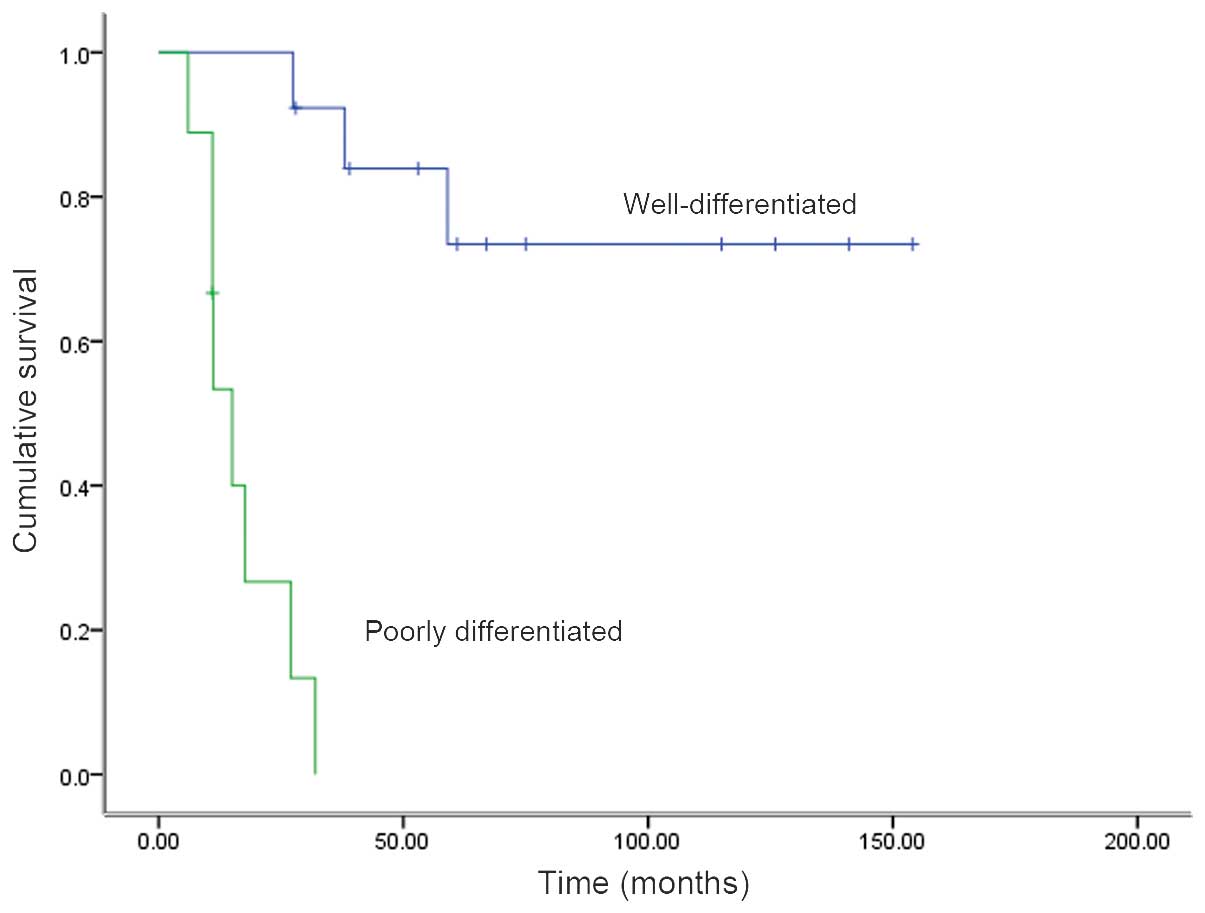
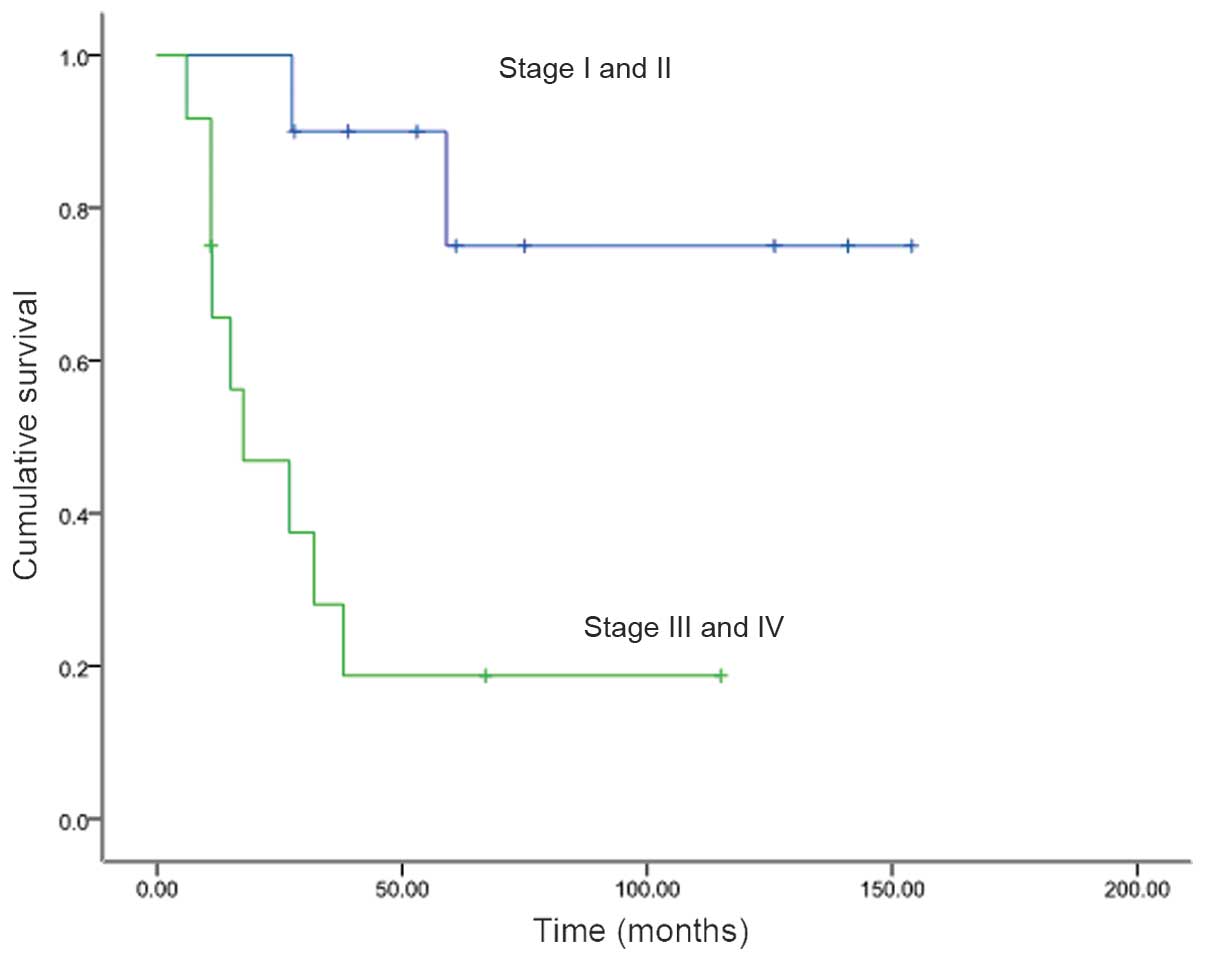
Table II shows the results of the univariate analyses of the clinicopathological factors evaluated in the present study. At present, a total of 11 patients have survived, however, 11 patients succumbed to the disease prior to the final follow up date. The median survival time for all patients was 59 months, and the five-year OS rate was 45.5%, with ten patients surviving longer than five years. Patients with poorly differentiated neuroendocrine carcinomas, that were stage III and IV, and did not undergo surgery exhibited a significant correlation with poor OS (Table II and Figs. 1–3).

Figure 1

Kaplan-Meier curves comparing the survival times of patients with well- and poorly differentiated neuroendocrine carcinomas (P<0.001).

Figure 3

Kaplan-Meier curves comparing the survival time of patients with early (Stage I–II) and late (Stage III–IV) stage tumors (P=0.003).

Table II

Univariate analysis of patient OS rate.

Table II

Univariate analysis of patient OS rate.

VariableFive-year OS rate, %P-value
Gender0.311
 Male34.1
 Female62.5
Age, years0.357
 ≥5040.9
 <5049.1
Tumor size, cm0.351
 >540.1
 ≤550.0
Grade<0.001
 Poorly differentiated73.4
 Well-differentiated0.00
Masaoka-Koga stage0.003
 I+II75.0
 III+IV18.8
Surgery0.004
 Yes75.0
 No18.8

[i] OS, overall survival.

A multivariate Cox proportional hazards model was constructed, which accounted for age, gender, tumor size, histological grade and surgery as variable factors. The histological grade was the only independent prognostic factor identified for OS (P=0.009; Table III).

Table III

Multivariate analysis of patient overall survival rate.

Table III

Multivariate analysis of patient overall survival rate.

Overall survival

VariableHR95% CIP-value
Gender (male vs. female )3.9770.699–22.6100.120
Age, years (≥50 vs. <50)0.9680.880–1.0650.501
Tumor size, cm (>5 vs. ≤5)3.4660.651–18.4570.145
Grade (poorly differentiated vs. well-differentiated)51.0742.698–966.7170.009
Masaoka-Koga stage (III+IV vs. I+II)1.8240.027–123.5760.780
Surgery (yes vs. no)0.2430.005–11.1110.469

[i] HR, hazards ratio; CI, confidence interval.

Discussion

Primary neuroendocrine tumors of the thymus are rare, with ~400 cases reported in the literature to date; the majority of which are case reports (3–7, 9–11). The median age at diagnosis has been relatively young in the majority of studies, ranging between 40 and 60 years. A male predominance has also been observed in the literature, which is consistent with the findings of the current report.

In a series of 15 patients reported by Fukai et al (5), the five-year survival rate was 33%, and of the 14 cases reported by de Montpreville et al (3) the five-year survival rate was 31%. The overall five-year survival rate in the present study was 45.5% (Table II), which is consistent with that reported in earlier studies (3,5). However, the median OS was shorter than that of previous reports (1,12,13), which may be due to more than half of the patients reported in the present study not undergoing surgery.

As the diagnosis of primary neuroendocrine tumors of the thymus is rare, only a small number of retrospective studies are available. Therefore, a standard therapeutic strategy has not yet been defined. Surgery remains the standard method for the treatment of thymic tumors compared with non-surgical options according to the Surveillance, Epidemiology, and End Results database analysis (1). In the present study, a significant difference in the OS of patients was identified between those who underwent surgery and those who did not. However, the prognostic factors currently in use for primary neuroendocrine tumors of the thymus, including histological grade, Masaoka-Koga grade and surgery status, remain controversial. To date, the histological grade, Masaoka-Koga stage and surgical resection status have been validated as prognostic factors. In addition, in the present study, carcinoids showed the optimum prognosis, while large cell neuroendocrine carcinoma and small cell carcinoma were associated with a poor prognosis (Fig. 1). Furthermore, patients with Masaoka-Koga stages III and IV showed a poorer prognosis than stage I and II patients (Table II and Fig. 3).

The major limitations of the current study were its retrospective nature and the subjects being obtained from a single institution. In addition, a small level of heterogeneity was identified among the surgical and non-surgical patients, which may have influenced the analysis of the prognosis. However, despite the small patient population that was used in this retrospective study, the results are considered to be meaningful.

In conclusion, thymic neuroendocrine tumors are associated with a discriminative prognosis. The histological grade, Masaoka-Koga stage and surgical resection status were identified to be prognostic factors. However, further study is required to fully validate the prognostic factors and determine a standard treatment for thymic neuroendocrine tumors.

References

1 

Gaur P, Leary C and Yao JC: Thymic neuroendocrine tumors: a SEER database analysis of 160 patients. Ann Surg. 251:1117–1121. 2010.

2 

Travis WD, Brambilla E, Müller-Hermelink HK, et al: WHO Classification of Tumours Pathology & Genetics of Tumours of the Lung, Pleura, Thymus and Heart. IARC Press; Lyon: pp. 145–147. 2004

3 

de Montpreville VT, Macchiarini P and Dulmet E: Thymic neuroendocrine carcinoma (carcinoid): a clinicopathologic study of fourteen cases. J Thorac Cardiovasc Surg. 111:134–141. 1996.

4 

Cardillo G, Treggiari S, Paul MA, et al: Primary neuroendocrine tumours of the thymus: a clinicopathologic and prognostic study in 19 patients. Eur J Cardiothorac Surg. 37:814–818. 2010.

5 

Fukai I, Masaoka A, Fujii Y, et al: Thymic neuroendocrine tumor (thymic carcinoid): a clinicopathologic study in 15 patients. Ann Thorac Surg. 67:208–211. 1999.

6 

Moran CA and Suster S: Thymic neuroendocrine carcinomas with combined features ranging from well-differentiated (carcinoid) to small cell carcinoma. A clinicopathologic and immunohistochemical study of 11 cases. Am J Clin Pathol. 113:345–350. 2000.

7 

Moran CA and Suster S: Neuroendocrine carcinomas (carcinoid tumor) of the thymus: a clinicopathologic analysis of 80 cases. Am J Clin Pathol. 114:100–110. 2000.

8 

Koga K, Matsuno Y, Noguchi M, et al: A review of 79 thymomas: modification of staging system and reappraisal of conventional division into invasive and non-invasive thymoma. Pathol Int. 44:359–367. 1994.

9 

Wang DY, Chang DB, Kuo SH, et al: Carcinoid tumours of the thymus. Thorax. 49:357–360. 1994.

10 

Brambilla E and Lantuejoul S: Thoracic neuroendocrine tumors. Ann Pathol. 25:529–544. 2005.(In French).

11 

Gal AA, Kornstein MJ, Cohen C, et al: Neuroendocrine tumors of the thymus: a clinicopathological and prognostic study. Ann Thorac Surg. 72:1179–1182. 2001.

12 

Moran CA: Primary neuroendocrine carcinomas of the mediastinum: review of current criteria for histopathologic diagnosis and classification. Semin Diagn Pathol. 22:223–229. 2005.

13 

Cardillo G, Rea F, Lucchi M, et al: Primary neuroendocrine tumors of the thymus: a multicenter experience of 35 patients. Ann Thorac Surg. 94:241–246. 2012.

Related Articles

  • Abstract
  • View
  • Download
  • Twitter
Copy and paste a formatted citation
Spandidos Publications style
Song Z and Zhang Y: Primary neuroendocrine tumors of the thymus: Clinical review of 22 cases. Oncol Lett 8: 2125-2129, 2014.
APA
Song, Z., & Zhang, Y. (2014). Primary neuroendocrine tumors of the thymus: Clinical review of 22 cases. Oncology Letters, 8, 2125-2129. https://doi.org/10.3892/ol.2014.2490
MLA
Song, Z., Zhang, Y."Primary neuroendocrine tumors of the thymus: Clinical review of 22 cases". Oncology Letters 8.5 (2014): 2125-2129.
Chicago
Song, Z., Zhang, Y."Primary neuroendocrine tumors of the thymus: Clinical review of 22 cases". Oncology Letters 8, no. 5 (2014): 2125-2129. https://doi.org/10.3892/ol.2014.2490
Copy and paste a formatted citation
x
Spandidos Publications style
Song Z and Zhang Y: Primary neuroendocrine tumors of the thymus: Clinical review of 22 cases. Oncol Lett 8: 2125-2129, 2014.
APA
Song, Z., & Zhang, Y. (2014). Primary neuroendocrine tumors of the thymus: Clinical review of 22 cases. Oncology Letters, 8, 2125-2129. https://doi.org/10.3892/ol.2014.2490
MLA
Song, Z., Zhang, Y."Primary neuroendocrine tumors of the thymus: Clinical review of 22 cases". Oncology Letters 8.5 (2014): 2125-2129.
Chicago
Song, Z., Zhang, Y."Primary neuroendocrine tumors of the thymus: Clinical review of 22 cases". Oncology Letters 8, no. 5 (2014): 2125-2129. https://doi.org/10.3892/ol.2014.2490
Follow us
  • Twitter
  • LinkedIn
  • Facebook
About
  • Spandidos Publications
  • Careers
  • Cookie Policy
  • Privacy Policy
How can we help?
  • Help
  • Live Chat
  • Contact
  • Email to our Support Team