Spandidos Publications Logo
  • About
    • About Spandidos
    • Aims and Scopes
    • Abstracting and Indexing
    • Editorial Policies
    • Reprints and Permissions
    • Job Opportunities
    • Terms and Conditions
    • Contact
  • Journals
    • All Journals
    • Oncology Letters
      • Oncology Letters
      • Information for Authors
      • Editorial Policies
      • Editorial Board
      • Aims and Scope
      • Abstracting and Indexing
      • Bibliographic Information
      • Archive
    • International Journal of Oncology
      • International Journal of Oncology
      • Information for Authors
      • Editorial Policies
      • Editorial Board
      • Aims and Scope
      • Abstracting and Indexing
      • Bibliographic Information
      • Archive
    • Molecular and Clinical Oncology
      • Molecular and Clinical Oncology
      • Information for Authors
      • Editorial Policies
      • Editorial Board
      • Aims and Scope
      • Abstracting and Indexing
      • Bibliographic Information
      • Archive
    • Experimental and Therapeutic Medicine
      • Experimental and Therapeutic Medicine
      • Information for Authors
      • Editorial Policies
      • Editorial Board
      • Aims and Scope
      • Abstracting and Indexing
      • Bibliographic Information
      • Archive
    • International Journal of Molecular Medicine
      • International Journal of Molecular Medicine
      • Information for Authors
      • Editorial Policies
      • Editorial Board
      • Aims and Scope
      • Abstracting and Indexing
      • Bibliographic Information
      • Archive
    • Biomedical Reports
      • Biomedical Reports
      • Information for Authors
      • Editorial Policies
      • Editorial Board
      • Aims and Scope
      • Abstracting and Indexing
      • Bibliographic Information
      • Archive
    • Oncology Reports
      • Oncology Reports
      • Information for Authors
      • Editorial Policies
      • Editorial Board
      • Aims and Scope
      • Abstracting and Indexing
      • Bibliographic Information
      • Archive
    • Molecular Medicine Reports
      • Molecular Medicine Reports
      • Information for Authors
      • Editorial Policies
      • Editorial Board
      • Aims and Scope
      • Abstracting and Indexing
      • Bibliographic Information
      • Archive
    • World Academy of Sciences Journal
      • World Academy of Sciences Journal
      • Information for Authors
      • Editorial Policies
      • Editorial Board
      • Aims and Scope
      • Abstracting and Indexing
      • Bibliographic Information
      • Archive
    • International Journal of Functional Nutrition
      • International Journal of Functional Nutrition
      • Information for Authors
      • Editorial Policies
      • Editorial Board
      • Aims and Scope
      • Abstracting and Indexing
      • Bibliographic Information
      • Archive
    • International Journal of Epigenetics
      • International Journal of Epigenetics
      • Information for Authors
      • Editorial Policies
      • Editorial Board
      • Aims and Scope
      • Abstracting and Indexing
      • Bibliographic Information
      • Archive
    • Medicine International
      • Medicine International
      • Information for Authors
      • Editorial Policies
      • Editorial Board
      • Aims and Scope
      • Abstracting and Indexing
      • Bibliographic Information
      • Archive
  • Articles
  • Information
    • Information for Authors
    • Information for Reviewers
    • Information for Librarians
    • Information for Advertisers
    • Conferences
  • Language Editing
Spandidos Publications Logo
  • About
    • About Spandidos
    • Aims and Scopes
    • Abstracting and Indexing
    • Editorial Policies
    • Reprints and Permissions
    • Job Opportunities
    • Terms and Conditions
    • Contact
  • Journals
    • All Journals
    • Biomedical Reports
      • Information for Authors
      • Editorial Policies
      • Editorial Board
      • Aims and Scope
      • Abstracting and Indexing
      • Bibliographic Information
      • Archive
    • Experimental and Therapeutic Medicine
      • Information for Authors
      • Editorial Policies
      • Editorial Board
      • Aims and Scope
      • Abstracting and Indexing
      • Bibliographic Information
      • Archive
    • International Journal of Epigenetics
      • Information for Authors
      • Editorial Policies
      • Editorial Board
      • Aims and Scope
      • Abstracting and Indexing
      • Bibliographic Information
      • Archive
    • International Journal of Functional Nutrition
      • Information for Authors
      • Editorial Policies
      • Editorial Board
      • Aims and Scope
      • Abstracting and Indexing
      • Bibliographic Information
      • Archive
    • International Journal of Molecular Medicine
      • Information for Authors
      • Editorial Policies
      • Editorial Board
      • Aims and Scope
      • Abstracting and Indexing
      • Bibliographic Information
      • Archive
    • International Journal of Oncology
      • Information for Authors
      • Editorial Policies
      • Editorial Board
      • Aims and Scope
      • Abstracting and Indexing
      • Bibliographic Information
      • Archive
    • Medicine International
      • Information for Authors
      • Editorial Policies
      • Editorial Board
      • Aims and Scope
      • Abstracting and Indexing
      • Bibliographic Information
      • Archive
    • Molecular and Clinical Oncology
      • Information for Authors
      • Editorial Policies
      • Editorial Board
      • Aims and Scope
      • Abstracting and Indexing
      • Bibliographic Information
      • Archive
    • Molecular Medicine Reports
      • Information for Authors
      • Editorial Policies
      • Editorial Board
      • Aims and Scope
      • Abstracting and Indexing
      • Bibliographic Information
      • Archive
    • Oncology Letters
      • Information for Authors
      • Editorial Policies
      • Editorial Board
      • Aims and Scope
      • Abstracting and Indexing
      • Bibliographic Information
      • Archive
    • Oncology Reports
      • Information for Authors
      • Editorial Policies
      • Editorial Board
      • Aims and Scope
      • Abstracting and Indexing
      • Bibliographic Information
      • Archive
    • World Academy of Sciences Journal
      • Information for Authors
      • Editorial Policies
      • Editorial Board
      • Aims and Scope
      • Abstracting and Indexing
      • Bibliographic Information
      • Archive
  • Articles
  • Information
    • For Authors
    • For Reviewers
    • For Librarians
    • For Advertisers
    • Conferences
  • Language Editing
Login Register Submit
  • This site uses cookies
  • You can change your cookie settings at any time by following the instructions in our Cookie Policy. To find out more, you may read our Privacy Policy.

    I agree
Search articles by DOI, keyword, author or affiliation
Search
Advanced Search
presentation
Oncology Letters
Join Editorial Board Propose a Special Issue
Print ISSN: 1792-1074 Online ISSN: 1792-1082
Journal Cover
December-2014 Volume 8 Issue 6

Full Size Image

Sign up for eToc alerts
Recommend to Library

Journals

International Journal of Molecular Medicine

International Journal of Molecular Medicine

International Journal of Molecular Medicine is an international journal devoted to molecular mechanisms of human disease.

International Journal of Oncology

International Journal of Oncology

International Journal of Oncology is an international journal devoted to oncology research and cancer treatment.

Molecular Medicine Reports

Molecular Medicine Reports

Covers molecular medicine topics such as pharmacology, pathology, genetics, neuroscience, infectious diseases, molecular cardiology, and molecular surgery.

Oncology Reports

Oncology Reports

Oncology Reports is an international journal devoted to fundamental and applied research in Oncology.

Experimental and Therapeutic Medicine

Experimental and Therapeutic Medicine

Experimental and Therapeutic Medicine is an international journal devoted to laboratory and clinical medicine.

Oncology Letters

Oncology Letters

Oncology Letters is an international journal devoted to Experimental and Clinical Oncology.

Biomedical Reports

Biomedical Reports

Explores a wide range of biological and medical fields, including pharmacology, genetics, microbiology, neuroscience, and molecular cardiology.

Molecular and Clinical Oncology

Molecular and Clinical Oncology

International journal addressing all aspects of oncology research, from tumorigenesis and oncogenes to chemotherapy and metastasis.

World Academy of Sciences Journal

World Academy of Sciences Journal

Multidisciplinary open-access journal spanning biochemistry, genetics, neuroscience, environmental health, and synthetic biology.

International Journal of Functional Nutrition

International Journal of Functional Nutrition

Open-access journal combining biochemistry, pharmacology, immunology, and genetics to advance health through functional nutrition.

International Journal of Epigenetics

International Journal of Epigenetics

Publishes open-access research on using epigenetics to advance understanding and treatment of human disease.

Medicine International

Medicine International

An International Open Access Journal Devoted to General Medicine.

Journal Cover
December-2014 Volume 8 Issue 6

Full Size Image

Sign up for eToc alerts
Recommend to Library

  • Article
  • Citations
    • Cite This Article
    • Download Citation
    • Create Citation Alert
    • Remove Citation Alert
    • Cited By
  • Similar Articles
    • Related Articles (in Spandidos Publications)
    • Similar Articles (Google Scholar)
    • Similar Articles (PubMed)
  • Download PDF
  • Download XML
  • View XML
Article

Establishment of an orthotopic transplantation tumor model in nude mice using a drug‑resistant human ovarian cancer cell line with a high expression of c‑Kit

  • Authors:
    • Cunjian Yi
    • Lei Zhang
    • Li Li
    • Xiangqiong Liu
    • Shengrong Ling
    • Fayun Zhang
    • Wei Liang
  • View Affiliations / Copyright

    Affiliations: Department of Gynecology, The First Affiliated Hospital of Yangtze University, Jingzhou, Hubei 434000, P.R. China, The Institute of Biophysics, Chinese Academy of Sciences, Beijing 100101, P.R. China
  • Pages: 2611-2615
    |
    Published online on: September 15, 2014
       https://doi.org/10.3892/ol.2014.2537
  • Expand metrics +
Metrics: Total Views: 0 (Spandidos Publications: | PMC Statistics: )
Metrics: Total PDF Downloads: 0 (Spandidos Publications: | PMC Statistics: )
Cited By (CrossRef): 0 citations Loading Articles...

This article is mentioned in:


Abstract

The resistance of ovarian cancer to platinum‑based chemotherapy is a critical issue in the clinical setting. The present study aimed to establish animal models to replicate this clinical condition, as well as to investigate the resistance mechanisms of ovarian cancer. A cisplatin (DDP)‑resistant human ovarian cancer cell line, SKOV3/DDP, was screened, validated and injected subcutaneously into the neck of female nude mice. Following tumor establishment, the tumor was collected and cut into small sections, which were subsequently implanted into the ovaries of other nude mice. The growth of the orthotopic tumors was observed and the tumor‑bearing mice were sacrificed and dissected. The orthotopic and metastatic tumor tissues were collected, sectioned, stained with hematoxylin and eosin and analyzed. In the present study, 16 nude mice underwent orthotopic transplantation surgery and a tumor model was successfully established in 14/16 of the mice, with an in situ tumor formation rate of 87.5%. Following euthanasia, a laparotomy demonstrated the tumor formation at the site of transplantation, as well as varying degrees of metastasis to additional organs and tissues. Therefore, the present study successfully established an orthotopic tumor transplantation model in nude mice using a c‑Kit‑positive DDP‑resistant human ovarian cancer cell line. This model may represent a useful tool for investigating the resistance mechanism of ovarian cancer, as well as evaluating the efficacy of therapeutic strategies.

Introduction

Ovarian cancer is highly malignant among gynecological tumors and is associated with an insidious onset, rapid progression and a complex early diagnosis, which leads to a poor prognosis and high mortality rates. Chemotherapeutic agents are an important means of adjuvant therapy for the treatment of patients with ovarian cancer. For example, combination therapy using cisplatin (DDP) and paclitaxel is considered to be the gold standard of chemotherapy (1). However, during clinical treatment, the majority of patients develop a drug resistance (2), which manifests as a tolerance to the chemotherapeutic agents or recurrence following treatment, leading to chemotherapy failure and a marked limitation of this treatment modality (3).

Previous clinical studies have shown that malignant ovarian cancer cells express the proto-oncogene, c-Kit and that the prognosis of patients exhibiting positive c-Kit gene expression is usually poorer. Schmandt et al (4) demonstrated that c-Kit was highly expressed in malignant ovarian tumors via immunohistochemistry, and indicated that c-Kit expression was associated with the histological tumor grade. The present study used a DDP-resistant cell line with a high expression of c-Kit to establish an orthotopic transplantation animal model, stimulating human ovarian cancer with regard to onset, location, mechanism and histological and biological characteristics, was used to investigate association between c-Kit gene expression and drug resistance and degree of malignancy in ovarian cancer.

Materials and methods

Experimental cells

The SKOV3 human ovarian cancer cell line and its DDP-resistant variant, SKOV3/DDP were purchased from the Tumor Cell Bank of the Chinese Academy of Medical Sciences (Beijing, China).

Animals

BALB/c nude mice (weight, 18–20 g) were purchased from the Model Animal Research Center of Nanjing University (Nanjing, China). The mice were maintained in the animal facility at the Institute of Biophysics, Chinese Academy of Sciences (Beijing, China) under specific pathogen-free (SPF) conditions and housed in plastic cages in groups of six in Animal Resource Service facilities. The study was approved by the Institution of Animal Care and Use Committee at the Institute of Biophysics, Chinese Academy of Sciences (SYXK2013-02).

Experimental therapeutic agents and reagents

Broad-spectrum antibiotic ampicillin sodium powder (5 mg/bottle; North China Pharmaceutical Co., Ltd., Shijiazhuang, China) and surgical anesthetic sodium pentobarbital solution (10 mg/ml) were administered to the nude mice following sterilization via filtering through a 0.22-μm filter membrane.

Experimental instruments

A surgical dissection microscope (Nikon SMA800; Nikon Corporation, Tokyo, Japan) was used to analyze the microscopic morphology.

Cell culture and validation

SKOV3 and SKOV3/DDP cells were cultured in RPMI-1640 medium containing 10% fetal bovine serum. The cells were collected in the logarithmic growth phase using centrifugation at 86 × g (TDZ5-WS multicarrier auto-balancing centrifuge; Hunan XiangYi Centrifuge Instrument Co., Ltd., Changsha, China), counted and resuspended in fresh medium. MTT assay (Beijing Solarbio Science & Technology Co., Ltd., Beijing, China) and quantitative polymerase chain reaction (qPCR) methods were used to validate the DDP resistance and c-Kit gene expression in the SKOV3/DDP cells.

Establishment of the animal model

Four nude mice were used for the subcutaneous tumor model. Cultured SKOV3/DDP cells in the logarithmic growth phase were harvested, prepared into a cell suspension at a cell density of 2×10⁷ cells/ml and injected subcutaneously into the neck of the nude mice (0.2 ml/mouse). The mice were returned to their cages for continuous feeding following confirmation that there was no leakage at the injection site. The size of the subcutaneous tumor was regularly measured using a vernier caliper to monitor its growth. The tumors were excised and used for the orthotopic implantation experiment when the diameter was >1 cm.

Six-week-old SPF-level nude mice (weight, 17–18 g) were used for the orthotopic transplantation model. The animals were allowed to adapt to the experimental environment for one week. The mice with subcutaneous tumors were sacrificed via cervical dislocation and the tumors in the neck were collected. Following the removal of the capsule and connective tissues, the tumor was cut into small sections (~1 mm3), which were placed in ice-cold phosphate-buffered saline for further investigation. The recipient nude mouse was anesthetized with sodium pentobarbital and fixed on the operating table. The abdominal cavity of the mouse was opened to expose the ovaries, which were cut under the Nikon SMA800 dissecting microscope (Nikon Corporation). The prepared tumor sections were directly implanted in the right ovary and sutured using an 8–0 absorbable suture. The abdomen was closed layer-by-layer using sterile silk. Post surgery, the mouse was placed on a warm pad, administered with anti-infection treatment and maintained under SPF conditions.

Following orthotopic transplantation, the food uptake, physical activities and mental conditions of the model nude mice were monitored daily. Weight measurement and abdominal palpation were performed every third day. When the abdominal mass was obviously palpable, the tumor-bearing mice were sacrificed and dissected to observe the in situ tumor growth, as well as tumor infiltration and metastasis to other tissues and organs. The tumor mass at the orthotopic transplantation site, as well as other associated tissues, were dissected, sectioned, stained with hematoxylin and eosin (H&E) and analyzed under a microscope (SCN400; Leica, Mannheim, Germany).

Statistical Analysis

Data are presented as the mean ± standard deviation (n=5) for individual experiments, unless noted otherwise. Differences between the variables of groups were compared using Student’s t-test. Statistical analysis was performed using SPSS 11.0 (SPSS, Inc., Chicago, IL, USA). P<0.05 was considered to indicate a statistically significant difference for MTT. However, for qPCR, P<0.01 was considered to idicate a statistically significant difference.

Results

Cell culture and verification

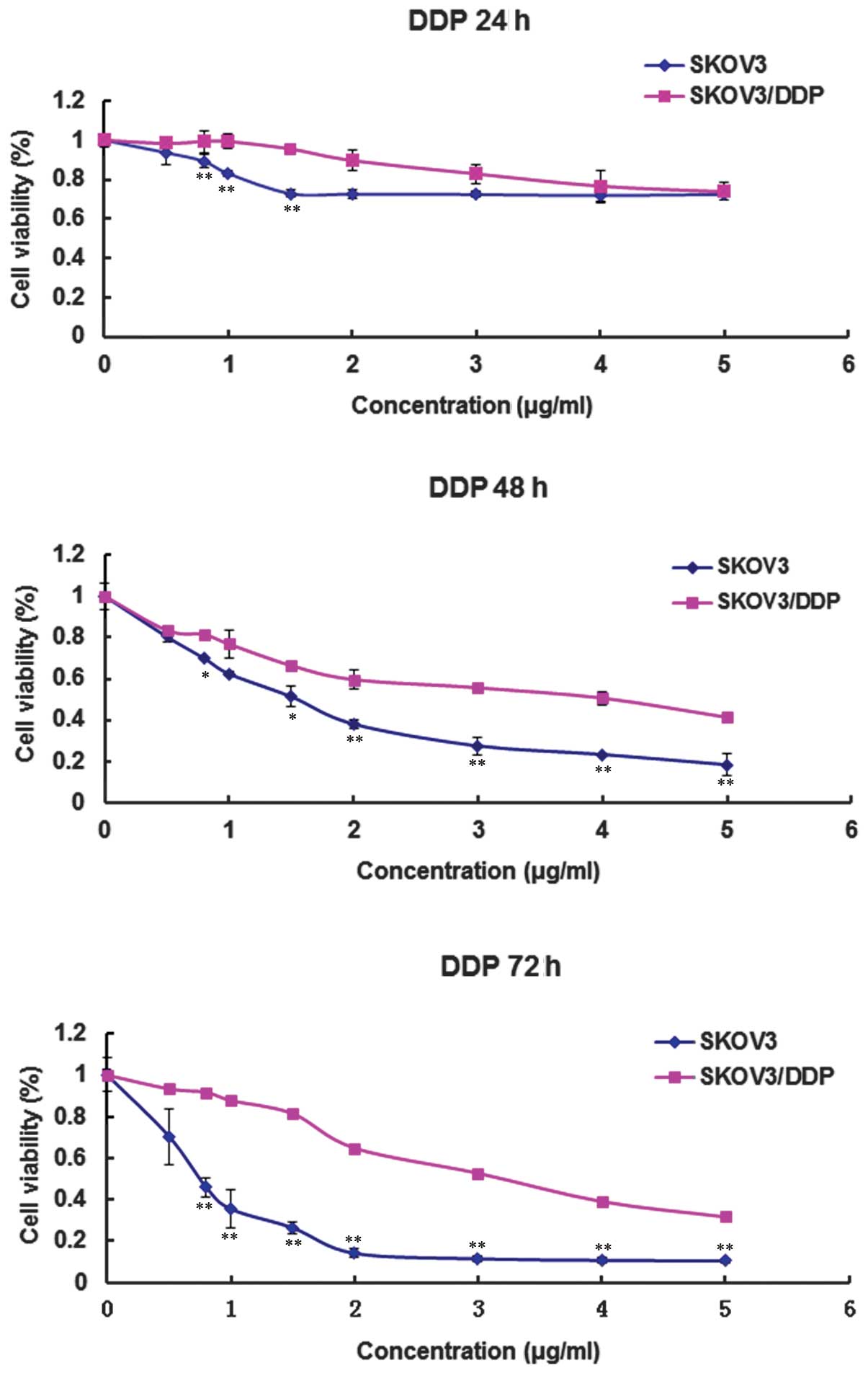
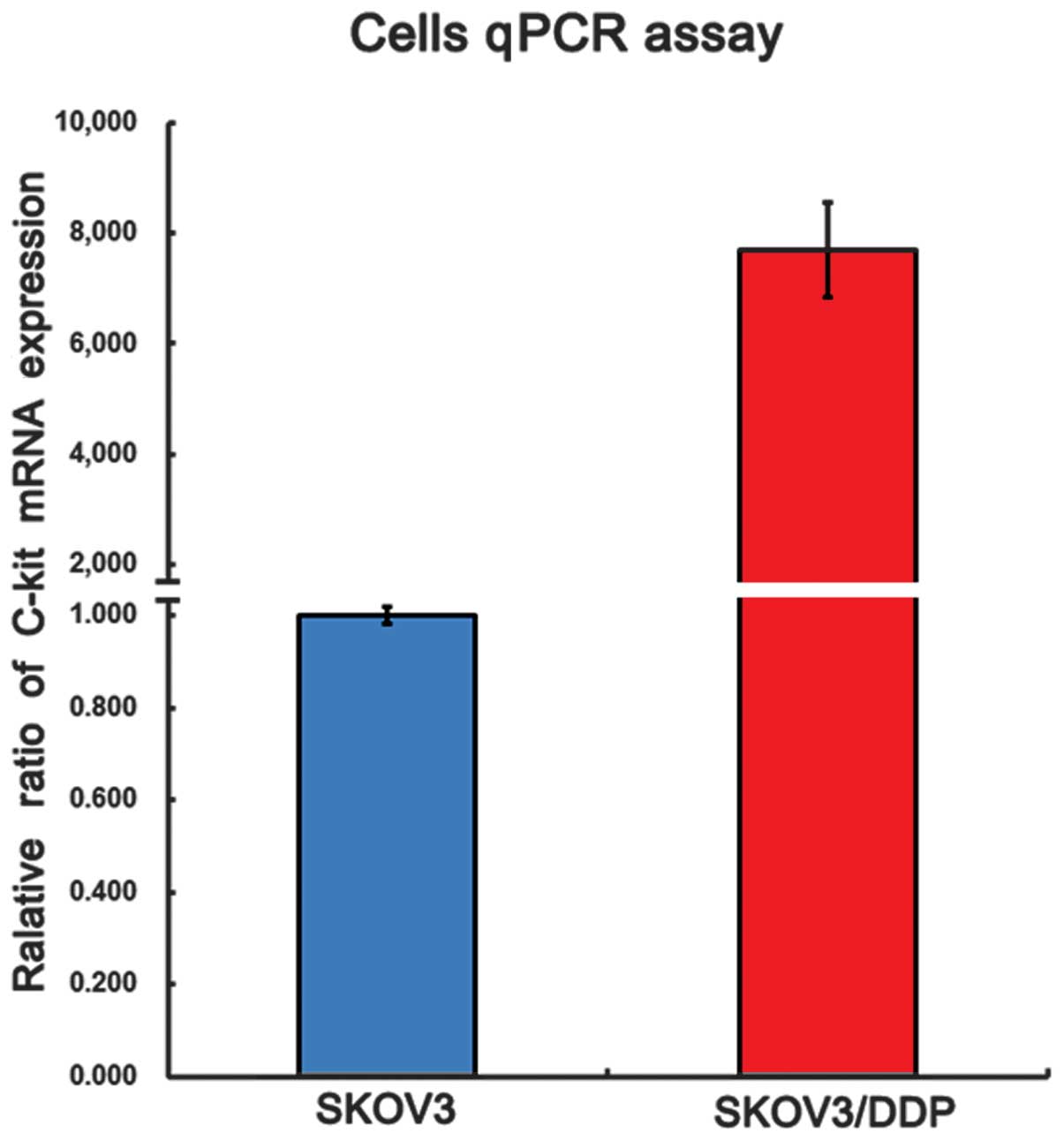
The dose- and time-dependent cytotoxic effects of DDP on the cultured SKOV3 and SKOV3/DDP cells were determined using an MTT colorimetric method. Cell growth and survival curves were then plotted (Fig. 1). As shown in Fig. 1, DDP resistance was significantly higher in the SKOV3/DDP cells compared with the SKOV3 cells following treatment with DDP for 24, 48 and 72 h. Furthermore, qPCR analysis (Fig. 2) revealed that c-Kit mRNA was expressed in the SKOV3 and SKOV3/DDP cells, and that the expression of c-Kit in the DDP-resistant SKOV3/DDP cells was significantly higher compared with that in the non-resistant SKOV3 cells.

Figure 1

Time- and dose-dependent cytotoxic effect of cisplatin (DDP) on SKOV3 and SKOV3/DDP cells determined using an MTT method. *P<0.05 vs. SKOV3 cells, **P<0.01 vs. SKOV3 cells.

Figure 2

qPCR analysis of c-Kit mRNA expression in SKOV3 and SKOV3/DDP cells. qPCR, quantitative polymerase chain reaction analysis; DDP, cisplatin. **P<0.01 vs. SKOV3 group.

Growth and metastasis of tumors transplanted orthotopically

A total of 16 nude mice were used to establish an orthotopic tumor transplantation model with SKOV3/DDP ovarian cancer cells. Two mice succumbed within one week of surgery; however, the orthotopic tumor transplantation model was successfully established in the remaining 14 mice, with a success rate of 87.5%. Table I shows the growth and metastasis findings of the tumor that was transplanted orthotopically in vivo.

Table I

Organs with metastatic tumors in the mouse model.

Table I

Organs with metastatic tumors in the mouse model.

Mouse no.Organs with metastatic tumors
1Bilateral ovaries, fallopian tubes and mesentery
2Bilateral ovaries and fallopian tubes
3Bilateral ovaries, fallopian tubes and omentum
4Bilateral ovaries, fallopian tubes and mesentery
5Bilateral ovaries, fallopian tubes, mesentery and hepatic surface, with small number of bloody ascites
6Bilateral ovaries, fallopian tubes and liver
7Bilateral ovaries, fallopian tubes, mesentery and intestinal surface
8Bilateral ovaries, fallopian tubes, mesentery and omentum
9Bilateral ovaries, fallopian tubes, mesentery and hepatic surface, with small number of bloody ascites
10Bilateral ovaries, fallopian tubes and hepatic surface
11Bilateral ovaries and fallopian tubes
12Bilateral ovaries
13Bilateral ovaries
14Ipsilateral ovary

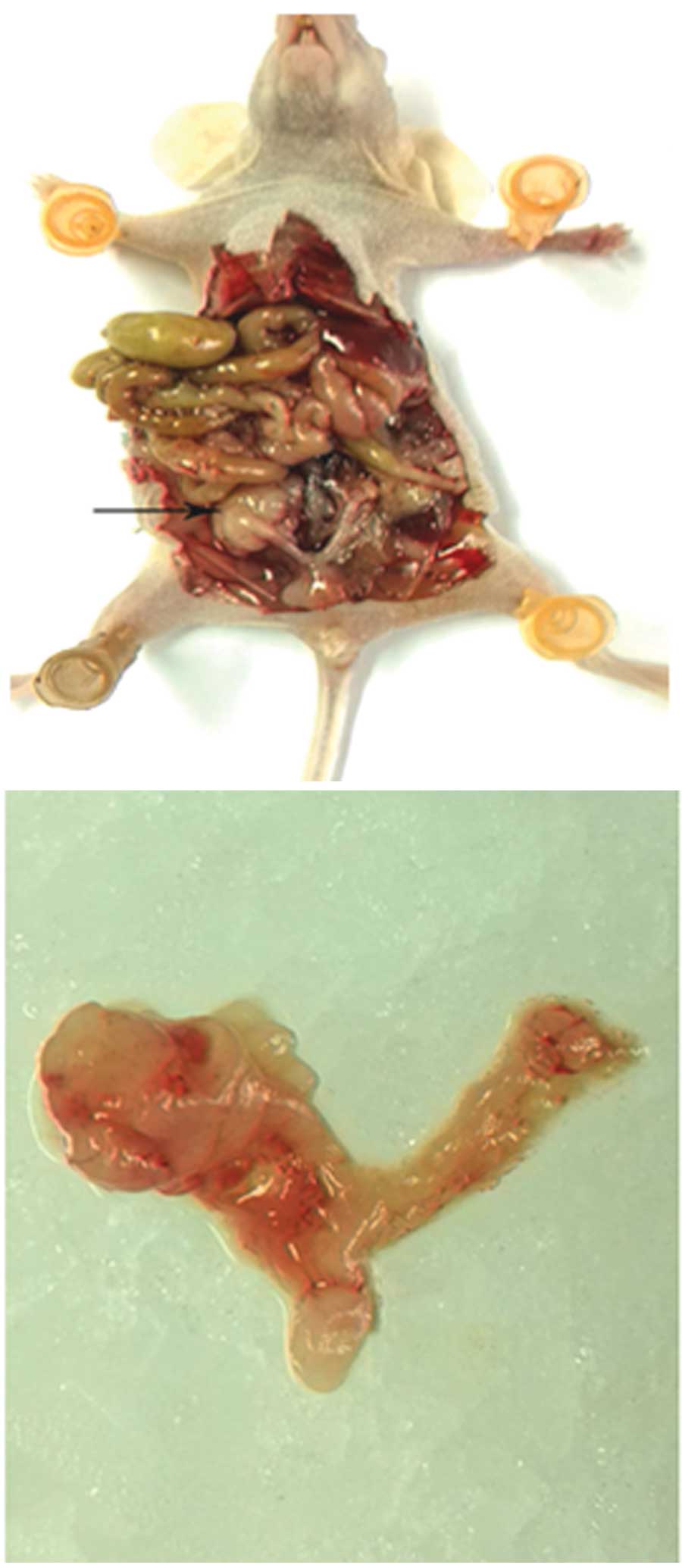
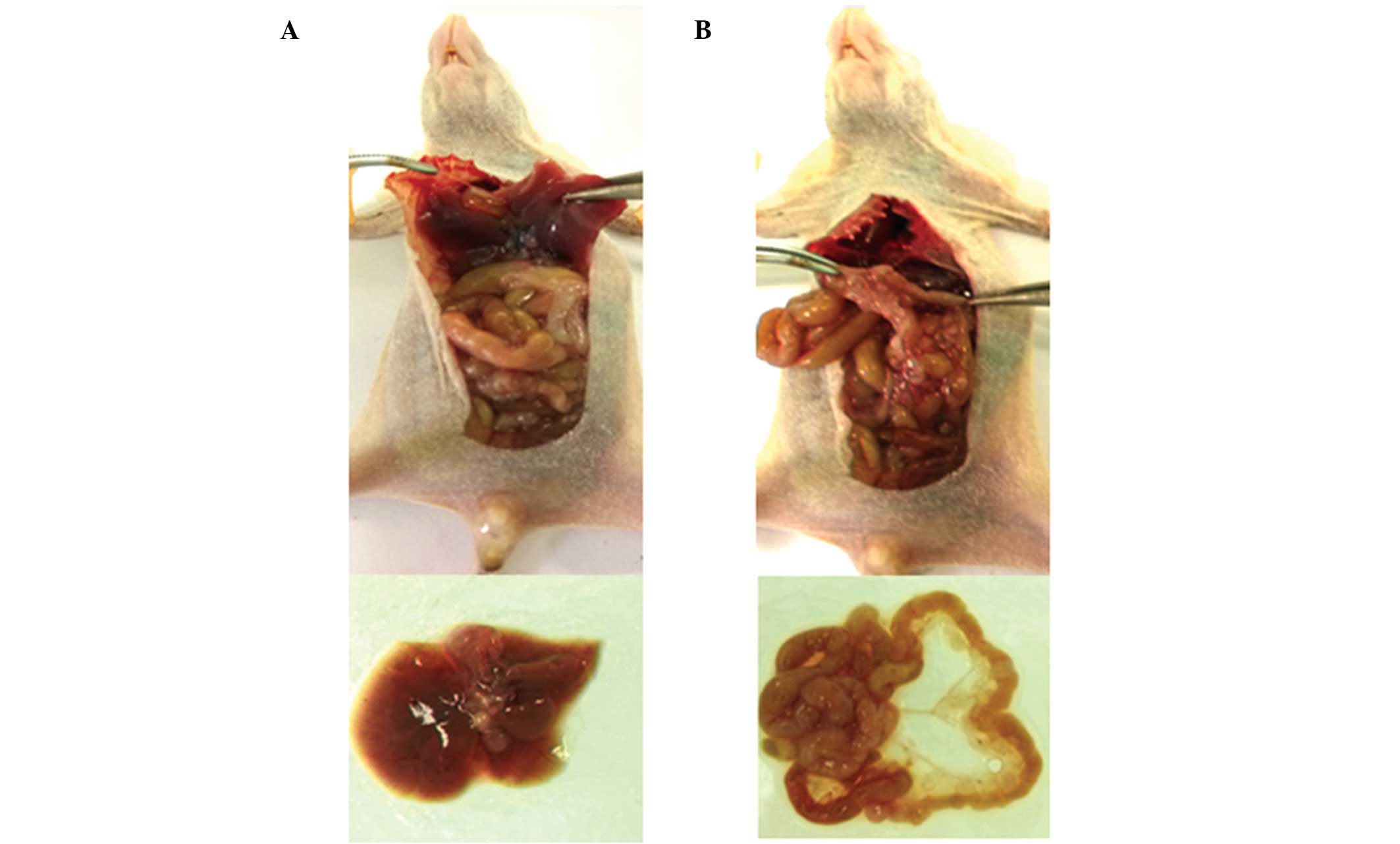
Abdominal swellings gradually appeared in the nude mice ~8–10 weeks after the successful orthotopic tumor transplantation. In addition, the mice exhibited loss of body weight and appetite, accompanied by decreased activity levels. Abdominal palpation revealed a palpable mass with poor mobility. The tumor-bearing mice were sacrificed via cervical dislocation when the abdominal mass was >2 cm in diameter. A laparotomy identified the formation of a relatively large mass in the transplantation side (Fig. 3), with a hard texture and varying degrees of adhesion to the surrounding tissues. A small quantity of dark-red intraperitoneal fluid was also observed. In certain mice, metastatic lesions were found in the abdominal organs, including the liver and mesentery (Fig. 4).

Figure 3

Anatomic images of an orthotopically-transplanted ovarian tumor in a nude mouse model.

Figure 4

Anatomic images showing ovarian cancer metastases to the (A) liver and (B) mesentery in an orthotopic transplantation nude mouse model.

Pathology

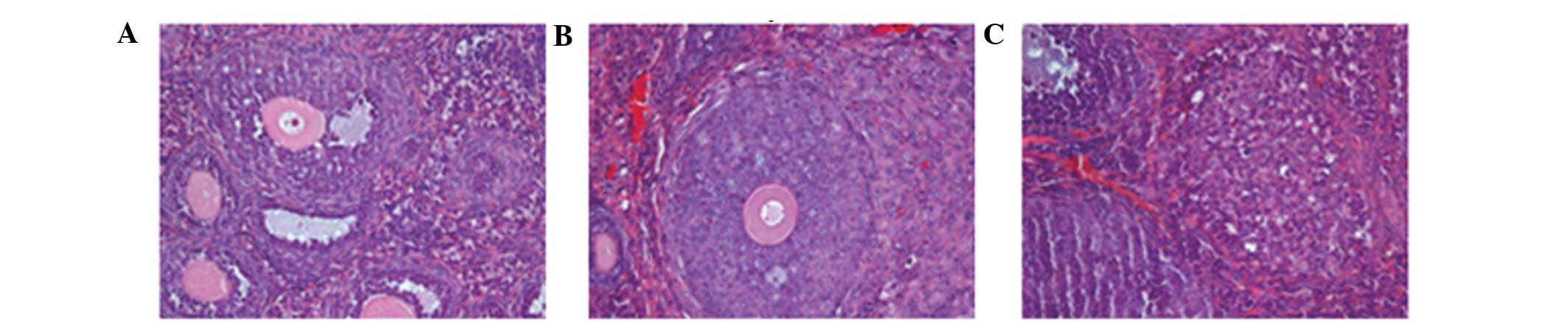
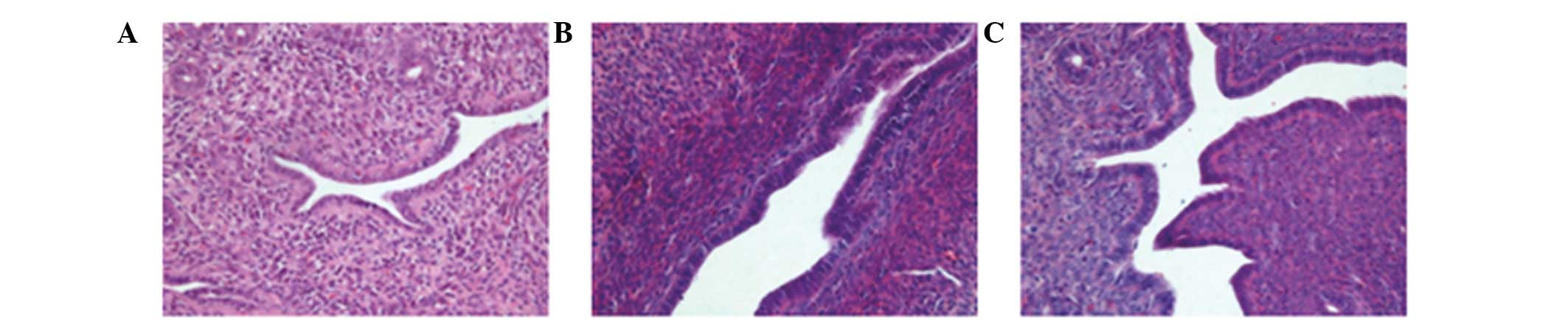
The orthotopic tumors and organs with suspected metastatic tumors were resectioned, stained with H&E and analyzed under a microscope. A large number of ovarian cancer cells were observed in the bilateral ovaries and demonstrated infiltrative growth. The cell morphology was observed to be the same as that of the parental subcutaneous tumor, with large dark-stained nuclei and a high karyoplasmic ratio. The cells exhibited evident atypia, and a dense and disordered arrangement with visible interstitial cells (Fig. 5). Certain mice exhibited visible bilateral tubal metastasis of the tumor cells, with a morphology the same as that of the tumor cells that were transplanted orthotopically (Fig. 6). In the liver, the hepatic cord cells showed disarrangement, with evident inflammatory cell infiltration and small nodule formation. There were no metastatic tumor cells visible in the uterine tissue.

Figure 5

Anatomic images showing (A) the healthy ovaries in a control mouse and (B and C) the transplanted and metastatic ovarian cancer tumors in the ipsilateral and contralateral sides in an orthotopic transplantation nude mouse model. Hematoxylin and eosin stain; magnification ×400.

Figure 6

Microscopic images of (A) a pathological section of a healthy fallopian tube in a control mouse and (B and C) metastatic tumors in the bilateral fallopian tubes in an orthotopic transplantation nude mouse model. Hematoxylin and eosin stain; magnification, ×400.

Discussion

Resistance to platinum-based chemotherapy in ovarian cancer is a critical issue in the clinical setting. In a previous clinical study, c-Kit gene expression was identified to be closely associated with drug resistance and malignancy in ovarian cancer (5), which was consistent with previous findings (4). In the preliminary experiments, using 4T1-LUC cells, an orthotopic transplantation model of ovarian cancer was established. The implanted ovarian tumor model exhibited biological characteristics, and a metastatic rate and pattern that were closest to the clinical state. To understand the association between c-Kit gene expression, and drug resistance and malignancy in ovarian cancer, an animal model that simulates human ovarian developmen cancer in terms of onset, location, mechanism and histological and biological characteristics was required.

In the present study, SKOV3 and SKOV3/DDP human ovarian cancer cell lines were used and their sensitivity to DDP and c-Kit expression was assessed via MTT assay and qPCR. The c-Kit gene was identified to be expressed in the two cell lines and was significantly highly expressed in the DDP-resistant SKOV3/DDP cells, which correlated with its drug resistance. Using the SKOV3/DDP cells, an orthotopic tumor transplantation model was successfully established in the nude mice that closely simulated the occurrence, development and metastasis of human ovarian cancer. This model may facilitate further investigations into the association between c-Kit gene expression and malignancy in ovarian tumors. Furthermore, the model may provide a valuable tool for investigating the underyling mechanism of drug resistance in ovarian cancer, as well as the late-phase evaluation of the in vivo efficacy of novel treatment plans.

Acknowledgements

The present study was supported by a grant from the National Natural Science Foundation of China (grant no. 8117245/H1621).

References

1 

Mundhenke C, Weigel MT, Sturner KH, et al: Novel treatment of ovarian cancer cell lines with Imatinib mesylate combined with Paclitaxel and Carboplatin leads to receptor-mediated antiproliferative effects. J Cancer Res Clin Oncol. 134:1397–1405. 2008.

2 

Seeber LMS and van Diest PJ: Epigenetics in ovarian cancer. Methods Mol Biol. 863:253–269. 2012.

3 

Li X, Ling V and Li PC: Same single cell analysis for the study of drug efflux modulation of multidrug resistant cells using a microfluidic chip. Anal Chem. 80:4095–4102. 2008.

4 

Schmandt RE, Broaddus R, Lu KH, et al: Expression of C-ABL, c-KIT, and platelet-derived growth factor receptor-beta in ovarian serous carcinoma and normal ovarian surface epithelium. Cancer. 98:758–764. 2003.

5 

Yi C, Li L, Chen K, et al: Expression of c-Kit and PDGFRα in epithelial ovarian tumors and tumor stroma. Oncol Lett. 3:369–372. 2012.

Related Articles

  • Abstract
  • View
  • Download
  • Twitter
Copy and paste a formatted citation
Spandidos Publications style
Yi C, Zhang L, Li L, Liu X, Ling S, Zhang F and Liang W: Establishment of an orthotopic transplantation tumor model in nude mice using a drug‑resistant human ovarian cancer cell line with a high expression of c‑Kit. Oncol Lett 8: 2611-2615, 2014.
APA
Yi, C., Zhang, L., Li, L., Liu, X., Ling, S., Zhang, F., & Liang, W. (2014). Establishment of an orthotopic transplantation tumor model in nude mice using a drug‑resistant human ovarian cancer cell line with a high expression of c‑Kit. Oncology Letters, 8, 2611-2615. https://doi.org/10.3892/ol.2014.2537
MLA
Yi, C., Zhang, L., Li, L., Liu, X., Ling, S., Zhang, F., Liang, W."Establishment of an orthotopic transplantation tumor model in nude mice using a drug‑resistant human ovarian cancer cell line with a high expression of c‑Kit". Oncology Letters 8.6 (2014): 2611-2615.
Chicago
Yi, C., Zhang, L., Li, L., Liu, X., Ling, S., Zhang, F., Liang, W."Establishment of an orthotopic transplantation tumor model in nude mice using a drug‑resistant human ovarian cancer cell line with a high expression of c‑Kit". Oncology Letters 8, no. 6 (2014): 2611-2615. https://doi.org/10.3892/ol.2014.2537
Copy and paste a formatted citation
x
Spandidos Publications style
Yi C, Zhang L, Li L, Liu X, Ling S, Zhang F and Liang W: Establishment of an orthotopic transplantation tumor model in nude mice using a drug‑resistant human ovarian cancer cell line with a high expression of c‑Kit. Oncol Lett 8: 2611-2615, 2014.
APA
Yi, C., Zhang, L., Li, L., Liu, X., Ling, S., Zhang, F., & Liang, W. (2014). Establishment of an orthotopic transplantation tumor model in nude mice using a drug‑resistant human ovarian cancer cell line with a high expression of c‑Kit. Oncology Letters, 8, 2611-2615. https://doi.org/10.3892/ol.2014.2537
MLA
Yi, C., Zhang, L., Li, L., Liu, X., Ling, S., Zhang, F., Liang, W."Establishment of an orthotopic transplantation tumor model in nude mice using a drug‑resistant human ovarian cancer cell line with a high expression of c‑Kit". Oncology Letters 8.6 (2014): 2611-2615.
Chicago
Yi, C., Zhang, L., Li, L., Liu, X., Ling, S., Zhang, F., Liang, W."Establishment of an orthotopic transplantation tumor model in nude mice using a drug‑resistant human ovarian cancer cell line with a high expression of c‑Kit". Oncology Letters 8, no. 6 (2014): 2611-2615. https://doi.org/10.3892/ol.2014.2537
Follow us
  • Twitter
  • LinkedIn
  • Facebook
About
  • Spandidos Publications
  • Careers
  • Cookie Policy
  • Privacy Policy
How can we help?
  • Help
  • Live Chat
  • Contact
  • Email to our Support Team