Spandidos Publications Logo
  • About
    • About Spandidos
    • Aims and Scopes
    • Abstracting and Indexing
    • Editorial Policies
    • Reprints and Permissions
    • Job Opportunities
    • Terms and Conditions
    • Contact
  • Journals
    • All Journals
    • Oncology Letters
      • Oncology Letters
      • Information for Authors
      • Editorial Policies
      • Editorial Board
      • Aims and Scope
      • Abstracting and Indexing
      • Bibliographic Information
      • Archive
    • International Journal of Oncology
      • International Journal of Oncology
      • Information for Authors
      • Editorial Policies
      • Editorial Board
      • Aims and Scope
      • Abstracting and Indexing
      • Bibliographic Information
      • Archive
    • Molecular and Clinical Oncology
      • Molecular and Clinical Oncology
      • Information for Authors
      • Editorial Policies
      • Editorial Board
      • Aims and Scope
      • Abstracting and Indexing
      • Bibliographic Information
      • Archive
    • Experimental and Therapeutic Medicine
      • Experimental and Therapeutic Medicine
      • Information for Authors
      • Editorial Policies
      • Editorial Board
      • Aims and Scope
      • Abstracting and Indexing
      • Bibliographic Information
      • Archive
    • International Journal of Molecular Medicine
      • International Journal of Molecular Medicine
      • Information for Authors
      • Editorial Policies
      • Editorial Board
      • Aims and Scope
      • Abstracting and Indexing
      • Bibliographic Information
      • Archive
    • Biomedical Reports
      • Biomedical Reports
      • Information for Authors
      • Editorial Policies
      • Editorial Board
      • Aims and Scope
      • Abstracting and Indexing
      • Bibliographic Information
      • Archive
    • Oncology Reports
      • Oncology Reports
      • Information for Authors
      • Editorial Policies
      • Editorial Board
      • Aims and Scope
      • Abstracting and Indexing
      • Bibliographic Information
      • Archive
    • Molecular Medicine Reports
      • Molecular Medicine Reports
      • Information for Authors
      • Editorial Policies
      • Editorial Board
      • Aims and Scope
      • Abstracting and Indexing
      • Bibliographic Information
      • Archive
    • World Academy of Sciences Journal
      • World Academy of Sciences Journal
      • Information for Authors
      • Editorial Policies
      • Editorial Board
      • Aims and Scope
      • Abstracting and Indexing
      • Bibliographic Information
      • Archive
    • International Journal of Functional Nutrition
      • International Journal of Functional Nutrition
      • Information for Authors
      • Editorial Policies
      • Editorial Board
      • Aims and Scope
      • Abstracting and Indexing
      • Bibliographic Information
      • Archive
    • International Journal of Epigenetics
      • International Journal of Epigenetics
      • Information for Authors
      • Editorial Policies
      • Editorial Board
      • Aims and Scope
      • Abstracting and Indexing
      • Bibliographic Information
      • Archive
    • Medicine International
      • Medicine International
      • Information for Authors
      • Editorial Policies
      • Editorial Board
      • Aims and Scope
      • Abstracting and Indexing
      • Bibliographic Information
      • Archive
  • Articles
  • Information
    • Information for Authors
    • Information for Reviewers
    • Information for Librarians
    • Information for Advertisers
    • Conferences
  • Language Editing
Spandidos Publications Logo
  • About
    • About Spandidos
    • Aims and Scopes
    • Abstracting and Indexing
    • Editorial Policies
    • Reprints and Permissions
    • Job Opportunities
    • Terms and Conditions
    • Contact
  • Journals
    • All Journals
    • Biomedical Reports
      • Information for Authors
      • Editorial Policies
      • Editorial Board
      • Aims and Scope
      • Abstracting and Indexing
      • Bibliographic Information
      • Archive
    • Experimental and Therapeutic Medicine
      • Information for Authors
      • Editorial Policies
      • Editorial Board
      • Aims and Scope
      • Abstracting and Indexing
      • Bibliographic Information
      • Archive
    • International Journal of Epigenetics
      • Information for Authors
      • Editorial Policies
      • Editorial Board
      • Aims and Scope
      • Abstracting and Indexing
      • Bibliographic Information
      • Archive
    • International Journal of Functional Nutrition
      • Information for Authors
      • Editorial Policies
      • Editorial Board
      • Aims and Scope
      • Abstracting and Indexing
      • Bibliographic Information
      • Archive
    • International Journal of Molecular Medicine
      • Information for Authors
      • Editorial Policies
      • Editorial Board
      • Aims and Scope
      • Abstracting and Indexing
      • Bibliographic Information
      • Archive
    • International Journal of Oncology
      • Information for Authors
      • Editorial Policies
      • Editorial Board
      • Aims and Scope
      • Abstracting and Indexing
      • Bibliographic Information
      • Archive
    • Medicine International
      • Information for Authors
      • Editorial Policies
      • Editorial Board
      • Aims and Scope
      • Abstracting and Indexing
      • Bibliographic Information
      • Archive
    • Molecular and Clinical Oncology
      • Information for Authors
      • Editorial Policies
      • Editorial Board
      • Aims and Scope
      • Abstracting and Indexing
      • Bibliographic Information
      • Archive
    • Molecular Medicine Reports
      • Information for Authors
      • Editorial Policies
      • Editorial Board
      • Aims and Scope
      • Abstracting and Indexing
      • Bibliographic Information
      • Archive
    • Oncology Letters
      • Information for Authors
      • Editorial Policies
      • Editorial Board
      • Aims and Scope
      • Abstracting and Indexing
      • Bibliographic Information
      • Archive
    • Oncology Reports
      • Information for Authors
      • Editorial Policies
      • Editorial Board
      • Aims and Scope
      • Abstracting and Indexing
      • Bibliographic Information
      • Archive
    • World Academy of Sciences Journal
      • Information for Authors
      • Editorial Policies
      • Editorial Board
      • Aims and Scope
      • Abstracting and Indexing
      • Bibliographic Information
      • Archive
  • Articles
  • Information
    • For Authors
    • For Reviewers
    • For Librarians
    • For Advertisers
    • Conferences
  • Language Editing
Login Register Submit
  • This site uses cookies
  • You can change your cookie settings at any time by following the instructions in our Cookie Policy. To find out more, you may read our Privacy Policy.

    I agree
Search articles by DOI, keyword, author or affiliation
Search
Advanced Search
presentation
Oncology Letters
Join Editorial Board Propose a Special Issue
Print ISSN: 1792-1074 Online ISSN: 1792-1082
Journal Cover
December-2014 Volume 8 Issue 6

Full Size Image

Sign up for eToc alerts
Recommend to Library

Journals

International Journal of Molecular Medicine

International Journal of Molecular Medicine

International Journal of Molecular Medicine is an international journal devoted to molecular mechanisms of human disease.

International Journal of Oncology

International Journal of Oncology

International Journal of Oncology is an international journal devoted to oncology research and cancer treatment.

Molecular Medicine Reports

Molecular Medicine Reports

Covers molecular medicine topics such as pharmacology, pathology, genetics, neuroscience, infectious diseases, molecular cardiology, and molecular surgery.

Oncology Reports

Oncology Reports

Oncology Reports is an international journal devoted to fundamental and applied research in Oncology.

Experimental and Therapeutic Medicine

Experimental and Therapeutic Medicine

Experimental and Therapeutic Medicine is an international journal devoted to laboratory and clinical medicine.

Oncology Letters

Oncology Letters

Oncology Letters is an international journal devoted to Experimental and Clinical Oncology.

Biomedical Reports

Biomedical Reports

Explores a wide range of biological and medical fields, including pharmacology, genetics, microbiology, neuroscience, and molecular cardiology.

Molecular and Clinical Oncology

Molecular and Clinical Oncology

International journal addressing all aspects of oncology research, from tumorigenesis and oncogenes to chemotherapy and metastasis.

World Academy of Sciences Journal

World Academy of Sciences Journal

Multidisciplinary open-access journal spanning biochemistry, genetics, neuroscience, environmental health, and synthetic biology.

International Journal of Functional Nutrition

International Journal of Functional Nutrition

Open-access journal combining biochemistry, pharmacology, immunology, and genetics to advance health through functional nutrition.

International Journal of Epigenetics

International Journal of Epigenetics

Publishes open-access research on using epigenetics to advance understanding and treatment of human disease.

Medicine International

Medicine International

An International Open Access Journal Devoted to General Medicine.

Journal Cover
December-2014 Volume 8 Issue 6

Full Size Image

Sign up for eToc alerts
Recommend to Library

  • Article
  • Citations
    • Cite This Article
    • Download Citation
    • Create Citation Alert
    • Remove Citation Alert
    • Cited By
  • Similar Articles
    • Related Articles (in Spandidos Publications)
    • Similar Articles (Google Scholar)
    • Similar Articles (PubMed)
  • Download PDF
  • Download XML
  • View XML
Case Report

Low‑dose tissue plasminogen activator in the treatment of a massive pulmonary thromboembolism in a colon cancer patient treated with bevacizumab: A case report

  • Authors:
    • Fatma Sen
    • Yusuf Karavelioglu
    • Arif Arısoy
  • View Affiliations / Copyright

    Affiliations: Department of Oncology, Hitit University, Corum Educational and Research Hospital, Corum 19100, Turkey, Department of Cardiology, Hitit University, Corum Educational and Research Hospital, Corum 19100, Turkey
  • Pages: 2779-2781
    |
    Published online on: September 26, 2014
       https://doi.org/10.3892/ol.2014.2568
  • Expand metrics +
Metrics: Total Views: 0 (Spandidos Publications: | PMC Statistics: )
Metrics: Total PDF Downloads: 0 (Spandidos Publications: | PMC Statistics: )
Cited By (CrossRef): 0 citations Loading Articles...

This article is mentioned in:


Abstract

The current study describes the fibrinolytic treatment of a patient exhibiting an acute massive pulmonary thromboembolism, who was also receiving a bevacizumab‑based combination regimen for metastatic colon cancer. The administration of bevacizumab has been associated with an increased risk of venous thromboembolic events and bleeding in cancer patients. However, there is insufficient data regarding the safety and activity of thrombolytic agents in cancer patients receiving bevacizumab‑based therapy. In the present case, despite the increased risk of bleeding, low‑dose and prolonged tissue plasminogen activator infusion was effectively and reliably applied to treat a massive pulmonary embolism, which resulted in hemodynamic instability in the patient.

Introduction

Cancer often leads to hypercoagulability, which may result in a variety of clinical manifestations, including migratory superficial thrombophlebitis, venous thrombosis, non-bacterial thrombotic endocarditis and disseminated intravascular coagulation. The release or expression of procoagulants by tumor cells and the demonstration of procoagulant activity by monocytes, platelets and endothelial cells are hypothesized to cause vascular complications in patients exhibiting malignancies. The common treatments for cancer include surgery, high-dose chemotherapy, bone marrow transplantation and numerous chemotherapeutic regimens. In addition, an indwelling central venous catheter may be used, which may significantly increase the risk of thrombotic events in patients with malignancy (1).

Angiogenesis inhibitors are increasingly administered for the treatment of patients with malignancies. Bevacizumab is a humanized monoclonal antibody that inhibits angiogenesis by inhibiting vascular endothelial growth factor (VEGF)-A. Bevacizumab was initially approved in 2004 for combinational use with standard chemotherapy for metastatic colon cancer treatment. However, the use of bevacizumab has been associated with an increased risk of venous thromboembolic events and bleeding in cancer patients (2,3). Currently, there is insufficient data regarding the safety and activity of thrombolytic agents in the treatment of massive pulmonary thromboembolisms that have developed in cancer patients undergoing bevacizumab-based therapy.

In the present study, the case of a patient with an acute massive pulmonary thromboembolism is presented, who received fibrinolytic treatment, whilst receiving a bevacizumab-based combination regimen for metastatic colon cancer. Written informed consent was obtained from the patient.

Case report

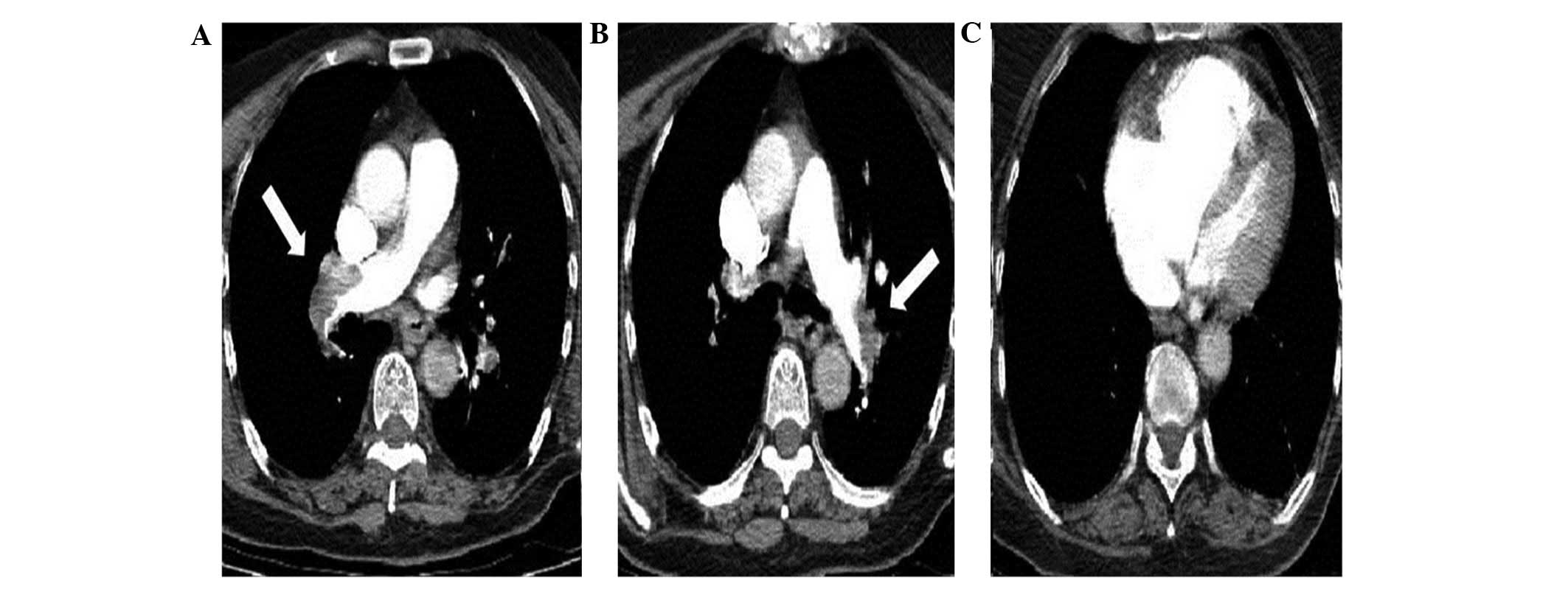
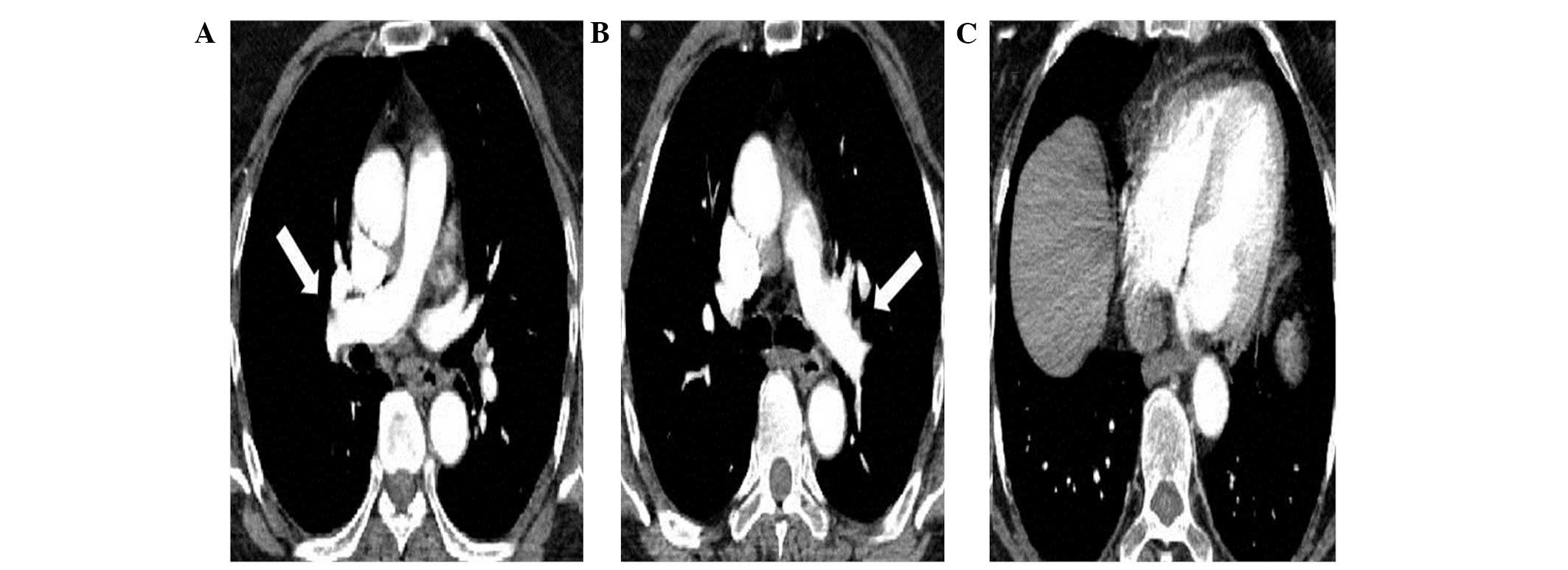
In September 2013, a 66-year-old female with a metastatic colon carcinoma was admitted to the emergency department of Hitit University, Corum Educational and Research Hospital (Corum, Turkey) with acute dyspnea, palpitations and dizziness. The patient exhibited hypertension, however, the patient’s medical history did not include smoking, diabetes mellitus, ischemic heart disease or any thrombotic disease. The patient underwent nine cycles of the FOLFIRI (90 min intravenous infusion of 180 mg/m2 irinotecan, 400 mg/m2 fluorouracil and 400 mg/m2 leucovorin, followed by a 46 h intravenous infusion of 2,400 mg/m2, entire regimen delivered twice a week, for 18 weeks) plus bevacizumab combination therapy. The patient’s symptoms developed 10 days following the last cycle of chemotherapy. On physical examination the patient’s blood pressure was 70/50 mmHg and heart rate was 120 bpm. The patient exhibited tachypnea, tachycardia, jugular venous distention and a systolic 2/6 murmur was identified on all cardiac points. An emergency two-dimensional ultrasonographic echocardiography revealed right heart dilatation, moderate tricuspid regurgitation and pulmonary hypertension. Thus, as the patient was considered to have a high risk of pulmonary embolism [PE; Wells score (4), 7 points], a PE was suspected. Thoracic computed tomography (CT) angiography demonstrated a bilateral pulmonary arterial embolism (Fig. 1). The patient was diagnosed with a massive PE and hemodynamic instability. Due to the patient’s malignancy and risk of bleeding, prolonged low-dose thrombolytic therapy [25 mg tissue plasminogen activator (tPA) infusion for 6 h] was administered to the peripheral vein, according to a previous study by Aykan et al (5), rather than a standard thrombolytic regime. Following treatment, there was an increase in blood pressure (100/70 mmHg) and improvement in the patient’s clinical condition. No bleeding complications were observed. Control echocardiography revealed an improvement in the right heart chambers and a decrease in pulmonary pressure. The CT angiography revealed that the peripheral vascular bed was reperfused (Fig. 2). Additionally, Doppler ultrasound revealed acute deep vein thrombosis (DVT) in the right lower extremities, which was considered to be the source of the pulmonary embolism.

Figure 1

Pulmonary thromboembolism on computed tomography scan. (A) Right middle and lower pulmonary artery branch emboli. (B) Left pulmonary artery emboli. (C) Right ventricular dilatation (right ventricular cavity wider than left ventricular cavity in short axis).

Figure 2

Computed tomography scan following thrombolytic therapy. (A) Reperfusion of the branches of the (A) right and (B) left pulmonary arteries. (C) Normalization of the diameter of the left and right ventricular cavities.

Discussion

Numerous studies have indicated that progression-free survival and overall survival are improved by the administration of bevacizumab, in combination with various chemotherapy regimens, for patients with metastatic colon cancer (5,6). The class-effects of VEGF axis inhibition include cardiovascular effects, for example hypertension and left ventricular dysfunction, and non-cardiovascular effects, including proteinuria, delayed wound healing, gastrointestinal perforation, fatigue and dysphonia. In addition, the administration of bevacizumab in conjunction with chemotherapy is associated with an increased risk of thromboembolic and bleeding events (2,3). PE occurs in 2–5% of cases where bevacizumab and chemotherapy are used in combination (6,7). In the present study, the patient was diagnosed with a massive PE and DVT following bevacizumab combination therapy.

It is recommended that thrombolytic therapy is followed by anticoagulation therapy, rather than anticoagulation alone, for patients exhibiting acute PE who are persistently hypotensive as a result of the PE (systolic blood pressure <90 mmHg or a decrease in systolic blood pressure of ≥40 mmHg from baseline) and who do not exhibit an increased risk of bleeding. The results of previous studies indicate that thrombolytic therapy leads to early hemodynamic improvement, however, is associated with an increased risk of major bleeding (8,9).

Results regarding the effect of thrombolytic therapy on the improvement of mortality are controversial. Despite the inconsistent results of controlled clinical trials, one observational study of 72,230 unstable patients with acute PE revealed that thrombolytic therapy was associated with lower all-cause mortality when compared with no treatment (15 vs. 47%, respectively) and lower mortality attributable to PE when compared with no treatment (8.4 vs. 42%) (10). However, observational results obtained from the same population revealed that thrombolytic therapy was underutilized and less likely to be administered in older patients (aged >60 years) and in patients with comorbid conditions, highlighting a possible lack of confidence exhibited by clinicians regarding the use of thrombolytic therapy (11). While the reported effect size is large in the two above-mentioned studies, the observational design and the potential influence of bias demonstrates that the efficacy of thrombolytic therapy in this clinical setting remains unclear. Although bevacizumab may increase the risk of bleeding, due to the patient’s hemodynamic instability in the present case, thrombolytic therapy was initiated immediately.

In patients exhibiting massive pulmonary embolisms, the guidelines for conducting thrombolytic therapy recommend peripheral venous administration of 100 mg tPA for 2 h (12). The risk of bleeding, a significant complication of thrombolytic therapy, has been reported to be as high as 20% in older patients with a large body mass index and a history of previous catheterization (13–15). However, to the best of our knowledge, no sufficient data exists regarding a prolonged low-dose tPA regime. In previous studies, it has been demonstrated that prolonged low-dose tPA may be effectively and reliably administered to elderly patients in whom the risk of bleeding is high (16), in patients with a prosthetic valve (17) or in patients who exhibit hemoptysis secondary to an embolism (18) without an increased risk of bleeding.

In conclusion, thrombolytic therapy in patients with malignancies is associated with an increased risk of bleeding, regardless of the presence of metastasis. Certain chemotherapeutic agents, including bevacizumab, may elevate the risk of bleeding. However, in the present study, despite the increased risk of bleeding, low-dose and prolonged tPA infusion was effectively and reliably administered in a patient with a massive PE, although it did result in hemodynamic instability.

References

1 

Schiffer CA, Mangu PB, Wade JC, et al: Central venous catheter care for the patient with cancer: American Society of Clinical Oncology clinical practice guideline. J Clin Oncol. 31:1357–1370. 2013.

2 

Scappaticci FA, Skillings JR, Holden SN, et al: Arterial thromboembolic events in patients with metastatic carcinoma treated with chemotherapy and bevacizumab. J Natl Cancer Inst. 99:1232–1239. 2007.

3 

Nalluri SR, Chu D, Keresztes R, et al: Risk of venous thromboembolism with the angiogenesis inhibitor bevacizumab in cancer patients: a meta-analysis. JAMA. 300:2277–2285. 2008.

4 

Wells PS, Anderson DR, Rodger M, et al: Derivation of a simple clinical model to categorize patients probability of pulmonary embolism: increasing the models utility with the SimpliRED D-dimer. Thromb Haemost. 83:416–420. 2000.

5 

Aykan AC, Boyaci F and Hatem E: Successful treatment of a pulmonary embolism with low dose prolonged infusion of tissue typed plasminogen activator in a 37 year old female in early postoperative period. Anadolu Kardiyol Derg. 14:400–402. 2014.

6 

Hurwitz H, Fehrenbacher L, Novotny W, et al: Bevacizumab plus irinotecan, fluorouracil, and leucovorin for metastatic colorectal cancer. N Engl J Med. 350:2335–2342. 2004.

7 

Kabbinavar FF, Schulz J, McCleod M, et al: Addition of bevacizumab to bolus fluorouracil and leucovorin in first-line metastatic colorectal cancer: results of a randomized phase II trial. J Clin Oncol. 23:3697–3705. 2005.

8 

Goldhaber SZ, Haire WD, Feldstein ML, et al: Alteplase versus heparin in acute pulmonary embolism: randomised trial assessing right-ventricular function and pulmonary perfusion. Lancet. 341:507–511. 1993.

9 

Chatterjee S, Chakraborty A, Weinberg I, et al: Thrombolysis for pulmonary embolism and risk of all-cause mortality, major bleeding, and intracranial hemorrhage: a meta-analysis. JAMA. 311:2414–2421. 2014.

10 

Stein PD and Matta F: Thrombolytic therapy in unstable patients with acute pulmonary embolism: saves lives but underused. Am J Med. 125:465–470. 2012.

11 

Stein PD and Matta F: Treatment of unstable pulmonary embolism in the elderly and those with comorbid conditions. Am J Med. 126:304–310. 2013.

12 

Kearon C, Kahn SR, Agnelli G, et al: American College of Chest Physicians: Antithrombotic therapy for venous thromboembolic disease: American College of Chest Physicians Evidence-Based Clinical Practice Guidelines (8th Edition). Chest. 133(Suppl 6): S454–S545. 2008.

13 

Fiumara K, Kucher N, Fanikos J and Goldhaber SZ: Predictors of major hemorrhage following fibrinolysis for acute pulmonary embolism. Am J Cardiol. 97:127–129. 2006.

14 

Mikkola KM, Patel SR, Parker JA, et al: Increasing age is a major risk factor for hemorrhagic complications after pulmonary embolism thrombolysis. Am Heart J. 134:69–72. 1997.

15 

Thabut G, Thabut D, Myers RP, et al: Thrombolytic therapy of pulmonary embolism: a meta-analysis. J Am Coll Cardiol. 40:1660–1667. 2002.

16 

Biteker M, Duran NE, Gündüz S and Ozkan M: Treatment of pulmonary embolism with low-dose prolonged infusion of tissue-type plasminogen activator in an 85-year-old woman. J Am Geriatr Soc. 57:745–746. 2009.

17 

Özkan M, Çakal B, Karakoyun S, et al: Thrombolytic therapy for the treatment of prosthetic heart valve thrombosis in pregnancy with low-dose, slow infusion of tissue-type plasminogen activator. Circulation. 128:532–540. 2013.

18 

Karavelioğlu Y, Karapınar H, Kucukdurmaz Z, et al: Worm-like thrombus in the right heart treated with low dose fibrinolytic therapy in a patient with pulmonary embolism. Koşuyolu Heart Journal. DOI: 10.5578/kkd.5793. (Epub ahead of print).

Related Articles

  • Abstract
  • View
  • Download
  • Twitter
Copy and paste a formatted citation
Spandidos Publications style
Sen F, Karavelioglu Y and Arısoy A: Low‑dose tissue plasminogen activator in the treatment of a massive pulmonary thromboembolism in a colon cancer patient treated with bevacizumab: A case report. Oncol Lett 8: 2779-2781, 2014.
APA
Sen, F., Karavelioglu, Y., & Arısoy, A. (2014). Low‑dose tissue plasminogen activator in the treatment of a massive pulmonary thromboembolism in a colon cancer patient treated with bevacizumab: A case report. Oncology Letters, 8, 2779-2781. https://doi.org/10.3892/ol.2014.2568
MLA
Sen, F., Karavelioglu, Y., Arısoy, A."Low‑dose tissue plasminogen activator in the treatment of a massive pulmonary thromboembolism in a colon cancer patient treated with bevacizumab: A case report". Oncology Letters 8.6 (2014): 2779-2781.
Chicago
Sen, F., Karavelioglu, Y., Arısoy, A."Low‑dose tissue plasminogen activator in the treatment of a massive pulmonary thromboembolism in a colon cancer patient treated with bevacizumab: A case report". Oncology Letters 8, no. 6 (2014): 2779-2781. https://doi.org/10.3892/ol.2014.2568
Copy and paste a formatted citation
x
Spandidos Publications style
Sen F, Karavelioglu Y and Arısoy A: Low‑dose tissue plasminogen activator in the treatment of a massive pulmonary thromboembolism in a colon cancer patient treated with bevacizumab: A case report. Oncol Lett 8: 2779-2781, 2014.
APA
Sen, F., Karavelioglu, Y., & Arısoy, A. (2014). Low‑dose tissue plasminogen activator in the treatment of a massive pulmonary thromboembolism in a colon cancer patient treated with bevacizumab: A case report. Oncology Letters, 8, 2779-2781. https://doi.org/10.3892/ol.2014.2568
MLA
Sen, F., Karavelioglu, Y., Arısoy, A."Low‑dose tissue plasminogen activator in the treatment of a massive pulmonary thromboembolism in a colon cancer patient treated with bevacizumab: A case report". Oncology Letters 8.6 (2014): 2779-2781.
Chicago
Sen, F., Karavelioglu, Y., Arısoy, A."Low‑dose tissue plasminogen activator in the treatment of a massive pulmonary thromboembolism in a colon cancer patient treated with bevacizumab: A case report". Oncology Letters 8, no. 6 (2014): 2779-2781. https://doi.org/10.3892/ol.2014.2568
Follow us
  • Twitter
  • LinkedIn
  • Facebook
About
  • Spandidos Publications
  • Careers
  • Cookie Policy
  • Privacy Policy
How can we help?
  • Help
  • Live Chat
  • Contact
  • Email to our Support Team