Spandidos Publications Logo
  • About
    • About Spandidos
    • Aims and Scopes
    • Abstracting and Indexing
    • Editorial Policies
    • Reprints and Permissions
    • Job Opportunities
    • Terms and Conditions
    • Contact
  • Journals
    • All Journals
    • Oncology Letters
      • Oncology Letters
      • Information for Authors
      • Editorial Policies
      • Editorial Board
      • Aims and Scope
      • Abstracting and Indexing
      • Bibliographic Information
      • Archive
    • International Journal of Oncology
      • International Journal of Oncology
      • Information for Authors
      • Editorial Policies
      • Editorial Board
      • Aims and Scope
      • Abstracting and Indexing
      • Bibliographic Information
      • Archive
    • Molecular and Clinical Oncology
      • Molecular and Clinical Oncology
      • Information for Authors
      • Editorial Policies
      • Editorial Board
      • Aims and Scope
      • Abstracting and Indexing
      • Bibliographic Information
      • Archive
    • Experimental and Therapeutic Medicine
      • Experimental and Therapeutic Medicine
      • Information for Authors
      • Editorial Policies
      • Editorial Board
      • Aims and Scope
      • Abstracting and Indexing
      • Bibliographic Information
      • Archive
    • International Journal of Molecular Medicine
      • International Journal of Molecular Medicine
      • Information for Authors
      • Editorial Policies
      • Editorial Board
      • Aims and Scope
      • Abstracting and Indexing
      • Bibliographic Information
      • Archive
    • Biomedical Reports
      • Biomedical Reports
      • Information for Authors
      • Editorial Policies
      • Editorial Board
      • Aims and Scope
      • Abstracting and Indexing
      • Bibliographic Information
      • Archive
    • Oncology Reports
      • Oncology Reports
      • Information for Authors
      • Editorial Policies
      • Editorial Board
      • Aims and Scope
      • Abstracting and Indexing
      • Bibliographic Information
      • Archive
    • Molecular Medicine Reports
      • Molecular Medicine Reports
      • Information for Authors
      • Editorial Policies
      • Editorial Board
      • Aims and Scope
      • Abstracting and Indexing
      • Bibliographic Information
      • Archive
    • World Academy of Sciences Journal
      • World Academy of Sciences Journal
      • Information for Authors
      • Editorial Policies
      • Editorial Board
      • Aims and Scope
      • Abstracting and Indexing
      • Bibliographic Information
      • Archive
    • International Journal of Functional Nutrition
      • International Journal of Functional Nutrition
      • Information for Authors
      • Editorial Policies
      • Editorial Board
      • Aims and Scope
      • Abstracting and Indexing
      • Bibliographic Information
      • Archive
    • International Journal of Epigenetics
      • International Journal of Epigenetics
      • Information for Authors
      • Editorial Policies
      • Editorial Board
      • Aims and Scope
      • Abstracting and Indexing
      • Bibliographic Information
      • Archive
    • Medicine International
      • Medicine International
      • Information for Authors
      • Editorial Policies
      • Editorial Board
      • Aims and Scope
      • Abstracting and Indexing
      • Bibliographic Information
      • Archive
  • Articles
  • Information
    • Information for Authors
    • Information for Reviewers
    • Information for Librarians
    • Information for Advertisers
    • Conferences
  • Language Editing
Spandidos Publications Logo
  • About
    • About Spandidos
    • Aims and Scopes
    • Abstracting and Indexing
    • Editorial Policies
    • Reprints and Permissions
    • Job Opportunities
    • Terms and Conditions
    • Contact
  • Journals
    • All Journals
    • Biomedical Reports
      • Information for Authors
      • Editorial Policies
      • Editorial Board
      • Aims and Scope
      • Abstracting and Indexing
      • Bibliographic Information
      • Archive
    • Experimental and Therapeutic Medicine
      • Information for Authors
      • Editorial Policies
      • Editorial Board
      • Aims and Scope
      • Abstracting and Indexing
      • Bibliographic Information
      • Archive
    • International Journal of Epigenetics
      • Information for Authors
      • Editorial Policies
      • Editorial Board
      • Aims and Scope
      • Abstracting and Indexing
      • Bibliographic Information
      • Archive
    • International Journal of Functional Nutrition
      • Information for Authors
      • Editorial Policies
      • Editorial Board
      • Aims and Scope
      • Abstracting and Indexing
      • Bibliographic Information
      • Archive
    • International Journal of Molecular Medicine
      • Information for Authors
      • Editorial Policies
      • Editorial Board
      • Aims and Scope
      • Abstracting and Indexing
      • Bibliographic Information
      • Archive
    • International Journal of Oncology
      • Information for Authors
      • Editorial Policies
      • Editorial Board
      • Aims and Scope
      • Abstracting and Indexing
      • Bibliographic Information
      • Archive
    • Medicine International
      • Information for Authors
      • Editorial Policies
      • Editorial Board
      • Aims and Scope
      • Abstracting and Indexing
      • Bibliographic Information
      • Archive
    • Molecular and Clinical Oncology
      • Information for Authors
      • Editorial Policies
      • Editorial Board
      • Aims and Scope
      • Abstracting and Indexing
      • Bibliographic Information
      • Archive
    • Molecular Medicine Reports
      • Information for Authors
      • Editorial Policies
      • Editorial Board
      • Aims and Scope
      • Abstracting and Indexing
      • Bibliographic Information
      • Archive
    • Oncology Letters
      • Information for Authors
      • Editorial Policies
      • Editorial Board
      • Aims and Scope
      • Abstracting and Indexing
      • Bibliographic Information
      • Archive
    • Oncology Reports
      • Information for Authors
      • Editorial Policies
      • Editorial Board
      • Aims and Scope
      • Abstracting and Indexing
      • Bibliographic Information
      • Archive
    • World Academy of Sciences Journal
      • Information for Authors
      • Editorial Policies
      • Editorial Board
      • Aims and Scope
      • Abstracting and Indexing
      • Bibliographic Information
      • Archive
  • Articles
  • Information
    • For Authors
    • For Reviewers
    • For Librarians
    • For Advertisers
    • Conferences
  • Language Editing
Login Register Submit
  • This site uses cookies
  • You can change your cookie settings at any time by following the instructions in our Cookie Policy. To find out more, you may read our Privacy Policy.

    I agree
Search articles by DOI, keyword, author or affiliation
Search
Advanced Search
presentation
Oncology Letters
Join Editorial Board Propose a Special Issue
Print ISSN: 1792-1074 Online ISSN: 1792-1082
Journal Cover
February-2015 Volume 9 Issue 2

Full Size Image

Sign up for eToc alerts
Recommend to Library

Journals

International Journal of Molecular Medicine

International Journal of Molecular Medicine

International Journal of Molecular Medicine is an international journal devoted to molecular mechanisms of human disease.

International Journal of Oncology

International Journal of Oncology

International Journal of Oncology is an international journal devoted to oncology research and cancer treatment.

Molecular Medicine Reports

Molecular Medicine Reports

Covers molecular medicine topics such as pharmacology, pathology, genetics, neuroscience, infectious diseases, molecular cardiology, and molecular surgery.

Oncology Reports

Oncology Reports

Oncology Reports is an international journal devoted to fundamental and applied research in Oncology.

Experimental and Therapeutic Medicine

Experimental and Therapeutic Medicine

Experimental and Therapeutic Medicine is an international journal devoted to laboratory and clinical medicine.

Oncology Letters

Oncology Letters

Oncology Letters is an international journal devoted to Experimental and Clinical Oncology.

Biomedical Reports

Biomedical Reports

Explores a wide range of biological and medical fields, including pharmacology, genetics, microbiology, neuroscience, and molecular cardiology.

Molecular and Clinical Oncology

Molecular and Clinical Oncology

International journal addressing all aspects of oncology research, from tumorigenesis and oncogenes to chemotherapy and metastasis.

World Academy of Sciences Journal

World Academy of Sciences Journal

Multidisciplinary open-access journal spanning biochemistry, genetics, neuroscience, environmental health, and synthetic biology.

International Journal of Functional Nutrition

International Journal of Functional Nutrition

Open-access journal combining biochemistry, pharmacology, immunology, and genetics to advance health through functional nutrition.

International Journal of Epigenetics

International Journal of Epigenetics

Publishes open-access research on using epigenetics to advance understanding and treatment of human disease.

Medicine International

Medicine International

An International Open Access Journal Devoted to General Medicine.

Journal Cover
February-2015 Volume 9 Issue 2

Full Size Image

Sign up for eToc alerts
Recommend to Library

  • Article
  • Citations
    • Cite This Article
    • Download Citation
    • Create Citation Alert
    • Remove Citation Alert
    • Cited By
  • Similar Articles
    • Related Articles (in Spandidos Publications)
    • Similar Articles (Google Scholar)
    • Similar Articles (PubMed)
  • Download PDF
  • Download XML
  • View XML
Case Report

Rapidly progressive primitive neuroectodermal tumor of the prostate: A case report and review of the literature

  • Authors:
    • Tadamasa Shibuya
    • Kenichi Mori
    • Yasuhiro Sumino
    • Fuminori Sato
    • Hiromitsu Mimata
  • View Affiliations / Copyright

    Affiliations: Department of Urology, Faculty of Medicine, Oita University, Yufu, Oita 879‑5593, Japan
  • Pages: 634-636
    |
    Published online on: November 24, 2014
       https://doi.org/10.3892/ol.2014.2731
  • Expand metrics +
Metrics: Total Views: 0 (Spandidos Publications: | PMC Statistics: )
Metrics: Total PDF Downloads: 0 (Spandidos Publications: | PMC Statistics: )
Cited By (CrossRef): 0 citations Loading Articles...

This article is mentioned in:


Abstract

The present study reports a rare case of primitive neuroectodermal tumor (PNET) of the prostate. A 23‑year‑old male presented to Oita Medical Center (Oita, Japan) with the complaint of dysuria and anal pain. A large mass in the prostate and a number of swollen lymph nodes in the pelvic region were identified by a computed tomography scan and magnetic resonance imaging. The patient was, thus, admitted to Oita University Hospital (Yufu, Japan), where a biopsy of the prostate gland was performed. Histological analysis revealed small round cells that were positive for MIC‑2 expression and fluorescent in situ hybridization analysis detected a translocation involving Ewing sarcoma breakpoint region 1 at chromosome 22q12. Thus, a diagnosis of PNET of the prostate was established. Systemic chemotherapy was the selected treatment, however, a poor response was obtained. The patient succumbed approximately four months after the initial onset of symptoms. PNET of the prostate has been reported in eight cases worldwide; in comparison, the present case exhibited the most unsatisfactory outcome.

Introduction

Primitive neuroectodermal tumor (PNET) is included in the Ewing family of tumors (ESFTs) as they exhibit identical cytogenetic changes. The specific translocation t(11;22)(q24;q12) was identified in Ewing’s sarcoma and PNET, however, various other translocation patterns may also be involved (1). ESFTs, which also include extraosseous Ewing’s sarcoma and Askin’s tumor (Ewing’s sarcoma of the chest wall) are aggressive malignant primary tumors of the bone, which are the second most common bone tumor in children and adolescents. PNET is divided into central PNET and peripheral PNET according to their location or origin. There are various symptoms in peripheral PNET which can occur in almost all areas of the body except for the central nerve system (2,3). A common feature of image findings of peripheral PNET is a large and infiltrative soft tissue mass with an ill-defined, necrotic region and heterogeneous enhancement (2,4). However, it is not easy to diagnose peripheral PNET by imaging alone due to insufficient radiological studies (2). Combination therapy including chemotherapy, radiation therapy and surgery are chosen for treatment against peripheral PNET (5), however the patient prognosis is poor (6). Recently, a few cases of PNET occurring in the urologic region such as bladder, kidney and adrenal glands have been described (7,8). PNET of the prostate, which was also classified as peripheral PNET, was first reported in 2003 (9). To the best of our knowledge, the present study reports the ninth case of PNET of the prostate gland thus far. Written informed consent was obtained from the family of the patient.

Case report

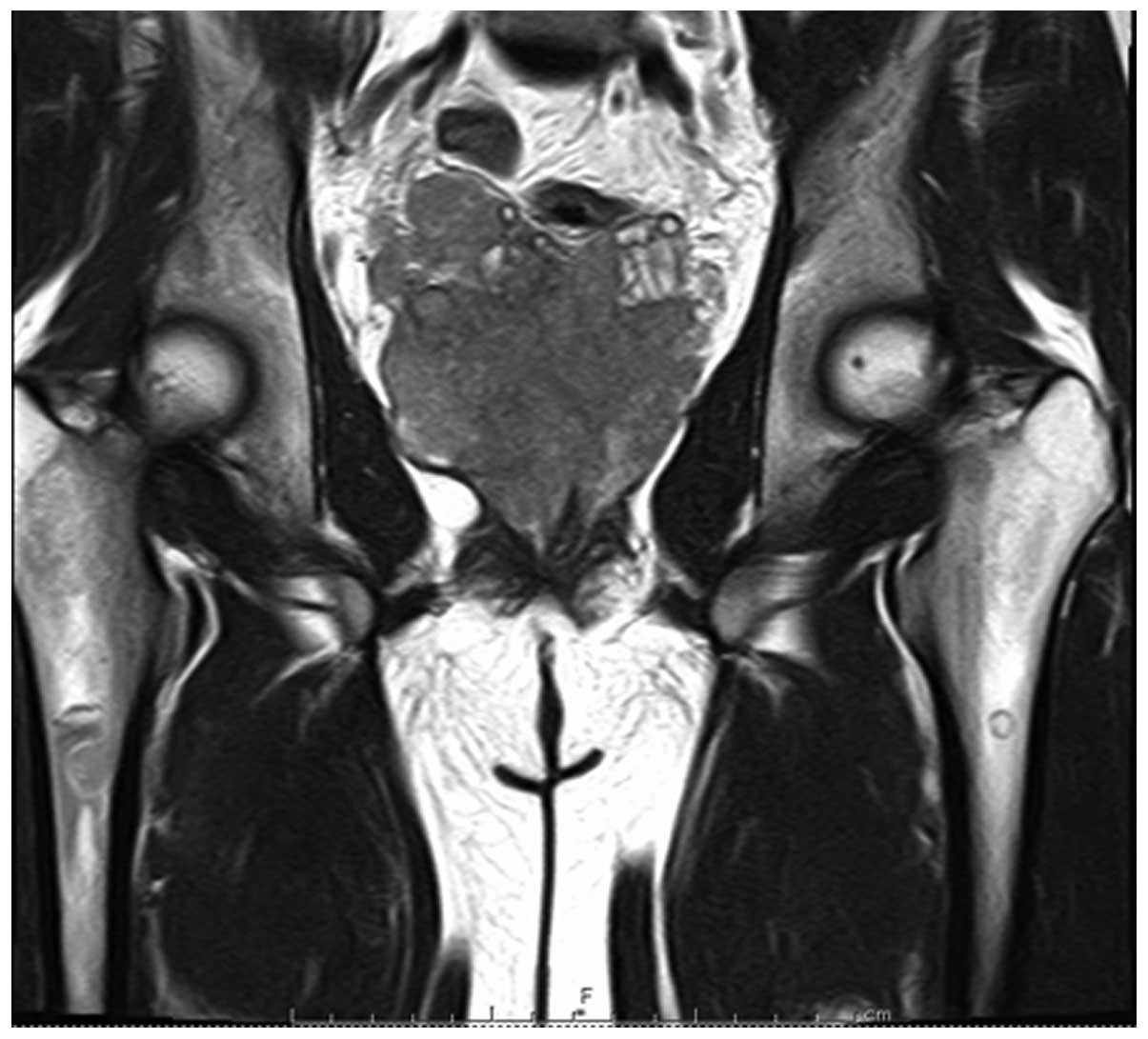
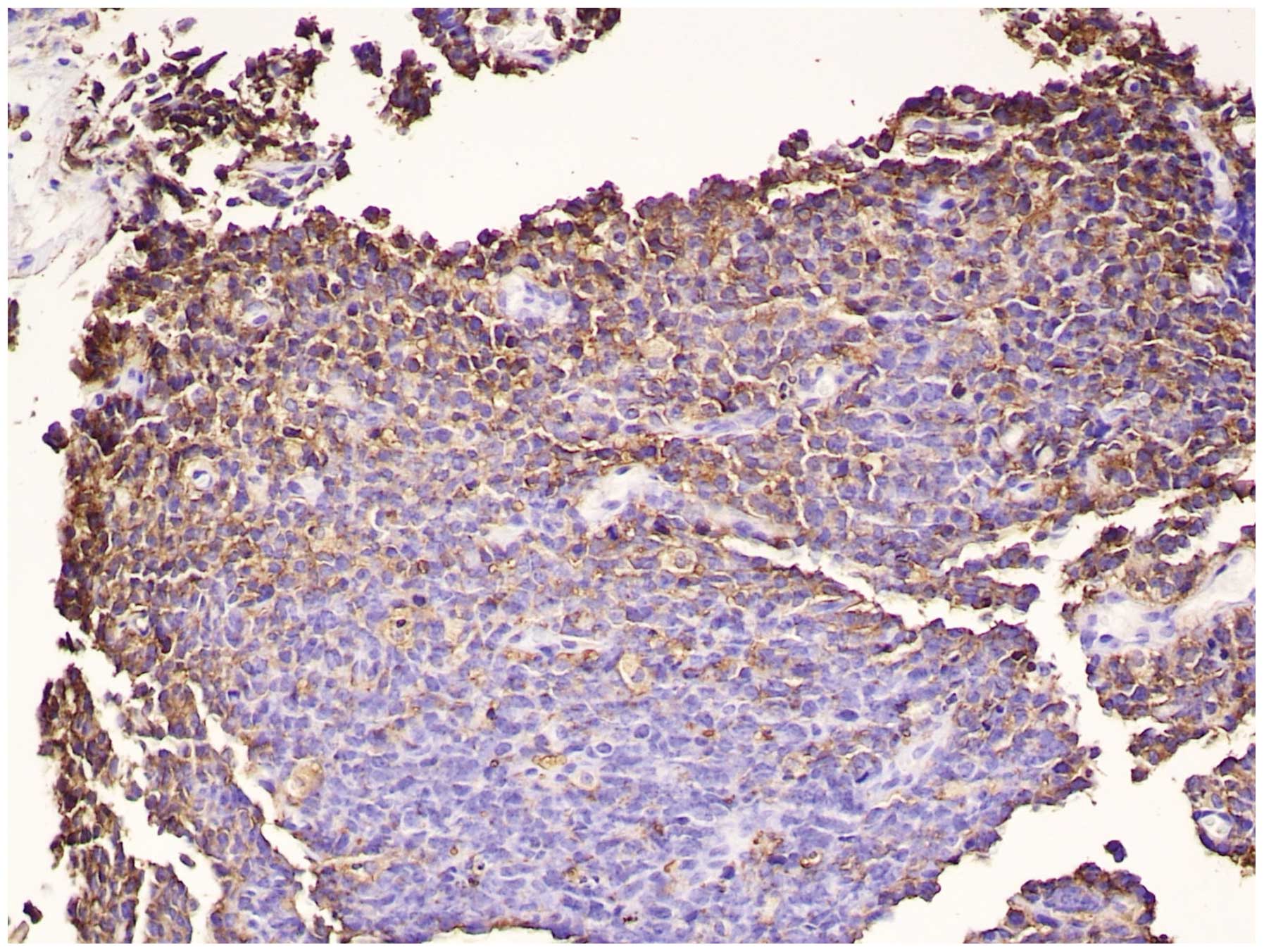
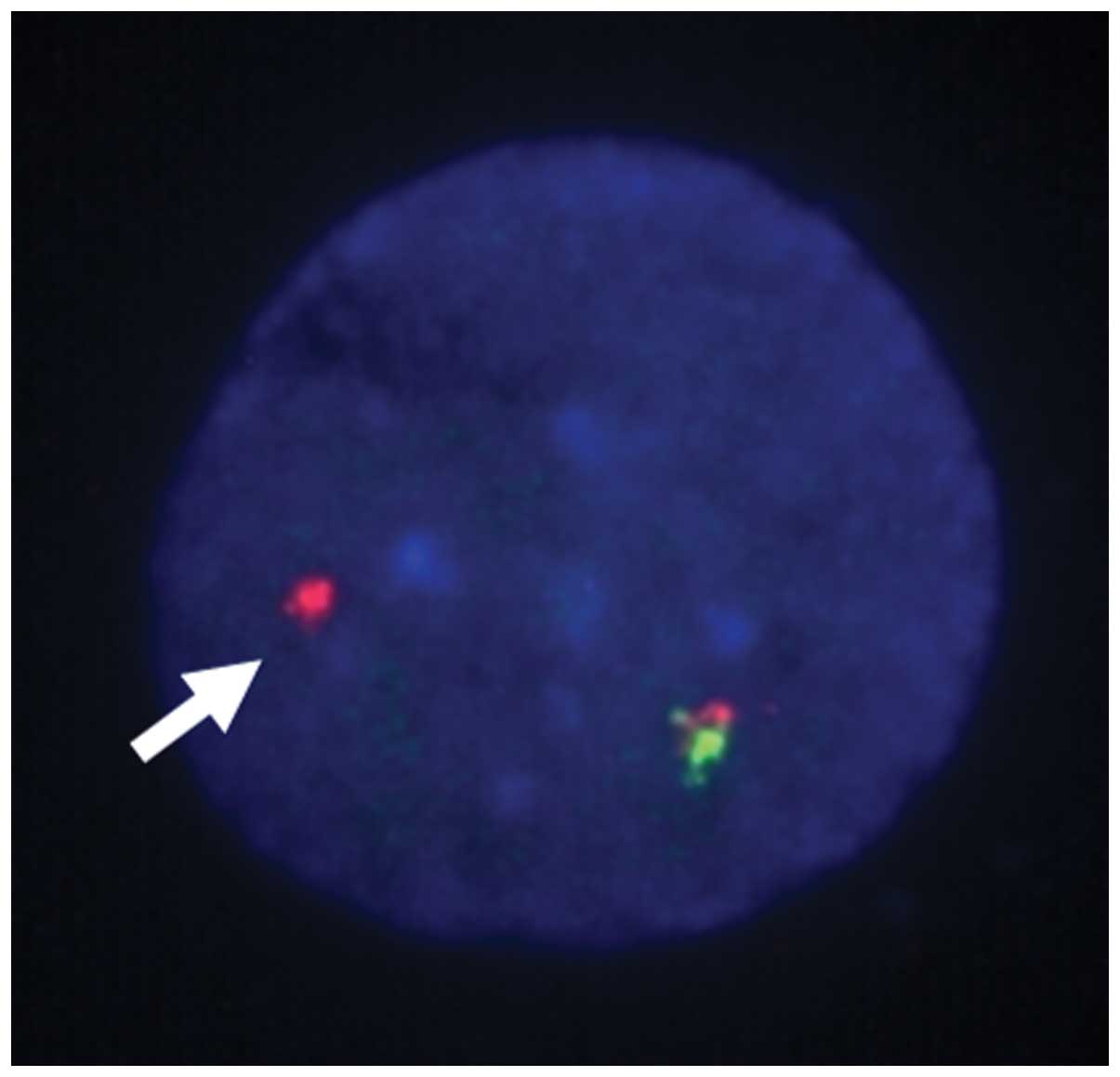
A 23-year-old male presented to Oita Medical Center (Oita, Japan) with the complaint of dysuria and anal pain. A computed tomography (CT) scan and magnetic resonance imaging (MRI) revealed a large solid tumor in the pelvic region replacing the prostate (Fig. 1) and multiple swollen lymph nodes. Cystostomy and biopsy of the prostate gland were performed. Histopathological analysis demonstrated small round tumor cells, indicating a PNET, however, no rosette structure was observed. The tumor cells were positive for MIC-2 (Fig. 2), cytokeratin, vimentin and neural cell adhesion molecule, but negative for the other immunostains, chromogranin A, neurofilament, neuron-specific enolase, leukocyte common antigen, desmin, HHF35, sarcomeric actin, myogenic differentiation 1 and myoglobin. The histopathological results indicated a diagnosis of PNET of the prostate, and the patient was admitted to Oita University Hospital (Yufu, Japan) for treatment. Two days after admission, the patient complained of lower back pain. Re-examination by CT scan and MRI revealed multiple bone metastases to the dorsal and lumbar vertebrae, pelvic bone and bilateral thighbones, multiple lung metastases and a fracture of the fourth lumbar vertebra caused by metastasis. An additional genetic examination was performed; the Ewing’s sarcoma-friend leukemia virus integration 1 fusion gene was not detected by quantitative polymerase chain reaction, however, split signals were observed in fluorescence in situ hybridization (FISH) analysis using a Ewing sarcoma breakpoint region 1 (EWSR1) probe (SRL Laboratories, Inc., Tokyo, Japan; Fig. 3). A diagnosis of PNET of the prostate was established, and treatment with systemic chemotherapy commenced. Following one cycle of chemotherapy (ifosfamide, 2 mg/m2/week) the patient exhibited various side-effects, including dizziness, headache and nausea. MRI revealed multiple metastases to the intracranial meninges and a CT scan indicated a poor chemotherapy response. Therefore, best supportive care was administered and the patient succumbed approximately four months after the initial onset of symptoms.

Figure 1

Coronal T2-weighted magnetic resonance image demonstrating a large tumor in the prostatic legion.

Figure 2

Immunohistochemical staining revealing small round cells positive for MIC-2. Magnification, ×400.

Figure 3

Fluorescence in situ hybridization analysis demonstrated split signals (arrow) using a Ewing sarcoma breakpoint region 1 probe at chromosome 22q12. A split signal was observed in 99/100 cells. Magnification, ×1000.

Discussion

A multimodal therapeutic regimen that includes a combination of chemotherapy, surgery and radiotherapy is the current treatment strategy for the Ewing sarcoma family of tumors. Additionally, PNET of the prostate is commonly treated by combination therapy (Table I) (9,12–18). In all but one of the reported cases of PNET of the prostate, in which the treatment strategy was not detailed, neoadjuvant or adjuvant chemotherapy were effectively administered. Two cases in the literature exhibited a reduction in the size of the primary tumor following neoadjuvant chemotherapy (12,15) and four cases underwent radical prostatectomy (9,12,15,18). Chemotherapeutic agents, including ifosfamide, etoposide, vincristine, Adriamycin and doxorubicin, were used as single or combination therapies. Although a standard treatment has not yet been established, chemotherapy is a potentially effective treatment for localized PNET of the prostate (1). In the present study, however, multiple metastases in various regions inhibited the effectiveness of the chemotherapy. Previously, the presence of metastatic disease was reported as the most unfavorable prognostic factor for Ewing sarcoma family tumors (19). In particular, patients exhibiting extrapulmonary metastatic disease have demonstrated a worse prognosis compared with individuals exhibiting solitary pulmonary metastatic disease. Furthermore, tumor size (>100 ml), location within the pelvis, older age (>14 years) and insufficient response to initial therapy are reported as poor prognostic factors (20–22). In the current study, the presence of a number of these poor prognostic factors resulted in unsatisfactory progress. Thus, treatment for high-risk patients may require the development of a novel therapeutic regimen distinct from those used to treat local cases of Ewing’s sarcoma, for example gemcitabine, docetaxel or targeted molecular agents.

Table I

Clinical characteristics of reported primitive neuroectodermal tumor of prostate cases.

Table I

Clinical characteristics of reported primitive neuroectodermal tumor of prostate cases.

Case, nFirst author (reference)Age, yearsMetastasesChemotherapeutic agentsRadiationSurgerySurvival, months
1Colecchia et al (9)31NoneIfosfamide, etoposide, vincristine, AdriamycinYesYesN/A
2Peyromaure et al (12)27NoneIfosfamide, etoposide, vincristine, doxorubicinYesYes2
3Thete et al (13)26NoneN/AN/AN/AN/A
4Kumar et al (14)25NoneIfosfamide, vincristine, actinomycin D, AdriamycinN/AN/AN/A
5Funahashi et al (15)20LungIfosfamidenoneNoYes10
6Mohsin et al (16)29Lymph node
Lung
First-line; vincristine, doxorubicin
Second-line; docetaxel, gemzar
Third-line; ifosfamide
NoNoN/A
7Al Haddabi et al (17)24NoneIfosfamide, doxorubiin, vincristine, etoposideNoNoN/A
8Wu et al (18)29LungMultiagent (detail N/A)NoYes12

[i] N/A, not available.

The present case lacked the specific Ewing’s sarcoma/PNET translocation t(11;22)(q24;q12), however, EWSR1 gene rearrangement on chromosome 22 was detected by performing FISH analysis. Overall, ~15% of histopathologically defined MIC-2-positive Ewing sarcomas lack the classical specific translocation. However, in the majority of the remaining cases, variant translocations involve chromosome 22q12. Chromosome 21q22 (10% of Ewing sarcoma), and chromosomes 7q22, 17q12 and 2q36 (<1% of Ewing sarcoma) were reported as translocation partners (5), however, no translocation partner could be detected in the present case. Identifying the translocation partner may be important as the translocation type may contribute to an unfavorable prognostic outcome.

In all reported cases of PNET of the prostate gland, a large-sized primary tumor replaced the prostate at the diagnosis. Despite the large size of the tumor in the pelvic area, the predominant complaint of the patients was the common symptom of dysuria. Thus, PNET of the prostate gland should be considered when young males (20–30 years old) present to hospital with the complaint of dysuria, to improve the rate of early diagnosis. Non-invasive examinations, including ultrasound or digital rectal examination, are sufficient to identify the presence of this disease in the prostatic region.

References

1 

Balamuth NJ and Womer RB: Ewing’s sarcoma. Lancet Oncol. 11:184–192. 2010. View Article : Google Scholar : PubMed/NCBI

2 

Gupta P, Hari S and Thulkar S: Imaging spectrum of peripheral primitive neuroendocrine tumours. Singapore Med J. 54:463–472. 2013. View Article : Google Scholar : PubMed/NCBI

3 

Khong PL, Chan GC, Shek TW, Tam PK and Chan FL: Imaging of peripheral PNET: common and uncommon locations. Clin Radiol. 57:272–277. 2002. View Article : Google Scholar : PubMed/NCBI

4 

Qian X, Kai X, Shaodong L, Gaohong C, Hong M and Jingjing L: Radiological and clinicopathological features of pPNET. Eur J Radiol. 82:e888–e893. 2013. View Article : Google Scholar : PubMed/NCBI

5 

Bemstein M, Kovar H, Paulussen M, et al: Ewing’s sarcoma family of tumors: current management. Oncologist. 11:503–519. 2006. View Article : Google Scholar

6 

Ibarburen C, Haberman JJ and Zerhouni EA: Peripheral primitive neuroectodermal tumors. CT and MRI evaluation. Eur J Radiol. 21:225–232. 1996. View Article : Google Scholar : PubMed/NCBI

7 

Ellinger J, Bastian PJ, Hauser S, Biermann K and Müller SC: Primitive neuroectodermal tumor: rare, highly aggressive differential diagnosis in urologic malignancies. Urology. 68:257–262. 2006. View Article : Google Scholar : PubMed/NCBI

8 

Tsang YP, Lang BH, Tam SC and Wong KP: Primitive neuroectodermal adrenal gland tumour. Hong Kong Med J. 20:444–446. 2014. View Article : Google Scholar : PubMed/NCBI

9 

Colecchia M, Degrada G, Poliani PL, Messina A and Pilotti S: Primary primitive peripheral neuroectodermal tumor of the prostate. Immunophenotypic and molecular study of a case. Arch Pathol Lab Med. 127:e190–e193. 2003.PubMed/NCBI

10 

Scotlandi K, Benini S, Manara MC, et al: Murine model for skeletal metastases of Ewing’s sarcoma. J Orthop Res. 18:959–966. 2000. View Article : Google Scholar

11 

de Alava E and Gerald WL: Molecular biology of the Ewing’s sarcoma/primitive neuroectodermal tumor family. J Clin Oncol. 18:204–213. 2000.PubMed/NCBI

12 

Peyromaure M, Vieillefond A, Boucher E, et al: Primitive neuroectodermal tumor of the prostate. J Urol. 170:182–183. 2003. View Article : Google Scholar : PubMed/NCBI

13 

Thete N, Rastogi D, Arya S, et al: Primitive neuroectodermal tumour of the prostate gland: ultrasound and MRI findings. Br J Radiol. 80:e180–e183. 2007. View Article : Google Scholar : PubMed/NCBI

14 

Kumar V, Khurana N, Rathi AK, et al: Primitive neuroectodermal tumor of prostate. Indian J Pathol Microbiol. 51:386–388. 2008. View Article : Google Scholar : PubMed/NCBI

15 

Funahashi Y, Yoshino Y and Hattori R: Ewing’s sarcoma/primitive neuroectodermal tumor of the prostate. Int J Urol. 16:7692009. View Article : Google Scholar

16 

Mohsin R, Hashmi A, Mubarak M, et al: Primitive neuroectodermal tumor/Ewing’s sarcoma in adult uro-oncology: A case series from a developing country. Urol Ann. 3:103–107. 2011. View Article : Google Scholar : PubMed/NCBI

17 

Al Haddabi I, Al Bahri M and Burney I: Cytokeratin-positive primitive neuroectodermal tumor of the prostate: case report and review of literature. Indian J Pathol Microbiol. 55:569–571. 2012. View Article : Google Scholar

18 

Wu T, Jin T, Luo D, Chen L and Li X: Ewing’s sarcoma/primitive neuroectodermal tumor of the prostate: A case report and literature review. Can Urol Assoc J. 7:E458–E459. 2013. View Article : Google Scholar : PubMed/NCBI

19 

Subbian V, Anderson P, Lazar AJ, et al: Ewing’s sarcoma: standard experiental treatment options. Curr Treat Options Oncol. 10:126–140. 2009. View Article : Google Scholar

20 

Cotterill SJ, Ahrens S, Paulussen M, et al: Prognostic factors in Ewing’s tumor of bone: analysis of 975 patients from the European Intergroup Cooperative Ewing’s Sarcoma Study Group. J Clin Oncol. 18:3108–3114. 2000.PubMed/NCBI

21 

Paulussen M, Ahrens S, Dunst J, et al: Localized Ewing tumor of bone: final results of the cooperative Ewing’s Sarcoma Study CESS 86. J Clin Oncol. 19:1818–1829. 2001.PubMed/NCBI

22 

Seddon BM and Whelan JS: Emerging chemotherapeutic strategies and the role of treatment stratification in Ewing sarcoma. Paediatr Drugs. 10:93–105. 2008. View Article : Google Scholar : PubMed/NCBI

Related Articles

  • Abstract
  • View
  • Download
  • Twitter
Copy and paste a formatted citation
Spandidos Publications style
Shibuya T, Mori K, Sumino Y, Sato F and Mimata H: Rapidly progressive primitive neuroectodermal tumor of the prostate: A case report and review of the literature. Oncol Lett 9: 634-636, 2015.
APA
Shibuya, T., Mori, K., Sumino, Y., Sato, F., & Mimata, H. (2015). Rapidly progressive primitive neuroectodermal tumor of the prostate: A case report and review of the literature. Oncology Letters, 9, 634-636. https://doi.org/10.3892/ol.2014.2731
MLA
Shibuya, T., Mori, K., Sumino, Y., Sato, F., Mimata, H."Rapidly progressive primitive neuroectodermal tumor of the prostate: A case report and review of the literature". Oncology Letters 9.2 (2015): 634-636.
Chicago
Shibuya, T., Mori, K., Sumino, Y., Sato, F., Mimata, H."Rapidly progressive primitive neuroectodermal tumor of the prostate: A case report and review of the literature". Oncology Letters 9, no. 2 (2015): 634-636. https://doi.org/10.3892/ol.2014.2731
Copy and paste a formatted citation
x
Spandidos Publications style
Shibuya T, Mori K, Sumino Y, Sato F and Mimata H: Rapidly progressive primitive neuroectodermal tumor of the prostate: A case report and review of the literature. Oncol Lett 9: 634-636, 2015.
APA
Shibuya, T., Mori, K., Sumino, Y., Sato, F., & Mimata, H. (2015). Rapidly progressive primitive neuroectodermal tumor of the prostate: A case report and review of the literature. Oncology Letters, 9, 634-636. https://doi.org/10.3892/ol.2014.2731
MLA
Shibuya, T., Mori, K., Sumino, Y., Sato, F., Mimata, H."Rapidly progressive primitive neuroectodermal tumor of the prostate: A case report and review of the literature". Oncology Letters 9.2 (2015): 634-636.
Chicago
Shibuya, T., Mori, K., Sumino, Y., Sato, F., Mimata, H."Rapidly progressive primitive neuroectodermal tumor of the prostate: A case report and review of the literature". Oncology Letters 9, no. 2 (2015): 634-636. https://doi.org/10.3892/ol.2014.2731
Follow us
  • Twitter
  • LinkedIn
  • Facebook
About
  • Spandidos Publications
  • Careers
  • Cookie Policy
  • Privacy Policy
How can we help?
  • Help
  • Live Chat
  • Contact
  • Email to our Support Team