Spandidos Publications Logo
  • About
    • About Spandidos
    • Aims and Scopes
    • Abstracting and Indexing
    • Editorial Policies
    • Reprints and Permissions
    • Job Opportunities
    • Terms and Conditions
    • Contact
  • Journals
    • All Journals
    • Oncology Letters
      • Oncology Letters
      • Information for Authors
      • Editorial Policies
      • Editorial Board
      • Aims and Scope
      • Abstracting and Indexing
      • Bibliographic Information
      • Archive
    • International Journal of Oncology
      • International Journal of Oncology
      • Information for Authors
      • Editorial Policies
      • Editorial Board
      • Aims and Scope
      • Abstracting and Indexing
      • Bibliographic Information
      • Archive
    • Molecular and Clinical Oncology
      • Molecular and Clinical Oncology
      • Information for Authors
      • Editorial Policies
      • Editorial Board
      • Aims and Scope
      • Abstracting and Indexing
      • Bibliographic Information
      • Archive
    • Experimental and Therapeutic Medicine
      • Experimental and Therapeutic Medicine
      • Information for Authors
      • Editorial Policies
      • Editorial Board
      • Aims and Scope
      • Abstracting and Indexing
      • Bibliographic Information
      • Archive
    • International Journal of Molecular Medicine
      • International Journal of Molecular Medicine
      • Information for Authors
      • Editorial Policies
      • Editorial Board
      • Aims and Scope
      • Abstracting and Indexing
      • Bibliographic Information
      • Archive
    • Biomedical Reports
      • Biomedical Reports
      • Information for Authors
      • Editorial Policies
      • Editorial Board
      • Aims and Scope
      • Abstracting and Indexing
      • Bibliographic Information
      • Archive
    • Oncology Reports
      • Oncology Reports
      • Information for Authors
      • Editorial Policies
      • Editorial Board
      • Aims and Scope
      • Abstracting and Indexing
      • Bibliographic Information
      • Archive
    • Molecular Medicine Reports
      • Molecular Medicine Reports
      • Information for Authors
      • Editorial Policies
      • Editorial Board
      • Aims and Scope
      • Abstracting and Indexing
      • Bibliographic Information
      • Archive
    • World Academy of Sciences Journal
      • World Academy of Sciences Journal
      • Information for Authors
      • Editorial Policies
      • Editorial Board
      • Aims and Scope
      • Abstracting and Indexing
      • Bibliographic Information
      • Archive
    • International Journal of Functional Nutrition
      • International Journal of Functional Nutrition
      • Information for Authors
      • Editorial Policies
      • Editorial Board
      • Aims and Scope
      • Abstracting and Indexing
      • Bibliographic Information
      • Archive
    • International Journal of Epigenetics
      • International Journal of Epigenetics
      • Information for Authors
      • Editorial Policies
      • Editorial Board
      • Aims and Scope
      • Abstracting and Indexing
      • Bibliographic Information
      • Archive
    • Medicine International
      • Medicine International
      • Information for Authors
      • Editorial Policies
      • Editorial Board
      • Aims and Scope
      • Abstracting and Indexing
      • Bibliographic Information
      • Archive
  • Articles
  • Information
    • Information for Authors
    • Information for Reviewers
    • Information for Librarians
    • Information for Advertisers
    • Conferences
  • Language Editing
Spandidos Publications Logo
  • About
    • About Spandidos
    • Aims and Scopes
    • Abstracting and Indexing
    • Editorial Policies
    • Reprints and Permissions
    • Job Opportunities
    • Terms and Conditions
    • Contact
  • Journals
    • All Journals
    • Biomedical Reports
      • Information for Authors
      • Editorial Policies
      • Editorial Board
      • Aims and Scope
      • Abstracting and Indexing
      • Bibliographic Information
      • Archive
    • Experimental and Therapeutic Medicine
      • Information for Authors
      • Editorial Policies
      • Editorial Board
      • Aims and Scope
      • Abstracting and Indexing
      • Bibliographic Information
      • Archive
    • International Journal of Epigenetics
      • Information for Authors
      • Editorial Policies
      • Editorial Board
      • Aims and Scope
      • Abstracting and Indexing
      • Bibliographic Information
      • Archive
    • International Journal of Functional Nutrition
      • Information for Authors
      • Editorial Policies
      • Editorial Board
      • Aims and Scope
      • Abstracting and Indexing
      • Bibliographic Information
      • Archive
    • International Journal of Molecular Medicine
      • Information for Authors
      • Editorial Policies
      • Editorial Board
      • Aims and Scope
      • Abstracting and Indexing
      • Bibliographic Information
      • Archive
    • International Journal of Oncology
      • Information for Authors
      • Editorial Policies
      • Editorial Board
      • Aims and Scope
      • Abstracting and Indexing
      • Bibliographic Information
      • Archive
    • Medicine International
      • Information for Authors
      • Editorial Policies
      • Editorial Board
      • Aims and Scope
      • Abstracting and Indexing
      • Bibliographic Information
      • Archive
    • Molecular and Clinical Oncology
      • Information for Authors
      • Editorial Policies
      • Editorial Board
      • Aims and Scope
      • Abstracting and Indexing
      • Bibliographic Information
      • Archive
    • Molecular Medicine Reports
      • Information for Authors
      • Editorial Policies
      • Editorial Board
      • Aims and Scope
      • Abstracting and Indexing
      • Bibliographic Information
      • Archive
    • Oncology Letters
      • Information for Authors
      • Editorial Policies
      • Editorial Board
      • Aims and Scope
      • Abstracting and Indexing
      • Bibliographic Information
      • Archive
    • Oncology Reports
      • Information for Authors
      • Editorial Policies
      • Editorial Board
      • Aims and Scope
      • Abstracting and Indexing
      • Bibliographic Information
      • Archive
    • World Academy of Sciences Journal
      • Information for Authors
      • Editorial Policies
      • Editorial Board
      • Aims and Scope
      • Abstracting and Indexing
      • Bibliographic Information
      • Archive
  • Articles
  • Information
    • For Authors
    • For Reviewers
    • For Librarians
    • For Advertisers
    • Conferences
  • Language Editing
Login Register Submit
  • This site uses cookies
  • You can change your cookie settings at any time by following the instructions in our Cookie Policy. To find out more, you may read our Privacy Policy.

    I agree
Search articles by DOI, keyword, author or affiliation
Search
Advanced Search
presentation
Oncology Letters
Join Editorial Board Propose a Special Issue
Print ISSN: 1792-1074 Online ISSN: 1792-1082
Journal Cover
September-2015 Volume 10 Issue 3

Full Size Image

Sign up for eToc alerts
Recommend to Library

Journals

International Journal of Molecular Medicine

International Journal of Molecular Medicine

International Journal of Molecular Medicine is an international journal devoted to molecular mechanisms of human disease.

International Journal of Oncology

International Journal of Oncology

International Journal of Oncology is an international journal devoted to oncology research and cancer treatment.

Molecular Medicine Reports

Molecular Medicine Reports

Covers molecular medicine topics such as pharmacology, pathology, genetics, neuroscience, infectious diseases, molecular cardiology, and molecular surgery.

Oncology Reports

Oncology Reports

Oncology Reports is an international journal devoted to fundamental and applied research in Oncology.

Experimental and Therapeutic Medicine

Experimental and Therapeutic Medicine

Experimental and Therapeutic Medicine is an international journal devoted to laboratory and clinical medicine.

Oncology Letters

Oncology Letters

Oncology Letters is an international journal devoted to Experimental and Clinical Oncology.

Biomedical Reports

Biomedical Reports

Explores a wide range of biological and medical fields, including pharmacology, genetics, microbiology, neuroscience, and molecular cardiology.

Molecular and Clinical Oncology

Molecular and Clinical Oncology

International journal addressing all aspects of oncology research, from tumorigenesis and oncogenes to chemotherapy and metastasis.

World Academy of Sciences Journal

World Academy of Sciences Journal

Multidisciplinary open-access journal spanning biochemistry, genetics, neuroscience, environmental health, and synthetic biology.

International Journal of Functional Nutrition

International Journal of Functional Nutrition

Open-access journal combining biochemistry, pharmacology, immunology, and genetics to advance health through functional nutrition.

International Journal of Epigenetics

International Journal of Epigenetics

Publishes open-access research on using epigenetics to advance understanding and treatment of human disease.

Medicine International

Medicine International

An International Open Access Journal Devoted to General Medicine.

Journal Cover
September-2015 Volume 10 Issue 3

Full Size Image

Sign up for eToc alerts
Recommend to Library

  • Article
  • Citations
    • Cite This Article
    • Download Citation
    • Create Citation Alert
    • Remove Citation Alert
    • Cited By
  • Similar Articles
    • Related Articles (in Spandidos Publications)
    • Similar Articles (Google Scholar)
    • Similar Articles (PubMed)
  • Download PDF
  • Download XML
  • View XML
Case Report

FIGO stage IV gestational choriocarcinoma misdiagnosed as pulmonary tuberculosis: A case report

  • Authors:
    • Lingyun Yang
    • Pang Xu
    • Mingrong Xi
    • Hongjing Wang
  • View Affiliations / Copyright

    Affiliations: Department of Gynecology and Obstetrics, West China Second Hospital, Sichuan University, Chengdu, Sichuan 610041, P.R. China
  • Pages: 1924-1926
    |
    Published online on: July 1, 2015
       https://doi.org/10.3892/ol.2015.3443
  • Expand metrics +
Metrics: Total Views: 0 (Spandidos Publications: | PMC Statistics: )
Metrics: Total PDF Downloads: 0 (Spandidos Publications: | PMC Statistics: )
Cited By (CrossRef): 0 citations Loading Articles...

This article is mentioned in:


Abstract

Choriocarcinoma is a rare, highly malignant neoplasm, which may occur during or following any type of pregnancy. This tumor often demonstrates rapid hematogenous spread to multiple organs, and is associated with high human chorionic gonadotropin (HCG) levels and a good response to chemotherapy. In the present study, the case of a 29‑year‑old female with distant metastatic choriocarcinoma [International Federation of Gynecology and Obstetrics (FIGO) stage IV; World Health Organization score, 15], who was misdiagnosed with pulmonary tuberculosis at a local hospital is presented. The major failure in the diagnosis of this case was that the patient's serum β‑HCG levels were ignored initially. However, the patient received combined treatment with systematic multi‑agent chemotherapy, whole‑brain radiation therapy and gross total resection of the brain lesion at West China Second Hospital, and achieved complete remission. In conclusion, the accurate and prompt diagnosis of choriocarcinoma is crucial for a good outcome. Furthermore, in young female patients exhibiting symptoms such as pulmonary bleeding or neurological disturbances following a hydatidiform mole or a normal pregnancy, even in the absence of abnormal uterine bleeding, serum β‑HCG levels must be analyzed and a diagnosis of choriocarcinoma must be considered.

Introduction

Gestational trophoblastic disease (GTD) describes various neoplastic disorders originating from the trophoblastic epithelium of the placenta, which are characterized by the distinct tumor marker β-human chorionic gonadotropin (HCG). Gestational trophoblastic neoplasia (GTN) is the malignant form of GTD, which includes invasive moles, choriocarcinoma, placental site trophoblastic tumors (PSTTs) and epithelioid trophoblastic tumors (1). Choriocarcinoma is a highly malignant tumor that may occur during or following any type of pregnancy, including a hydatidiform mole, normal or ectopic pregnancy and abortion (2,3). An accurate and prompt diagnosis of gestational choriocarcinoma is crucial as it is a highly chemosensitive tumor type and thus, the disease exhibits a good prognosis, even in advanced stages (4,5). However, a number of choriocarcinoma cases are often misdiagnosed due to the atypical symptoms of the disease and a lack of clear radiographical evidence. Metastasis to the brain is considered a poor prognostic indicator of choriocarcinoma (6). The aim of the current study was to present the case of a 29-year-old female with International Federation of Gynecology and Obstetrics (FIGO) (7) stage IV gestational choriocarcinoma that was initially misdiagnosed as pulmonary tuberculosis, and to discuss the management of gestational choriocarcinoma with pulmonary and cerebral metastasis.

Case report

On August 15, 2013, a 29-year old female presented to the local hospital with right-sided chest congestion and pain, which had lasted for 4 months, accompanied by a mild fever, coughing, heavy breathing and palpitations. X-ray examination of the chest revealed an increased number of lung markings, multiple bilateral pulmonary nodules and massive right pleural effusion, and cytopathology revealed hemorrhagic pleural fluid. At the respiratory clinic of the local hospital, pulmonary tuberculosis was diagnosed based on the patient's respiratory symptoms and radiological findings. Subsequently, an anti-tuberculosis regimen of isoniazid (300 mg, daily), rifampicin (450 mg, daily) and ethambutol (750 mg, daily) was administered for 3 months. However, the anti-tuberculosis treatment failed to alleviate the patient's symptoms and 4 months later, the patient experienced neurological disturbances, including severe headaches, dizziness and uncontrolled vomiting.

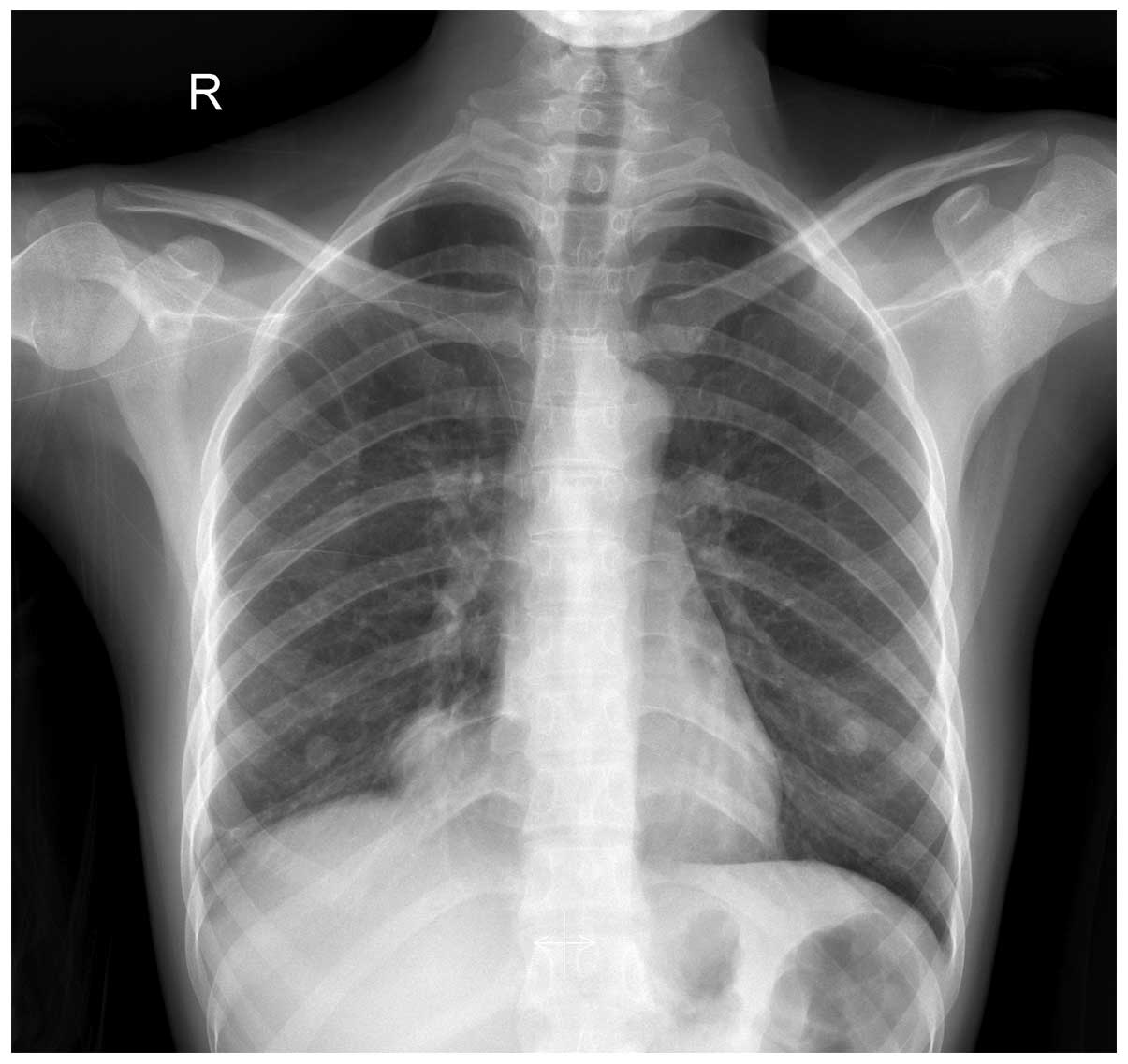
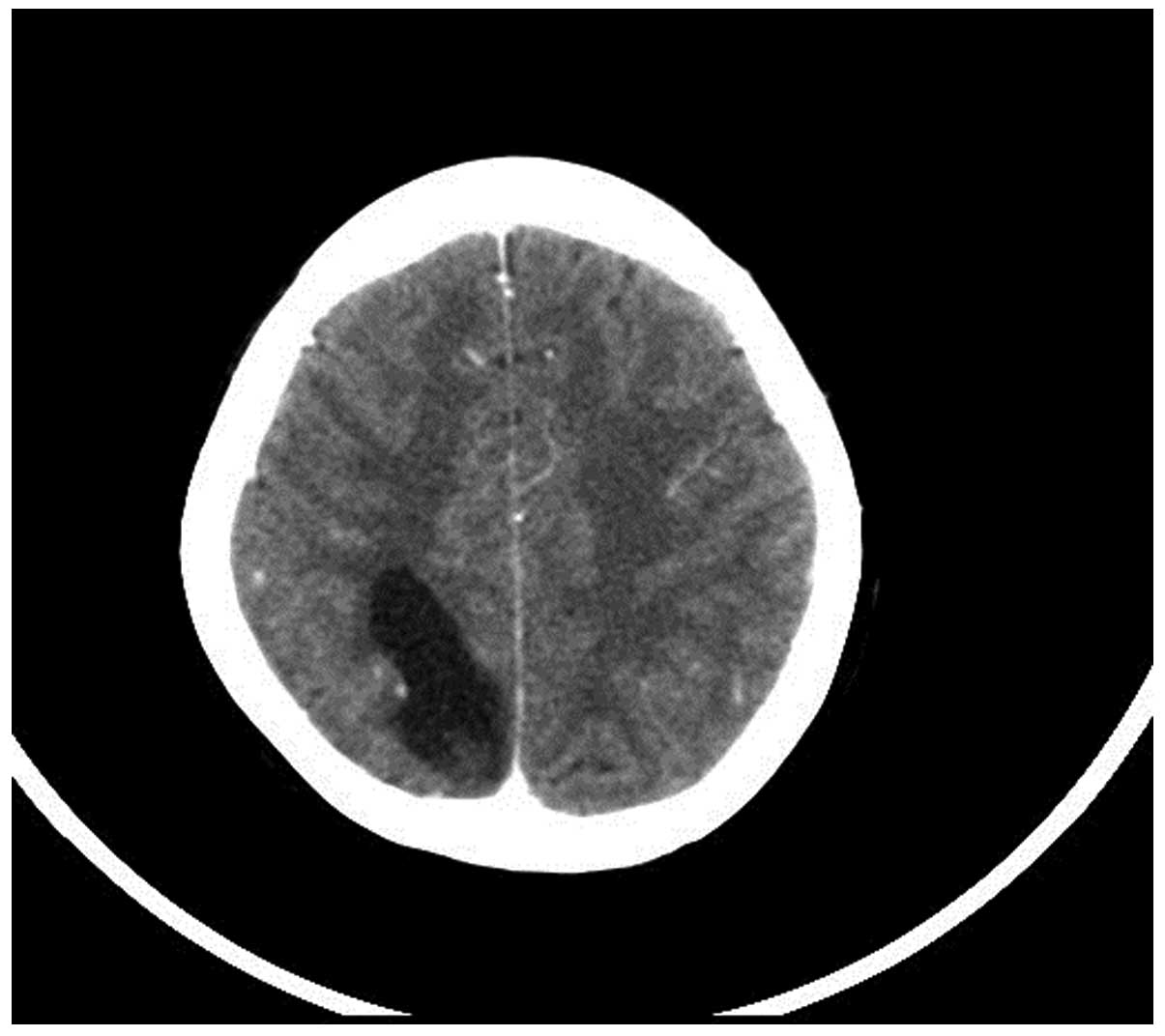
On December 24, 2013, the patient was transferred to West China Second Hospital (Chengdu, China). Upon obtaining a complete clinical history, the patient reported that the date of her last pregnancy, which was terminated by artificial abortion, was 3 years ago, with two previous full-term vaginal deliveries. The patient's menstrual cycle was regular (28–30 days; 4–6 days duration) with no cessation of menstruation or irregular uterine bleeding reported. A routine laboratory examination was performed. Chest radiography showed increased lung markings, diffuse infiltrates in each lung and a massive right pleural effusion (Fig. 1). Computed tomography (CT) scans of the lungs and brain revealed irregular multiple bilateral pulmonary nodules with a maximum diameter of 29 mm, right pleural effusion and a cystic mass, 43×35×27 mm in size, in the parietal lobe of the right cerebrum (Fig. 2). The serum β-HCG level was 655,011.2 mIU/ml (normal level, <2.0 mIU/ml), while other tumor markers, including α-fetoprotein, carcinoembryonic antigen, carbohydrate antigen 19-9 and cancer antigen 125, were all within the normal ranges. Transvaginal sonogram and sonohysterography examination were also performed, however the results were unremarkable. Following a consultation, gestational choriocarcinoma with pulmonary and cerebral metastasis [FIGO stage IV; World Health Organization score, 15 (8)] was diagnosed, which had been misdiagnosed as pulmonary tuberculosis previously at the local hospital. After written informed consent was obtained, systemic multi-agent chemotherapy was administered (Table I). Additionally, the patient underwent whole-brain irradiation and neurological surgery. The patient's recovery was monitored by a series of blood or cerebrospinal fluid (CSF) β-HCG measurements (Table I), chest X-ray examination, CT and magnetic resonance imaging scans. After 11 cycles of chemotherapy, the β-HCG level was within the normal range. The post-chemotherapy period was excellent, without any major complications. The patient achieved complete remission with a good outcome and follow-up is ongoing.

Figure 1.

Chest radiograph showed increased lung markings, diffuse infiltrates in each lung and a massive right pleural effusion.

Figure 2.

Computed tomography scan of the brain revealing a 43×35×27-mm cystic mass in the parietal lobe of the right cerebrum.

Table I.

Chemotherapeutic regimens and serial blood or CSF β-HCG levels.

Table I.

Chemotherapeutic regimens and serial blood or CSF β-HCG levels.

CourseChemotherapy regimenBlood β-HCG level, mIU/mlCSF β-HCG level, mIU/ml
  15-FUa65011.21753.7
Act Db
MTXc
  25-FUa   1420.0  14.6
Act Db
MTXc
  35-FUa  63.7  7.2
Act Db
MTXc
  45-FUa  15.7  4.7
Act Db
MTXc
  55-FUa  9.3
Act Db
  65-FUa  3.7
Act Db
  75-FUa  2.9
Act Db
  8EMA/COd,e  7.7
  9EMA/COd<2.0
10EMA/COd<2.0
11EMA/COd<2.0

a 24 mg/kg intravenously, days 1–8

b 5 µg/kg intravenously, days 1–8

c 15 mg intrathecally, days 2/4/7

d 100 mg/m2 etoposide intravenously on days 1/2, 100 mg/m2 + 200 mg/m2 MTX intravenously on day 1, 500 µg Act-D intravenously on days 1/2, 600 mg/m2 cyclophosphamide intravenously on day 8 and 1 mg/m2 vincristine intravenously on day 8.

e Due to the increased blood β-HCG level, the regimen was changed to EMA/CO to prevent the development of chemoresistance. CSF, cerebrospinal fluid; β-HCG, β-human chorionic gonadotropin; 5-FU, 5-fluorouracil; Act D, actinomycin D; MTX, methotrexate; EMA/CO, etoposide, MTX, Act D, vincristin and cyclophosphamide.

Discussion

Choriocarcinoma is a rare, highly malignant neoplasm of the gestational trophoblast of the placenta, which usually presents as abnormal uterine bleeding. This tumor often demonstrates rapid hematogenous spread to multiple organs, and is associated with high β-HCG levels and a good response to chemotherapy (4,5,9). Approximately 30% of choriocarcinoma patients exhibit metastasis at the time of diagnosis, which may be attributable to the high affinity exhibited by trophoblastic cells for blood vessels (10,11). The most common metastatic sites of choriocarcinoma are the lungs (80%), vagina (30%), pelvis (20%) and liver (10%). Cerebral metastases occur in ~10% of cases. Despite the aggressive nature of the disease, a cure remains possible if it is treated at an early stage, in accordance with well-established guidelines (12). Notably, following treatment with multi-agent chemotherapy regimens, ~75% of choriocarcinoma patients (FIGO stage IV) are expected to achieve complete or prolonged remission (5,7). Consequently, an accurate and prompt diagnosis is crucial. In addition, the early diagnosis of GTN and the timely administration of chemotherapy may decrease the number of chemotherapy courses required for treatment.

In the present study, the patient presented with right-sided chest congestion and pain that had lasted for 4 months, and was accompanied with a mild fever, coughing, heavy breathing and palpitations. Notably, the patient's menstrual cycle was regular without cessation of menstruation or irregular vaginal bleeding. The patient exhibited no typical symptoms of choriocarcinoma, and the respiratory symptoms and radiological findings were similar to that of pulmonary tuberculosis, resulting in a misdiagnosis and subsequent delay to treatment. The major failure in the diagnosis of this case was that the patient's serum β-HCG levels were initially ignored. Therefore, in young females with symptoms such as pulmonary bleeding or neurological disturbances following a hydatidiform mole or a normal pregnancy, even in the absence of abnormal uterine bleeding, serum β-HCG levels must analyzed and a diagnosis of choriocarcinoma must be considered.

Multi-agent chemotherapy is the standard treatment for high-risk choriocarcinoma. At present, the most commonly used multi-agent treatment regimens are the 5-fluorouracil (5-FU) plus actinomycin D (Act D) (FA regimen) and the etoposide, methotrexate, Act D, vincristin and cyclophosphamide (EMA/CO) regimen. The FA regimen is effective in low- and high-risk GTN patients, but not in PSTT patients. Additionally, it may be administered as a primary chemotherapy regimen for the treatment of high-risk GTN patients (13,14). It is reported that the EMA/CO regimen is considered to be highly effective for the treatment of high-risk GTN, as it exhibits good efficacy and is well-tolerated by patients. In a previous study by Bolis et al (15), the survival rate of high-risk patients treated with the EMA/CO regimen was 88%, and 76% of these patients were alive with no evidence of disease after 5.5 months. Patient survival and complete response to the EMA/CO regimen are affected by a number of factors, such as liver metastasis, antecedent pregnancy and the histopathological diagnosis of choriocarcinoma. The most severe reported toxicity associated with EMA/CO treatment was grade 3–4 leukopenia and febrile neutropenia (16). Brain metastases with or without oncotic aneurysms may be rapidly controlled by the administration of immediate whole-brain irradiation and intrathecal chemotherapy. Furthermore, surgical intervention may be required in cases of life threatening hemorrhage. The levels of HCG in the serum and CSF are good markers for determining the effect of therapy. However, HCG levels in the CSF may decrease slowly without affecting prognosis (17–19).

In the present study, the patient achieved complete remission following combined treatment with systematic multi-agent chemotherapy, whole-brain radiation therapy and gross total resection of the brain lesion. This case demonstrates the importance of rapidly initiating chemo- and radiotherapy for FIGO stage IV gestational choriocarcinoma following diagnosis.

References

1 

May T, Goldstein DP and Berkowitz RS: Current chemotherapeutic management of patients with gestational trophoblastic neoplasia. Chemother Res Pract. 2011:8062562011.PubMed/NCBI

2 

Berkowitz RS and Goldstein DP: Chorionic tumors. N Engl J Med. 335:1740–1748. 1996. View Article : Google Scholar : PubMed/NCBI

3 

Monchek R and Wiedaseck S: Gestational trophoblastic disease: An overview. J Midwifery Womens Health. 57:255–259. 2012. View Article : Google Scholar : PubMed/NCBI

4 

Berkowitz RS and Goldstein DP: Current advances in the management of gestational trophoblastic disease. Gynecol Oncol. 128:3–5. 2013. View Article : Google Scholar : PubMed/NCBI

5 

Oranratanaphan S and Lertkhachonsuk R: Treatment of extremely high risk and resistant gestational trophoblastic neoplasia patients in King Chulalongkorn Memorial Hospital. Asian Pac J Cancer Prev. 15:925–928. 2014. View Article : Google Scholar : PubMed/NCBI

6 

Han SN, Amant F, Leunen K, Devi UK, Neven P, Berteloot P and Vergote I: Treatment of high-risk gestational trophoblastic neoplasia with weekly high-dose methotrexate-etoposide. Gynecol Oncol. 127:47–50. 2012. View Article : Google Scholar : PubMed/NCBI

7 

FIGO Committee on Gynecologic Oncology, . Current FIGO staging for cancer of the vagina, fallopian tube, ovary and gestational trophoblastic neoplasia. Int J Gynaecol Obstet. 105:3–4. 2009. View Article : Google Scholar : PubMed/NCBI

8 

Shrivastava S, Kataki AC, Barmon D, et al: Gestational trophoblastic neoplasia: A 6 year retrospective study. South Asian J Cancer. 3:33–37. 2014. View Article : Google Scholar : PubMed/NCBI

9 

Cole LA, Khanlian SA, Muller CY, Giddings A, Kohorn E and Berkowitz R: Gestational trophoblastic diseases: 3. Human chorionic gonadotropin-free beta-subunit, a reliable marker of placental site trophoblastic tumors. Gynecol Oncol. 102:160–164. 2006. View Article : Google Scholar : PubMed/NCBI

10 

Morgan JM and Lurain JR: Gestational trophoblastic neoplasia: An update. Curr Oncol Rep. 10:497–504. 2008. View Article : Google Scholar : PubMed/NCBI

11 

Sierra-Bergua B, Sánchez-Marteles M, Cabrerizo-García JL and Sanjoaquin-Conde I: Choriocarcinoma with pulmonary and cerebral metastases. Singapore Med J. 49:e286–e288. 2008.PubMed/NCBI

12 

Soper JT, Mutch DG and Schink JCAmerican College of Obstetricians and Gynecologists: Diagnosis and treatment of gestational trophoblastic disease: ACOG Practice Bulletin No. 53. Gynecol Oncol. 93:575–585. 2004. View Article : Google Scholar : PubMed/NCBI

13 

Zhao Y, Zhang W and Duan W: Management of gestational trophoblastic neoplasia with 5-fluorouracil and actinomycin D in northern China. J Reprod Med. 54:88–94. 2009.PubMed/NCBI

14 

Manopunya M and Suprasert P: Resistant gestational trophoblastic neoplasia patients treated with 5-fluorouracil plus actinomycin D. Asian Pac J Cancer Prev. 13:387–390. 2012. View Article : Google Scholar : PubMed/NCBI

15 

Bolis G, Bonazzi C, Landoni F, Mangili G, Vergadoro F, Zanaboni F and Mangioni C: EMA/CO regimen in high-risk gestational trophoblastic tumor (GTT). Gynecol Oncol. 31:439–444. 1988. View Article : Google Scholar : PubMed/NCBI

16 

Turan T, Karacay O, Tulunay G, Boran N, Koc S, Bozok S and Kose MF: Results with EMA/CO (etoposide, methotrexate, actinomycin D, cyclophosphamide, vincristine) chemotherapy in gestational trophoblastic neoplasia. Int J Gynecol Cancer. 16:1432–1438. 2006. View Article : Google Scholar : PubMed/NCBI

17 

Baertschi E, Notter M, Mironov A, Wernli M and Bargetzi MJ: Cerebral metastasis in choriocarcinoma a case report. Praxis. 92:763–768. 2003. View Article : Google Scholar : PubMed/NCBI

18 

Milenković V, Lazović B, Mirković L, Grujicić D and Sparić R: Brain metastases of choriocarcinoma-a report on two cases. Vojnosanit Pregl. 70:968–971. 2013. View Article : Google Scholar : PubMed/NCBI

19 

Milenković V, Lazović B, Mačvanski M, Jeremić K and Hrgović Z: Clinical outcome of a FIGO stage IV gestational choriocarcinoma. Case Rep Oncol. 6:504–507. 2013. View Article : Google Scholar : PubMed/NCBI

Related Articles

  • Abstract
  • View
  • Download
  • Twitter
Copy and paste a formatted citation
Spandidos Publications style
Yang L, Xu P, Xi M and Wang H: FIGO stage IV gestational choriocarcinoma misdiagnosed as pulmonary tuberculosis: A case report. Oncol Lett 10: 1924-1926, 2015.
APA
Yang, L., Xu, P., Xi, M., & Wang, H. (2015). FIGO stage IV gestational choriocarcinoma misdiagnosed as pulmonary tuberculosis: A case report. Oncology Letters, 10, 1924-1926. https://doi.org/10.3892/ol.2015.3443
MLA
Yang, L., Xu, P., Xi, M., Wang, H."FIGO stage IV gestational choriocarcinoma misdiagnosed as pulmonary tuberculosis: A case report". Oncology Letters 10.3 (2015): 1924-1926.
Chicago
Yang, L., Xu, P., Xi, M., Wang, H."FIGO stage IV gestational choriocarcinoma misdiagnosed as pulmonary tuberculosis: A case report". Oncology Letters 10, no. 3 (2015): 1924-1926. https://doi.org/10.3892/ol.2015.3443
Copy and paste a formatted citation
x
Spandidos Publications style
Yang L, Xu P, Xi M and Wang H: FIGO stage IV gestational choriocarcinoma misdiagnosed as pulmonary tuberculosis: A case report. Oncol Lett 10: 1924-1926, 2015.
APA
Yang, L., Xu, P., Xi, M., & Wang, H. (2015). FIGO stage IV gestational choriocarcinoma misdiagnosed as pulmonary tuberculosis: A case report. Oncology Letters, 10, 1924-1926. https://doi.org/10.3892/ol.2015.3443
MLA
Yang, L., Xu, P., Xi, M., Wang, H."FIGO stage IV gestational choriocarcinoma misdiagnosed as pulmonary tuberculosis: A case report". Oncology Letters 10.3 (2015): 1924-1926.
Chicago
Yang, L., Xu, P., Xi, M., Wang, H."FIGO stage IV gestational choriocarcinoma misdiagnosed as pulmonary tuberculosis: A case report". Oncology Letters 10, no. 3 (2015): 1924-1926. https://doi.org/10.3892/ol.2015.3443
Follow us
  • Twitter
  • LinkedIn
  • Facebook
About
  • Spandidos Publications
  • Careers
  • Cookie Policy
  • Privacy Policy
How can we help?
  • Help
  • Live Chat
  • Contact
  • Email to our Support Team