Spandidos Publications Logo
  • About
    • About Spandidos
    • Aims and Scopes
    • Abstracting and Indexing
    • Editorial Policies
    • Reprints and Permissions
    • Job Opportunities
    • Terms and Conditions
    • Contact
  • Journals
    • All Journals
    • Oncology Letters
      • Oncology Letters
      • Information for Authors
      • Editorial Policies
      • Editorial Board
      • Aims and Scope
      • Abstracting and Indexing
      • Bibliographic Information
      • Archive
    • International Journal of Oncology
      • International Journal of Oncology
      • Information for Authors
      • Editorial Policies
      • Editorial Board
      • Aims and Scope
      • Abstracting and Indexing
      • Bibliographic Information
      • Archive
    • Molecular and Clinical Oncology
      • Molecular and Clinical Oncology
      • Information for Authors
      • Editorial Policies
      • Editorial Board
      • Aims and Scope
      • Abstracting and Indexing
      • Bibliographic Information
      • Archive
    • Experimental and Therapeutic Medicine
      • Experimental and Therapeutic Medicine
      • Information for Authors
      • Editorial Policies
      • Editorial Board
      • Aims and Scope
      • Abstracting and Indexing
      • Bibliographic Information
      • Archive
    • International Journal of Molecular Medicine
      • International Journal of Molecular Medicine
      • Information for Authors
      • Editorial Policies
      • Editorial Board
      • Aims and Scope
      • Abstracting and Indexing
      • Bibliographic Information
      • Archive
    • Biomedical Reports
      • Biomedical Reports
      • Information for Authors
      • Editorial Policies
      • Editorial Board
      • Aims and Scope
      • Abstracting and Indexing
      • Bibliographic Information
      • Archive
    • Oncology Reports
      • Oncology Reports
      • Information for Authors
      • Editorial Policies
      • Editorial Board
      • Aims and Scope
      • Abstracting and Indexing
      • Bibliographic Information
      • Archive
    • Molecular Medicine Reports
      • Molecular Medicine Reports
      • Information for Authors
      • Editorial Policies
      • Editorial Board
      • Aims and Scope
      • Abstracting and Indexing
      • Bibliographic Information
      • Archive
    • World Academy of Sciences Journal
      • World Academy of Sciences Journal
      • Information for Authors
      • Editorial Policies
      • Editorial Board
      • Aims and Scope
      • Abstracting and Indexing
      • Bibliographic Information
      • Archive
    • International Journal of Functional Nutrition
      • International Journal of Functional Nutrition
      • Information for Authors
      • Editorial Policies
      • Editorial Board
      • Aims and Scope
      • Abstracting and Indexing
      • Bibliographic Information
      • Archive
    • International Journal of Epigenetics
      • International Journal of Epigenetics
      • Information for Authors
      • Editorial Policies
      • Editorial Board
      • Aims and Scope
      • Abstracting and Indexing
      • Bibliographic Information
      • Archive
    • Medicine International
      • Medicine International
      • Information for Authors
      • Editorial Policies
      • Editorial Board
      • Aims and Scope
      • Abstracting and Indexing
      • Bibliographic Information
      • Archive
  • Articles
  • Information
    • Information for Authors
    • Information for Reviewers
    • Information for Librarians
    • Information for Advertisers
    • Conferences
  • Language Editing
Spandidos Publications Logo
  • About
    • About Spandidos
    • Aims and Scopes
    • Abstracting and Indexing
    • Editorial Policies
    • Reprints and Permissions
    • Job Opportunities
    • Terms and Conditions
    • Contact
  • Journals
    • All Journals
    • Biomedical Reports
      • Information for Authors
      • Editorial Policies
      • Editorial Board
      • Aims and Scope
      • Abstracting and Indexing
      • Bibliographic Information
      • Archive
    • Experimental and Therapeutic Medicine
      • Information for Authors
      • Editorial Policies
      • Editorial Board
      • Aims and Scope
      • Abstracting and Indexing
      • Bibliographic Information
      • Archive
    • International Journal of Epigenetics
      • Information for Authors
      • Editorial Policies
      • Editorial Board
      • Aims and Scope
      • Abstracting and Indexing
      • Bibliographic Information
      • Archive
    • International Journal of Functional Nutrition
      • Information for Authors
      • Editorial Policies
      • Editorial Board
      • Aims and Scope
      • Abstracting and Indexing
      • Bibliographic Information
      • Archive
    • International Journal of Molecular Medicine
      • Information for Authors
      • Editorial Policies
      • Editorial Board
      • Aims and Scope
      • Abstracting and Indexing
      • Bibliographic Information
      • Archive
    • International Journal of Oncology
      • Information for Authors
      • Editorial Policies
      • Editorial Board
      • Aims and Scope
      • Abstracting and Indexing
      • Bibliographic Information
      • Archive
    • Medicine International
      • Information for Authors
      • Editorial Policies
      • Editorial Board
      • Aims and Scope
      • Abstracting and Indexing
      • Bibliographic Information
      • Archive
    • Molecular and Clinical Oncology
      • Information for Authors
      • Editorial Policies
      • Editorial Board
      • Aims and Scope
      • Abstracting and Indexing
      • Bibliographic Information
      • Archive
    • Molecular Medicine Reports
      • Information for Authors
      • Editorial Policies
      • Editorial Board
      • Aims and Scope
      • Abstracting and Indexing
      • Bibliographic Information
      • Archive
    • Oncology Letters
      • Information for Authors
      • Editorial Policies
      • Editorial Board
      • Aims and Scope
      • Abstracting and Indexing
      • Bibliographic Information
      • Archive
    • Oncology Reports
      • Information for Authors
      • Editorial Policies
      • Editorial Board
      • Aims and Scope
      • Abstracting and Indexing
      • Bibliographic Information
      • Archive
    • World Academy of Sciences Journal
      • Information for Authors
      • Editorial Policies
      • Editorial Board
      • Aims and Scope
      • Abstracting and Indexing
      • Bibliographic Information
      • Archive
  • Articles
  • Information
    • For Authors
    • For Reviewers
    • For Librarians
    • For Advertisers
    • Conferences
  • Language Editing
Login Register Submit
  • This site uses cookies
  • You can change your cookie settings at any time by following the instructions in our Cookie Policy. To find out more, you may read our Privacy Policy.

    I agree
Search articles by DOI, keyword, author or affiliation
Search
Advanced Search
presentation
Oncology Letters
Join Editorial Board Propose a Special Issue
Print ISSN: 1792-1074 Online ISSN: 1792-1082
Journal Cover
October-2015 Volume 10 Issue 4

Full Size Image

Sign up for eToc alerts
Recommend to Library

Journals

International Journal of Molecular Medicine

International Journal of Molecular Medicine

International Journal of Molecular Medicine is an international journal devoted to molecular mechanisms of human disease.

International Journal of Oncology

International Journal of Oncology

International Journal of Oncology is an international journal devoted to oncology research and cancer treatment.

Molecular Medicine Reports

Molecular Medicine Reports

Covers molecular medicine topics such as pharmacology, pathology, genetics, neuroscience, infectious diseases, molecular cardiology, and molecular surgery.

Oncology Reports

Oncology Reports

Oncology Reports is an international journal devoted to fundamental and applied research in Oncology.

Experimental and Therapeutic Medicine

Experimental and Therapeutic Medicine

Experimental and Therapeutic Medicine is an international journal devoted to laboratory and clinical medicine.

Oncology Letters

Oncology Letters

Oncology Letters is an international journal devoted to Experimental and Clinical Oncology.

Biomedical Reports

Biomedical Reports

Explores a wide range of biological and medical fields, including pharmacology, genetics, microbiology, neuroscience, and molecular cardiology.

Molecular and Clinical Oncology

Molecular and Clinical Oncology

International journal addressing all aspects of oncology research, from tumorigenesis and oncogenes to chemotherapy and metastasis.

World Academy of Sciences Journal

World Academy of Sciences Journal

Multidisciplinary open-access journal spanning biochemistry, genetics, neuroscience, environmental health, and synthetic biology.

International Journal of Functional Nutrition

International Journal of Functional Nutrition

Open-access journal combining biochemistry, pharmacology, immunology, and genetics to advance health through functional nutrition.

International Journal of Epigenetics

International Journal of Epigenetics

Publishes open-access research on using epigenetics to advance understanding and treatment of human disease.

Medicine International

Medicine International

An International Open Access Journal Devoted to General Medicine.

Journal Cover
October-2015 Volume 10 Issue 4

Full Size Image

Sign up for eToc alerts
Recommend to Library

  • Article
  • Citations
    • Cite This Article
    • Download Citation
    • Create Citation Alert
    • Remove Citation Alert
    • Cited By
  • Similar Articles
    • Related Articles (in Spandidos Publications)
    • Similar Articles (Google Scholar)
    • Similar Articles (PubMed)
  • Download PDF
  • Download XML
  • View XML
Case Report

Male accessory breast cancer successfully treated with endocrine therapy: A case report

  • Authors:
    • Lintao Bi
    • Jun Li
    • Zhangzhen Shi
    • Zhenxing Zhu
    • Zhenxia Lu
  • View Affiliations / Copyright

    Affiliations: Department of Hematology and Oncology, China-Japan Union Hospital Affiliated to Jilin University, Changchun, Jilin 130033, P.R. China
  • Pages: 2495-2498
    |
    Published online on: August 12, 2015
       https://doi.org/10.3892/ol.2015.3602
  • Expand metrics +
Metrics: Total Views: 0 (Spandidos Publications: | PMC Statistics: )
Metrics: Total PDF Downloads: 0 (Spandidos Publications: | PMC Statistics: )
Cited By (CrossRef): 0 citations Loading Articles...

This article is mentioned in:


Abstract

Male accessory breast cancer is an extremely rare tumor. Several risk factors have been identified, including genetic and hormonal abnormalities. Accessory breast carcinoma usually occurs under the axilla or in the inguinal region. Clinical diagnosis is frequently delayed due to the general lack of awareness among physicians and patients. In the present study, the case of a 63‑year‑old male patient who was diagnosed with accessory breast cancer at a local advanced stage was reported. However, the patient was successfully treated with endocrine therapy.

Introduction

Breast cancer in males is extremely rare and accounts for ~1% of all malignant breast neoplasm cases (1,2). Accessory breasts are observed in 2–6% of the general population (3), and these tissues may present in various positions along the milk line, but most frequently in the axillary region (4). Accessory breast carcinoma is a rare form of breast cancer usually occurring in the axilla or inguinal region, where there are abundant lymph nodes and capillaries, and the incidence rate is 0.2–0.6% (5). There are few cases of accessory breast carcinoma in males reported in the literature (6–8). The principal malignancy identified in accessory breast tissue, as with normal breasts, is invasive ductal carcinoma (79%). In the majority of previously documented cases, treatment regimens for accessory breast carcinoma follow the guidelines for breast cancer (9–11). Early diagnosis of this carcinoma is difficult due to its rarity and a general lack of awareness among physicians and patients (9,10,12). Thus, metastasis occurs at an early stage and the prognosis of patients is often poor, however, due to limited follow-up data and small sample sizes of previous studies, an accurate prognosis for accessory breast carcinoma is difficult to estimate (12).

The present study reported the case of a 56-year-old male accessory breast cancer patient who underwent a series of four surgical excisions of a primary ectopic breast carcinoma and developed local lymph node and opposite supraclavicular lymph node metastasis. Subsequently, the patient developed pulmonary and bone metastasis. The patient was successfully treated with an endocrine therapy regimen (anastrozole and goserelin). Furthermore, the present study evaluated the best approach for the treatment of accessory breast neoplasm in male patients.

Case report

A 56-year-old Chinese male was referred to a local hospital in July 2005, complaining of a mung bean-sized mass under the right axilla. The patient underwent mass resection; however, the resected tissue was not pathologically examined as it was considered to be lipoma by the doctor, and thus no official diagnosis was recorded. On April 23rd, 2006, a second mung bean-sized mass was detected at the same site, which was again excised with no pathological examination. In October 2007, the patient presented at the China-Japan Union Hospital Affiliated to Jilin University (Changchun, China) with a further, yolk-sized painful mass at the same site. Tumor resection was performed, and the macroscopic appearance of the lesion indicated a poorly-differentiated adenocarcinoma in dermis and subcutaneous tissues. Immunohistochemical analysis [with (-), negative; (+), positive; and (+++), strongly positive] demonstrated that the mass was cytokeratin (CK)20 (-), estrogen receptor (ER) (+++), C-erbB-2 (-), thyroid transcription factor 1 (TTF-1) (-) and gross cystic disease fluid protein 15 (GCDFP-15) (focal+). According to the clinical performance and pathological findings, the mass was considered to be an adenocarcinoma from the accessory breast tissue. Next, the patient received right breast modified radical mastectomy and left breast simple excision. Postoperative pathology results indicated reactive hyperplasia of giant cell and fibrillar connective tissue, observed in the right breast. A total of 3 out of the 17 dissected axillary lymph nodes were positive for metastatic carcinoma. There was no cancer in the left breast tissue. The patient was diagnosed with right accessory breast carcinoma (PT1N1M0) (13), right axilla metastatic carcinoma and hypertrophy of the left breast. Subsequently, the patient received six cycles of adjuvant chemotherapy [docetaxel, 140 mg intravenously (i.v.) and cyclophosphamide (CTX), 1 g i.v.; on day 1 then once every 3 weeks] along with radiation therapy.

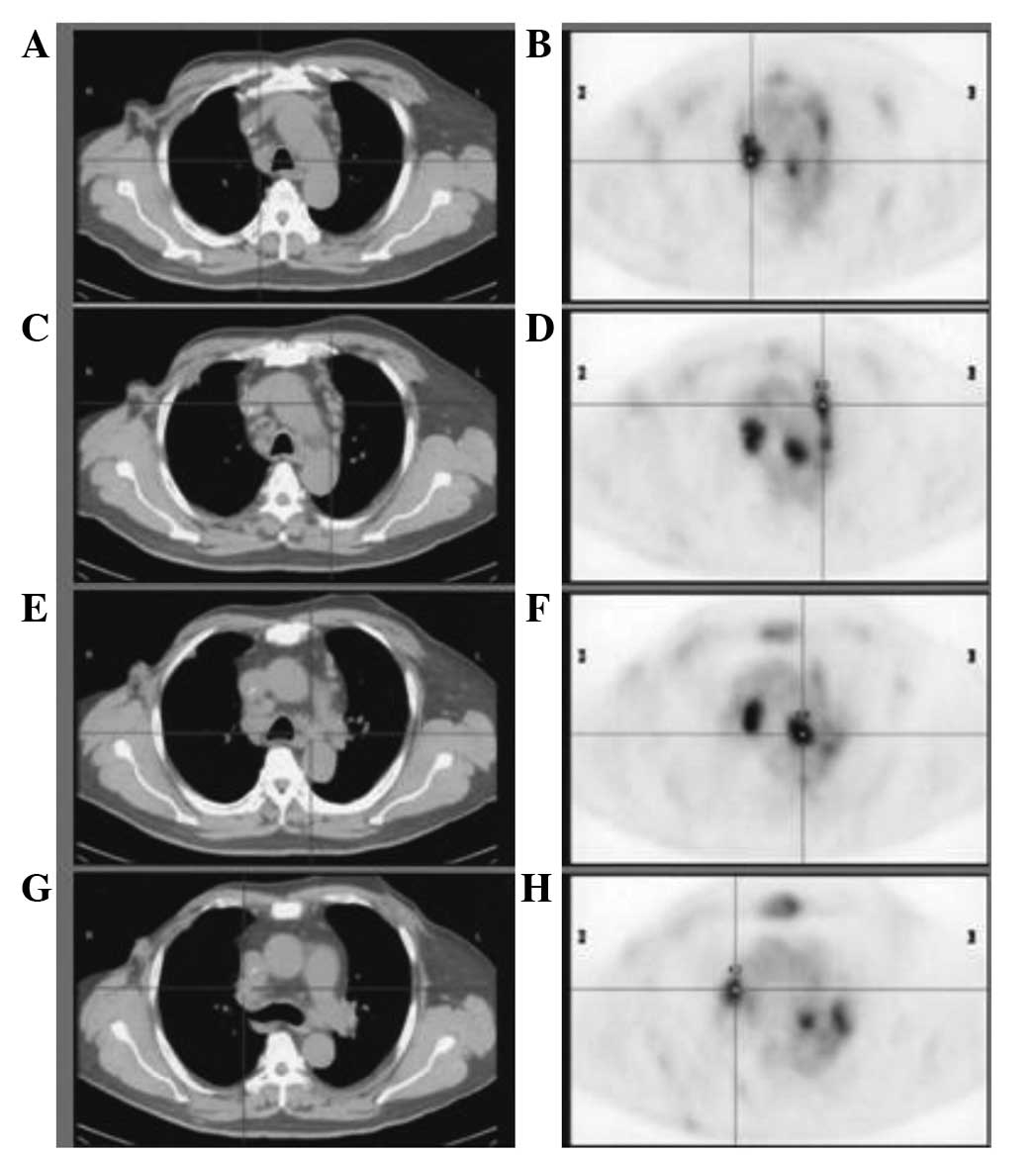
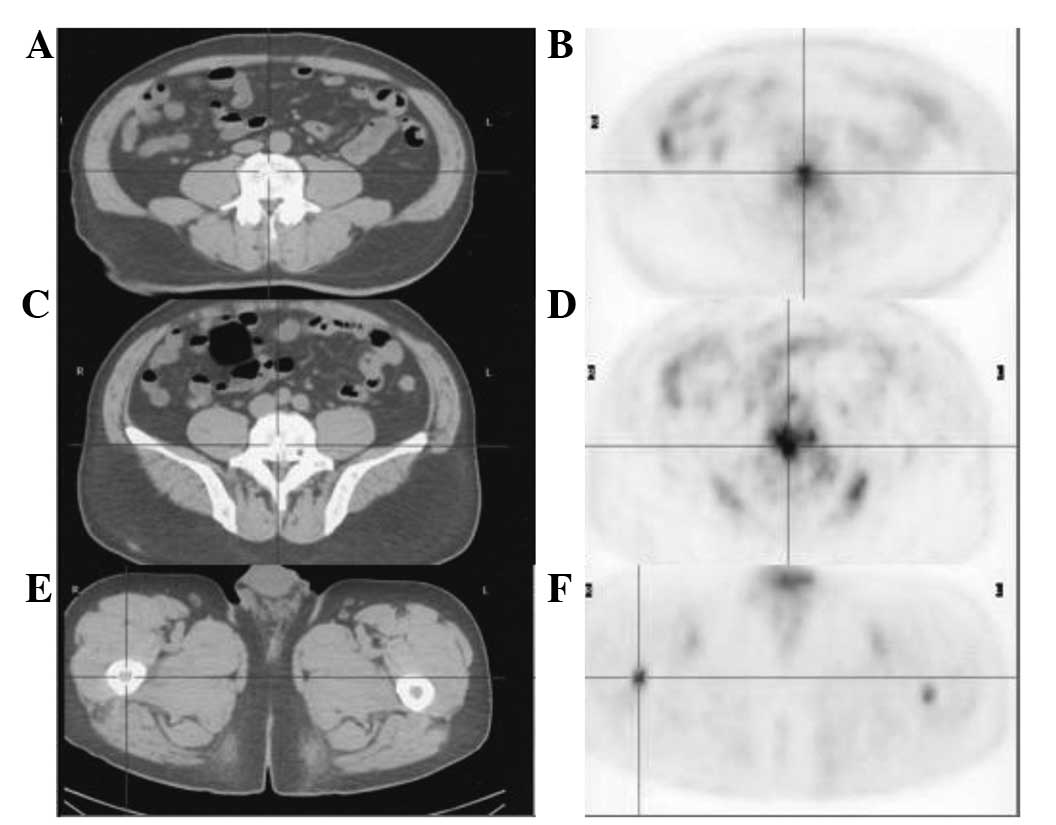
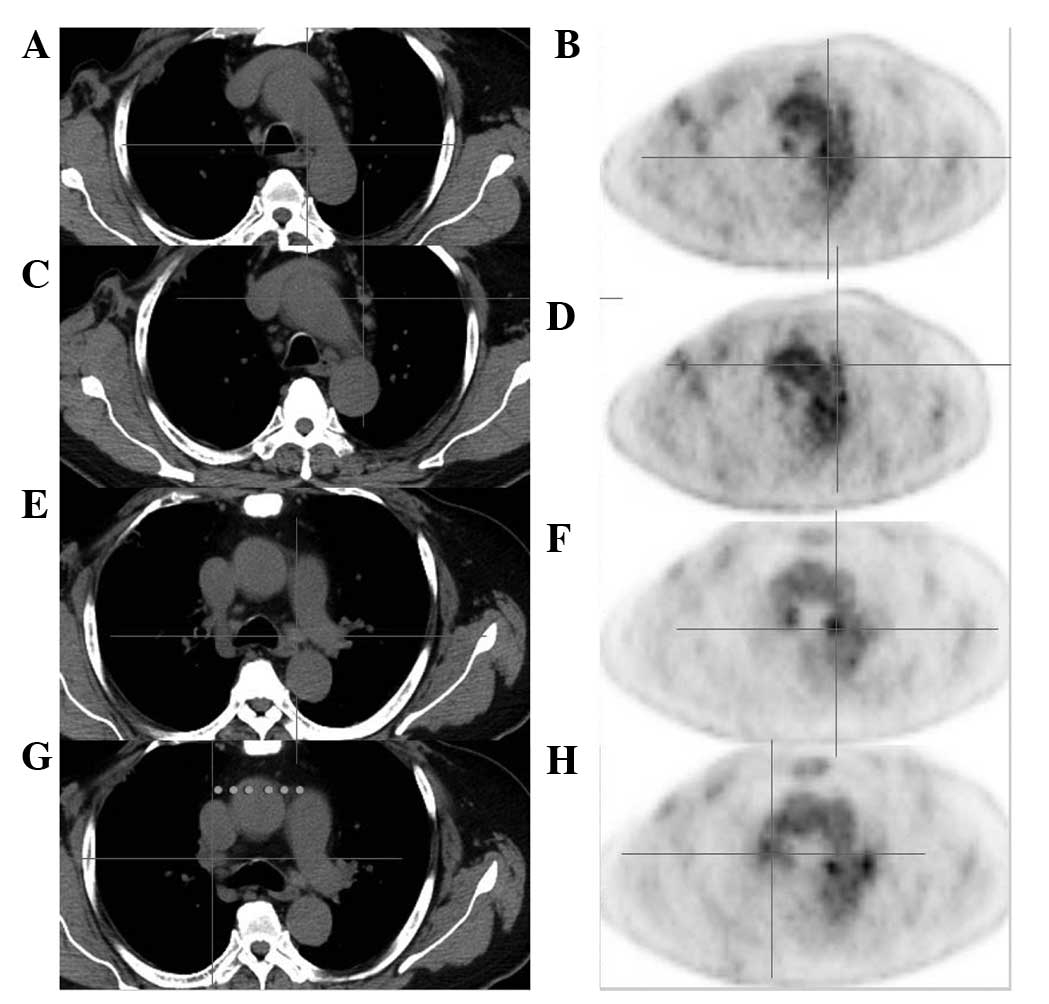
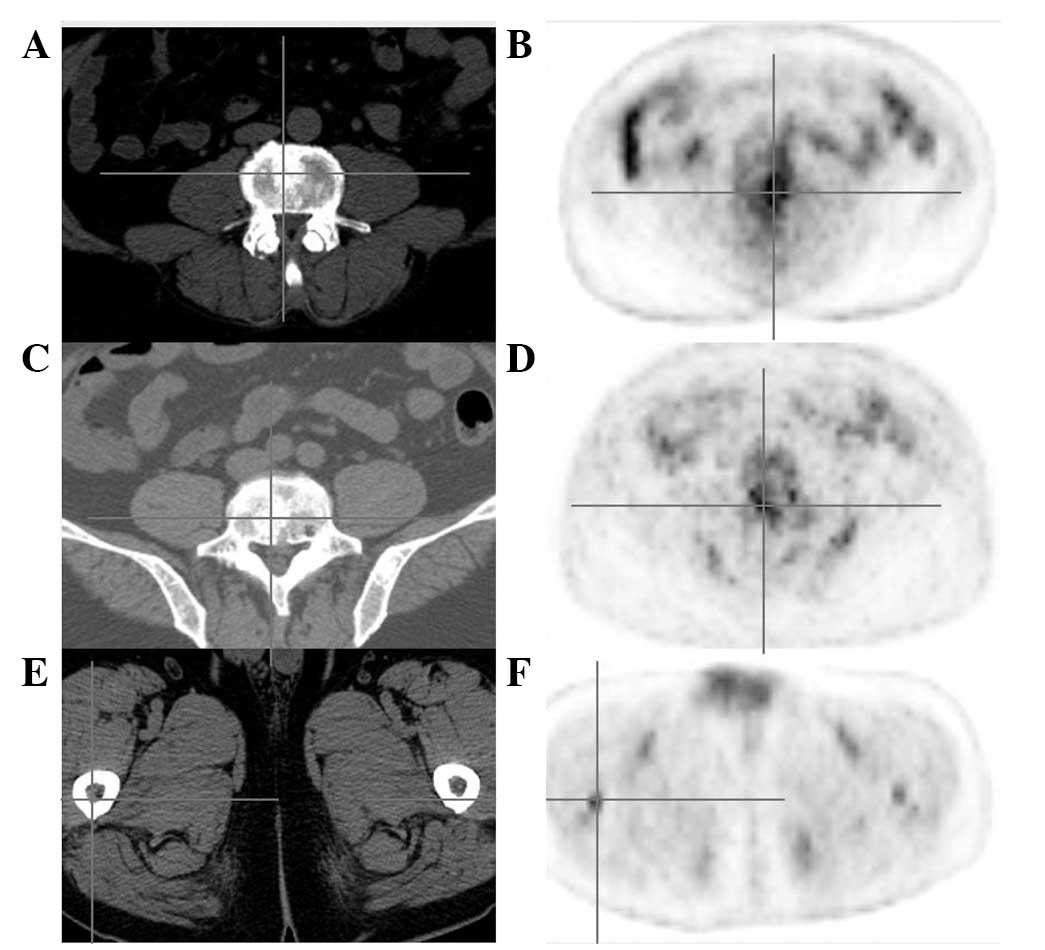
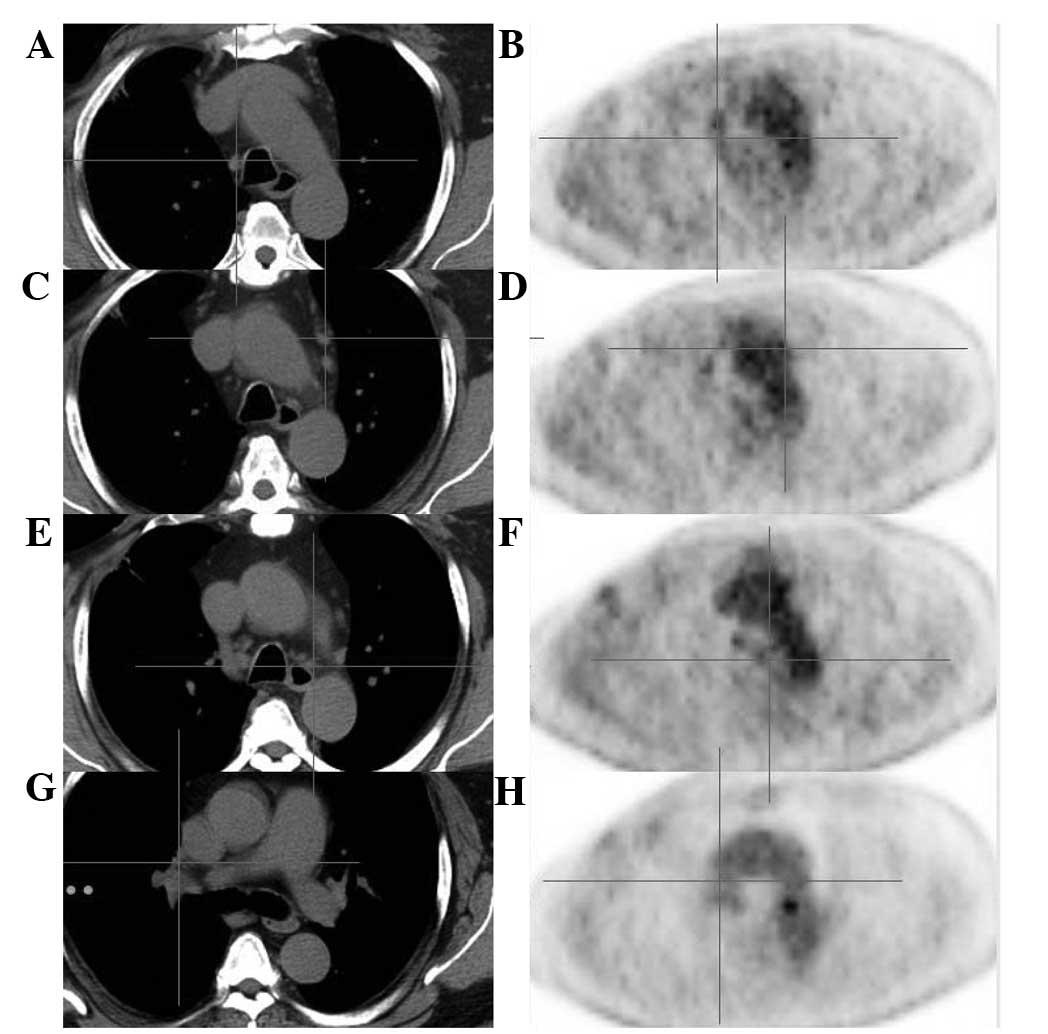
On April 20th, 2011, the patient incidentally detected a further mung bean-sized mass adjacent to the his left subclavian and, at the same time, experienced lower-limb bone pain. This mass was then resected and the pathological results indicated a poorly-differentiated metastatic carcinoma. Immunohistochemical analysis revealed that the mass was CK (focal+), vimentin (+), CK7 (+), CD117 (+), E-calpain (+), ER (3+), progesterone receptor (PR) (+++) and CD56 (+); however, the tissue was negative for TTF-1, Syn, HMB45, chromogranin A and human epidermal growth factor receptor-2. The patient was administered two adjuvant chemotherapy (AC) cycles (AC regimen: Pirarubicin, 40 mg, day 1 and 2; and CTX, 1 g i.v., on day 1, then once every 3 weeks). However, following chemotherapy, the bone pain was not relieved. On May 24th, 2011, a positron emission tomography-computed tomography (PET-CT) examination revealed multiple metabolic enlarged lymph nodes with high fluorodeoxyglucose uptake under the left collarbone, in the mediastinum and in the two hilus pulmonis, as well as multiple nodules in the two lungs and pleuras at both sides, a subcutaneous nodule on the right back and multiple high metastatic lesions of the bone (Figs. 1 and 2). Subsequently, the treatment was changed from chemotherapy to endocrine therapy (anastrozole and goserelin regimen: Anastrozole, 1 mg orally, daily; goserelin, 3.6 mg subcutaneously, once every 28 days). Endocrine therapy treatment is on-going since June 29th, 2011, and zoledronic acid (4 mg i.v., once every 28 days) is also administered every 28 days. The lower-limb bone pain was relieved following hormone therapy. On May 24th 2012, a PET-CT scan revealed that the disease had improved significantly. Fig. 3 demonstrates that the enlarged mediastinal lymph nodes were reduced in size, and the metabolic level was reduced. Fig. 4 indicates that the metabolic levels of the osteoblastic metastases were reduced also. The enlarged lymph nodes were much smaller, and the metabolic levels of the lymph nodes and osteoblastic metastases were reduced compared with previous examinations. The most commonly used markers for breast cancer are cancer antigen 153 and carcinoembryonic antigen, thus, levels of these antigens are presented in Table I. The increased levels of serum alkaline phosphatase are associated with bone metastasis. At the latest follow-up in 2014, the patient remained stable with no evidence of progression (Figs. 5 and 6).

Figure 1.

Positron emission tomography (right)-computed tomography (left) scans (May 24th, 2011) revealed multiple high metabolic enlarged lymph nodes in mediastina and increased 18F-fluorodeoxyglucose uptake in the (A and B) station 4R, (C and D) station 6, (E and F) station 4L and (G and H) station 10R lymph nodes. Lymph node mapping was determined according to the IASLC lymph node map (14).

Figure 2.

PET (right)-CT (left) scan (May 24th, 2011) revealed osteoblastic metastasis with increased 18F-FDG uptake in the (A and B) lumbar and (C and D) sacral vertebrae. (E) No evident changes were identified on axial CT, however, (F) 18F-FDG uptake was observed on axial PET. CT, computed tomography; 18F-FDG, 18F-fluorodeoxyglucose; PET, positron emission tomography.

Figure 3.

Positron emission tomography (right)-computed tomography (left) scans (May 24th, 2012) demonstrated that the enlarged mediastinal lymph nodes decreased in size, while 18F-fluorodeoxyglucose uptake was also reduced in the (A and B) station 4R, (C and D) station 6, (E and F) station 4L and (G and H) station 10R lymph nodes. Lymph node mapping was determined according to the IASLC lymph node map (14).

Figure 4.

PET (right)-CT (left) scans (May 24th, 2012) revealed that the metabolism of osteoblastic metastases was reduced compared with that prior to endocrine therapy. No evident changes were observed on axial CT scans, however the corresponding PET scans revealed decreased 18F-fluorodeoxyglucose uptake in the (A and B) lumbar and (C and D) sacral vertebrae and (E and F) right femoral shaft. CT, computed tomography; PET, positron emission tomography.

Figure 5.

Positron emission tomography (right)-computed tomography (left) scans (March 10th, 2014) demonstrated that the enlarged lymph nodes decreased further in size, and the metabolic level was also reduced to normal in the (A and B) station 4R, (C and D) station 6, (E and F) station 4L and (G and H) station 10R lymph nodes. Lymph node mapping was determined according to the IASLC lymph node map (14).

Figure 6.

PET (right)-CT (left) scans (March 10th, 2014) revealed that the metabolism of osteoblastic metastases was back to normal, with greatly reduced levels compared with those prior to endocrine therapy. No evident changes were identified on axial CT, however, corresponding axial PET images revealed almost normal 18F-fluorodeoxyglucose uptake in the (A and B) lumbar and (C and D) sacral vertebrae and (E and F) right femoral shaft. CT, computed tomography; PET, positron emission tomography.

Table I.

Laboratory test results.

Table I.

Laboratory test results.

Current case

MarkersNormal rangePrior to therapy1 year after therapy
Carcinoembryonic antigen, ng/ml0.50–9.60   28.18  11
Cancer antigen 15-3, U/ml   0.10–31.30   31.12  16
Serum alkaline phosphatase, IU/l   30.0–120.0188.00145

The current study was approved by the ethics committee of China-Japan Union Hospital Affiliated to Jilin University, and written informed consent was obtained from the patient prior to the study.

Discussion

The presence of ectopic breast tissue is reported in 2–6% of the general population with the majority of cases being located in the axillary region (3). Accessory breast carcinoma in males is extremely rare, with the most common clinical manifestation being accessory breast carcinoma of the axilla (12,15). The most frequent histological type of this lesion is invasive ductal carcinoma (worldwide incidence, 72%) (16,17).

In the majority of studies, treatment regimens for accessory breast carcinoma follow the guidelines for breast cancer treatment (9,10,11). Similar to breast cancer, accessory breast cancer is also surgically treated and supplemented with preoperative or postoperative chemotherapy (18). However, external radiotherapy should be considered in order to increase local control. Hormonal therapy is offered depending on the tumor and patients characteristics, following the same guidelines with anatomic breast carcinoma (19). Yamamura et al (8) have reported a case of male breast cancer originating in an accessory mammary gland in the axilla, which was successfully treated with hormone therapy (tamoxifen at 20 mg/day) (8). In the case reported in the present study, the disease was not relieved following two cycles of adjuvant chemotherapy with the AC regimen. Based on the results of immunohistochemical analysis, which revealed that the tumor was ER (+++) and PR (+++), the patient was treated with endocrine therapy (anastrozole and goserelin), which was an effective and tolerated therapy for the current patient.

Prognosis of accessory breast carcinoma is difficult to establish, primarily due to absent or limited follow-up data, and small sample sizes of previous studies (12). The disease follows similar prognostic indices as those of anatomic breast carcinoma (20). Certain authors have reported that carcinoma of accessory breast tissue may metastasize to the lymph nodes earlier and more frequently compared with anatomic breast carcinoma, since it usually occurs under the axilla or in the inguinal region, where there is an abundance of lymph nodes and capillaries (19,21).

In conclusion, the present study reported a case of male accessory breast cancer in a patient with delayed diagnosis at a locally advanced stage; however, the patient was successfully treated with endocrine therapy. Currently, the patient is under follow-up observation, without any progression of the accessory breast cancer. The current case demonstrates that, although accessory breast cancer in males is extremely rare, the possibility of this disease should be considered when establishing a diagnosis. Investigation of further cases of accessory breast cancer in male patients will provide an improved understanding of the underlying mechanism, etiology, treatment and prognosis of this disease.

References

1 

Fentiman IS, Fourquet A and Hortobagyi GN: Male breast cancer. Lancet. 367:595–604. 2006. View Article : Google Scholar : PubMed/NCBI

2 

Gennari R, Curigliano G, JereczekFossa BA, Zurrida S, Renne G, Intra M, Galimberti V, Luini A, Orecchia R, Viale G, et al: Male breast cancer: A special therapeutic problem. Anything new? (Review). Int J Oncol. 24:663–670. 2004.PubMed/NCBI

3 

Gutermuth J, Audring H, Voit C and Haas N: Primary carcinoma of ectopic axillary breast tissue. J Eur Acad Dermatol Venereol. 20:217–221. 2006. View Article : Google Scholar : PubMed/NCBI

4 

Grossl NA: Supernumerary breast tissue: Historical perspectives and clinical features. South Med J. 93:29–32. 2000. View Article : Google Scholar : PubMed/NCBI

5 

Matsuoka H, Ueo H, Kuwano H, Sugimachi K and Inokuchi K: A case of carcinoma originating from accessory breast tissue of the axilla. Gan No Rinsho. 30:387–391. 1984.PubMed/NCBI

6 

Takeyama H, Takahashi H, Tabei I, Fukuchi O, Nogi H, Kinoshita S, Uchida K and Morikawa T: Malignant neoplasm in the axilla of a male: Suspected primary carcinoma of an accessory mammary gland. Breast Cancer. 17:151–154. 2010. View Article : Google Scholar : PubMed/NCBI

7 

Gao YG, Zhang SH and Wang Y: A case of accessory mammary cancer in a male patient and a literature review. Eur J Gynaecol Oncol. 35:452–455. 2014.PubMed/NCBI

8 

Yamamura J, Masuda N, Kodama Y, Yasojima H, Mizutani M, Kuriyama K, Mano M, Nakamori S and Sekimoto M: Male breast cancer originating in an accessory mammary gland in the axilla: A case report. Case Rep Med. 2012:2862102012.PubMed/NCBI

9 

Madej B, Balak B, Winkler I and Burdan F: Cancer of the accessory breast - a case report. Adv Med Sci. 54:308–310. 2009. View Article : Google Scholar : PubMed/NCBI

10 

KahramanCetintas S, TuranOzdemir S, Topal U, Kurt M, Gokgoz S, Saraydaroglu O and Ozkan L: Carcinoma originating from aberrant breast tissue. A case report and review of the literature. Tumori. 94:440–443. 2008.PubMed/NCBI

11 

Markopoulos C, Kouskos E, Kontzoglou K, Gogas G, Kyriakou V and Gogas J: Breast cancer in ectopic breast tissue. Eur J Gynaecol Oncol. 22:157–159. 2001.PubMed/NCBI

12 

Evans DM and Guyton DP: Carcinoma of the axillary breast. J Surg Oncol. 59:190–195. 1995. View Article : Google Scholar : PubMed/NCBI

13 

Singletary SE and Connolly JL: Breast cancer staging: Working with the sixth edition of the AJCC Cancer Staging Manual. CA Cancer J Clin. 56:37–47; quiz 50-31. 2006. View Article : Google Scholar : PubMed/NCBI

14 

Rusch VW, Asamura H, Watanabe H, et al: Members of IASLC Staging Committee: The IASLC lung cancer staging project: A proposal for a new international lymph node map in the forthcoming seventh edition of the TNM classification for lung cancer. J Thorac Oncol. 4:568–577. 2009. View Article : Google Scholar : PubMed/NCBI

15 

Amsler E, SigalZafrani B, Marinho E and Aractingi S: Ectopic breast cancer of the axilla. Ann Dermatol Venereol. 129:1389–1391. 2002.(In French). PubMed/NCBI

16 

Visconti G, Eltahir Y, Van Ginkel RJ, Bart J and Werker PM: Approach and management of primary ectopic breast carcinoma in the axilla: Where are we? A comprehensive historical literature review. J Plast Reconstr Aesthet Surg. 64:e1–e11. 2011. View Article : Google Scholar : PubMed/NCBI

17 

Yerra L, Karnad AB and Votaw ML: Primary breast cancer in aberrant breast tissue in the axilla. South Med J. 90:661–662. 1997. View Article : Google Scholar : PubMed/NCBI

18 

Hao JY, Yang CC, Liu FF, Yang YL, Li S, Li WD, Li YQ, Lang RG, Fan Y, Paulos E, et al: Accessory breast cancer occurring concurrently with bilateral primary invasive breast carcinomas: A report of two cases and literature review. Cancer Biol Med. 9:197–201. 2012.PubMed/NCBI

19 

Routiot T, Marchal C, Verhaeghe JL, Depardieu C, Netter E, Weber B and Carolus JM: Breast carcinoma located in ectopic breast tissue: A case report and review of the literature. Oncol Rep. 5:413–417. 1998.PubMed/NCBI

20 

Marshall MB, Moynihan JJ, Frost A and Evans SR: Ectopic breast cancer: Case report and literature review. Surg Oncol. 3:295–304. 1994. View Article : Google Scholar : PubMed/NCBI

21 

NihonYanagi Y, Ueda T, Kameda N and Okazumi S: A case of ectopic breast cancer with a literature review. Surg Oncol. 20:35–42. 2011. View Article : Google Scholar : PubMed/NCBI

Related Articles

  • Abstract
  • View
  • Download
  • Twitter
Copy and paste a formatted citation
Spandidos Publications style
Bi L, Li J, Shi Z, Zhu Z and Lu Z: Male accessory breast cancer successfully treated with endocrine therapy: A case report. Oncol Lett 10: 2495-2498, 2015.
APA
Bi, L., Li, J., Shi, Z., Zhu, Z., & Lu, Z. (2015). Male accessory breast cancer successfully treated with endocrine therapy: A case report. Oncology Letters, 10, 2495-2498. https://doi.org/10.3892/ol.2015.3602
MLA
Bi, L., Li, J., Shi, Z., Zhu, Z., Lu, Z."Male accessory breast cancer successfully treated with endocrine therapy: A case report". Oncology Letters 10.4 (2015): 2495-2498.
Chicago
Bi, L., Li, J., Shi, Z., Zhu, Z., Lu, Z."Male accessory breast cancer successfully treated with endocrine therapy: A case report". Oncology Letters 10, no. 4 (2015): 2495-2498. https://doi.org/10.3892/ol.2015.3602
Copy and paste a formatted citation
x
Spandidos Publications style
Bi L, Li J, Shi Z, Zhu Z and Lu Z: Male accessory breast cancer successfully treated with endocrine therapy: A case report. Oncol Lett 10: 2495-2498, 2015.
APA
Bi, L., Li, J., Shi, Z., Zhu, Z., & Lu, Z. (2015). Male accessory breast cancer successfully treated with endocrine therapy: A case report. Oncology Letters, 10, 2495-2498. https://doi.org/10.3892/ol.2015.3602
MLA
Bi, L., Li, J., Shi, Z., Zhu, Z., Lu, Z."Male accessory breast cancer successfully treated with endocrine therapy: A case report". Oncology Letters 10.4 (2015): 2495-2498.
Chicago
Bi, L., Li, J., Shi, Z., Zhu, Z., Lu, Z."Male accessory breast cancer successfully treated with endocrine therapy: A case report". Oncology Letters 10, no. 4 (2015): 2495-2498. https://doi.org/10.3892/ol.2015.3602
Follow us
  • Twitter
  • LinkedIn
  • Facebook
About
  • Spandidos Publications
  • Careers
  • Cookie Policy
  • Privacy Policy
How can we help?
  • Help
  • Live Chat
  • Contact
  • Email to our Support Team