Spandidos Publications Logo
  • About
    • About Spandidos
    • Aims and Scopes
    • Abstracting and Indexing
    • Editorial Policies
    • Reprints and Permissions
    • Job Opportunities
    • Terms and Conditions
    • Contact
  • Journals
    • All Journals
    • Oncology Letters
      • Oncology Letters
      • Information for Authors
      • Editorial Policies
      • Editorial Board
      • Aims and Scope
      • Abstracting and Indexing
      • Bibliographic Information
      • Archive
    • International Journal of Oncology
      • International Journal of Oncology
      • Information for Authors
      • Editorial Policies
      • Editorial Board
      • Aims and Scope
      • Abstracting and Indexing
      • Bibliographic Information
      • Archive
    • Molecular and Clinical Oncology
      • Molecular and Clinical Oncology
      • Information for Authors
      • Editorial Policies
      • Editorial Board
      • Aims and Scope
      • Abstracting and Indexing
      • Bibliographic Information
      • Archive
    • Experimental and Therapeutic Medicine
      • Experimental and Therapeutic Medicine
      • Information for Authors
      • Editorial Policies
      • Editorial Board
      • Aims and Scope
      • Abstracting and Indexing
      • Bibliographic Information
      • Archive
    • International Journal of Molecular Medicine
      • International Journal of Molecular Medicine
      • Information for Authors
      • Editorial Policies
      • Editorial Board
      • Aims and Scope
      • Abstracting and Indexing
      • Bibliographic Information
      • Archive
    • Biomedical Reports
      • Biomedical Reports
      • Information for Authors
      • Editorial Policies
      • Editorial Board
      • Aims and Scope
      • Abstracting and Indexing
      • Bibliographic Information
      • Archive
    • Oncology Reports
      • Oncology Reports
      • Information for Authors
      • Editorial Policies
      • Editorial Board
      • Aims and Scope
      • Abstracting and Indexing
      • Bibliographic Information
      • Archive
    • Molecular Medicine Reports
      • Molecular Medicine Reports
      • Information for Authors
      • Editorial Policies
      • Editorial Board
      • Aims and Scope
      • Abstracting and Indexing
      • Bibliographic Information
      • Archive
    • World Academy of Sciences Journal
      • World Academy of Sciences Journal
      • Information for Authors
      • Editorial Policies
      • Editorial Board
      • Aims and Scope
      • Abstracting and Indexing
      • Bibliographic Information
      • Archive
    • International Journal of Functional Nutrition
      • International Journal of Functional Nutrition
      • Information for Authors
      • Editorial Policies
      • Editorial Board
      • Aims and Scope
      • Abstracting and Indexing
      • Bibliographic Information
      • Archive
    • International Journal of Epigenetics
      • International Journal of Epigenetics
      • Information for Authors
      • Editorial Policies
      • Editorial Board
      • Aims and Scope
      • Abstracting and Indexing
      • Bibliographic Information
      • Archive
    • Medicine International
      • Medicine International
      • Information for Authors
      • Editorial Policies
      • Editorial Board
      • Aims and Scope
      • Abstracting and Indexing
      • Bibliographic Information
      • Archive
  • Articles
  • Information
    • Information for Authors
    • Information for Reviewers
    • Information for Librarians
    • Information for Advertisers
    • Conferences
  • Language Editing
Spandidos Publications Logo
  • About
    • About Spandidos
    • Aims and Scopes
    • Abstracting and Indexing
    • Editorial Policies
    • Reprints and Permissions
    • Job Opportunities
    • Terms and Conditions
    • Contact
  • Journals
    • All Journals
    • Biomedical Reports
      • Information for Authors
      • Editorial Policies
      • Editorial Board
      • Aims and Scope
      • Abstracting and Indexing
      • Bibliographic Information
      • Archive
    • Experimental and Therapeutic Medicine
      • Information for Authors
      • Editorial Policies
      • Editorial Board
      • Aims and Scope
      • Abstracting and Indexing
      • Bibliographic Information
      • Archive
    • International Journal of Epigenetics
      • Information for Authors
      • Editorial Policies
      • Editorial Board
      • Aims and Scope
      • Abstracting and Indexing
      • Bibliographic Information
      • Archive
    • International Journal of Functional Nutrition
      • Information for Authors
      • Editorial Policies
      • Editorial Board
      • Aims and Scope
      • Abstracting and Indexing
      • Bibliographic Information
      • Archive
    • International Journal of Molecular Medicine
      • Information for Authors
      • Editorial Policies
      • Editorial Board
      • Aims and Scope
      • Abstracting and Indexing
      • Bibliographic Information
      • Archive
    • International Journal of Oncology
      • Information for Authors
      • Editorial Policies
      • Editorial Board
      • Aims and Scope
      • Abstracting and Indexing
      • Bibliographic Information
      • Archive
    • Medicine International
      • Information for Authors
      • Editorial Policies
      • Editorial Board
      • Aims and Scope
      • Abstracting and Indexing
      • Bibliographic Information
      • Archive
    • Molecular and Clinical Oncology
      • Information for Authors
      • Editorial Policies
      • Editorial Board
      • Aims and Scope
      • Abstracting and Indexing
      • Bibliographic Information
      • Archive
    • Molecular Medicine Reports
      • Information for Authors
      • Editorial Policies
      • Editorial Board
      • Aims and Scope
      • Abstracting and Indexing
      • Bibliographic Information
      • Archive
    • Oncology Letters
      • Information for Authors
      • Editorial Policies
      • Editorial Board
      • Aims and Scope
      • Abstracting and Indexing
      • Bibliographic Information
      • Archive
    • Oncology Reports
      • Information for Authors
      • Editorial Policies
      • Editorial Board
      • Aims and Scope
      • Abstracting and Indexing
      • Bibliographic Information
      • Archive
    • World Academy of Sciences Journal
      • Information for Authors
      • Editorial Policies
      • Editorial Board
      • Aims and Scope
      • Abstracting and Indexing
      • Bibliographic Information
      • Archive
  • Articles
  • Information
    • For Authors
    • For Reviewers
    • For Librarians
    • For Advertisers
    • Conferences
  • Language Editing
Login Register Submit
  • This site uses cookies
  • You can change your cookie settings at any time by following the instructions in our Cookie Policy. To find out more, you may read our Privacy Policy.

    I agree
Search articles by DOI, keyword, author or affiliation
Search
Advanced Search
presentation
Oncology Letters
Join Editorial Board Propose a Special Issue
Print ISSN: 1792-1074 Online ISSN: 1792-1082
Journal Cover
November-2015 Volume 10 Issue 5

Full Size Image

Sign up for eToc alerts
Recommend to Library

Journals

International Journal of Molecular Medicine

International Journal of Molecular Medicine

International Journal of Molecular Medicine is an international journal devoted to molecular mechanisms of human disease.

International Journal of Oncology

International Journal of Oncology

International Journal of Oncology is an international journal devoted to oncology research and cancer treatment.

Molecular Medicine Reports

Molecular Medicine Reports

Covers molecular medicine topics such as pharmacology, pathology, genetics, neuroscience, infectious diseases, molecular cardiology, and molecular surgery.

Oncology Reports

Oncology Reports

Oncology Reports is an international journal devoted to fundamental and applied research in Oncology.

Experimental and Therapeutic Medicine

Experimental and Therapeutic Medicine

Experimental and Therapeutic Medicine is an international journal devoted to laboratory and clinical medicine.

Oncology Letters

Oncology Letters

Oncology Letters is an international journal devoted to Experimental and Clinical Oncology.

Biomedical Reports

Biomedical Reports

Explores a wide range of biological and medical fields, including pharmacology, genetics, microbiology, neuroscience, and molecular cardiology.

Molecular and Clinical Oncology

Molecular and Clinical Oncology

International journal addressing all aspects of oncology research, from tumorigenesis and oncogenes to chemotherapy and metastasis.

World Academy of Sciences Journal

World Academy of Sciences Journal

Multidisciplinary open-access journal spanning biochemistry, genetics, neuroscience, environmental health, and synthetic biology.

International Journal of Functional Nutrition

International Journal of Functional Nutrition

Open-access journal combining biochemistry, pharmacology, immunology, and genetics to advance health through functional nutrition.

International Journal of Epigenetics

International Journal of Epigenetics

Publishes open-access research on using epigenetics to advance understanding and treatment of human disease.

Medicine International

Medicine International

An International Open Access Journal Devoted to General Medicine.

Journal Cover
November-2015 Volume 10 Issue 5

Full Size Image

Sign up for eToc alerts
Recommend to Library

  • Article
  • Citations
    • Cite This Article
    • Download Citation
    • Create Citation Alert
    • Remove Citation Alert
    • Cited By
  • Similar Articles
    • Related Articles (in Spandidos Publications)
    • Similar Articles (Google Scholar)
    • Similar Articles (PubMed)
  • Download PDF
  • Download XML
  • View XML
Case Report

Compound gastroenteropancreatic neuroendocrine and gastrointestinal stromal tumors in the stomach: A case report

  • Authors:
    • Yu Zhou
    • Ping Chen
    • Liang Zhong
  • View Affiliations / Copyright

    Affiliations: Department of Gastrointestinal Surgery, Clinical Medical College of Yangzhou University, Subei People's Hospital of Jiangsu, Yangzhou, Jiangsu 225001, P.R. China
  • Pages: 2996-2998
    |
    Published online on: September 2, 2015
       https://doi.org/10.3892/ol.2015.3666
  • Expand metrics +
Metrics: Total Views: 0 (Spandidos Publications: | PMC Statistics: )
Metrics: Total PDF Downloads: 0 (Spandidos Publications: | PMC Statistics: )
Cited By (CrossRef): 0 citations Loading Articles...

This article is mentioned in:


Abstract

Gastroenteropancreatic neuroendocrine tumors (GEP‑NETs) combined with gastrointestinal stromal tumors (GISTs) are rarely observed in the clinic. In the present study, the case of a 56‑year‑old female diagnosed with compound GEP‑NETs and GISTs was reported. The patient initially presented with epigastric discomfort. The pre‑operative diagnosis was of GISTs based on the endoscopic and imaging findings. A subtotal gastrectomy and Roux‑en‑Y reconstruction were successfully performed. The final diagnosis was revised to be compound GEP‑NETs and GISTs based on the pathological findings. After 17 months of follow‑up examinations using computed tomography and ultrasonography, the patient showed no symptoms or signs of recurrence.

Introduction

Gastroenteropancreatic neuroendocrine tumors (GEP-NETs) are extremely rare tumors (<1% of stomach tumors) that usually originate from the neuroendocrine tissues of the digestive system. Driver mutations in MEN1, DAXX or ATRX and mTOR pathway genes have been identified as crucial factors in GEP-NETs tumorigenesis (1). The first case of GEP-NETs was reported approximately one century ago. Recently, the incidence of these tumors has greatly increased (2,3). According to the Epidemiology and End Results (SEER) program of the National Cancer Institute, the annual incidence rate of GEP-NETs is 3.65 cases per 100,000 individuals (4). Gastrointestinal stromal tumors (GISTs) are the most common type of mesenchymal tumor of the gastrointestinal system, and are derived from the interstitial Cajal cells of the gastrointestinal tract. GISTs are generally characterized by gain-of-function mutations in the KIT gene (5), and less often by PDGFRA or BRAF gene mutations (6–8). The annual incidence of GISTs ranges between 6.8 and 19.7 individuals per million across numerous countries, including the United States (9–11). GEP-NETs and GISTs are malignant or potentially malignant tumors, and are considered to have their own specific molecular biological behavior. As the majority of patients exhibit nonspecific symptoms, the identification of GEP-NETs and GISTs is often incidental. At present, diagnostic techniques include endoscopy, computed tomography (CT) and endoscopic ultrasonography (EUS) (12) and surgical resection remains the standard treatment for GEP-NETs and GISTs. The present study reports a compound case of GEP-NETs and GISTs that simultaneously occurred in the stomach.

Case report

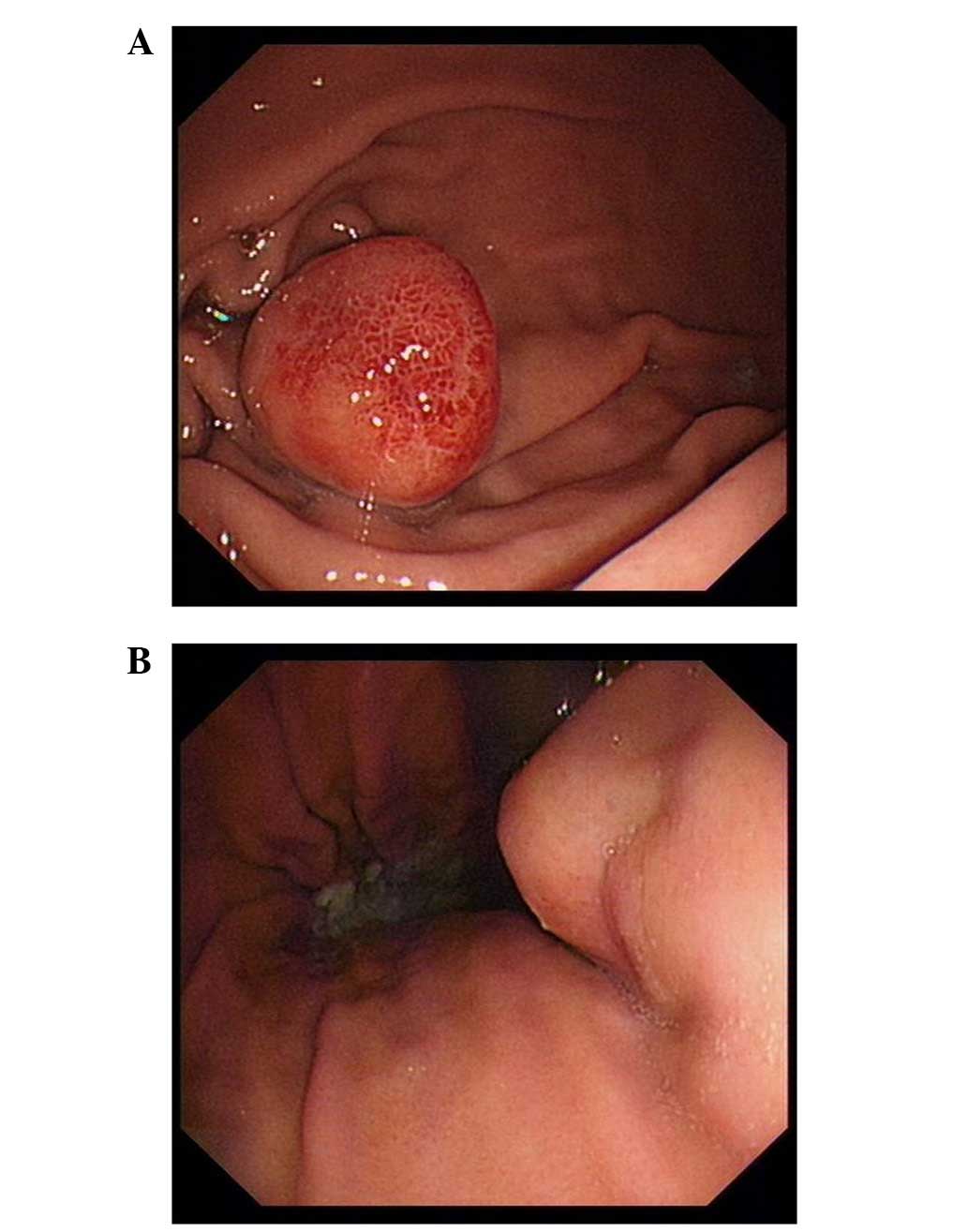
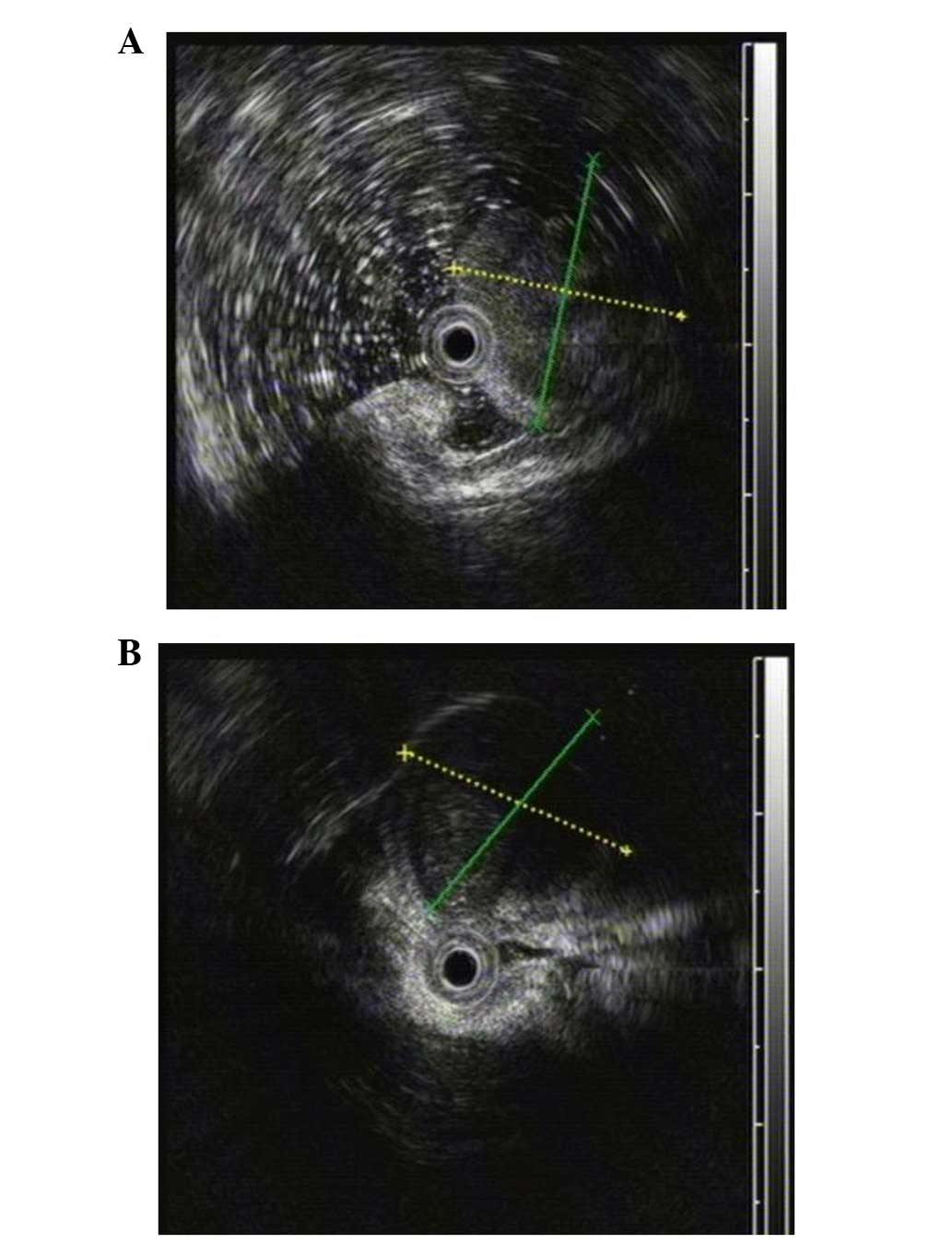
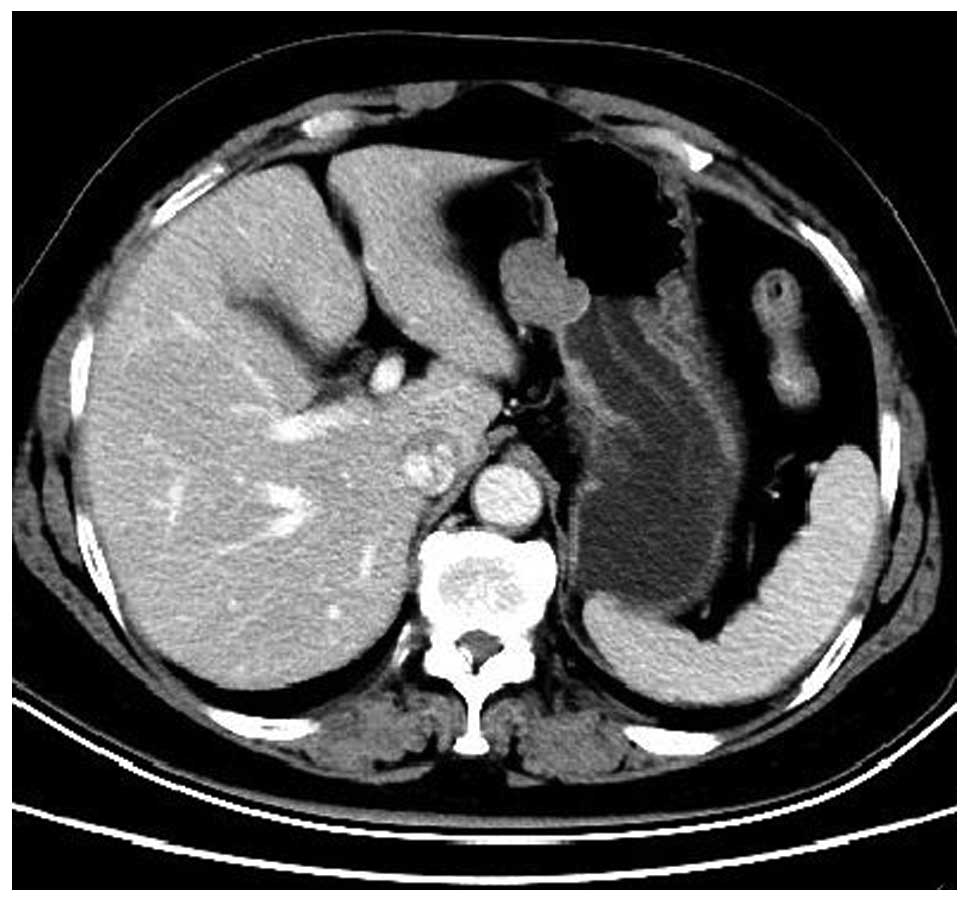
A 56-year-old female was admitted to the Subei People's Hospital of Jiangsu (Yangzhou, Jiangsu, China) due to epigastric discomfort that had persisted for 4 weeks. Pre-operative blood examinations, including tumor marker analysis, were normal. Gastrointestinal endoscopy identified two fusiform masses of 1.8×1.8 cm and 1.6×1.6 cm located at the gastric body and gastric fundus, respectively (Fig. 1A and B). Meanwhile, EUS found that the two masses with low homogenous echogenicity each originated from the gastric muscular layer (Fig. 2A and B). Additionally, abdominal contrast-enhanced CT confirmed the presence of two well-marginated oval-shaped masses located at the gastric fundus and the lesser curvature of the cardia, respectively (Fig. 3). A pre-operative diagnosis of GISTs was formed.

Figure 1.

Pre-operative gastrointestinal endoscopy revealing a mass at the (A) gastric body and (B) the gastric fundus.

Figure 2.

Pre-operative endoscopic ultrasonography shows tumors with low homogenous echogenicity originating in the (A) gastric body and (B) the gastric fundus.

Figure 3.

Pre-operative abdominal computed tomography demonstrating a single 3.1×2.2-cm mass located close to the gastric fundus and the upper lesser curvature of the stomach.

At laparotomy, the tumor located at the lesser curvature of the cardia was found and measured 3×3×2.5 cm in size. The second tumor was found in the posterior wall of the gastric body and measured ~1×1×0.5 cm in size. A proximal gastrectomy and Roux-en-Y reconstruction were performed.

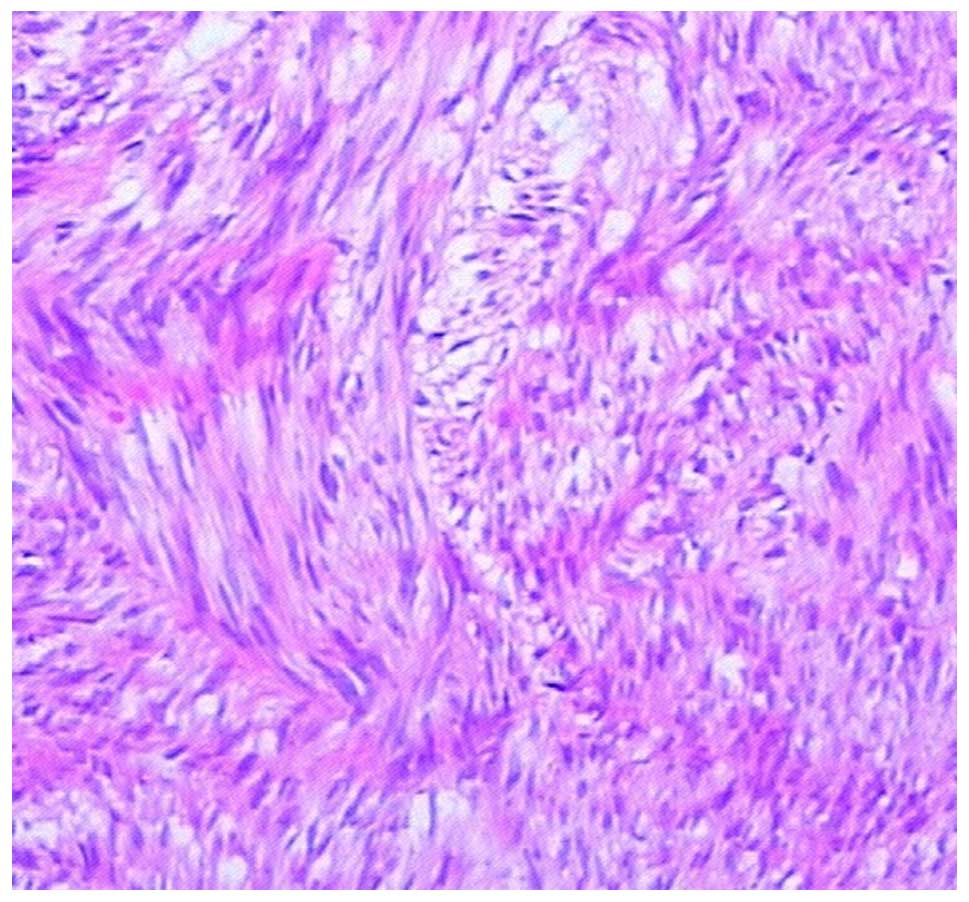
Microscopically, the first tumor was found to be composed of spindle cells, a number of which showed high mitotic activity (Fig.4). Immunohistochemical staining showed that the tumor was positive for (CD)117, CD34, discovered on GIST-1 and smooth muscle actin (SMA), but negative for desmin and S-100, suggesting a GIST origin.

Figure 4.

Hematoxylin and eosin-stained post-operative section. Swirling bundles of spindle cells with focally palisading areas within the fibrotic stroma were identified, but mitotic figures were rare (magnification, ×100).

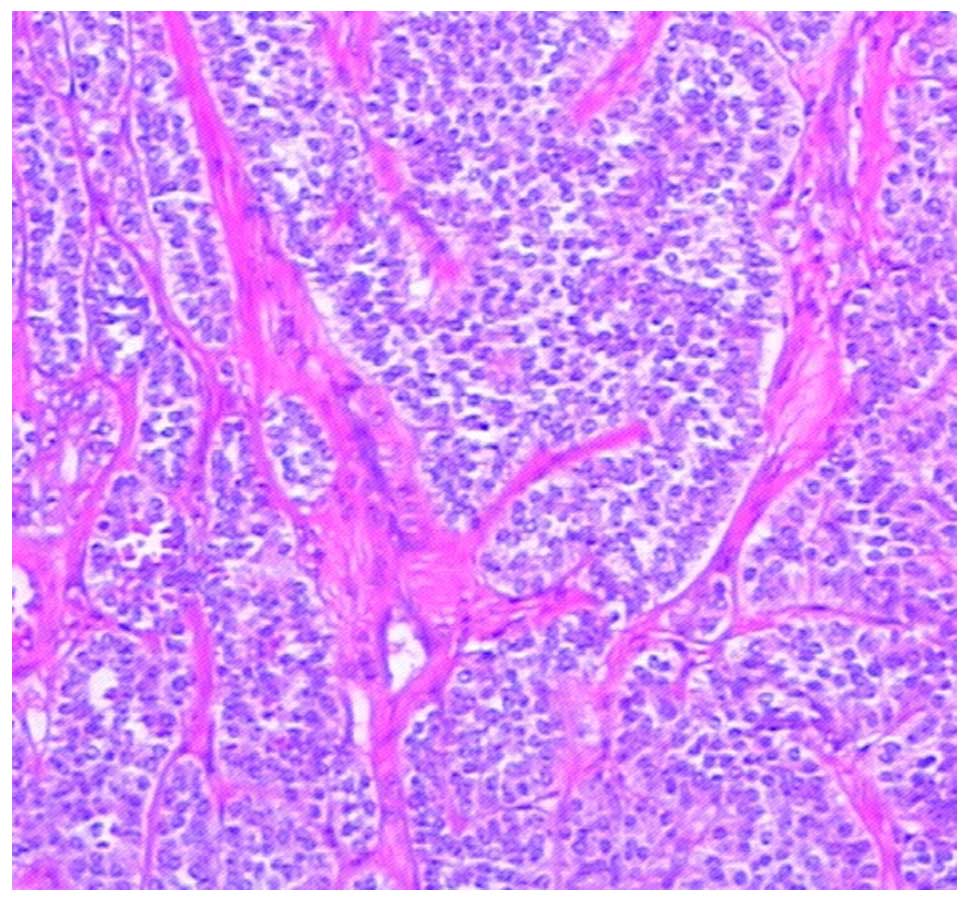
Unexpectedly, the cells of the second tumor were organized in nests with fibrous separation (Fig. 5). The tumor cells exhibited a mitotic index of <2/10 high-power fields. Immunohistochemical results showed that the tumor was strongly positive for chromogranin A (CgA; +++), synaptophysin (Syn; +++) and CD56 (+++), with a Ki-67 index of <2%. All the results suggested that this tumor was of GEP-NET origin.

Figure 5.

Hematoxylin and eosin-stained post-operative section. Neuroendocrine tumor cels were arranged in nests, with fibrous separation (magnification, ×100).

Following the surgery, there were no post-operative complications. The patient was discharged from hospital after 10 days. After 17 months of follow-up examinations using CT and ultrasonography, the patient showed no symptoms or signs of recurrence. The present study was approved by the Subei People's Hospital of Jiangsu Ethical Committee and written informed consent was obtained from the patient.

Discussion

GEP-NETs originate from various neuroendocrine tissues of the gastroenteropancreatic system and form the largest subgroup of NETs (13). GEP-NETs usually and equally distribute in the foregut (stomach or duodenal), midgut (jejunal, ileal, appendix or proximal colon) and hindgut (distal colon or rectum) (14). Although they are rare neoplastic diseases in general, the incidence has greatly increased in the last decade (15).

In 2000, the World Health Organization classification system for NETs was published (16). Based on this system, proliferation index (Ki-67, MIB-1), angioinvasion and mitoses are regarded as the most important factors to determine the malignancy of NETs. NETs can be classified into the well-differentiated (<2 cm in size, <2% Ki-67 index), moderately-differentiated (>2 cm in size, >2% Ki-67 index, or angioinvasive) and poorly-differentiated (>20% Ki-67 index) subtypes (17). In addition, the European Neuroendocrine Tumor Society proposed another grading system (G1, G2 and G3) for the classification of NETs (18). In general, G1 and G2 NETs refer to a well-differentiated subtype, displaying diffuse and intense expression of CgA and Syn. G3 NET indicates a poorly-differentiated subtype with high mitotic counts/Ki-67 index (>20%), displaying slight staining of CgA and intense staining of Syn (19).

GISTs are also rare tumors, but are the most common mesenchymal tumor in the gastrointestinal tract (20). GISTs clinically present with characteristic GI bleeding, weight loss, abdominal pain, anemia and/or a palpable mass (21). The highest incidence of GISTs occurs in the stomach (52–60%), followed by the small intestine (20–30%) and colorectum (10%). Approximately 95% of GISTs are positive for c-Kit/CD117, 40–50% for CD34, 20–30% for SMA and 10% for S100 (22,23). The National Institutes of Health and National Comprehensive Cancer Network systems were established to predict GIST behavior using risk assessment (very low risk, low risk, intermediate risk and high risk) (24).

To the best of our knowledge, the present study is the first to demonstrate a compound case of GEP-NETs and GISTs in the stomach. Surgical resection remains the first choice of treatment, however, due to the malignant potency of the two tumor types, long-term follow-up is greatly advised.

References

1 

Jiao Y, Shi C, Edil BH, et al: DAXX/ATRX, MEN1, and mTOR pathway genes are frequently altered in pancreatic neuroendocrine tumors. Science. 331:1199–1203. 2011. View Article : Google Scholar : PubMed/NCBI

2 

Modlin IM, Lye KD and Kidd M: A 5-decade analysis of 13,715 carcinoid tumors. Cancer. 97:934–959. 2003. View Article : Google Scholar : PubMed/NCBI

3 

Modlin IM, Oberg K, Chung DC, Jensen RT, de Herder WW, Thakker RV, Caplin M, Fave G Delle, Kaltsas GA, Krenning EP, et al: Gastroenteropancreatic neuroendocrine tumours. Lancet Oncol. 9:61–72. 2008. View Article : Google Scholar : PubMed/NCBI

4 

Lawrence B, Gustafsson BI, Chan A, Svejda B, Kidd M and Modlin IM: The epidemiology of gastroenteropancreatic neuroendocrine tumors. Endocrinol Metab Clin North Am. 40:1–18. 2011. View Article : Google Scholar : PubMed/NCBI

5 

Hirota S, Isozaki K, Moriyama Y, et al: Gain-of-function mutations of c-kit in human gastrointestinal stromal tumors. Science. 279:577–580. 1998. View Article : Google Scholar : PubMed/NCBI

6 

Heinrich MC, Corless CL, Duensing A, et al: PDGFRA activating mutations in gastrointestinal stromal tumors. Science. 299:708–710. 2003. View Article : Google Scholar : PubMed/NCBI

7 

Hirota S, Ohashi A, Nishida T, et al: Gain-of-function mutations of platelet-derived growth factor receptor alpha gene in gastrointestinal stromal tumors. Gastroenterology. 125:660–667. 2003. View Article : Google Scholar : PubMed/NCBI

8 

Daniels M, Lurkin I, Pauli R, et al: Spectrum of KIT/PDGFRA/BRAF mutations and Phosphatidylinositol-3-Kinase pathway gene alterations in gastrointestinal stromal tumors (GIST). Cancer Lett. 312:43–54. 2011. View Article : Google Scholar : PubMed/NCBI

9 

Reddy P, Boci K and Charbonneau C: The epidemiologic, health-related quality of life, and economic burden of gastrointestinal stromal tumours. J Clin Pharm Ther. 32:557–565. 2007. View Article : Google Scholar : PubMed/NCBI

10 

Miettinen M and Lasota J: Histopathology of gastrointestinal stromal tumor. J Surg Oncol. 104:865–873. 2011. View Article : Google Scholar : PubMed/NCBI

11 

Robinson TL, Sircar K, Hewlett BR, Chorneyko K, Riddell RH and Huizinga JD: Gastrointestinal stromal tumors may originate from a subset of CD34-positive interstitial cells of Cajal. Am J Pathol. 156:1157–1163. 2000. View Article : Google Scholar : PubMed/NCBI

12 

Ramage JK, Ahmed A, Ardill J, et al: UK and Ireland Neuroendocrine Tumour Society: Guidelines for the management of gastroenteropancreatic neuroendocrine (including carcinoid) tumours (NETs). Gut. 61:6–32. 2012. View Article : Google Scholar : PubMed/NCBI

13 

Oberg K: Somatostatin-receptor mediated diagnosis and treatment in gastrointestinal neuroendocrine tumours (GEP-NET's). Rocz Akad Med Bialymst. 50:62–68. 2005.PubMed/NCBI

14 

Klöppel G and Anlauf M: Epidemiology, tumour biology and histopathological classification of neuroendocrine tumours of the gastrointestinal tract. Best Pract Res Clin Gastroenterol. 19:507–517. 2005. View Article : Google Scholar : PubMed/NCBI

15 

Schimmack S, Svejda B, Lawrence B, Kidd M and Modlin IM: The diversity and commonalities of gastroenteropancreatic neuroendocrine tumors. Langenbecks Arch Surg. 396:273–298. 2011. View Article : Google Scholar : PubMed/NCBI

16 

Hamilton SR and Aaltonen LA: World Health Organization Classification of Tumors. Pathology and Genetics of Tumours of the Digestive System. IARC Press. (Lyon). 2000.

17 

Modlin IM, Moss SF, Oberg K, Padbury R, Hicks RJ, Gustafsson BI, Wright NA and Kidd M: Gastrointestinal neuroendocrine (carcinoid) tumours: Current diagnosis and management. Med J Aust. 193:46–52. 2010.PubMed/NCBI

18 

Klöppel GI, Couvelard A, Perren A, et al: Mallorca Consensus Conference participants; European Neuroendocrine Tumor Society: ENETS Consensus Guidelines for the Standards of Care in Neuroendocrine Tumors: Towards a standardized approach to the diagnosis of gastroenteropancreatic neuroendocrine tumors and their prognostic stratification. Neuroendocrinology. 90:162–166. 2009. View Article : Google Scholar : PubMed/NCBI

19 

Oberg K and Castellano D: Current knowledge on diagnosis and staging of neuroendocrine tumors. Cancer Metastasis Rev. 30(Suppl 1): 3–7. 2011. View Article : Google Scholar : PubMed/NCBI

20 

George S and Desai J: Management of gastrointestinal stromal tumors in the era of tyrosine kinase inhibitors. Curr Treat Options Oncol. 3:489–496. 2002. View Article : Google Scholar : PubMed/NCBI

21 

Rabin I, Chikman B, Lavy R, Sandbank J, Maklakovsky M, Gold-Deutch R, Halpren Z, Wassermann I and Halevy A: Gastrointestinal stromal tumors: A 19 year experience. Isr Med Assoc J. 11:98–102. 2009.PubMed/NCBI

22 

Corless CL, Fletcher JA and Heinrich MC: Biology of gastrointestinal stromal tumors. J Clin Oncol. 22:3813–3825. 2004. View Article : Google Scholar : PubMed/NCBI

23 

Kang YN, Jung HR and Hwang I: Clinicopathological and immunohistochemical features of gastointestinal stromal tumors. Cancer Res Treat. 42:135–143. 2010. View Article : Google Scholar : PubMed/NCBI

24 

National Comprehensive Cancer Network (NCCN): NCCN Clinical Practice Guidelines in Oncology. Soft Tissue Sarcoma. v.2.2009 [Internet]. National Comprehensive Cancer Network (Fort Washington, PA). 2009.

Related Articles

  • Abstract
  • View
  • Download
  • Twitter
Copy and paste a formatted citation
Spandidos Publications style
Zhou Y, Chen P and Zhong L: Compound gastroenteropancreatic neuroendocrine and gastrointestinal stromal tumors in the stomach: A case report. Oncol Lett 10: 2996-2998, 2015.
APA
Zhou, Y., Chen, P., & Zhong, L. (2015). Compound gastroenteropancreatic neuroendocrine and gastrointestinal stromal tumors in the stomach: A case report. Oncology Letters, 10, 2996-2998. https://doi.org/10.3892/ol.2015.3666
MLA
Zhou, Y., Chen, P., Zhong, L."Compound gastroenteropancreatic neuroendocrine and gastrointestinal stromal tumors in the stomach: A case report". Oncology Letters 10.5 (2015): 2996-2998.
Chicago
Zhou, Y., Chen, P., Zhong, L."Compound gastroenteropancreatic neuroendocrine and gastrointestinal stromal tumors in the stomach: A case report". Oncology Letters 10, no. 5 (2015): 2996-2998. https://doi.org/10.3892/ol.2015.3666
Copy and paste a formatted citation
x
Spandidos Publications style
Zhou Y, Chen P and Zhong L: Compound gastroenteropancreatic neuroendocrine and gastrointestinal stromal tumors in the stomach: A case report. Oncol Lett 10: 2996-2998, 2015.
APA
Zhou, Y., Chen, P., & Zhong, L. (2015). Compound gastroenteropancreatic neuroendocrine and gastrointestinal stromal tumors in the stomach: A case report. Oncology Letters, 10, 2996-2998. https://doi.org/10.3892/ol.2015.3666
MLA
Zhou, Y., Chen, P., Zhong, L."Compound gastroenteropancreatic neuroendocrine and gastrointestinal stromal tumors in the stomach: A case report". Oncology Letters 10.5 (2015): 2996-2998.
Chicago
Zhou, Y., Chen, P., Zhong, L."Compound gastroenteropancreatic neuroendocrine and gastrointestinal stromal tumors in the stomach: A case report". Oncology Letters 10, no. 5 (2015): 2996-2998. https://doi.org/10.3892/ol.2015.3666
Follow us
  • Twitter
  • LinkedIn
  • Facebook
About
  • Spandidos Publications
  • Careers
  • Cookie Policy
  • Privacy Policy
How can we help?
  • Help
  • Live Chat
  • Contact
  • Email to our Support Team