Spandidos Publications Logo
  • About
    • About Spandidos
    • Aims and Scopes
    • Abstracting and Indexing
    • Editorial Policies
    • Reprints and Permissions
    • Job Opportunities
    • Terms and Conditions
    • Contact
  • Journals
    • All Journals
    • Oncology Letters
      • Oncology Letters
      • Information for Authors
      • Editorial Policies
      • Editorial Board
      • Aims and Scope
      • Abstracting and Indexing
      • Bibliographic Information
      • Archive
    • International Journal of Oncology
      • International Journal of Oncology
      • Information for Authors
      • Editorial Policies
      • Editorial Board
      • Aims and Scope
      • Abstracting and Indexing
      • Bibliographic Information
      • Archive
    • Molecular and Clinical Oncology
      • Molecular and Clinical Oncology
      • Information for Authors
      • Editorial Policies
      • Editorial Board
      • Aims and Scope
      • Abstracting and Indexing
      • Bibliographic Information
      • Archive
    • Experimental and Therapeutic Medicine
      • Experimental and Therapeutic Medicine
      • Information for Authors
      • Editorial Policies
      • Editorial Board
      • Aims and Scope
      • Abstracting and Indexing
      • Bibliographic Information
      • Archive
    • International Journal of Molecular Medicine
      • International Journal of Molecular Medicine
      • Information for Authors
      • Editorial Policies
      • Editorial Board
      • Aims and Scope
      • Abstracting and Indexing
      • Bibliographic Information
      • Archive
    • Biomedical Reports
      • Biomedical Reports
      • Information for Authors
      • Editorial Policies
      • Editorial Board
      • Aims and Scope
      • Abstracting and Indexing
      • Bibliographic Information
      • Archive
    • Oncology Reports
      • Oncology Reports
      • Information for Authors
      • Editorial Policies
      • Editorial Board
      • Aims and Scope
      • Abstracting and Indexing
      • Bibliographic Information
      • Archive
    • Molecular Medicine Reports
      • Molecular Medicine Reports
      • Information for Authors
      • Editorial Policies
      • Editorial Board
      • Aims and Scope
      • Abstracting and Indexing
      • Bibliographic Information
      • Archive
    • World Academy of Sciences Journal
      • World Academy of Sciences Journal
      • Information for Authors
      • Editorial Policies
      • Editorial Board
      • Aims and Scope
      • Abstracting and Indexing
      • Bibliographic Information
      • Archive
    • International Journal of Functional Nutrition
      • International Journal of Functional Nutrition
      • Information for Authors
      • Editorial Policies
      • Editorial Board
      • Aims and Scope
      • Abstracting and Indexing
      • Bibliographic Information
      • Archive
    • International Journal of Epigenetics
      • International Journal of Epigenetics
      • Information for Authors
      • Editorial Policies
      • Editorial Board
      • Aims and Scope
      • Abstracting and Indexing
      • Bibliographic Information
      • Archive
    • Medicine International
      • Medicine International
      • Information for Authors
      • Editorial Policies
      • Editorial Board
      • Aims and Scope
      • Abstracting and Indexing
      • Bibliographic Information
      • Archive
  • Articles
  • Information
    • Information for Authors
    • Information for Reviewers
    • Information for Librarians
    • Information for Advertisers
    • Conferences
  • Language Editing
Spandidos Publications Logo
  • About
    • About Spandidos
    • Aims and Scopes
    • Abstracting and Indexing
    • Editorial Policies
    • Reprints and Permissions
    • Job Opportunities
    • Terms and Conditions
    • Contact
  • Journals
    • All Journals
    • Biomedical Reports
      • Information for Authors
      • Editorial Policies
      • Editorial Board
      • Aims and Scope
      • Abstracting and Indexing
      • Bibliographic Information
      • Archive
    • Experimental and Therapeutic Medicine
      • Information for Authors
      • Editorial Policies
      • Editorial Board
      • Aims and Scope
      • Abstracting and Indexing
      • Bibliographic Information
      • Archive
    • International Journal of Epigenetics
      • Information for Authors
      • Editorial Policies
      • Editorial Board
      • Aims and Scope
      • Abstracting and Indexing
      • Bibliographic Information
      • Archive
    • International Journal of Functional Nutrition
      • Information for Authors
      • Editorial Policies
      • Editorial Board
      • Aims and Scope
      • Abstracting and Indexing
      • Bibliographic Information
      • Archive
    • International Journal of Molecular Medicine
      • Information for Authors
      • Editorial Policies
      • Editorial Board
      • Aims and Scope
      • Abstracting and Indexing
      • Bibliographic Information
      • Archive
    • International Journal of Oncology
      • Information for Authors
      • Editorial Policies
      • Editorial Board
      • Aims and Scope
      • Abstracting and Indexing
      • Bibliographic Information
      • Archive
    • Medicine International
      • Information for Authors
      • Editorial Policies
      • Editorial Board
      • Aims and Scope
      • Abstracting and Indexing
      • Bibliographic Information
      • Archive
    • Molecular and Clinical Oncology
      • Information for Authors
      • Editorial Policies
      • Editorial Board
      • Aims and Scope
      • Abstracting and Indexing
      • Bibliographic Information
      • Archive
    • Molecular Medicine Reports
      • Information for Authors
      • Editorial Policies
      • Editorial Board
      • Aims and Scope
      • Abstracting and Indexing
      • Bibliographic Information
      • Archive
    • Oncology Letters
      • Information for Authors
      • Editorial Policies
      • Editorial Board
      • Aims and Scope
      • Abstracting and Indexing
      • Bibliographic Information
      • Archive
    • Oncology Reports
      • Information for Authors
      • Editorial Policies
      • Editorial Board
      • Aims and Scope
      • Abstracting and Indexing
      • Bibliographic Information
      • Archive
    • World Academy of Sciences Journal
      • Information for Authors
      • Editorial Policies
      • Editorial Board
      • Aims and Scope
      • Abstracting and Indexing
      • Bibliographic Information
      • Archive
  • Articles
  • Information
    • For Authors
    • For Reviewers
    • For Librarians
    • For Advertisers
    • Conferences
  • Language Editing
Login Register Submit
  • This site uses cookies
  • You can change your cookie settings at any time by following the instructions in our Cookie Policy. To find out more, you may read our Privacy Policy.

    I agree
Search articles by DOI, keyword, author or affiliation
Search
Advanced Search
presentation
Oncology Letters
Join Editorial Board Propose a Special Issue
Print ISSN: 1792-1074 Online ISSN: 1792-1082
Journal Cover
January-2016 Volume 11 Issue 1

Full Size Image

Sign up for eToc alerts
Recommend to Library

Journals

International Journal of Molecular Medicine

International Journal of Molecular Medicine

International Journal of Molecular Medicine is an international journal devoted to molecular mechanisms of human disease.

International Journal of Oncology

International Journal of Oncology

International Journal of Oncology is an international journal devoted to oncology research and cancer treatment.

Molecular Medicine Reports

Molecular Medicine Reports

Covers molecular medicine topics such as pharmacology, pathology, genetics, neuroscience, infectious diseases, molecular cardiology, and molecular surgery.

Oncology Reports

Oncology Reports

Oncology Reports is an international journal devoted to fundamental and applied research in Oncology.

Experimental and Therapeutic Medicine

Experimental and Therapeutic Medicine

Experimental and Therapeutic Medicine is an international journal devoted to laboratory and clinical medicine.

Oncology Letters

Oncology Letters

Oncology Letters is an international journal devoted to Experimental and Clinical Oncology.

Biomedical Reports

Biomedical Reports

Explores a wide range of biological and medical fields, including pharmacology, genetics, microbiology, neuroscience, and molecular cardiology.

Molecular and Clinical Oncology

Molecular and Clinical Oncology

International journal addressing all aspects of oncology research, from tumorigenesis and oncogenes to chemotherapy and metastasis.

World Academy of Sciences Journal

World Academy of Sciences Journal

Multidisciplinary open-access journal spanning biochemistry, genetics, neuroscience, environmental health, and synthetic biology.

International Journal of Functional Nutrition

International Journal of Functional Nutrition

Open-access journal combining biochemistry, pharmacology, immunology, and genetics to advance health through functional nutrition.

International Journal of Epigenetics

International Journal of Epigenetics

Publishes open-access research on using epigenetics to advance understanding and treatment of human disease.

Medicine International

Medicine International

An International Open Access Journal Devoted to General Medicine.

Journal Cover
January-2016 Volume 11 Issue 1

Full Size Image

Sign up for eToc alerts
Recommend to Library

  • Article
  • Citations
    • Cite This Article
    • Download Citation
    • Create Citation Alert
    • Remove Citation Alert
    • Cited By
  • Similar Articles
    • Related Articles (in Spandidos Publications)
    • Similar Articles (Google Scholar)
    • Similar Articles (PubMed)
  • Download PDF
  • Download XML
  • View XML
Article

Hepatocyte growth factor increases the invasive potential of PC‑3 human prostate cancer cells via an ERK/MAPK and Zeb‑1 signaling pathway

  • Authors:
    • Yili Han
    • Yong Luo
    • Yongxing Wang
    • Yatong Chen
    • Mingchuan Li
    • Yongguang Jiang
  • View Affiliations / Copyright

    Affiliations: Department of Urology, Beijing Anzhen Hospital Affiliated to Capital Medical University, Beijing 100029, P.R. China
  • Pages: 753-759
    |
    Published online on: November 18, 2015
       https://doi.org/10.3892/ol.2015.3943
  • Expand metrics +
Metrics: Total Views: 0 (Spandidos Publications: | PMC Statistics: )
Metrics: Total PDF Downloads: 0 (Spandidos Publications: | PMC Statistics: )
Cited By (CrossRef): 0 citations Loading Articles...

This article is mentioned in:


Abstract

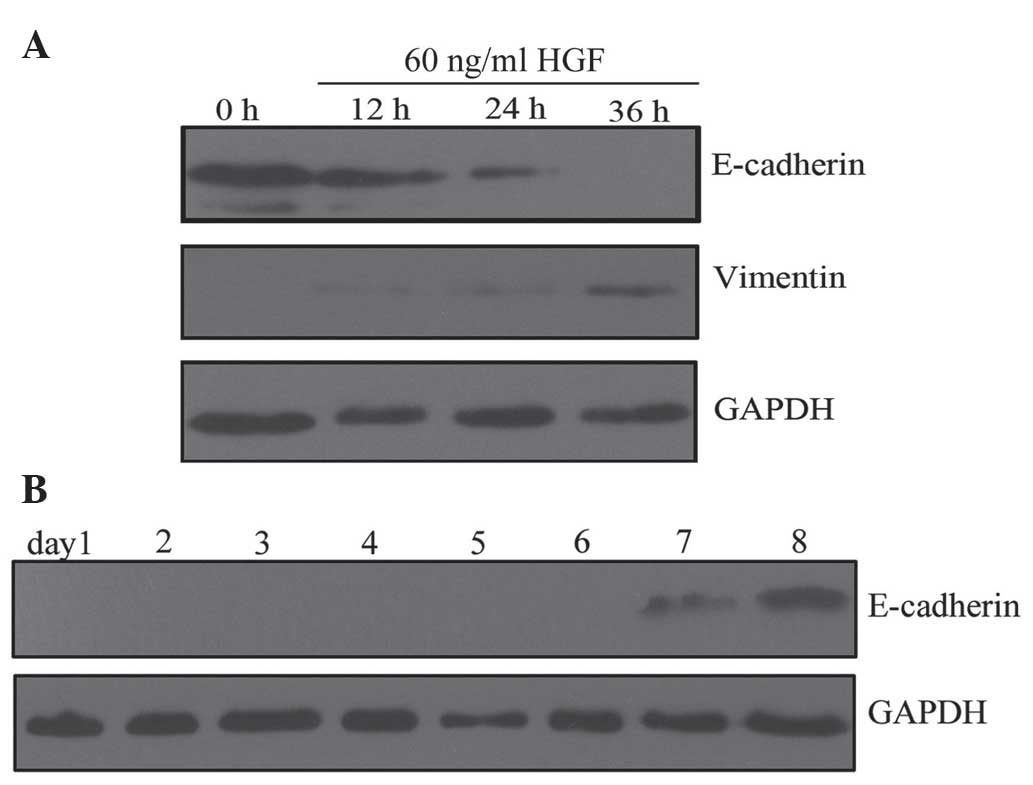
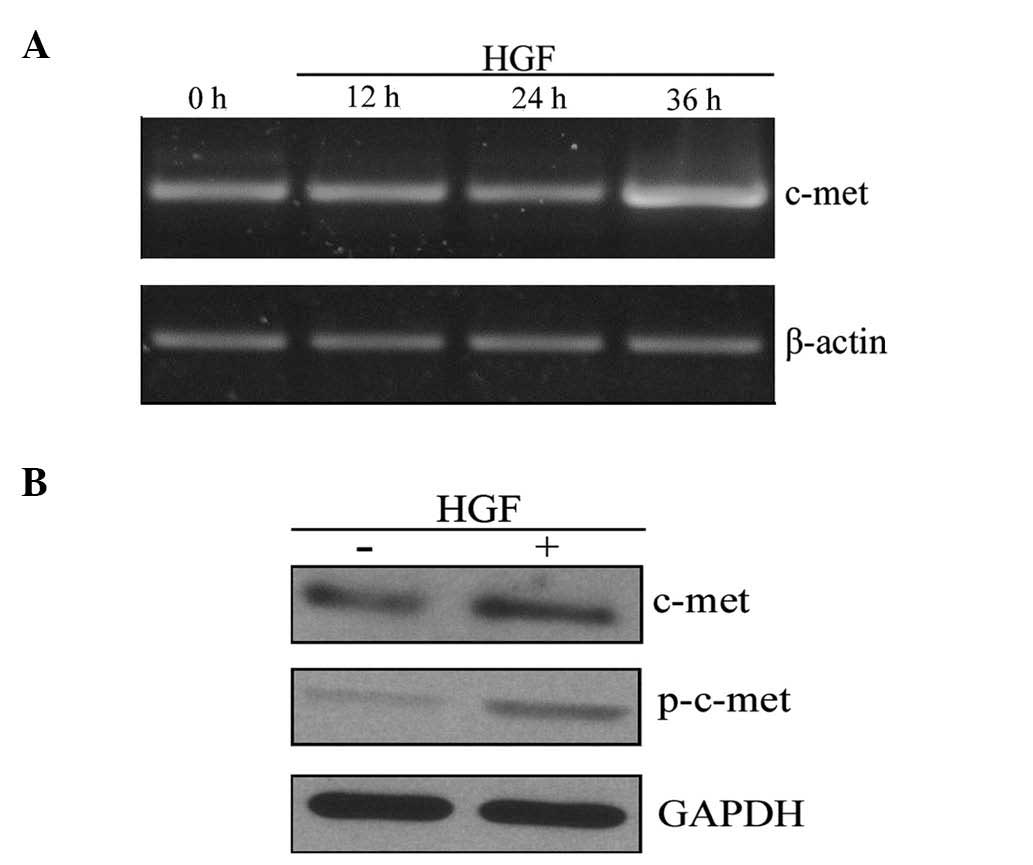
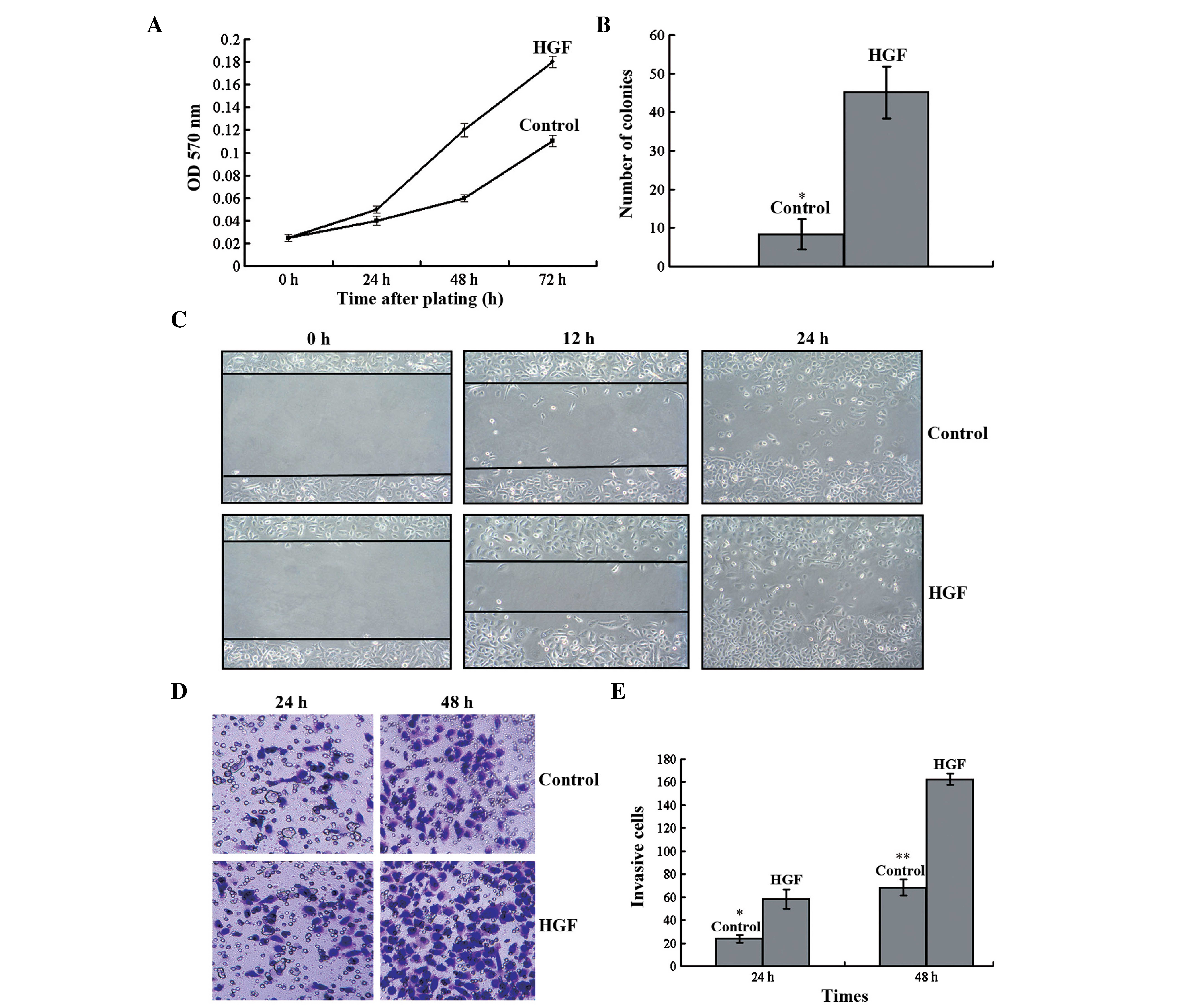
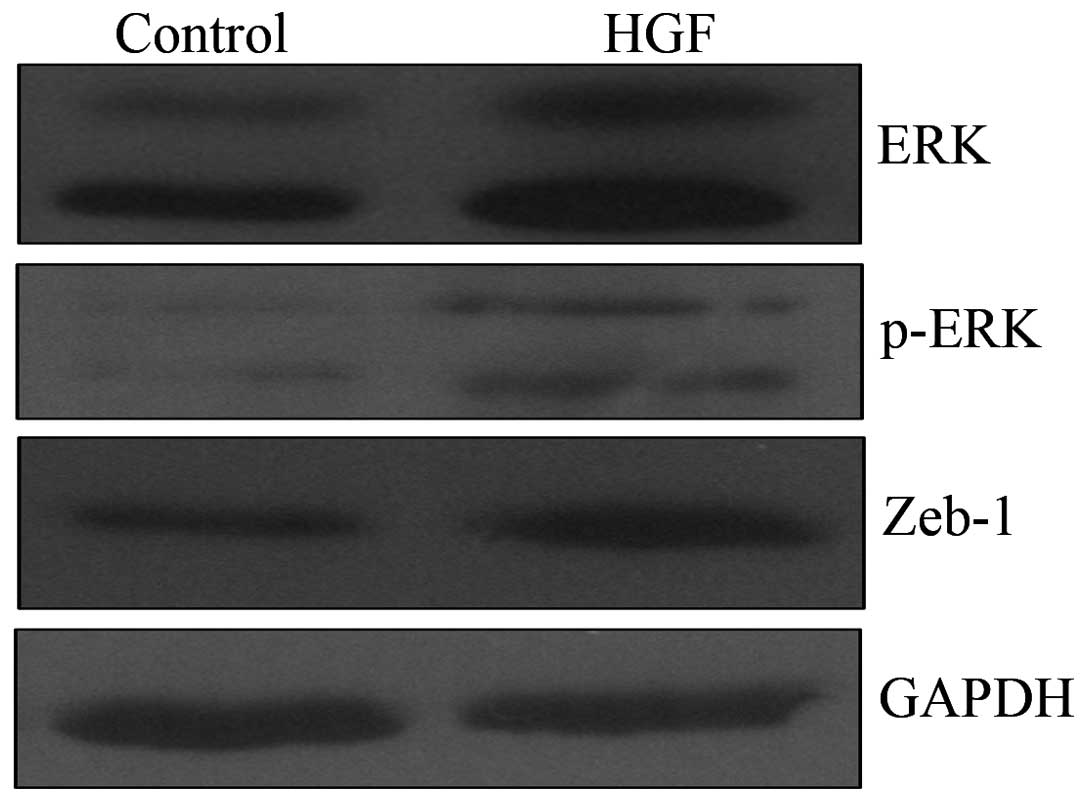
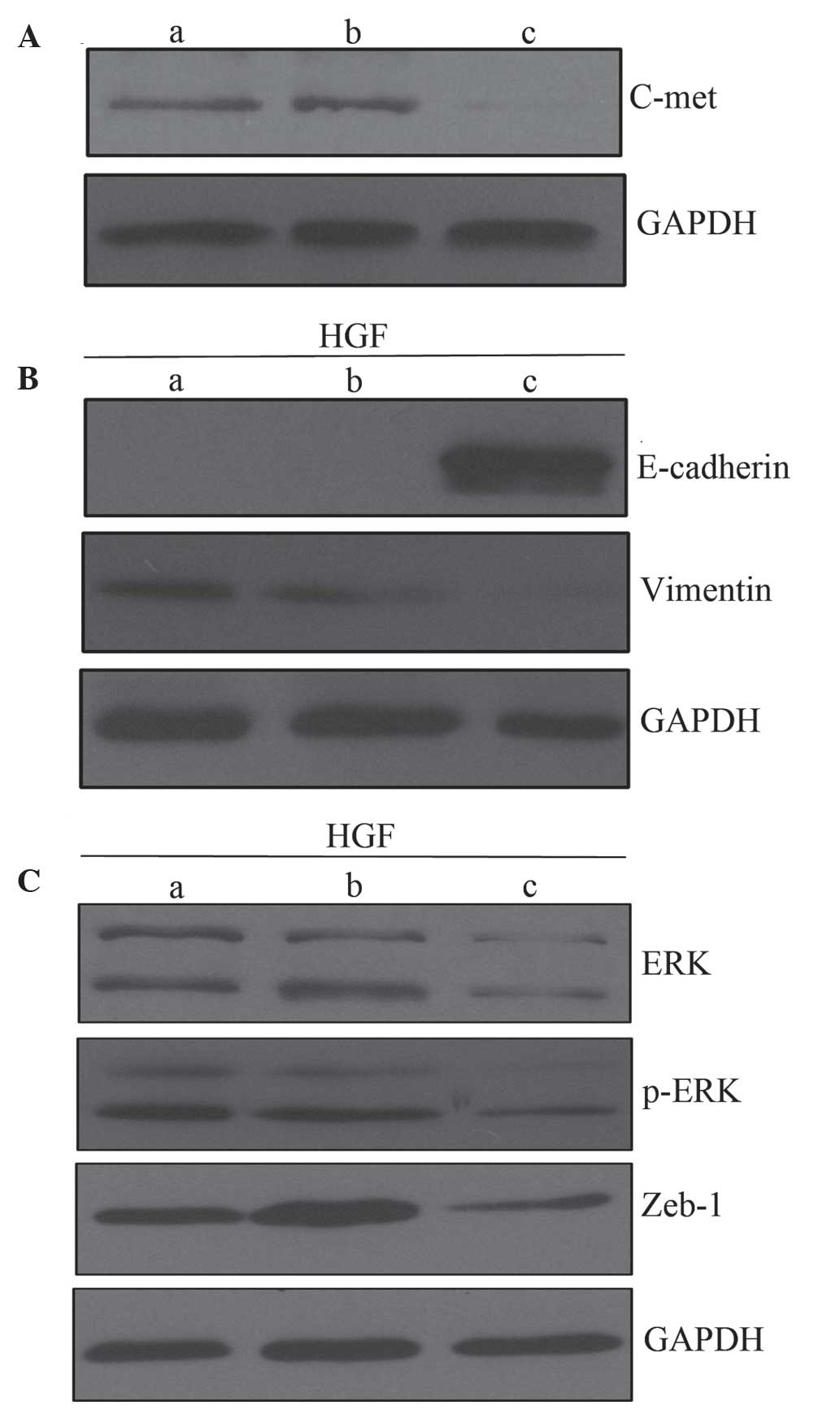
Hepatocyte growth factor (HGF) has been implicated in epithelial‑mesenchymal transition (EMT) in numerous types of cancer. However, to the best of our knowledge, there has been no previous evidence that HGF has a role in prostate cancer. The present study aimed to investigate the effect of HGF on EMT and invasive potential, as well as the underlying molecular mechanisms, in a human prostate cancer cell line. Therefore, PC‑3 cells were treated with various concentrations of HGF for varying durations. EMT‑associated proteins, including E‑cadherin and vimentin, were examined by western blot analysis. The effects of HGF on cell proliferation, migration, invasion and tumorigenicity were assessed using MTT, wound‑healing, Transwell and soft‑agar assays. Subsequently, the role of c‑Met in the mediation of EMT‑like changes was investigated using reverse transcription‑polymerase chain reaction, western blot analysis and gene knockdown by small interfering RNA. Finally, western blot analysis was used to quantify the expression of a downstream transcription factor and extracellular signal‑related kinase/mitogen activated protein kinase (ERK/MAPK) signaling pathway proteins. The results indicated that treatment with HGF induced EMT‑like changes and enhanced the invasive potential of PC‑3 cells. There was an increase in the expression of ERK, phosphorylated‑ERK and zinc finger E‑box binding homeobox‑1 (Zeb‑1), suggesting that EMT‑like changes may be mediated through the ERK/MAPK and Zeb‑1 signaling pathway. Furthermore, HGF‑mediated EMT‑like changes were associated with c‑Met activation, and these changes were able to be blocked by c‑Met knockdown. The present study demonstrated that HGF‑induced EMT increased the invasive potential of PC‑3 human prostate cancer cells through activating the ERK/MAPK and Zeb‑1 signaling pathway.
View Figures

Figure 1

Figure 2

Figure 3

Figure 4

Figure 5

View References

1 

Jin JK, Dayyani F and Gallick GE: Steps in prostate cancer progression that lead to bone metastasis. Int J Cancer. 128:2545–2561. 2011. View Article : Google Scholar : PubMed/NCBI

2 

Jacobs SC: Spread of prostatic cancer to bone. Urology. 21:337–344. 1983. View Article : Google Scholar : PubMed/NCBI

3 

Shah RB, Mehra R, Chinnaiyan AM, Shen R, Ghosh D, Zhou M, Macvicar GR, Varambally S, Harwood J, Bismar TA, et al: Androgen-independent prostate cancer is a heterogeneous group of diseases: Lessons from a rapid autopsy program. Cancer Res. 64:9209–9216. 2004. View Article : Google Scholar : PubMed/NCBI

4 

Thiery JP: Epithelial-mesenchymal transitions in tumour progression. Nat Rev Cancer. 2:442–454. 2002. View Article : Google Scholar : PubMed/NCBI

5 

Acloque H, Adams MS, Fishwick K, Bronner-Fraser M and Nieto MA: Epithelial-mesenchymal transitions: The importance of changing cell state in development and disease. J Clin Invest. 119:1438–1449. 2009. View Article : Google Scholar : PubMed/NCBI

6 

Thiery JP and Sleeman JP: Complex networks orchestrate epithelial-mesenchymal transitions. Nat Rev Mol Cell Biol. 7:131–142. 2006. View Article : Google Scholar : PubMed/NCBI

7 

Scheel C and Weinberg RA: Cancer stem cells and epithelial-mesenchymal transition: Concepts and molecular links. Semin Cancer Biol. 22:396–403. 2012. View Article : Google Scholar : PubMed/NCBI

8 

Kalluri R and Weinberg RA: The basics of epithelial-mesenchymal transition. J Clin Invest. 119:1420–1428. 2009. View Article : Google Scholar : PubMed/NCBI

9 

Mani SA, Guo W, Liao MJ, Eaton EN, Ayyanan A, Zhou AY, Brooks M, Reinhard F, Zhang CC, Shipitsin M, et al: The epithelial-mesenchymal transition generates cells with properties of stem cells. Cell. 133:704–715. 2008. View Article : Google Scholar : PubMed/NCBI

10 

Morel AP, Lievre M, Thomas C, Hinkal G, Ansieau S and Puisieux A: Generation of breast cancer stem cells through epithelial-mesenchymal transition. PLoS One. 3:e28882008. View Article : Google Scholar : PubMed/NCBI

11 

Matsuoka J, Yashiro M, Doi Y, Fuyuhiro Y, Kato Y, Shinto O, Noda S, Kashiwagi S, Aomatsu N, Hirakawa T, et al: Hypoxia stimulates the EMT of gastric cancer cells through autocrine TGFβ signaling. PLoS One. 8:e623102013. View Article : Google Scholar : PubMed/NCBI

12 

Luo Y, He DL, Ning L, Shen SL, Li L, Li X, Zhau HE and Chung LW: Over-expression of hypoxia-inducible factor-1alpha increases the invasive potency of LNCaP cells in vitro. BJU Int. 98:1315–1319. 2006. View Article : Google Scholar : PubMed/NCBI

13 

Lamouille S, Subramanyam D, Blelloch R and Derynck R: Regulation of epithelial-mesenchymal and mesenchymal-epithelial transitions by microRNAs. Curr Opin Cell Biol. 25:200–207. 2013. View Article : Google Scholar : PubMed/NCBI

14 

Thiery JP, Acloque H, Huang RY and Nieto MA: Epithelial-mesenchymal transitions in development and disease. Cell. 139:871–890. 2009. View Article : Google Scholar : PubMed/NCBI

15 

Chung LW, Huang WC, Sung SY, Wu D, Odero-Marah V, Nomura T, Shigemura K, Miyagi T, Seo S, Shi C, et al: Stromal-epithelial interaction in prostate cancer progression. Clin Genitourin Cancer. 5:162–170. 2006. View Article : Google Scholar : PubMed/NCBI

16 

Hashem M and Essam T: Hepatocyte growth factor as a tumor marker in the serum of patients with prostate cancer. J Egypt Natl Canc Inst. 17:114–120. 2005.PubMed/NCBI

17 

Yasuda K, Nagakawa O, Akashi T, Fujiuchi Y, Koizumi K, Komiya A, Saiki I and Fuse H: Serum active hepatocyte growth factor (AHGF) in benign prostatic disease and prostate cancer. Prostate. 69:346–351. 2009. View Article : Google Scholar : PubMed/NCBI

18 

Luo Y, He DL and Ning L: Expression of ‘epithelial-mesenchymal transition’ associated proteins in prostate cancer cell lines with different metastatic potentials and its significance. Zhonghua Nan Ke Xue. 12:696–700. 2006.(In Chinese). PubMed/NCBI

19 

Gu X, Zerbini LF, Otu HH, Bhasin M, Yang Q, Joseph MG, Grall F, Onatunde T, Correa RG and Libermann TA: Reduced PDEF expression increases invasion and expression of mesenchymal genes in prostate cancer cells. Cancer Res. 67:4219–4226. 2007. View Article : Google Scholar : PubMed/NCBI

20 

Veveris-Lowe TL, Lawrence MG, Collard RL, Bui L, Herington AC, Nicol DL and Clements JA: Kallikrein 4 (hK4) and prostate-specific antigen (PSA) are associated with the loss of E-cadherin and an epithelial-mesenchymal transition (EMT)-like effect in prostate cancer cells. Endocr Relat Cancer. 12:631–643. 2005. View Article : Google Scholar : PubMed/NCBI

21 

Whitbread AK, Veveris-Lowe TL, Lawrence MG, Nicol DL and Clements JA: The role of kallikrein-related peptidases in prostate cancer: Potential involvement in an epithelial to mesenchymal transition. Biol Chem. 387:707–714. 2006. View Article : Google Scholar : PubMed/NCBI

22 

Wang Y, Yue D, Li K, Liu YL, Ren CS and Wang P: The role of TRPC6 in HGF-induced cell proliferation of human prostate cancer DU145 and PC3 cells. Asian J Androl. 12:841–852. 2010. View Article : Google Scholar : PubMed/NCBI

23 

Yang J and Weinberg RA: Epithelial-Mesenchymal Transition: At the crossroads of development and tumor metastasis. Dev Cell. 14:818–829. 2008. View Article : Google Scholar : PubMed/NCBI

24 

Martin TA, Mason MD and Jiang WG: Hepatocyte growth factor signaling in cancer metastasis. Curr Signal Transduct Ther. 6:180–190. 2011. View Article : Google Scholar

25 

Naughton M, Picus J, Zhu X, Catalona WJ, Vollmer RT and Humphrey PA: Scatter factor-hepatocyte growth factor elevation in the serum of patients with prostate cancer. J Urol. 165:1325–1328. 2001. View Article : Google Scholar : PubMed/NCBI

26 

Humphrey PA, Halabi S, Picus J, Sanford B, Vogelzang NJ, Small EJ and Kantoff PW: Prognostic significance of plasma scatter factor/hepatocyte growth factor levels in patients with metastatic hormone-refractory prostate cancer: Results from cancer and leukemia group B 150005/9480. Clin Genitourin Cancer. 4:269–274. 2006. View Article : Google Scholar : PubMed/NCBI

27 

Duhon D, Bigelow RL, Coleman DT, Steffan JJ, Yu C, Langston W, Kevil CG and Cardelli JA: The polyphenol epigallocatechin-3-gallate affects lipid rafts to block activation of the c-Met receptor in prostate cancer cells. Mol Carcinog. 49:739–749. 2010.PubMed/NCBI

28 

Previdi S, Maroni P, Matteucci E, Broggini M, Bendinelli P and Desiderio MA: Interaction between human-breast cancer metastasis and bone microenvironment through activated hepatocyte growth factor/Met and b-catenin/Wnt pathways. Eur J Cancer. 46:1679–1691. 2010. View Article : Google Scholar : PubMed/NCBI

29 

Ogunwobi OO and Liu C: Hepatocyte growth factor upregulation promotes carcinogenesis and epithelial-mesenchymal transition in hepatocellularcarcinoma via Akt and COX-2 pathways. Clin Exp Metastasis. 28:721–731. 2011. View Article : Google Scholar : PubMed/NCBI

30 

Fram ST, Wells CM and Jones GE: HGF-induced DU145 cell scatter assay. Methods Mol Biol. 769:31–40. 2011. View Article : Google Scholar : PubMed/NCBI

31 

Baritaki S, Huerta-Yepez S, Sahakyan A, Karagiannides I, Bakirtzi K, Jazirehi A and Bonavida B: Mechanisms of nitric oxide-mediated inhibition of EMT in cancer: Inhibition of the metastasis-inducer Snail and induction of the metastasis-suppressor RKIP. Cell Cycle. 9:4931–4940. 2010. View Article : Google Scholar : PubMed/NCBI

32 

Yates CC, Shepard CR, Stolz DB and Wells A: Co-culturing human prostate carcinoma cells with hepatocytes leads to increased expression of E-cadherin. Br J Cancer. 96:1246–1252. 2007. View Article : Google Scholar : PubMed/NCBI

33 

Yang J and Weinberg RA: Epithelial-mesenchymal transition: At the crossroads of development and tumor metastasis. Dev Cell. 14:818–829. 2008. View Article : Google Scholar : PubMed/NCBI

34 

Cano A, Perez-Moreno MA, Rodrigo I, Locasioa A, Blanco MJ, del Barrio MG, Portillo F and Nieto MA: The transcription factor snail controls epithelial-mesenchymal transitions by repressing E-cadherin expression. Nat Cell Biol. 2:76–83. 2000. View Article : Google Scholar : PubMed/NCBI

35 

Nelson WJ and Nusse R: Convergence of Wnt, beta-catenin, and cadherin pathways. Science. 303:1483–1487. 2004. View Article : Google Scholar : PubMed/NCBI

36 

Shimada S, Mimata A, Sekine M, Mogushi K, Akiyama Y, Fukamachi H, Jonkers J, Tanaka H, Eishi Y and Yuasa Y: Synergistic tumour suppressor activity of E-cadherin and p53 in a conditional mouse model for metastatic diffuse-type gastric cancer. Gut. 61:344–353. 2012. View Article : Google Scholar : PubMed/NCBI

37 

Odero-Marah VA, Wang R, Chu G, Zayzafoon M, Xu J, Shi C, Marshall FF, Zhau HE and Chung LW: Receptor activator of NF-kappaB Ligand (RANKL) expression is associated with epithelial to mesenchymal transition in human prostate cancer cells. Cell Rese. 18:858–870. 2008. View Article : Google Scholar

38 

Chung LW, Baseman A, Assikis V and Zhau HE: Molecular insights into prostate cancer progression: The missing link of tumor microenvironment. J Urol. 173:10–20. 2005. View Article : Google Scholar : PubMed/NCBI

39 

Jiang WG, Davies G, Martin TA, Parr C, Watkins G, Mason MD, Mokbel K and Mansel RE: Targeting matrilysin and its impact on tumor growth in vivo: The potential implications in breast cancer therapy. Clin Cancer Res. 11:6012–6019. 2005. View Article : Google Scholar : PubMed/NCBI

40 

You WK and McDonald DM: The hepatocyte growth factor/c-Met signaling pathway as a therapeutic target to inhibit angiogenesis. BMB Rep. 41:833–839. 2008. View Article : Google Scholar : PubMed/NCBI

41 

Boccaccio C and Comoglio PM: Invasive growth: A MET-driven genetic programme for cancer and stem cells. Nat Rev Cancer. 6:637–645. 2006. View Article : Google Scholar : PubMed/NCBI

42 

Migliore C and Giordano S: Molecular cancer therapy: Can our expectation be MET? Eur J Cancer. 44:641–651. 2008. View Article : Google Scholar : PubMed/NCBI

43 

Ogunwobi OO and Liu C: Hepatocyte growth factor upregulation promotes carcinogenesis and epithelial-mesenchymal transition in hepatocellular carcinoma via Akt and COX-2 pathways. Clin Exp Metastasis. 28:721–731. 2011. View Article : Google Scholar : PubMed/NCBI

44 

Nieto MA and Cano A: The epithelial - mesenchymal transition under control: Global programs to regulate epithelial plasticity. Semin Cancer Biol. 22:361–368. 2012. View Article : Google Scholar : PubMed/NCBI

45 

Kwok WK, Ling MT, Lee TW, Lau TC, Zhou C, Zhang X, Chua CW, Chan KW, Chan FL, Glackin C, et al: Upregulation of TWIST in prostate cancer and its implication as a therapeutic target. Cancer Res. 65:5153–5162. 2005. View Article : Google Scholar : PubMed/NCBI

46 

Grotegut S, von Schweinitz D, Christofori G and Lehembre F: Hepatocyte growth factor induces cell scattering through MAPK/Egr-1-mediated upregulation of Snail. EMBO J. 25:3534–3545. 2006. View Article : Google Scholar : PubMed/NCBI

47 

Peña C, García JM, García V, Silva J, Domínguez G, Rodríguez R, Maximiano C, de Herreros García A, Muñoz A and Bonilla F: The expression levels of the transcriptional regulators p300 and CtBP modulate the correlations between SNAIL, ZEB1, E-cadherin and vitamin D receptor in human colon carcinomas. Int J Cancer. 119:2098–2104. 2006. View Article : Google Scholar : PubMed/NCBI

48 

Spaderna S, Schmalhofer O, Hlubek F, Berx G, Eger A, Merkel S, Jung A, Kirchner T and Brabletz T: A transient, EMT-linked loss of basement membranes indicates metastasis and poor survival in colorectal cancer. Gastroenterology. 131:830–840. 2006. View Article : Google Scholar : PubMed/NCBI

Related Articles

  • Abstract
  • View
  • Download
  • Twitter
Copy and paste a formatted citation
Spandidos Publications style
Han Y, Luo Y, Wang Y, Chen Y, Li M and Jiang Y: Hepatocyte growth factor increases the invasive potential of PC‑3 human prostate cancer cells via an ERK/MAPK and Zeb‑1 signaling pathway. Oncol Lett 11: 753-759, 2016.
APA
Han, Y., Luo, Y., Wang, Y., Chen, Y., Li, M., & Jiang, Y. (2016). Hepatocyte growth factor increases the invasive potential of PC‑3 human prostate cancer cells via an ERK/MAPK and Zeb‑1 signaling pathway. Oncology Letters, 11, 753-759. https://doi.org/10.3892/ol.2015.3943
MLA
Han, Y., Luo, Y., Wang, Y., Chen, Y., Li, M., Jiang, Y."Hepatocyte growth factor increases the invasive potential of PC‑3 human prostate cancer cells via an ERK/MAPK and Zeb‑1 signaling pathway". Oncology Letters 11.1 (2016): 753-759.
Chicago
Han, Y., Luo, Y., Wang, Y., Chen, Y., Li, M., Jiang, Y."Hepatocyte growth factor increases the invasive potential of PC‑3 human prostate cancer cells via an ERK/MAPK and Zeb‑1 signaling pathway". Oncology Letters 11, no. 1 (2016): 753-759. https://doi.org/10.3892/ol.2015.3943
Copy and paste a formatted citation
x
Spandidos Publications style
Han Y, Luo Y, Wang Y, Chen Y, Li M and Jiang Y: Hepatocyte growth factor increases the invasive potential of PC‑3 human prostate cancer cells via an ERK/MAPK and Zeb‑1 signaling pathway. Oncol Lett 11: 753-759, 2016.
APA
Han, Y., Luo, Y., Wang, Y., Chen, Y., Li, M., & Jiang, Y. (2016). Hepatocyte growth factor increases the invasive potential of PC‑3 human prostate cancer cells via an ERK/MAPK and Zeb‑1 signaling pathway. Oncology Letters, 11, 753-759. https://doi.org/10.3892/ol.2015.3943
MLA
Han, Y., Luo, Y., Wang, Y., Chen, Y., Li, M., Jiang, Y."Hepatocyte growth factor increases the invasive potential of PC‑3 human prostate cancer cells via an ERK/MAPK and Zeb‑1 signaling pathway". Oncology Letters 11.1 (2016): 753-759.
Chicago
Han, Y., Luo, Y., Wang, Y., Chen, Y., Li, M., Jiang, Y."Hepatocyte growth factor increases the invasive potential of PC‑3 human prostate cancer cells via an ERK/MAPK and Zeb‑1 signaling pathway". Oncology Letters 11, no. 1 (2016): 753-759. https://doi.org/10.3892/ol.2015.3943
Follow us
  • Twitter
  • LinkedIn
  • Facebook
About
  • Spandidos Publications
  • Careers
  • Cookie Policy
  • Privacy Policy
How can we help?
  • Help
  • Live Chat
  • Contact
  • Email to our Support Team