Spandidos Publications Logo
  • About
    • About Spandidos
    • Aims and Scopes
    • Abstracting and Indexing
    • Editorial Policies
    • Reprints and Permissions
    • Job Opportunities
    • Terms and Conditions
    • Contact
  • Journals
    • All Journals
    • Oncology Letters
      • Oncology Letters
      • Information for Authors
      • Editorial Policies
      • Editorial Board
      • Aims and Scope
      • Abstracting and Indexing
      • Bibliographic Information
      • Archive
    • International Journal of Oncology
      • International Journal of Oncology
      • Information for Authors
      • Editorial Policies
      • Editorial Board
      • Aims and Scope
      • Abstracting and Indexing
      • Bibliographic Information
      • Archive
    • Molecular and Clinical Oncology
      • Molecular and Clinical Oncology
      • Information for Authors
      • Editorial Policies
      • Editorial Board
      • Aims and Scope
      • Abstracting and Indexing
      • Bibliographic Information
      • Archive
    • Experimental and Therapeutic Medicine
      • Experimental and Therapeutic Medicine
      • Information for Authors
      • Editorial Policies
      • Editorial Board
      • Aims and Scope
      • Abstracting and Indexing
      • Bibliographic Information
      • Archive
    • International Journal of Molecular Medicine
      • International Journal of Molecular Medicine
      • Information for Authors
      • Editorial Policies
      • Editorial Board
      • Aims and Scope
      • Abstracting and Indexing
      • Bibliographic Information
      • Archive
    • Biomedical Reports
      • Biomedical Reports
      • Information for Authors
      • Editorial Policies
      • Editorial Board
      • Aims and Scope
      • Abstracting and Indexing
      • Bibliographic Information
      • Archive
    • Oncology Reports
      • Oncology Reports
      • Information for Authors
      • Editorial Policies
      • Editorial Board
      • Aims and Scope
      • Abstracting and Indexing
      • Bibliographic Information
      • Archive
    • Molecular Medicine Reports
      • Molecular Medicine Reports
      • Information for Authors
      • Editorial Policies
      • Editorial Board
      • Aims and Scope
      • Abstracting and Indexing
      • Bibliographic Information
      • Archive
    • World Academy of Sciences Journal
      • World Academy of Sciences Journal
      • Information for Authors
      • Editorial Policies
      • Editorial Board
      • Aims and Scope
      • Abstracting and Indexing
      • Bibliographic Information
      • Archive
    • International Journal of Functional Nutrition
      • International Journal of Functional Nutrition
      • Information for Authors
      • Editorial Policies
      • Editorial Board
      • Aims and Scope
      • Abstracting and Indexing
      • Bibliographic Information
      • Archive
    • International Journal of Epigenetics
      • International Journal of Epigenetics
      • Information for Authors
      • Editorial Policies
      • Editorial Board
      • Aims and Scope
      • Abstracting and Indexing
      • Bibliographic Information
      • Archive
    • Medicine International
      • Medicine International
      • Information for Authors
      • Editorial Policies
      • Editorial Board
      • Aims and Scope
      • Abstracting and Indexing
      • Bibliographic Information
      • Archive
  • Articles
  • Information
    • Information for Authors
    • Information for Reviewers
    • Information for Librarians
    • Information for Advertisers
    • Conferences
  • Language Editing
Spandidos Publications Logo
  • About
    • About Spandidos
    • Aims and Scopes
    • Abstracting and Indexing
    • Editorial Policies
    • Reprints and Permissions
    • Job Opportunities
    • Terms and Conditions
    • Contact
  • Journals
    • All Journals
    • Biomedical Reports
      • Information for Authors
      • Editorial Policies
      • Editorial Board
      • Aims and Scope
      • Abstracting and Indexing
      • Bibliographic Information
      • Archive
    • Experimental and Therapeutic Medicine
      • Information for Authors
      • Editorial Policies
      • Editorial Board
      • Aims and Scope
      • Abstracting and Indexing
      • Bibliographic Information
      • Archive
    • International Journal of Epigenetics
      • Information for Authors
      • Editorial Policies
      • Editorial Board
      • Aims and Scope
      • Abstracting and Indexing
      • Bibliographic Information
      • Archive
    • International Journal of Functional Nutrition
      • Information for Authors
      • Editorial Policies
      • Editorial Board
      • Aims and Scope
      • Abstracting and Indexing
      • Bibliographic Information
      • Archive
    • International Journal of Molecular Medicine
      • Information for Authors
      • Editorial Policies
      • Editorial Board
      • Aims and Scope
      • Abstracting and Indexing
      • Bibliographic Information
      • Archive
    • International Journal of Oncology
      • Information for Authors
      • Editorial Policies
      • Editorial Board
      • Aims and Scope
      • Abstracting and Indexing
      • Bibliographic Information
      • Archive
    • Medicine International
      • Information for Authors
      • Editorial Policies
      • Editorial Board
      • Aims and Scope
      • Abstracting and Indexing
      • Bibliographic Information
      • Archive
    • Molecular and Clinical Oncology
      • Information for Authors
      • Editorial Policies
      • Editorial Board
      • Aims and Scope
      • Abstracting and Indexing
      • Bibliographic Information
      • Archive
    • Molecular Medicine Reports
      • Information for Authors
      • Editorial Policies
      • Editorial Board
      • Aims and Scope
      • Abstracting and Indexing
      • Bibliographic Information
      • Archive
    • Oncology Letters
      • Information for Authors
      • Editorial Policies
      • Editorial Board
      • Aims and Scope
      • Abstracting and Indexing
      • Bibliographic Information
      • Archive
    • Oncology Reports
      • Information for Authors
      • Editorial Policies
      • Editorial Board
      • Aims and Scope
      • Abstracting and Indexing
      • Bibliographic Information
      • Archive
    • World Academy of Sciences Journal
      • Information for Authors
      • Editorial Policies
      • Editorial Board
      • Aims and Scope
      • Abstracting and Indexing
      • Bibliographic Information
      • Archive
  • Articles
  • Information
    • For Authors
    • For Reviewers
    • For Librarians
    • For Advertisers
    • Conferences
  • Language Editing
Login Register Submit
  • This site uses cookies
  • You can change your cookie settings at any time by following the instructions in our Cookie Policy. To find out more, you may read our Privacy Policy.

    I agree
Search articles by DOI, keyword, author or affiliation
Search
Advanced Search
presentation
Oncology Letters
Join Editorial Board Propose a Special Issue
Print ISSN: 1792-1074 Online ISSN: 1792-1082
Journal Cover
January-2016 Volume 11 Issue 1

Full Size Image

Sign up for eToc alerts
Recommend to Library

Journals

International Journal of Molecular Medicine

International Journal of Molecular Medicine

International Journal of Molecular Medicine is an international journal devoted to molecular mechanisms of human disease.

International Journal of Oncology

International Journal of Oncology

International Journal of Oncology is an international journal devoted to oncology research and cancer treatment.

Molecular Medicine Reports

Molecular Medicine Reports

Covers molecular medicine topics such as pharmacology, pathology, genetics, neuroscience, infectious diseases, molecular cardiology, and molecular surgery.

Oncology Reports

Oncology Reports

Oncology Reports is an international journal devoted to fundamental and applied research in Oncology.

Experimental and Therapeutic Medicine

Experimental and Therapeutic Medicine

Experimental and Therapeutic Medicine is an international journal devoted to laboratory and clinical medicine.

Oncology Letters

Oncology Letters

Oncology Letters is an international journal devoted to Experimental and Clinical Oncology.

Biomedical Reports

Biomedical Reports

Explores a wide range of biological and medical fields, including pharmacology, genetics, microbiology, neuroscience, and molecular cardiology.

Molecular and Clinical Oncology

Molecular and Clinical Oncology

International journal addressing all aspects of oncology research, from tumorigenesis and oncogenes to chemotherapy and metastasis.

World Academy of Sciences Journal

World Academy of Sciences Journal

Multidisciplinary open-access journal spanning biochemistry, genetics, neuroscience, environmental health, and synthetic biology.

International Journal of Functional Nutrition

International Journal of Functional Nutrition

Open-access journal combining biochemistry, pharmacology, immunology, and genetics to advance health through functional nutrition.

International Journal of Epigenetics

International Journal of Epigenetics

Publishes open-access research on using epigenetics to advance understanding and treatment of human disease.

Medicine International

Medicine International

An International Open Access Journal Devoted to General Medicine.

Journal Cover
January-2016 Volume 11 Issue 1

Full Size Image

Sign up for eToc alerts
Recommend to Library

  • Article
  • Citations
    • Cite This Article
    • Download Citation
    • Create Citation Alert
    • Remove Citation Alert
    • Cited By
  • Similar Articles
    • Related Articles (in Spandidos Publications)
    • Similar Articles (Google Scholar)
    • Similar Articles (PubMed)
  • Download PDF
  • Download XML
  • View XML
Article

Truncated neurokinin‑1 receptor is an ubiquitous antitumor target in hepatoblastoma, and its expression is independent of tumor biology and stage

  • Authors:
    • Agnès Garnier
    • Matthias Ilmer
    • Kristina Becker
    • Beate Häberle
    • Dietrich Von Schweinitz
    • Roland Kappler
    • Michael Berger
  • View Affiliations / Copyright

    Affiliations: Department of Pediatric Surgery, Dr von Hauner Children's Hospital, Ludwig Maximilian University of Munich, D‑80337 Munich, Germany, Department of General, Visceral, Transplantation, Vascular and Thoracic Surgery, Hospital of the Ludwig Maximilian University of Munich, D‑80336 Munich, Germany
  • Pages: 870-878
    |
    Published online on: November 20, 2015
       https://doi.org/10.3892/ol.2015.3951
  • Expand metrics +
Metrics: Total Views: 0 (Spandidos Publications: | PMC Statistics: )
Metrics: Total PDF Downloads: 0 (Spandidos Publications: | PMC Statistics: )
Cited By (CrossRef): 0 citations Loading Articles...

This article is mentioned in:


Abstract

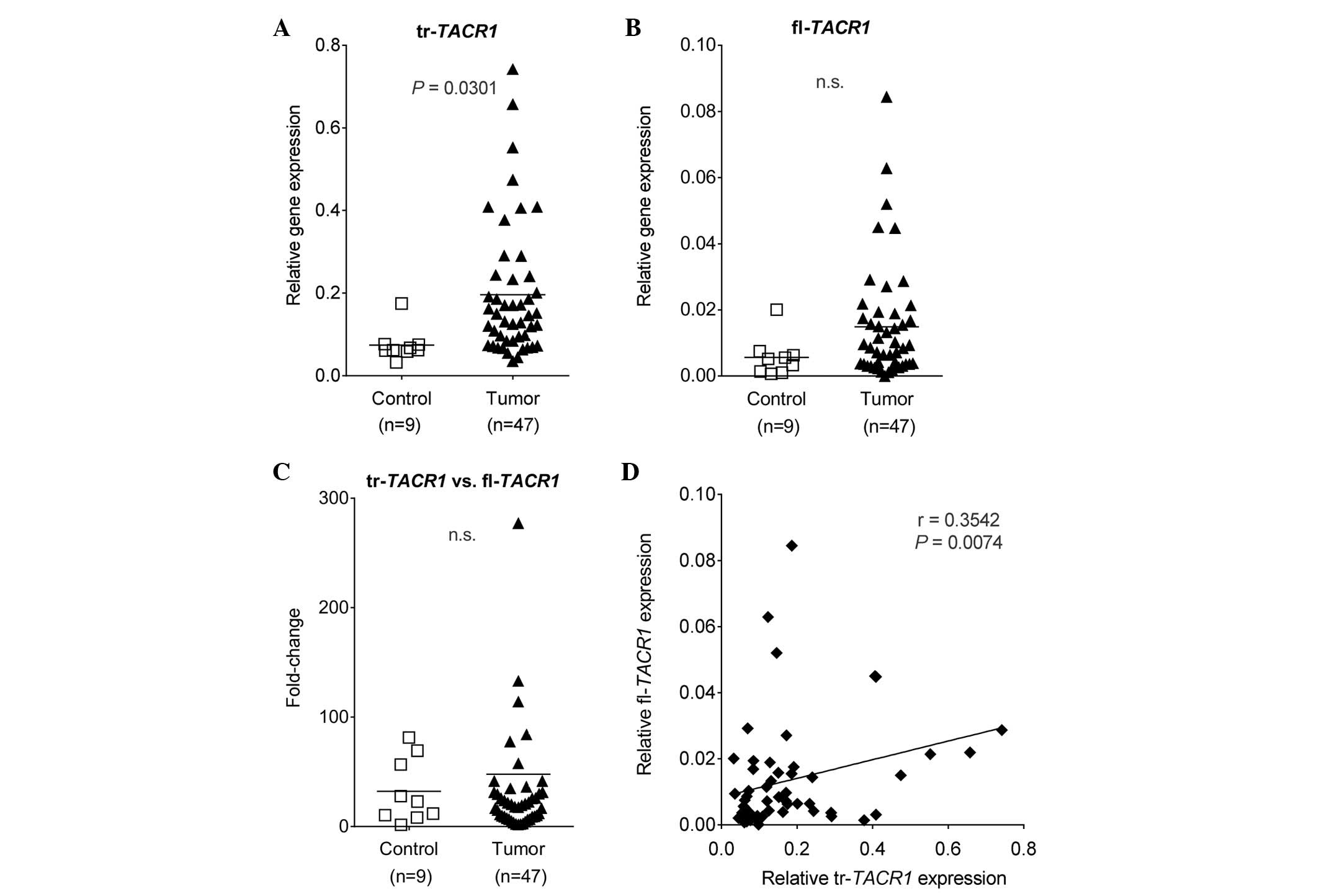
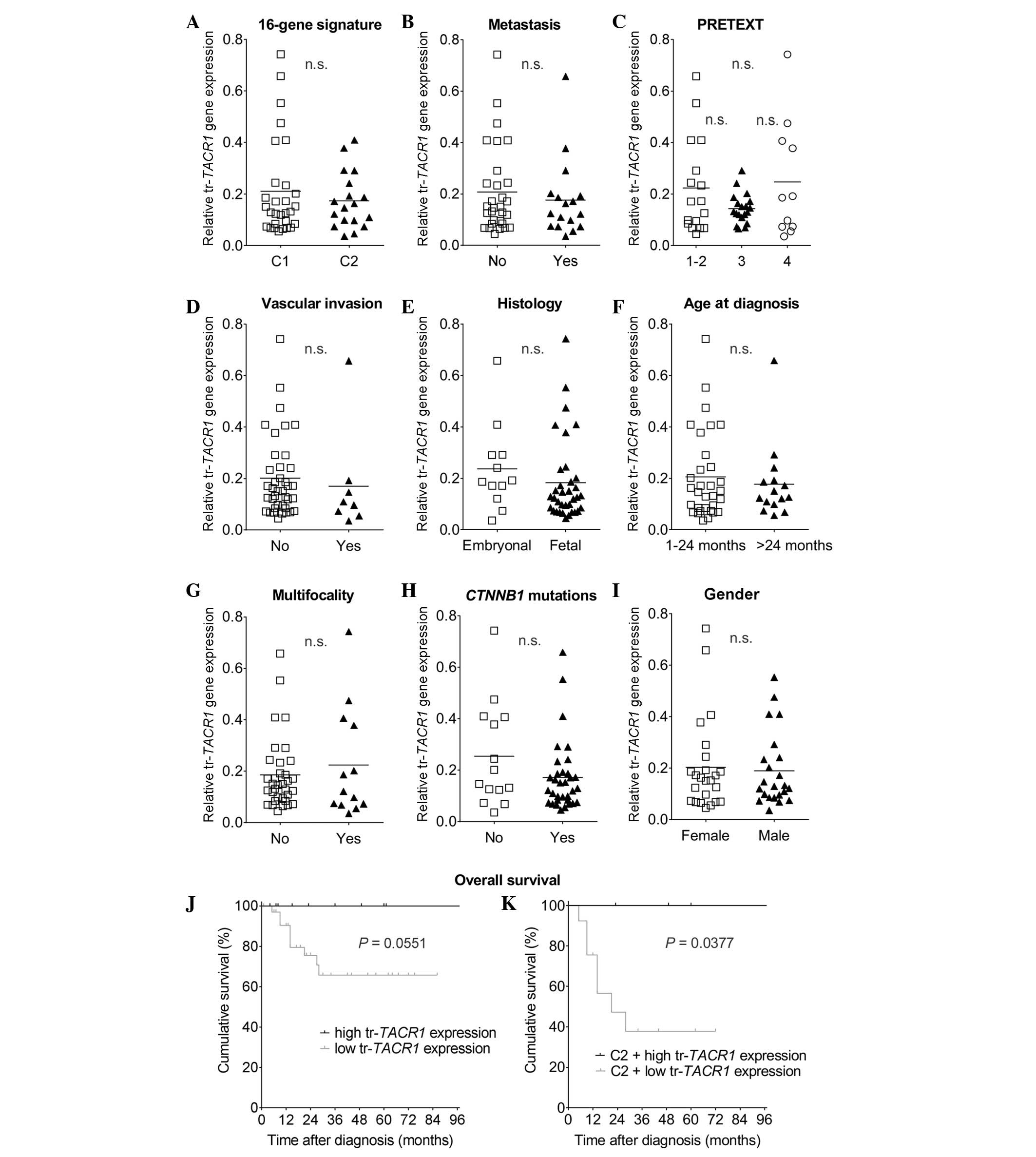
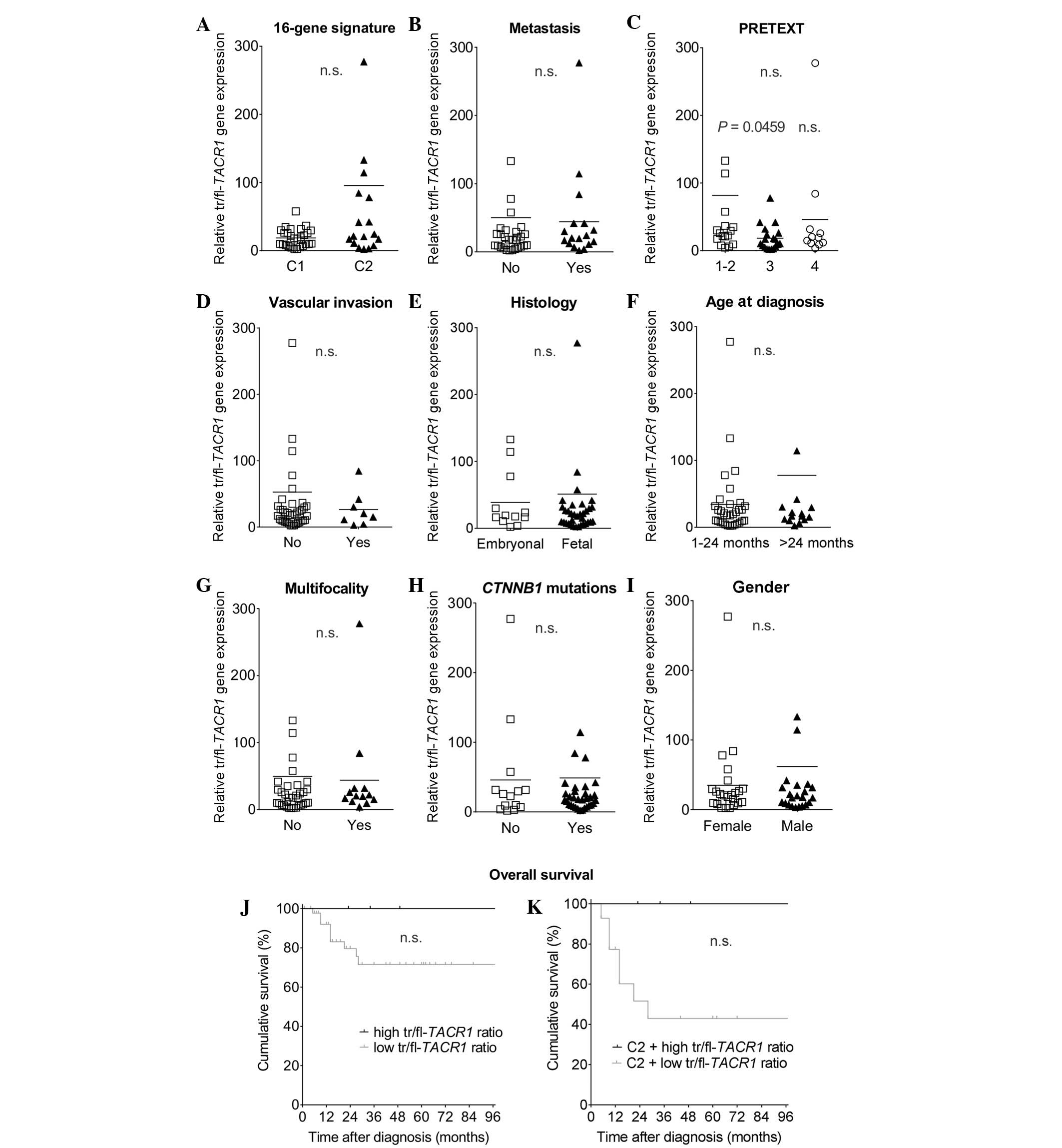
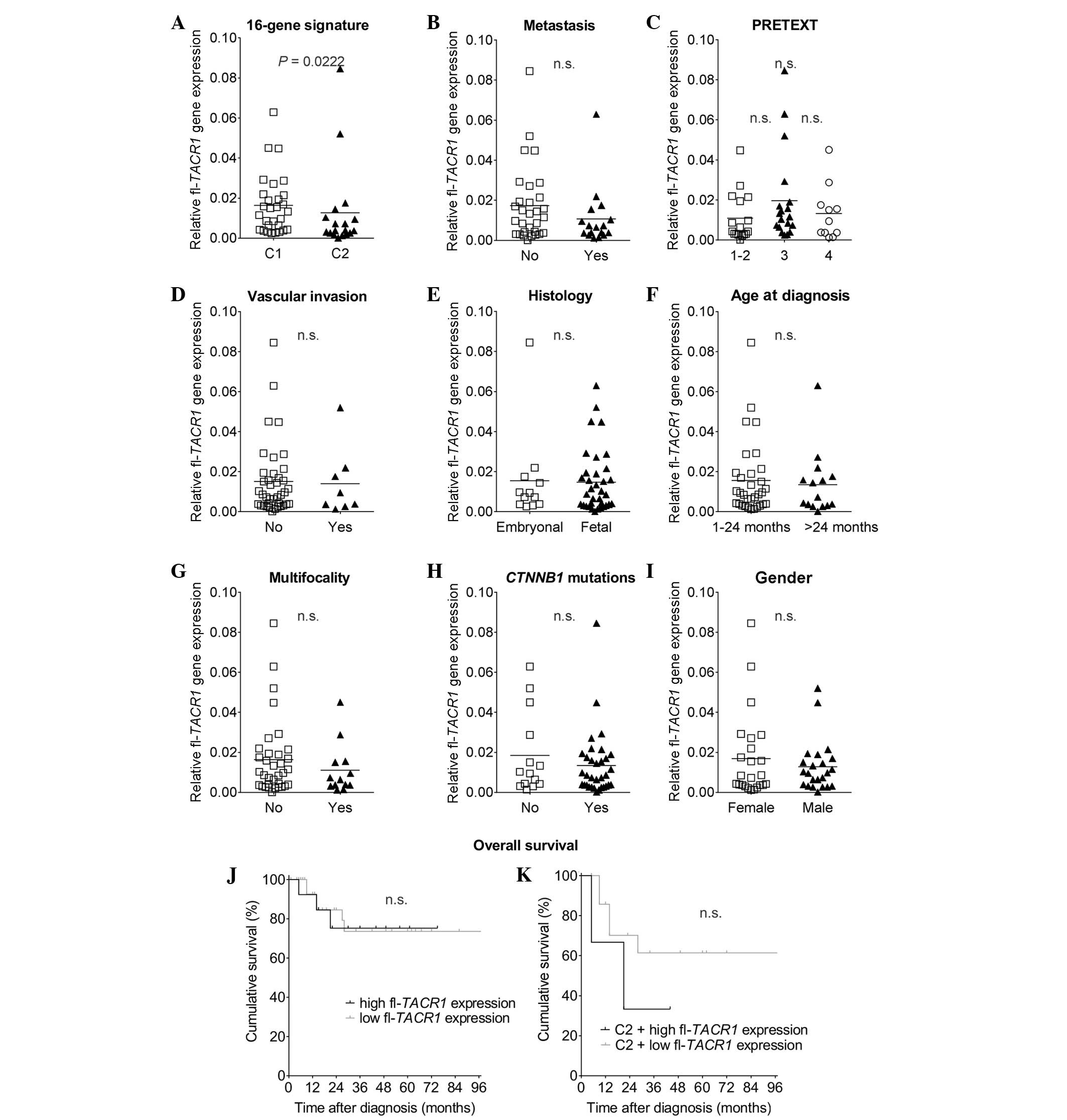
The substance P (SP; also known as TAC1)/neurokinin‑1 receptor (NK1R; also known as TACR1) complex is a critical part in the development of cancer. Therefore, NK1R antagonists, such as the clinical drug aprepitant, are currently under investigation as future anticancer agents. In a previous study, NK1R (TACR1) was identified as a potent anticancer target in hepatoblastoma (HB). However, little is known regarding the exact distribution of this target among HB subsets and whether it correlates with clinical features and prognosis. In the present study, mRNA was isolated from 47 children with HB, and reverse transcription‑quantitative polymerase chain reaction was performed on the samples to analyze the expression of full‑length‑TACR1 (fl‑TACR1) and truncated‑TACR1 (tr‑TACR1). These data were correlated with data obtained from 9 tumor‑free controls, as well as with the presence of metastasis, PRETEXT, vascular invasion, histology, age of diagnosis, multifocality, CTNNB1 mutation, gender and overall survival. Additionally, the present study investigated a recently described 16‑gene signature characteri­zing HB known to correlate with prognosis. Compared with tumor‑free liver tissue, tumorous tissue expressed TACR1 significantly higher for the truncated version (P=0.0301), and by trend also for the full‑length version. Accordingly, the expression of fl‑TACR1 correlated with the expression of the truncated version (P=0.0074). Furthermore, a low expression of fl‑TACR1 correlated with characteristics of the 16‑gene signature known to predict prognosis (P=0.0222). However, there was no correlation between tr‑TACR1 and the tumor characteristics investigated, including outcome, although a clear trend was observed for some tumor characteristics. The current results reinforced the previously described findings that in HB, tr‑TACR1 is overexpressed compared with tumor‑free liver tissue. Furthermore, to the best of our knowledge, the present study demonstrated for the first time that tr‑TACR1 is expressed ubiquitously among the different subsets of HB. Therefore, NK1R may serve as a potent anticancer target in a large variety of patients with HB, independent of tumor biology and clinical stage.
View Figures

Figure 1

Figure 2

Figure 3

Figure 4

View References

1 

von Schweinitz D: Hepatoblastoma: Recent developments in research and treatment. Semin Pediatr Surg. 21:21–30. 2012. View Article : Google Scholar : PubMed/NCBI

2 

Haeberle B and Schweinitz D: Treatment of hepatoblastoma in the German cooperative pediatric liver tumor studies. Front Biosci (Elite Ed). 4:493–498. 2012. View Article : Google Scholar : PubMed/NCBI

3 

Warmann S, Hunger M, Teichmann B, et al: The role of the MDR1 gene in the development of multidrug resistance in human hepatoblastoma: Clinical course and in vivo model. Cancer. 95:1795–1801. 2002. View Article : Google Scholar : PubMed/NCBI

4 

Muñoz M, Rosso M and Coveñas R: The NK-1 receptor: A new target in cancer therapy. Curr Drug Targets. 12:909–921. 2011. View Article : Google Scholar : PubMed/NCBI

5 

Palma C, Bigioni M, Irrissuto C, et al: Anti-tumour activity of tachykinin NK1 receptor antagonists on human glioma U373 MG xenograft. Br J Cancer. 82:480–487. 2000.PubMed/NCBI

6 

Rosso M, Muñoz M and Berger M: The role of neurokinin-1 receptor in the microenvironment of inflammation and cancer. ScientificWorldJournal. 2012:3814342012. View Article : Google Scholar : PubMed/NCBI

7 

Muñoz M, Rosso M and Coveñas R: A new frontier in the treatment of cancer: NK-1 receptor antagonists. Curr Med Chem. 17:504–516. 2010. View Article : Google Scholar : PubMed/NCBI

8 

Berger M, Neth O, Ilmer M, et al: Hepatoblastoma cells express truncated neurokinin-1 receptor and can be growth inhibited by aprepitant in vitro and in vivo. J Hepatol. 60:985–994. 2014. View Article : Google Scholar : PubMed/NCBI

9 

Muñoz M, Pérez A, Rosso M, Zamarriego C and Rosso R: Antitumoral action of the neurokinin-1 receptor antagonist L-733 060 on human melanoma cell lines. Melanoma Res. 14:183–188. 2004. View Article : Google Scholar : PubMed/NCBI

10 

Mayordomo C, García-Recio S, Ametller E, et al: Targeting of substance P induces cancer cell death and decreases the steady state of EGFR and Her2. J Cell Physiol. 227:1358–1366. 2012. View Article : Google Scholar : PubMed/NCBI

11 

Muñoz M, Berger M, Rosso M, et al: Antitumor activity of neurokinin-1 receptor antagonists in MG-63 human osteosarcoma xenografts. Int J Oncol. 44:137–146. 2014.PubMed/NCBI

12 

Kramer MS, Cutler N, Feighner J, et al: Distinct mechanism for antidepressant activity by blockade of central substance P receptors. Science. 281:1640–1645. 1998. View Article : Google Scholar : PubMed/NCBI

13 

Gillespie E, Leeman SE, Watts LA, et al: Truncated neurokinin-1 receptor is increased in colonic epithelial cells from patients with colitis-associated cancer. Proc Natl Acad Sci USA. 108:17420–17425. 2011. View Article : Google Scholar : PubMed/NCBI

14 

Ramkissoon SH, Patel PS, Taborga M and Rameshwar P: Nuclear factor-kappaB is central to the expression of truncated neurokinin-1 receptor in breast cancer: Implication for breast cancer cell quiescence within bone marrow stroma. Cancer Res. 67:1653–1659. 2007. View Article : Google Scholar : PubMed/NCBI

15 

Patel HJ, Ramkissoon SH, Patel PS and Rameshwar P: Transformation of breast cells by truncated neurokinin-1 receptor is secondary to activation by preprotachykinin-A peptides. Proc Natl Acad Sci USA. 102:17436–17441. 2005. View Article : Google Scholar : PubMed/NCBI

16 

Cairo S, Armengol C, De Reyniès A, et al: Hepatic stem-like phenotype and interplay of Wnt/β-catenin and Myc signaling in aggressive childhood liver cancer. Cancer Cell. 14:471–484. 2008. View Article : Google Scholar : PubMed/NCBI

17 

Cairo S, Armengol C and Buendia MA: Activation of Wnt and Myc signaling in hepatoblastoma. Front Biosci (Elite Ed). 4:480–486. 2012. View Article : Google Scholar : PubMed/NCBI

18 

Garcia-Recio S, Fuster G, Fernandez-Nogueira P, et al: Substance P autocrine signaling contributes to persistent HER2 activation that drives malignant progression and drug resistance in breast cancer. Cancer Res. 73:6424–6434. 2013. View Article : Google Scholar : PubMed/NCBI

19 

Esteban F, Muñoz M, González-Moles MA and Rosso M: A role for substance P in cancer promotion and progression: A mechanism to counteract intracellular death signals following oncogene activation or DNA damage. Cancer Metastasis Rev. 25:137–145. 2006. View Article : Google Scholar : PubMed/NCBI

20 

Esteban F, Gonzalez-Moles MA, Castro D, et al: Expression of substance P and neurokinin-1-receptor in laryngeal cancer: Linking chronic inflammation to cancer promotion and progression. Histopathology. 54:258–260. 2009. View Article : Google Scholar : PubMed/NCBI

21 

Castro TA, Cohen MC and Rameshwar P: The expression of neurokinin-1 and preprotachykinin-1 in breast cancer cells depends on the relative degree of invasive and metastatic potential. Clin Exp Metastasis. 22:621–628. 2005. View Article : Google Scholar : PubMed/NCBI

22 

Misawa K, Kanazawa T, Misawa Y, et al: Frequent promoter hypermethylation of tachykinin-1 and tachykinin receptor type 1 is a potential biomarker for head and neck cancer. J Cancer Res Clin Oncol. 139:879–889. 2013. View Article : Google Scholar : PubMed/NCBI

23 

Pritchard J, Brown J, Shafford E, et al: Cisplatin, doxorubicin, and delayed surgery for childhood hepatoblastoma: A successful approach - results of the first prospective study of the International Society of Pediatric Oncology. J Clin Oncol. 18:3819–3828. 2000.PubMed/NCBI

24 

Roebuck DJ, Aronson D, Clapuyt P, et al: International Childrhood Liver Tumor Strategy Group: PRETEXT: A revised staging system for primary malignant liver tumours of childhood developed by the SIOPEL group. Pediatr Radiol. 37:123–132; quiz 249–150. 2007. View Article : Google Scholar : PubMed/NCBI

25 

Eichenmüller M, Trippel F, Kreuder M, et al: The genomic landscape of hepatoblastoma and their progenies with HCC-like features. J Hepatol. 61:1312–1320. 2014. View Article : Google Scholar : PubMed/NCBI

26 

Eichenmüller M, Gruner I, Hagl B, Häberle B, Müller-Höcker J, von Schweinitz D and Kappler R: Blocking the hedgehog pathway inhibits hepatoblastoma growth. Hepatology. 49:482–490. 2009. View Article : Google Scholar : PubMed/NCBI

27 

Bigioni M, Benzo A, Irrissuto C, Maggi CA and Goso C: Role of NK-1 and NK-2 tachykinin receptor antagonism on the growth of human breast carcinoma cell line MDA-MB-231. Anticancer Drugs. 16:1083–1089. 2005. View Article : Google Scholar : PubMed/NCBI

28 

Pfaffl MW: A new mathematical model for relative quantification in real-time RT-PCR. Nucleic Acids Res. 29:e452001. View Article : Google Scholar : PubMed/NCBI

29 

Muñoz M and Coveñas R: Neurokinin-1 receptor: A new promising target in the treatment of cancer. Discov Med. 10:305–313. 2010.PubMed/NCBI

30 

Muñoz M and Rosso M: The NK-1 receptor antagonist aprepitant as a broad spectrum antitumor drug. Invest New Drugs. 28:187–193. 2010. View Article : Google Scholar : PubMed/NCBI

31 

Nault JC and Villanueva A: Intratumor molecular and phenotypic diversity in hepatocellular carcinoma. Clin Cancer Res. 10:1786–1788. 2015. View Article : Google Scholar

Related Articles

  • Abstract
  • View
  • Download
  • Twitter
Copy and paste a formatted citation
Spandidos Publications style
Garnier A, Ilmer M, Becker K, Häberle B, Schweinitz DV, Kappler R and Berger M: Truncated neurokinin‑1 receptor is an ubiquitous antitumor target in hepatoblastoma, and its expression is independent of tumor biology and stage. Oncol Lett 11: 870-878, 2016.
APA
Garnier, A., Ilmer, M., Becker, K., Häberle, B., Schweinitz, D.V., Kappler, R., & Berger, M. (2016). Truncated neurokinin‑1 receptor is an ubiquitous antitumor target in hepatoblastoma, and its expression is independent of tumor biology and stage. Oncology Letters, 11, 870-878. https://doi.org/10.3892/ol.2015.3951
MLA
Garnier, A., Ilmer, M., Becker, K., Häberle, B., Schweinitz, D. V., Kappler, R., Berger, M."Truncated neurokinin‑1 receptor is an ubiquitous antitumor target in hepatoblastoma, and its expression is independent of tumor biology and stage". Oncology Letters 11.1 (2016): 870-878.
Chicago
Garnier, A., Ilmer, M., Becker, K., Häberle, B., Schweinitz, D. V., Kappler, R., Berger, M."Truncated neurokinin‑1 receptor is an ubiquitous antitumor target in hepatoblastoma, and its expression is independent of tumor biology and stage". Oncology Letters 11, no. 1 (2016): 870-878. https://doi.org/10.3892/ol.2015.3951
Copy and paste a formatted citation
x
Spandidos Publications style
Garnier A, Ilmer M, Becker K, Häberle B, Schweinitz DV, Kappler R and Berger M: Truncated neurokinin‑1 receptor is an ubiquitous antitumor target in hepatoblastoma, and its expression is independent of tumor biology and stage. Oncol Lett 11: 870-878, 2016.
APA
Garnier, A., Ilmer, M., Becker, K., Häberle, B., Schweinitz, D.V., Kappler, R., & Berger, M. (2016). Truncated neurokinin‑1 receptor is an ubiquitous antitumor target in hepatoblastoma, and its expression is independent of tumor biology and stage. Oncology Letters, 11, 870-878. https://doi.org/10.3892/ol.2015.3951
MLA
Garnier, A., Ilmer, M., Becker, K., Häberle, B., Schweinitz, D. V., Kappler, R., Berger, M."Truncated neurokinin‑1 receptor is an ubiquitous antitumor target in hepatoblastoma, and its expression is independent of tumor biology and stage". Oncology Letters 11.1 (2016): 870-878.
Chicago
Garnier, A., Ilmer, M., Becker, K., Häberle, B., Schweinitz, D. V., Kappler, R., Berger, M."Truncated neurokinin‑1 receptor is an ubiquitous antitumor target in hepatoblastoma, and its expression is independent of tumor biology and stage". Oncology Letters 11, no. 1 (2016): 870-878. https://doi.org/10.3892/ol.2015.3951
Follow us
  • Twitter
  • LinkedIn
  • Facebook
About
  • Spandidos Publications
  • Careers
  • Cookie Policy
  • Privacy Policy
How can we help?
  • Help
  • Live Chat
  • Contact
  • Email to our Support Team