Spandidos Publications Logo
  • About
    • About Spandidos
    • Aims and Scopes
    • Abstracting and Indexing
    • Editorial Policies
    • Reprints and Permissions
    • Job Opportunities
    • Terms and Conditions
    • Contact
  • Journals
    • All Journals
    • Oncology Letters
      • Oncology Letters
      • Information for Authors
      • Editorial Policies
      • Editorial Board
      • Aims and Scope
      • Abstracting and Indexing
      • Bibliographic Information
      • Archive
    • International Journal of Oncology
      • International Journal of Oncology
      • Information for Authors
      • Editorial Policies
      • Editorial Board
      • Aims and Scope
      • Abstracting and Indexing
      • Bibliographic Information
      • Archive
    • Molecular and Clinical Oncology
      • Molecular and Clinical Oncology
      • Information for Authors
      • Editorial Policies
      • Editorial Board
      • Aims and Scope
      • Abstracting and Indexing
      • Bibliographic Information
      • Archive
    • Experimental and Therapeutic Medicine
      • Experimental and Therapeutic Medicine
      • Information for Authors
      • Editorial Policies
      • Editorial Board
      • Aims and Scope
      • Abstracting and Indexing
      • Bibliographic Information
      • Archive
    • International Journal of Molecular Medicine
      • International Journal of Molecular Medicine
      • Information for Authors
      • Editorial Policies
      • Editorial Board
      • Aims and Scope
      • Abstracting and Indexing
      • Bibliographic Information
      • Archive
    • Biomedical Reports
      • Biomedical Reports
      • Information for Authors
      • Editorial Policies
      • Editorial Board
      • Aims and Scope
      • Abstracting and Indexing
      • Bibliographic Information
      • Archive
    • Oncology Reports
      • Oncology Reports
      • Information for Authors
      • Editorial Policies
      • Editorial Board
      • Aims and Scope
      • Abstracting and Indexing
      • Bibliographic Information
      • Archive
    • Molecular Medicine Reports
      • Molecular Medicine Reports
      • Information for Authors
      • Editorial Policies
      • Editorial Board
      • Aims and Scope
      • Abstracting and Indexing
      • Bibliographic Information
      • Archive
    • World Academy of Sciences Journal
      • World Academy of Sciences Journal
      • Information for Authors
      • Editorial Policies
      • Editorial Board
      • Aims and Scope
      • Abstracting and Indexing
      • Bibliographic Information
      • Archive
    • International Journal of Functional Nutrition
      • International Journal of Functional Nutrition
      • Information for Authors
      • Editorial Policies
      • Editorial Board
      • Aims and Scope
      • Abstracting and Indexing
      • Bibliographic Information
      • Archive
    • International Journal of Epigenetics
      • International Journal of Epigenetics
      • Information for Authors
      • Editorial Policies
      • Editorial Board
      • Aims and Scope
      • Abstracting and Indexing
      • Bibliographic Information
      • Archive
    • Medicine International
      • Medicine International
      • Information for Authors
      • Editorial Policies
      • Editorial Board
      • Aims and Scope
      • Abstracting and Indexing
      • Bibliographic Information
      • Archive
  • Articles
  • Information
    • Information for Authors
    • Information for Reviewers
    • Information for Librarians
    • Information for Advertisers
    • Conferences
  • Language Editing
Spandidos Publications Logo
  • About
    • About Spandidos
    • Aims and Scopes
    • Abstracting and Indexing
    • Editorial Policies
    • Reprints and Permissions
    • Job Opportunities
    • Terms and Conditions
    • Contact
  • Journals
    • All Journals
    • Biomedical Reports
      • Information for Authors
      • Editorial Policies
      • Editorial Board
      • Aims and Scope
      • Abstracting and Indexing
      • Bibliographic Information
      • Archive
    • Experimental and Therapeutic Medicine
      • Information for Authors
      • Editorial Policies
      • Editorial Board
      • Aims and Scope
      • Abstracting and Indexing
      • Bibliographic Information
      • Archive
    • International Journal of Epigenetics
      • Information for Authors
      • Editorial Policies
      • Editorial Board
      • Aims and Scope
      • Abstracting and Indexing
      • Bibliographic Information
      • Archive
    • International Journal of Functional Nutrition
      • Information for Authors
      • Editorial Policies
      • Editorial Board
      • Aims and Scope
      • Abstracting and Indexing
      • Bibliographic Information
      • Archive
    • International Journal of Molecular Medicine
      • Information for Authors
      • Editorial Policies
      • Editorial Board
      • Aims and Scope
      • Abstracting and Indexing
      • Bibliographic Information
      • Archive
    • International Journal of Oncology
      • Information for Authors
      • Editorial Policies
      • Editorial Board
      • Aims and Scope
      • Abstracting and Indexing
      • Bibliographic Information
      • Archive
    • Medicine International
      • Information for Authors
      • Editorial Policies
      • Editorial Board
      • Aims and Scope
      • Abstracting and Indexing
      • Bibliographic Information
      • Archive
    • Molecular and Clinical Oncology
      • Information for Authors
      • Editorial Policies
      • Editorial Board
      • Aims and Scope
      • Abstracting and Indexing
      • Bibliographic Information
      • Archive
    • Molecular Medicine Reports
      • Information for Authors
      • Editorial Policies
      • Editorial Board
      • Aims and Scope
      • Abstracting and Indexing
      • Bibliographic Information
      • Archive
    • Oncology Letters
      • Information for Authors
      • Editorial Policies
      • Editorial Board
      • Aims and Scope
      • Abstracting and Indexing
      • Bibliographic Information
      • Archive
    • Oncology Reports
      • Information for Authors
      • Editorial Policies
      • Editorial Board
      • Aims and Scope
      • Abstracting and Indexing
      • Bibliographic Information
      • Archive
    • World Academy of Sciences Journal
      • Information for Authors
      • Editorial Policies
      • Editorial Board
      • Aims and Scope
      • Abstracting and Indexing
      • Bibliographic Information
      • Archive
  • Articles
  • Information
    • For Authors
    • For Reviewers
    • For Librarians
    • For Advertisers
    • Conferences
  • Language Editing
Login Register Submit
  • This site uses cookies
  • You can change your cookie settings at any time by following the instructions in our Cookie Policy. To find out more, you may read our Privacy Policy.

    I agree
Search articles by DOI, keyword, author or affiliation
Search
Advanced Search
presentation
Oncology Letters
Join Editorial Board Propose a Special Issue
Print ISSN: 1792-1074 Online ISSN: 1792-1082
Journal Cover
September-2016 Volume 12 Issue 3

Full Size Image

Sign up for eToc alerts
Recommend to Library

Journals

International Journal of Molecular Medicine

International Journal of Molecular Medicine

International Journal of Molecular Medicine is an international journal devoted to molecular mechanisms of human disease.

International Journal of Oncology

International Journal of Oncology

International Journal of Oncology is an international journal devoted to oncology research and cancer treatment.

Molecular Medicine Reports

Molecular Medicine Reports

Covers molecular medicine topics such as pharmacology, pathology, genetics, neuroscience, infectious diseases, molecular cardiology, and molecular surgery.

Oncology Reports

Oncology Reports

Oncology Reports is an international journal devoted to fundamental and applied research in Oncology.

Experimental and Therapeutic Medicine

Experimental and Therapeutic Medicine

Experimental and Therapeutic Medicine is an international journal devoted to laboratory and clinical medicine.

Oncology Letters

Oncology Letters

Oncology Letters is an international journal devoted to Experimental and Clinical Oncology.

Biomedical Reports

Biomedical Reports

Explores a wide range of biological and medical fields, including pharmacology, genetics, microbiology, neuroscience, and molecular cardiology.

Molecular and Clinical Oncology

Molecular and Clinical Oncology

International journal addressing all aspects of oncology research, from tumorigenesis and oncogenes to chemotherapy and metastasis.

World Academy of Sciences Journal

World Academy of Sciences Journal

Multidisciplinary open-access journal spanning biochemistry, genetics, neuroscience, environmental health, and synthetic biology.

International Journal of Functional Nutrition

International Journal of Functional Nutrition

Open-access journal combining biochemistry, pharmacology, immunology, and genetics to advance health through functional nutrition.

International Journal of Epigenetics

International Journal of Epigenetics

Publishes open-access research on using epigenetics to advance understanding and treatment of human disease.

Medicine International

Medicine International

An International Open Access Journal Devoted to General Medicine.

Journal Cover
September-2016 Volume 12 Issue 3

Full Size Image

Sign up for eToc alerts
Recommend to Library

  • Article
  • Citations
    • Cite This Article
    • Download Citation
    • Create Citation Alert
    • Remove Citation Alert
    • Cited By
  • Similar Articles
    • Related Articles (in Spandidos Publications)
    • Similar Articles (Google Scholar)
    • Similar Articles (PubMed)
  • Download PDF
  • Download XML
  • View XML
Article

Gliomatosis peritonei with bilateral ovarian teratomas: A report of two cases

  • Authors:
    • Jiawei Wang
    • Jingjing Xu
    • Minming Zhang
    • Baizhou Li
  • View Affiliations / Copyright

    Affiliations: Department of Radiology, The Second Affiliated Hospital, Zhejiang University School of Medicine, Hangzhou, Zhejiang 310009, P.R. China, Department of Pathology, The Second Affiliated Hospital, Zhejiang University School of Medicine, Hangzhou, Zhejiang 310009, P.R. China
  • Pages: 2078-2080
    |
    Published online on: July 15, 2016
       https://doi.org/10.3892/ol.2016.4866
  • Expand metrics +
Metrics: Total Views: 0 (Spandidos Publications: | PMC Statistics: )
Metrics: Total PDF Downloads: 0 (Spandidos Publications: | PMC Statistics: )
Cited By (CrossRef): 0 citations Loading Articles...

This article is mentioned in:


Abstract

Gliomatosis peritonei (GP) is characterized by the presence of benign, mature neuroglial implants throughout the peritoneum and is typically accompanied by mature or immature ovarian teratomas. GP is a condition that has only been described relatively recently, with ~100 cases reported in the English literature. The majority of reported cases have focused on the pathology and clinical treatment of the disease; radiological findings are distinct, but the discussion of this is scarce in the literature. The current study presents two cases of GP with bilateral ovarian teratomas and provides a review of the relevant literature, with particular emphasis on the radiological differential diagnosis. The present study reinforces previously reported observations from imaging analysis and suggests that radiological investigation alone cannot sufficiently aid the differentiation of benign glial deposits from diffuse peritoneal malignant seeding. However, radiologists should be familiar with this rare condition in order to provide an accurate diagnosis, particularly in ovarian tumor staging, which may markedly impact the administered treatment. It is recommended that doctors undertake long‑term follow‑ups in patients presenting with GP due to the potential for malignant transformation.

Introduction

Gliomatosis peritonei (GP) is a rare condition that is typically associated with immature and, less commonly, mature teratomas and ventriculoperitoneal shunting. GP occurs commonly in young girls and, in rare cases, can be found in males. GP is characterized as a myriad of peritoneal nodular or miliary implants composed of benign, mature glia (1). As GP has an extremely low incidence rate, there is no widely accepted guidance as to the method by which these patients should be treated. Approximately 100 cases of GP have been described in the literature. Since the disease was first described by Neuhaüser in 1906 (2), it has been well-documented that GP, when benign, does not adversely affect patient prognosis. Glial implants associated with the disease may remain stable for long periods of time, or may completely disappear. The repeated measurement of tumor markers and imaging are usually undertaken throughout follow-up. To the best of our knowledge, only a few cases have been reported that describe the findings of a radiological analysis (3–5). The current study presents two cases of GP with bilateral ovarian teratomas, describing the diagnosis, associated radiological observations and complete clinical course of each patient.

Case report

Case 1

A 19-year-old woman was referred to The Second Affiliated Hospital, Zhejiang University School of Medicine (Hangzhou, China) on January 16, 2011, presenting with a 15-day history of lower abdominal distension. During a physical examination of the pelvis and abdomen, a large firm mass was identified and was palpable extending up to 20 cm to the xiphoid process. Analysis of serum tumor markers demonstrated an increase in carcinoembryonic antigen (13.4 ng/ml; normal range, <5 ng/ml), cancer antigen (CA)125 (241.7 units/ml; normal range, <35 units/ml) and CA19-9 (2,215.6 units/ml; normal range, <37 units/ml), whilst the α-fetoprotein level was normal (1.2 ng/ml; normal range, <20 ng/ml).

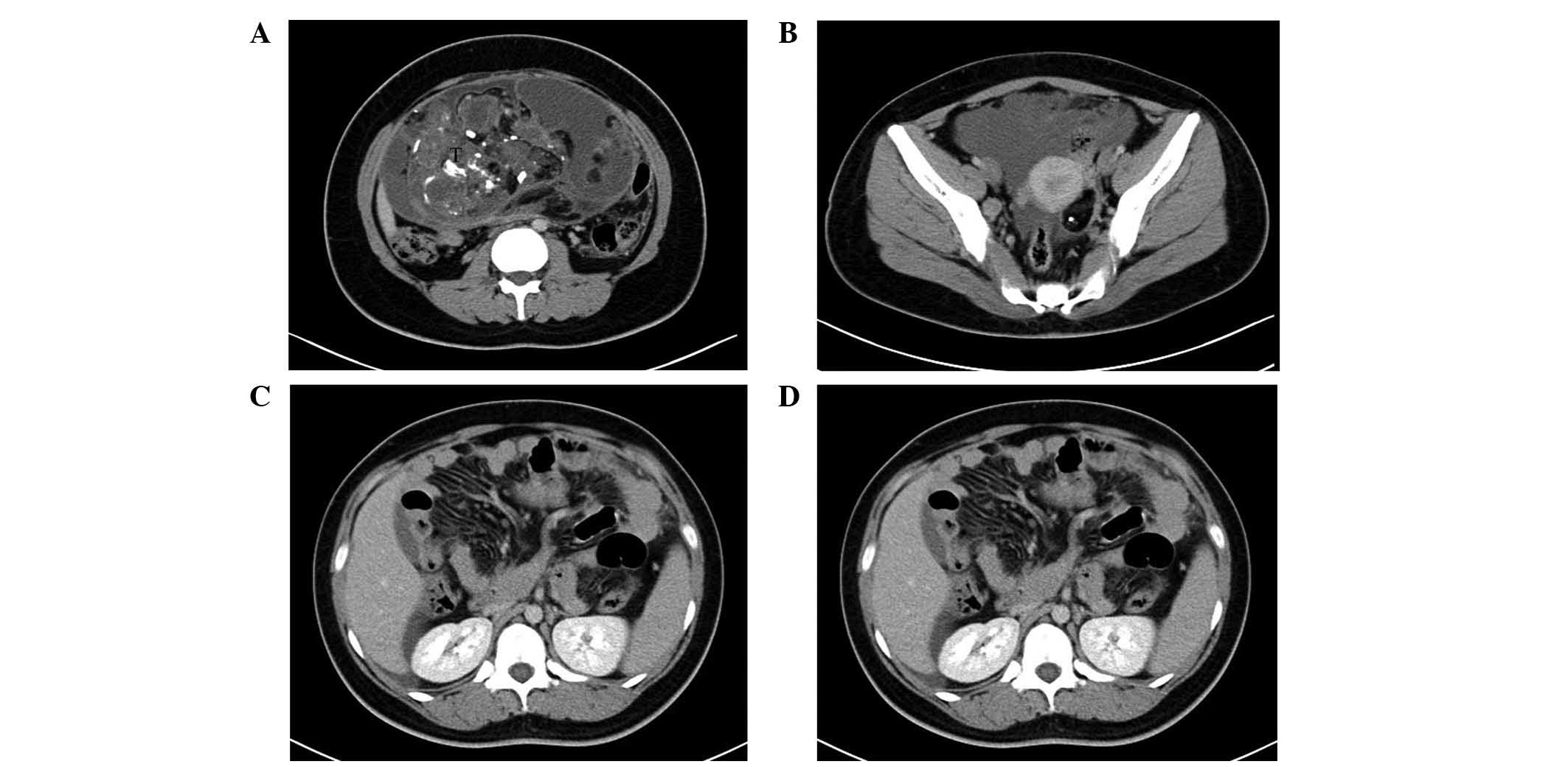
Contrast-enhanced computed tomography (CT) revealed two cystic, solid masses in the pelvis and lower abdomen, each containing dispersed regions of calcified and fatty components. The two masses demonstrated similarities with bilateral ovarian teratomas. Additionally, multiple nodules throughout the peritoneum were associated with omental caking, and ascites was also detected (Fig. 1A-C). Based on the results from the CT scan and the elevated serum tumor markers, it was suspected that the patient was presenting with malignant germ cell tumors, specifically immature teratomas, with lymphadenopathy.

Figure 1.

(A) Axial image of contrast-enhanced lower abdominal computed tomography demonstrated a mixed solid and cystic mass with scattered areas of fatty components and calcifications suggestive of an ovarian teratoma. Ascites was also observed. (B) Left ovarian teratoma and (C and D) multiple nodules throughout the peritoneum were exhibited. (A-C) Case 1. (D) Case 2.

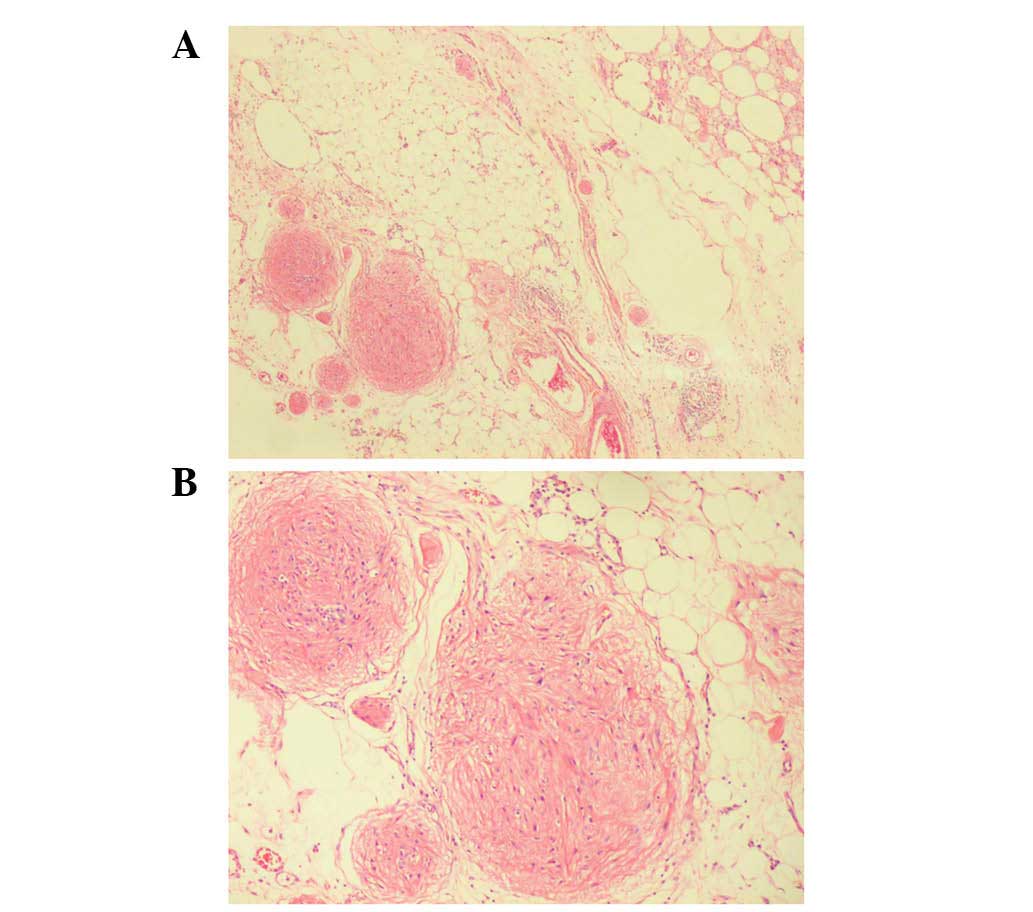
A right salpingo-oophorectomy, left tumor resection and omentectomy were performed. The right ovarian mass was 30×25×20 cm in size, and consisted of a yellow-white solid component and cystic areas. Two cystic masses, measuring 1×1 and 2×1 cm, were observed in the left ovary. All tumors contained fatty components. Numerous miliary nodules were identified in the retroperitoneum and peritoneum, suggesting the presence of GP implants. The largest implant was detected in the greater omentum, measuring 1 cm in diameter, and had adhered to the right ovary. Following histological examination, the right ovarian mass was confirmed as an immature teratoma, and the left mass was confirmed as a mature teratoma. Mature teratoma was characterized by well-differentiated tissue, while immature teratoma contained immature tissue, typically the neuroectodermal structures. Extensive peritoneal implants were observed, with numerous lymphocytes and foam cells. The implants had no envelope, but were without cellular atypia or mitosis (Fig. 2).

Figure 2.

Case 1: (A) Multiple nodules demonstrating a variety of sizes in the greater omentum, with numerous lymphocytes and foam cells (staining, hematoxylin and eosin; magnification, ×40). (B) Microscopic view of the omental implants exhibiting mature glial tissues, consistent with gliomatosis peritonei (staining, hematoxylin and eosin; magnification, ×100).

Following surgery, a chemotherapy regimen (30 mg bleomycin on days 1–3, 90 mg etoposide on day 1 and 0.17 mg cisplatin on day 1, for 6 cycles; interval time, 4 weeks) was administered. Currently, 4 years after the first surgery, the patient is alive and well, with a good prognosis and without recurrence or metastasis. A long-term follow-up is planned at an outpatient clinic.

Case 2

A 15-year-old woman was referred to The Second Affiliated Hospital, Zhejiang University School of Medicine on July 17, 2013, presenting with progressively increasing fullness of the abdomen and a significant increase in weight over the last 3 years. The patient was subsequently referred to the Department of Endocrinology for the appropriate treatment. Contrast-enhanced CT detected a tumor in the lower abdomen and pelvis, measuring 10×12×9 cm; a second tumor in the left ovary, with a diameter of 3 cm, was also revealed on the CT scan (Fig. 1D). The patient was treated with a tumorectomy. During the surgery, bilateral tumors were found, and the larger tumor was located in the right ovary. The tumors were removed. Intraoperatively, tiny gray spots, measuring up to 0.5 cm in diameter, were removed from the greater omentum and peritoneum. During microscopic examination, the tumors appeared to consist of a teratomatous component, exhibiting similarities to skin, intestinal mucosa, cartilage, bones and neuroglial tissue. It was also observed that the peritoneal implants consisted of mature glial tissue that appeared to be well-demarcated, without mitosis or cellular atypia. Therefore, a diagnosis of bilateral mature teratoma and GP was confirmed. No chemotherapy was administered for case 2. During a follow-up period of 25 months after surgery, no notable events were recorded and the patient has a good prognosis. A long-term follow-up is planned at an outpatient clinic.

Discussion

GP is a rare complication associated with ovarian teratomas, with only ~100 cases recorded to date. Typical symptoms of the disease are similar to those experienced in the present two cases, and affected patients may occasionally develop Pseudo-Meigs' syndrome associated with ascites and pleural effusions owing to ovarian teratoma (6). The pre-operative diagnosis of teratoma may be confirmed through the combination of imaging and clinical findings. However, small GP lesions may be easily overlooked or cause a delay in accurate diagnosis due to the rareness of the disease.

GP is characterized by a myriad of peritoneal nodular or miliary implants composed of mature glia (7). As mature glial cells are not aggressive, the implants may remain stable for long periods of time, exhibiting benign behavior. However, on rare occasions, GP may develop a secondary malignant glial tumor (8). The pathogenesis underlying the development of GP is not yet fully understood. These glial nodules are traditionally confined as peritoneal seedlings via capsular rupture from the ovarian teratoma, although genetic evidence has demonstrated that they may have a different genetic identity compared with ovarian tumors (9–11). In the majority of cases, a benign clinical course is expected for patients with GP, particularly when undergoing cisplatin-based chemotherapy (12). In the present two cases, following surgical resection, each patient demonstrated a positive prognosis within a 19-month follow-up period. However, doctors should conduct long-term follow-ups in patients presenting with GP due to the potential for malignant transformation.

When comparing the radiological data from the present cases with previously published cases, notable findings have been observed: i) Although the teratomas in the present cases were localized on each ovary (bilateral), the majority of cases within the literature reported unilateral teratomas, without a particular preference as to which ovary was affected; up until now, only one case of bilateral teratoma had been reported in the literature (13). ii) Although the radiological data regarding GP in the current literature is scarce, the radiological findings in the present two cases appear to be consistent with previous observations. The CT scans from the current study revealed multiple nodules throughout the peritoneum, with associated omental caking and ascites. The peritoneal implants were miliary, measured 0.3–1.2 cm in size, and were well-marginated and markedly enhanced (4,5,14). The findings in the two present cases are similar to previous observations of peritoneal tuberculosis and peritoneal dissemination of malignant tumors (5). Therefore, with regard to the identification of ovarian masses, imaging analysis of peritoneal dissemination alone cannot aid the differentiation of benign implants from diffuse peritoneal malignant seeding. However, radiological analysis may provide important information regarding tumor staging and the requirement for surgery. Therefore, in patients with bilateral ovarian teratomas, GP should be considered as a possible diagnosis by radiologists and relative radiological investigations are warranted.

In summary, the current study reports two cases presenting with bilateral ovarian teratomas with GP. These cases suggest that: i) In patients with ovarian teratoma, a possible diagnosis of GP should be considered, particularly in individuals presenting with bilateral teratomas; ii) although radiology may provide biological and histopathological information regarding GP status, the radiological differential diagnosis of GP is challenging due to the rareness of the disease; and iii) the follow-up of patients with GP should not be discontinued following the initial diagnosis and treatment, even if symptoms are alleviated or disappear.

References

1 

Nogales FF, Dulcey I and Preda O: Germ cell tumors of the ovary: An update. Arch Pathol Lab Med. 138:351–362. 2014. View Article : Google Scholar : PubMed/NCBI

2 

Neuhaüser H: On teratoid tumors of the ovary. Arch Gynaek. 79:696–719. 1906.(In German).

3 

Brammer HM III, Buck JL, Hayes WS, Sheth S and Tavassoli FA: From the archives of the AFIP. Malignant germ cell tumors of the ovary: Radiologic-pathologic correlation. Radiographics. 10:715–724. 1990. View Article : Google Scholar : PubMed/NCBI

4 

Kishimoto K, Ito K, Furukawa M, Ogasawara N, Matsunaga N, Nawata S, Ogata H and Kato H: Immature teratoma with gliomatosis peritonei associated with pregnancy. Abdom Imaging. 27:96–99. 2002. View Article : Google Scholar : PubMed/NCBI

5 

Okamoto D, Ishigami K, Yoshimitsu K, Irie H, Tajima T, Asayama Y, Hirakawa M, Ushijima Y, Nishihara Y, Amada S, et al: Gliomatosis peritonei associated with immature ovarian teratoma: A mimicker of peritoneal dissemination of malignant diseases. J Comput Assist Tomogr. 31:317–319. 2007. View Article : Google Scholar : PubMed/NCBI

6 

Khan J, McClennan BL, Qureshi S, Martell M, Iyer A and Bokhari SJ: Meigs syndrome and gliomatosis peritonei: A case report and review of literature. Gynecol Oncol. 98:313–317. 2005. View Article : Google Scholar : PubMed/NCBI

7 

Menéndez-Sánchez P, Villarejo-Campos P, Padilla-Valverde D, Murillo-Lázaro C and Martín-Fernández J: Gliomatosis peritonei: Recurrence, treatment and surveillance. Cir Cir. 79:256–259. 2011.PubMed/NCBI

8 

Dadmanesh F, Miller DM, Swenerton KD and Clement PB: Gliomatosis peritonei with malignant transformation. Mod Pathol. 10:597–601. 1997.PubMed/NCBI

9 

Ferguson AW, Katabuchi H, Ronnett BM and Cho KR: Glial implants in gliomatosis peritonei arise from normal tissue, not from the associated teratoma. Am J Pathol. 159:51–55. 2001. View Article : Google Scholar : PubMed/NCBI

10 

Kwan MY, Kalle W, Lau GT and Chan JK: Is gliomatosis peritonei derived from the associated ovarian teratoma? Hum Pathol. 35:685–688. 2004. View Article : Google Scholar : PubMed/NCBI

11 

Best DH, Butz GM, Moller K, Coleman WB and Thomas DB: Molecular analysis of an immature ovarian teratoma with gliomatosis peritonei and recurrence suggests genetic independence of multiple tumors. Int J Oncol. 25:17–25. 2004.PubMed/NCBI

12 

Liang L, Zhang Y, Malpica A, Ramalingam P, Euscher ED, Fuller GN and Liu J: Gliomatosis peritonei: a Clinicopathologic and immunohistochemical study of 21 cases. Mod Pathol. 28:1613–1620. 2015. View Article : Google Scholar : PubMed/NCBI

13 

Roscher AA, Weinstein EC and Powsner L: Giant teratomas with benign glial abdominal seeding, mimicking diffuse abdominal carcinomatosis. Int Surg. 60:461–465. 1975.PubMed/NCBI

14 

England RA, deSouza NM and Kaye SB: Gliomatosis peritonei: MRI appearances and its potential role in follow up. Br J Radiol. 80:e101–e104. 2007. View Article : Google Scholar : PubMed/NCBI

Related Articles

  • Abstract
  • View
  • Download
  • Twitter
Copy and paste a formatted citation
Spandidos Publications style
Wang J, Xu J, Zhang M and Li B: Gliomatosis peritonei with bilateral ovarian teratomas: A report of two cases. Oncol Lett 12: 2078-2080, 2016.
APA
Wang, J., Xu, J., Zhang, M., & Li, B. (2016). Gliomatosis peritonei with bilateral ovarian teratomas: A report of two cases. Oncology Letters, 12, 2078-2080. https://doi.org/10.3892/ol.2016.4866
MLA
Wang, J., Xu, J., Zhang, M., Li, B."Gliomatosis peritonei with bilateral ovarian teratomas: A report of two cases". Oncology Letters 12.3 (2016): 2078-2080.
Chicago
Wang, J., Xu, J., Zhang, M., Li, B."Gliomatosis peritonei with bilateral ovarian teratomas: A report of two cases". Oncology Letters 12, no. 3 (2016): 2078-2080. https://doi.org/10.3892/ol.2016.4866
Copy and paste a formatted citation
x
Spandidos Publications style
Wang J, Xu J, Zhang M and Li B: Gliomatosis peritonei with bilateral ovarian teratomas: A report of two cases. Oncol Lett 12: 2078-2080, 2016.
APA
Wang, J., Xu, J., Zhang, M., & Li, B. (2016). Gliomatosis peritonei with bilateral ovarian teratomas: A report of two cases. Oncology Letters, 12, 2078-2080. https://doi.org/10.3892/ol.2016.4866
MLA
Wang, J., Xu, J., Zhang, M., Li, B."Gliomatosis peritonei with bilateral ovarian teratomas: A report of two cases". Oncology Letters 12.3 (2016): 2078-2080.
Chicago
Wang, J., Xu, J., Zhang, M., Li, B."Gliomatosis peritonei with bilateral ovarian teratomas: A report of two cases". Oncology Letters 12, no. 3 (2016): 2078-2080. https://doi.org/10.3892/ol.2016.4866
Follow us
  • Twitter
  • LinkedIn
  • Facebook
About
  • Spandidos Publications
  • Careers
  • Cookie Policy
  • Privacy Policy
How can we help?
  • Help
  • Live Chat
  • Contact
  • Email to our Support Team