Spandidos Publications Logo
  • About
    • About Spandidos
    • Aims and Scopes
    • Abstracting and Indexing
    • Editorial Policies
    • Reprints and Permissions
    • Job Opportunities
    • Terms and Conditions
    • Contact
  • Journals
    • All Journals
    • Oncology Letters
      • Oncology Letters
      • Information for Authors
      • Editorial Policies
      • Editorial Board
      • Aims and Scope
      • Abstracting and Indexing
      • Bibliographic Information
      • Archive
    • International Journal of Oncology
      • International Journal of Oncology
      • Information for Authors
      • Editorial Policies
      • Editorial Board
      • Aims and Scope
      • Abstracting and Indexing
      • Bibliographic Information
      • Archive
    • Molecular and Clinical Oncology
      • Molecular and Clinical Oncology
      • Information for Authors
      • Editorial Policies
      • Editorial Board
      • Aims and Scope
      • Abstracting and Indexing
      • Bibliographic Information
      • Archive
    • Experimental and Therapeutic Medicine
      • Experimental and Therapeutic Medicine
      • Information for Authors
      • Editorial Policies
      • Editorial Board
      • Aims and Scope
      • Abstracting and Indexing
      • Bibliographic Information
      • Archive
    • International Journal of Molecular Medicine
      • International Journal of Molecular Medicine
      • Information for Authors
      • Editorial Policies
      • Editorial Board
      • Aims and Scope
      • Abstracting and Indexing
      • Bibliographic Information
      • Archive
    • Biomedical Reports
      • Biomedical Reports
      • Information for Authors
      • Editorial Policies
      • Editorial Board
      • Aims and Scope
      • Abstracting and Indexing
      • Bibliographic Information
      • Archive
    • Oncology Reports
      • Oncology Reports
      • Information for Authors
      • Editorial Policies
      • Editorial Board
      • Aims and Scope
      • Abstracting and Indexing
      • Bibliographic Information
      • Archive
    • Molecular Medicine Reports
      • Molecular Medicine Reports
      • Information for Authors
      • Editorial Policies
      • Editorial Board
      • Aims and Scope
      • Abstracting and Indexing
      • Bibliographic Information
      • Archive
    • World Academy of Sciences Journal
      • World Academy of Sciences Journal
      • Information for Authors
      • Editorial Policies
      • Editorial Board
      • Aims and Scope
      • Abstracting and Indexing
      • Bibliographic Information
      • Archive
    • International Journal of Functional Nutrition
      • International Journal of Functional Nutrition
      • Information for Authors
      • Editorial Policies
      • Editorial Board
      • Aims and Scope
      • Abstracting and Indexing
      • Bibliographic Information
      • Archive
    • International Journal of Epigenetics
      • International Journal of Epigenetics
      • Information for Authors
      • Editorial Policies
      • Editorial Board
      • Aims and Scope
      • Abstracting and Indexing
      • Bibliographic Information
      • Archive
    • Medicine International
      • Medicine International
      • Information for Authors
      • Editorial Policies
      • Editorial Board
      • Aims and Scope
      • Abstracting and Indexing
      • Bibliographic Information
      • Archive
  • Articles
  • Information
    • Information for Authors
    • Information for Reviewers
    • Information for Librarians
    • Information for Advertisers
    • Conferences
  • Language Editing
Spandidos Publications Logo
  • About
    • About Spandidos
    • Aims and Scopes
    • Abstracting and Indexing
    • Editorial Policies
    • Reprints and Permissions
    • Job Opportunities
    • Terms and Conditions
    • Contact
  • Journals
    • All Journals
    • Biomedical Reports
      • Information for Authors
      • Editorial Policies
      • Editorial Board
      • Aims and Scope
      • Abstracting and Indexing
      • Bibliographic Information
      • Archive
    • Experimental and Therapeutic Medicine
      • Information for Authors
      • Editorial Policies
      • Editorial Board
      • Aims and Scope
      • Abstracting and Indexing
      • Bibliographic Information
      • Archive
    • International Journal of Epigenetics
      • Information for Authors
      • Editorial Policies
      • Editorial Board
      • Aims and Scope
      • Abstracting and Indexing
      • Bibliographic Information
      • Archive
    • International Journal of Functional Nutrition
      • Information for Authors
      • Editorial Policies
      • Editorial Board
      • Aims and Scope
      • Abstracting and Indexing
      • Bibliographic Information
      • Archive
    • International Journal of Molecular Medicine
      • Information for Authors
      • Editorial Policies
      • Editorial Board
      • Aims and Scope
      • Abstracting and Indexing
      • Bibliographic Information
      • Archive
    • International Journal of Oncology
      • Information for Authors
      • Editorial Policies
      • Editorial Board
      • Aims and Scope
      • Abstracting and Indexing
      • Bibliographic Information
      • Archive
    • Medicine International
      • Information for Authors
      • Editorial Policies
      • Editorial Board
      • Aims and Scope
      • Abstracting and Indexing
      • Bibliographic Information
      • Archive
    • Molecular and Clinical Oncology
      • Information for Authors
      • Editorial Policies
      • Editorial Board
      • Aims and Scope
      • Abstracting and Indexing
      • Bibliographic Information
      • Archive
    • Molecular Medicine Reports
      • Information for Authors
      • Editorial Policies
      • Editorial Board
      • Aims and Scope
      • Abstracting and Indexing
      • Bibliographic Information
      • Archive
    • Oncology Letters
      • Information for Authors
      • Editorial Policies
      • Editorial Board
      • Aims and Scope
      • Abstracting and Indexing
      • Bibliographic Information
      • Archive
    • Oncology Reports
      • Information for Authors
      • Editorial Policies
      • Editorial Board
      • Aims and Scope
      • Abstracting and Indexing
      • Bibliographic Information
      • Archive
    • World Academy of Sciences Journal
      • Information for Authors
      • Editorial Policies
      • Editorial Board
      • Aims and Scope
      • Abstracting and Indexing
      • Bibliographic Information
      • Archive
  • Articles
  • Information
    • For Authors
    • For Reviewers
    • For Librarians
    • For Advertisers
    • Conferences
  • Language Editing
Login Register Submit
  • This site uses cookies
  • You can change your cookie settings at any time by following the instructions in our Cookie Policy. To find out more, you may read our Privacy Policy.

    I agree
Search articles by DOI, keyword, author or affiliation
Search
Advanced Search
presentation
Oncology Letters
Join Editorial Board Propose a Special Issue
Print ISSN: 1792-1074 Online ISSN: 1792-1082
Journal Cover
October-2016 Volume 12 Issue 4

Full Size Image

Sign up for eToc alerts
Recommend to Library

Journals

International Journal of Molecular Medicine

International Journal of Molecular Medicine

International Journal of Molecular Medicine is an international journal devoted to molecular mechanisms of human disease.

International Journal of Oncology

International Journal of Oncology

International Journal of Oncology is an international journal devoted to oncology research and cancer treatment.

Molecular Medicine Reports

Molecular Medicine Reports

Covers molecular medicine topics such as pharmacology, pathology, genetics, neuroscience, infectious diseases, molecular cardiology, and molecular surgery.

Oncology Reports

Oncology Reports

Oncology Reports is an international journal devoted to fundamental and applied research in Oncology.

Experimental and Therapeutic Medicine

Experimental and Therapeutic Medicine

Experimental and Therapeutic Medicine is an international journal devoted to laboratory and clinical medicine.

Oncology Letters

Oncology Letters

Oncology Letters is an international journal devoted to Experimental and Clinical Oncology.

Biomedical Reports

Biomedical Reports

Explores a wide range of biological and medical fields, including pharmacology, genetics, microbiology, neuroscience, and molecular cardiology.

Molecular and Clinical Oncology

Molecular and Clinical Oncology

International journal addressing all aspects of oncology research, from tumorigenesis and oncogenes to chemotherapy and metastasis.

World Academy of Sciences Journal

World Academy of Sciences Journal

Multidisciplinary open-access journal spanning biochemistry, genetics, neuroscience, environmental health, and synthetic biology.

International Journal of Functional Nutrition

International Journal of Functional Nutrition

Open-access journal combining biochemistry, pharmacology, immunology, and genetics to advance health through functional nutrition.

International Journal of Epigenetics

International Journal of Epigenetics

Publishes open-access research on using epigenetics to advance understanding and treatment of human disease.

Medicine International

Medicine International

An International Open Access Journal Devoted to General Medicine.

Journal Cover
October-2016 Volume 12 Issue 4

Full Size Image

Sign up for eToc alerts
Recommend to Library

  • Article
  • Citations
    • Cite This Article
    • Download Citation
    • Create Citation Alert
    • Remove Citation Alert
    • Cited By
  • Similar Articles
    • Related Articles (in Spandidos Publications)
    • Similar Articles (Google Scholar)
    • Similar Articles (PubMed)
  • Download PDF
  • Download XML
  • View XML
Article

Aspirin may inhibit angiogenesis and induce autophagy by inhibiting mTOR signaling pathway in murine hepatocarcinoma and sarcoma models

  • Authors:
    • Qianqian Zhao
    • Zhaopeng Wang
    • Zhaoxia Wang
    • Licun Wu
    • Weidong Zhang
  • View Affiliations / Copyright

    Affiliations: Key Laboratory for Modern Medicine and Technology of Shandong, Institute of Basic Medicine, Shandong Academy of Medical Sciences, Jinan, Shandong 250062, P.R. China, Latner Thoracic Surgery Research Laboratories and Division of Thoracic Surgery, Toronto General Hospital, University Health Network, University of Toronto, Toronto, ON M5G 1L7, Canada
  • Pages: 2804-2810
    |
    Published online on: August 16, 2016
       https://doi.org/10.3892/ol.2016.5017
  • Expand metrics +
Metrics: Total Views: 0 (Spandidos Publications: | PMC Statistics: )
Metrics: Total PDF Downloads: 0 (Spandidos Publications: | PMC Statistics: )
Cited By (CrossRef): 0 citations Loading Articles...

This article is mentioned in:


Abstract

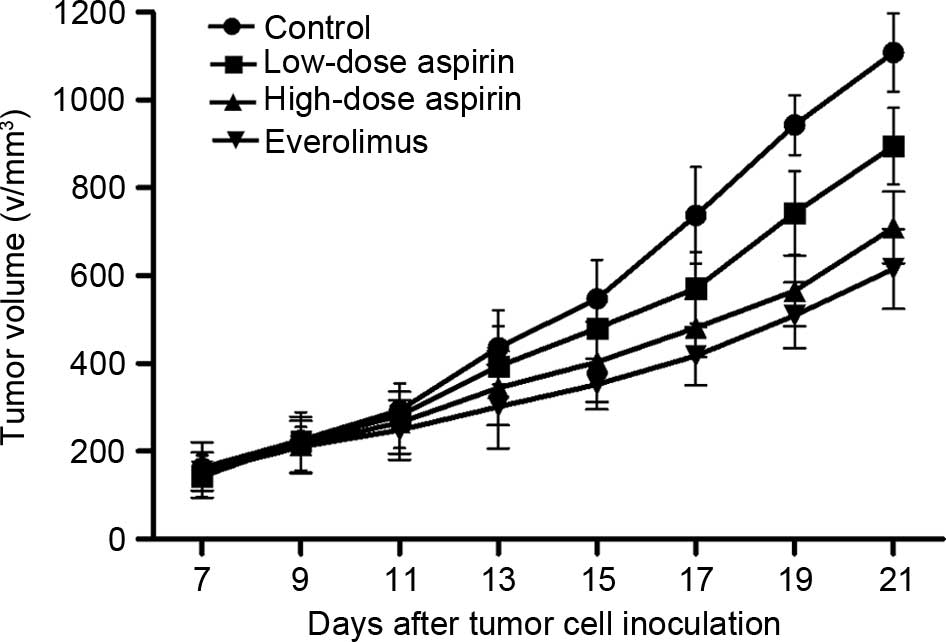
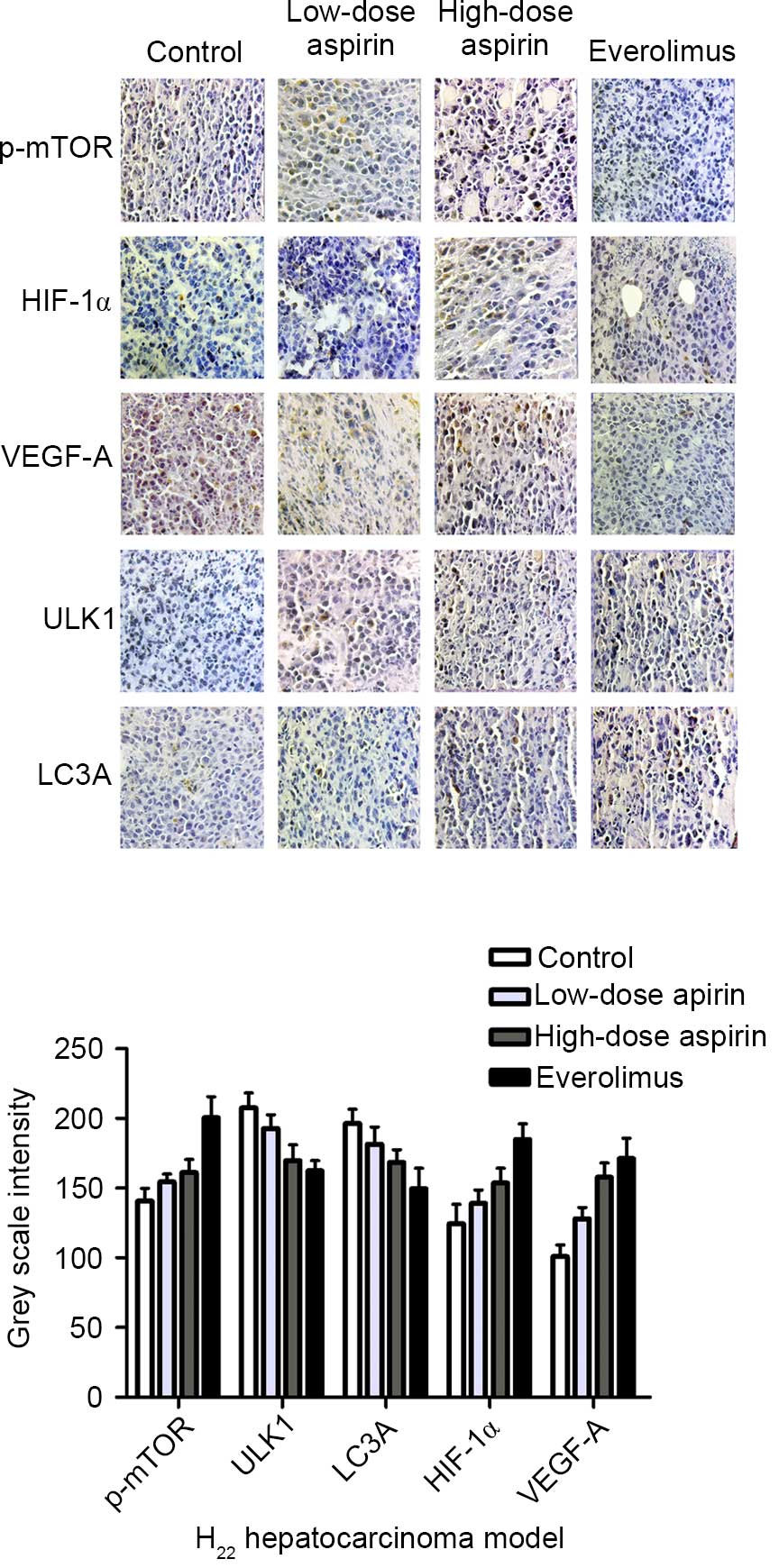
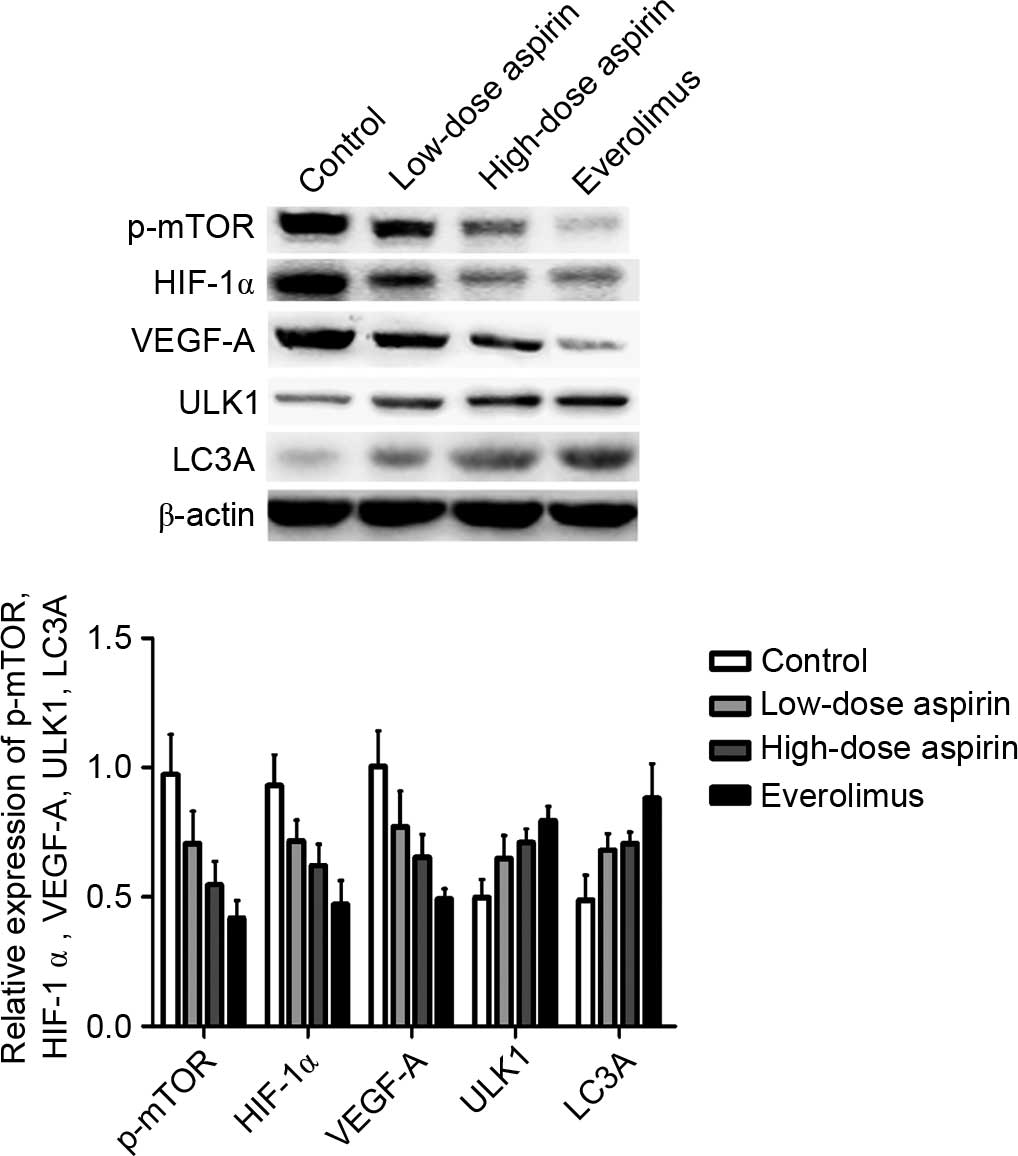
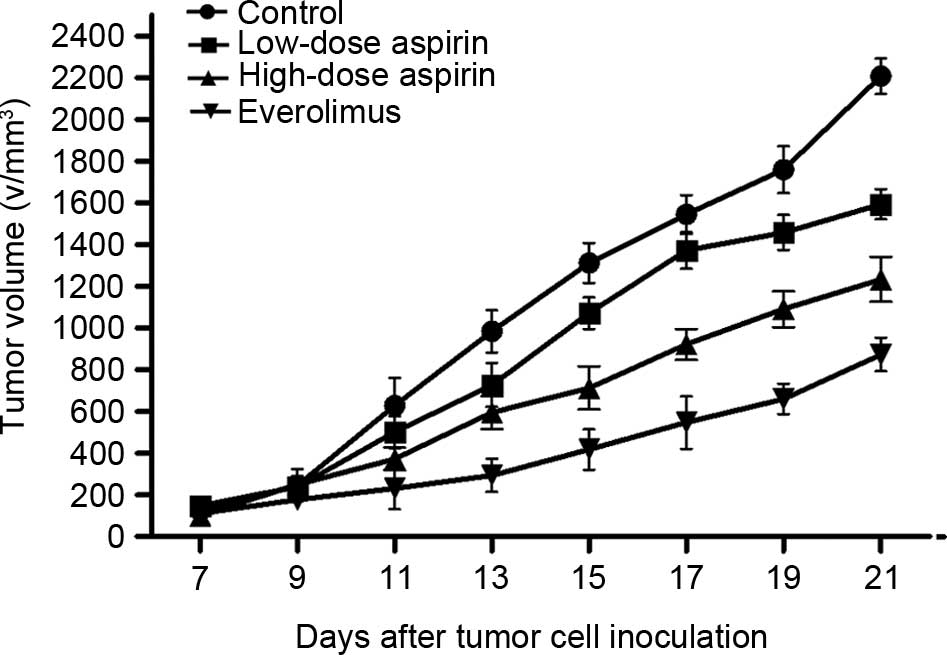
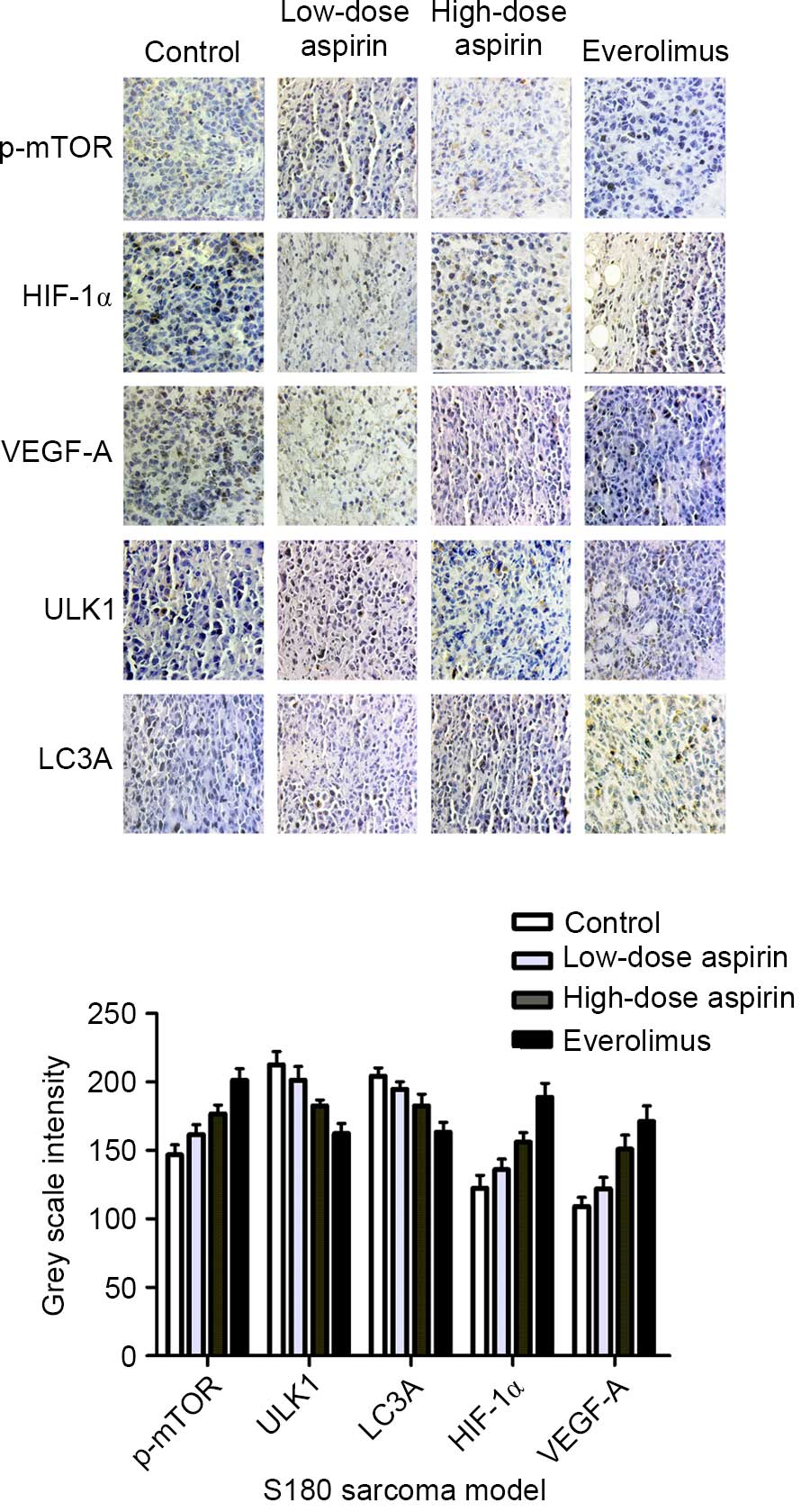
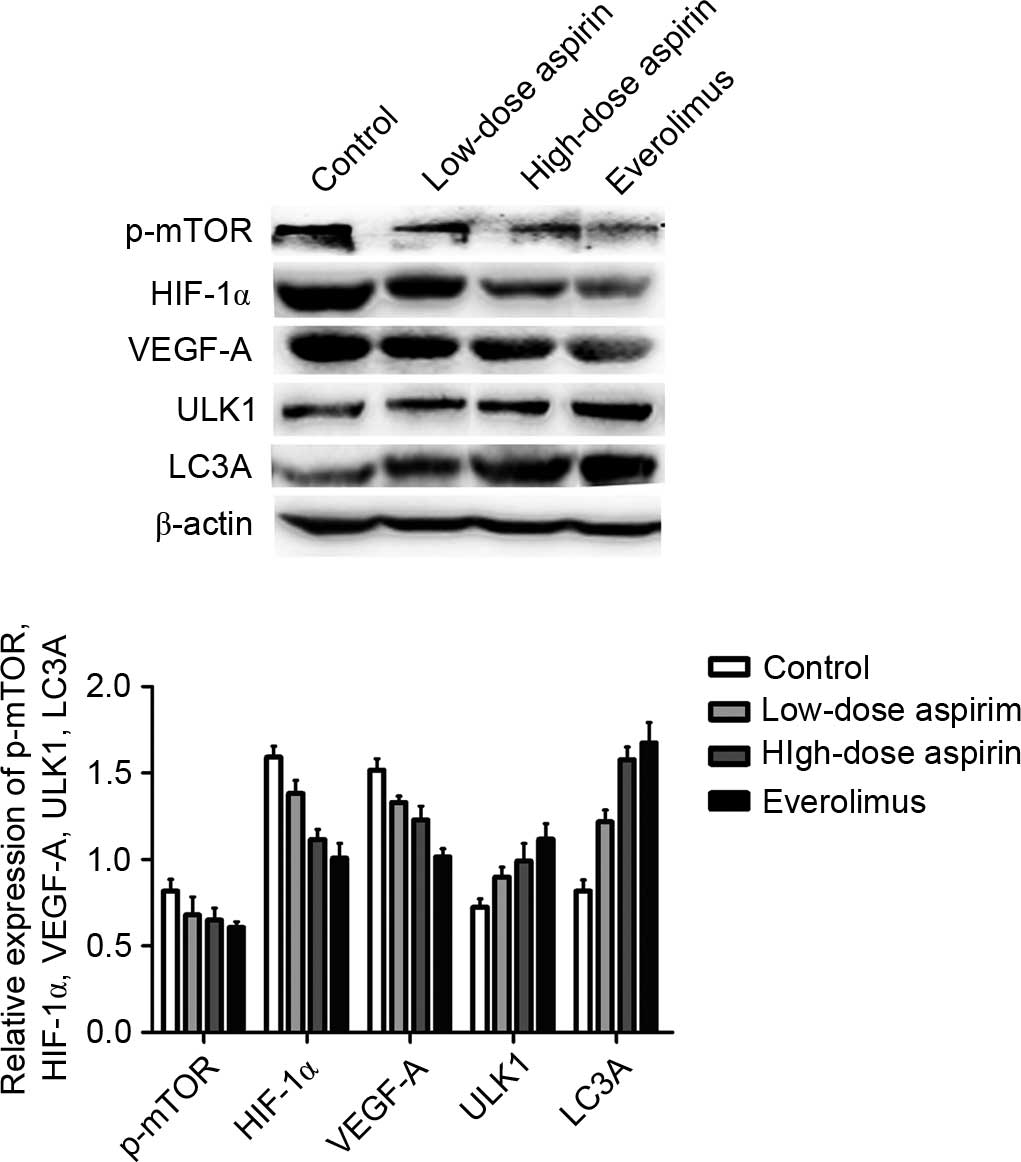
Aspirin is known to have inhibitory effects on growth development in various types of tumor. In previous studies, it was observed to inhibit angiogenesis by downregulating the expression of vascular endothelial growth factor‑A (VEGF‑A). In the present study, murine H22 hepatocarcinoma and S180 sarcoma models were used to ascertain whether aspirin could inhibit angiogenesis and promote autophagy in tumors. Tumor‑bearing mice were randomly divided into four groups with 10 mice per group: i) no treatment; ii) low‑dose aspirin (100 mg/kg); iii) high‑dose aspirin (400 mg/kg); iv) everolimus group (4 mg/kg). The effects of high‑dose aspirin were validated through preliminary experiments. The drug treatment was administered every day for 14 days. The tumor size was measured every other day and then the tumor growth curve was plotted, and the tumor inhibitory rates were calculated. The expression levels of phosphorylated mammalian target of rapamycin (p‑mTOR), hypoxia‑inducible factor‑1α (HIF‑1α), VEGF‑A, UNC‑51‑like kinase‑1 (ULK1) and microtubule‑associated protein 1 light chain 3A (LC3A) were detected by immunohistochemistry and western blot analysis, respectively. We observed that tumor growth delay was achieved in both H22 hepatocarcinoma and S180 sarcoma models following treatment with aspirin. The tumor growth inhibition rates induced by low and high‑dose aspirin and everolimus were 19.6, 33.6 and 53.7% (P<0.05) in H22 hepato­carcinoma, and 25.7, 40.6 and 48.7% (P<0.05) in S180 sarcoma. The immunohistochemistry and western blot analysis data from the models revealed that the expression of p‑mTOR, HIF‑1α and VEGF‑A was decreased, while the expression of ULK1 and LC3A was increased following treatment with aspirin and everolimus. The changes were more apparent in the high‑dose aspirin and everolimus groups (P<0.01). The inhibitory action of aspirin and everolimus on tumor angiogenesis may be through inhibiting the expression of p‑mTOR, HIF‑1α and VEGF‑A. Alternatively, aspirin may induce autophagy by inhibiting the mTOR signaling target and then increasing ULK1 and LC3A.
View Figures

Figure 1

Figure 2

Figure 3

Figure 4

Figure 5

Figure 6

View References

1 

Gee JR, Jarrard DF, Bruskewitz RC, Moon TD, Hedican SP, Leverson GE, Nakada SY and Messing EM: Reduced bladder cancer recurrence rate with cardioprotective aspirin after intravesical bacille Calmette-Guérin. BJU Int. 103:736–739. 2009. View Article : Google Scholar : PubMed/NCBI

2 

Alfonso LF, Srivenugopal KS, Arumugam TV, Abbruscato TJ, Weidanz JA and Bhat GJ: Aspirin inhibits camptothecin-induced p21CIP1 levels and potentiates apoptosis in human breast cancer cells. Int J Oncol. 34:597–608. 2009.PubMed/NCBI

3 

Iwama T: NSAIDs and colorectal cancer prevention. J Gastroenterol. 44(Suppl 19): S72–S76. 2009. View Article : Google Scholar

4 

Din FV, Theodoratou E, Farrington SM, Tenesa A, Barnetson RA, Cetnarskyj R, Stark L, Porteous ME, Campbell H and Dunlop MG: Effect of aspirin and NSAIDs on risk and survival from colorectal cancer. Gut. 59:1670–1679. 2010. View Article : Google Scholar : PubMed/NCBI

5 

Rothwell PM, Wilson M, Elwin CE, Norrving B, Algra A, Warlow CP and Meade TW: Long-term effect of aspirin on colorectal cancer incidence and mortality: 20-year follow-up of five randomised trials. Lancet. 376:1741–1750. 2010. View Article : Google Scholar : PubMed/NCBI

6 

Din FV, Valanciute A, Houde VP, Zibrova D, Green KA, Sakamoto K, Alessi DR and Dunlop MG: Aspirin inhibits mTOR signaling, activates AMP-activatedprotein kinase, and induces autophagy in colorectal cancer cells. Gastroenterology. 142:1504–1515.e3. 2012. View Article : Google Scholar : PubMed/NCBI

7 

Zoncu R, Efeyan A and Sabatini DM: mTOR: from growth signal integration to cancer, diabetes and ageing. Nat Rev Mol Cell Biol. 12:21–35. 2011. View Article : Google Scholar : PubMed/NCBI

8 

Alayev A and Holz MK: mTOR signaling for biological control and cancer. J Cell Physiol. 228:1658–1664. 2013. View Article : Google Scholar : PubMed/NCBI

9 

Guertin DA and Sabatini DM: Defining the role of mTOR in cancer. Cancer Cell. 12:9–22. 2007. View Article : Google Scholar : PubMed/NCBI

10 

Foster KG, Acosta-Jaquez HA, Romeo Y, Ekim B, Soliman GA, Carriere A, Roux PP, Ballif BA and Fingar DC: Regulation of mTOR complex l (mTORCI) by raptor Ser863 and multisite phosphorylation. J Biol Chem. 285:80–94. 2010. View Article : Google Scholar : PubMed/NCBI

11 

Carbajo-Pescador S, Ordoñez R, Benet M, Jover R, GarcíaPalomo A, Mauriz JL and González-Gallego J: Inhibition of VEGF expression through blockade of Hif1α and STAT3 signalling mediates the anti-angiogenic effect of melatonin in HepG2 liver cancer cells. Br J Cancer. 109:83–91. 2013. View Article : Google Scholar : PubMed/NCBI

12 

De Francesco EM, Lappano R, Santolla MF, Marsico S, Caruso A and Maggiolini M: HIF-1α/GPER signaling mediates the expression of VEGF induced by hypoxia in breast cancer associated fibroblasts (CAFs). Breast Cancer Res. 15:R642013. View Article : Google Scholar : PubMed/NCBI

13 

Xie SR, Wang Y, Liu CW, Luo K and Cai YQ: Liquiritigenin inhibits serum-induced HIF-1α and VEGF expression via the AKT/mTOR-p70S6K signalling pathway in HeLa cells. Phytother Res. 26:1133–1141. 2012. View Article : Google Scholar : PubMed/NCBI

14 

Ruan GX and Kazlauskas A: Axl is essential for VEGF-A-dependent activation of PI3K/Akt. EMBO J. 31:1692–1703. 2012. View Article : Google Scholar : PubMed/NCBI

15 

Wouters BG and Koritzinsky M: Hypoxia signalling through mTOR and the unfolded protein response in cancer. Nat Rev Cancer. 8:851–864. 2008. View Article : Google Scholar : PubMed/NCBI

16 

Sengupta S, Peterson TR and Sabatini DM: Regulation of the mTOR complex 1 pathway by nutrients, growth factors, and stress. Mol Cell. 40:310–322. 2010. View Article : Google Scholar : PubMed/NCBI

17 

Jain K, Paranandi KS, Sridharan S and Basu A: Autophagy in breast cancer and its implications for therapy. Am J Cancer Res. 3:251–265. 2013.PubMed/NCBI

18 

Morselli E, Galluzzi L, Kepp O, Vicencio JM, Criollo A, Maiuri MC and Kroemer G: Anti- and pro-tumor functions of autophagy. Biochim Biophys Acta. 1793:1524–1532. 2009. View Article : Google Scholar : PubMed/NCBI

19 

Chan EY, Longatti A, McKnight NC and Tooze SA: Kinase-inactivated ULK proteins inhibit autophagy via their conserved C-terminal domains using an Atg13-independent mechanism. Mol Cell Biol. 29:157–171. 2009. View Article : Google Scholar : PubMed/NCBI

20 

Hosokawa N, Sasaki T, Iemura S, Natsume T, Hara T and Mizushima N: Atg101, a novel mammalian autophagy protein interacting with Atg13. Autophagy. 5:973–979. 2009. View Article : Google Scholar : PubMed/NCBI

21 

Kamada Y, Yoshino K, Kondo C, Kawamata T, Oshiro N, Yonezawa K and Ohsumi Y: Tor directly controls the Atg1 kinase complex to regulate autophagy. Mol Cell Biol. 30:1049–1058. 2010. View Article : Google Scholar : PubMed/NCBI

22 

Behrends C, Sowa ME, Gygi SP and Harper JW: Network organization of the human autophagy system. Nature. 466:68–76. 2010. View Article : Google Scholar : PubMed/NCBI

23 

Wirawan E, Berghe T Vanden, Lippens S, Agostinis P and Vandenabeele P: Autophagy: for better or for worse. Cell Res. 22:43–61. 2012. View Article : Google Scholar : PubMed/NCBI

24 

Moretti L, Yang ES, Kim KW and Lu B: Autophagy signaling in cancer and its potential as novel target to improve anticancer therapy. Drug Resist Updat. 10:135–143. 2007. View Article : Google Scholar : PubMed/NCBI

25 

Goel S, Duda DG, Xu L, Munn LL, Boucher Y, Fukumura D and Jain RK: Normalization of the vasculature for treatment of cancer and other diseases. Physiol Rev. 91:1071–1121. 2011. View Article : Google Scholar : PubMed/NCBI

26 

Zhang X, Wang Z, Wang Z, Zhang Y, Jia Q, Wu L and Zhang W: Impact of acetylsalicylic acid on tumor angiogenesis and lymphangiogenesis through inhibition of VEGF signaling in a murine sarcoma model. Oncol Rep. 29:1907–1913. 2013.PubMed/NCBI

27 

Dazert E and Hall MN: mTOR signaling in disease. Curr Opin Cell Biol. 23:744–755. 2011. View Article : Google Scholar : PubMed/NCBI

28 

López-Knowles E, O'Toole SA, McNeil CM, Millar EK, Qiu MR, Crea P, Daly RJ, Musgrove EA and Sutherland RL: PI3K pathway activation in breast cancer is associated with the basal-like phenotype and cancer-specific mortality. Int J Cancer. 126:1121–1131. 2010. View Article : Google Scholar : PubMed/NCBI

29 

Hydbring P and Larsson LG: Cdk2: a key regulator of the senescence control function of Myc. Aging (Albany NY). 2:244–250. 2010. View Article : Google Scholar : PubMed/NCBI

30 

Cavazzoni A, Bonelli MA, Fumarola C, La Monica S, Airoud K, Bertoni R, Alfieri RR, Galetti M, Tramonti S, Galvani E, et al: Overcoming acquired resistance to letrozole by targeting the PI3K/AKT/mTOR pathway in breast cancer cell clones. Cancer Lett. 323:77–87. 2012. View Article : Google Scholar : PubMed/NCBI

31 

Wang FZ, Peng-Jiao, Yang NN, Chuang-Yuan, Zhao YL, Liu QQ, Fei HR and Zhang JG: PF-04691502 triggers cell cycle arrest, apoptosis and inhibits the angiogenesis in hepatocellular carcinoma cells. Toxicol Lett. 220:150–156. 2013. View Article : Google Scholar : PubMed/NCBI

32 

Mizushima N, Yoshimori T and Levine B: Methods in mammalian autophagy research. Cell. 140:313–326. 2010. View Article : Google Scholar : PubMed/NCBI

33 

Chaachouay H, Ohneseit P, Toulany M, Kehlbach R, Multhoff G and Rodemann HP: Autophagy contributes to resistance of tumor cells to ionizing radiation. Radiother Oncol. 99:287–292. 2011. View Article : Google Scholar : PubMed/NCBI

34 

O'Donovan TR, O'Sullivan GC and McKenna SL: Induction of autophagy by drug-resistant esophageal cancer cells promotes their survival and recovery following treatment with chemotherapeutics. Autophagy. 7:509–524. 2011. View Article : Google Scholar : PubMed/NCBI

35 

Anbalagan S, Pires IM, Blick C, Hill MA, Ferguson DJ, Chan DA and Hammond EM: Radiosensitization of renal cell carcinoma in vitro through the induction of autophagy. Radiother Oncol. 103:388–393. 2012. View Article : Google Scholar : PubMed/NCBI

36 

Hao J, Pei Y, Ji G, Li W, Feng S and Qiu S: Autophagy is induced by 3β-Osuccinyl-lupeol (LD9-4) in A549 cells via up-regulation of Beclin 1 and down-regulation mTOR pathway. Eur J Pharmacol. 670:29–38. 2011. View Article : Google Scholar : PubMed/NCBI

37 

He Z, Mangala LS, Theriot CA, Rohde LH, Wu H and Zhang Y: Cell killing and radiosensitizing effects of atorvastatin in PC3 prostate cancer cells. J Radiat Res. 53:225–233. 2012. View Article : Google Scholar : PubMed/NCBI

Related Articles

  • Abstract
  • View
  • Download
  • Twitter
Copy and paste a formatted citation
Spandidos Publications style
Zhao Q, Wang Z, Wang Z, Wu L and Zhang W: Aspirin may inhibit angiogenesis and induce autophagy by inhibiting mTOR signaling pathway in murine hepatocarcinoma and sarcoma models. Oncol Lett 12: 2804-2810, 2016.
APA
Zhao, Q., Wang, Z., Wang, Z., Wu, L., & Zhang, W. (2016). Aspirin may inhibit angiogenesis and induce autophagy by inhibiting mTOR signaling pathway in murine hepatocarcinoma and sarcoma models. Oncology Letters, 12, 2804-2810. https://doi.org/10.3892/ol.2016.5017
MLA
Zhao, Q., Wang, Z., Wang, Z., Wu, L., Zhang, W."Aspirin may inhibit angiogenesis and induce autophagy by inhibiting mTOR signaling pathway in murine hepatocarcinoma and sarcoma models". Oncology Letters 12.4 (2016): 2804-2810.
Chicago
Zhao, Q., Wang, Z., Wang, Z., Wu, L., Zhang, W."Aspirin may inhibit angiogenesis and induce autophagy by inhibiting mTOR signaling pathway in murine hepatocarcinoma and sarcoma models". Oncology Letters 12, no. 4 (2016): 2804-2810. https://doi.org/10.3892/ol.2016.5017
Copy and paste a formatted citation
x
Spandidos Publications style
Zhao Q, Wang Z, Wang Z, Wu L and Zhang W: Aspirin may inhibit angiogenesis and induce autophagy by inhibiting mTOR signaling pathway in murine hepatocarcinoma and sarcoma models. Oncol Lett 12: 2804-2810, 2016.
APA
Zhao, Q., Wang, Z., Wang, Z., Wu, L., & Zhang, W. (2016). Aspirin may inhibit angiogenesis and induce autophagy by inhibiting mTOR signaling pathway in murine hepatocarcinoma and sarcoma models. Oncology Letters, 12, 2804-2810. https://doi.org/10.3892/ol.2016.5017
MLA
Zhao, Q., Wang, Z., Wang, Z., Wu, L., Zhang, W."Aspirin may inhibit angiogenesis and induce autophagy by inhibiting mTOR signaling pathway in murine hepatocarcinoma and sarcoma models". Oncology Letters 12.4 (2016): 2804-2810.
Chicago
Zhao, Q., Wang, Z., Wang, Z., Wu, L., Zhang, W."Aspirin may inhibit angiogenesis and induce autophagy by inhibiting mTOR signaling pathway in murine hepatocarcinoma and sarcoma models". Oncology Letters 12, no. 4 (2016): 2804-2810. https://doi.org/10.3892/ol.2016.5017
Follow us
  • Twitter
  • LinkedIn
  • Facebook
About
  • Spandidos Publications
  • Careers
  • Cookie Policy
  • Privacy Policy
How can we help?
  • Help
  • Live Chat
  • Contact
  • Email to our Support Team