Spandidos Publications Logo
  • About
    • About Spandidos
    • Aims and Scopes
    • Abstracting and Indexing
    • Editorial Policies
    • Reprints and Permissions
    • Job Opportunities
    • Terms and Conditions
    • Contact
  • Journals
    • All Journals
    • Oncology Letters
      • Oncology Letters
      • Information for Authors
      • Editorial Policies
      • Editorial Board
      • Aims and Scope
      • Abstracting and Indexing
      • Bibliographic Information
      • Archive
    • International Journal of Oncology
      • International Journal of Oncology
      • Information for Authors
      • Editorial Policies
      • Editorial Board
      • Aims and Scope
      • Abstracting and Indexing
      • Bibliographic Information
      • Archive
    • Molecular and Clinical Oncology
      • Molecular and Clinical Oncology
      • Information for Authors
      • Editorial Policies
      • Editorial Board
      • Aims and Scope
      • Abstracting and Indexing
      • Bibliographic Information
      • Archive
    • Experimental and Therapeutic Medicine
      • Experimental and Therapeutic Medicine
      • Information for Authors
      • Editorial Policies
      • Editorial Board
      • Aims and Scope
      • Abstracting and Indexing
      • Bibliographic Information
      • Archive
    • International Journal of Molecular Medicine
      • International Journal of Molecular Medicine
      • Information for Authors
      • Editorial Policies
      • Editorial Board
      • Aims and Scope
      • Abstracting and Indexing
      • Bibliographic Information
      • Archive
    • Biomedical Reports
      • Biomedical Reports
      • Information for Authors
      • Editorial Policies
      • Editorial Board
      • Aims and Scope
      • Abstracting and Indexing
      • Bibliographic Information
      • Archive
    • Oncology Reports
      • Oncology Reports
      • Information for Authors
      • Editorial Policies
      • Editorial Board
      • Aims and Scope
      • Abstracting and Indexing
      • Bibliographic Information
      • Archive
    • Molecular Medicine Reports
      • Molecular Medicine Reports
      • Information for Authors
      • Editorial Policies
      • Editorial Board
      • Aims and Scope
      • Abstracting and Indexing
      • Bibliographic Information
      • Archive
    • World Academy of Sciences Journal
      • World Academy of Sciences Journal
      • Information for Authors
      • Editorial Policies
      • Editorial Board
      • Aims and Scope
      • Abstracting and Indexing
      • Bibliographic Information
      • Archive
    • International Journal of Functional Nutrition
      • International Journal of Functional Nutrition
      • Information for Authors
      • Editorial Policies
      • Editorial Board
      • Aims and Scope
      • Abstracting and Indexing
      • Bibliographic Information
      • Archive
    • International Journal of Epigenetics
      • International Journal of Epigenetics
      • Information for Authors
      • Editorial Policies
      • Editorial Board
      • Aims and Scope
      • Abstracting and Indexing
      • Bibliographic Information
      • Archive
    • Medicine International
      • Medicine International
      • Information for Authors
      • Editorial Policies
      • Editorial Board
      • Aims and Scope
      • Abstracting and Indexing
      • Bibliographic Information
      • Archive
  • Articles
  • Information
    • Information for Authors
    • Information for Reviewers
    • Information for Librarians
    • Information for Advertisers
    • Conferences
  • Language Editing
Spandidos Publications Logo
  • About
    • About Spandidos
    • Aims and Scopes
    • Abstracting and Indexing
    • Editorial Policies
    • Reprints and Permissions
    • Job Opportunities
    • Terms and Conditions
    • Contact
  • Journals
    • All Journals
    • Biomedical Reports
      • Information for Authors
      • Editorial Policies
      • Editorial Board
      • Aims and Scope
      • Abstracting and Indexing
      • Bibliographic Information
      • Archive
    • Experimental and Therapeutic Medicine
      • Information for Authors
      • Editorial Policies
      • Editorial Board
      • Aims and Scope
      • Abstracting and Indexing
      • Bibliographic Information
      • Archive
    • International Journal of Epigenetics
      • Information for Authors
      • Editorial Policies
      • Editorial Board
      • Aims and Scope
      • Abstracting and Indexing
      • Bibliographic Information
      • Archive
    • International Journal of Functional Nutrition
      • Information for Authors
      • Editorial Policies
      • Editorial Board
      • Aims and Scope
      • Abstracting and Indexing
      • Bibliographic Information
      • Archive
    • International Journal of Molecular Medicine
      • Information for Authors
      • Editorial Policies
      • Editorial Board
      • Aims and Scope
      • Abstracting and Indexing
      • Bibliographic Information
      • Archive
    • International Journal of Oncology
      • Information for Authors
      • Editorial Policies
      • Editorial Board
      • Aims and Scope
      • Abstracting and Indexing
      • Bibliographic Information
      • Archive
    • Medicine International
      • Information for Authors
      • Editorial Policies
      • Editorial Board
      • Aims and Scope
      • Abstracting and Indexing
      • Bibliographic Information
      • Archive
    • Molecular and Clinical Oncology
      • Information for Authors
      • Editorial Policies
      • Editorial Board
      • Aims and Scope
      • Abstracting and Indexing
      • Bibliographic Information
      • Archive
    • Molecular Medicine Reports
      • Information for Authors
      • Editorial Policies
      • Editorial Board
      • Aims and Scope
      • Abstracting and Indexing
      • Bibliographic Information
      • Archive
    • Oncology Letters
      • Information for Authors
      • Editorial Policies
      • Editorial Board
      • Aims and Scope
      • Abstracting and Indexing
      • Bibliographic Information
      • Archive
    • Oncology Reports
      • Information for Authors
      • Editorial Policies
      • Editorial Board
      • Aims and Scope
      • Abstracting and Indexing
      • Bibliographic Information
      • Archive
    • World Academy of Sciences Journal
      • Information for Authors
      • Editorial Policies
      • Editorial Board
      • Aims and Scope
      • Abstracting and Indexing
      • Bibliographic Information
      • Archive
  • Articles
  • Information
    • For Authors
    • For Reviewers
    • For Librarians
    • For Advertisers
    • Conferences
  • Language Editing
Login Register Submit
  • This site uses cookies
  • You can change your cookie settings at any time by following the instructions in our Cookie Policy. To find out more, you may read our Privacy Policy.

    I agree
Search articles by DOI, keyword, author or affiliation
Search
Advanced Search
presentation
Oncology Letters
Join Editorial Board Propose a Special Issue
Print ISSN: 1792-1074 Online ISSN: 1792-1082
Journal Cover
December-2016 Volume 12 Issue 6

Full Size Image

Sign up for eToc alerts
Recommend to Library

Journals

International Journal of Molecular Medicine

International Journal of Molecular Medicine

International Journal of Molecular Medicine is an international journal devoted to molecular mechanisms of human disease.

International Journal of Oncology

International Journal of Oncology

International Journal of Oncology is an international journal devoted to oncology research and cancer treatment.

Molecular Medicine Reports

Molecular Medicine Reports

Covers molecular medicine topics such as pharmacology, pathology, genetics, neuroscience, infectious diseases, molecular cardiology, and molecular surgery.

Oncology Reports

Oncology Reports

Oncology Reports is an international journal devoted to fundamental and applied research in Oncology.

Experimental and Therapeutic Medicine

Experimental and Therapeutic Medicine

Experimental and Therapeutic Medicine is an international journal devoted to laboratory and clinical medicine.

Oncology Letters

Oncology Letters

Oncology Letters is an international journal devoted to Experimental and Clinical Oncology.

Biomedical Reports

Biomedical Reports

Explores a wide range of biological and medical fields, including pharmacology, genetics, microbiology, neuroscience, and molecular cardiology.

Molecular and Clinical Oncology

Molecular and Clinical Oncology

International journal addressing all aspects of oncology research, from tumorigenesis and oncogenes to chemotherapy and metastasis.

World Academy of Sciences Journal

World Academy of Sciences Journal

Multidisciplinary open-access journal spanning biochemistry, genetics, neuroscience, environmental health, and synthetic biology.

International Journal of Functional Nutrition

International Journal of Functional Nutrition

Open-access journal combining biochemistry, pharmacology, immunology, and genetics to advance health through functional nutrition.

International Journal of Epigenetics

International Journal of Epigenetics

Publishes open-access research on using epigenetics to advance understanding and treatment of human disease.

Medicine International

Medicine International

An International Open Access Journal Devoted to General Medicine.

Journal Cover
December-2016 Volume 12 Issue 6

Full Size Image

Sign up for eToc alerts
Recommend to Library

  • Article
  • Citations
    • Cite This Article
    • Download Citation
    • Create Citation Alert
    • Remove Citation Alert
    • Cited By
  • Similar Articles
    • Related Articles (in Spandidos Publications)
    • Similar Articles (Google Scholar)
    • Similar Articles (PubMed)
  • Download PDF
  • Download XML
  • View XML
Article Open Access

Diosmetin inhibits cell proliferation and induces apoptosis by regulating autophagy via the mammalian target of rapamycin pathway in hepatocellular carcinoma HepG2 cells

  • Authors:
    • Jie Liu
    • Hao Ren
    • Bin Liu
    • Qingyu Zhang
    • Mingyi Li
    • Runzhi Zhu
  • View Affiliations / Copyright

    Affiliations: Laboratory of Hepatobiliary Surgery, Affiliated Hospital of Guangdong Medical University, Zhanjiang Key Laboratory of Hepatobiliary Diseases, Zhanjiang, Guangdong 524001, P.R. China
    Copyright: © Liu et al. This is an open access article distributed under the terms of Creative Commons Attribution License.
  • Pages: 4385-4392
    |
    Published online on: October 19, 2016
       https://doi.org/10.3892/ol.2016.5301
  • Expand metrics +
Metrics: Total Views: 0 (Spandidos Publications: | PMC Statistics: )
Metrics: Total PDF Downloads: 0 (Spandidos Publications: | PMC Statistics: )
Cited By (CrossRef): 0 citations Loading Articles...

This article is mentioned in:


Abstract

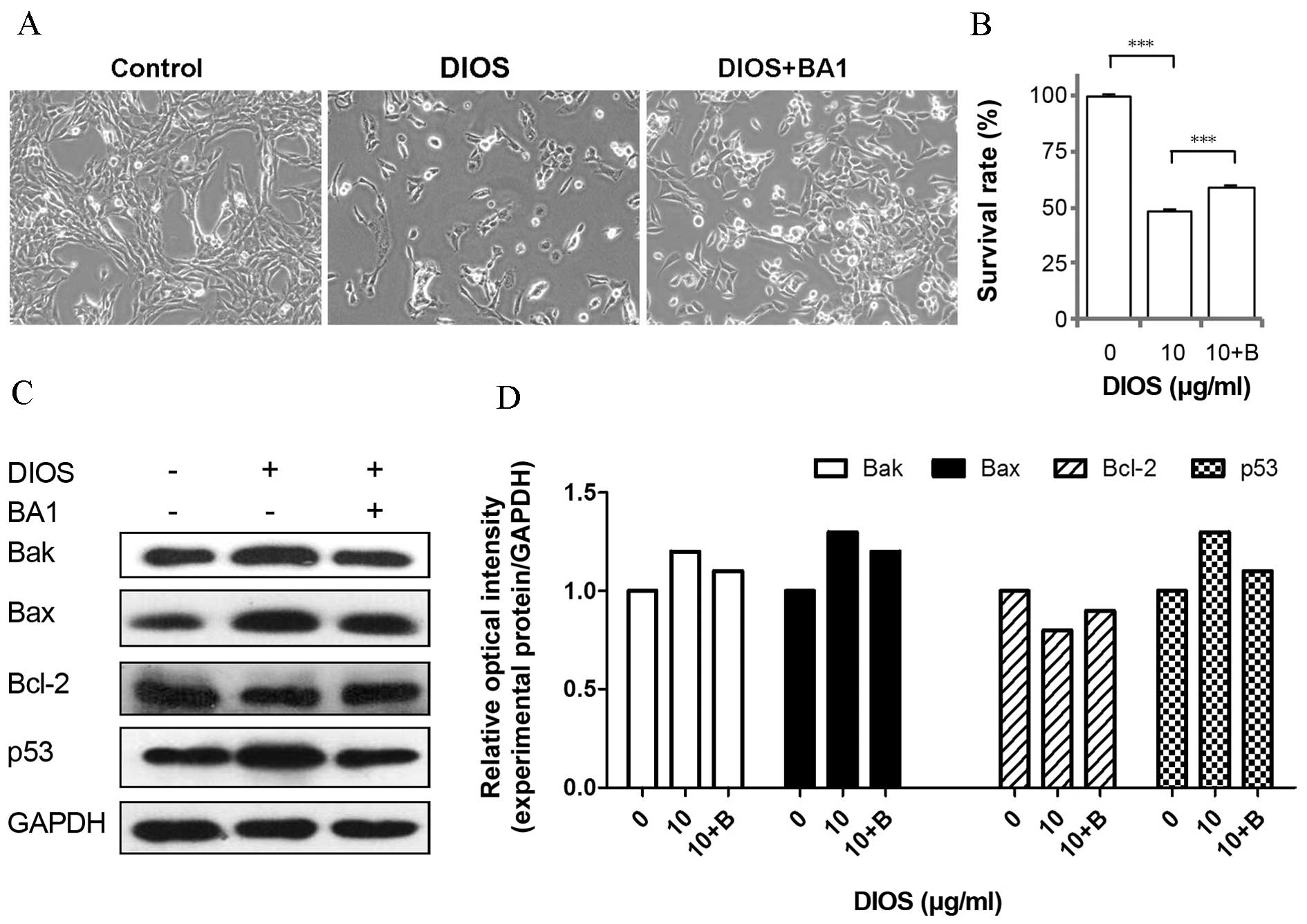
Hepatocellular carcinoma (HCC), which is a type of malignant tumor, is the fifth most common cancer in men and ninth in women worldwide. The aim of the present study was to investigate the antitumor effect of diosmetin (DIOS) in hepatocellular carcinoma HepG2 cells. The proliferation, apoptosis and autophagy rates of HepG2 cells were measured following treatment with DIOS. The effects of DIOS treatment on HepG2 cell proliferation and apoptosis rates were analyzed using MTT assays and Annexin V staining, respectively. The effect of DIOS treatment on autophagy levels was assessed using transmission electron microscopy, green fluorescent protein (GFP)‑microtubule‑associated protein 1 light chain (LC3) transfection and LysoTracker Red staining. Furthermore, bafilomycin A1 (BA1), an autophagy inhibitor, was used to assess the association between DIOS and cell autophagy, proliferation and apoptosis. In addition, the expression of autophagy‑related proteins [mammalian target of rapamycin (mTOR), phosphatidylinositol 3‑kinase, P70S6K, phosphoinositide‑dependent kinase‑1, extracellular signal‑regulated kinase, 5'‑AMP‑activated protein kinase and Akt] and apoptosis‑related proteins [B‑cell lymphoma (Bcl)‑2‑associated X protein, Bak, p53, Bcl‑2 and caspase‑3] were analyzed by western blotting. The results revealed that DIOS significantly inhibited proliferation (P<0.01) and induced apoptosis (P<0.001) in HepG2 cells. It was also demonstrated that DIOS triggered autophagy by regulating the mTOR pathway in HepG2 cells. Notably, following treatment of HepG2 cells with the autophagy inhibitor, BA1, the expression of apoptosis‑related proteins, including Bax, Bak and p53, were significantly decreased (P<0.05), and cell viability was recovered to a certain extent. In conclusion, DIOS inhibits cell proliferation and induces apoptosis in HepG2 cells via regulation of the mTOR pathway. Thus, the results of the current study indicate that DIOS may present a potential therapeutic agent for HCC treatment.
View Figures

Figure 1

Figure 2

Figure 3

Figure 4

Figure 5

View References

1 

Mu H, Lin KX, Zhao H, Xing S, Li C, Liu F, Lu HZ, Zhang Z, Sun YL, Yan XY, et al: Identification of biomarkers for hepatocellular carcinoma by semiquantitative immunocytochemistry. World J Gastroenterol. 20:5826–5838. 2014. View Article : Google Scholar : PubMed/NCBI

2 

Ferlay J, Soerjomataram I, Dikshit R, Eser S, Mathers C, Rebelo M, Parkin DM, Forman D and Bray F: Cancer incidence and mortality worldwide: Sources, methods and major patterns in GLOBOCAN 2012. Int J Cancer. 136:E359–E386. 2015. View Article : Google Scholar : PubMed/NCBI

3 

Jin Y, Chen J, Feng Z, Fan W, Wang Y, Li J and Tong D: The expression of Survivin and NF-κB associated with prognostically worse clinicopathologic variables in hepatocellular carcinoma. Tumour Biol. 35:9905–9910. 2014. View Article : Google Scholar : PubMed/NCBI

4 

Kim HY and Park JW: Clinical trials of combined molecular targeted therapy and locoregional therapy in hepatocellular carcinoma: Past, present and future. Liver cancer. 3:9–17. 2014. View Article : Google Scholar : PubMed/NCBI

5 

Chen L, Wu LL, Zhang ZL, Hu J, Tang M, Qi CB, Li N and Pang DW: Biofunctionalized magnetic nanospheres-based cell sorting strategy for efficient isolation, detection and subtype analyses of heterogeneous circulating hepatocellular carcinoma cells. Biosens Bioelectron. 85:633–640. 2016. View Article : Google Scholar : PubMed/NCBI

6 

Mano Y, Aishima S, Kubo Y, Tanaka Y, Motomura T, Toshima T, Shirabe K, Baba S, Maehara Y and Oda Y: Correlation between biological marker expression and fluorine-18 fluorodeoxyglucose uptake in hepatocellular carcinoma. Am J Clin Pathol. 142:391–397. 2014. View Article : Google Scholar : PubMed/NCBI

7 

Zhang QY, Li R, Zeng GF, Liu B, Liu J, Shu Y, Liu ZK, Qiu ZD, Wang DJ, Miao HL, et al: Dihydromyricetin inhibits migration and invasion of hepatoma cells through regulation of MMP-9 expression. World J Gastroenterol. 20:10082–10093. 2014. View Article : Google Scholar : PubMed/NCBI

8 

Liu J, Shu Y, Zhang Q, Liu B, Xia J, Qiu M, Miao H, Li M and Zhu R: Dihydromyricetin induces apoptosis and inhibits proliferation in hepatocellular carcinoma cells. Oncol Lett. 8:1645–1651. 2014.PubMed/NCBI

9 

Guglielmotto M, Monteleone D, Piras A, Valsecchi V, Tropiano M, Ariano S, Fornaro M, Vercelli A, Puyal J, Arancio O, et al: Abeta1-42 monomers or oligomers have different effects on autophagy and apoptosis. Autophagy. 10:1827–1843. 2014. View Article : Google Scholar : PubMed/NCBI

10 

Kongsuphol P, Mukda S, Nopparat C, Villarroel A and Govitrapong P: Melatonin attenuates methamphetamine-induced deactivation of the mammalian target of rapamycin signaling to induce autophagy in SK-N-SH cells. J Pineal Res. 46:199–206. 2009. View Article : Google Scholar : PubMed/NCBI

11 

Fu J, Shao CJ, Chen FR, Ng HK and Chen ZP: Autophagy induced by valproic acid is associated with oxidative stress in glioma cell lines. Neuro Oncol. 12:328–340. 2010. View Article : Google Scholar : PubMed/NCBI

12 

Yao KC, Komata T, Kondo Y, Kanzawa T, Kondo S and Germano IM: Molecular response of human glioblastoma multiforme cells to ionizing radiation: Cell cycle arrest, modulation of cyclin-dependent kinase inhibitors, and autophagy. J Neurosurg. 98:378–384. 2003. View Article : Google Scholar : PubMed/NCBI

13 

Ertmer A, Huber V, Gilch S, Yoshimori T, Erfle V, Duyster J, Elsässer HP and Schätzl HM: The anticancer drug imatinib induces cellular autophagy. Leukemia. 21:936–942. 2007.PubMed/NCBI

14 

Wu S, Liu B, Zhang Q, Liu J, Zhou W, Wang C, Li M, Bao S and Zhu R: Dihydromyricetin reduced Bcl-2 expression via p53 in human hepatoma HepG2 cells. PloS one. 8:e768862013. View Article : Google Scholar : PubMed/NCBI

15 

Spanakis M, Kasmas S and Niopas I: Simultaneous determination of the flavonoid aglycones diosmetin and hesperetin in human plasma and urine by a validated GC/MS method: In vivo metabolic reduction of diosmetin to hesperetin. Biomed Chromatogr. 23:124–131. 2009. View Article : Google Scholar : PubMed/NCBI

16 

Chan BC, Ip M, Gong H, Lui SL, See RH, Jolivalt C, Fung KP, Leung PC, Reiner NE and Lau CB: Synergistic effects of diosmetin with erythromycin against ABC transporter over-expressed methicillin-resistant Staphylococcus aureus (MRSA) RN4220/pUL5054 and inhibition of MRSA pyruvate kinase. Phytomedicine. 20:611–614. 2013. View Article : Google Scholar : PubMed/NCBI

17 

Meng JC, Zhu QX and Tan RX: New antimicrobial mono-and sesquiterpenes from Soroseris hookeriana subsp. Planta Med. 66:541–544. 2000. View Article : Google Scholar : PubMed/NCBI

18 

Chandler D, Woldu A, Rahmadi A, Shanmugam K, Steiner N, Wright E, Benavente-García O, Schulz O, Castillo J and Münch G: Effects of plant-derived polyphenols on TNF-alpha and nitric oxide production induced by advanced glycation endproducts. Mol Nutr Food Res. 54:(Suppl 2). S141–S150. 2010. View Article : Google Scholar : PubMed/NCBI

19 

Liao W, Ning Z, Chen L, Wei Q, Yuan E, Yang J and Ren J: Intracellular antioxidant detoxifying effects of diosmetin on 2, 2-azobis(2-amidinopropane) dihydrochloride (aaph)-induced oxidative stress through inhibition of reactive oxygen species generation. J Agric Food Chem. 62:8648–8654. 2014. View Article : Google Scholar : PubMed/NCBI

20 

Androutsopoulos VP, Mahale S, Arroo RR and Potter G: Anticancer effects of the flavonoid diosmetin on cell cycle progression and proliferation of MDA-MB 468 breast cancer cells due to CYP1 activation. Oncol Rep. 21:1525–1528. 2009.PubMed/NCBI

21 

Kabeya Y, Mizushima N, Yamamoto A, Oshitani-Okamoto S, Ohsumi Y and Yoshimori T: LC3, GABARAP and GATE16 localize to autophagosomal membrane depending on form-II formation. J Cell Sci. 117:2805–2812. 2004. View Article : Google Scholar : PubMed/NCBI

22 

Saiki S, Sasazawa Y, Imamichi Y, Kawajiri S, Fujimaki T, Tanida I, Kobayashi H, Sato F, Sato S, Ishikawa K, et al: Caffeine induces apoptosis by enhancement of autophagy via PI3K/Akt/mTOR/p70S6K inhibition. Autophagy. 7:176–187. 2011. View Article : Google Scholar : PubMed/NCBI

23 

Hanahan D and Weinberg RA: Hallmarks of cancer: The next generation. Cell. 144:646–674. 2011. View Article : Google Scholar : PubMed/NCBI

24 

Mauthe M, Jacob A, Freiberger S, Hentschel K, Stierhof YD, Codogno P and Proikas-Cezanne T: Resveratrol-mediated autophagy requires WIPI-1-regulated LC3 lipidation in the absence of induced phagophore formation. Autophagy. 7:1448–1461. 2011. View Article : Google Scholar : PubMed/NCBI

25 

Chen H, Gao Y, Wu J, Chen Y, Chen B, Hu J and Zhou J: Exploring therapeutic potentials of baicalin and its aglycone baicalein for hematological malignancies. Cancer Lett. 354:5–11. 2014. View Article : Google Scholar : PubMed/NCBI

26 

Zhang Q, Liu J, Liu B, Xia J, Chen N, Chen X, Cao Y, Zhang C, Lu C, Li M and Zhu R: Dihydromyricetin promotes hepatocellular carcinoma regression via a p53 activation-dependent mechanism. Sci Rep. 4:46282014.PubMed/NCBI

27 

Zeng G, Liu J, Chen H, Liu B, Zhang Q, Li M and Zhu R: Dihydromyricetin induces cell cycle arrest and apoptosis in melanoma SK-MEL-28 cells. Oncol Rep. 31:2713–2719. 2014.PubMed/NCBI

28 

Liu B, Zhou Z, Zhou W, Liu J, Zhang Q, Xia J, Liu J, Chen N, Li M and Zhu R: Resveratrol inhibits proliferation in human colorectal carcinoma cells by inducing G1/S-phase cell cycle arrest and apoptosis through caspase/cyclin-CDK pathways. Mol Med Rep. 10:1697–1702. 2014.PubMed/NCBI

29 

Androutsopoulos VP, Mahale S, Arroo RR and Potter G: Anticancer effects of the flavonoid diosmetin on cell cycle progression and proliferation of MDA-MB 468 breast cancer cells due to CYP1 activation. Oncol Rep. 21:1525–1528. 2009.PubMed/NCBI

30 

Androutsopoulos VP and Spandidos DA: The flavonoids diosmetin and luteolin exert synergistic cytostatic effects in human hepatoma HepG2 cells via CYP1A-catalyzed metabolism, activation of JNK and ERK and P53/P21 up-regulation. J Nutr Biochem. 24:496–504. 2013. View Article : Google Scholar : PubMed/NCBI

31 

Li G, Ma R, Huang C, Tang Q, Fu Q, Liu H, Hu B and Xiang J: Protective effect of erythropoietin on beta-amyloid-induced PC12 cell death through antioxidant mechanisms. Neurosci Lett. 442:143–147. 2008. View Article : Google Scholar : PubMed/NCBI

32 

Hao C, Gao L, Zhang Y, Wang W, Yu G, Guan H, Zhang L and Li C: Acetylated chitosan oligosaccharides act as antagonists against glutamate-induced pc12 cell death via bcl-2/bax signal pathway. Mar Drugs. 13:1267–1289. 2015. View Article : Google Scholar : PubMed/NCBI

33 

Cheng Y, Ren X, Hait WN and Yang JM: Therapeutic targeting of autophagy in disease: Biology and pharmacology. Pharmacol Rev. 65:1162–1197. 2013. View Article : Google Scholar : PubMed/NCBI

34 

Lorenzi PL, Claerhout S, Mills GB and Weinstein JN: A curated census of autophagy-modulating proteins and small molecules: Candidate targets for cancer therapy. Autophagy. 10:1316–1326. 2014. View Article : Google Scholar : PubMed/NCBI

35 

Zhong W, Zhu H, Sheng F, Tian Y, Zhou J, Chen Y, Li S and Lin J: Activation of the MAPK11/12/13/14 (p38 MAPK) pathway regulates the transcription of autophagy genes in response to oxidative stress induced by a novel copper complex in HeLa cells. Autophagy. 10:1285–1300. 2014. View Article : Google Scholar : PubMed/NCBI

36 

Pan X, Zhang X, Sun H, Zhang J, Yan M and Zhang H: Autophagy inhibition promotes 5-fluorouraci-induced apoptosis by stimulating ROS formation in human non-small cell lung cancer A549 cells. PLoS One. 8:e566792013. View Article : Google Scholar : PubMed/NCBI

37 

Sui X, Chen R, Wang Z, Huang Z, Kong N, Zhang M, Han W, Lou F, Yang J, Zhang Q, et al: Autophagy and chemotherapy resistance: A promising therapeutic target for cancer treatment. Cell Death Dis. 4:e8382013. View Article : Google Scholar : PubMed/NCBI

38 

Yu L, Alva A, Su H, Dutt P, Freundt E, Welsh S, Baehrecke EH and Lenardo MJ: Regulation of an ATG7-beclin 1 program of autophagic cell death by caspase-8. Science. 304:1500–1502. 2004. View Article : Google Scholar : PubMed/NCBI

39 

Amaravadi RK and Thompson CB: The roles of therapy-induced autophagy and necrosis in cancer treatment. Clin Cancer Res. 13:7271–7279. 2007. View Article : Google Scholar : PubMed/NCBI

40 

Yuan J, Lei Z, Wang X, Zhu F and Chen D: Ruthenium complex Λ-WH0402 induces hepatocellular carcinoma LM6 (HCCLM6) cells death by triggering Beclin-1-dependent autophagy pathway. Metallomics. 7:896–907. 2015. View Article : Google Scholar : PubMed/NCBI

41 

Xia J, Guo S, Fang T, Feng D, Zhang X, Zhang Q, Liu J, Liu B, Li M and Zhu R: Dihydromyricetin induces autophagy in HepG2 cells involved in inhibition of mTOR and regulating its upstream pathways. Food Chem Toxicol. 66:7–13. 2014. View Article : Google Scholar : PubMed/NCBI

42 

Niu NK, Wang ZL, Pan ST, Ding HQ, Au GH, He ZX, Zhou ZW, Xiao G, Yang YX, Zhang X, et al: Pro-apoptotic and pro-autophagic effects of the Aurora kinase A inhibitor alisertib (MLN8237) on human osteosarcoma U-2 OS and MG-63 cells through the activation of mitochondria-mediated pathway and inhibition of p38 MAPK/PI3K/Akt/mTOR signaling pathway. Drug Des Devel Ther. 9:1555–1584. 2015.PubMed/NCBI

43 

Shi L, Zhang T, Liang X, Hu Q, Huang J, Zhou Y, Chen M, Zhang Q, Zhu J and Mi M: Dihydromyricetin improves skeletal muscle insulin resistance by inducing autophagy via the AMPK signaling pathway. Mol Cell Endocrinol. 409:92–102. 2015. View Article : Google Scholar : PubMed/NCBI

44 

Shin JH, Min SH, Kim SJ, Kim YI, Park J, Lee HK and Yoo OJ: TAK1 regulates autophagic cell death by suppressing the phosphorylation of p70 S6 kinase 1. Sci Rep. 3:15612013. View Article : Google Scholar : PubMed/NCBI

45 

Zhang J, Ma K, Qi T, Wei X, Zhang Q, Li G and Chiu JF: P62 regulates resveratrol-mediated Fas/Cav-1 complex formation and transition from autophagy to apoptosis. Oncotarget. 6:789–801. 2014. View Article : Google Scholar

46 

Jakhar R, Paul S, Bhardwaj M and Kang SC: Astemizole-Histamine induces Beclin-1-independent autophagy by targeting p53-dependent crosstalk between autophagy and apoptosis. Cancer Lett. 372:89–100. 2016. View Article : Google Scholar : PubMed/NCBI

47 

Rah B, ur Rasool R, Nayak D, Yousuf SK, Mukherjee D, Kumar LD and Goswami A: PAWR-mediated suppression of BCL2 promotes switching of 3-azido withaferin A (3-AWA)-induced autophagy to apoptosis in prostate cancer cells. Autophagy. 11:314–331. 2015. View Article : Google Scholar : PubMed/NCBI

48 

Luo S and Rubinsztein DC: Apoptosis blocks Beclin 1-dependent autophagosome synthesis: An effect rescued by Bcl-xL. Cell Death Differ. 17:268–277. 2010. View Article : Google Scholar : PubMed/NCBI

49 

Pattingre S, Tassa A, Qu X, Garuti R, Liang XH, Mizushima N, Packer M, Schneider MD and Levine B: Bcl-2 antiapoptotic proteins inhibit Beclin 1-dependent autophagy. Cell. 122:927–939. 2005. View Article : Google Scholar : PubMed/NCBI

Related Articles

  • Abstract
  • View
  • Download
  • Twitter
Copy and paste a formatted citation
Spandidos Publications style
Liu J, Ren H, Liu B, Zhang Q, Li M and Zhu R: Diosmetin inhibits cell proliferation and induces apoptosis by regulating autophagy via the mammalian target of rapamycin pathway in hepatocellular carcinoma HepG2 cells. Oncol Lett 12: 4385-4392, 2016.
APA
Liu, J., Ren, H., Liu, B., Zhang, Q., Li, M., & Zhu, R. (2016). Diosmetin inhibits cell proliferation and induces apoptosis by regulating autophagy via the mammalian target of rapamycin pathway in hepatocellular carcinoma HepG2 cells. Oncology Letters, 12, 4385-4392. https://doi.org/10.3892/ol.2016.5301
MLA
Liu, J., Ren, H., Liu, B., Zhang, Q., Li, M., Zhu, R."Diosmetin inhibits cell proliferation and induces apoptosis by regulating autophagy via the mammalian target of rapamycin pathway in hepatocellular carcinoma HepG2 cells". Oncology Letters 12.6 (2016): 4385-4392.
Chicago
Liu, J., Ren, H., Liu, B., Zhang, Q., Li, M., Zhu, R."Diosmetin inhibits cell proliferation and induces apoptosis by regulating autophagy via the mammalian target of rapamycin pathway in hepatocellular carcinoma HepG2 cells". Oncology Letters 12, no. 6 (2016): 4385-4392. https://doi.org/10.3892/ol.2016.5301
Copy and paste a formatted citation
x
Spandidos Publications style
Liu J, Ren H, Liu B, Zhang Q, Li M and Zhu R: Diosmetin inhibits cell proliferation and induces apoptosis by regulating autophagy via the mammalian target of rapamycin pathway in hepatocellular carcinoma HepG2 cells. Oncol Lett 12: 4385-4392, 2016.
APA
Liu, J., Ren, H., Liu, B., Zhang, Q., Li, M., & Zhu, R. (2016). Diosmetin inhibits cell proliferation and induces apoptosis by regulating autophagy via the mammalian target of rapamycin pathway in hepatocellular carcinoma HepG2 cells. Oncology Letters, 12, 4385-4392. https://doi.org/10.3892/ol.2016.5301
MLA
Liu, J., Ren, H., Liu, B., Zhang, Q., Li, M., Zhu, R."Diosmetin inhibits cell proliferation and induces apoptosis by regulating autophagy via the mammalian target of rapamycin pathway in hepatocellular carcinoma HepG2 cells". Oncology Letters 12.6 (2016): 4385-4392.
Chicago
Liu, J., Ren, H., Liu, B., Zhang, Q., Li, M., Zhu, R."Diosmetin inhibits cell proliferation and induces apoptosis by regulating autophagy via the mammalian target of rapamycin pathway in hepatocellular carcinoma HepG2 cells". Oncology Letters 12, no. 6 (2016): 4385-4392. https://doi.org/10.3892/ol.2016.5301
Follow us
  • Twitter
  • LinkedIn
  • Facebook
About
  • Spandidos Publications
  • Careers
  • Cookie Policy
  • Privacy Policy
How can we help?
  • Help
  • Live Chat
  • Contact
  • Email to our Support Team