Spandidos Publications Logo
  • About
    • About Spandidos
    • Aims and Scopes
    • Abstracting and Indexing
    • Editorial Policies
    • Reprints and Permissions
    • Job Opportunities
    • Terms and Conditions
    • Contact
  • Journals
    • All Journals
    • Oncology Letters
      • Oncology Letters
      • Information for Authors
      • Editorial Policies
      • Editorial Board
      • Aims and Scope
      • Abstracting and Indexing
      • Bibliographic Information
      • Archive
    • International Journal of Oncology
      • International Journal of Oncology
      • Information for Authors
      • Editorial Policies
      • Editorial Board
      • Aims and Scope
      • Abstracting and Indexing
      • Bibliographic Information
      • Archive
    • Molecular and Clinical Oncology
      • Molecular and Clinical Oncology
      • Information for Authors
      • Editorial Policies
      • Editorial Board
      • Aims and Scope
      • Abstracting and Indexing
      • Bibliographic Information
      • Archive
    • Experimental and Therapeutic Medicine
      • Experimental and Therapeutic Medicine
      • Information for Authors
      • Editorial Policies
      • Editorial Board
      • Aims and Scope
      • Abstracting and Indexing
      • Bibliographic Information
      • Archive
    • International Journal of Molecular Medicine
      • International Journal of Molecular Medicine
      • Information for Authors
      • Editorial Policies
      • Editorial Board
      • Aims and Scope
      • Abstracting and Indexing
      • Bibliographic Information
      • Archive
    • Biomedical Reports
      • Biomedical Reports
      • Information for Authors
      • Editorial Policies
      • Editorial Board
      • Aims and Scope
      • Abstracting and Indexing
      • Bibliographic Information
      • Archive
    • Oncology Reports
      • Oncology Reports
      • Information for Authors
      • Editorial Policies
      • Editorial Board
      • Aims and Scope
      • Abstracting and Indexing
      • Bibliographic Information
      • Archive
    • Molecular Medicine Reports
      • Molecular Medicine Reports
      • Information for Authors
      • Editorial Policies
      • Editorial Board
      • Aims and Scope
      • Abstracting and Indexing
      • Bibliographic Information
      • Archive
    • World Academy of Sciences Journal
      • World Academy of Sciences Journal
      • Information for Authors
      • Editorial Policies
      • Editorial Board
      • Aims and Scope
      • Abstracting and Indexing
      • Bibliographic Information
      • Archive
    • International Journal of Functional Nutrition
      • International Journal of Functional Nutrition
      • Information for Authors
      • Editorial Policies
      • Editorial Board
      • Aims and Scope
      • Abstracting and Indexing
      • Bibliographic Information
      • Archive
    • International Journal of Epigenetics
      • International Journal of Epigenetics
      • Information for Authors
      • Editorial Policies
      • Editorial Board
      • Aims and Scope
      • Abstracting and Indexing
      • Bibliographic Information
      • Archive
    • Medicine International
      • Medicine International
      • Information for Authors
      • Editorial Policies
      • Editorial Board
      • Aims and Scope
      • Abstracting and Indexing
      • Bibliographic Information
      • Archive
  • Articles
  • Information
    • Information for Authors
    • Information for Reviewers
    • Information for Librarians
    • Information for Advertisers
    • Conferences
  • Language Editing
Spandidos Publications Logo
  • About
    • About Spandidos
    • Aims and Scopes
    • Abstracting and Indexing
    • Editorial Policies
    • Reprints and Permissions
    • Job Opportunities
    • Terms and Conditions
    • Contact
  • Journals
    • All Journals
    • Biomedical Reports
      • Information for Authors
      • Editorial Policies
      • Editorial Board
      • Aims and Scope
      • Abstracting and Indexing
      • Bibliographic Information
      • Archive
    • Experimental and Therapeutic Medicine
      • Information for Authors
      • Editorial Policies
      • Editorial Board
      • Aims and Scope
      • Abstracting and Indexing
      • Bibliographic Information
      • Archive
    • International Journal of Epigenetics
      • Information for Authors
      • Editorial Policies
      • Editorial Board
      • Aims and Scope
      • Abstracting and Indexing
      • Bibliographic Information
      • Archive
    • International Journal of Functional Nutrition
      • Information for Authors
      • Editorial Policies
      • Editorial Board
      • Aims and Scope
      • Abstracting and Indexing
      • Bibliographic Information
      • Archive
    • International Journal of Molecular Medicine
      • Information for Authors
      • Editorial Policies
      • Editorial Board
      • Aims and Scope
      • Abstracting and Indexing
      • Bibliographic Information
      • Archive
    • International Journal of Oncology
      • Information for Authors
      • Editorial Policies
      • Editorial Board
      • Aims and Scope
      • Abstracting and Indexing
      • Bibliographic Information
      • Archive
    • Medicine International
      • Information for Authors
      • Editorial Policies
      • Editorial Board
      • Aims and Scope
      • Abstracting and Indexing
      • Bibliographic Information
      • Archive
    • Molecular and Clinical Oncology
      • Information for Authors
      • Editorial Policies
      • Editorial Board
      • Aims and Scope
      • Abstracting and Indexing
      • Bibliographic Information
      • Archive
    • Molecular Medicine Reports
      • Information for Authors
      • Editorial Policies
      • Editorial Board
      • Aims and Scope
      • Abstracting and Indexing
      • Bibliographic Information
      • Archive
    • Oncology Letters
      • Information for Authors
      • Editorial Policies
      • Editorial Board
      • Aims and Scope
      • Abstracting and Indexing
      • Bibliographic Information
      • Archive
    • Oncology Reports
      • Information for Authors
      • Editorial Policies
      • Editorial Board
      • Aims and Scope
      • Abstracting and Indexing
      • Bibliographic Information
      • Archive
    • World Academy of Sciences Journal
      • Information for Authors
      • Editorial Policies
      • Editorial Board
      • Aims and Scope
      • Abstracting and Indexing
      • Bibliographic Information
      • Archive
  • Articles
  • Information
    • For Authors
    • For Reviewers
    • For Librarians
    • For Advertisers
    • Conferences
  • Language Editing
Login Register Submit
  • This site uses cookies
  • You can change your cookie settings at any time by following the instructions in our Cookie Policy. To find out more, you may read our Privacy Policy.

    I agree
Search articles by DOI, keyword, author or affiliation
Search
Advanced Search
presentation
Oncology Letters
Join Editorial Board Propose a Special Issue
Print ISSN: 1792-1074 Online ISSN: 1792-1082
Journal Cover
March-2017 Volume 13 Issue 3

Full Size Image

Sign up for eToc alerts
Recommend to Library

Journals

International Journal of Molecular Medicine

International Journal of Molecular Medicine

International Journal of Molecular Medicine is an international journal devoted to molecular mechanisms of human disease.

International Journal of Oncology

International Journal of Oncology

International Journal of Oncology is an international journal devoted to oncology research and cancer treatment.

Molecular Medicine Reports

Molecular Medicine Reports

Covers molecular medicine topics such as pharmacology, pathology, genetics, neuroscience, infectious diseases, molecular cardiology, and molecular surgery.

Oncology Reports

Oncology Reports

Oncology Reports is an international journal devoted to fundamental and applied research in Oncology.

Experimental and Therapeutic Medicine

Experimental and Therapeutic Medicine

Experimental and Therapeutic Medicine is an international journal devoted to laboratory and clinical medicine.

Oncology Letters

Oncology Letters

Oncology Letters is an international journal devoted to Experimental and Clinical Oncology.

Biomedical Reports

Biomedical Reports

Explores a wide range of biological and medical fields, including pharmacology, genetics, microbiology, neuroscience, and molecular cardiology.

Molecular and Clinical Oncology

Molecular and Clinical Oncology

International journal addressing all aspects of oncology research, from tumorigenesis and oncogenes to chemotherapy and metastasis.

World Academy of Sciences Journal

World Academy of Sciences Journal

Multidisciplinary open-access journal spanning biochemistry, genetics, neuroscience, environmental health, and synthetic biology.

International Journal of Functional Nutrition

International Journal of Functional Nutrition

Open-access journal combining biochemistry, pharmacology, immunology, and genetics to advance health through functional nutrition.

International Journal of Epigenetics

International Journal of Epigenetics

Publishes open-access research on using epigenetics to advance understanding and treatment of human disease.

Medicine International

Medicine International

An International Open Access Journal Devoted to General Medicine.

Journal Cover
March-2017 Volume 13 Issue 3

Full Size Image

Sign up for eToc alerts
Recommend to Library

  • Article
  • Citations
    • Cite This Article
    • Download Citation
    • Create Citation Alert
    • Remove Citation Alert
    • Cited By
  • Similar Articles
    • Related Articles (in Spandidos Publications)
    • Similar Articles (Google Scholar)
    • Similar Articles (PubMed)
  • Download PDF
  • Download XML
  • View XML
Article

Six1 expression is associated with a poor prognosis in patients with glioma

  • Authors:
    • Xiaojun Zhang
    • Ruxiang Xu
  • View Affiliations / Copyright

    Affiliations: Department of Neurosurgery, Affiliated Bayi Brain Hospital, Affiliated General Hospital of Beijing Military Region, Southern Medical University, Beijing 100700, P.R. China
  • Pages: 1293-1298
    |
    Published online on: January 10, 2017
       https://doi.org/10.3892/ol.2017.5577
  • Expand metrics +
Metrics: Total Views: 0 (Spandidos Publications: | PMC Statistics: )
Metrics: Total PDF Downloads: 0 (Spandidos Publications: | PMC Statistics: )
Cited By (CrossRef): 0 citations Loading Articles...

This article is mentioned in:


Abstract

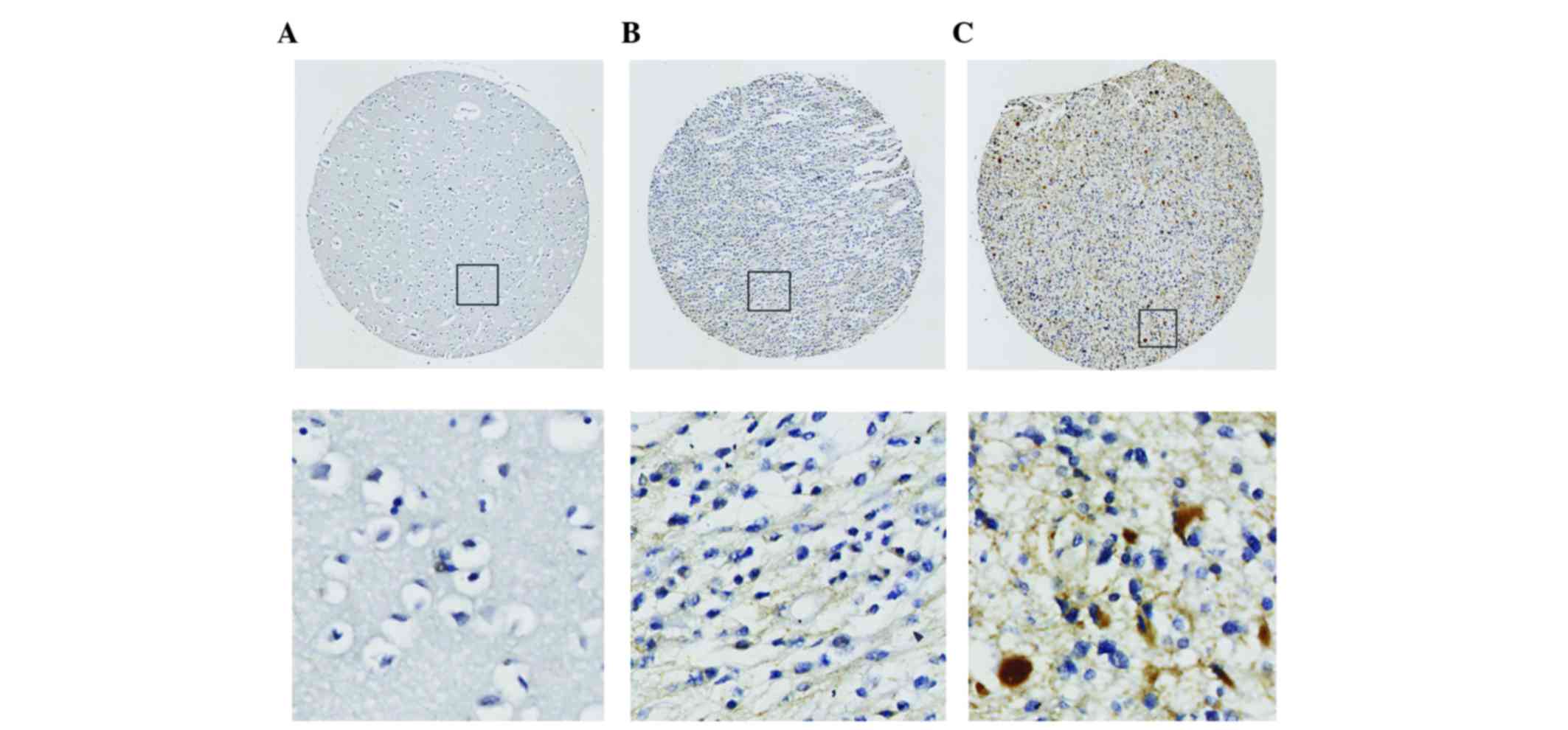
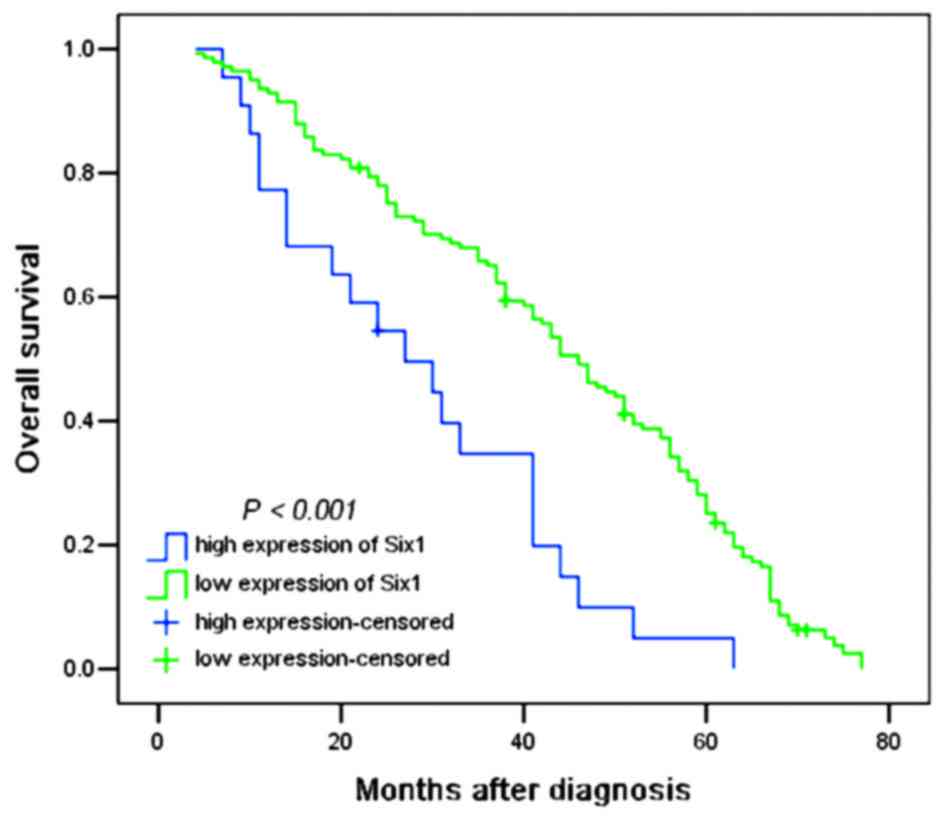
Glioma is the most common human brain cancer and has poor prognosis. Messenger RNA profiling identified that sineoculis homeobox homolog 1 (Six1) is dysregulated in glioma tumor progenitor cells from glial progenitor cells isolated from normal white matter. However, the expression and role of Six1 in glioma remains unclear. The purpose of the present study was to investigate the expression level of Six1 in glioma tissues and the association between Six1 expression and clinicopathological characteristics and prognosis of gliomas. The Six1 protein was detected by immunohistochemistry in 163 glioma tissues of distinct malignancy grades, and Kaplan‑Meier survival analysis was performed to assess the prognosis of the patients. The Six1 protein was stained in 49.1% (80 out of 163) of the glioma tissues, including 34.2% of low‑grade [World Health Organization (WHO) I/II] gliomas and 80.8% of high‑grade (WHO III/IV) gliomas. Normal brain tissues rarely expressed the Six1 protein. In addition, Six1 expression was significantly associated with WHO grade (P<0.001). According to the log‑rank test and Cox regression model, Six1 may be suggested as an independent prognostic factor, in addition to the WHO grade. Overall, Six1 protein expression varies between different grades of glioma and is associated with the WHO grade. Upregulation of Six1 is more frequent in high‑grade glioma and is an independent prognostic factor of poor clinical outcome.
View Figures

Figure 1

Figure 2

View References

1 

Omuro A and DeAngelis LM: Glioblastoma and other malignant gliomas: A clinical review. JAMA. 310:1842–1850. 2013. View Article : Google Scholar : PubMed/NCBI

2 

Vecht CJ, Kerkhof M and Duran-Pena A: Seizure prognosis in brain tumors: New insights and evidence-based management. Oncologist. 19:751–759. 2014. View Article : Google Scholar : PubMed/NCBI

3 

Kleihues P and Sobin LH: World Health Organization classification of tumors. Cancer. 88:2887. 2000. View Article : Google Scholar : PubMed/NCBI

4 

Ohgaki H and Kleihues P: Epidemiology and etiology of gliomas. Acta Neuropathol. 109:93–108. 2005. View Article : Google Scholar : PubMed/NCBI

5 

Stewart LA: Chemotherapy in adult high-grade glioma: A systematic review and meta-analysis of individual patient data from 12 randomised trials. Lancet. 359:1011–1018. 2002. View Article : Google Scholar : PubMed/NCBI

6 

Ohgaki H, Dessen P, Jourde B, Horstmann S, Nishikawa T, Di Patre PL, Burkhard C, Schüler D, Probst-Hensch NM, Maiorka PC, et al: Genetic pathways to glioblastoma: A population-based study. Cancer Res. 64:6892–6899. 2004. View Article : Google Scholar : PubMed/NCBI

7 

Kumar JP: The sine oculis homeobox (SIX) family of transcription factors as regulators of development and disease. Cell Mol Life Sci. 66:565–583. 2009. View Article : Google Scholar : PubMed/NCBI

8 

Anderson AM, Weasner BM, Weasner BP and Kumar JP: Dual transcriptional activities of SIX proteins define their roles in normal and ectopic eye development. Development. 139:991–1000. 2012. View Article : Google Scholar : PubMed/NCBI

9 

Xu PX, Zheng W, Huang L, Maire P, Laclef C and Silvius D: Six1 is required for the early organogenesis of mammalian kidney. Development. 130:3085–3094. 2003. View Article : Google Scholar : PubMed/NCBI

10 

Laclef C, Souil E, Demignon J and Maire P: Thymus, kidney and craniofacial abnormalities in Six 1 deficient mice. Mech Dev. 120:669–679. 2003. View Article : Google Scholar : PubMed/NCBI

11 

Konishi Y, Ikeda K, Iwakura Y and Kawakami K: Six1 and Six4 promote survival of sensory neurons during early trigeminal gangliogenesis. Brain Res. 1116:93–102. 2006. View Article : Google Scholar : PubMed/NCBI

12 

Reichenberger KJ, Coletta RD, Schulte AP, Varella-Garcia M and Ford HL: Gene amplification is a mechanism of Six1 overexpression in breast cancer. Cancer Res. 65:2668–2675. 2005. View Article : Google Scholar : PubMed/NCBI

13 

Behbakht K, Qamar L, Aldridge CS, Coletta RD, Davidson SA, Thorburn A and Ford HL: Six1 overexpression in ovarian carcinoma causes resistance to TRAIL-mediated apoptosis and is associated with poor survival. Cancer Res. 67:3036–3042. 2007. View Article : Google Scholar : PubMed/NCBI

14 

Imam JS, Buddavarapu K, Lee-Chang JS, Ganapathy S, Camosy C, Chen Y and Rao MK: MicroRNA-185 suppresses tumor growth and progression by targeting the Six1 oncogene in human cancers. Oncogene. 29:4971–4979. 2010. View Article : Google Scholar : PubMed/NCBI

15 

Tan J, Zhang C and Qian J: Expression and significance of Six1 and Ezrin in cervical cancer tissue. Tumour Biol. 32:1241–1247. 2011. View Article : Google Scholar : PubMed/NCBI

16 

Zheng XH, Liang PH, Guo JX, Zheng YR, Han J, Yu LL, Zhou YG and Li L: Expression and clinical implications of homeobox gene Six1 in cervical cancer cell lines and cervical epithelial tissues. Int J Gynecol Cancer. 20:1587–1592. 2010.PubMed/NCBI

17 

Li CM, Guo M, Borczuk A, Powell CA, Wei M, Thaker HM, Friedman R, Klein U and Tycko B: Gene expression in Wilms' tumor mimics the earliest committed stage in the metanephric mesenchymal-epithelial transition. Am J Pathol. 160:2181–2190. 2002. View Article : Google Scholar : PubMed/NCBI

18 

Yu Y, Khan J, Khanna C, Helman L, Meltzer PS and Merlino G: Expression profiling identifies the cytoskeletal organizer ezrin and the developmental homeoprotein Six-1 as key metastatic regulators. Nature Med. 10:175–181. 2004. View Article : Google Scholar : PubMed/NCBI

19 

Ng KT, Man K, Sun CK, Lee TK, Poon RT, Lo CM and Fan ST: Clinicopathological significance of homeoprotein Six1 in hepatocellular carcinoma. Br J Cancer. 95:1050–1055. 2006. View Article : Google Scholar : PubMed/NCBI

20 

Coletta RD, Christensen K, Reichenberger KJ, Lamb J, Micomonaco D, Huang L, Wolf DM, Müller-Tidow C, Golub TR, Kawakami K and Ford HL: The Six1 homeoprotein stimulates tumorigenesis by reactivation of cyclin A1. Proc Natl Acad Sci USA. 101:6478–6483. 2004. View Article : Google Scholar : PubMed/NCBI

21 

Coletta RD, Christensen KL, Micalizzi DS, Jedlicka P, Varella-Garcia M and Ford HL: Six1 overexpression in mammary cells induces genomic instability and is sufficient for malignant transformation. Cancer Res. 68:2204–2213. 2008. View Article : Google Scholar : PubMed/NCBI

22 

Zheng W, Huang L, Wei ZB, Silvius D, Tang B and Xu PX: The role of Six1 in mammalian auditory system development. Development. 130:3989–4000. 2003. View Article : Google Scholar : PubMed/NCBI

23 

Ikeda K, Kageyama R, Suzuki Y and Kawakami K: Six1 is indispensable for production of functional progenitor cells during olfactory epithelial development. Int J Dev Biol. 54:1453–1464. 2010. View Article : Google Scholar : PubMed/NCBI

24 

Ford HL, Kabingu EN, Bump EA, Mutter GL and Pardee AB: Abrogation of the G2 cell cycle checkpoint associated with overexpression of HSIX1: A possible mechanism of breast carcinogenesis. Proc Natl Acad Sci USA. 95:12608–12613. 1998. View Article : Google Scholar : PubMed/NCBI

25 

Khan J, Bittner ML, Saal LH, Teichmann U, Azorsa DO, Gooden GC, Pavan WJ, Trent JM and Meltzer PS: cDNA microarrays detect activation of a myogenic transcription program by the PAX3-FKHR fusion oncogene. Proc Natl Acad Sci USA. 96:13264–13269. 1999. View Article : Google Scholar : PubMed/NCBI

26 

Yu Y, Davicioni E, Triche TJ and Merlino G: The homeoprotein six1 transcriptionally activates multiple protumorigenic genes but requires ezrin to promote metastasis. Cancer Res. 66:1982–1989. 2006. View Article : Google Scholar : PubMed/NCBI

27 

Ozaki H, Nakamura K, Funahashi J, Ikeda K, Yamada G, Tokano H, Okamura HO, Kitamura K, Muto S, Kotaki H, et al: Six1 controls patterning of the mouse otic vesicle. Development. 131:551–562. 2004. View Article : Google Scholar : PubMed/NCBI

28 

Li X, Oghi KA, Zhang J, Krones A, Bush KT, Glass CK, Nigam SK, Aggarwal AK, Maas R, Rose DW and Rosenfeld MG: Eya protein phosphatase activity regulates Six1-Dach-Eya transcriptional effects in mammalian organogenesis. Nature. 426:247–254. 2003. View Article : Google Scholar : PubMed/NCBI

29 

Grifone R, Demignon J, Houbron C, Souil E, Niro C, Seller MJ, Hamard G and Maire P: Six1 and Six4 homeoproteins are required for Pax3 and Mrf expression during myogenesis in the mouse embryo. Development. 132:2235–2249. 2005. View Article : Google Scholar : PubMed/NCBI

30 

Ikeda K, Ookawara S, Sato S, Ando Z, Kageyama R and Kawakami K: Six1 is essential for early neurogenesis in the development of olfactory epithelium. Dev Biol. 311:53–68. 2007. View Article : Google Scholar : PubMed/NCBI

31 

Micalizzi DS, Christensen KL, Jedlicka P, Coletta RD, Barón AE, Harrell JC, Horwitz KB, Billheimer D, Heichman KA, Welm AL, et al: The Six1 homeoprotein induces human mammary carcinoma cells to undergo epithelial-mesenchymal transition and metastasis in mice through increasing TGF-beta signaling. J Clin Invest. 119:2678–2690. 2009. View Article : Google Scholar : PubMed/NCBI

32 

Micalizzi DS, Wang CA, Farabaugh SM, Schiemann WP and Ford HL: Homeoprotein Six1 increases TGF-beta type I receptor and converts TGF-beta signaling from suppressive to supportive for tumor growth. Cancer Res. 70:10371–10380. 2010. View Article : Google Scholar : PubMed/NCBI

33 

Auvergne RM, Sim FJ, Wang S, Chandler-Militello D, Burch J, Al Fanek Y, Davis D, Benraiss A, Walter K, Achanta P, et al: Transcriptional differences between normal and glioma-derived glial progenitor cells identify a core set of dysregulated genes. Cell Rep. 3:2127–2141. 2013. View Article : Google Scholar : PubMed/NCBI

34 

Yang J, Wu HF, Qian LX, Zhang W, Hua LX, Yu ML, Wang Z, Xu ZQ, Sui YG and Wang XR: Increased expressions of vascular endothelial growth factor (VEGF), VEGF-C and VEGF receptor-3 in prostate cancer tissue are associated with tumor progression. Asian J Androl. 8:169–175. 2006. View Article : Google Scholar : PubMed/NCBI

35 

Ueda M, Terai Y, Yamashita Y, Kumagai K, Ueki K, Yamaguchi H, Akise D, Hung YC and Ueki M: Correlation between vascular endothelial growth factor-C expression and invasion phenotype in cervical carcinomas. Int J Cancer. 98:335–343. 2002. View Article : Google Scholar : PubMed/NCBI

36 

O-charoenrat P, Rhys-Evans P and Eccles SA: Expression of vascular endothelial growth factor family members in head and neck squamous cell carcinoma correlates with lymph node metastasis. Cancer. 92:556–568. 2001. View Article : Google Scholar : PubMed/NCBI

37 

Kinoshita J, Kitamura K, Kabashima A, Saeki H, Tanaka S and Sugimachi K: Clinical significance of vascular endothelial growth factor-C (VEGF-C) in breast cancer. Breast Cancer Res Treat. 66:159–164. 2001. View Article : Google Scholar : PubMed/NCBI

38 

Karpanen T, Egeblad M, Karkkainen MJ, Kubo H, Ylä-Herttuala S, Jäättelä M and Alitalo K: Vascular endothelial growth factor C promotes tumor lymphangiogenesis and intralymphatic tumor growth. Cancer Res. 61:1786–1790. 2001.PubMed/NCBI

39 

Mattila MM, Ruohola JK, Karpanen T, Jackson DG, Alitalo K and Härkönen PL: VEGF-C induced lymphangiogenesis is associated with lymph node metastasis in orthotopic MCF-7 tumors. Int J Cancer. 98:946–951. 2002. View Article : Google Scholar : PubMed/NCBI

40 

Skobe M, Hawighorst T, Jackson DG, Prevo R, Janes L, Velasco P, Riccardi L, Alitalo K, Claffey K and Detmar M: Induction of tumor lymphangiogenesis by VEGF-C promotes breast cancer metastasis. Nat Med. 7:192–198. 2001. View Article : Google Scholar : PubMed/NCBI

41 

Liu D, Li L, Zhang XX, Wan DY, Xi BX, Hu Z, Ding WC, Zhu D, Wang XL, Wang W, et al: SIX1 promotes tumor lymphangiogenesis by coordinating TGFβ signals that increase expression of VEGF-C. Cancer Res. 74:5597–5607. 2014. View Article : Google Scholar : PubMed/NCBI

42 

Li Z, Tian T, Lv F, Chang Y, Wang X, Zhang L, Li X, Li L, Ma W, Wu J and Zhang M: Six1 promotes proliferation of pancreatic cancer cells via upregulation of cyclin D1 expression. PloS one. 8:e592032013. View Article : Google Scholar : PubMed/NCBI

43 

Jin H, Cui M, Kong J, Cui X, Lin Z, Wu Q and Liu S: Sineoculis homeobox homolog 1 protein is associated with breast cancer progression and survival outcome. Exp Mol Pathol. 97:247–252. 2014. View Article : Google Scholar : PubMed/NCBI

Related Articles

  • Abstract
  • View
  • Download
  • Twitter
Copy and paste a formatted citation
Spandidos Publications style
Zhang X and Xu R: Six1 expression is associated with a poor prognosis in patients with glioma. Oncol Lett 13: 1293-1298, 2017.
APA
Zhang, X., & Xu, R. (2017). Six1 expression is associated with a poor prognosis in patients with glioma. Oncology Letters, 13, 1293-1298. https://doi.org/10.3892/ol.2017.5577
MLA
Zhang, X., Xu, R."Six1 expression is associated with a poor prognosis in patients with glioma". Oncology Letters 13.3 (2017): 1293-1298.
Chicago
Zhang, X., Xu, R."Six1 expression is associated with a poor prognosis in patients with glioma". Oncology Letters 13, no. 3 (2017): 1293-1298. https://doi.org/10.3892/ol.2017.5577
Copy and paste a formatted citation
x
Spandidos Publications style
Zhang X and Xu R: Six1 expression is associated with a poor prognosis in patients with glioma. Oncol Lett 13: 1293-1298, 2017.
APA
Zhang, X., & Xu, R. (2017). Six1 expression is associated with a poor prognosis in patients with glioma. Oncology Letters, 13, 1293-1298. https://doi.org/10.3892/ol.2017.5577
MLA
Zhang, X., Xu, R."Six1 expression is associated with a poor prognosis in patients with glioma". Oncology Letters 13.3 (2017): 1293-1298.
Chicago
Zhang, X., Xu, R."Six1 expression is associated with a poor prognosis in patients with glioma". Oncology Letters 13, no. 3 (2017): 1293-1298. https://doi.org/10.3892/ol.2017.5577
Follow us
  • Twitter
  • LinkedIn
  • Facebook
About
  • Spandidos Publications
  • Careers
  • Cookie Policy
  • Privacy Policy
How can we help?
  • Help
  • Live Chat
  • Contact
  • Email to our Support Team