Spandidos Publications Logo
  • About
    • About Spandidos
    • Aims and Scopes
    • Abstracting and Indexing
    • Editorial Policies
    • Reprints and Permissions
    • Job Opportunities
    • Terms and Conditions
    • Contact
  • Journals
    • All Journals
    • Oncology Letters
      • Oncology Letters
      • Information for Authors
      • Editorial Policies
      • Editorial Board
      • Aims and Scope
      • Abstracting and Indexing
      • Bibliographic Information
      • Archive
    • International Journal of Oncology
      • International Journal of Oncology
      • Information for Authors
      • Editorial Policies
      • Editorial Board
      • Aims and Scope
      • Abstracting and Indexing
      • Bibliographic Information
      • Archive
    • Molecular and Clinical Oncology
      • Molecular and Clinical Oncology
      • Information for Authors
      • Editorial Policies
      • Editorial Board
      • Aims and Scope
      • Abstracting and Indexing
      • Bibliographic Information
      • Archive
    • Experimental and Therapeutic Medicine
      • Experimental and Therapeutic Medicine
      • Information for Authors
      • Editorial Policies
      • Editorial Board
      • Aims and Scope
      • Abstracting and Indexing
      • Bibliographic Information
      • Archive
    • International Journal of Molecular Medicine
      • International Journal of Molecular Medicine
      • Information for Authors
      • Editorial Policies
      • Editorial Board
      • Aims and Scope
      • Abstracting and Indexing
      • Bibliographic Information
      • Archive
    • Biomedical Reports
      • Biomedical Reports
      • Information for Authors
      • Editorial Policies
      • Editorial Board
      • Aims and Scope
      • Abstracting and Indexing
      • Bibliographic Information
      • Archive
    • Oncology Reports
      • Oncology Reports
      • Information for Authors
      • Editorial Policies
      • Editorial Board
      • Aims and Scope
      • Abstracting and Indexing
      • Bibliographic Information
      • Archive
    • Molecular Medicine Reports
      • Molecular Medicine Reports
      • Information for Authors
      • Editorial Policies
      • Editorial Board
      • Aims and Scope
      • Abstracting and Indexing
      • Bibliographic Information
      • Archive
    • World Academy of Sciences Journal
      • World Academy of Sciences Journal
      • Information for Authors
      • Editorial Policies
      • Editorial Board
      • Aims and Scope
      • Abstracting and Indexing
      • Bibliographic Information
      • Archive
    • International Journal of Functional Nutrition
      • International Journal of Functional Nutrition
      • Information for Authors
      • Editorial Policies
      • Editorial Board
      • Aims and Scope
      • Abstracting and Indexing
      • Bibliographic Information
      • Archive
    • International Journal of Epigenetics
      • International Journal of Epigenetics
      • Information for Authors
      • Editorial Policies
      • Editorial Board
      • Aims and Scope
      • Abstracting and Indexing
      • Bibliographic Information
      • Archive
    • Medicine International
      • Medicine International
      • Information for Authors
      • Editorial Policies
      • Editorial Board
      • Aims and Scope
      • Abstracting and Indexing
      • Bibliographic Information
      • Archive
  • Articles
  • Information
    • Information for Authors
    • Information for Reviewers
    • Information for Librarians
    • Information for Advertisers
    • Conferences
  • Language Editing
Spandidos Publications Logo
  • About
    • About Spandidos
    • Aims and Scopes
    • Abstracting and Indexing
    • Editorial Policies
    • Reprints and Permissions
    • Job Opportunities
    • Terms and Conditions
    • Contact
  • Journals
    • All Journals
    • Biomedical Reports
      • Information for Authors
      • Editorial Policies
      • Editorial Board
      • Aims and Scope
      • Abstracting and Indexing
      • Bibliographic Information
      • Archive
    • Experimental and Therapeutic Medicine
      • Information for Authors
      • Editorial Policies
      • Editorial Board
      • Aims and Scope
      • Abstracting and Indexing
      • Bibliographic Information
      • Archive
    • International Journal of Epigenetics
      • Information for Authors
      • Editorial Policies
      • Editorial Board
      • Aims and Scope
      • Abstracting and Indexing
      • Bibliographic Information
      • Archive
    • International Journal of Functional Nutrition
      • Information for Authors
      • Editorial Policies
      • Editorial Board
      • Aims and Scope
      • Abstracting and Indexing
      • Bibliographic Information
      • Archive
    • International Journal of Molecular Medicine
      • Information for Authors
      • Editorial Policies
      • Editorial Board
      • Aims and Scope
      • Abstracting and Indexing
      • Bibliographic Information
      • Archive
    • International Journal of Oncology
      • Information for Authors
      • Editorial Policies
      • Editorial Board
      • Aims and Scope
      • Abstracting and Indexing
      • Bibliographic Information
      • Archive
    • Medicine International
      • Information for Authors
      • Editorial Policies
      • Editorial Board
      • Aims and Scope
      • Abstracting and Indexing
      • Bibliographic Information
      • Archive
    • Molecular and Clinical Oncology
      • Information for Authors
      • Editorial Policies
      • Editorial Board
      • Aims and Scope
      • Abstracting and Indexing
      • Bibliographic Information
      • Archive
    • Molecular Medicine Reports
      • Information for Authors
      • Editorial Policies
      • Editorial Board
      • Aims and Scope
      • Abstracting and Indexing
      • Bibliographic Information
      • Archive
    • Oncology Letters
      • Information for Authors
      • Editorial Policies
      • Editorial Board
      • Aims and Scope
      • Abstracting and Indexing
      • Bibliographic Information
      • Archive
    • Oncology Reports
      • Information for Authors
      • Editorial Policies
      • Editorial Board
      • Aims and Scope
      • Abstracting and Indexing
      • Bibliographic Information
      • Archive
    • World Academy of Sciences Journal
      • Information for Authors
      • Editorial Policies
      • Editorial Board
      • Aims and Scope
      • Abstracting and Indexing
      • Bibliographic Information
      • Archive
  • Articles
  • Information
    • For Authors
    • For Reviewers
    • For Librarians
    • For Advertisers
    • Conferences
  • Language Editing
Login Register Submit
  • This site uses cookies
  • You can change your cookie settings at any time by following the instructions in our Cookie Policy. To find out more, you may read our Privacy Policy.

    I agree
Search articles by DOI, keyword, author or affiliation
Search
Advanced Search
presentation
Oncology Letters
Join Editorial Board Propose a Special Issue
Print ISSN: 1792-1074 Online ISSN: 1792-1082
Journal Cover
March-2017 Volume 13 Issue 3

Full Size Image

Sign up for eToc alerts
Recommend to Library

Journals

International Journal of Molecular Medicine

International Journal of Molecular Medicine

International Journal of Molecular Medicine is an international journal devoted to molecular mechanisms of human disease.

International Journal of Oncology

International Journal of Oncology

International Journal of Oncology is an international journal devoted to oncology research and cancer treatment.

Molecular Medicine Reports

Molecular Medicine Reports

Covers molecular medicine topics such as pharmacology, pathology, genetics, neuroscience, infectious diseases, molecular cardiology, and molecular surgery.

Oncology Reports

Oncology Reports

Oncology Reports is an international journal devoted to fundamental and applied research in Oncology.

Experimental and Therapeutic Medicine

Experimental and Therapeutic Medicine

Experimental and Therapeutic Medicine is an international journal devoted to laboratory and clinical medicine.

Oncology Letters

Oncology Letters

Oncology Letters is an international journal devoted to Experimental and Clinical Oncology.

Biomedical Reports

Biomedical Reports

Explores a wide range of biological and medical fields, including pharmacology, genetics, microbiology, neuroscience, and molecular cardiology.

Molecular and Clinical Oncology

Molecular and Clinical Oncology

International journal addressing all aspects of oncology research, from tumorigenesis and oncogenes to chemotherapy and metastasis.

World Academy of Sciences Journal

World Academy of Sciences Journal

Multidisciplinary open-access journal spanning biochemistry, genetics, neuroscience, environmental health, and synthetic biology.

International Journal of Functional Nutrition

International Journal of Functional Nutrition

Open-access journal combining biochemistry, pharmacology, immunology, and genetics to advance health through functional nutrition.

International Journal of Epigenetics

International Journal of Epigenetics

Publishes open-access research on using epigenetics to advance understanding and treatment of human disease.

Medicine International

Medicine International

An International Open Access Journal Devoted to General Medicine.

Journal Cover
March-2017 Volume 13 Issue 3

Full Size Image

Sign up for eToc alerts
Recommend to Library

  • Article
  • Citations
    • Cite This Article
    • Download Citation
    • Create Citation Alert
    • Remove Citation Alert
    • Cited By
  • Similar Articles
    • Related Articles (in Spandidos Publications)
    • Similar Articles (Google Scholar)
    • Similar Articles (PubMed)
  • Download PDF
  • Download XML
  • View XML
Case Report

Synchronous and bilateral oncocytic carcinoma of the breast: A case report and review of the literature

  • Authors:
    • Hiroko Itagaki
    • Tomoko Yamamoto
    • Atsuko Hiroi
    • Kunio Kawanishi
    • Eiichiro Noguchi
    • Tetsuya Ohchi
    • Takako Kamio
    • Shingo Kameoka
    • Hideaki Oda
    • Yoji Nagashima
  • View Affiliations / Copyright

    Affiliations: Department of Surgical Pathology, Tokyo Women's Medical University, Tokyo 162‑8666, Japan, Department of Surgery II, Tokyo Women's Medical University, Tokyo 162‑8666, Japan, Department of Pathology, Tokyo Women's Medical University, Tokyo 162‑8666, Japan
  • Pages: 1714-1718
    |
    Published online on: January 18, 2017
       https://doi.org/10.3892/ol.2017.5610
  • Expand metrics +
Metrics: Total Views: 0 (Spandidos Publications: | PMC Statistics: )
Metrics: Total PDF Downloads: 0 (Spandidos Publications: | PMC Statistics: )
Cited By (CrossRef): 0 citations Loading Articles...

This article is mentioned in:


Abstract

Synchronous bilateral breast cancer is rare, and oncocytic carcinoma is an even rarer breast cancer histological subtype. In general, oncocytic tumors are defined as neoplasms with eosinophilic granular cytoplasm and have been reported in various organs. Oncocytic carcinoma of the breast was first documented by Gădăleanu and Craciun in 1987, and 48 cases have since been reported. The present study reports a case of synchronous bilateral breast oncocytic carcinoma. The patient was a 78‑year‑old woman. Although she exhibited no symptoms, chest computed tomography revealed three multinodular breast tumors: Two in the right breast and one in the left. Core needle biopsy was performed on the three tumors, and the patient was diagnosed with invasive ductal carcinoma with potential apocrine carcinoma. A bilateral modified radical mastectomy was performed. Surgical specimens of the three tumors revealed cord‑ or nest‑forming tumor cells with eosinophilic granular cytoplasm. Immunohistochemically, the tumor cells were markedly positive for mitochondria. Electron microscopy of the tumor samples additionally revealed numerous mitochondria filling the cytoplasm. Based on these findings, the tumors were diagnosed as oncocytic carcinoma. The pathogenesis of oncocytic carcinoma remains to be fully elucidated; thus, additional clinicopathological studies are required.

Introduction

Oncocytic tumors, including oncocytomas and oncocytic carcinomas, are comprised of oncocytic cells. The term ‘oncocyte’ was initially used to refer to a cellular change in the salivary glands by Hamperl in 1931 (1). Oncocytes are cells with an eosinophilic granular and reticular cytoplasm and, in the majority of cases, immunohistological analysis by light microscopy reveals that >60% of the cytoplasm is occupied by mitochondria (2). Oncocytic tumors are occasionally observed in the salivary gland, thyroid gland, kidney, parathyroid gland and pituitary gland (3–8).

Oncocytomas and oncocytic carcinomas, which are commonly used terms for benign and malignant tumors, respectively (3), are comprised of oncocytic cells. Oncocytic carcinoma of the breasts is extremely rare (9). It was first reported by Gădăleanu and Craciun in 1987 (10), and 48 cases have since been reported, 15 of which were diagnosed retrospectively (9).

Oncocytes and apocrine cells exhibit similar appearances following hematoxylin and eosin staining. Apocrine metaplasia is frequently observed in breast lesions. When eosinophilic tumor cells are observed, a diagnosis of oncocytic carcinoma should be considered, and immunohistochemical or electron microscopic analysis is advisable (2,11,12). A previous study reported that the clinical features of oncocytic carcinoma are similar to those of other types of invasive carcinomas (9).

The present study reports a case of synchronous bilateral oncocytic carcinoma of the breast, which is extremely rare but is considered important to the pathogenesis of oncocytic carcinoma.

Case report

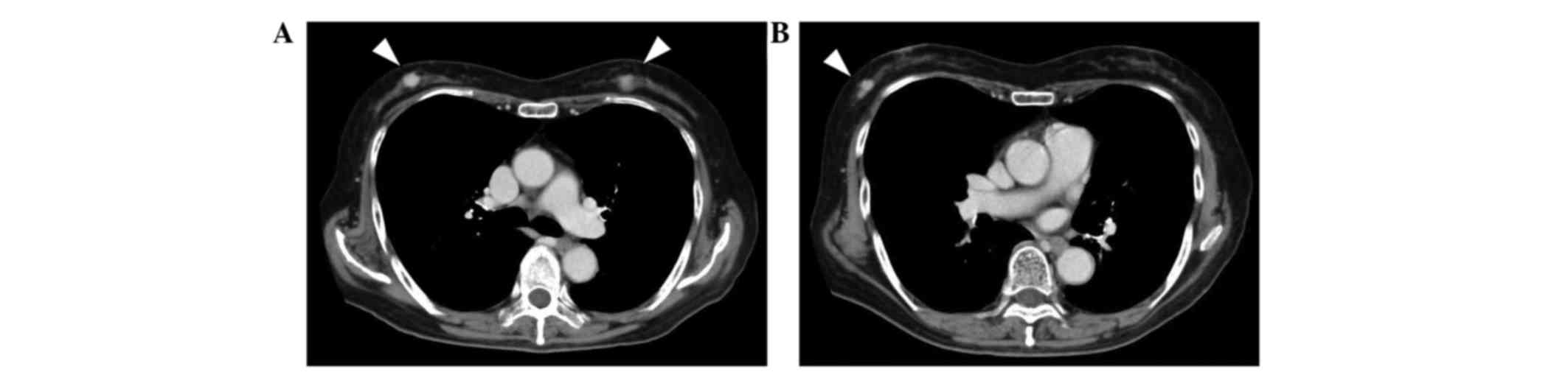
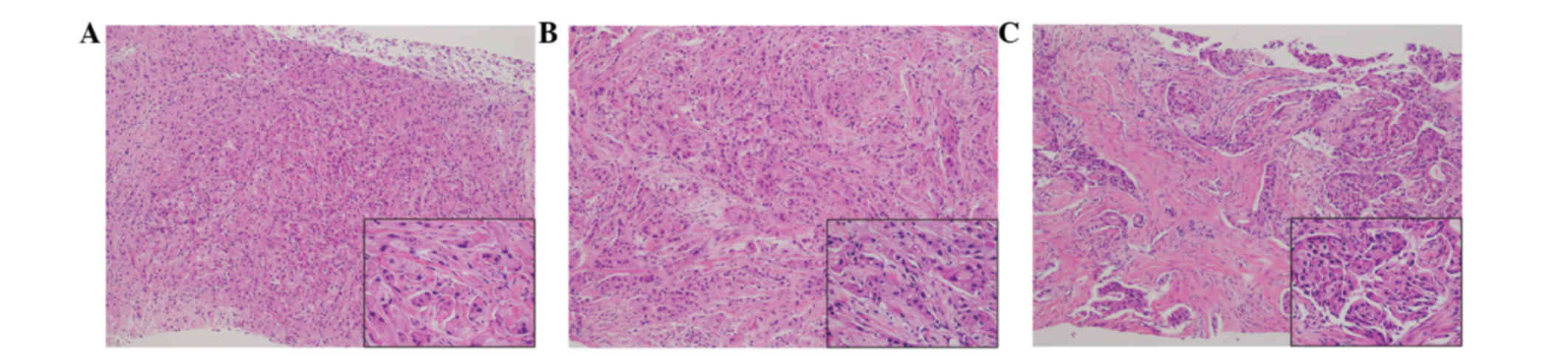
A 78-year-old Japanese woman exhibited bilateral breast tumors on chest computed tomography (CT) during surveillance following an operation for colon cancer. The patient's medical history included non-insulin-dependent diabetes, acromegaly, hypertension and colon cancer. Six months previously, the patient had been diagnosed with colon cancer, and an ileocecal resection was performed. Adjuvant chemotherapy with 300 mg/day oral tegafur/uracil plus 75 mg/day calcium folinate (Taiho Pharmaceutical, Co., Ltd., Tokyo, Japan) was administered for 4 weeks (including a 1 week rest) and continued for a total of four cycles. Contrast-enhanced chest CT revealed three hyperdense masses in the breasts: Two in the right breast and one in the left (Fig. 1). Core needle biopsies were performed on the three tumors. Tumor cells with eosinophilic cytoplasm were identified in all three lesions (Fig. 2). The tumors were diagnosed as invasive ductal carcinoma, with potential apocrine carcinoma. As no metastasis was detected radiologically, the patient was treated with a bilateral modified radical mastectomy and sentinel lymph node biopsy in a single session. Intraoperative pathological diagnosis showed no metastasis in the sentinel nodes. The patient did not undergo further treatment and was followed-up every 3 months by blood and imaging examinations. She remained free of relapse and metastasis for 7 months after the surgery.

Figure 1.

Contrast-enhanced computed tomography (CT). (A) CT scans revealed bilateral enhanced solid tumors (white arrowheads). (B) An additional tumor was revealed in the right breast (arrowhead).

Figure 2.

Histopathological findings of the core needle biopsy. Hematoxylin and eosin staining of the (A) right upper outer quadrant, (B) right outer quadrant and (C) left upper inner quadrant identified tumor cells with eosinophilic cytoplasms in all three lesions. Main image magnification, ×100; inset panel magnification, ×400.

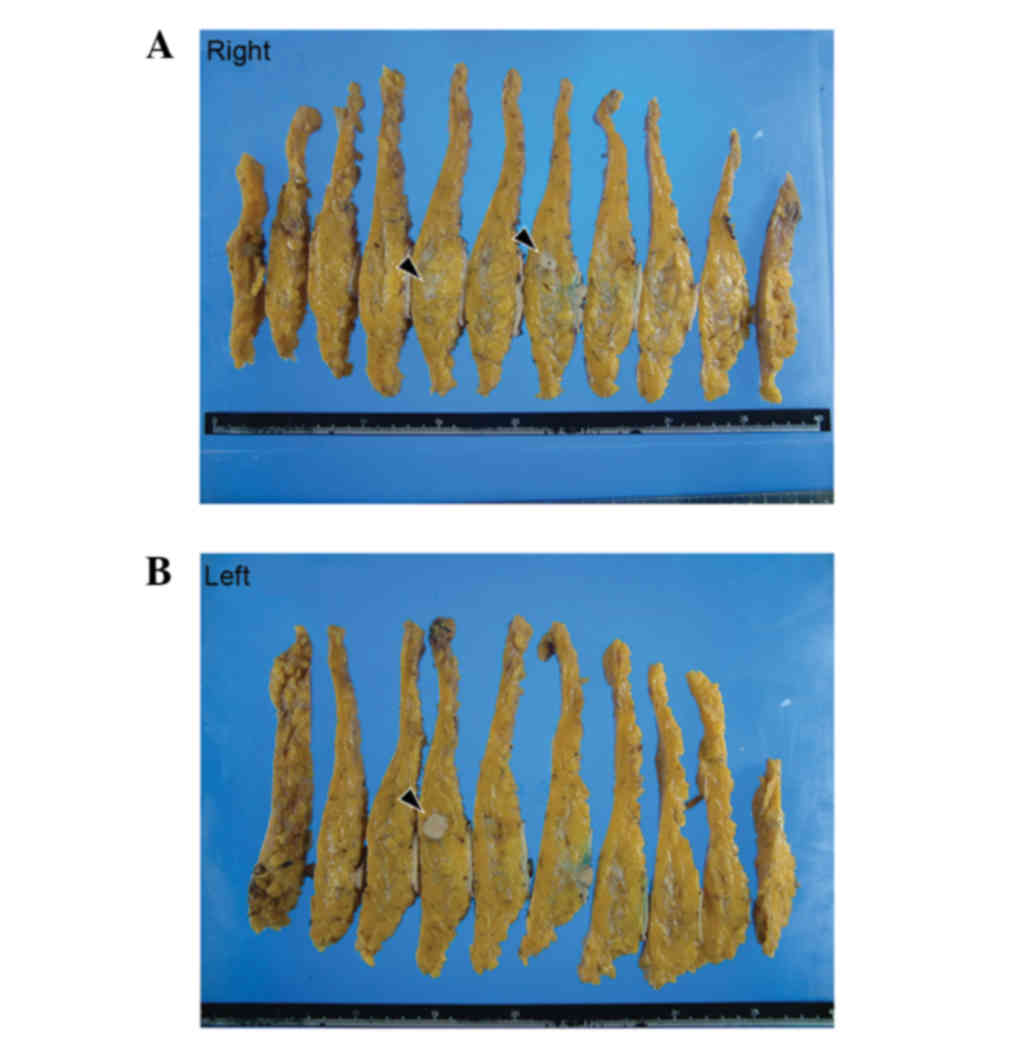
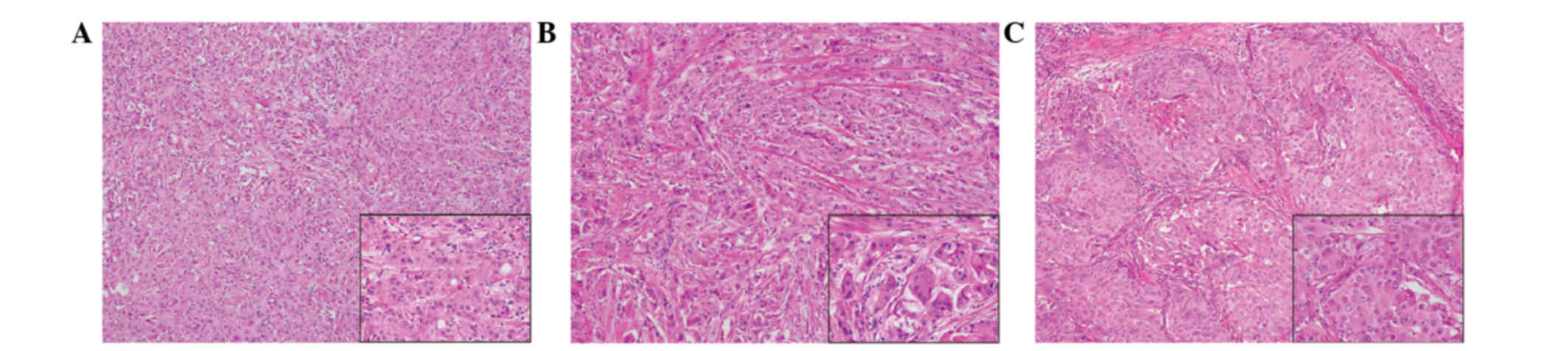
Macroscopic examination of the resected breasts revealed three white solid masses: One in the right upper outer quadrant (13×12×10 mm), one in the right outer quadrant (10×7×10 mm) and one in the left upper inner quadrant (17×15×12 mm) (Fig. 3). Histologically, all of the tumors were comprised of solid cell sheets and nests of tumor cells. The tumor cells possessed abundant eosinophilic granular cytoplasm (Fig. 4). Invasion into the fat was observed in the right breast.

Figure 3.

Macroscopic appearance of the surgical specimen. Three solid tumors were observed. (A) Two tumors were present in the right breast and (B) one tumor was present in the left breast (black arrowheads).

Figure 4.

Histopathological findings of the surgical specimens. Hematoxylin and eosin staining of the (A) right upper outer quadrant, (B) right outer quadrant and (C) left upper inner quadrant revealed tumor cells with abundant eosinophilic granular cytoplasms in all three tumors. Main image magnification, ×100; inset panel magnification, ×400.

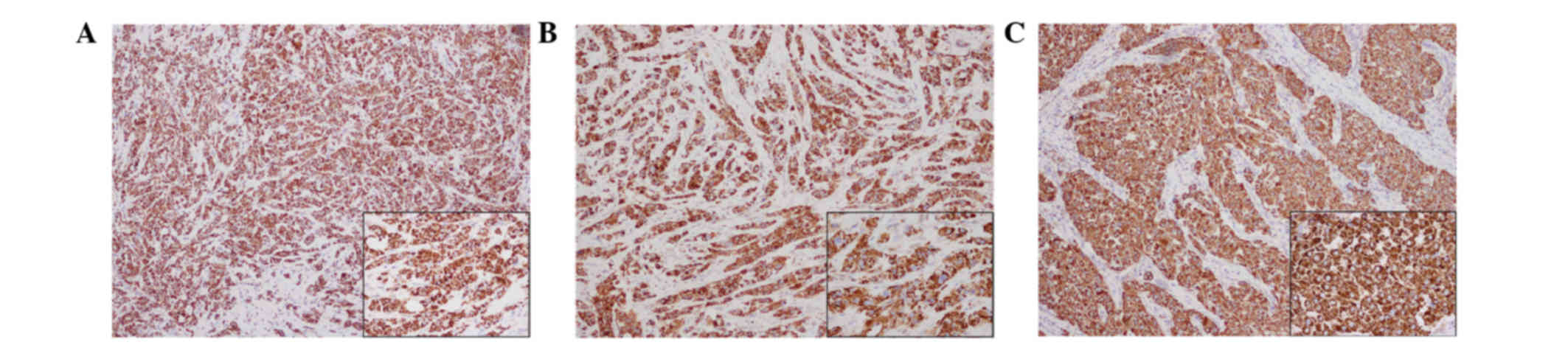
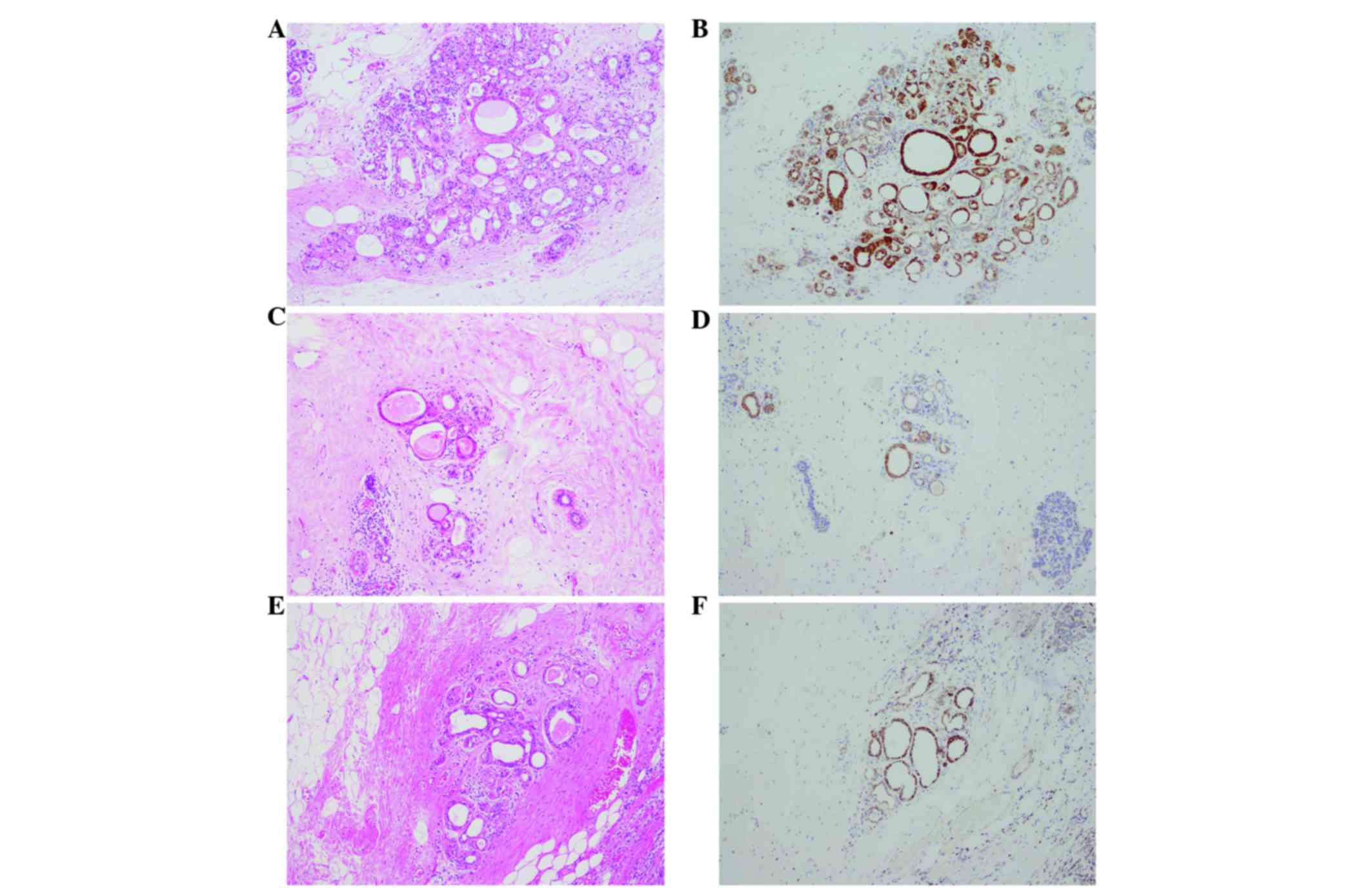
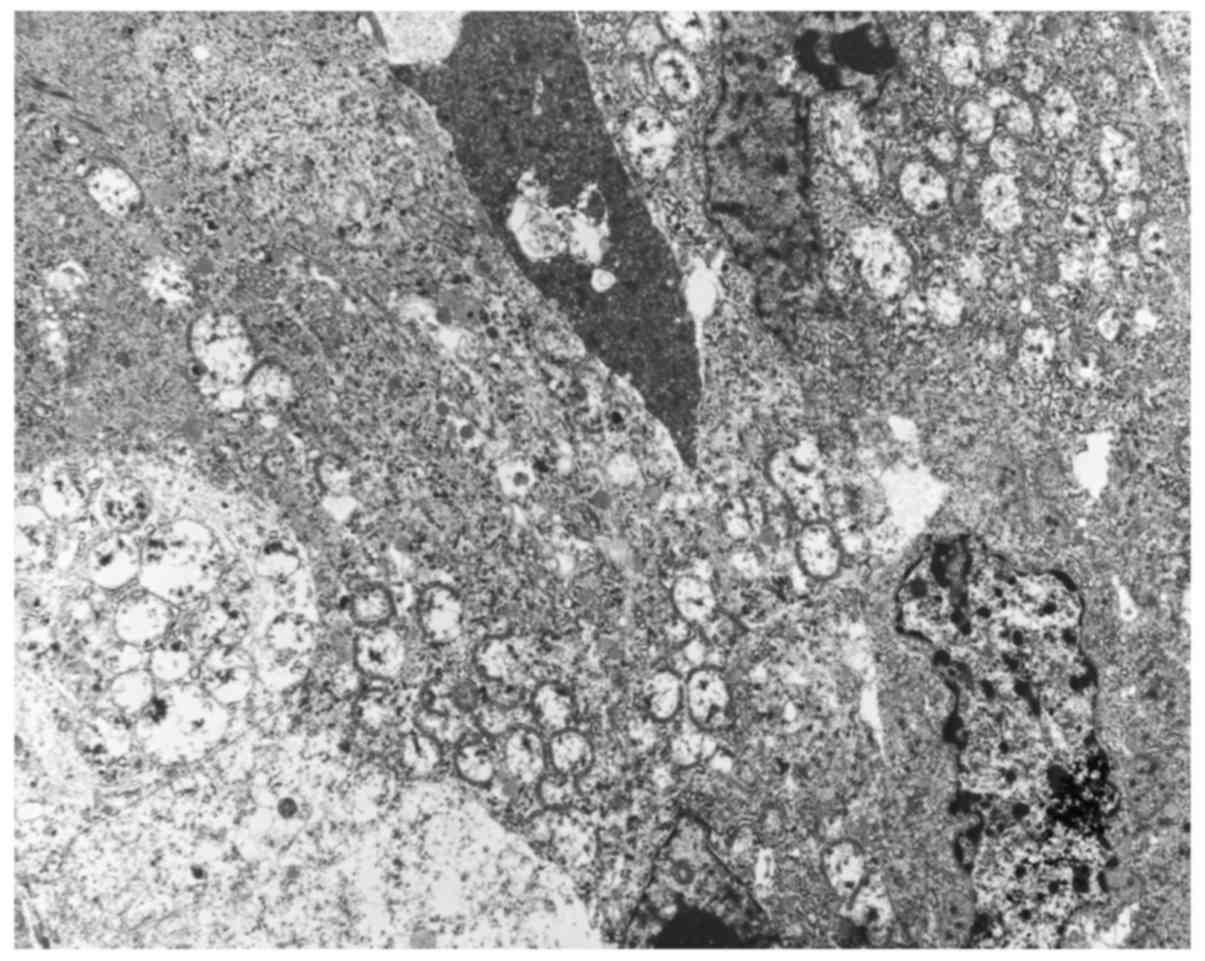
Immunohistochemical analysis was performed using an autostainer (Ventana Medical Systems, Inc. Tucson, AZ, USA). Breast tissue sections (4-µm) were incubated with mouse anti-cytokeratin-7 (1:200; cat. no. M7018; Dako, Glostrup, Denmark), mouse anti-epithelial membrane antigen (1:100; cat. no. 247M-96; Cell Marque Corporation, Rocklin, CA, USA), mouse anti-E-cadherin (1:100; cat. no. M3612; Dako), mouse anti-gross cystic disease fluid protein-15 (1:50; cat. no. SIG-3611-1000; Covance, Inc., Princeton, NJ, USA), mouse anti-mitochondria (1:500; cat. no. B-MU213UC; BioGenex, San Ramon, CA, USA), rabbit anti-estrogen receptor (prediluted; cat. no. 518-107925; Roche Diagnostics, Basel, Switzerland), rabbit anti-progesterone receptor (prediluted; cat. no. 790-2223; Roche Diagnostics) and anti-human epidermal growth factor receptor 2 (prediluted; cat. no. 518107918; Roche Diagnostics) antibodies. The primary antibodies were visualized using horseradish peroxidase-conjugated secondary antibodies and the ultraView Universal DAB Detection kit (cat. no. 760-500; Ventana Medical Systems, Inc.), after which the sections were counterstained for 1 min with Carrazzi's hematoxylin solution. Immunohistochemically, the tumor cells were positive for cytokeratin-7, epithelial membrane antigen and E-cadherin (data not shown). Additionally, gross cystic disease fluid protein-15 showed a diffuse and weakly positive reaction (data not shown). Notably, all three tumors were strongly positive for mitochondria in the majority of the tumor cells (Fig. 5). The peritumoral lesion contained ductal epithelia with eosinophilic cytoplasm, which also demonstrated strong reactivity for anti-mitochondrial antibody (Fig. 6). The tumor cells were negative for estrogen and progesterone receptors. Human epidermal growth factor receptor 2 was weakly positive along the membrane and was scored 1+ using the HercepTest (Dako), according to the manufacturer's protocol (data not shown) (13). Electron microscopy performed on formalin-fixed tumor tissue revealed numerous mitochondria (Fig. 7). Based on these findings, the tumors were diagnosed as synchronous bilateral oncocytic carcinoma of the breast.

Figure 5.

Immunohistochemical staining of the surgical specimens. More than 70% of the tumor cells were strongly positive for mitochondria. (A) Right upper outer quadrant. (B) Right outer quadrant. (C) Left upper inner quadrant. Mitochondrial staining with an anti-mitochondria antibody. Main image magnification, ×100; inset panel magnification, ×400.

Figure 6.

Immunohistochemical staining of the surgical specimens counterstained with hematoxylin and eosin (HE). Oncocytic cells were observed in the peritumoral lesion, which also showed reactivity for anti-mitochondrial antibody. (A) Right upper outer quadrant. HE staining. (B) Right upper outer quadrant. Mitochondrial staining. (C) Right outer quadrant. HE staining. (D) Right outer quadrant. Mitochondrial staining. (E) Left upper inner quadrant. HE staining. (F) Left upper inner quadrant. Mitochondrial staining. Magnification, ×100.

Figure 7.

Ultrastructural features of the oncocytic carcinoma, as determined by electron microscopy. Mitochondria were scattered throughout the cytoplasm. Magnification, ×3,000.

Discussion

Oncocytic carcinoma of the breast is defined as a tumor in which >70% of tumor cells demonstrate oncocytic characteristics, and is classified as ‘uncommon’ according to the World Health Organization classification (14). To the best of our knowledge, only six cases of oncocytic carcinoma of the breast had been previously reported before Ragazzi et al reviewed 32 cases in 2011 (9–11,15,16). The tumor is characterized by oncocytic tumor cells containing numerous mitochondria (14).

Candidates for the differential diagnosis of oncocytic carcinoma include ductal carcinoma with partial apocrine differentiation, acinic cell carcinoma, apocrine carcinoma, granular cell tumors and metastatic carcinoma arising from eosinophilic granular cytoplasm (17,18). On routine hematoxylin and eosin staining of specimens, it is difficult to recognize eosinophilic cells as oncocytes (19). Immunohistochemical or electron microscopic analyses are required to distinguish these neoplastic cells (3,9). Apocrine metaplasia is frequently observed in breast lesions (20). The cells of apocrine metaplasia typically exhibit abundant eosinophilic cytoplasm containing brightly eosinophilic granules, and secretory ‘snouts’ are typically observed by light microscopy (20). Ultrastructurally, the cytoplasm of granular cell tumors is packed with numerous lysosomes, and apocrine cells contain abundant granules surrounding the nuclei (12,19). Oncocytic carcinoma is characterized by strong immunopositivity for mitochondria, and numerous mitochondria fill the cytoplasm when examined by electron microscopy (2). The present study reported a case involving a patient with synchronous and bilateral oncocytic carcinoma. In the present case, immunohistochemistry for mitochondria revealed markedly positive signals in the cytoplasm, and electron microscopy demonstrated large numbers of mitochondria. These findings supported the diagnosis of oncocytic carcinoma of the breast.

Oncocytic cells are occasionally observed in glandular epithelia that have high metabolic activity, including that in the salivary glands, thyroid gland, kidney, parathyroid gland and pituitary gland (3–8). However, the mechanism of oncocytic change remains to be fully elucidated; it has been reported that oncocytic change may be a type of senescent change. Previous studies have noted that increased oncocytic changes in the salivary glands and liver are associated with senescence and the administration of certain drugs (21–23). Frequent mitochondrial DNA abnormalities have been observed in oncocytic lesions in the thyroid gland, kidney, salivary glands, adrenal cortex and parathyroid gland (6,24). A small number of cases in the thyroid have exhibited mutations in nuclear DNA genes encoding oxidative phosphorylation proteins (24). Geyer et al (25) reported chromosomal changes in oncocytic carcinoma of the breast. Oncocytic carcinoma of the breast frequently exhibits gains of 11q13.1–13.2 and 19p13, similar to oncocytic tumors of the kidney and thyroid. In the present case, non-neoplastic duct epithelia adjacent to the tumor demonstrated oncocytic changes. Although gene mutations were not analyzed in the present case, the oncocytic carcinoma of the breast may have been derived from ducts with oncocytic changes.

A review of the literature reveals that the clinical features of oncocytic carcinomas are similar to those of invasive ductal carcinoma, not otherwise specified (9). Thus, the therapeutic strategies are identical. However, to the best of our knowledge, no previous reports have described the use and effects of radiation therapy for the treatment of oncocytic carcinoma of the breast, due to the rarity of this tumor. Resistance to radiotherapy has been reported in oncocytic tumors at other sites, including the rectum and meninges (26,27). Thus, certain modifications may be required to utilize radiotherapy in the treatment of oncocytic carcinoma of the breast.

Bilateral breast cancer is uncommon and represents 2–6% of all breast carcinomas (28). Synchronous carcinoma is defined as a second cancer diagnosed within 3 months of the diagnosis of a first cancer (28). Although both synchronous breast cancer and oncocytic carcinoma of the breast are uncommon, synchronous bilateral oncocytic carcinoma of the breast is extremely rare (9,29,30). Thorough follow-up is important, and additional clinicopathological studies are required to analyze effective treatments for oncocytic carcinoma.

In conclusion, the present study demonstrated that it is difficult to diagnose oncocytic carcinoma of the breast merely by light microscopy. To distinguish breast neoplasms composed of tumor cells with abundant eosinophilic cytoplasms from oncocytic carcinoma, immunohistochemical or electron microscopy analyses should be performed.

References

1 

Hamperl H: Beiträge zur normalen und pathologischen Histologie menschlieher Speicheldriisen. Z Mikrosk Anat Forsch. 27:1–55. 1931.(In German).

2 

Ghadially FN: Diagnostic electron microscopy of tumours. 2nd. Butterworth & Company; London: 1985, View Article : Google Scholar

3 

Tallini G: Oncocytic tumours. Virchows Arch. 433:5–12. 1998. View Article : Google Scholar : PubMed/NCBI

4 

Kim YL, Jang YW, Kim JT, Sung SA, Lee TS, Lee WM and Kim HJ: A rare case of primary hyperparathyroidism associated with primary aldosteronism, Hürthle cell thyroid cancer and meningioma. J Korean Med Sci. 27:560–564. 2012. View Article : Google Scholar : PubMed/NCBI

5 

Hoang MP, Ayala AG and Albores-Saavedra J: Oncocytic adrenocortical carcinoma: A morphologic, immunohistochemical and ultrastructural study of four cases. Mod Pathol. 15:973–978. 2002. View Article : Google Scholar : PubMed/NCBI

6 

Máximo V, Rios E and Sobrinho-Simões M: Oncocytic lesions of the thyroid, kidney, salivary glands, adrenal cortex, and parathyroid glands. Int J Surg Pathol. 22:33–36. 2014. View Article : Google Scholar : PubMed/NCBI

7 

Yamakita N, Ikeda T, Murai T, Kimura M, Komaki T, Miura K, Iwamura M, Hirata T and Umezaki: Panhypopituitarism due to Rathke's cleft cyst associated with pituitary oncocytoma. Intern Med. 36:107–112. 1997. View Article : Google Scholar : PubMed/NCBI

8 

Chakrabarti I, Basu A and Ghosh N: Oncocytic lesion of parotid gland: A dilemma for cytopathologists. J Cytol. 29:80–82. 2012. View Article : Google Scholar : PubMed/NCBI

9 

Ragazzi M, de Biase D, Betts CM, Farnedi A, Ramadan SS, Tallini G, Reis-Filho JS and Eusebi V: Oncocytic carcinoma of the breast: Frequency, morphology and follow-up. Hum Pathol. 42:166–175. 2011. View Article : Google Scholar : PubMed/NCBI

10 

Gădăleanu V and Craciun C: Malignant oncocytoma of the breast. Zentralbl Allg Pathol. 133:279–283. 1987.PubMed/NCBI

11 

Damiani S, Eusebi V, Losi L, D'Adda T and Rosai J: Oncocytic carcinoma (malignant oncocytoma) of the breast. Am J Surg Pathol. 22:221–230. 1998. View Article : Google Scholar : PubMed/NCBI

12 

Hashimoto K, Gross BG and Lever WF: Electron microscopic study of apocrine secretion. J Invest Dermatol. 46:378–390. 1966. View Article : Google Scholar : PubMed/NCBI

13 

Wolff AC, Hammond ME, Schwartz JN, Hagerty KL, Allred DC, Cote RJ, Dowsett M, Fitzgibbons PL, Hanna WM, Langer A, et al: American Society of Clinical Oncology; College of American Pathologists: American Society of Clinical Oncology/College of American Pathologists guideline recommendations for human epidermal growth factor receptor 2 testing in breast cancer. J Clin Oncol. 25:118–145. 2006. View Article : Google Scholar : PubMed/NCBI

14 

Lakhani SR, Ellis IO, Schnitt SJ, Tan PH and van de Vijver MJ: WHO Classification of Tumours of the Breast. 4th. IARC Press; Lyon: 2012

15 

Hamperl H: Oncocytes and hyaline inclusions in the human breast. Virchows Arch B Cell Pathol. 10:88–92. 1972.(In German). PubMed/NCBI

16 

Costa MJ and Silverberg SG: Oncocytic carcinoma of the male breast. Arch Pathol Lab Med. 113:1396–1399. 1989.PubMed/NCBI

17 

Yamazaki M, Nagata Y, Monji S, Shigematsu Y, Baba T, Shimokawa H, Uramoto H, Yamada S, Hanagiri T and Tanaka F: Apocrine carcinoma of the breast. J UOEH. 33:293–301. 2011.PubMed/NCBI

18 

Coyne JD and Dervan PA: Primary acinic cell carcinoma of the breast. J Clin Pathol. 55:545–547. 2002. View Article : Google Scholar : PubMed/NCBI

19 

Chang A and Harawi SJ: Oncocytes, oncocytosis, and oncocytic tumors. Pathol Annu. 27:263–304. 1992.PubMed/NCBI

20 

Durham JR and Fechner RE: The histologic spectrum of apocrine lesions of the breast. Am J Clin Pathol. 113(5): Suppl 1. S3–S18. 2000.PubMed/NCBI

21 

Mete O and Asa SL: Oncocytes, oxyphils, Hürthle, and Askanazy cells: Morphological and molecular features of oncocytic thyroid nodules. Endocr Pathol. 21:16–24. 2010. View Article : Google Scholar : PubMed/NCBI

22 

Baris O, Savagner F, Nasser V, Loriod B, Granjeaud S, Guyetant S, Franc B, Rodien P, Rohmer V, Bertucci F, et al: Transcriptional profiling reveals coordinated up-regulation of oxidative metabolism genes in thyroid oncocytic tumors. J Clin Endocrinol Metab. 89:994–1005. 2004. View Article : Google Scholar : PubMed/NCBI

23 

Martinez-Madrigal F and Micheau C: Histology of the major salivary glands. Am J Surg Pathol. 13:879–899. 1989. View Article : Google Scholar : PubMed/NCBI

24 

Máximo V, Botelho T, Capela J, Soares P, Lima J, Taveira A, Amaro T, Barbosa AP, Preto A, Harach HR, et al: Somatic and germline mutation in GRIM-19, a dual function gene involved in mitochondrial metabolism and cell death, is linked to mitochondrion-rich (Hurthle cell) tumours of the thyroid. Br J Cancer. 92:1892–1898. 2005. View Article : Google Scholar : PubMed/NCBI

25 

Geyer FC, de Biase D, Lambros MBK, Ragazzi M, Lopez-Garcia MA, Natrajan R, Mackay A, Kurelac I, Gasparre G, Ashworth A, et al: Genomic profiling of mitochondrion-rich breast carcinoma: Chromosomal changes may be relevant for mitochondria accumulation and tumour biology. Breast Cancer Res Treat. 132:15–28. 2012. View Article : Google Scholar : PubMed/NCBI

26 

Marucci G, Betts CM, Frank G and Foschini MP: Oncocytic meningioma: Report of a case with progression after radiosurgery. Int J Surg Pathol. 15:77–81. 2007. View Article : Google Scholar : PubMed/NCBI

27 

Ambrosini-Spaltro A, Salvi F, Betts CM, Frezza GP, Piemontese A, Del Prete P, Baldoni C, Foschini MP and Viale G: Oncocytic modifications in rectal adenocarcinomas after radio and chemotherapy. Virchows Arch. 448:442–448. 2006. View Article : Google Scholar : PubMed/NCBI

28 

Hartman M, Czene K, Reilly M, Adolfsson J, Bergh J, Adami HO, Dickman PW and Hall P: Incidence and prognosis of synchronous and metachronous bilateral breast cancer. J Clin Oncol. 25:4210–4216. 2007. View Article : Google Scholar : PubMed/NCBI

29 

Chandrika Permi HS, Prasad HL Kishan, Mohan R, Shetty KJ and Patil C: Synchronous bilateral medullary carcinoma of breast: Is it metastasis or second primary? J Cancer Res Ther. 8:129–131. 2012. View Article : Google Scholar : PubMed/NCBI

30 

Adami HO, Hansen J, Jung B, Lindgren A and Rimsten A: Bilateral carcinoma of the breast. Epidemiology and histopathology. Acta Radiol Oncol. 20:305–309. 1981. View Article : Google Scholar : PubMed/NCBI

Related Articles

  • Abstract
  • View
  • Download
  • Twitter
Copy and paste a formatted citation
Spandidos Publications style
Itagaki H, Yamamoto T, Hiroi A, Kawanishi K, Noguchi E, Ohchi T, Kamio T, Kameoka S, Oda H, Nagashima Y, Nagashima Y, et al: Synchronous and bilateral oncocytic carcinoma of the breast: A case report and review of the literature. Oncol Lett 13: 1714-1718, 2017.
APA
Itagaki, H., Yamamoto, T., Hiroi, A., Kawanishi, K., Noguchi, E., Ohchi, T. ... Nagashima, Y. (2017). Synchronous and bilateral oncocytic carcinoma of the breast: A case report and review of the literature. Oncology Letters, 13, 1714-1718. https://doi.org/10.3892/ol.2017.5610
MLA
Itagaki, H., Yamamoto, T., Hiroi, A., Kawanishi, K., Noguchi, E., Ohchi, T., Kamio, T., Kameoka, S., Oda, H., Nagashima, Y."Synchronous and bilateral oncocytic carcinoma of the breast: A case report and review of the literature". Oncology Letters 13.3 (2017): 1714-1718.
Chicago
Itagaki, H., Yamamoto, T., Hiroi, A., Kawanishi, K., Noguchi, E., Ohchi, T., Kamio, T., Kameoka, S., Oda, H., Nagashima, Y."Synchronous and bilateral oncocytic carcinoma of the breast: A case report and review of the literature". Oncology Letters 13, no. 3 (2017): 1714-1718. https://doi.org/10.3892/ol.2017.5610
Copy and paste a formatted citation
x
Spandidos Publications style
Itagaki H, Yamamoto T, Hiroi A, Kawanishi K, Noguchi E, Ohchi T, Kamio T, Kameoka S, Oda H, Nagashima Y, Nagashima Y, et al: Synchronous and bilateral oncocytic carcinoma of the breast: A case report and review of the literature. Oncol Lett 13: 1714-1718, 2017.
APA
Itagaki, H., Yamamoto, T., Hiroi, A., Kawanishi, K., Noguchi, E., Ohchi, T. ... Nagashima, Y. (2017). Synchronous and bilateral oncocytic carcinoma of the breast: A case report and review of the literature. Oncology Letters, 13, 1714-1718. https://doi.org/10.3892/ol.2017.5610
MLA
Itagaki, H., Yamamoto, T., Hiroi, A., Kawanishi, K., Noguchi, E., Ohchi, T., Kamio, T., Kameoka, S., Oda, H., Nagashima, Y."Synchronous and bilateral oncocytic carcinoma of the breast: A case report and review of the literature". Oncology Letters 13.3 (2017): 1714-1718.
Chicago
Itagaki, H., Yamamoto, T., Hiroi, A., Kawanishi, K., Noguchi, E., Ohchi, T., Kamio, T., Kameoka, S., Oda, H., Nagashima, Y."Synchronous and bilateral oncocytic carcinoma of the breast: A case report and review of the literature". Oncology Letters 13, no. 3 (2017): 1714-1718. https://doi.org/10.3892/ol.2017.5610
Follow us
  • Twitter
  • LinkedIn
  • Facebook
About
  • Spandidos Publications
  • Careers
  • Cookie Policy
  • Privacy Policy
How can we help?
  • Help
  • Live Chat
  • Contact
  • Email to our Support Team