Spandidos Publications Logo
  • About
    • About Spandidos
    • Aims and Scopes
    • Abstracting and Indexing
    • Editorial Policies
    • Reprints and Permissions
    • Job Opportunities
    • Terms and Conditions
    • Contact
  • Journals
    • All Journals
    • Oncology Letters
      • Oncology Letters
      • Information for Authors
      • Editorial Policies
      • Editorial Board
      • Aims and Scope
      • Abstracting and Indexing
      • Bibliographic Information
      • Archive
    • International Journal of Oncology
      • International Journal of Oncology
      • Information for Authors
      • Editorial Policies
      • Editorial Board
      • Aims and Scope
      • Abstracting and Indexing
      • Bibliographic Information
      • Archive
    • Molecular and Clinical Oncology
      • Molecular and Clinical Oncology
      • Information for Authors
      • Editorial Policies
      • Editorial Board
      • Aims and Scope
      • Abstracting and Indexing
      • Bibliographic Information
      • Archive
    • Experimental and Therapeutic Medicine
      • Experimental and Therapeutic Medicine
      • Information for Authors
      • Editorial Policies
      • Editorial Board
      • Aims and Scope
      • Abstracting and Indexing
      • Bibliographic Information
      • Archive
    • International Journal of Molecular Medicine
      • International Journal of Molecular Medicine
      • Information for Authors
      • Editorial Policies
      • Editorial Board
      • Aims and Scope
      • Abstracting and Indexing
      • Bibliographic Information
      • Archive
    • Biomedical Reports
      • Biomedical Reports
      • Information for Authors
      • Editorial Policies
      • Editorial Board
      • Aims and Scope
      • Abstracting and Indexing
      • Bibliographic Information
      • Archive
    • Oncology Reports
      • Oncology Reports
      • Information for Authors
      • Editorial Policies
      • Editorial Board
      • Aims and Scope
      • Abstracting and Indexing
      • Bibliographic Information
      • Archive
    • Molecular Medicine Reports
      • Molecular Medicine Reports
      • Information for Authors
      • Editorial Policies
      • Editorial Board
      • Aims and Scope
      • Abstracting and Indexing
      • Bibliographic Information
      • Archive
    • World Academy of Sciences Journal
      • World Academy of Sciences Journal
      • Information for Authors
      • Editorial Policies
      • Editorial Board
      • Aims and Scope
      • Abstracting and Indexing
      • Bibliographic Information
      • Archive
    • International Journal of Functional Nutrition
      • International Journal of Functional Nutrition
      • Information for Authors
      • Editorial Policies
      • Editorial Board
      • Aims and Scope
      • Abstracting and Indexing
      • Bibliographic Information
      • Archive
    • International Journal of Epigenetics
      • International Journal of Epigenetics
      • Information for Authors
      • Editorial Policies
      • Editorial Board
      • Aims and Scope
      • Abstracting and Indexing
      • Bibliographic Information
      • Archive
    • Medicine International
      • Medicine International
      • Information for Authors
      • Editorial Policies
      • Editorial Board
      • Aims and Scope
      • Abstracting and Indexing
      • Bibliographic Information
      • Archive
  • Articles
  • Information
    • Information for Authors
    • Information for Reviewers
    • Information for Librarians
    • Information for Advertisers
    • Conferences
  • Language Editing
Spandidos Publications Logo
  • About
    • About Spandidos
    • Aims and Scopes
    • Abstracting and Indexing
    • Editorial Policies
    • Reprints and Permissions
    • Job Opportunities
    • Terms and Conditions
    • Contact
  • Journals
    • All Journals
    • Biomedical Reports
      • Information for Authors
      • Editorial Policies
      • Editorial Board
      • Aims and Scope
      • Abstracting and Indexing
      • Bibliographic Information
      • Archive
    • Experimental and Therapeutic Medicine
      • Information for Authors
      • Editorial Policies
      • Editorial Board
      • Aims and Scope
      • Abstracting and Indexing
      • Bibliographic Information
      • Archive
    • International Journal of Epigenetics
      • Information for Authors
      • Editorial Policies
      • Editorial Board
      • Aims and Scope
      • Abstracting and Indexing
      • Bibliographic Information
      • Archive
    • International Journal of Functional Nutrition
      • Information for Authors
      • Editorial Policies
      • Editorial Board
      • Aims and Scope
      • Abstracting and Indexing
      • Bibliographic Information
      • Archive
    • International Journal of Molecular Medicine
      • Information for Authors
      • Editorial Policies
      • Editorial Board
      • Aims and Scope
      • Abstracting and Indexing
      • Bibliographic Information
      • Archive
    • International Journal of Oncology
      • Information for Authors
      • Editorial Policies
      • Editorial Board
      • Aims and Scope
      • Abstracting and Indexing
      • Bibliographic Information
      • Archive
    • Medicine International
      • Information for Authors
      • Editorial Policies
      • Editorial Board
      • Aims and Scope
      • Abstracting and Indexing
      • Bibliographic Information
      • Archive
    • Molecular and Clinical Oncology
      • Information for Authors
      • Editorial Policies
      • Editorial Board
      • Aims and Scope
      • Abstracting and Indexing
      • Bibliographic Information
      • Archive
    • Molecular Medicine Reports
      • Information for Authors
      • Editorial Policies
      • Editorial Board
      • Aims and Scope
      • Abstracting and Indexing
      • Bibliographic Information
      • Archive
    • Oncology Letters
      • Information for Authors
      • Editorial Policies
      • Editorial Board
      • Aims and Scope
      • Abstracting and Indexing
      • Bibliographic Information
      • Archive
    • Oncology Reports
      • Information for Authors
      • Editorial Policies
      • Editorial Board
      • Aims and Scope
      • Abstracting and Indexing
      • Bibliographic Information
      • Archive
    • World Academy of Sciences Journal
      • Information for Authors
      • Editorial Policies
      • Editorial Board
      • Aims and Scope
      • Abstracting and Indexing
      • Bibliographic Information
      • Archive
  • Articles
  • Information
    • For Authors
    • For Reviewers
    • For Librarians
    • For Advertisers
    • Conferences
  • Language Editing
Login Register Submit
  • This site uses cookies
  • You can change your cookie settings at any time by following the instructions in our Cookie Policy. To find out more, you may read our Privacy Policy.

    I agree
Search articles by DOI, keyword, author or affiliation
Search
Advanced Search
presentation
Oncology Letters
Join Editorial Board Propose a Special Issue
Print ISSN: 1792-1074 Online ISSN: 1792-1082
Journal Cover
August-2017 Volume 14 Issue 2

Full Size Image

Sign up for eToc alerts
Recommend to Library

Journals

International Journal of Molecular Medicine

International Journal of Molecular Medicine

International Journal of Molecular Medicine is an international journal devoted to molecular mechanisms of human disease.

International Journal of Oncology

International Journal of Oncology

International Journal of Oncology is an international journal devoted to oncology research and cancer treatment.

Molecular Medicine Reports

Molecular Medicine Reports

Covers molecular medicine topics such as pharmacology, pathology, genetics, neuroscience, infectious diseases, molecular cardiology, and molecular surgery.

Oncology Reports

Oncology Reports

Oncology Reports is an international journal devoted to fundamental and applied research in Oncology.

Experimental and Therapeutic Medicine

Experimental and Therapeutic Medicine

Experimental and Therapeutic Medicine is an international journal devoted to laboratory and clinical medicine.

Oncology Letters

Oncology Letters

Oncology Letters is an international journal devoted to Experimental and Clinical Oncology.

Biomedical Reports

Biomedical Reports

Explores a wide range of biological and medical fields, including pharmacology, genetics, microbiology, neuroscience, and molecular cardiology.

Molecular and Clinical Oncology

Molecular and Clinical Oncology

International journal addressing all aspects of oncology research, from tumorigenesis and oncogenes to chemotherapy and metastasis.

World Academy of Sciences Journal

World Academy of Sciences Journal

Multidisciplinary open-access journal spanning biochemistry, genetics, neuroscience, environmental health, and synthetic biology.

International Journal of Functional Nutrition

International Journal of Functional Nutrition

Open-access journal combining biochemistry, pharmacology, immunology, and genetics to advance health through functional nutrition.

International Journal of Epigenetics

International Journal of Epigenetics

Publishes open-access research on using epigenetics to advance understanding and treatment of human disease.

Medicine International

Medicine International

An International Open Access Journal Devoted to General Medicine.

Journal Cover
August-2017 Volume 14 Issue 2

Full Size Image

Sign up for eToc alerts
Recommend to Library

  • Article
  • Citations
    • Cite This Article
    • Download Citation
    • Create Citation Alert
    • Remove Citation Alert
    • Cited By
  • Similar Articles
    • Related Articles (in Spandidos Publications)
    • Similar Articles (Google Scholar)
    • Similar Articles (PubMed)
  • Download PDF
  • Download XML
  • View XML
Article

JNK pathway inhibition enhances chemotherapeutic sensitivity to Adriamycin in nasopharyngeal carcinoma cells

  • Authors:
    • Yong Liu
    • Jing Feng
    • Ming Zhao
    • Jingbo Wu
    • Juan Fan
    • Qinglian Wen
    • Jinhui Xu
    • Jianwen Zhang
    • Shaozhi Fu
    • Biqiong Wang
    • Yun Lu
    • Kang Xiong
    • Li Xiang
    • Yanling Zhang
    • Linglin Yang
  • View Affiliations / Copyright

    Affiliations: Department of Oncology, The Affiliated Hospital of Southwest Medical University, Luzhou, Sichuan 646000, P.R. China
  • Pages: 1790-1794
    |
    Published online on: June 8, 2017
       https://doi.org/10.3892/ol.2017.6349
  • Expand metrics +
Metrics: Total Views: 0 (Spandidos Publications: | PMC Statistics: )
Metrics: Total PDF Downloads: 0 (Spandidos Publications: | PMC Statistics: )
Cited By (CrossRef): 0 citations Loading Articles...

This article is mentioned in:


Abstract

The role of c-Jun N-terminal kinases (JNKs) in the pathogenesis of cancer is well‑known due to their involvement in carcinogenesis. Although previous studies have discussed different functions of JNKs depending on cell type, the present study aimed to investigate the function of JNKs in nasopharyngeal carcinoma (NPC) cells, as well as their involvement in chemotherapy sensitivity to Adriamycin. The present results showed that Adriamycin administration reduced cell viability and led to elevated expressions of c‑Jun, phosphorylated JNK and phosphorylated c‑Jun, indicating an activated JNK pathway. Notably, JNK inhibition by SP600125 also reduced cell growth. Thus, Adriamycin treatment combined with SP600125 was more effective on cell growth inhibition than each agent alone. The apoptosis analysis confirmed the reduction in cell growth. Therefore, these data provide evidence that the JNK pathway activity is negatively associated with cell viability, and its decline could sensitize NPC cells to Adriamycin.

Introduction

Nasopharyngeal carcinoma (NPC) is a squamous cell carcinoma caused by a combination of factors, such as viral, dietary and genetic factors (1). It is widely diffused in Southern China and Southeast Asia and it is notorious for its local invasion and distant metastasis at the time of diagnosis (2).

Chemotherapy and radiotherapy are the main strategies to treat NPC patients (3). However, poor prognosis and therapeutic failure are the most common outcomes subsequent to treatment of NPC at an advanced stage, even with concurrent chemoradiotherapy (4). Therefore, chemosensitization or radiosensitization is essential for the successful treatment of NPC.

Treatment with chemotherapeutic drugs activates several biochemical signaling pathways, including the c-Jun N-terminal kinase (JNK) pathway (5). JNKs are serine/threonine kinases that belong to the mitogen-activated protein kinase family (6), and are responsive to diverse stress (7,8). When phosphorylated by upstream kinases, JNK in turn phosphorylates and activates three nuclear transcription factors, consisting of c-Jun, activating transcription factor 2 and Elk-1 (9–11), which regulate several important cellular functions, including cell growth, differentiation, survival and apoptosis.

Previous studies have revealed the conflicting roles of JNK, depending on tumor type (12). JNK pathway inactivation decreases tumor growth in gastric or intestinal tumors (13,14), indicating its pro-tumorigenic role. By contrast, JNK pathway inactivation promotes tumor development in breast cancer (15,16), while JNK activation can reduce cell proliferation and maintain epithelial differentiation in non-small cell lung cancer (NSCLC) cells (17), suggesting its anti-tumorigenic role. The JNK pathway also mediates opposite functions on apoptosis in a tumor type-dependent manner, such as a pro-apoptotic role in human gastric cancer cells (18) vs. an anti-apoptotic role in SCLC cells (19).

The present study explored the role of the JNK pathway in NPC 5–8F cell line, as well as its influence on chemotherapeutic sensitivity to Adriamycin. The present results may suggest that the members of the JNK pathway could represent valid therapeutic targets on NPC treatment.

Materials and methods

Cell culture

5-8F cells were cultured in RPMI-1640 medium (Gibco; Thermo Fisher Scientific, Inc., Waltham, MA, USA) supplemented with 10% fetal bovine serum (GE Healthcare Life Sciences, Chalfont, UK), 100 U/ml penicillin and 100 µg/ml streptomycin (Beyotime Institute of Biotechnology, Haimen, China) at 37°C in a 5% CO2 humidified atmosphere.

MTT assay

Briefly, cells were seeded at a density of 0.6×10⁴ cells per well in 100 µl RPMI-1640 medium in a 96-well plate. Subsequent to incubation with different concentrations of Adriamycin (0.1, 0.5, 1, 5 and 10 µg/ml; Zhejiang Hisun Pharmaceutical Co. Ltd, Taizhou, China) and the JNK inhibitor SP600125 (2.5, 5, 10, 20 and 40 µΜ; Beyotime Institute of Biotechnology, Beijing, China) for 24 h, MTT assay was performed by the MTT Cell Proliferation and Cytotoxicity Assay Kit (Beyotime Institute of Biotechnology, Beijing, China). The absorbance was measured at 490 nm using aN iMark Spectramax microplate reader (Bio-Rad Laboratories, Inc., Hercules, CA, USA).

Western blot analysis

Total proteins from treated or untreated cells were extracted by radioimmunoprecipitation buffer with protease inhibitor (Beyotime Institute of Biotechnology), and separated by electrophoresis in SDS-PAGE gels. Next, proteins were transferred to polyvinylidene difluoride membranes (GE Healthcare Life Sciences), followed by immunoblotting with 5% milk and incubation with the following antibodies: Phosphorylated JNK (dilution, 1:1,000; catalog no., 4668; Cell Signaling Technology, Inc., Danvers, MA, USA); c-Jun (dilution, 1:1,000; catalog no., 9165; Cell Signaling Technology, Inc.); phosphorylated c-Jun (dilution, 1:1,000; catalog no., 9164; Cell Signaling Technology, Inc.); and GAPDH (dilution 1:2,000; catalog no., 2118; Cell Signaling Technology, Inc.). The next day, membranes were washed with TBST and incubated with secondary antibodies (dilution, 1:3,000; catalog no., SA00001-2; ProteinTech, Chicago, IL, USA) for 1–2 h. Subsequent to washing with TBST, an electrochemiluminescence Luminata™ Crescendo Western horseradish peroxidase substrate (catalog no., WBLUR0100; EMD Millipore, Billerica, Ma, USA) was performed (GE Healthcare Life Sciences) for the detection of immunoblotting according to the protocol of the manufacturer.

TUNEL assay

Cells were seeded onto a 24-well plate (2×10⁴ cells in 0.5 ml medium per well), and treated with Adriamycin (0.1 µg/ml) in combination with SP600125 (2.5 µΜ), as well as each agent alone. Twenty-four h later, TUNEL assay was performed using an In Situ Cell Death Detection kit (Roche Applied Science, Mannheim, Germany), according to the manufacturer's instructions. In total, three fields per slice were randomly selected and analyzed, and each experiment was repeated three times. The apoptotic index was calculated as the ratio of the TUNEL positive cell number to the total cell number in each field.

Flow cytometry

Cells were seeded onto 6-well plate (15×104 cells in 2 ml medium per well), and treated with Adriamycin (0.5 µg/ml) in combination with SP600125 (10 µΜ), as well as each agent alone. Twenty-four h later, cells were collected and stained for Annexin V-fluorescein isothiocyanate (FITC) and propidium iodide (PI) for 15 min at room temperature, according to the manufacturer's instructions (Invitrogen; Thermo Fisher Scientific, Inc.). Cells were subsequently analyzed by flow cytometry (FACScan; Becton Dickinson, Franklin Lakes, NJ, USA).

Statistical analysis

Data were analyzed by SPSS 16.0 software (SPSS, Inc., Chicago, IL, USA) and GraphPad Prism 5.0 (GraphPad Software, Inc., La Jolla, CA, USA), and expressed as the mean ± standard deviation. Statistical analysis was performed using paired Student's t-test. P<0.05 was considered to indicate a statistically significant difference.

Results

Adriamycin caused dose-dependent cytotoxicity on NPC cells

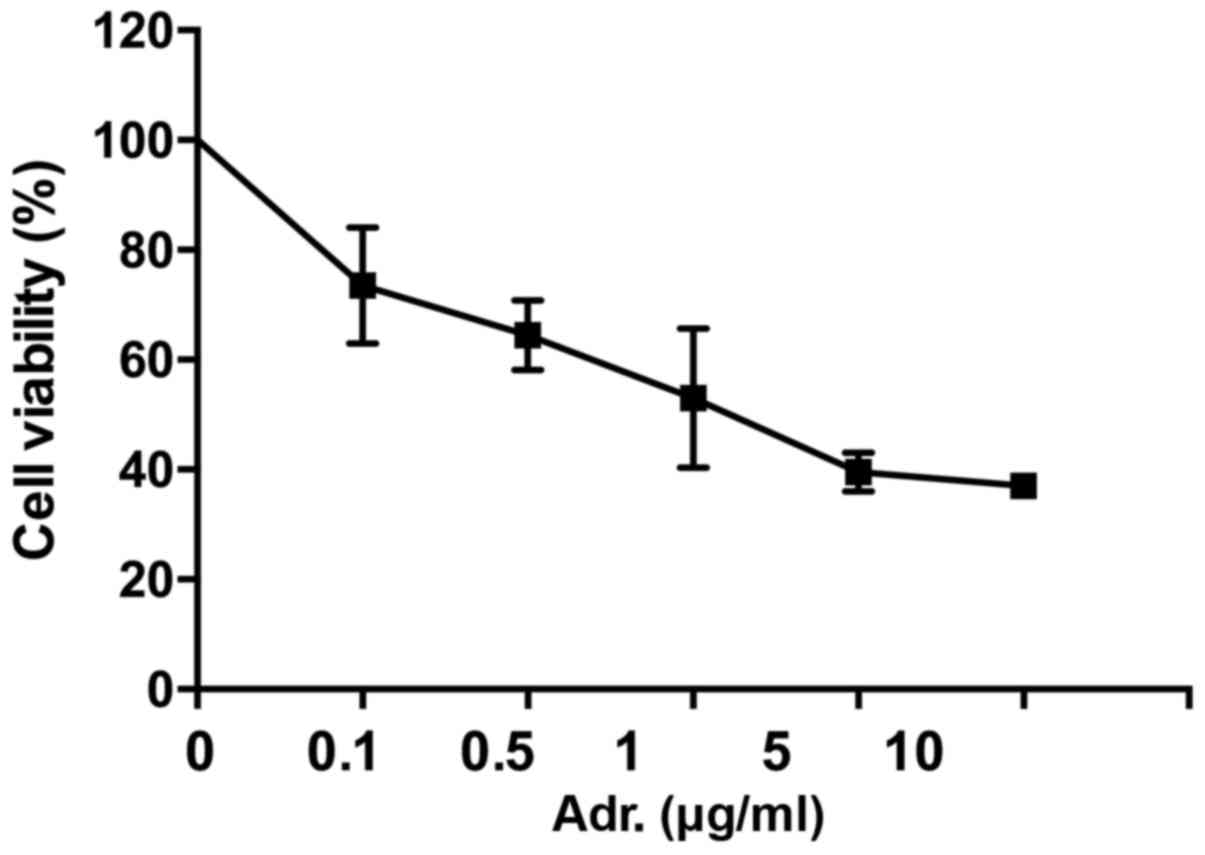
The effect of Adriamycin on NPC cells was evaluated by MTT assay (Fig. 1). 5–8F cells were treated with different concentrations of Adriamycin. Twenty-four h later, the cell growth was inhibited, with this being statistically significant in cells treated with ≥0.1 µg/ml Adriamycin (P<0.05). These data indicated 5–8F cells were sensitive to Adriamycin and showed concentration-dependent sensibility.

Figure 1.

Adr. reduced nasopharyngeal carcinoma cell viability. 5–8F cells were treated with increasing concentrations of Adr. (0–10 µg/ml) for 24 h, and then cell viability was assessed by MTT assay. Data are expressed as the mean ± standard deviation of at least triplicate experiments. Adr., Adriamycin.

Adriamycin activated JNK signaling pathway in NPC cells

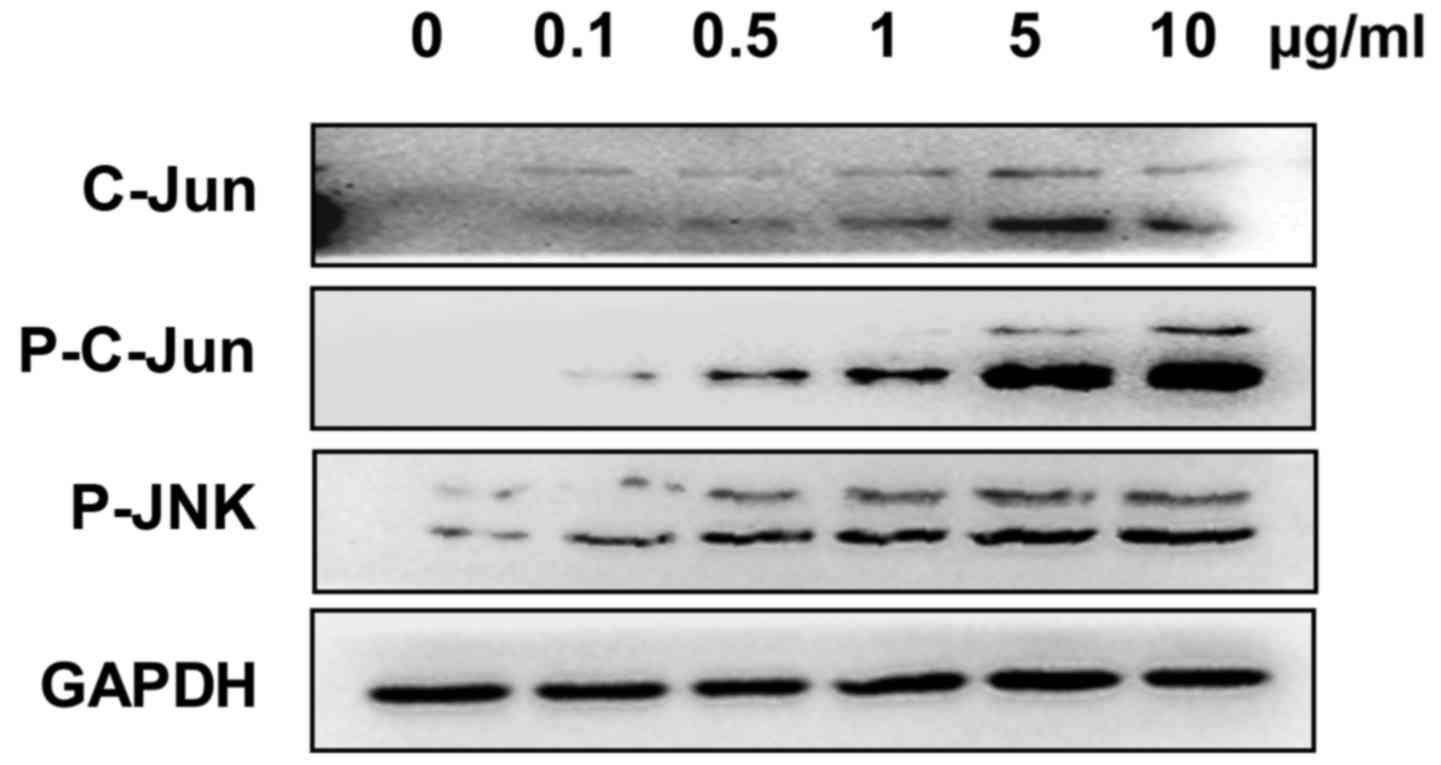
The expression of c-Jun, phosphorylated-JNK and phosphorylated-c-Jun was analyzed to evaluate whether the JNK signaling pathway was involved in Adriamycin-associated cell inhibition in NPC cells. The present results showed an increased expression of these genes in 5–8F cells treated with Adriamycin, indicating an activation of the JNK pathway (Fig. 2).

Figure 2.

Adriamycin activated the JNK signaling pathway in nasopharyngeal cells. 5–8F cells were treated with increasing concentrations of Adriamycin (0–10 µg/ml) for 24 h, and then expression levels of members in JNK pathway were analyzed by western blot analysis. P-, phosphorylated; JNK, c-Jun N-terminal kinase.

JNK signaling pathway inhibition caused cytotoxicity on NPC cells

To investigate the effect of the JNK pathway on the viability of NPC cells, 5–8F cells were treated with the JNK pathway inhibitor SP600125 to block the signaling pathway. Western blot analysis demonstrated high inhibition efficiency (Fig. 3B). Following treatment for 24 h at a concentration of 5 µM, the number of 5–8F cells was 79% (P<0.05), indicating that JNK signaling pathway inhibition can reduce NPC cells growth (Fig. 3A).

Figure 3.

JNK pathway inhibition reduced NPC cells viability. 5–8F cells were treated with increasing concentrations of SP600125 (0–40 µM) for 24 h. (A) Cell viability was assessed by MTT assay. Data are expressed as the mean ± standard deviation of at least triplicate experiments. (B) Western blot analysis demonstrated high inhibition of the JNK pathway. P-, phosphorylated; JNK, c-Jun N-terminal kinase.

JNK pathway inhibition sensitized NPC cells to Adriamycin

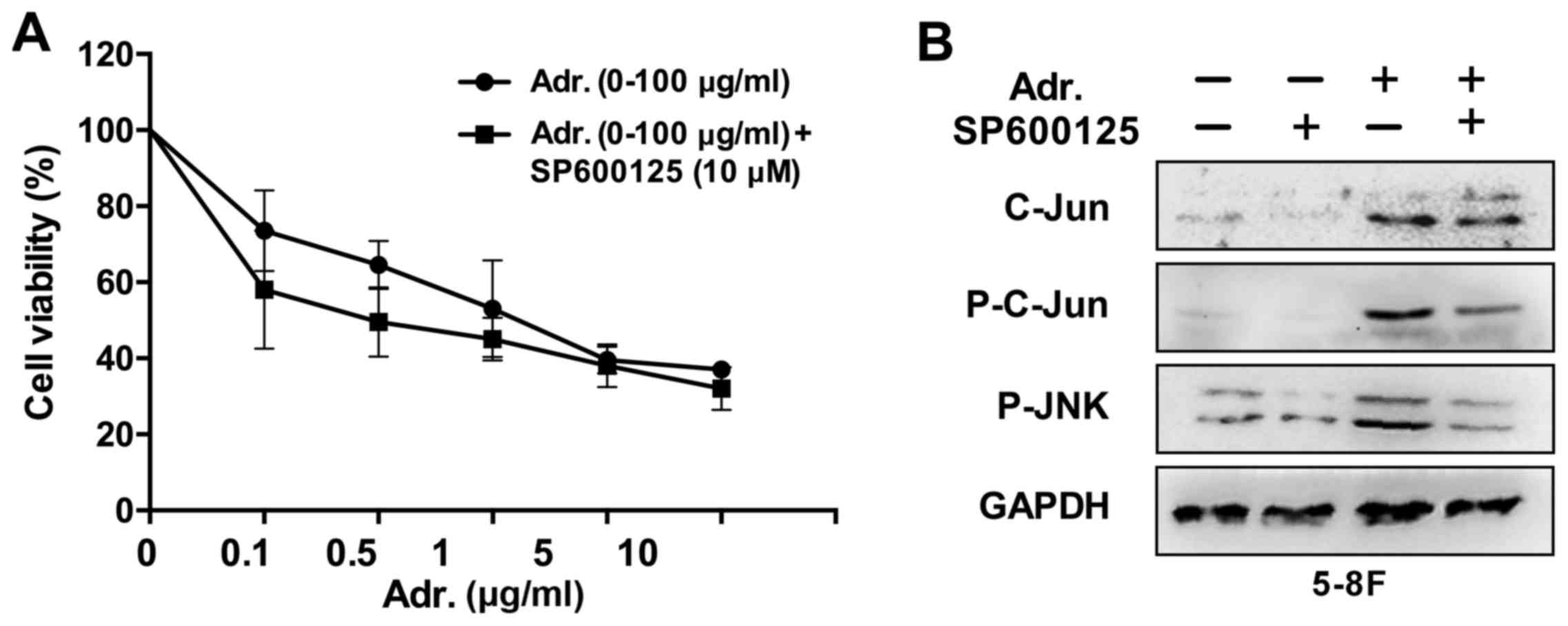
Since the aforementioned results revealed that Adriamycin was an effective agent against NPC cells and activated the JNK pathway, which was a growth promoter in NPC cells, it was examined whether JNK pathway inhibition enhanced chemosensitivity of NPC cells to Adriamycin. In the presence of 10 µM SP600125, the toxic effect of Adriamycin was evidently increased by 15% for 5–8F cells (P<0.05) compared with Adriamycin alone (Fig. 4). These results provide an indication that JNK pathway inhibition sensitized NPC cells to the cytotoxic effects of Adriamycin.

Figure 4.

JNK pathway inhibition sensitized nasopharyngeal carcinoma cells to Adr. 5–8F cells were treated with 10 µM SP600125 and increasing concentrations of Adr. (0–10 µg/ml) for 24 h. (A) Cell viability was assessed by MTT assay. Data are expressed as the mean ± standard deviation of at least triplicate experiments. (B) Western blot analysis demonstrated the activation of the JNK pathway. P-, phosphorylated; JNK, c-Jun N-terminal kinase; Adr., Adriamycin.

Adriamycin combined with JNK pathway inhibition induced apoptosis in NPC cells

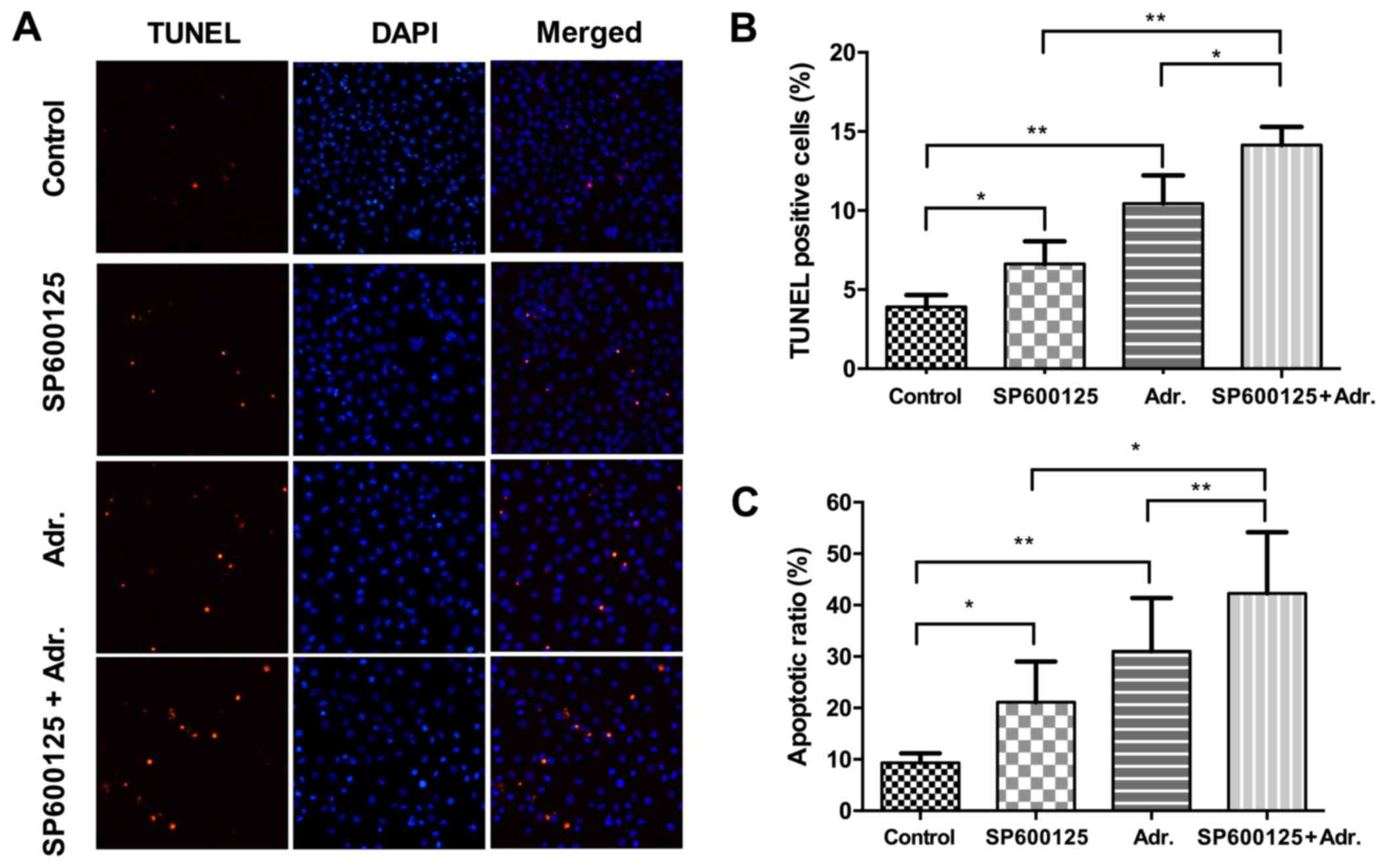
To investigate the effect of Adriamycin and JNK pathway inhibition on apoptotic cell death, NPC cells treated with either agent or a combination of the two were stained with Annexin V FITC/PI and TUNEL, which were analyzed by flow cytometry and fluorescent microscopy, respectively. As shown in Fig. 5, following treatment with low concentrations of Adriamycin (0.1 µg/ml) or SP600125 (2.5 µM) alone, the cellular apoptotic rate in 5–8F cells increased between 3.9 and 6.6% (P<0.05), and 3.9 and 10.4% (P<0.01), respectively, while the combination treatment increased between 3.9 and 14.1% (P<0.001). The results were also confirmed by treatment with increased concentrations of Adriamycin (0.5 µg/ml) or SP600125 (10 µM), which were analyzed by flow cytometry (Fig. 5C). These data demonstrated increased efficiency in the apoptosis induction by Adriamycin, combined with JNK pathway inhibition.

Figure 5.

Adr. combined with the JNK pathway inhibitor induced apoptosis in nasopharyngeal cells. (A) TUNEL assay was used to examine the induced apoptosis at 24 h subsequent to treatment. Red dots represent TUNEL-positive cells, and blue dots represent nuclei staining by DAPI. The magnification was ×100. (B) Apoptosis was expressed as the percentage of TUNEL-positive cells over the total number of cells. For quantification, a minimum of 3 slides and 3 fields on each slide were analyzed. (C) Quantification of apoptotic rate by flow cytometry. *P<0.05, **P<0.01 and ***P<0.01 compared with the untreated group. P-, phosphorylated; JNK, c-Jun N-terminal kinase; Adr., Adriamycin.

Discussion

Chemotherapy is the main strategy for cancer treatment, but drug resistance occurs to limit the efficacy in clinical use. Currently, the screening of agents inducing chemosensitivity is the main method to overcome this problem (20). In the present study, JNK pathway inhibition was shown to cause cytotoxicity on NPC cells, indicating that this signaling pathway exerts a growth promotion function in NPC cells. 5–8F cells treated with Adriamycin showed activated JNK signaling, which may resist Adriamycin-induced cell death. According to these findings, 5–8F cells treated with a combination of the JNK pathway inhibitor SP600125 at a fixed concentration and Adriamycin at increasing concentrations showed elevated cell death compared with cells treated with each agent alone.

In previous years, studies have revealed multiple complicated signaling networks in NPC growth inhibition (21,22). The present study found that the JNK pathway was activated 24 h subsequent to Adriamycin administration, which was consistent with a study reporting that the JNK pathway was sensitive to cytotoxic drugs (23).

Previous studies have described the conflicting roles of the JNK pathway in tumor growth (13,14). In the present study, 5–8F cells were treated with a JNK pathway inhibitor, resulting in significantly decreased cell viability and increased apoptotic rate, suggesting its pro-tumorigenic role and anti-apoptotic activity.

Overall, the present study showed that the inhibition of the JNK pathway sensitized NPC cells to the cytotoxic effects of Adriamycin, which resulted in cell growth inhibition and apoptosis. Since the function of the JNK pathway in cancer pathogenesis is dependent on cancer cell type, whether this strategy may be applied to other cancers remains unknown, and additional studies are required.

Acknowledgements

This study was supported by grants from the National Natural Science Foundation (grant no. 81201784), Scientific Research Foundation of the Education Department of Sichuan Province (grant no. 15ZA0163), and The Affiliated Hospital Of Southwest Medical University Foundation (grant no. 201519#).

References

1 

Zhang F and Zhang J: Clinical hereditary characteristics in nasopharyngeal carcinoma through Ye-Liang's family cluster. Chin Med J (Engl). 112:185–187. 1999.PubMed/NCBI

2 

Li XJ, Ong CK, Cao Y, Xiang YQ, Shao JY, Ooi A, Peng LX, Lu WH, Zhang Z, Petillo D, et al: Serglycin is a theranostic target in nasopharyngeal carcinoma that promotes metastasis. Cancer Res. 71:3162–3172. 2011. View Article : Google Scholar : PubMed/NCBI

3 

Lee AW, Lin JC and Ng WT: Current management of nasopharyngeal cancer. Semin Radiat Oncol. 22:233–244. 2012. View Article : Google Scholar : PubMed/NCBI

4 

Zhang L, Chen QY, Liu H, Tang LQ and Mai HQ: Emerging treatment options for nasopharyngeal carcinoma. Drug Des Devel Ther. 7:37–52. 2013.PubMed/NCBI

5 

Chang PY, Wu ZZ, Sun NK and Chao CC: EBV-encoded LMP-1 sensitizes nasopharyngeal carcinoma cells to genotoxic drugs by down-regulating Cabin1 expression. J Cell Physiol. 229:309–322. 2014. View Article : Google Scholar : PubMed/NCBI

6 

Johnson GL and Lapadat R: Mitogen-activated protein kinase pathways mediated by ERK, JNK, and p38 protein kinases. Science. 298:1911–1923. 2002. View Article : Google Scholar : PubMed/NCBI

7 

Kyriakis JM and Avruch J: Mammalian MAPK signal transduction pathways activated by stress and inflammation: A 10-year update. Physiol Rev. 92:689–737. 2012. View Article : Google Scholar : PubMed/NCBI

8 

Vlahopoulos S and Zoumpourlis VC: JNK: A key modulator of intracellular signaling. Biochemistry (Mosc). 69:844–854. 2004. View Article : Google Scholar : PubMed/NCBI

9 

Hibi M, Lin A, Smeal T, Minden A and Karin M: Identification of an oncoprotein- and UV-responsive protein kinase that binds and potentiates the c-Jun activation domain. Genes Dev. 7:2135–2148. 1993. View Article : Google Scholar : PubMed/NCBI

10 

Gupta S, Campbell D, Dérijard B and Davis RJ: Transcription factor ATF2 regulation by the JNK signal transduction pathway. Science. 267:389–393. 1995. View Article : Google Scholar : PubMed/NCBI

11 

Cavigelli M, Dolfi F, Claret FX and Karin M: Induction of c-fos expression through JNK-mediated TCF/Elk-1 phosphorylation. EMBO J. 14:5957–5964. 1995.PubMed/NCBI

12 

Tournier C: The 2 Faces of JNK Signaling in Cancer. Genes Cancer. 4:397–400. 2013. View Article : Google Scholar : PubMed/NCBI

13 

Shibata W, Maeda S, Hikiba Y, Yanai A, Sakamoto K, Nakagawa H, Ogura K, Karin M and Omata M: c-Jun NH2-terminal kinase 1 is a critical regulator for the development of gastric cancer in mice. Cancer Res. 68:5031–5039. 2008. View Article : Google Scholar : PubMed/NCBI

14 

Nateri AS, Spencer-Dene B and Behrens A: Interaction of phosphorylated c-Jun with TCF4 regulates intestinal cancer development. Nature. 437:281–285. 2005. View Article : Google Scholar : PubMed/NCBI

15 

Cellurale C, Weston CR, Reilly J, Garlick DS, Jerry DJ, Sluss HK and Davis RJ: Role of JNK in a Trp53-dependent mouse model of breast cancer. PLoS One. 5:e124692010. View Article : Google Scholar : PubMed/NCBI

16 

Cellurale C, Girnius N, Jiang F, Cavanagh-Kyros J, Lu S, Garlick DS, Mercurio AM and Davis RJ: Role of JNK in mammary gland development and breast cancer. Cancer Res. 72:472–481. 2012. View Article : Google Scholar : PubMed/NCBI

17 

Winn RA, Marek L, Han SY, Rodriguez K, Rodriguez N, Hammond M, Van Scoyk M, Acosta H, Mirus J, Barry N, et al: Restoration of Wnt-7a expression reverses non-small cell lung cancer cellular transformation through frizzled-9-mediated growth inhibition and promotion of cell differentiation. J Biol Chem. 280:19625–19634. 2005. View Article : Google Scholar : PubMed/NCBI

18 

Kim R, Ohi Y, Inoue H and Toge T: Enhancement of chemotherapeutic agents induced-apoptosis associated with activation of c-Jun N-terminal kinase 1 and caspase 3 (CPP32) in bax-transfected gastric cancer cells. Anticancer Res. 20:439–444. 2000.PubMed/NCBI

19 

Levresse V, Marek L, Blumberg D and Heasley LE: Regulation of platinum-compound cytotoxicity by the c-Jun N-terminal kinase and c-Jun signaling pathway in small-cell lung cancer cells. Mol Pharmacol. 62:689–697. 2002. View Article : Google Scholar : PubMed/NCBI

20 

Vadlapatla RK, Vadlapudi AD, Pal D and Mitra AK: Mechanisms of drug resistance in cancer chemotherapy: Coordinated role and regulation of efflux transporters and metabolizing enzymes. Curr Pharm Des. 19:7126–7140. 2013. View Article : Google Scholar : PubMed/NCBI

21 

Lin L, Deng W, Tian Y, Chen W, Wang J, Fu L, Shi D, Zhao M and Luo W: Lasiodin inhibits proliferation of human nasopharyngeal carcinoma cells by simultaneous modulation of the Apaf-1/caspase, AKT/MAPK and COX-2/NF-κB signaling pathways. PLoS One. 9:e977992014. View Article : Google Scholar : PubMed/NCBI

22 

Chou J, Lin YC, Kim J, You L, Xu Z, He B and Jablons DM: Nasopharyngeal carcinoma-review of the molecular mechanisms of tumorigenesis. Head Neck. 30:946–963. 2008. View Article : Google Scholar : PubMed/NCBI

23 

Kyriakis JM and Avruch J: Mammalian mitogen-activated protein kinase signal transduction pathways activated by stress and inflammation. Physiol Rev. 81:807–869. 2001.PubMed/NCBI

Related Articles

  • Abstract
  • View
  • Download
  • Twitter
Copy and paste a formatted citation
Spandidos Publications style
Liu Y, Feng J, Zhao M, Wu J, Fan J, Wen Q, Xu J, Zhang J, Fu S, Wang B, Wang B, et al: JNK pathway inhibition enhances chemotherapeutic sensitivity to Adriamycin in nasopharyngeal carcinoma cells. Oncol Lett 14: 1790-1794, 2017.
APA
Liu, Y., Feng, J., Zhao, M., Wu, J., Fan, J., Wen, Q. ... Yang, L. (2017). JNK pathway inhibition enhances chemotherapeutic sensitivity to Adriamycin in nasopharyngeal carcinoma cells. Oncology Letters, 14, 1790-1794. https://doi.org/10.3892/ol.2017.6349
MLA
Liu, Y., Feng, J., Zhao, M., Wu, J., Fan, J., Wen, Q., Xu, J., Zhang, J., Fu, S., Wang, B., Lu, Y., Xiong, K., Xiang, L., Zhang, Y., Yang, L."JNK pathway inhibition enhances chemotherapeutic sensitivity to Adriamycin in nasopharyngeal carcinoma cells". Oncology Letters 14.2 (2017): 1790-1794.
Chicago
Liu, Y., Feng, J., Zhao, M., Wu, J., Fan, J., Wen, Q., Xu, J., Zhang, J., Fu, S., Wang, B., Lu, Y., Xiong, K., Xiang, L., Zhang, Y., Yang, L."JNK pathway inhibition enhances chemotherapeutic sensitivity to Adriamycin in nasopharyngeal carcinoma cells". Oncology Letters 14, no. 2 (2017): 1790-1794. https://doi.org/10.3892/ol.2017.6349
Copy and paste a formatted citation
x
Spandidos Publications style
Liu Y, Feng J, Zhao M, Wu J, Fan J, Wen Q, Xu J, Zhang J, Fu S, Wang B, Wang B, et al: JNK pathway inhibition enhances chemotherapeutic sensitivity to Adriamycin in nasopharyngeal carcinoma cells. Oncol Lett 14: 1790-1794, 2017.
APA
Liu, Y., Feng, J., Zhao, M., Wu, J., Fan, J., Wen, Q. ... Yang, L. (2017). JNK pathway inhibition enhances chemotherapeutic sensitivity to Adriamycin in nasopharyngeal carcinoma cells. Oncology Letters, 14, 1790-1794. https://doi.org/10.3892/ol.2017.6349
MLA
Liu, Y., Feng, J., Zhao, M., Wu, J., Fan, J., Wen, Q., Xu, J., Zhang, J., Fu, S., Wang, B., Lu, Y., Xiong, K., Xiang, L., Zhang, Y., Yang, L."JNK pathway inhibition enhances chemotherapeutic sensitivity to Adriamycin in nasopharyngeal carcinoma cells". Oncology Letters 14.2 (2017): 1790-1794.
Chicago
Liu, Y., Feng, J., Zhao, M., Wu, J., Fan, J., Wen, Q., Xu, J., Zhang, J., Fu, S., Wang, B., Lu, Y., Xiong, K., Xiang, L., Zhang, Y., Yang, L."JNK pathway inhibition enhances chemotherapeutic sensitivity to Adriamycin in nasopharyngeal carcinoma cells". Oncology Letters 14, no. 2 (2017): 1790-1794. https://doi.org/10.3892/ol.2017.6349
Follow us
  • Twitter
  • LinkedIn
  • Facebook
About
  • Spandidos Publications
  • Careers
  • Cookie Policy
  • Privacy Policy
How can we help?
  • Help
  • Live Chat
  • Contact
  • Email to our Support Team