Spandidos Publications Logo
  • About
    • About Spandidos
    • Aims and Scopes
    • Abstracting and Indexing
    • Editorial Policies
    • Reprints and Permissions
    • Job Opportunities
    • Terms and Conditions
    • Contact
  • Journals
    • All Journals
    • Oncology Letters
      • Oncology Letters
      • Information for Authors
      • Editorial Policies
      • Editorial Board
      • Aims and Scope
      • Abstracting and Indexing
      • Bibliographic Information
      • Archive
    • International Journal of Oncology
      • International Journal of Oncology
      • Information for Authors
      • Editorial Policies
      • Editorial Board
      • Aims and Scope
      • Abstracting and Indexing
      • Bibliographic Information
      • Archive
    • Molecular and Clinical Oncology
      • Molecular and Clinical Oncology
      • Information for Authors
      • Editorial Policies
      • Editorial Board
      • Aims and Scope
      • Abstracting and Indexing
      • Bibliographic Information
      • Archive
    • Experimental and Therapeutic Medicine
      • Experimental and Therapeutic Medicine
      • Information for Authors
      • Editorial Policies
      • Editorial Board
      • Aims and Scope
      • Abstracting and Indexing
      • Bibliographic Information
      • Archive
    • International Journal of Molecular Medicine
      • International Journal of Molecular Medicine
      • Information for Authors
      • Editorial Policies
      • Editorial Board
      • Aims and Scope
      • Abstracting and Indexing
      • Bibliographic Information
      • Archive
    • Biomedical Reports
      • Biomedical Reports
      • Information for Authors
      • Editorial Policies
      • Editorial Board
      • Aims and Scope
      • Abstracting and Indexing
      • Bibliographic Information
      • Archive
    • Oncology Reports
      • Oncology Reports
      • Information for Authors
      • Editorial Policies
      • Editorial Board
      • Aims and Scope
      • Abstracting and Indexing
      • Bibliographic Information
      • Archive
    • Molecular Medicine Reports
      • Molecular Medicine Reports
      • Information for Authors
      • Editorial Policies
      • Editorial Board
      • Aims and Scope
      • Abstracting and Indexing
      • Bibliographic Information
      • Archive
    • World Academy of Sciences Journal
      • World Academy of Sciences Journal
      • Information for Authors
      • Editorial Policies
      • Editorial Board
      • Aims and Scope
      • Abstracting and Indexing
      • Bibliographic Information
      • Archive
    • International Journal of Functional Nutrition
      • International Journal of Functional Nutrition
      • Information for Authors
      • Editorial Policies
      • Editorial Board
      • Aims and Scope
      • Abstracting and Indexing
      • Bibliographic Information
      • Archive
    • International Journal of Epigenetics
      • International Journal of Epigenetics
      • Information for Authors
      • Editorial Policies
      • Editorial Board
      • Aims and Scope
      • Abstracting and Indexing
      • Bibliographic Information
      • Archive
    • Medicine International
      • Medicine International
      • Information for Authors
      • Editorial Policies
      • Editorial Board
      • Aims and Scope
      • Abstracting and Indexing
      • Bibliographic Information
      • Archive
  • Articles
  • Information
    • Information for Authors
    • Information for Reviewers
    • Information for Librarians
    • Information for Advertisers
    • Conferences
  • Language Editing
Spandidos Publications Logo
  • About
    • About Spandidos
    • Aims and Scopes
    • Abstracting and Indexing
    • Editorial Policies
    • Reprints and Permissions
    • Job Opportunities
    • Terms and Conditions
    • Contact
  • Journals
    • All Journals
    • Biomedical Reports
      • Information for Authors
      • Editorial Policies
      • Editorial Board
      • Aims and Scope
      • Abstracting and Indexing
      • Bibliographic Information
      • Archive
    • Experimental and Therapeutic Medicine
      • Information for Authors
      • Editorial Policies
      • Editorial Board
      • Aims and Scope
      • Abstracting and Indexing
      • Bibliographic Information
      • Archive
    • International Journal of Epigenetics
      • Information for Authors
      • Editorial Policies
      • Editorial Board
      • Aims and Scope
      • Abstracting and Indexing
      • Bibliographic Information
      • Archive
    • International Journal of Functional Nutrition
      • Information for Authors
      • Editorial Policies
      • Editorial Board
      • Aims and Scope
      • Abstracting and Indexing
      • Bibliographic Information
      • Archive
    • International Journal of Molecular Medicine
      • Information for Authors
      • Editorial Policies
      • Editorial Board
      • Aims and Scope
      • Abstracting and Indexing
      • Bibliographic Information
      • Archive
    • International Journal of Oncology
      • Information for Authors
      • Editorial Policies
      • Editorial Board
      • Aims and Scope
      • Abstracting and Indexing
      • Bibliographic Information
      • Archive
    • Medicine International
      • Information for Authors
      • Editorial Policies
      • Editorial Board
      • Aims and Scope
      • Abstracting and Indexing
      • Bibliographic Information
      • Archive
    • Molecular and Clinical Oncology
      • Information for Authors
      • Editorial Policies
      • Editorial Board
      • Aims and Scope
      • Abstracting and Indexing
      • Bibliographic Information
      • Archive
    • Molecular Medicine Reports
      • Information for Authors
      • Editorial Policies
      • Editorial Board
      • Aims and Scope
      • Abstracting and Indexing
      • Bibliographic Information
      • Archive
    • Oncology Letters
      • Information for Authors
      • Editorial Policies
      • Editorial Board
      • Aims and Scope
      • Abstracting and Indexing
      • Bibliographic Information
      • Archive
    • Oncology Reports
      • Information for Authors
      • Editorial Policies
      • Editorial Board
      • Aims and Scope
      • Abstracting and Indexing
      • Bibliographic Information
      • Archive
    • World Academy of Sciences Journal
      • Information for Authors
      • Editorial Policies
      • Editorial Board
      • Aims and Scope
      • Abstracting and Indexing
      • Bibliographic Information
      • Archive
  • Articles
  • Information
    • For Authors
    • For Reviewers
    • For Librarians
    • For Advertisers
    • Conferences
  • Language Editing
Login Register Submit
  • This site uses cookies
  • You can change your cookie settings at any time by following the instructions in our Cookie Policy. To find out more, you may read our Privacy Policy.

    I agree
Search articles by DOI, keyword, author or affiliation
Search
Advanced Search
presentation
Oncology Letters
Join Editorial Board Propose a Special Issue
Print ISSN: 1792-1074 Online ISSN: 1792-1082
Journal Cover
August-2017 Volume 14 Issue 2

Full Size Image

Sign up for eToc alerts
Recommend to Library

Journals

International Journal of Molecular Medicine

International Journal of Molecular Medicine

International Journal of Molecular Medicine is an international journal devoted to molecular mechanisms of human disease.

International Journal of Oncology

International Journal of Oncology

International Journal of Oncology is an international journal devoted to oncology research and cancer treatment.

Molecular Medicine Reports

Molecular Medicine Reports

Covers molecular medicine topics such as pharmacology, pathology, genetics, neuroscience, infectious diseases, molecular cardiology, and molecular surgery.

Oncology Reports

Oncology Reports

Oncology Reports is an international journal devoted to fundamental and applied research in Oncology.

Experimental and Therapeutic Medicine

Experimental and Therapeutic Medicine

Experimental and Therapeutic Medicine is an international journal devoted to laboratory and clinical medicine.

Oncology Letters

Oncology Letters

Oncology Letters is an international journal devoted to Experimental and Clinical Oncology.

Biomedical Reports

Biomedical Reports

Explores a wide range of biological and medical fields, including pharmacology, genetics, microbiology, neuroscience, and molecular cardiology.

Molecular and Clinical Oncology

Molecular and Clinical Oncology

International journal addressing all aspects of oncology research, from tumorigenesis and oncogenes to chemotherapy and metastasis.

World Academy of Sciences Journal

World Academy of Sciences Journal

Multidisciplinary open-access journal spanning biochemistry, genetics, neuroscience, environmental health, and synthetic biology.

International Journal of Functional Nutrition

International Journal of Functional Nutrition

Open-access journal combining biochemistry, pharmacology, immunology, and genetics to advance health through functional nutrition.

International Journal of Epigenetics

International Journal of Epigenetics

Publishes open-access research on using epigenetics to advance understanding and treatment of human disease.

Medicine International

Medicine International

An International Open Access Journal Devoted to General Medicine.

Journal Cover
August-2017 Volume 14 Issue 2

Full Size Image

Sign up for eToc alerts
Recommend to Library

  • Article
  • Citations
    • Cite This Article
    • Download Citation
    • Create Citation Alert
    • Remove Citation Alert
    • Cited By
  • Similar Articles
    • Related Articles (in Spandidos Publications)
    • Similar Articles (Google Scholar)
    • Similar Articles (PubMed)
  • Download PDF
  • Download XML
  • View XML
Article Open Access

Procyanidins from Vitis vinifera seeds induce apoptotic and autophagic cell death via generation of reactive oxygen species in squamous cell carcinoma cells

  • Authors:
    • Young‑Sool Hah
    • Jin Gu Kim
    • Hee Young Cho
    • Jin Sung Park
    • Eun Phil Heo
    • Tae‑Jin Yoon
  • View Affiliations / Copyright

    Affiliations: Biomedical Research Institute, Gyeongsang National University Hospital, Jinju, Gyeongsangnam‑do 52727, Republic of Korea, Department of Dermatology, Gyeongsang National University Hospital, Institute of Health Sciences, Gyeongsang National University School of Medicine, Jinju, Gyeongsangnam‑do 52727, Republic of Korea, Department of Orthopedic Surgery, Gyeongsang National University Hospital, Jinju, Gyeongsangnam‑do 52727, Republic of Korea, Department of Dermatology, Samsung Changwon Hospital, Sungkyunkwan University School of Medicine, Changwon, Gyeongsangnam‑do 51353, Republic of Korea
    Copyright: © Hah et al. This is an open access article distributed under the terms of Creative Commons Attribution License.
  • Pages: 1925-1932
    |
    Published online on: June 19, 2017
       https://doi.org/10.3892/ol.2017.6422
  • Expand metrics +
Metrics: Total Views: 0 (Spandidos Publications: | PMC Statistics: )
Metrics: Total PDF Downloads: 0 (Spandidos Publications: | PMC Statistics: )
Cited By (CrossRef): 0 citations Loading Articles...

This article is mentioned in:


Abstract

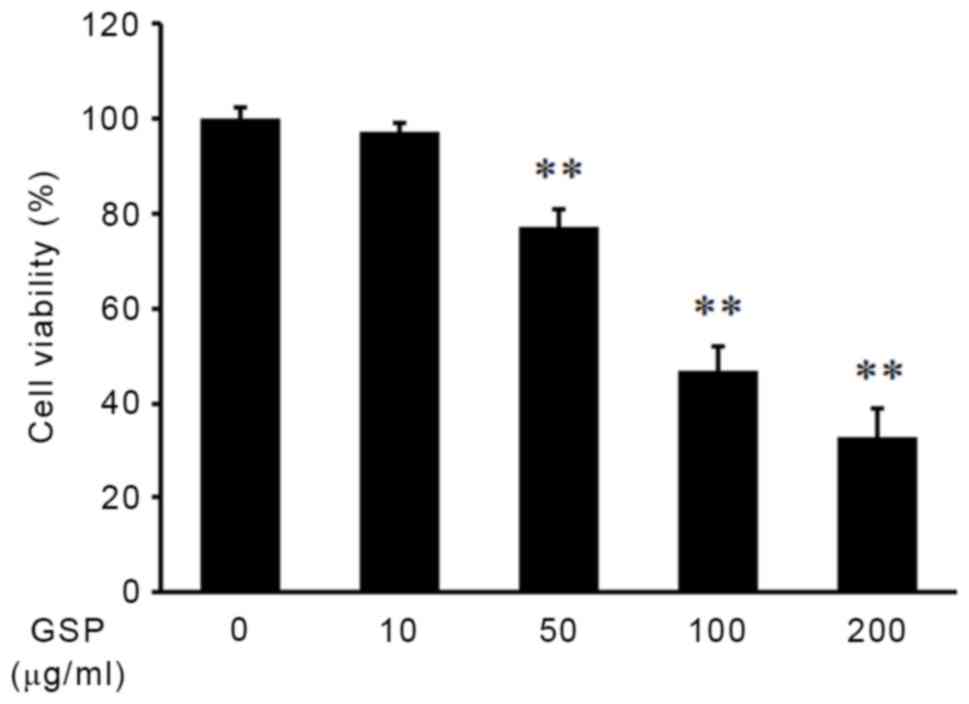
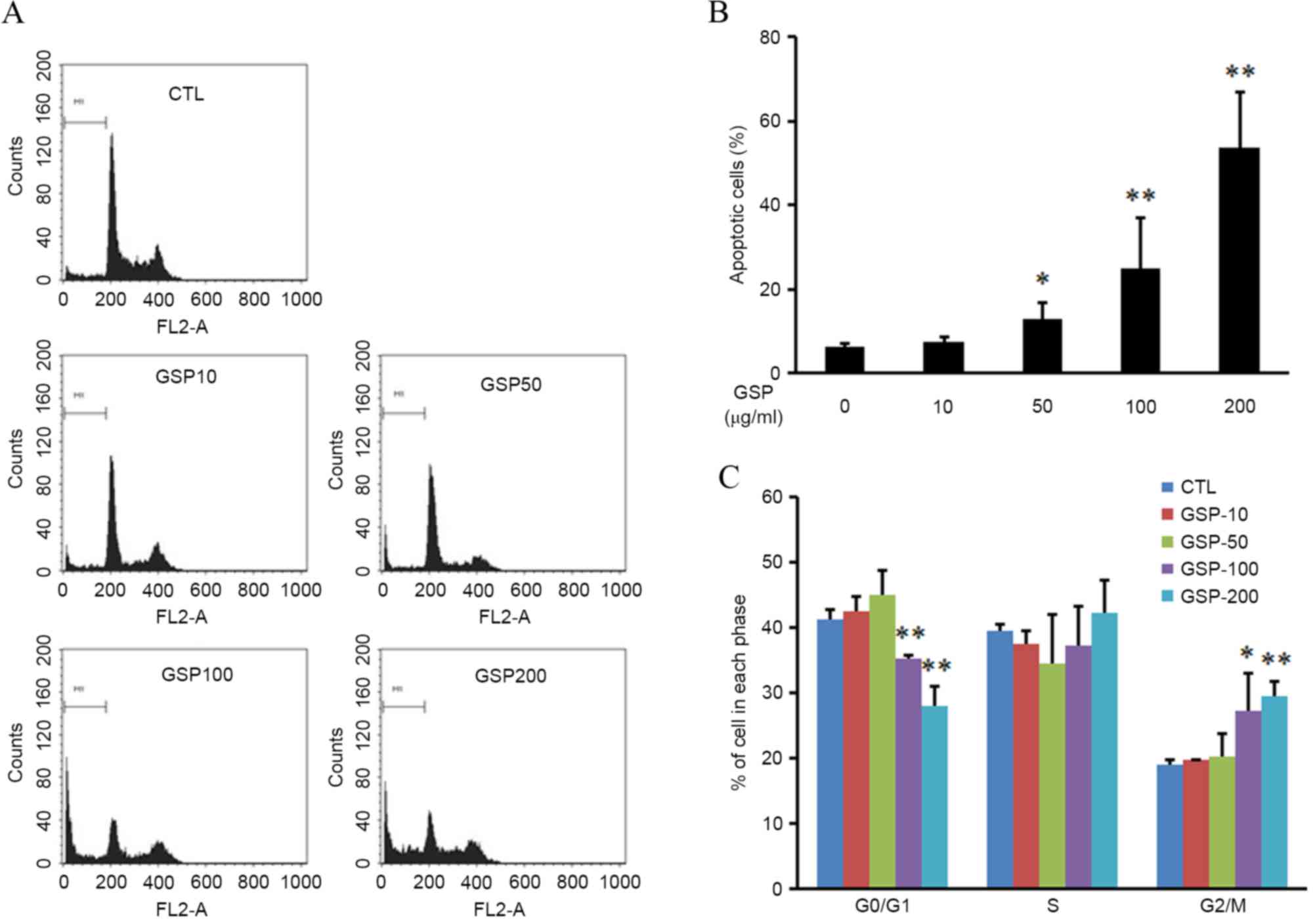
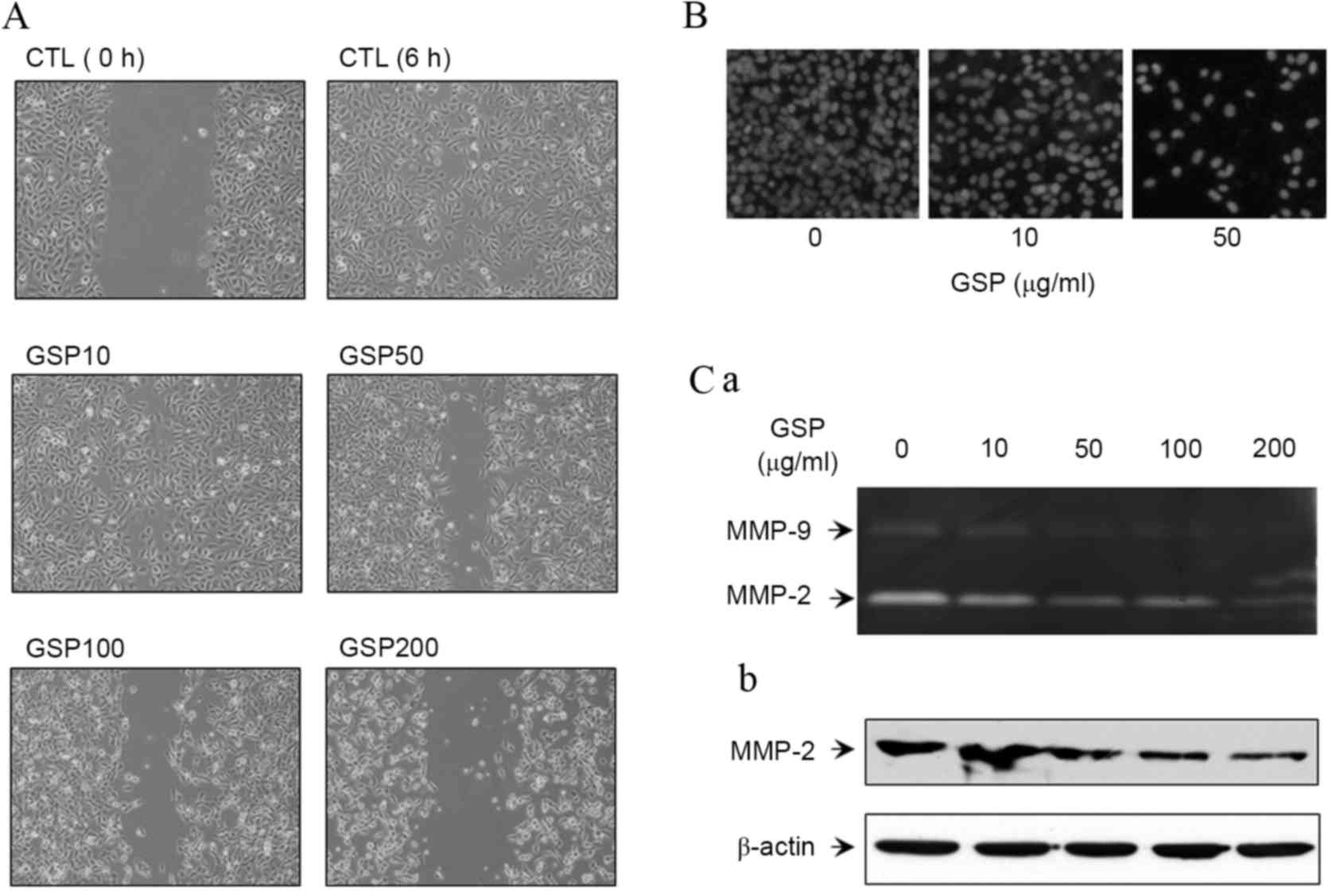
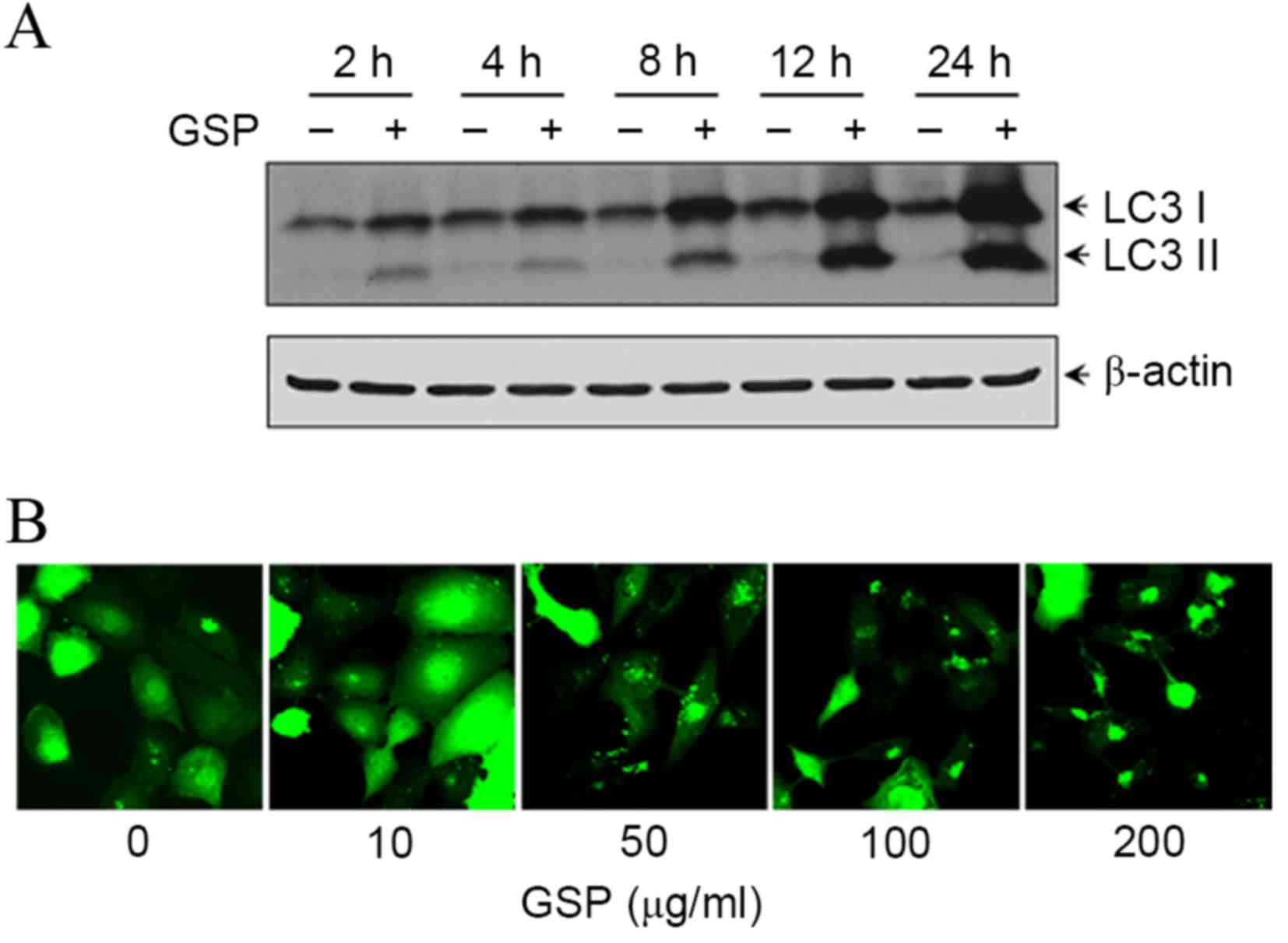
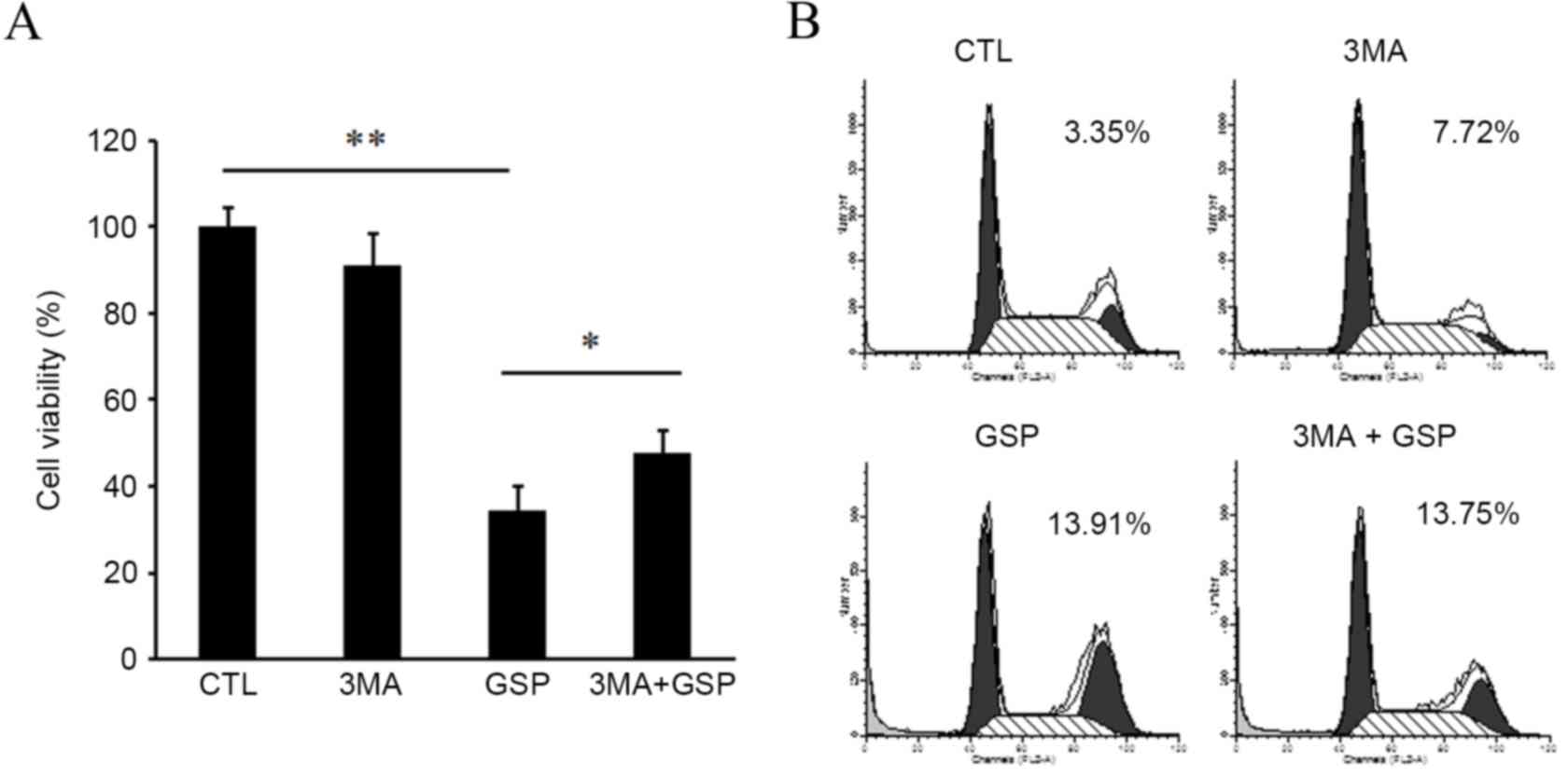
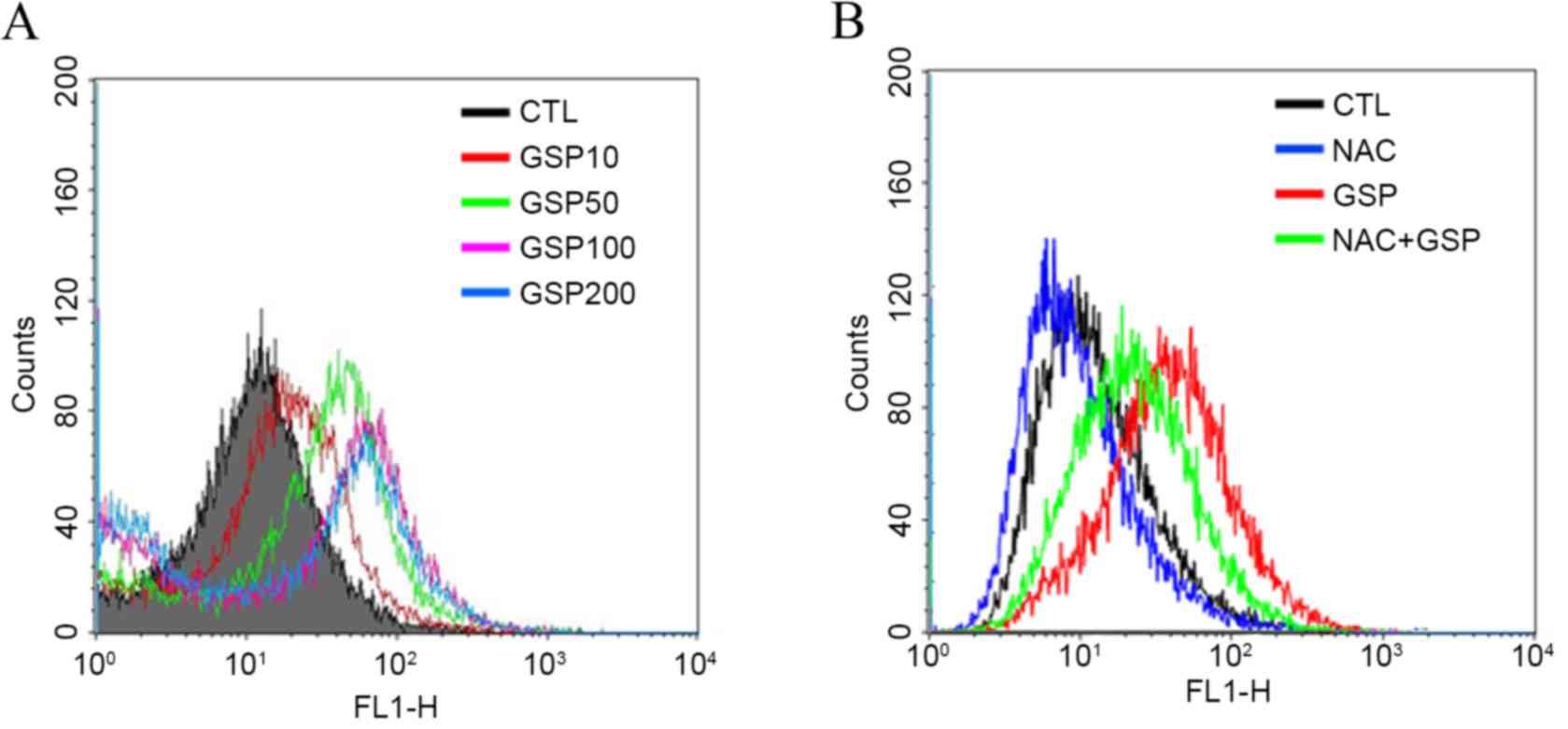
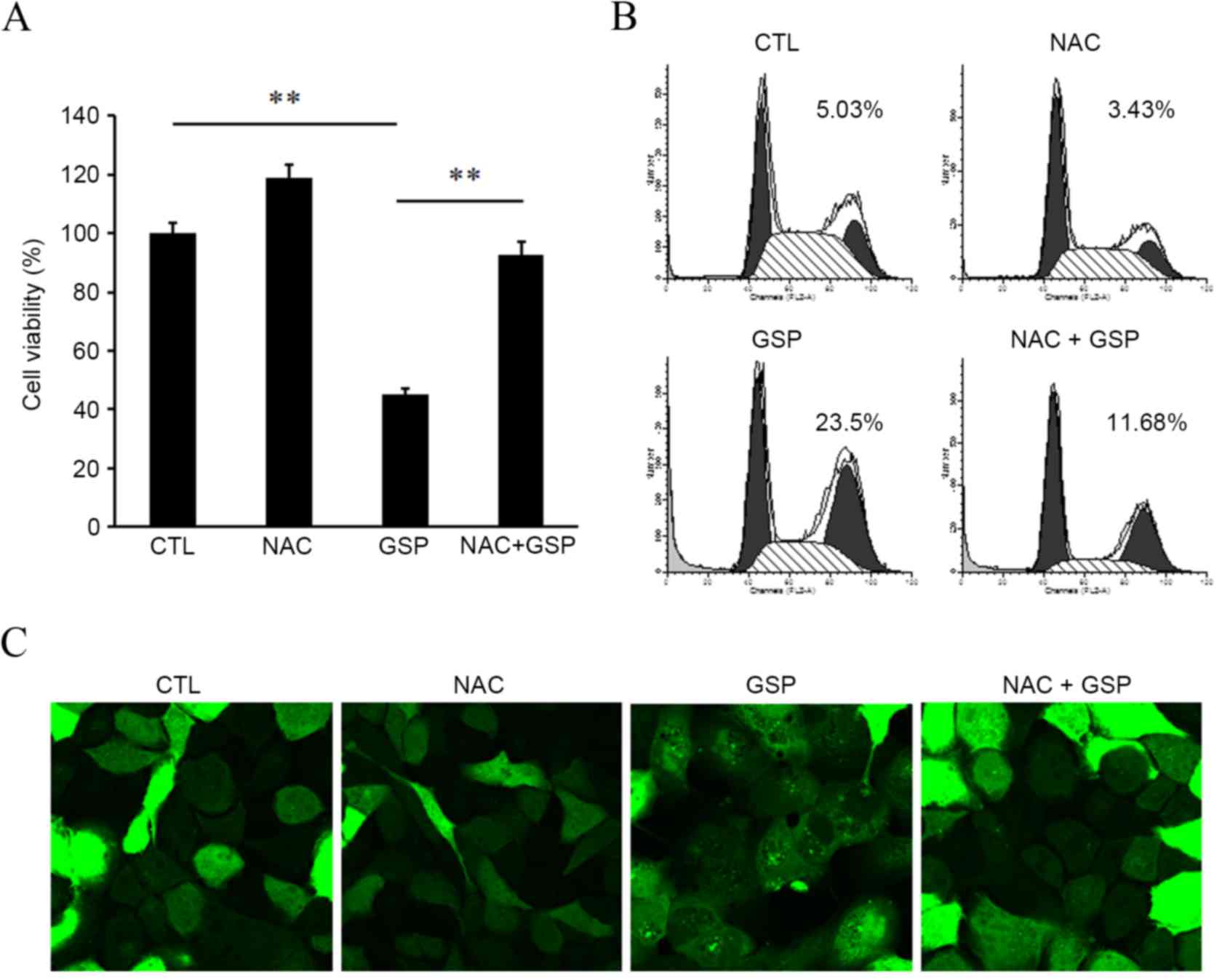
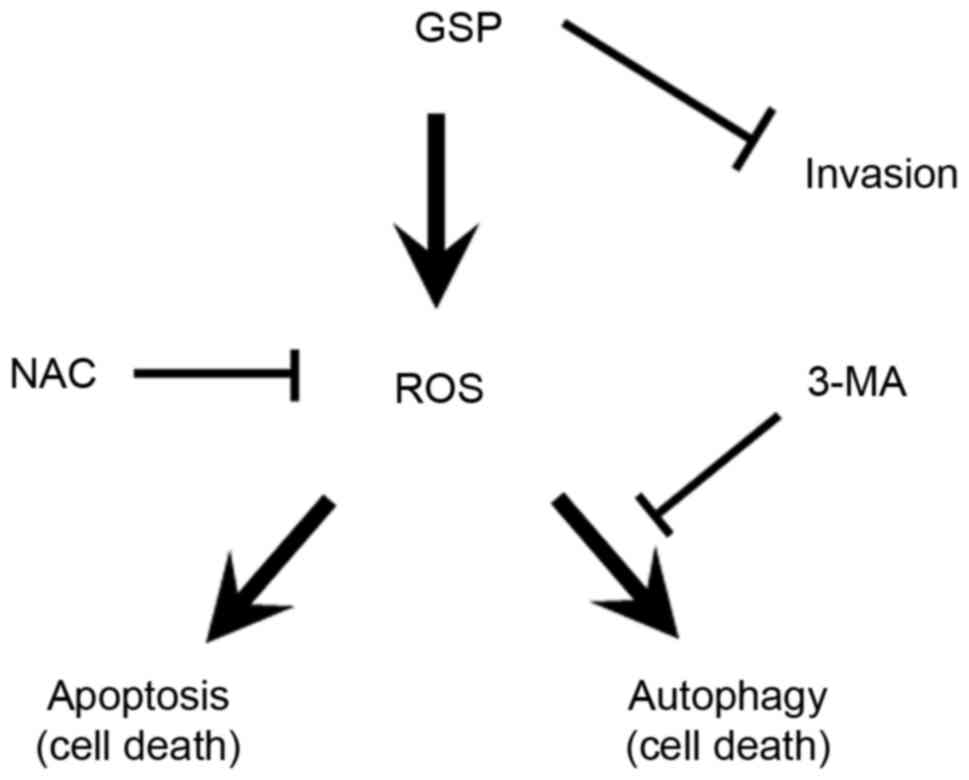
Procyanidins can inhibit cell proliferation and tumorigenesis and induce apoptosis in human skin, breast and prostate carcinoma cell lines. Squamous cell carcinoma (SCC) of the skin is a common form of keratinocytic or non‑melanoma skin cancer and is a deadly disease with a poor prognosis due to the ineffectiveness of therapy. The present study aimed to determine whether grape seed proanthocyanidin (GSP) may regulate different modes of cell death in the human SCC12 cell line. The present study found that the treatment of SCC12 cells with GSP inhibited proliferation in a dose‑dependent manner and reduced the motility and invasiveness of SCC12 cells through suppression of matrix metalloproteinase‑2/9 expression. GSP treatment also resulted in induction of apoptosis and autophagy via generation of reactive oxygen species. The inhibition of autophagy by 3‑methyladenine decreased GSP‑induced cell death, which suggested that GSP-induced autophagy can promote cell death. The results of the present study suggested that autophagy functions as a death mechanism in SCC and provided a rationale for the use of GSP in combination with autophagy activators for treating cancers such as SCC.
View Figures

Figure 1

Figure 2

Figure 3

Figure 4

Figure 5

Figure 6

Figure 7

Figure 8

View References

1 

Hassan HM: Protective effects of red grape seed extracts on DNA, brain and erythrocytes against oxidative damage. Glob J Pharmacol. 7:241–248. 2013.

2 

Fine AM: Oligomeric proanthocyanidin complexes: History, structure, and phytopharmaceutical applications. Altern Med Rev. 5:144–151. 2000.PubMed/NCBI

3 

Ariga T: The antioxidative function, preventive action on disease and utilization of proanthocyanidins. Biofactors. 21:197–201. 2004. View Article : Google Scholar : PubMed/NCBI

4 

Jang JK and Han JY: The antioxidant ability of grape seed extracts. Korean J Food Sci Technol. 34:524–528. 2002.

5 

Pataki T, Bak I, Kovacs P, Bagchi D, Das DK and Tosaki A: Grape seed proanthocyanidins improved cardiac recovery during reperfusion after ischemia in isolated rat hearts. Am J Clin Nutr. 75:894–899. 2002.PubMed/NCBI

6 

Li WG, Zhang XY, Wu YJ and Tian X: Anti-inflammatory effect and mechanism of proanthocyanidins from grape seeds. Acta Pharmacol Sin. 22:1117–1120. 2001.PubMed/NCBI

7 

Eng ET, Ye J, Williams D, Phung S, Moore RE, Young MK, Gruntmanis U, Braunstein G and Chen S: Suppression of estrogen biosynthesis by procyanidin dimers in red wine and grape seeds. Cancer Res. 63:8516–8522. 2003.PubMed/NCBI

8 

Tyagi A, Agarwal R and Agarwal C: Grape seed extract inhibits EGF-induced and constitutively active mitogenic signaling but activates JNK in human prostate carcinoma DU145 cells: Possible role in antiproliferation and apoptosis. Oncogene. 22:1302–1316. 2003. View Article : Google Scholar : PubMed/NCBI

9 

Meeran SM and Katiyar SK: Grape seed proanthocyanidins promote apoptosis in human epidermoid carcinoma A431 cells through alterations in Cdki-Cdk-cyclin cascade, and caspase-3 activation via loss of mitochondrial membrane potential. Exp Dermatol. 16:405–415. 2007. View Article : Google Scholar : PubMed/NCBI

10 

Kaur M, Singh RP, Gu M, Agarwal R and Agarwal C: Grape seed extract inhibits in vitro and in vivo growth of human colorectal carcinoma cells. Clin Cancer Res. 12:6194–6202. 2006. View Article : Google Scholar : PubMed/NCBI

11 

Baehrecke EH: Autophagy: Dual roles in life and death? Nat Rev Mol Cell Biol. 6:505–510. 2005. View Article : Google Scholar : PubMed/NCBI

12 

Shintani T and Klionsky DJ: Autophagy in health and disease: A double-edged sword. Science. 306:990–995. 2004. View Article : Google Scholar : PubMed/NCBI

13 

Kroemer G, Galluzzi L, Vandenabeele P, Abrams J, Alnemri ES, Baehrecke EH, Blagosklonny MV, El-Deiry WS, Golstein P, Green DR, et al: Classification of cell death: Recommendations of the nomenclature committee on cell death 2009. Cell Death Differ. 16:3–11. 2009. View Article : Google Scholar : PubMed/NCBI

14 

Kuma A, Hatano M, Matsui M, Yamamoto A, Nakaya H, Yoshimori T, Ohsumi Y, Tokuhisa T and Mizushima N: The role of autophagy during the early neonatal starvation period. Nature. 432:1032–1036. 2004. View Article : Google Scholar : PubMed/NCBI

15 

Mills KR, Reginato M, Debnath J, Queenan B and Brugge JS: Tumor necrosis factor-related apoptosis-inducing ligand (TRAIL) is required for induction of autophagy during lumen formation in vitro. Proc Natl Acad Sci USA. 101:pp. 3438–3443. 2004; View Article : Google Scholar : PubMed/NCBI

16 

Lemasters JJ, Qian T, He L, Kim JS, Elmore SP, Cascio WE and Brenner DA: Role of mitochondrial inner membrane permeabilization in necrotic cell death, apoptosis, and autophagy. Antioxid Redox Signal. 4:769–781. 2002. View Article : Google Scholar : PubMed/NCBI

17 

Keston AS and Brandt R: The fluorometric analysis of ultramicro quantities of hydrogen peroxide. Anal Biochem. 11:1–5. 1965. View Article : Google Scholar : PubMed/NCBI

18 

Mantena SK, Baliga MS and Katiyar SK: Grape seed proanthocyanidins induce apoptosis and inhibit metastasis of highly metastatic breast carcinoma cells. Carcinogenesis. 27:1682–1691. 2006. View Article : Google Scholar : PubMed/NCBI

19 

Kabeya Y, Mizushima N, Ueno T, Yamamoto A, Kirisako T, Noda T, Kominami E, Ohsumi Y and Yoshimori T: LC3, a mammalian homologue of yeast Apg8p, is localized in autophagosome membranes after processing. EMBO J. 19:5720–5728. 2000. View Article : Google Scholar : PubMed/NCBI

20 

Mizushima N, Yoshimori T and Levine B: Methods in mammalian autophagy research. Cell. 140:313–326. 2010. View Article : Google Scholar : PubMed/NCBI

21 

Schwartz GK and Shah MA: Targeting the cell cycle: A new approach to cancer therapy. J Clin Oncol. 23:9408–9421. 2005. View Article : Google Scholar : PubMed/NCBI

22 

Lakin ND and Jackson SP: Regulation of p53 in response to DNA damage. Oncogene. 18:7644–7655. 1999. View Article : Google Scholar : PubMed/NCBI

23 

Choi HJ, Lim DY and Park JH: Induction of G1 and G2/M cell cycle arrests by the dietary compound 3,3′-diindolylmethane in HT-29 human colon cancer cells. BMC Gastroenterol. 9:392009. View Article : Google Scholar : PubMed/NCBI

24 

Fulda S and Debatin KM: Sensitization for anticancer drug-induced apoptosis by the chemopreventive agent resveratrol. Oncogene. 23:6702–6711. 2004. View Article : Google Scholar : PubMed/NCBI

25 

Cao Y and Klionsky DJ: Physiological functions of Atg6/Beclin 1: A unique autophagy-related protein. Cell Res. 17:839–849. 2007. View Article : Google Scholar : PubMed/NCBI

26 

Chang KH, Yan MD, Yao CJ, Lin PC and Lai GM: Honokiol-induced apoptosis and autophagy in glioblastoma multiforme cells. Oncol Lett. 6:1435–1438. 2013.PubMed/NCBI

27 

Liu B, Cheng Y, Zhang B, Bian HJ and Bao JK: Polygonatum cyrtonema lectin induces apoptosis and autophagy in human melanoma A375 cells through a mitochondria-mediated ROS-p38-p53 pathway. Cancer Lett. 275:54–60. 2009. View Article : Google Scholar : PubMed/NCBI

28 

Ooi KL, Muhammad TS and Sulaiman SF: Growth arrest and induction of apoptotic and non-apoptotic programmed cell death by, Physalis minima L. chloroform extract in human ovarian carcinoma Caov-3 cells. J Ethnopharmacol. 128:92–99. 2010. View Article : Google Scholar : PubMed/NCBI

29 

Sharma SD, Meeran SM and Katiyar SK: Dietary grape seed proanthocyanidins inhibit UVB-induced oxidative stress and activation of mitogen-activated protein kinases and nuclear factor-kappaB signaling in in vivo SKH-1 hairless mice. Mol Cancer Ther. 6:995–1005. 2007. View Article : Google Scholar : PubMed/NCBI

30 

Scherz-Shouval R, Shvets E, Fass E, Shorer H, Gil L and Elazar Z: Reactive oxygen species are essential for autophagy and specifically regulate the activity of Atg4. EMBO J. 26:1749–1760. 2007. View Article : Google Scholar : PubMed/NCBI

31 

Gao M, Yeh PY, Lu YS, Hsu CH, Chen KF, Lee WC, Feng WC, Chen CS, Kuo ML and Cheng AL: OSU-03012, a novel celecoxib derivative, induces reactive oxygen species-related autophagy in hepatocellular carcinoma. Cancer Res. 68:9348–9357. 2008. View Article : Google Scholar : PubMed/NCBI

Related Articles

  • Abstract
  • View
  • Download
  • Twitter
Copy and paste a formatted citation
Spandidos Publications style
Hah YS, Kim JG, Cho HY, Park JS, Heo EP and Yoon TJ: Procyanidins from Vitis vinifera seeds induce apoptotic and autophagic cell death via generation of reactive oxygen species in squamous cell carcinoma cells. Oncol Lett 14: 1925-1932, 2017.
APA
Hah, Y., Kim, J.G., Cho, H.Y., Park, J.S., Heo, E.P., & Yoon, T. (2017). Procyanidins from Vitis vinifera seeds induce apoptotic and autophagic cell death via generation of reactive oxygen species in squamous cell carcinoma cells. Oncology Letters, 14, 1925-1932. https://doi.org/10.3892/ol.2017.6422
MLA
Hah, Y., Kim, J. G., Cho, H. Y., Park, J. S., Heo, E. P., Yoon, T."Procyanidins from Vitis vinifera seeds induce apoptotic and autophagic cell death via generation of reactive oxygen species in squamous cell carcinoma cells". Oncology Letters 14.2 (2017): 1925-1932.
Chicago
Hah, Y., Kim, J. G., Cho, H. Y., Park, J. S., Heo, E. P., Yoon, T."Procyanidins from Vitis vinifera seeds induce apoptotic and autophagic cell death via generation of reactive oxygen species in squamous cell carcinoma cells". Oncology Letters 14, no. 2 (2017): 1925-1932. https://doi.org/10.3892/ol.2017.6422
Copy and paste a formatted citation
x
Spandidos Publications style
Hah YS, Kim JG, Cho HY, Park JS, Heo EP and Yoon TJ: Procyanidins from Vitis vinifera seeds induce apoptotic and autophagic cell death via generation of reactive oxygen species in squamous cell carcinoma cells. Oncol Lett 14: 1925-1932, 2017.
APA
Hah, Y., Kim, J.G., Cho, H.Y., Park, J.S., Heo, E.P., & Yoon, T. (2017). Procyanidins from Vitis vinifera seeds induce apoptotic and autophagic cell death via generation of reactive oxygen species in squamous cell carcinoma cells. Oncology Letters, 14, 1925-1932. https://doi.org/10.3892/ol.2017.6422
MLA
Hah, Y., Kim, J. G., Cho, H. Y., Park, J. S., Heo, E. P., Yoon, T."Procyanidins from Vitis vinifera seeds induce apoptotic and autophagic cell death via generation of reactive oxygen species in squamous cell carcinoma cells". Oncology Letters 14.2 (2017): 1925-1932.
Chicago
Hah, Y., Kim, J. G., Cho, H. Y., Park, J. S., Heo, E. P., Yoon, T."Procyanidins from Vitis vinifera seeds induce apoptotic and autophagic cell death via generation of reactive oxygen species in squamous cell carcinoma cells". Oncology Letters 14, no. 2 (2017): 1925-1932. https://doi.org/10.3892/ol.2017.6422
Follow us
  • Twitter
  • LinkedIn
  • Facebook
About
  • Spandidos Publications
  • Careers
  • Cookie Policy
  • Privacy Policy
How can we help?
  • Help
  • Live Chat
  • Contact
  • Email to our Support Team