Introduction
The incidence of hepatocellular carcinoma in China
is high, and surgical resection remains the most effective way to
improve the long-term survival of patients. However, the recurrence
rate of hepatocellular carcinoma after radical resection is as high
as 50–70% or more, and the recurrence of liver cancer is the
leading cause of death in patients (1). Postoperative recurrence is the greatest
risk factor affecting prognosis. Hepatocellular carcinoma is a
hypervascular malignant tumor. It was confirmed that the occurrence
and development of liver cancer are closely related to
angiogenesis. Inhibiting tumor angiogenesis can prevent the
development of hepatocellular carcinoma (2,3).
Notch is a group of receptor proteins expressed on
the surface of vascular cells. Five Notch-matched ligands including
Jagged1, Jagged2, Dll1, Dll3, and Dll4 have been identified in
mammals. These five ligands can interact with Notch1, 2, 3, and 4
to activate the Notch pathway (4).
The expression of Notch1 protein and mRNA is significantly higher
in hepatocellular carcinoma tissue compared with adjacent normal
liver tissue (5). A study of
angiogenesis found that Notch can act as a ‘switch’ of vascular
growth by interacting with different ligands (6). Recent studies found that Jagged1 is
closely related to tumor formation, especially in regards to tumor
angiogenesis. In the process of vessel sprouting, high expression
of Jagged1 can increase the number of vascular endothelial cells,
and enhance sprouting ability by inhibiting D114 to activate Notch
(7). As an angiogenic factor, VEGF
can stimulate endothelial cells to secrete a variety of factors,
causing vascular basement membrane degradation, so that cells have
sufficient space to migrate and proliferate, eventually leading to
the formation of new blood vessels. Chinese medicine can be used to
treat primary liver cancer. Previous clinical and experimental
studies found that the spleen-invigorating and blood
stasis-removing recipe can promote apoptosis of liver cancer cells
(8–10). The aim of this study was to
investigate the effect of the Jagged1-regulated Notch pathway on
the proliferation and angiogenesis of hepatocellular carcinoma, and
the effects of the spleen-invigorating and blood stasis-removing
recipe, to provide a basis for its clinical application.
Materials and methods
Reagents
SMMC-7721 liver cancer cells (Shanghai Xinyu
Biotechnology Co., Ltd., Shanghai, China); spleen-invigorating and
blood stasis-removing recipe (12 g Curcuma, 20 g
Atractylodes, 20 g Poria, 12 g Sophora, 12 g
Bergamot, and 15 g Hedyotis diffusa) was provided by the
Chinese Pharmacy of Guangdong Provincial People's Hospital
(Guangzhou, China); fetal liver serum (Gibco, Shanghai, China);
RPMI-1640 medium (Hyclone, Beijing, China); streptomycin, PBS
buffer, and trypsin (Genview, Shanghai, China); Cell Counting Kit-8
(CCK-8) (Dojindo China Co., Ltd., Shanghai, China); Corning
Matrigel Basement Membrane Matrix (Corning, Shanghai, China); DAPT
inhibitor (AbMole BioScience, Shanghai, China); Tris-base, glycine,
and sodium dodecyl sulfate (SDS) (Sangon Biotech Co., Ltd.,
Shanghai, China); acrylamide, BIS-acrylamide, PMSF, and Bromphenol
Blue (Shanghai Genebase Gene-Tech Co., Ltd., Shanghai, China); BCA
protein concentration measurement reagent (Thermo Fisher
Scientific, Inc., Waltham, MA, USA); ammonium persulphate
(Genview); TRIzol (Takara, Dalian, China); RT-PCR reagents and
reverse transcription kit (DBI Bioscience, Shanghai, China); DEPC
(Sigma-Aldrich, San Francisco, CA, USA); RNasin (Promega, Madison,
WI, USA).
Equipment
Superclean bench (Suzhou Purification Equipment Co.,
Ltd., Suzhou, China); low speed centrifuge (Shenzhen Anke High-Tech
Co., Ltd., Shenzhen, China); inverted microscope (Motic, Xiamen,
China); CO2 cell incubator (Memmert Trading Co., Ltd.,
Shanghai, China); enzyme-linked immunosorbent detector (Thermo
Fisher Scientific, Inc.); desktop high-speed centrifuge (Shanghai
Anting Science Instrument Factory, Shanghai, China); constant
pressure constant current electrophoresis instrument (Beijing Liuyi
Instrument Factory, Beijing, China); frozen high-speed centrifuge
(Zhuhai Heima Medical Instrument Co., Ltd., Zhuhai, China);
magnetic stirrer (Changzhou Guohua Electric Appliance Co., Ltd.,
Changzhou, China); multi-purpose decolorization shaker (Jiangsu
Xinkang Medical Devices Co., Ltd., Taizhou, China); ultrasonic
crusher (Ningbo Xinzhi Biotechnology Co., Ltd., Ningbo, China);
Swirl Oscillator (Shanghai Jingke Industrial Co., Ltd., Shanghai,
China); SDS-PAGE vertical electrophoresis tank (Atobo, Beijing,
China); scanner (Shanghai Microtek Technology Co., Ltd., Shanghai,
China); spectrophotometer (Shimadzu Co., Ltd., Beijing, China); gel
scanning system (Zhongshan Golden Bridge, Beijing, China); air
thermostat oscillator (Taicang Longway Medical Instrument Co.,
Ltd., Taicang, China); ABI 9700 PCR Amplifier (Applied Biosystems,
Shanghai, China); Stratagene Mx3000P Real-time PCR instrument
(Agilent Technologies, Palo Alto, CA, USA).
Preparation of drug serum
The composition of the spleen-invigorating and blood
stasis-removing recipe (formerly known as 960 mixture) was as
described above. The total weight of each prescription was 96
g.
Preparation of the spleen-invigorating
and blood stasis-removing recipe
The traditional Chinese medicines were collected
according to the prescription ratio. A volatile oil extractor was
used to extract volatile oil from curcuma, Atractylodes, and
bergamot. Next, the residues of curcuma, Atractylodes, and
bergamot were mixed with poria, Sophora flavescens, and
Hedyotis diffusa, and were soaked in pure water (10 times
volume) for 30 min, and extracted three times at 90–100°C, for 1.5
h each time. The extracts were combined, filtered, and
concentrated, and finally mixed with the volatile oil. The ratio of
drug to extract was calculated. The resulting extract was stored at
−20°C after disinfection by radioactive isotope, cobalt-60.
Determination of the dose
According to previous studies (11), the equivalent dose ratio calculated
based on the body surface area (humans, 70 kg; mice, 0.020 kg) was
0.0026. According to the conversion formula, the equivalent dose
for mice was 12.48 g/kg (96 g × 0.0026/0.020 kg = 12.48 g/kg).
Therefore, we set the low, middle, and high dose of the
spleen-invigorating and blood stasis-removing recipe as 6.24,
12.48, and 24.96 g/kg, respectively.
Administration method
The extract was harvested according to the ratio of
drug to extract, and was mixed with saline to prepare an
administration dose of 20 ml/kg. Nude mice received intragastric
administrations of saline containing the extract, and the
administration volume was 20 ml/kg. Mice were treated for 15
consecutive days. The mice in the normal control group were given
equal volumes of saline.
Drug serum preparation
The same batch of SPF nude mice was randomly divided
into the normal control group, spleen-invigorating and blood
stasis-removing recipe high dose group, spleen-invigorating and
blood stasis-removing recipe middle dose group, and
spleen-invigorating and blood stasis-removing recipe low dose
group, with 10 mice per group. The clinical dose was calculated
according to a previous study (6).
Saline or traditional Chinese medicine compounds were administered
intragastrically for 15 days. Blood from the abdominal aorta was
collected on day 16, and serum was separated, filtered, and divided
into smaller volumes for storage at −80°C.
Complete medium preparation
Based on our study, different concentrations of the
spleen-invigorating and blood stasis-removing recipe had different
inhibitory effects on the in vitro proliferation of
hepatocarcinoma cells. The half-maximal inhibitory concentration
(IC50) and the inhibitory effects of the high dose of
the spleen-invigorating and blood stasis-removing recipe (24.96
g/kg) were both optimal among the four groups (P<0.05).
Therefore, drug serum derived from the high dose treatment was used
in this study.
Complete medium preparation for the normal serum
group: RPMI-1640 medium + 10% normal nude mouse serum (from the
normal control group) + 1% double antibiotics (100 U/ml penicillin
and 100 U/ml streptomycin). The preparation was performed at 4°C,
and the medium was used after being warmed in a 37°C water
bath.
Complete medium preparation for the drug serum
group: RPMI-1640 medium + 10% dosing nude mouse serum (from the
spleen-invigorating and blood stasis-removing recipe high dose
group) + 1% double antibiotics (100 U/ml penicillin and 100 U/ml
streptomycin). The preparation was performed at 4°C, and the medium
was used after being warmed in a 37°C water bath.
Complete medium preparation for the inhibitor group:
RPMI-1640 medium + 10% normal nude mouse serum (from the normal
control group) + 1% double antibiotics (100 U/ml penicillin and 100
U/ml streptomycin) + 1 µM of DAPT. The preparation was performed at
4°C, and the medium was used after being warmed in a 37°C water
bath.
HPLC analysis
Liquid phase conditions were used according to a
previous study (12). The fingerprint
of the drugs of the spleen-invigorating and blood stasis-removing
recipe and drug serum were identified by HPLC at 323 nm.
Cell resuscitation
The water bath was preheated to 37°C; the frozen
tube of cells was quickly placed in the heated water for rapid
thawing; cells were transferred to a centrifuge tube, and RPMI-1640
complete medium was added, followed by centrifugation in a
low-speed centrifuge. After centrifugation, cells were resuspended
with medium, cell suspensions were added to cell culture flasks,
and incubated in the incubator with 5% CO2 at 37°C.
Cell subculture
When approximately 80% of cells adhered to the wall
of culture flasks, the culture medium was replaced under aseptic
conditions. The culture conditions were 5% CO2,
saturated humidity, and 37°C.
CCK-8-mediated detection of cell
proliferation
The experimental grouping was the same as described
above. The cultured SMMC-7721 cells were collected to prepare
single cell suspensions under aseptic conditions, and the cell
suspensions were adjusted to a density of 1×10⁵/ml. The
cells were seeded in 96-well plates, with 100 µl per well. Complete
medium was added and the cells were cultured in an incubator (37°C,
5% CO2) for 0, 24, 48 and 72 h. At the end of cell
treatment, the culture solution was aspirated and 100 µl of CCK-8
was added to each well without generation of air bubbles. The
plates were incubated in the incubator for 4 h. After, the medium
was transferred to ELISA plates. The OD value at 450 nm was
measured by an ELISA detector, and the data were analyzed.
Angiogenesis test
The experimental grouping was the same as described
above. Matrigel stock solution was maintained at room temperature
for melting overnight. Matrigel stock solution and serum-free
RPMI-1640 medium were used to prepare a gel solution, and the
solution was placed in 96-well plates, followed by incubation for 2
h for it to solidify. The cultured SMMC-7721 cells were collected
and digested to prepare single cell suspensions under aseptic
conditions, and the cell suspensions were adjusted to a density of
1×10⁵/ml. The cells were seeded in 96-well plates with
100 µl per well. The plates were incubated in an incubator (5%
CO2, 37°C) for 6–8 h, and a Motic inverted microscope
was used to observe the cells and take pictures.
qPCR
RNA extraction: An appropriate amount of cells was
collected and ground with liquid nitrogen. Total RNA extraction was
performed using appropriate reagents. cDNA synthesis: A total of 1
µg of total RNA was used as template, and the reaction system was
prepared according to the instructions of the Bestar qPCR RT kit.
Fluorescence quantification: The reaction was performed with a
volume of 20 µl (DBI Bestar® SYBR-Green qPCR Master mix)
using real-time PCR. The reaction system was prepared according to
Table I. Reaction conditions for
qPCR: 94°C for 2 min, followed by 40 cycles of 94°C for 20 sec,
58°C for 20 sec, and 72°C for 20 sec. Melting curve analysis:
Temperature between 62°C and 95°C. Fluorescence quantitative PCR
was performed using Agilent Stratagene fluorescence quantitative
PCR Mx3000P. The housekeeping gene, GAPDH, was used as the
endogenous reference. Primer sequences are shown in Table II. The relative expression of target
gene mRNA was calculated according to the 2−ΔΔCq method,
where ΔCq = Cq (target gene) - Cq (internal reference gene), ΔΔCq =
ΔCq (experimental group) - ΔCq (control group).
 | Table I.qPCR reaction mixture. |
Table I.
qPCR reaction mixture.
| Bestar®
SYBR-Green qPCR Master mix | 10 µl |
|---|
| PCR forward primer
(10 µM) | 0.5 µl |
| PCR reverse primer
(10µM) | 0.5 µl |
| cDNA template | 1 µl |
| ddH2O | 8 µl |
| Total | 20 µl |
| Table II.Primer sequences. |
Table II.
Primer sequences.
| ID | Sequence (5′→3′) | Product length
(bp) |
|---|
| Jagged1 |
F:GCCTGGCCGAGGTCCTATA | 144 |
| Jagged1 |
R:CGTGTTCTGCTTCAGCGTCT |
|
| Notch1 |
F:CCGCCTTTGTGCTTCTGTT | 127 |
| Notch1 |
R:CGCCGCTTCTTCTTGCTG |
|
| VEGF |
F:GCCTTGCCTTGCTGCTCTAC | 146 |
| VEGF |
R:CACCAGGGTCTCGATTGGAT |
| GAPDH |
F:ACACCCACTCCTCCACCTTT | 154 |
| GAPDH |
R:TTACTCCTTGGAGGCCATGT |
|
Western blot analysis
Cells were lysed with RIPA buffer, and the
concentration of the protein lysate was determined using a BCA
protein quantification kit. Total protein (20 µg) from each group
was electrophoresed using 10% SDS-PAGE for 2 h at 120 V constant
voltage. Total protein was transferred to NC membranes. Membranes
were then incubated with rabbit polyclonal Notch1 antibody
(dilution, 1:1,000; cat. no. ab27526); rabbit monoclonal VEGF
antibody (dilution, 1:1,000; cat. no. ab109536) and rabbit
monoclonal Jagged1 antibody (dilution, 1:1,000; cat. no. ab32152),
which were all purchased from Abcam (Cambridge, MA, USA) at 4°C
overnight. The membranes were washed three times, and the
corresponding secondary antibody was added and incubated for 2 h
followed by three washes. ECL luminescence solution was added for
chemiluminescence, exposure, and development. X-film was used for
exposure and scanned, and the net density value was analyzed using
a gel image processing system (Image-Pro Plus 6.0; QMgene, Beijing,
China).
Co-IP to detect the interaction
between Jagged1 and Notch1
Cells were collected, protein was extracted, and the
concentration was measured using the Co-IP kit. A total of 100 µl
(300 µg) of the protein extract and beads that were previously
combined with the Notch1 antibody were mixed and incubated at 4°C
overnight. The obtained pure protein and antibody complex was
washed and eluted for western blot detection.
Statistical analysis
Data were analyzed using SPSS13.0 statistical
software (SPSS, Inc., Chicago, IL, USA). Numerical data are
presented as false ± SD. Comparisons between two groups were by
two-sample t-test. Comparisons within a group were by paired sample
t-test.
Results
HPLC analysis
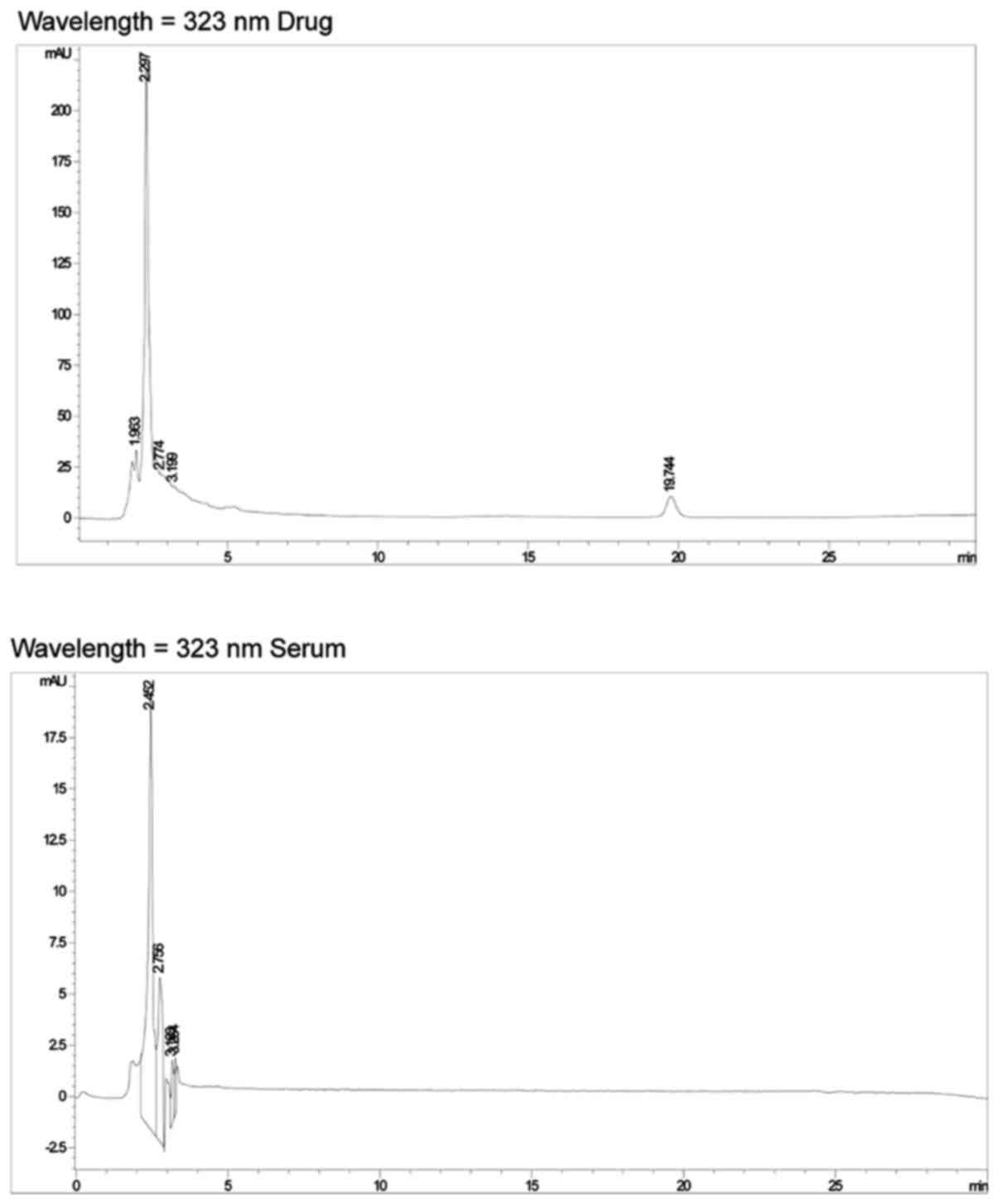
HPLC analysis showed that drug serum contained the
ingredients of the spleen-invigorating and blood stasis-removing
recipe (Fig. 1).
CCK-8-mediated detection of cell
proliferation
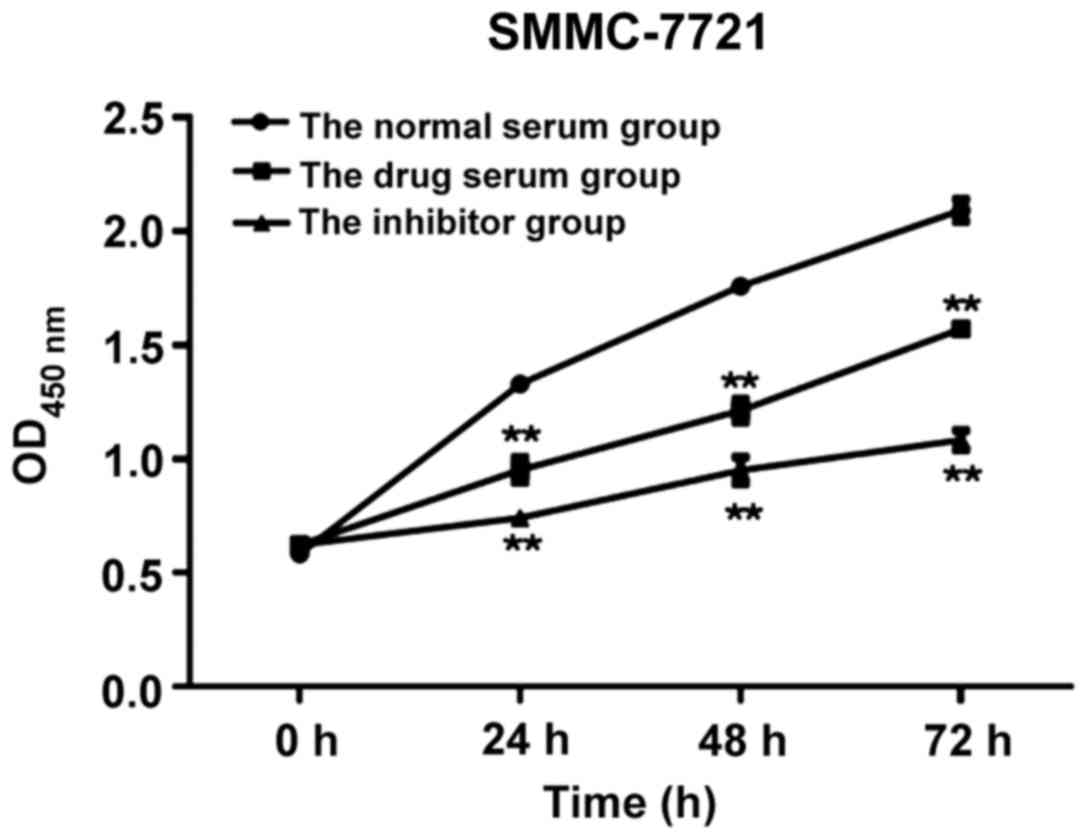
SMMC-7721 cells were cultured in serum, drug serum,
and serum containing inhibitor, and cell proliferation was detected
using the CCK-8 method at 0, 24, 48 and 72 h, respectively. There
was no significant difference in OD value between the three groups
at 0 h (P>0.05), although significant differences were found at
24, 48, and 72 h (P<0.01) (Fig.
2).
Angiogenesis test
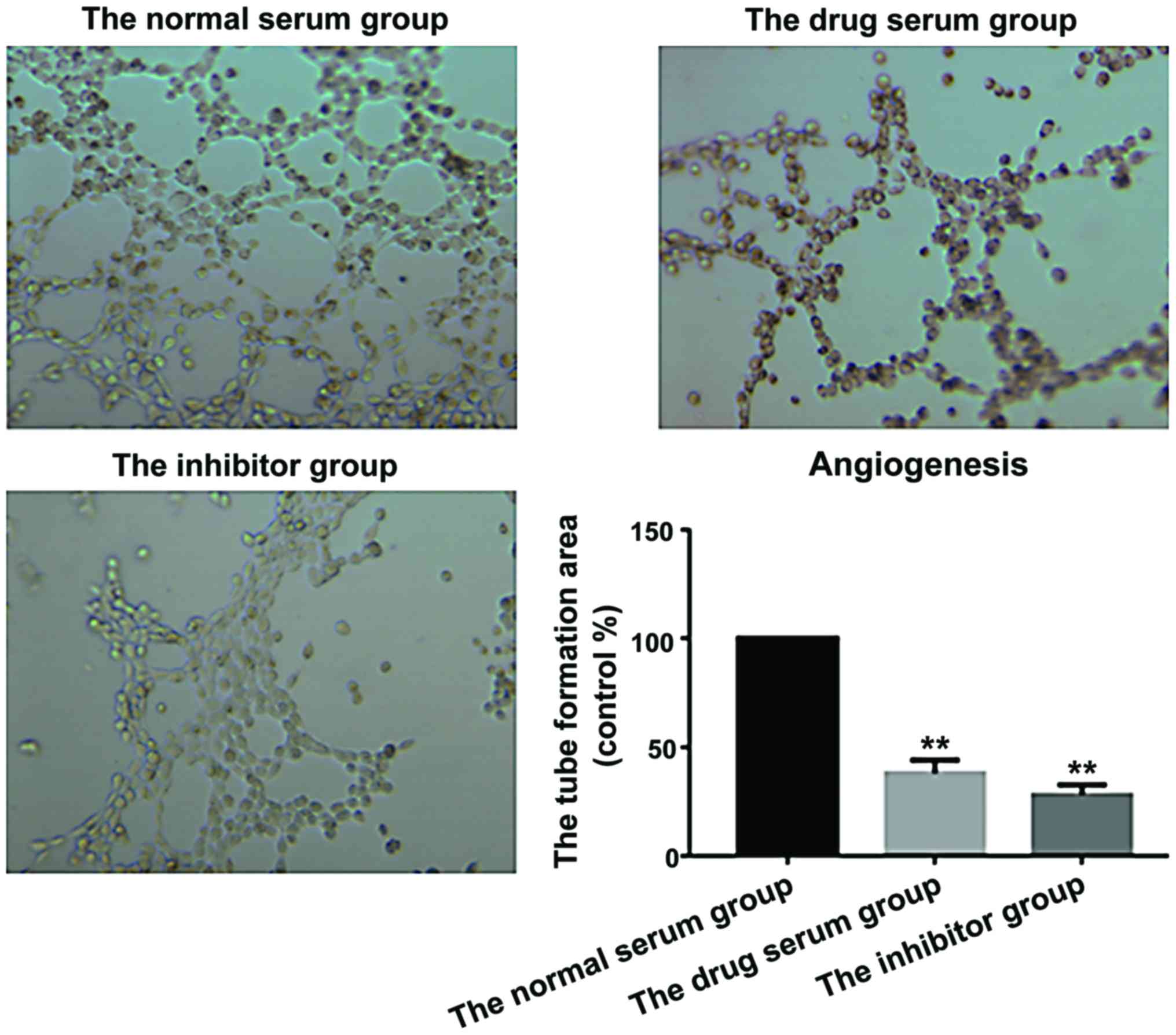
The normal serum group, drug serum group, and
inhibitor group were observed under an inverted microscope (×200).
Compared with the drug serum group and inhibitor group, SMMC-7721
cells in the normal serum group formed a larger area of new blood
vessels with denser blood vessels (Fig.
3).
Measurement of Jagged1, Notch1, and
VEGF mRNA by qPCR
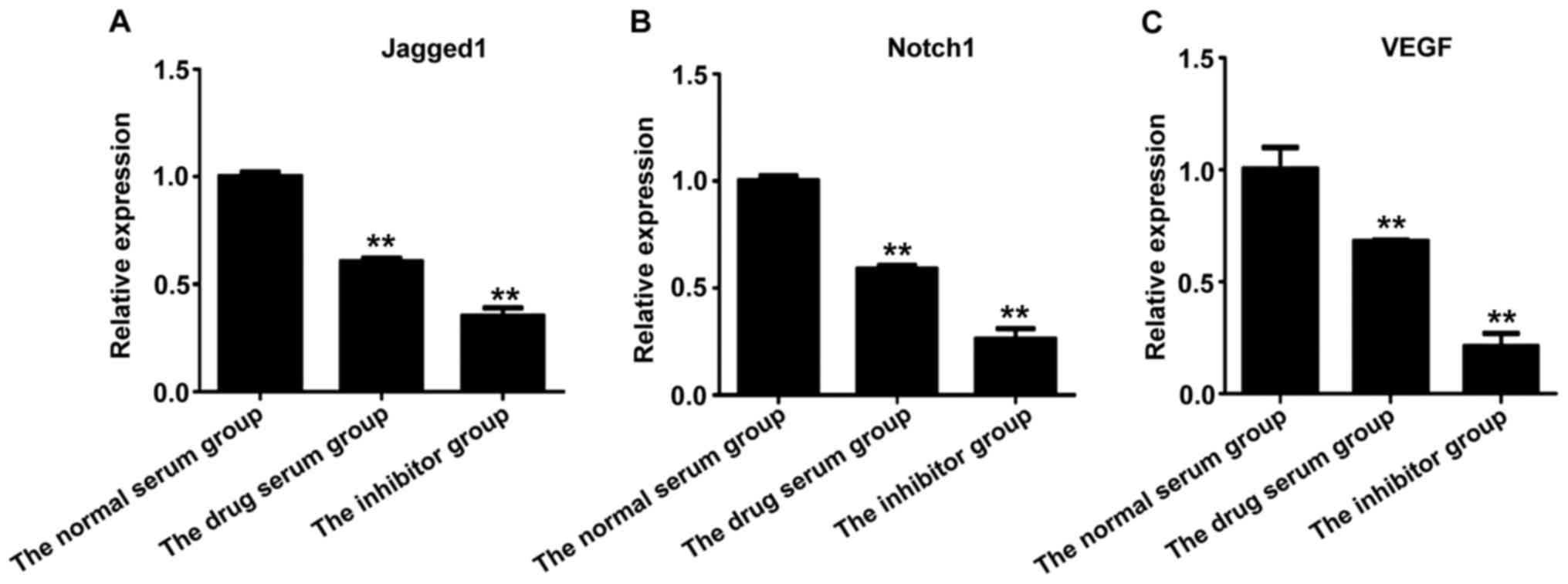
qPCR analysis showed that the levels of Jagged1
(Fig. 4A), Notch1 (Fig. 4B), and VEGF (Fig. 4C) in SMMC-7721 cells of the drug serum
group and inhibitor group were significantly lower than those of
the normal serum group (P<0.01).
The expression of Jagged1, Notch1, and
VEGF protein by western blot analysis
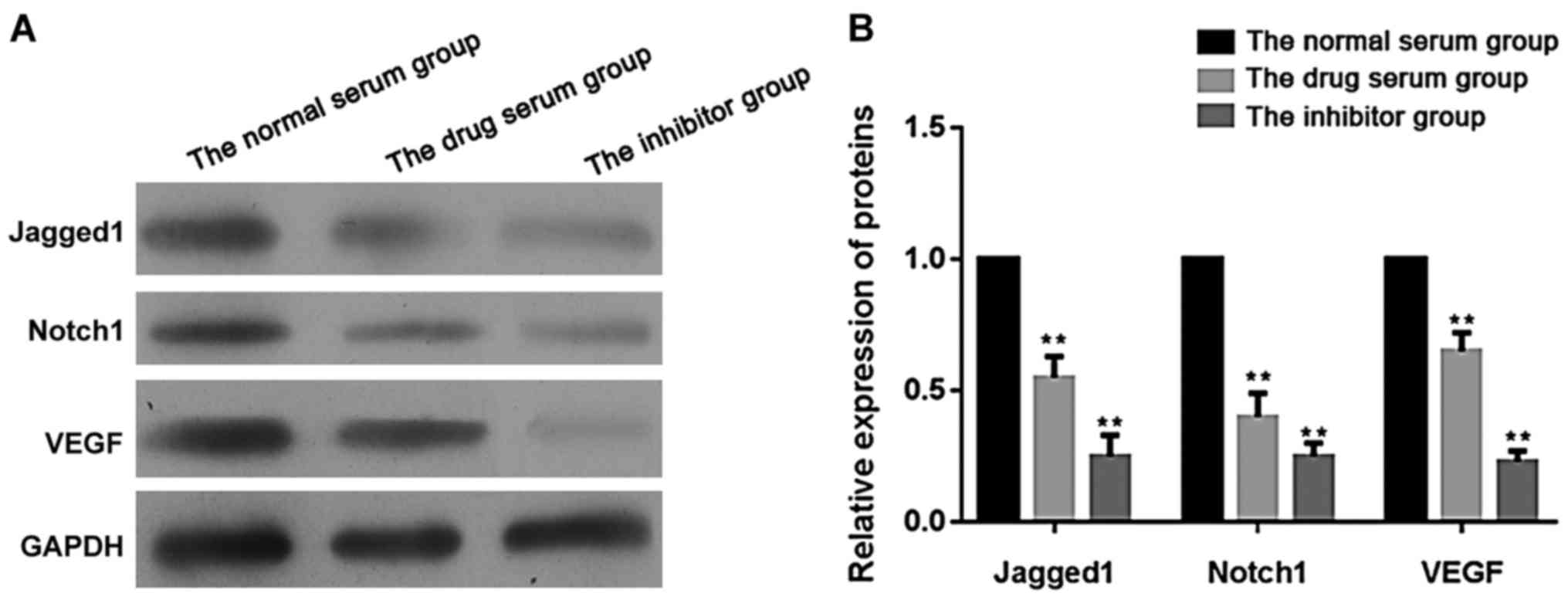
The expression of Jagged1, Notch1, and VEGF protein
in SMMC-7721 cells was measured by western blot analysis. The
levels of Jagged1, Notch1, and VEGF protein in SMMC-7721 cells of
the drug serum group were significantly lower than those of the
normal serum group (P<0.01). The levels of Jagged1 and Notch1
were decreased after adding the Notch inhibitor, DAPT, indicating
that DAPT successfully inhibited the Jagged1/Notch signaling
pathway. In addition, the expression of VEGF protein was reduced
after adding DAPT (Fig. 5).
The interaction between Jagged1 and
Notch1 detected by Co-IP
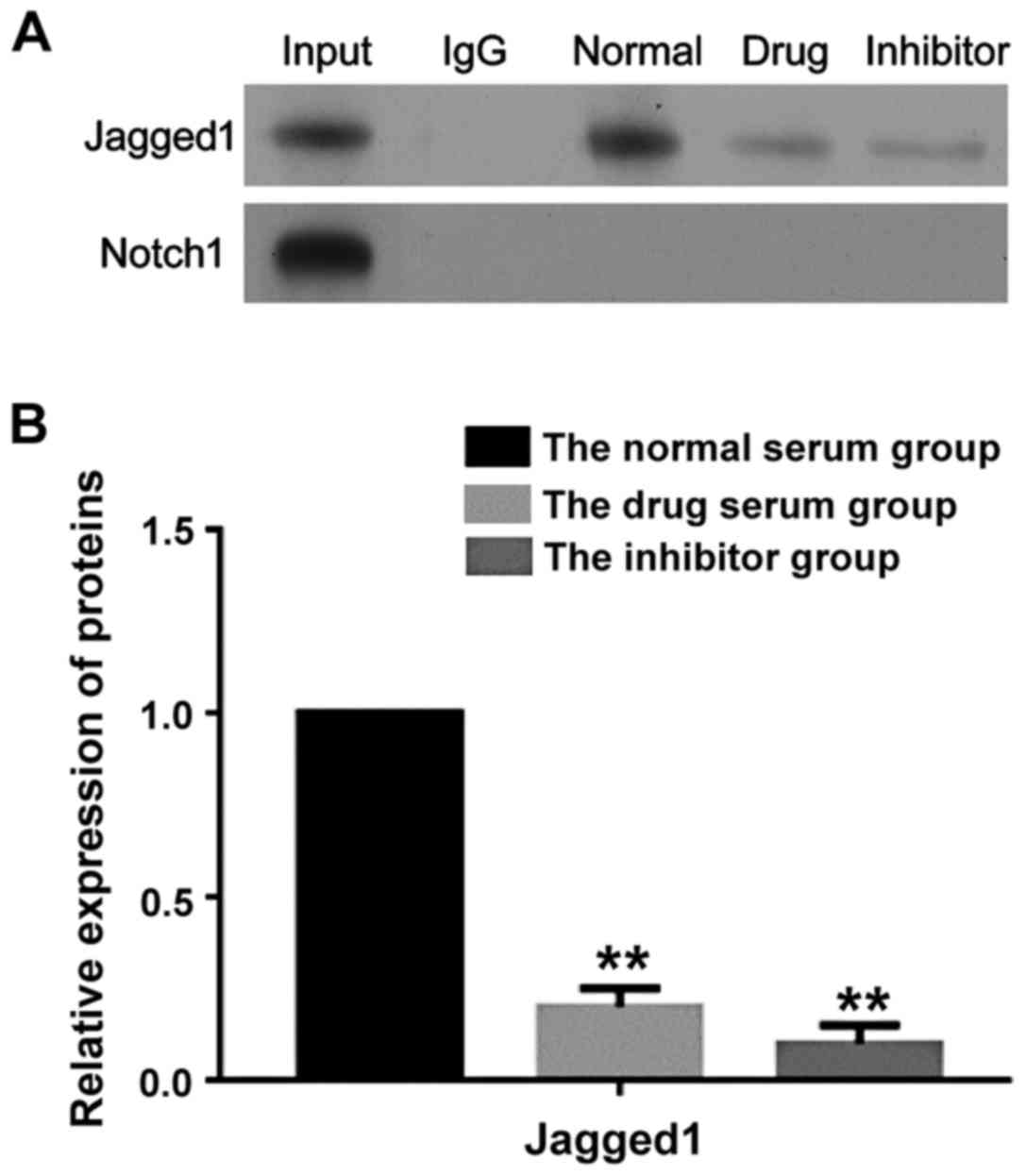
The interaction between Jagged1 and Notch1 in
SMMC-7721 cells of the drug serum group was significantly lower
than that in the normal serum group (P<0.01). The interaction
between Jagged1 and Notch1 in SMMC-7721 cells was also
significantly reduced after adding DAPT compared with that of the
normal serum group (P<0.01) (Fig.
6).
Discussion
Hepatocellular carcinoma is associated with one of
the highest rates of mortality among all diseases worldwide. The
number of new cases of liver cancer and the number of deaths in
China account for about half of the global total. In 1971, Folkman
(13) first reported that tumor
growth and metastasis are dependent on angiogenesis. The regulation
of tumor angiogenesis and anti-angiogenesis in the treatment of
cancer has become an area of intense research. It was found that
the positive expression rates of Notch1 and Jagged1 in human
hepatocellular carcinoma are higher than those in adjacent
cirrhotic tissue and normal tissue (P<0.05). The expression of
Notch1 in hepatocellular carcinoma is closely related to the
expression of Jagged1 (P<0.05), suggesting that Notch1 and
Jagged1 can promote the development of hepatocellular carcinoma
(14). The Notch signaling pathway
has been shown to play an important role in the development and
differentiation of endothelial cells, as well as in angiogenesis,
and tumor development (15,16). As an important ligand in the Notch
signaling pathway, Jagged1 can bind activated Notch1 to antagonize
D114 activity, enhance VEGF activity, and promote its expression.
This in turn stimulates tumor neovascularization and promotes tumor
growth, invasion, and metastasis (6).
The discovery of this phenomenon promoted a new approach to study
the relationship between the growth of hepatocellular carcinoma and
angiogenesis, and provides new insights into the comprehensive
treatment of hepatocellular carcinoma.
The spleen-invigorating and blood stasis-removing
recipe (formerly known as 960 mixture or the Fuzheng Kangai recipe,
contains Atractylodes Rhizome, curcuma, poria, bergamot,
Sophora flavescens, and Hedyotis diffusa, with a
total of 96 g) is used by our department for treatment after liver
cancer surgery. This recipe is derived from the prescription of
Professor Qian Bowen, a famous traditional Chinese medical doctor
at Shanghai University of Traditional Chinese Medicine. With heat
clearing-detoxication ability, this recipe can replenish qi
to invigorate the spleen. An increasing number of studies found
that many traditional Chinese medicines or their compounds have
antitumor effects (17,18). Some scholars further determined that
many traditional Chinese medicines can regulate the immune system
to inhibit tumor neovascularization, which in turn inhibits
metastasis (19).
HPLC was used to analyze the fingerprint of the
drugs of the spleen-invigorating and blood stasis-removing recipe
and drug serum at 323 nm. HPLC analysis showed that drugs of the
spleen-invigorating and blood stasis-removing recipe and drug serum
showed similar peaks within 0–5 min, indicating that drug serum
contained the ingredients of the spleen-invigorating and blood
stasis-removing recipe. SMMC-7721 hepatocarcinoma cells were
cultured in vitro in medium containing normal serum or drug
serum. The proliferation of SMMC-7721 cells was detected at 0, 24,
48 and 72 h, respectively. The proliferation of hepatocellular
carcinoma cells was significantly inhibited in the drug serum group
(P<0.01) in a time-dependent manner compared with the normal
serum group, indicating that the spleen-invigorating and blood
stasis-removing recipe can inhibit the in vitro
proliferation of SMMC-7721 cells. Angiogenesis of hepatocellular
carcinoma cells in vitro was observed under an inverted
microscope. Angiogenesis test showed that compared with the normal
serum group, the drug serum group and inhibitor group had fewer and
more sparse new blood vessels. Similar results were found in the
drug serum group and inhibitor serum group, indicating that the
spleen-invigorating and blood stasis-removing recipe can inhibit
the angiogenesis of liver cancer cells.
DAPT inhibits the activity of the Notch1 pathway
mainly by inhibiting γ-secretase (20). In this study, we further analyzed the
possible mechanism of the spleen-invigorating and blood
stasis-removing recipe in inhibiting the angiogenesis of
hepatocarcinoma cells in vitro. In our study, SMMC-7721
cells were cultured in vitro, and the levels of Jagged1,
Notch1, and VEGF in the normal serum group, drug serum group, and
inhibitor serum control group were measured by qPCR and western
blot analysis. In addition, the interaction between Jagged1 and
Notch1 was detected by Co-IP. The levels of Jagged1, Notch1, and
VEGF mRNA and protein in SMMC-7721 cells were significantly lower
in the drug serum group and inhibitor serum group compared with the
normal serum group (P<0.01). The interaction of Jagged1 and
Notch1 in SMMC-7721 cells was significantly lower in the drug serum
group than the normal serum group (P<0.01). Similar results were
observed in the inhibitor serum group with the addition of the
Notch signaling pathway inhibitor (DAPT).
In conclusion, we confirmed that the
spleen-invigorating and blood stasis-removing recipe can
significantly inhibit the proliferation and angiogenesis of
hepatocellular carcinoma cells in vitro. The function of the
spleen-invigorating and blood stasis-removing recipe is related to
the reduced expression of Jagged1, reduced interaction between
Jagged1 and Notch1, and the reduced expression and activity of
VEGF, to inhibit tumor neovascularization, and ultimately inhibit
the growth, invasion, and metastasis of liver cancer. To further
validate our results, we will develop a postoperative dormant
animal model of hepatocellular carcinoma to study the effects of
Jagged1/Notch1 pathway-mediated angiogenesis on liver cancer
dormancy, and the spleen-invigorating and blood stasis-removing
recipe.
Acknowledgements
The present study was supported by the Fund of
Building Strong TCM Province of Traditional Chinese Medicine Bureau
of Guangdong Province (project no. 20141001).
References
|
1
|
Catto JW, Alcaraz A, Bjartell AS, De Vere
White R, Evans CP, Fussel S, Hamdy FC, Kallioniemi O, Mengual L,
Schlomm T and Visakorpi T: MicroRNA in prostate, bladder, and
kidney cancer: A systematic review. Eur Urol. 59:671–681. 2011.
View Article : Google Scholar : PubMed/NCBI
|
|
2
|
Fabregat I, Roncero C and Fernández M:
Survival and apoptosis: A dysregulated balance in liver cancer.
Liver Int. 27:155–162. 2007. View Article : Google Scholar : PubMed/NCBI
|
|
3
|
Yan SL, Huang CY, Wu ST and Yin MC:
Oleanolic acid and ursolic acid induce apoptosis in four human
liver cancer cell lines. Toxicol In Vitro. 24:842–848. 2010.
View Article : Google Scholar : PubMed/NCBI
|
|
4
|
Hainaud P, Contrerès JO, Villemain A, Liu
LX, Plouët J, Tobelem G and Dupuy E: The role of the vascular
endothelial growth factor-Delta-like 4 ligand/Notch4-ephrin B2
cascade in tumor vessel remodeling and endothelial cell functions.
Cancer Res. 66:8501–8510. 2006. View Article : Google Scholar : PubMed/NCBI
|
|
5
|
Qi R, An H, Yu Y, Zhang M, Liu S, Xu H,
Guo Z, Cheng T and Cao X: Notch1 signaling inhibits growth of human
hepatocellular carcinoma through induction of cell cycle arrest and
apoptosis. Cancer Res. 63:8323–8329. 2003.PubMed/NCBI
|
|
6
|
Benedito R, Roca C, Sörensen I, Adams S,
Gossler A, Fruttiger M and Adams RH: The notch ligands Dll4 and
Jagged1 have opposing effects on angiogenesis. Cell. 137:1124–1135.
2009. View Article : Google Scholar : PubMed/NCBI
|
|
7
|
Kume T: Novel insights into the
differential functions of Notch ligands in vascular formation. J
Angiogenes Res. 1:82009. View Article : Google Scholar : PubMed/NCBI
|
|
8
|
Di Carlo JV and Alexander SR:
Hemofiltration for cytokine-driven illnesses: The mediator delivery
hypothesis. Int J Artif Organs. 28:777–786. 2005.PubMed/NCBI
|
|
9
|
Li S, Lin H, Tang Y, Li W, Shen J, Kai J,
Yue S, Shang G, Zhu Z, Shang E, et al: Comparative metabolomics
analysis on invigorating blood circulation for herb pair Gui-Hong
by ultra-high-performance liquid chromatography coupled to
quadrupole time-of-flight mass spectrometry and pattern recognition
approach. J Pharm Biomed Anal. 107:456–463. 2015. View Article : Google Scholar : PubMed/NCBI
|
|
10
|
Tian S, Tang J, Liu H, Wang L, Shen J, Li
J and Gan Y: Propyl gallate plays a nephroprotective role in early
stage of diabetic nephropathy associated with suppression of
glomerular endothelial cell proliferation and angiogenesis. Exp
Diabetes Res. 2012:2095672012. View Article : Google Scholar : PubMed/NCBI
|
|
11
|
Sherry N, Hagopian W, Ludvigsson J, Jain
SM, Wahlen J, Ferry RJ Jr, Bode B, Aronoff S, Holland C, Carlin D,
et al: Protégé Trial Investigators: Teplizumab for treatment of
type 1 diabetes (Protégé study): 1-year results from a randomised,
placebo-controlled trial. Lancet. 378:487–497. 2011. View Article : Google Scholar : PubMed/NCBI
|
|
12
|
Jiang HL, Singh SK, Yan JM, Zhang XB and
Xu Q: Liquid-phase chemical hydrogen storage: Catalytic hydrogen
generation under ambient conditions. ChemSusChem. 3:541–549. 2010.
View Article : Google Scholar : PubMed/NCBI
|
|
13
|
Folkman J: Tumor angiogenesis: Therapeutic
implications. N Engl J Med. 285:1182–1186. 1971. View Article : Google Scholar : PubMed/NCBI
|
|
14
|
Wang M, Xue L, Cao Q, Lin Y, Ding Y, Yang
P and Che L: Expression of Notch1, Jagged1 and beta-catenin and
their clinicopathological significance in hepatocellular carcinoma.
Neoplasma. 56:533–541. 2009. View Article : Google Scholar : PubMed/NCBI
|
|
15
|
Bray SJ: Notch signalling: A simple
pathway becomes complex. Nat Rev Mol Cell Biol. 7:678–689. 2006.
View Article : Google Scholar : PubMed/NCBI
|
|
16
|
Poon RT, Fan ST and Wong J: Clinical
significance of angiogenesis in gastrointestinal cancers: A target
for novel prognostic and therapeutic approaches. Ann Surg.
238:9–28. 2003. View Article : Google Scholar : PubMed/NCBI
|
|
17
|
Yang X and Wu XZ: Main anti-tumor
angiogenesis agents isolated from Chinese herbal medicines. Mini
Rev Med Chem. 15:1011–1023. 2015. View Article : Google Scholar : PubMed/NCBI
|
|
18
|
Tu X, Deng Y, Chen J, Hu Q, He C, Jordan
JB and Zhong S: Screening study on the anti-angiogenic effects of
Traditional Chinese Medicine - Part I: Heat-clearing and
detoxicating TCM. J Ethnopharmacol. 194:280–287. 2016. View Article : Google Scholar : PubMed/NCBI
|
|
19
|
Fan G, Zong W and Zuo J: Dynamic
observation and clinical significance of integrated traditional
Chinese and Western medicine on interleukin-2 system, T cell and
erythrocyte immune system in patients of lung cancer. Zhongguo
Zhong Xi Yi Jie He Za Zhi. 20:586–588. 2000.(In Chinese).
PubMed/NCBI
|
|
20
|
Meng RD, Shelton CC, Li YM, Qin LX,
Notterman D, Paty PB and Schwartz GK: gamma-Secretase inhibitors
abrogate oxaliplatin-induced activation of the Notch-1 signaling
pathway in colon cancer cells resulting in enhanced
chemosensitivity. Cancer Res. 69:573–582. 2009. View Article : Google Scholar : PubMed/NCBI
|