Spandidos Publications Logo
  • About
    • About Spandidos
    • Aims and Scopes
    • Abstracting and Indexing
    • Editorial Policies
    • Reprints and Permissions
    • Job Opportunities
    • Terms and Conditions
    • Contact
  • Journals
    • All Journals
    • Oncology Letters
      • Oncology Letters
      • Information for Authors
      • Editorial Policies
      • Editorial Board
      • Aims and Scope
      • Abstracting and Indexing
      • Bibliographic Information
      • Archive
    • International Journal of Oncology
      • International Journal of Oncology
      • Information for Authors
      • Editorial Policies
      • Editorial Board
      • Aims and Scope
      • Abstracting and Indexing
      • Bibliographic Information
      • Archive
    • Molecular and Clinical Oncology
      • Molecular and Clinical Oncology
      • Information for Authors
      • Editorial Policies
      • Editorial Board
      • Aims and Scope
      • Abstracting and Indexing
      • Bibliographic Information
      • Archive
    • Experimental and Therapeutic Medicine
      • Experimental and Therapeutic Medicine
      • Information for Authors
      • Editorial Policies
      • Editorial Board
      • Aims and Scope
      • Abstracting and Indexing
      • Bibliographic Information
      • Archive
    • International Journal of Molecular Medicine
      • International Journal of Molecular Medicine
      • Information for Authors
      • Editorial Policies
      • Editorial Board
      • Aims and Scope
      • Abstracting and Indexing
      • Bibliographic Information
      • Archive
    • Biomedical Reports
      • Biomedical Reports
      • Information for Authors
      • Editorial Policies
      • Editorial Board
      • Aims and Scope
      • Abstracting and Indexing
      • Bibliographic Information
      • Archive
    • Oncology Reports
      • Oncology Reports
      • Information for Authors
      • Editorial Policies
      • Editorial Board
      • Aims and Scope
      • Abstracting and Indexing
      • Bibliographic Information
      • Archive
    • Molecular Medicine Reports
      • Molecular Medicine Reports
      • Information for Authors
      • Editorial Policies
      • Editorial Board
      • Aims and Scope
      • Abstracting and Indexing
      • Bibliographic Information
      • Archive
    • World Academy of Sciences Journal
      • World Academy of Sciences Journal
      • Information for Authors
      • Editorial Policies
      • Editorial Board
      • Aims and Scope
      • Abstracting and Indexing
      • Bibliographic Information
      • Archive
    • International Journal of Functional Nutrition
      • International Journal of Functional Nutrition
      • Information for Authors
      • Editorial Policies
      • Editorial Board
      • Aims and Scope
      • Abstracting and Indexing
      • Bibliographic Information
      • Archive
    • International Journal of Epigenetics
      • International Journal of Epigenetics
      • Information for Authors
      • Editorial Policies
      • Editorial Board
      • Aims and Scope
      • Abstracting and Indexing
      • Bibliographic Information
      • Archive
    • Medicine International
      • Medicine International
      • Information for Authors
      • Editorial Policies
      • Editorial Board
      • Aims and Scope
      • Abstracting and Indexing
      • Bibliographic Information
      • Archive
  • Articles
  • Information
    • Information for Authors
    • Information for Reviewers
    • Information for Librarians
    • Information for Advertisers
    • Conferences
  • Language Editing
Spandidos Publications Logo
  • About
    • About Spandidos
    • Aims and Scopes
    • Abstracting and Indexing
    • Editorial Policies
    • Reprints and Permissions
    • Job Opportunities
    • Terms and Conditions
    • Contact
  • Journals
    • All Journals
    • Biomedical Reports
      • Information for Authors
      • Editorial Policies
      • Editorial Board
      • Aims and Scope
      • Abstracting and Indexing
      • Bibliographic Information
      • Archive
    • Experimental and Therapeutic Medicine
      • Information for Authors
      • Editorial Policies
      • Editorial Board
      • Aims and Scope
      • Abstracting and Indexing
      • Bibliographic Information
      • Archive
    • International Journal of Epigenetics
      • Information for Authors
      • Editorial Policies
      • Editorial Board
      • Aims and Scope
      • Abstracting and Indexing
      • Bibliographic Information
      • Archive
    • International Journal of Functional Nutrition
      • Information for Authors
      • Editorial Policies
      • Editorial Board
      • Aims and Scope
      • Abstracting and Indexing
      • Bibliographic Information
      • Archive
    • International Journal of Molecular Medicine
      • Information for Authors
      • Editorial Policies
      • Editorial Board
      • Aims and Scope
      • Abstracting and Indexing
      • Bibliographic Information
      • Archive
    • International Journal of Oncology
      • Information for Authors
      • Editorial Policies
      • Editorial Board
      • Aims and Scope
      • Abstracting and Indexing
      • Bibliographic Information
      • Archive
    • Medicine International
      • Information for Authors
      • Editorial Policies
      • Editorial Board
      • Aims and Scope
      • Abstracting and Indexing
      • Bibliographic Information
      • Archive
    • Molecular and Clinical Oncology
      • Information for Authors
      • Editorial Policies
      • Editorial Board
      • Aims and Scope
      • Abstracting and Indexing
      • Bibliographic Information
      • Archive
    • Molecular Medicine Reports
      • Information for Authors
      • Editorial Policies
      • Editorial Board
      • Aims and Scope
      • Abstracting and Indexing
      • Bibliographic Information
      • Archive
    • Oncology Letters
      • Information for Authors
      • Editorial Policies
      • Editorial Board
      • Aims and Scope
      • Abstracting and Indexing
      • Bibliographic Information
      • Archive
    • Oncology Reports
      • Information for Authors
      • Editorial Policies
      • Editorial Board
      • Aims and Scope
      • Abstracting and Indexing
      • Bibliographic Information
      • Archive
    • World Academy of Sciences Journal
      • Information for Authors
      • Editorial Policies
      • Editorial Board
      • Aims and Scope
      • Abstracting and Indexing
      • Bibliographic Information
      • Archive
  • Articles
  • Information
    • For Authors
    • For Reviewers
    • For Librarians
    • For Advertisers
    • Conferences
  • Language Editing
Login Register Submit
  • This site uses cookies
  • You can change your cookie settings at any time by following the instructions in our Cookie Policy. To find out more, you may read our Privacy Policy.

    I agree
Search articles by DOI, keyword, author or affiliation
Search
Advanced Search
presentation
Oncology Letters
Join Editorial Board Propose a Special Issue
Print ISSN: 1792-1074 Online ISSN: 1792-1082
Journal Cover
October-2017 Volume 14 Issue 4

Full Size Image

Sign up for eToc alerts
Recommend to Library

Journals

International Journal of Molecular Medicine

International Journal of Molecular Medicine

International Journal of Molecular Medicine is an international journal devoted to molecular mechanisms of human disease.

International Journal of Oncology

International Journal of Oncology

International Journal of Oncology is an international journal devoted to oncology research and cancer treatment.

Molecular Medicine Reports

Molecular Medicine Reports

Covers molecular medicine topics such as pharmacology, pathology, genetics, neuroscience, infectious diseases, molecular cardiology, and molecular surgery.

Oncology Reports

Oncology Reports

Oncology Reports is an international journal devoted to fundamental and applied research in Oncology.

Experimental and Therapeutic Medicine

Experimental and Therapeutic Medicine

Experimental and Therapeutic Medicine is an international journal devoted to laboratory and clinical medicine.

Oncology Letters

Oncology Letters

Oncology Letters is an international journal devoted to Experimental and Clinical Oncology.

Biomedical Reports

Biomedical Reports

Explores a wide range of biological and medical fields, including pharmacology, genetics, microbiology, neuroscience, and molecular cardiology.

Molecular and Clinical Oncology

Molecular and Clinical Oncology

International journal addressing all aspects of oncology research, from tumorigenesis and oncogenes to chemotherapy and metastasis.

World Academy of Sciences Journal

World Academy of Sciences Journal

Multidisciplinary open-access journal spanning biochemistry, genetics, neuroscience, environmental health, and synthetic biology.

International Journal of Functional Nutrition

International Journal of Functional Nutrition

Open-access journal combining biochemistry, pharmacology, immunology, and genetics to advance health through functional nutrition.

International Journal of Epigenetics

International Journal of Epigenetics

Publishes open-access research on using epigenetics to advance understanding and treatment of human disease.

Medicine International

Medicine International

An International Open Access Journal Devoted to General Medicine.

Journal Cover
October-2017 Volume 14 Issue 4

Full Size Image

Sign up for eToc alerts
Recommend to Library

  • Article
  • Citations
    • Cite This Article
    • Download Citation
    • Create Citation Alert
    • Remove Citation Alert
    • Cited By
  • Similar Articles
    • Related Articles (in Spandidos Publications)
    • Similar Articles (Google Scholar)
    • Similar Articles (PubMed)
  • Download PDF
  • Download XML
  • View XML
Article

Apigenin inhibits growth and induces apoptosis in human cholangiocarcinoma cells

  • Authors:
    • Pantipa Subhasitanont
    • Daranee Chokchaichamnankit
    • Khajeelak Chiablaem
    • Siriporn Keeratichamroen
    • Lukana Ngiwsara
    • N. Monique Paricharttanakul
    • Kriengsak Lirdprapamongkol
    • Churat Weeraphan
    • Jisnuson Svasti
    • Chantragan Srisomsap
  • View Affiliations / Copyright

    Affiliations: Laboratory of Biochemistry, Chulabhorn Research Institute, Bangkok 10210, Thailand
  • Pages: 4361-4371
    |
    Published online on: August 2, 2017
       https://doi.org/10.3892/ol.2017.6705
  • Expand metrics +
Metrics: Total Views: 0 (Spandidos Publications: | PMC Statistics: )
Metrics: Total PDF Downloads: 0 (Spandidos Publications: | PMC Statistics: )
Cited By (CrossRef): 0 citations Loading Articles...

This article is mentioned in:


Abstract

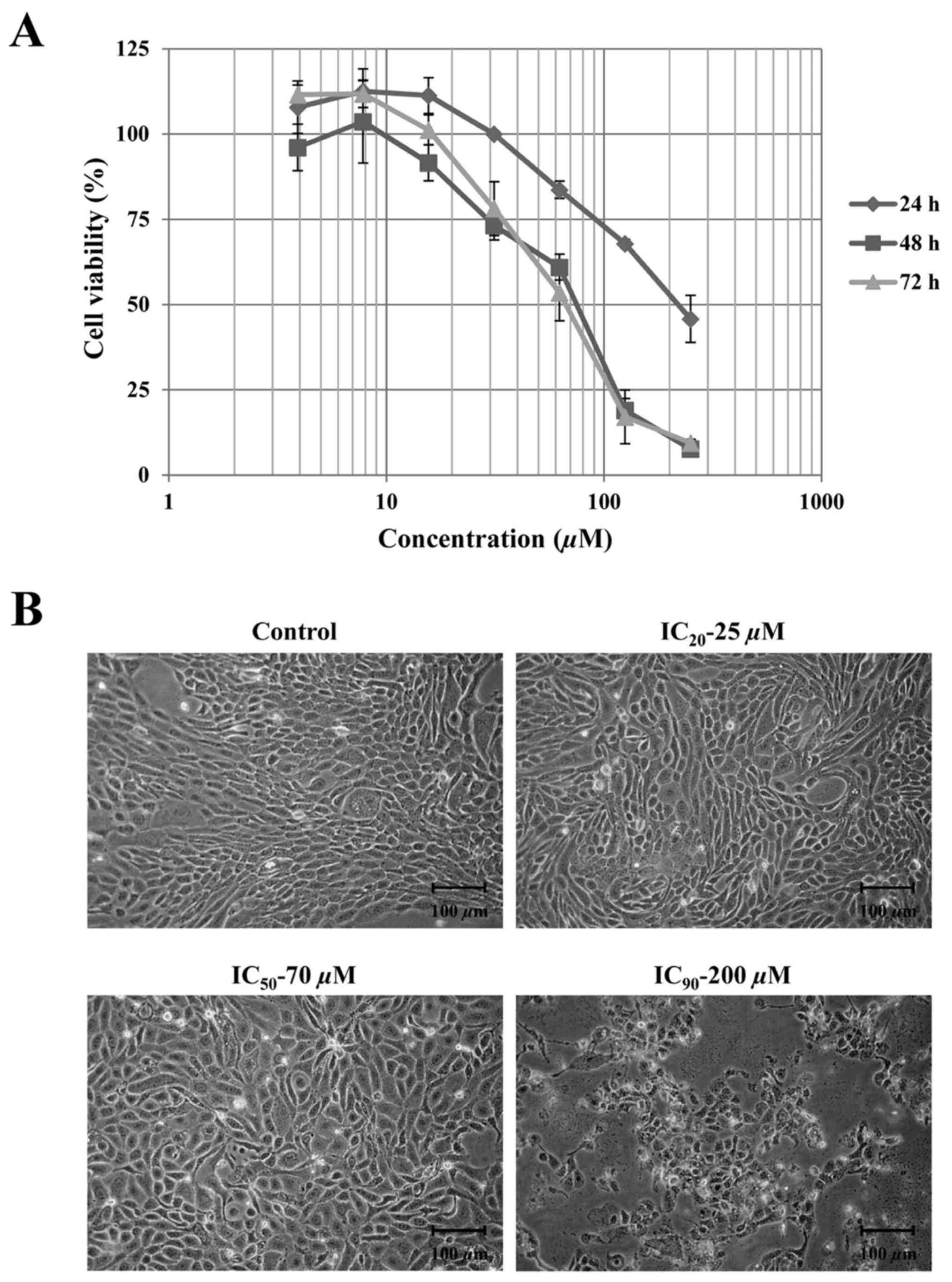
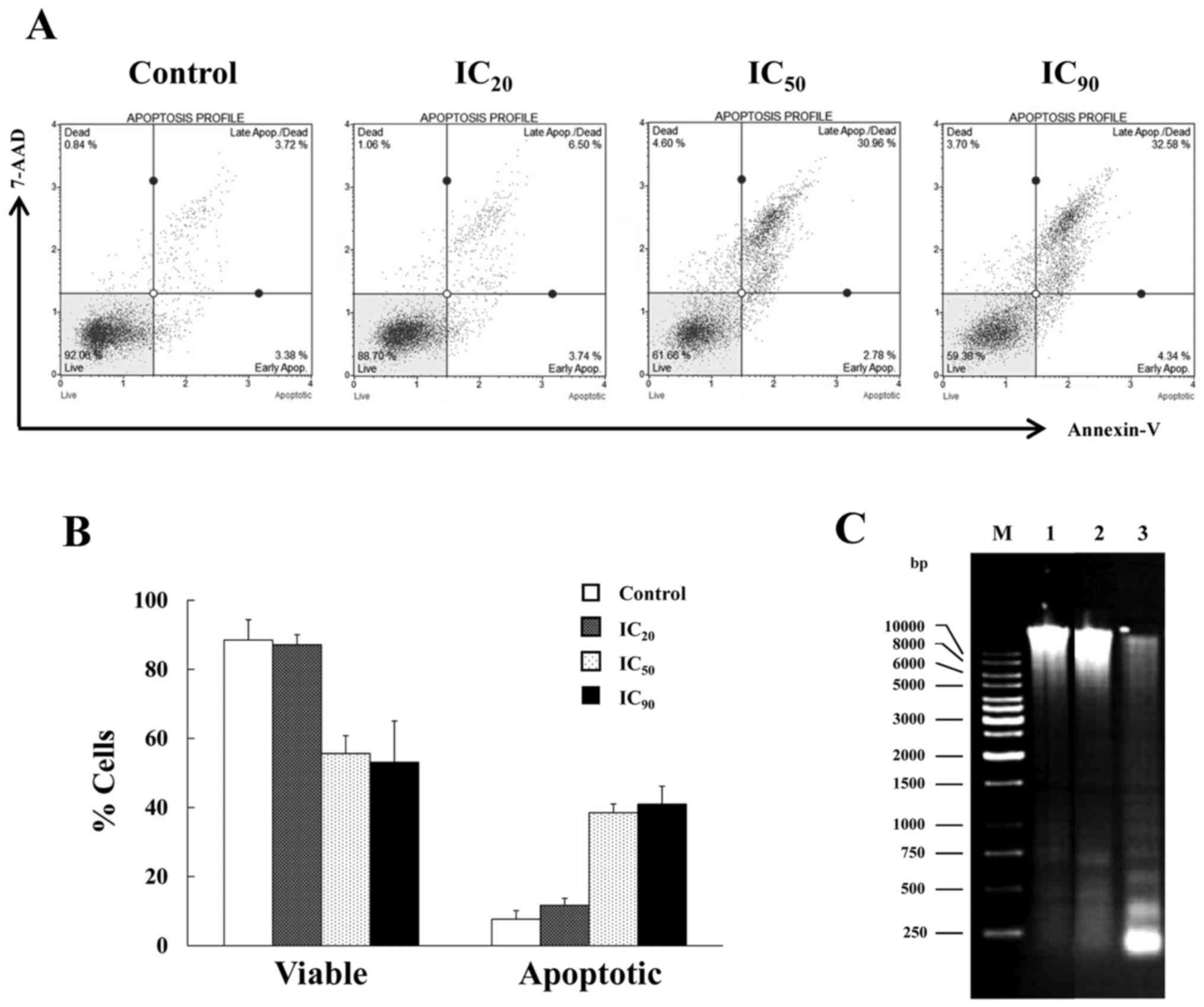
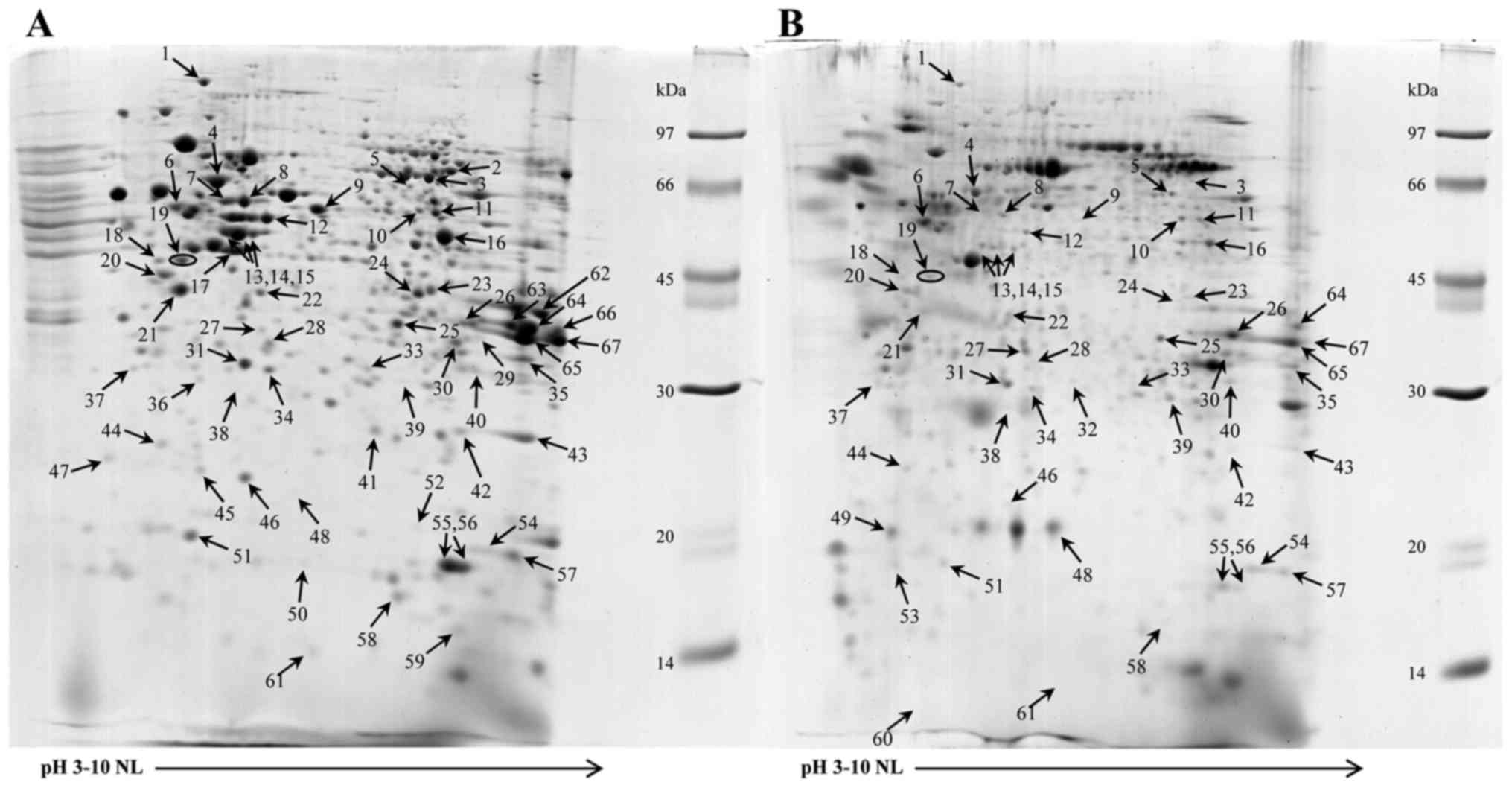
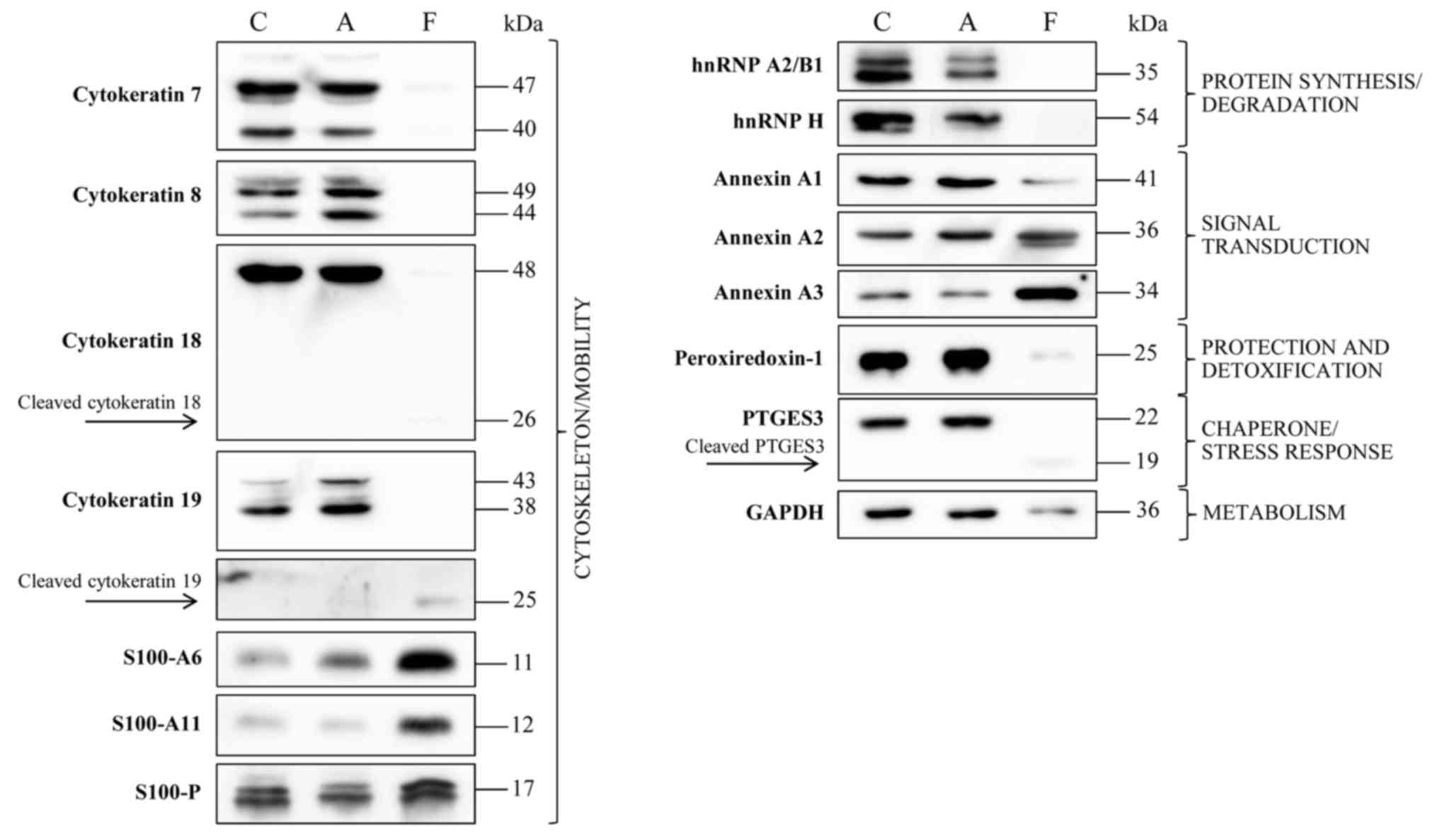
A promising nutraceutical, apigenin, was recently revealed to exhibit biological activity in inhibiting several types of cancer. The effects of apigenin on the growth inhibition and apoptosis of the cholangiocarcinoma HuCCA‑1 cell line were investigated. Protein alterations subsequent to apigenin treatment were studied using a proteomic approach. The values of 20, 50 and 90% inhibition of cell growth (IC20, IC50 and IC90) were determined by MTT cell viability assay. Apoptotic cell death was detected using two different methods, a flow cytometric analysis (Muse Cell Analyzer) and DNA fragmentation assay. A number of conditions including attached and detached cells were selected to perform two-dimensional gel electrophoresis (2‑DE) to study the alterations in the expression levels of treated and untreated proteins and identified by liquid chromatography (LC)/tandem mass spectrometry (MS/MS). The IC20, IC50 and IC90 values of apigenin after 48 h treatment in HuCCA‑1 cells were 25, 75 and 200 µM, respectively, indicating the cytotoxicity of this compound. Apigenin induced cell death in HuCCA‑1 cells via apoptosis as detected by flow cytometric analysis and exhibited, as confirmed with DNA fragmentation, characteristics of apoptotic cells. A total of 67 proteins with altered expression were identified from the 2‑DE analysis and LC/MS/MS. The cleavage of proteins involved in cytoskeletal, cytokeratin 8, 18 and 19, and high expression of S100‑A6 and S100‑A11 suggested that apoptosis was induced by apigenin via the caspase‑dependent pathway. Notably, two proteins, heterogeneous nuclear ribonucleoprotein H and A2/B1, disappeared completely subsequent to treatment, suggesting the role of apigenin in inducing cell death. The present study indicated that apigenin demonstrates an induction of growth inhibition and apoptosis in cholangiocarcinoma cells and the apoptosis pathway was confirmed by proteomic analysis.
View Figures

Figure 1

Figure 2

Figure 3

Figure 4

View References

1 

Kalra EK: Nutraceutical-definition and introduction. AAPS PharmSci. 5:E252003. View Article : Google Scholar : PubMed/NCBI

2 

Manach C, Scalbert A, Morand C, Rémésy C and Jiménez L: Polyphenols: Food sources and bioavailability. Am J Clin Nutr. 79:727–747. 2004.PubMed/NCBI

3 

Birt DF, Walker B, Tibbels MG and Bresnick E: Anti-mutagenesis and anti-promotion by apigenin, robinetin and indole-3-carbinol. Carcinogenesis. 7:959–963. 1986. View Article : Google Scholar : PubMed/NCBI

4 

Shukla S and Gupta S: Apigenin: A promising molecule for cancer prevention. Pharm Res. 27:962–978. 2010. View Article : Google Scholar : PubMed/NCBI

5 

Khan SA, Toledano MB and Taylor-Robinson SD: Epidemiology, risk factors, and pathogenesis of cholangiocarcinoma. HPB (Oxford). 10:77–82. 2008. View Article : Google Scholar : PubMed/NCBI

6 

Sonakul D, Koompirochana C, Chinda K and Stitnimakarn T: Hepatic carcinoma with opisthorchiasis. Southeast Asian J Trop Med Public Health. 9:215–219. 1978.PubMed/NCBI

7 

Kobayashi M, Ikeda K, Saitoh S, Suzuki F, Tsubota A, Suzuki Y, Arase Y, Murashima N, Chayama K and Kumada H: Incidence of primary cholangiocellular carcinoma of the liver in japanese patients with hepatitis C virus-related cirrhosis. Cancer. 88:2471–2477. 2000. View Article : Google Scholar : PubMed/NCBI

8 

Yamamoto S, Kubo S, Hai S, Uenishi T, Yamamoto T, Shuto T, Takemura S, Tanaka H, Yamazaki O, Hirohashi K and Tanaka T: Hepatitis C virus infection as a likely etiology of intrahepatic cholangiocarcinoma. Cancer Sci. 95:592–595. 2004. View Article : Google Scholar : PubMed/NCBI

9 

Shaib YH, El-Serag HB, Davila JA, Morgan R and McGlynn KA: Risk factors of intrahepatic cholangiocarcinoma in the United States: A case-control study. Gastroenterology. 128:620–626. 2005. View Article : Google Scholar : PubMed/NCBI

10 

Sorensen HT, Friis S, Olsen JH, Thulstrup AM, Mellemkjaer L, Linet M, Trichopoulos D, Vilstrup H and Olsen J: Risk of liver and other types of cancer in patients with cirrhosis: A nationwide cohort study in Denmark. Hepatology. 28:921–925. 1998. View Article : Google Scholar : PubMed/NCBI

11 

Srisomsap C, Sawangareetrakul P, Subhasitanont P, Panichakul T, Keeratichamroen S, Lirdprapamongkol K, Chokchaichamnankit D, Sirisinha S and Svasti J: Proteomic analysis of cholangiocarcinoma cell line. Proteomics. 4:1135–1144. 2004. View Article : Google Scholar : PubMed/NCBI

12 

Srisomsap C, Subhasitanont P, Sawangareetrakul P, Chokchaichamnankit D, Ngiwsara L, Chiablaem K and Svasti J: Comparison of membrane-associated proteins in human cholangiocarcinoma and hepatocellular carcinoma cell lines. Proteomics Clin Appl. 1:89–106. 2007. View Article : Google Scholar : PubMed/NCBI

13 

Elmore S: Apoptosis: A review of programmed cell death. Toxicol Pathol. 35:495–516. 2007. View Article : Google Scholar : PubMed/NCBI

14 

Martin SJ and Green DR: Protease activation during apoptosis: Death by a thousand cuts? Cell. 82:349–352. 1995. View Article : Google Scholar : PubMed/NCBI

15 

Thornberry NA and Lazebnik Y: Caspases: Enemies within. Science. 281:1312–1316. 1998. View Article : Google Scholar : PubMed/NCBI

16 

Jaattela M: Escaping cell death: Survival proteins in cancer. Exp Cell Res. 248:30–43. 1999. View Article : Google Scholar : PubMed/NCBI

17 

Levy-Strumpf N and Kimchi A: Death associated proteins (DAPs): From gene identification to the analysis of their apoptotic and tumor suppressive functions. Oncogene. 17:3331–3340. 1998. View Article : Google Scholar : PubMed/NCBI

18 

Brockstedt E, Rickers A, Kostka S, Laubersheimer A, Dörken B, Wittmann-Liebold B, Bommert K and Otto A: Identification of apoptosis-associated proteins in a human Burkitt lymphoma cell line. Cleavage of heterogeneous nuclear ribonucleoprotein A1 by caspase 3. J Biol Chem. 273:28057–28064. 1998. View Article : Google Scholar : PubMed/NCBI

19 

Prasad SC, Soldatenkov VA, Kuettel MR, Thraves PJ, Zou X and Dritschilo A: Protein changes associated with ionizing radiation-induced apoptosis in human prostate epithelial tumor cells. Electrophoresis. 20:1065–1074. 1999. View Article : Google Scholar : PubMed/NCBI

20 

Gupta S, Afaq F and Mukhtar H: Selective growth-inhibitory, cell-cycle deregulatory and apoptotic response of apigenin in normal versus human prostate carcinoma cells. Biochem Biophys Res Commun. 287:914–920. 2001. View Article : Google Scholar : PubMed/NCBI

21 

Choi EJ and Kim GH: Apigenin induces apoptosis through a mitochondria/caspase-pathway in human breast cancer MDA-MB-453 cells. J Clin Biochem Nutr. 44:260–265. 2009. View Article : Google Scholar : PubMed/NCBI

22 

Xu Y, Xin Y, Diao Y, Lu C, Fu J, Luo L and Yin Z: Synergistic effects of apigenin and paclitaxel on apoptosis of cancer cells. PLoS One. 6:e291692011. View Article : Google Scholar : PubMed/NCBI

23 

Khan A, Gillis K, Clor J and Tyagarajan K: Simplified evaluation of apoptosis using the Muse cell analyzer. Postepy Biochem. 58:492–496. 2012.PubMed/NCBI

24 

Svasti J, Srisomsap C, Subhasitanont P, Keeratichamroen S, Chokchaichamnankit D, Ngiwsara L, Chimnoi N, Pisutjaroenpong S, Techasakul S and Chen ST: Proteomic profiling of cholangiocarcinoma cell line treated with pomiferin from Derris malaccensis. Proteomics. 5:4504–4509. 2005. View Article : Google Scholar : PubMed/NCBI

25 

Ruela-de-Sousa RR, Fuhler GM, Blom N, Ferreira CV, Aoyama H and Peppelenbosch MP: Cytotoxicity of apigenin on leukemia cell lines: Implications for prevention and therapy. Cell Death Dis. 1:e192010. View Article : Google Scholar : PubMed/NCBI

26 

Vargo MA, Voss OH, Poustka F, Cardounel AJ, Grotewold E and Doseff AI: Apigenin-induced-apoptosis is mediated by the activation of PKCdelta and caspases in leukemia cells. Biochem Pharmacol. 72:681–692. 2006. View Article : Google Scholar : PubMed/NCBI

27 

Creagh EM, Conroy H and Martin SJ: Caspase-activation pathways in apoptosis and immunity. Immunol Rev. 193:10–21. 2003. View Article : Google Scholar : PubMed/NCBI

28 

Caulin C, Salvesen GS and Oshima RG: Caspase cleavage of keratin 18 and reorganization of intermediate filaments during epithelial cell apoptosis. J Cell Biol. 138:1379–1394. 1997. View Article : Google Scholar : PubMed/NCBI

29 

Leers MP, Kolgen W, Björklund V, Bergman T, Tribbick G, Persson B, Björklund P, Ramaekers FC, Björklund B, Nap M, et al: Immunocytochemical detection and mapping of a cytokeratin 18 neo-epitope exposed during early apoptosis. J Pathol. 187:567–572. 1999. View Article : Google Scholar : PubMed/NCBI

30 

Schutte B, Henfling M, Kölgen W, Bouman M, Meex S, Leers MP, Nap M, Björklund V, Björklund P, Björklund B, et al: Keratin 8/18 breakdown and reorganization during apoptosis. Exp Cell Res. 297:11–26. 2004. View Article : Google Scholar : PubMed/NCBI

31 

Mitamura S, Ikawa H, Mizuno N, Kaziro Y and Itoh H: Cytosolic nuclease activated by caspase-3 and inhibited by DFF-45. Biochem Biophys Res Commun. 243:480–484. 1998. View Article : Google Scholar : PubMed/NCBI

32 

Joo JH, Yoon SY, Kim JH, Paik SG, Min SR, Lim JS, Choe IS, Choi I and Kim JW: S100A6 (calcyclin) enhances the sensitivity to apoptosis via the upregulation of caspase-3 activity in Hep3B cells. J Cell Biochem. 103:1183–1197. 2008. View Article : Google Scholar : PubMed/NCBI

33 

Makino E, Sakaguchi M, Iwatsuki K and Huh NH: Introduction of an N-terminal peptide of S100C/A11 into human cells induces apoptotic cell death. J Mol Med (Berl). 82:612–620. 2004. View Article : Google Scholar : PubMed/NCBI

34 

Hamada S, Satoh K, Hirota M, Kanno A, Ishida K, Umino J, Ito H, Kikuta K, Kume K, Masamune A, et al: Calcium-binding protein S100P is a novel diagnostic marker of cholangiocarcinoma. Cancer Sci. 102:150–156. 2011. View Article : Google Scholar : PubMed/NCBI

35 

Nakanuma Y and Sato Y: Hilar cholangiocarcinoma is pathologically similar to pancreatic duct adenocarcinoma: Suggestions of similar background and development. J Hepatobiliary Pancreat Sci. 21:441–447. 2014. View Article : Google Scholar : PubMed/NCBI

36 

Wu Z, Boonmars T, Nagano I, Boonjaraspinyo S, Srinontong P, Ratasuwan P, Narong K, Nielsen PS and Maekawa Y: Significance of S100P as a biomarker in diagnosis, prognosis and therapy of opisthorchiasis-associated cholangiocarcinoma. Int J Cancer. 138:396–408. 2016. View Article : Google Scholar : PubMed/NCBI

37 

Noolu B, Ajumeera R, Chauhan A, Nagalla B, Manchala R and Ismail A: Murraya koenigii leaf extract inhibits proteasome activity and induces cell death in breast cancer cells. BMC Complement Altern Med. 13:72013. View Article : Google Scholar : PubMed/NCBI

38 

Beyer AL, Christensen ME, Walker BW and LeStourgeon WM: Identification and characterization of the packaging proteins of core 40S hnRNP particles. Cell. 11:127–138. 1977. View Article : Google Scholar : PubMed/NCBI

39 

Cooper TA, Wan L and Dreyfuss G: RNA and disease. Cell. 136:777–793. 2009. View Article : Google Scholar : PubMed/NCBI

40 

Arango D, Morohashi K, Yilmaz A, Kuramochi K, Parihar A, Brahimaj B, Grotewold E and Doseff AI: Molecular basis for the action of a dietary flavonoid revealed by the comprehensive identification of apigenin human targets. Proc Natl Acad Sci USA. 110:E2153–E2162. 2013. View Article : Google Scholar : PubMed/NCBI

41 

Lindquist S and Craig EA: The heat-shock proteins. Annu Rev Genet. 22:631–677. 1988. View Article : Google Scholar : PubMed/NCBI

42 

Calderwood SK and Ciocca DR: Heat shock proteins: Stress proteins with Janus-like properties in cancer. Int J Hyperthermia. 24:31–39. 2008. View Article : Google Scholar : PubMed/NCBI

43 

Takayama S, Reed JC and Homma S: Heat-shock proteins as regulators of apoptosis. Oncogene. 22:9041–9047. 2003. View Article : Google Scholar : PubMed/NCBI

44 

Kubota H, Yamamoto S, Itoh E, Abe Y, Nakamura A, Izumi Y, Okada H, Iida M, Nanjo H, Itoh H and Yamamoto Y: Increased expression of co-chaperone HOP with HSP90 and HSC70 and complex formation in human colonic carcinoma. Cell Stress Chaperones. 15:1003–1011. 2010. View Article : Google Scholar : PubMed/NCBI

45 

Sun W, Xing B, Sun Y, Du X, Lu M, Hao C, Lu Z, Mi W, Wu S, Wei H, et al: Proteome analysis of hepatocellular carcinoma by two-dimensional difference gel electrophoresis: Novel protein markers in hepatocellular carcinoma tissues. Mol Cell Proteomics. 6:1798–1808. 2007. View Article : Google Scholar : PubMed/NCBI

46 

Erlich RB, Kahn SA, Lima FR, Muras AG, Martins RA, Linden R, Chiarini LB, Martins VR and Moura Neto V: STI1 promotes glioma proliferation through MAPK and PI3K pathways. Glia. 55:1690–1698. 2007. View Article : Google Scholar : PubMed/NCBI

47 

Wang TH, Chao A, Tsai CL, Chang CL, Chen SH, Lee YS, Chen JK, Lin YJ, Chang PY, Wang CJ, et al: Stress-induced phosphoprotein 1 as a secreted biomarker for human ovarian cancer promotes cancer cell proliferation. Mol Cell Proteomics. 9:1873–1884. 2010. View Article : Google Scholar : PubMed/NCBI

48 

Tanioka T, Nakatani Y, Semmyo N, Murakami M and Kudo I: Molecular identification of cytosolic prostaglandin E2 synthase that is functionally coupled with cyclooxygenase-1 in immediate prostaglandin E2 biosynthesis. J Biol Chem. 275:32775–32782. 2000. View Article : Google Scholar : PubMed/NCBI

49 

Simpson NE, Lambert WM, Watkins R, Giashuddin S, Huang SJ, Oxelmark E, Arju R, Hochman T, Goldberg JD, Schneider RJ, et al: High levels of Hsp90 cochaperone p23 promote tumor progression and poor prognosis in breast cancer by increasing lymph node metastases and drug resistance. Cancer Res. 70:8446–8456. 2010. View Article : Google Scholar : PubMed/NCBI

50 

Gausdal G, Gjertsen BT, Fladmark KE, Demol H, Vandekerckhove J and Doskeland SO: Caspase-dependent, geldanamycin-enhanced cleavage of co-chaperone p23 in leukemic apoptosis. Leukemia. 18:1989–1996. 2004. View Article : Google Scholar : PubMed/NCBI

Related Articles

  • Abstract
  • View
  • Download
  • Twitter
Copy and paste a formatted citation
Spandidos Publications style
Subhasitanont P, Chokchaichamnankit D, Chiablaem K, Keeratichamroen S, Ngiwsara L, Paricharttanakul NM, Lirdprapamongkol K, Weeraphan C, Svasti J, Srisomsap C, Srisomsap C, et al: Apigenin inhibits growth and induces apoptosis in human cholangiocarcinoma cells. Oncol Lett 14: 4361-4371, 2017.
APA
Subhasitanont, P., Chokchaichamnankit, D., Chiablaem, K., Keeratichamroen, S., Ngiwsara, L., Paricharttanakul, N.M. ... Srisomsap, C. (2017). Apigenin inhibits growth and induces apoptosis in human cholangiocarcinoma cells. Oncology Letters, 14, 4361-4371. https://doi.org/10.3892/ol.2017.6705
MLA
Subhasitanont, P., Chokchaichamnankit, D., Chiablaem, K., Keeratichamroen, S., Ngiwsara, L., Paricharttanakul, N. M., Lirdprapamongkol, K., Weeraphan, C., Svasti, J., Srisomsap, C."Apigenin inhibits growth and induces apoptosis in human cholangiocarcinoma cells". Oncology Letters 14.4 (2017): 4361-4371.
Chicago
Subhasitanont, P., Chokchaichamnankit, D., Chiablaem, K., Keeratichamroen, S., Ngiwsara, L., Paricharttanakul, N. M., Lirdprapamongkol, K., Weeraphan, C., Svasti, J., Srisomsap, C."Apigenin inhibits growth and induces apoptosis in human cholangiocarcinoma cells". Oncology Letters 14, no. 4 (2017): 4361-4371. https://doi.org/10.3892/ol.2017.6705
Copy and paste a formatted citation
x
Spandidos Publications style
Subhasitanont P, Chokchaichamnankit D, Chiablaem K, Keeratichamroen S, Ngiwsara L, Paricharttanakul NM, Lirdprapamongkol K, Weeraphan C, Svasti J, Srisomsap C, Srisomsap C, et al: Apigenin inhibits growth and induces apoptosis in human cholangiocarcinoma cells. Oncol Lett 14: 4361-4371, 2017.
APA
Subhasitanont, P., Chokchaichamnankit, D., Chiablaem, K., Keeratichamroen, S., Ngiwsara, L., Paricharttanakul, N.M. ... Srisomsap, C. (2017). Apigenin inhibits growth and induces apoptosis in human cholangiocarcinoma cells. Oncology Letters, 14, 4361-4371. https://doi.org/10.3892/ol.2017.6705
MLA
Subhasitanont, P., Chokchaichamnankit, D., Chiablaem, K., Keeratichamroen, S., Ngiwsara, L., Paricharttanakul, N. M., Lirdprapamongkol, K., Weeraphan, C., Svasti, J., Srisomsap, C."Apigenin inhibits growth and induces apoptosis in human cholangiocarcinoma cells". Oncology Letters 14.4 (2017): 4361-4371.
Chicago
Subhasitanont, P., Chokchaichamnankit, D., Chiablaem, K., Keeratichamroen, S., Ngiwsara, L., Paricharttanakul, N. M., Lirdprapamongkol, K., Weeraphan, C., Svasti, J., Srisomsap, C."Apigenin inhibits growth and induces apoptosis in human cholangiocarcinoma cells". Oncology Letters 14, no. 4 (2017): 4361-4371. https://doi.org/10.3892/ol.2017.6705
Follow us
  • Twitter
  • LinkedIn
  • Facebook
About
  • Spandidos Publications
  • Careers
  • Cookie Policy
  • Privacy Policy
How can we help?
  • Help
  • Live Chat
  • Contact
  • Email to our Support Team