Spandidos Publications Logo
  • About
    • About Spandidos
    • Aims and Scopes
    • Abstracting and Indexing
    • Editorial Policies
    • Reprints and Permissions
    • Job Opportunities
    • Terms and Conditions
    • Contact
  • Journals
    • All Journals
    • Oncology Letters
      • Oncology Letters
      • Information for Authors
      • Editorial Policies
      • Editorial Board
      • Aims and Scope
      • Abstracting and Indexing
      • Bibliographic Information
      • Archive
    • International Journal of Oncology
      • International Journal of Oncology
      • Information for Authors
      • Editorial Policies
      • Editorial Board
      • Aims and Scope
      • Abstracting and Indexing
      • Bibliographic Information
      • Archive
    • Molecular and Clinical Oncology
      • Molecular and Clinical Oncology
      • Information for Authors
      • Editorial Policies
      • Editorial Board
      • Aims and Scope
      • Abstracting and Indexing
      • Bibliographic Information
      • Archive
    • Experimental and Therapeutic Medicine
      • Experimental and Therapeutic Medicine
      • Information for Authors
      • Editorial Policies
      • Editorial Board
      • Aims and Scope
      • Abstracting and Indexing
      • Bibliographic Information
      • Archive
    • International Journal of Molecular Medicine
      • International Journal of Molecular Medicine
      • Information for Authors
      • Editorial Policies
      • Editorial Board
      • Aims and Scope
      • Abstracting and Indexing
      • Bibliographic Information
      • Archive
    • Biomedical Reports
      • Biomedical Reports
      • Information for Authors
      • Editorial Policies
      • Editorial Board
      • Aims and Scope
      • Abstracting and Indexing
      • Bibliographic Information
      • Archive
    • Oncology Reports
      • Oncology Reports
      • Information for Authors
      • Editorial Policies
      • Editorial Board
      • Aims and Scope
      • Abstracting and Indexing
      • Bibliographic Information
      • Archive
    • Molecular Medicine Reports
      • Molecular Medicine Reports
      • Information for Authors
      • Editorial Policies
      • Editorial Board
      • Aims and Scope
      • Abstracting and Indexing
      • Bibliographic Information
      • Archive
    • World Academy of Sciences Journal
      • World Academy of Sciences Journal
      • Information for Authors
      • Editorial Policies
      • Editorial Board
      • Aims and Scope
      • Abstracting and Indexing
      • Bibliographic Information
      • Archive
    • International Journal of Functional Nutrition
      • International Journal of Functional Nutrition
      • Information for Authors
      • Editorial Policies
      • Editorial Board
      • Aims and Scope
      • Abstracting and Indexing
      • Bibliographic Information
      • Archive
    • International Journal of Epigenetics
      • International Journal of Epigenetics
      • Information for Authors
      • Editorial Policies
      • Editorial Board
      • Aims and Scope
      • Abstracting and Indexing
      • Bibliographic Information
      • Archive
    • Medicine International
      • Medicine International
      • Information for Authors
      • Editorial Policies
      • Editorial Board
      • Aims and Scope
      • Abstracting and Indexing
      • Bibliographic Information
      • Archive
  • Articles
  • Information
    • Information for Authors
    • Information for Reviewers
    • Information for Librarians
    • Information for Advertisers
    • Conferences
  • Language Editing
Spandidos Publications Logo
  • About
    • About Spandidos
    • Aims and Scopes
    • Abstracting and Indexing
    • Editorial Policies
    • Reprints and Permissions
    • Job Opportunities
    • Terms and Conditions
    • Contact
  • Journals
    • All Journals
    • Biomedical Reports
      • Information for Authors
      • Editorial Policies
      • Editorial Board
      • Aims and Scope
      • Abstracting and Indexing
      • Bibliographic Information
      • Archive
    • Experimental and Therapeutic Medicine
      • Information for Authors
      • Editorial Policies
      • Editorial Board
      • Aims and Scope
      • Abstracting and Indexing
      • Bibliographic Information
      • Archive
    • International Journal of Epigenetics
      • Information for Authors
      • Editorial Policies
      • Editorial Board
      • Aims and Scope
      • Abstracting and Indexing
      • Bibliographic Information
      • Archive
    • International Journal of Functional Nutrition
      • Information for Authors
      • Editorial Policies
      • Editorial Board
      • Aims and Scope
      • Abstracting and Indexing
      • Bibliographic Information
      • Archive
    • International Journal of Molecular Medicine
      • Information for Authors
      • Editorial Policies
      • Editorial Board
      • Aims and Scope
      • Abstracting and Indexing
      • Bibliographic Information
      • Archive
    • International Journal of Oncology
      • Information for Authors
      • Editorial Policies
      • Editorial Board
      • Aims and Scope
      • Abstracting and Indexing
      • Bibliographic Information
      • Archive
    • Medicine International
      • Information for Authors
      • Editorial Policies
      • Editorial Board
      • Aims and Scope
      • Abstracting and Indexing
      • Bibliographic Information
      • Archive
    • Molecular and Clinical Oncology
      • Information for Authors
      • Editorial Policies
      • Editorial Board
      • Aims and Scope
      • Abstracting and Indexing
      • Bibliographic Information
      • Archive
    • Molecular Medicine Reports
      • Information for Authors
      • Editorial Policies
      • Editorial Board
      • Aims and Scope
      • Abstracting and Indexing
      • Bibliographic Information
      • Archive
    • Oncology Letters
      • Information for Authors
      • Editorial Policies
      • Editorial Board
      • Aims and Scope
      • Abstracting and Indexing
      • Bibliographic Information
      • Archive
    • Oncology Reports
      • Information for Authors
      • Editorial Policies
      • Editorial Board
      • Aims and Scope
      • Abstracting and Indexing
      • Bibliographic Information
      • Archive
    • World Academy of Sciences Journal
      • Information for Authors
      • Editorial Policies
      • Editorial Board
      • Aims and Scope
      • Abstracting and Indexing
      • Bibliographic Information
      • Archive
  • Articles
  • Information
    • For Authors
    • For Reviewers
    • For Librarians
    • For Advertisers
    • Conferences
  • Language Editing
Login Register Submit
  • This site uses cookies
  • You can change your cookie settings at any time by following the instructions in our Cookie Policy. To find out more, you may read our Privacy Policy.

    I agree
Search articles by DOI, keyword, author or affiliation
Search
Advanced Search
presentation
Oncology Letters
Join Editorial Board Propose a Special Issue
Print ISSN: 1792-1074 Online ISSN: 1792-1082
Journal Cover
October-2017 Volume 14 Issue 4

Full Size Image

Sign up for eToc alerts
Recommend to Library

Journals

International Journal of Molecular Medicine

International Journal of Molecular Medicine

International Journal of Molecular Medicine is an international journal devoted to molecular mechanisms of human disease.

International Journal of Oncology

International Journal of Oncology

International Journal of Oncology is an international journal devoted to oncology research and cancer treatment.

Molecular Medicine Reports

Molecular Medicine Reports

Covers molecular medicine topics such as pharmacology, pathology, genetics, neuroscience, infectious diseases, molecular cardiology, and molecular surgery.

Oncology Reports

Oncology Reports

Oncology Reports is an international journal devoted to fundamental and applied research in Oncology.

Experimental and Therapeutic Medicine

Experimental and Therapeutic Medicine

Experimental and Therapeutic Medicine is an international journal devoted to laboratory and clinical medicine.

Oncology Letters

Oncology Letters

Oncology Letters is an international journal devoted to Experimental and Clinical Oncology.

Biomedical Reports

Biomedical Reports

Explores a wide range of biological and medical fields, including pharmacology, genetics, microbiology, neuroscience, and molecular cardiology.

Molecular and Clinical Oncology

Molecular and Clinical Oncology

International journal addressing all aspects of oncology research, from tumorigenesis and oncogenes to chemotherapy and metastasis.

World Academy of Sciences Journal

World Academy of Sciences Journal

Multidisciplinary open-access journal spanning biochemistry, genetics, neuroscience, environmental health, and synthetic biology.

International Journal of Functional Nutrition

International Journal of Functional Nutrition

Open-access journal combining biochemistry, pharmacology, immunology, and genetics to advance health through functional nutrition.

International Journal of Epigenetics

International Journal of Epigenetics

Publishes open-access research on using epigenetics to advance understanding and treatment of human disease.

Medicine International

Medicine International

An International Open Access Journal Devoted to General Medicine.

Journal Cover
October-2017 Volume 14 Issue 4

Full Size Image

Sign up for eToc alerts
Recommend to Library

  • Article
  • Citations
    • Cite This Article
    • Download Citation
    • Create Citation Alert
    • Remove Citation Alert
    • Cited By
  • Similar Articles
    • Related Articles (in Spandidos Publications)
    • Similar Articles (Google Scholar)
    • Similar Articles (PubMed)
  • Download PDF
  • Download XML
  • View XML
Article Open Access

Khat promotes human breast cancer MDA-MB-231 cell apoptosis via mitochondria and MAPK-associated pathways

  • Authors:
    • Yu Lu
    • Yanyan Li
    • Min Xiang
    • Jie Zhou
    • Juan Chen
  • View Affiliations / Copyright

    Affiliations: Department of Endocrinology, Taizhou People's Hospital, Nantong University, Taizhou, Jiangsu 225300, P.R. China, Department of Neurosurgery and Brain and Nerve Research Laboratory, The First Affiliated Hospital of Soochow University, Suzhou, Jiangsu 215006, P.R. China, Department of Biochemistry and Molecular Biology, Tongji Medical College, Huazhong University of Science and Technology, Wuhan, Hubei 430030, P.R. China
    Copyright: © Lu et al. This is an open access article distributed under the terms of Creative Commons Attribution License.
  • Pages: 3947-3952
    |
    Published online on: August 2, 2017
       https://doi.org/10.3892/ol.2017.6708
  • Expand metrics +
Metrics: Total Views: 0 (Spandidos Publications: | PMC Statistics: )
Metrics: Total PDF Downloads: 0 (Spandidos Publications: | PMC Statistics: )
Cited By (CrossRef): 0 citations Loading Articles...

This article is mentioned in:


Abstract

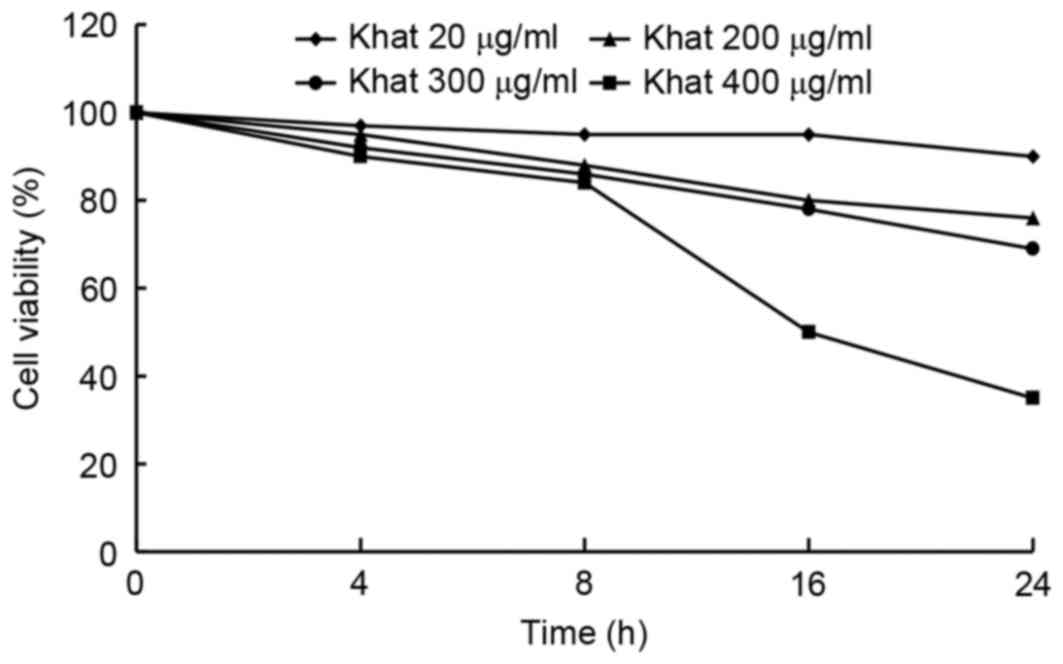
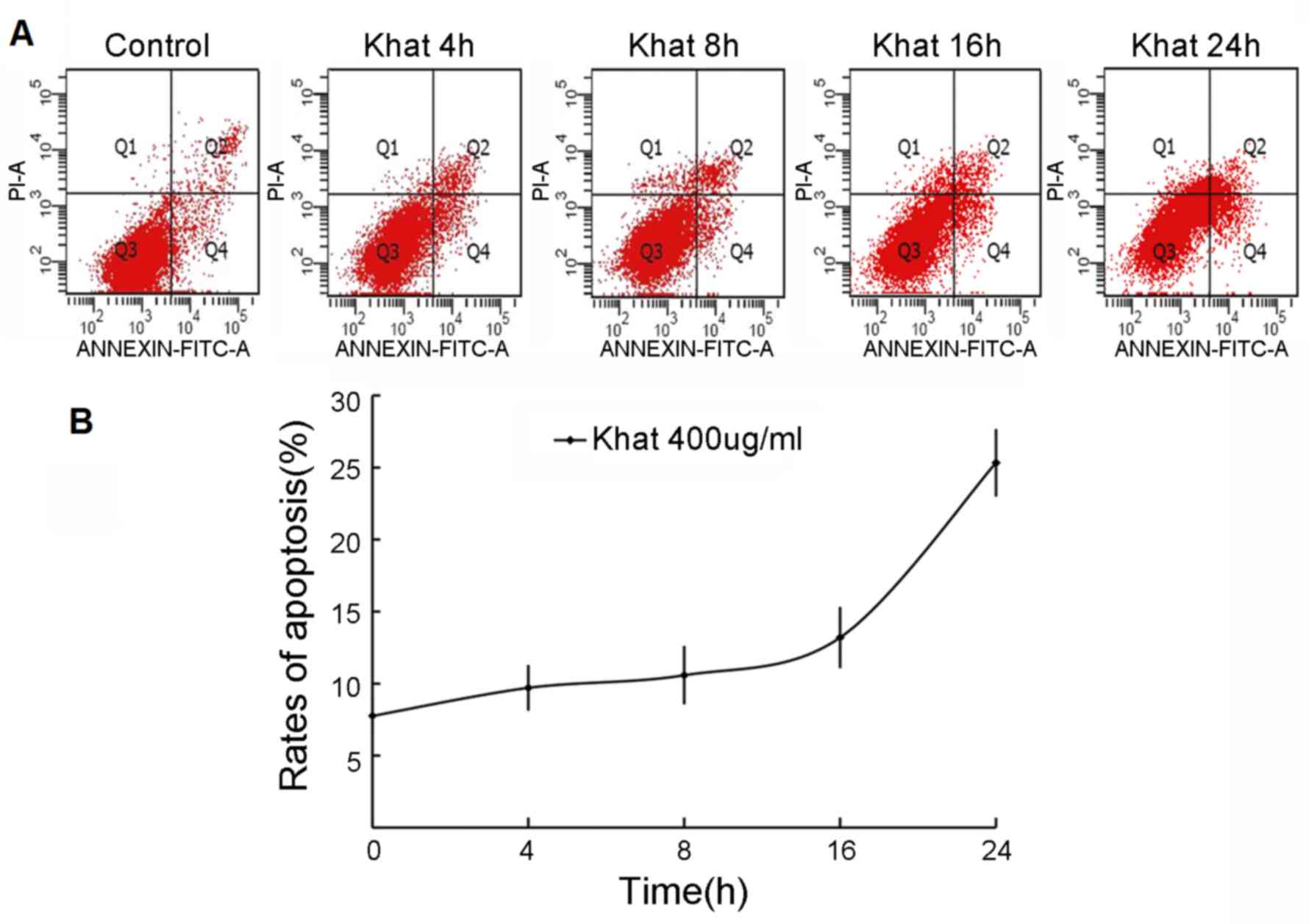
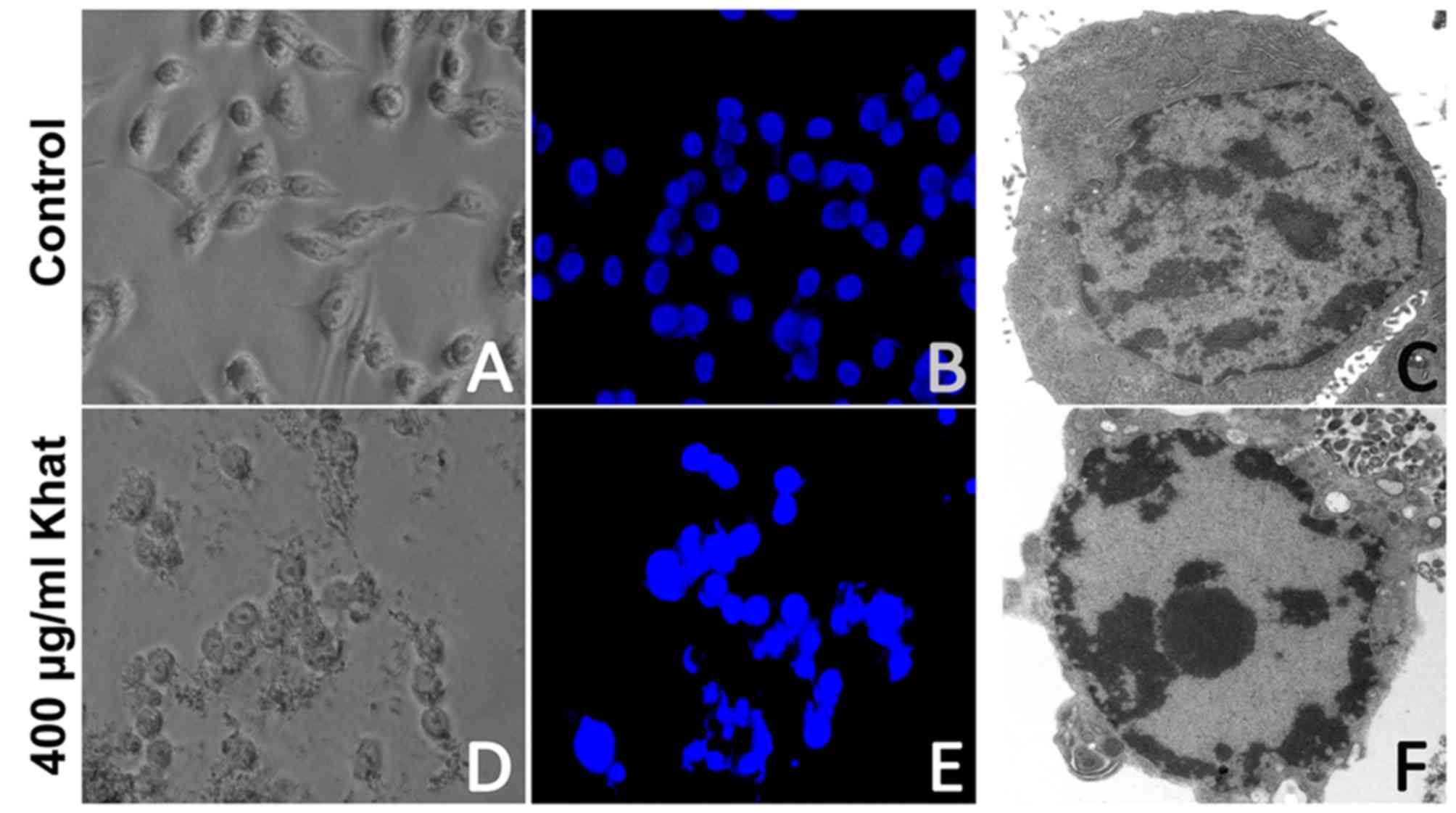
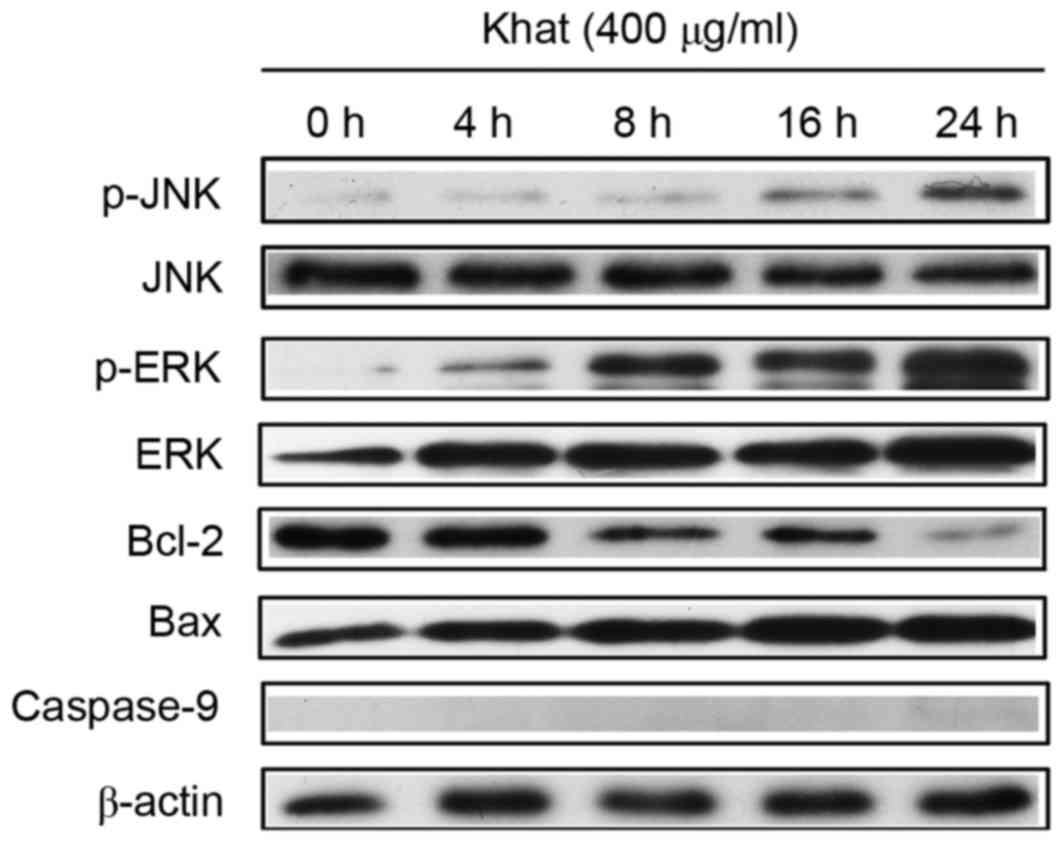
Khat (Catha edulis Forsk) is a flowering evergreen plant in Eastern Africa and Southwestern Arabia. Consumption of Khat has been associated with the development of oral cancer, but its mechanism of action on the molecular level remains unclear. The present study demonstrated the cytotoxic effect of khat extracts on the human breast cancer cell line MDA‑MB‑231. Trypan blue exclusion assays, flow cytome­try, fluorescent and electron microscopy, as well as western blotting were used to analyze the effects of Khat on the cell viability of breast cancer cells, expression of apoptotic‑associated proteins and the levels of reactive oxygen species (ROS). The results of the present study demonstrated that treatment with 400 µg/ml khat was able to induce cell death in breast cancers, with an increase in the protein expression of apoptosis regulator Bax and a decrease in the expression of B‑cell lymphoma 2, along with a decrease in ROS levels in a time‑dependent manner. Furthermore, the expression of activated c‑Jun N‑terminal and extracellular regulated protein kinases was increased in khat‑treated cells compared with untreated cells. Mitochondria participated in cell apoptosis through the release of apoptogenic proteins to the cytosol and the generation of excess reactive oxygen species. The results of the present study suggest that khat induces MDA‑MB‑231 cell apoptosis via MAPK activation and mitochondrial-mediated death.
View Figures

Figure 1

Figure 2

Figure 3

Figure 4

Figure 5

Figure 6

View References

1 

Toennes SW, Harder S, Schramm M, Niess C and Kauert GF: Pharmacokinetics of cathinone, cathine and norephedrine after the chewing of khat leaves. Br J Clin Pharmacol. 56:125–130. 2003. View Article : Google Scholar : PubMed/NCBI

2 

Kite GC, Ismail M, Simmonds MS and Houghton PJ: Use of doubly protonated molecules in the analysis of cathedulins in crude extracts of khat (Catha edulis) by liquid chromatography/serial mass spectrometry. Rapid Commun Mass Spectrom. 17:1553–1564. 2003. View Article : Google Scholar : PubMed/NCBI

3 

Kalix P: Cathinone, a natural amphetamine. Pharmacol Toxicol. 70:77–86. 1992. View Article : Google Scholar : PubMed/NCBI

4 

Al-Motarreb A, Baker K and Broadley KJ: Khat: Pharmacological and medical aspects and its social use in Yemen. Phytother Res. 16:403–413. 2002. View Article : Google Scholar : PubMed/NCBI

5 

Rothman RB, Vu N, Partilla JS, Roth BL, Hufeisen SJ, Compton-Toth BA, Birkes J, Young R and Glennon RA: In vitro characterization of ephedrine-related stereoisomers at biogenic amine transporters and the receptorome reveals selective actions as norepinephrine transporter substrates. J Pharmacol Exp Ther. 307:138–145. 2003. View Article : Google Scholar : PubMed/NCBI

6 

Bentur Y, Bloom-Krasik A and Raikhlin-Eisenkraft B: Illicit cathinone (‘Hagigat’) poisoning. Clin Toxicol (Phila). 46:206–210. 2008. View Article : Google Scholar : PubMed/NCBI

7 

Giannini AJ, Miller NS and Turner CE: Treatment of khat addiction. J Subst Abuse Treat. 9:379–382. 1992. View Article : Google Scholar : PubMed/NCBI

8 

Krikorian AD: Kat and its use: An historical perspective. J Ethnopharmacol. 12:115–178. 1984. View Article : Google Scholar : PubMed/NCBI

9 

Luqman W and Danowski TS: The use of khat (Catha edulis) in Yemen. Social and medical observations. Ann Intern Med. 85:246–249. 1976. View Article : Google Scholar : PubMed/NCBI

10 

Feyissa AM and Kelly JP: A review of the neuropharmacological properties of khat. Prog Neuropsychopharmacol Biol Psychiatry. 32:1147–1166. 2008. View Article : Google Scholar : PubMed/NCBI

11 

Safhi MM, Alam MF, Hussain S, Hakeem Siddiqui MA, Khuwaja G, Khardali Jubran IA, Al-Sanosi RM and Islam F: Cathinone, an active principle of Catha edulis, accelerates oxidative stress in the limbic area of swiss albino mice. J Ethnopharmacol. 156:102–106. 2014. View Article : Google Scholar : PubMed/NCBI

12 

Kalix P and Khan I: Khat: An amphetamine-like plant material. Bull World Health Organ. 62:681–686. 1984.PubMed/NCBI

13 

Soufi HE, Kameswaran M and Malatani T: Khat and oral cancer. J Laryngol Otol. 105:643–645. 1991. View Article : Google Scholar : PubMed/NCBI

14 

Abid MD, Chen J, Xiang M, Zhou J, Chen X and Gong F: Khat (Catha edulis) generates reactive oxygen species and promotes hepatic cell apoptosis via MAPK activation. Int J Mol Med. 32:389–395. 2013. View Article : Google Scholar : PubMed/NCBI

15 

Bras M, Queenan B and Susin SA: Programmed cell death via mitochondria: Different modes of dying. Biochemistry (Mosc). 70:231–239. 2005. View Article : Google Scholar : PubMed/NCBI

16 

Kroemer G, Galluzzi L, Vandenabeele P, Abrams J, Alnemri ES, Baehrecke EH, Blagosklonny MV, El-Deiry WS, Golstein P, Green DR, et al: Classification of cell death: Recommendations of the nomenclature committee on cell death 2009. Cell Death Differ. 16:3–11. 2009. View Article : Google Scholar : PubMed/NCBI

17 

Xiong S, Mu T, Wang G and Jiang X: Mitochondria-mediated apoptosis in mammals. Protein Cell. 5:737–749. 2014. View Article : Google Scholar : PubMed/NCBI

18 

Ryningen A, Ersvaer E, Øyan AM, Kalland KH, Vintermyr OK, Gjertsen BT and Bruserud Ø: Stress-induced in vitro apoptosis of native human acute myelogenous leukemia (AML) cells shows a wide variation between patients and is associated with low BCL-2: Bax ratio and low levels of heat shock protein 70 and 90. Leuk Res. 30:1531–1540. 2006. View Article : Google Scholar : PubMed/NCBI

19 

Del Poeta G, Venditti A, Del Principe MI, Maurillo L, Buccisano F, Tamburini A, Cox MC, Franchi A, Bruno A, Mazzone C, et al: Amount of spontaneous apoptosis detected by Bax/Bcl-2 ratio predicts outcome in acute myeloid leukemia (AML). Blood. 101:2125–2131. 2003. View Article : Google Scholar : PubMed/NCBI

20 

Ott M, Gogvadze V, Orrenius S and Zhivotovsky B: Mitochondria, oxidative stress and cell death. Apoptosis. 12:913–922. 2007. View Article : Google Scholar : PubMed/NCBI

21 

Aziz HA, Peh KK and Tan YT: Extraction and microencapsulation of khat: Effects on sexual motivation and estradiol level in female rats. J Sex Med. 6:682–695. 2009. View Article : Google Scholar : PubMed/NCBI

22 

Banjaw MY and Schmidt WJ: Behavioural sensitisation following repeated intermittent oral administration of Catha edulis in rats. Behav Brain Res. 156:181–189. 2005. View Article : Google Scholar : PubMed/NCBI

23 

Dimba EA, Gjertsen BT, Bredholt T, Fossan KO, Costea DE, Francis GW, Johannessen AC and Vintermyr OK: Khat (Catha edulis)-induced apoptosis is inhibited by antagonists of caspase-1 and −8 in human leukaemia cells. Br J Cancer. 91:1726–1734. 2004.PubMed/NCBI

24 

Su YT, Chang HL, Shyue SK and Hsu SL: Emodin induces apoptosis in human lung adenocarcinoma cells through a reactive oxygen species-dependent mitochondrial signaling pathway. Biochem Pharmacol. 70:229–241. 2005. View Article : Google Scholar : PubMed/NCBI

25 

Ruan H, Zhang Z, Tian L, Wang S, Hu S and Qiao JJ: The Salmonella effector SopB prevents ROS-induced apoptosis of epithelial cells by retarding TRAF6 recruitment to mitochondria. Biochem Biophys Res Commun. 478:618–623. 2016. View Article : Google Scholar : PubMed/NCBI

26 

Evan GI and Vousden KH: Proliferation, cell cycle and apoptosis in cancer. Nature. 411:342–348. 2001. View Article : Google Scholar : PubMed/NCBI

27 

Hengartner MO: The biochemistry of apoptosis. Nature. 407:770–776. 2000. View Article : Google Scholar : PubMed/NCBI

28 

Kalix P: Pharmacological properties of the stimulant khat. Pharmacol Ther. 48:397–416. 1990. View Article : Google Scholar : PubMed/NCBI

29 

Abid MD, Chen J, Xiang M, Zhou J, Chen X and Gong F: Khat (Catha edulis) generates reactive oxygen species and promotes hepatic cell apoptosis via MAPK activation. Int J Mol Med. 32:389–395. 2013. View Article : Google Scholar : PubMed/NCBI

30 

Mebratu Y and Tesfaigzi Y: How ERK1/2 activation controls cell proliferation and cell death: Is subcellular localization the answer? Cell cycle. 8:1168–1175. 2009. View Article : Google Scholar : PubMed/NCBI

31 

Xia Z, Dickens M, Raingeaud J, Davis RJ and Greenberg ME: Opposing effects of ERK and JNK-p38 MAP kinases on apoptosis. Science. 270:1326–1331. 1995. View Article : Google Scholar : PubMed/NCBI

32 

Roos WP and Kaina B: DNA damage-induced cell death by apoptosis. Trends Mol Med. 12:440–450. 2006. View Article : Google Scholar : PubMed/NCBI

33 

Wullaert A, Heyninck K and Beyaert R: Mechanisms of crosstalk between TNF-induced NF-kappaB and JNK activation in hepatocytes. Biochem Pharmacol. 72:1090–1101. 2006. View Article : Google Scholar : PubMed/NCBI

34 

Zhu J, Ye Q, Chang L, Xiong W, He Q and Li W: Upregulation of miR-195 enhances the radiosensitivity of breast cancer cells through the inhibition of BCL-2. Int J Clin Exp Med. 8:9142–9148. 2015.PubMed/NCBI

35 

Yu Y, Pei M and Li L: Baicalin induces apoptosis in hepatic cancer cells in vitro and suppresses tumor growth in vivo. Int J Clin Exp Med. 8:8958–8967. 2015.PubMed/NCBI

36 

Stoetzer OJ, Nüssler V, Darsow M, Gullis E, Pelka-Fleischer R, Scheel U and Wilmanns W: Association of bcl-2, bax, bcl-xL and interleukin-1 beta-converting enzyme expression with initial response to chemotherapy in acute myeloid leukemia. Leukemia. 10:(Suppl 3). S18–S22. 1996.PubMed/NCBI

37 

Dröge W: Free radicals in the physiological control of cell function. Physiol Rev. 82:47–95. 2002. View Article : Google Scholar : PubMed/NCBI

38 

Lee CH and Yu HS: Role of mitochondria, ROS, and DNA damage in arsenic induced carcinogenesis. Front Biosci (Schol Ed). 8:312–320. 2016. View Article : Google Scholar : PubMed/NCBI

Related Articles

  • Abstract
  • View
  • Download
  • Twitter
Copy and paste a formatted citation
Spandidos Publications style
Lu Y, Li Y, Xiang M, Zhou J and Chen J: Khat promotes human breast cancer MDA-MB-231 cell apoptosis via mitochondria and MAPK-associated pathways. Oncol Lett 14: 3947-3952, 2017.
APA
Lu, Y., Li, Y., Xiang, M., Zhou, J., & Chen, J. (2017). Khat promotes human breast cancer MDA-MB-231 cell apoptosis via mitochondria and MAPK-associated pathways. Oncology Letters, 14, 3947-3952. https://doi.org/10.3892/ol.2017.6708
MLA
Lu, Y., Li, Y., Xiang, M., Zhou, J., Chen, J."Khat promotes human breast cancer MDA-MB-231 cell apoptosis via mitochondria and MAPK-associated pathways". Oncology Letters 14.4 (2017): 3947-3952.
Chicago
Lu, Y., Li, Y., Xiang, M., Zhou, J., Chen, J."Khat promotes human breast cancer MDA-MB-231 cell apoptosis via mitochondria and MAPK-associated pathways". Oncology Letters 14, no. 4 (2017): 3947-3952. https://doi.org/10.3892/ol.2017.6708
Copy and paste a formatted citation
x
Spandidos Publications style
Lu Y, Li Y, Xiang M, Zhou J and Chen J: Khat promotes human breast cancer MDA-MB-231 cell apoptosis via mitochondria and MAPK-associated pathways. Oncol Lett 14: 3947-3952, 2017.
APA
Lu, Y., Li, Y., Xiang, M., Zhou, J., & Chen, J. (2017). Khat promotes human breast cancer MDA-MB-231 cell apoptosis via mitochondria and MAPK-associated pathways. Oncology Letters, 14, 3947-3952. https://doi.org/10.3892/ol.2017.6708
MLA
Lu, Y., Li, Y., Xiang, M., Zhou, J., Chen, J."Khat promotes human breast cancer MDA-MB-231 cell apoptosis via mitochondria and MAPK-associated pathways". Oncology Letters 14.4 (2017): 3947-3952.
Chicago
Lu, Y., Li, Y., Xiang, M., Zhou, J., Chen, J."Khat promotes human breast cancer MDA-MB-231 cell apoptosis via mitochondria and MAPK-associated pathways". Oncology Letters 14, no. 4 (2017): 3947-3952. https://doi.org/10.3892/ol.2017.6708
Follow us
  • Twitter
  • LinkedIn
  • Facebook
About
  • Spandidos Publications
  • Careers
  • Cookie Policy
  • Privacy Policy
How can we help?
  • Help
  • Live Chat
  • Contact
  • Email to our Support Team