Spandidos Publications Logo
  • About
    • About Spandidos
    • Aims and Scopes
    • Abstracting and Indexing
    • Editorial Policies
    • Reprints and Permissions
    • Job Opportunities
    • Terms and Conditions
    • Contact
  • Journals
    • All Journals
    • Oncology Letters
      • Oncology Letters
      • Information for Authors
      • Editorial Policies
      • Editorial Board
      • Aims and Scope
      • Abstracting and Indexing
      • Bibliographic Information
      • Archive
    • International Journal of Oncology
      • International Journal of Oncology
      • Information for Authors
      • Editorial Policies
      • Editorial Board
      • Aims and Scope
      • Abstracting and Indexing
      • Bibliographic Information
      • Archive
    • Molecular and Clinical Oncology
      • Molecular and Clinical Oncology
      • Information for Authors
      • Editorial Policies
      • Editorial Board
      • Aims and Scope
      • Abstracting and Indexing
      • Bibliographic Information
      • Archive
    • Experimental and Therapeutic Medicine
      • Experimental and Therapeutic Medicine
      • Information for Authors
      • Editorial Policies
      • Editorial Board
      • Aims and Scope
      • Abstracting and Indexing
      • Bibliographic Information
      • Archive
    • International Journal of Molecular Medicine
      • International Journal of Molecular Medicine
      • Information for Authors
      • Editorial Policies
      • Editorial Board
      • Aims and Scope
      • Abstracting and Indexing
      • Bibliographic Information
      • Archive
    • Biomedical Reports
      • Biomedical Reports
      • Information for Authors
      • Editorial Policies
      • Editorial Board
      • Aims and Scope
      • Abstracting and Indexing
      • Bibliographic Information
      • Archive
    • Oncology Reports
      • Oncology Reports
      • Information for Authors
      • Editorial Policies
      • Editorial Board
      • Aims and Scope
      • Abstracting and Indexing
      • Bibliographic Information
      • Archive
    • Molecular Medicine Reports
      • Molecular Medicine Reports
      • Information for Authors
      • Editorial Policies
      • Editorial Board
      • Aims and Scope
      • Abstracting and Indexing
      • Bibliographic Information
      • Archive
    • World Academy of Sciences Journal
      • World Academy of Sciences Journal
      • Information for Authors
      • Editorial Policies
      • Editorial Board
      • Aims and Scope
      • Abstracting and Indexing
      • Bibliographic Information
      • Archive
    • International Journal of Functional Nutrition
      • International Journal of Functional Nutrition
      • Information for Authors
      • Editorial Policies
      • Editorial Board
      • Aims and Scope
      • Abstracting and Indexing
      • Bibliographic Information
      • Archive
    • International Journal of Epigenetics
      • International Journal of Epigenetics
      • Information for Authors
      • Editorial Policies
      • Editorial Board
      • Aims and Scope
      • Abstracting and Indexing
      • Bibliographic Information
      • Archive
    • Medicine International
      • Medicine International
      • Information for Authors
      • Editorial Policies
      • Editorial Board
      • Aims and Scope
      • Abstracting and Indexing
      • Bibliographic Information
      • Archive
  • Articles
  • Information
    • Information for Authors
    • Information for Reviewers
    • Information for Librarians
    • Information for Advertisers
    • Conferences
  • Language Editing
Spandidos Publications Logo
  • About
    • About Spandidos
    • Aims and Scopes
    • Abstracting and Indexing
    • Editorial Policies
    • Reprints and Permissions
    • Job Opportunities
    • Terms and Conditions
    • Contact
  • Journals
    • All Journals
    • Biomedical Reports
      • Information for Authors
      • Editorial Policies
      • Editorial Board
      • Aims and Scope
      • Abstracting and Indexing
      • Bibliographic Information
      • Archive
    • Experimental and Therapeutic Medicine
      • Information for Authors
      • Editorial Policies
      • Editorial Board
      • Aims and Scope
      • Abstracting and Indexing
      • Bibliographic Information
      • Archive
    • International Journal of Epigenetics
      • Information for Authors
      • Editorial Policies
      • Editorial Board
      • Aims and Scope
      • Abstracting and Indexing
      • Bibliographic Information
      • Archive
    • International Journal of Functional Nutrition
      • Information for Authors
      • Editorial Policies
      • Editorial Board
      • Aims and Scope
      • Abstracting and Indexing
      • Bibliographic Information
      • Archive
    • International Journal of Molecular Medicine
      • Information for Authors
      • Editorial Policies
      • Editorial Board
      • Aims and Scope
      • Abstracting and Indexing
      • Bibliographic Information
      • Archive
    • International Journal of Oncology
      • Information for Authors
      • Editorial Policies
      • Editorial Board
      • Aims and Scope
      • Abstracting and Indexing
      • Bibliographic Information
      • Archive
    • Medicine International
      • Information for Authors
      • Editorial Policies
      • Editorial Board
      • Aims and Scope
      • Abstracting and Indexing
      • Bibliographic Information
      • Archive
    • Molecular and Clinical Oncology
      • Information for Authors
      • Editorial Policies
      • Editorial Board
      • Aims and Scope
      • Abstracting and Indexing
      • Bibliographic Information
      • Archive
    • Molecular Medicine Reports
      • Information for Authors
      • Editorial Policies
      • Editorial Board
      • Aims and Scope
      • Abstracting and Indexing
      • Bibliographic Information
      • Archive
    • Oncology Letters
      • Information for Authors
      • Editorial Policies
      • Editorial Board
      • Aims and Scope
      • Abstracting and Indexing
      • Bibliographic Information
      • Archive
    • Oncology Reports
      • Information for Authors
      • Editorial Policies
      • Editorial Board
      • Aims and Scope
      • Abstracting and Indexing
      • Bibliographic Information
      • Archive
    • World Academy of Sciences Journal
      • Information for Authors
      • Editorial Policies
      • Editorial Board
      • Aims and Scope
      • Abstracting and Indexing
      • Bibliographic Information
      • Archive
  • Articles
  • Information
    • For Authors
    • For Reviewers
    • For Librarians
    • For Advertisers
    • Conferences
  • Language Editing
Login Register Submit
  • This site uses cookies
  • You can change your cookie settings at any time by following the instructions in our Cookie Policy. To find out more, you may read our Privacy Policy.

    I agree
Search articles by DOI, keyword, author or affiliation
Search
Advanced Search
presentation
Oncology Letters
Join Editorial Board Propose a Special Issue
Print ISSN: 1792-1074 Online ISSN: 1792-1082
Journal Cover
October-2017 Volume 14 Issue 4

Full Size Image

Sign up for eToc alerts
Recommend to Library

Journals

International Journal of Molecular Medicine

International Journal of Molecular Medicine

International Journal of Molecular Medicine is an international journal devoted to molecular mechanisms of human disease.

International Journal of Oncology

International Journal of Oncology

International Journal of Oncology is an international journal devoted to oncology research and cancer treatment.

Molecular Medicine Reports

Molecular Medicine Reports

Covers molecular medicine topics such as pharmacology, pathology, genetics, neuroscience, infectious diseases, molecular cardiology, and molecular surgery.

Oncology Reports

Oncology Reports

Oncology Reports is an international journal devoted to fundamental and applied research in Oncology.

Experimental and Therapeutic Medicine

Experimental and Therapeutic Medicine

Experimental and Therapeutic Medicine is an international journal devoted to laboratory and clinical medicine.

Oncology Letters

Oncology Letters

Oncology Letters is an international journal devoted to Experimental and Clinical Oncology.

Biomedical Reports

Biomedical Reports

Explores a wide range of biological and medical fields, including pharmacology, genetics, microbiology, neuroscience, and molecular cardiology.

Molecular and Clinical Oncology

Molecular and Clinical Oncology

International journal addressing all aspects of oncology research, from tumorigenesis and oncogenes to chemotherapy and metastasis.

World Academy of Sciences Journal

World Academy of Sciences Journal

Multidisciplinary open-access journal spanning biochemistry, genetics, neuroscience, environmental health, and synthetic biology.

International Journal of Functional Nutrition

International Journal of Functional Nutrition

Open-access journal combining biochemistry, pharmacology, immunology, and genetics to advance health through functional nutrition.

International Journal of Epigenetics

International Journal of Epigenetics

Publishes open-access research on using epigenetics to advance understanding and treatment of human disease.

Medicine International

Medicine International

An International Open Access Journal Devoted to General Medicine.

Journal Cover
October-2017 Volume 14 Issue 4

Full Size Image

Sign up for eToc alerts
Recommend to Library

  • Article
  • Citations
    • Cite This Article
    • Download Citation
    • Create Citation Alert
    • Remove Citation Alert
    • Cited By
  • Similar Articles
    • Related Articles (in Spandidos Publications)
    • Similar Articles (Google Scholar)
    • Similar Articles (PubMed)
  • Download PDF
  • Download XML
  • View XML
Article Open Access

Wound fluids affect miR‑21, miR‑155 and miR‑221 expression in breast cancer cell lines, and this effect is partially abrogated by intraoperative radiation therapy treatment

  • Authors:
    • Karolina Zaleska
    • Anna Przybyła
    • Katarzyna Kulcenty
    • Mateusz Wichtowski
    • Andrzej Mackiewicz
    • Wiktoria Suchorska
    • Dawid Murawa
  • View Affiliations / Copyright

    Affiliations: Radiobiology Laboratory, Greater Poland Cancer Centre, 61‑866 Poznań, Poland, Department of Cancer Immunology, Chair of Medical Biotechnology, Poznań University of Medical Sciences, 61‑701 Poznań, Poland, First Clinic of Surgical Oncology and General Surgery, Greater Poland Cancer Centre, 61‑866 Poznań, Poland
    Copyright: © Zaleska et al. This is an open access article distributed under the terms of Creative Commons Attribution License.
  • Pages: 4029-4036
    |
    Published online on: August 3, 2017
       https://doi.org/10.3892/ol.2017.6718
  • Expand metrics +
Metrics: Total Views: 0 (Spandidos Publications: | PMC Statistics: )
Metrics: Total PDF Downloads: 0 (Spandidos Publications: | PMC Statistics: )
Cited By (CrossRef): 0 citations Loading Articles...

This article is mentioned in:


Abstract

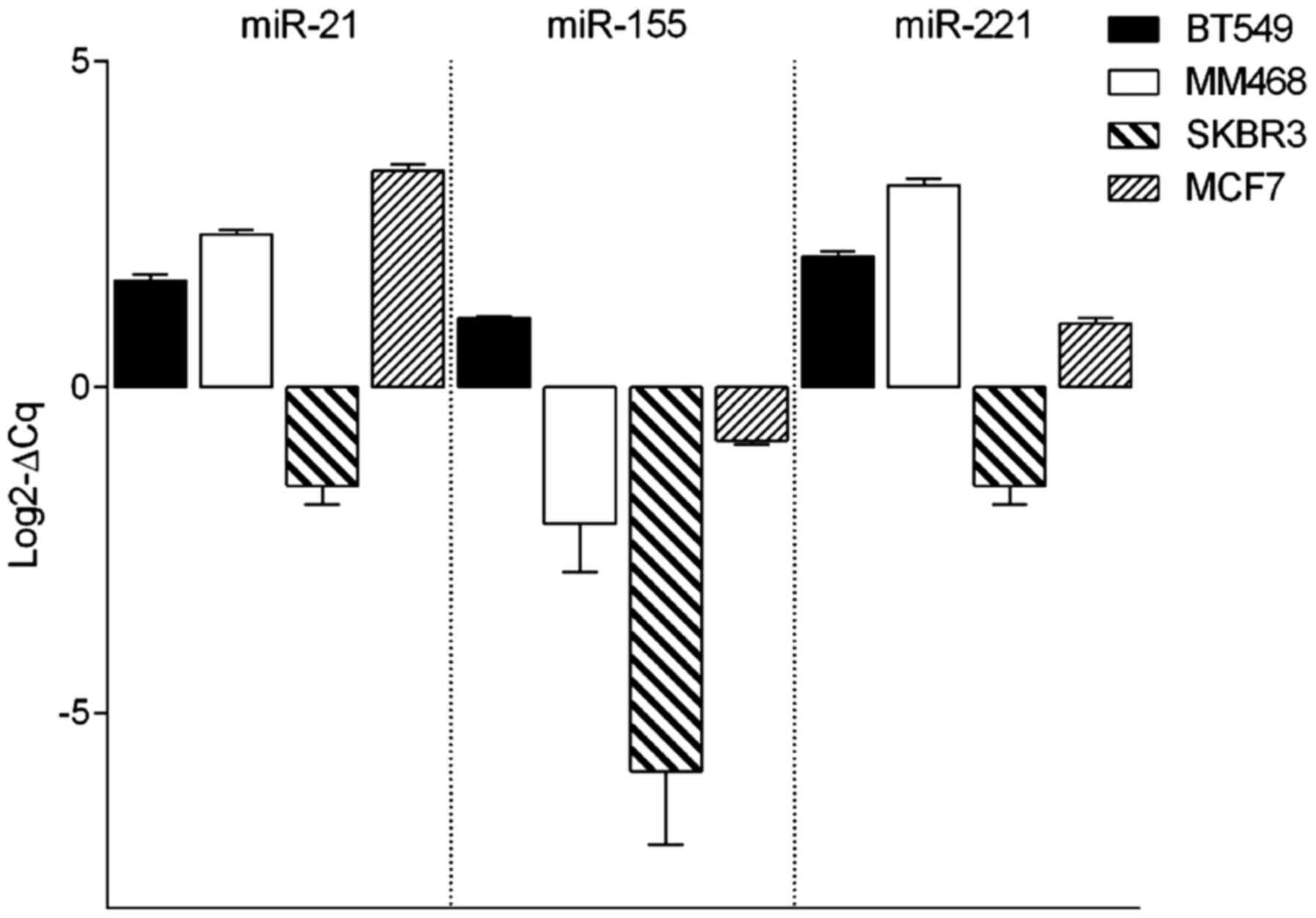
Breast cancer is the most common malignant disease occurring in women. Conservative breast cancer surgery followed by radiation therapy is currently the standard treatment for this type of cancer. The majority of metastases occur within the scar, which initiated a series of studies. As a result, clinical trials aimed to assess whether localized radiotherapy, as intraoperative radiotherapy (IORT), may more effective in inhibiting the formation of local recurrence compared with the standard postoperative whole breast radiotherapy. The present study determined the role of postoperative wound fluids (WFs) from patients diagnosed with breast cancer subsequent to breast conserving surgery or breast conserving surgery followed by IORT on the expression of three microRNAs (miRNAs), consisting of miR‑21, miR‑155 and miR‑221, in distinct breast cancer cell lines that represent the general subtypes of breast cancer. It was determined that the miRNAs responsible for breast cancer progression, induction of tumorigenesis and enrichment of the cancer stem cell phenotype, which is responsible for resistance to tumor therapy, were highly upregulated in the human epidermal growth factor receptor 2‑positive breast cancer SK‑BR‑3 cell line following stimulation with WFs. It is worth emphasizing, that those changes were more significant in WFs collected from patients after surgery alone. The BT‑549 cell line showed altered expression only of miR‑155 following incubation with WFs. Notably, this change was not associated with IORT. Additionally, it was indicated that both WFs and RT‑WF strongly downregulated the expression of miR‑21, miR‑155 and miR‑221 in basal/epithelial and luminal subtypes of breast cancer. It was concluded that the present study contributes to an increased understanding of the role of surgical WFs and IORT treatment in the regulation of miRNA expression. This may enable the development of the current knowledge of breast cancer biology subsequent to IORT treatment and substantially to improve the therapy in the future.
View Figures

Figure 1

Figure 2

Figure 3

Figure 4

View References

1 

Westlake S and Cooper N: Cancer incidence and mortality: Trends in the United Kingdom and constituent countries, 1993 to 2004. Health Stat Q. 33–46. 2008.PubMed/NCBI

2 

Carlson RW, Allred DC, Anderson BO, Burstein HJ, Edge SB, Farrar WB, Forero A, Giordano SH, Goldstein LJ, Gradishar WJ, et al: Metastatic breast cancer, version 1.2012: Featured updates to the NCCN guidelines. J Natl Compr Canc Netw. 10:821–829. 2012. View Article : Google Scholar : PubMed/NCBI

3 

Demicheli R, Ardoino I, Boracchi P, Coradini D, Agresti R, Ferraris C, Gennaro M, Hrushesky WJ and Biganzoli E: Recurrence and mortality according to estrogen receptor status for breast cancer patients undergoing conservative surgery. Ipsilateral breast tumour recurrence dynamics provides clues for tumour biology within the residual breast. BMC Cancer. 10:6562010. View Article : Google Scholar : PubMed/NCBI

4 

Faverly DR, Hendriks JH and Holland R: Breast carcinomas of limited extent: Frequency, radiologic-pathologic characteristics, and surgical margin requirements. Cancer. 91:647–659. 2001. View Article : Google Scholar : PubMed/NCBI

5 

Bitterman A, Kessner R, Goldman I, Shiloni E and Steiner M: Intraoperative radiotherapy for breast cancer. Isr Med Assoc J. 14:256–259. 2012.PubMed/NCBI

6 

Murawa P, Murawa D, Adamczyk B and Polom K: Breast cancer: Actual methods of treatment and future trends. Rep Pract Oncol Radiother. 19:165–172. 2014. View Article : Google Scholar : PubMed/NCBI

7 

Sedlmayer F, Reitsamer R, Fussl C, Ziegler I, Zehentmayr F, Deutschmann H, Kopp P and Fastner G: Boost IORT in breast cancer: Body of evidence. Int J Breast Cancer. 2014:4725162014. View Article : Google Scholar : PubMed/NCBI

8 

Belletti B, Vaidya JS, D'Andrea S, Entschladen F, Roncadin M, Lovat F, Berton S, Perin T, Candiani E, Reccanello S, et al: Targeted intraoperative radiotherapy impairs the stimulation of breast cancer cell proliferation and invasion caused by surgical wounding. Clin Cancer Res. 14:1325–1332. 2008. View Article : Google Scholar : PubMed/NCBI

9 

Segatto I, Berton S, Sonego M, Massarut S, Perin T, Piccoli E, Colombatti A, Vecchione A, Baldassarre G and Belletti B: Surgery-induced wound response promotes stem-like and tumor-initiating features of breast cancer cells, via STAT3 signaling. Oncotarget. 5:6267–6279. 2014. View Article : Google Scholar : PubMed/NCBI

10 

Zaleska K, Suchorska WM, Przybyła A and Murawa D: Effect of surgical wound fluids after intraoperative electron radiotherapy on the cancer stem cell phenotype in a panel of human breast cancer cell lines. Oncol Lett. 12:3707–3714. 2016.PubMed/NCBI

11 

Kong W, He L, Coppola M, Guo J, Esposito NN, Coppola D and Cheng JQ: MicroRNA-155 regulates cell survival, growth and chemosensitivity by targeting FOXO3a in breast cancer. J Biol Chem. 285:17869–17879. 2010. View Article : Google Scholar : PubMed/NCBI

12 

De Mattos-Arruda L, Bottai G, Nuciforo PG, Di Tommaso L, Giovannetti E, Peg V, Losurdo A, Pérez-Garcia J, Masci G, Corsi F, et al: MicroRNA-21 links epithelial-to-mesenchymal transition and inflammatory signals to confer resistance to neoadjuvant trastuzumab and chemotherapy in HER2-positive breast cancer patients. Oncotarget. 6:37269–37280. 2015. View Article : Google Scholar : PubMed/NCBI

13 

Leung CM, Chen TW, Li SC, Ho MR, Hu LY, Liu WS, Wu TT, Hsu PC, Chang HT and Tsai KW: MicroRNA expression profiles in human breast cancer cells after multifraction and single-dose radiation treatment. Oncol Rep. 31:2147–2156. 2014. View Article : Google Scholar : PubMed/NCBI

14 

Prat A and Perou CM: Deconstructing the molecular portraits of breast cancer. Mol Oncol. 5:5–23. 2011. View Article : Google Scholar : PubMed/NCBI

15 

Neve RM, Chin K, Fridlyand J, Yeh J, Baehner FL, Fevr T, Clark L, Bayani N, Coppe JP, Tong F, et al: A collection of breast cancer cell lines for the study of functionally distinct cancer subtypes. Cancer Cell. 10:515–527. 2006. View Article : Google Scholar : PubMed/NCBI

16 

Livak KJ and Schmittgen TD: Analysis of relative gene expression data using real-time quantitative PCR and the 2(−Delta Delta C(T)) method. Methods. 25:402–408. 2001. View Article : Google Scholar : PubMed/NCBI

17 

Demicheli R, Valagussa P and Bonadonna G: Does surgery modify growth kinetics of breast cancer micrometastases? Br J Cancer. 85:490–492. 2001. View Article : Google Scholar : PubMed/NCBI

18 

Fisher B, Gunduz N, Coyle J, Rudock C and Saffer E: Presence of a growth-stimulating factor in serum following primary tumor removal in mice. Cancer Res. 49:1996–2001. 1989.PubMed/NCBI

19 

Holmgren L, O'Reilly MS and Folkman J: Dormancy of micrometastases: Balanced proliferation and apoptosis in the presence of angiogenesis suppression. Nat Med. 1:149–153. 1995. View Article : Google Scholar : PubMed/NCBI

20 

Segatto I, Berton S, Sonego M, Massarut S, Fabris L, Armenia J, Mileto M, Colombatti A, Vecchione A, Baldassarre G and Belletti B: p70S6 kinase mediates breast cancer cell survival in response to surgical wound fluid stimulation. Mol Oncol. 8:766–780. 2014. View Article : Google Scholar : PubMed/NCBI

21 

Segatto I, Berton S, Sonego M, Massarut S, D'Andrea S, Perin T, Fabris L, Armenia J, Rampioni G, Lovisa S, et al: Inhibition of breast cancer local relapse by targeting p70S6 kinase activity. J Mol Cell Biol. 5:428–431. 2013. View Article : Google Scholar : PubMed/NCBI

22 

Fidler IJ: The organ microenvironment and cancer metastasis. Differentiation. 70:498–505. 2002. View Article : Google Scholar : PubMed/NCBI

23 

Paget S: The distribution of secondary growths in cancer of the breast. 1889. Lancet. 133:571–573. 1889. View Article : Google Scholar

24 

Barcellos-Hoff MH, Park C and Wright EG: Radiation and the microenvironment-tumorigenesis and therapy. Nat Rev Cancer. 5:867–875. 2005. View Article : Google Scholar : PubMed/NCBI

25 

Vaidya JS, Tobias JS, Baum M, Keshtgar M, Joseph D, Wenz F, Houghton J, Saunders C, Corica T, D'Souza D, et al: Intraoperative radiotherapy for breast cancer. Lancet Oncol. 5:165–173. 2004. View Article : Google Scholar : PubMed/NCBI

26 

Chaudhry MA: Real-time PCR analysis of micro-RNA expression in ionizing radiation-treated cells. Cancer Biother Radiopharm. 24:49–56. 2009. View Article : Google Scholar : PubMed/NCBI

27 

Weidhaas JB, Babar I, Nallur SM, Trang P, Roush S, Boehm M, Gillespie E and Slack FJ: MicroRNAs as potential agents to alter resistance to cytotoxic anticancer therapy. Cancer Res. 67:11111–11116. 2007. View Article : Google Scholar : PubMed/NCBI

28 

Maes OC, An J, Sarojini H, Wu H and Wang E: Changes in MicroRNA expression patterns in human fibroblasts after low-LET radiation. J Cell Biochem. 105:824–34. 2008. View Article : Google Scholar : PubMed/NCBI

29 

Tagliabue E, Agresti R, Carcangiu ML, Ghirelli C, Morelli D, Campiglio M, Martel M, Giovanazzi R, Greco M, Balsari A and Ménard S: Role of HER2 in wound-induced breast carcinoma proliferation. Lancet. 362:527–533. 2003. View Article : Google Scholar : PubMed/NCBI

30 

Kraemer A, Anastasov N, Angermeier M, Winkler K, Atkinson MJ and Moertl S: MicroRNA-mediated processes are essential for the cellular radiation response. Radiation Res. 176:575–586. 2011. View Article : Google Scholar : PubMed/NCBI

31 

Yang H, Kong W, He L, Zhao JJ, O'Donnell JD, Wang J, Wenham RM, Coppola D, Kruk PA, Nicosia SV and Cheng JQ: MicroRNA expression profiling in human ovarian cancer: miR-214 induces cell survival and cisplatin resistance by targeting PTEN. Cancer Res. 68:425–433. 2008. View Article : Google Scholar : PubMed/NCBI

32 

Zhu S, Wu H, Wu F, Nie D, Sheng S and Mo YY: MicroRNA-21 targets tumor suppressor genes in invasion and metastasis. Cell Res. 18:350–359. 2008. View Article : Google Scholar : PubMed/NCBI

33 

Zhang JG, Wang JJ, Zhao F, Liu Q, Jiang K and Yang GH: MicroRNA-21 (miR-21) represses tumor suppressor PTEN and promotes growth and invasion in non-small cell lung cancer (NSCLC). Clin Chim Acta. 411:846–852. 2010. View Article : Google Scholar : PubMed/NCBI

34 

Li X, Xin S, He Z, Che X, Wang J, Xiao X, Chen J and Song X: MicroRNA-21 (miR-21) post-transcriptionally downregulates tumor suppressor PDCD4 and promotes cell transformation, proliferation, and metastasis in renal cell carcinoma. Cell Physiol Biochem. 33:1631–1642. 2014. View Article : Google Scholar : PubMed/NCBI

35 

Fujita S, Ito T, Mizutani T, Minoguchi S, Yamamichi N, Sakurai K and Iba H: miR-21 gene expression triggered by AP-1 is sustained through a double-negative feedback mechanism. J Mol Biol. 378:492–504. 2008. View Article : Google Scholar : PubMed/NCBI

36 

Anastasov N, Höfig I, Vasconcellos IG, Rappl K, Braselmann H, Ludyga N, Auer G, Aubele M and Atkinson MJ: Radiation resistance due to high expression of miR-21 and G2/M checkpoint arrest in breast cancer cells. Radiat Oncol. 7:2062012. View Article : Google Scholar : PubMed/NCBI

37 

Iliopoulos D, Jaeger SA, Hirsch HA, Bulyk ML and Struhl K: STAT3 activation of miR-21 and miR-181b-1 via PTEN and CYLD are part of the epigenetic switch linking inflammation to cancer. Mol Cell. 39:493–506. 2010. View Article : Google Scholar : PubMed/NCBI

38 

Ross JS, Slodkowska EA, Symmans WF, Pusztai L, Ravdin PM and Hortobagyi GN: The HER-2 receptor and breast cancer: Ten years of targeted anti-HER-2 therapy and personalized medicine. Oncologist. 14:320–368. 2009. View Article : Google Scholar : PubMed/NCBI

39 

Slamon DJ, Godolphin W, Jones LA, Holt JA, Wong SG, Keith DE, Levin WJ, Stuart SG, Udove J, Ullrich A, et al: Studies of the HER-2/neu proto-oncogene in human breast and ovarian cancer. Science. 244:707–712. 1989. View Article : Google Scholar : PubMed/NCBI

40 

Lee JA, Lee HY, Lee ES, Kim I and Bae JW: Prognostic implications of microRNA-21 overexpression in invasive ductal carcinomas of the breast. J Breast Cancer. 14:269–275. 2011. View Article : Google Scholar : PubMed/NCBI

41 

Gong C, Yao Y, Wang Y, Liu B, Wu W, Chen J, Su F, Yao H and Song E: Up-regulation of miR-21 mediates resistance to trastuzumab therapy for breast cancer. J Biol Chem. 286:19127–19137. 2011. View Article : Google Scholar : PubMed/NCBI

42 

Zhang CM, Zhao J and Deng HY: MiR-155 promotes proliferation of human breast cancer MCF-7 cells through targeting tumor protein 53-induced nuclear protein 1. J Biomed Sci. 20:792013. View Article : Google Scholar : PubMed/NCBI

43 

Chen X, Chen Y, Wang Y, Yan M, Zhang J, Liu Q, Yang H and Li J: Role of miR-155 in myasthenia gravis and effect of dexamethasone on miR-155. Zhong Nan Da Xue Xue Bao Yi Xue Ban. 37:777–782. 2012.(In Chinese). PubMed/NCBI

44 

Cortez MA, Welsh JW and Calin GA: Circulating microRNAs as noninvasive biomarkers in breast cancer. Recent Results Cancer Res. 195:151–161. 2012. View Article : Google Scholar : PubMed/NCBI

45 

Shibuya H, Iinuma H, Shimada R, Horiuchi A and Watanabe T: Clinicopathological and prognostic value of microRNA-21 and microRNA-155 in colorectal cancer. Oncology. 79:313–320. 2010. View Article : Google Scholar : PubMed/NCBI

46 

Jiang S, Zhang HW, Lu MH, He XH, Li Y, Gu H, Liu MF and Wang ED: MicroRNA-155 functions as an OncomiR in breast cancer by targeting the suppressor of cytokine signaling 1 gene. Cancer Res. 70:3119–3127. 2010. View Article : Google Scholar : PubMed/NCBI

47 

Gasparini P, Lovat F, Fassan M, Casadei L, Cascione L, Jacob NK, Carasi S, Palmieri D, Costinean S, Shapiro CL, et al: Protective role of miR-155 in breast cancer through RAD51 targeting impairs homologous recombination after irradiation. Proc Natl Acad Sci USA. 111:4536–4541. 2014. View Article : Google Scholar : PubMed/NCBI

48 

Chen J, Wang BC and Tang JH: Clinical significance of microRNA-155 expression in human breast cancer. J Surg Oncol. 106:260–266. 2012. View Article : Google Scholar : PubMed/NCBI

49 

Garofalo M, Quintavalle C, Romano G, Croce CM and Condorelli G: miR221/222 in cancer: Their role in tumor progression and response to therapy. Curr Mol Med. 12:27–33. 2012. View Article : Google Scholar : PubMed/NCBI

50 

Pineau P, Volinia S, McJunkin K, Marchio A, Battiston C, Terris B, Mazzaferro V, Lowe SW, Croce CM and Dejean A: miR-221 overexpression contributes to liver tumorigenesis. Proc Natl Acad Sci USA. 107:264–269. 2010. View Article : Google Scholar : PubMed/NCBI

51 

Garofalo M, Quintavalle C, Di Leva G, Zanca C, Romano G, Taccioli C, Liu CG, Croce CM and Condorelli G: MicroRNA signatures of TRAIL resistance in human non-small cell lung cancer. Oncogene. 27:3845–3855. 2008. View Article : Google Scholar : PubMed/NCBI

52 

Pallante P, Visone R, Ferracin M, Ferraro A, Berlingieri MT, Troncone G, Chiappetta G, Liu CG, Santoro M, Negrini M, et al: MicroRNA deregulation in human thyroid papillary carcinomas. Endocr Relat Cancer. 13:497–508. 2006. View Article : Google Scholar : PubMed/NCBI

53 

Roscigno G, Quintavalle C, Donnarumma E, Puoti I, Diaz-Lagares A, Iaboni M, Fiore D, Russo V, Todaro M, Romano G, et al: MiR-221 promotes stemness of breast cancer cells by targeting DNMT3b. Oncotarget. 7:580–592. 2016. View Article : Google Scholar : PubMed/NCBI

54 

Ke J, Zhao Z, Hong SH, Bai S, He Z, Malik F, Xu J, Zhou L, Chen W, Martin-Trevino R, et al: Role of microRNA221 in regulating normal mammary epithelial hierarchy and breast cancer stem-like cells. Oncotarget. 6:3709–3721. 2015. View Article : Google Scholar : PubMed/NCBI

55 

Zhao JJ, Lin J, Yang H, Kong W, He L, Ma X, Coppola D and Cheng JQ: MicroRNA-221/222 negatively regulates estrogen receptor alpha and is associated with tamoxifen resistance in breast cancer. J Biol Chem. 283:31079–31086. 2008. View Article : Google Scholar : PubMed/NCBI

Related Articles

  • Abstract
  • View
  • Download
  • Twitter
Copy and paste a formatted citation
Spandidos Publications style
Zaleska K, Przybyła A, Kulcenty K, Wichtowski M, Mackiewicz A, Suchorska W and Murawa D: Wound fluids affect miR‑21, miR‑155 and miR‑221 expression in breast cancer cell lines, and this effect is partially abrogated by intraoperative radiation therapy treatment. Oncol Lett 14: 4029-4036, 2017.
APA
Zaleska, K., Przybyła, A., Kulcenty, K., Wichtowski, M., Mackiewicz, A., Suchorska, W., & Murawa, D. (2017). Wound fluids affect miR‑21, miR‑155 and miR‑221 expression in breast cancer cell lines, and this effect is partially abrogated by intraoperative radiation therapy treatment. Oncology Letters, 14, 4029-4036. https://doi.org/10.3892/ol.2017.6718
MLA
Zaleska, K., Przybyła, A., Kulcenty, K., Wichtowski, M., Mackiewicz, A., Suchorska, W., Murawa, D."Wound fluids affect miR‑21, miR‑155 and miR‑221 expression in breast cancer cell lines, and this effect is partially abrogated by intraoperative radiation therapy treatment". Oncology Letters 14.4 (2017): 4029-4036.
Chicago
Zaleska, K., Przybyła, A., Kulcenty, K., Wichtowski, M., Mackiewicz, A., Suchorska, W., Murawa, D."Wound fluids affect miR‑21, miR‑155 and miR‑221 expression in breast cancer cell lines, and this effect is partially abrogated by intraoperative radiation therapy treatment". Oncology Letters 14, no. 4 (2017): 4029-4036. https://doi.org/10.3892/ol.2017.6718
Copy and paste a formatted citation
x
Spandidos Publications style
Zaleska K, Przybyła A, Kulcenty K, Wichtowski M, Mackiewicz A, Suchorska W and Murawa D: Wound fluids affect miR‑21, miR‑155 and miR‑221 expression in breast cancer cell lines, and this effect is partially abrogated by intraoperative radiation therapy treatment. Oncol Lett 14: 4029-4036, 2017.
APA
Zaleska, K., Przybyła, A., Kulcenty, K., Wichtowski, M., Mackiewicz, A., Suchorska, W., & Murawa, D. (2017). Wound fluids affect miR‑21, miR‑155 and miR‑221 expression in breast cancer cell lines, and this effect is partially abrogated by intraoperative radiation therapy treatment. Oncology Letters, 14, 4029-4036. https://doi.org/10.3892/ol.2017.6718
MLA
Zaleska, K., Przybyła, A., Kulcenty, K., Wichtowski, M., Mackiewicz, A., Suchorska, W., Murawa, D."Wound fluids affect miR‑21, miR‑155 and miR‑221 expression in breast cancer cell lines, and this effect is partially abrogated by intraoperative radiation therapy treatment". Oncology Letters 14.4 (2017): 4029-4036.
Chicago
Zaleska, K., Przybyła, A., Kulcenty, K., Wichtowski, M., Mackiewicz, A., Suchorska, W., Murawa, D."Wound fluids affect miR‑21, miR‑155 and miR‑221 expression in breast cancer cell lines, and this effect is partially abrogated by intraoperative radiation therapy treatment". Oncology Letters 14, no. 4 (2017): 4029-4036. https://doi.org/10.3892/ol.2017.6718
Follow us
  • Twitter
  • LinkedIn
  • Facebook
About
  • Spandidos Publications
  • Careers
  • Cookie Policy
  • Privacy Policy
How can we help?
  • Help
  • Live Chat
  • Contact
  • Email to our Support Team