Spandidos Publications Logo
  • About
    • About Spandidos
    • Aims and Scopes
    • Abstracting and Indexing
    • Editorial Policies
    • Reprints and Permissions
    • Job Opportunities
    • Terms and Conditions
    • Contact
  • Journals
    • All Journals
    • Oncology Letters
      • Oncology Letters
      • Information for Authors
      • Editorial Policies
      • Editorial Board
      • Aims and Scope
      • Abstracting and Indexing
      • Bibliographic Information
      • Archive
    • International Journal of Oncology
      • International Journal of Oncology
      • Information for Authors
      • Editorial Policies
      • Editorial Board
      • Aims and Scope
      • Abstracting and Indexing
      • Bibliographic Information
      • Archive
    • Molecular and Clinical Oncology
      • Molecular and Clinical Oncology
      • Information for Authors
      • Editorial Policies
      • Editorial Board
      • Aims and Scope
      • Abstracting and Indexing
      • Bibliographic Information
      • Archive
    • Experimental and Therapeutic Medicine
      • Experimental and Therapeutic Medicine
      • Information for Authors
      • Editorial Policies
      • Editorial Board
      • Aims and Scope
      • Abstracting and Indexing
      • Bibliographic Information
      • Archive
    • International Journal of Molecular Medicine
      • International Journal of Molecular Medicine
      • Information for Authors
      • Editorial Policies
      • Editorial Board
      • Aims and Scope
      • Abstracting and Indexing
      • Bibliographic Information
      • Archive
    • Biomedical Reports
      • Biomedical Reports
      • Information for Authors
      • Editorial Policies
      • Editorial Board
      • Aims and Scope
      • Abstracting and Indexing
      • Bibliographic Information
      • Archive
    • Oncology Reports
      • Oncology Reports
      • Information for Authors
      • Editorial Policies
      • Editorial Board
      • Aims and Scope
      • Abstracting and Indexing
      • Bibliographic Information
      • Archive
    • Molecular Medicine Reports
      • Molecular Medicine Reports
      • Information for Authors
      • Editorial Policies
      • Editorial Board
      • Aims and Scope
      • Abstracting and Indexing
      • Bibliographic Information
      • Archive
    • World Academy of Sciences Journal
      • World Academy of Sciences Journal
      • Information for Authors
      • Editorial Policies
      • Editorial Board
      • Aims and Scope
      • Abstracting and Indexing
      • Bibliographic Information
      • Archive
    • International Journal of Functional Nutrition
      • International Journal of Functional Nutrition
      • Information for Authors
      • Editorial Policies
      • Editorial Board
      • Aims and Scope
      • Abstracting and Indexing
      • Bibliographic Information
      • Archive
    • International Journal of Epigenetics
      • International Journal of Epigenetics
      • Information for Authors
      • Editorial Policies
      • Editorial Board
      • Aims and Scope
      • Abstracting and Indexing
      • Bibliographic Information
      • Archive
    • Medicine International
      • Medicine International
      • Information for Authors
      • Editorial Policies
      • Editorial Board
      • Aims and Scope
      • Abstracting and Indexing
      • Bibliographic Information
      • Archive
  • Articles
  • Information
    • Information for Authors
    • Information for Reviewers
    • Information for Librarians
    • Information for Advertisers
    • Conferences
  • Language Editing
Spandidos Publications Logo
  • About
    • About Spandidos
    • Aims and Scopes
    • Abstracting and Indexing
    • Editorial Policies
    • Reprints and Permissions
    • Job Opportunities
    • Terms and Conditions
    • Contact
  • Journals
    • All Journals
    • Biomedical Reports
      • Information for Authors
      • Editorial Policies
      • Editorial Board
      • Aims and Scope
      • Abstracting and Indexing
      • Bibliographic Information
      • Archive
    • Experimental and Therapeutic Medicine
      • Information for Authors
      • Editorial Policies
      • Editorial Board
      • Aims and Scope
      • Abstracting and Indexing
      • Bibliographic Information
      • Archive
    • International Journal of Epigenetics
      • Information for Authors
      • Editorial Policies
      • Editorial Board
      • Aims and Scope
      • Abstracting and Indexing
      • Bibliographic Information
      • Archive
    • International Journal of Functional Nutrition
      • Information for Authors
      • Editorial Policies
      • Editorial Board
      • Aims and Scope
      • Abstracting and Indexing
      • Bibliographic Information
      • Archive
    • International Journal of Molecular Medicine
      • Information for Authors
      • Editorial Policies
      • Editorial Board
      • Aims and Scope
      • Abstracting and Indexing
      • Bibliographic Information
      • Archive
    • International Journal of Oncology
      • Information for Authors
      • Editorial Policies
      • Editorial Board
      • Aims and Scope
      • Abstracting and Indexing
      • Bibliographic Information
      • Archive
    • Medicine International
      • Information for Authors
      • Editorial Policies
      • Editorial Board
      • Aims and Scope
      • Abstracting and Indexing
      • Bibliographic Information
      • Archive
    • Molecular and Clinical Oncology
      • Information for Authors
      • Editorial Policies
      • Editorial Board
      • Aims and Scope
      • Abstracting and Indexing
      • Bibliographic Information
      • Archive
    • Molecular Medicine Reports
      • Information for Authors
      • Editorial Policies
      • Editorial Board
      • Aims and Scope
      • Abstracting and Indexing
      • Bibliographic Information
      • Archive
    • Oncology Letters
      • Information for Authors
      • Editorial Policies
      • Editorial Board
      • Aims and Scope
      • Abstracting and Indexing
      • Bibliographic Information
      • Archive
    • Oncology Reports
      • Information for Authors
      • Editorial Policies
      • Editorial Board
      • Aims and Scope
      • Abstracting and Indexing
      • Bibliographic Information
      • Archive
    • World Academy of Sciences Journal
      • Information for Authors
      • Editorial Policies
      • Editorial Board
      • Aims and Scope
      • Abstracting and Indexing
      • Bibliographic Information
      • Archive
  • Articles
  • Information
    • For Authors
    • For Reviewers
    • For Librarians
    • For Advertisers
    • Conferences
  • Language Editing
Login Register Submit
  • This site uses cookies
  • You can change your cookie settings at any time by following the instructions in our Cookie Policy. To find out more, you may read our Privacy Policy.

    I agree
Search articles by DOI, keyword, author or affiliation
Search
Advanced Search
presentation
Oncology Letters
Join Editorial Board Propose a Special Issue
Print ISSN: 1792-1074 Online ISSN: 1792-1082
Journal Cover
December-2017 Volume 14 Issue 6

Full Size Image

Sign up for eToc alerts
Recommend to Library

Journals

International Journal of Molecular Medicine

International Journal of Molecular Medicine

International Journal of Molecular Medicine is an international journal devoted to molecular mechanisms of human disease.

International Journal of Oncology

International Journal of Oncology

International Journal of Oncology is an international journal devoted to oncology research and cancer treatment.

Molecular Medicine Reports

Molecular Medicine Reports

Covers molecular medicine topics such as pharmacology, pathology, genetics, neuroscience, infectious diseases, molecular cardiology, and molecular surgery.

Oncology Reports

Oncology Reports

Oncology Reports is an international journal devoted to fundamental and applied research in Oncology.

Experimental and Therapeutic Medicine

Experimental and Therapeutic Medicine

Experimental and Therapeutic Medicine is an international journal devoted to laboratory and clinical medicine.

Oncology Letters

Oncology Letters

Oncology Letters is an international journal devoted to Experimental and Clinical Oncology.

Biomedical Reports

Biomedical Reports

Explores a wide range of biological and medical fields, including pharmacology, genetics, microbiology, neuroscience, and molecular cardiology.

Molecular and Clinical Oncology

Molecular and Clinical Oncology

International journal addressing all aspects of oncology research, from tumorigenesis and oncogenes to chemotherapy and metastasis.

World Academy of Sciences Journal

World Academy of Sciences Journal

Multidisciplinary open-access journal spanning biochemistry, genetics, neuroscience, environmental health, and synthetic biology.

International Journal of Functional Nutrition

International Journal of Functional Nutrition

Open-access journal combining biochemistry, pharmacology, immunology, and genetics to advance health through functional nutrition.

International Journal of Epigenetics

International Journal of Epigenetics

Publishes open-access research on using epigenetics to advance understanding and treatment of human disease.

Medicine International

Medicine International

An International Open Access Journal Devoted to General Medicine.

Journal Cover
December-2017 Volume 14 Issue 6

Full Size Image

Sign up for eToc alerts
Recommend to Library

  • Article
  • Citations
    • Cite This Article
    • Download Citation
    • Create Citation Alert
    • Remove Citation Alert
    • Cited By
  • Similar Articles
    • Related Articles (in Spandidos Publications)
    • Similar Articles (Google Scholar)
    • Similar Articles (PubMed)
  • Download PDF
  • Download XML
  • View XML
Article Open Access

Evaluating the associations between human circadian rhythms and dysregulated genes in liver cancer cells

  • Authors:
    • Andrea Polo
    • Sakshi Singh
    • Anna Crispo
    • Marilina Russo
    • Aldo Giudice
    • Maurizio Montella
    • Giovanni Colonna
    • Susan Costantini
  • View Affiliations / Copyright

    Affiliations: Epidemiology Unit, National Cancer Institute ‘Foundation G. Pascale’, IRCCS, I‑80131 Naples, Italy, Doctorate in Computational Biology, Second University of Naples, I‑80131 Naples, Italy, Oncology Research Center of Mercogliano, National Cancer Institute ‘Foundation G. Pascale’, IRCCS, I‑80131 Naples, Italy, Medical Informatics Service, University Hospital, University of Campania ‘Luigi Vanvitelli’, I‑80131 Naples, Italy
    Copyright: © Polo et al. This is an open access article distributed under the terms of Creative Commons Attribution License.
  • Pages: 7353-7359
    |
    Published online on: September 29, 2017
       https://doi.org/10.3892/ol.2017.7109
  • Expand metrics +
Metrics: Total Views: 0 (Spandidos Publications: | PMC Statistics: )
Metrics: Total PDF Downloads: 0 (Spandidos Publications: | PMC Statistics: )
Cited By (CrossRef): 0 citations Loading Articles...

This article is mentioned in:


Abstract

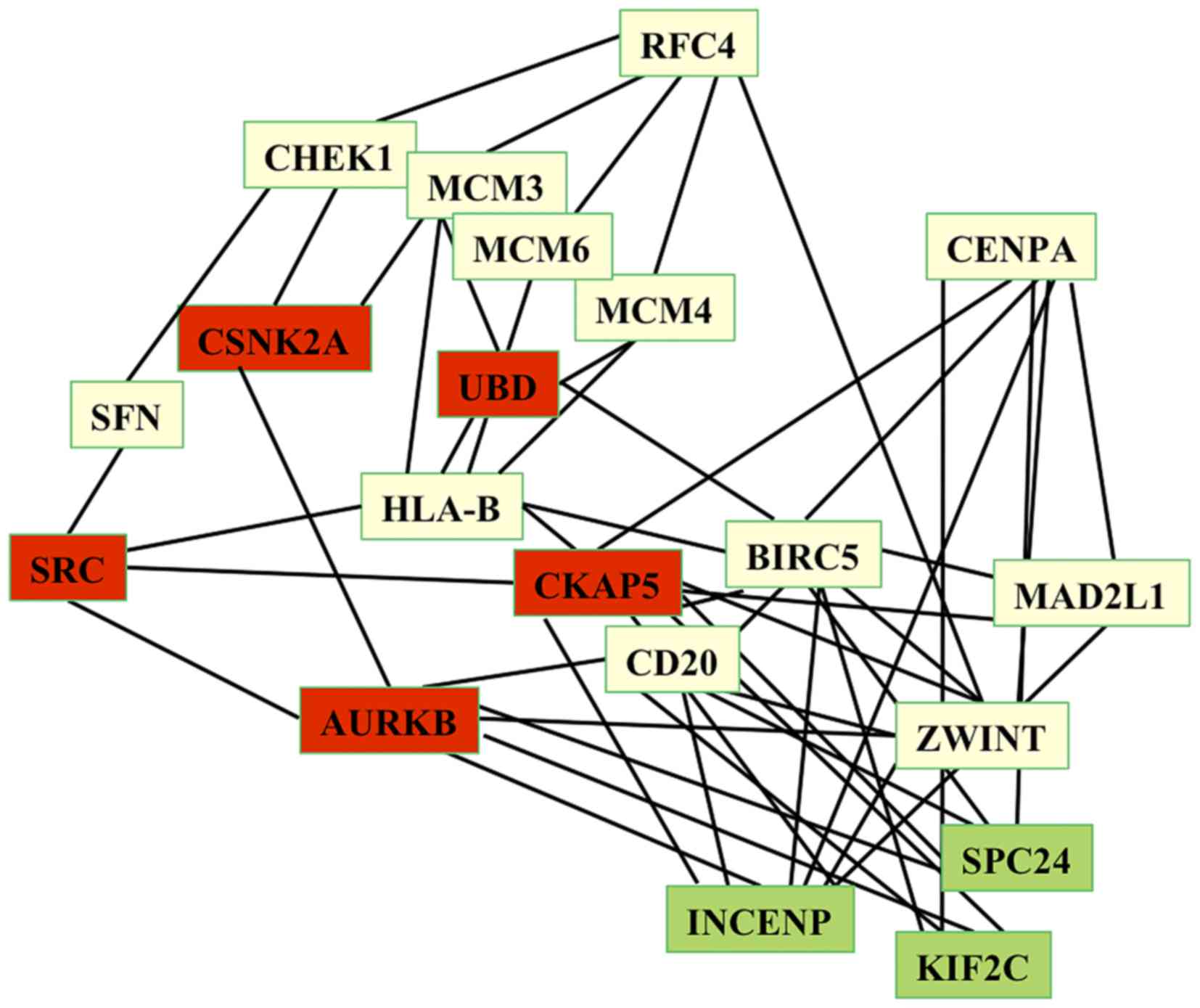
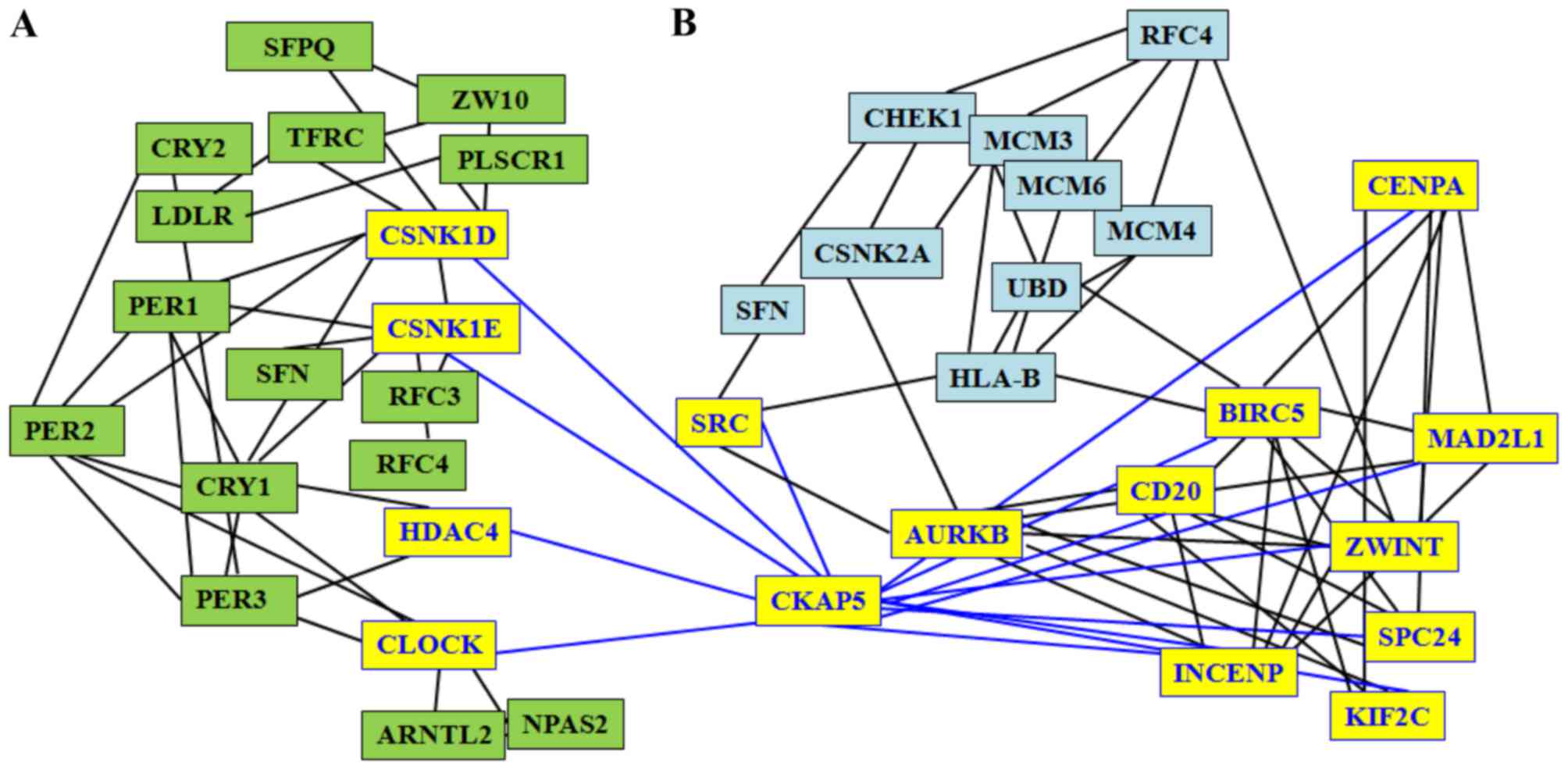
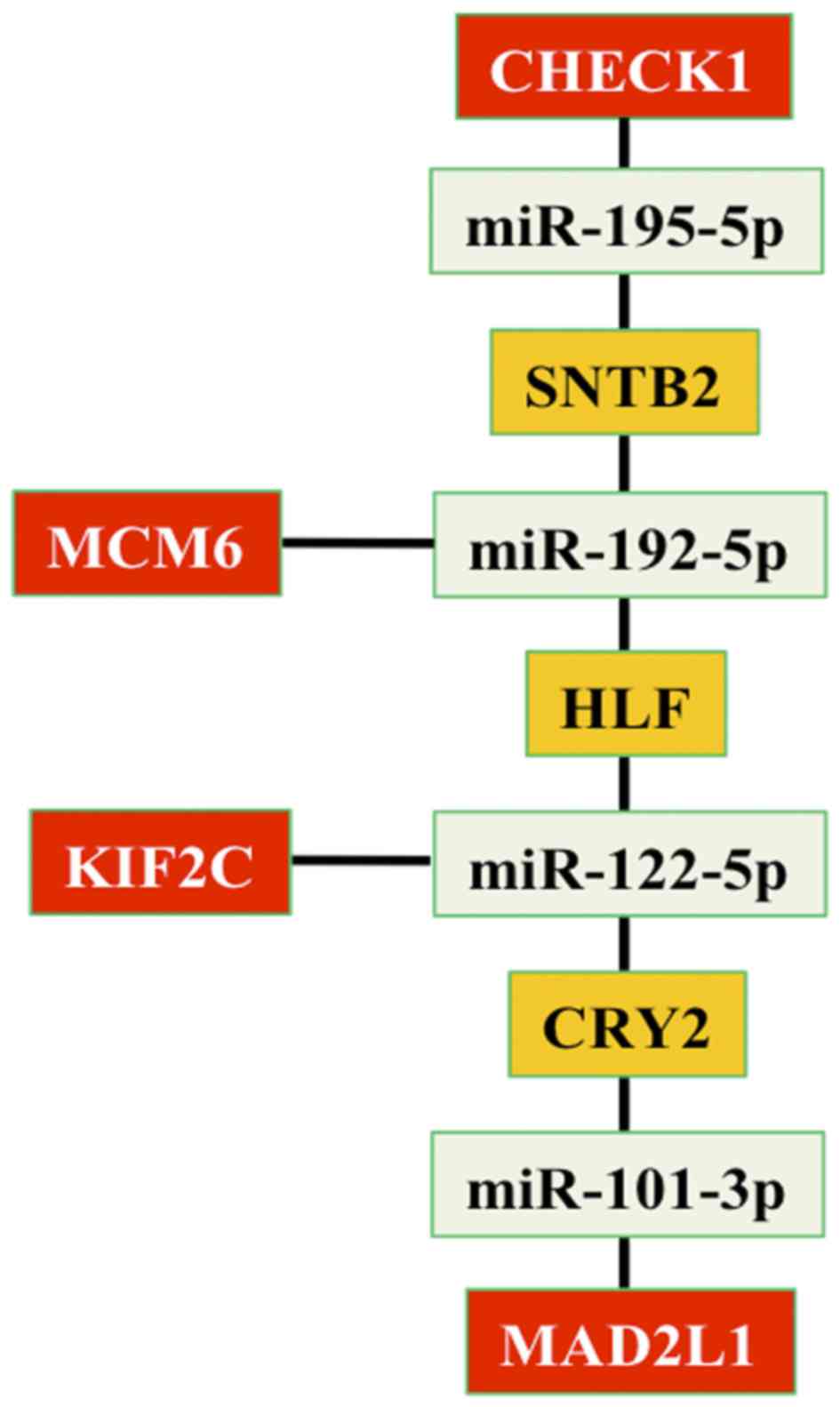
Network analysis is a useful approach in cancer biology as it provides information regarding the genes and proteins. In our previous study, a network analysis was performed on dysregulated genes in HepG2 cells, a hepatoblastoma cell line that lacks the viral infection, compared with normal hepatocytes, identifying the presence of 26 HUB genes. The present study aimed to identify whether these previously identified HUB genes participate in the network that controls the human circadian rhythms. The results of the present study demonstrated that 20/26 HUB genes were associated with the metabolic processes that control human circadian rhythms, which supports the hypothesis that a number of cancer types are dependent from circadian cycles. In addition, it was revealed that the CLOCK circadian regulator gene was associated, via cytoskeleton associated protein 5 (CKAP5), with the HUB genes of the HepG2 network, and that CKAP5 was associated with three other circadian genes (casein kinase 1ε, casein kinase 1δ and histone deacetylase 4) and 10 HepG2 genes (SH2 domain containing, ZW10 interacting kinetochore protein, aurora kinase B, cell division cycle 20, centromere protein A, inner centromere protein, mitotic arrest deficient 2 like 1, baculoviral IAP repeat containing 5, SPC24 NDC80 kinetochore complex component and kinesin family member 2C). Furthermore, the genes that associate the circadian system with liver cancer were demonstrated to encode intrinsically disordered proteins. Finally, the results of the present study identified the microRNAs involved in the network formed by the overlapping of HepG2 and circadian genes.
View Figures

Figure 1

Figure 2

Figure 3

View References

1 

Czeisler CA and Klerman EB: Circadian and sleep-dependent regulation of hormone release in humans. Recent ProgHorm Res. 54:97–130. 1999.

2 

Dibner C and Schibler U: Circadian timing of metabolism in animal models and humans. J Intern Med. 277:513–527. 2015. View Article : Google Scholar : PubMed/NCBI

3 

Harfmann BD, Schroder EA and Esser KA: Circadian rhythms the molecular clock and skeletal muscle. J Biol Rhythms. 30:84–94. 2015. View Article : Google Scholar : PubMed/NCBI

4 

West AC and Bechtold DA: The cost of circadian desynchrony: Evidence insights and open questions. BioEssays. 37:777–788. 2015. View Article : Google Scholar : PubMed/NCBI

5 

Fares S, Hermens DF, Naismith SL, White D, Hickie IB and Robillard R: Clinical correlates of chronotypes in young persons with mental disorders. Chronobiol Int. 32:1183–1191. 2015. View Article : Google Scholar : PubMed/NCBI

6 

Geoffroy PA, Etain B, Sportiche S and Bellivier F: Circadian biomarkers in patients with bipolar disorder: Promising putative predictors of lithium response. Int J Bipolar Disord. 2:282014. View Article : Google Scholar : PubMed/NCBI

7 

Geoffroy PA, Etain B, Franchi JA, Bellivier F and Ritter P: Melatonin and melatonin agonists as adjunctive treatments in bipolar disorders. Curr Pharm Des. 21:3352–3358. 2015. View Article : Google Scholar : PubMed/NCBI

8 

Benedetti F, Riccaboni R, Dallaspezia S, Locatelli C, Smeraldi E and Colombo C: Effects of CLOCK gene variants and early stress on hopelessness and suicide in bipolar depression. Chronobiol Int. 32:1156–1161. 2015. View Article : Google Scholar : PubMed/NCBI

9 

Russo M, Mahon K, Shanahan M, Ramjas E, Solon C, Purcell SM and Burdick KE: The relationship between sleep quality and neurocognition in bipolar disorder. J Affect Disord. 187:156–162. 2015. View Article : Google Scholar : PubMed/NCBI

10 

Challet E: Keeping circadian time with hormones. Diabetes Obes Metab. 17:76–83. 2015. View Article : Google Scholar : PubMed/NCBI

11 

Anisimov VN, Vinogradova IA, Panchenko AV, Popovich IG and Zabezhinski MA: Light-at-night-induced circadian disruption cancer and aging. Curr Aging Sci. 5:170–177. 2012. View Article : Google Scholar : PubMed/NCBI

12 

Belancio VP: LINE-1 activity as molecular basis for genomic instability associated with light exposure at night. Mob Genet Elements. 5:1–5. 2015. View Article : Google Scholar : PubMed/NCBI

13 

Savvidis C and Koutsilieris M: Circadian rhythm disruption in cancer biology. Mol Med. 18:1249–1260. 2012. View Article : Google Scholar : PubMed/NCBI

14 

Uth K and Sleigh R: Deregulation of the circadian clock constitutes a significant factor in tumorigenesis: A clockwork cancer. Part II In vivo studies. Biotechnol Biotechnol Equip. 28:379–386. 2014. View Article : Google Scholar : PubMed/NCBI

15 

Michael AK, Harvey SL, Sammons PJ, Anderson AP, Kopalle HM, Banham AH and Partch CL: Cancer/Testis antigen PASD1 silences the circadian clock. Mol Cell. 58:743–754. 2015. View Article : Google Scholar : PubMed/NCBI

16 

Kiss Z and Ghosh PM: Woman in cancer thematic review: Circadian rhythmicity and the influence of ‘clock’ genes on prostate cancer. Endocr Relat Cancer. 23:T123–T134. 2016. View Article : Google Scholar : PubMed/NCBI

17 

Gutiérrez-Monreal MA, Villela L, Baltazar S, Perfecto-Avalos Y, Cardineau GA and Scott SP: A PER3 polymorphism is associated with better overall survival in diffuse large B-cell lymphoma in Mexican population. Cancer Biomark. 15:699–705. 2015. View Article : Google Scholar : PubMed/NCBI

18 

Li J, Chen R, Ji M, Zou SL and Zhu LN: Cisplatin-based chronotherapy for advanced non-small cell lung cancer patients: A randomized controlled study and its pharmacokinetworkics analysis. Cancer Chemother Pharmacol. 76:651–655. 2015. View Article : Google Scholar : PubMed/NCBI

19 

Mitchell MI and Engelbrecht AM: Circadian rhythms and breast cancer: The role of Per2 in doxorubicin-induced cell death. J Toxicol. 2015:3923602015. View Article : Google Scholar : PubMed/NCBI

20 

Poole EM, Schernhammer E, Mills L, Hankinson SE and Tworoger SS: Urinary melatonin and risk of ovarian cancer. Cancer Causes Control. 26:1501–1506. 2015. View Article : Google Scholar : PubMed/NCBI

21 

Schmutz I, Albrecht U and Ripperger JA: The role of clock genes and rhythmicity in the liver. Mol Cell Endocrinol. 349:38–44. 2012. View Article : Google Scholar : PubMed/NCBI

22 

Vollmers C, Gill S, DiTacchio L, Pulivarthy SR, Le HD and Panda S: Time of feeding and the intrinsic circadian clock drive rhythms in hepatic gene expression. ProcNatl Acad Sci USA. 106:21453–21458. 2009. View Article : Google Scholar

23 

Elgohary N, Pellegrino R, Neumann O, Elzawahry HM, Saber MM, Zeeneldin AA, Geffers R, Ehemann V, Schemmer P, Schirmacher P and Longerich T: Protumorigenic role of timeless in hepatocellular carcinoma. Int J Oncol. 46:597–606. 2015. View Article : Google Scholar : PubMed/NCBI

24 

Yu C, Yang SL, Fang X, Jiang JX, Sun CY and Huang T: Hypoxia disrupts the expression levels of circadian rhythm genes in hepatocellular carcinoma. Mol Med Rep. 11:4002–4008. 2015. View Article : Google Scholar : PubMed/NCBI

25 

Li H, Lu YF, Chen H and Liu J: Dysregulation of metallothionein and circadian genes in human hepatocellular carcinoma. Chronobiol Int. 20:192–202. 2016.

26 

Yang SL, Yu C, Jiang JX, Liu LP, Fang X and Wu C: Hepatitis B virus X protein disrupts the balance of the expression of circadian rhythm genes in hepatocellular carcinoma. Oncol Lett. 8:2715–2720. 2014.PubMed/NCBI

27 

Turati F, Talamini R, Pelucchi C, Polesel J, Franceschi S, Crispo A, Izzo F, La Vecchia C, Boffetta P and Montella M: Metabolic syndrome and hepatocellular carcinoma risk. Br J Cancer. 108:222–658. 2013. View Article : Google Scholar : PubMed/NCBI

28 

Polesel J, Zucchetto A, Montella M, Dal Maso L, Crispo A, La Vecchia C, Serraino D, Franceschi S and Talamini R: The impact of obesity and diabetes mellitus on the risk of hepatocellular carcinoma. Ann Oncol. 20:353–357. 2009. View Article : Google Scholar : PubMed/NCBI

29 

Shivappa N, Hébert JR, Polesel J, Zucchetto A, Crispo A, Montella M, Franceschi S, Rossi M, La Vecchia C and Serraino D: Inflammatory potential of diet and risk for hepatocellular cancer in a case-control study from Italy. Br J Nutr. 115:324–331. 2016. View Article : Google Scholar : PubMed/NCBI

30 

Singh S, Colonna G, Di Bernardo G, Bergantino F, Cammarota M, Castello G and Costantini S: The gene expression profiling of hepatocellular carcinoma by a network analysis approach shows a dominance of intrinsically disordered proteins (IDPs) between hub nodes. Mol Biosyst. 11:2933–2945. 2015. View Article : Google Scholar : PubMed/NCBI

31 

Cerami EG, Gross BE, Demir E, Rodchenkov I, Babur O, Anwar N, Schultz N, Bader GD and Sander C: Pathway commons a web resource for biological pathway data. Nucleic Acids Res. 39:(Database issue). D685–D690. 2011. View Article : Google Scholar : PubMed/NCBI

32 

Stark C, Breitkreutz BJ, Reguly T, Boucher L, Breitkreutz A and Tyers M: BioGRID: A general repository for interaction datasets. Nucleic Acids Res. 34:(Database issue). D535–D539. 2006. View Article : Google Scholar : PubMed/NCBI

33 

Peri S, Navarro JD, Amanchy R, Kristiansen TZ, Jonnalagadda CK, Surendranath V, Niranjan V, Muthusamy B, Gandhi TK, Gronborg M, et al: Development of human protein reference database as an initial platform for approaching systems biology in humans. Genome Res. 13:2363–2371. 2003. View Article : Google Scholar : PubMed/NCBI

34 

Kamburov A, Wierling C, Lehrach H and Herwig R: ConsensusPathDB-a database for integrating human functional interaction networks. Nucleic Acids Res. 37:(Database issue). D623–D628. 2009. View Article : Google Scholar : PubMed/NCBI

35 

Xenarios I, Salwinski L, Duan XJ, Higney P, Kim SM and Eisenberg D: DIP, the database of interacting proteins: A research tool for studying cellular networks of protein interactions. Nucleic Acids Res. 30:303–305. 2012. View Article : Google Scholar

36 

Jayapandian M, Chapman A, Tarcea VG, Yu C, Elkiss A, Ianni A, Liu B, Nandi A, Santos C, Andrews P, et al: Michigan Molecular Interactions (MiMI): Putting the jigsaw puzzle together. Nucleic Acids Res. 35:(Database issue). D566–D571. 2007. View Article : Google Scholar : PubMed/NCBI

37 

Cline MS, Smoot M, Cerami E, Kuchinsky A, Landys N, Workman C, Christmas R, Avila-Campilo I, Creech M, Gross B, et al: Integration of biological networks and gene expression data using Cytoscape. Nat Protoc. 2:2366–2382. 2007. View Article : Google Scholar : PubMed/NCBI

38 

Huang da W, Sherman BT and Lempicki RA: Systematic and integrative analysis of large gene lists using DAVID bioinformatics resources. Nat Protoc. 4:44–57. 2009. View Article : Google Scholar : PubMed/NCBI

39 

Maere S, Heymans K and Kuiper M: BiNGO: A cytoscape plugin to assess overrepresentation of gene ontology categories in biological networks. Bioinformatics. 21:3448–3469. 2005. View Article : Google Scholar : PubMed/NCBI

40 

Yoon J, Blumer A and Lee K: An algorithm for modularity analysis of directed and weighted biological networks based on edge-betweenness centrality. Bioinformatics. 22:3106–3108. 2006. View Article : Google Scholar : PubMed/NCBI

41 

Newman MEJ: A measure of betweenness centrality based on random walks. Soc Networks. 27:39–54. 2005. View Article : Google Scholar

42 

Barabási AL, Gulbahce N and Loscalzo J: Network medicine: A network-based approach to human disease. Nat Rev Genet. 12:56–68. 2011. View Article : Google Scholar : PubMed/NCBI

43 

Sharma A, Costantini S and Colonna G: The protein-protein interaction network of the human Sirtuin family. Biochim Biophys Acta. 1834:1998–2009. 2013. View Article : Google Scholar : PubMed/NCBI

44 

Wu J, Tan Y, Deng H and Zhu D: Relationship between degree-rank function and degree distribution of protein-protein interaction networks. Comput Biol Chem. 32:1–4. 2008. View Article : Google Scholar : PubMed/NCBI

45 

Wu J, Tan YJ, Deng HZ and Zhu DZ: A new measure of heterogeneity of complex networks based on degree sequence. Unifying Themes in Complex Systems. 66–73. 2010. View Article : Google Scholar

46 

Dong J and Horvath S: Understanding network concepts in modules. BMC Syst Biol. 1:242007. View Article : Google Scholar : PubMed/NCBI

47 

Freeman LC: Centrality in social networks conceptual clarification. Soc Networks. 1:215–239. 1978. View Article : Google Scholar

48 

Estrada E: Quantifying network heterogeneity. Phys Rev E Stat Nonlin Soft Matter Phys. 82:0661022010. View Article : Google Scholar : PubMed/NCBI

49 

Nepusz T, Yu H and Paccanaro A: Detecting overlapping protein complexes in protein-protein interaction networks. Nat Methods. 9:471–472. 2012. View Article : Google Scholar : PubMed/NCBI

50 

Peng K, Vucetic S, Radivojac P, Brown CJ, Dunker AK and Obradovic Z: Optimizing long intrinsic disorder predictors with protein evolutionary information. J Bioinform Comput Biol. 3:35–60. 2015. View Article : Google Scholar

51 

He XX, Chang Y, Meng FY, Wang MY, Xie QH, Tang F, Li PY, Song YH and Lin JS: MicroRNA-375 targets AEG-1 in hepatocellular carcinoma and suppresses liver cancer cell growth in vitro and in vivo. Oncogene. 31:3357–3369. 2012. View Article : Google Scholar : PubMed/NCBI

52 

Lewis BP, Burge CB and Bartel DP: Conserved seed pairing, often flanked by adenosines indicates that thousands of human genes are microRNA targets. Cell. 120:15–20. 2005. View Article : Google Scholar : PubMed/NCBI

53 

Kertesz M, Iovino N, Unnerstall U, Gaul U and Segal E: The role of site accessibility in microRNA target recognition. Nat Genet. 39:1278–1284. 2007. View Article : Google Scholar : PubMed/NCBI

54 

John B, Enright AJ, Aravin A, Tuschl T, Sander C and Marks DS: Human MicroRNA targets. PLoS Biol. 3:e2642005. View Article : Google Scholar

55 

Costantini S, Di Bernardo G, Cammarota M, Castello G and Colonna G: Gene expression signature of human HepG2 cell line. Gene. 518:335–345. 2013. View Article : Google Scholar : PubMed/NCBI

56 

Nagase T, Miyajima N, Tanaka A, Sazuka T, Seki N, Sato S, Tabata S, Ishikawa K, Kawarabayasi Y, Kotani H, et al: Prediction of the coding sequences of unidentified human genes. III. The coding sequences of 40 new genes (KIAA0081-KIAA0120) deduced by analysis of cDNA clones from human cell line KG-1. DNA Res. 2:37–43. 1995. View Article : Google Scholar : PubMed/NCBI

57 

Charrasse S, Mazel M, Taviaux S, Berta P, Chow T and Larroque C: Characterization of the cDNA and pattern of expression of a new gene over-expressed in human hepatomas and colonic tumors. Eur J Biochem. 234:406–413. 1995. View Article : Google Scholar : PubMed/NCBI

58 

Takeshita N, Mania D, Herrero S, Ishitsuka Y, Nienhaus GU, Podolski M, Howard J and Fischer R: The cell-end marker TeaA and the microtubule polymerase AlpA contribute to microtubule guidance at the hyphal tip cortex of Aspergillus nidulans to provide polarity maintenance. J Cell Sci. 126:5400–5411. 2013. View Article : Google Scholar : PubMed/NCBI

59 

Wu Z, Chen Y, Yang T, Gao Q, Yuan M and Ma L: Targeted ubiquitination and degradation of G-protein-coupled receptor kinase 5 by the DDB1-CUL4 ubiquitin ligase complex. PLoS One. 7:e439972012. View Article : Google Scholar : PubMed/NCBI

60 

Golsteyn RM, Mundt KE, Fry AM and Nigg EA: Cell cycle regulation of the activity and subcellular localization of Plk1, a human protein kinase implicated in mitotic spindle function. J Cell Biol. 129:1617–1628. 1995. View Article : Google Scholar : PubMed/NCBI

61 

Li JZ, Bunney BG, Meng F, Hagenauer MH, Walsh DM, Vawter MP, Evans SJ, Choudary PV, Cartagena P, Barchas JD, et al: Circadian patterns of gene expression in the human brain and disruption in major depressive disorder. Proc Natl Acad Sci USA. 110:pp. 9950–9955. 2013, View Article : Google Scholar : PubMed/NCBI

62 

Vinciguerra M, Mazzoccoli G, Piccoli C, Tataranni T, Andriulli A and Pazienza V: Exploitation of host clock gene machinery by hepatitis viruses B and C. World J Gastroenterol. 19:8902–8909. 2013. View Article : Google Scholar : PubMed/NCBI

63 

Masri S, Papagiannakopoulos T, Kinouchi K, Liu Y, Cervantes M, Baldi P, Jacks T and Sassone-Corsi P: Lung adenocarcinoma distally rewires hepatic circadian homeostasis. Cell. 165:896–909. 2016. View Article : Google Scholar : PubMed/NCBI

Related Articles

  • Abstract
  • View
  • Download
  • Twitter
Copy and paste a formatted citation
Spandidos Publications style
Polo A, Singh S, Crispo A, Russo M, Giudice A, Montella M, Colonna G and Costantini S: Evaluating the associations between human circadian rhythms and dysregulated genes in liver cancer cells. Oncol Lett 14: 7353-7359, 2017.
APA
Polo, A., Singh, S., Crispo, A., Russo, M., Giudice, A., Montella, M. ... Costantini, S. (2017). Evaluating the associations between human circadian rhythms and dysregulated genes in liver cancer cells. Oncology Letters, 14, 7353-7359. https://doi.org/10.3892/ol.2017.7109
MLA
Polo, A., Singh, S., Crispo, A., Russo, M., Giudice, A., Montella, M., Colonna, G., Costantini, S."Evaluating the associations between human circadian rhythms and dysregulated genes in liver cancer cells". Oncology Letters 14.6 (2017): 7353-7359.
Chicago
Polo, A., Singh, S., Crispo, A., Russo, M., Giudice, A., Montella, M., Colonna, G., Costantini, S."Evaluating the associations between human circadian rhythms and dysregulated genes in liver cancer cells". Oncology Letters 14, no. 6 (2017): 7353-7359. https://doi.org/10.3892/ol.2017.7109
Copy and paste a formatted citation
x
Spandidos Publications style
Polo A, Singh S, Crispo A, Russo M, Giudice A, Montella M, Colonna G and Costantini S: Evaluating the associations between human circadian rhythms and dysregulated genes in liver cancer cells. Oncol Lett 14: 7353-7359, 2017.
APA
Polo, A., Singh, S., Crispo, A., Russo, M., Giudice, A., Montella, M. ... Costantini, S. (2017). Evaluating the associations between human circadian rhythms and dysregulated genes in liver cancer cells. Oncology Letters, 14, 7353-7359. https://doi.org/10.3892/ol.2017.7109
MLA
Polo, A., Singh, S., Crispo, A., Russo, M., Giudice, A., Montella, M., Colonna, G., Costantini, S."Evaluating the associations between human circadian rhythms and dysregulated genes in liver cancer cells". Oncology Letters 14.6 (2017): 7353-7359.
Chicago
Polo, A., Singh, S., Crispo, A., Russo, M., Giudice, A., Montella, M., Colonna, G., Costantini, S."Evaluating the associations between human circadian rhythms and dysregulated genes in liver cancer cells". Oncology Letters 14, no. 6 (2017): 7353-7359. https://doi.org/10.3892/ol.2017.7109
Follow us
  • Twitter
  • LinkedIn
  • Facebook
About
  • Spandidos Publications
  • Careers
  • Cookie Policy
  • Privacy Policy
How can we help?
  • Help
  • Live Chat
  • Contact
  • Email to our Support Team