Spandidos Publications Logo
  • About
    • About Spandidos
    • Aims and Scopes
    • Abstracting and Indexing
    • Editorial Policies
    • Reprints and Permissions
    • Job Opportunities
    • Terms and Conditions
    • Contact
  • Journals
    • All Journals
    • Oncology Letters
      • Oncology Letters
      • Information for Authors
      • Editorial Policies
      • Editorial Board
      • Aims and Scope
      • Abstracting and Indexing
      • Bibliographic Information
      • Archive
    • International Journal of Oncology
      • International Journal of Oncology
      • Information for Authors
      • Editorial Policies
      • Editorial Board
      • Aims and Scope
      • Abstracting and Indexing
      • Bibliographic Information
      • Archive
    • Molecular and Clinical Oncology
      • Molecular and Clinical Oncology
      • Information for Authors
      • Editorial Policies
      • Editorial Board
      • Aims and Scope
      • Abstracting and Indexing
      • Bibliographic Information
      • Archive
    • Experimental and Therapeutic Medicine
      • Experimental and Therapeutic Medicine
      • Information for Authors
      • Editorial Policies
      • Editorial Board
      • Aims and Scope
      • Abstracting and Indexing
      • Bibliographic Information
      • Archive
    • International Journal of Molecular Medicine
      • International Journal of Molecular Medicine
      • Information for Authors
      • Editorial Policies
      • Editorial Board
      • Aims and Scope
      • Abstracting and Indexing
      • Bibliographic Information
      • Archive
    • Biomedical Reports
      • Biomedical Reports
      • Information for Authors
      • Editorial Policies
      • Editorial Board
      • Aims and Scope
      • Abstracting and Indexing
      • Bibliographic Information
      • Archive
    • Oncology Reports
      • Oncology Reports
      • Information for Authors
      • Editorial Policies
      • Editorial Board
      • Aims and Scope
      • Abstracting and Indexing
      • Bibliographic Information
      • Archive
    • Molecular Medicine Reports
      • Molecular Medicine Reports
      • Information for Authors
      • Editorial Policies
      • Editorial Board
      • Aims and Scope
      • Abstracting and Indexing
      • Bibliographic Information
      • Archive
    • World Academy of Sciences Journal
      • World Academy of Sciences Journal
      • Information for Authors
      • Editorial Policies
      • Editorial Board
      • Aims and Scope
      • Abstracting and Indexing
      • Bibliographic Information
      • Archive
    • International Journal of Functional Nutrition
      • International Journal of Functional Nutrition
      • Information for Authors
      • Editorial Policies
      • Editorial Board
      • Aims and Scope
      • Abstracting and Indexing
      • Bibliographic Information
      • Archive
    • International Journal of Epigenetics
      • International Journal of Epigenetics
      • Information for Authors
      • Editorial Policies
      • Editorial Board
      • Aims and Scope
      • Abstracting and Indexing
      • Bibliographic Information
      • Archive
    • Medicine International
      • Medicine International
      • Information for Authors
      • Editorial Policies
      • Editorial Board
      • Aims and Scope
      • Abstracting and Indexing
      • Bibliographic Information
      • Archive
  • Articles
  • Information
    • Information for Authors
    • Information for Reviewers
    • Information for Librarians
    • Information for Advertisers
    • Conferences
  • Language Editing
Spandidos Publications Logo
  • About
    • About Spandidos
    • Aims and Scopes
    • Abstracting and Indexing
    • Editorial Policies
    • Reprints and Permissions
    • Job Opportunities
    • Terms and Conditions
    • Contact
  • Journals
    • All Journals
    • Biomedical Reports
      • Information for Authors
      • Editorial Policies
      • Editorial Board
      • Aims and Scope
      • Abstracting and Indexing
      • Bibliographic Information
      • Archive
    • Experimental and Therapeutic Medicine
      • Information for Authors
      • Editorial Policies
      • Editorial Board
      • Aims and Scope
      • Abstracting and Indexing
      • Bibliographic Information
      • Archive
    • International Journal of Epigenetics
      • Information for Authors
      • Editorial Policies
      • Editorial Board
      • Aims and Scope
      • Abstracting and Indexing
      • Bibliographic Information
      • Archive
    • International Journal of Functional Nutrition
      • Information for Authors
      • Editorial Policies
      • Editorial Board
      • Aims and Scope
      • Abstracting and Indexing
      • Bibliographic Information
      • Archive
    • International Journal of Molecular Medicine
      • Information for Authors
      • Editorial Policies
      • Editorial Board
      • Aims and Scope
      • Abstracting and Indexing
      • Bibliographic Information
      • Archive
    • International Journal of Oncology
      • Information for Authors
      • Editorial Policies
      • Editorial Board
      • Aims and Scope
      • Abstracting and Indexing
      • Bibliographic Information
      • Archive
    • Medicine International
      • Information for Authors
      • Editorial Policies
      • Editorial Board
      • Aims and Scope
      • Abstracting and Indexing
      • Bibliographic Information
      • Archive
    • Molecular and Clinical Oncology
      • Information for Authors
      • Editorial Policies
      • Editorial Board
      • Aims and Scope
      • Abstracting and Indexing
      • Bibliographic Information
      • Archive
    • Molecular Medicine Reports
      • Information for Authors
      • Editorial Policies
      • Editorial Board
      • Aims and Scope
      • Abstracting and Indexing
      • Bibliographic Information
      • Archive
    • Oncology Letters
      • Information for Authors
      • Editorial Policies
      • Editorial Board
      • Aims and Scope
      • Abstracting and Indexing
      • Bibliographic Information
      • Archive
    • Oncology Reports
      • Information for Authors
      • Editorial Policies
      • Editorial Board
      • Aims and Scope
      • Abstracting and Indexing
      • Bibliographic Information
      • Archive
    • World Academy of Sciences Journal
      • Information for Authors
      • Editorial Policies
      • Editorial Board
      • Aims and Scope
      • Abstracting and Indexing
      • Bibliographic Information
      • Archive
  • Articles
  • Information
    • For Authors
    • For Reviewers
    • For Librarians
    • For Advertisers
    • Conferences
  • Language Editing
Login Register Submit
  • This site uses cookies
  • You can change your cookie settings at any time by following the instructions in our Cookie Policy. To find out more, you may read our Privacy Policy.

    I agree
Search articles by DOI, keyword, author or affiliation
Search
Advanced Search
presentation
Oncology Letters
Join Editorial Board Propose a Special Issue
Print ISSN: 1792-1074 Online ISSN: 1792-1082
Journal Cover
December-2017 Volume 14 Issue 6

Full Size Image

Sign up for eToc alerts
Recommend to Library

Journals

International Journal of Molecular Medicine

International Journal of Molecular Medicine

International Journal of Molecular Medicine is an international journal devoted to molecular mechanisms of human disease.

International Journal of Oncology

International Journal of Oncology

International Journal of Oncology is an international journal devoted to oncology research and cancer treatment.

Molecular Medicine Reports

Molecular Medicine Reports

Covers molecular medicine topics such as pharmacology, pathology, genetics, neuroscience, infectious diseases, molecular cardiology, and molecular surgery.

Oncology Reports

Oncology Reports

Oncology Reports is an international journal devoted to fundamental and applied research in Oncology.

Experimental and Therapeutic Medicine

Experimental and Therapeutic Medicine

Experimental and Therapeutic Medicine is an international journal devoted to laboratory and clinical medicine.

Oncology Letters

Oncology Letters

Oncology Letters is an international journal devoted to Experimental and Clinical Oncology.

Biomedical Reports

Biomedical Reports

Explores a wide range of biological and medical fields, including pharmacology, genetics, microbiology, neuroscience, and molecular cardiology.

Molecular and Clinical Oncology

Molecular and Clinical Oncology

International journal addressing all aspects of oncology research, from tumorigenesis and oncogenes to chemotherapy and metastasis.

World Academy of Sciences Journal

World Academy of Sciences Journal

Multidisciplinary open-access journal spanning biochemistry, genetics, neuroscience, environmental health, and synthetic biology.

International Journal of Functional Nutrition

International Journal of Functional Nutrition

Open-access journal combining biochemistry, pharmacology, immunology, and genetics to advance health through functional nutrition.

International Journal of Epigenetics

International Journal of Epigenetics

Publishes open-access research on using epigenetics to advance understanding and treatment of human disease.

Medicine International

Medicine International

An International Open Access Journal Devoted to General Medicine.

Journal Cover
December-2017 Volume 14 Issue 6

Full Size Image

Sign up for eToc alerts
Recommend to Library

  • Article
  • Citations
    • Cite This Article
    • Download Citation
    • Create Citation Alert
    • Remove Citation Alert
    • Cited By
  • Similar Articles
    • Related Articles (in Spandidos Publications)
    • Similar Articles (Google Scholar)
    • Similar Articles (PubMed)
  • Download PDF
  • Download XML
  • View XML
Article

Pien Tze Huang inhibits the growth of hepatocellular carcinoma cells by upregulating miR‑16 expression

  • Authors:
    • Fei Qi
    • Songqiang Zhou
    • Li Li
    • Lihui Wei
    • Aling Shen
    • Liya Liu
    • Yaodong Wang
    • Jun Peng
  • View Affiliations / Copyright

    Affiliations: Academy of Integrative Medicine, Fujian University of Traditional Chinese Medicine, Fuzhou, Fujian 350122, P.R. China, Department of Hepatobiliary Surgery, Fujian Provincial Hospital, Fujian Medical University, Fuzhou, Fujian 350001, P.R. China, Department of Disease Prevention and Healthcare, Fujian Provincial Hospital, Fujian Medical University, Fuzhou, Fujian 350001, P.R. China
  • Pages: 8132-8137
    |
    Published online on: October 20, 2017
       https://doi.org/10.3892/ol.2017.7240
  • Expand metrics +
Metrics: Total Views: 0 (Spandidos Publications: | PMC Statistics: )
Metrics: Total PDF Downloads: 0 (Spandidos Publications: | PMC Statistics: )
Cited By (CrossRef): 0 citations Loading Articles...

This article is mentioned in:


Abstract

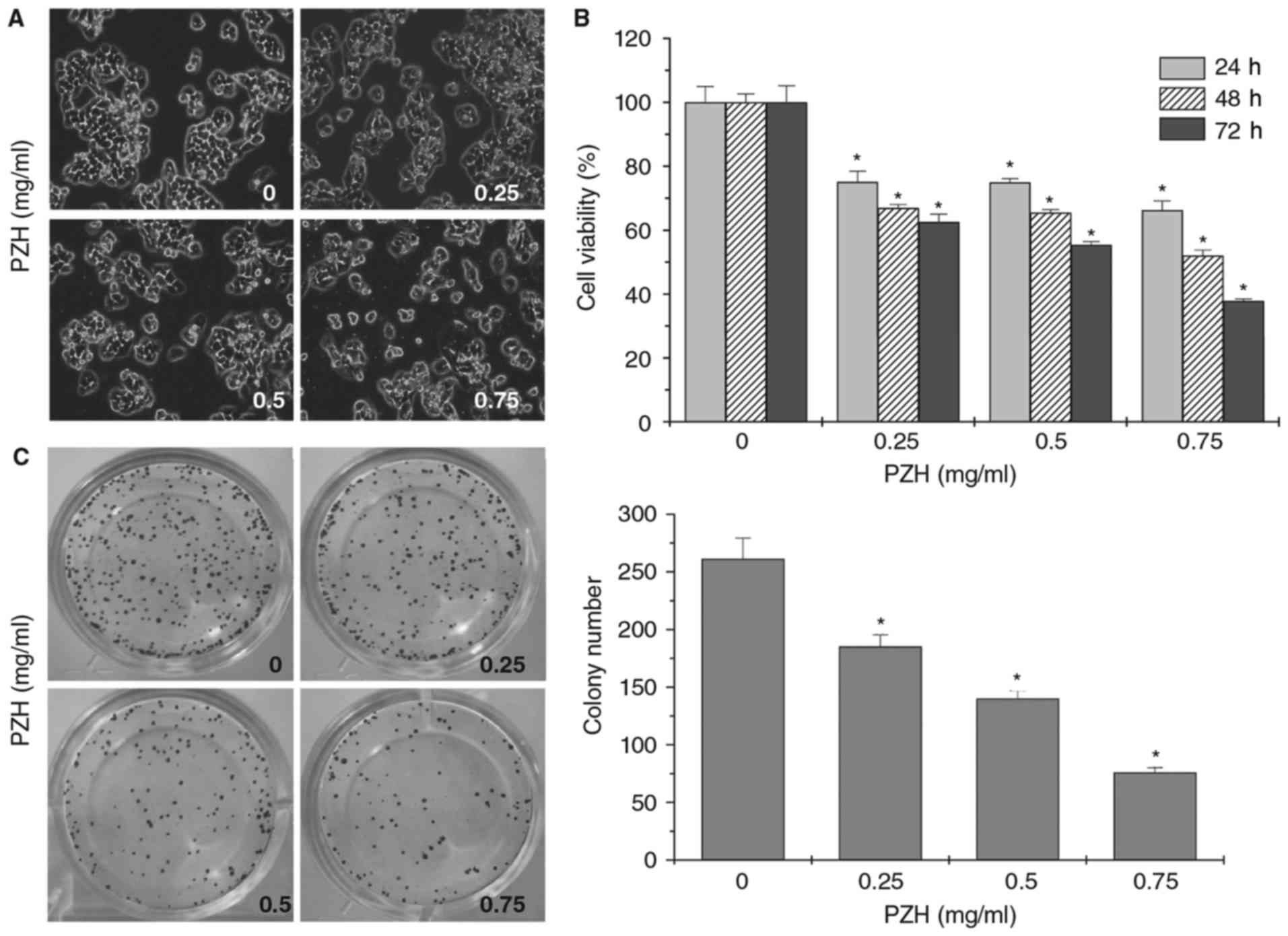
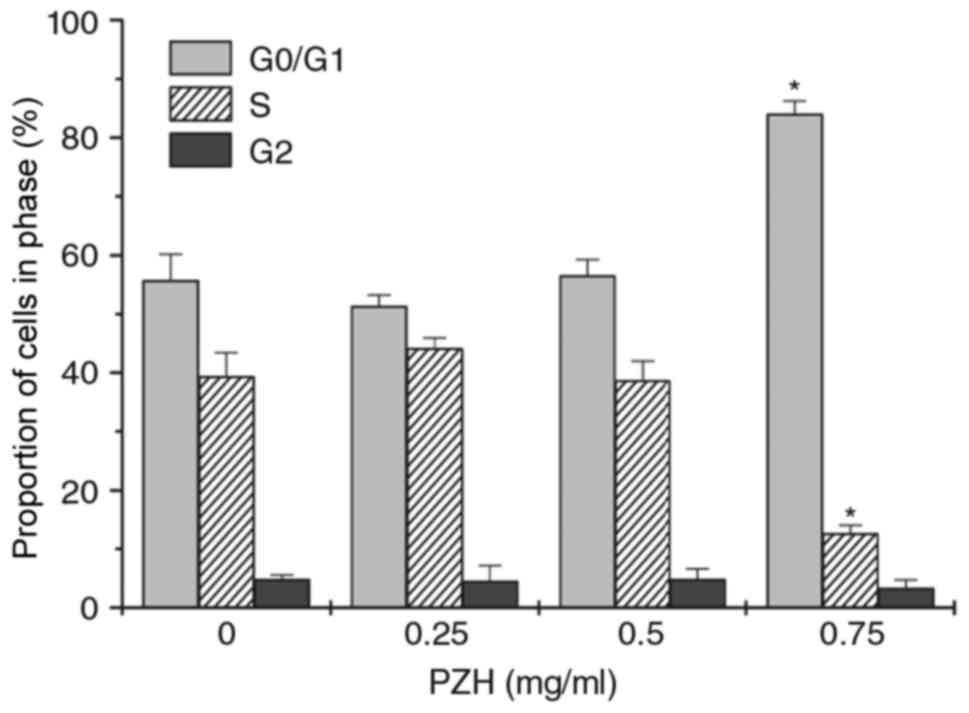
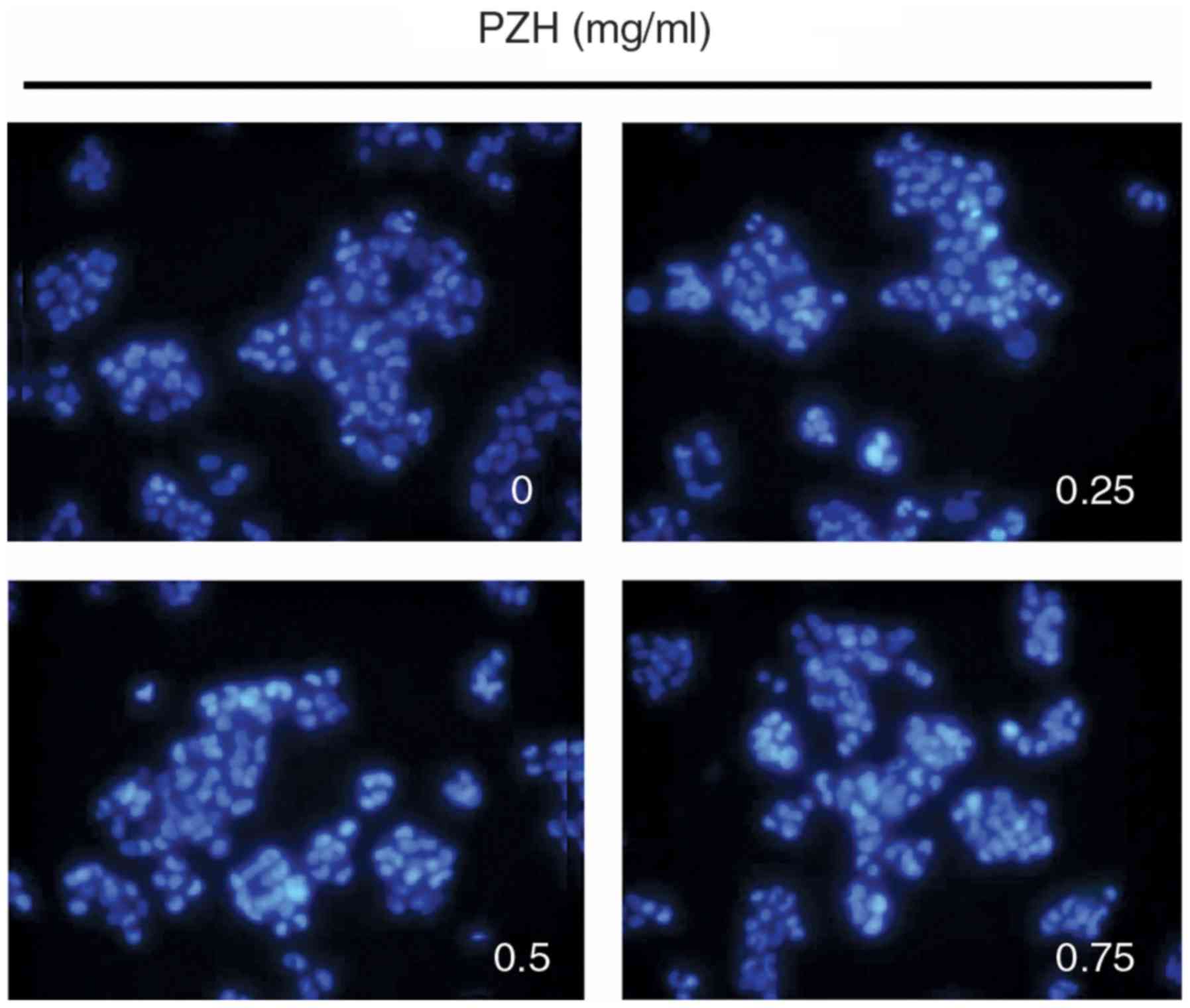
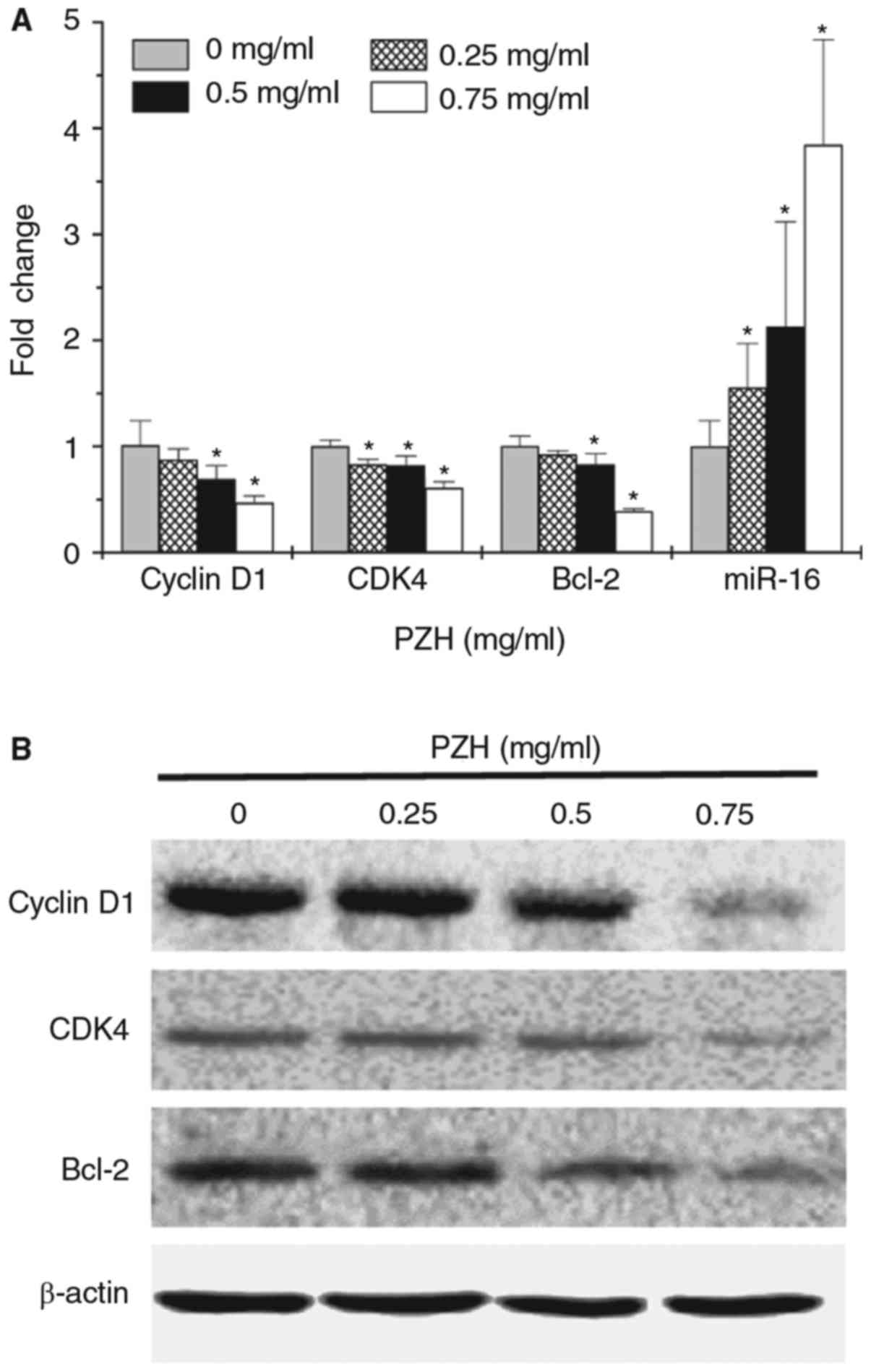
Hepatocellular carcinoma (HCC) is characterized by uncontrolled proliferation and the deregulation of apoptotic signaling, although its molecular pathogenesis is not fully characterized. The ability to inhibit excessive proliferation and induce the apoptosis of cancer cells are crucial characteristics of anticancer drugs. Pien Tze Huang (PZH) is a widely used traditional Chinese medicine for the treatment of various types of cancer, and has exhibited promising therapeutic effects in clinical trials of HCC. However, the underlying mechanisms for its action are unclear. In the present study, the aim was to explore the effect of PZH on the proliferation and apoptosis of the BEL‑7402 HCC cell line, and the associated mechanisms. PZH treatment significantly inhibited BEL‑7402 cell viability, confluence and clonogenicity, inducing cell cycle arrest and promoting apoptosis. In addition, PZH treatment suppressed the expression of the pro‑proliferative genes cyclin D1 and cyclin‑dependent kinase 4, and decreased the expression of the anti‑apoptotic gene Bcl‑2. PZH treatment also upregulated the expression of a key microRNA (miR), miR‑16. The study demonstrated that PZH can effectively inhibit cancer cell proliferation and induce apoptosis in BEL‑7402 HCC cells via the upregulation of the tumor suppressor miR‑16.
View Figures

Figure 1

Figure 2

Figure 3

Figure 4

View References

1 

Howlader N, Noone AM, Krapcho M, Garshell J, Neyman N, Altekruse SF, Kosary CL, Yu M, Ruhl J, Tatalovich Z, et al: SEER cancer statistics review, 1975–2010Natl Cancer Inst. Bethesda, MD, USA: 2013

2 

Simard EP, Ward EM, Siegel R and Jemal A: Cancers with increasing incidence trends in the United States: 1999 through 2008. CA Cancer J Clin. 62:118–128. 2012. View Article : Google Scholar : PubMed/NCBI

3 

Siegel R, Ma JM, Zou ZH and Jemal A: Cancer Statistics, 2014. CA Cancer J Clin. 64:9–29. 2014. View Article : Google Scholar : PubMed/NCBI

4 

Lin S, Hoffmann K and Schemmer P: Treatment of hepatocellular carcinoma: A systematic review. Liver Cancer. 1:144–158. 2012. View Article : Google Scholar : PubMed/NCBI

5 

Forner A, Llovet JM and Bruix J: Hepatocellular carcinoma. Lancet. 379:1245–1255. 2012. View Article : Google Scholar : PubMed/NCBI

6 

Lu SC: Where are we in the chemoprevention of hepatocellar carcinoma? Hepatology. 51:734–736. 2010.PubMed/NCBI

7 

Villanueva A and Llovet JM: Targeted therapies for hepatocellular carcinoma. Gastroenterol. 140:1410–1426. 2011. View Article : Google Scholar

8 

Darvesh AS, Aggarwal BB and Bishayee A: Curcumin and liver cancer: A review. Curr Pharm Biotechnol. 13:218–228. 2012. View Article : Google Scholar : PubMed/NCBI

9 

Evan GI and Vousden KH: Proliferation, cell cycle and apoptosis in cancer. Nature. 411:342–348. 2001. View Article : Google Scholar : PubMed/NCBI

10 

Nurse P: Ordering S phase and M phase in the cell cycle. Cell. 79:547–550. 1994. View Article : Google Scholar : PubMed/NCBI

11 

Morgan DO: Principles of CDK regulation. Nature. 374:131–134. 1995. View Article : Google Scholar : PubMed/NCBI

12 

Haraken S, Abu-EI-Ardat K, Diab-Assaf M, Niedzwiecki A, EI-Sabban M and Rath M: Epigallocatechin-3-gallate induces apoptosis and cell cycle arrest in HTLV-1-positive and -negative leukemia cells. Med Oncol. 25:30–39. 2008. View Article : Google Scholar : PubMed/NCBI

13 

Purohit A, Hejaz HA, Walden L, MacCarthy-Morrogh L, Packham G, Potter BVL and Reed MJ: The effect of 2-methoxyoestrone-3-O-sulphamate on the growth of breast cancer cells and induced mammary tumors. Int J Cancer. 85:584–589. 2000. View Article : Google Scholar : PubMed/NCBI

14 

Kessel D and Luo Y: Cells in cryptophycin-induced cell-cyclearrest are susceptible to apoptosis. Cancer Lett. 151:25–29. 2000. View Article : Google Scholar : PubMed/NCBI

15 

Adams JM and Cory S: The Bcl-2 apoptotic switch in cancer development and therapy. Oncogene. 26:1324–1337. 2007. View Article : Google Scholar : PubMed/NCBI

16 

Cory S and Adams JM: The Bcl-2 family: Regulators of the cellular life-of-death switch. Nat Rev Cancer. 2:647–656. 2002. View Article : Google Scholar : PubMed/NCBI

17 

Peng J, Ding J, Tan C, Baggenstoss B, Zhang Z, Lapolla SM and Lin J: Oligomerization of membrane-bound Bcl-2 is involved in its pore formation induced by tBid. Apoptosis. 14:1145–1153. 2009. View Article : Google Scholar : PubMed/NCBI

18 

Peng J, Tan C, Roberts GJ, Nikolaeva O, Zhang Z, Lapolla SM, Primorac S, Andrews DW and Lin J: tBID elicits a conformational alteration in membrane-bound Bcl-2 such that it inhibits Bax pore formation. J Biol Chem. 281:35802–35811. 2006. View Article : Google Scholar : PubMed/NCBI

19 

Valencia-Sachez MA, Liu J, Hannon GJ and Parker R: Control of translation and mRNA degradation by miRNAs and siRNAs. Genes Dev. 20:515–524. 2006. View Article : Google Scholar : PubMed/NCBI

20 

Bagga S and Pasquinelli AE: Identification and analysis of microRNAs. Genet Eng (NY). 27:1–20. 2006. View Article : Google Scholar

21 

Bar N and Dikstein R: miR-22 forms a regulatory loop in PTEN/AKT pathway and modulates signaling kinetics. PLoS One. 5:e108592010. View Article : Google Scholar : PubMed/NCBI

22 

Guo H, Ingolia NT, Weissman JS and Bartel DP: Mammalian microRNAs predominantly act to decrease target mRNA levels. Nature. 466:835–840. 2010. View Article : Google Scholar : PubMed/NCBI

23 

Bartel DP: MicroRNA: Target recognition and regulatory function. Cell. 136:215–233. 2009. View Article : Google Scholar : PubMed/NCBI

24 

Leskelä S, Leandro-García LJ, Mendiola M, Barriuso J, Inglada-Pérez L, Muñoz I, Martínez-Delgado B, Redondo A, de Santiago J, Robledo M, et al: The mir-200 family controls beta-tubulin III expression and is associated with paclitaxel-based treatment response and progression-free survival in ovarian cancer patients. Endocr Relat Cancer. 18:85–95. 2011. View Article : Google Scholar : PubMed/NCBI

25 

Uhlmann S, Zhang J, Schwäger A, Mannsperger H, Riazalhosseini Y, Burmester S, Ward A, Korf U, Wiemann S and Sahin Ö: miR-200bc/429 cluster targets PLCgamma1 and differentially regulates proliferation and EGF-driven invasion than miR-200a/141 in breast cancer. Oncogene. 29:4297–4306. 2010. View Article : Google Scholar : PubMed/NCBI

26 

Li H, Tang J, Lei H, Cai P, Zhu H, Li B, Xu X, Xia Y and Tang W: Decreased miR-200a/141 suppress cell migration and proliferation by targeting PTEN in Hirschsprung's disease. Cell Physiol Biochem. 34:543–553. 2014. View Article : Google Scholar : PubMed/NCBI

27 

Calin GA, Dumitru CD, Shimizu M, Bichi R, Zupo S, Noch E, Aldler H, Rattan S, Keating M, Rai K, et al: Frequent deletions and down-regulation of micro-RNA genes miR15 and miR16 at 3q14 in chronic lymphocytic leukemia. Proc Natl Acad Sci USA. 99:pp. 15524–15529. 2002, View Article : Google Scholar : PubMed/NCBI

28 

Huang YH, Lin KH, Chen HC, Chang ML, Hsu CW, Lai MW, Chen TC, Lee WC, Tseng YH and Yeh CT: Identification of postoperative prognostic microRNA predictors in hepatocellular carcinoma. PLoS One. 7:e371882012. View Article : Google Scholar : PubMed/NCBI

29 

Cimmino A, Calin GA, Fabbri M, Lorio MV, Ferracin M, Shimizu M, Wojcik SE, Ageilan RI, Zupo S, Dono M, et al: miR-15 and miR-16 induce apoptosis by targeting BCL2. Proc Natl Acad Sci USA. 102:pp. 13944–13949. 2005, View Article : Google Scholar : PubMed/NCBI

30 

Tsang WP and Kwok TT: Epigallocatechin gallate up-regulation of miR-16 and induction of apoptosis in human cancer cells. J Nutr Biochem. 21:140–146. 2010. View Article : Google Scholar : PubMed/NCBI

31 

Jiang Q, Zhang Y, Zhao M, Li Q, Chen R, Long X, Fang W and Liu Z: miR-16 induction after CDK4 knockdown is mediated by c-Myc suppression and inhibits cell growth as well as sensitizes nasopharyngeal carcinoma cells to chemotherapy. Tumour Biol. 37:2425–2433. 2016. View Article : Google Scholar : PubMed/NCBI

32 

Pekarsky Y and Croce CM: Role of miR-15/16 in CLL. Cell Death Differ. 22:6–11. 2015. View Article : Google Scholar : PubMed/NCBI

33 

Cai CK, Zhao GY, Tian LY, Liu L, Yan K, Ma YL, Ji ZW, Li XX, Han K, Gao J, et al: miR-15a and miR-16-1 downregulate CCND1 and induce apoptosis and cell cycle arrest in osteosarcoma. Oncol Rep. 28:1764–1770. 2012. View Article : Google Scholar : PubMed/NCBI

34 

Gordaliza M: Natural products as leads to anticancer drugs. Clin Transl Oncol. 9:767–776. 2007. View Article : Google Scholar : PubMed/NCBI

35 

Ji HF, Li XJ and Zhang HY: Natural products and drug discovery. Can thousands of years of ancient medical knowledge lead us to new and powerful drug combination in the fight against cancer and dementia? EMBO Rep. 10:194–200. 2009. View Article : Google Scholar : PubMed/NCBI

36 

Chinese pharmacopoeia commission, pharmacopoeia of the Peoples Repubic of Chian. Beijing: Chinese medical science and technology press; pp. 2632010

37 

Lin JM, Wei LH, Chen YQ, Liu XX, Hong ZF, Sferra TJ and Peng J: Pien Tze Huang induced apoptosis in human colon cancer HT-29 cells is associated with regulation of the Bcl-2 family and activation of caspase 3. Chin J Integr Med. 17:685–690. 2011. View Article : Google Scholar : PubMed/NCBI

38 

Zhuang Q, Hong F, Shen A, Zheng L, Zeng J, Lin W, Chen Y, Sferra TJ, Hong Z and Peng J: Pien Tze Huang inhibits tumor cell proliferation and promotes apoptosis via suppressing the STAT3 pathway in colorectal cancer mouse. Int J Oncol. 40:1569–1574. 2012.PubMed/NCBI

39 

Shen AL, Hong F, Liu LY, Lin JM, Zhuang QC, Hong ZF and Peng J: Effects of Pien Tze Huang on angiogenesis in vivo and in vitro. Chin J Integr Med. 18:431–436. 2012. View Article : Google Scholar : PubMed/NCBI

40 

Shen A, Hong F, Liu L, Lin J, Wei L, Cai Q, Hong Z and Peng J: Pien Tze Huang inhibits the proliferation of human colon carcinoma cells by arresting G1/S cell cycle progression. Oncol Lett. 4:767–770. 2012.PubMed/NCBI

41 

Shen A, Chen Y, Hong F, Lin J, Wei L, Hong Z, Sferra TJ and Peng J: Pien Tze Huang suppresses IL-6-inducible STAT3 activation in human colon carcinoma cells through induction of SOCS3. Oncol Rep. 28:2125–2130. 2012. View Article : Google Scholar : PubMed/NCBI

42 

Shen A, Lin J, Chen Y, Lin W, Liu L, Hong Z, Sferra TJ and Peng J: Pien Tze Huang inhibits tumor angiogenesis in a mouse model of colorectal cancer via suppression of multiple cellular pathways. Oncol Rep. 30:1701–1706. 2013. View Article : Google Scholar : PubMed/NCBI

43 

Chen H, Shen A, Zhang Y, Chen Y, Lin J, Lin W, Sferra T and Peng J: Pien Tze Huang inhibits hypoxia-induced epithelial-mesenchymal transition in human colon carcinoma cells through suppression of the HIF-1 pathway. Exp Ther Med. 7:1237–1242. 2014. View Article : Google Scholar : PubMed/NCBI

44 

Shen A, Chen H, Chen Y, Lin J, Lin W, Liu L, Sferra TJ and Peng J: Pien Tze Huang overcomes multidrug resistance and epithelial-mesenchymal transition in human colorectal carcinoma cells via suppression of TGF-β pathway. Evid Based Complement Alternat Med. 2014:6794362014. View Article : Google Scholar : PubMed/NCBI

45 

Chen H, Feng J, Zhang Y, Shen A, Chen Y, Lin J, Lin W, Sferra TJ and Peng J: Pien Tze Huang inhibits hypoxia-induced angiogenesis via HIF-1a/VEGF-A pathway in colorectal cancer. Evid-Based Complement Alternat Med. 2015:4542792015.PubMed/NCBI

46 

Shen A, Lin W, Chen Y, Liu L, Chen H, Zhuang Q, Lin J, Sferra TJ and Peng J: Pien Tze Huang inhibits metastasis of human colorectal carcinoma cells via modulation of TGF-β1/ZEB/miR-200 signaling network. Int J Oncol. 46:685–690. 2015. View Article : Google Scholar : PubMed/NCBI

47 

Wei L, Chen P, Chen Y, Shen A, Chen H, Lin W, Hong Z, Sferra TJ and Peng J: Pien Tze Huang suppresses the stem-like side population in colorectal cancer cells. Mol Med Rep. 9:261–266. 2014. View Article : Google Scholar : PubMed/NCBI

48 

Qi F, Wei L, Shen A, Chen Y, Lin J, Chu J, Cai Q, Pan J and Peng J: Pien Tze Huang inhibits the proliferation, and induces the apoptosis and differentiation of colorectal cancer stem cells via suppression of the Notch1 pathway. Oncol Rep. 35:511–517. 2016. View Article : Google Scholar : PubMed/NCBI

49 

Lin J, Feng J, Jin Y, Yan Z, Lai Z and Peng J: Pien Tze Huang suppresses VEGF-C-mediated lymphangiogenesis in colorectal cancer. Oncol Rep. 36:3568–3576. 2016. View Article : Google Scholar : PubMed/NCBI

50 

Xu YY and Yu EX: Clinical analysis of the analysis of the effect of Pien Tze Huang in treatment of 42 patients with moderate or advanced liver cancer. Shanghai J Tradit Chin Med. 12:4–5. 1994.

51 

Xu YY: The effect of Pien Tze Huang in treatment of liver cancer is good. Med World. 11:622001.

Related Articles

  • Abstract
  • View
  • Download
  • Twitter
Copy and paste a formatted citation
Spandidos Publications style
Qi F, Zhou S, Li L, Wei L, Shen A, Liu L, Wang Y and Peng J: Pien Tze Huang inhibits the growth of hepatocellular carcinoma cells by upregulating miR‑16 expression. Oncol Lett 14: 8132-8137, 2017.
APA
Qi, F., Zhou, S., Li, L., Wei, L., Shen, A., Liu, L. ... Peng, J. (2017). Pien Tze Huang inhibits the growth of hepatocellular carcinoma cells by upregulating miR‑16 expression. Oncology Letters, 14, 8132-8137. https://doi.org/10.3892/ol.2017.7240
MLA
Qi, F., Zhou, S., Li, L., Wei, L., Shen, A., Liu, L., Wang, Y., Peng, J."Pien Tze Huang inhibits the growth of hepatocellular carcinoma cells by upregulating miR‑16 expression". Oncology Letters 14.6 (2017): 8132-8137.
Chicago
Qi, F., Zhou, S., Li, L., Wei, L., Shen, A., Liu, L., Wang, Y., Peng, J."Pien Tze Huang inhibits the growth of hepatocellular carcinoma cells by upregulating miR‑16 expression". Oncology Letters 14, no. 6 (2017): 8132-8137. https://doi.org/10.3892/ol.2017.7240
Copy and paste a formatted citation
x
Spandidos Publications style
Qi F, Zhou S, Li L, Wei L, Shen A, Liu L, Wang Y and Peng J: Pien Tze Huang inhibits the growth of hepatocellular carcinoma cells by upregulating miR‑16 expression. Oncol Lett 14: 8132-8137, 2017.
APA
Qi, F., Zhou, S., Li, L., Wei, L., Shen, A., Liu, L. ... Peng, J. (2017). Pien Tze Huang inhibits the growth of hepatocellular carcinoma cells by upregulating miR‑16 expression. Oncology Letters, 14, 8132-8137. https://doi.org/10.3892/ol.2017.7240
MLA
Qi, F., Zhou, S., Li, L., Wei, L., Shen, A., Liu, L., Wang, Y., Peng, J."Pien Tze Huang inhibits the growth of hepatocellular carcinoma cells by upregulating miR‑16 expression". Oncology Letters 14.6 (2017): 8132-8137.
Chicago
Qi, F., Zhou, S., Li, L., Wei, L., Shen, A., Liu, L., Wang, Y., Peng, J."Pien Tze Huang inhibits the growth of hepatocellular carcinoma cells by upregulating miR‑16 expression". Oncology Letters 14, no. 6 (2017): 8132-8137. https://doi.org/10.3892/ol.2017.7240
Follow us
  • Twitter
  • LinkedIn
  • Facebook
About
  • Spandidos Publications
  • Careers
  • Cookie Policy
  • Privacy Policy
How can we help?
  • Help
  • Live Chat
  • Contact
  • Email to our Support Team