Spandidos Publications Logo
  • About
    • About Spandidos
    • Aims and Scopes
    • Abstracting and Indexing
    • Editorial Policies
    • Reprints and Permissions
    • Job Opportunities
    • Terms and Conditions
    • Contact
  • Journals
    • All Journals
    • Oncology Letters
      • Oncology Letters
      • Information for Authors
      • Editorial Policies
      • Editorial Board
      • Aims and Scope
      • Abstracting and Indexing
      • Bibliographic Information
      • Archive
    • International Journal of Oncology
      • International Journal of Oncology
      • Information for Authors
      • Editorial Policies
      • Editorial Board
      • Aims and Scope
      • Abstracting and Indexing
      • Bibliographic Information
      • Archive
    • Molecular and Clinical Oncology
      • Molecular and Clinical Oncology
      • Information for Authors
      • Editorial Policies
      • Editorial Board
      • Aims and Scope
      • Abstracting and Indexing
      • Bibliographic Information
      • Archive
    • Experimental and Therapeutic Medicine
      • Experimental and Therapeutic Medicine
      • Information for Authors
      • Editorial Policies
      • Editorial Board
      • Aims and Scope
      • Abstracting and Indexing
      • Bibliographic Information
      • Archive
    • International Journal of Molecular Medicine
      • International Journal of Molecular Medicine
      • Information for Authors
      • Editorial Policies
      • Editorial Board
      • Aims and Scope
      • Abstracting and Indexing
      • Bibliographic Information
      • Archive
    • Biomedical Reports
      • Biomedical Reports
      • Information for Authors
      • Editorial Policies
      • Editorial Board
      • Aims and Scope
      • Abstracting and Indexing
      • Bibliographic Information
      • Archive
    • Oncology Reports
      • Oncology Reports
      • Information for Authors
      • Editorial Policies
      • Editorial Board
      • Aims and Scope
      • Abstracting and Indexing
      • Bibliographic Information
      • Archive
    • Molecular Medicine Reports
      • Molecular Medicine Reports
      • Information for Authors
      • Editorial Policies
      • Editorial Board
      • Aims and Scope
      • Abstracting and Indexing
      • Bibliographic Information
      • Archive
    • World Academy of Sciences Journal
      • World Academy of Sciences Journal
      • Information for Authors
      • Editorial Policies
      • Editorial Board
      • Aims and Scope
      • Abstracting and Indexing
      • Bibliographic Information
      • Archive
    • International Journal of Functional Nutrition
      • International Journal of Functional Nutrition
      • Information for Authors
      • Editorial Policies
      • Editorial Board
      • Aims and Scope
      • Abstracting and Indexing
      • Bibliographic Information
      • Archive
    • International Journal of Epigenetics
      • International Journal of Epigenetics
      • Information for Authors
      • Editorial Policies
      • Editorial Board
      • Aims and Scope
      • Abstracting and Indexing
      • Bibliographic Information
      • Archive
    • Medicine International
      • Medicine International
      • Information for Authors
      • Editorial Policies
      • Editorial Board
      • Aims and Scope
      • Abstracting and Indexing
      • Bibliographic Information
      • Archive
  • Articles
  • Information
    • Information for Authors
    • Information for Reviewers
    • Information for Librarians
    • Information for Advertisers
    • Conferences
  • Language Editing
Spandidos Publications Logo
  • About
    • About Spandidos
    • Aims and Scopes
    • Abstracting and Indexing
    • Editorial Policies
    • Reprints and Permissions
    • Job Opportunities
    • Terms and Conditions
    • Contact
  • Journals
    • All Journals
    • Biomedical Reports
      • Information for Authors
      • Editorial Policies
      • Editorial Board
      • Aims and Scope
      • Abstracting and Indexing
      • Bibliographic Information
      • Archive
    • Experimental and Therapeutic Medicine
      • Information for Authors
      • Editorial Policies
      • Editorial Board
      • Aims and Scope
      • Abstracting and Indexing
      • Bibliographic Information
      • Archive
    • International Journal of Epigenetics
      • Information for Authors
      • Editorial Policies
      • Editorial Board
      • Aims and Scope
      • Abstracting and Indexing
      • Bibliographic Information
      • Archive
    • International Journal of Functional Nutrition
      • Information for Authors
      • Editorial Policies
      • Editorial Board
      • Aims and Scope
      • Abstracting and Indexing
      • Bibliographic Information
      • Archive
    • International Journal of Molecular Medicine
      • Information for Authors
      • Editorial Policies
      • Editorial Board
      • Aims and Scope
      • Abstracting and Indexing
      • Bibliographic Information
      • Archive
    • International Journal of Oncology
      • Information for Authors
      • Editorial Policies
      • Editorial Board
      • Aims and Scope
      • Abstracting and Indexing
      • Bibliographic Information
      • Archive
    • Medicine International
      • Information for Authors
      • Editorial Policies
      • Editorial Board
      • Aims and Scope
      • Abstracting and Indexing
      • Bibliographic Information
      • Archive
    • Molecular and Clinical Oncology
      • Information for Authors
      • Editorial Policies
      • Editorial Board
      • Aims and Scope
      • Abstracting and Indexing
      • Bibliographic Information
      • Archive
    • Molecular Medicine Reports
      • Information for Authors
      • Editorial Policies
      • Editorial Board
      • Aims and Scope
      • Abstracting and Indexing
      • Bibliographic Information
      • Archive
    • Oncology Letters
      • Information for Authors
      • Editorial Policies
      • Editorial Board
      • Aims and Scope
      • Abstracting and Indexing
      • Bibliographic Information
      • Archive
    • Oncology Reports
      • Information for Authors
      • Editorial Policies
      • Editorial Board
      • Aims and Scope
      • Abstracting and Indexing
      • Bibliographic Information
      • Archive
    • World Academy of Sciences Journal
      • Information for Authors
      • Editorial Policies
      • Editorial Board
      • Aims and Scope
      • Abstracting and Indexing
      • Bibliographic Information
      • Archive
  • Articles
  • Information
    • For Authors
    • For Reviewers
    • For Librarians
    • For Advertisers
    • Conferences
  • Language Editing
Login Register Submit
  • This site uses cookies
  • You can change your cookie settings at any time by following the instructions in our Cookie Policy. To find out more, you may read our Privacy Policy.

    I agree
Search articles by DOI, keyword, author or affiliation
Search
Advanced Search
presentation
Oncology Letters
Join Editorial Board Propose a Special Issue
Print ISSN: 1792-1074 Online ISSN: 1792-1082
Journal Cover
December-2017 Volume 14 Issue 6

Full Size Image

Sign up for eToc alerts
Recommend to Library

Journals

International Journal of Molecular Medicine

International Journal of Molecular Medicine

International Journal of Molecular Medicine is an international journal devoted to molecular mechanisms of human disease.

International Journal of Oncology

International Journal of Oncology

International Journal of Oncology is an international journal devoted to oncology research and cancer treatment.

Molecular Medicine Reports

Molecular Medicine Reports

Covers molecular medicine topics such as pharmacology, pathology, genetics, neuroscience, infectious diseases, molecular cardiology, and molecular surgery.

Oncology Reports

Oncology Reports

Oncology Reports is an international journal devoted to fundamental and applied research in Oncology.

Experimental and Therapeutic Medicine

Experimental and Therapeutic Medicine

Experimental and Therapeutic Medicine is an international journal devoted to laboratory and clinical medicine.

Oncology Letters

Oncology Letters

Oncology Letters is an international journal devoted to Experimental and Clinical Oncology.

Biomedical Reports

Biomedical Reports

Explores a wide range of biological and medical fields, including pharmacology, genetics, microbiology, neuroscience, and molecular cardiology.

Molecular and Clinical Oncology

Molecular and Clinical Oncology

International journal addressing all aspects of oncology research, from tumorigenesis and oncogenes to chemotherapy and metastasis.

World Academy of Sciences Journal

World Academy of Sciences Journal

Multidisciplinary open-access journal spanning biochemistry, genetics, neuroscience, environmental health, and synthetic biology.

International Journal of Functional Nutrition

International Journal of Functional Nutrition

Open-access journal combining biochemistry, pharmacology, immunology, and genetics to advance health through functional nutrition.

International Journal of Epigenetics

International Journal of Epigenetics

Publishes open-access research on using epigenetics to advance understanding and treatment of human disease.

Medicine International

Medicine International

An International Open Access Journal Devoted to General Medicine.

Journal Cover
December-2017 Volume 14 Issue 6

Full Size Image

Sign up for eToc alerts
Recommend to Library

  • Article
  • Citations
    • Cite This Article
    • Download Citation
    • Create Citation Alert
    • Remove Citation Alert
    • Cited By
  • Similar Articles
    • Related Articles (in Spandidos Publications)
    • Similar Articles (Google Scholar)
    • Similar Articles (PubMed)
  • Download PDF
  • Download XML
  • View XML
Article

Ampelopsin‑induced reactive oxygen species enhance the apoptosis of colon cancer cells by activating endoplasmic reticulum stress‑mediated AMPK/MAPK/XAF1 signaling

  • Authors:
    • Ga Bin Park
    • Jee‑Yeong Jeong
    • Daejin Kim
  • View Affiliations / Copyright

    Affiliations: Department of Biochemistry, Kosin University College of Medicine, Busan 49267, Republic of Korea, Department of Anatomy, Inje University College of Medicine, Busan 47392, Republic of Korea
  • Pages: 7947-7956
    |
    Published online on: October 23, 2017
       https://doi.org/10.3892/ol.2017.7255
  • Expand metrics +
Metrics: Total Views: 0 (Spandidos Publications: | PMC Statistics: )
Metrics: Total PDF Downloads: 0 (Spandidos Publications: | PMC Statistics: )
Cited By (CrossRef): 0 citations Loading Articles...

This article is mentioned in:


Abstract

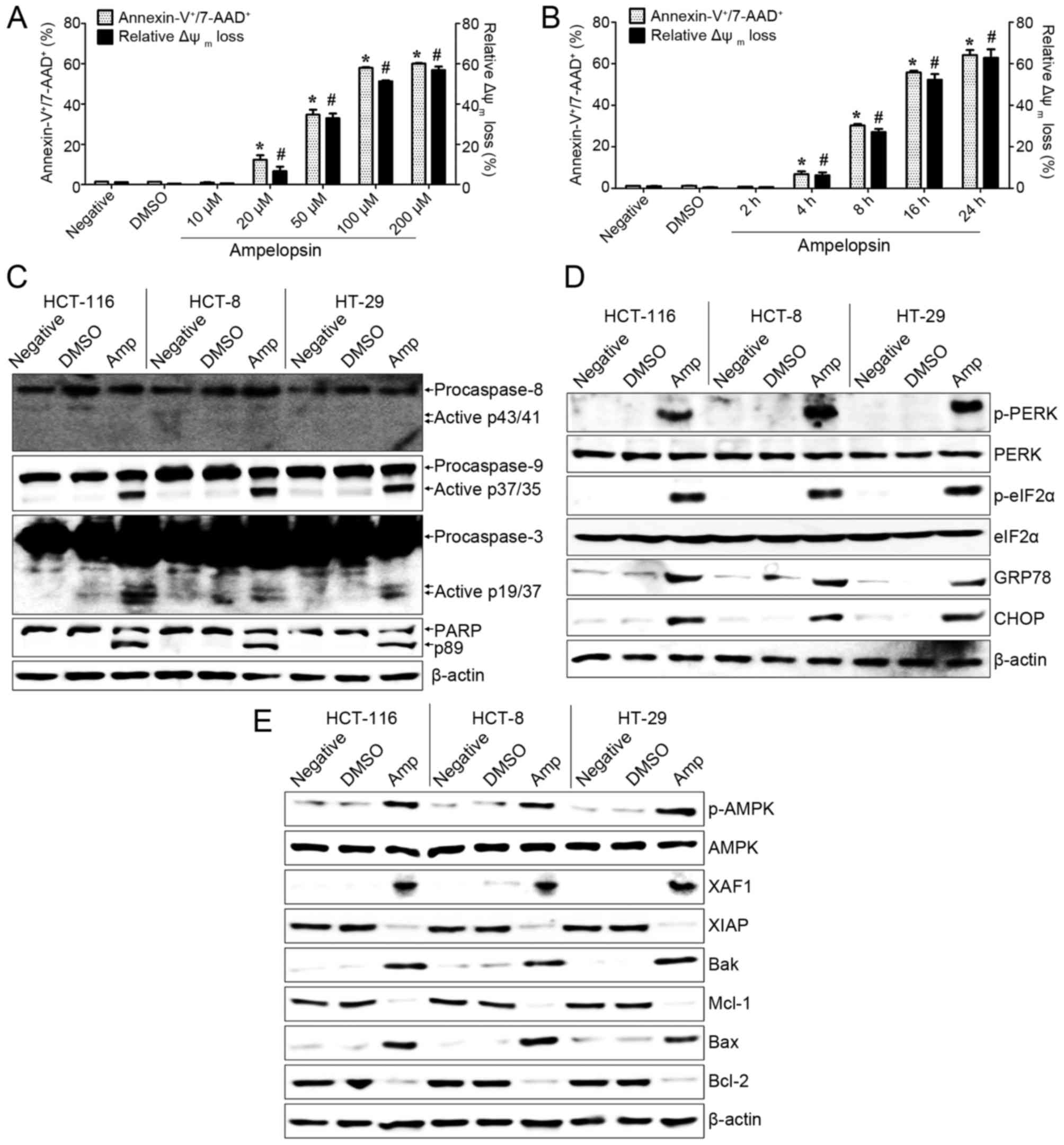
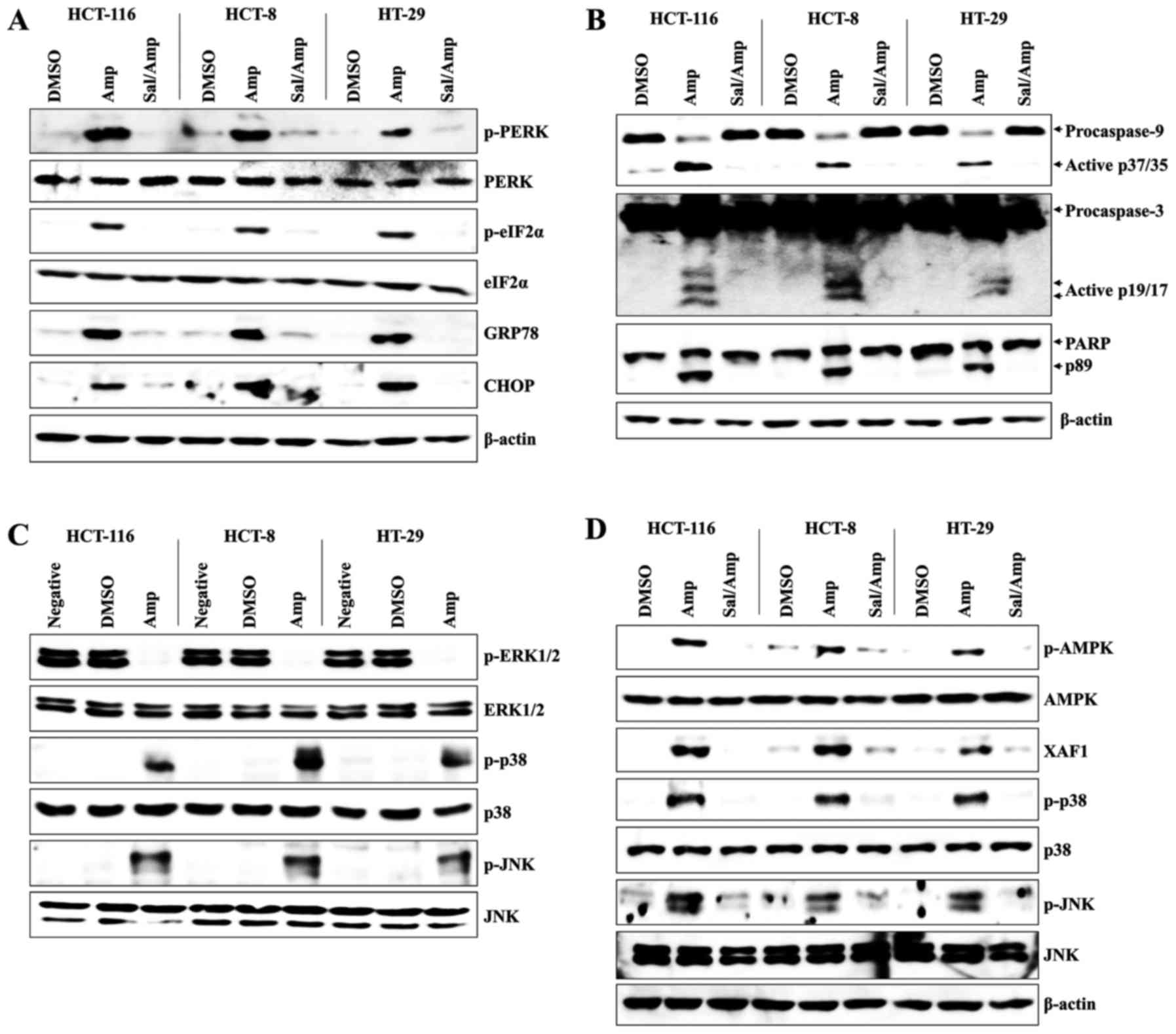
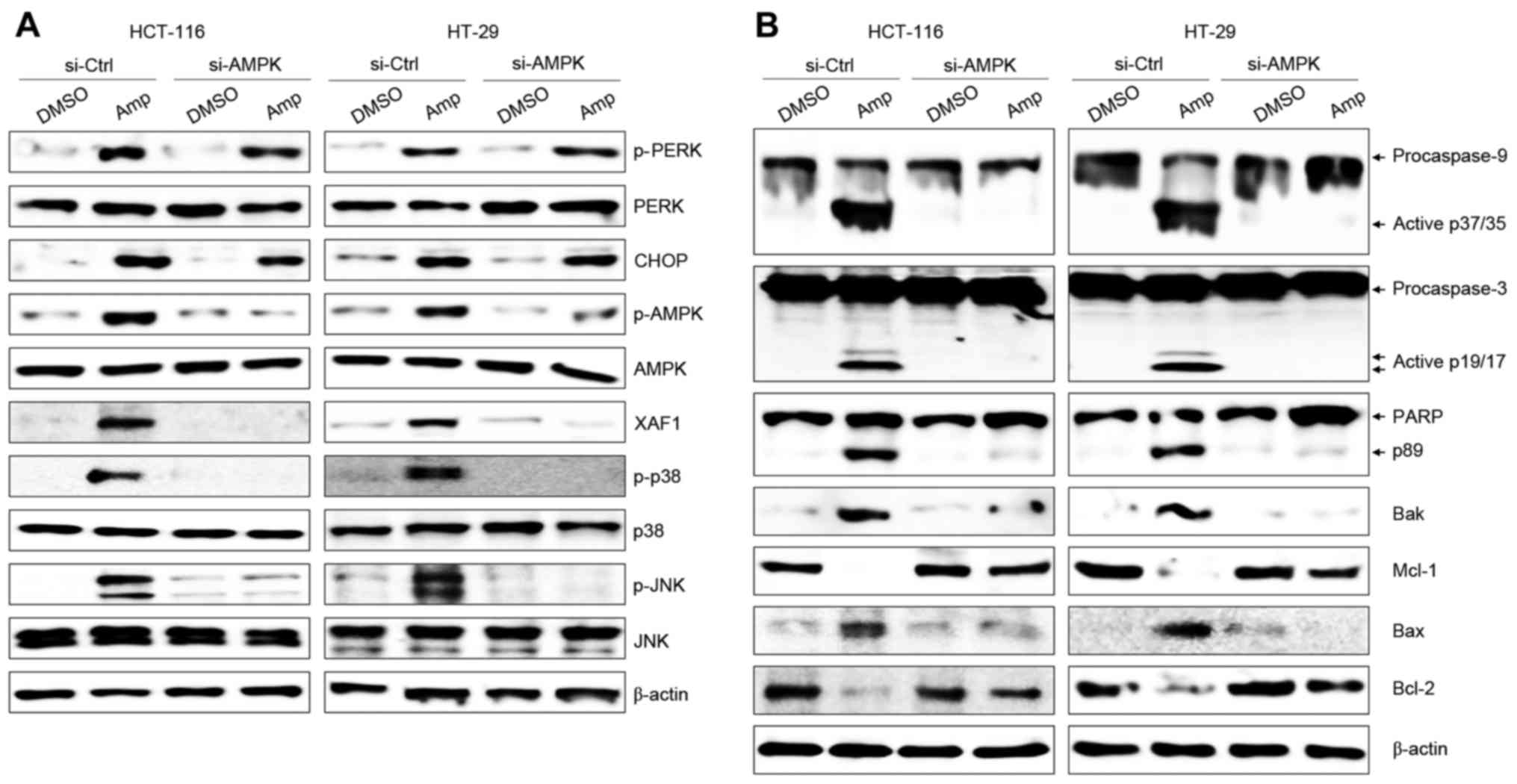
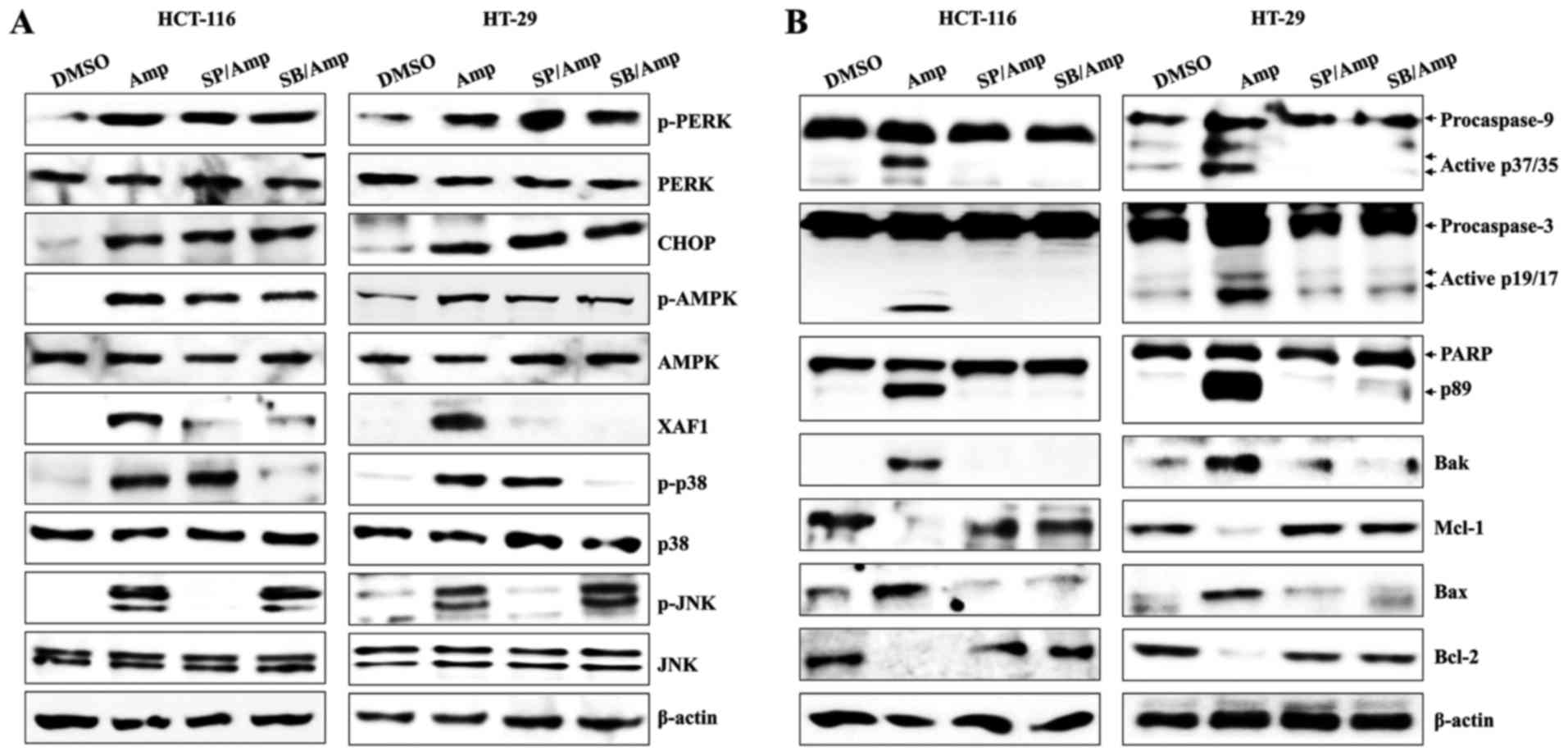
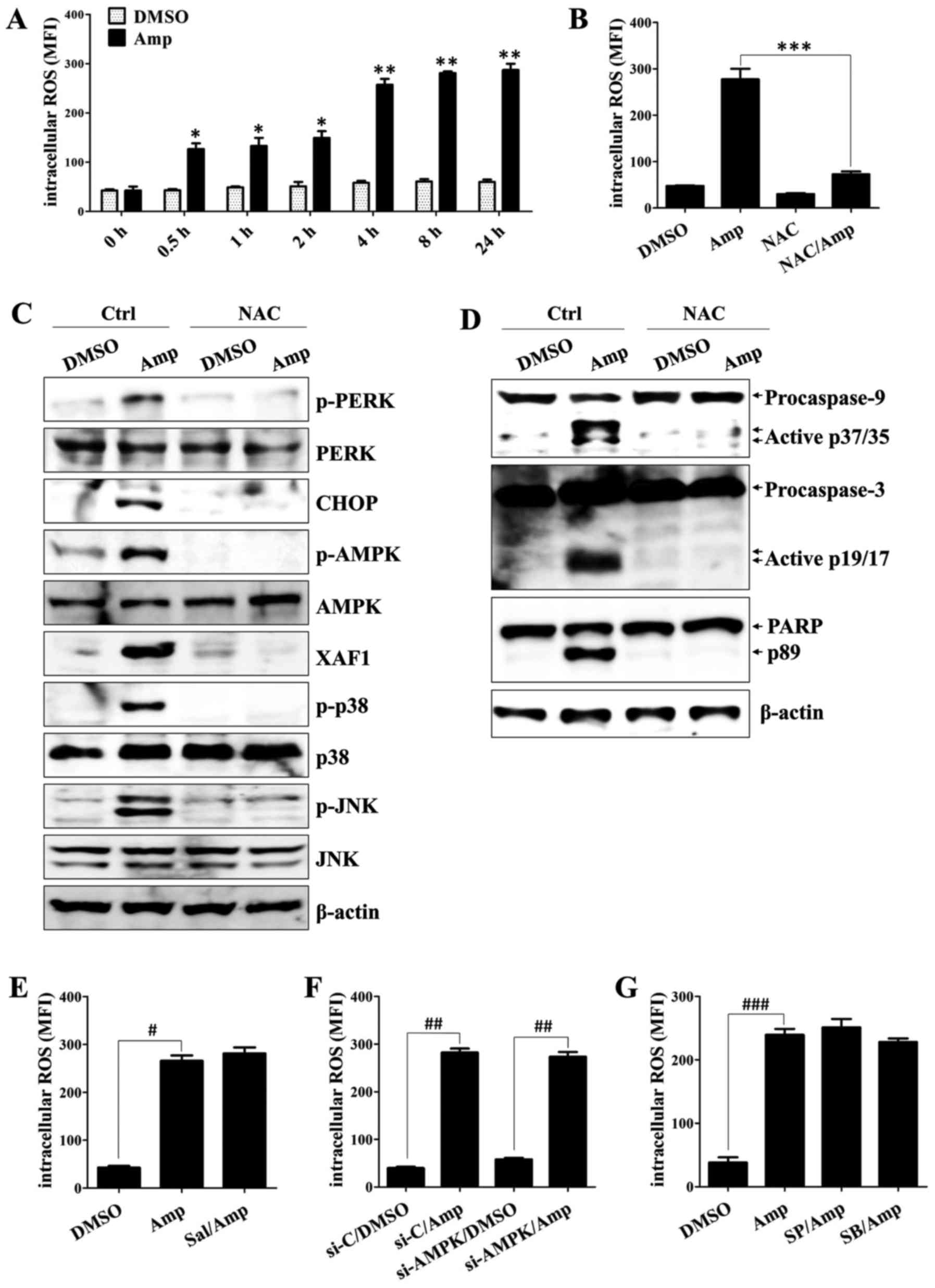
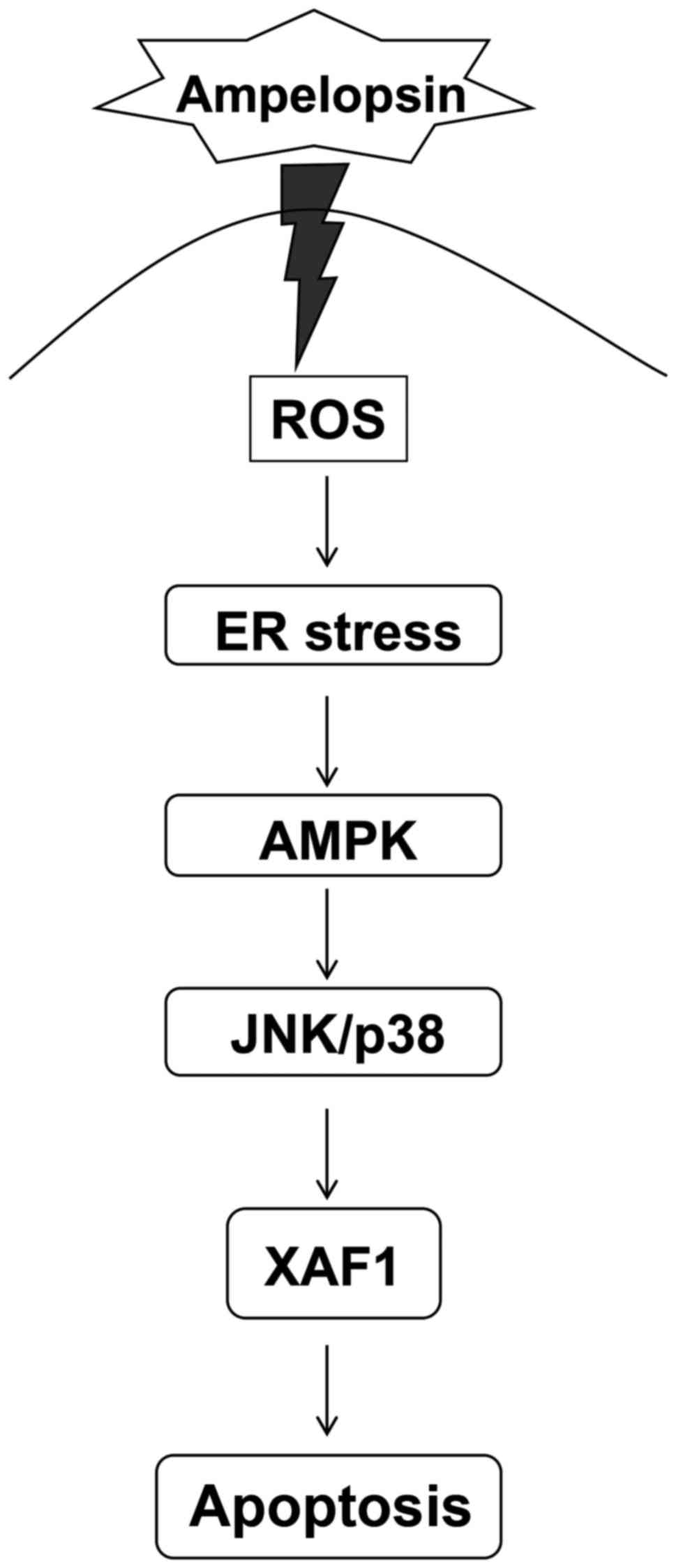
Ampelopsin (Amp) is bioactive natural product and exerts anti‑cancer effects against several cancer types. The present study investigated the anti‑colon cancer activity of Amp and explored its mechanism of action. The treatment of colon cancer cells with Amp resulted in the dose‑ and time‑dependent induction of apoptosis via the activation of endoplasmic reticulum (ER) stress, 5' adenosine monophosphate‑activated protein kinase (AMPK), and c‑Jun N‑terminal protein kinase (JNK)/p38 mitogen‑activated protein kinases (MAPKs). Salubrinal, an ER stress inhibitor, prevented the upregulation of ER stress‑associated proteins, including phosphorylated protein kinase RNA‑like ER kinase, phosphorylated eukaryotic translation initiation factor 2α, glucose‑regulated protein 78, and CCAAT/enhancer‑binding protein homologous protein, as well as suppressing AMPK activation and the MAPK signaling pathway. Knockdown of AMPK by RNA interference failed to block ER stress. Additionally, SP600125 (a JNK inhibitor) and SB203580 (a p38‑MAPK inhibitor) effectively inhibited apoptosis and attenuated the expression of X‑linked IAP‑associated factor 1 (XAF1) and apoptotic Bcl‑2 family proteins (BCL2 antagonist/killer 1 and BCL2‑associated X protein) in Amp‑treated colon cancer cells. Furthermore, reactive oxygen species (ROS)‑mediated ER stress/AMPK apoptotic signaling pathway in Amp‑treated colon cancer cells were markedly inhibited by treatment with N‑acetyl‑L‑cysteine, a ROS scavenger. These results demonstrate that treatment with Amp induces the apoptotic death of colon cancer cells through ER stress‑initiated AMPK/MAPK/XAF1 signaling. These results also provide experimental information for developing Amp as therapeutic drug against colon cancer.
View Figures

Figure 1

Figure 2

Figure 3

Figure 4

Figure 5

Figure 6

View References

1 

Hardie DG and Carling D: The AMP-activated protein kinase-fuel gauge of the mammalian cell? Eur J Biochem. 246:259–273. 1997. View Article : Google Scholar : PubMed/NCBI

2 

Kemp BE, Mitchelhill KI, Stapleton D, Michell BJ, Chen ZP and Witters LA: Dealing with energy demand: The AMP-activated protein kinase. Trends Biochem Sci. 24:22–25. 1999. View Article : Google Scholar : PubMed/NCBI

3 

Steinberg GR and Kemp BE: AMPK in health and disease. Physiol Rev. 89:1025–1078. 2009. View Article : Google Scholar : PubMed/NCBI

4 

Hardie DG, Ross FA and Hawley SA: AMPK: A nutrient and energy sensor that maintains energy homeostasis. Nat Rev Mol Cell Biol. 13:251–262. 2012. View Article : Google Scholar : PubMed/NCBI

5 

Yuan HX, Xiong Y and Guan KL: Nutrient sensing, metabolism, and cell growth control. Mol Cell. 49:379–387. 2013. View Article : Google Scholar : PubMed/NCBI

6 

Shaw RJ, Bardeesy N, Manning BD, Lopez L, Kosmatka M, DePinho RA and Cantley LC: The LKB1 tumor suppressor negatively regulates mTOR signaling. Cancer Cell. 6:91–99. 2004. View Article : Google Scholar : PubMed/NCBI

7 

Laderoute KR, Calaoagan JM, Chao WR, Dinh D, Denko N, Duellman S, Kalra J, Liu X, Papandreou I, Sambucetti L and Boros LG: 5′-AMP-activated protein kinase (AMPK) supports the growth of aggressive experimental human breast cancer tumors. J Biol Chem. 289:22850–22864. 2014. View Article : Google Scholar : PubMed/NCBI

8 

Kefas BA, Cai Y, Ling Z, Heimberg H, Hue L, Pipeleers D and Van de Casteele M: AMP-activated protein kinase can induce apoptosis of insulin-producing MIN6 cells through stimulation of c-Jun-N-terminal kinase. J Mol Endocrinol. 30:151–161. 2003. View Article : Google Scholar : PubMed/NCBI

9 

Okoshi R, Ozaki T, Yamamoto H, Ando K, Koida N, Ono S, Koda T, Kamijo T, Nakagawara A and Kizaki H: Activation of AMP-activated protein kinase induces p53-dependent apoptotic cell death in response to energetic stress. J Biol Chem. 283:3979–3987. 2008. View Article : Google Scholar : PubMed/NCBI

10 

Kim HS, Wannatung T, Lee S, Yang WK, Chung SH, Lim JS, Choe W, Kang I, Kim SS and Ha J: Quercetin enhances hypoxia-mediated apoptosis via direct inhibition of AMPK activity in HCT116 colon cancer. Apoptosis. 17:938–949. 2012. View Article : Google Scholar : PubMed/NCBI

11 

Chen MB, Zhang Y, Wei MX, Shen W, Wu XY, Yao C and Lu PH: Activation of AMP-activated protein kinase (AMPK) mediates plumbagin-induced apoptosis and growth inhibition in cultured human colon cancer cells. Cell Signal. 25:1993–2002. 2013. View Article : Google Scholar : PubMed/NCBI

12 

Schröder M: Endoplasmic reticulum stress responses. Cell Mol Life Sci. 65:862–894. 2008. View Article : Google Scholar : PubMed/NCBI

13 

Malhotra JD and Kaufman RJ: The endoplasmic reticulum and the unfolded protein response. Semin Cell Dev Biol. 18:716–731. 2007. View Article : Google Scholar : PubMed/NCBI

14 

Høyer-Hansen M, Bastholm L, Szyniarowski P, Campanella M, Szabadkai G, Farkas T, Bianchi K, Fehrenbacher N, Elling F, Rizzuto R, et al: Control of macroautophagy by calcium, calmodulin-dependent kinase kinase-beta, and Bcl-2. Mol Cell. 25:193–205. 2007. View Article : Google Scholar : PubMed/NCBI

15 

Hsu YC and Ip MM: Conjugated linoleic acid-induced apoptosis in mouse mammary tumor cells is mediated by both G protein coupled receptor-dependent activation of the AMP-activated protein kinase pathway and by oxidative stress. Cell Signal. 23:2013–2020. 2011. View Article : Google Scholar : PubMed/NCBI

16 

Leclerc GM, Leclerc GJ, Kuznetsov JN, DeSalvo J and Barredo JC: Metformin induces apoptosis through AMPK-dependent inhibition of UPR signaling in ALL lymphoblasts. PLoS One. 8:e744202013. View Article : Google Scholar : PubMed/NCBI

17 

Lin YC, Wu MH, Wei TT, Lin YC, Huang WC, Huang LY, Lin YT and Chen CC: Metformin sensitizes anticancer effect of dasatinib in head and neck squamous cell carcinoma cells through AMPK-dependent ER stress. Oncotarget. 5:298–308. 2014.PubMed/NCBI

18 

Calle EE, Rodriguez C, Walker-Thurmond K and Thun MJ: Overweight, obesity, and mortality from cancer in a prospectively studied cohort of U.S. adults. N Engl J Med. 348:1625–1638. 2003. View Article : Google Scholar : PubMed/NCBI

19 

Ambrosini G, Adida C and Altieri DC: A novel anti-apoptosis gene, survivin, expressed in cancer and lymphoma. Nat Med. 3:917–921. 1997. View Article : Google Scholar : PubMed/NCBI

20 

Fong WG, Liston P, Rajcan-Separovic E, St Jean M, Craig C and Korneluk RG: Expression and genetic analysis of XIAP-associated factor 1 (XAF1) in cancer cell lines. Genomics. 70:113–122. 2000. View Article : Google Scholar : PubMed/NCBI

21 

Liston P, Fong WG, Kelly NL, Toji S, Miyazaki T, Conte D, Tamai K, Craig CG, McBurney MW and Korneluk RG: Identification of XAF1 as an antagonist of XIAP anti-Caspase activity. Nat Cell Biol. 3:128–133. 2001. View Article : Google Scholar : PubMed/NCBI

22 

Yang L, Cao Z, Yan H and Wood WC: Coexistence of high levels of apoptotic signaling and inhibitor of apoptosis proteins in human tumor cells: Implication for cancer specific therapy. Cancer Res. 63:6815–6824. 2003.PubMed/NCBI

23 

Wang J, Peng Y, Sun YW, He H, Zhu S, An X, Li M, Lin MC, Zou B, Xia HH, et al: All-trans retinoic acid induces XAF1 expression through an interferon regulatory factor-1 element in colon cancer. Gastroenterology. 130:747–758. 2006. View Article : Google Scholar : PubMed/NCBI

24 

Yu LF, Wang J, Zou B, Lin MC, Wu YL, Xia HH, Sun YW, Gu Q, He H, Lam SK, et al: XAF1 mediates apoptosis through an extracellular signal-regulated kinase pathway in colon cancer. Cancer. 109:1996–2003. 2007. View Article : Google Scholar : PubMed/NCBI

25 

Qi S, Xin Y, Guo Y, Diao Y, Kou X, Luo L and Yin Z: Ampelopsin reduces endotoxic inflammation via repressing ROS-mediated activation of PI3K/Akt/NF-κB signaling pathways. Int Immunopharmacol. 12:278–287. 2012. View Article : Google Scholar : PubMed/NCBI

26 

Murakami T, Miyakoshi M, Araho D, Mizutani K, Kambara T, Ikeda T, Chou WH, Inukai M, Takenaka A and Igarashi K: Hepatoprotective activity of tocha, the stems and leaves of Ampelopsis grossedentata, and ampelopsin. Biofactors. 21:175–178. 2004. View Article : Google Scholar : PubMed/NCBI

27 

Ni F, Gong Y, Li L, Abdolmaleky HM and Zhou JR: Flavonoid ampelopsin inhibits the growth and metastasis of prostate cancer in vitro and in mice. PLoS One. 7:e388022012. View Article : Google Scholar : PubMed/NCBI

28 

Zhang B, Dong S, Cen X, Wang X, Liu X, Zhang H, Zhao X and Wu Y: Ampelopsin sodium exhibits antitumor effects against bladder carcinoma in orthotopic xenograft models. Anticancer Drugs. 23:590–596. 2012. View Article : Google Scholar : PubMed/NCBI

29 

Zhou Y, Shu F, Liang X, Chang H, Shi L, Peng X, Zhu J and Mi M: Ampelopsin induces cell growth inhibition and apoptosis in breast cancer cells through ROS generation and endoplasmic reticulum stress pathway. PLoS One. 9:e890212014. View Article : Google Scholar : PubMed/NCBI

30 

Zhou Y, Liang X, Chang H, Shu F, Wu Y, Zhang T, Fu Y, Zhang Q, Zhu JD and Mi M: Ampelopsin-induced autophagy protects breast cancer cells from apoptosis through Akt-mTOR pathway via endoplasmic reticulum stress. Cancer Sci. 105:1279–1287. 2014. View Article : Google Scholar : PubMed/NCBI

31 

Liang X, Zhang T, Shi L, Kang C, Wan J, Zhou Y, Zhu J and Mi M: Ampelopsin protects endothelial cells from hyperglycemia-induced oxidative damage by inducing autophagy via the AMPK signaling pathway. Biofactors. 41:463–475. 2015. View Article : Google Scholar : PubMed/NCBI

32 

Rosenkranz AR, Schmaldienst S, Stuhlmeier KM, Chen W, Knapp W and Zlabinger GJ: A microplate assay for the detection of oxidative products using 2′,7′-dichlorofluorescin-diacetate. J Immunol Methods. 156:39–45. 1992. View Article : Google Scholar : PubMed/NCBI

33 

Nishitoh H, Saitoh M, Mochida Y, Takeda K, Nakano H, Rothe M, Miyazono K and Ichijo H: ASK1 is essential for JNK/SAPK activation by TRAF2. Mol Cell. 2:389–395. 1998. View Article : Google Scholar : PubMed/NCBI

34 

Urano F, Wang X, Bertolotti A, Zhang Y, Chung P, Harding HP and Ron D: Coupling of stress in the ER to activation of JNK protein kinases by transmembrane protein kinase IRE1. Science. 287:664–666. 2000. View Article : Google Scholar : PubMed/NCBI

35 

Hwang JT, Ha J, Park IJ, Lee SK, Baik HW, Kim YM and Park OJ: Apoptotic effect of EGCG in HT-29 colon cancer cells via AMPK signal pathway. Cancer Lett. 247:115–121. 2007. View Article : Google Scholar : PubMed/NCBI

36 

Zheng HQ and Liu DY: Anti-invasive and anti-metastatic effect of ampelopsin on melanoma. Ai Zheng. 22:363–367. 2003.(In Chinese). PubMed/NCBI

37 

Oyadomari S and Mori M: Roles of CHOP/GADD153 in endoplasmic reticulum stress. Cell Death Differ. 11:381–389. 2004. View Article : Google Scholar : PubMed/NCBI

38 

Kaufman RJ: Stress signaling from the lumen of the endoplasmic reticulum: Coordination of gene transcriptional and translational controls. Genes Dev. 13:1211–1233. 1999. View Article : Google Scholar : PubMed/NCBI

39 

Szegezdi E, Logue SE, Gorman AM and Samali A: Mediators of endoplasmic reticulum stress-induced apoptosis. EMBO Rep. 7:880–885. 2006. View Article : Google Scholar : PubMed/NCBI

40 

Zhao L and Ackerman SL: Endoplasmic reticulum stress in health and disease. Curr Opin Cell Biol. 18:444–452. 2006. View Article : Google Scholar : PubMed/NCBI

41 

Kim A, Im M and Ma JY: Ethanol extract of Remotiflori radix induces endoplasmic reticulum stress-mediated cell death through AMPK/mTOR signaling in human prostate cancer cells. Sci Rep. 5:83942015. View Article : Google Scholar : PubMed/NCBI

42 

Wang J, He H, Yu L, Xia HH, Lin MC, Gu Q, Li M, Zou B, An X, Jiang B, et al: HSF1 down-regulates XAF1 through transcriptional regulation. J Biol Chem. 281:2451–2459. 2006. View Article : Google Scholar : PubMed/NCBI

43 

Tu SP, Sun YW, Cui JT, Zou B, Lin MC, Gu Q, Jiang SH, Kung HF, Korneluk RG and Wong BC: Tumor suppressor XIAP-Associated factor 1 (XAF1) cooperates with tumor necrosis factor-related apoptosis-inducing ligand to suppress colon cancer growth and trigger tumor regression. Cancer. 116:1252–1263. 2010. View Article : Google Scholar : PubMed/NCBI

44 

Straszewski-Chavez SL, Visintin IP, Karassina N, Los G, Liston P, Halaban R, Fadiel A and Mor G: XAF1 mediates tumor necrosis factor-alpha-induced apoptosis and X-linked inhibitor of apoptosis cleavage by acting through the mitochondrial pathway. J Biol Chem. 282:13059–13072. 2007. View Article : Google Scholar : PubMed/NCBI

45 

Park GB, Kim YS, Kim D, Kim S, Lee HK, Cho DH, Lee WJ and Hur DY: Melphalan-induced apoptosis of EBV-transformed B cells through upregulation of TAp73 and XAF1 and nuclear import of XPA. J Immunol. 191:6281–6291. 2013. View Article : Google Scholar : PubMed/NCBI

46 

Rigoulet M, Yoboue ED and Devin A: Mitochondrial ROS generation and its regulation: Mechanisms involved in H(2)O(2) signaling. Antioxid Redox Signal. 14:459–468. 2011. View Article : Google Scholar : PubMed/NCBI

47 

Huang J, Lam GY and Brumell JH: Autophagy signaling through reactive oxygen species. Antioxid Redox Signal. 14:2215–2231. 2011. View Article : Google Scholar : PubMed/NCBI

48 

Liu B, Tan X, Liang J, Wu S, Liu J, Zhang Q and Zhu R: A reduction in reactive oxygen species contributes to dihydromyricetin-induced apoptosis in human hepatocellular carcinoma cells. Sci Rep. 4:70412014. View Article : Google Scholar : PubMed/NCBI

Related Articles

  • Abstract
  • View
  • Download
  • Twitter
Copy and paste a formatted citation
Spandidos Publications style
Park GB, Jeong JY and Kim D: Ampelopsin‑induced reactive oxygen species enhance the apoptosis of colon cancer cells by activating endoplasmic reticulum stress‑mediated AMPK/MAPK/XAF1 signaling. Oncol Lett 14: 7947-7956, 2017.
APA
Park, G.B., Jeong, J., & Kim, D. (2017). Ampelopsin‑induced reactive oxygen species enhance the apoptosis of colon cancer cells by activating endoplasmic reticulum stress‑mediated AMPK/MAPK/XAF1 signaling. Oncology Letters, 14, 7947-7956. https://doi.org/10.3892/ol.2017.7255
MLA
Park, G. B., Jeong, J., Kim, D."Ampelopsin‑induced reactive oxygen species enhance the apoptosis of colon cancer cells by activating endoplasmic reticulum stress‑mediated AMPK/MAPK/XAF1 signaling". Oncology Letters 14.6 (2017): 7947-7956.
Chicago
Park, G. B., Jeong, J., Kim, D."Ampelopsin‑induced reactive oxygen species enhance the apoptosis of colon cancer cells by activating endoplasmic reticulum stress‑mediated AMPK/MAPK/XAF1 signaling". Oncology Letters 14, no. 6 (2017): 7947-7956. https://doi.org/10.3892/ol.2017.7255
Copy and paste a formatted citation
x
Spandidos Publications style
Park GB, Jeong JY and Kim D: Ampelopsin‑induced reactive oxygen species enhance the apoptosis of colon cancer cells by activating endoplasmic reticulum stress‑mediated AMPK/MAPK/XAF1 signaling. Oncol Lett 14: 7947-7956, 2017.
APA
Park, G.B., Jeong, J., & Kim, D. (2017). Ampelopsin‑induced reactive oxygen species enhance the apoptosis of colon cancer cells by activating endoplasmic reticulum stress‑mediated AMPK/MAPK/XAF1 signaling. Oncology Letters, 14, 7947-7956. https://doi.org/10.3892/ol.2017.7255
MLA
Park, G. B., Jeong, J., Kim, D."Ampelopsin‑induced reactive oxygen species enhance the apoptosis of colon cancer cells by activating endoplasmic reticulum stress‑mediated AMPK/MAPK/XAF1 signaling". Oncology Letters 14.6 (2017): 7947-7956.
Chicago
Park, G. B., Jeong, J., Kim, D."Ampelopsin‑induced reactive oxygen species enhance the apoptosis of colon cancer cells by activating endoplasmic reticulum stress‑mediated AMPK/MAPK/XAF1 signaling". Oncology Letters 14, no. 6 (2017): 7947-7956. https://doi.org/10.3892/ol.2017.7255
Follow us
  • Twitter
  • LinkedIn
  • Facebook
About
  • Spandidos Publications
  • Careers
  • Cookie Policy
  • Privacy Policy
How can we help?
  • Help
  • Live Chat
  • Contact
  • Email to our Support Team