Spandidos Publications Logo
  • About
    • About Spandidos
    • Aims and Scopes
    • Abstracting and Indexing
    • Editorial Policies
    • Reprints and Permissions
    • Job Opportunities
    • Terms and Conditions
    • Contact
  • Journals
    • All Journals
    • Oncology Letters
      • Oncology Letters
      • Information for Authors
      • Editorial Policies
      • Editorial Board
      • Aims and Scope
      • Abstracting and Indexing
      • Bibliographic Information
      • Archive
    • International Journal of Oncology
      • International Journal of Oncology
      • Information for Authors
      • Editorial Policies
      • Editorial Board
      • Aims and Scope
      • Abstracting and Indexing
      • Bibliographic Information
      • Archive
    • Molecular and Clinical Oncology
      • Molecular and Clinical Oncology
      • Information for Authors
      • Editorial Policies
      • Editorial Board
      • Aims and Scope
      • Abstracting and Indexing
      • Bibliographic Information
      • Archive
    • Experimental and Therapeutic Medicine
      • Experimental and Therapeutic Medicine
      • Information for Authors
      • Editorial Policies
      • Editorial Board
      • Aims and Scope
      • Abstracting and Indexing
      • Bibliographic Information
      • Archive
    • International Journal of Molecular Medicine
      • International Journal of Molecular Medicine
      • Information for Authors
      • Editorial Policies
      • Editorial Board
      • Aims and Scope
      • Abstracting and Indexing
      • Bibliographic Information
      • Archive
    • Biomedical Reports
      • Biomedical Reports
      • Information for Authors
      • Editorial Policies
      • Editorial Board
      • Aims and Scope
      • Abstracting and Indexing
      • Bibliographic Information
      • Archive
    • Oncology Reports
      • Oncology Reports
      • Information for Authors
      • Editorial Policies
      • Editorial Board
      • Aims and Scope
      • Abstracting and Indexing
      • Bibliographic Information
      • Archive
    • Molecular Medicine Reports
      • Molecular Medicine Reports
      • Information for Authors
      • Editorial Policies
      • Editorial Board
      • Aims and Scope
      • Abstracting and Indexing
      • Bibliographic Information
      • Archive
    • World Academy of Sciences Journal
      • World Academy of Sciences Journal
      • Information for Authors
      • Editorial Policies
      • Editorial Board
      • Aims and Scope
      • Abstracting and Indexing
      • Bibliographic Information
      • Archive
    • International Journal of Functional Nutrition
      • International Journal of Functional Nutrition
      • Information for Authors
      • Editorial Policies
      • Editorial Board
      • Aims and Scope
      • Abstracting and Indexing
      • Bibliographic Information
      • Archive
    • International Journal of Epigenetics
      • International Journal of Epigenetics
      • Information for Authors
      • Editorial Policies
      • Editorial Board
      • Aims and Scope
      • Abstracting and Indexing
      • Bibliographic Information
      • Archive
    • Medicine International
      • Medicine International
      • Information for Authors
      • Editorial Policies
      • Editorial Board
      • Aims and Scope
      • Abstracting and Indexing
      • Bibliographic Information
      • Archive
  • Articles
  • Information
    • Information for Authors
    • Information for Reviewers
    • Information for Librarians
    • Information for Advertisers
    • Conferences
  • Language Editing
Spandidos Publications Logo
  • About
    • About Spandidos
    • Aims and Scopes
    • Abstracting and Indexing
    • Editorial Policies
    • Reprints and Permissions
    • Job Opportunities
    • Terms and Conditions
    • Contact
  • Journals
    • All Journals
    • Biomedical Reports
      • Information for Authors
      • Editorial Policies
      • Editorial Board
      • Aims and Scope
      • Abstracting and Indexing
      • Bibliographic Information
      • Archive
    • Experimental and Therapeutic Medicine
      • Information for Authors
      • Editorial Policies
      • Editorial Board
      • Aims and Scope
      • Abstracting and Indexing
      • Bibliographic Information
      • Archive
    • International Journal of Epigenetics
      • Information for Authors
      • Editorial Policies
      • Editorial Board
      • Aims and Scope
      • Abstracting and Indexing
      • Bibliographic Information
      • Archive
    • International Journal of Functional Nutrition
      • Information for Authors
      • Editorial Policies
      • Editorial Board
      • Aims and Scope
      • Abstracting and Indexing
      • Bibliographic Information
      • Archive
    • International Journal of Molecular Medicine
      • Information for Authors
      • Editorial Policies
      • Editorial Board
      • Aims and Scope
      • Abstracting and Indexing
      • Bibliographic Information
      • Archive
    • International Journal of Oncology
      • Information for Authors
      • Editorial Policies
      • Editorial Board
      • Aims and Scope
      • Abstracting and Indexing
      • Bibliographic Information
      • Archive
    • Medicine International
      • Information for Authors
      • Editorial Policies
      • Editorial Board
      • Aims and Scope
      • Abstracting and Indexing
      • Bibliographic Information
      • Archive
    • Molecular and Clinical Oncology
      • Information for Authors
      • Editorial Policies
      • Editorial Board
      • Aims and Scope
      • Abstracting and Indexing
      • Bibliographic Information
      • Archive
    • Molecular Medicine Reports
      • Information for Authors
      • Editorial Policies
      • Editorial Board
      • Aims and Scope
      • Abstracting and Indexing
      • Bibliographic Information
      • Archive
    • Oncology Letters
      • Information for Authors
      • Editorial Policies
      • Editorial Board
      • Aims and Scope
      • Abstracting and Indexing
      • Bibliographic Information
      • Archive
    • Oncology Reports
      • Information for Authors
      • Editorial Policies
      • Editorial Board
      • Aims and Scope
      • Abstracting and Indexing
      • Bibliographic Information
      • Archive
    • World Academy of Sciences Journal
      • Information for Authors
      • Editorial Policies
      • Editorial Board
      • Aims and Scope
      • Abstracting and Indexing
      • Bibliographic Information
      • Archive
  • Articles
  • Information
    • For Authors
    • For Reviewers
    • For Librarians
    • For Advertisers
    • Conferences
  • Language Editing
Login Register Submit
  • This site uses cookies
  • You can change your cookie settings at any time by following the instructions in our Cookie Policy. To find out more, you may read our Privacy Policy.

    I agree
Search articles by DOI, keyword, author or affiliation
Search
Advanced Search
presentation
Oncology Letters
Join Editorial Board Propose a Special Issue
Print ISSN: 1792-1074 Online ISSN: 1792-1082
Journal Cover
January-2018 Volume 15 Issue 1

Full Size Image

Sign up for eToc alerts
Recommend to Library

Journals

International Journal of Molecular Medicine

International Journal of Molecular Medicine

International Journal of Molecular Medicine is an international journal devoted to molecular mechanisms of human disease.

International Journal of Oncology

International Journal of Oncology

International Journal of Oncology is an international journal devoted to oncology research and cancer treatment.

Molecular Medicine Reports

Molecular Medicine Reports

Covers molecular medicine topics such as pharmacology, pathology, genetics, neuroscience, infectious diseases, molecular cardiology, and molecular surgery.

Oncology Reports

Oncology Reports

Oncology Reports is an international journal devoted to fundamental and applied research in Oncology.

Experimental and Therapeutic Medicine

Experimental and Therapeutic Medicine

Experimental and Therapeutic Medicine is an international journal devoted to laboratory and clinical medicine.

Oncology Letters

Oncology Letters

Oncology Letters is an international journal devoted to Experimental and Clinical Oncology.

Biomedical Reports

Biomedical Reports

Explores a wide range of biological and medical fields, including pharmacology, genetics, microbiology, neuroscience, and molecular cardiology.

Molecular and Clinical Oncology

Molecular and Clinical Oncology

International journal addressing all aspects of oncology research, from tumorigenesis and oncogenes to chemotherapy and metastasis.

World Academy of Sciences Journal

World Academy of Sciences Journal

Multidisciplinary open-access journal spanning biochemistry, genetics, neuroscience, environmental health, and synthetic biology.

International Journal of Functional Nutrition

International Journal of Functional Nutrition

Open-access journal combining biochemistry, pharmacology, immunology, and genetics to advance health through functional nutrition.

International Journal of Epigenetics

International Journal of Epigenetics

Publishes open-access research on using epigenetics to advance understanding and treatment of human disease.

Medicine International

Medicine International

An International Open Access Journal Devoted to General Medicine.

Journal Cover
January-2018 Volume 15 Issue 1

Full Size Image

Sign up for eToc alerts
Recommend to Library

  • Article
  • Citations
    • Cite This Article
    • Download Citation
    • Create Citation Alert
    • Remove Citation Alert
    • Cited By
  • Similar Articles
    • Related Articles (in Spandidos Publications)
    • Similar Articles (Google Scholar)
    • Similar Articles (PubMed)
  • Download PDF
  • Download XML
  • View XML
Article Open Access

Thrombopoietin protects H9C2 cells from excessive autophagy and apoptosis in doxorubicin‑induced cardiotoxicity

  • Authors:
    • Han Wang
    • Hua Wang
    • En‑Yu Liang
    • Li‑Xia Zhou
    • Zhan‑Ling Dong
    • Ping Liang
    • Qi‑Fang Weng
    • Mo Yang
  • View Affiliations / Copyright

    Affiliations: Department of Pediatrics, Nanfang Hospital, Southern Medical University, Guangzhou, Guangdong 510515, P.R. China, Department of Physiology, Hainan Medical College, Haikou, Hainan 571199, P.R. China
    Copyright: © Wang et al. This is an open access article distributed under the terms of Creative Commons Attribution License.
  • Pages: 839-848
    |
    Published online on: November 14, 2017
       https://doi.org/10.3892/ol.2017.7410
  • Expand metrics +
Metrics: Total Views: 0 (Spandidos Publications: | PMC Statistics: )
Metrics: Total PDF Downloads: 0 (Spandidos Publications: | PMC Statistics: )
Cited By (CrossRef): 0 citations Loading Articles...

This article is mentioned in:


Abstract

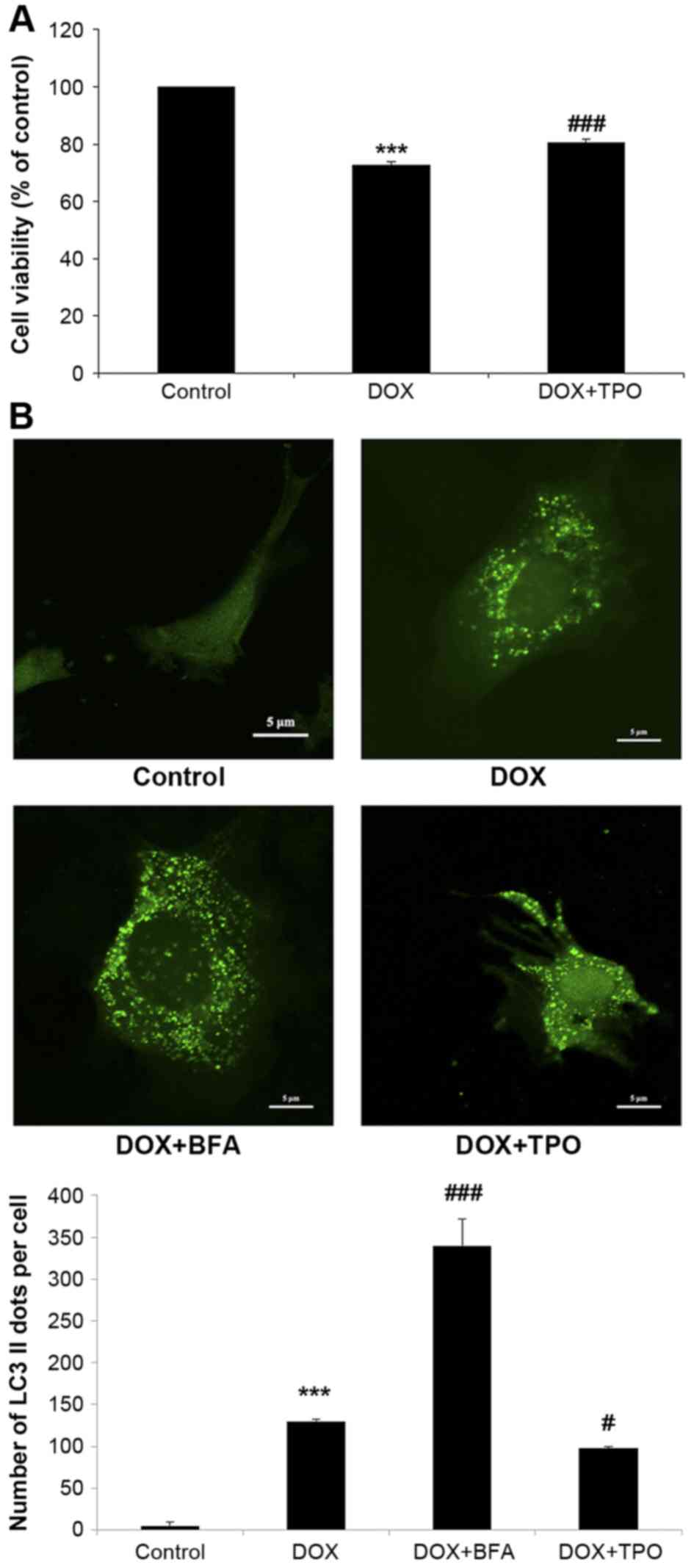
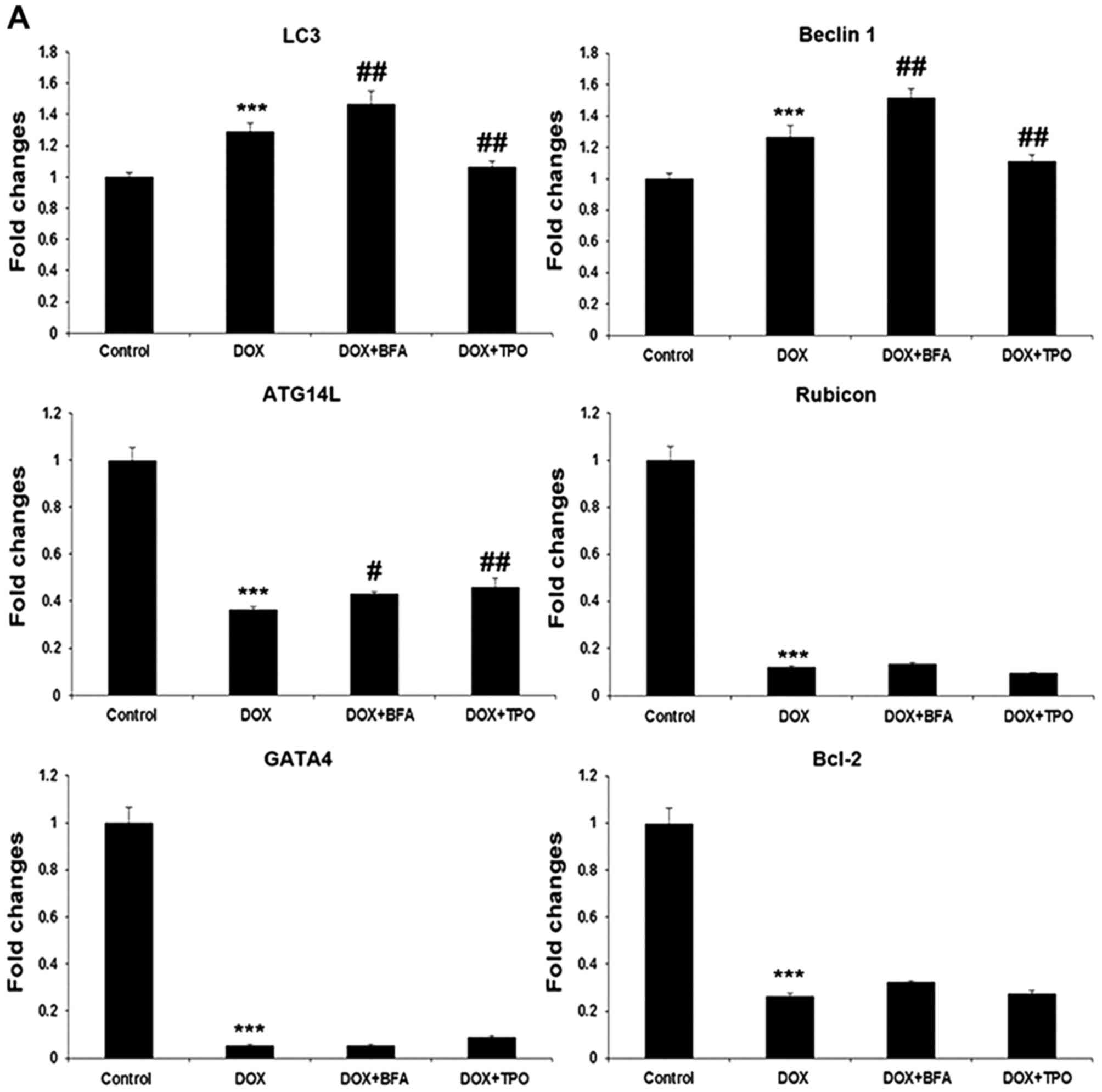
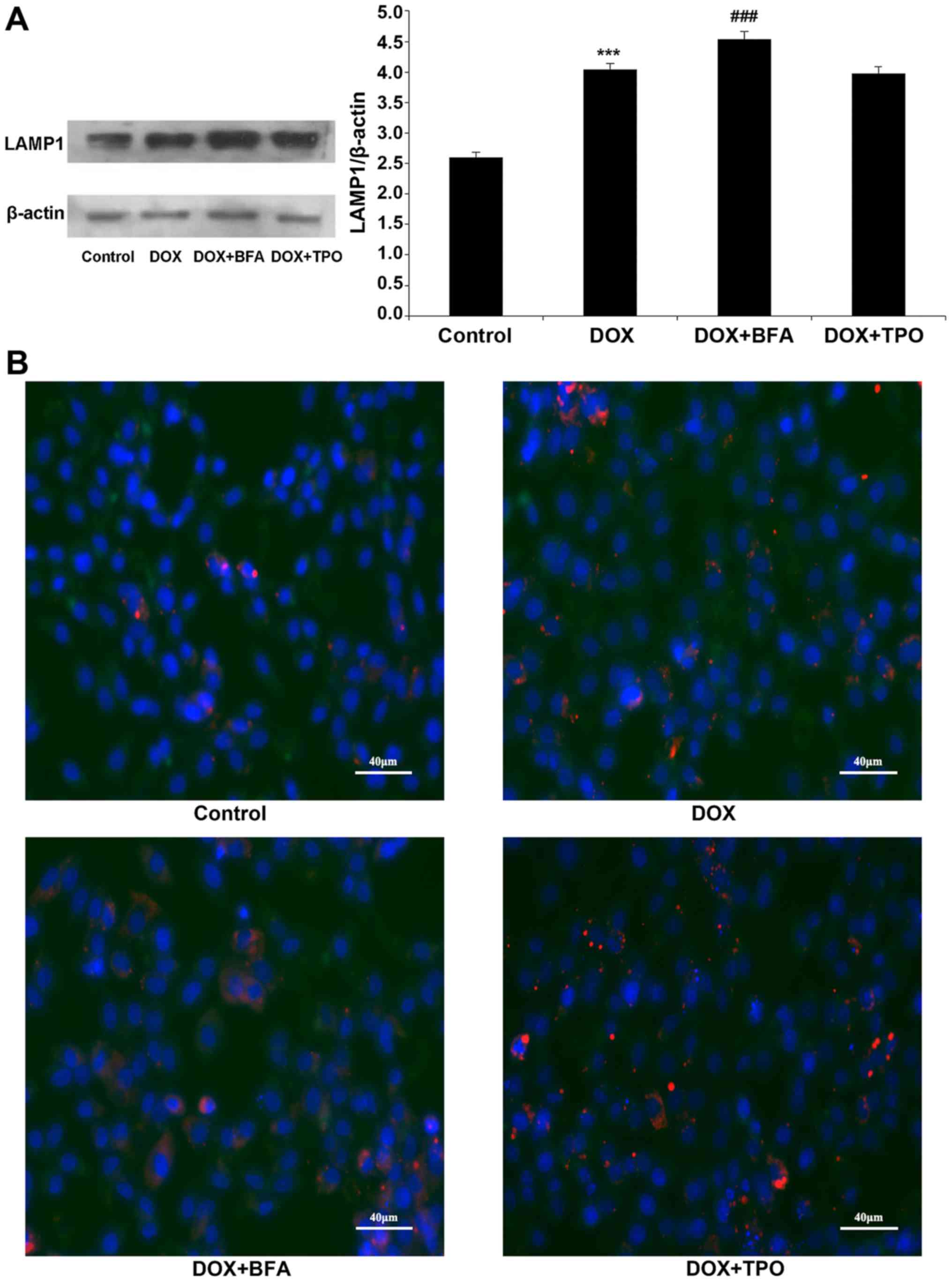
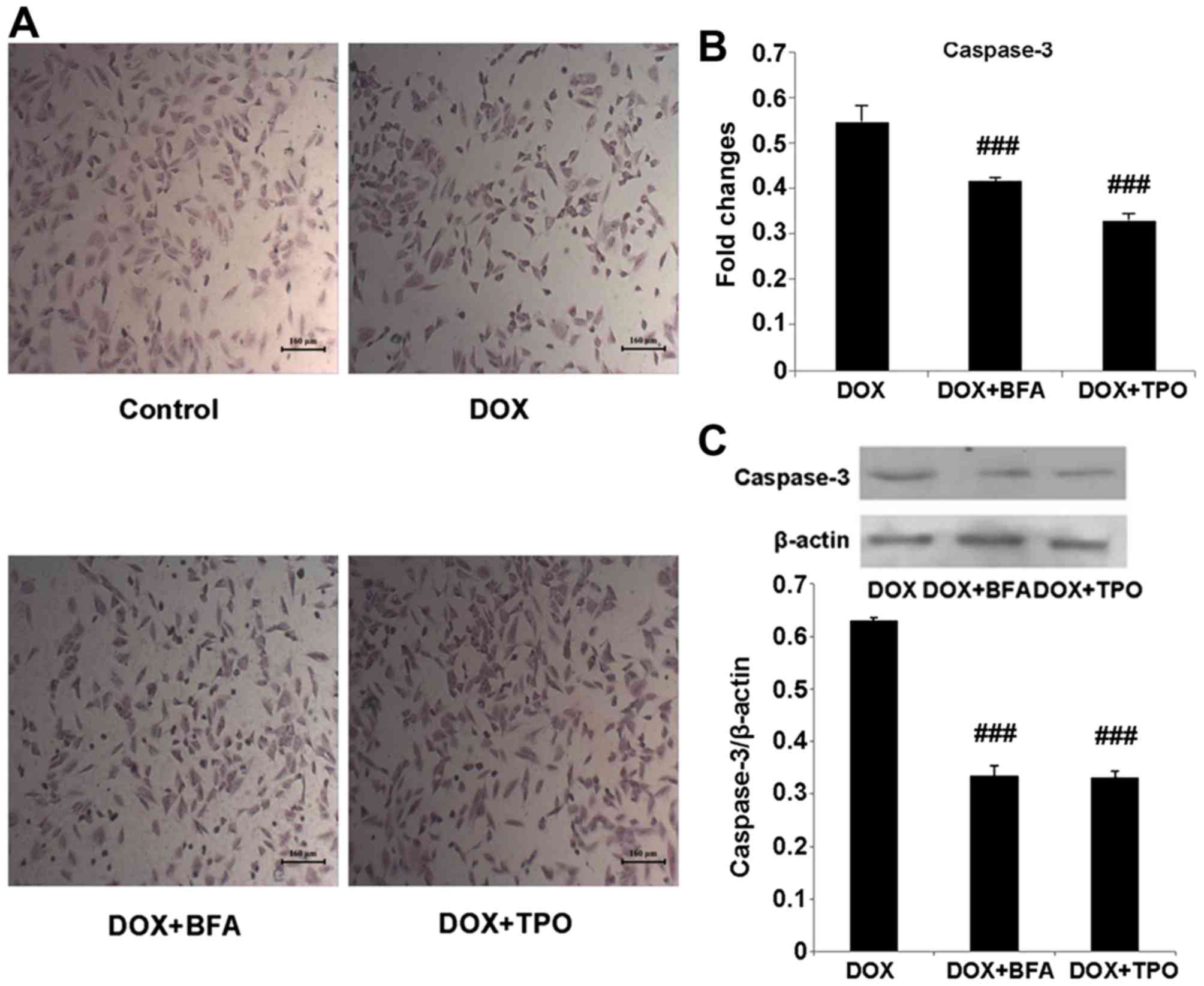
Cardiac toxicity has been the major concern when using doxorubicin (DOX) in cancer therapy. Thrombopoietin (TPO) protects cardiac cells from DOX‑induced cell damage; however, its molecular mechanism remains exclusive. The anti‑autophagic and anti‑apoptotic effects of TPO upon DOX treatment were studied in the cardiac H9C2 cell line, with bafilomycin A1 treatment as a positive control for autophagy inhibition. Cell viability was measured by Cell Counting Kit‑8 assay in different treatment groups. The mRNA and/or protein levels of apoptotic markers and autophagy‑associated factors were detected. The mean number of microtubule‑associated protein 1A/1B‑light chain 3 (LC3) puncta per cell was quantified to indicate autophagosomes and autolysosomes, of which the ones co‑stained with lysosomal‑associated membrane protein 1 were considered as autolysosomes. DOX treatment (5 µg/ml, 24 h) significantly impaired H9C2 cell viability compared with the control, while TPO pretreatment (10 ng/ml, 36 h) improved cell viability upon DOX treatment. DOX exposure markedly increased LC3 puncta in H9C2 cells, and TPO pretreatment reduced the number of autophagosomes, but showed no significant inhibitory effect on autolysosome formation. The autophagy inhibition by TPO upon DOX treatment was confirmed according to protein quantification of LC3‑II and nucleoporin 62. TPO also suppressed autophagy‑promoting protein Beclin‑1, and elevated the anti‑autophagic factors GATA‑binding protein‑4 and B cell lymphoma‑2. Furthermore, TPO reduced DOX‑induced apoptosis in H9C2 cells, as reflected by the amount changes of caspase‑3. Taken together, these results revealed that TPO has a protective role in H9C2 cells from DOX‑induced autophagy as well as apoptosis, and indicated that TPO may act as a cardioprotective drug in DOX‑treated patients.
View Figures

Figure 1

Figure 2

Figure 3

Figure 4

View References

1 

Zhang YW, Shi J, Li YJ and Wei L: Cardiomyocyte death in doxorubicin-induced cardiotoxicity. Arch Immunol Ther Exp (Warsz). 57:435–445. 2009. View Article : Google Scholar : PubMed/NCBI

2 

Octavia Y, Tocchetti CG, Gabrielson KL, Janssens S, Crijns HJ and Moens AL: Doxorubicin-induced cardiomyopathy: from molecular mechanisms to therapeutic strategies. J Mol Cell Cardiol. 52:1213–1225. 2012. View Article : Google Scholar : PubMed/NCBI

3 

Simůnek T, Stérba M, Popelová O, Adamcová M, Hrdina R and Gersl V: Anthracycline-induced cardiotoxicity: Overview of studies examining the roles of oxidative stress and free cellular iron. Pharmacol Rep. 61:154–171. 2009. View Article : Google Scholar : PubMed/NCBI

4 

Kumar D, Kirshenbaum LA, Li T, Danelisen I and Singal PK: Apoptosis in adriamycin cardiomyopathy and its modulation by probucol. Antioxid Redox Signal. 3:135–145. 2001. View Article : Google Scholar : PubMed/NCBI

5 

Kobayashi S, Volden P, Timm D, Mao K, Xu X and Liang Q: Transcription factor GATA4 inhibits doxorubicin-induced au-tophagy and cardiomyocyte death. J Biol Chem. 285:793–804. 2010. View Article : Google Scholar : PubMed/NCBI

6 

Nitobe J, Yamaguchi S, Okuyama M, Nozaki N, Sata M, Miyamoto T, Takeishi Y, Kubota I and Tomoike H: Reactive oxygen species regulate FLICE inhibitory protein (FLIP) and susceptibility to Fas-mediated apoptosis in cardiac myocytes. Cardiovasc Res. 57:119–128. 2003. View Article : Google Scholar : PubMed/NCBI

7 

Grethe S, Coltella N, Di Renzo MF and Pörn-Ares MI: p38 MAPK downregulates phosphorylation of Bad in doxorubicin-induced endothelial apoptosis. Biochem Biophys Res Commun. 347:781–790. 2006. View Article : Google Scholar : PubMed/NCBI

8 

Arai M, Yoguchi A, Takizawa T, Yokoyama T, Kanda T, Kurabayashi M and Nagai R: Mechanism of doxorubicin-induced inhibition of sarcoplasmic reticulum Ca(2+)-ATPase gene transcription. Circ Res. 86:8–14. 2000. View Article : Google Scholar : PubMed/NCBI

9 

Yang B, Ye D and Wang Y: Caspase-3 as a therapeutic target for heart failure. Expert Opin Ther Targets. 17:255–263. 2013. View Article : Google Scholar : PubMed/NCBI

10 

Dirks-Naylor AJ: The role of autophagy in doxorubicin-induced cardiotoxicity. Life Sci. 93:913–916. 2013. View Article : Google Scholar : PubMed/NCBI

11 

Sciarretta S, Hariharan N, Monden Y, Zablocki D and Sadoshima J: Is autophagy in response to ischemia and reperfusion protective or detrimental for the heart? Pediatr Cardiol. 32:275–281. 2011. View Article : Google Scholar : PubMed/NCBI

12 

Chen K, Xu X, Kobayashi S, Timm D, Jepperson T and Liang Q: Caloric restriction mimetic 2-deoxyglucose antagonizes doxorubicin-induced cardiomyocyte death by multiple mechanisms. J Biol Chem. 286:21993–22006. 2011. View Article : Google Scholar : PubMed/NCBI

13 

Xu X, Chen K, Kobayashi S, Timm D and Liang Q: Resveratrol attenuates doxorubicin-induced cardiomyocyte death via inhibition of p70 S6 kinase 1-mediated autophagy. J Pharmacol Exp Ther. 341:183–195. 2012. View Article : Google Scholar : PubMed/NCBI

14 

Gottlieb RA and Mentzer RM Jr: Cardioprotection through autophagy: Ready for clinical trial? Autophagy. 7:434–435. 2011. View Article : Google Scholar : PubMed/NCBI

15 

Zhu H, Tannous P, Johnstone JL, Kong Y, Shelton JM, Richardson JA, Le V, Levine B, Rothermel BA and Hill JA: Cardiac autophagy is a maladaptive response to hemodynamic stress. J Clin Invest. 117:1782–1793. 2007. View Article : Google Scholar : PubMed/NCBI

16 

Hein S, Arnon E, Kostin S, Schönburg M, Elsässer A, Polyakova V, Bauer EP, Klövekorn WP and Schaper J: Progression from compensated hypertrophy to failure in the pressure-overloaded human heart: Structural deterioration and compensatory mechanisms. Circulation. 107:984–991. 2003. View Article : Google Scholar : PubMed/NCBI

17 

Kostin S, Pool L, Elsässer A, Hein S, Drexler HC, Arnon E, Hayakawa Y, Zimmermann R, Bauer E, Klövekorn WP and Schaper J: Myocytes die by multiple mechanisms in failing human hearts. Circ Res. 92:715–724. 2003. View Article : Google Scholar : PubMed/NCBI

18 

Chen HH, Mekkaoui C, Cho H, Ngoy S, Marinelli B, Waterman P, Nahrendorf M, Liao R, Josephson L and Sosnovik DE: Fluorescence tomography of rapamycin-induced autophagy and cardioprotection in vivo. Circ Cardiovasc Imaging. 6:441–447. 2013. View Article : Google Scholar : PubMed/NCBI

19 

Huang C, Yitzhaki S, Perry CN, Liu W, Giricz Z, Mentzer RM Jr and Gottlieb RA: Autophagy induced by ischemic preconditioning is essential for cardioprotection. J Cardiovasc Transl Res. 3:365–373. 2010. View Article : Google Scholar : PubMed/NCBI

20 

Haar L, Ren X, Liu Y, Koch SE, Goines J, Tranter M, Engevik MA, Nieman M, Rubinstein J and Jones WK: Acute consumption of a high-fat diet prior to ischemia-reperfusion results in cardioprotection through NF-κB-dependent regulation of autophagic pathways. Am J Physiol Heart Circ Physiol. 307:H1705–H1713. 2014. View Article : Google Scholar : PubMed/NCBI

21 

Matsui Y, Takagi H, Qu X, Abdellatif M, Sakoda H, Asano T, Levine B and Sadoshima J: Distinct roles of autophagy in the heart during ischemia and reperfusion: Roles of AMP-activated protein kinase and Beclin 1 in mediating autophagy. Circ Res. 100:914–922. 2007. View Article : Google Scholar : PubMed/NCBI

22 

Matsunaga K, Saitoh T, Tabata K, Omori H, Satoh T, Kurotori N, Maejima I, Shirahama-Noda K, Ichimura T, Isobe T, et al: Two Beclin 1-binding proteins, Atg14L and Rubicon, reciprocally regulate autophagy at different stages. Nat Cell Biol. 11:385–396. 2009. View Article : Google Scholar : PubMed/NCBI

23 

Zhong Y, Wang QJ and Yue Z: Atg14L and Rubicon: yin and yang of Beclin 1-mediated autophagy control. Autophagy. 5:890–891. 2009. View Article : Google Scholar : PubMed/NCBI

24 

Zhong Y, Wang QJ, Li X, Yan Y, Backer JM, Chait BT, Heintz N and Yue Z: Distinct regulation of autophagic activity by Atg14L and Rubicon associated with Beclin 1-phosphatidylinositol-3-kinase complex. Nat Cell Biol. 11:468–476. 2009. View Article : Google Scholar : PubMed/NCBI

25 

Kimura S, Fujita N, Noda T and Yoshimori T: Monitoring autophagy in mammalian cultured cells through the dynamics of LC3. Methods Enzymol. 452:1–12. 2009. View Article : Google Scholar : PubMed/NCBI

26 

Liang C, Lee JS, Inn KS, Gack MU, Li Q, Roberts EA, Vergne I, Deretic V, Feng P, Akazawa C and Jung JU: Beclin1-binding UVRAG targets the class C Vps complex to coordinate autophagosome maturation and endocytic trafficking. Nat Cell Biol. 10:776–787. 2008. View Article : Google Scholar : PubMed/NCBI

27 

BenYounès A, Tajeddine N, Tailler M, Malik SA, Shen S, Métivier D, Kepp O, Vitale I, Maiuri MC and Kroemer G: A fluorescence-microscopic and cytofluorometric system for monitoring the turnover of the autophagic substrate p62/SQSTM1. Autophagy. 7:883–891. 2011. View Article : Google Scholar : PubMed/NCBI

28 

Levine B and Yuan J: Autophagy in cell death: An innocent convict? J Clin Invest. 115:2679–2688. 2005. View Article : Google Scholar : PubMed/NCBI

29 

Rubinstein AD and Kimchi A: Life in the balance-a mechanistic view of the crosstalk between autophagy and apoptosis. J Cell Sci. 125:5259–5268. 2012. View Article : Google Scholar : PubMed/NCBI

30 

Pyo JO, Jang MH, Kwon YK, Lee HJ, Jun JI, Woo HN, Cho DH, Choi B, Lee H, Kim JH, et al: Essential roles of Atg5 and FADD in autophagic cell death: Dissection of autophagic Cell death into vacuole formation and cell death. J Biol Chem. 280:20722–20729. 2005. View Article : Google Scholar : PubMed/NCBI

31 

Yousefi S, Perozzo R, Schmid I, Ziemiecki A, Schaffner T, Scapozza L, Brunner T and Simon HU: Calpain-mediated cleavage of Atg5 switches autophagy to apoptosis. Nat Cell Biol. 8:1124–1132. 2006. View Article : Google Scholar : PubMed/NCBI

32 

Zhou F, Yang Y and Xing D: Bcl-2 and Bcl-xL play important roles in the crosstalk between autophagy and apoptosis. FEBS J. 278:403–413. 2011. View Article : Google Scholar : PubMed/NCBI

33 

Aries A, Paradis P, Lefebvre C, Schwartz RJ and Nemer M: Essential role of GATA-4 in cell survival and drug-induced cardiotoxicity. Proc Natl Acad Sci USA. 101:pp. 6975–6980. 2004; View Article : Google Scholar : PubMed/NCBI

34 

Eisenberg-Lerner A, Bialik S, Simon HU and Kimchi A: Life and death partners: Apoptosis, autophagy and the cross-talk between them. Cell Death Differ. 16:966–975. 2009. View Article : Google Scholar : PubMed/NCBI

35 

Li K, Sung RY, Huang WZ, Yang M, Pong NH, Lee SM, Chan WY, Zhao H, To MY, Fok TF, et al: Thrombopoietin protects against in vitro and in vivo cardiotoxicity induced by doxorubicin. Circulation. 113:2211–2220. 2006. View Article : Google Scholar : PubMed/NCBI

36 

Kuter DJ and Begley CG: Recombinant human thrombopoietin: Basic biology and evaluation of clinical studies. Blood. 100:3457–3469. 2002. View Article : Google Scholar : PubMed/NCBI

37 

Majka M, Ratajczak J, Villaire G, Kubiczek K, Marquez LA, Janowska-Wieczorek A and Ratajczak MZ: Thrombopoietin, but not cytokines binding to gp130 protein-coupled receptors, activates MAPKp42/44, AKT, and STAT proteins in normal human CD34+ cells, megakaryocytes, and platelets. Exp Hematol. 30:751–760. 2002. View Article : Google Scholar : PubMed/NCBI

38 

Chan KY, Xiang P, Zhou L, Li K, Ng PC, Wang CC, Zhang L, Deng HY, Pong NH, Zhao H, et al: Thrombopoietin protects against doxorubicin-induced cardiomyopathy, improves cardiac function, and reversely alters specific signalling networks. Eur J Heart Fail. 13:366–376. 2011. View Article : Google Scholar : PubMed/NCBI

39 

Baker JE, Su J, Hsu A, Shi Y, Zhao M, Strande JL, Fu X, Xu H, Eis A, Komorowski R, et al: Human thrombopoietin reduces myocardial infarct size, apoptosis, and stunning following ischaemia/reperfusion in rats. Cardiovasc Res. 77:44–53. 2008. View Article : Google Scholar : PubMed/NCBI

40 

Yu Y, Shiou SR, Guo Y, Lu L, Westerhoff M, Sun J, Petrof EO and Claud EC: Erythropoietin protects epithelial cells from excessive autophagy and apoptosis in experimental neonatal necrotizing enterocolitis. PLoS One. 8:e696202013. View Article : Google Scholar : PubMed/NCBI

41 

de Sauvage FJ, Hass PE, Spencer SD, Malloy BE, Gurney AL, Spencer SA, Darbonne WC, Henzel WJ, Wong SC, Kuang WJ, et al: Stimulation of megakaryocytopoiesis and thrombopoiesis by the c-Mpl ligand. Nature. 369:533–538. 1994. View Article : Google Scholar : PubMed/NCBI

42 

Tramontano AF, Muniyappa R, Black AD, Blendea MC, Cohen I, Deng L, Sowers JR, Cutaia MV and El-Sherif N: Erythropoietin protects cardiac myocytes from hypoxia-induced apoptosis through an Akt-dependent pathway. Biochem Biophys Res Commun. 308:990–994. 2003. View Article : Google Scholar : PubMed/NCBI

43 

Parsa CJ, Matsumoto A, Kim J, Riel RU, Pascal LS, Walton GB, Thompson RB, Petrofski JA, Annex BH, Stamler JS and Koch WJ: A novel protective effect of erythropoietin in the infarcted heart. J Clin Invest. 112:999–1007. 2003. View Article : Google Scholar : PubMed/NCBI

44 

Peter AK, Bjerke MA and Leinwand LA: Biology of the cardiac myocyte in heart disease. Mol Biol Cell. 27:2149–2160. 2016. View Article : Google Scholar : PubMed/NCBI

45 

Yoshimori T, Yamamoto A, Moriyama Y, Futai M and Tashiro Y: Bafilomycin A1, a specific inhibitor of vacuolar-type H(+)-ATPase, inhibits acidification and protein degradation in lysosomes of cultured cells. J Biol Chem. 266:17707–17712. 1991.PubMed/NCBI

46 

Hescheler J, Meyer R, Plant S, Krautwurst D, Rosenthal W and Schultz G: Morphological, biochemical, and electrophysiological characterization of a clonal cell (H9c2) line from rat heart. Circ Res. 69:1476–1486. 1991. View Article : Google Scholar : PubMed/NCBI

47 

Livak KJ and Schmittgen TD: Analysis of relative gene expression data using real-time quantitative PCR and the 2(-Delta Delta C(T)) method. Methods. 25:402–408. 2001. View Article : Google Scholar : PubMed/NCBI

48 

Hannan NR, Jamshidi P, Pera MF and Wolvetang EJ: BMP-11 and myostatin support undifferentiated growth of human embryonic stem cells in feeder-free cultures. Cloning Stem Cells. 11:427–435. 2009. View Article : Google Scholar : PubMed/NCBI

49 

Zhang YY, Meng C, Zhang XM, Yuan CH, Wen MD, Chen Z, Dong DC, Gao YH, Liu C and Zhang Z: Ophiopogonin D attenuates doxorubicin-induced autophagic cell death by relieving mitochondrial damage in vitro and in vivo. J Pharmacol Exp Ther. 352:166–174. 2015. View Article : Google Scholar : PubMed/NCBI

50 

Eskelinen EL: Roles of LAMP-1 and LAMP-2 in lysosome biogenesis and autophagy. Mol Aspects Med. 27:495–502. 2006. View Article : Google Scholar : PubMed/NCBI

51 

Sishi BJ, Loos B, van Rooyen J and Engelbrecht AM: Autophagy upregulation promotes survival and attenuates doxorubicin-induced cardiotoxicity. Biochem Pharmacol. 85:124–134. 2013. View Article : Google Scholar : PubMed/NCBI

Related Articles

  • Abstract
  • View
  • Download
  • Twitter
Copy and paste a formatted citation
Spandidos Publications style
Wang H, Wang H, Liang EY, Zhou LX, Dong ZL, Liang P, Weng QF and Yang M: Thrombopoietin protects H9C2 cells from excessive autophagy and apoptosis in doxorubicin‑induced cardiotoxicity. Oncol Lett 15: 839-848, 2018.
APA
Wang, H., Wang, H., Liang, E., Zhou, L., Dong, Z., Liang, P. ... Yang, M. (2018). Thrombopoietin protects H9C2 cells from excessive autophagy and apoptosis in doxorubicin‑induced cardiotoxicity. Oncology Letters, 15, 839-848. https://doi.org/10.3892/ol.2017.7410
MLA
Wang, H., Wang, H., Liang, E., Zhou, L., Dong, Z., Liang, P., Weng, Q., Yang, M."Thrombopoietin protects H9C2 cells from excessive autophagy and apoptosis in doxorubicin‑induced cardiotoxicity". Oncology Letters 15.1 (2018): 839-848.
Chicago
Wang, H., Wang, H., Liang, E., Zhou, L., Dong, Z., Liang, P., Weng, Q., Yang, M."Thrombopoietin protects H9C2 cells from excessive autophagy and apoptosis in doxorubicin‑induced cardiotoxicity". Oncology Letters 15, no. 1 (2018): 839-848. https://doi.org/10.3892/ol.2017.7410
Copy and paste a formatted citation
x
Spandidos Publications style
Wang H, Wang H, Liang EY, Zhou LX, Dong ZL, Liang P, Weng QF and Yang M: Thrombopoietin protects H9C2 cells from excessive autophagy and apoptosis in doxorubicin‑induced cardiotoxicity. Oncol Lett 15: 839-848, 2018.
APA
Wang, H., Wang, H., Liang, E., Zhou, L., Dong, Z., Liang, P. ... Yang, M. (2018). Thrombopoietin protects H9C2 cells from excessive autophagy and apoptosis in doxorubicin‑induced cardiotoxicity. Oncology Letters, 15, 839-848. https://doi.org/10.3892/ol.2017.7410
MLA
Wang, H., Wang, H., Liang, E., Zhou, L., Dong, Z., Liang, P., Weng, Q., Yang, M."Thrombopoietin protects H9C2 cells from excessive autophagy and apoptosis in doxorubicin‑induced cardiotoxicity". Oncology Letters 15.1 (2018): 839-848.
Chicago
Wang, H., Wang, H., Liang, E., Zhou, L., Dong, Z., Liang, P., Weng, Q., Yang, M."Thrombopoietin protects H9C2 cells from excessive autophagy and apoptosis in doxorubicin‑induced cardiotoxicity". Oncology Letters 15, no. 1 (2018): 839-848. https://doi.org/10.3892/ol.2017.7410
Follow us
  • Twitter
  • LinkedIn
  • Facebook
About
  • Spandidos Publications
  • Careers
  • Cookie Policy
  • Privacy Policy
How can we help?
  • Help
  • Live Chat
  • Contact
  • Email to our Support Team