Introduction
The morbidity rate of primary bronchogenic carcinoma
(lung cancer) is relatively high, and poses a threat to the health
and lives of patients (1). As
populations age and airborne pollution increases, the rates of
lung-cancer-associated mortality are likely to increase (2). The rate of lung-cancer-associated
mortality in China is the highest globally, particularly amongst
children, adolescents and females in 2012 (3). Research to identify methods of
preventing and/or curing lung cancer has become a necessity
(3). With advances in medical
techniques, the speed of diagnosis and the efficacy of surgery,
chemotherapy, radiotherapy and nonsurgical treatments have all
progressed markedly (4). However, the
progression and metastasis of the disease has not been blocked.
Elucidating how to inhibit the growth and metastasis of lung tumors
is key to improving the success of the clinical treatment of lung
cancer.
Molecular therapies have been developed that are
targeted at one or more pathways among the vascular endothelial
growth factor (VEGF) signal pathways involved in the occurrence and
progression of tumor vessels, and are able to block the associated
signal transduction; thus, the growth, progression and metastasis
of tumors can be inhibited (5). The
growth of tumors is accompanied by tumor vascularization that
provides nutrition and oxygen to the tumor cells (6). As tumor cells are characterized by
uncontrolled proliferation, surrounding vessels cannot provide
sufficient nutrition or oxygen. Consequently, tumors are hypoxic
and ischemic, conditions that induce the expression of HIFs
(7). Under the expression of HIF-1α,
tumor cells express high levels of VEGF and interact with VEGF
receptor 2 (VEGFR2) to induce the growth of vascular endothelial
cells, the proliferation of endothelial cells and the formation of
new vessels (8). Cadherin and
inter-cellular adhesion molecule-1 (ICAM-1) are adhesion molecules
that affect the adhesion, invasion and metastasis of tumor cells
(8).
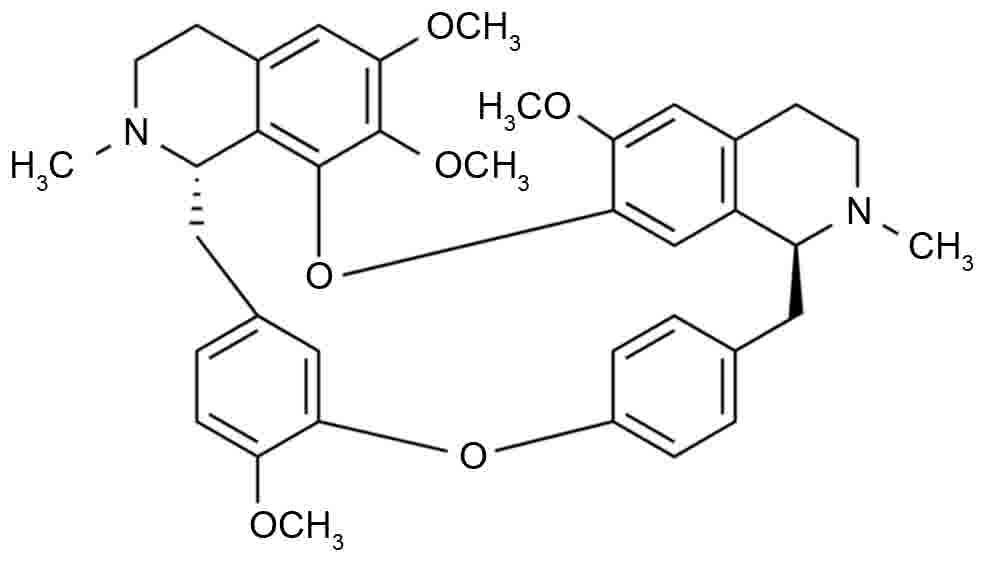
With a molecular formula of
C38H42N2O6 and a
molecular weight of 622.76 Da, tetrandrine (Fig. 1) is an alkaloid extracted from the
root of Stephania tetrandra (fangji) (9). Studies have suggested that tetrandrine
is not only a natural non-selective calcium antagonist, but is also
an antagonist of calmodulin, with extensive antiphlogistic,
analgesic and depressurization functions (10). Clinically, tetrandrine can be employed
to treat cardiovascular disease, hypertension and portal
hypertension liver cirrhosis (10).
Tetrandrine has also been determined to inhibit the growth of
breast carcinoma, liver cancer and ovarian cancer cells (11); thus, it exhibits promise as an
anti-cancer treatment. The present study aimed to investigate the
tetrandrine-dependent suppression of growth and induction of
apoptosis, and to identify the potential role of the
VEGF/HIF-1α/ICAM-1 signaling pathway in lung cancer cells.
Materials and methods
Cell culture
The human lung cancer A549 cell line was obtained
from Shanghai Cell Bank of The Chinese Academy of Sciences
(Shanghai, China) and cultured in RPMI-1640 medium (Invitrogen;
Thermo Fisher Scientific, Inc., Waltham, MA, USA) containing 10%
fetal bovine serum (HyClone; GE Healthcare Life Sciences, Logan,
UT, USA) at 37°C in 5% CO2.
Cell viability assay
A549 cells were incubated with or without
tetrandrine, at concentrations of 0, 2.5, 5.0 and 10 µM
(Sigma-Aldrich; Merck KGaA, Darmstadt, Germany) for 12, 24 and 48 h
at 37°C. Then, cell viability was assessed using a 0.5 mg/ml MTT
assay at 37°C for 4 h prior to being lysed with 150 µl of dimethyl
sulfoxide (DMSO, Invitrogen; Thermo Fisher Scientific, Inc.). Cell
viability was determined at a wavelength of 490 nm (Bio-Rad
Laboratories, Inc., Hercules, CA, USA).
Flow cytometry analysis
A549 cells (1×10⁶) were incubated with or
without tetrandrine, at concentrations of 0, 2.5, 5.0 and 10 µM,
for 48 h at 37°C. According to the manufacturer's protocol, cells
were stained with Annexin V-fluorescein isothiocyanate (FITC) and
propidium iodide (PI; BD Biosciences, San Jose, CA, USA). Apoptotic
cells were analyzed by flow cytometry using a BD FACScan™ flow
cytometer (BD Biosciences) and analyzed using Flowjo (version
7.6.1; FlowJo LLC, Ashland, OR, USA).
ELISA
A549 cells (1×10³) were incubated with or
without tetrandrine (0, 2.5, 5.0 and 10 µM) for various durations
for 48 h at 37°C. VEGF levels were evaluated using a VEGF human
ELISA kit (cat no. EHVEGFACL; Thermo Fisher Scientific, Inc.),
according to the manufacturer's protocol. The absorbance was
measured at 450 nm (Bio-Rad Laboratories, Inc.).
Western blotting
A549 cells (1×10⁶) were incubated with or
without tetrandrine (0, 2.5, 5.0 and 10 µM) for 48 h at 37°C. Total
cell lysates were denatured with lysis buffer and then quantitated
using a BCA Protein Assay kit (Pierce; Thermo Fisher Scientific,
Inc.). A total of 30–60 µg protein lysate per lane was resolved
using 10–12% SDS-PAGE, transferred onto nitrocellulose membranes.
Membranes were blocked with 5% non-fat-milk in TBST for 1 h at 37°C
and probed with primary antibodies against poly (ADP-ribose)
polymerase (PARP, sc-7150, 1:1,000, Santa Cruz Biotechnology, Inc.,
Dallas, TX, USA), phosphorylated protein kinase B (p-Akt,
sc-7985-R, 1:500, Santa Cruz Biotechnology, Inc.), Bcl-2-associated
X protein (Bax, sc-6236, 1:1,000, Santa Cruz Biotechnology, Inc.),
HIF-1α (sc-10790, 1:1,000, Santa Cruz Biotechnology, Inc.), ICAM-1
(sc-7891, 1:2,000, Santa Cruz Biotechnology, Inc.) and β-actin
(sc-7210, 1:1,000, Santa Cruz Biotechnology, Inc.) overnight at
4°C, followed by incubation with a goat anti-rabbit IgG horseradish
peroxidase-conjugated secondary antibody (sc-2030, 1:5,000, Santa
Cruz Biotechnology, Inc.) for 1 h at room temperature. The proteins
of interest were visualized using BeyoECL Plus (cat no. P0018,
Beyotime Institute of Biotechnology, Haimen, China) and exposure to
X-ray film and measured using Image-ProPlus software (version 6.0;
Media Cybernetics, Inc., Rockville, MD, USA).
Statistical analysis
Data are expressed as the mean ± standard deviation.
Statistical analysis was performed using SPSS 17.0 (SPSS Inc.,
Chicago, IL, USA); the data were analyzed using the Kaplan-Meier
method and statistically compared using one-way analysis of
variance and Tukey's post-hoc test. P<0.05 was considered to
indicate a statistically significant difference.
Results
Tetrandrine suppresses lung cancer
cell viability
First, the effects of tetrandrine on lung cancer
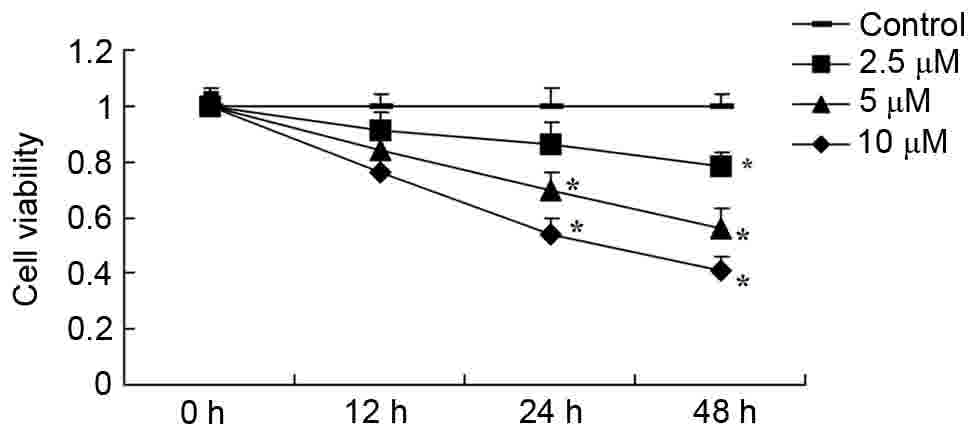
viability were investigated using an MTT assay. Tetrandrine
suppressed the viability of A549 human lung cancer cells in a time-
and dose-dependent manner (Fig. 2).
Treatment with tetrandrine at 2.5, 5 and 10 µM for 48 h effectively
inhibited the viability of the A549 cells, incubation with 5–10 µM
tetrandrine for 24 h effectively inhibited the viability of A549
cells and 10 µM tetrandrine (12 h) also significantly inhibited the
viability of A549 cells for (Fig.
2).
Tetrandrine induces apoptosis in lung
cancer A549 cells
As anti-cancer effects of tetrandrine on human lung
cancer A549 cells had been observed, whether tetrandrine could
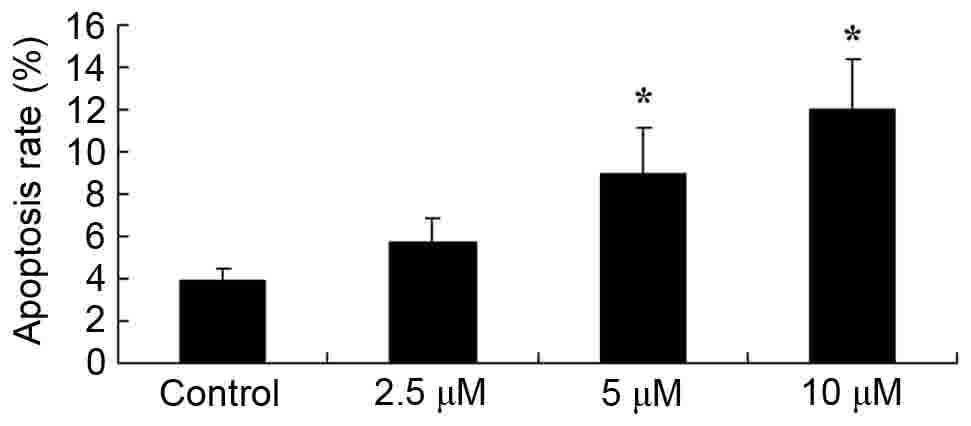
induce apoptosis in lung cancer A549 cells was assessed using
Annexin V and PI double-staining. As depicted in Fig. 3, treatment with 5 and 10 µM
tetrandrine for 24 h significantly induced apoptosis in human lung
cancer A549 cells.
Tetrandrine activates the PARP
signaling pathway
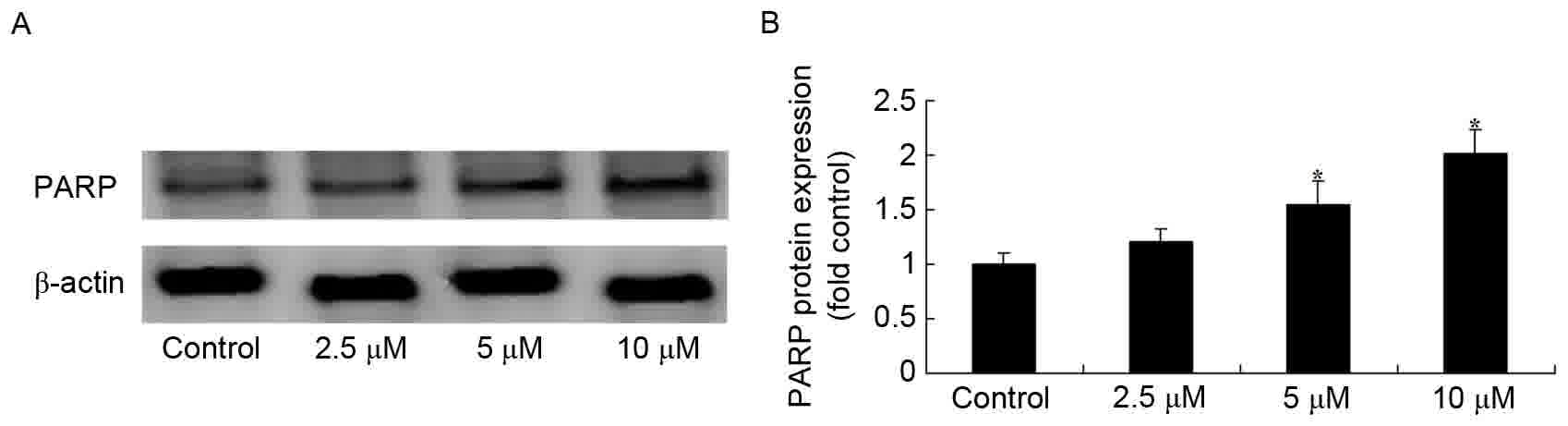
The effects of tetrandrine on apoptosis-associated
PARP, as detected by western blotting, are presented in Fig. 4. Treatment with 5 or 10 µM tetrandrine
for 24 h significantly induced the protein expression of PARP in
A549 cells.
Tetrandrine reduces the level of
p-Akt
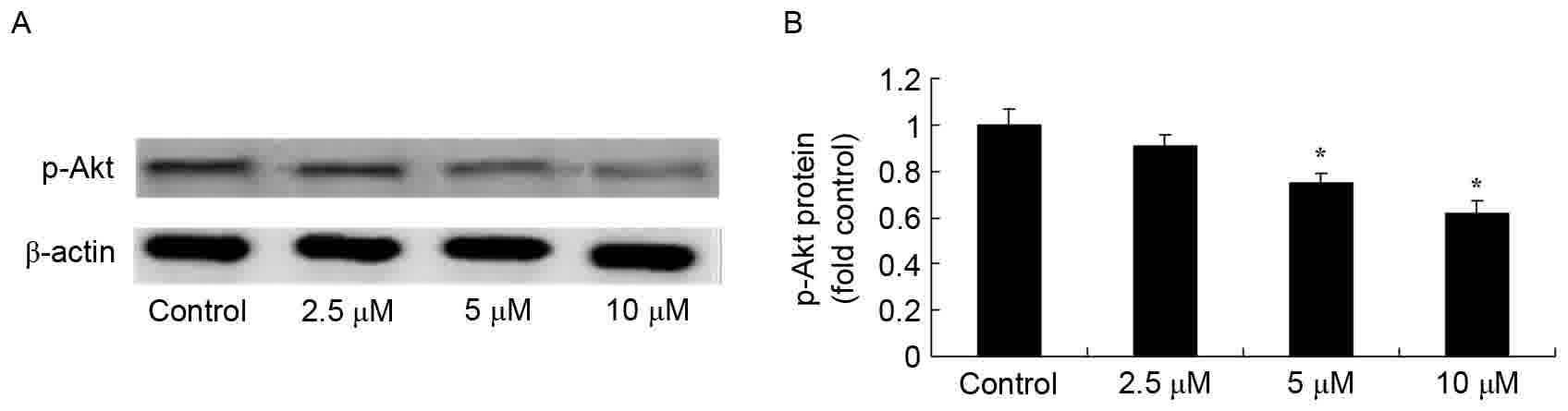
A dose-dependent decrease in the level of p-Akt was
observed in A549 cells following treatment with tetrandrine
(Fig. 5). These results indicated
that treatment with 5 or 10 µM tetrandrine for 24 h significantly
suppresses the p-Akt protein levels in A549 cells (Fig. 5).
Tetrandrine activates the
transcription of Bax
The Bax signaling pathway is involved in the
regulation of apoptosis (12).
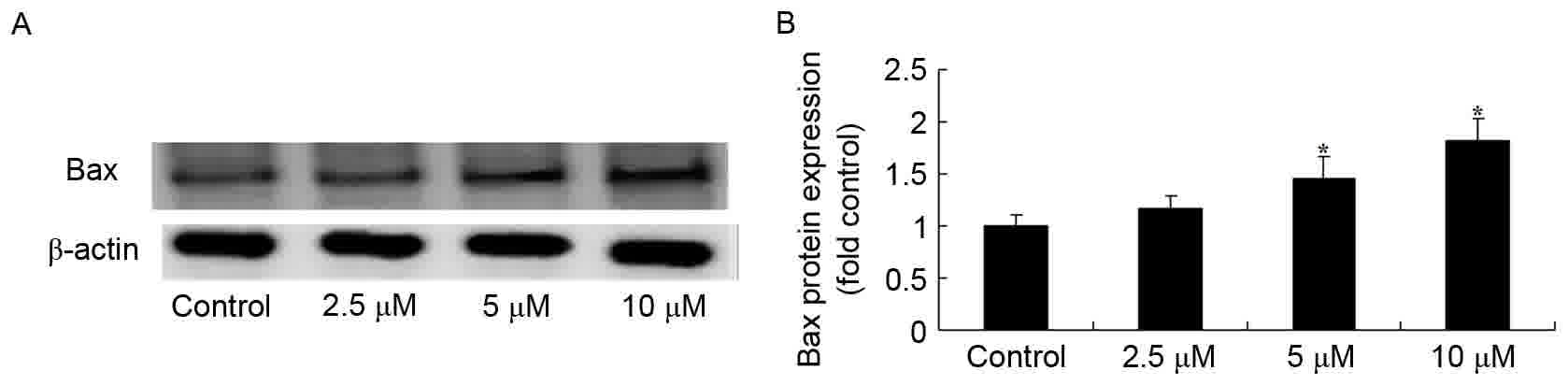
Western blotting was used to detect Bax protein expression in A549
cells. The results revealed that there is a significant
concentration-dependent increase in Bax protein expression
following treatment with 5–10 µM tetrandrine for 24 h (Fig. 6).
Tetrandrine reduces the level of VEGF
in A549 cells
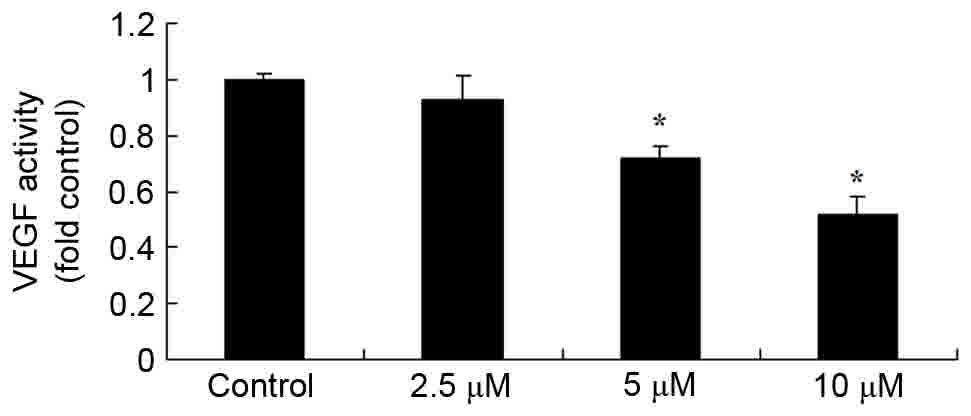
To evaluate the anticancer effects of tetrandrine on
cell growth, an ELISA was performed. As depicted in Fig. 7, treatment with 5 or 10 µM tetrandrine
significantly decreased the VEGF levels in A549 cells for 48 h.
Tetrandrine reduces HIF-1α protein
expression
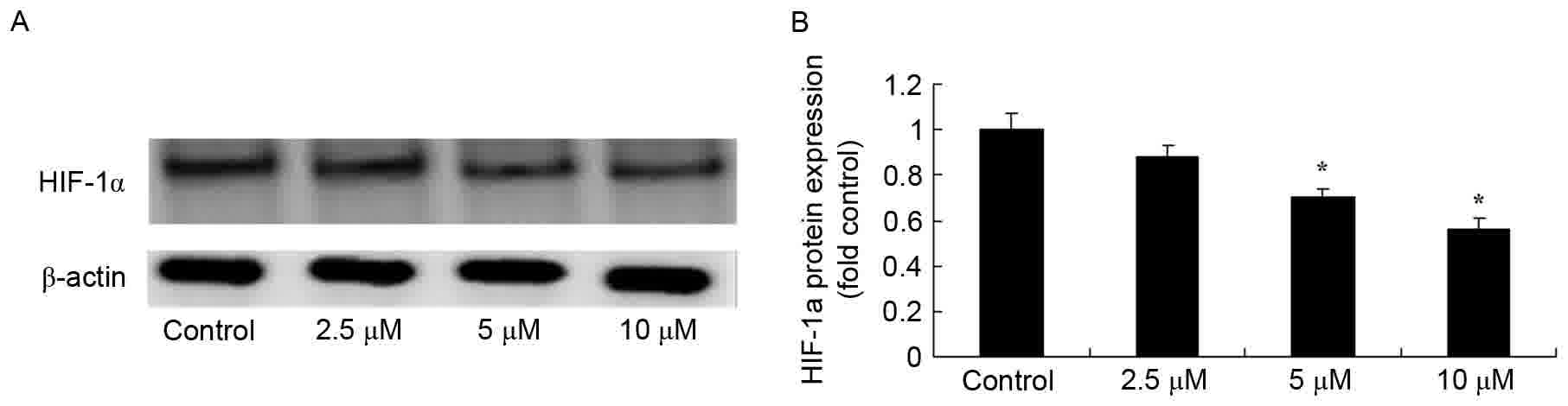
Semi-quantitative assessment of HIF-1α levels by
western blotting revealed that treatment with tetrandrine reduced
the levels of HIF-1α. Incubation with 5 and 10 µM tetrandrine for
48 h significantly suppressed the protein expression of HIF-1α in
A549 cells for 48 h (Fig. 8).
Tetrandrine increases the expression
of ICAM-1 protein
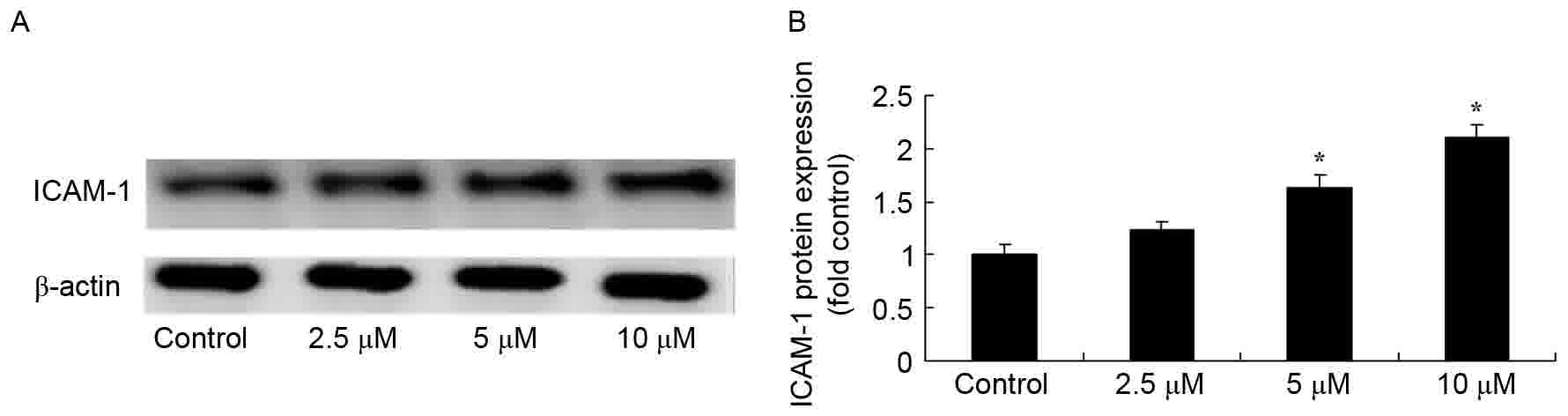
The effects of tetrandrine on ICAM-1 expression were
then investigated using A549 cells. As presented in Fig. 9, treatment with 5 and 10 µM
tetrandrine significantly increased the protein expression of
ICAM-1 in A549 cells.
Discussion
Vasculogenesis is a process in which new vessels are
produced from current microvascular system (13). The degree of vascularization can be
used to assess the degree of disease progression and metastasis of
malignant cancer (14). Under normal
conditions, organisms can regulate the procedures of
vascularization, maintaining the dynamic equilibrium between the
proliferation and apoptosis of vascular endothelial cells through
two-way regulation (15). However,
resulting in the uncontrolled vascularization of tumors and
allowing for the rapid proliferation of tumor cells (15). This vascularization allows tumor cells
to metastasize and infiltrate surrounding tissues and organs. To
the best of our knowledge, this is the first report demonstrating
that tetrandrine suppresses viability and induces apoptosis in A549
cells.
VEGF is the most effective vasculogenesis-associated
factor (16). VEGF is highly
expressed in ovarian cancer, breast carcinoma, gastric carcinoma
and urinary bladder carcinoma (17).
VEGF expression levels are positively associated with advanced
tumor grade, malignancy and vasculogenesis in tumor tissues
(18). In addition, VEGF stimulates
the proliferation of tumor-derived vascular endothelial cells and
facilitates the generation of new capillaries, allowing the
nutritional requirements of tumors to be met. Lung cancer is
typically a malignant cancer with sufficient blood supply that can
secrete lots of VEGF during tumor growth (16). Expression of VEGF mRNA and protein in
lung cancer samples are 3–7 higher than normal renal tissues
(16). In the present study,
tetrandrine significantly induced the protein expression of PARP
and Bax, suppressed p-Akt protein levels and increased VEGF
expression in A549 cells. Chen et al (10) demonstrated that tetrandrine suppresses
tumor growth and angiogenesis in rat gliomas by inhibiting VEGF
expression. Yu et al (9)
suggested that tetrandrine induces apoptosis through activation of
PARP in HSC-3 human tongue squamous cell carcinoma cells. Tao et
al (11) reported that
tetrandrine induces apoptosis through Bax activation in U2-OS and
MG-63 human osteosarcoma cells.
A previous study indicated that there is a
hormone-responsive element (HRE) at the initial point of VEGF
genetic transcription, which can be bound by HIF-1α (19). Following binding, a transcription
initiation complex is produced, which starts the transcription and
expression of VEGF (19).
Furthermore, VEGF may promote tumor vasculogenesis (6). New tumor vessels generated via
HIF-1α/VEGF signaling are expansive and have an irregular and
distorted shape; they do not form typical venules, arterioles and
capillaries. The anomalous structure of these tumor vessels leads
to flaws in vascular function (5).
Abnormally proliferating tumor cells increase pressure on tumor
vessels and lymphatic systems, which may further damage blood
supply and result in the increase of fluid pressure in internal
bunching clearance of tumor tissues, additional decreases in the
oxygen content, acidosis and resistance to chemotherapeutics
(20). In the present study,
tetrandrine induced lung cancer apoptosis through the inhibition of
HIF-1α/VEGF signaling in A549 cells. The results of the current
study indicated that HIF-1α/VEGF serves a notable role in
inhibiting the growth of human lung cancer cells treated with
tetrandrine.
ICAM-1 is a member of the immunoglobulin supergene
family, and is expressed on endothelial cells, epithelial cells,
mononuclear leucocytes and lymphocytes (21). ICAM-1 affects endothelial cell
adhesion and transformation, and induces chemotaxis in neutrophils,
granulocytes and monocytes (22).
ICAM-1 can promote the infiltration of leukocytes into endothelial
cells. This process increases the permeability of the endothelium
(23). To the best of our knowledge,
this is the first study to demonstrate that tetrandrine induces
lung cancer apoptosis via the ICAM-1 signaling pathway. The
upregulation of ICAM-1 signaling indicated that apoptosis is
induced by tetrandrine, although further investigation is required
to verify this. Hsu et al (24) reported the antifibrotic effects of
tetrandrine on hepatic stellate cells and in rats following the
suppression of ICAM-1.
In summary, the present study provides evidence that
tetrandrine suppresses growth and induces apoptosis in A549 human
lung adenocarcinoma cells. The apoptosis induced by tetrandrine may
be associated with the activation of the PARP-Akt-Bax and
VEGF/HIF-1α/ICAM-1 signaling pathways. These findings indicate that
tetrandrine may have potential as a novel clinical therapy for
human lung cancer in the future.
References
|
1
|
Socinski MA, Okamoto I, Hon JK, Hirsh V,
Dakhil SR, Page RD, Orsini J, Yamamoto N, Zhang H and Renschler MF:
Safety and efficacy analysis by histology of weekly nab-paclitaxel
in combination with carboplatin as first-line therapy in patients
with advanced non-small-cell lung cancer. Ann Oncol. 24:2390–2396.
2013. View Article : Google Scholar : PubMed/NCBI
|
|
2
|
Crvenkova S and Pesevska M: Important
prognostic factors for the long-term survival in non-small cell
lung cancer patients treated with combination of chemotherapy and
conformal radiotherapy. J BUON. 20:775–781. 2015.PubMed/NCBI
|
|
3
|
Lin Q, Liu Y, Wang N, Huang Y, Ge X, Ren
X, Chen X, Hu J, Guo Z, Zhao Y and Asaumi J: A modified phase I
trial of radiation dose escalation in 3D conformal radiation
therapy with concurrent vinorelbine and carboplatin chemotherapy
for non-small-cell lung cancer. J Radiat Res. 54:126–134. 2013.
View Article : Google Scholar : PubMed/NCBI
|
|
4
|
Mubarak N, Gaafar R, Shehata S, Hashem T,
Abigeres D, Azim HA, El-Husseiny G, Al-Husaini H and Liu Z: A
randomized, phase 2 study comparing pemetrexed plus best supportive
care versus best supportive care as maintenance therapy after
first-line treatment with pemetrexed and cisplatin for advanced,
non-squamous, non-small cell lung cancer. BMC Cancer. 12:4232012.
View Article : Google Scholar : PubMed/NCBI
|
|
5
|
Fu L, Chen W, Guo W, Wang J, Tian Y, Shi
D, Zhang X, Qiu H, Xiao X, Kang T, et al: Berberine targets
AP-2/hTERT, NF-kappaB/COX-2, HIF-1alpha/VEGF and
Cytochrome-c/Caspase signaling to suppress human cancer cell
growth. PLoS One. 8:e692402013. View Article : Google Scholar : PubMed/NCBI
|
|
6
|
Cheong SM, Choi H, Hong BS, Gho YS and Han
JK: Dab2 is pivotal for endothelial cell migration by mediating
VEGF expression in cancer cells. Exp Cell Res. 318:550–557. 2012.
View Article : Google Scholar : PubMed/NCBI
|
|
7
|
Ma X, Jia Y, Zu S, Li R, Jia Y, Zhao Y,
Xiao D, Dang N and Wang Y: α5 Nicotinic acetylcholine receptor
mediates nicotine-induced HIF-1α and VEGF expression in non-small
cell lung cancer. Toxicol Appl Pharmacol. 278:172–179. 2014.
View Article : Google Scholar : PubMed/NCBI
|
|
8
|
Li G, He L, Zhang E, Shi J, Zhang Q, Le
AD, Zhou K and Tang X: Overexpression of human papillomavirus (HPV)
type 16 oncoproteins promotes angiogenesis via enhancing HIF-1α and
VEGF expression in non-small cell lung cancer cells. Cancer Lett.
311:160–170. 2011. View Article : Google Scholar : PubMed/NCBI
|
|
9
|
Yu FS, Yu CS, Chen JC, Yang JL, Lu HF,
Chang SJ, Lin MW and Chung JG: Tetrandrine induces apoptosis Via
caspase-8, −9 and −3 and poly (ADP ribose) polymerase dependent
pathways and autophagy through beclin-1/ LC3-I, II signaling
pathways in human oral cancer HSC-3 cells. Environ Toxicol.
31:395–406. 2014. View Article : Google Scholar : PubMed/NCBI
|
|
10
|
Chen Y, Chen JC and Tseng SH: Tetrandrine
suppresses tumor growth and angiogenesis of gliomas in rats. Int J
Cancer. 124:2260–2269. 2009. View Article : Google Scholar : PubMed/NCBI
|
|
11
|
Tao LJ, Zhou XD, Shen CC, Liang CZ, Liu B,
Tao Y and Tao HM: Tetrandrine induces apoptosis and triggers a
caspase cascade in U2-OS and MG-63 cells through the intrinsic and
extrinsic pathways. Mol Med Rep. 9:345–349. 2014. View Article : Google Scholar : PubMed/NCBI
|
|
12
|
Jimenez-Mateos EM, Arribas-Blazquez M,
Sanz-Rodriguez A, Concannon C, Olivos-Ore LA, Reschke CR, Mooney
CM, Mooney C, Lugara E, Morgan J, et al: microRNA targeting of the
P2X7 purinoceptor opposes a contralateral epileptogenic focus in
the hippocampus. Sci Rep. 5:174862015. View Article : Google Scholar : PubMed/NCBI
|
|
13
|
Bass MB, Yao B, Hei YJ, Ye Y, Davis GJ,
Davis MT, Kaesdorf BA, Chan SS and Patterson SD: Challenges in
developing a validated biomarker for angiogenesis inhibitors: The
motesanib experience. PLoS One. 9:e1080482014. View Article : Google Scholar : PubMed/NCBI
|
|
14
|
Infante JR, Novello S, Ma WW, Dy GK,
Bendell JC, Huff A, Wang Q, Suttle AB, Allen R, Xu CF, et al: Phase
Ib trial of the oral angiogenesis inhibitor pazopanib administered
concurrently with pemetrexed in patients with advanced solid
tumors. Invest New Drugs. 31:927–936. 2013. View Article : Google Scholar : PubMed/NCBI
|
|
15
|
Liu J and Liu Y: Influence of erbanxiao
solution on inhibiting angiogenesis in stasis toxin stagnation of
non-small cell lung cancer. J Tradit Chin Med. 33:303–306. 2013.
View Article : Google Scholar : PubMed/NCBI
|
|
16
|
Hu X, Zhang J, Xu B, Jiang Z, Ragaz J,
Tong Z, Zhang Q, Wang X, Feng J, Pang D, et al: Multicenter phase
II study of apatinib, a novel VEGFR inhibitor in heavily pretreated
patients with metastatic triple-negative breast cancer. Int J
Cancer. 135:1961–1969. 2014. View Article : Google Scholar : PubMed/NCBI
|
|
17
|
Smith GA, Fearnley GW, Tomlinson DC,
Harrison MA and Ponnambalam S: The cellular response to vascular
endothelial growth factors requires co-ordinated signal
transduction, trafficking and proteolysis. Biosci Rep. 35:pii:
e00253. 2015. View Article : Google Scholar
|
|
18
|
Noonan S, Wong Man K and Jimeno A:
Nintedanib, a novel triple angiokinase inhibitor for the treatment
of non-small cell lung cancer. Drugs Today (Barc). 51:357–366.
2015. View Article : Google Scholar : PubMed/NCBI
|
|
19
|
Lee JG and Wu R: Erlotinib-cisplatin
combination inhibits growth and angiogenesis through c-MYC and
HIF-1alpha in EGFR-mutated lung cancer in vitro and in vivo.
Neoplasia. 17:190–200. 2015. View Article : Google Scholar : PubMed/NCBI
|
|
20
|
Pore N, Gupta AK, Cerniglia GJ, Jiang Z,
Bernhard EJ, Evans SM, Koch CJ, Hahn SM and Maity A: Nelfinavir
down-regulates hypoxia-inducible factor 1alpha and VEGF expression
and increases tumor oxygenation: Implications for radiotherapy.
Cancer Res. 66:9252–9259. 2006. View Article : Google Scholar : PubMed/NCBI
|
|
21
|
Gogali A, Charalabopoulos K, Zampira I,
Konstantinidis AK, Tachmazoglou F, Daskalopoulos G, Constantopoulos
SH and Dalavanga Y: Soluble adhesion molecules E-cadherin,
intercellular adhesion molecule-1 and E-selectin as lung cancer
biomarkers. Chest. 138:1173–1179. 2010. View Article : Google Scholar : PubMed/NCBI
|
|
22
|
Thanopoulou E, Kotzamanis G, Pateras IS,
Ziras N, Papalambros A, Mariolis-Sapsakos T, Sigala F, Johnson E,
Kotsinas A, Scorilas A and Gorgoulis VG: The single nucleotide
polymorphism g.1548A >G (K469E) of the ICAM-1 gene is associated
with worse prognosis in non-small cell lung cancer. Tumour Biol.
33:1429–1436. 2012. View Article : Google Scholar : PubMed/NCBI
|
|
23
|
Hayes SH and Seigel GM: Immunoreactivity
of ICAM-1 in human tumors, metastases and normal tissues. Int J
Clin Exp Pathol. 2:553–560. 2009.PubMed/NCBI
|
|
24
|
Hsu YC, Chiu YT, Cheng CC, Wu CF, Lin YL
and Huang YT: Antifibrotic effects of tetrandrine on hepatic
stellate cells and rats with liver fibrosis. J Gastroenterol
Hepatol. 22:99–111. 2007. View Article : Google Scholar : PubMed/NCBI
|