Spandidos Publications Logo
  • About
    • About Spandidos
    • Aims and Scopes
    • Abstracting and Indexing
    • Editorial Policies
    • Reprints and Permissions
    • Job Opportunities
    • Terms and Conditions
    • Contact
  • Journals
    • All Journals
    • Oncology Letters
      • Oncology Letters
      • Information for Authors
      • Editorial Policies
      • Editorial Board
      • Aims and Scope
      • Abstracting and Indexing
      • Bibliographic Information
      • Archive
    • International Journal of Oncology
      • International Journal of Oncology
      • Information for Authors
      • Editorial Policies
      • Editorial Board
      • Aims and Scope
      • Abstracting and Indexing
      • Bibliographic Information
      • Archive
    • Molecular and Clinical Oncology
      • Molecular and Clinical Oncology
      • Information for Authors
      • Editorial Policies
      • Editorial Board
      • Aims and Scope
      • Abstracting and Indexing
      • Bibliographic Information
      • Archive
    • Experimental and Therapeutic Medicine
      • Experimental and Therapeutic Medicine
      • Information for Authors
      • Editorial Policies
      • Editorial Board
      • Aims and Scope
      • Abstracting and Indexing
      • Bibliographic Information
      • Archive
    • International Journal of Molecular Medicine
      • International Journal of Molecular Medicine
      • Information for Authors
      • Editorial Policies
      • Editorial Board
      • Aims and Scope
      • Abstracting and Indexing
      • Bibliographic Information
      • Archive
    • Biomedical Reports
      • Biomedical Reports
      • Information for Authors
      • Editorial Policies
      • Editorial Board
      • Aims and Scope
      • Abstracting and Indexing
      • Bibliographic Information
      • Archive
    • Oncology Reports
      • Oncology Reports
      • Information for Authors
      • Editorial Policies
      • Editorial Board
      • Aims and Scope
      • Abstracting and Indexing
      • Bibliographic Information
      • Archive
    • Molecular Medicine Reports
      • Molecular Medicine Reports
      • Information for Authors
      • Editorial Policies
      • Editorial Board
      • Aims and Scope
      • Abstracting and Indexing
      • Bibliographic Information
      • Archive
    • World Academy of Sciences Journal
      • World Academy of Sciences Journal
      • Information for Authors
      • Editorial Policies
      • Editorial Board
      • Aims and Scope
      • Abstracting and Indexing
      • Bibliographic Information
      • Archive
    • International Journal of Functional Nutrition
      • International Journal of Functional Nutrition
      • Information for Authors
      • Editorial Policies
      • Editorial Board
      • Aims and Scope
      • Abstracting and Indexing
      • Bibliographic Information
      • Archive
    • International Journal of Epigenetics
      • International Journal of Epigenetics
      • Information for Authors
      • Editorial Policies
      • Editorial Board
      • Aims and Scope
      • Abstracting and Indexing
      • Bibliographic Information
      • Archive
    • Medicine International
      • Medicine International
      • Information for Authors
      • Editorial Policies
      • Editorial Board
      • Aims and Scope
      • Abstracting and Indexing
      • Bibliographic Information
      • Archive
  • Articles
  • Information
    • Information for Authors
    • Information for Reviewers
    • Information for Librarians
    • Information for Advertisers
    • Conferences
  • Language Editing
Spandidos Publications Logo
  • About
    • About Spandidos
    • Aims and Scopes
    • Abstracting and Indexing
    • Editorial Policies
    • Reprints and Permissions
    • Job Opportunities
    • Terms and Conditions
    • Contact
  • Journals
    • All Journals
    • Biomedical Reports
      • Information for Authors
      • Editorial Policies
      • Editorial Board
      • Aims and Scope
      • Abstracting and Indexing
      • Bibliographic Information
      • Archive
    • Experimental and Therapeutic Medicine
      • Information for Authors
      • Editorial Policies
      • Editorial Board
      • Aims and Scope
      • Abstracting and Indexing
      • Bibliographic Information
      • Archive
    • International Journal of Epigenetics
      • Information for Authors
      • Editorial Policies
      • Editorial Board
      • Aims and Scope
      • Abstracting and Indexing
      • Bibliographic Information
      • Archive
    • International Journal of Functional Nutrition
      • Information for Authors
      • Editorial Policies
      • Editorial Board
      • Aims and Scope
      • Abstracting and Indexing
      • Bibliographic Information
      • Archive
    • International Journal of Molecular Medicine
      • Information for Authors
      • Editorial Policies
      • Editorial Board
      • Aims and Scope
      • Abstracting and Indexing
      • Bibliographic Information
      • Archive
    • International Journal of Oncology
      • Information for Authors
      • Editorial Policies
      • Editorial Board
      • Aims and Scope
      • Abstracting and Indexing
      • Bibliographic Information
      • Archive
    • Medicine International
      • Information for Authors
      • Editorial Policies
      • Editorial Board
      • Aims and Scope
      • Abstracting and Indexing
      • Bibliographic Information
      • Archive
    • Molecular and Clinical Oncology
      • Information for Authors
      • Editorial Policies
      • Editorial Board
      • Aims and Scope
      • Abstracting and Indexing
      • Bibliographic Information
      • Archive
    • Molecular Medicine Reports
      • Information for Authors
      • Editorial Policies
      • Editorial Board
      • Aims and Scope
      • Abstracting and Indexing
      • Bibliographic Information
      • Archive
    • Oncology Letters
      • Information for Authors
      • Editorial Policies
      • Editorial Board
      • Aims and Scope
      • Abstracting and Indexing
      • Bibliographic Information
      • Archive
    • Oncology Reports
      • Information for Authors
      • Editorial Policies
      • Editorial Board
      • Aims and Scope
      • Abstracting and Indexing
      • Bibliographic Information
      • Archive
    • World Academy of Sciences Journal
      • Information for Authors
      • Editorial Policies
      • Editorial Board
      • Aims and Scope
      • Abstracting and Indexing
      • Bibliographic Information
      • Archive
  • Articles
  • Information
    • For Authors
    • For Reviewers
    • For Librarians
    • For Advertisers
    • Conferences
  • Language Editing
Login Register Submit
  • This site uses cookies
  • You can change your cookie settings at any time by following the instructions in our Cookie Policy. To find out more, you may read our Privacy Policy.

    I agree
Search articles by DOI, keyword, author or affiliation
Search
Advanced Search
presentation
Oncology Letters
Join Editorial Board Propose a Special Issue
Print ISSN: 1792-1074 Online ISSN: 1792-1082
Journal Cover
July-2018 Volume 16 Issue 1

Full Size Image

Sign up for eToc alerts
Recommend to Library

Journals

International Journal of Molecular Medicine

International Journal of Molecular Medicine

International Journal of Molecular Medicine is an international journal devoted to molecular mechanisms of human disease.

International Journal of Oncology

International Journal of Oncology

International Journal of Oncology is an international journal devoted to oncology research and cancer treatment.

Molecular Medicine Reports

Molecular Medicine Reports

Covers molecular medicine topics such as pharmacology, pathology, genetics, neuroscience, infectious diseases, molecular cardiology, and molecular surgery.

Oncology Reports

Oncology Reports

Oncology Reports is an international journal devoted to fundamental and applied research in Oncology.

Experimental and Therapeutic Medicine

Experimental and Therapeutic Medicine

Experimental and Therapeutic Medicine is an international journal devoted to laboratory and clinical medicine.

Oncology Letters

Oncology Letters

Oncology Letters is an international journal devoted to Experimental and Clinical Oncology.

Biomedical Reports

Biomedical Reports

Explores a wide range of biological and medical fields, including pharmacology, genetics, microbiology, neuroscience, and molecular cardiology.

Molecular and Clinical Oncology

Molecular and Clinical Oncology

International journal addressing all aspects of oncology research, from tumorigenesis and oncogenes to chemotherapy and metastasis.

World Academy of Sciences Journal

World Academy of Sciences Journal

Multidisciplinary open-access journal spanning biochemistry, genetics, neuroscience, environmental health, and synthetic biology.

International Journal of Functional Nutrition

International Journal of Functional Nutrition

Open-access journal combining biochemistry, pharmacology, immunology, and genetics to advance health through functional nutrition.

International Journal of Epigenetics

International Journal of Epigenetics

Publishes open-access research on using epigenetics to advance understanding and treatment of human disease.

Medicine International

Medicine International

An International Open Access Journal Devoted to General Medicine.

Journal Cover
July-2018 Volume 16 Issue 1

Full Size Image

Sign up for eToc alerts
Recommend to Library

  • Article
  • Citations
    • Cite This Article
    • Download Citation
    • Create Citation Alert
    • Remove Citation Alert
    • Cited By
  • Similar Articles
    • Related Articles (in Spandidos Publications)
    • Similar Articles (Google Scholar)
    • Similar Articles (PubMed)
  • Download PDF
  • Download XML
  • View XML
Case Report

An exceptional presentation of pituicytoma apoplexy: A case report

  • Authors:
    • Giulia Cossu
    • Julien Dimitriou
    • Jean‑Philippe Brouland
    • Roy Thomas Daniel
    • Mahmoud Messerer
  • View Affiliations / Copyright

    Affiliations: Department of Neurosurgery, University Hospital of Lausanne, 1011 Lausanne, Switzerland, Department of Clinical Pathology, University Hospital of Lausanne, 1011 Lausanne, Switzerland
  • Pages: 643-647
    |
    Published online on: May 3, 2018
       https://doi.org/10.3892/ol.2018.8625
  • Expand metrics +
Metrics: Total Views: 0 (Spandidos Publications: | PMC Statistics: )
Metrics: Total PDF Downloads: 0 (Spandidos Publications: | PMC Statistics: )
Cited By (CrossRef): 0 citations Loading Articles...

This article is mentioned in:


Abstract

Pituicytomas are a rare form of indolent neoplasms, which typically present with visual disturbance and hypopituitarism. Complete resection by a trans‑sphenoidal approach is the optimal treatment. Only 80 cases have been described thus far in the current literature and the present case is the first to describe the development of pituitary apoplexy in the context of a pituicytoma. A 77‑year‑old man presented with fatigue and clinical signs of hypogonadism and a sellar lesion was diagnosed at cerebral magnetic resonance imaging (MRI). A watch‑and‑wait management was initially decided and 1 year after the initial diagnosis, he presented with a thunderclap headache with images suggestive of pituitary apoplexy. A pituitary adenoma was suspected and an endoscopic resection was decided upon the development of a visual deficit. Pathological analysis established the correct diagnosis of a pituicytoma. Pituicytomas are characterised by dense vascularisation, thus ischaemic and haemorrhagic events may be common. When confronted with a hypervascularised pituitary lesion demonstrating strong contrast enhancement and no abnormal hormonal secretion, one must maintain a high index of suspicion for a pituicytoma. A wide range of differential diagnoses should thus be considered in the context of pituitary apoplexy.

Introduction

Pituicytomas are rare slow-growing tumours arising from the glial cells of the neurohypophysis and infundibulum (pituicytes). The histogenesis, natural history and prognosis of these lesions still need to be elucidated, as data in the current literature remain scarce.

Since the first reported case in 1955 (1), there has been a surge in the number of case reports and small case series describing this rare entity. There are no gender-specific differences in the incidence of pituicytomas, and the average age of presentation is 50 years of age (2). No specific risk factors were identified. These neoplasms generally present with headaches, visual disturbances and manifestations of hypopituitarism (typically sexual dysfunction). The clinical presentation is almost identical to other more frequent sellar lesions, therefore correctly diagnosing these lesions can be challenging. Of about 80 cases described in the literature up until now (3), only one previous case reported an abrupt onset of clinical features and this was due to an intraventricular haemorrhage (4).

On imaging, even if pituicytomas present with suspicious radiological peculiarities, their rarity often leads them to be misdiagnosed for more common lesions. Surgical resection represents the mainstay of treatment, and this is typically via an endoscopic endonasal approach (5). However, complete resection may be challenging due to the firm consistency and highly vascularised nature of these tumours.

We report a novel case of a pituicytoma presenting as pituitary apoplexy, with the aim to advance a hypothesis to explain this phenomenon. To our knowledge this is the first reported case in the literature that describes the development of pituitary apoplexy in the context of a pituicytoma.

Case report

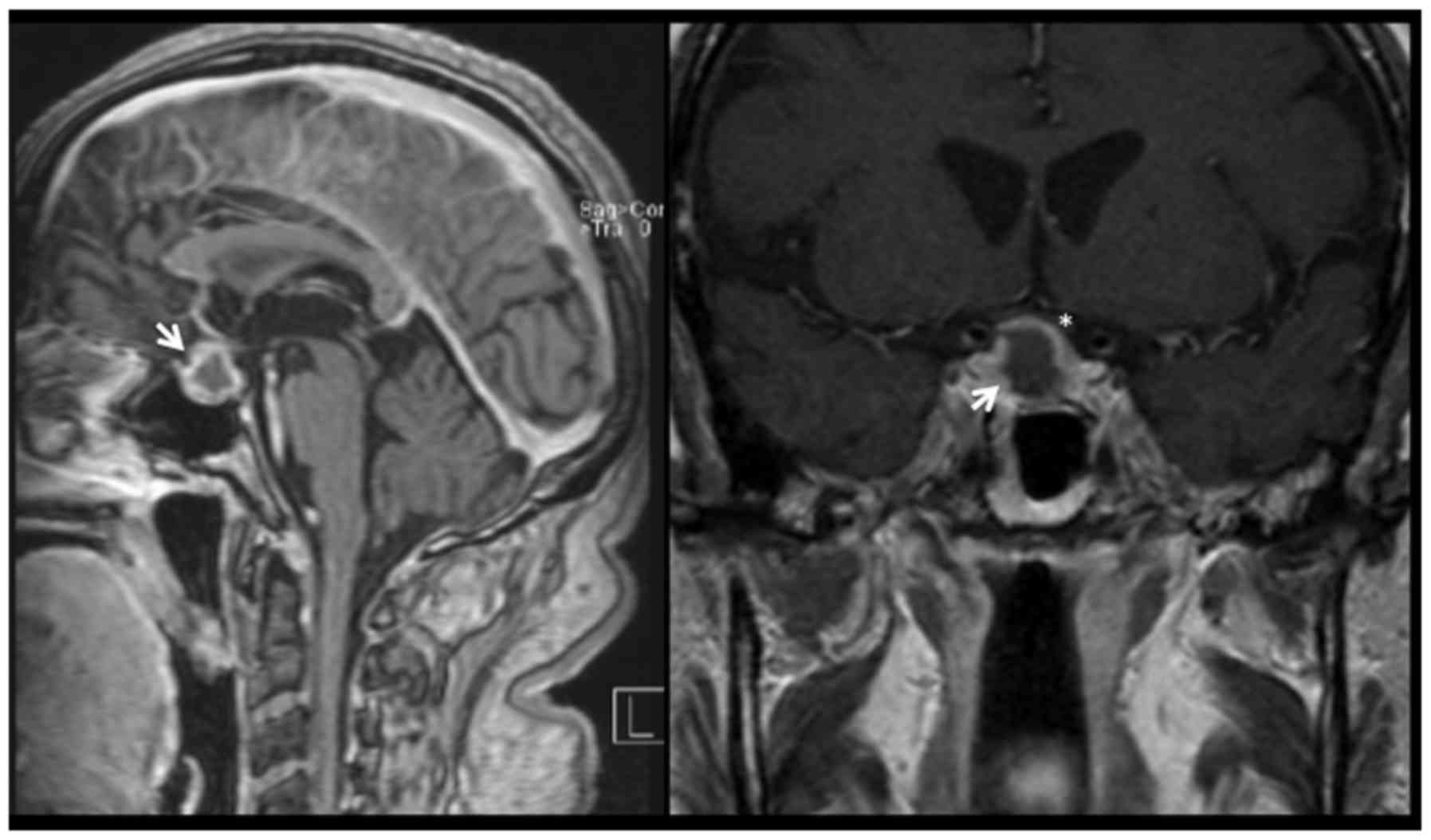
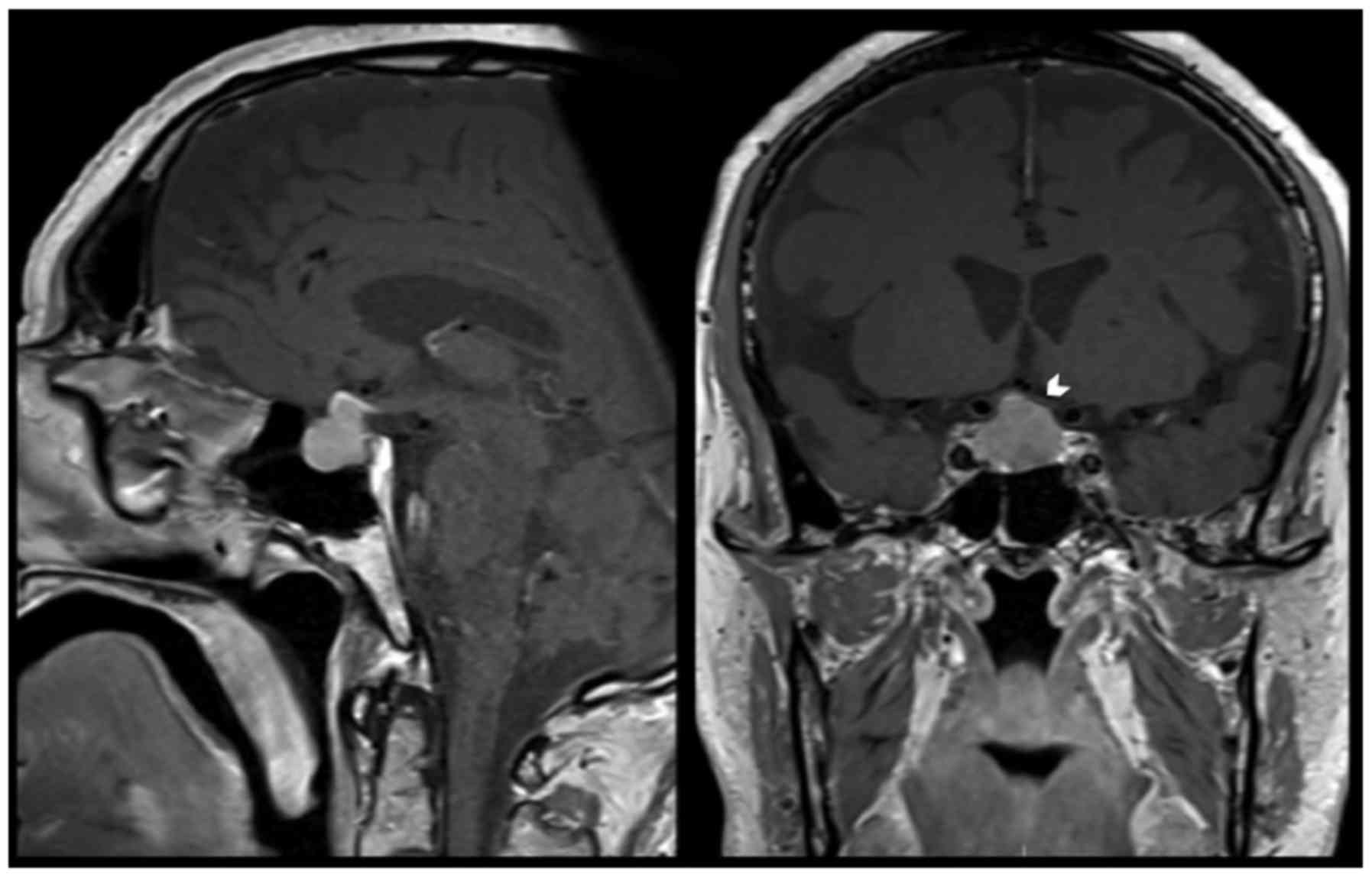
A 77-year-old man presented to the University Hospital of Lausanne in October 2015 with fatigue and clinical signs of hypogonadism. The clinical presentation was suggestive of hypopituitarism and endocrine tests showed an anterior pituitary dysfunction. Investigation with cerebral magnetic resonance imaging (MRI) demonstrated a sellar lesion with suprasellar extension and no compression of optic structures. He was admitted at the neurosurgical department and initial management consisted of hormonal replacement therapy and a ‘watch-and-wait’ approach. One year after his initial presentation (October 2016), the patient returned to the emergency department with a thunderclap headache. A cerebral MRI demonstrated pituitary apoplexy (Fig. 1). There were no visual deficits on clinical examination and we decided to continue the regular monitoring and follow-up. Over 6 weeks of follow-up the patient started complaining of visual symptoms, secondary to a progressive growth of the pituitary lesion with compression of the optic chiasm (Fig. 2). Ophthalmological examination confirmed a right temporal quadrantanopia.

Figure 1.

Sagittal (left panel) and coronal (right panel) views of a gadolinium enhanced T1-weighted cerebral magnetic resonance imaging. This shows a sellar lesion with peripheral contrast enhancement and a central hypointense core which is compatible with pituitary apoplexy (white arrow). The lesion provoked a sellar enlargement and presented an extension in the suprasellar space. The optic chiasm is visible immediately superior to the tumor, with no clear compression at imaging (the left optic nerve is marked with an asterisk).

Figure 2.

Sagittal (left panel) and coronal (right panel) views of a gadolinium enhanced T1-weighted cerebral magnetic resonance imaging revealing a sellar lesion with suprasellar extension, and intense homogeneous contrast enhancement. The pituitary stalk is not visible and the compression of the optic chiasm is evident (the left optic nerve is flattened just above the roof of the tumor and it is marked with an arrow head).

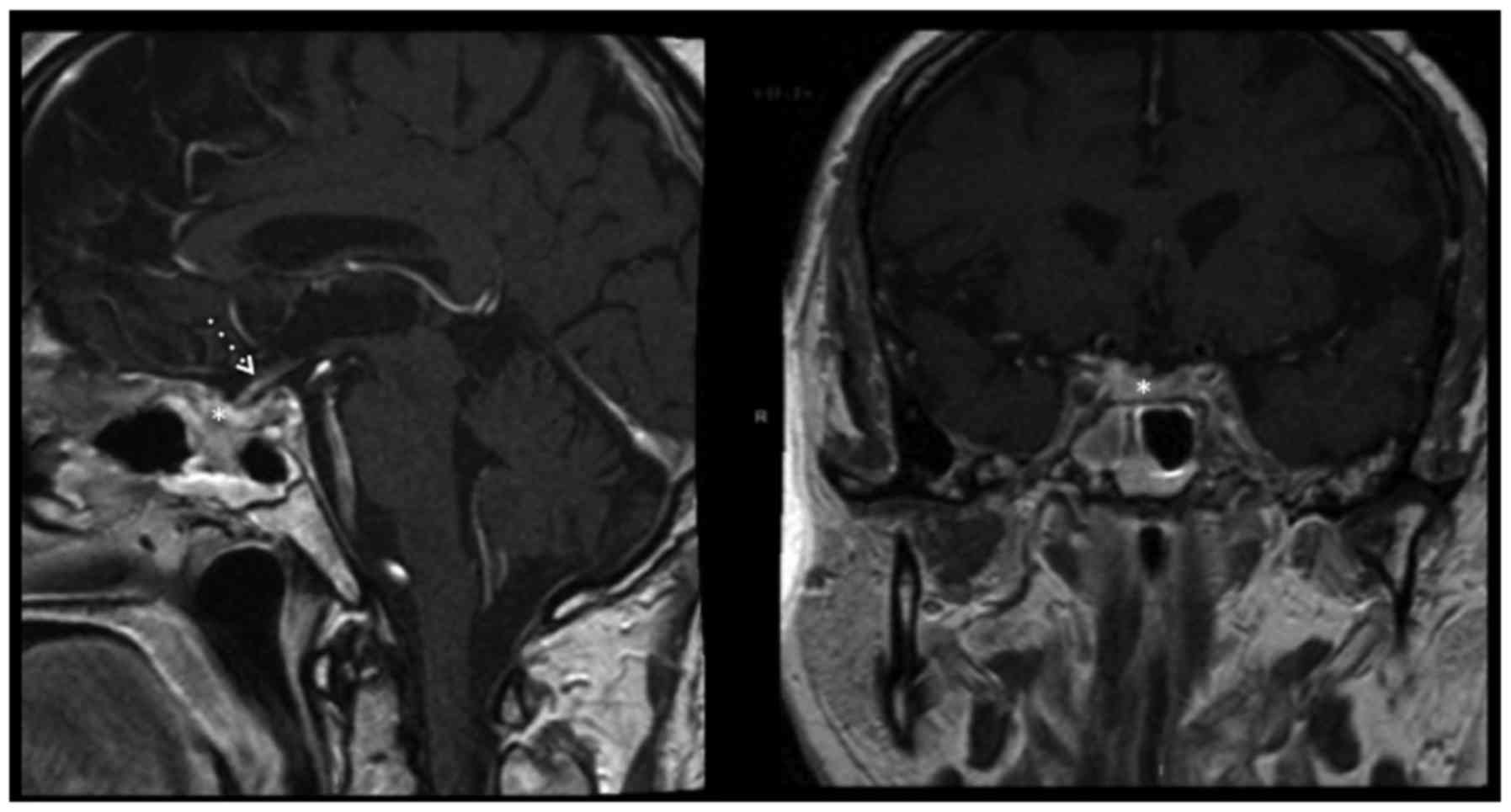
The patient underwent an uncomplicated endoscopic endonasal transsphenoidal resection of the tumour. Post-operatively the patient recovered well, with the right temporal quadrantanopia completely resolving. Endocrine function remained impaired, with a persistent anterior hypopituitarism but no diabetes insipidus. A post-operative MRI confirmed complete excision of the lesion (Fig. 3), and follow-up imaging at 15 months confirmed that the patient was still in remission.

Figure 3.

The postoperative cerebral magnetic resonance imaging with contrast confirms the complete resection of the lesion (sagittal view on the left panel and coronal view on the right panel). The lesion is no more present and the normal pituitary gland is visible (asterisk) in the sella. The pituitary stalk is well visualised in the sagittal plane (dotted arrow).

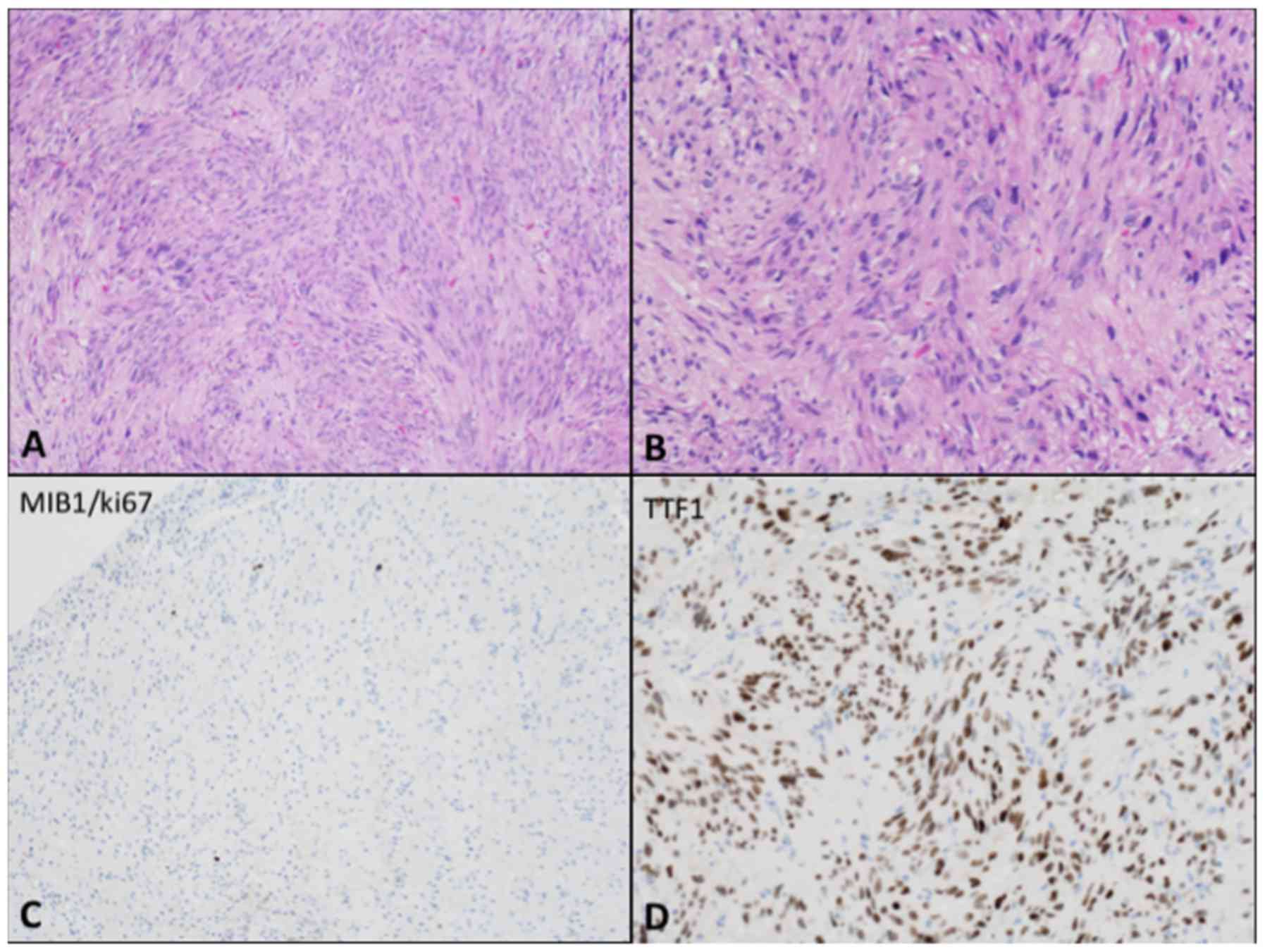
The diagnosis of a pituicytoma was confirmed by pathologic examination and immunohistochemistry performed on four-micron thick, formalin fixed and paraffin embedded sections, analysed with a Nikon Eclipse microscope and a Nikon DSFi1 camera (both from Nikon Corporation, Tokyo, Japan). Spindle-shaped cells with a fascicular growth pattern and heterogeneous nuclei were identified with hematoxylin and eosin stain (Fig. 4A and B). There was no evidence of atypical cellular features or mitotic figures and the detection of proliferation markers was performed on paraffin sections with anti-Ki67 (MIB-1; Immunotech; Beckman Coulter, Inc., Brea, CA, USA) with the cell count performed at high power (×400). Cellular proliferation resulted inferior to 1% (Fig. 4C). Immunohistochemical staining was performed through the Ventana platform and it revealed tumour cells positive for thyroid transcription factor-1 (TTF-1) (Fig. 4D), S-100, vimentin, B-cell lymphoma 2 (Bcl-2) and CD56. The cells were negative for synaptophysin, glial fibrillary acidic protein (GFAP), epithelial membrane antigen (EMA), signal transducer and activator of transcription (STAT)6, cluster of differentiation 34 (CD34), Melan-A, human melanoma black 45 (HMB45), (tumor) protein 63 (P63), calretinin and neurofilament (NF). The details for each antibody and for the methodology used to perform immunohistochemistry were reported in Table I. The entire sections on the stained slides were evaluated. Electron microscopy was not performed.

Figure 4.

A hematoxylin and eosin stain [initial magnification ×10 in (A) and ×20 in (B)] shows fascicules of spindle-shaped cells with an absence of cellular atypia and mitotic figures. The proliferative index marked with the MIB-1/Ki67 was <1% [initial magnification ×10 in (C)]. Immunohistochemical staining was performed with the Ventana platform and it revealed tumour cells positive for TTF-1 (Nitrogen antibody, ref 18-0221), which is specifically expressed in pituicyte lineage [initial magnification ×20 in (D)].

Table I.

Antibodies used to perform the immunohistochemistry with the Ventana platform.

Table I.

Antibodies used to perform the immunohistochemistry with the Ventana platform.

AntibodyCloneFabricantReferenceDilutionIncubation
Antibodies that stained positively
  TTF-18G7G3/1Invitrogen18–02211:3032 min 37°C
  S-100PolyclonalNovocastra Laboratories, Ltd.NCL-S100P1:40024 min 37°C
  VimentinVIM3B4Progen Biotechnik GmbH610131:3,20032 min 37°C
  Bcl-2Bcl2/100/D5Novocastra Laboratories, Ltd.NCL-Bcl-21:3092 min 37°C
  CD56/NCAMCD564Novocastra Laboratories, Ltd.NCL-L-CD56-5041:2560 min 37°C
Antibodies that did not stain tissue
  Synaptophysin27G12Novocastra Laboratories, Ltd.NCL-Synap-2991:10032 min 37°C
  GFAPG-A-5Sigma-AldrichG38931:1592 min 37°C
  EMAE29DAKOM06131:10032 min 37°C
  STAT-6 (S-20)PolyclonalSanta Cruz Biotechnology, Inc.SC-6211:40060 min 37°C
  CD34Qbend-10DAKOM71651:2532 min 37°C
  Melan-AA-103DAKOM71961:5032 min 37°C
  HMB45HMB45DAKOM06341:5032 min 37°C
  P63DAC-P63DAKOM73171:10032 min 37°C
  CalretininCAL2Dianova GmbHDIAL-CAL-2501:2032 min 37°C
  NF2F11DAKOM07621:1,00037°C

[i] Invitrogen; Thermo Fisher Scientific, Inc., Waltham, MA, USA; Novocastra Laboratories, Ltd., Newcastle, UK; Progen Biotechnik GmbH, Heidelberg, Germany; Sigma-Aldrich, St. Louis, MO, USA; DAKO; Agilent Technologies GmbH, Waldbronn, Germany; Santa Cruz Biotechnology, Inc., Dallas, TX, USA; Dianova GmbH, Hamburg, Germany. Bcl-2, B-cell lymphoma 2; CD34, cluster of differentiation 34; CD56/NCAM, cluster of differentiation 56/neural cell adhesion molecule; EMA, epithelial membrane antigen; GFAP, glial fibrillary acidic protein; HMB-45, human melanoma black 45; NF, neurofilament; P63, (tumor) protein 63; STAT-6 (S-20), signal transducer and activator of transcription 6; TTF-1, thyroid transcription factor-1.

Discussion

Pituicytomas are defined as indolent World Health Organization (WHO) grade 1 tumours involving the posterior lobe of the pituitary and/or the pituitary stalk. They are solid tumours, generally well circumscribed and composed of spindle cells derived from pituicytes (6,7).

Pituicytomas are slow growing and they may often go unnoticed until clinical signs and symptoms secondary to mass effect start to develop. These lesions are known to compress the pituitary gland and the optic system, thus provoking more frequently hypopituitarism and visual disturbance. We describe here the first reported case of pituitary apoplexy secondary to a pituicytoma. The primary goal of the management was to mitigate the consequences of apoplexy through urgent hormonal substitution and to monitor for visual deficits. Surgical management was decided upon following the development of a visual deficit.

Pituicytomas have similar radiological features to pituitary adenomas, thus distinguishing these diagnoses from one another based on radiological imaging remains challenging. They are often described as sellar lesions with frequent suprasellar extension and sellar enlargement (and/or bone remodelling). They generally present as isointense lesions on T1-weighted MRI and the posterior lobe of the pituitary gland is generally not identifiable, while they appear as hyperintense lesions on T2-weighted images (2,8). T1-weighted MRI sequences with gadolinium contrast enhancement may prove useful in diagnosis, as pituicytomas may appear brighter than classical adenomas due to their dense vascularisation (4). A recent paper reports the usefulness of flow voids at the MRI to differentiate pituicytomas from pituitary adenomas. Flow voids represent signal loss due to rapidly flowing blood, and thus indirectly equate to increased vascularity (9). Angiography may also be a useful tool, with a vascular blush typical of pituicytomas (2). Despite these differences, radiological distinction from other more common sellar lesions, such as pituitary adenomas and meningiomas, is not always easy.

Considering this, the diagnosis of a pituicytoma strongly relies on pathological analysis and immunohistochemical investigations, as pituicytomas demonstrate a characteristic immunohistochemical profile with a strong positive staining for S-100 and TTF-1, a focal positivity for GFAP, and an absence of staining for synaptophysin, p53 or pericellular reticulin (6,10,11).

The mainstay of treatment for symptomatic pituicytomas is surgery, with gross total resection considered curative. Unfortunately, due to the dense vascularity and the firm consistency of these tumours, the extent of resection is often limited. Precise surgical planning is necessary, with a focus on the extension of the tumour itself and its radiological characteristics. The development of endoscopic surgery has led to an endonasal approach being the preferred procedure.

Our case had a peculiar clinical presentation and we suggest that apoplexy was most likely due to the haemorrhagic transformation or to the intralesional ischemia secondary to the rupture or the occlusion of pathological vessels arising directly from the internal carotid artery or from its branches. We put forth the hypothesis that the incidence of pituicytoma apoplexy might actually be underestimated, as with pituitary apoplexy, surgery and tissue diagnosis is performed only in cases complicated by visual disturbance.

We assert that pathologists, endocrinologists and neurosurgeons should be mindful of pituicytoma as a possible differential diagnosis when dealing with pituitary apoplexy.

Recommendations and future directions

Over the last few years there has been substantial advancement regarding the definition and classification of pituicytomas (7). However, the histogenesis of these lesions remains controversial, and the natural history of progression of this disease is yet to be elucidated. Understanding the natural history of these tumours is difficult, because all of the cases described so far have been diagnosed retrospectively following surgical management and pathological confirmation.

Treatment is mainly empirical, and when gross total resection is possible, management is relatively straightforward. In cases where only subtotal resection is possible, the use of adjuvant therapies is highly debated, and there is no existing evidence to recommend specific management.

Further work to clarify the optimal management of patients with pituicytomas still needs to be undertaken, and we hope that future studies will help to standardise treatment strategies.

To conclude, pituicytomas are rare and indolent lesions. However, atypical presentations may be challenging and should not be underestimated. Due to the vascularised nature of these lesions, haemorrhagic or ischaemic events are potential serious consequences. We assert that a wider range of differential diagnoses should be considered when clinicians encounter pituitary apoplexy in the context of hypervascularised pituitary lesions not associated with abnormal hormonal secretion.

Acknowledgments

We would like to thank Mr. Michael Nohrenberg from the Medical University of Melbourne for his help with revising the English of the article.

Funding

No funding was received.

Availability of data and materials

All data generated or analyzed during this study are included in this published article.

Authors' contributions

GC, JD, RTD and MM contributed to the design and conception of the study. GC and JD proceeded with the acquisition of data, GC performed a literature review and JPB performed the pathological analysis and provided the necessary material. All the authors contributed substantially to the drafting of the manuscript and revised it critically for important intellectual content. They all gave final approval of the version to be published.

Ethics approval and consent to participate

Informed consent was obtained from the patient.

Consent for publicationv

The patient has consented to the submission of this case report for publication.

Competing interests

The authors declare that they have no competing interests.

References

1 

Scothorne CM: A glioma of the posterior lobe of the pituitary gland. J Pathol Bacteriol. 69:109–112. 1955. View Article : Google Scholar : PubMed/NCBI

2 

Wolfe SQ, Bruce J and Morcos JJ: Pituicytoma: Case report. Neurosurgery. 63:E173–E174; discussion E174. 2008. View Article : Google Scholar : PubMed/NCBI

3 

Yang X, Liu X, Li W and Chen D: Pituicytoma: A report of three cases and literature review. Oncol Lett. 12:3417–3422. 2016. View Article : Google Scholar : PubMed/NCBI

4 

Benveniste RJ, Purohit D and Byun H: Pituicytoma presenting with spontaneous hemorrhage. Pituitary. 9:53–58. 2006. View Article : Google Scholar : PubMed/NCBI

5 

Messerer M, De Battista JC, Raverot G, Kassis S, Dubourg J, Lapras V, Trouillas J, Perrin G and Jouanneau E: Evidence of improved surgical outcome following endoscopy for nonfunctioning pituitary adenoma removal. Neurosurg Focus. 30:E112011. View Article : Google Scholar : PubMed/NCBI

6 

Brat DJ, Scheithauer BW, Fuller GN and Tihan T: Newly codified glial neoplasms of the 2007 WHO classification of tumours of the central nervous system: Angiocentric glioma, pilomyxoid astrocytoma and pituicytoma. Brain Pathol. 17:319–324. 2007. View Article : Google Scholar : PubMed/NCBI

7 

Mete O and Lopes MB: Overview of the 2017 WHO classification of pituitary tumors. Endocr Pathol. 28:228–243. 2017. View Article : Google Scholar : PubMed/NCBI

8 

Hurley TR, D'Angelo CM, Clasen RA, Wilkinson SB and Passavoy RD: Magnetic resonance imaging and pathological analysis of a pituicytoma: Case report. Neurosurgery. 35:314–317; discussion 317. 1994. View Article : Google Scholar : PubMed/NCBI

9 

Law-Ye B, Cholet C and Leclercq D: First depiction of flow voids to differentiate pituicytomas from giant adenomas. World Neurosurg. 109:304–306. 2018. View Article : Google Scholar : PubMed/NCBI

10 

Figarella-Branger D, Dufour H, Fernandez C, Bouvier-Labit C, Grisoli F and Pellissier JF: Pituicytomas, a mis-diagnosed benign tumor of the neurohypophysis: Report of three cases. Acta Neuropathol. 104:313–319. 2002.PubMed/NCBI

11 

Ulm AJ, Yachnis AT, Brat DJ and Rhoton AL Jr: Pituicytoma: Report of two cases and clues regarding histogenesis. Neurosurgery. 54:753–757; discussion 757–758. 2004. View Article : Google Scholar : PubMed/NCBI

Related Articles

  • Abstract
  • View
  • Download
  • Twitter
Copy and paste a formatted citation
Spandidos Publications style
Cossu G, Dimitriou J, Brouland JP, Daniel RT and Messerer M: An exceptional presentation of pituicytoma apoplexy: A case report. Oncol Lett 16: 643-647, 2018.
APA
Cossu, G., Dimitriou, J., Brouland, J., Daniel, R.T., & Messerer, M. (2018). An exceptional presentation of pituicytoma apoplexy: A case report. Oncology Letters, 16, 643-647. https://doi.org/10.3892/ol.2018.8625
MLA
Cossu, G., Dimitriou, J., Brouland, J., Daniel, R. T., Messerer, M."An exceptional presentation of pituicytoma apoplexy: A case report". Oncology Letters 16.1 (2018): 643-647.
Chicago
Cossu, G., Dimitriou, J., Brouland, J., Daniel, R. T., Messerer, M."An exceptional presentation of pituicytoma apoplexy: A case report". Oncology Letters 16, no. 1 (2018): 643-647. https://doi.org/10.3892/ol.2018.8625
Copy and paste a formatted citation
x
Spandidos Publications style
Cossu G, Dimitriou J, Brouland JP, Daniel RT and Messerer M: An exceptional presentation of pituicytoma apoplexy: A case report. Oncol Lett 16: 643-647, 2018.
APA
Cossu, G., Dimitriou, J., Brouland, J., Daniel, R.T., & Messerer, M. (2018). An exceptional presentation of pituicytoma apoplexy: A case report. Oncology Letters, 16, 643-647. https://doi.org/10.3892/ol.2018.8625
MLA
Cossu, G., Dimitriou, J., Brouland, J., Daniel, R. T., Messerer, M."An exceptional presentation of pituicytoma apoplexy: A case report". Oncology Letters 16.1 (2018): 643-647.
Chicago
Cossu, G., Dimitriou, J., Brouland, J., Daniel, R. T., Messerer, M."An exceptional presentation of pituicytoma apoplexy: A case report". Oncology Letters 16, no. 1 (2018): 643-647. https://doi.org/10.3892/ol.2018.8625
Follow us
  • Twitter
  • LinkedIn
  • Facebook
About
  • Spandidos Publications
  • Careers
  • Cookie Policy
  • Privacy Policy
How can we help?
  • Help
  • Live Chat
  • Contact
  • Email to our Support Team