Introduction
There are two main subtypes of esophageal cancer:
Esophageal squamous cell carcinoma (ESCC, ac counting for between
60 and 70% of cases), which is more common in the developing world,
and esophageal adenocarcinoma (EAC, accounting for between 20 and
30% of cases), which is more common in the developed world
(1). Symptoms of esophageal cancer
include difficulty in swallowing (accompanied by pain), weight
loss, a hoarse voice, enlarged lymph nodes (glands) around the
collar bone, a dry cough, and possibly coughing up or vomiting
blood (2).
As of 2012, esophageal cancer is the eighth most
common cancer globally with 456,000 novel cases annually (3). It has become the sixth most common cause
of cancer-associated mortality owing to its poor prognosis, with
5-year survival rates of between 13 and 18% (4). The high mortality rate of patients with
esophageal cancer is a result of the difficulty of its detection in
its early stages (4). Therefore, it
has become a global public health issue and a burden on healthcare
systems. In order to address this issue, identification of more
comprehensive and accurate biomarker genes is required for early
diagnosis.
MicroRNAs (miRNAs/miRs) are small non-coding RNAs
containing ~22 nucleotides, which serve important functions in RNA
silencing and post-transcriptional regulation of gene expression
(5,6).
It has been identified that the expression level of miRNAs may be
used for determining prognosis. For instance, a previous study on
non-small cell lung cancer samples revealed that low miR-324a
levels may serve as a prognostic indicator of poor survival
(7). Either high miR-185 or low
miR-133b levels may be associated with metastasis and poor survival
in colorectal cancer (8). In
classical Hodgkin's lymphoma, plasma miR-21, miR-494 and miR-1973
are promising disease response biomarkers (9). miR-205 was identified previously as a
target for inhibiting metastasis of breast cancer (10). A total of five members of the miR-200
family (miR-200a, miR-200b, miR-200c, miR-141 and miR-429) are
downregulated in tumor progression of breast cancer (11).
Accordingly, the aim of the present study was to
identify miRNA markers that may serve as early diagnostic markers
for esophageal cancer. In the present study, differentially
expressed genes in esophageal cancer tissue compared with normal
esophageal tissue in common in the GSE6188, GSE13937 and GSE43732
microarrays were identified. Subsequently, the expression of these
genes was verified, and the target genes of these genes using the
TargetScan (12,13), miRDB (14,15) and
PITA (16) databases were identified
to potentially reveal more detailed and precise diagnostic markers
for esophageal cancer.
Materials and methods
GSE microarray data analysis
In total, three sets of gene expression profile data
of patients with esophageal cancer were downloaded from the Gene
Expression Omnibus (GEO) database (www.ncbi.nlm.nih.gov/geo): GSE6188 (257 samples),
GSE13937 (152 samples) and GSE43732 (238 samples), all representing
adenocarcinoma. The GSE43732 microarray database (Agilent-038166
cbc_human_miR18.0) contains 119 esophageal cancer tissue samples
and 119 para-carcinoma tissue samples. The GSE6188 microarray
database (Tsinghua University mammalian 2K miRNA microarray)
contains 153 esophageal cancer tissue samples and 104
para-carcinoma tissue samples. The GSE13937 microarray database
(Ohio State University Comprehensive Cancer Center Human and Mouse
MicroRNA Microarray version 3.0) contains 76 esophageal cancer
tissue samples and 76 para-carcinoma tissue samples. In addition,
GSE26886 consisted of samples from 19 healthy subjects, 20
specimens from patients with Barrett's esophagus, 30 cases of
esophageal adenocarcinoma and 9 cases of esophageal squamous cell
carcinoma. The comparison analysis was between 19 healthy subjects
and subjects with other tumors. On the basis of the three GSE
databases, following removal of the redundant and unannotated
sequences with a false discovery rate (FDR) <1%, upregulated and
downregulated miRNAs with fold-changes >2, respectively, were
identified.
Screening differentially expressed
genes and identifying their target genes
In order to identify the differentially expressed
miRNAs common to the microarrays used, Venny (version 2.0.2; Centro
Nacional de Biotechnología;
bioinfogp.cnb.csic.es/tools/venny/index.html) was employed.
Subsequently, TargetScan, miRDB and PITA online databases were used
to predict the target genes of these miRNAs, and identify the
target genes in common using Venny.
Protein interaction network
The Human Protein Reference Database (HPRD;
www.hprd.org) was used to build a human protein
interaction network, and observe the distribution of the target
genes of the differentially expressed miRNAs to identify the
molecular basis of esophageal carcinoma.
Statistical analysis
All statistical analyses were performed using SPSS
software (version 19.0; IBM Corp., Armonk, NY, USA). An independent
samples t-test was used to compare the difference between two
groups. P<0.05 was considered to indicate a statistically
significant difference.
Results
Differentially expressed genes in the
GSE6188 microarray
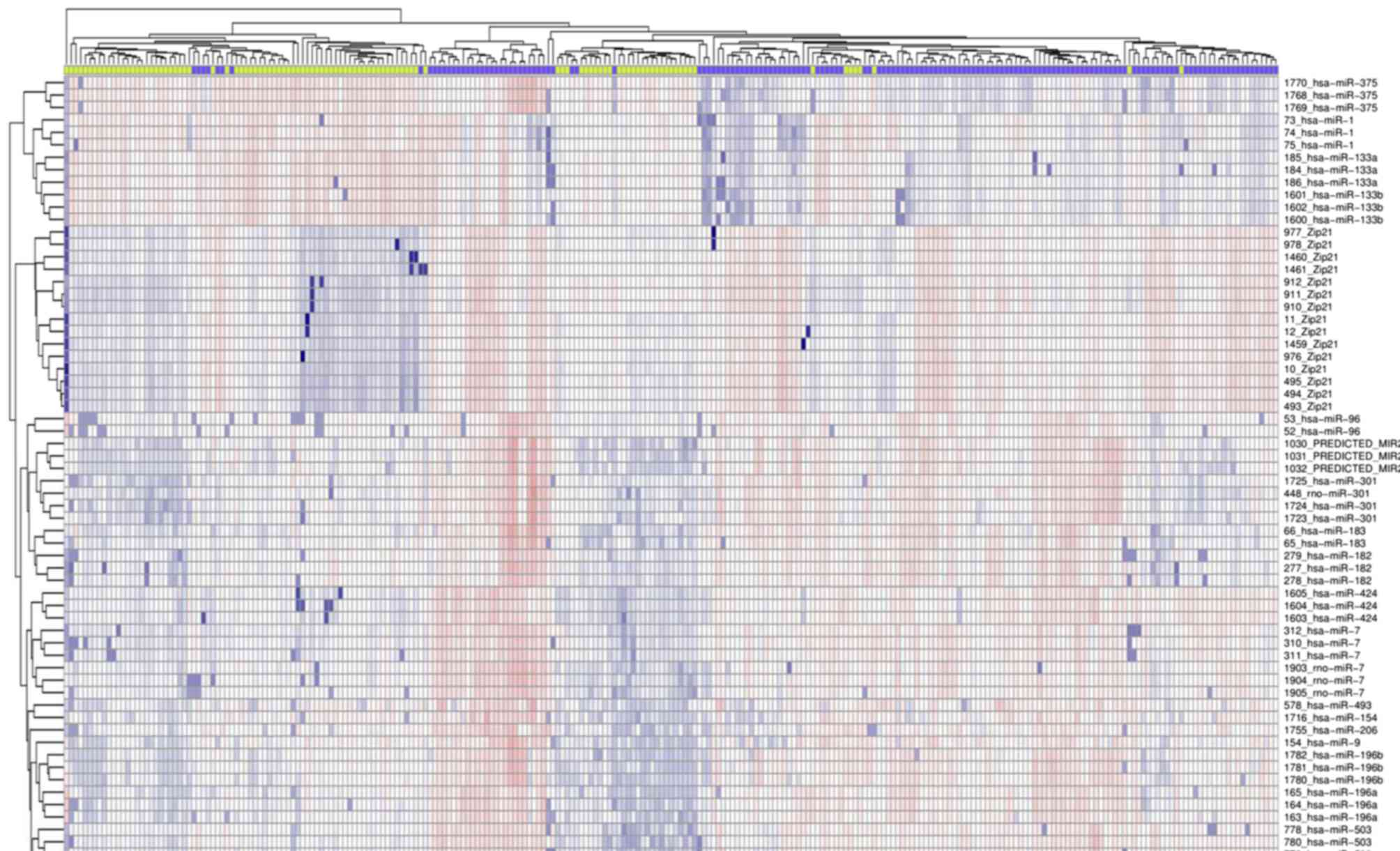
As presented in Fig.
1, 153 esophageal cancer tissues and 104 para-carcinoma tissues
were analyzed, following removal of the redundant and unannotated
sequences, with a FDR <1%. A total of 93 genes were identified
to be significantly upregulated (fold-change >2) and 10 genes
were identified to be significantly downregulated (fold-change
>2) in esophageal cancer tissues. The top 10 upregulated and
downregulated genes are presented in Table I.
 | Table I.Top 10 upregulated and downregulated
genes in esophageal cancer tissue based on the GSE6188
microarray. |
Table I.
Top 10 upregulated and downregulated
genes in esophageal cancer tissue based on the GSE6188
microarray.
| A, Upregulation |
|---|
|
|---|
| Name | Log
(fold-change) | P-value |
|---|
| has-miR-196a | 0.902872 |
1.39×10⁻²³ |
| hsa-miR-7 | 0.850074 |
5.74×10⁻²³ |
| hsa-miR-196b | 0.737501 |
2.92×10⁻¹⁸ |
| hsa-miR-424 | 0.732302 |
4.14×10⁻²³ |
| hsa-miR-503 | 0.663847 |
6.42×10⁻²⁵ |
| hsa-miR-301 | 0.65897 |
1.30×10⁻¹⁹ |
| rno-miR-7 | 0.65262 |
9.39×10⁻¹³ |
| hsa-miR-183 | 0.573863 |
1.79×10⁻¹⁹ |
| hsa-miR-493 | 0.558956 |
2.24×10⁻¹³ |
| hsa-miR-182 | 0.558531 |
6.70×10⁻¹¹ |
|
| B,
Downregulation |
|
| Name | Log
(fold-change) | P-value |
|
| hsa-miR-375 | −0.87446 |
2.51×10⁻²⁰ |
| hsa-miR-133b | −0.67629 |
5.74×10⁻¹⁶ |
| hsa-miR-133a | −0.62342 |
2.21×10⁻¹³ |
| hsa-miR-1 | −0.53102 |
1.05×10⁻⁸ |
| hsa-miR-203 | −0.37068 |
4.14×10⁻⁹ |
| hsa-miR-497 | −0.37053 |
1.44×10⁻⁹ |
| hsa-miR-150 | −0.35903 |
3.16×10⁻⁹ |
| rno-miR-140 | −0.32767 |
8.92×10⁻⁹ |
| hsa-miR-30a-3p | −0.32656 |
8.13×10⁻⁶ |
| hsa-miR-126 | −0.30137 | 0.000172 |
Differentially expressed genes in the
GSE13937 microarray
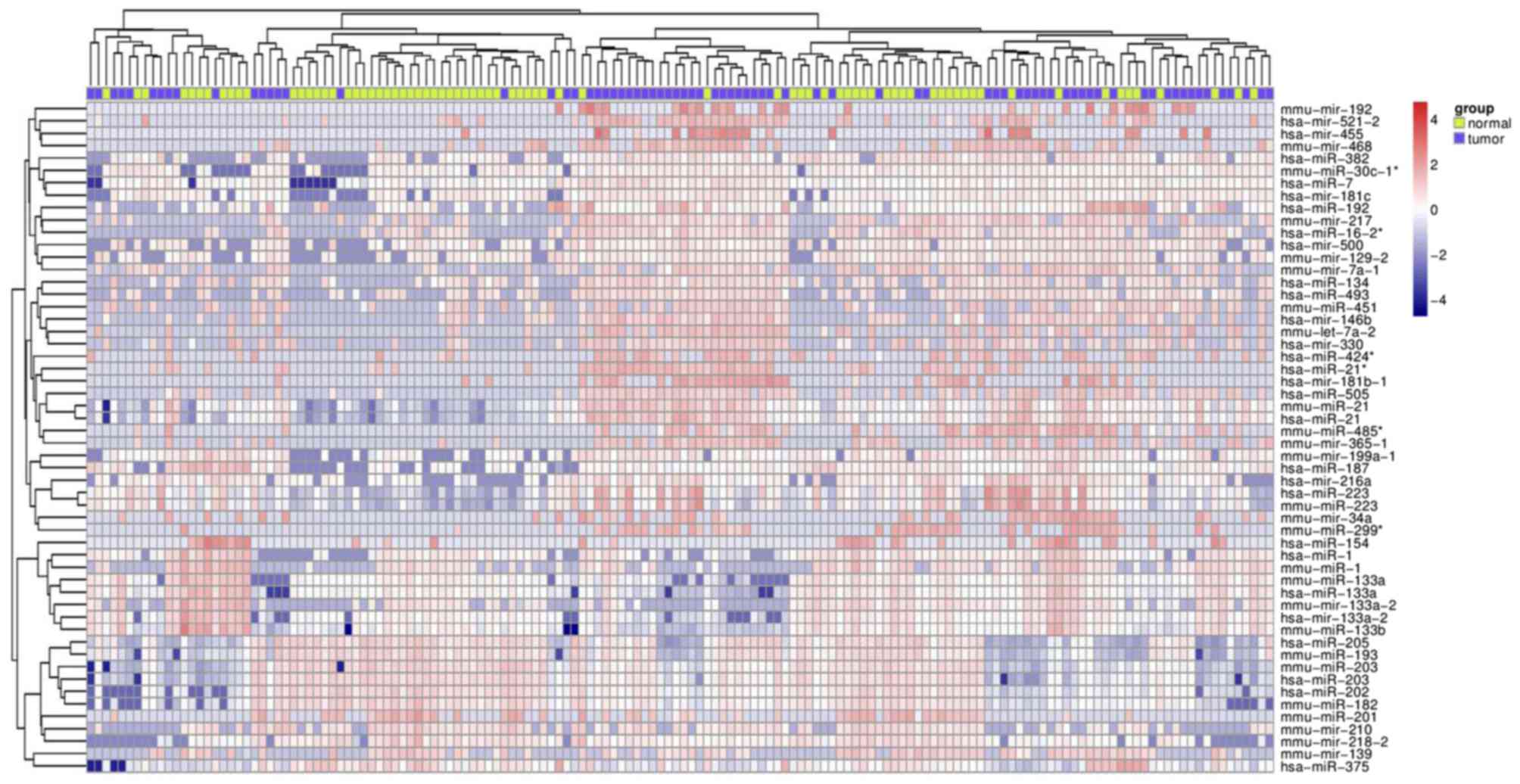
As presented in Fig.
2, carcinoma tissues and para-carcinoma tissues from 43
patients with ESCC and 32 patients with EAC were analyzed. In
total, 18 patients were identified as Barrett's esophagus which was
associated with early esophageal cancer and carcinoma of gastric
cardia. The differentially expressed miRNAs in esophageal cancer
tissue compared with para-carcinoma tissues based on the GSE13937
microarray were identified. Following removal of the redundant and
unannotated sequences with a FDR <1%, 68 genes were identified
to be significantly upregulated (fold-change >2) and 27 genes
were identified to be significantly downregulated (fold-change
>2) in esophageal cancer tissues. The top 10 upregulated and
downregulated genes are presented in Table II.
| Table II.Top 10 upregulated and downregulated
genes in carcinoma cancer tissues and para-carcinoma tissues from
43 patients with esophageal squamous cell carcinoma and 32 patients
with esophageal adenocarcinoma based on the GSE13937
microarray. |
Table II.
Top 10 upregulated and downregulated
genes in carcinoma cancer tissues and para-carcinoma tissues from
43 patients with esophageal squamous cell carcinoma and 32 patients
with esophageal adenocarcinoma based on the GSE13937
microarray.
| A,
Upregulation |
|---|
|
|---|
| Name | Log
(fold-change) | P-value |
|---|
| hsa-miR-192 | 1.981056158 | 0.003545 |
| mmu-miR-217 | 1.945886104 | 0.000282 |
| mmu-miR-199a-1 | 1.847687422 | 0.0004341 |
| hsa-miR-21* | 1.767488448 | 0.000499 |
| hsa-miR-505 | 1.746299252 | 0.0009254 |
| hsa-miR-146b | 1.745784019 | 0.0012439 |
| hsa-miR-134 | 1.681271144 | 0.0012697 |
| mmu-let-7a-2 | 1.681075105 | 0.0004522 |
| hsa-miR-330 | 1.674841191 | 0.0013867 |
| mmu-miR-485* | 1.63988565 | 0.0004462 |
|
| B,
Downregulation |
|
| Name | Log
(fold-change) | P-value |
|
| mmu-miR-133a | −2.353803547 |
4.89×10⁻⁶ |
| mmu-miRr-210 | −1.974898362 | 0.000672 |
| hsa-miR-202 | −1.954744284 | 0.000222 |
| mmu-miR-203 | −1.913562145 |
3.34×10⁻⁵ |
| hsa-miR-203 | −1.904073061 | 0.000361 |
|
mmu-miRr-133a-2 | −1.81216527 | 0.003324 |
| mmu-miR-1 | −1.786346799 | 0.004887 |
| mmu-miR-201 | −1.786342985 | 0.000771 |
| hsa-miR-133a | −1.737590142 |
1.87×10⁻⁵ |
| mmu-miR-182 | −1.724789689 | 0.00088 |
Differentially expressed genes in the
GSE43732 microarray
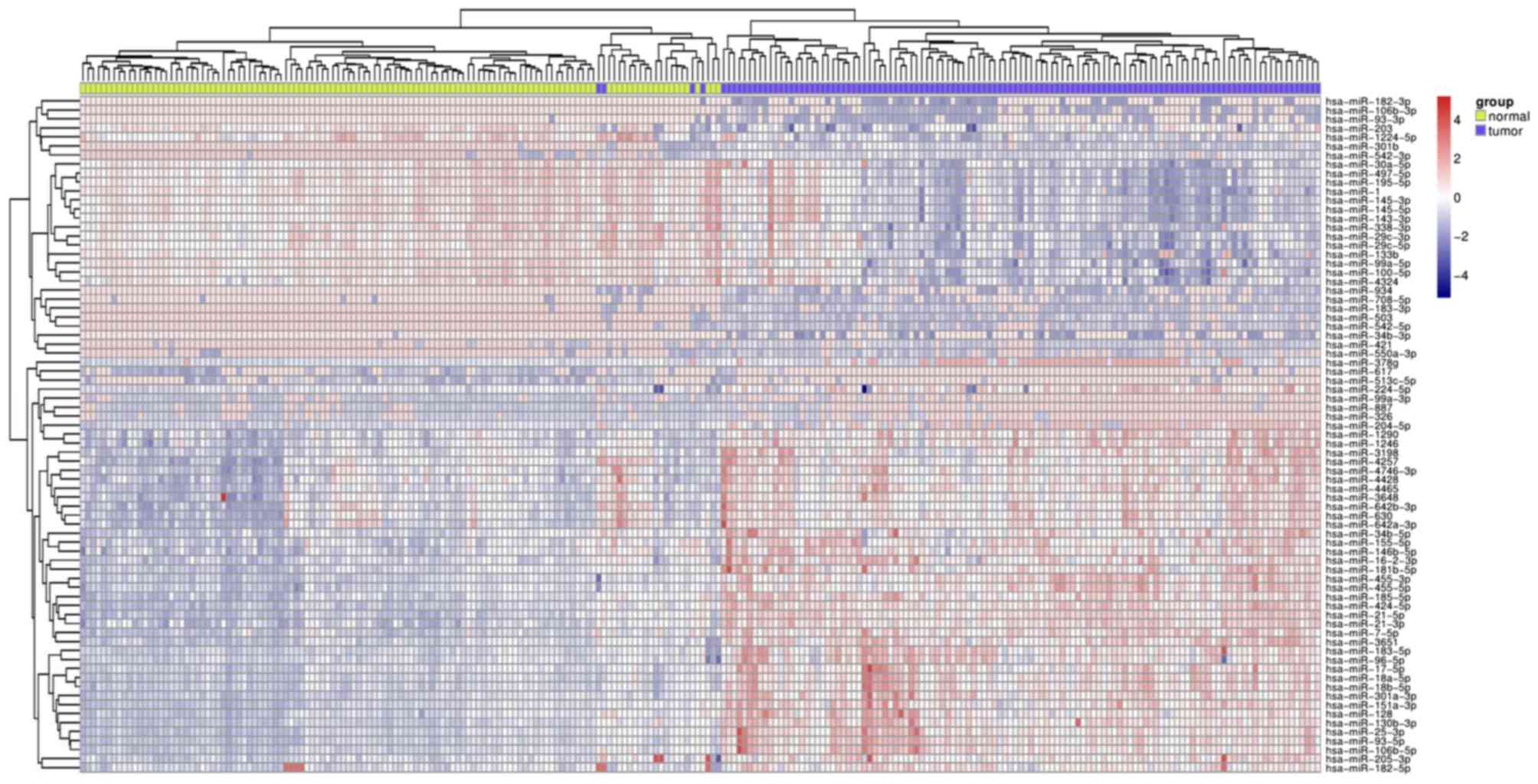
As presented in Fig.
3, 119 esophageal cancer tissues and para-carcinoma tissues
were analyzed, following removal of the redundant and unannotated
sequences, with a FDR <1%. In total, 101 genes were identified
to be significantly upregulated (fold-change >2) and 171 genes
were identified to be significantly downregulated (fold-change
>2) in esophageal cancer tissues. The top 10 upregulated and
downregulated genes are presented in Table III.
| Table III.Top 10 upregulated and downregulated
genes in esophageal cancer tissue based on the GSE43732
microarray. |
Table III.
Top 10 upregulated and downregulated
genes in esophageal cancer tissue based on the GSE43732
microarray.
| A,
Upregulation |
|---|
|
|---|
| Name | Log
(fold-change) | P-value |
|---|
| hsa-miR-99a-3p | 6.156811 |
2.03×10⁻³² |
| hsa-miR-887 | 5.294203 |
9.04×10⁻²⁴ |
| hsa-miR-326 | 4.72286 |
2.52×10⁻¹⁹ |
| hsa-miR-617 | 4.066399 |
1.46×10⁻²³ |
| hsa-miR-204–5p | 3.890677 |
7.13×10⁻²⁹ |
| hsa-miR-513b | 3.755658 |
2.41×10⁻¹⁴ |
|
hsa-miR-513c-5p | 3.733131 |
1.77×10⁻¹⁶ |
| hsa-miR-378g | 3.538512 |
3.53×10⁻¹⁹ |
| hsa-miR-4328 | 3.398278 |
1.32×10⁻¹⁴ |
| hsa-miR-153 | 3.274099 |
2.16×10⁻¹¹ |
|
| B,
Downregulation |
|
| Name | Log
(fold-change) | P-value |
|
| hsa-miR-183–3p | −6.257640561 |
2.29×10−50 |
| hsa-miR-503 | −6.212726325 |
1.57×10−66 |
| hsa-miR-301b | −5.48315171 |
6.86×10−41 |
| hsa-miR-542–5p | −5.077408003 |
3.18×10−40 |
| hsa-miR-708–5p | −5.027636018 |
1.66×10⁻²⁸ |
|
hsa-miR-106b-3p | −4.902767518 |
9.68×10⁻²⁸ |
| hsa-miR-421 | −4.447045181 |
4.75×10⁻²² |
| hsa-miR-93–3p | −4.170004463 |
4.55×10⁻¹⁸ |
| hsa-miR-542–3p | −4.164763727 |
1.94×10⁻²⁵ |
| hsa-miR-934 | −3.906983367 |
1.42×10⁻¹⁹ |
Differentially expressed genes in
common
In order to identify the differentially expressed
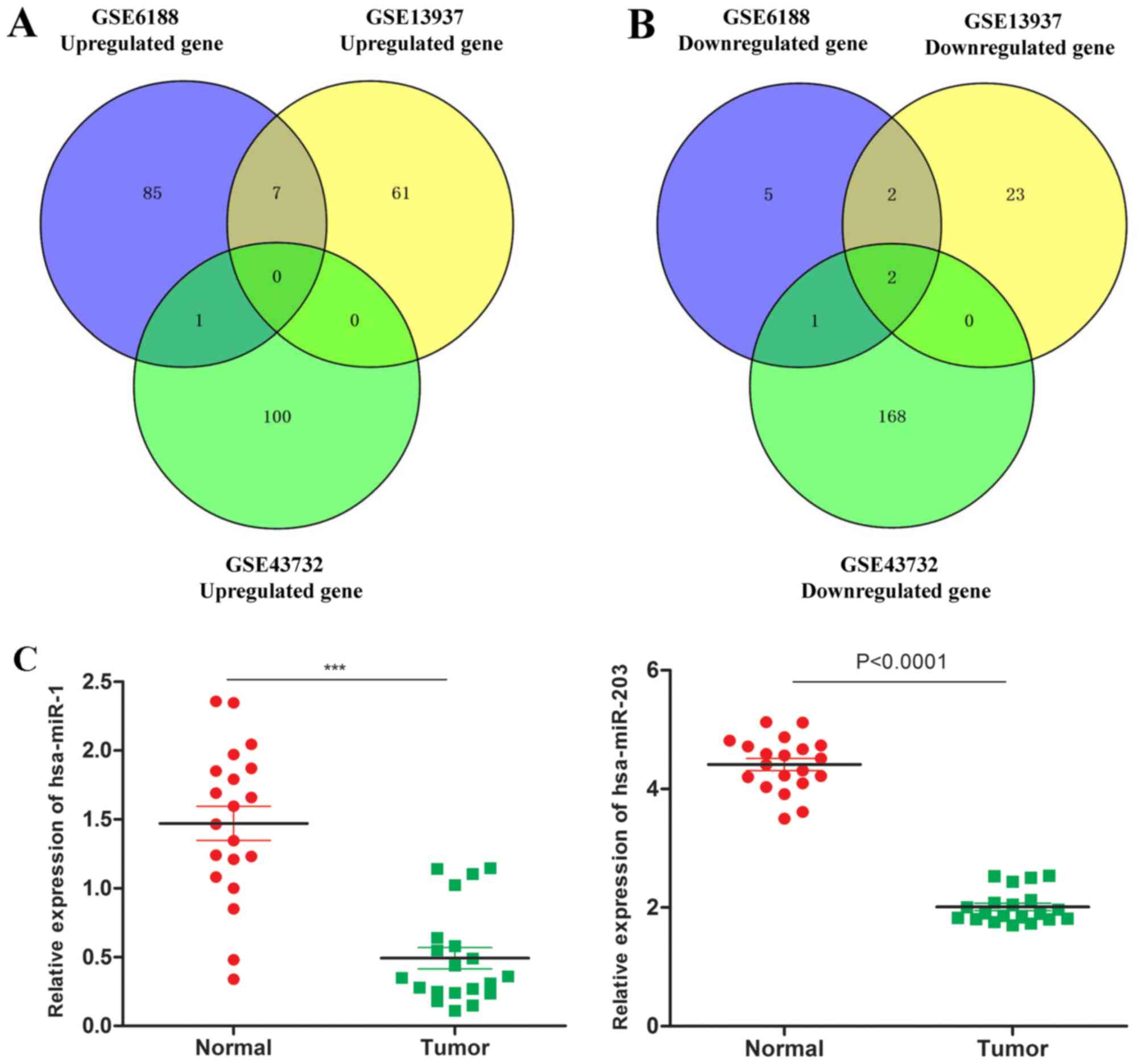
genes in common, Venny was used. There were no upregulated genes in
common among the three microarrays (Fig.
4A); however. there were two downregulated genes in common
among the three microarrays, i.e., hsa-miR-1 and hsa-miR-203
(Fig. 4B). Subsequently, the
expression of hsa-miR-1 and hsa-miR-203 in tumor tissue and normal
tissue of patients was investigated, and it was identified that the
expression of hsa-miR-1 and hsa-miR-203 in tumor tissue was
decreased compared with that in normal tissue (Fig. 4C).
Target genes of hsa-miR-1 and
hsa-miR-203
Following identification of the differentially
expressed genes in common, the target genes of these differentially
expressed genes was investigated. Venny was used to forecast the
target genes of hsa-miR-1 and hsa-miR-203 based on the TargetScan,
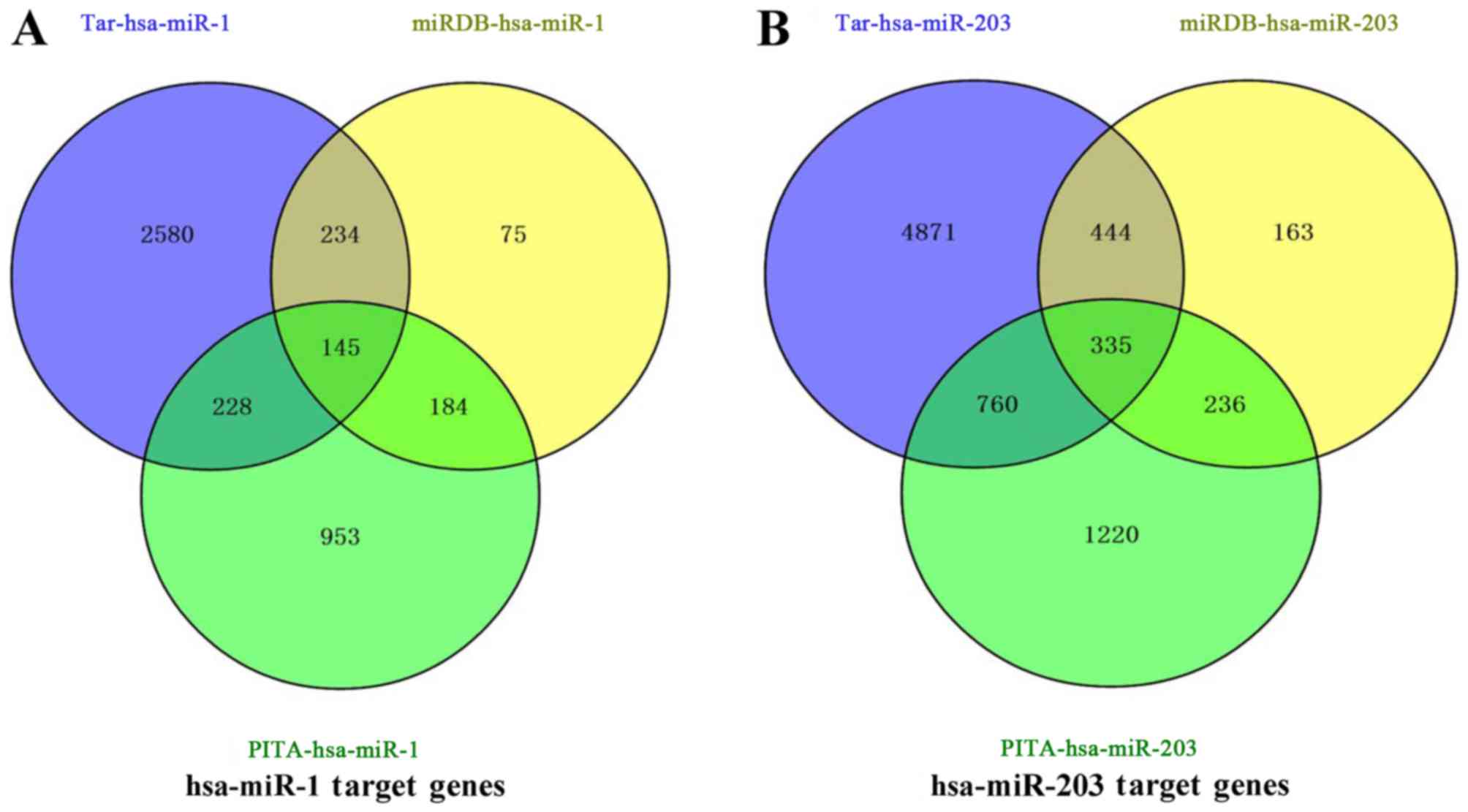
miRDB and PITA databases. As presented in Fig. 5A and B, respectively, 145
hsa-miR-1-targeted genes in common and 335 hsa-miR-203-targeted
genes in common were identified. In order to narrow the number of
these genes down further, protein-protein interaction networks were
used to select the proteins located in the center of the networks.
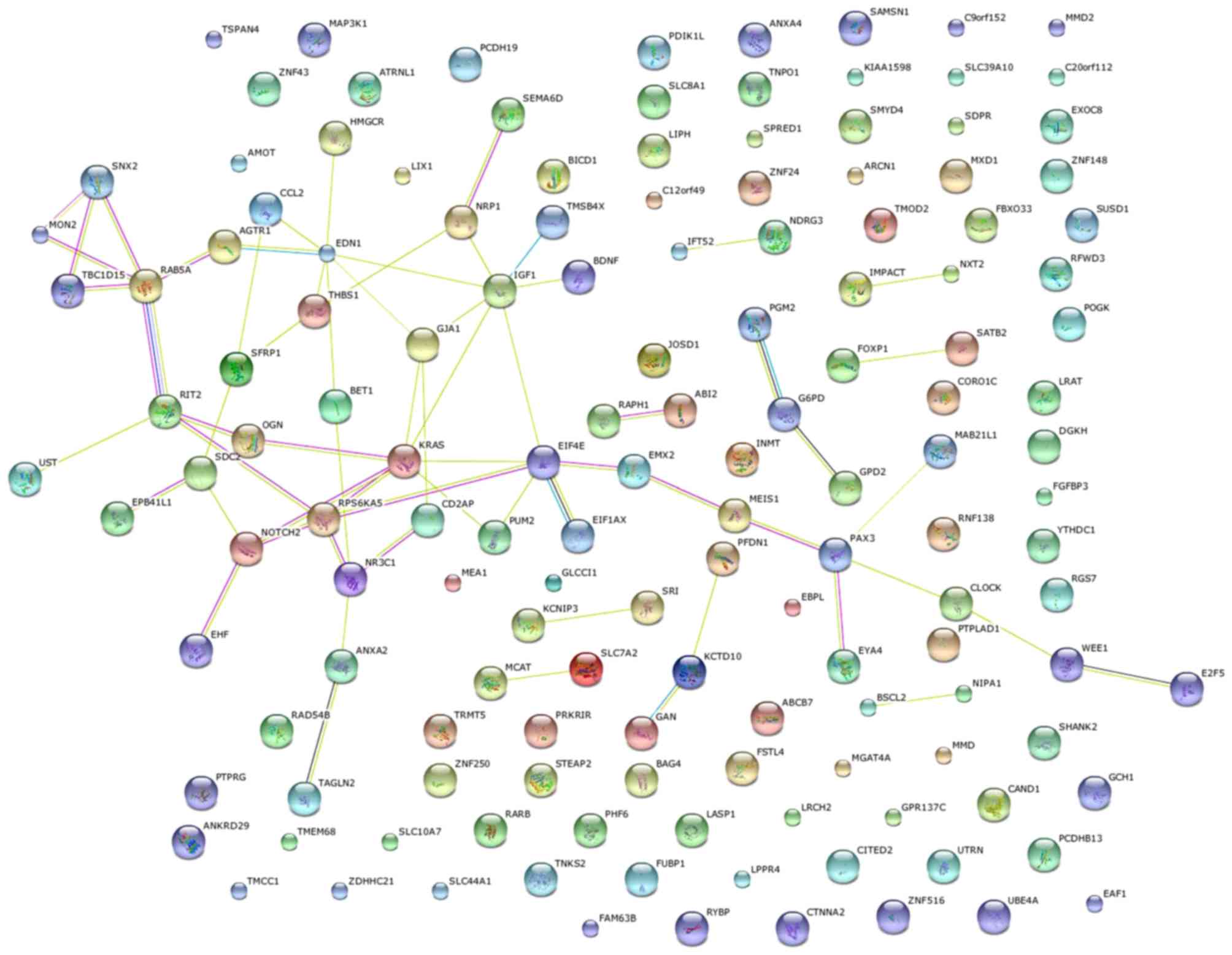
As presented in Fig. 6, proteins
encoded by certain of the 145 genes exhibited numerous interactions
and were located in the center of the protein-protein interaction
networks, including RAB5A, RIT2, NRP1, EDN1, IGF1, KRAS, EIF4E,
RPS6KA5, NOTCH2, NR3C1, PAX3, SFRP1, GJA1 and SNX2. Furthermore, as
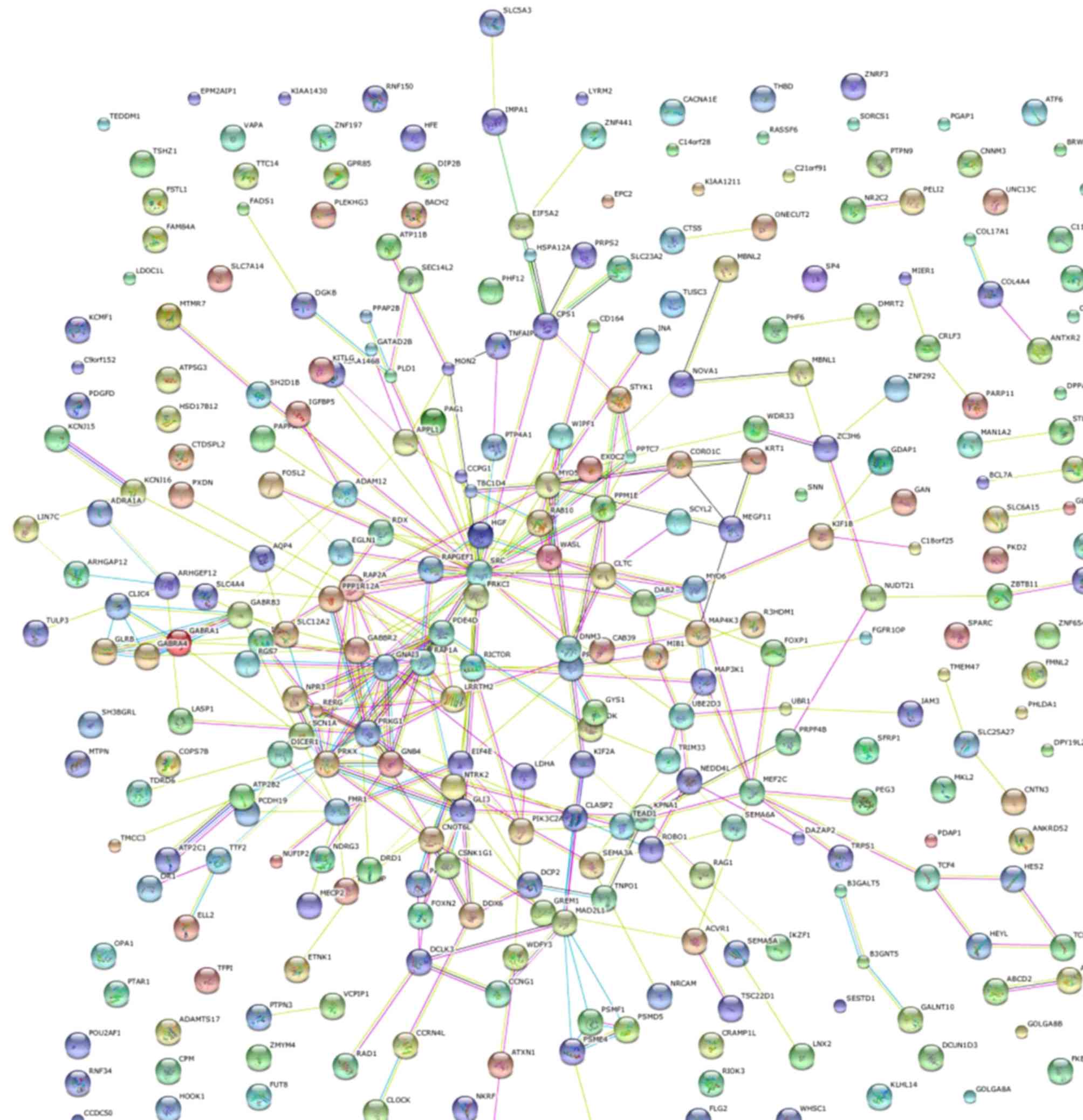
presented in Fig. 7, proteins encoded
by certain of the 335 genes, exhibited numerous interactions and
were located in the center of protein-protein interaction networks,
including CPS1, MYO5, SRC, PRKCI, CLTC, DNM3, ADK, NEDD4L, PSMF1,
GLI3, CNB4, PRKG1, MAD2L1, MYO6, CLASP2, GABBR2, PPP1R12A, SCN1A,
PRKX, FMR1, CNOT6L, GABRB3, RERG, NEDD4L, GREM1, DCLK3, STYK1, SRC,
GNA13, RERG, CLIC4, MEF2C and CORO1C. These genes are involved in
certain pathways, including the cell adhesion pathway associated
with tumor invasion, and were enriched in the interaction network
of target genes of miR-1 and miR-203.
Further identification of the target
genes of hsa-miR-1 and hsa-miR-203
Following identification of the target genes of
hsa-miR-1 and hsa-miR-203, the number of target genes was narrowed
down further, by comparing the target genes with GSE26886
microarray data. The GSE26886 microarray data displayed biomarkers
to stratify patients with Barrett's esophagus in terms of risk of
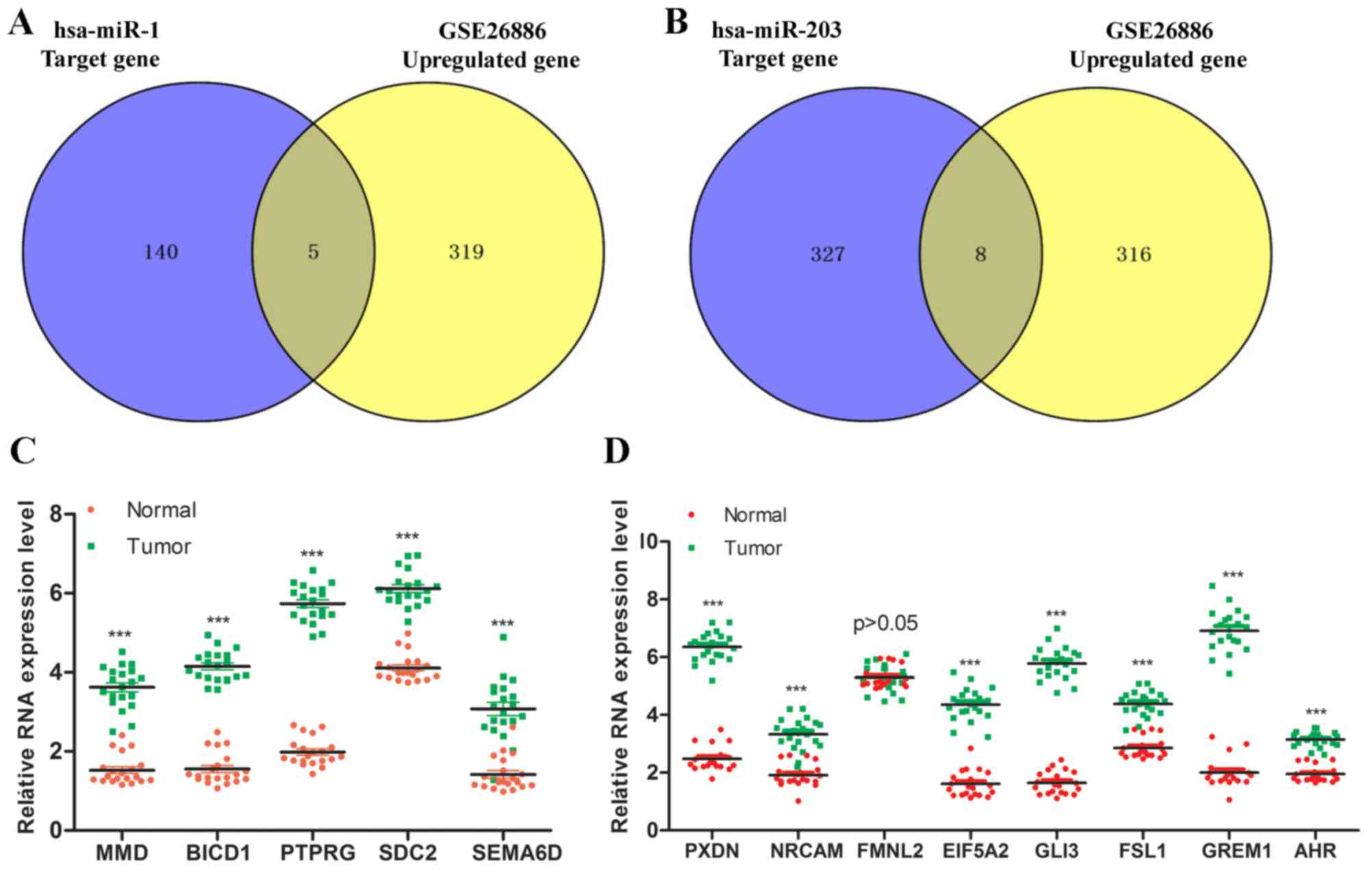
developing cancer. As presented in Fig.
8A and B, there were five upregulated genes of hsa-miR-1 in
common with GSE26886, including MMD, BICD1, PTPRG, SDC2 and SEMA6D,
and eight upregulated genes of hsa-miR-203 in common with GSE26886,
including PXDN, NRCAM, FMNL2, EIF5A2, GLI3, FSL1, GREM1 and AHR
(Table IV). Subsequently, the
expression of these genes was investigated in tumor tissue and
normal tissue, and it was identified that the expression of MMD,
BICD1, PTPRG, SDC2, SEMA6D, PXDN, NRCAM, EIF5A2, GLI3, FSL1, GREM1
and AHR in tumor tissue was significantly increased compared with
in normal tissue, and there was no statistical difference in the
expression of FMNL2 between tumor tissue and normal tissue
(Fig. 8C and D).
| Table IV.Upregulated genes in common between
GSE26886 and hsa-miR-1 or hsa-miR-203 target genes. |
Table IV.
Upregulated genes in common between
GSE26886 and hsa-miR-1 or hsa-miR-203 target genes.
| A, hsa-miR-1 |
|---|
|
|---|
| Name | Log
(fold-change) | P-value |
|---|
| MMD | 2.146108 |
1.89×10⁻⁹ |
| BICD1 | 2.080876 |
1.36×10⁻⁹ |
| PTPRG | 2.196638 |
2.14×10⁻⁸ |
| SDC2 | 2.185966 | 0.000237 |
| SEMA6D | 2.106877 | 0.00099 |
|
| B,
hsa-miR-203 |
|
| Name | Log
(fold-change) | P-value |
|
| PXDN | 3.478027 |
2.21×10⁻⁹ |
| NRCAM | 2.614851 |
5.24×10⁻⁵ |
| FMNL2 | 3.281746 |
1.08×10⁻¹² |
| EIF5A2 | 2.688539 |
9.59×10⁻⁹ |
| GLI3 | 2.026112 |
8.08×10⁻⁹ |
| FSTL1 | 2.283896 |
4.40×10⁻⁶ |
| GREM1 | 3.407262 |
5.67×10⁻⁶ |
| AHR | 2.723882 |
4.68×10⁻⁹ |
Discussion
Esophageal cancer is the eighth most frequently
diagnosed type of cancer globally (1), and it is the sixth most common cause of
cancer-associated mortality due to its poor prognosis (17). It led to ~400,000 mortalities in 2012,
accounting for ~5% of all mortality from cancer (1). In order to decrease the mortality rate,
an improvement in diagnostic accuracy and more precise diagnostic
markers are required.
miRNAs are able to decrease protein levels of their
target genes with only a minor impact on the mRNA of the target
genes (18). miRNAs that are
overexpressed in cancer may function as oncogenes, and miRNAs with
tumor suppressor activity in normal tissue may be downregulated in
cancer (19). Although major advances
have been achieved in our understanding of cancer biology, as well
as in the development of novel targeted therapies, progress in
developing improved early diagnosis and screening tests has been
inadequate. There is therefore an intense research effort in
seeking specific molecular changes that are able to identify
patients with early cancer or precursor lesions. miRNA expression
data in various types of cancer demonstrate that cancer cells have
different miRNA profiles compared with normal cells; these unique
properties of miRNAs make them useful potential agents for clinical
diagnostics as well as in personalized care for individual patients
in the future (20). In the present
study, two important miRNAs (hsa-miR-1 and hsa-miR-203) were
selected and their target genes which were differentially expressed
in esophageal cancer were identified. The expression profiling may
provide a useful lead for the diagnosis of esophageal cancer.
miRNAs are a class of regulatory RNAs that function
primarily by targeting specific mRNAs for degradation or inhibition
of translation and thus decrease the expression of the resulting
protein, and their function in tumor development would presumably
be through the regulation of their target protein genes (21,22). In
the present study, two downregulated miRNAs, hsa-miR-1 and
hsa-miR-203, based on GSE6188, GSE13937 and GSE43732 microarrays
were identified, whereas no upregulated miRNAs in common were
identified. Previous studies reported that hsa-miR-1 and
hsa-miR-203 were differentially expressed in cervical cancer
(23), colorectal cancer (24), hepatocellular carcinoma (25) and lung cancer (26).
hsa-miR-1 is a muscle-enriched miRNA that inhibits
the proliferation of progenitor cells and promotes myogenesis
(27,28). A number of key observations prompted
the investigation of the antitumorigenic function of miR-1 in other
tissues (29). For example, Nohata
et al (30) revealed miR-1 to
be a tumor suppressive miRNA targeting TAGLN2 in head and neck
squamous cell carcinoma, and also demonstrated that the tumor
suppressor miR-1 targets the oncogenic function of purine
nucleoside phosphorylase in prostate cancer.
hsa-miR-203 has been identified as a skin-specific
miRNA. It has also been identified to be differentially expressed
in hepatocellular carcinoma (31) and
leukemia (32). Furuta et al
(31) proposed miR-203 as a
tumor-suppressive miRNA in hepatocellular carcinoma (HCC) and
hematopoietic malignancies. Bueno et al (32) also demonstrated silencing of miR-203
in certain types of leukemia. Supporting its function as a tumor
suppressor, it has also been identified to be upregulated upon
ultraviolet C irradiation in squamous cell carcinoma lines,
suggesting an association between miR-203 and the activation of the
apoptotic program (33).
The aforementioned studies demonstrated that
hsa-miR-1 and hsa-miR-203 are able to function as tumor suppressive
genes. Zang et al (34)
demonstrated that hsa-miR-1 and hsa-miR-203 were downregulated in
esophageal cancer, but the underlying molecular mechanism was not
investigated. However, in the present study, it was demonstrated
that hsa-miR-1 and hsa-miR-203 are downregulated in esophageal
cancer, and the target genes of hsa-miR-1 and hsa-miR-203 were also
identified. There were five upregulated genes of hsa-miR-1 in
common with GSE26886, including MMD, BICD1, PTPRG, SDC2 and SEMA6D,
and there were eight upregulated genes of hsa-miR-203 in common
with GSE26886 including PXDN, NRCAM, FMNL2, EIF5A2, GLI3, FSL1,
GREM1 and AHR.
The currently available methods for the diagnosis of
cancer lack sufficient sensitivity and specificity to facilitate
the detection of cancer in its early stages. In the case of
esophageal cancer, the diagnostic tests available are invasive and
uncomfortable for the patient, as well as expensive. The results of
the present study demonstrated that a number of aspects of miRNAs
including their intricate nature of interaction with multiple
targets and multiple pathways make them useful potential agents for
clinical diagnostics. However, there are limitations to the study.
For instance, the databases used currently may not precisely
forecast miRNAs, and meta-analysis with more datasets of gene
expression analysis may be more reliable; however, meta-analysis
requires a large number of clinical data, which are lacking. In
future studies, meta-analysis should be used, if possible, to make
an accurate prediction. Patient survival analysis is difficult to
perform to validate the differentially expressed miRNAs and genes,
as this requires monitoring patients with esophageal cancer
following leaving the hospital.
Acknowledgements
Not applicable.
Funding
The present study was supported by the Shanghai
Municipal Commission of Health and Family Planning (grant no.
ZY-CCC-3-3045).
Availability of data and materials
The datasets generated and/or analyzed during the
current study are available from the corresponding author on
reasonable request.
Authors' contributions
XC and XY designed this study, MZ performed the
bioinformatics analysis, CJ and LG perfomed the RT-PCR, LL, QC and
XY made substantial contributions to acquisition of data, or
analysis and interpretation of data, XC, YG and YD performed
experiments and collected data. All authors have read and approved
the manuscript.
Ethics approval and consent to
participate
Not applicable.
Consent for publication
Not applicable.
Competing interests
The authors declare that they have no competing
interests.
References
|
1
|
International Agency for Research on
Cancer (IARC): World Cancer Report 2014. Stewart BW and Wild CP:
IARC; Lyon: 2014, http://publications.iarc.fr/Non-Series-Publications/World-Cancer-Reports/World-Cancer-Report-2014
View Article : Google Scholar
|
|
2
|
Ferri F: Ferri's Clinical Advisor 2014: 5
Books in 1. 1st edition. Mosby Elsevier; Philadelphia, PA: 2014
|
|
3
|
Lozano R, Naghavi M, Foreman K, Lim S,
Shibuya K, Aboyans V, Abraham J, Adair T, Aggarwal R, Ahn SY, et
al: Global and regional mortality from 235 causes of death for 20
age groups in 1990 and 2010: A systematic analysis for the global
burden of disease study 2010. Lancet. 380:2095–2128. 2012.
View Article : Google Scholar : PubMed/NCBI
|
|
4
|
Enzinger PC and Mayer RJ: Esophageal
cancer. N Engl J Med. 349:2241–2252. 2003. View Article : Google Scholar : PubMed/NCBI
|
|
5
|
Ambros V: The functions of animal
microRNAs. Nature. 431:350–355. 2004. View Article : Google Scholar : PubMed/NCBI
|
|
6
|
Bartel DP: MicroRNAs: Genomics,
biogenesis, mechanism, and function. Cell. 116:281–297. 2004.
View Article : Google Scholar : PubMed/NCBI
|
|
7
|
Võsa U, Vooder T, Kolde R, Fischer K, Välk
K, Tõnisson N, Roosipuu R, Vilo J, Metspalu A and Annilo T:
Identification of miR-374a as a prognostic marker for survival in
patients with early-stage nonsmall cell lung cancer. Genes
Chromosomes Cancer. 50:812–822. 2011. View Article : Google Scholar : PubMed/NCBI
|
|
8
|
Akçakaya P, Ekelund S, Kolosenko I,
Caramuta S, Ozata DM, Xie H, Lindforss U, Olivecrona H and Lui WO:
miR-185 and miR-133b deregulation is associated with overall
survival and metastasis in colorectal cancer. Int J Oncol.
39:311–318. 2011.PubMed/NCBI
|
|
9
|
Jones K, Nourse JP, Keane C, Bhatnagar A
and Gandhi MK: Plasma microrna are disease response biomarkers in
classical hodgkin lymphoma. Clin Cancer Res. 20:253–264. 2014.
View Article : Google Scholar : PubMed/NCBI
|
|
10
|
Wu H and Mo YY: Targeting miR-205 in
breast cancer. Expert Opin Ther Targets. 13:1439–1448. 2009.
View Article : Google Scholar : PubMed/NCBI
|
|
11
|
Gregory PA, Bert AG, Paterson EL, Barry
SC, Tsykin A, Farshid G, Vadas MA, Khew-Goodall Y and Goodall GJ:
The miR-200 family and miR-205 regulate epithelial to mesenchymal
transition by targeting ZEB1 and SIP1. Nat Cell Biol. 10:593–601.
2008. View
Article : Google Scholar : PubMed/NCBI
|
|
12
|
Hsu SD, Chu CH, Tsou AP, Chen SJ, Chen HC,
Hsu PW, Wong YH, Chen YH, Chen GH and Huang HD: miRNAMap 2.0:
Genomic maps of microRNAs in metazoan genomes. Nucleic Acids Res.
36:D165–D169. 2008. View Article : Google Scholar : PubMed/NCBI
|
|
13
|
Friedman RC, Farh KK, Burge CB and Bartel
DP: Most mammalian mRNAs are conserved targets of microRNAs. Genome
Res. 19:92–105. 2009. View Article : Google Scholar : PubMed/NCBI
|
|
14
|
Kozomara A and Griffiths-Jones S: miRBase:
Integrating microRNA annotation and deep-sequencing data. Nucleic
Acids Res. 39:D152–D157. 2011. View Article : Google Scholar : PubMed/NCBI
|
|
15
|
Griffiths-Jones S, Saini HK, van Dongen S
and Enright AJ: miRBase: Tools for microRNA genomics. Nucleic Acids
Res. 36:D154–D158. 2008. View Article : Google Scholar : PubMed/NCBI
|
|
16
|
Kertesz M, Iovino N, Unnerstall U, Gaul U
and Segal E: The role of site accessibility in microRNA target
recognition. Nat Genet. 39:1278–1284. 2007. View Article : Google Scholar : PubMed/NCBI
|
|
17
|
Zhang Y: Epidemiology of esophageal
cancer. World J Gastroenterol. 19:5598–5606. 2013. View Article : Google Scholar : PubMed/NCBI
|
|
18
|
Guo H, Ingolia NT, Weissman JS and Bartel
DP: Mammalian microRNAs predominantly act to decrease target mRNA
levels. Nature. 466:835–840. 2010. View Article : Google Scholar : PubMed/NCBI
|
|
19
|
Paranjape T, Slack FJ and Weidhaas JB:
MicroRNAs: Tools for cancer diagnostics. Gut. 58:1546–1554. 2009.
View Article : Google Scholar : PubMed/NCBI
|
|
20
|
Gulyaeva LF and Kushlinskiy NE: Regulatory
mechanisms of microRNA expression. J Transl Med. 14:1432016.
View Article : Google Scholar : PubMed/NCBI
|
|
21
|
Bian Z, Li LM, Tang R, Hou DX, Chen X,
Zhang CY and Zen K: Identification of mouse liver
mitochondria-associated miRNAs and their potential biological
functions. Cell Res. 20:1076–1078. 2010. View Article : Google Scholar : PubMed/NCBI
|
|
22
|
Li P, Jiao J, Gao G and Prabhakar BS:
Control of mitochondrial activity by miRNAs. J Cell Biochem.
113:1104–1110. 2012. View Article : Google Scholar : PubMed/NCBI
|
|
23
|
Reshmi G and Pillai MR: Beyond HPV:
Oncomirs as new players in cervical cancer. FEBS Lett.
582:4113–4116. 2008. View Article : Google Scholar : PubMed/NCBI
|
|
24
|
Corté H, Manceau G, Blons H and
Laurent-Puig P: MicroRNA and colorectal cancer. Dig Liver Dis.
44:195–200. 2012. View Article : Google Scholar : PubMed/NCBI
|
|
25
|
Anwar SL, Albat C, Krech T, Hasemeier B,
Schipper E, Schweitzer N, Vogel A, Kreipe H and Lehmann U:
Concordant hypermethylation of intergenic microRNA genes in human
hepatocellular carcinoma as new diagnostic and prognostic marker.
Int J Cancer. 133:660–670. 2013. View Article : Google Scholar : PubMed/NCBI
|
|
26
|
Nasser MW, Datta J, Nuovo G, Kutay H,
Motiwala T, Majumder S, Wang B, Suster S, Jacob ST and Ghoshal K:
Down-regulation of micro-rna-1 (mir-1) in lung cancer: Suppression
of tumorigenic property of lung cancer cells and their
sensitization to doxorubicin-induced apoptosis by mir-1. J Biol
Chem. 283:33394–33405. 2008. View Article : Google Scholar : PubMed/NCBI
|
|
27
|
Sokol NS and Ambros V: Mesodermally
expressed Drosophila microRNA-1 is regulated by Twist and is
required in muscles during larval growth. Genes Dev. 19:2343–2354.
2005. View Article : Google Scholar : PubMed/NCBI
|
|
28
|
Zhao Y, Samal E and Srivastava D: Serum
response factor regulates a muscle-specific microRNA that targets
hand2 during cardiogenesis. Nature. 436:214–220. 2005. View Article : Google Scholar : PubMed/NCBI
|
|
29
|
Mishima T, Mizuguchi Y, Kawahigashi Y and
Takizawa T and Takizawa T: RT-PCR-based analysis of microRNA (miR-1
and −124) expression in mouse CNS. Brain Res. 1131:37–43. 2007.
View Article : Google Scholar : PubMed/NCBI
|
|
30
|
Nohata N, Sone Y, Hanazawa T, Fuse M,
Kikkawa N, Yoshino H, Chiyomaru T, Kawakami K, Enokida H, Nakagawa
M, et al: miR-1 as a tumor suppressive microRNA targeting TAGLN2 in
head and neck squamous cell carcinoma. Oncotarget. 2:29–42. 2011.
View Article : Google Scholar : PubMed/NCBI
|
|
31
|
Furuta M, Kozaki KI, Tanaka S, Arii S,
Imoto I and Inazawa J: miR-124 and miR-203 are epigenetically
silenced tumor-suppressive microRNAs in hepatocellular carcinoma.
Carcinogenesis. 31:766–776. 2010. View Article : Google Scholar : PubMed/NCBI
|
|
32
|
Bueno MJ, de Castro Pérez I, de Cedrón
Gómez M, Santos J, Calin GA, Cigudosa JC, Croce CM,
Fernández-Piqueras J and Malumbres M: Genetic and epigenetic
silencing of microRNA-203 enhances ABL1 and BCR-ABL1 oncogene
expression. Cancer Cell. 13:496–506. 2008. View Article : Google Scholar : PubMed/NCBI
|
|
33
|
Lena AM, Shalom-Feuerstein R, di Val Cervo
Rivetti P, Aberdam D, Knight RA, Melino G and Candi E: miR-203
represses' stemness' by repressing Np63. Cell death differ.
15:11872008. View Article : Google Scholar : PubMed/NCBI
|
|
34
|
Zang W, Wang Y, Du Y, Xuan X, Wang T, Li
M, Ma Y, Li P, Chen X, Dong Z and Zhao G: Differential expression
profiling of microRNAs and their potential involvement in
esophageal squamous cell carcinoma. Tumor Biol. 35:3295–32304.
2014. View Article : Google Scholar
|