Spandidos Publications Logo
  • About
    • About Spandidos
    • Aims and Scopes
    • Abstracting and Indexing
    • Editorial Policies
    • Reprints and Permissions
    • Job Opportunities
    • Terms and Conditions
    • Contact
  • Journals
    • All Journals
    • Oncology Letters
      • Oncology Letters
      • Information for Authors
      • Editorial Policies
      • Editorial Board
      • Aims and Scope
      • Abstracting and Indexing
      • Bibliographic Information
      • Archive
    • International Journal of Oncology
      • International Journal of Oncology
      • Information for Authors
      • Editorial Policies
      • Editorial Board
      • Aims and Scope
      • Abstracting and Indexing
      • Bibliographic Information
      • Archive
    • Molecular and Clinical Oncology
      • Molecular and Clinical Oncology
      • Information for Authors
      • Editorial Policies
      • Editorial Board
      • Aims and Scope
      • Abstracting and Indexing
      • Bibliographic Information
      • Archive
    • Experimental and Therapeutic Medicine
      • Experimental and Therapeutic Medicine
      • Information for Authors
      • Editorial Policies
      • Editorial Board
      • Aims and Scope
      • Abstracting and Indexing
      • Bibliographic Information
      • Archive
    • International Journal of Molecular Medicine
      • International Journal of Molecular Medicine
      • Information for Authors
      • Editorial Policies
      • Editorial Board
      • Aims and Scope
      • Abstracting and Indexing
      • Bibliographic Information
      • Archive
    • Biomedical Reports
      • Biomedical Reports
      • Information for Authors
      • Editorial Policies
      • Editorial Board
      • Aims and Scope
      • Abstracting and Indexing
      • Bibliographic Information
      • Archive
    • Oncology Reports
      • Oncology Reports
      • Information for Authors
      • Editorial Policies
      • Editorial Board
      • Aims and Scope
      • Abstracting and Indexing
      • Bibliographic Information
      • Archive
    • Molecular Medicine Reports
      • Molecular Medicine Reports
      • Information for Authors
      • Editorial Policies
      • Editorial Board
      • Aims and Scope
      • Abstracting and Indexing
      • Bibliographic Information
      • Archive
    • World Academy of Sciences Journal
      • World Academy of Sciences Journal
      • Information for Authors
      • Editorial Policies
      • Editorial Board
      • Aims and Scope
      • Abstracting and Indexing
      • Bibliographic Information
      • Archive
    • International Journal of Functional Nutrition
      • International Journal of Functional Nutrition
      • Information for Authors
      • Editorial Policies
      • Editorial Board
      • Aims and Scope
      • Abstracting and Indexing
      • Bibliographic Information
      • Archive
    • International Journal of Epigenetics
      • International Journal of Epigenetics
      • Information for Authors
      • Editorial Policies
      • Editorial Board
      • Aims and Scope
      • Abstracting and Indexing
      • Bibliographic Information
      • Archive
    • Medicine International
      • Medicine International
      • Information for Authors
      • Editorial Policies
      • Editorial Board
      • Aims and Scope
      • Abstracting and Indexing
      • Bibliographic Information
      • Archive
  • Articles
  • Information
    • Information for Authors
    • Information for Reviewers
    • Information for Librarians
    • Information for Advertisers
    • Conferences
  • Language Editing
Spandidos Publications Logo
  • About
    • About Spandidos
    • Aims and Scopes
    • Abstracting and Indexing
    • Editorial Policies
    • Reprints and Permissions
    • Job Opportunities
    • Terms and Conditions
    • Contact
  • Journals
    • All Journals
    • Biomedical Reports
      • Information for Authors
      • Editorial Policies
      • Editorial Board
      • Aims and Scope
      • Abstracting and Indexing
      • Bibliographic Information
      • Archive
    • Experimental and Therapeutic Medicine
      • Information for Authors
      • Editorial Policies
      • Editorial Board
      • Aims and Scope
      • Abstracting and Indexing
      • Bibliographic Information
      • Archive
    • International Journal of Epigenetics
      • Information for Authors
      • Editorial Policies
      • Editorial Board
      • Aims and Scope
      • Abstracting and Indexing
      • Bibliographic Information
      • Archive
    • International Journal of Functional Nutrition
      • Information for Authors
      • Editorial Policies
      • Editorial Board
      • Aims and Scope
      • Abstracting and Indexing
      • Bibliographic Information
      • Archive
    • International Journal of Molecular Medicine
      • Information for Authors
      • Editorial Policies
      • Editorial Board
      • Aims and Scope
      • Abstracting and Indexing
      • Bibliographic Information
      • Archive
    • International Journal of Oncology
      • Information for Authors
      • Editorial Policies
      • Editorial Board
      • Aims and Scope
      • Abstracting and Indexing
      • Bibliographic Information
      • Archive
    • Medicine International
      • Information for Authors
      • Editorial Policies
      • Editorial Board
      • Aims and Scope
      • Abstracting and Indexing
      • Bibliographic Information
      • Archive
    • Molecular and Clinical Oncology
      • Information for Authors
      • Editorial Policies
      • Editorial Board
      • Aims and Scope
      • Abstracting and Indexing
      • Bibliographic Information
      • Archive
    • Molecular Medicine Reports
      • Information for Authors
      • Editorial Policies
      • Editorial Board
      • Aims and Scope
      • Abstracting and Indexing
      • Bibliographic Information
      • Archive
    • Oncology Letters
      • Information for Authors
      • Editorial Policies
      • Editorial Board
      • Aims and Scope
      • Abstracting and Indexing
      • Bibliographic Information
      • Archive
    • Oncology Reports
      • Information for Authors
      • Editorial Policies
      • Editorial Board
      • Aims and Scope
      • Abstracting and Indexing
      • Bibliographic Information
      • Archive
    • World Academy of Sciences Journal
      • Information for Authors
      • Editorial Policies
      • Editorial Board
      • Aims and Scope
      • Abstracting and Indexing
      • Bibliographic Information
      • Archive
  • Articles
  • Information
    • For Authors
    • For Reviewers
    • For Librarians
    • For Advertisers
    • Conferences
  • Language Editing
Login Register Submit
  • This site uses cookies
  • You can change your cookie settings at any time by following the instructions in our Cookie Policy. To find out more, you may read our Privacy Policy.

    I agree
Search articles by DOI, keyword, author or affiliation
Search
Advanced Search
presentation
Oncology Letters
Join Editorial Board Propose a Special Issue
Print ISSN: 1792-1074 Online ISSN: 1792-1082
Journal Cover
October-2020 Volume 20 Issue 4

Full Size Image

Sign up for eToc alerts
Recommend to Library

Journals

International Journal of Molecular Medicine

International Journal of Molecular Medicine

International Journal of Molecular Medicine is an international journal devoted to molecular mechanisms of human disease.

International Journal of Oncology

International Journal of Oncology

International Journal of Oncology is an international journal devoted to oncology research and cancer treatment.

Molecular Medicine Reports

Molecular Medicine Reports

Covers molecular medicine topics such as pharmacology, pathology, genetics, neuroscience, infectious diseases, molecular cardiology, and molecular surgery.

Oncology Reports

Oncology Reports

Oncology Reports is an international journal devoted to fundamental and applied research in Oncology.

Experimental and Therapeutic Medicine

Experimental and Therapeutic Medicine

Experimental and Therapeutic Medicine is an international journal devoted to laboratory and clinical medicine.

Oncology Letters

Oncology Letters

Oncology Letters is an international journal devoted to Experimental and Clinical Oncology.

Biomedical Reports

Biomedical Reports

Explores a wide range of biological and medical fields, including pharmacology, genetics, microbiology, neuroscience, and molecular cardiology.

Molecular and Clinical Oncology

Molecular and Clinical Oncology

International journal addressing all aspects of oncology research, from tumorigenesis and oncogenes to chemotherapy and metastasis.

World Academy of Sciences Journal

World Academy of Sciences Journal

Multidisciplinary open-access journal spanning biochemistry, genetics, neuroscience, environmental health, and synthetic biology.

International Journal of Functional Nutrition

International Journal of Functional Nutrition

Open-access journal combining biochemistry, pharmacology, immunology, and genetics to advance health through functional nutrition.

International Journal of Epigenetics

International Journal of Epigenetics

Publishes open-access research on using epigenetics to advance understanding and treatment of human disease.

Medicine International

Medicine International

An International Open Access Journal Devoted to General Medicine.

Journal Cover
October-2020 Volume 20 Issue 4

Full Size Image

Sign up for eToc alerts
Recommend to Library

  • Article
  • Citations
    • Cite This Article
    • Download Citation
    • Create Citation Alert
    • Remove Citation Alert
    • Cited By
  • Similar Articles
    • Related Articles (in Spandidos Publications)
    • Similar Articles (Google Scholar)
    • Similar Articles (PubMed)
  • Download PDF
  • Download XML
  • View XML
Article Open Access

Dihydroartemisinin inhibits the migration of esophageal cancer cells by inducing autophagy

  • Authors:
    • Xiao Chen
    • Lan-Ying He
    • Shu Lai
    • Yao He
  • View Affiliations / Copyright

    Affiliations: Department of Pharmacy, Chongqing Emergency Medical Center, Chongqing University Central Hospital, Chongqing 400014, P.R. China, Department of Gastroenterology, Tumor Hospital Affiliated to Chongqing University, Chongqing 400030, P.R. China, Department of Pharmacy, Jiulongpo District People's Hospital of Chongqing, Chongqing 400050, P.R. China
    Copyright: © Chen et al. This is an open access article distributed under the terms of Creative Commons Attribution License.
  • Article Number: 94
    |
    Published online on: August 6, 2020
       https://doi.org/10.3892/ol.2020.11955
  • Expand metrics +
Metrics: Total Views: 0 (Spandidos Publications: | PMC Statistics: )
Metrics: Total PDF Downloads: 0 (Spandidos Publications: | PMC Statistics: )
Cited By (CrossRef): 0 citations Loading Articles...

This article is mentioned in:


Abstract

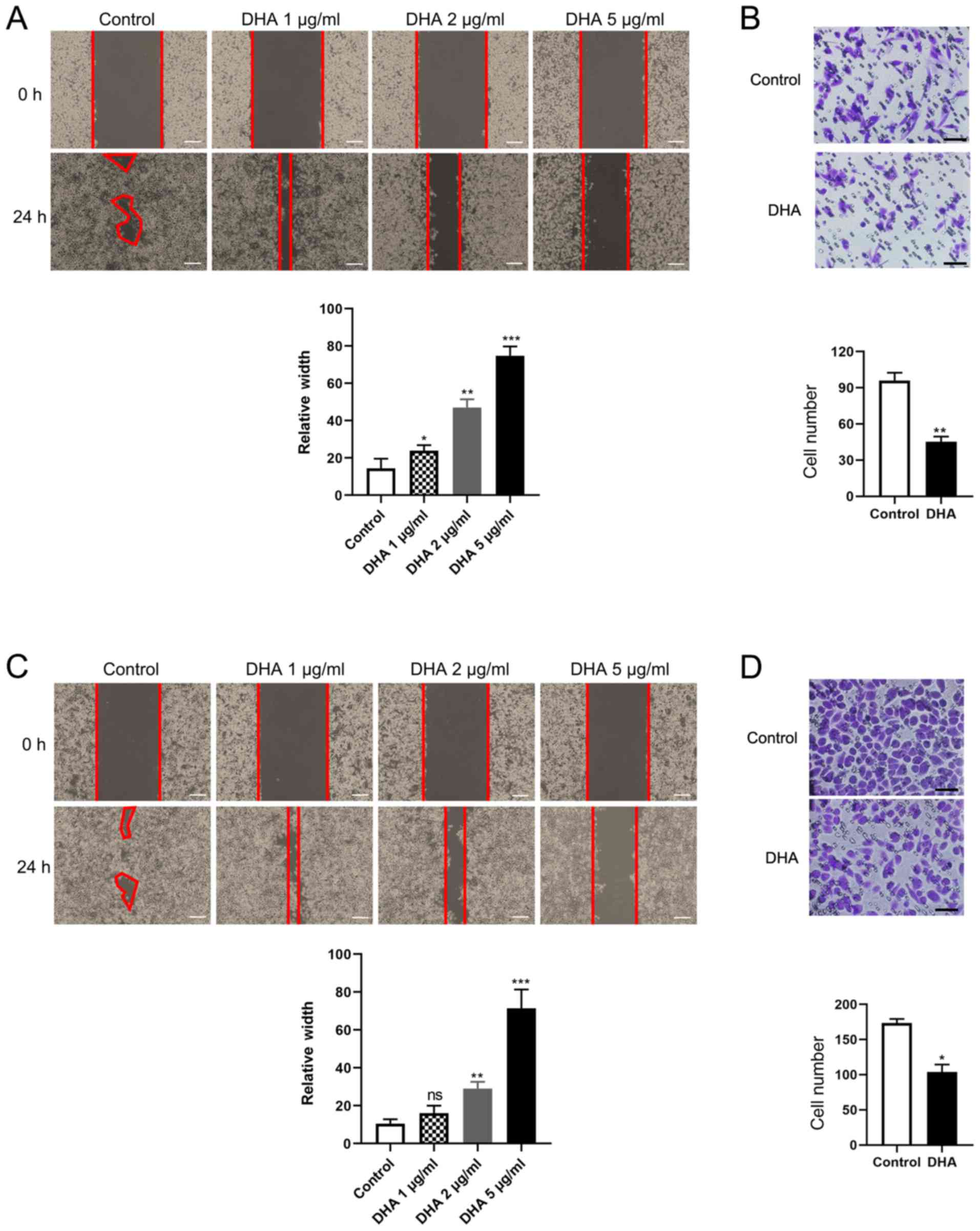
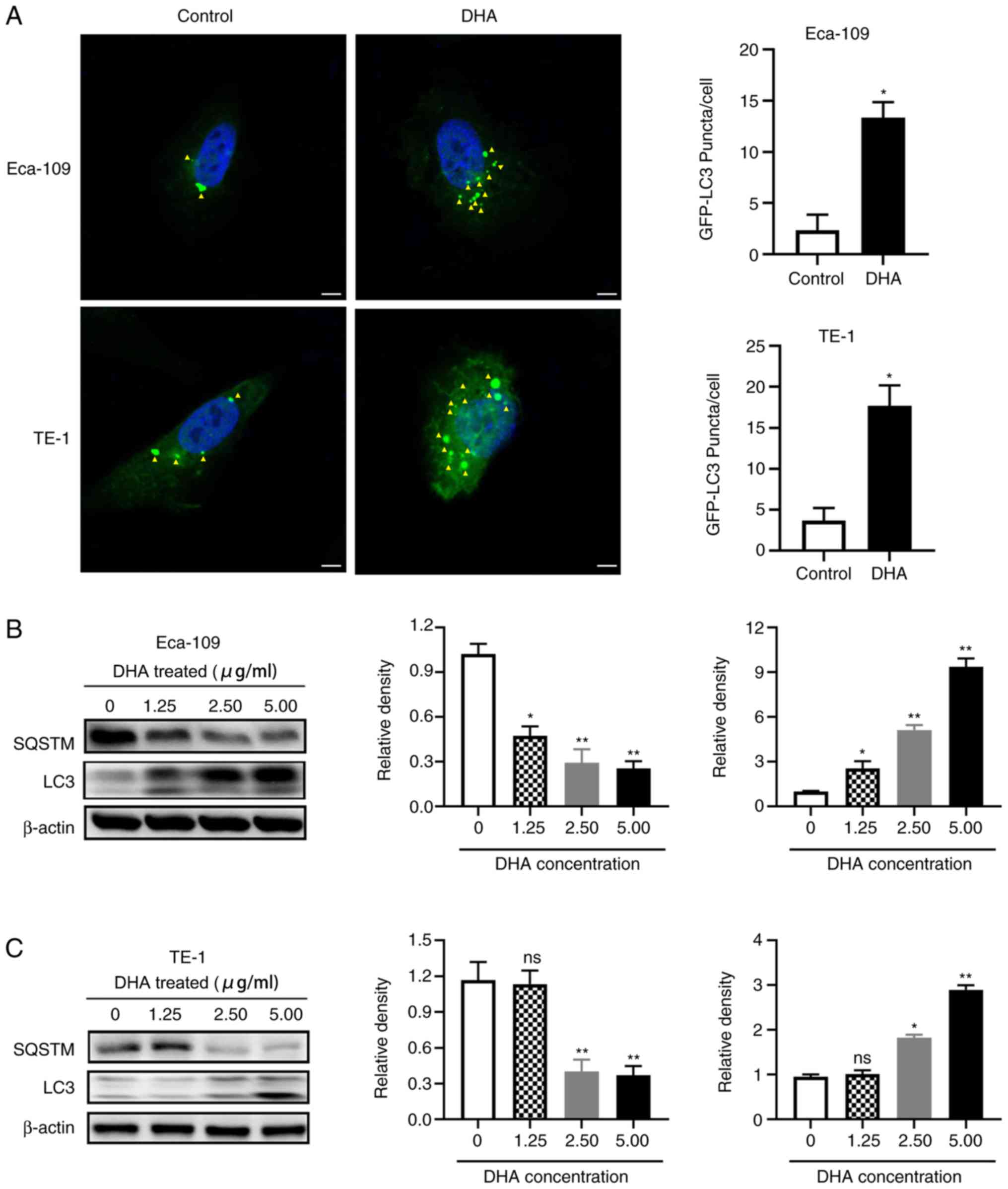
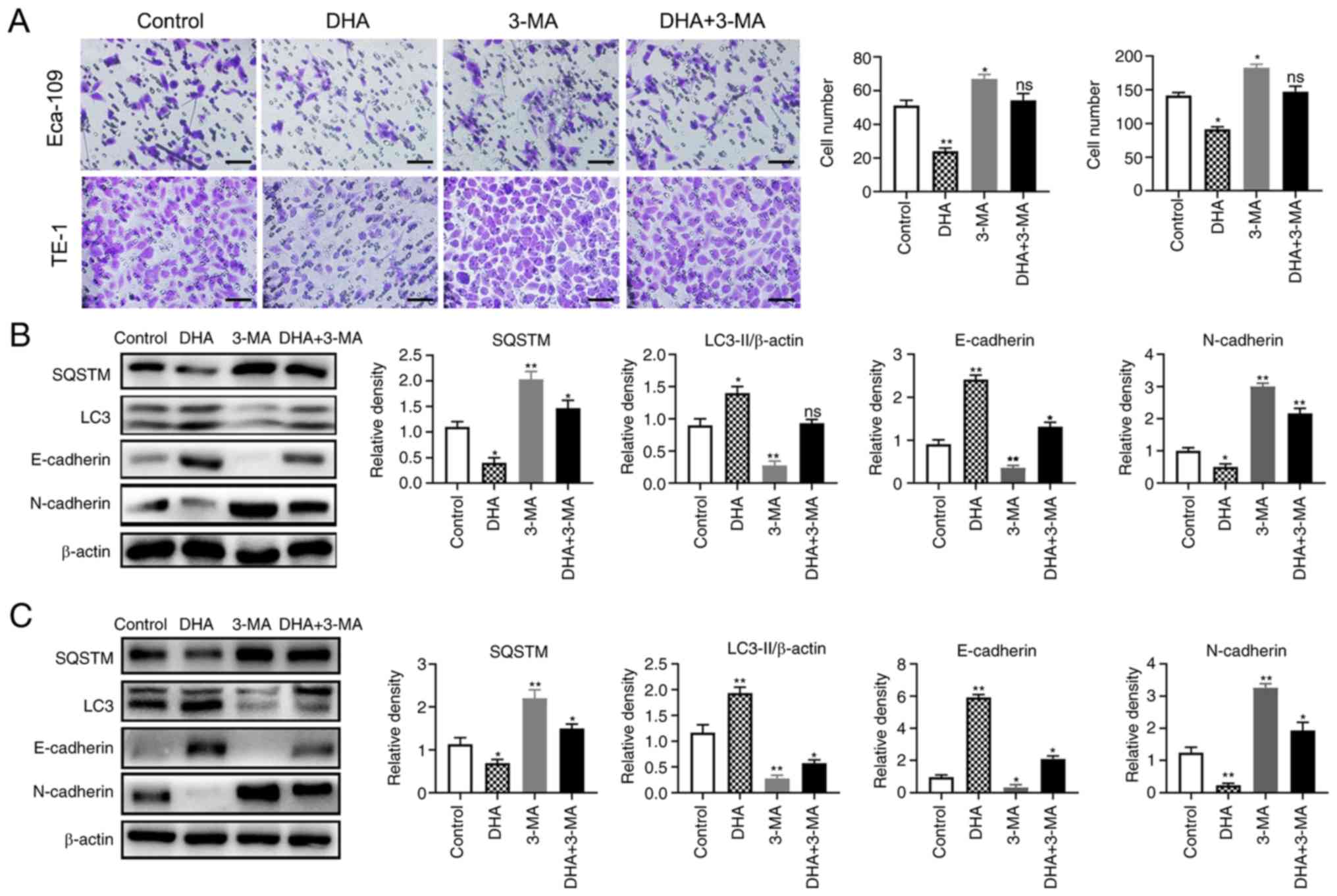
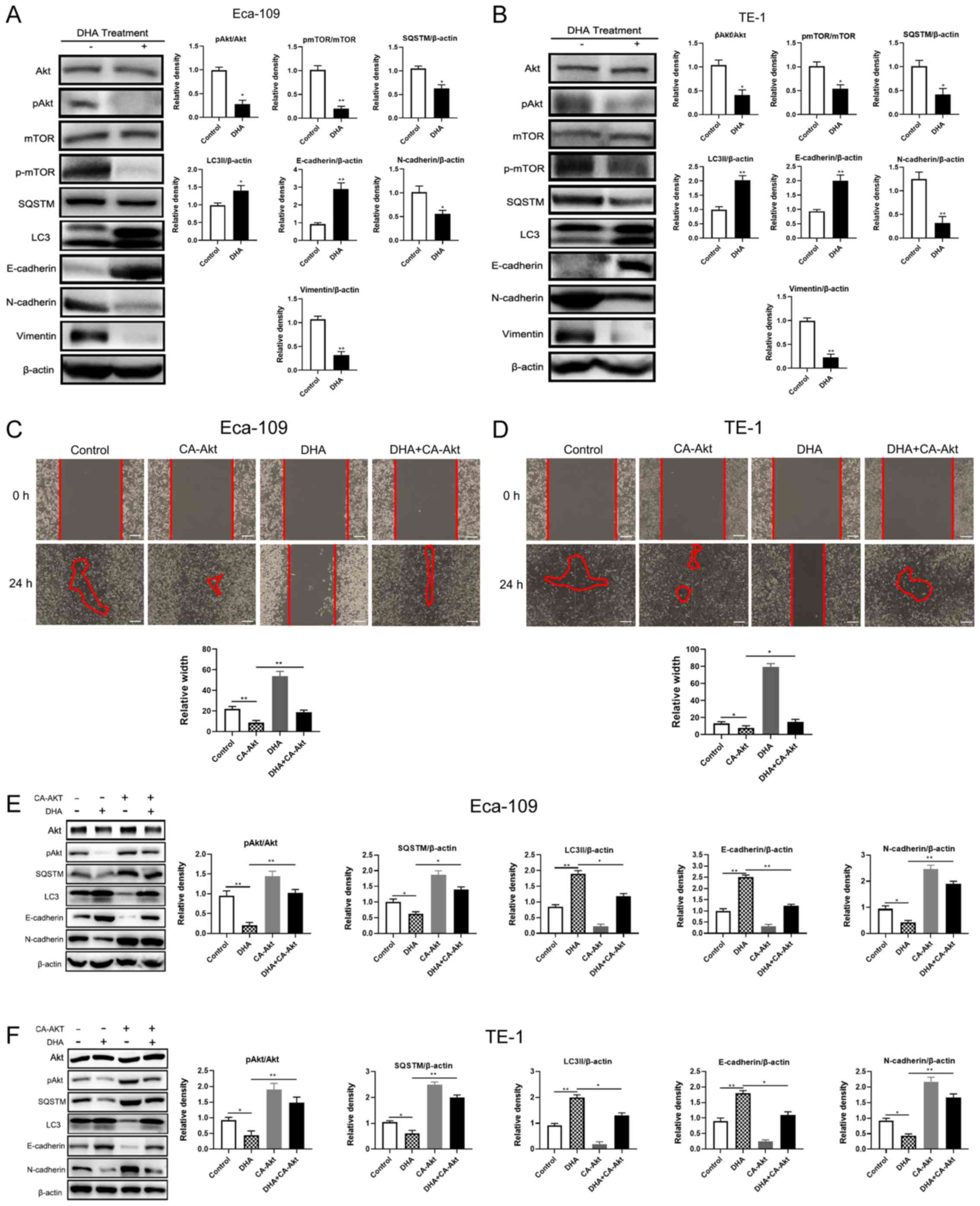
Esophageal cancer (EC) is a complex gastrointestinal malignancy and its global incidence rate ranks 7th among all cancer types. Due to its aggressive nature and the potential for early metastasis, the survival rates of patients with EC are poor. Dihydroartemisinin (DHA) is the primary active derivative of artemisinin, and, as well as its use as an anti‑malarial, DHA has also exhibited antitumor activity in various cancer models, such as cholangiocarcinoma, head and neck carcinoma, and hepatocellular carcinoma cells. However, the molecular mechanisms underlying the antitumor effect of DHA in the treatment of EC remains poorly understood. The results of the present study demonstrated that DHA significantly inhibited the migration of TE‑1 and Eca‑109 EC cells in a dose‑dependent manner by activating autophagy. DHA treatment also significantly reversed epithelial‑mesenchymal transition (EMT) by downregulating the EMT‑associated markers, N‑cadherin and vimentin, and upregulating the expression of E‑cadherin. Mechanistically, DHA treatment decreased Akt phosphorylation and inhibited the Akt/mTOR signaling pathway, leading to the activation of autophagy. The levels of the autophagy‑associated proteins were suppressed and DHA‑mediated inhibition of migration in EC cells was reversed when an active form of Akt was overexpressed. In conclusion, the present study demonstrated the potential value of DHA in the treatment of EC, and revealed the underlying mechanism by which FDHA inhibits cellular migration.
View Figures

Figure 1

Figure 2

Figure 3

Figure 4

View References

1 

Bray F, Ferlay J, Soerjomataram I, Siegel RL, Torre LA and Jemal A: Global cancer statistics 2018: GLOBOCAN estimates of incidence and mortality worldwide for 36 cancers in 185 countries. CA Cancer J Clin. 68:394–424. 2018. View Article : Google Scholar : PubMed/NCBI

2 

Arnold M, Soerjomataram I, Ferlay J and Forman D: Global incidence of oesophageal cancer by histological subtype in 2012. GUT. 64:381–387. 2015. View Article : Google Scholar : PubMed/NCBI

3 

Abbasi BA, Iqbal J, Ahmad R, Bibi S, Mahmood T, Kanwal S, Bashir S, Gul F and Hameed S: Potential phytochemicals in the prevention and treatment of esophagus cancer: A green therapeutic approach. Pharmacol Rep. 71:644–652. 2019. View Article : Google Scholar : PubMed/NCBI

4 

Zhang Y: Epidemiology of esophageal cancer. World J Gastroenterol. 19:5598–5606. 2013. View Article : Google Scholar : PubMed/NCBI

5 

Napier KJ, Scheerer M and Misra S: Esophageal cancer: A Review of epidemiology, pathogenesis, staging workup and treatment modalities. World J Gastrointest Oncol. 6:112–120. 2014. View Article : Google Scholar : PubMed/NCBI

6 

Mir MM and Dar NA: Esophageal cancer in kashmir (India): An enigma for researchers. Int J Health Sci (Qassim). 3:71–85. 2009.PubMed/NCBI

7 

Wong M, Hamilton W, Whiteman DC, Jiang JY, Qiao Y, Fung F, Wang H, Chiu P, Ng E, Wu J, et al: Global Incidence and mortality of oesophageal cancer and their correlation with socioeconomic indicators temporal patterns and trends in 41 countries. Sci Rep. 8:45222018. View Article : Google Scholar : PubMed/NCBI

8 

Nan L, Wei J, Jacko AM, Culley MK, Zhao J, Natarajan V, Ma H and Zhao Y: Cross-talk between lysophosphatidic acid receptor 1 and tropomyosin receptor kinase A promotes lung epithelial cell migration. Biochim Biophys Acta. 1863:229–235. 2016. View Article : Google Scholar : PubMed/NCBI

9 

Tripathi V, Shin JH, Stuelten CH and Zhang YE: TGF-β-induced alternative splicing of TAK1 promotes EMT and drug resistance. Oncogene. 38:3185–3200. 2019. View Article : Google Scholar : PubMed/NCBI

10 

Ota I, Masui T, Kurihara M, Yook JI, Mikami S, Kimura T, Shimada K, Konishi N, Yane K, Yamanaka T and Kitahara T: Snail-induced EMT promotes cancer stem cell-like properties in head and neck cancer cells. Oncol Rep. 35:261–266. 2016. View Article : Google Scholar : PubMed/NCBI

11 

Mooney SM, Talebian V, Jolly MK, Jia D, Gromala M, Levine H and McConkey BJ: The GRHL2/ZEB feedback loop-a key axis in the regulation of EMT in breast cancer. J Cell Biochem. 118:2559–2570. 2017. View Article : Google Scholar : PubMed/NCBI

12 

Cano A and Portillo F: An emerging role for class I bHLH E2-2 proteins in EMT regulation and tumor progression. Cell Adh Migr. 4:56–60. 2010. View Article : Google Scholar : PubMed/NCBI

13 

Gao FX, Wu J and Ren DL: Effect of epithelial-to-mesenchymal transition on biological activity of NK cells in esophageal squamous cell carcinoma. Sichuan Da Xue Xue Bao Yi Xue Ban. 50:40–47. 2019.(In Chinese). PubMed/NCBI

14 

Yokozaki H, Koma YI, Shigeoka M and Nishio M: Cancer as a tissue: The significance of cancer-stromal interactions in the development, morphogenesis and progression of human upper digestive tract cancer. Pathol Int. 68:334–352. 2018. View Article : Google Scholar : PubMed/NCBI

15 

Mladinich M, Ruan D and Chan CH: Tackling cancer stem cells via inhibition of EMT transcription factors. Stem Cells Int. 2016:52858922016. View Article : Google Scholar : PubMed/NCBI

16 

Pattabiraman DR, Bierie B, Kober KI, Thiru P, Krall JA, Zill C, Reinhardt F, Tam WL and Weinberg RA: Activation of PKA leads to mesenchymal-to-epithelial transition and loss of tumor-initiating ability. Science. 351:d36802016. View Article : Google Scholar

17 

Gugnoni M, Sancisi V, Gandolfi G, Manzotti G, Ragazzi M, Giordano D, Tamagnini I, Tigano M, Frasoldati A, Piana S and Ciarrocchi A: Cadherin-6 promotes EMT and cancer metastasis by restraining autophagy. Oncogene. 36:667–677. 2017. View Article : Google Scholar : PubMed/NCBI

18 

Ouyang F, Huang H, Zhang M, Chen M, Huang H, Huang F and Zhou S: HMGB1 induces apoptosis and EMT in association with increased autophagy following H/R injury in cardiomyocytes. Int J Mol Med. 37:679–689. 2016. View Article : Google Scholar : PubMed/NCBI

19 

Lin R, Zhang Z, Chen L, Zhou Y, Zou P, Feng C, Wang L and Liang G: Dihydroartemisinin (DHA) induces ferroptosis and causes cell cycle arrest in head and neck carcinoma cells. Cancer Lett. 381:165–175. 2016. View Article : Google Scholar : PubMed/NCBI

20 

Liu T, Guo J, Wang T, Zhang S, Yu X, Hou C and Guo D: Network pharmacology-based analysis of mechanisms of the anti-hepatocellular carcinoma effect by dihydroartemisinin. Discov Med. 28:139–147. 2019.PubMed/NCBI

21 

Daugaard I, Sanders KJ, Idica A, Vittayarukskul K, Hamdorf M, Krog JD, Chow R, Jury D, Hansen LL, Hager H, et al: miR-151a induces partial EMT by regulating E-cadherin in NSCLC cells. Oncogenesis. 6:e3662017. View Article : Google Scholar : PubMed/NCBI

22 

Zhang X, Liu G, Kang Y, Dong Z, Qian Q and Ma X: N-cadherin expression is associated with acquisition of EMT phenotype and with enhanced invasion in erlotinib-resistant lung cancer cell lines. PLoS One. 8:e576922013. View Article : Google Scholar : PubMed/NCBI

23 

Ivaska J: Vimentin: Central hub in EMT induction? Small GTPases. 2:51–53. 2011. View Article : Google Scholar : PubMed/NCBI

24 

Liang P, Jiang B, Li Y, Liu Z, Zhang P, Zhang M, Huang X and Xiao X: Autophagy promotes angiogenesis via AMPK/Akt/mTOR signaling during the recovery of heat-denatured endothelial cells. Cell Death Dis. 9:11522018. View Article : Google Scholar : PubMed/NCBI

25 

Yang J, Pi C and Wang G: Inhibition of PI3K/Akt/mTOR pathway by apigenin induces apoptosis and autophagy in hepatocellular carcinoma cells. Biomed Pharmacother. 103:699–707. 2018. View Article : Google Scholar : PubMed/NCBI

26 

Fan S, Zhang B, Luan P, Gu B, Wan Q, Huang X, Liao W and Liu J: PI3K/AKT/mTOR/p70S6K pathway is involved in Aβ25-35-induced autophagy. Biomed Res Int. 2015:1610202015. View Article : Google Scholar : PubMed/NCBI

27 

Cao P, Leng D, Li Y, Zhang Z, Liu L and Li X: Progress on anti-tumor molecular mechanisms of dihydroartemisinin. Zhejiang Da Xue Xue Bao Yi Xue Ban. 45:501–507. 2016.(In Chinese). PubMed/NCBI

28 

Zhang CZ, Zhang H, Yun J, Chen GG and Lai PB: Dihydroartemisinin exhibits antitumor activity toward hepatocellular carcinoma in vitro and in vivo. Biochem Pharmacol. 83:1278–1289. 2012. View Article : Google Scholar : PubMed/NCBI

29 

Thongchot S, Vidoni C, Ferraresi A, Loilome W, Yongvanit P, Namwat N and Isidoro C: Dihydroartemisinin induces apoptosis and autophagy-dependent cell death in cholangiocarcinoma through a DAPK1-BECLIN1 pathway. Mol Carcinog. 57:1735–1750. 2018. View Article : Google Scholar : PubMed/NCBI

30 

Li X, Ba Q, Liu Y, Yue Q, Chen P, Li J, Zhang H, Ying H, Ding Q, Song H, et al: Dihydroartemisinin selectively inhibits PDGFRalpha-positive ovarian cancer growth and metastasis through inducing degradation of PDGFRalpha protein. Cell Discov. 3:170422017. View Article : Google Scholar : PubMed/NCBI

31 

Shi X, Wang L, Li X, Bai J, Li J, Li S, Wang Z and Zhou M: Dihydroartemisinin induces autophagy-dependent death in human tongue squamous cell carcinoma cells through DNA double-strand break-mediated oxidative stress. Oncotarget. 8:45981–45993. 2017. View Article : Google Scholar : PubMed/NCBI

32 

Jiang J, Geng G, Yu X, Liu H, Gao J, An H, Cai C, Li N, Shen D, Wu X, et al: Repurposing the anti-malarial drug dihydroartemisinin suppresses metastasis of non-small-cell lung cancer via inhibiting NF-kappaB/GLUT1 axis. Oncotarget. 7:87271–87283. 2016. View Article : Google Scholar : PubMed/NCBI

33 

Im E, Yeo C, Lee HJ and Lee EO: Dihydroartemisinin induced caspase-dependent apoptosis through inhibiting the specificity protein 1 pathway in hepatocellular carcinoma SK-Hep-1 cells. Life Sci. 192:286–292. 2018. View Article : Google Scholar : PubMed/NCBI

34 

Li Y, Sui H, Jiang C, Li S, Han Y, Huang P, Du X, Du J and Bai Y: Dihydroartemisinin increases the sensitivity of photodynamic therapy via NF-κB/HIF-1α/VEGF pathway in esophageal cancer cell in vitro and in vivo. Cell Physiol Biochem. 48:2035–2045. 2018. View Article : Google Scholar : PubMed/NCBI

35 

Jiang C, Li S, Li Y and Bai Y: Anticancer effects of dihydroartemisinin on human esophageal cancer cells in vivo. Anal Cell Pathol (Amst). 2018:87597452018.PubMed/NCBI

36 

Li S, Huang P, Gan J, Ling X, Du X, Liao Y, Li L, Meng Y, Li Y and Bai Y: Dihydroartemisinin represses esophageal cancer glycolysis by down-regulating pyruvate kinase M2. Eur J Pharmacol. 854:232–239. 2019. View Article : Google Scholar : PubMed/NCBI

37 

Li YJ, Zhou JH, Du XX, Jia DX, Wu CL, Huang P, Han Y, Sui H, Wei XL, Liu L, et al: Dihydroartemisinin accentuates the anti-tumor effects of photodynamic therapy via inactivation of NF-κB in Eca109 and Ec9706 esophageal cancer cells. Cell Physiol Biochem. 33:1527–1536. 2014. View Article : Google Scholar : PubMed/NCBI

38 

Du XX, Li YJ, Wu CL, Zhou JH, Han Y, Sui H, Wei XL, Liu L, Huang P, Yuan HH, et al: Initiation of apoptosis, cell cycle arrest and autophagy of esophageal cancer cells by dihydroartemisinin. Biomed Pharmacother. 67:417–424. 2013. View Article : Google Scholar : PubMed/NCBI

39 

Alonso-Alconada L, Eritja N, Muinelo-Romay L, Barbazan J, Lopez-Lopez R, Matias-Guiu X, Gil-Moreno A, Dolcet X and Abal M: ETV5 transcription program links BDNF and promotion of EMT at invasive front of endometrial carcinomas. Carcinogenesis. 35:2679–2686. 2014. View Article : Google Scholar : PubMed/NCBI

40 

Zhou S, Zhao L, Kuang M, Zhang B, Liang Z, Yi T, Wei Y and Zhao X: Autophagy in tumorigenesis and cancer therapy: Dr. Jekyll or Mr. Hyde? Cancer Lett. 323:115–127. 2012. View Article : Google Scholar : PubMed/NCBI

41 

Colella B, Faienza F and Di Bartolomeo S: EMT regulation by autophagy: A new perspective in glioblastoma biology. Cancers (Basel). 11:3122019. View Article : Google Scholar

42 

Feng H, Zhao X, Guo Q, Feng Y, Ma M, Guo W, Dong X, Deng C, Li C, Song X, et al: Autophagy resists EMT process to maintain retinal pigment epithelium homeostasis. Int J Biol Sci. 15:507–521. 2019. View Article : Google Scholar : PubMed/NCBI

43 

Li J, Yang B, Zhou Q, Wu Y, Shang D, Guo Y, Song Z, Zheng Q and Xiong J: Autophagy promotes hepatocellular carcinoma cell invasion through activation of epithelial-mesenchymal transition. Carcinogenesis. 34:1343–1351. 2013. View Article : Google Scholar : PubMed/NCBI

44 

Park S, Ha SD, Coleman M, Meshkibaf S and Kim SO: p62/SQSTM1 enhances NOD2-mediated signaling and cytokine production through stabilizing NOD2 oligomerization. PLoS One. 8:e571382013. View Article : Google Scholar : PubMed/NCBI

45 

Qiang L, Zhao B, Ming M, Wang N, He TC, Hwang S, Thorburn A and He YY: Regulation of cell proliferation and migration by p62 through stabilization of Twist1. Proc Natl Acad Sci USA. 111:9241–9246. 2014. View Article : Google Scholar : PubMed/NCBI

46 

Qiang L and He YY: Autophagy deficiency stabilizes TWIST1 to promote epithelial-mesenchymal transition. Autophagy. 10:1864–1865. 2014. View Article : Google Scholar : PubMed/NCBI

Related Articles

  • Abstract
  • View
  • Download
  • Twitter
Copy and paste a formatted citation
Spandidos Publications style
Chen X, He L, Lai S and He Y: Dihydroartemisinin inhibits the migration of esophageal cancer cells by inducing autophagy. Oncol Lett 20: 94, 2020.
APA
Chen, X., He, L., Lai, S., & He, Y. (2020). Dihydroartemisinin inhibits the migration of esophageal cancer cells by inducing autophagy. Oncology Letters, 20, 94. https://doi.org/10.3892/ol.2020.11955
MLA
Chen, X., He, L., Lai, S., He, Y."Dihydroartemisinin inhibits the migration of esophageal cancer cells by inducing autophagy". Oncology Letters 20.4 (2020): 94.
Chicago
Chen, X., He, L., Lai, S., He, Y."Dihydroartemisinin inhibits the migration of esophageal cancer cells by inducing autophagy". Oncology Letters 20, no. 4 (2020): 94. https://doi.org/10.3892/ol.2020.11955
Copy and paste a formatted citation
x
Spandidos Publications style
Chen X, He L, Lai S and He Y: Dihydroartemisinin inhibits the migration of esophageal cancer cells by inducing autophagy. Oncol Lett 20: 94, 2020.
APA
Chen, X., He, L., Lai, S., & He, Y. (2020). Dihydroartemisinin inhibits the migration of esophageal cancer cells by inducing autophagy. Oncology Letters, 20, 94. https://doi.org/10.3892/ol.2020.11955
MLA
Chen, X., He, L., Lai, S., He, Y."Dihydroartemisinin inhibits the migration of esophageal cancer cells by inducing autophagy". Oncology Letters 20.4 (2020): 94.
Chicago
Chen, X., He, L., Lai, S., He, Y."Dihydroartemisinin inhibits the migration of esophageal cancer cells by inducing autophagy". Oncology Letters 20, no. 4 (2020): 94. https://doi.org/10.3892/ol.2020.11955
Follow us
  • Twitter
  • LinkedIn
  • Facebook
About
  • Spandidos Publications
  • Careers
  • Cookie Policy
  • Privacy Policy
How can we help?
  • Help
  • Live Chat
  • Contact
  • Email to our Support Team