Spandidos Publications Logo
  • About
    • About Spandidos
    • Aims and Scopes
    • Abstracting and Indexing
    • Editorial Policies
    • Reprints and Permissions
    • Job Opportunities
    • Terms and Conditions
    • Contact
  • Journals
    • All Journals
    • Oncology Letters
      • Oncology Letters
      • Information for Authors
      • Editorial Policies
      • Editorial Board
      • Aims and Scope
      • Abstracting and Indexing
      • Bibliographic Information
      • Archive
    • International Journal of Oncology
      • International Journal of Oncology
      • Information for Authors
      • Editorial Policies
      • Editorial Board
      • Aims and Scope
      • Abstracting and Indexing
      • Bibliographic Information
      • Archive
    • Molecular and Clinical Oncology
      • Molecular and Clinical Oncology
      • Information for Authors
      • Editorial Policies
      • Editorial Board
      • Aims and Scope
      • Abstracting and Indexing
      • Bibliographic Information
      • Archive
    • Experimental and Therapeutic Medicine
      • Experimental and Therapeutic Medicine
      • Information for Authors
      • Editorial Policies
      • Editorial Board
      • Aims and Scope
      • Abstracting and Indexing
      • Bibliographic Information
      • Archive
    • International Journal of Molecular Medicine
      • International Journal of Molecular Medicine
      • Information for Authors
      • Editorial Policies
      • Editorial Board
      • Aims and Scope
      • Abstracting and Indexing
      • Bibliographic Information
      • Archive
    • Biomedical Reports
      • Biomedical Reports
      • Information for Authors
      • Editorial Policies
      • Editorial Board
      • Aims and Scope
      • Abstracting and Indexing
      • Bibliographic Information
      • Archive
    • Oncology Reports
      • Oncology Reports
      • Information for Authors
      • Editorial Policies
      • Editorial Board
      • Aims and Scope
      • Abstracting and Indexing
      • Bibliographic Information
      • Archive
    • Molecular Medicine Reports
      • Molecular Medicine Reports
      • Information for Authors
      • Editorial Policies
      • Editorial Board
      • Aims and Scope
      • Abstracting and Indexing
      • Bibliographic Information
      • Archive
    • World Academy of Sciences Journal
      • World Academy of Sciences Journal
      • Information for Authors
      • Editorial Policies
      • Editorial Board
      • Aims and Scope
      • Abstracting and Indexing
      • Bibliographic Information
      • Archive
    • International Journal of Functional Nutrition
      • International Journal of Functional Nutrition
      • Information for Authors
      • Editorial Policies
      • Editorial Board
      • Aims and Scope
      • Abstracting and Indexing
      • Bibliographic Information
      • Archive
    • International Journal of Epigenetics
      • International Journal of Epigenetics
      • Information for Authors
      • Editorial Policies
      • Editorial Board
      • Aims and Scope
      • Abstracting and Indexing
      • Bibliographic Information
      • Archive
    • Medicine International
      • Medicine International
      • Information for Authors
      • Editorial Policies
      • Editorial Board
      • Aims and Scope
      • Abstracting and Indexing
      • Bibliographic Information
      • Archive
  • Articles
  • Information
    • Information for Authors
    • Information for Reviewers
    • Information for Librarians
    • Information for Advertisers
    • Conferences
  • Language Editing
Spandidos Publications Logo
  • About
    • About Spandidos
    • Aims and Scopes
    • Abstracting and Indexing
    • Editorial Policies
    • Reprints and Permissions
    • Job Opportunities
    • Terms and Conditions
    • Contact
  • Journals
    • All Journals
    • Biomedical Reports
      • Information for Authors
      • Editorial Policies
      • Editorial Board
      • Aims and Scope
      • Abstracting and Indexing
      • Bibliographic Information
      • Archive
    • Experimental and Therapeutic Medicine
      • Information for Authors
      • Editorial Policies
      • Editorial Board
      • Aims and Scope
      • Abstracting and Indexing
      • Bibliographic Information
      • Archive
    • International Journal of Epigenetics
      • Information for Authors
      • Editorial Policies
      • Editorial Board
      • Aims and Scope
      • Abstracting and Indexing
      • Bibliographic Information
      • Archive
    • International Journal of Functional Nutrition
      • Information for Authors
      • Editorial Policies
      • Editorial Board
      • Aims and Scope
      • Abstracting and Indexing
      • Bibliographic Information
      • Archive
    • International Journal of Molecular Medicine
      • Information for Authors
      • Editorial Policies
      • Editorial Board
      • Aims and Scope
      • Abstracting and Indexing
      • Bibliographic Information
      • Archive
    • International Journal of Oncology
      • Information for Authors
      • Editorial Policies
      • Editorial Board
      • Aims and Scope
      • Abstracting and Indexing
      • Bibliographic Information
      • Archive
    • Medicine International
      • Information for Authors
      • Editorial Policies
      • Editorial Board
      • Aims and Scope
      • Abstracting and Indexing
      • Bibliographic Information
      • Archive
    • Molecular and Clinical Oncology
      • Information for Authors
      • Editorial Policies
      • Editorial Board
      • Aims and Scope
      • Abstracting and Indexing
      • Bibliographic Information
      • Archive
    • Molecular Medicine Reports
      • Information for Authors
      • Editorial Policies
      • Editorial Board
      • Aims and Scope
      • Abstracting and Indexing
      • Bibliographic Information
      • Archive
    • Oncology Letters
      • Information for Authors
      • Editorial Policies
      • Editorial Board
      • Aims and Scope
      • Abstracting and Indexing
      • Bibliographic Information
      • Archive
    • Oncology Reports
      • Information for Authors
      • Editorial Policies
      • Editorial Board
      • Aims and Scope
      • Abstracting and Indexing
      • Bibliographic Information
      • Archive
    • World Academy of Sciences Journal
      • Information for Authors
      • Editorial Policies
      • Editorial Board
      • Aims and Scope
      • Abstracting and Indexing
      • Bibliographic Information
      • Archive
  • Articles
  • Information
    • For Authors
    • For Reviewers
    • For Librarians
    • For Advertisers
    • Conferences
  • Language Editing
Login Register Submit
  • This site uses cookies
  • You can change your cookie settings at any time by following the instructions in our Cookie Policy. To find out more, you may read our Privacy Policy.

    I agree
Search articles by DOI, keyword, author or affiliation
Search
Advanced Search
presentation
Oncology Letters
Join Editorial Board Propose a Special Issue
Print ISSN: 1792-1074 Online ISSN: 1792-1082
Journal Cover
November-2022 Volume 24 Issue 5

Full Size Image

Sign up for eToc alerts
Recommend to Library

Journals

International Journal of Molecular Medicine

International Journal of Molecular Medicine

International Journal of Molecular Medicine is an international journal devoted to molecular mechanisms of human disease.

International Journal of Oncology

International Journal of Oncology

International Journal of Oncology is an international journal devoted to oncology research and cancer treatment.

Molecular Medicine Reports

Molecular Medicine Reports

Covers molecular medicine topics such as pharmacology, pathology, genetics, neuroscience, infectious diseases, molecular cardiology, and molecular surgery.

Oncology Reports

Oncology Reports

Oncology Reports is an international journal devoted to fundamental and applied research in Oncology.

Experimental and Therapeutic Medicine

Experimental and Therapeutic Medicine

Experimental and Therapeutic Medicine is an international journal devoted to laboratory and clinical medicine.

Oncology Letters

Oncology Letters

Oncology Letters is an international journal devoted to Experimental and Clinical Oncology.

Biomedical Reports

Biomedical Reports

Explores a wide range of biological and medical fields, including pharmacology, genetics, microbiology, neuroscience, and molecular cardiology.

Molecular and Clinical Oncology

Molecular and Clinical Oncology

International journal addressing all aspects of oncology research, from tumorigenesis and oncogenes to chemotherapy and metastasis.

World Academy of Sciences Journal

World Academy of Sciences Journal

Multidisciplinary open-access journal spanning biochemistry, genetics, neuroscience, environmental health, and synthetic biology.

International Journal of Functional Nutrition

International Journal of Functional Nutrition

Open-access journal combining biochemistry, pharmacology, immunology, and genetics to advance health through functional nutrition.

International Journal of Epigenetics

International Journal of Epigenetics

Publishes open-access research on using epigenetics to advance understanding and treatment of human disease.

Medicine International

Medicine International

An International Open Access Journal Devoted to General Medicine.

Journal Cover
November-2022 Volume 24 Issue 5

Full Size Image

Sign up for eToc alerts
Recommend to Library

  • Article
  • Citations
    • Cite This Article
    • Download Citation
    • Create Citation Alert
    • Remove Citation Alert
    • Cited By
  • Similar Articles
    • Related Articles (in Spandidos Publications)
    • Similar Articles (Google Scholar)
    • Similar Articles (PubMed)
  • Download PDF
  • Download XML
  • View XML

  • Supplementary Files
    • Supplementary_Data.pdf
Case Report Open Access

Sarcomatoid malignant pleural mesothelioma treated with nivolumab: A case series

  • Authors:
    • Kentaro Hashimoto
    • Hiroaki Ozasa
    • Akihiko Yoshizawa
    • Hiroshi Yoshida
    • Tatsuya Ogimoto
    • Kazutaka Hosoya
    • Masatoshi Yamazoe
    • Hitomi Ajimizu
    • Tomoko Funazo
    • Hironori Yoshida
    • Yuichi Sakamori
    • Toyohiro Hirai
  • View Affiliations / Copyright

    Affiliations: Department of Respiratory Medicine, Graduate School of Medicine, Kyoto University, Kyoto‑shi, Kyoto 606‑8507, Japan, Department of Diagnostic Pathology, Kyoto University Hospital, Kyoto‑shi, Kyoto 606‑8507, Japan
    Copyright: © Hashimoto et al. This is an open access article distributed under the terms of Creative Commons Attribution License [CC BY 4.0].
  • Article Number: 402
    |
    Published online on: September 22, 2022
       https://doi.org/10.3892/ol.2022.13522
  • Expand metrics +
Metrics: Total Views: 0 (Spandidos Publications: | PMC Statistics: )
Metrics: Total PDF Downloads: 0 (Spandidos Publications: | PMC Statistics: )
Cited By (CrossRef): 0 citations Loading Articles...

This article is mentioned in:


Abstract

Immune checkpoint therapy (ICT) with nivolumab has been widely used to treat malignant pleural mesothelioma (MPM) since clinical trials confirmed its efficacy. However, only a few clinical trials have been conducted for the treatment of sarcomatoid MPM, which is a rare histological type of MPM. Additionally, clinical reports of sarcomatoid MPM are scarce. Therefore, the benefits and risks of nivolumab treatment for sarcomatoid MPM remain unclear. The present report describes the treatment of 3 cases of sarcomatoid MPM (all 3 were men) with nivolumab monotherapy. In all three cases, nivolumab was effective despite variations in the duration of treatment, although side effects were observed in 2 patients. Programmed death ligand 1 (PD‑L1) expression was positive in all 3 cases. In particular, the patient with the highest PD‑L1 expression had the most rapid response of the 3 patients, and the effect lasted as long as those of the other 2, despite receiving the smallest number of doses of nivolumab. It has been reported that sarcomatoid MPM tends to respond poorly to chemotherapy and express higher levels of PD‑L1 than epithelial MPM; thus, ICT may be necessary in these cases. This case series suggests that ICT with nivolumab is a promising treatment option for sarcomatoid MPM.

Introduction

Malignant pleural mesothelioma (MPM) is a malignant disease that is primarily caused by asbestos exposure and has a poor prognosis (1). MPM is pathologically classified into three types: epithelial, sarcomatoid (desmoplastic as a subtype), and biphasic (2). The sarcomatoid and biphasic types together are called the non-epithelial type and are rarer than the epithelial type. The prognoses for non-epithelial MPM are worse than that for the epithelial type because they respond poorly to existing cytotoxic chemotherapies, more effective treatments have been long awaited. Immune checkpoint therapy (ICT) with nivolumab is reported to be effective for the treatment of epithelial MPM [objective response rate (ORR), 29.4%; 2-year overall survival rate, 35.3%] and is expected to be a new treatment option for MPM (3). However, evidence for the treatment of non-epithelial MPM is scarce, and the combined results of the two existing clinical trials contained only 18 patients with non-epithelial MPM who received nivolumab (3,4). There are even fewer reports on the course of treatment in clinical practice; to the best of our knowledge, only a few cases have been reported (5,6). The collation of reliable evidence regarding ICT for non-epithelial MPMs is urgent. Here, we report three clinical cases of patients with sarcomatoid MPM (sMPM) treated with nivolumab at Kyoto University Hospital, Japan.

Case report

Case 1

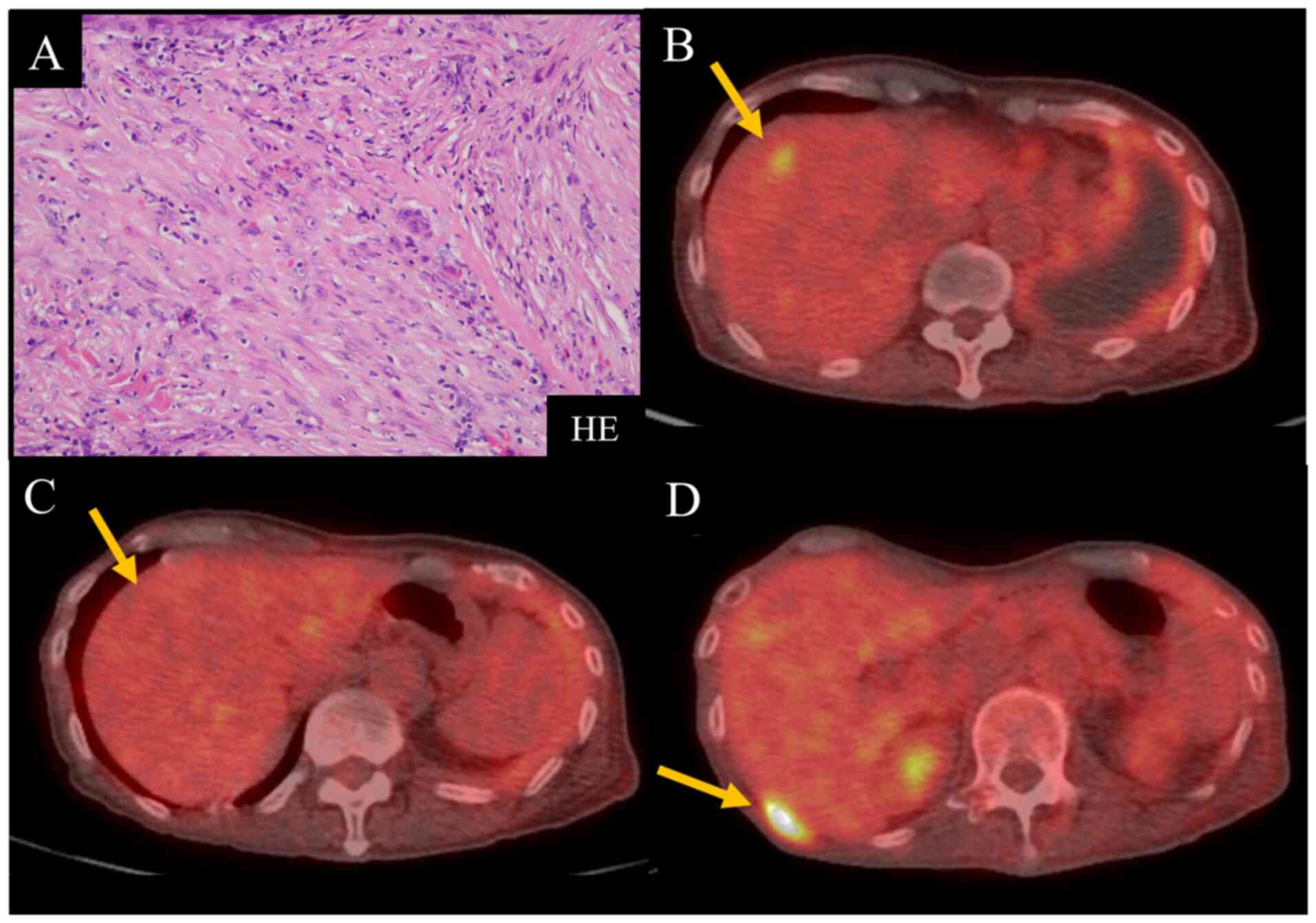
A 73-year-old man was admitted to another hospital with left irregular pleural thickening (PT) and pleural effusion (PE). A surgical pleural biopsy was performed in that hospital. Histopathological findings showed atypical spindle cells distributed with inflammatory cells in a fibrous organization that was rich in collagen fibers, which invaded the striated muscle and adipose tissue (Fig. 1A). The patient was diagnosed with desmoplastic MPM. The patient was referred to Kyoto University Hospital for consideration of the multidisciplinary treatment since surgical treatment could not be performed at the referring hospital. However, the referring hospital is undisclosed in this report because this hospital is not affiliated with any of this study authors. After reviewing the case, we decided to treat the patient with systemic drug therapy. One cycle of systemic chemotherapy with carboplatin [area under the concentration-time curve (AUC)=5] and pemetrexed (400 mg/m2) (Carbo/Pem) was administered; however, the PT did not improve, and liver metastasis was confirmed. We deemed the Carbo/Pem treatment ineffective and initiated nivolumab as a second-line treatment. After five cycles of nivolumab, positron emission tomography (PET)/computed tomography (CT) using 18F-fluorodeoxyglucose (FDG) showed a reduction in liver metastases and a decrease in FDG uptake in the same area (Fig. 1B and C). Nivolumab treatment was judged to have achieved a partial response (PR) and was continued; however, new bone metastases appeared, and liver metastases reappeared after 12 cycles (Fig. 1D). Consequently, nivolumab treatment was judged to have resulted in progressive disease (PD) and discontinued. The patient was then treated with chemotherapy, but the disease worsened, and he died 4 months after completing nivolumab treatment. During the course of treatment, there were no side effects that could be attributed to nivolumab.

Figure 1.

Pathological findings and FDG-based positron emission tomography/CT images of Case 1. (A) HE stain in surgical pleural biopsy (original magnification, ×40). (B) Case 1 before nivolumab treatment. The yellow arrow indicates FDG uptake in the liver metastasis. (C) FDG uptake in the liver metastasis (yellow arrow) decreased after five cycles. (D) Bone metastases (yellow arrow) subsequently developed. FDG, 18F-fluorodeoxyglucose; HE, hematoxylin and eosin.

Case 2

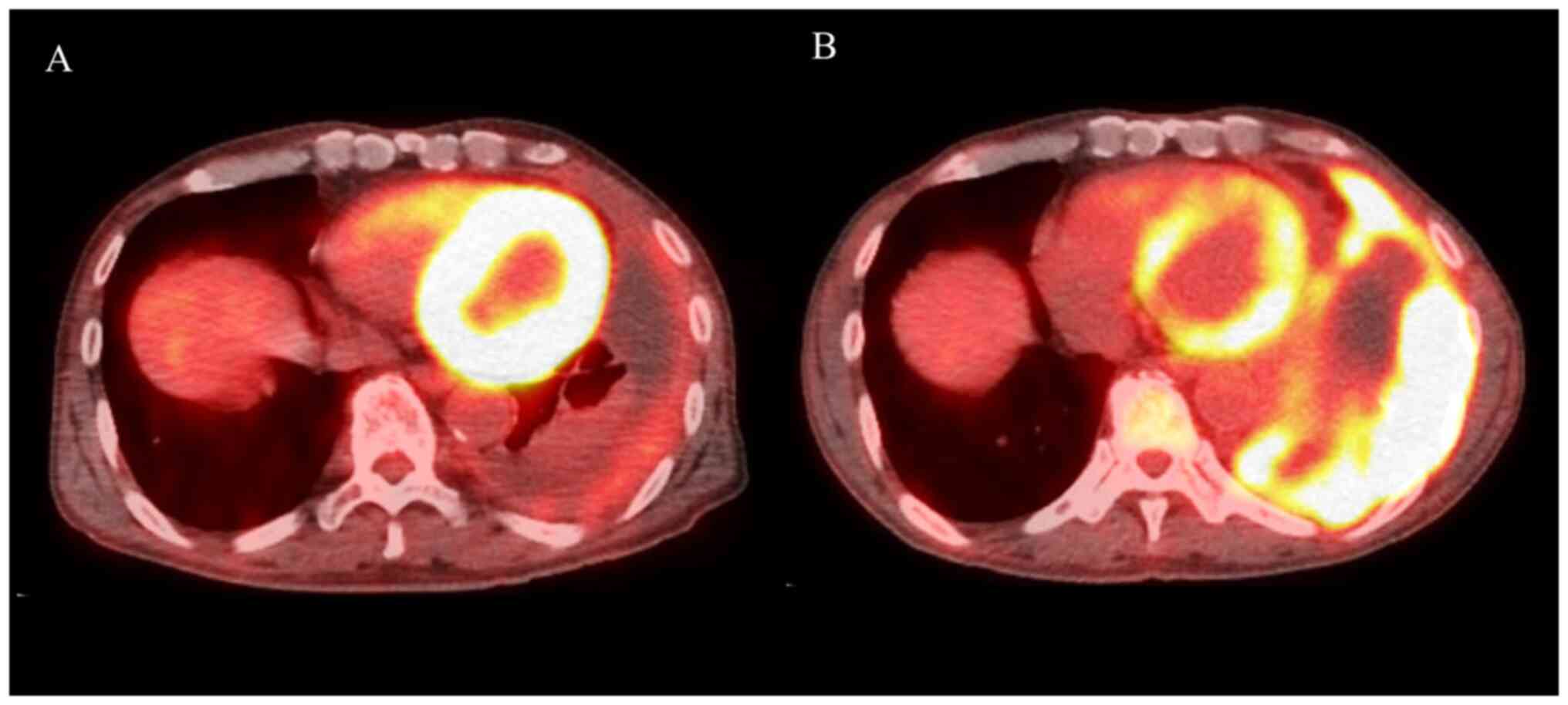
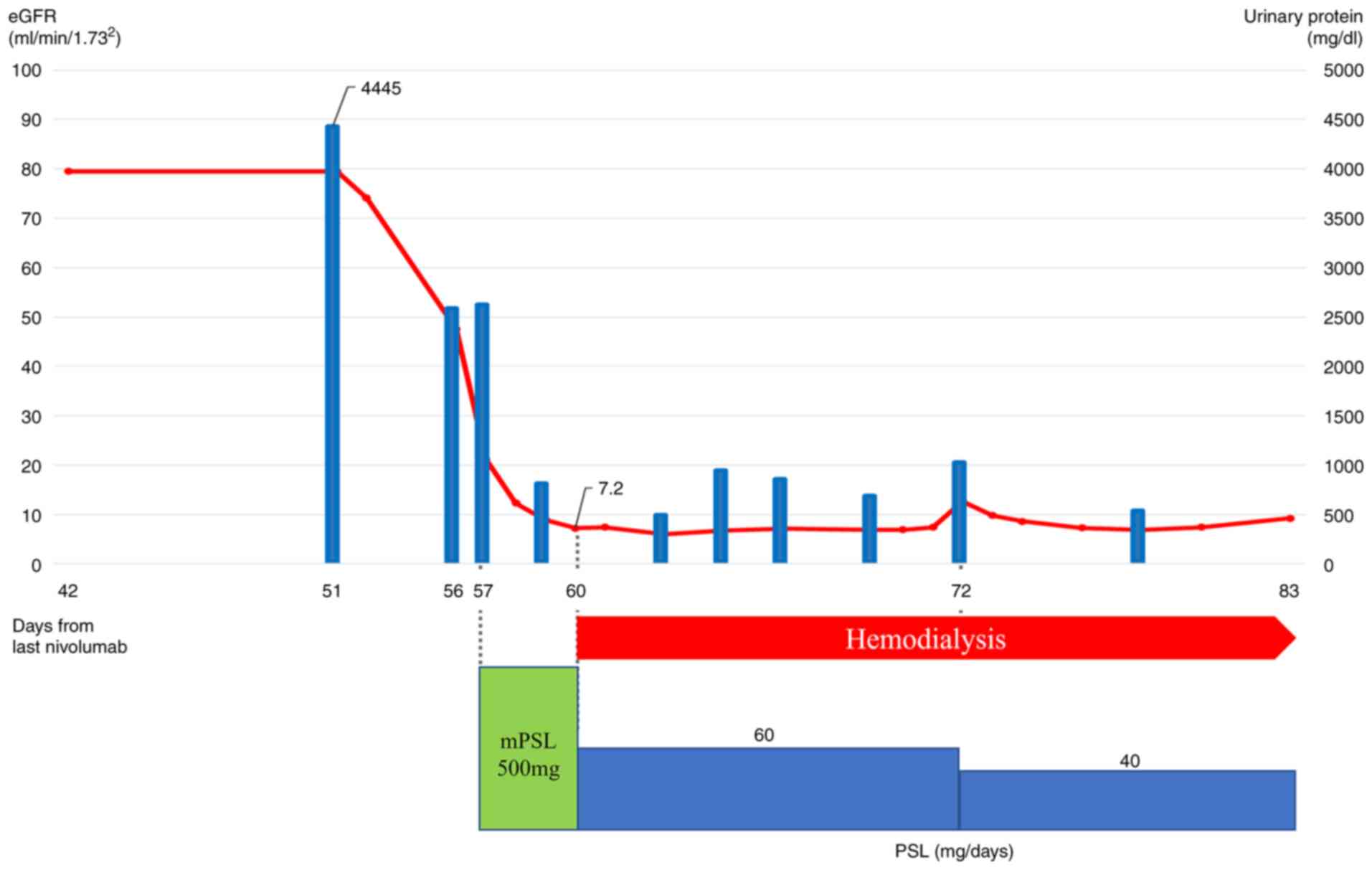
A 66-year-old man was referred to our hospital with a large left-sided PE. PET/CT showed an irregular mass extending to the left pleura with increased FDG uptake. The patient was diagnosed with sarcomatoid or desmoplastic MPM by ultrasound-guided pleural biopsy. As the first-line treatment, Carbo (AUC=5)/Pem (400 mg/m2) was administered; however, after one cycle, the left PT worsened. Carbo/Pem was determined to be ineffective, and nivolumab was administered as the second-line treatment. After three cycles of nivolumab, PET-CT revealed a decrease in the left PT and PE, with a decrease in FDG uptake (Fig. 2A). In this case, the patient developed complicated eosinophilia and eosinophilic PE, which improved over time after nivolumab treatment. Further details on the progress of this case were previously reported (5). Then, we determined that nivolumab produced a good PR and continued the treatment; however, after nine cycles, the left pleural lesion thickening re-occurred with increased FDG uptake (Fig. 2B). We considered that the nivolumab treatment had resulted in PD and therefore discontinued it. Two months after treatment completion, the patient developed acute kidney injury and nephrotic syndrome due to immune-related adverse events (Fig. 3, baseline data as Table SI). Steroid therapy was started with dialysis, and although the patient showed signs of recovery, he later developed gastrointestinal bleeding and died. The autopsy revealed that the bleeding was due to metastasis to the small intestine. Here, we have reported Case 2 again to additionally describe the occurrence of side effects after the previous publication (5) and to make conclusions on the treatment choice as part of a case series that included the other two cases.

Figure 2.

Positron emission tomography/CT images of Case 2. (A) After three cycles of nivolumab, the left pleural thickening and effusion improved, and 18F-fluorodeoxyglucose uptake decreased. (B) After nine cycles, the left pleural thickening and effusion worsened again. Other images are shown in our previous report (5).

Figure 3.

Clinical course of the adverse events that occurred in Case 2. The red line indicates the eGFR, and the blue bars indicate the urinary protein. On Day 51 after the last (9th) cycle of nivolumab, severe proteinuria was observed. Acute kidney injury occurred. Therefore, steroid therapy was started on Day 57 and dialysis on Day 60. eGFR, estimated glomerular filtration rate; mPSL, methylprednisolone; PSL, prednisolone.

Case 3

An 82-year-old man was admitted to our hospital with right PT and PE. Surgical pleural biopsy was performed. Histopathological findings showed atypical cells with large oval or spindle nuclei multiplying into a seat form with necrosis. These tumor cells were immunoreactive to calretinin but not to TTF-1 or p40 (Fig. 4). Based on these findings, the patient was diagnosed with sMPM. He was also diagnosed with neoplastic fever before biopsy. The patient was started on Carbo (AUC=4.5)/Pem (375 mg/m2), but the fever persisted along with high levels of C-reactive protein, and his performance status declined. After one cycle, no improvement was observed on the chest radiograph. Carbo/Pem was determined to be ineffective, and nivolumab was administered as the second-line treatment. After two cycles of nivolumab, the fever resolved and PET/CT showed a decrease in the right PT and PE, as well as a decrease in FDG uptake (Fig. 5A and B). However, before the start of the third cycle, the patient developed liver dysfunction due to immune-related adverse events (Fig. 6, baseline data as Table SII). Although the liver damage improved with steroid treatment, nivolumab treatment was discontinued because of the adverse event. Thereafter, the patient was placed on a treatment-free follow-up, and the tumor remained stable for 6 months. The patient died of aspiration pneumonia 1 month after the tumor began to re-grow (Fig. 5C).

Figure 4.

Pathological findings in Case 3 surgical pleural biopsy (original magnification, ×40). (A) HE stain. (B) Calretinin. HE, hematoxylin and eosin.

Figure 5.

(A and B) Positron emission tomography/CT and (C) CT images of Case 3. (A) Case 3 before nivolumab treatment. The yellow arrow indicates FDG uptake in the pleural thickening. (B) After two cycles, the right pleural thickening and effusion (yellow arrow) improved, and FDG uptake decreased. (C) At 6 months after the end of treatment, the pleural thickening worsened again (yellow arrow), and invasion of the pleura and ribs was observed. FDG, 18F-fluorodeoxyglucose.

Figure 6.

Clinical course in terms of the adverse events that occurred in Case 3. After the first cycle (Day 1) and second cycle (Day 28) of nivolumab administration, liver injury gradually developed from Day 50. On Day 56, the patient was judged to have severe liver injury, and steroid therapy was initiated. After the initiation of steroids, the liver injury gradually improved, and the hepatic enzymes were normalized by Day 120. ALT, alanine aminotransferase; AST, aspartate aminotransferase; PSL, prednisolone.

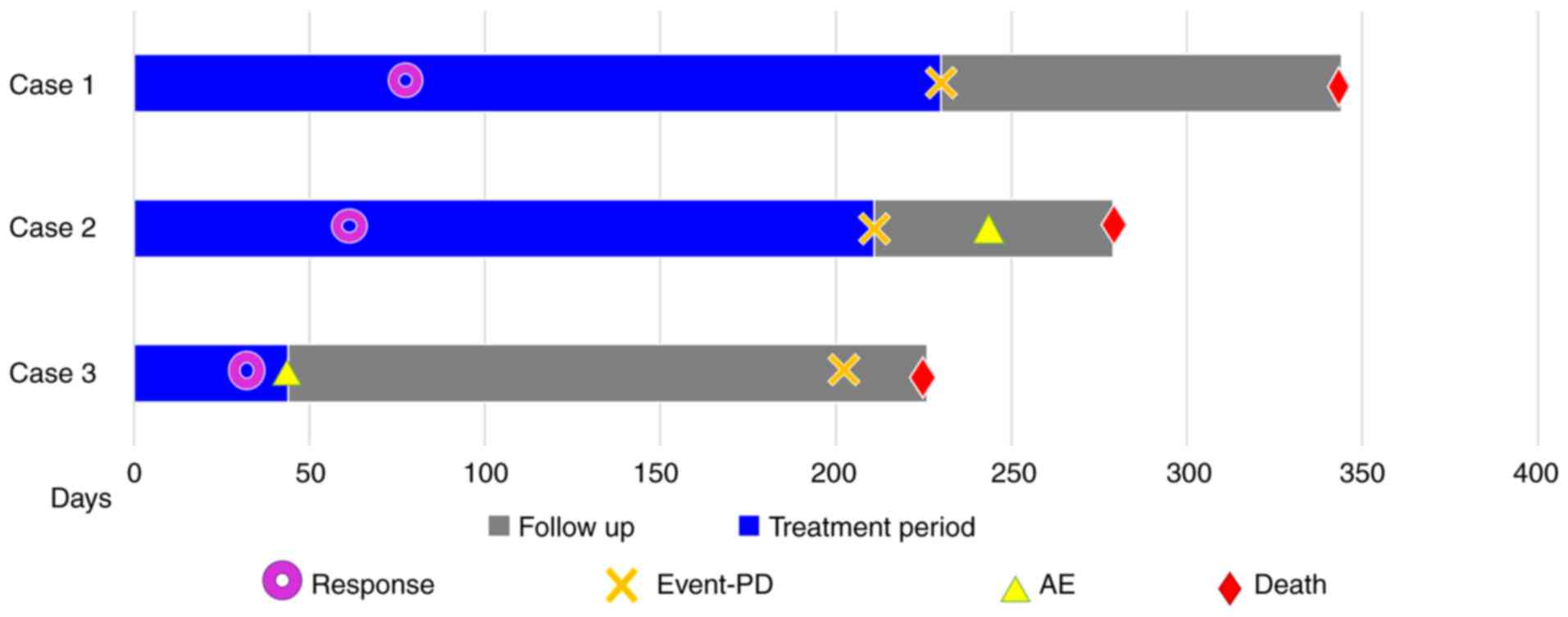
The clinical characteristics of the three patients are summarized in Table I. Fig. 7 shows the progress of the patients after starting nivolumab therapy. The three patients had varied histories of smoking, and two of them had a history of known asbestos exposure. Notably, the time to disease progression for the three cases following nivolumab treatment was 223, 211, and 202 days, respectively, which is similar to the median progression-free survival reported in the two previous trials (3,4), despite the difference in the number of cycles of nivolumab administration among the three patients, with 12, 9, and 2 cycles, respectively. We tested the expression of programmed death ligand 1 (PD-L1) in tumor cells, using DAKO 22C3 tumor proportion scoring method (Fig. 8). The results were positive in all the three cases, with Case 3 having more than 50% PD-L1 positivity (Cases 1 and 2 were 1–24% positive).

Figure 7.

Clinical course of the 3 cases shown using the swimmer's plot. Tumor response was observed in all the patients. The mean time to response to nivolumab therapy was 58 days. Furthermore, 2 of the 3 patients experienced adverse effects, with a time to onset of symptoms of 243 and 43 days, respectively. AE, adverse event; Event-PD, event-progressive disease.

Figure 8.

Immunohistochemistry of programmed death ligand 1 protein in the tumors of Cases 2 and 3 (using the DAKO 22C3 TPS method). The result for Case 1 was not in our hospital records. (A) Case 2. TPS, 1–24%. (B) Case 3 (TPS, >50%). TPS, tumor proportion score.

Table I.

Summary of the clinical characteristics of the 3 cases.

Table I.

Summary of the clinical characteristics of the 3 cases.

VariableCase 1Case 2Case 3
Age, yearsa736682
SexMaleMaleMale
Smoking, p-y458None
AsbestosYesUncertainYes
Histopathological diagnosisDesmoplastic Sarcomatoid/desmoplasticSarcomatoid
Stage (UICC ver. 8)cT3N0M0 stage1BcT3N0M0 stage1BcT4N0M0 stage3B
Pre-treatmentCarbo/PemCarbo/PemCarbo/Pem
PD-L1 TPS (22C3), %1-241-24>50
EffectPRPRPR
Time to response, days835734
Nivolumab cycles, n1292
Time to progression, days223211202
Overall survival, days344279226

a The mean age of the 3 patients was 73.7 years. p-y, pack-year; UICC, Union for International Cancer Control; Carbo/Pem, carboplatin and pemetrexed; PD-L1, programmed death ligand 1; TPS, tumor proportion score; PR, partial response.

Discussion

Nivolumab showed some efficacy against sMPM in the three cases treated at our hospital. In a previous study on the use of nivolumab to treat MPM (the MERIT study), three cases of sMPM were included. Nivolumab was reported to be effective in two of these cases, suggesting that the treatment may be more effective in sarcomatoid than in epithelial MPM (3). Historically, sMPM has been less likely than epithelial MPM to respond to cytotoxic chemotherapy (7). Thus, immunotherapy is expected to become an increasingly important treatment, particularly for sMPM.

In this study, we report three cases of sMPM in which the tumor cells tested positive for PD-L1 expression. In non-small cell lung cancer (NSCLC) tumors, PD-L1 expression is known to be a biomarker of the therapeutic efficacy of anti-programmed cell death protein 1 (PD-1) inhibitors (8). In MPM, high expression levels of PD-L1 have been associated with non-epithelial histology and poor prognosis (9–11). However, these results were reported before the introduction of ICT. Long-term follow-up data from the MERIT study showed that PD-L1-positive tumors tended to have a higher ORR to nivolumab in patients with MPM (12). In the same report, progression-free survival and overall survival tended to be better for patients with non-epithelial tumors compared to those with epithelial tumors. Currently, PD-L1 expression is not recognized as a biomarker for predicting the efficacy of PD-1 inhibitors in MPM. However, based on this evidence, sMPMs may be more likely to have higher PD-L1 expression levels than epithelial MPMs and may benefit from ICT.

Recently, the combination of nivolumab and ipilimumab (Nivo/Ipi), an anti-cytotoxic T-lymphocyte-associated protein 4 inhibitor, became available for the treatment of various carcinomas. In NSCLC, the effectiveness of Nivo/Ipi has been shown to be almost equal, regardless of PD-L1 expression (13). However, there are concerns regarding the toxicity of Nivo/Ipi. Although manageable, the toxicity profile was less favorable than that of nivolumab monotherapy. For NSCLC with high PD-L1 expression, there is no consensus on the benefit of Nivo/Ipi over anti-PD-1 monotherapy. Therefore, anti-PD-1 monotherapy will continue to be a viable, less toxic, and generally effective option for NSCLC with high expression levels of PD-L1. Nivo/Ipi has also been reported to be effective against MPM, for which it has shown greater efficacy than systemic chemotherapy, including platinum-based agents, as a first-line treatment (14). This evidence indicates that the use of ICT in the treatment of MPM is expected to become increasingly important, and Nivo/Ipi will play a leading role. However, the side effect concerns are similar to those for NSCLC. There is a lack of evidence on which ICT treatment strategy should be used in sMPM, as is expected to respond to PD-1 inhibitors alone. We believe that this report is significant because it contributes to the body of knowledge on nivolumab treatment for sMPM, on which few reports exist. Yet, this study included only three cases from a single institution, which potentially limits the validity of our findings. For a more reliable report, it is necessary to gather similar cases from multiple centers and study them in more detail.

In conclusion, we described three cases of nivolumab treatment for sMPM, which has rarely been reported before. PD-1 monotherapy may be more effective in treating sMPM than it is in treating epithelial MPM, and nivolumab treatment is a promising treatment option.

Supplementary Material

Supporting Data

Acknowledgements

Not applicable.

Funding

Funding: No funding was received.

Availability of data and materials

The datasets used and/or analyzed during the current study are available from the corresponding author on reasonable request.

Authors' contributions

KHa and HO conceived and designed this case report. KHa collected the clinical data. AY performed the histological examination and PD-L1 test. KHa and HO drafted the initial manuscript of the report. KHa, HO, AY, HirosY, TO, KHo, MY, HA, TF, HironY, YS and TH performed analysis and interpretation of data. KHa and HO confirmed the authenticity of all the raw data. All authors contributed to manuscript revision and have read and approved the final manuscript.

Ethics approval and consent to participate

Written informed consent for the participation in the study was obtained from the patients.

Patient consent for publication

Written informed consent for the publication of any associated data and accompanying images was obtained from the patients.

Competing interests

The authors declare that they have no competing interests.

Glossary

Abbreviations

Abbreviations:

AUC

area under the concentration-time curve

Carbo/Pem

carboplatin and pemetrexed

FDG

18F-fluorodeoxyglucose

ICT

immune checkpoint therapy

MPM

malignant pleural mesothelioma

Nivo/Ipi

nivolumab and ipilimumab

NSCLC

non-small cell lung cancer

ORR

objective response rate

PD

progressive disease

PD-1

programmed cell death protein 1

PD-L1

programmed death ligand 1

PE

pleural effusion

PET

positron emission tomography

PR

partial response

PT

pleural thickening

sMPM

sarcomatoid MPM

TTF-1

thyroid transcription factor-1

References

1 

Schumann SO, Kocher G and Minervini F: Epidemiology, diagnosis and treatment of the malignant pleural mesothelioma, a narrative review of literature. J Thorac Dis. 13:2510–2523. 2021. View Article : Google Scholar : PubMed/NCBI

2 

Galateau-Salle F, Churg A, Roggli V and Travis WD; world health organization committee for tumors of the Pleura, : The 2015 world health Organization classification of tumors of the pleura: Advances since the 2004 classification. J Thorac Oncol. 11:142–154. 2016. View Article : Google Scholar : PubMed/NCBI

3 

Okada M, Kijima T, Aoe K, Kato T, Fujimoto N, Nakagawa K, Takeda Y, Hida T, Kanai K, Imamura F, et al: Clinical efficacy and safety of nivolumab: Results of a multicenter, open-label, single-arm, Japanese phase II study in Malignant Pleural mesothelioma (MERIT). Clin Cancer Res. 25:5485–5492. 2019. View Article : Google Scholar : PubMed/NCBI

4 

Scherpereel A, Mazieres J, Greillier L, Lantuejoul S, Dô P, Bylicki O, Monnet I, Corre R, Audigier-Valette C, Locatelli-Sanchez M, et al: Nivolumab or nivolumab plus ipilimumab in patients with relapsed malignant pleural mesothelioma (IFCT-1501 MAPS2): A multicentre, open-label, randomised, non-comparative, phase 2 trial. Lancet Oncol. 20:239–253. 2019. View Article : Google Scholar : PubMed/NCBI

5 

Yamazoe M, Ozasa H and Kim YH: Effectiveness of nivolumab on sarcomatoid malignant pleural mesothelioma with eosinophilia and eosinophilic pleural effusion. J Thorac Oncol. 14:e251–e253. 2019. View Article : Google Scholar : PubMed/NCBI

6 

Tsubouchi K, Inoue S, Ibusuki R, Iwasaki T and Harada T: Remarkable response to nivolumab in sarcomatoid malignant pleural mesothelioma with high PD-L1. Respirol Case Rep. 8:e005362020. View Article : Google Scholar : PubMed/NCBI

7 

Mansfield AS, Symanowski JT and Peikert T: Systematic review of response rates of sarcomatoid malignant pleural mesotheliomas in clinical trials. Lung Cancer. 86:133–136. 2014. View Article : Google Scholar : PubMed/NCBI

8 

Reck M, Rodríguez-Abreu D, Robinson AG, Hui R, Csőszi T, Fülöp A, Gottfried M, Peled N, Tafreshi A, Cuffe S, et al: Pembrolizumab versus chemotherapy for PD-L1-positive non-small-cell lung cancer. N Engl J Med. 375:1823–1833. 2016. View Article : Google Scholar : PubMed/NCBI

9 

Nguyen BH, Montgomery R, Fadia M, Wang J and Ali S: PD-L1 expression associated with worse survival outcome in malignant pleural mesothelioma. Asia Pac J Clin Oncol. 14:69–73. 2018. View Article : Google Scholar : PubMed/NCBI

10 

Brosseau S, Danel C, Scherpereel A, Mazières J, Lantuejoul S, Margery J, Greillier L, Audigier-Valette C, Gounant V, Antoine M, et al: Shorter survival in malignant pleural mesothelioma patients with high PD-L1 expression associated with sarcomatoid or biphasic histology subtype: A series of 214 cases from the bio-MAPS cohort. Clin Lung Cancer. 20:e564–e575. 2019. View Article : Google Scholar : PubMed/NCBI

11 

Zhang F and Gong W: Prognostic and clinicopathological utility of programmed death-ligand 1 in malignant pleural mesothelioma: A meta-analysis. Int Immunopharmacol. 83:1064812020. View Article : Google Scholar : PubMed/NCBI

12 

Fujimoto N, Okada M, Kijima T, Aoe K, Kato T, Nakagawa K, Takeda Y, Hida T, Kanai K, Hirano J and Ohe Y: Clinical efficacy and safety of nivolumab in Japanese patients with malignant pleural mesothelioma: 3-year results of the MERIT study. JTO Clin Res Rep. 2:1001352021.PubMed/NCBI

13 

Hellmann MD, Paz-Ares L, Caro RB, Zurawski B, Kim SW, Costa EC, Park K, Alexandru A, Lupinacci L, de la Mora Jimenez E, et al: Nivolumab plus ipilimumab in advanced non-small-cell lung cancer. N Engl J Med. 381:2020–2031. 2019. View Article : Google Scholar : PubMed/NCBI

14 

Baas P, Scherpereel A, Nowak AK, Fujimoto N, Peters S, Tsao AS, Mansfield AS, Popat S, Jahan T, Antonia S, et al: First-line nivolumab plus ipilimumab in unresectable malignant pleural mesothelioma (CheckMate 743): A multicentre, randomised, open-label, phase 3 trial. Lancet. 397:375–386. 2021. View Article : Google Scholar : PubMed/NCBI

Related Articles

  • Abstract
  • View
  • Download
  • Twitter
Copy and paste a formatted citation
Spandidos Publications style
Hashimoto K, Ozasa H, Yoshizawa A, Yoshida H, Ogimoto T, Hosoya K, Yamazoe M, Ajimizu H, Funazo T, Yoshida H, Yoshida H, et al: Sarcomatoid malignant pleural mesothelioma treated with nivolumab: A case series. Oncol Lett 24: 402, 2022.
APA
Hashimoto, K., Ozasa, H., Yoshizawa, A., Yoshida, H., Ogimoto, T., Hosoya, K. ... Hirai, T. (2022). Sarcomatoid malignant pleural mesothelioma treated with nivolumab: A case series. Oncology Letters, 24, 402. https://doi.org/10.3892/ol.2022.13522
MLA
Hashimoto, K., Ozasa, H., Yoshizawa, A., Yoshida, H., Ogimoto, T., Hosoya, K., Yamazoe, M., Ajimizu, H., Funazo, T., Yoshida, H., Sakamori, Y., Hirai, T."Sarcomatoid malignant pleural mesothelioma treated with nivolumab: A case series". Oncology Letters 24.5 (2022): 402.
Chicago
Hashimoto, K., Ozasa, H., Yoshizawa, A., Yoshida, H., Ogimoto, T., Hosoya, K., Yamazoe, M., Ajimizu, H., Funazo, T., Yoshida, H., Sakamori, Y., Hirai, T."Sarcomatoid malignant pleural mesothelioma treated with nivolumab: A case series". Oncology Letters 24, no. 5 (2022): 402. https://doi.org/10.3892/ol.2022.13522
Copy and paste a formatted citation
x
Spandidos Publications style
Hashimoto K, Ozasa H, Yoshizawa A, Yoshida H, Ogimoto T, Hosoya K, Yamazoe M, Ajimizu H, Funazo T, Yoshida H, Yoshida H, et al: Sarcomatoid malignant pleural mesothelioma treated with nivolumab: A case series. Oncol Lett 24: 402, 2022.
APA
Hashimoto, K., Ozasa, H., Yoshizawa, A., Yoshida, H., Ogimoto, T., Hosoya, K. ... Hirai, T. (2022). Sarcomatoid malignant pleural mesothelioma treated with nivolumab: A case series. Oncology Letters, 24, 402. https://doi.org/10.3892/ol.2022.13522
MLA
Hashimoto, K., Ozasa, H., Yoshizawa, A., Yoshida, H., Ogimoto, T., Hosoya, K., Yamazoe, M., Ajimizu, H., Funazo, T., Yoshida, H., Sakamori, Y., Hirai, T."Sarcomatoid malignant pleural mesothelioma treated with nivolumab: A case series". Oncology Letters 24.5 (2022): 402.
Chicago
Hashimoto, K., Ozasa, H., Yoshizawa, A., Yoshida, H., Ogimoto, T., Hosoya, K., Yamazoe, M., Ajimizu, H., Funazo, T., Yoshida, H., Sakamori, Y., Hirai, T."Sarcomatoid malignant pleural mesothelioma treated with nivolumab: A case series". Oncology Letters 24, no. 5 (2022): 402. https://doi.org/10.3892/ol.2022.13522
Follow us
  • Twitter
  • LinkedIn
  • Facebook
About
  • Spandidos Publications
  • Careers
  • Cookie Policy
  • Privacy Policy
How can we help?
  • Help
  • Live Chat
  • Contact
  • Email to our Support Team