Spandidos Publications Logo
  • About
    • About Spandidos
    • Aims and Scopes
    • Abstracting and Indexing
    • Editorial Policies
    • Reprints and Permissions
    • Job Opportunities
    • Terms and Conditions
    • Contact
  • Journals
    • All Journals
    • Oncology Letters
      • Oncology Letters
      • Information for Authors
      • Editorial Policies
      • Editorial Board
      • Aims and Scope
      • Abstracting and Indexing
      • Bibliographic Information
      • Archive
    • International Journal of Oncology
      • International Journal of Oncology
      • Information for Authors
      • Editorial Policies
      • Editorial Board
      • Aims and Scope
      • Abstracting and Indexing
      • Bibliographic Information
      • Archive
    • Molecular and Clinical Oncology
      • Molecular and Clinical Oncology
      • Information for Authors
      • Editorial Policies
      • Editorial Board
      • Aims and Scope
      • Abstracting and Indexing
      • Bibliographic Information
      • Archive
    • Experimental and Therapeutic Medicine
      • Experimental and Therapeutic Medicine
      • Information for Authors
      • Editorial Policies
      • Editorial Board
      • Aims and Scope
      • Abstracting and Indexing
      • Bibliographic Information
      • Archive
    • International Journal of Molecular Medicine
      • International Journal of Molecular Medicine
      • Information for Authors
      • Editorial Policies
      • Editorial Board
      • Aims and Scope
      • Abstracting and Indexing
      • Bibliographic Information
      • Archive
    • Biomedical Reports
      • Biomedical Reports
      • Information for Authors
      • Editorial Policies
      • Editorial Board
      • Aims and Scope
      • Abstracting and Indexing
      • Bibliographic Information
      • Archive
    • Oncology Reports
      • Oncology Reports
      • Information for Authors
      • Editorial Policies
      • Editorial Board
      • Aims and Scope
      • Abstracting and Indexing
      • Bibliographic Information
      • Archive
    • Molecular Medicine Reports
      • Molecular Medicine Reports
      • Information for Authors
      • Editorial Policies
      • Editorial Board
      • Aims and Scope
      • Abstracting and Indexing
      • Bibliographic Information
      • Archive
    • World Academy of Sciences Journal
      • World Academy of Sciences Journal
      • Information for Authors
      • Editorial Policies
      • Editorial Board
      • Aims and Scope
      • Abstracting and Indexing
      • Bibliographic Information
      • Archive
    • International Journal of Functional Nutrition
      • International Journal of Functional Nutrition
      • Information for Authors
      • Editorial Policies
      • Editorial Board
      • Aims and Scope
      • Abstracting and Indexing
      • Bibliographic Information
      • Archive
    • International Journal of Epigenetics
      • International Journal of Epigenetics
      • Information for Authors
      • Editorial Policies
      • Editorial Board
      • Aims and Scope
      • Abstracting and Indexing
      • Bibliographic Information
      • Archive
    • Medicine International
      • Medicine International
      • Information for Authors
      • Editorial Policies
      • Editorial Board
      • Aims and Scope
      • Abstracting and Indexing
      • Bibliographic Information
      • Archive
  • Articles
  • Information
    • Information for Authors
    • Information for Reviewers
    • Information for Librarians
    • Information for Advertisers
    • Conferences
  • Language Editing
Spandidos Publications Logo
  • About
    • About Spandidos
    • Aims and Scopes
    • Abstracting and Indexing
    • Editorial Policies
    • Reprints and Permissions
    • Job Opportunities
    • Terms and Conditions
    • Contact
  • Journals
    • All Journals
    • Biomedical Reports
      • Information for Authors
      • Editorial Policies
      • Editorial Board
      • Aims and Scope
      • Abstracting and Indexing
      • Bibliographic Information
      • Archive
    • Experimental and Therapeutic Medicine
      • Information for Authors
      • Editorial Policies
      • Editorial Board
      • Aims and Scope
      • Abstracting and Indexing
      • Bibliographic Information
      • Archive
    • International Journal of Epigenetics
      • Information for Authors
      • Editorial Policies
      • Editorial Board
      • Aims and Scope
      • Abstracting and Indexing
      • Bibliographic Information
      • Archive
    • International Journal of Functional Nutrition
      • Information for Authors
      • Editorial Policies
      • Editorial Board
      • Aims and Scope
      • Abstracting and Indexing
      • Bibliographic Information
      • Archive
    • International Journal of Molecular Medicine
      • Information for Authors
      • Editorial Policies
      • Editorial Board
      • Aims and Scope
      • Abstracting and Indexing
      • Bibliographic Information
      • Archive
    • International Journal of Oncology
      • Information for Authors
      • Editorial Policies
      • Editorial Board
      • Aims and Scope
      • Abstracting and Indexing
      • Bibliographic Information
      • Archive
    • Medicine International
      • Information for Authors
      • Editorial Policies
      • Editorial Board
      • Aims and Scope
      • Abstracting and Indexing
      • Bibliographic Information
      • Archive
    • Molecular and Clinical Oncology
      • Information for Authors
      • Editorial Policies
      • Editorial Board
      • Aims and Scope
      • Abstracting and Indexing
      • Bibliographic Information
      • Archive
    • Molecular Medicine Reports
      • Information for Authors
      • Editorial Policies
      • Editorial Board
      • Aims and Scope
      • Abstracting and Indexing
      • Bibliographic Information
      • Archive
    • Oncology Letters
      • Information for Authors
      • Editorial Policies
      • Editorial Board
      • Aims and Scope
      • Abstracting and Indexing
      • Bibliographic Information
      • Archive
    • Oncology Reports
      • Information for Authors
      • Editorial Policies
      • Editorial Board
      • Aims and Scope
      • Abstracting and Indexing
      • Bibliographic Information
      • Archive
    • World Academy of Sciences Journal
      • Information for Authors
      • Editorial Policies
      • Editorial Board
      • Aims and Scope
      • Abstracting and Indexing
      • Bibliographic Information
      • Archive
  • Articles
  • Information
    • For Authors
    • For Reviewers
    • For Librarians
    • For Advertisers
    • Conferences
  • Language Editing
Login Register Submit
  • This site uses cookies
  • You can change your cookie settings at any time by following the instructions in our Cookie Policy. To find out more, you may read our Privacy Policy.

    I agree
Search articles by DOI, keyword, author or affiliation
Search
Advanced Search
presentation
Oncology Letters
Join Editorial Board Propose a Special Issue
Print ISSN: 1792-1074 Online ISSN: 1792-1082
Journal Cover
April-2023 Volume 25 Issue 4

Full Size Image

Sign up for eToc alerts
Recommend to Library

Journals

International Journal of Molecular Medicine

International Journal of Molecular Medicine

International Journal of Molecular Medicine is an international journal devoted to molecular mechanisms of human disease.

International Journal of Oncology

International Journal of Oncology

International Journal of Oncology is an international journal devoted to oncology research and cancer treatment.

Molecular Medicine Reports

Molecular Medicine Reports

Covers molecular medicine topics such as pharmacology, pathology, genetics, neuroscience, infectious diseases, molecular cardiology, and molecular surgery.

Oncology Reports

Oncology Reports

Oncology Reports is an international journal devoted to fundamental and applied research in Oncology.

Experimental and Therapeutic Medicine

Experimental and Therapeutic Medicine

Experimental and Therapeutic Medicine is an international journal devoted to laboratory and clinical medicine.

Oncology Letters

Oncology Letters

Oncology Letters is an international journal devoted to Experimental and Clinical Oncology.

Biomedical Reports

Biomedical Reports

Explores a wide range of biological and medical fields, including pharmacology, genetics, microbiology, neuroscience, and molecular cardiology.

Molecular and Clinical Oncology

Molecular and Clinical Oncology

International journal addressing all aspects of oncology research, from tumorigenesis and oncogenes to chemotherapy and metastasis.

World Academy of Sciences Journal

World Academy of Sciences Journal

Multidisciplinary open-access journal spanning biochemistry, genetics, neuroscience, environmental health, and synthetic biology.

International Journal of Functional Nutrition

International Journal of Functional Nutrition

Open-access journal combining biochemistry, pharmacology, immunology, and genetics to advance health through functional nutrition.

International Journal of Epigenetics

International Journal of Epigenetics

Publishes open-access research on using epigenetics to advance understanding and treatment of human disease.

Medicine International

Medicine International

An International Open Access Journal Devoted to General Medicine.

Journal Cover
April-2023 Volume 25 Issue 4

Full Size Image

Sign up for eToc alerts
Recommend to Library

  • Article
  • Citations
    • Cite This Article
    • Download Citation
    • Create Citation Alert
    • Remove Citation Alert
    • Cited By
  • Similar Articles
    • Related Articles (in Spandidos Publications)
    • Similar Articles (Google Scholar)
    • Similar Articles (PubMed)
  • Download PDF
  • Download XML
  • View XML
Article

High concentration of γ‑H2AX correlates with a marker of apoptotic suppression and PI3K/Akt pathway upregulation in glioblastoma multiforme

  • Authors:
    • Christine Tiarma Ully Banjarnahor
    • Novi Silvia Hardiany
    • Eka Julianta Wahjoepramono
    • Agustinus Darmadi Hariyanto
    • Mohamad Sadikin
  • View Affiliations / Copyright

    Affiliations: Doctoral Program in Biomedical Sciences, Faculty of Medicine, Universitas Indonesia, Jakarta 10430, Indonesia, Department of Biochemistry and Molecular Biology, Faculty of Medicine, Universitas Indonesia, Jakarta 10430, Indonesia, Department of Neurosurgery, Faculty of Medicine, Universitas Pelita Harapan‑Siloam Hospitals Lippo Village, Tangerang, Banten 15810, Indonesia, Department of Radiation Oncology, Abdoel Wahab Sjahranie Hospital, Samarinda 75123, Indonesia
  • Article Number: 149
    |
    Published online on: March 1, 2023
       https://doi.org/10.3892/ol.2023.13735
  • Expand metrics +
Metrics: Total Views: 0 (Spandidos Publications: | PMC Statistics: )
Metrics: Total PDF Downloads: 0 (Spandidos Publications: | PMC Statistics: )
Cited By (CrossRef): 0 citations Loading Articles...

This article is mentioned in:


Abstract

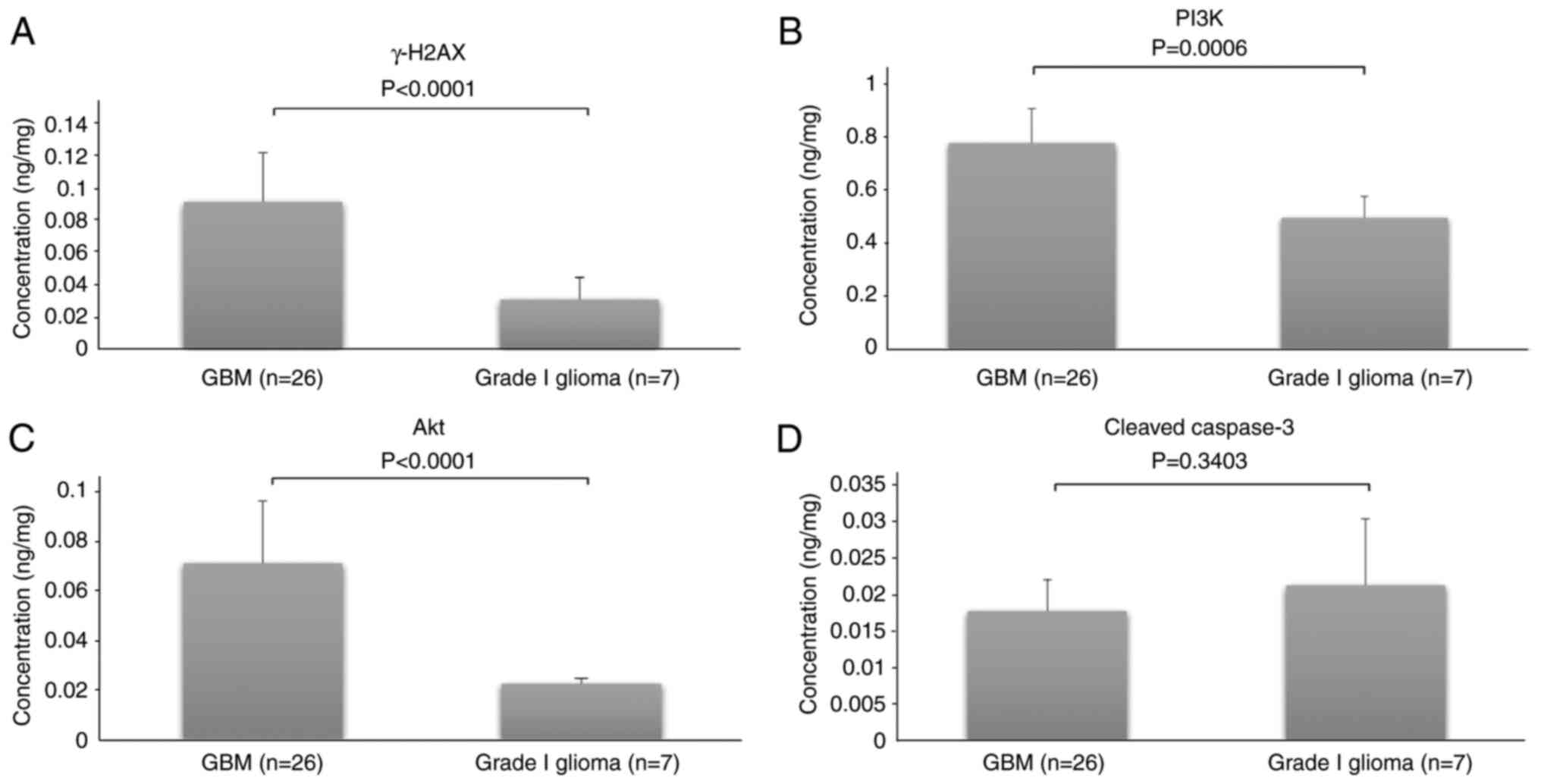
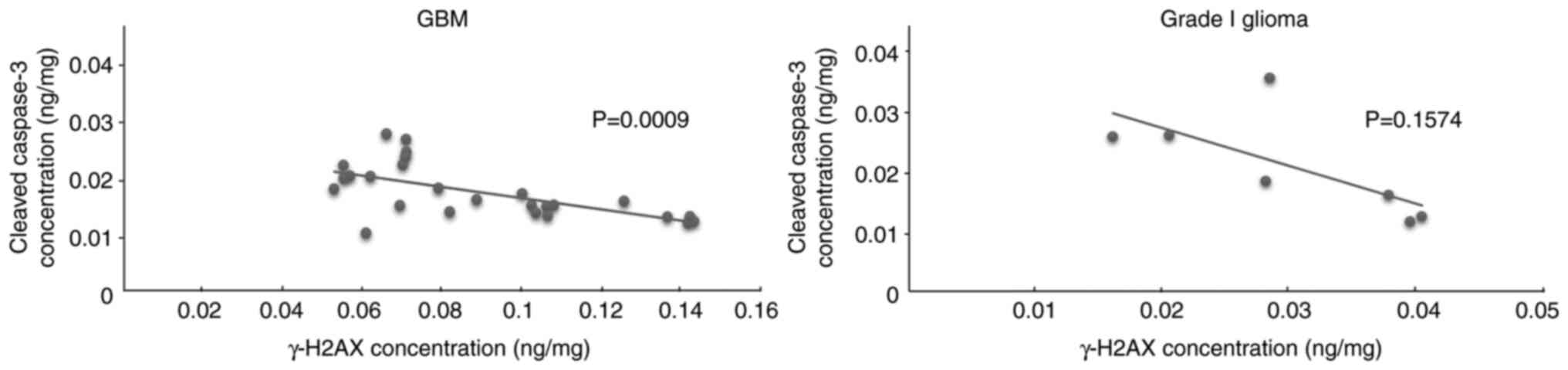
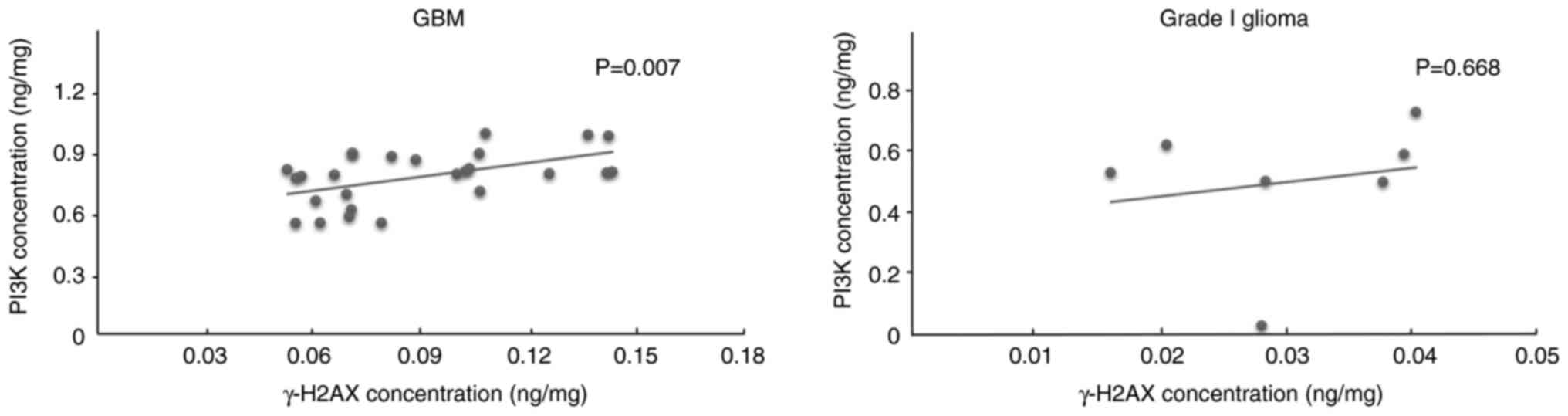
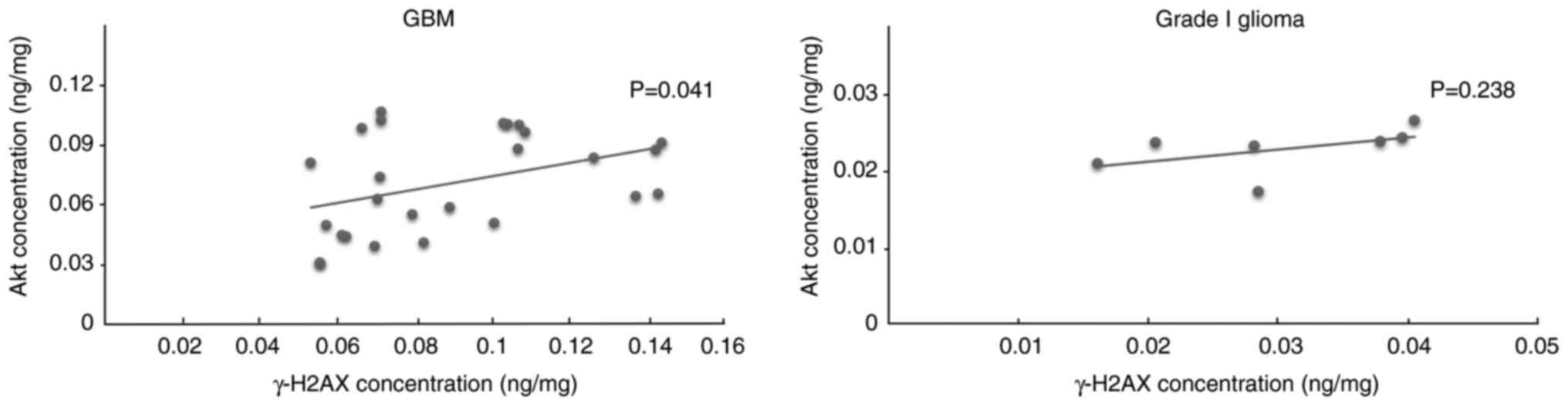
Glioblastoma multiforme (GBM) is a very aggressive type of primary brain tumor in adults with a poor prognosis. DNA double‑strand breaks are known to be associated with the development of numerous cancer types due to their ability to generate genomic instabilities. In GBM, the phosphatidylinositol 3‑kinase (PI3K)/Akt pathway is a common pathway that can be activated by exogenous and endogenous factors. Genomic instability may be an endogenous stimulating factor for activation of the PI3K/Akt pathway, which may inhibit the apoptosis of GBM cells. Spontaneous DNA double‑strand breaks play an essential role in the survival of GBM cells, and apoptosis levels may reflect survival ability. However, no study has yet been conducted to analyse the association between spontaneous DNA double‑strand breaks and apoptosis in patients with GBM prior to treatment. Therefore, the present study examined the concentrations of γ‑histone 2AX (γ‑H2AX), a sensitive marker of spontaneous DNA double‑strand breaks, and cleaved caspase‑3, a marker of apoptosis, in patients with GBM. The correlation of γ‑H2AX with cleaved caspase‑3, PI3K and Akt was also investigated. A total of 26 pre‑treatment tumor tissue specimens from patient with GBM were analyzed to determine the concentrations of γ‑H2AX, PI3K, Akt and cleaved caspase‑3 using sandwich enzyme‑linked immunosorbent assays. The results showed a moderate positive correlation between γ‑H2AX and PI3K (r=0.52; P=0.007), a moderate positive correlation between γ‑H2AX and Akt (r=0.4; P=0.041) and a strong negative correlation between γ‑H2AX and cleaved caspase‑3 (r=‑0.61; P=0.0009). These analyses were also performed in seven tumor tissue specimens from patients with grade I glioma as controls, but no significant correlations were detected. The findings of the present study suggest that a high level of γ‑H2AX may affect GBM cell apoptosis via the PI3K/Akt pathway.
View Figures

Figure 1

Figure 2

Figure 3

Figure 4

View References

1 

Rosell R, de las Peñas R, Balaña C, Santarpia M, Salazar F, de Aguirre I, Reguart N, Villa S, Wei J, Ramirez JL, et al: Translational research in glioblastoma multiforme: Molecular criteria for patient selection. Futur Oncol. 4:219–228. 2008. View Article : Google Scholar : PubMed/NCBI

2 

Mikkelsen VE, Solheim O, Salvesen Ø and Torp SH: The histological representativeness of glioblastoma tissue samples. Acta Neurochir (Wien). 163:1911–1920. 2021. View Article : Google Scholar : PubMed/NCBI

3 

Ohgaki H and Kleihues P: Epidemiology and etiology of gliomas. Acta Neuropathol. 109:93–108. 2005. View Article : Google Scholar : PubMed/NCBI

4 

Iacob G and Dinca EB: Current data and strategy in glioblastoma multiforme. J Med Life. 2:386–393. 2009.PubMed/NCBI

5 

Nakada M, Kita D, Watanabe T, Hayashi Y, Teng L, Pyko IV and Hamada J: Aberrant signaling pathways in glioma. Cancers (Basel). 3:3242–3278. 2011. View Article : Google Scholar : PubMed/NCBI

6 

Szopa W, Burley TA, Kramer-Marek G and Kaspera W: Diagnostic and therapeutic biomarkers in glioblastoma: Current status and future perspectives. Biomed Res Int. 2017:80135752017. View Article : Google Scholar : PubMed/NCBI

7 

Cancer Genome Atlas Research Network, . Comprehensive genomic characterization defines human glioblastoma genes and core pathways. Nature. 455:1061–1068. 2008. View Article : Google Scholar : PubMed/NCBI

8 

Vanhaesebroeck B, Guillermet-Guibert J, Graupera M and Bilanges B: The emerging mechanisms of isoform-specific PI3K signalling. Nat Rev Mol Cell Biol. 11:329–341. 2010. View Article : Google Scholar : PubMed/NCBI

9 

Moscatello DK, Holgado-Madruga M, Emlet DR, Montgomery RB and Wong AJ: Constitutive activation of phosphatidylinositol 3-kinase by a naturally occurring mutant epidermal growth factor receptor. J Biol Chem. 273:200–206. 1998. View Article : Google Scholar : PubMed/NCBI

10 

Suk HS, Hromas R and Lee SH: Emerging features of DNA double-strand break repair in humans. New Research Directions in DNA Repair; 2013, View Article : Google Scholar

11 

Osaki M, Oshimura M and Ito H: PI3K-Akt pathway: Its functions and alterations in human cancer. Apoptosis. 9:667–676. 2004. View Article : Google Scholar : PubMed/NCBI

12 

Auger KR, Serunian LA, Soltoff SP, Libby P and Cantley LC: PDGF-dependent tyrosine phosphorylation stimulates production of novel polyphosphoinositides in intact cells. Cell. 57:167–175. 1989. View Article : Google Scholar : PubMed/NCBI

13 

Ruderman NB, Kapeller R, White MF and Cantley LC: Activation of phosphatidylinositol 3-kinase by insulin. Proc Natl Acad Sci USA. 87:1411–1415. 1990. View Article : Google Scholar : PubMed/NCBI

14 

Crespo S, Kind M and Arcaro A: The role of the PI3K/AKT/mTOR pathway in brain tumor metastasis. J Cancer Metastasis Treat. 2:80–89. 2016. View Article : Google Scholar

15 

Liu Y, Zheng J, Zhang Y, Wang Z, Yang Y, Bai M and Dai Y: Fucoxanthin activates apoptosis via inhibition of PI3K/Akt/mTOR pathway and suppresses invasion and migration by restriction of p38-MMP-2/9 pathway in human glioblastoma cells. Neurochem Res. 41:2728–2751. 2016. View Article : Google Scholar : PubMed/NCBI

16 

Luo SM, Tsai WC, Tsai CK, Chen Y and Hueng DY: ARID4B knockdown suppresses PI3K/AKT signaling and induces apoptosis in human glioma cells. Onco Targets Ther. 14:1843–1855. 2021. View Article : Google Scholar : PubMed/NCBI

17 

Gonçalves CS, Lourenço T, Xavier-magalhães A, Pojo M and Costa BM: Mechanisms of aggressiveness in glioblastoma: Prognostic and potential therapeutic insights. Evolution of the Molecular Biology of Brain Tumors and the Therapeutic Implications; 2013

18 

Ray SK: Glioblastoma: Molecular Mechanisms of Pathogenesis and Current Therapeutic Strategies. 1st edition. Springer; New York, NY: pp. pp4312010

19 

Kashyap D, Garg VK and Goel N: Intrinsic and extrinsic pathways of apoptosis: Role in cancer development and prognosis. Advances in Protein Chemistry and Structural Biology. 1st edition. Vol 125. Elsevier Inc.; pp. 73–120. 2021, View Article : Google Scholar : PubMed/NCBI

20 

Brentnall M, Rodriguez-menocal L, De Guevara RL, Cepero E and Boise LH: Caspase-9, caspase-3 and caspase-7 have distinct roles during intrinsic apoptosis. BMC Cell Biol. 14:322013. View Article : Google Scholar : PubMed/NCBI

21 

Obeng E: Apoptosis (programmed cell death) and its signals-a review. Braz J Biol. 81:1133–1143. 2021. View Article : Google Scholar : PubMed/NCBI

22 

Eskandari E and Eaves CJ: Paradoxical roles of caspase-3 in regulating cell survival, proliferation, and tumorigenesis. J Cell Biol. 221:e2022011592022.PubMed/NCBI

23 

Yang X, Zhong DN, Qin H, Wu PR, Wei KL, Chen G, He RQ and Zhong JC: Caspase-3 over-expression is associated with poor overall survival and clinicopathological parameters in breast cancer: A meta-analysis of 3091 cases. Oncotarget. 9:8629–8641. 2017. View Article : Google Scholar : PubMed/NCBI

24 

Huang KH, Fang WL, Li AFY, Liang PH, Wu CW, Shyr YM and Yang MH: Caspase-3, a key apoptotic protein, as a prognostic marker in gastric cancer after curative surgery. Int J Surg. 52:258–263. 2018. View Article : Google Scholar : PubMed/NCBI

25 

Andressakis D, Lazaris AC, Tsiambas E, Kavantzas N, Rapidis A and Patsouris E: Evaluation of caspase-3 and caspase-8 deregulation in tongue squamous cell carcinoma, based on immunohistochemistry and computerised image analysis. J Laryngol Otol. 122:1213–1218. 2008. View Article : Google Scholar : PubMed/NCBI

26 

Lin YF, Lai TC, Chang CK, Chen CL, Huang MS, Yang CJ, Liu HG, Dong JJ, Chou YA, Teng KH, et al: Targeting the XIAP/caspase-7 complex selectively kills caspase-3-deficient malignancies. J Clin Invest. 123:3861–3875. 2013. View Article : Google Scholar : PubMed/NCBI

27 

Vítor AC, Huertas P, Legube G and de Almeida SF: Studying DNA double-strand break repair: An ever-growing toolbox. Front Mol Biosci. 7:242020. View Article : Google Scholar : PubMed/NCBI

28 

Khanna KK and Jackson SP: DNA double-strand breaks: Signaling, repair and the cancer connection. Nat Genet. 27:247–254. 2001. View Article : Google Scholar : PubMed/NCBI

29 

Mladenov E and Iliakis G: The pathways of double-strand break repair. DNA Repair-On the Pathways to Fixing DNA Damage and Errors. 2011. View Article : Google Scholar

30 

Srivastava M and Raghavan SC: DNA double-strand break repair inhibitors as cancer therapeutics. Chem Biol. 22:17–29. 2015. View Article : Google Scholar : PubMed/NCBI

31 

Mladenov E, Magin S, Soni A and Iliakis G: DNA double-strand-break repair in higher eukaryotes and its role in genomic instability and cancer: Cell cycle and proliferation-dependent regulation. Semin Cancer Biol. 37–38. 51–64. 2016.PubMed/NCBI

32 

Swift LH and Golsteyn RM: Genotoxic anti-cancer agents and their relationship to DNA damage, mitosis, and checkpoint adaptation in proliferating cancer cells. Int J Mol Sci. 15:3403–3431. 2014. View Article : Google Scholar : PubMed/NCBI

33 

Harper JW and Elledge SJ: The DNA damage response: Ten years after. Mol Cell. 28:739–745. 2007. View Article : Google Scholar : PubMed/NCBI

34 

Rogakou EP, Pilch DR, Orr AH, Ivanova VS and Bonner WM: DNA double-stranded breaks induce histone H2AX phosphorylation on serine 139. J Biol Chem. 273:5858–5868. 1998. View Article : Google Scholar : PubMed/NCBI

35 

Redon C, Pilch D, Rogakou E, Sedelnikova O, Newrock K and Bonner W: Histone H2A variants H2AX and H2AZ. Curr Opin Genet Dev. 12:162–169. 2002. View Article : Google Scholar : PubMed/NCBI

36 

Bonner WM, Redon CE, Dickey JS, Nakamura AJ, Sedelnikova OA, Solier S and Pommier Y: GammaH2AX and cancer. Nat Rev Cancer. 8:957–967. 2008. View Article : Google Scholar : PubMed/NCBI

37 

Dickey JS, Redon CE, Nakamura AJ, Baird BJ, Sedelnikova OA and Bonner WM: H2AX: Functional roles and potential applications. Chromosoma. 118:683–692. 2009. View Article : Google Scholar : PubMed/NCBI

38 

Redon CE, Nakamura AJ, Martin OA, Parekh PR, Weyemi US and Bonner WM: Recent developments in the use of γ-H2AX as a quantitative DNA double-strand break biomarker. Aging (Albany NY). 3:168–174. 2011. View Article : Google Scholar : PubMed/NCBI

39 

Sedelnikova OA and Bonner WM: GammaH2AX in cancer cells: A potential biomarker for cancer diagnostics, prediction and recurrence. Cell Cycle. 5:2909–2913. 2006. View Article : Google Scholar : PubMed/NCBI

40 

Matthaios D, Foukas PG, Kefala M, Hountis P, Trypsianis G, Panayiotides IG, Chatzaki E, Pantelidaki E, Bouros D, Karakitsos P and Kakolyris S: γ-H2AX expression detected by immunohistochemistry correlates with prognosis in early operable non-small cell lung cancer. Onco Targets Ther. 5:309–314. 2012. View Article : Google Scholar : PubMed/NCBI

41 

Gorgoulis VG, Vassiliou LVF, Karakaidos P, Zacharatos P, Kotsinas A, Liloglou T, Venere M, Ditullio RA Jr, Kastrinakis NG, Levy B, et al: Activation of the DNA damage checkpoint and genomic instability in human precancerous lesions. Nature. 434:907–913. 2005. View Article : Google Scholar : PubMed/NCBI

42 

Liu X, Li F, Huang Q, Zhang Z, Zhou L, Deng Y, Zhou M, Fleenor DE, Wang H, Kastan MB and Li CY: Self-inflicted DNA double-strand breaks sustain tumorigenicity and stemness of cancer cells. Cell Res. 27:764–783. 2017. View Article : Google Scholar : PubMed/NCBI

43 

Ray SK, Patel SJ, Welsh CT, Wilford GG, Hogan EL and Banik NL: Molecular evidence of apoptotic death in malignant brain tumors including glioblastoma multiforme: Upregulation of calpain and caspase-3. J Neurosci Res. 69:197–206. 2002. View Article : Google Scholar : PubMed/NCBI

44 

Tirapelli LF, Bolini PH, Tirapelli DP, Peria FM, Becker AN, Saggioro FP and Carlotti CG Jr: Caspase-3 and Bcl-2 expression in glioblastoma: An immunohistochemical study. Arq Neuropsiquiatr. 68:603–607. 2010. View Article : Google Scholar : PubMed/NCBI

45 

San Filippo J, Sung P and Klein H: Mechanism of eukaryotic homologous recombination. Annu Rev Biochem. 77:229–257. 2008. View Article : Google Scholar : PubMed/NCBI

46 

Lieber MR, Ma Y, Pannicke U and Schwarz K: Mechanism and regulation of human non-homologous DNA end-joining. Nat Rev Mol Cell Biol. 4:712–720. 2003. View Article : Google Scholar : PubMed/NCBI

47 

Turgeon MO, Perry NJS and Poulogiannis G: DNA damage, repair, and cancer metabolism. Front Oncol. 8:152018. View Article : Google Scholar : PubMed/NCBI

48 

Bernstein C, Prasad RA, Nfonsam V and Bernstei H: DNA damage, DNA repair and cancer. New Research Directions in DNA Repair; 2013, View Article : Google Scholar

49 

Castedo M, Ferri KF and Kroemer G: Mammalian target of rapamycin (mTOR): Pro- and anti-apoptotic. Cell Death Differ. 9:99–100. 2002. View Article : Google Scholar : PubMed/NCBI

Related Articles

  • Abstract
  • View
  • Download
  • Twitter
Copy and paste a formatted citation
Spandidos Publications style
Banjarnahor CT, Hardiany NS, Wahjoepramono EJ, Hariyanto AD and Sadikin M: High concentration of γ‑H2AX correlates with a marker of apoptotic suppression and PI3K/Akt pathway upregulation in glioblastoma multiforme. Oncol Lett 25: 149, 2023.
APA
Banjarnahor, C.T., Hardiany, N.S., Wahjoepramono, E.J., Hariyanto, A.D., & Sadikin, M. (2023). High concentration of γ‑H2AX correlates with a marker of apoptotic suppression and PI3K/Akt pathway upregulation in glioblastoma multiforme. Oncology Letters, 25, 149. https://doi.org/10.3892/ol.2023.13735
MLA
Banjarnahor, C. T., Hardiany, N. S., Wahjoepramono, E. J., Hariyanto, A. D., Sadikin, M."High concentration of γ‑H2AX correlates with a marker of apoptotic suppression and PI3K/Akt pathway upregulation in glioblastoma multiforme". Oncology Letters 25.4 (2023): 149.
Chicago
Banjarnahor, C. T., Hardiany, N. S., Wahjoepramono, E. J., Hariyanto, A. D., Sadikin, M."High concentration of γ‑H2AX correlates with a marker of apoptotic suppression and PI3K/Akt pathway upregulation in glioblastoma multiforme". Oncology Letters 25, no. 4 (2023): 149. https://doi.org/10.3892/ol.2023.13735
Copy and paste a formatted citation
x
Spandidos Publications style
Banjarnahor CT, Hardiany NS, Wahjoepramono EJ, Hariyanto AD and Sadikin M: High concentration of γ‑H2AX correlates with a marker of apoptotic suppression and PI3K/Akt pathway upregulation in glioblastoma multiforme. Oncol Lett 25: 149, 2023.
APA
Banjarnahor, C.T., Hardiany, N.S., Wahjoepramono, E.J., Hariyanto, A.D., & Sadikin, M. (2023). High concentration of γ‑H2AX correlates with a marker of apoptotic suppression and PI3K/Akt pathway upregulation in glioblastoma multiforme. Oncology Letters, 25, 149. https://doi.org/10.3892/ol.2023.13735
MLA
Banjarnahor, C. T., Hardiany, N. S., Wahjoepramono, E. J., Hariyanto, A. D., Sadikin, M."High concentration of γ‑H2AX correlates with a marker of apoptotic suppression and PI3K/Akt pathway upregulation in glioblastoma multiforme". Oncology Letters 25.4 (2023): 149.
Chicago
Banjarnahor, C. T., Hardiany, N. S., Wahjoepramono, E. J., Hariyanto, A. D., Sadikin, M."High concentration of γ‑H2AX correlates with a marker of apoptotic suppression and PI3K/Akt pathway upregulation in glioblastoma multiforme". Oncology Letters 25, no. 4 (2023): 149. https://doi.org/10.3892/ol.2023.13735
Follow us
  • Twitter
  • LinkedIn
  • Facebook
About
  • Spandidos Publications
  • Careers
  • Cookie Policy
  • Privacy Policy
How can we help?
  • Help
  • Live Chat
  • Contact
  • Email to our Support Team