Spandidos Publications Logo
  • About
    • About Spandidos
    • Aims and Scopes
    • Abstracting and Indexing
    • Editorial Policies
    • Reprints and Permissions
    • Job Opportunities
    • Terms and Conditions
    • Contact
  • Journals
    • All Journals
    • Oncology Letters
      • Oncology Letters
      • Information for Authors
      • Editorial Policies
      • Editorial Board
      • Aims and Scope
      • Abstracting and Indexing
      • Bibliographic Information
      • Archive
    • International Journal of Oncology
      • International Journal of Oncology
      • Information for Authors
      • Editorial Policies
      • Editorial Board
      • Aims and Scope
      • Abstracting and Indexing
      • Bibliographic Information
      • Archive
    • Molecular and Clinical Oncology
      • Molecular and Clinical Oncology
      • Information for Authors
      • Editorial Policies
      • Editorial Board
      • Aims and Scope
      • Abstracting and Indexing
      • Bibliographic Information
      • Archive
    • Experimental and Therapeutic Medicine
      • Experimental and Therapeutic Medicine
      • Information for Authors
      • Editorial Policies
      • Editorial Board
      • Aims and Scope
      • Abstracting and Indexing
      • Bibliographic Information
      • Archive
    • International Journal of Molecular Medicine
      • International Journal of Molecular Medicine
      • Information for Authors
      • Editorial Policies
      • Editorial Board
      • Aims and Scope
      • Abstracting and Indexing
      • Bibliographic Information
      • Archive
    • Biomedical Reports
      • Biomedical Reports
      • Information for Authors
      • Editorial Policies
      • Editorial Board
      • Aims and Scope
      • Abstracting and Indexing
      • Bibliographic Information
      • Archive
    • Oncology Reports
      • Oncology Reports
      • Information for Authors
      • Editorial Policies
      • Editorial Board
      • Aims and Scope
      • Abstracting and Indexing
      • Bibliographic Information
      • Archive
    • Molecular Medicine Reports
      • Molecular Medicine Reports
      • Information for Authors
      • Editorial Policies
      • Editorial Board
      • Aims and Scope
      • Abstracting and Indexing
      • Bibliographic Information
      • Archive
    • World Academy of Sciences Journal
      • World Academy of Sciences Journal
      • Information for Authors
      • Editorial Policies
      • Editorial Board
      • Aims and Scope
      • Abstracting and Indexing
      • Bibliographic Information
      • Archive
    • International Journal of Functional Nutrition
      • International Journal of Functional Nutrition
      • Information for Authors
      • Editorial Policies
      • Editorial Board
      • Aims and Scope
      • Abstracting and Indexing
      • Bibliographic Information
      • Archive
    • International Journal of Epigenetics
      • International Journal of Epigenetics
      • Information for Authors
      • Editorial Policies
      • Editorial Board
      • Aims and Scope
      • Abstracting and Indexing
      • Bibliographic Information
      • Archive
    • Medicine International
      • Medicine International
      • Information for Authors
      • Editorial Policies
      • Editorial Board
      • Aims and Scope
      • Abstracting and Indexing
      • Bibliographic Information
      • Archive
  • Articles
  • Information
    • Information for Authors
    • Information for Reviewers
    • Information for Librarians
    • Information for Advertisers
    • Conferences
  • Language Editing
Spandidos Publications Logo
  • About
    • About Spandidos
    • Aims and Scopes
    • Abstracting and Indexing
    • Editorial Policies
    • Reprints and Permissions
    • Job Opportunities
    • Terms and Conditions
    • Contact
  • Journals
    • All Journals
    • Biomedical Reports
      • Information for Authors
      • Editorial Policies
      • Editorial Board
      • Aims and Scope
      • Abstracting and Indexing
      • Bibliographic Information
      • Archive
    • Experimental and Therapeutic Medicine
      • Information for Authors
      • Editorial Policies
      • Editorial Board
      • Aims and Scope
      • Abstracting and Indexing
      • Bibliographic Information
      • Archive
    • International Journal of Epigenetics
      • Information for Authors
      • Editorial Policies
      • Editorial Board
      • Aims and Scope
      • Abstracting and Indexing
      • Bibliographic Information
      • Archive
    • International Journal of Functional Nutrition
      • Information for Authors
      • Editorial Policies
      • Editorial Board
      • Aims and Scope
      • Abstracting and Indexing
      • Bibliographic Information
      • Archive
    • International Journal of Molecular Medicine
      • Information for Authors
      • Editorial Policies
      • Editorial Board
      • Aims and Scope
      • Abstracting and Indexing
      • Bibliographic Information
      • Archive
    • International Journal of Oncology
      • Information for Authors
      • Editorial Policies
      • Editorial Board
      • Aims and Scope
      • Abstracting and Indexing
      • Bibliographic Information
      • Archive
    • Medicine International
      • Information for Authors
      • Editorial Policies
      • Editorial Board
      • Aims and Scope
      • Abstracting and Indexing
      • Bibliographic Information
      • Archive
    • Molecular and Clinical Oncology
      • Information for Authors
      • Editorial Policies
      • Editorial Board
      • Aims and Scope
      • Abstracting and Indexing
      • Bibliographic Information
      • Archive
    • Molecular Medicine Reports
      • Information for Authors
      • Editorial Policies
      • Editorial Board
      • Aims and Scope
      • Abstracting and Indexing
      • Bibliographic Information
      • Archive
    • Oncology Letters
      • Information for Authors
      • Editorial Policies
      • Editorial Board
      • Aims and Scope
      • Abstracting and Indexing
      • Bibliographic Information
      • Archive
    • Oncology Reports
      • Information for Authors
      • Editorial Policies
      • Editorial Board
      • Aims and Scope
      • Abstracting and Indexing
      • Bibliographic Information
      • Archive
    • World Academy of Sciences Journal
      • Information for Authors
      • Editorial Policies
      • Editorial Board
      • Aims and Scope
      • Abstracting and Indexing
      • Bibliographic Information
      • Archive
  • Articles
  • Information
    • For Authors
    • For Reviewers
    • For Librarians
    • For Advertisers
    • Conferences
  • Language Editing
Login Register Submit
  • This site uses cookies
  • You can change your cookie settings at any time by following the instructions in our Cookie Policy. To find out more, you may read our Privacy Policy.

    I agree
Search articles by DOI, keyword, author or affiliation
Search
Advanced Search
presentation
Oncology Letters
Join Editorial Board Propose a Special Issue
Print ISSN: 1792-1074 Online ISSN: 1792-1082
Journal Cover
October-2025 Volume 30 Issue 4

Full Size Image

Sign up for eToc alerts
Recommend to Library

Journals

International Journal of Molecular Medicine

International Journal of Molecular Medicine

International Journal of Molecular Medicine is an international journal devoted to molecular mechanisms of human disease.

International Journal of Oncology

International Journal of Oncology

International Journal of Oncology is an international journal devoted to oncology research and cancer treatment.

Molecular Medicine Reports

Molecular Medicine Reports

Covers molecular medicine topics such as pharmacology, pathology, genetics, neuroscience, infectious diseases, molecular cardiology, and molecular surgery.

Oncology Reports

Oncology Reports

Oncology Reports is an international journal devoted to fundamental and applied research in Oncology.

Experimental and Therapeutic Medicine

Experimental and Therapeutic Medicine

Experimental and Therapeutic Medicine is an international journal devoted to laboratory and clinical medicine.

Oncology Letters

Oncology Letters

Oncology Letters is an international journal devoted to Experimental and Clinical Oncology.

Biomedical Reports

Biomedical Reports

Explores a wide range of biological and medical fields, including pharmacology, genetics, microbiology, neuroscience, and molecular cardiology.

Molecular and Clinical Oncology

Molecular and Clinical Oncology

International journal addressing all aspects of oncology research, from tumorigenesis and oncogenes to chemotherapy and metastasis.

World Academy of Sciences Journal

World Academy of Sciences Journal

Multidisciplinary open-access journal spanning biochemistry, genetics, neuroscience, environmental health, and synthetic biology.

International Journal of Functional Nutrition

International Journal of Functional Nutrition

Open-access journal combining biochemistry, pharmacology, immunology, and genetics to advance health through functional nutrition.

International Journal of Epigenetics

International Journal of Epigenetics

Publishes open-access research on using epigenetics to advance understanding and treatment of human disease.

Medicine International

Medicine International

An International Open Access Journal Devoted to General Medicine.

Journal Cover
October-2025 Volume 30 Issue 4

Full Size Image

Sign up for eToc alerts
Recommend to Library

  • Article
  • Citations
    • Cite This Article
    • Download Citation
    • Create Citation Alert
    • Remove Citation Alert
    • Cited By
  • Similar Articles
    • Related Articles (in Spandidos Publications)
    • Similar Articles (Google Scholar)
    • Similar Articles (PubMed)
  • Download PDF
  • Download XML
  • View XML
Article Open Access

Identification of key ferroptosis‑related genes associated with the development of gastric cancer: Prognostic models, molecular mechanisms and potential treatment strategies

  • Authors:
    • Hui Wang
    • Hang Chen
    • Jianjun Liu
    • Dan Zhang
    • Da Wang
    • Minshan Huang
    • Mengwei Li
    • Suyu He
    • Lanqing Ma
  • View Affiliations / Copyright

    Affiliations: Department of Gastroenterology, The First Affiliated Hospital, Yunnan Institute of Digestive Disease, Yunnan Clinical Research Center for Digestive Diseases, Kunming Medical University, Kunming, Yunnan 650032, P.R. China, Academy of Biomedical Engineering, Kunming Medical University, Kunming, Yunnan 650500, P.R. China, The Fourth Department of Digestive Disease Center, Suining Central Hospital, Suining, Sichuan 629099, P.R. China
    Copyright: © Wang et al. This is an open access article distributed under the terms of Creative Commons Attribution License.
  • Article Number: 450
    |
    Published online on: July 18, 2025
       https://doi.org/10.3892/ol.2025.15196
  • Expand metrics +
Metrics: Total Views: 0 (Spandidos Publications: | PMC Statistics: )
Metrics: Total PDF Downloads: 0 (Spandidos Publications: | PMC Statistics: )
Cited By (CrossRef): 0 citations Loading Articles...

This article is mentioned in:


Abstract

Ferroptosis is a novel iron‑dependent form of cell death that influences the development and progression of gastric cancer (GC), affecting its growth, invasion and metastasis. However, molecular regulatory mechanisms of ferroptosis in GC remain unclear. The present study aimed to identify key ferroptosis‑related genes associated with GC development. Ferroptosis‑related genes were collected from FerrDb, a database that collects data on genes and substances that regulate ferroptosis, and the top survival‑related genes (including progression‑free and overall survival), and differentially expressed genes were identified using data from The Cancer Genome Atlas stomach adenocarcinoma (STAD) samples. Following intersection analysis, least absolute shrinkage and selection operator analysis was performed on 140 screened important genes, and 14 key ferroptosis‑related genes in STAD were obtained using Cox regression models. By reviewing the expression of these genes through the Gene Set Cancer Analysis tool and their correlation with survival, the present study analyzed their overall role in STAD. Tumor immunity analysis was performed to identify potential microRNAs (miRs) and drugs targeting key carcinogenic ferroptosis genes in STAD. NADPH oxidase (NOX) 4, NOX5, aldo‑keto reductase family 1 member C2, RNA binding motif single stranded interacting protein 1 (RBMS1), GABA type A receptor associated protein like 2 (GABARAPL2), gap junction protein α1 (GJA1), transferrin and hydroxycarboxylic acid receptor 1 were notable risk genes. Additionally, by examining the association between these genes and tumor‑infiltrating immune cells, it was discovered that GABARAPL2, GJA1, NOX4 and RBMS1 may influence the immune microenvironment. In total, five miRs [Homo sapiens (hsa)‑miR‑6795‑5p, hsa‑miR‑6758‑5p, hsa‑miR‑501‑5p, hsa‑miR‑505‑5p and hsa‑miR‑484] with potential therapeutic implications for STAD were identified as targeting carcinogenic genes. Finally, using the Genomics of Drug Sensitivity in Cancer and Cancer Therapeutics Response Portal databases, potential drugs [(5Z)‑7‑oxozeaenol, selumetinib, RDEA119, AZ628, dabrafenib and trametinib] were identified based on the aforementioned seven key carcinogenic genes, focusing on those that targeted multiple genes. In conclusion, the present study identified 14 key ferroptosis‑related genes, and seven key carcinogenic genes, which represent promising novel molecular targets for the prognosis and treatment of GC.
View Figures

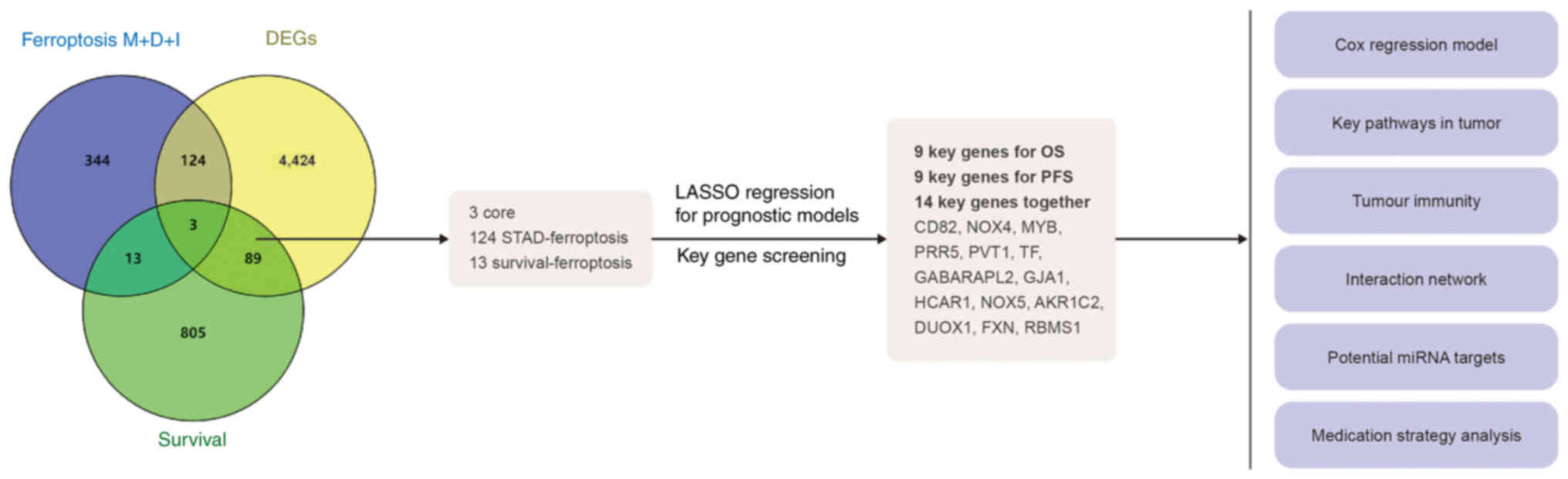
Figure 1

Flow chart of the present study. A
total of 140 key ferroptosis-related genes were obtained, and 14
key genes were screened by LASSO and prognostic models for the
following analyses: i) Optimized Cox regression model, ii) key
pathway analysis in tumors, iii) immunity analysis and iv)
identification of potential miRNAs and drug targeting key
carcinogenic ferroptosis genes in STAD. M, marker; D, driver; I,
inhibitor; LASSO, least absolute shrinkage and selection operator
regression; miRNA, microRNA; STAD, stomach adenocarcinoma; DEG,
differentially expressed gene; OS, overall survival; PFS,
progression-free survival; NOX, NADPH oxidase; MYB, MYB
proto-oncogene, transcription factor; PRR5, proline-rich protein 5;
PVT1, Pvt1 oncogene; TF, transferrin; GABARAPL2, GABA type A
receptor-associated protein-like 2; GJA1, gap junction protein α1;
HCAR1, hydroxycarboxylic acid receptor 1; AKR1C2, aldo-keto
reductase family 1 member C2; DUOX1, dual oxidase 1; FXN, frataxin;
RBMS1, RNA binding motif single stranded interacting protein 1.

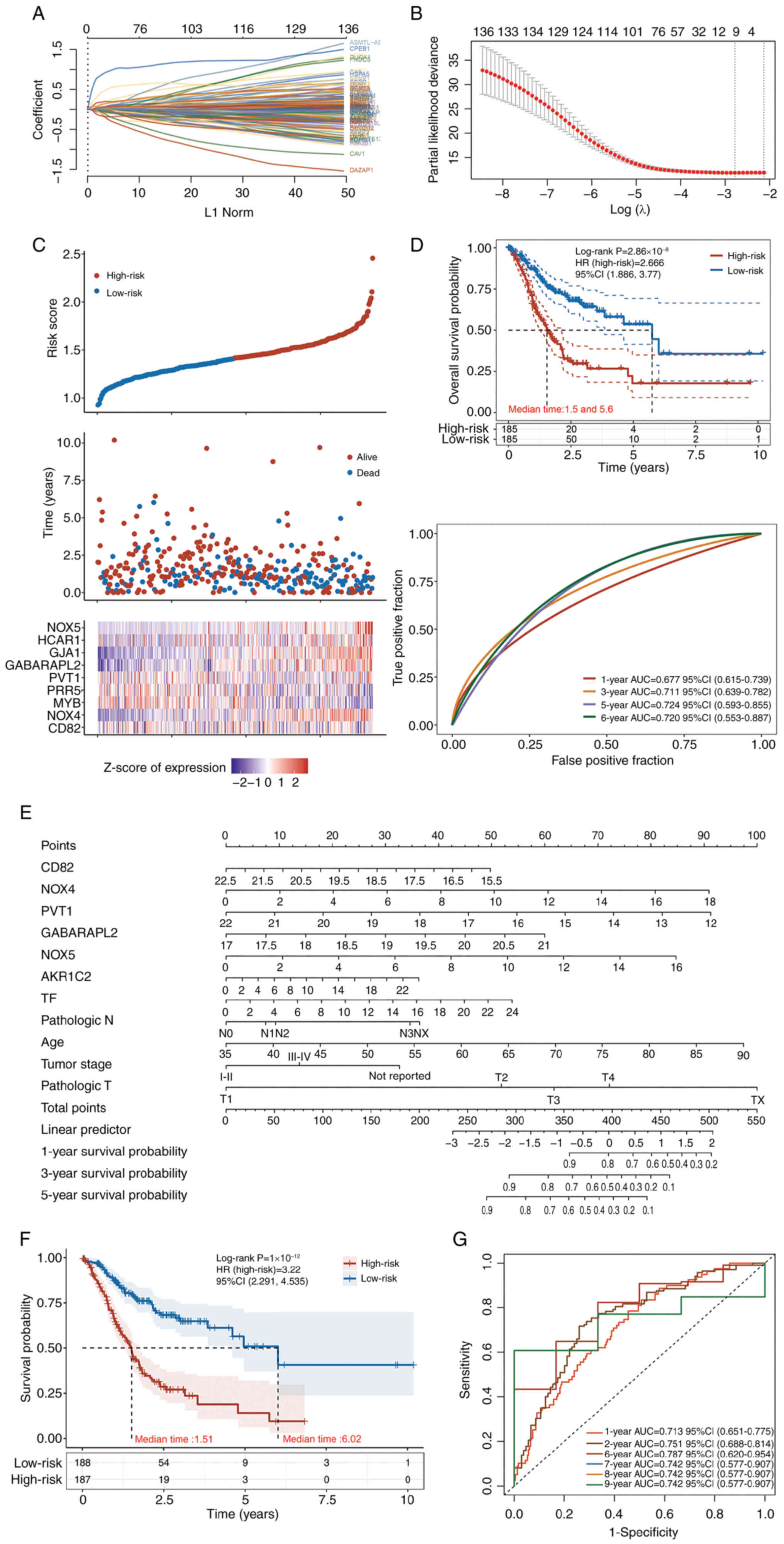
Figure 2

LASSO analysis and Cox regression
models for OS prediction. (A) Coefficients of the selected features
are shown by the λ parameter, where the horizontal coordinate
represents the value of the independent variable λ and the vertical
coordinate represents the coefficients of the independent
variables. (B) Partial likelihood deviance plotted against log(λ)
values calculated through the LASSO Cox regression model. (C)
Association between expression of nine key genes in patients with
gastric adenocarcinoma from The Cancer Genome Atlas database with
patient risk scores and survival times. (D) Median OS time of the
low- and high-risk groups, and receiver operating characteristic
curve of the Cox regression model for the prediction of OS. (E-G)
Cox regression models constructed with the key genes from TIMER
database. (E) Nomogram of the constructed COX regression model,
visually presenting the model; (F) KM curve of the model; (G) ROC
curve of the model. LASSO, least absolute shrinkage and selection
operator; OS, overall survival; HR, hazard ratio; AUC, area under
the curve; CI, confidence interval; NOX, NADPH oxidase; MYB, MYB
proto-oncogene, transcription factor; PRR5, proline rich protein 5;
PVT1, Pvt1 oncogene; GABARAPL2, GABA type A receptor associated
protein like 2; GJA1, gap junction protein α1; HCAR1,
hydroxycarboxylic acid receptor 1.

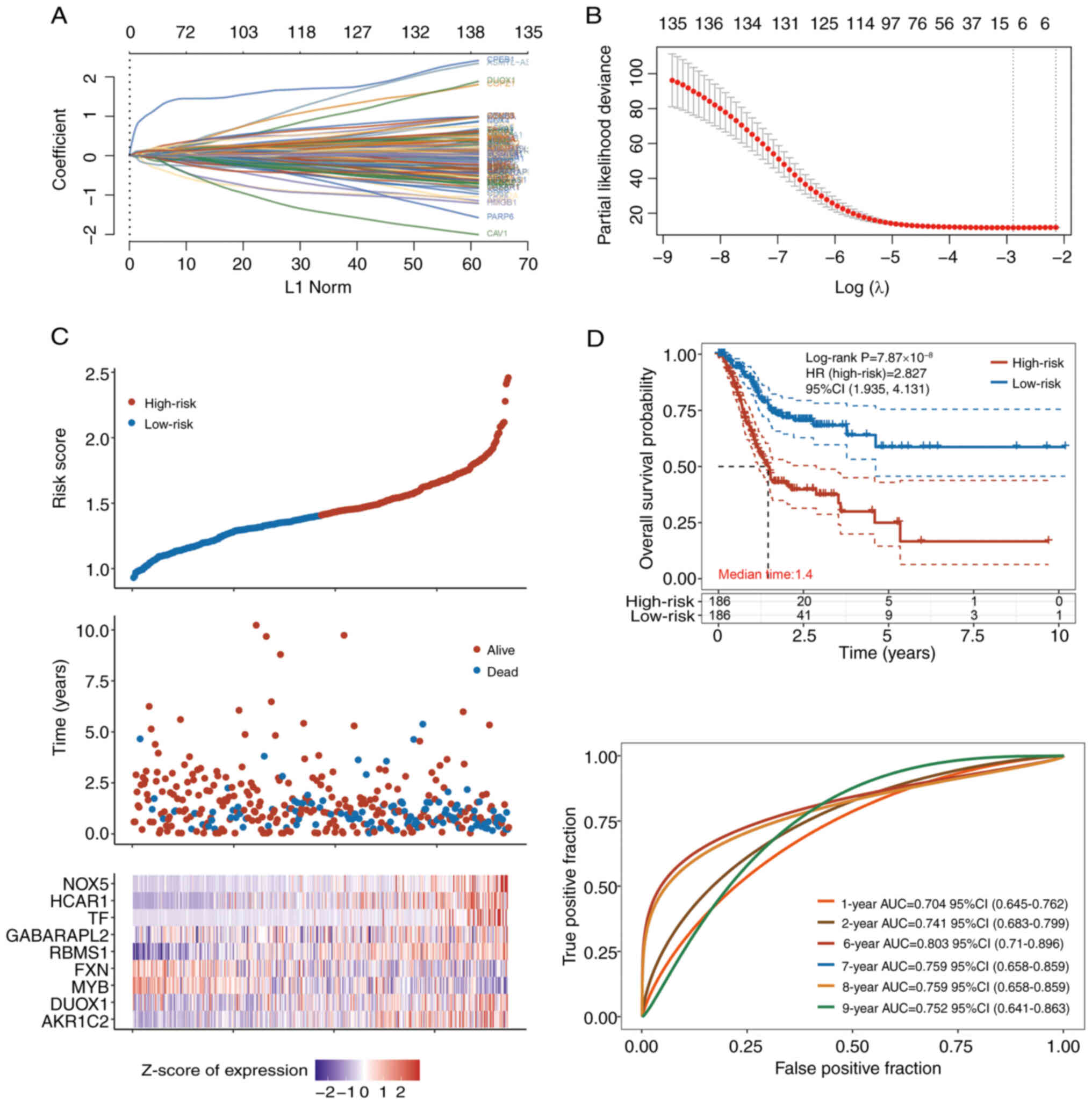
Figure 3

LASSO analysis and Cox regression
models for PFS prediction. (A) Coefficients of the selected
features are shown by the λ parameter, with the horizontal
coordinate representing the value of the independent variable λ and
the vertical coordinate representing the coefficients of the
independent variables. (B) Partial likelihood deviance plotted
against log(λ) values calculated via the LASSO Cox regression
model. (C) Associations between risk scores and survival times of
patients with expressing nine key genes in patients with stomach
adenocarcinoma from The Cancer Genome Atlas database. (D) Median
PFS of the low- and high-risk groups, and receiver operating
characteristic curve of the Cox regression model for the prediction
of PFS. LASSO, least absolute shrinkage and selection operator;
PFS, progression-free survival; HR, hazard ratio; AUC, area under
the curve; CI, confidence interval; NOX, NADPH oxidase; MYB, MYB
proto-oncogene, transcription factor; GABARAPL2, GABA type A
receptor associated protein like 2; HCAR1, hydroxycarboxylic acid
receptor 1; TF, transferrin; AKR1C2, aldo-keto reductase family 1
member C2; DUOX1, dual oxidase 1; FXN, frataxin; RBMS1, RNA binding
motif single stranded interacting protein 1.

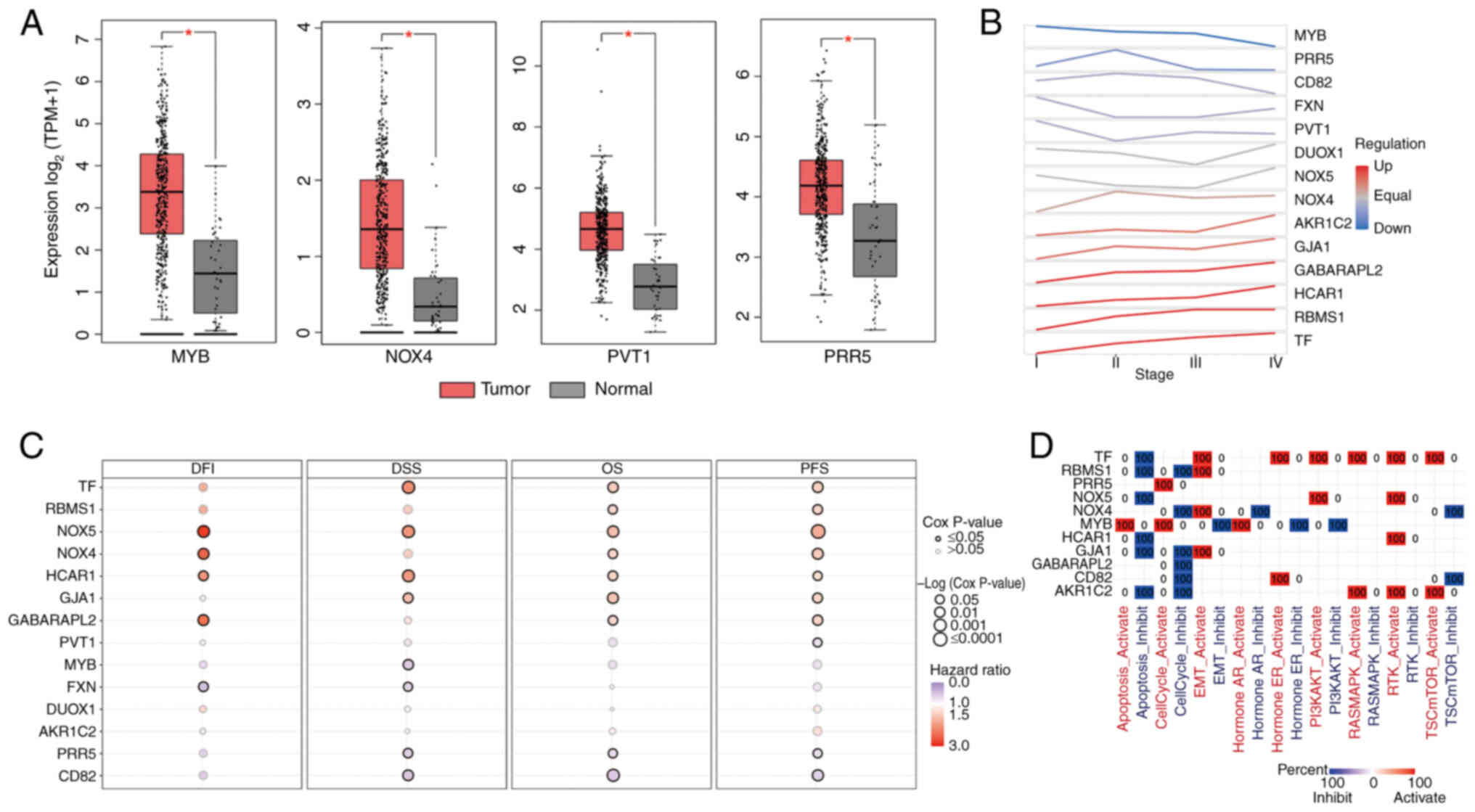
Figure 4

Roles of key ferroptosis genes in
STAD. (A) Among the 14 key genes in STAD, MYB, NOX4, PVT1 and PRR5
expression was increased in STAD tumors compared with normal
tissue. *P<0.05. (B) Expression trend of each key gene from
stages I to IV. (C) Risk genes for DFI, DSS, OS and PFS among the
14 key genes. (D) Association between key genes and cancer
pathways. STAD, stomach adenocarcinoma; DFI, disease-free interval;
DSS, disease-specific survival; OS, overall survival; PFS,
progression-free survival; NOX, NADPH oxidase; MYB, MYB
proto-oncogene, transcription factor; PRR5, proline-rich protein 5;
PVT1, Pvt1 oncogene; TF, transferrin; GABARAPL2, GABA type A
receptor associated protein like 2; GJA1, gap junction protein α1;
HCAR1, hydroxycarboxylic acid receptor 1; AKR1C2, aldo-keto
reductase family 1 member C2; DUOX1, dual oxidase 1; FXN, frataxin;
RBMS1, RNA binding motif single stranded interacting protein 1;
TPM, transcripts per million; A, activation; I, inhibition.

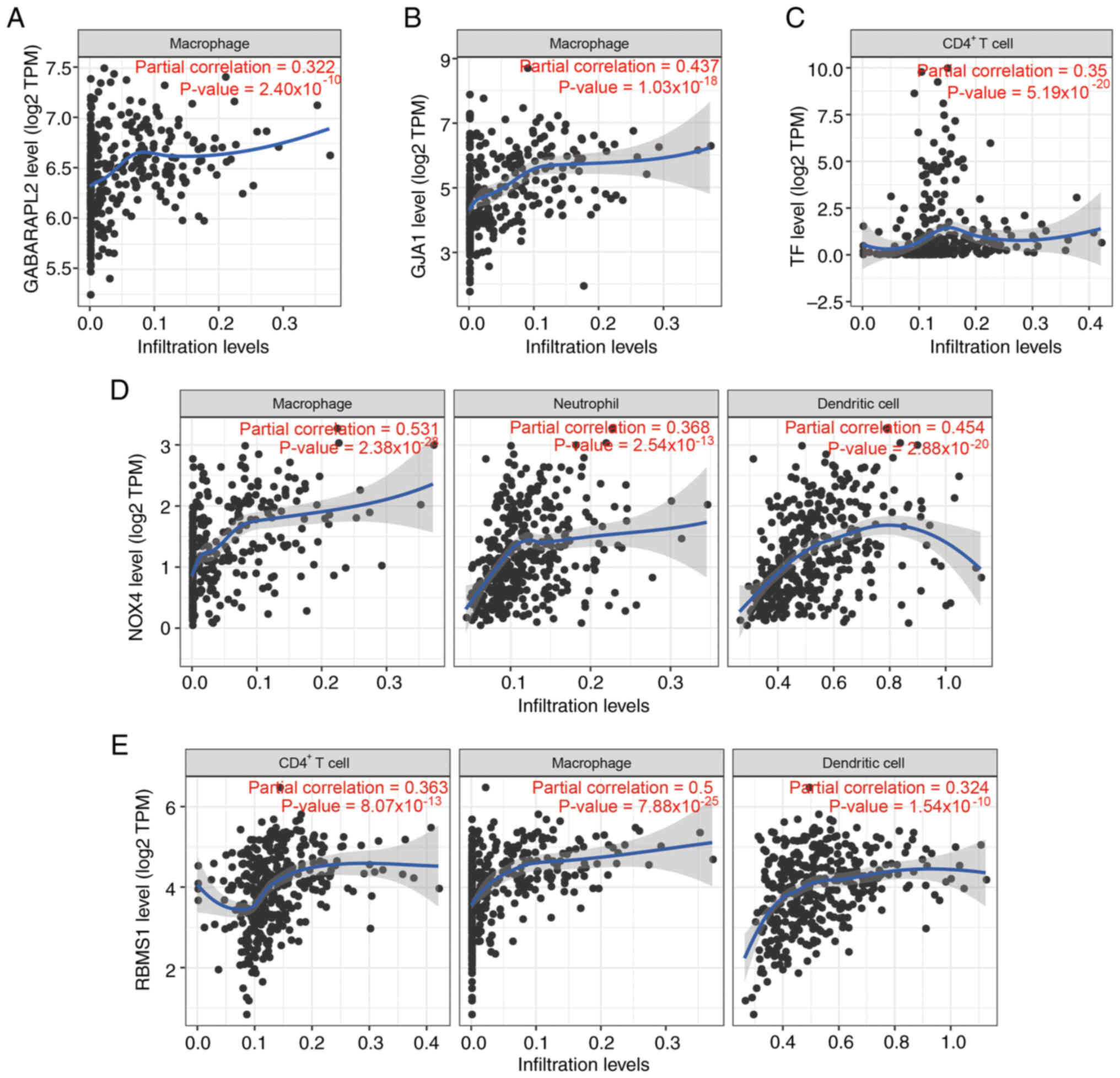
Figure 5

Tumor immunity association with key
ferroptosis genes in stomach adenocarcinoma. (A) GABARAPL2 and (B)
GJA1 expression is positively associated with macrophages. (C) TF
is positively associated with CD4+ T cells. (D) NOX4
expression is positively correlated with macrophages, neutrophils
and dendritic cells. (E) RBMS1 is positively correlated with
CD4+ T cells, macrophages and dendritic cells.
GABARAPL2, GABA type A receptor associated protein-like 2; GJA1,
gap junction protein α1; TF, transferrin; NOX, NADPH oxidase;
RBMS1, RNA-binding motif single stranded interacting protein 1;
TPM, transcripts per million.

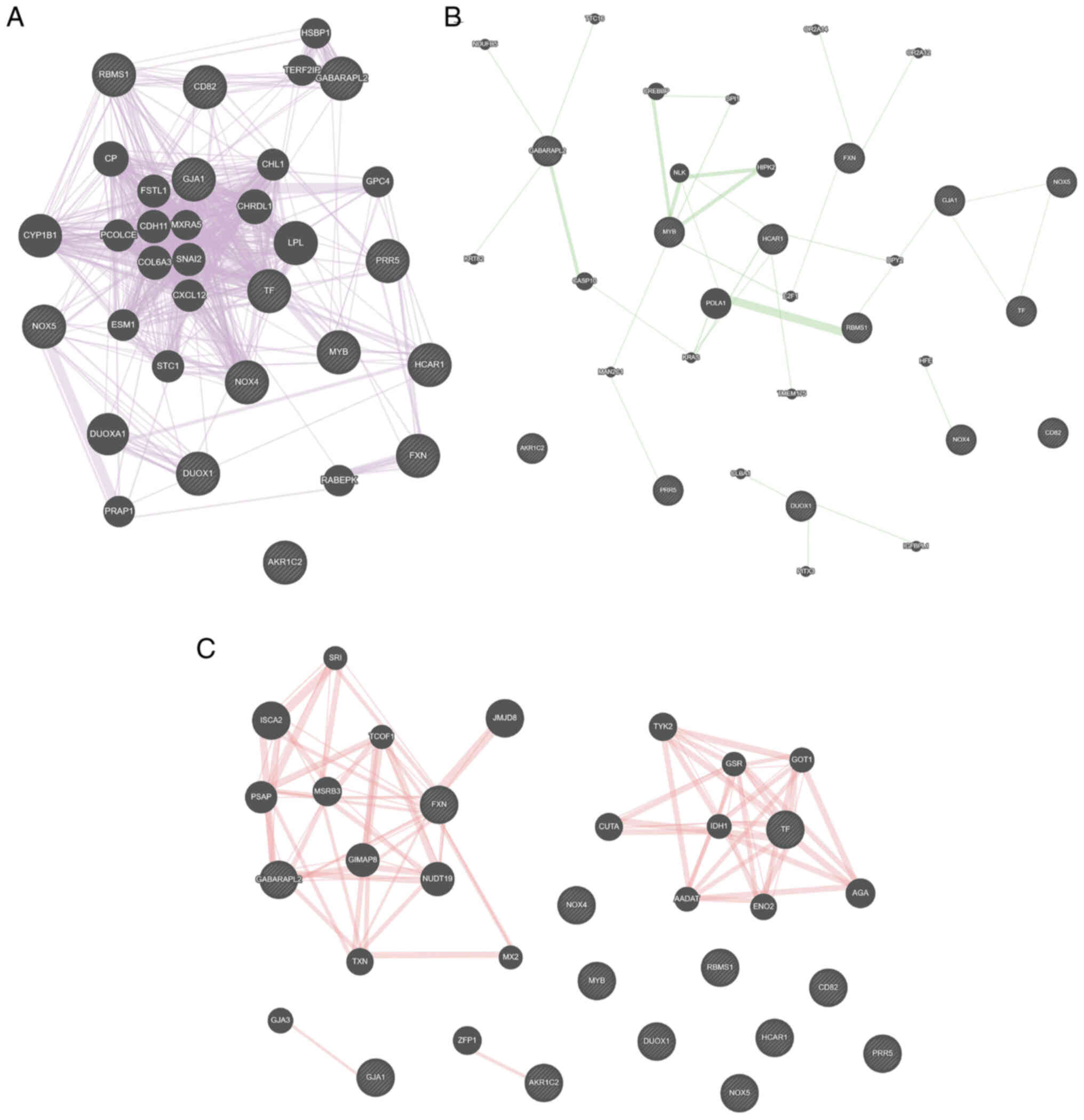
Figure 6

Key gene interaction networks. (A)
Co-expression network. (B) Genetic interaction network. (C)
Physical interaction network.

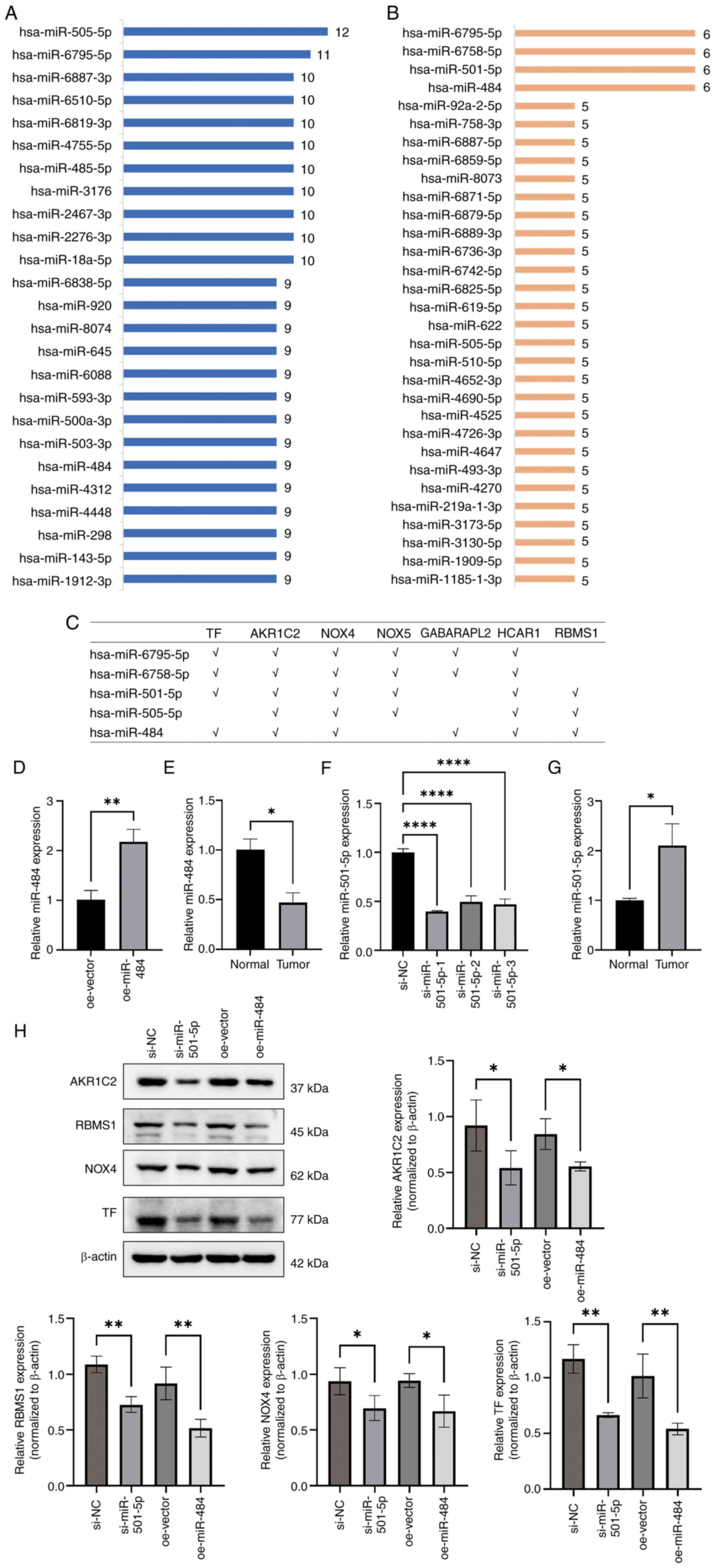
Figure 7

Potential miRNAs that target key
carcinogenic ferroptosis genes in stomach adenocarcinoma. (A) Top
miRNAs with the most matching pairs to key genes. (B) Top miRNAs
with the most targeted genes. (C) A total of five miRNAs
(hsa-miR-6795-5p, hsa-miR-6758-5p, hsa-miR-501-5p, hsa-miR-505-5p
and hsa-miR-484) targeted the majority of genes (six targets each).
Relative mRNA expression of miR-484 in (D) GC cells with miR-484
overexpression and (E) tumor and surrounding normal tissue.
Relative mRNA expression of miR-501-5p in (F) GC cell line treated
with siRNAs and (G) tumor and surrounding normal tissue. (H) A
total of four risk genes for GC (AKR1C2, RBMS1, NADPH oxidase 4 and
TF) were detected via western blotting. *P<0.05; **P<0.01;
****P<0.001. miRNA/miR, microRNA; hsa, Homo sapiens; GC,
gastric cancer; siRNA, small interfering RNA; nc, negative control;
oe, overexpression; GABARAPL2, GABA type A receptor-associated
protein-like 2; TF, transferrin; AKR1C2, aldo-keto reductase family
1 member C2; NOX, NADPH oxidase; HCAR1, hydroxycarboxylic acid
receptor 1; RBMS1, RNA binding motif single stranded interacting
protein 1.

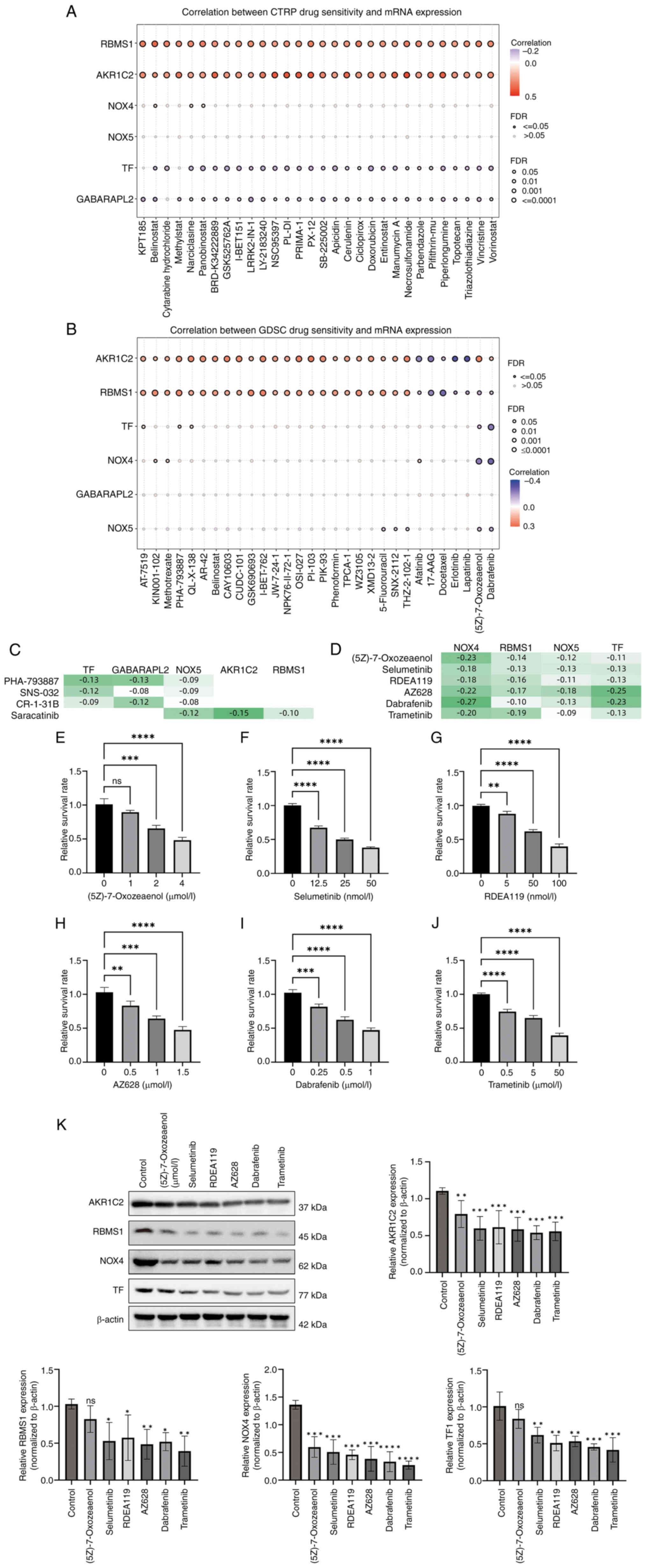
Figure 8

Potential drugs based on key
ferroptosis genes in stomach adenocarcinoma. Top 30 ranked drugs in
(A) GDSC and (B) CTRP database based on the seven key carcinogenic
genes. (C) In the CTRP database, the following four drugs had the
most targets (each targeting three genes): PHA-793887, SNS-032,
CR-1-31B and saracatinib. (D) In the GDSC database, six drugs
targeted four genes simultaneously, namely (5Z)-7-oxozeaenol,
selumetinib, RDEA119, AZ628, dabrafenib and trametinib. Drug
toxicity of (E) (5Z)-7-oxozeaenol, (F) selumetinib, (G) RDEA119,
(H) AZ628, (I) dabrafenib and (J) trametinib towards gastric cancer
cells. (K) Expression of four risk genes (AKR1C2, RBMS1, NOX4 and
TF) was downregulated in gastric cancer cells treated with the
aforementioned drugs. *P<0.05; **P<0.01; ***P<0.005;
****P<0.001. GDSC, Genomics of Drug Sensitivity in Cancer; CTRP,
Cancer Therapeutics Response Portal; AKR1C2, aldo-keto reductase
family 1 member C2; RBMS1, RNA-binding motif single stranded
interacting protein 1; NOX, NADPH oxidase; TF, transferrin; FDR,
false discovery rate; ns, not significant.
View References

1 

Chang J, Wu H, Wu J, Liu M, Zhang W, Hu Y, Zhang X, Xu J, Li L, Yu P and Zhu J: Constructing a novel mitochondrial-related gene signature for evaluating the tumor immune microenvironment and predicting survival in stomach adenocarcinoma. J Transl Med. 21:1912023. View Article : Google Scholar : PubMed/NCBI

2 

Jin W, Ou K, Li Y, Liu W and Zhao M: Metabolism-related long noncoding RNA in the stomach cancer associated with 11 AMMLs predictive nomograms for OS in STAD. Front Genet. 14:11271322023. View Article : Google Scholar : PubMed/NCBI

3 

Wang J, Liu D, Wang Q and Xie Y: Identification of basement membrane-related signatures in gastric cancer. Diagnostics (Basel). 13:18442023. View Article : Google Scholar : PubMed/NCBI

4 

Wu B, Fu L, Guo X, Hu H, Li Y, Shi Y, Zhang Y, Han S, Lv C and Tian Y: Multiomics profiling and digital image analysis reveal the potential prognostic and immunotherapeutic properties of CD93 in stomach adenocarcinoma. Front Immunol. 14:9848162023. View Article : Google Scholar : PubMed/NCBI

5 

Zhao W, Lin J, Cheng S, Li H, Shu Y and Xu C: Comprehensive analysis of COMMD10 as a novel prognostic biomarker for gastric cancer. PeerJ. 11:e146452023. View Article : Google Scholar : PubMed/NCBI

6 

Zhao Z, Mak TK, Shi Y, Li K, Huo M and Zhang C: Integrative analysis of cancer-associated fibroblast signature in gastric cancer. Heliyon. 9:e192172023. View Article : Google Scholar : PubMed/NCBI

7 

Sung H, Ferlay J, Siegel RL, Laversanne M, Soerjomataram I, Jemal A and Bray F: Global cancer statistics 2020: GLOBOCAN estimates of incidence and mortality worldwide for 36 cancers in 185 countries. CA Cancer J Clin. 71:209–249. 2021.PubMed/NCBI

8 

Ajani JA, Lee J, Sano T, Janjigian YY, Fan D and Song S: Gastric adenocarcinoma. Nat Rev Dis Primers. 3:170362017. View Article : Google Scholar : PubMed/NCBI

9 

Takahari D: Second-line chemotherapy for patients with advanced gastric cancer. Gastric Cancer. 20:395–406. 2017. View Article : Google Scholar : PubMed/NCBI

10 

Johnston FM and Beckman M: Updates on management of gastric cancer. Curr Oncol Rep. 21:672019. View Article : Google Scholar : PubMed/NCBI

11 

Hirschhorn T and Stockwell BR: The development of the concept of ferroptosis. Free Radic Biol Med. 133:130–143. 2019. View Article : Google Scholar : PubMed/NCBI

12 

Gao W, Wang X, Zhou Y, Wang X and Yu Y: Autophagy, ferroptosis, pyroptosis, and necroptosis in tumor immunotherapy. Signal Transduct Target Ther. 7:1962022. View Article : Google Scholar : PubMed/NCBI

13 

Liang D, Minikes AM and Jiang X: Ferroptosis at the intersection of lipid metabolism and cellular signaling. Mol Cell. 82:2215–2227. 2022. View Article : Google Scholar : PubMed/NCBI

14 

Liu J, Kang R and Tang D: Signaling pathways and defense mechanisms of ferroptosis. FEBS J. 289:7038–7050. 2022. View Article : Google Scholar : PubMed/NCBI

15 

Liu P, Wang W, Li Z, Li Y, Yu X, Tu J and Zhang Z: Ferroptosis: A new regulatory mechanism in osteoporosis. Oxid Med Cell Longev. 2022:26344312022. View Article : Google Scholar : PubMed/NCBI

16 

Yang Y, Wang Y, Guo L, Gao W, Tang TL and Yan M: Interaction between macrophages and ferroptosis. Cell Death Dis. 13:3552022. View Article : Google Scholar : PubMed/NCBI

17 

Zhao L, Zhou X, Xie F and Zhang L, Yan H, Huang J, Zhang C, Zhou F, Chen J and Zhang L: Ferroptosis in cancer and cancer immunotherapy. Cancer Commun (Lond). 42:88–116. 2022. View Article : Google Scholar : PubMed/NCBI

18 

Gong C, Ji Q, Wu M, Tu Z, Lei K, Luo M, Liu J, Lin L, Li K, Li J, et al: Ferroptosis in tumor immunity and therapy. J Cell Mol Med. 26:5565–5579. 2022. View Article : Google Scholar : PubMed/NCBI

19 

Li J, Liu J, Xu Y, Wu R, Chen X, Song X, Zeh H, Kang R, Klionsky DJ, Wang X and Tang D: Tumor heterogeneity in autophagy-dependent ferroptosis. Autophagy. 17:3361–3374. 2021. View Article : Google Scholar : PubMed/NCBI

20 

Liao P, Wang W, Wang W, Kryczek I, Li X, Bian Y, Sell A, Wei S, Grove S, Johnson JK, et al: CD8(+) T cells and fatty acids orchestrate tumor ferroptosis and immunity via ACSL4. Cancer Cell. 40:365–378.e6. 2022. View Article : Google Scholar : PubMed/NCBI

21 

Luo T, Wang Y and Wang J: Ferroptosis assassinates tumor. J Nanobiotechnology. 20:4672022. View Article : Google Scholar : PubMed/NCBI

22 

Fu D, Wang C, Yu L and Yu R: Induction of ferroptosis by ATF3 elevation alleviates cisplatin resistance in gastric cancer by restraining Nrf2/Keap1/xCT signaling. Cell Mol Biol Lett. 26:262021. View Article : Google Scholar : PubMed/NCBI

23 

Gu R, Xia Y, Li P, Zou D, Lu K, Ren L, Zhang H and Sun Z: Ferroptosis and its Role in Gastric Cancer. Front Cell Dev Biol. 10:8603442022. View Article : Google Scholar : PubMed/NCBI

24 

Huang G, Xiang Z, Wu H, He Q, Dou R, Lin Z, Yang C, Huang S, Song J, Di Z, et al: The lncRNA BDNF-AS/WDR5/FBXW7 axis mediates ferroptosis in gastric cancer peritoneal metastasis by regulating VDAC3 ubiquitination. Int J Biol Sci. 18:1415–1433. 2022. View Article : Google Scholar : PubMed/NCBI

25 

Li D, Wang Y, Dong C, Chen T, Dong A, Ren J, Li W, Shu G, Yang J, Shen W, et al: CST1 inhibits ferroptosis and promotes gastric cancer metastasis by regulating GPX4 protein stability via OTUB1. Oncogene. 42:83–98. 2023. View Article : Google Scholar : PubMed/NCBI

26 

Lin Z, Song J, Gao Y, Huang S, Dou R, Zhong P, Huang G, Han L, Zheng J, Zhang X, et al: Hypoxia-induced HIF-1α/lncRNA-PMAN inhibits ferroptosis by promoting the cytoplasmic translocation of ELAVL1 in peritoneal dissemination from gastric cancer. Redox Biol. 52:1023122022. View Article : Google Scholar : PubMed/NCBI

27 

Liu Y, Song Z, Liu Y, Ma X, Wang W, Ke Y, Xu Y, Yu D and Liu H: Identification of ferroptosis as a novel mechanism for antitumor activity of natural product derivative a2 in gastric cancer. Acta Pharm Sin B. 11:1513–1525. 2021. View Article : Google Scholar : PubMed/NCBI

28 

Ma M, Kong P, Huang Y, Wang J, Liu X, Hu Y, Chen X, Du C and Yang H: Activation of MAT2A-ACSL3 pathway protects cells from ferroptosis in gastric cancer. Free Radic Biol Med. 181:288–299. 2022. View Article : Google Scholar : PubMed/NCBI

29 

Ouyang S, Li H, Lou L, Huang Q, Zhang Z, Mo J, Li M, Lu J, Zhu K, Chu Y, et al: Inhibition of STAT3-ferroptosis negative regulatory axis suppresses tumor growth and alleviates chemoresistance in gastric cancer. Redox Biol. 52:1023172022. View Article : Google Scholar : PubMed/NCBI

30 

Song S, Wen F, Gu S, Gu P, Huang W, Ruan S, Chen X, Zhou J, Li Y, Liu J and Shu P: Network pharmacology study and experimental validation of Yiqi Huayu decoction inducing ferroptosis in gastric cancer. Front Oncol. 12:8200592022. View Article : Google Scholar : PubMed/NCBI

31 

Wang Y, Zheng L, Shang W, Yang Z, Li T, Liu F, Shao W, Lv L, Chai L, Qu L, et al: Wnt/beta-catenin signaling confers ferroptosis resistance by targeting GPX4 in gastric cancer. Cell Death Differ. 29:2190–2202. 2022. View Article : Google Scholar : PubMed/NCBI

32 

Xu C, Liu Z and Xiao J: Ferroptosis: A double-edged sword in gastrointestinal disease. Int J Mol Sci. 22:124032021. View Article : Google Scholar : PubMed/NCBI

33 

Xu X and Li Y, Wu Y, Wang M, Lu Y, Fang Z, Wang H and Li Y: Increased ATF2 expression predicts poor prognosis and inhibits sorafenib-induced ferroptosis in gastric cancer. Redox Biol. 59:1025642023. View Article : Google Scholar : PubMed/NCBI

34 

Yang H, Hu Y, Weng M, Liu X, Wan P, Hu Y, Ma M, Zhang Y, Xia H and Lv K: Hypoxia inducible lncRNA-CBSLR modulates ferroptosis through m6A-YTHDF2-dependent modulation of CBS in gastric cancer. J Adv Res. 37:91–106. 2022. View Article : Google Scholar : PubMed/NCBI

35 

Yang Z, Zou S, Zhang Y, Zhang J, Zhang P, Xiao L, Xie Y, Meng M, Feng J, Kang L, et al: ACTL6A protects gastric cancer cells against ferroptosis through induction of glutathione synthesis. Nat Commun. 14:41932023. View Article : Google Scholar : PubMed/NCBI

36 

Zhang H, Wang M, He Y, Deng T, Liu R, Wang W, Zhu K, Bai M, Ning T, Yang H, et al: Chemotoxicity-induced exosomal lncFERO regulates ferroptosis and stemness in gastric cancer stem cells. Cell Death Dis. 12:11162021. View Article : Google Scholar : PubMed/NCBI

37 

Lee JY, Nam M, Son HY, Hyun K, Jang SY, Kim JW, Kim MW, Jung Y, Jang E, Yoon SJ, et al: Polyunsaturated fatty acid biosynthesis pathway determines ferroptosis sensitivity in gastric cancer. Proc Natl Acad Sci USA. 117:32433–32442. 2020. View Article : Google Scholar : PubMed/NCBI

38 

Xiao C, Dong T, Yang L, Jin L, Lin W, Zhang F, Han Y and Huang Z: Identification of novel immune ferropotosis-related genes associated with clinical and prognostic features in gastric cancer. Front Oncol. 12:9043042022. View Article : Google Scholar : PubMed/NCBI

39 

Deng H, Lin Y, Gan F, Li B, Mou Z, Qin X, He X and Meng Y: Prognostic model and immune infiltration of ferroptosis subcluster-related modular genes in gastric cancer. J Oncol. 2022:58135222022. View Article : Google Scholar : PubMed/NCBI

40 

Cheng X, Dai E, Wu J, Flores NM, Chu Y, Wang R, Dang M, Xu Z, Han G, Liu Y, et al: Atlas of metastatic gastric cancer links ferroptosis to disease progression and immunotherapy response. Gastroenterology. 167:1345–1357. 2024. View Article : Google Scholar : PubMed/NCBI

41 

Yue Z, Yuan Y, Zhou Q, Sheng J and Xin L: Ferroptosis and its current progress in gastric cancer. Front Cell Dev Biol. 12:12893352024. View Article : Google Scholar : PubMed/NCBI

42 

Cancer Genome Atlas Research Network, . Weinstein JN, Collisson EA, Mills GB, Shaw KR, Ozenberger BA, Ellrott K, Shmulevich I, Sander C and Stuart JM: The cancer genome atlas pan-cancer analysis project. Nat Genet. 45:1113–1120. 2013. View Article : Google Scholar : PubMed/NCBI

43 

Livak KJ and Schmittgen TD: Analysis of relative gene expression data using real-time quantitative PCR and the 2(−Delta Delta C(T)) method. Methods. 25:402–408. 2001. View Article : Google Scholar : PubMed/NCBI

44 

Liu M, Li H, Zhang H, Zhou H, Jiao T, Feng M, Na F, Sun M, Zhao M, Xue L and Xu L: RBMS1 promotes gastric cancer metastasis through autocrine IL-6/JAK2/STAT3 signaling. Cell Death Dis. 13:2872022. View Article : Google Scholar : PubMed/NCBI

45 

Lodhi MS, Khan MT, Bukhari SMH, Sabir SH, Samra ZQ, Butt H and Akram MS: Probing transferrin receptor overexpression in gastric cancer mice models. ACS Omega. 6:29893–29904. 2021. View Article : Google Scholar : PubMed/NCBI

46 

You X, Ma M, Hou G, Hu Y and Shi X: Gene expression and prognosis of NOX family members in gastric cancer. Onco Targets Ther. 11:3065–3074. 2018. View Article : Google Scholar : PubMed/NCBI

47 

Zhang H, Zhan J, Zhou J, Liu L, He Y, Le Y, Liu W, Zhou L, Liu Y and Xiang X: Identification of HCAR1 as a ferroptosis-related biomarker of gastric cancer based on a novel ferroptosis-related prognostic model and in vitro experiments. Carcinogenesis. 7:bgaf0302025. View Article : Google Scholar

48 

Pourjamal N, Shirkoohi R, Rohani E and Hashemi M: The expression analysis of MEST1 and GJA1 genes in gastric cancer in association with clinicopathological characteristics. Int J Hematol Oncol Stem Cell Res. 18:83–91. 2024.PubMed/NCBI

49 

Wang Z, Chen C, Ai J, Shu J, Ding Y, Wang W, Gao Y, Jia Y and Qin Y: Identifying mitophagy-related genes as prognostic biomarkers and therapeutic targets of gastric carcinoma by integrated analysis of single-cell and bulk-RNA sequencing data. Comput Biol Med. 163:1072272023. View Article : Google Scholar : PubMed/NCBI

50 

Huang DH, Wang GY, Zhang JW, Li Y, Zeng XC and Jiang N: MiR-501-5p regulates CYLD expression and promotes cell proliferation in human hepatocellular carcinoma. Jpn J Clin Oncol. 45:738–744. 2015. View Article : Google Scholar : PubMed/NCBI

51 

Gu Y, Wu S, Fan J, Meng Z, Gao G, Liu T, Wang Q, Xia H, Wang X and Wu K: CYLD regulates cell ferroptosis through Hippo/YAP signaling in prostate cancer progression. Cell Death Dis. 15:792024. View Article : Google Scholar : PubMed/NCBI

52 

Huang M, Cheng S, Li Z, Chen J, Wang C, Li J and Zheng H: Preconditioning exercise inhibits neuron ferroptosis and ameliorates brain ischemia damage by skeletal muscle-derived exosomes via regulating miR-484/ACSL4 axis. Antioxid Redox Signal. 41:769–792. 2024. View Article : Google Scholar : PubMed/NCBI

53 

Zhang J, Tian T, Li X, Yan Y, Zhao D, Ji S, Ni J, Zhang J, Liu K, Qing H and Quan Z: p53 inhibits OTUD5 transcription to promote GPX4 degradation and induce ferroptosis in gastric cancer. Clin Transl Med. 15:e702712025. View Article : Google Scholar : PubMed/NCBI

54 

Lu D, Yuan L, Wang Z, Xu D, Meng F, Jia S, Li Y, Li W and Nan Y: Dioscin induces ferroptosis to suppress the metastasis of gastric cancer through the SLC7A11/GPX4 axis. Free Radic Res. 59:426–441. 2025. View Article : Google Scholar : PubMed/NCBI

55 

Wang H, Li C, Meng S and Kuang YT: The LINC01094/miR-545-3p/SLC7A11 signaling axis promotes the development of gastric cancer by regulating cell growth and ferroptosis. Biochem Genet. https://doi.org/10.1007/s10528-024-10959-3

56 

Xu Y, Hao J, Chen Q, Qin Y, Qin H, Ren S, Sun C, Zhu Y, Shao B, Zhang J and Wang H: Inhibition of the RBMS1/PRNP axis improves ferroptosis resistance-mediated oxaliplatin chemoresistance in colorectal cancer. Mol Carcinog. 63:224–237. 2024. View Article : Google Scholar : PubMed/NCBI

57 

Yu R, Li Z, Zhang C, Song H, Deng M, Sun L, Xu L, Che X, Hu X, Qu X, et al: Elevated limb-bud and heart development (LBH) expression indicates poor prognosis and promotes gastric cancer cell proliferation and invasion by upregulating Integrin/FAK/Akt pathway. PeerJ. 7:e68852019. View Article : Google Scholar : PubMed/NCBI

58 

Berthelet E, Pickles T, Lee KW, Liu M and Truong PT; Prostate Cancer Outcomes Initiative, : Long-term androgen deprivation therapy improves survival in prostate cancer patients presenting with prostate-specific antigen levels >20 ng/ml. Int J Radiat Oncol Biol Phys. 63:781–787. 2005. View Article : Google Scholar : PubMed/NCBI

59 

Huang R, Lu TL and Zhou R: Identification and immune landscape analysis of fatty acid metabolism genes related subtypes of gastric cancer. Sci Rep. 13:204432023. View Article : Google Scholar : PubMed/NCBI

60 

Yuan Q, Deng D, Pan C, Ren J, Wei T, Wu Z, Zhang B, Li S, Yin P and Shang D: Integration of transcriptomics, proteomics, and metabolomics data to reveal HER2-associated metabolic heterogeneity in gastric cancer with response to immunotherapy and neoadjuvant chemotherapy. Front Immunol. 13:9511372022. View Article : Google Scholar : PubMed/NCBI

61 

Wang X, Zhang W, Guo Y, Zhang Y, Bai X and Xie Y: Identification of critical prognosis signature associated with lymph node metastasis of stomach adenocarcinomas. World J Surg Oncol. 21:612023. View Article : Google Scholar : PubMed/NCBI

62 

Feng A, He L, Chen T and Xu M: A novel cuproptosis-related lncRNA nomogram to improve the prognosis prediction of gastric cancer. Front Oncol. 12:9579662022. View Article : Google Scholar : PubMed/NCBI

63 

Chen J, Wang Y, Zhang W, Zhao D, Zhang L, Zhang J, Fan J and Zhan Q: NOX5 mediates the crosstalk between tumor cells and cancer-associated fibroblasts by regulating cytokine network. Clin Transl Med. 11:e4722021. View Article : Google Scholar : PubMed/NCBI

64 

Xiao R, Wang S, Guo J, Liu S, Ding A, Wang G, Li W, Zhang Y, Bian X, Zhao S and Qiu W: Ferroptosis-related gene NOX4, CHAC1 and HIF1A are valid biomarkers for stomach adenocarcinoma. J Cell Mol Med. 26:1183–1193. 2022. View Article : Google Scholar : PubMed/NCBI

65 

Guo J, Xing W, Liu W, Liu J, Zhang J and Pang Z: Prognostic value and risk model construction of hypoxic stress-related features in predicting gastric cancer. Am J Transl Res. 14:8599–8610. 2022.PubMed/NCBI

66 

Chan JCY and Gorski SM: Unlocking the gate to GABARAPL2. Biol Futur. 73:157–169. 2022. View Article : Google Scholar : PubMed/NCBI

67 

Polletta L, Vernucci E, Carnevale I, Arcangeli T, Rotili D, Palmerio S, Steegborn C, Nowak T, Schutkowski M, Pellegrini L, et al: SIRT5 regulation of ammonia-induced autophagy and mitophagy. Autophagy. 11:253–270. 2015. View Article : Google Scholar : PubMed/NCBI

68 

Scicluna K, Dewson G, Czabotar PE and Birkinshaw RW: A new crystal form of GABARAPL2. Acta Crystallogr F Struct Biol Commun. 77:140–147. 2021. View Article : Google Scholar : PubMed/NCBI

69 

Zhang Z, Gu H, Li Q, Zheng J, Cao S, Weng C and Jia H: GABARAPL2 is critical for growth restriction of Toxoplasma gondii in HeLa cells treated with gamma interferon. Infect Immun. 88:e00054–e00020. 2020. View Article : Google Scholar : PubMed/NCBI

70 

Wang M, Jing J, Li H, Liu J, Yuan Y and Sun L: The expression characteristics and prognostic roles of autophagy-related genes in gastric cancer. PeerJ. 9:e108142021. View Article : Google Scholar : PubMed/NCBI

71 

Fan D, Ren B, Yang X, Liu J and Zhang Z: Upregulation of miR-501-5p activates the wnt/β-catenin signaling pathway and enhances stem cell-like phenotype in gastric cancer. J Exp Clin Cancer Res. 35:1772016. View Article : Google Scholar : PubMed/NCBI

72 

Ma X, Feng J, Lu M, Tang W, Han J, Luo X, Zhao Q and Yang L: microRNA-501-5p promotes cell proliferation and migration in gastric cancer by downregulating LPAR1. J Cell Biochem. 121:1911–1922. 2020. View Article : Google Scholar : PubMed/NCBI

73 

Zare A, Ahadi A, Larki P, Omrani MD, Zali MR, Alamdari NM and Ghaedi H: The clinical significance of miR-335, miR-124, miR-218 and miR-484 downregulation in gastric cancer. Mol Biol Rep. 45:1587–1595. 2018. View Article : Google Scholar : PubMed/NCBI

74 

Liu J and Li SM: MiR-484 suppressed proliferation, migration, invasion and induced apoptosis of gastric cancer by targeting CCL-18. Int J Exp Pathol. 101:203–214. 2020. View Article : Google Scholar : PubMed/NCBI

75 

Li Y, Liu Y, Yao J, LI R and Fan X: Downregulation of miR-484 is associated with poor prognosis and tumor progression of gastric cancer. Diagn Pathol. 15:252020. View Article : Google Scholar : PubMed/NCBI

76 

Wang L and Gong W: NOX4 regulates gastric cancer cell invasion and proliferation by increasing ferroptosis sensitivity through regulating ROS. Int Immunopharmacol. 132:1120522024. View Article : Google Scholar : PubMed/NCBI

77 

Qi X, Zhang DH, Wu N, Xiao JH, Wang X and Ma W: ceRNA in cancer: Possible functions and clinical implications. J Med Genet. 52:710–718. 2015. View Article : Google Scholar : PubMed/NCBI

78 

Zhang D, Yan H, Li H, Hao S, Zhuang Z, Liu M, Sun Q, Yang Y, Zhou M, Li K and Hang C: TGFβ-activated kinase 1 (TAK1) inhibition by 5Z-7-Oxozeaenol attenuates early brain injury after experimental subarachnoid Hemorrhage. J Biol Chem. 290:19900–19909. 2015. View Article : Google Scholar : PubMed/NCBI

79 

Yang Y, Qiu Y, Tang M, Wu Z, Hu W and Chen C: Expression and function of transforming growth factor-β-activated protein kinase 1 in gastric cancer. Mol Med Rep. 16:3103–3110. 2017. View Article : Google Scholar : PubMed/NCBI

80 

Ahn S, Brant R, Sharpe A, Dry JR, Hodgson DR, Kilgour E, Kim K, Kim ST, Park SH, Kang WK, et al: Correlation between MEK signature and Ras gene alteration in advanced gastric cancer. Oncotarget. 8:107492–107499. 2017. View Article : Google Scholar : PubMed/NCBI

81 

Lee J, Kim ST, Kim K, Lee H, Kozarewa I, Mortimer PGS, Odegaard JI, Harrington EA, Lee J, Lee T, et al: Tumor genomic profiling guides patients with metastatic gastric cancer to targeted treatment: The VIKTORY umbrella trial. Cancer Discov. 9:1388–1405. 2019. View Article : Google Scholar : PubMed/NCBI

82 

Liu Z and Xing M: Induction of sodium/iodide symporter (NIS) expression and radioiodine uptake in nonthyroid cancer cells. PLoS One. 7:e317292012. View Article : Google Scholar : PubMed/NCBI

83 

Wu X, Zhou F, Cheng B, Tong G, Chen M, He L, Li Z, Yu S, Wang S and Lin L: Immune activity score to assess the prognosis, immunotherapy and chemotherapy response in gastric cancer and experimental validation. PeerJ. 11:e163172023. View Article : Google Scholar : PubMed/NCBI

84 

Liu J, Zhang B, Zhang Y, Zhao H, Chen X, Zhong L and Shang D: Oxidative stress and autophagy-mediated immune patterns and tumor microenvironment infiltration characterization in gastric cancer. Aging (Albany NY). 15:12513–12536. 2023. View Article : Google Scholar : PubMed/NCBI

85 

Ajani JA, D'Amico TA, Bentrem DJ, Corvera CU, Das P, Enzinger PC, Enzler T, Gerdes H, Gibson MK, Grierson P, et al: Gastric cancer, version 2.2025, NCCN clinical practice guidelines in oncology. J Natl Compr Canc Netw. 23:169–191. 2025. View Article : Google Scholar : PubMed/NCBI

86 

Dai C, Shen L, Jin W, Lv B, Liu P, Wang X, Yin Y, Fu Y, Liang L, Ma Z, et al: Physapubescin B enhances the sensitivity of gastric cancer cells to trametinib by inhibiting the STAT3 signaling pathway. Toxicol Appl Pharmacol. 408:1152732020. View Article : Google Scholar : PubMed/NCBI

87 

Liu H, Yao Y, Zhang J and Li J: MEK inhibition overcomes everolimus resistance in gastric cancer. Cancer Chemother Pharmacol. 85:1079–1087. 2020. View Article : Google Scholar : PubMed/NCBI

88 

Wang Z, Chen Y, Li X, Zhang Y, Zhao X, Zhou H, Lu X, Zhao L, Yuan Q, Shi Y, et al: Tegaserod maleate suppresses the growth of gastric cancer in vivo and in vitro by targeting MEK1/2. Cancers (Basel). 14:35922022. View Article : Google Scholar : PubMed/NCBI

Related Articles

  • Abstract
  • View
  • Download
  • Twitter
Copy and paste a formatted citation
Spandidos Publications style
Wang H, Chen H, Liu J, Zhang D, Wang D, Huang M, Li M, He S and Ma L: Identification of key ferroptosis‑related genes associated with the development of gastric cancer: Prognostic models, molecular mechanisms and potential treatment strategies. Oncol Lett 30: 450, 2025.
APA
Wang, H., Chen, H., Liu, J., Zhang, D., Wang, D., Huang, M. ... Ma, L. (2025). Identification of key ferroptosis‑related genes associated with the development of gastric cancer: Prognostic models, molecular mechanisms and potential treatment strategies. Oncology Letters, 30, 450. https://doi.org/10.3892/ol.2025.15196
MLA
Wang, H., Chen, H., Liu, J., Zhang, D., Wang, D., Huang, M., Li, M., He, S., Ma, L."Identification of key ferroptosis‑related genes associated with the development of gastric cancer: Prognostic models, molecular mechanisms and potential treatment strategies". Oncology Letters 30.4 (2025): 450.
Chicago
Wang, H., Chen, H., Liu, J., Zhang, D., Wang, D., Huang, M., Li, M., He, S., Ma, L."Identification of key ferroptosis‑related genes associated with the development of gastric cancer: Prognostic models, molecular mechanisms and potential treatment strategies". Oncology Letters 30, no. 4 (2025): 450. https://doi.org/10.3892/ol.2025.15196
Copy and paste a formatted citation
x
Spandidos Publications style
Wang H, Chen H, Liu J, Zhang D, Wang D, Huang M, Li M, He S and Ma L: Identification of key ferroptosis‑related genes associated with the development of gastric cancer: Prognostic models, molecular mechanisms and potential treatment strategies. Oncol Lett 30: 450, 2025.
APA
Wang, H., Chen, H., Liu, J., Zhang, D., Wang, D., Huang, M. ... Ma, L. (2025). Identification of key ferroptosis‑related genes associated with the development of gastric cancer: Prognostic models, molecular mechanisms and potential treatment strategies. Oncology Letters, 30, 450. https://doi.org/10.3892/ol.2025.15196
MLA
Wang, H., Chen, H., Liu, J., Zhang, D., Wang, D., Huang, M., Li, M., He, S., Ma, L."Identification of key ferroptosis‑related genes associated with the development of gastric cancer: Prognostic models, molecular mechanisms and potential treatment strategies". Oncology Letters 30.4 (2025): 450.
Chicago
Wang, H., Chen, H., Liu, J., Zhang, D., Wang, D., Huang, M., Li, M., He, S., Ma, L."Identification of key ferroptosis‑related genes associated with the development of gastric cancer: Prognostic models, molecular mechanisms and potential treatment strategies". Oncology Letters 30, no. 4 (2025): 450. https://doi.org/10.3892/ol.2025.15196
Follow us
  • Twitter
  • LinkedIn
  • Facebook
About
  • Spandidos Publications
  • Careers
  • Cookie Policy
  • Privacy Policy
How can we help?
  • Help
  • Live Chat
  • Contact
  • Email to our Support Team