Spandidos Publications Logo
  • About
    • About Spandidos
    • Aims and Scopes
    • Abstracting and Indexing
    • Editorial Policies
    • Reprints and Permissions
    • Job Opportunities
    • Terms and Conditions
    • Contact
  • Journals
    • All Journals
    • Oncology Letters
      • Oncology Letters
      • Information for Authors
      • Editorial Policies
      • Editorial Board
      • Aims and Scope
      • Abstracting and Indexing
      • Bibliographic Information
      • Archive
    • International Journal of Oncology
      • International Journal of Oncology
      • Information for Authors
      • Editorial Policies
      • Editorial Board
      • Aims and Scope
      • Abstracting and Indexing
      • Bibliographic Information
      • Archive
    • Molecular and Clinical Oncology
      • Molecular and Clinical Oncology
      • Information for Authors
      • Editorial Policies
      • Editorial Board
      • Aims and Scope
      • Abstracting and Indexing
      • Bibliographic Information
      • Archive
    • Experimental and Therapeutic Medicine
      • Experimental and Therapeutic Medicine
      • Information for Authors
      • Editorial Policies
      • Editorial Board
      • Aims and Scope
      • Abstracting and Indexing
      • Bibliographic Information
      • Archive
    • International Journal of Molecular Medicine
      • International Journal of Molecular Medicine
      • Information for Authors
      • Editorial Policies
      • Editorial Board
      • Aims and Scope
      • Abstracting and Indexing
      • Bibliographic Information
      • Archive
    • Biomedical Reports
      • Biomedical Reports
      • Information for Authors
      • Editorial Policies
      • Editorial Board
      • Aims and Scope
      • Abstracting and Indexing
      • Bibliographic Information
      • Archive
    • Oncology Reports
      • Oncology Reports
      • Information for Authors
      • Editorial Policies
      • Editorial Board
      • Aims and Scope
      • Abstracting and Indexing
      • Bibliographic Information
      • Archive
    • Molecular Medicine Reports
      • Molecular Medicine Reports
      • Information for Authors
      • Editorial Policies
      • Editorial Board
      • Aims and Scope
      • Abstracting and Indexing
      • Bibliographic Information
      • Archive
    • World Academy of Sciences Journal
      • World Academy of Sciences Journal
      • Information for Authors
      • Editorial Policies
      • Editorial Board
      • Aims and Scope
      • Abstracting and Indexing
      • Bibliographic Information
      • Archive
    • International Journal of Functional Nutrition
      • International Journal of Functional Nutrition
      • Information for Authors
      • Editorial Policies
      • Editorial Board
      • Aims and Scope
      • Abstracting and Indexing
      • Bibliographic Information
      • Archive
    • International Journal of Epigenetics
      • International Journal of Epigenetics
      • Information for Authors
      • Editorial Policies
      • Editorial Board
      • Aims and Scope
      • Abstracting and Indexing
      • Bibliographic Information
      • Archive
    • Medicine International
      • Medicine International
      • Information for Authors
      • Editorial Policies
      • Editorial Board
      • Aims and Scope
      • Abstracting and Indexing
      • Bibliographic Information
      • Archive
  • Articles
  • Information
    • Information for Authors
    • Information for Reviewers
    • Information for Librarians
    • Information for Advertisers
    • Conferences
  • Language Editing
Spandidos Publications Logo
  • About
    • About Spandidos
    • Aims and Scopes
    • Abstracting and Indexing
    • Editorial Policies
    • Reprints and Permissions
    • Job Opportunities
    • Terms and Conditions
    • Contact
  • Journals
    • All Journals
    • Biomedical Reports
      • Information for Authors
      • Editorial Policies
      • Editorial Board
      • Aims and Scope
      • Abstracting and Indexing
      • Bibliographic Information
      • Archive
    • Experimental and Therapeutic Medicine
      • Information for Authors
      • Editorial Policies
      • Editorial Board
      • Aims and Scope
      • Abstracting and Indexing
      • Bibliographic Information
      • Archive
    • International Journal of Epigenetics
      • Information for Authors
      • Editorial Policies
      • Editorial Board
      • Aims and Scope
      • Abstracting and Indexing
      • Bibliographic Information
      • Archive
    • International Journal of Functional Nutrition
      • Information for Authors
      • Editorial Policies
      • Editorial Board
      • Aims and Scope
      • Abstracting and Indexing
      • Bibliographic Information
      • Archive
    • International Journal of Molecular Medicine
      • Information for Authors
      • Editorial Policies
      • Editorial Board
      • Aims and Scope
      • Abstracting and Indexing
      • Bibliographic Information
      • Archive
    • International Journal of Oncology
      • Information for Authors
      • Editorial Policies
      • Editorial Board
      • Aims and Scope
      • Abstracting and Indexing
      • Bibliographic Information
      • Archive
    • Medicine International
      • Information for Authors
      • Editorial Policies
      • Editorial Board
      • Aims and Scope
      • Abstracting and Indexing
      • Bibliographic Information
      • Archive
    • Molecular and Clinical Oncology
      • Information for Authors
      • Editorial Policies
      • Editorial Board
      • Aims and Scope
      • Abstracting and Indexing
      • Bibliographic Information
      • Archive
    • Molecular Medicine Reports
      • Information for Authors
      • Editorial Policies
      • Editorial Board
      • Aims and Scope
      • Abstracting and Indexing
      • Bibliographic Information
      • Archive
    • Oncology Letters
      • Information for Authors
      • Editorial Policies
      • Editorial Board
      • Aims and Scope
      • Abstracting and Indexing
      • Bibliographic Information
      • Archive
    • Oncology Reports
      • Information for Authors
      • Editorial Policies
      • Editorial Board
      • Aims and Scope
      • Abstracting and Indexing
      • Bibliographic Information
      • Archive
    • World Academy of Sciences Journal
      • Information for Authors
      • Editorial Policies
      • Editorial Board
      • Aims and Scope
      • Abstracting and Indexing
      • Bibliographic Information
      • Archive
  • Articles
  • Information
    • For Authors
    • For Reviewers
    • For Librarians
    • For Advertisers
    • Conferences
  • Language Editing
Login Register Submit
  • This site uses cookies
  • You can change your cookie settings at any time by following the instructions in our Cookie Policy. To find out more, you may read our Privacy Policy.

    I agree
Search articles by DOI, keyword, author or affiliation
Search
Advanced Search
presentation
Oncology Letters
Join Editorial Board Propose a Special Issue
Print ISSN: 1792-1074 Online ISSN: 1792-1082
Journal Cover
January-2026 Volume 31 Issue 1

Full Size Image

Sign up for eToc alerts
Recommend to Library

Journals

International Journal of Molecular Medicine

International Journal of Molecular Medicine

International Journal of Molecular Medicine is an international journal devoted to molecular mechanisms of human disease.

International Journal of Oncology

International Journal of Oncology

International Journal of Oncology is an international journal devoted to oncology research and cancer treatment.

Molecular Medicine Reports

Molecular Medicine Reports

Covers molecular medicine topics such as pharmacology, pathology, genetics, neuroscience, infectious diseases, molecular cardiology, and molecular surgery.

Oncology Reports

Oncology Reports

Oncology Reports is an international journal devoted to fundamental and applied research in Oncology.

Experimental and Therapeutic Medicine

Experimental and Therapeutic Medicine

Experimental and Therapeutic Medicine is an international journal devoted to laboratory and clinical medicine.

Oncology Letters

Oncology Letters

Oncology Letters is an international journal devoted to Experimental and Clinical Oncology.

Biomedical Reports

Biomedical Reports

Explores a wide range of biological and medical fields, including pharmacology, genetics, microbiology, neuroscience, and molecular cardiology.

Molecular and Clinical Oncology

Molecular and Clinical Oncology

International journal addressing all aspects of oncology research, from tumorigenesis and oncogenes to chemotherapy and metastasis.

World Academy of Sciences Journal

World Academy of Sciences Journal

Multidisciplinary open-access journal spanning biochemistry, genetics, neuroscience, environmental health, and synthetic biology.

International Journal of Functional Nutrition

International Journal of Functional Nutrition

Open-access journal combining biochemistry, pharmacology, immunology, and genetics to advance health through functional nutrition.

International Journal of Epigenetics

International Journal of Epigenetics

Publishes open-access research on using epigenetics to advance understanding and treatment of human disease.

Medicine International

Medicine International

An International Open Access Journal Devoted to General Medicine.

Journal Cover
January-2026 Volume 31 Issue 1

Full Size Image

Sign up for eToc alerts
Recommend to Library

  • Article
  • Citations
    • Cite This Article
    • Download Citation
    • Create Citation Alert
    • Remove Citation Alert
    • Cited By
  • Similar Articles
    • Related Articles (in Spandidos Publications)
    • Similar Articles (Google Scholar)
    • Similar Articles (PubMed)
  • Download PDF
  • Download XML
  • View XML
Article Open Access

Transferrin receptor serves a role in promoting PANoptosis in thyroid cancer

  • Authors:
    • Shungao Ma
    • Zhiqiang Ma
    • Jingwei Shen
    • Hong Liu
    • Hua Yang
    • Yuqin Hu
    • Simeng Ying
  • View Affiliations / Copyright

    Affiliations: Department of Clinical Laboratory, Dali Bai Autonomous Prefecture People's Hospital, Dali, Yunnan 671000, P.R. China, Health Science Center, Dali University, Dali, Yunnan 671000, P.R. China
    Copyright: © Ma et al. This is an open access article distributed under the terms of Creative Commons Attribution License.
  • Article Number: 41
    |
    Published online on: November 24, 2025
       https://doi.org/10.3892/ol.2025.15394
  • Expand metrics +
Metrics: Total Views: 0 (Spandidos Publications: | PMC Statistics: )
Metrics: Total PDF Downloads: 0 (Spandidos Publications: | PMC Statistics: )
Cited By (CrossRef): 0 citations Loading Articles...

This article is mentioned in:


Abstract

PANoptosis is an emerging form of regulated cell death (RCD) that results from the interaction between necrosis, apoptosis and pyroptosis. The transferrin receptor (TFRC) is a suppressor in thyroid cancer (TC) and is involved in several RCD pathways, including ferroptosis, apoptosis, cuproptosis and necrosis. The present study aimed to assess how TFRC influences PANoptosis in TC and evaluate its underlying molecular mechanisms. Bioinformatics analyses were performed to identify coding genes associated with the expression of PANoptosis markers (Z‑DNA‑binding protein 1 and absent in melanoma 2) in The Cancer Genome Atlas‑Thyroid Cancer (TCGA‑THCA) dataset. Techniques such as PI/Calcein‑AM and YO‑PRO‑1/PI staining, and western blotting were used to assess how TFRC influences PANoptosis in TC cells. Additionally, mRNA sequencing (mRNA‑seq) was employed to identify differentially expressed (DE)‑mRNA associated with TFRC. A total of 729 and 1,568 coding genes in the TCGA‑THCA dataset demonstrated a significant association with ZBP‑1 and AIM2 expression, respectively, involving regulation of immunity, apoptosis and necroptosis. Among these, TFRC was identified as a prognostic biomarker for TC and was downregulated in TC tissues and cells. Overexpression of TFRC increased TC cells undergoing pyroptosis, apoptosis and necroptosis, whilst it decreased the number of viable cells. Additionally, TFRC overexpression was associated with an elevation in the expression of cleaved‑caspase (CASP)1, CASP1, cleaved‑CASP3, CASP3, phospho‑mixed lineage kinase domain‑like and total‑receptor‑interacting serine/threonine‑protein kinase 3, whereas TFRC knockdown was associated with the opposite effects. mRNA‑seq identified 828 DE‑mRNAs associated with TFRC. Enrichment analysis revealed that these DE‑miRNAs regulate cell cycle, apoptosis, necrotic apoptosis, pyroptosis, oxidative stress and immunity. Furthermore, in the protein‑protein interaction network constructed from DE‑mRNAs, genes such as CD34, lactate dehydrogenase A (LDHA) and low‑density lipoprotein receptor (LDLR) were identified as TFRC‑interacting partners, and their expression demonstrated a positive association with TFRC. Furthermore, TFRC knockdown effectively reduced the levels of these genes. In conclusion, TFRC facilitates PANoptosis in TC, potentially through interactions with genes such as CD34, LDHA and LDLR.
View Figures

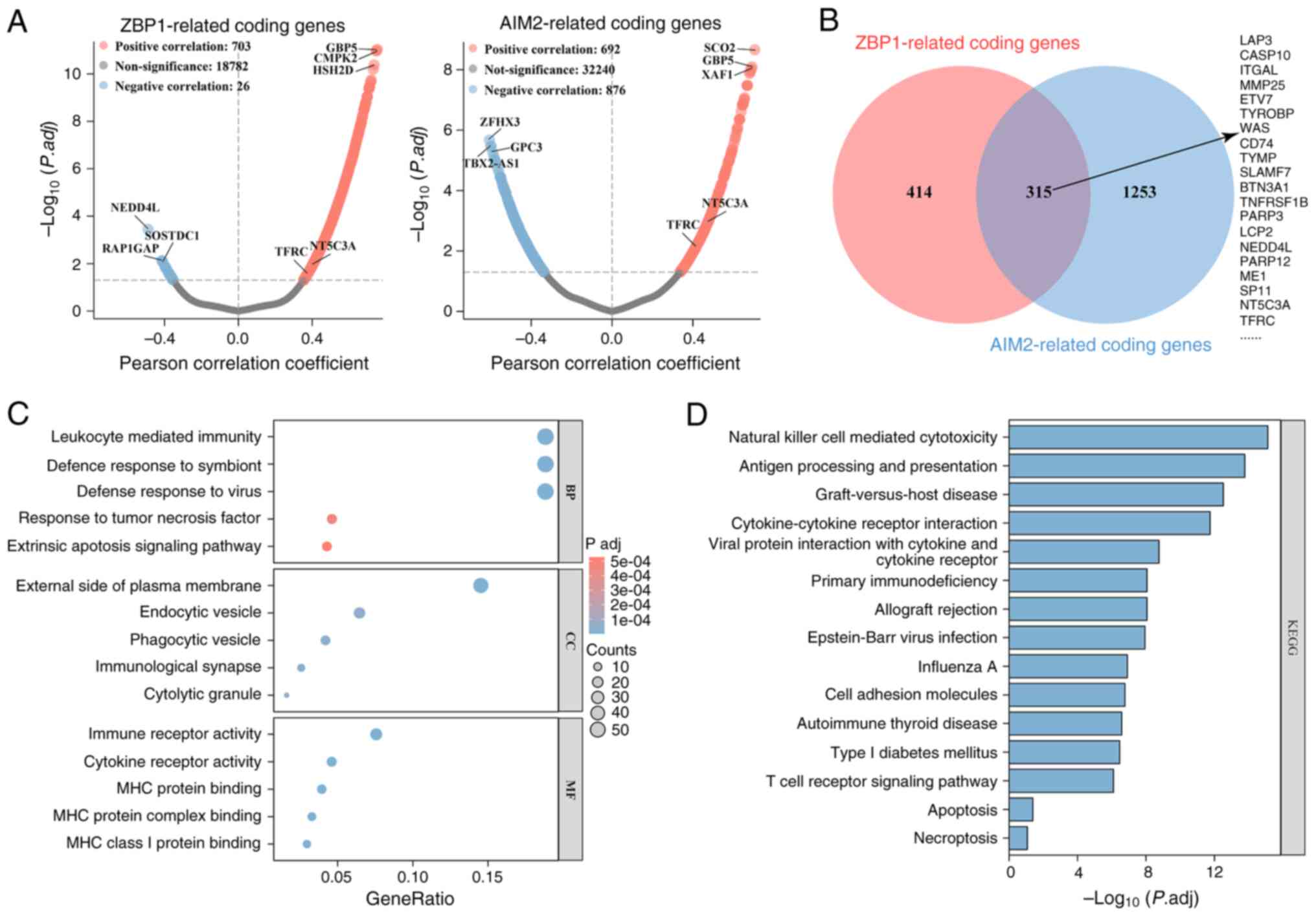
Figure 1

Identification and enrichment
analysis of ZBP1- and AIM2-related coding genes. (A) Coding genes
associated with ZBP1 and AIM2 expression in The Cancer Genome
Atlas-Thyroid Cancer cohort were identified using Person
correlation analysis. The volcano plots exhibit the results, with
blue and red dots representing genes negatively and positively
correlated with ZBP1 or AIM2, respectively. (B) Overlap and union
of ZBP1- and AIM2-related coding genes, visualized using the jvenn
Web (https://jvenn.toulouse.inra.fr/app/example.html).
(C) Gene Ontology enrichment analysis of ZBP1- and AIM2-associated
coding genes. The bubble plot presents the top five terms for BP,
CC and MF. (D) KEGG pathway enrichment analysis of ZBP1- and
AIM2-related coding genes. The bar chart depicts the top 15
pathways ranked by-log10(P.adj). ZBP1, Z-DNA-binding
protein 1; AIM2, absent in melanoma 2; BP, biological process; CC,
cellular component; MF, molecular function; KEGG, Kyoto
Encyclopedia of Genes and Genomes.

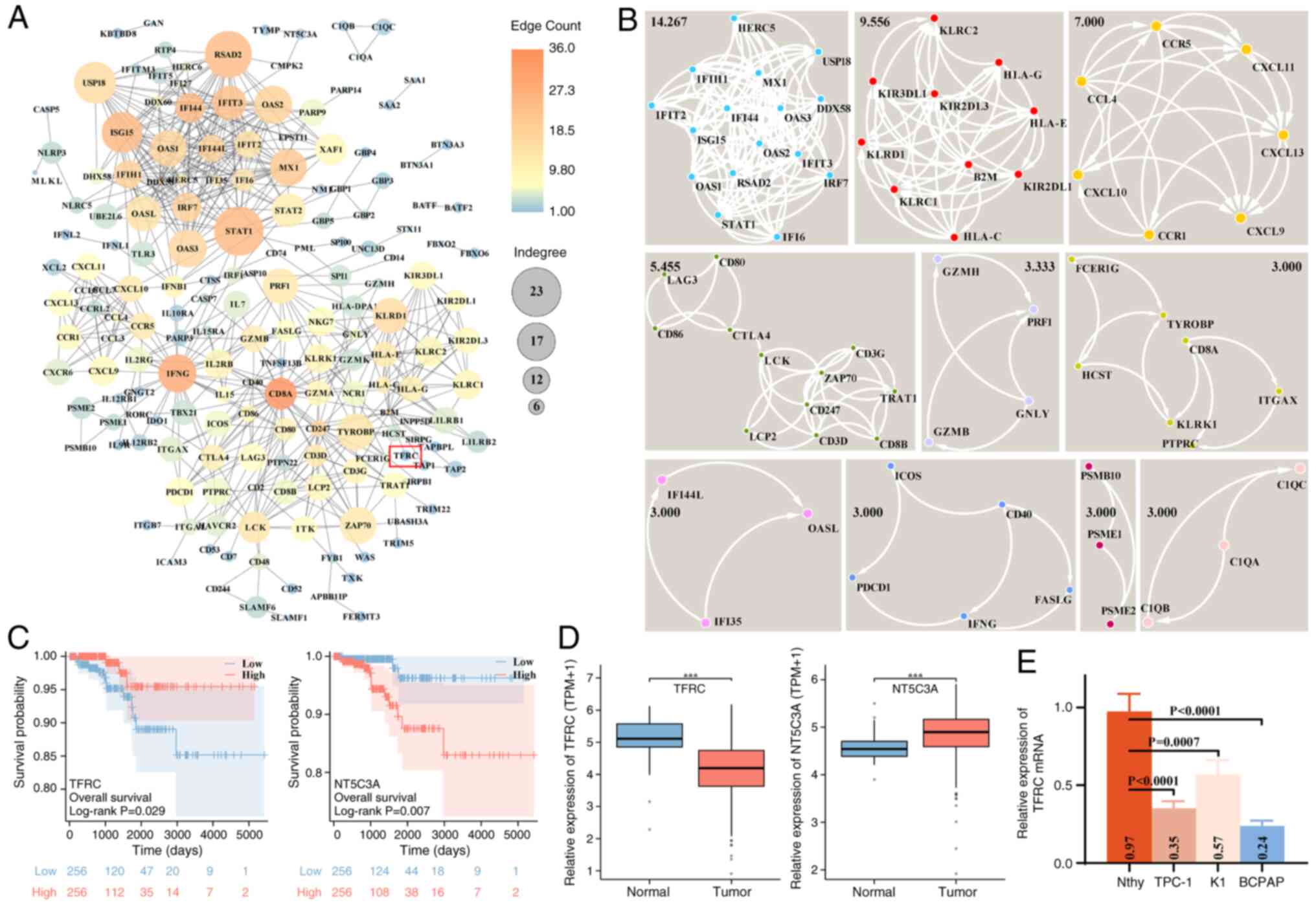
Figure 2

PPI network construction of ZBP1- and
AIM2-related coding genes and prognostic analysis of hub genes in
TC. (A) PPI networks of ZBP1 and AIM2 co-associated genes,
constructed using the STRING database and visualized using
Cytoscape software. Node color and size indicate edge counts and
indegree, respectively. (B) Sub-networks within the PPI network
were identified using the MCODE app in Cytoscape software. Black
numbers denote the clustering scores of each sub-network. (C)
Prognostic significance of TFRC and NT5C3A expression in patients
with TC, evaluated using log-rank analysis in the TCGA-THCA cohort.
(D) Differential expression of TFRC and NT5C3A in the TCGA-THCA
cohort. (E) Relative TFRC mRNA expression in Nthy and TC cells
(TPC-1, K1 and BCPAP), assessed using reverse
transcription-quantitative PCR assay. ***P<0.001. PPI,
protein-protein interaction; ZBP1, Z-DNA-binding protein 1; AIM2,
absent in melanoma 2; TC, thyroid cancer; TFRC, transferrin
receptor; NT5C3A, 5′-nucleotidase cytosolic IIIA; TCGA-THCA, The
Cancer Genome Atlas-Thryoid Cancer; Nthy, normal human thyroid
epithelial; TPM, transcripts per million.

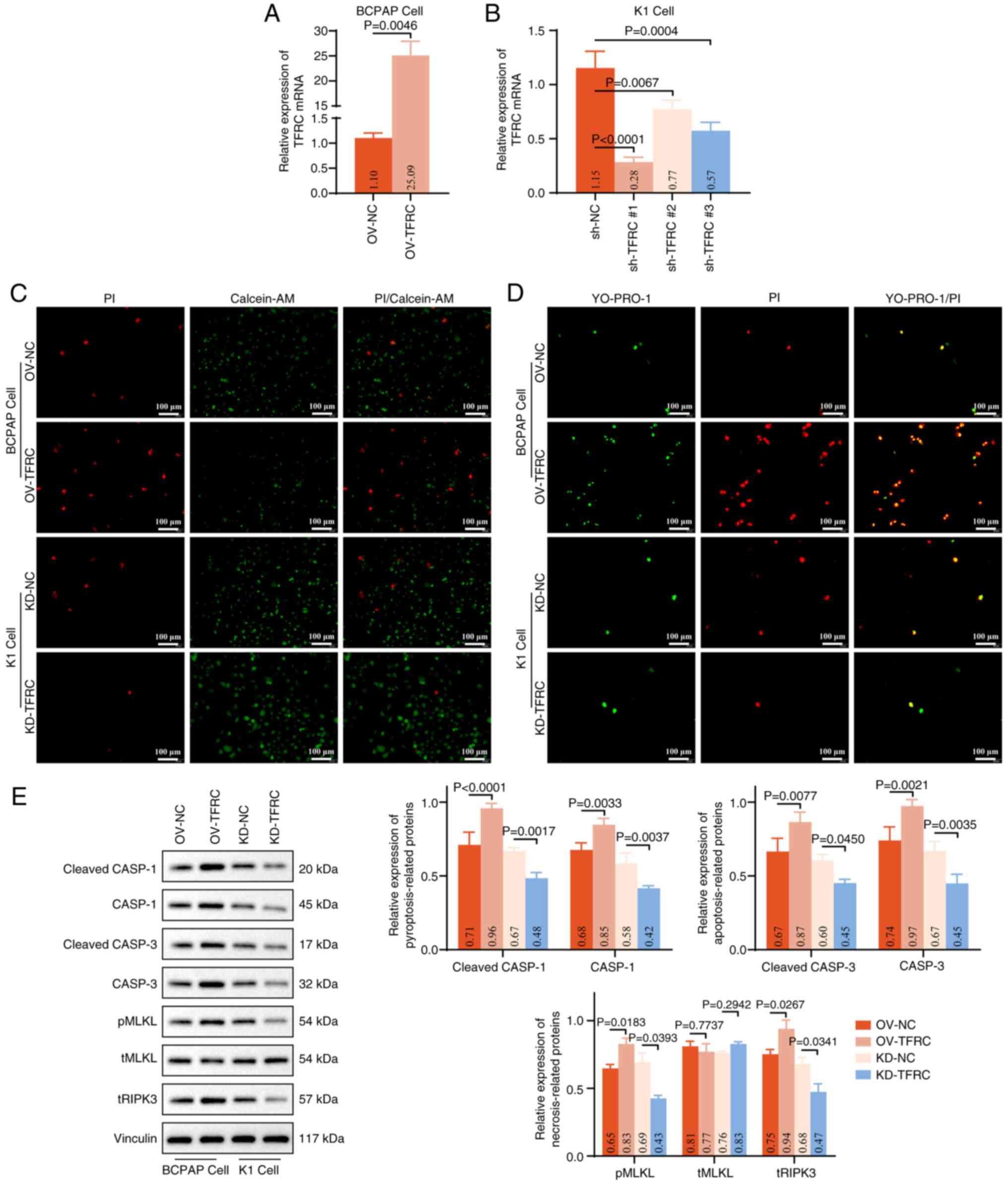
Figure 3

TFRC contributes to PANoptosis in TC
cells. Effects of (A) PGMLV-CMV-MCS-EF1-ZsGreen1-T2A-Puro and (B)
shRNA transfection on the expression of TFRC mRNA in BCPAP
and K1 cells, assessed using reverse transcription-quantitative PCR
assay. (C) PI/Calcein-AM staining was performed to assess the
effect of TFRC on cell death in BCPAP (OV-NC and OV-TFRC groups)
and K1 (KD-NC and KD-TFRC groups) cells. PI (red) and Calcein-AM
(green) label dead and viable cells, respectively. (D) YO-PRO-1/PI
staining was performed to evaluate pyroptosis, apoptosis and
necroptosis in BCPAP and K1 cells following exogenous modulation of
TFRC expression. YO-PRO-1 (green) indicates apoptotic or
necroptotic cells, whereas PI (red) labels necroptotic or
pyroptotic cells. (E) Western blot analysis of markers associated
with pyroptosis (cleaved-CASP1/CASP1), apoptosis
(cleaved-CASP3/CASP3) and necroptosis (pMLKL/tMLKL and tRIPK3),
with corresponding quantitative analyses. TFRC, transferrin
receptor; sh, short hairpin; OV, overexpression; NC, negative
control; KD, knockdown; CASP; caspase; MLKL, mixed lineage kinase
domain like pseudokinase; pMLKL, phospho-MLKL; tMLKL, total-MLKL;
tRIPK3, total receptor interacting serine/threonine kinase 3.

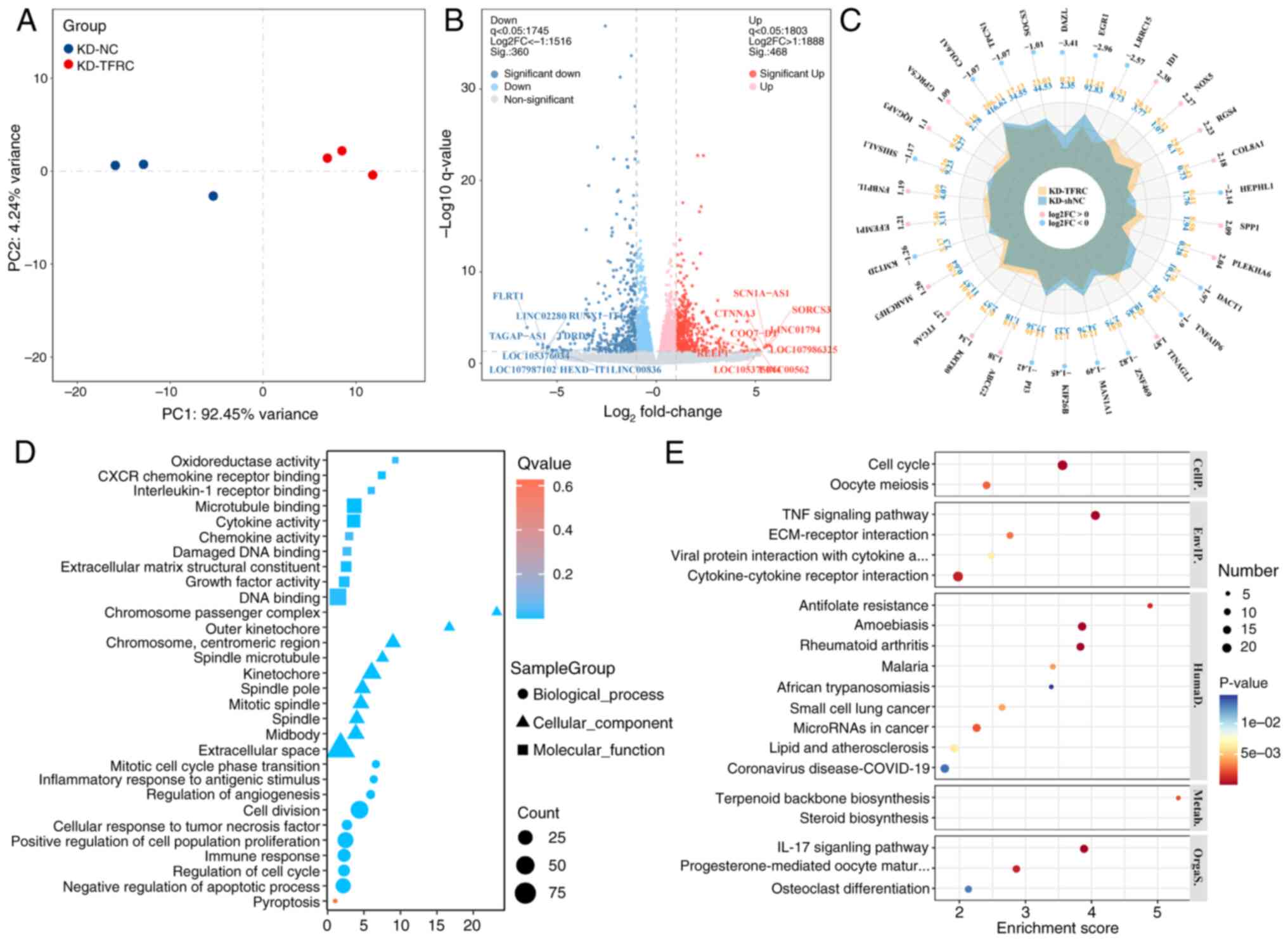
Figure 4

Identification and enrichment
analysis of TFRC-associated DE-mRNAs in thyroid cancer. (A)
Principal component analysis of mRNA expression profiles in K1
cells (KD-NC and KD-TFRC groups). Blue and red dots represent cell
samples of KD-NC and KD-TFRC groups, respectively. (B) Differential
expression analysis of mRNA expression profiles between the KD-NC
and KD-TFRC groups. The volcano plot illustrates the distribution
and regulation of TFRC-associated DE-mRNAs. (C) Radar plot
displaying the top 30 DE-mRNAs ranked by |log2FC| in K1
cells. Functional annotation of TFRC-associated DE-mRNAs: (D) Gene
Ontology and (E) and Kyoto Encyclopedia of Genes and Genomes
pathway enrichment analyses, with bubble plots highlighting the
most significantly enriched terms. TFRC, transferrin receptor;
DE-mRNAs, differentially expressed mRNAs; KD, knockdown; NC,
negative control; FC, fold change.

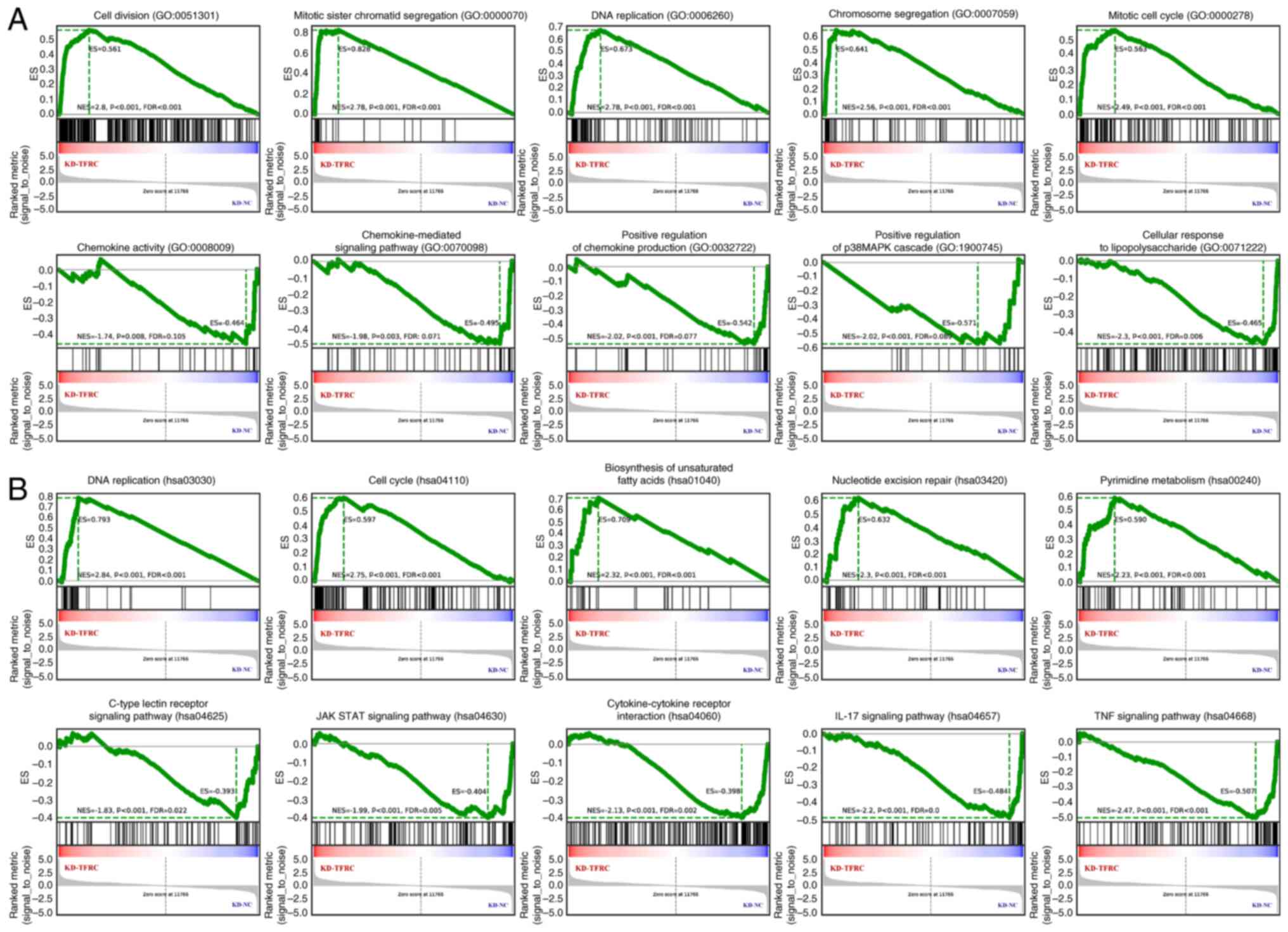
Figure 5

GSEA of TFRC-associated
differentially expressed mRNAs in thyroid cancer. (A) GO and (B)
Kyoto Encyclopedia of Genes and Genomes terms associated with GSEA
results. GSEA, gene set enrichment analysis; TFRC, transferrin
receptor; GO, Gene Ontology; KD, knockdown; NES, normalized
enrichment score; FDR, false discovery rate; NC, negative
control.

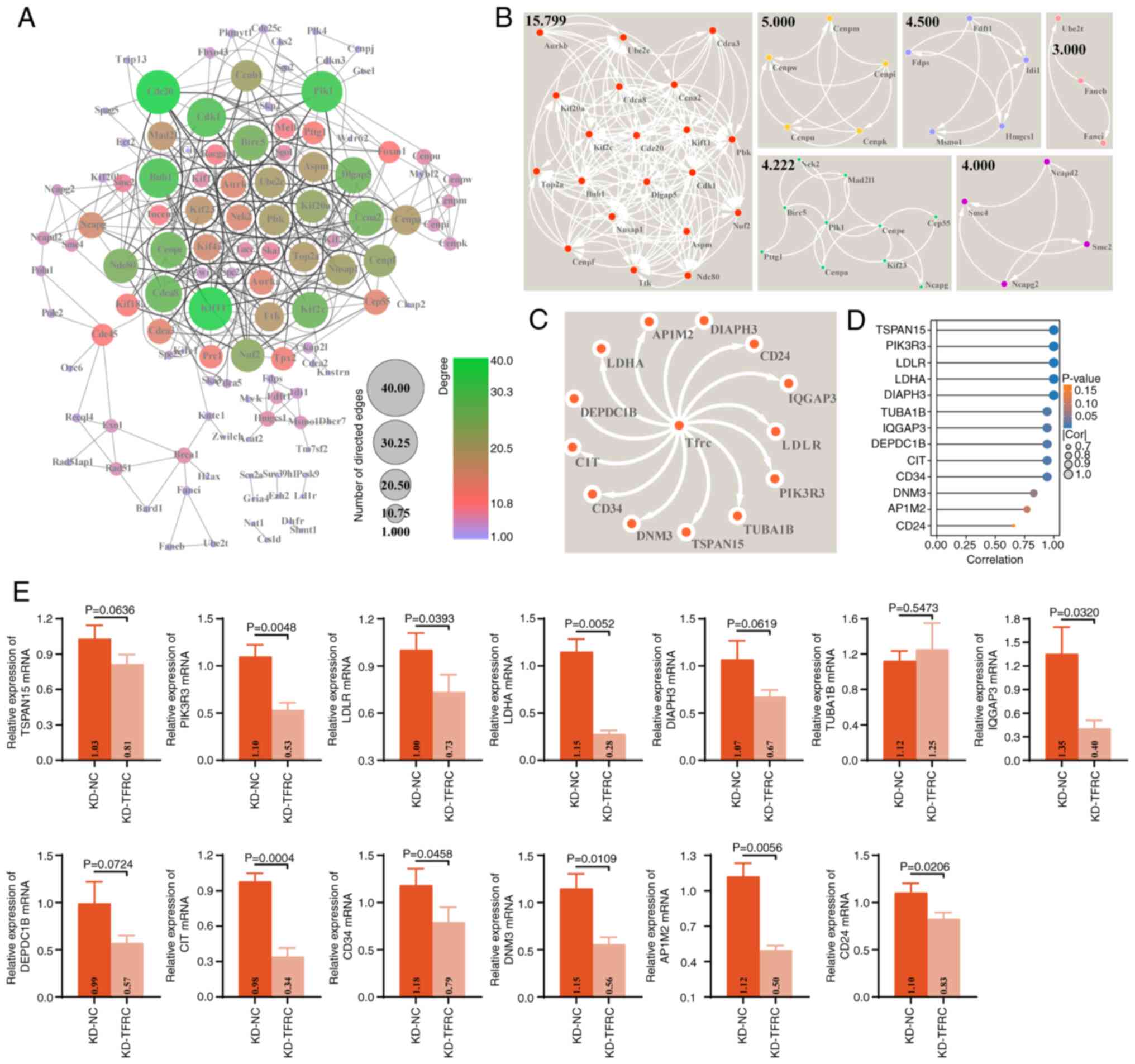
Figure 6

PPI network of TFRC-associated
DE-mRNAs in thyroid cancer. (A) PPI network of TFRC-associated
DE-mRNAs constructed and visualized in Cytoscape software. Node
color and size represent degree and indegree, respectively. (B)
Sub-networks within the PPI network identified using the MCODE app
in Cytoscape software. (C) Predicted TFRC-interacting genes
obtained from the STRING database (minimum required interaction
score, 0.4). (D) Lollipop plot showing the correlation between TFRC
and the expression of CD34, LDHA, LDLR, AP1M2, DIAPH3, TUBA1B,
CIT, DNM3, TSPAN15, DEPDC1B, IQGAP3, CD24 and PIK3R3 in
the mRNA expression profiles of K1 cells (KD-NC and KD-TFRC
groups). (E) Effects of TFRC knockdown on the mRNA expressions of
CD34, LDHA, LDLR, AP1M2, DIAPH3, TUBA1B, CIT, DNM3, TSPAN15,
DEPDC1B, IQGAP3, CD24 and PIK3R3 in K1 cells, assessed
using reverse transcription-quantitative PCR. PPI, protein-protein
interaction; DE-mRNAs, differentially expressed mRNAs; TFRC,
transferrin receptor; KD, knockdown; NC, negative control; LDHA,
lactate dehydrogenase A; LDLR, low-density lipoprotein receptor;
AP1M2, adaptor related protein complex 1 subunit µ 2; DIAPH3,
diaphanous related formin 3; TUBA1B, tubulin α 1b; CIT, citron
ρ-interacting serine/threonine kinase; DNM3, dynamin 3; TSPAN15,
tetraspanin 15; DEPDC1B, DEP domain containing 1B; IQGAP3, IQ motif
containing GTPase activating protein 3; PIK3R3,
phosphoinositide-3-kinase regulatory subunit 3.
View References

1 

Chen DW, Lang BHH, McLeod DSA, Newbold K and Haymart MR: Thyroid cancer. Lancet. 401:1531–1544. 2023. View Article : Google Scholar : PubMed/NCBI

2 

Sung H, Ferlay J, Siegel RL, Laversanne M, Soerjomataram I, Jemal A and Bray F: Global cancer statistics 2020: GLOBOCAN estimates of incidence and mortality worldwide for 36 cancers in 185 countries. CA Cancer J Clin. 71:209–249. 2021.PubMed/NCBI

3 

Rahib L, Smith BD, Aizenberg R, Rosenzweig AB, Fleshman JM and Matrisian LM: Projecting cancer incidence and deaths to 2030: The unexpected burden of thyroid, liver, and pancreas cancers in the United States. Cancer Res. 74:2913–2921. 2014. View Article : Google Scholar : PubMed/NCBI

4 

Zhang L, Feng Q, Wang J, Tan Z, Li Q and Ge M: Molecular basis and targeted therapy in thyroid cancer: Progress and opportunities. Biochim Biophys Acta Rev Cancer. 1878:1889282023. View Article : Google Scholar : PubMed/NCBI

5 

Laha D, Nilubol N and Boufraqech M: New therapies for advanced thyroid cancer. Front Endocrinol (Lausanne). 11:822020. View Article : Google Scholar : PubMed/NCBI

6 

Shen H, Zhu R, Liu Y, Hong Y, Ge J, Xuan J, Niu W, Yu X, Qin JJ and Li Q: Radioiodine-refractory differentiated thyroid cancer: Molecular mechanisms and therapeutic strategies for radioiodine resistance. Drug Resist Updat. 72:1010132024. View Article : Google Scholar : PubMed/NCBI

7 

Pandian N and Kanneganti TD: PANoptosis: A unique innate immune inflammatory cell death modality. J Immunol. 209:1625–1633. 2022. View Article : Google Scholar : PubMed/NCBI

8 

Samir P, Malireddi RKS and Kanneganti TD: The PANoptosome: A deadly protein complex driving pyroptosis, apoptosis, and necroptosis (PANoptosis). Front Cell Infect Microbiol. 10:2382020. View Article : Google Scholar : PubMed/NCBI

9 

Karki R and Kanneganti TD: PANoptosome signaling and therapeutic implications in infection: Central role for ZBP1 to activate the inflammasome and PANoptosis. Curr Opin Immunol. 83:1023482023. View Article : Google Scholar : PubMed/NCBI

10 

Nozaki K, Li L and Miao EA: Innate sensors trigger regulated cell death to combat intracellular infection. Annu Rev Immunol. 40:469–498. 2022. View Article : Google Scholar : PubMed/NCBI

11 

Lee S, Karki R, Wang Y, Nguyen LN, Kalathur RC and Kanneganti TD: AIM2 forms a complex with pyrin and ZBP1 to drive PANoptosis and host defence. Nature. 597:415–419. 2021. View Article : Google Scholar : PubMed/NCBI

12 

Liu LX, Heng JH, Deng DX, Zhao H, Zheng ZY, Liao LD, Lin W, Xu XE, Li EM and Xu LY: Sulconazole induces PANoptosis by triggering oxidative stress and inhibiting glycolysis to increase radiosensitivity in esophageal cancer. Mol Cell Proteomics. 22:1005512023. View Article : Google Scholar : PubMed/NCBI

13 

Karki R, Sundaram B, Sharma BR, Lee S, Malireddi RKS, Nguyen LN, Christgen S, Zheng M, Wang Y, Samir P, et al: ADAR1 restricts ZBP1-mediated immune response and PANoptosis to promote tumorigenesis. Cell Rep. 37:1098582021. View Article : Google Scholar : PubMed/NCBI

14 

Ren L, Yang Y, Li W, Zheng X, Liu J, Li S, Yang H, Zhang Y, Ge B, Zhang S, et al: CDK1 serves as a therapeutic target of adrenocortical carcinoma via regulating epithelial-mesenchymal transition, G2/M phase transition, and PANoptosis. J Transl Med. 20:4442022. View Article : Google Scholar : PubMed/NCBI

15 

Cai Y, Chen X, Lu T, Fang X, Ding M, Yu Z, Hu S, Liu J, Zhou X and Wang X: Activation of STING by SAMHD1 deficiency promotes PANoptosis and enhances efficacy of PD-L1 blockade in diffuse Large B-cell lymphoma. Int J Biol Sci. 19:4627–4643. 2023. View Article : Google Scholar : PubMed/NCBI

16 

Karbakhsh Ravari F, Ghasemi Gorji M and Rafiei A: From iron-driven cell death to clot formation: The emerging role of ferroptosis in thrombogenesis. Biomed Pharmacother. 189:1183282025. View Article : Google Scholar : PubMed/NCBI

17 

Shi J, Wu P, Sheng L, Sun W and Zhang H: Ferroptosis-related gene signature predicts the prognosis of papillary thyroid carcinoma. Cancer Cell Int. 21:6692021. View Article : Google Scholar : PubMed/NCBI

18 

Yang D, Wang J, Li C, Shi L and Zhang M: Ferroptosis-related gene model to predict overall survival of papillary thyroid carcinoma. Am J Otolaryngol. 42:1031632021. View Article : Google Scholar : PubMed/NCBI

19 

Huang Y, Du J, Li D, He W, Liu Z, Liu L, Yang X, Cheng X, Chen R and Yang Y: LASS2 suppresses metastasis in multiple cancers by regulating the ferroptosis signalling pathway through interaction with TFRC. Cancer Cell Int. 24:872024. View Article : Google Scholar : PubMed/NCBI

20 

Zhou X, Nie M, Xin X, Hua T, Zhang J, Shi R, Dong K, Shu W, Yan B and Wang H: RAB17 promotes endometrial cancer progression by inhibiting TFRC-dependent ferroptosis. Cell Death Dis. 15:6552024. View Article : Google Scholar : PubMed/NCBI

21 

Wang X, Zhou Y, Ning L, Chen J, Chen H and Li X: Knockdown of ANXA10 induces ferroptosis by inhibiting autophagy-mediated TFRC degradation in colorectal cancer. Cell Death Dis. 14:5882023. View Article : Google Scholar : PubMed/NCBI

22 

Guo S, Chen Y, Xue X, Yang Y, Wang Y, Qiu S, Cui J, Zhang X, Ma L, Qiao Y and Wang J: TRIB2 desensitizes ferroptosis via βTrCP-mediated TFRC ubiquitiantion in liver cancer cells. Cell Death Discov. 7:1962021. View Article : Google Scholar : PubMed/NCBI

23 

Lin Z, Zhong C, Shi M, Long Q, Jing L, Yu Y, Chou J, Chen M, Lan M and Long F: Circular RNA TFRC/SCD1 mRNA interaction regulates ferroptosis and metastasis in gastric cancer. Cell Death Dis. 16:4362025. View Article : Google Scholar : PubMed/NCBI

24 

Wang WT, Duan ZW, Xing TY, Hua W, Du KX, Shang CY, Wu YF, Wang L, Li JY, Gao R, et al: PTPN2 inhibition disrupts mitochondrial renewal and blocks TFRC-Mediated mitophagy to exert Anti-Tumor activities in ALK-Positive anaplastic large cell lymphoma. Adv Sci (Weinh). 12:e142822025. View Article : Google Scholar : PubMed/NCBI

25 

Wang K, Shi X, Lin H, Xu T and Xu S: Selenium deficiency exacerbates ROS/ER stress mediated pyroptosis and ferroptosis induced by bisphenol A in chickens thymus. J Environ Sci (China). 148:13–26. 2025. View Article : Google Scholar : PubMed/NCBI

26 

Zhang X, Xu W, Wang Z, Liu J, Gong H and Zou W: Cross-talk between cuproptosis and ferroptosis to identify immune landscape in cervical cancer for mRNA vaccines development. Eur J Med Res. 29:6022024. View Article : Google Scholar : PubMed/NCBI

27 

Liu J, Lichtenberg T, Hoadley KA, Poisson LM, Lazar AJ, Cherniack AD, Kovatich AJ, Benz CC, Levine DA, Lee AV, et al: An Integrated TCGA Pan-cancer clinical data resource to drive High-quality survival outcome analytics. Cell. 173:400–416.e11. 2018. View Article : Google Scholar : PubMed/NCBI

28 

Wu T, Hu E, Xu S, Chen M, Guo P, Dai Z, Feng T, Zhou L, Tang W, Zhan L, et al: clusterProfiler 4.0: A universal enrichment tool for interpreting omics data. Innovation (Camb). 2:1001412021.PubMed/NCBI

29 

Szklarczyk D, Gable AL, Lyon D, Junge A, Wyder S, Huerta-Cepas J, Simonovic M, Doncheva NT, Morris JH, Bork P, et al: STRING v11: Protein-protein association networks with increased coverage, supporting functional discovery in genome-wide experimental datasets. Nucleic Acids Res. 47:D607–D613. 2019. View Article : Google Scholar : PubMed/NCBI

30 

Otasek D, Morris JH, Bouças J, Pico AR and Demchak B: Cytoscape Automation: Empowering workflow-based network analysis. Genome Biol. 20:1852019. View Article : Google Scholar : PubMed/NCBI

31 

Bader GD and Hogue CW: An automated method for finding molecular complexes in large protein interaction networks. BMC Bioinformatics. 4:22003. View Article : Google Scholar : PubMed/NCBI

32 

Lin H and Zelterman DJT: Modeling Survival Data: Extending the Cox Model. Technometrics. 44:85–86. 2002. View Article : Google Scholar

33 

Livak KJ and Schmittgen TD: Analysis of relative gene expression data using real-time quantitative PCR and the 2(−Delta Delta C(T)) method. Methods. 25:402–408. 2001. View Article : Google Scholar : PubMed/NCBI

34 

Wang L, Wang S and Li W: RSeQC: Quality control of RNA-seq experiments. Bioinformatics. 28:2184–2185. 2012. View Article : Google Scholar : PubMed/NCBI

35 

Chen S, Zhou Y, Chen Y and Gu J: fastp: An ultra-fast all-in-one FASTQ preprocessor. Bioinformatics. 34:i884–i890. 2018. View Article : Google Scholar : PubMed/NCBI

36 

Kim D, Langmead B and Salzberg SL: HISAT: A fast spliced aligner with low memory requirements. Nat Methods. 12:357–360. 2015. View Article : Google Scholar : PubMed/NCBI

37 

Anders S, Pyl PT and Huber W: HTSeq-a Python framework to work with high-throughput sequencing data. Bioinformatics. 31:166–169. 2015. View Article : Google Scholar : PubMed/NCBI

38 

Love MI, Huber W and Anders S: Moderated estimation of fold change and dispersion for RNA-seq data with DESeq2. Genome Biol. 15:5502014. View Article : Google Scholar : PubMed/NCBI

39 

Ginestet C: ggplot2: Elegant graphics for data analysis. J Royal Stat Soc Series A Statistics Soc. 174:245–246. 2011. View Article : Google Scholar

40 

Wan Z, Wen M, Zheng C, Sun Y, Zhou Y, Tian Y, Xin S, Wang X, Ji X, Yang J, et al: Centromere protein F in tumor biology: Cancer's Achilles heel. Cancer Med. 14:e709492025. View Article : Google Scholar : PubMed/NCBI

41 

Li RQ, Yang Y, Qiao L, Yang L, Shen DD and Zhao XJ: KIF2C: An important factor involved in signaling pathways, immune infiltration, and DNA damage repair in tumorigenesis. Biomed Pharmacother. 171:1161732024. View Article : Google Scholar : PubMed/NCBI

42 

Burns M and Borgal L: Asp/ASPM phospho-regulation throughout the cell cycle. Genome. 68:1–10. 2025. View Article : Google Scholar : PubMed/NCBI

43 

Marima R, Hull R, Penny C and Dlamini Z: Mitotic syndicates Aurora Kinase B (AURKB) and mitotic arrest deficient 2 like 2 (MAD2L2) in cohorts of DNA damage response (DDR) and tumorigenesis. Mutat Res Rev Mutat Res. 787:1083762021. View Article : Google Scholar : PubMed/NCBI

44 

Tokuzumi A, Fukushima S, Miyashita A, Nakahara S, Kubo Y, Yamashita J, Harada M, Nakamura K, Kajihara I, Jinnin M and Ihn H: Cell division cycle-associated protein 1 as a new melanoma-associated antigen. J Dermatol. 43:1399–1405. 2016. View Article : Google Scholar : PubMed/NCBI

45 

Malireddi RKS, Kesavardhana S and Kanneganti TD: ZBP1 and TAK1: Master regulators of NLRP3 Inflammasome/Pyroptosis, apoptosis, and necroptosis (PAN-optosis). Front Cell Infect Microbiol. 9:4062019. View Article : Google Scholar : PubMed/NCBI

46 

Lin JF, Hu PS, Wang YY, Tan YT, Yu K, Liao K, Wu QN, Li T, Meng Q, Lin JZ, et al: Phosphorylated NFS1 weakens oxaliplatin-based chemosensitivity of colorectal cancer by preventing PANoptosis. Signal Transduct Target Ther. 7:542022. View Article : Google Scholar : PubMed/NCBI

47 

Lin C, Lin P, Yao H, Liu S, Lin X, He R, Teng Z, Zuo X, Li Y, Ye J and Zhu G: Modulation of YBX1-mediated PANoptosis inhibition by PPM1B and USP10 confers chemoresistance to oxaliplatin in gastric cancer. Cancer Lett. 587:2167122024. View Article : Google Scholar : PubMed/NCBI

48 

Tan YT, Li T, Wang RB, Liu ZK, Ma MY, Huang RZ, Mo HY, Luo SY, Lin JF, Xu RH and Ju HQ: WTAP weakens oxaliplatin chemosensitivity of colorectal cancer by preventing PANoptosis. Cancer Lett. 604:2172542024. View Article : Google Scholar : PubMed/NCBI

49 

Qi H, Li X, Ma J, Sun J, Liu Y, Wang X, Fan K, Shu C and Wang C: Fullerenols hijack lysosomes to disrupt inter-organellar crosstalk and block autophagy pre-activated by mTOR inhibitors for cancer cell PANoptosis. Sci Bull (Beijing). 70:1275–1294. 2025. View Article : Google Scholar : PubMed/NCBI

50 

Luo Y, Linghu M, Luo X, Li D, Wang J, Peng S and Ma Y: Remodeling tumor immunosuppressive microenvironment through dual activation of immunogenic panoptosis and ferroptosis by H2S-amplified nanoformulation to enhance cancer immunotherapy. Acta Pharm Sin B. 15:1242–1254. 2025. View Article : Google Scholar : PubMed/NCBI

51 

Wang J, Chen Y, Xu Y, Zhang J, Yang S, Zhou Y, Lei J, Ren R, Chen Y, Zhao H, et al: DNASE1L3-mediated PANoptosis enhances the efficacy of combination therapy for advanced hepatocellular carcinoma. Theranostics. 14:6798–6817. 2024. View Article : Google Scholar : PubMed/NCBI

52 

Wang S, Song A, Xie J, Wang YY, Wang WD, Zhang MJ, Wu ZZ, Yang QC, Li H, Zhang J and Sun ZJ: Fn-OMV potentiates ZBP1-mediated PANoptosis triggered by oncolytic HSV-1 to fuel antitumor immunity. Nat Commun. 15:36692024. View Article : Google Scholar : PubMed/NCBI

53 

Xing J, Ma X, Yu Y, Xiao Y, Chen L, Yuan W, Wang Y, Liu K, Guo Z, Tang H, et al: A Cardiac-targeting and anchoring bimetallic cluster nanozyme alleviates Chemotherapy-induced cardiac ferroptosis and PANoptosis. Adv Sci (Weinh). 12:e24055972025. View Article : Google Scholar : PubMed/NCBI

54 

Zhang J, Chen S, Wei S, Cheng S, Shi R, Zhao R, Zhang W, Zhang Q, Hua T, Feng D, et al: CircRAPGEF5 interacts with RBFOX2 to confer ferroptosis resistance by modulating alternative splicing of TFRC in endometrial cancer. Redox Biol. 57:1024932022. View Article : Google Scholar : PubMed/NCBI

55 

Wei XB, Jiang WQ, Zeng JH, Huang LQ, Ding HG, Jing YW, Han YL, Li YC and Chen SL: Exosome-derived lncRNA NEAT1 exacerbates Sepsis-associated encephalopathy by promoting ferroptosis through Regulating miR-9-5p/TFRC and GOT1 axis. Mol Neurobiol. 59:1954–1969. 2022. View Article : Google Scholar : PubMed/NCBI

56 

Feng G, Arima Y, Midorikawa K, Kobayashi H, Oikawa S, Zhao W, Zhang Z, Takeuchi K and Murata M: Knockdown of TFRC suppressed the progression of nasopharyngeal carcinoma by downregulating the PI3K/Akt/mTOR pathway. Cancer Cell Int. 23:1852023. View Article : Google Scholar : PubMed/NCBI

57 

Mu Y, Sun J, Li Z, Zhang W, Liu Z, Li C, Peng C, Cui G, Shao H and Du Z: Activation of pyroptosis and ferroptosis is involved in the hepatotoxicity induced by polystyrene microplastics in mice. Chemosphere. 291:1329442022. View Article : Google Scholar : PubMed/NCBI

58 

Zhang Y, Hu M, Jia W, Liu G, Zhang J, Wang B, Li J, Cui P, Li X, Lager S, et al: Hyperandrogenism and insulin resistance modulate gravid uterine and placental ferroptosis in PCOS-like rats. J Endocrinol. 246:247–263. 2020. View Article : Google Scholar : PubMed/NCBI

59 

Urbańska K and Orzechowski A: Unappreciated role of LDHA and LDHB to control apoptosis and autophagy in tumor cells. Int J Mol Sci. 20:20852019. View Article : Google Scholar : PubMed/NCBI

60 

Shi X, Chen Y, Liu Q, Mei X, Liu J, Tang Y, Luo R, Sun D, Ma Y, Wu W, et al: LDLR dysfunction induces LDL accumulation and promotes pulmonary fibrosis. Clin Transl Med. 12:e7112022. View Article : Google Scholar : PubMed/NCBI

61 

Yao X and Li C: Lactate dehydrogenase A mediated histone lactylation induced the pyroptosis through targeting HMGB1. Metab Brain Dis. 38:1543–1553. 2023. View Article : Google Scholar : PubMed/NCBI

62 

Lin S, Tan L, Luo D, Peng X, Zhu Y and Li H: Linc01278 inhibits the development of papillary thyroid carcinoma by regulating miR-376c-3p/DNM3 axis. Cancer Manag Res. 11:8557–8569. 2019. View Article : Google Scholar : PubMed/NCBI

63 

Rong Y, Gao J, Kuang T, Chen J, Li JA, Huang Y, Xin H, Fang Y, Han X, Sun LQ, et al: DIAPH3 promotes pancreatic cancer progression by activating selenoprotein TrxR1-mediated antioxidant effects. J Cell Mol Med. 25:2163–2175. 2021. View Article : Google Scholar : PubMed/NCBI

64 

Han F, Cheng C, Xu Q, Chen J, Yang Z and Liu J: DEPDC1B promotes colorectal cancer via facilitating cell proliferation and migration while inhibiting apoptosis. Cell Cycle. 22:131–143. 2023. View Article : Google Scholar : PubMed/NCBI

65 

Li C, Liu Z, Kong D, Li Z and Li L: Lactylation: A novel driver of drug resistance in the tumor microenvironment. Cancer Drug Resist. 8:392025.PubMed/NCBI

66 

Yang Y, Wu Y, Chen H, Xu Z, Lu R, Zhang S, Zhan R, Xi Q and Jin Y: Research progress on the interaction between glucose metabolic reprogramming and lactylation in tumors. Front Immunol. 16:15951622025. View Article : Google Scholar : PubMed/NCBI

67 

She H, Zheng J, Zhao G, Du Y, Tan L, Chen ZS, Wu Y, Li Y, Liu Y, Sun Y, et al: Arginase 1 drives mitochondrial cristae remodeling and PANoptosis in ischemia/hypoxia-induced vascular dysfunction. Signal Transduct Target Ther. 10:1672025. View Article : Google Scholar : PubMed/NCBI

68 

Gong T, Wang QD, Loughran PA, Li YH, Scott MJ, Billiar TR, Liu YT and Fan J: Mechanism of lactic acidemia-promoted pulmonary endothelial cells death in sepsis: Role for CIRP-ZBP1-PANoptosis pathway. Mil Med Res. 11:712024.PubMed/NCBI

69 

Xu L, Ye Y, Gu W, Xu X, Chen N, Zhang L, Cai W, Hu J, Wang T, Chao H, et al: Histone lactylation stimulated upregulation of PSMD14 alleviates neuron PANoptosis through deubiquitinating PKM2 to activate PINK1-mediated mitophagy after traumatic brain injury. Autophagy. 21:1473–1491. 2025. View Article : Google Scholar : PubMed/NCBI

70 

Peng X, He Z, Yuan D, Liu Z and Rong P: Lactic acid: The culprit behind the immunosuppressive microenvironment in hepatocellular carcinoma. Biochim Biophys Acta Rev Cancer. 1879:1891642024. View Article : Google Scholar : PubMed/NCBI

71 

Mi K, Chen Z, He J, Jiang C, Xia Y and Peng J: P300-Mediated ARRB1 lactylation promotes mitochondrial dysfunction and neuronal apoptosis in subarachnoid hemorrhage via upregulating S100A9. Neurochem Res. 50:1742025. View Article : Google Scholar : PubMed/NCBI

72 

Du S, Zhang X, Jia Y, Peng P, Kong Q, Jiang S, Li Y, Li C, Ding Z and Liu L: Hepatocyte HSPA12A inhibits macrophage chemotaxis and activation to attenuate liver ischemia/reperfusion injury via suppressing glycolysis-mediated HMGB1 lactylation and secretion of hepatocytes. Theranostics. 13:3856–3871. 2023. View Article : Google Scholar : PubMed/NCBI

Related Articles

  • Abstract
  • View
  • Download
  • Twitter
Copy and paste a formatted citation
Spandidos Publications style
Ma S, Ma Z, Shen J, Liu H, Yang H, Hu Y and Ying S: Transferrin receptor serves a role in promoting PANoptosis in thyroid cancer. Oncol Lett 31: 41, 2026.
APA
Ma, S., Ma, Z., Shen, J., Liu, H., Yang, H., Hu, Y., & Ying, S. (2026). Transferrin receptor serves a role in promoting PANoptosis in thyroid cancer. Oncology Letters, 31, 41. https://doi.org/10.3892/ol.2025.15394
MLA
Ma, S., Ma, Z., Shen, J., Liu, H., Yang, H., Hu, Y., Ying, S."Transferrin receptor serves a role in promoting PANoptosis in thyroid cancer". Oncology Letters 31.1 (2026): 41.
Chicago
Ma, S., Ma, Z., Shen, J., Liu, H., Yang, H., Hu, Y., Ying, S."Transferrin receptor serves a role in promoting PANoptosis in thyroid cancer". Oncology Letters 31, no. 1 (2026): 41. https://doi.org/10.3892/ol.2025.15394
Copy and paste a formatted citation
x
Spandidos Publications style
Ma S, Ma Z, Shen J, Liu H, Yang H, Hu Y and Ying S: Transferrin receptor serves a role in promoting PANoptosis in thyroid cancer. Oncol Lett 31: 41, 2026.
APA
Ma, S., Ma, Z., Shen, J., Liu, H., Yang, H., Hu, Y., & Ying, S. (2026). Transferrin receptor serves a role in promoting PANoptosis in thyroid cancer. Oncology Letters, 31, 41. https://doi.org/10.3892/ol.2025.15394
MLA
Ma, S., Ma, Z., Shen, J., Liu, H., Yang, H., Hu, Y., Ying, S."Transferrin receptor serves a role in promoting PANoptosis in thyroid cancer". Oncology Letters 31.1 (2026): 41.
Chicago
Ma, S., Ma, Z., Shen, J., Liu, H., Yang, H., Hu, Y., Ying, S."Transferrin receptor serves a role in promoting PANoptosis in thyroid cancer". Oncology Letters 31, no. 1 (2026): 41. https://doi.org/10.3892/ol.2025.15394
Follow us
  • Twitter
  • LinkedIn
  • Facebook
About
  • Spandidos Publications
  • Careers
  • Cookie Policy
  • Privacy Policy
How can we help?
  • Help
  • Live Chat
  • Contact
  • Email to our Support Team