Spandidos Publications Logo
  • About
    • About Spandidos
    • Aims and Scopes
    • Abstracting and Indexing
    • Editorial Policies
    • Reprints and Permissions
    • Job Opportunities
    • Terms and Conditions
    • Contact
  • Journals
    • All Journals
    • Oncology Letters
      • Oncology Letters
      • Information for Authors
      • Editorial Policies
      • Editorial Board
      • Aims and Scope
      • Abstracting and Indexing
      • Bibliographic Information
      • Archive
    • International Journal of Oncology
      • International Journal of Oncology
      • Information for Authors
      • Editorial Policies
      • Editorial Board
      • Aims and Scope
      • Abstracting and Indexing
      • Bibliographic Information
      • Archive
    • Molecular and Clinical Oncology
      • Molecular and Clinical Oncology
      • Information for Authors
      • Editorial Policies
      • Editorial Board
      • Aims and Scope
      • Abstracting and Indexing
      • Bibliographic Information
      • Archive
    • Experimental and Therapeutic Medicine
      • Experimental and Therapeutic Medicine
      • Information for Authors
      • Editorial Policies
      • Editorial Board
      • Aims and Scope
      • Abstracting and Indexing
      • Bibliographic Information
      • Archive
    • International Journal of Molecular Medicine
      • International Journal of Molecular Medicine
      • Information for Authors
      • Editorial Policies
      • Editorial Board
      • Aims and Scope
      • Abstracting and Indexing
      • Bibliographic Information
      • Archive
    • Biomedical Reports
      • Biomedical Reports
      • Information for Authors
      • Editorial Policies
      • Editorial Board
      • Aims and Scope
      • Abstracting and Indexing
      • Bibliographic Information
      • Archive
    • Oncology Reports
      • Oncology Reports
      • Information for Authors
      • Editorial Policies
      • Editorial Board
      • Aims and Scope
      • Abstracting and Indexing
      • Bibliographic Information
      • Archive
    • Molecular Medicine Reports
      • Molecular Medicine Reports
      • Information for Authors
      • Editorial Policies
      • Editorial Board
      • Aims and Scope
      • Abstracting and Indexing
      • Bibliographic Information
      • Archive
    • World Academy of Sciences Journal
      • World Academy of Sciences Journal
      • Information for Authors
      • Editorial Policies
      • Editorial Board
      • Aims and Scope
      • Abstracting and Indexing
      • Bibliographic Information
      • Archive
    • International Journal of Functional Nutrition
      • International Journal of Functional Nutrition
      • Information for Authors
      • Editorial Policies
      • Editorial Board
      • Aims and Scope
      • Abstracting and Indexing
      • Bibliographic Information
      • Archive
    • International Journal of Epigenetics
      • International Journal of Epigenetics
      • Information for Authors
      • Editorial Policies
      • Editorial Board
      • Aims and Scope
      • Abstracting and Indexing
      • Bibliographic Information
      • Archive
    • Medicine International
      • Medicine International
      • Information for Authors
      • Editorial Policies
      • Editorial Board
      • Aims and Scope
      • Abstracting and Indexing
      • Bibliographic Information
      • Archive
  • Articles
  • Information
    • Information for Authors
    • Information for Reviewers
    • Information for Librarians
    • Information for Advertisers
    • Conferences
  • Language Editing
Spandidos Publications Logo
  • About
    • About Spandidos
    • Aims and Scopes
    • Abstracting and Indexing
    • Editorial Policies
    • Reprints and Permissions
    • Job Opportunities
    • Terms and Conditions
    • Contact
  • Journals
    • All Journals
    • Biomedical Reports
      • Information for Authors
      • Editorial Policies
      • Editorial Board
      • Aims and Scope
      • Abstracting and Indexing
      • Bibliographic Information
      • Archive
    • Experimental and Therapeutic Medicine
      • Information for Authors
      • Editorial Policies
      • Editorial Board
      • Aims and Scope
      • Abstracting and Indexing
      • Bibliographic Information
      • Archive
    • International Journal of Epigenetics
      • Information for Authors
      • Editorial Policies
      • Editorial Board
      • Aims and Scope
      • Abstracting and Indexing
      • Bibliographic Information
      • Archive
    • International Journal of Functional Nutrition
      • Information for Authors
      • Editorial Policies
      • Editorial Board
      • Aims and Scope
      • Abstracting and Indexing
      • Bibliographic Information
      • Archive
    • International Journal of Molecular Medicine
      • Information for Authors
      • Editorial Policies
      • Editorial Board
      • Aims and Scope
      • Abstracting and Indexing
      • Bibliographic Information
      • Archive
    • International Journal of Oncology
      • Information for Authors
      • Editorial Policies
      • Editorial Board
      • Aims and Scope
      • Abstracting and Indexing
      • Bibliographic Information
      • Archive
    • Medicine International
      • Information for Authors
      • Editorial Policies
      • Editorial Board
      • Aims and Scope
      • Abstracting and Indexing
      • Bibliographic Information
      • Archive
    • Molecular and Clinical Oncology
      • Information for Authors
      • Editorial Policies
      • Editorial Board
      • Aims and Scope
      • Abstracting and Indexing
      • Bibliographic Information
      • Archive
    • Molecular Medicine Reports
      • Information for Authors
      • Editorial Policies
      • Editorial Board
      • Aims and Scope
      • Abstracting and Indexing
      • Bibliographic Information
      • Archive
    • Oncology Letters
      • Information for Authors
      • Editorial Policies
      • Editorial Board
      • Aims and Scope
      • Abstracting and Indexing
      • Bibliographic Information
      • Archive
    • Oncology Reports
      • Information for Authors
      • Editorial Policies
      • Editorial Board
      • Aims and Scope
      • Abstracting and Indexing
      • Bibliographic Information
      • Archive
    • World Academy of Sciences Journal
      • Information for Authors
      • Editorial Policies
      • Editorial Board
      • Aims and Scope
      • Abstracting and Indexing
      • Bibliographic Information
      • Archive
  • Articles
  • Information
    • For Authors
    • For Reviewers
    • For Librarians
    • For Advertisers
    • Conferences
  • Language Editing
Login Register Submit
  • This site uses cookies
  • You can change your cookie settings at any time by following the instructions in our Cookie Policy. To find out more, you may read our Privacy Policy.

    I agree
Search articles by DOI, keyword, author or affiliation
Search
Advanced Search
presentation
Oncology Letters
Join Editorial Board Propose a Special Issue
Print ISSN: 1792-1074 Online ISSN: 1792-1082
Journal Cover
August-2026 Volume 32 Issue 2

Full Size Image

Sign up for eToc alerts
Recommend to Library

Journals

International Journal of Molecular Medicine

International Journal of Molecular Medicine

International Journal of Molecular Medicine is an international journal devoted to molecular mechanisms of human disease.

International Journal of Oncology

International Journal of Oncology

International Journal of Oncology is an international journal devoted to oncology research and cancer treatment.

Molecular Medicine Reports

Molecular Medicine Reports

Covers molecular medicine topics such as pharmacology, pathology, genetics, neuroscience, infectious diseases, molecular cardiology, and molecular surgery.

Oncology Reports

Oncology Reports

Oncology Reports is an international journal devoted to fundamental and applied research in Oncology.

Experimental and Therapeutic Medicine

Experimental and Therapeutic Medicine

Experimental and Therapeutic Medicine is an international journal devoted to laboratory and clinical medicine.

Oncology Letters

Oncology Letters

Oncology Letters is an international journal devoted to Experimental and Clinical Oncology.

Biomedical Reports

Biomedical Reports

Explores a wide range of biological and medical fields, including pharmacology, genetics, microbiology, neuroscience, and molecular cardiology.

Molecular and Clinical Oncology

Molecular and Clinical Oncology

International journal addressing all aspects of oncology research, from tumorigenesis and oncogenes to chemotherapy and metastasis.

World Academy of Sciences Journal

World Academy of Sciences Journal

Multidisciplinary open-access journal spanning biochemistry, genetics, neuroscience, environmental health, and synthetic biology.

International Journal of Functional Nutrition

International Journal of Functional Nutrition

Open-access journal combining biochemistry, pharmacology, immunology, and genetics to advance health through functional nutrition.

International Journal of Epigenetics

International Journal of Epigenetics

Publishes open-access research on using epigenetics to advance understanding and treatment of human disease.

Medicine International

Medicine International

An International Open Access Journal Devoted to General Medicine.

Journal Cover
August-2026 Volume 32 Issue 2

Full Size Image

Sign up for eToc alerts
Recommend to Library

  • Article
  • Citations
    • Cite This Article
    • Download Citation
    • Create Citation Alert
    • Remove Citation Alert
    • Cited By
  • Similar Articles
    • Related Articles (in Spandidos Publications)
    • Similar Articles (Google Scholar)
    • Similar Articles (PubMed)
  • Download PDF
  • Download XML
  • View XML
Case Report

Initial chemotherapy decreases transfusion dependence and enables definitive therapy in metastatic thymoma complicated by pure red cell aplasia: A case report

  • Authors:
    • Nobuhito Hara
    • Rika Sasaki
    • Yoshiki Kojitani
    • Yumi Yoshii
    • Masahide Ota
    • Shunsuke Okazaki
    • Shinichi Ochi
    • Ryo Miyata
    • Masatsugu Hamaji
    • Sayaka Ando
    • Maiko Takeda
    • Akihiko Yoshizawa
    • Masayuki Takeda
  • View Affiliations / Copyright

    Affiliations: Department of Cancer Genomics and Medical Oncology, Nara Medical University, Kashihara, Nara 634‑8521, Japan, Department of Hematology, Nara Medical University, Kashihara, Nara 634‑8521, Japan, Department of Thoracic and Cardiovascular Surgery, Nara Medical University, Kashihara, Nara 634‑8521, Japan, Department of Diagnostic Pathology, Nara Medical University, Kashihara, Nara 634‑8521, Japan
  • Article Number: 354
    |
    Published online on: June 16, 2026
       https://doi.org/10.3892/ol.2026.15709
  • Expand metrics +
Metrics: Total Views: 0 (Spandidos Publications: | PMC Statistics: )
Metrics: Total PDF Downloads: 0 (Spandidos Publications: | PMC Statistics: )
Cited By (CrossRef): 0 citations Loading Articles...

This article is mentioned in:


Abstract

Pure red cell aplasia (PRCA) is a rare paraneoplastic complication occurring in ~5% of patients with thymoma. The optimal management of metastatic thymoma complicated by PRCA remains unclear, particularly when immediate immunosuppressive therapy is not feasible. The present report describes the case of a 69‑year‑old man with type AB thymoma accompanied by multiple bilateral pulmonary metastases (cT1bN0M1b, stage IVB) and severe transfusion‑dependent PRCA. Because the tumor was unresectable at presentation, systemic chemotherapy with the ADOC regimen (doxorubicin, cisplatin, vincristine and cyclophosphamide) was initiated. Prior to chemotherapy, daily blood transfusions were needed, but after the first cycle, this need was decreased, with transfusion intervals prolonged to every 7‑17 days. On radiographic evaluation, there was sustained tumor reduction with stable disease. After six cycles of chemotherapy, cyclosporine was introduced and robot‑assisted thymectomy was subsequently performed. A total of 2 weeks after initiating cyclosporine, the patient achieved transfusion independence with recovery of hemoglobin and reticulocyte counts. Therefore, cytotoxic chemotherapy may contribute to both tumor control and improvement of PRCA in metastatic thymoma, although further clinical evidence is required to establish optimal therapeutic strategies.

Introduction

Thymoma is the most common anterior mediastinal tumor, but it is a rare malignancy overall, with an incidence of approximately 0.13 cases per 100,000 individuals annually (1). Thymomas are often associated with a variety of immune abnormalities, particularly autoimmune diseases such as myasthenia gravis and pure red cell aplasia (PRCA). PRCA is a rare hematological disorder characterized by significant normocytic, normochromic anemia, reduced reticulocytes, and selective marked reduction of erythroid precursors in the bone marrow.

Cases of thymoma complicated by PRCA are typically treated by tumor resection plus immunosuppressive therapies such as cyclosporine, steroids and cyclophosphamide (2,3). However, the effectiveness of these treatments varies greatly among individuals, and no standardized treatment guidelines have been established. Meanwhile, systemic chemotherapy becomes the mainstay of treatment in cases of metastatic or inoperable advanced thymoma wherein surgical resection is not an option. In such situations, using immunosuppressive therapy requires great caution due to the risk of additive toxicity when combined with cytotoxic agents and the potential for serious infectious complications. In cases where immunosuppressive agents cannot be administered, long-term transfusion support is often required for the management of PRCA-associated anemia.

This case report describes a patient with metastatic thymoma complicated by PRCA. The initial treatment was cytotoxic chemotherapy with the ADOC regimen, which achieved tumor control and prolonged transfusion intervals. This therapeutic response enabled the subsequent initiation of immunosuppressive therapy and thymectomy, ultimately leading to successful withdrawal from transfusion dependence. This extremely rare clinical course suggests the potential of cytotoxic chemotherapy (in addition to immunosuppressive therapy) as a therapeutic option for thymoma-associated PRCA. This case provides valuable insight that contributes to the accumulation of clinical experience and aids in the future development of evidence-based treatment guidelines.

Case report

Patient presentation, diagnosis and treatment course

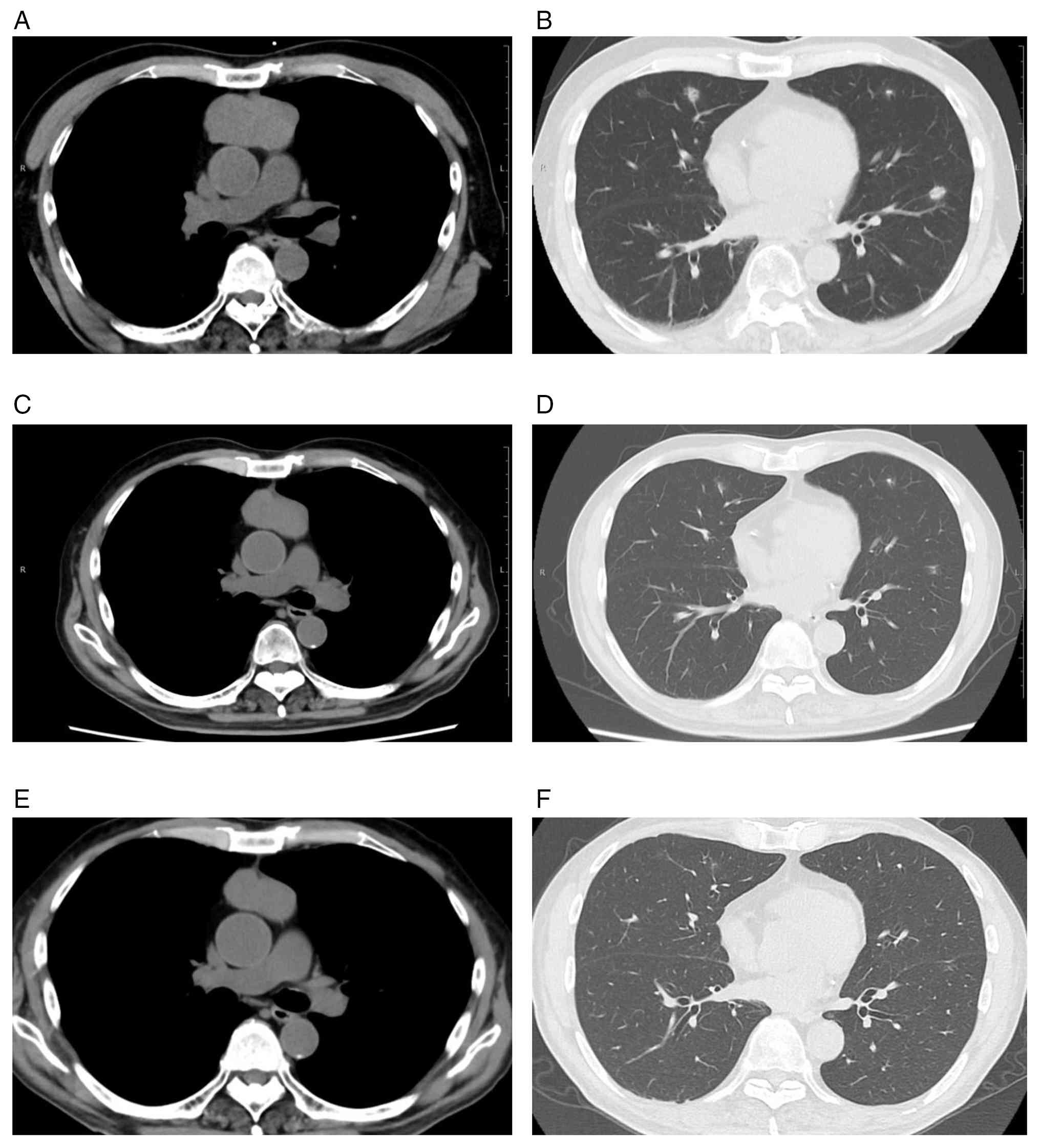
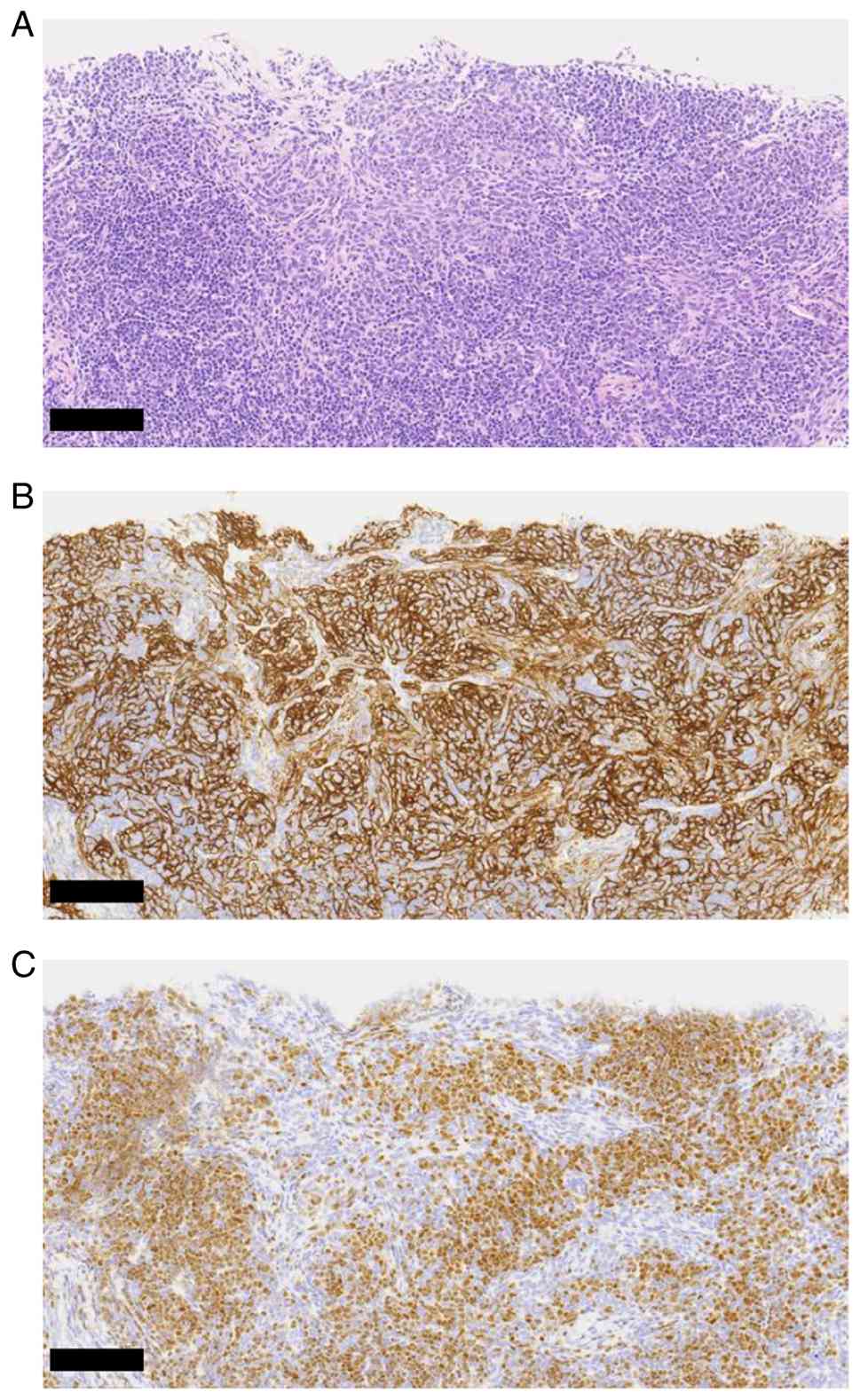
A 69-year-old man presented to a local physician with a persistent cough since August 2024. Chest computed tomography (CT) performed in April 2025 revealed a 6-cm mass in the anterior mediastinum and multiple nodular lesions in both lungs (Fig. 1A and B). After one month, the patient was referred to our department of medical oncology for further evaluation and treatment. Initial laboratory findings revealed anemia with a hemoglobin level of 6.1 g/dl and a markedly reduced reticulocyte count of 0.1%. White blood cell and platelet counts were within normal ranges. A CT-guided biopsy of the anterior mediastinal mass led to a diagnosis of type AB thymoma based on the World Health Organization (WHO) classification (Fig. 2). The clinical stage was cT1bN0M1b, stage IVB, based on the American Joint Committee on Cancer 9th edition staging system. Serum levels of iron, copper, zinc, and relevant vitamins were unremarkable, and parvovirus B19 IgM (EIA) was negative.

Radiographic findings before and after
ADOC chemotherapy. (A) Contrast-enhanced chest CT image obtained in
June 2025 prior to chemotherapy demonstrating a 6-cm mass in the
anterior mediastinum. (B) Contrast-enhanced chest CT image obtained
in June 2025 prior to chemotherapy demonstrating multiple bilateral
pulmonary nodules consistent with pulmonary metastases. (C)
Contrast-enhanced chest CT image obtained in September 2025 after 4
cycles of ADOC chemotherapy demonstrating shrinkage of the anterior
mediastinal mass. (D) Contrast-enhanced chest CT image obtained in
September 2025 after 4 cycles of ADOC chemotherapy demonstrating
shrinkage of the multiple bilateral pulmonary nodules, some of
which became less conspicuous. (E) Contrast-enhanced chest CT image
obtained in November 2025 after 6 cycles of ADOC chemotherapy
demonstrating further reduction of the anterior mediastinal mass.
(F) Contrast-enhanced chest CT image obtained in November 2025
after 6 cycles of ADOC chemotherapy demonstrating sustained
shrinkage of the bilateral pulmonary nodules. ADOC, doxorubicin,
cisplatin, vincristine and cyclophosphamide; CT, computed
tomography.

Figure 1.

Radiographic findings before and after ADOC chemotherapy. (A) Contrast-enhanced chest CT image obtained in June 2025 prior to chemotherapy demonstrating a 6-cm mass in the anterior mediastinum. (B) Contrast-enhanced chest CT image obtained in June 2025 prior to chemotherapy demonstrating multiple bilateral pulmonary nodules consistent with pulmonary metastases. (C) Contrast-enhanced chest CT image obtained in September 2025 after 4 cycles of ADOC chemotherapy demonstrating shrinkage of the anterior mediastinal mass. (D) Contrast-enhanced chest CT image obtained in September 2025 after 4 cycles of ADOC chemotherapy demonstrating shrinkage of the multiple bilateral pulmonary nodules, some of which became less conspicuous. (E) Contrast-enhanced chest CT image obtained in November 2025 after 6 cycles of ADOC chemotherapy demonstrating further reduction of the anterior mediastinal mass. (F) Contrast-enhanced chest CT image obtained in November 2025 after 6 cycles of ADOC chemotherapy demonstrating sustained shrinkage of the bilateral pulmonary nodules. ADOC, doxorubicin, cisplatin, vincristine and cyclophosphamide; CT, computed tomography.

Histopathology of a CT-guided anterior
mediastinal tumor biopsy. (A) Hematoxylin and eosin staining
showing nodular proliferation of small lymphocytes and
spindle-shaped cells. (B) CK AE1/AE3 immunostaining. (C) TdT
staining. TdT-positive lymphocytes are observed in the background,
with intervening CK AE1/AE3-positive thymic epithelial cells. These
findings are consistent with a diagnosis of type AB thymoma. All
images were taken using a 10× eyepiece and 20× objective lens, and
the black scale bar in the lower left represents 100 µm. CK,
cytokeratin; TdT, terminal deoxynucleotidyl transferase.

Figure 2.

Histopathology of a CT-guided anterior mediastinal tumor biopsy. (A) Hematoxylin and eosin staining showing nodular proliferation of small lymphocytes and spindle-shaped cells. (B) CK AE1/AE3 immunostaining. (C) TdT staining. TdT-positive lymphocytes are observed in the background, with intervening CK AE1/AE3-positive thymic epithelial cells. These findings are consistent with a diagnosis of type AB thymoma. All images were taken using a 10× eyepiece and 20× objective lens, and the black scale bar in the lower left represents 100 µm. CK, cytokeratin; TdT, terminal deoxynucleotidyl transferase.

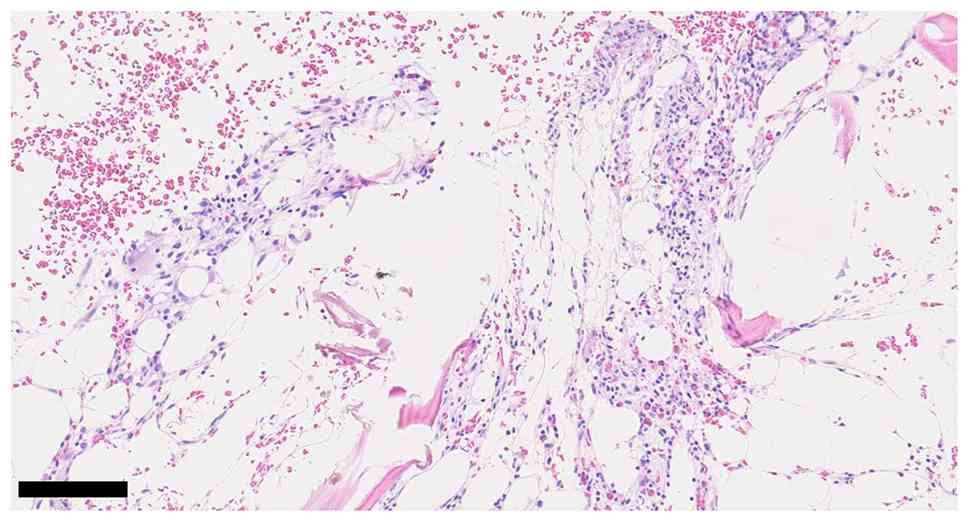
Since PRCA was suspected, a bone marrow biopsy was performed by the hematology department. Histological examination revealed a predominance of fatty marrow, with poorly visualized erythroid islands and megakaryocytes, and no evidence of normal hematopoietic cell clusters (Fig. 3). G-banding analysis of the bone marrow revealed no apparent chromosomal abnormalities. Magnetic resonance imaging of the thoracolumbar spine also demonstrated findings consistent with fatty marrow replacement. Although aplastic anemia was initially considered, the preserved white blood cell and platelet counts supported a diagnosis of thymoma-associated PRCA.

Hematoxylin and eosin staining of a
bone marrow biopsy. Erythroblastic islands and megakaryocytes are
indistinct, and normal hematopoietic cell nests are not clearly
identifiable. Although aplastic anemia was considered in the
differential diagnosis, integration with other clinical and
laboratory findings was required for definitive assessment. The
image was taken using a 10× eyepiece and 20× objective lens, and
the black scale bar in the lower left represents 100 µm.

Figure 3.

Hematoxylin and eosin staining of a bone marrow biopsy. Erythroblastic islands and megakaryocytes are indistinct, and normal hematopoietic cell nests are not clearly identifiable. Although aplastic anemia was considered in the differential diagnosis, integration with other clinical and laboratory findings was required for definitive assessment. The image was taken using a 10× eyepiece and 20× objective lens, and the black scale bar in the lower left represents 100 µm.

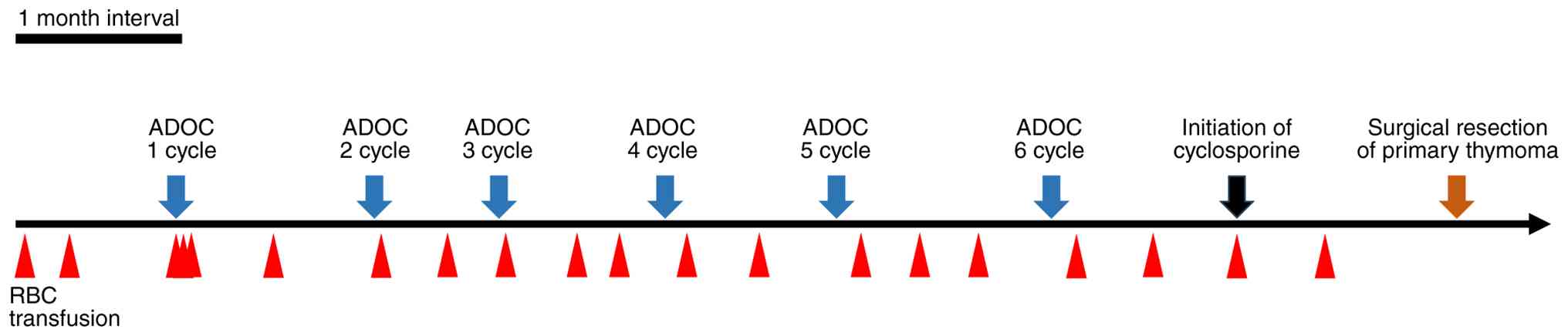
Upon the initial visit, the patient required regular red blood cell transfusions (approximately 2 units per week) to manage the anemia. Complete surgical resection of the anterior mediastinal tumor was deemed unfeasible due to the multiple pulmonary metastases, and thus systemic chemotherapy was initiated in June 2025 to achieve disease control. Upon starting chemotherapy, daily transfusions of 2 units of red blood cells were required to maintain a hemoglobin level of 7 g/dl (Fig. 4). The patient was treated with the ADOC regimen, consisting of doxorubicin (40 mg/m2), cisplatin (25 mg/m2), vincristine (0.6 mg/m2) and cyclophosphamide (700 mg/m2). A 50% reduced dose of cisplatin (from 50 to 25 mg/m2) was used due to preexisting renal dysfunction.

Clinical course of transfusion
dependence from the initial visit to our hospital. A schematic
representation of the patient's clinical course over 250 days from
the first presentation at our hospital (the total length of the
horizontal arrow corresponds to 250 days). The black scale bar
indicates a 1-month interval. Blue downward arrows in the upper
panel indicate the start of each chemotherapy cycle. The black and
brown downward arrows in the upper panel indicate the initiation of
cyclosporine and surgical resection of the thymoma, respectively.
Red upward triangles in the lower panel represent the RBC
transfusions, with each transfusion involving 2 units of RBCs. The
patient required near-daily transfusions prior to chemotherapy, but
after the first cycle, the anemia was managed with transfusions
administered every 7–17 days. ADOC, doxorubicin, cisplatin,
vincristine and cyclophosphamide; RBC, red blood cell.

Figure 4.

Clinical course of transfusion dependence from the initial visit to our hospital. A schematic representation of the patient's clinical course over 250 days from the first presentation at our hospital (the total length of the horizontal arrow corresponds to 250 days). The black scale bar indicates a 1-month interval. Blue downward arrows in the upper panel indicate the start of each chemotherapy cycle. The black and brown downward arrows in the upper panel indicate the initiation of cyclosporine and surgical resection of the thymoma, respectively. Red upward triangles in the lower panel represent the RBC transfusions, with each transfusion involving 2 units of RBCs. The patient required near-daily transfusions prior to chemotherapy, but after the first cycle, the anemia was managed with transfusions administered every 7–17 days. ADOC, doxorubicin, cisplatin, vincristine and cyclophosphamide; RBC, red blood cell.

Remarkably, after the first cycle of chemotherapy, transfusion dependence improved, with the interval between transfusions extending to once every 7–17 days. However, on day 11 after the initial treatment, the patient developed febrile neutropenia. During the second cycle, the doses of doxorubicin and cyclophosphamide were reduced by 20%, and pegfilgrastim was administered to support neutrophil recovery. After completing four cycles, contrast-enhanced CT performed in September 2025 demonstrated shrinkage of the anterior mediastinal mass, as well as reduction and partial obscuration of the pulmonary masses and nodular lesions in both lungs (Fig. 1C and D). The overall response was assessed as stable disease as per Response Evaluation Criteria in Solid Tumors (RECIST) version 1.1. After six cycles, contrast-enhanced CT in November 2025 revealed further reduction of the anterior mediastinal mass, and the pulmonary nodular lesions remained decreased in size, indicating sustained disease control (Fig. 1E and F). The overall response continued to meet the criteria for stable disease as per RECIST version 1.1. Chemotherapy was completed after six cycles. Following multidisciplinary discussion, a strategy of local tumor control was adopted.

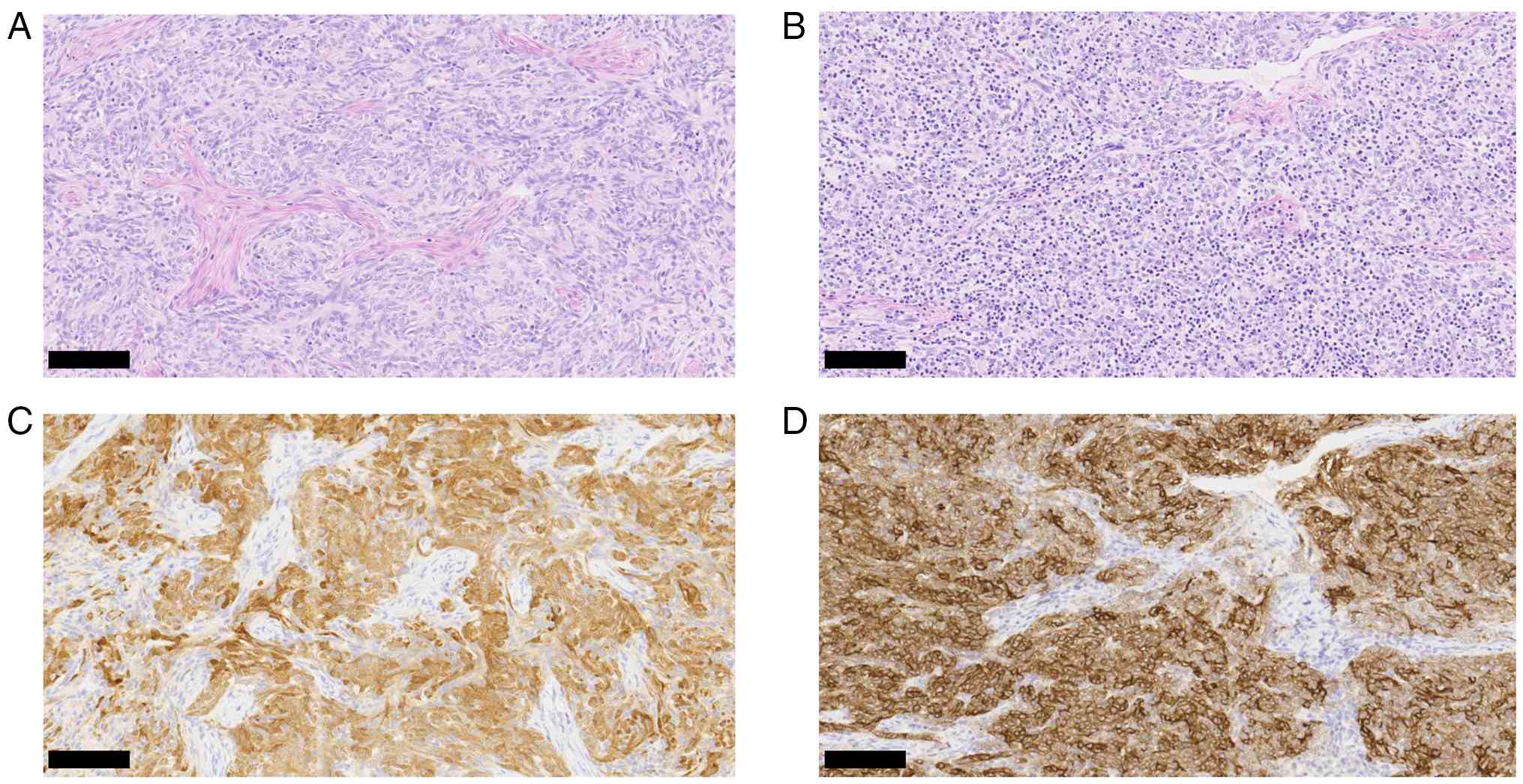
Anticipating further improvement in transfusion dependence, cyclosporine was initiated in December 2025. Cyclosporine was started at a dose of 150 mg/day, considering renal function, and the trough level was 60.6 ng/ml eight days later. The same dose was continued, and the desired effect was achieved. In January 2026, robot-assisted resection of the anterior mediastinal tumor was performed. Histopathological examination confirmed type AB thymoma as per the WHO classification (Fig. 5), which is consistent with the initial diagnosis established via CT-guided biopsy. Regarding the need for transfusion, the final transfusion (2 units) was administered 2 weeks after initiating cyclosporine. Thereafter, the patient achieved transfusion independence, accompanied by improvement in hemoglobin levels and reticulocyte counts.

Histological and immunohistochemical
analysis of the thymic tumor. (A and B) Hematoxylin and eosin
staining: (A) Region showing short spindle-shaped thymic epithelial
cells proliferating in fascicles and (B) region with abundant
lymphocyte infiltration. (C) Immunohistochemistry for PSMB11 (β5t)
showing positive staining. (D) Immunohistochemistry for CD20
showing positive staining. Based on morphology and
immunohistochemical findings, the tumor was diagnosed as type AB
thymoma, consistent with the biopsy results. All images were taken
using a 10× eyepiece and 20× objective lens, and the black scale
bar in the lower left represents 100 µm.

Figure 5.

Histological and immunohistochemical analysis of the thymic tumor. (A and B) Hematoxylin and eosin staining: (A) Region showing short spindle-shaped thymic epithelial cells proliferating in fascicles and (B) region with abundant lymphocyte infiltration. (C) Immunohistochemistry for PSMB11 (β5t) showing positive staining. (D) Immunohistochemistry for CD20 showing positive staining. Based on morphology and immunohistochemical findings, the tumor was diagnosed as type AB thymoma, consistent with the biopsy results. All images were taken using a 10× eyepiece and 20× objective lens, and the black scale bar in the lower left represents 100 µm.

Immunohistochemistry methods

Immunohistochemical staining was performed as follows. CK AE1/AE3 staining employed an Agilent antibody (GA053, clone AE1/AE3) and was performed on the DAKO Omnis system (EnVision FLEX kit) with antigen retrieval at pH 9, 97°C for 30 min. TdT staining was conducted using a Leica antibody (NCL-L-TdT-339, clone SEN28) at a 1:50 dilution. Antigen retrieval was performed at 100°C for 20 min, and staining was carried out on the Leica BOND-III system using Protocol F. CD20 staining was performed using a Roche antibody (760-2531, clone L26) on the BenchMark ULTRA PLUS system (OptiView kit). PSMB11 (β5t) staining used a Proteintech antibody (55143-1-AP, polyclonal) at a 1:300 dilution on the Leica BOND III system (Protocol F), with antigen retrieval at pH 9, 100°C for 20 min. All immunostainings were interpreted according to standard histopathological criteria.

Discussion

PRCA reportedly occurs in approximately 5% of patients with thymoma (4,5). The standard management includes surgical resection of the thymoma plus immunosuppressive therapy, among which cyclosporine is the most frequently reported effective agent (2,3).

In the present case, multiple bilateral pulmonary metastases were identified at the initial visit, and therefore systemic chemotherapy was prioritized over local treatment. The ADOC regimen was chosen due to its previously demonstrated efficacy in invasive thymoma (6). Initially, the patient required weekly transfusions of 2 units of red blood cells, and this progressively intensified until daily transfusions of 2 units were needed to maintain a hemoglobin level of 7 g/dl at the initiation of chemotherapy. Remarkably, after only a single cycle of ADOC, the transfusion requirement decreased to 2 units every 7–17 days.

In patients with metastatic thymoma complicated by PRCA, immunosuppressive therapy (e.g., cyclosporine) may delay the initiation of systemic chemotherapy. The concomitant administration of immunosuppressive agents and cytotoxic chemotherapy may also increase treatment-related toxicity. Meanwhile, the present case demonstrates that transfusion dependence due to PRCA can be ameliorated with cytotoxic chemotherapy alone. Such reports are exceedingly rare, and only isolated cases have been previously documented (7). This case provides valuable insight into a potential therapeutic strategy in similarly complex clinical scenarios. The decreased transfusion dependence seen after the ADOC regimen could be because the hematological improvement occurred concurrently with radiographic tumor shrinkage. In other words, the antitumor effect of chemotherapy may have helped ameliorate PRCA as a paraneoplastic syndrome. The reduced tumor burden could have attenuated the immune dysregulation caused by the thymoma, thereby partially restoring erythropoiesis. Although components of the ADOC regimen, particularly cyclophosphamide and the corticosteroids administered as part of antiemetic prophylaxis, may have contributed to the hematological improvement through their immunosuppressive effects, the regimen was primarily administered for its antitumor activity. Reports describing improvement of PRCA in this context remain extremely limited; therefore, this case may provide clinically meaningful insight into situations in which determining the optimal sequencing of chemotherapy and immunosuppressive therapy is challenging. Nevertheless, due to the inherent limitations of being a single case report, definitive conclusions regarding the underlying mechanism cannot be drawn. Although the transfusion-dependent anemia improved alongside the antitumor response in this patient, previous reports have suggested that antitumor effects do not necessarily correlate with the therapeutic effect on PRCA as a paraneoplastic syndrome (8). Thus, treatment strategies should be individualized according to the clinical course in each case, and further accumulation of similar cases is warranted.

After six cycles of ADOC, the primary thymic tumor was markedly reduced, and the pulmonary metastases also demonstrated significant shrinkage with partial obscuration. No new metastatic lesions were detected at that time. Although transfusion dependence had improved compared with the pre-chemotherapy status, the patient still required red blood cell transfusions every 7–17 days. Based on these findings, a multidisciplinary discussion was conducted, and surgical resection of the primary thymic tumor was planned. In this context, it is important to note that the pulmonary metastatic lesions had already shown marked shrinkage following systemic chemotherapy. Furthermore, a previous meta-analysis has suggested a potential survival benefit of debulking surgery in patients with unresectable thymoma (9). Taking these factors into account, a multidisciplinary team-including thoracic surgeons, oncologists, and hematologists-concluded that surgical resection at a time when the primary tumor had sufficiently regressed would be a reasonable strategy. After completing six cycles of chemotherapy in preparation for surgery, it became feasible to initiate immunosuppressive therapy. Cyclosporine was started in December 2025, and surgical resection of the primary thymoma was performed in January 2026. Two weeks after initiating cyclosporine, the patient received two units of red blood cells, which was the final transfusion required. Thereafter, the patient achieved transfusion independence and has remained free from further transfusion support. For future management, cyclosporine will be continued, and the patient will undergo regular imaging follow-up. If pulmonary lesions become clinically apparent, local treatment with radiofrequency ablation will be considered.

Several case reports have described tumor shrinkage of thymoma accompanied by improvement of PRCA after cyclosporine therapy (8,10). Despite the limited evidence, the potential antitumor effect of cyclosporine cannot be excluded. Nevertheless, in patients with metastatic thymoma complicated by PRCA, further investigation is required to clarify whether systemic chemotherapy should be prioritized or if early introduction of cyclosporine is preferable. The significance of this case lies in the fact that the ADOC regimen achieved both an antitumor effect and partial improvement of PRCA in metastatic thymoma, which subsequently enabled surgical resection and the initiation of cyclosporine therapy, ultimately leading to transfusion independence. The present evidence suggests that treatment decisions should be individualized alongside careful evaluation of both oncological and hematological responses. Further accumulation of clinical evidence regarding this rare and therapeutically challenging condition is essential to develop optimal therapeutic strategies.

Acknowledgements

Not applicable.

Funding

Funding: No funding was received.

Availability of data and materials

The data generated in the present study may be requested from the corresponding author.

Authors' contributions

NH conceptualized the manuscript. Data acquisition and interpretation were performed by NH, RS, YK, YY, MO, SOk, SOc, RM, MH, SA, MaiT, AY and MasT. The original draft was written by NH, while the final manuscript was written, reviewed and edited by NH and MasT. NH and MasT confirm the authenticity of all the raw data. All authors read and approved the final manuscript, and agree to be accountable for all aspects of the research in ensuring that the accuracy or integrity of any part of the work are appropriately investigated and resolved.

Ethics approval and consent to participate

Not applicable.

Patient consent for publication

Written informed consent was obtained from the patient for publication of this case report and the accompanying images. The patient was informed that all identifying information would be removed to ensure anonymity.

Competing interests

The authors declare that they have no competing interests.

Glossary
Abbreviations

Abbreviations:

PRCA

pure red cell aplasia

CT

computed tomography

WHO

World Health Organization

ADOC

doxorubicin, cisplatin, vincristine and cyclophosphamide

RECIST

Response Evaluation Criteria in Solid Tumors

References

1 

Engels EA: Epidemiology of thymoma and associated malignancies. J Thorac Oncol. 5 (10 Suppl 4):S260–S265. 2010. View Article : Google Scholar : PubMed/NCBI

2 

Hirokawa M, Sawada K, Fujishima N, Nakao S, Urabe A, Dan K, Fujisawa S, Yonemura Y, Kawano F, Omine M, et al: Long-term response and outcome following immunosuppressive therapy in thymoma-associated pure red cell aplasia: A nationwide cohort study in Japan by the PRCA Collaborative Study Group. Haematologica. 93:27–33. 2008. View Article : Google Scholar : PubMed/NCBI

3 

Xavier RD, Devaraj S, Sadasivam V, Prakasam O, Menon N, Hariharan A and Sundaramoorthi T: Thymoma associated with pure red cell aplasia: A case report and literature review. Indian J Thorac Cardiovasc Surg. 36:404–408. 2020. View Article : Google Scholar : PubMed/NCBI

4 

Yen CC, Huang WL, Li SS, Chen YP, Tseng YL, Yen YT, Chu CY, Hsu YT and Chen TY: Pure red cell aplasia and other haematological diseases associated with thymoma: A case series and systematic review. Front Med (Lausanne). 8:7599142021. View Article : Google Scholar : PubMed/NCBI

5 

Moriyama S, Yano M, Haneda H, Okuda K, Kawano O, Sakane T, Oda R, Watanabe T and Nakanishi R: Pure red cell aplasia associated with thymoma: A report of a single-center experience. J Thorac Dis. 10:5066–5072. 2018. View Article : Google Scholar : PubMed/NCBI

6 

Fornasiero A, Daniele O, Ghiotto C, Piazza M, Fiore-Donati L, Calabró F, Rea F and Fiorentino MV: Chemotherapy for invasive thymoma: A 13-year experience. Cancer. 68:30–33. 1991. View Article : Google Scholar : PubMed/NCBI

7 

Lesire B, Durieux V, Grigoriu B, Girard N and Berghmans T: Management of thymoma associated autoimmune pure red cell aplasia: Case report and systematic review of the literature. Lung Cancer. 157:131–146. 2021. View Article : Google Scholar : PubMed/NCBI

8 

Muratori L, Delcuratolo MD, Sperone P and Scagliotti GV: Discrepancy between tumor response and hematologic response in a patient with thymoma and aplastic anemia treated with ciclosporin. Mediastinum. 4:82020. View Article : Google Scholar : PubMed/NCBI

9 

Hamaji M, Kojima F, Omasa M, Sozu T, Sato T, Chen F, Sonobe M and Date H: A meta-analysis of debulking surgery versus surgical biopsy for unresectable thymoma. Eur J Cardiothorac Surg. 47:602–607. 2015. View Article : Google Scholar : PubMed/NCBI

10 

Isshiki Y, Tanaka H, Suzuki Y and Yoshida Y: Cyclosporine is a potential curative treatment option for advanced thymoma. Exp Hematol Oncol. 6:132017. View Article : Google Scholar : PubMed/NCBI

Related Articles

  • Abstract
  • View
  • Download
  • Twitter
Copy and paste a formatted citation
Spandidos Publications style
Hara N, Sasaki R, Kojitani Y, Yoshii Y, Ota M, Okazaki S, Ochi S, Miyata R, Hamaji M, Ando S, Ando S, et al: Initial chemotherapy decreases transfusion dependence and enables definitive therapy in metastatic thymoma complicated by pure red cell aplasia: A case report. Oncol Lett 32: 354, 2026.
APA
Hara, N., Sasaki, R., Kojitani, Y., Yoshii, Y., Ota, M., Okazaki, S. ... Takeda, M. (2026). Initial chemotherapy decreases transfusion dependence and enables definitive therapy in metastatic thymoma complicated by pure red cell aplasia: A case report. Oncology Letters, 32, 354. https://doi.org/10.3892/ol.2026.15709
MLA
Hara, N., Sasaki, R., Kojitani, Y., Yoshii, Y., Ota, M., Okazaki, S., Ochi, S., Miyata, R., Hamaji, M., Ando, S., Takeda, M., Yoshizawa, A., Takeda, M."Initial chemotherapy decreases transfusion dependence and enables definitive therapy in metastatic thymoma complicated by pure red cell aplasia: A case report". Oncology Letters 32.2 (2026): 354.
Chicago
Hara, N., Sasaki, R., Kojitani, Y., Yoshii, Y., Ota, M., Okazaki, S., Ochi, S., Miyata, R., Hamaji, M., Ando, S., Takeda, M., Yoshizawa, A., Takeda, M."Initial chemotherapy decreases transfusion dependence and enables definitive therapy in metastatic thymoma complicated by pure red cell aplasia: A case report". Oncology Letters 32, no. 2 (2026): 354. https://doi.org/10.3892/ol.2026.15709
Copy and paste a formatted citation
x
Spandidos Publications style
Hara N, Sasaki R, Kojitani Y, Yoshii Y, Ota M, Okazaki S, Ochi S, Miyata R, Hamaji M, Ando S, Ando S, et al: Initial chemotherapy decreases transfusion dependence and enables definitive therapy in metastatic thymoma complicated by pure red cell aplasia: A case report. Oncol Lett 32: 354, 2026.
APA
Hara, N., Sasaki, R., Kojitani, Y., Yoshii, Y., Ota, M., Okazaki, S. ... Takeda, M. (2026). Initial chemotherapy decreases transfusion dependence and enables definitive therapy in metastatic thymoma complicated by pure red cell aplasia: A case report. Oncology Letters, 32, 354. https://doi.org/10.3892/ol.2026.15709
MLA
Hara, N., Sasaki, R., Kojitani, Y., Yoshii, Y., Ota, M., Okazaki, S., Ochi, S., Miyata, R., Hamaji, M., Ando, S., Takeda, M., Yoshizawa, A., Takeda, M."Initial chemotherapy decreases transfusion dependence and enables definitive therapy in metastatic thymoma complicated by pure red cell aplasia: A case report". Oncology Letters 32.2 (2026): 354.
Chicago
Hara, N., Sasaki, R., Kojitani, Y., Yoshii, Y., Ota, M., Okazaki, S., Ochi, S., Miyata, R., Hamaji, M., Ando, S., Takeda, M., Yoshizawa, A., Takeda, M."Initial chemotherapy decreases transfusion dependence and enables definitive therapy in metastatic thymoma complicated by pure red cell aplasia: A case report". Oncology Letters 32, no. 2 (2026): 354. https://doi.org/10.3892/ol.2026.15709
Follow us
  • Twitter
  • LinkedIn
  • Facebook
About
  • Spandidos Publications
  • Careers
  • Cookie Policy
  • Privacy Policy
How can we help?
  • Help
  • Live Chat
  • Contact
  • Email to our Support Team