Oncol Lett 22: [Related article:] 845, 2021; DOI:
10.3892/ol.2021.13106
Following the publication of the above paper, it was
drawn to the authors’ attention by an interested reader that,
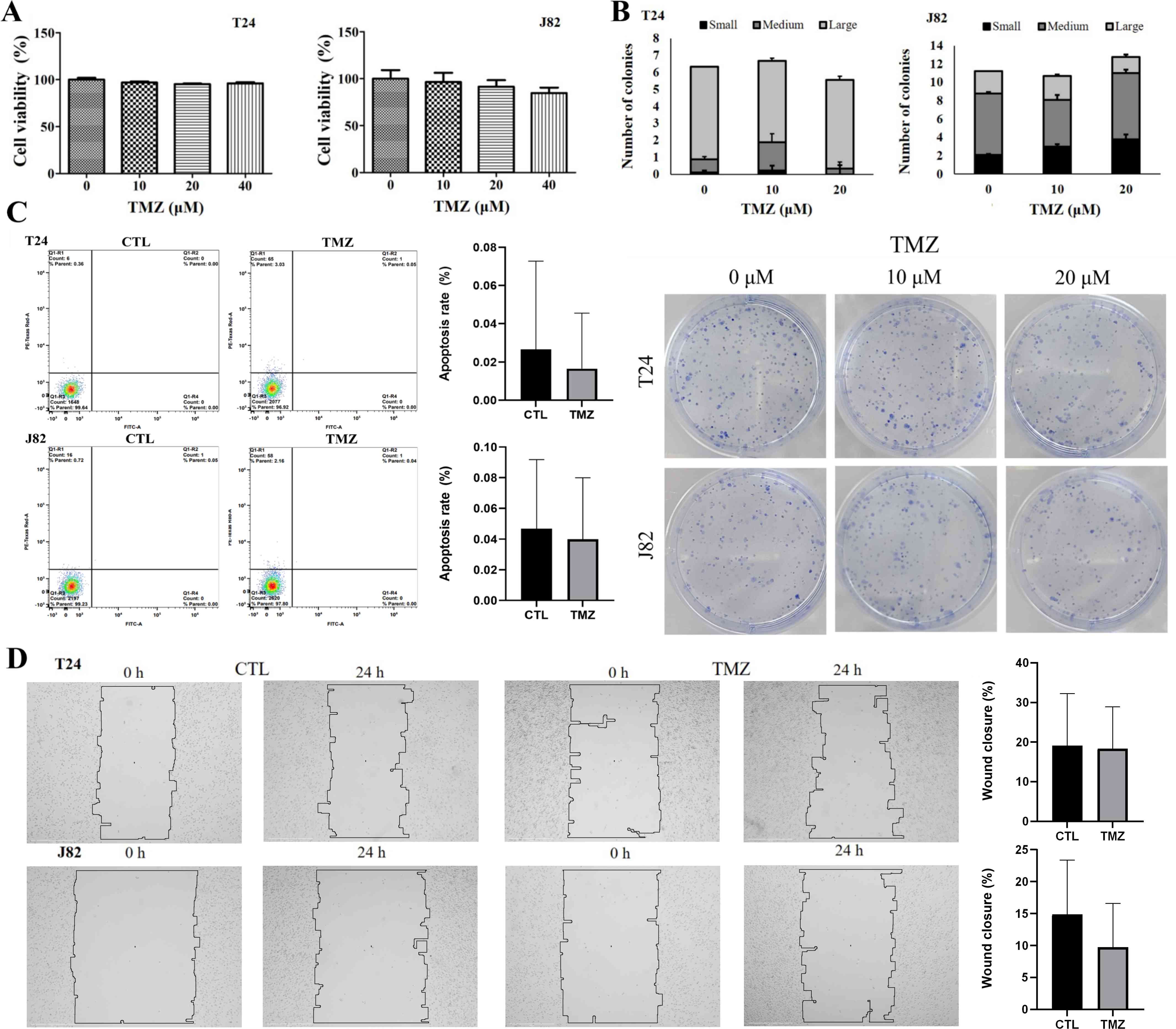
regarding the flow cytometric experiments in Fig. 1C on p. 3, the ‘T24/CML’ and
‘J82/TMZ’ plots were apparently matching, suggesting that this
figure had been assembled incorrectly. In addition, concerning the
colony formation assay data in Fig.
1B, the ‘T24/0 μM’ and ‘J82/20 μM’, and ‘J82/0 μM’ and T24/20
μM’ pairings of images were apparently the same. Furthermore, upon
performing an independent analysis of the data in this paper in the
Editorial Office, it came to light that, regarding the
scratch-wound assay images shown in Fig. 1D, the J82/0 h/T24 panel contained a
small overlapping section with the T24/0 h/TMZ panel, such that
these data panels were derived from the same original source, where
different experimental conditions were described. In addition, it
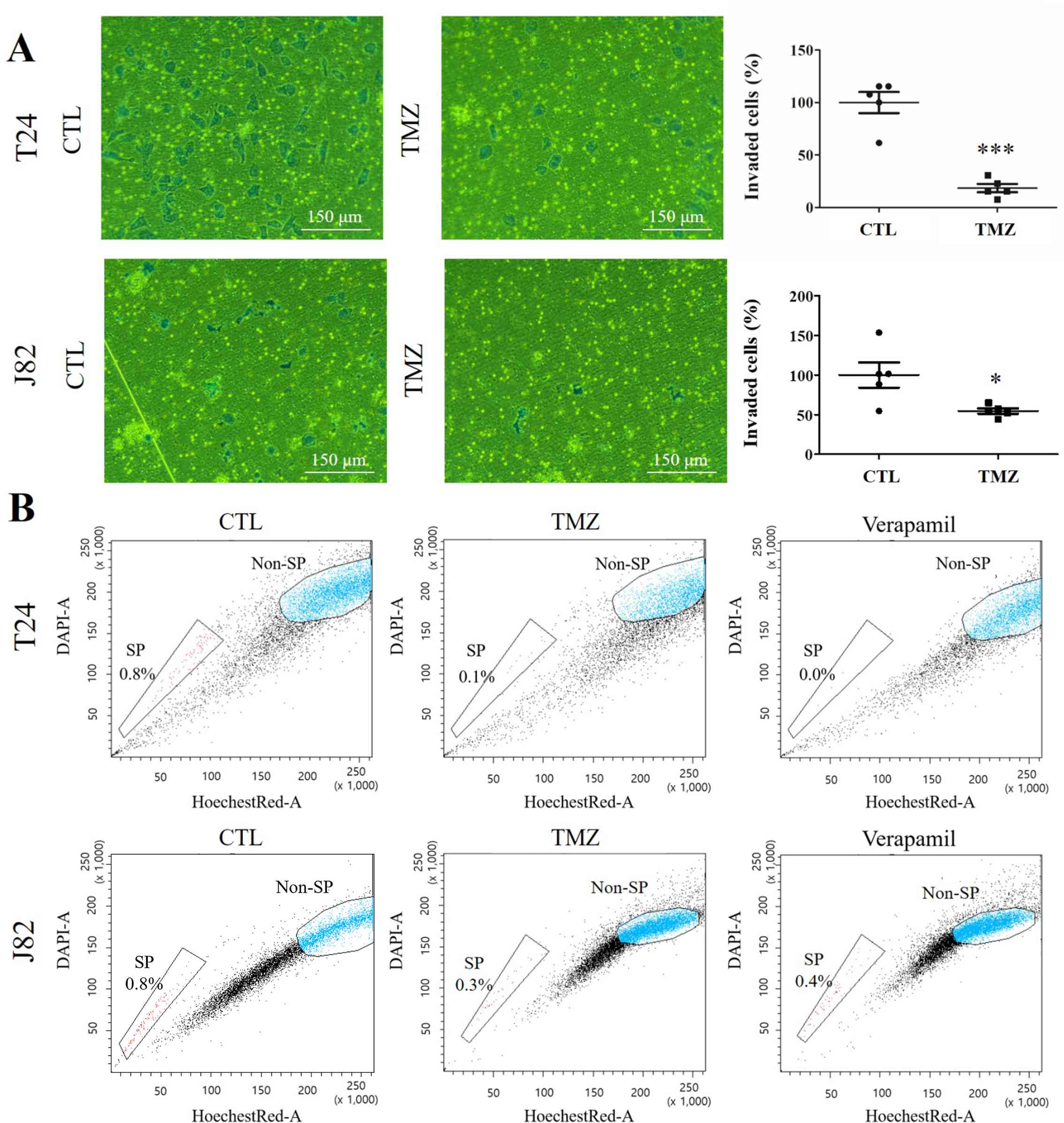
also came to light that the data panel shown for the J82/CTL
experiment in Fig. 3B was
apparently matching with a data panel that was published in a paper
in Cancer Gene Therapy in 2015 featuring the corresponding
author (Yongbaek Kim) in common (entitled “Inhibition of hedgehog
signaling reduces the side population in human malignant
mesothelioma cell lines”).
Upon consulting their original data, the authors
have realized that mistakes were made regarding the assembly of
Figs. 1 and 3. The authors have repeated the colony
formation assay experiments (Fig.
1B), the flow cytometric assay experiments (Fig. 1C) and the scratch-wound assay
experiments (Fig. 1D), and provided
the correct data panel for the J82/CTL experiment in Fig. 3B, and the revised versions of
Figs. 1 and 3, featuring the revised data in Fig. 1B-D and in Fig. 3B, are shown on the next two pages.
Although the results obtained in the repeated experiments are very
similar to those of the original experiments, showing that the
replacement of these data has not altered the overall conclusions
reported in this study, the descriptions of the data in the Results
for these figures should now be revised to the following (changes
are highlighted in bold): For Fig. 1B and C: “Quantification of the cell
fractions revealed apoptotic cells (Q2 + Q4) in 0.03±0.05%
of the control group and 0.02±0.03% of the TMZ-treated T24
cells, and 0.05±0.05% of the control group and 0.04±0.04% of
the TMZ-treated J82 cells (Fig.
1C).” In addition, concerning the description of the results
for Fig. 3B, the relevant text
should now read as follows: “Similarly, TMZ treatment decreased the
SP fraction of J82 cells from 0.8 to 0.3%.”
The authors are grateful to the Editor of
Oncology Letters for allowing them the opportunity to
publish this Corrigendum, and all the authors agree with its
publication. They also thank the reader of the article for drawing
these matters to their attention, and apologize to the readership
for any inconvenience caused.