International Journal of Molecular Medicine is an international journal devoted to molecular mechanisms of human disease.
International Journal of Oncology is an international journal devoted to oncology research and cancer treatment.
Covers molecular medicine topics such as pharmacology, pathology, genetics, neuroscience, infectious diseases, molecular cardiology, and molecular surgery.
Oncology Reports is an international journal devoted to fundamental and applied research in Oncology.
Experimental and Therapeutic Medicine is an international journal devoted to laboratory and clinical medicine.
Oncology Letters is an international journal devoted to Experimental and Clinical Oncology.
Explores a wide range of biological and medical fields, including pharmacology, genetics, microbiology, neuroscience, and molecular cardiology.
International journal addressing all aspects of oncology research, from tumorigenesis and oncogenes to chemotherapy and metastasis.
Multidisciplinary open-access journal spanning biochemistry, genetics, neuroscience, environmental health, and synthetic biology.
Open-access journal combining biochemistry, pharmacology, immunology, and genetics to advance health through functional nutrition.
Publishes open-access research on using epigenetics to advance understanding and treatment of human disease.
An International Open Access Journal Devoted to General Medicine.
Oncol Lett 16: [Related article:] 6445–6457, 2018; DOI: 10.3892/ol.2018.9486
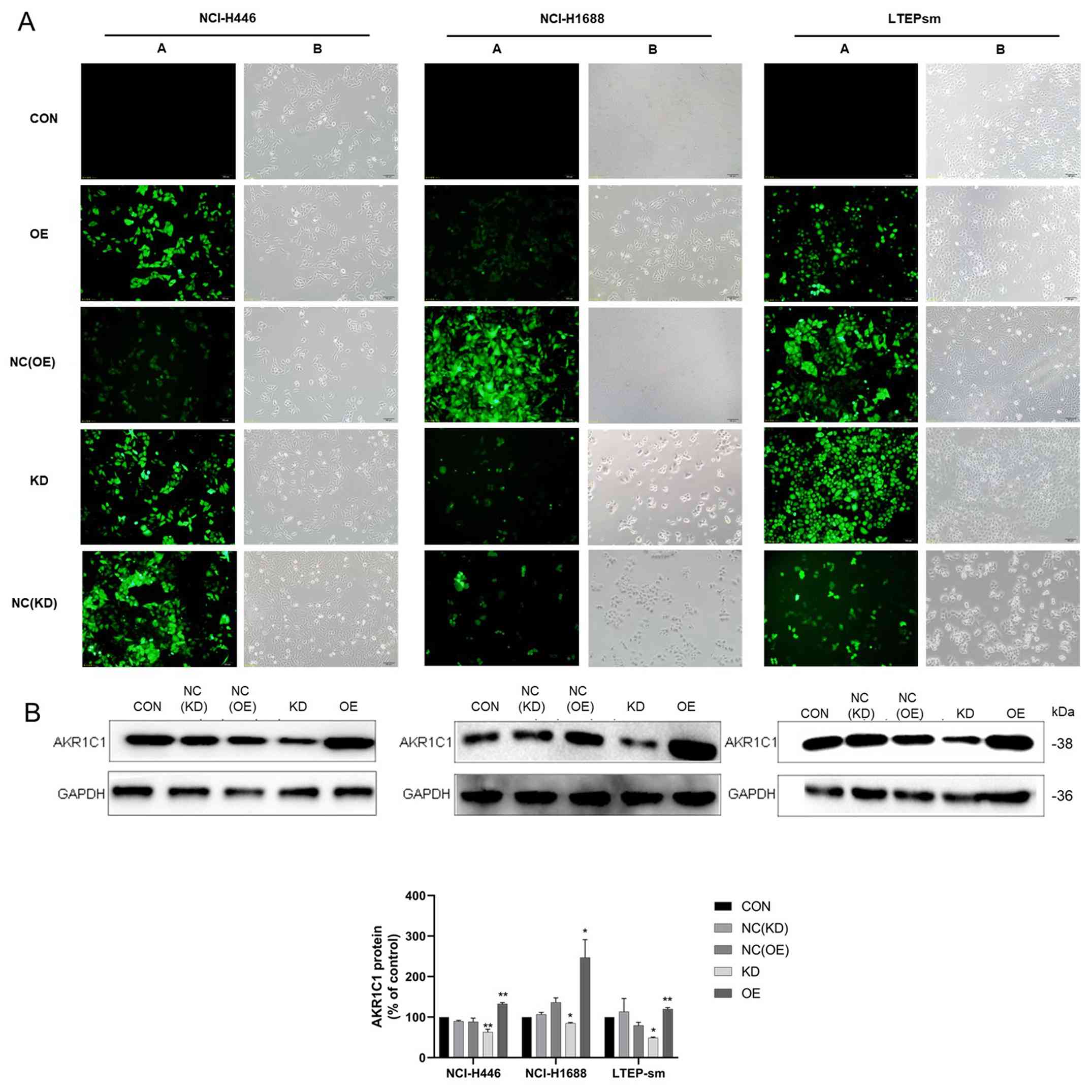
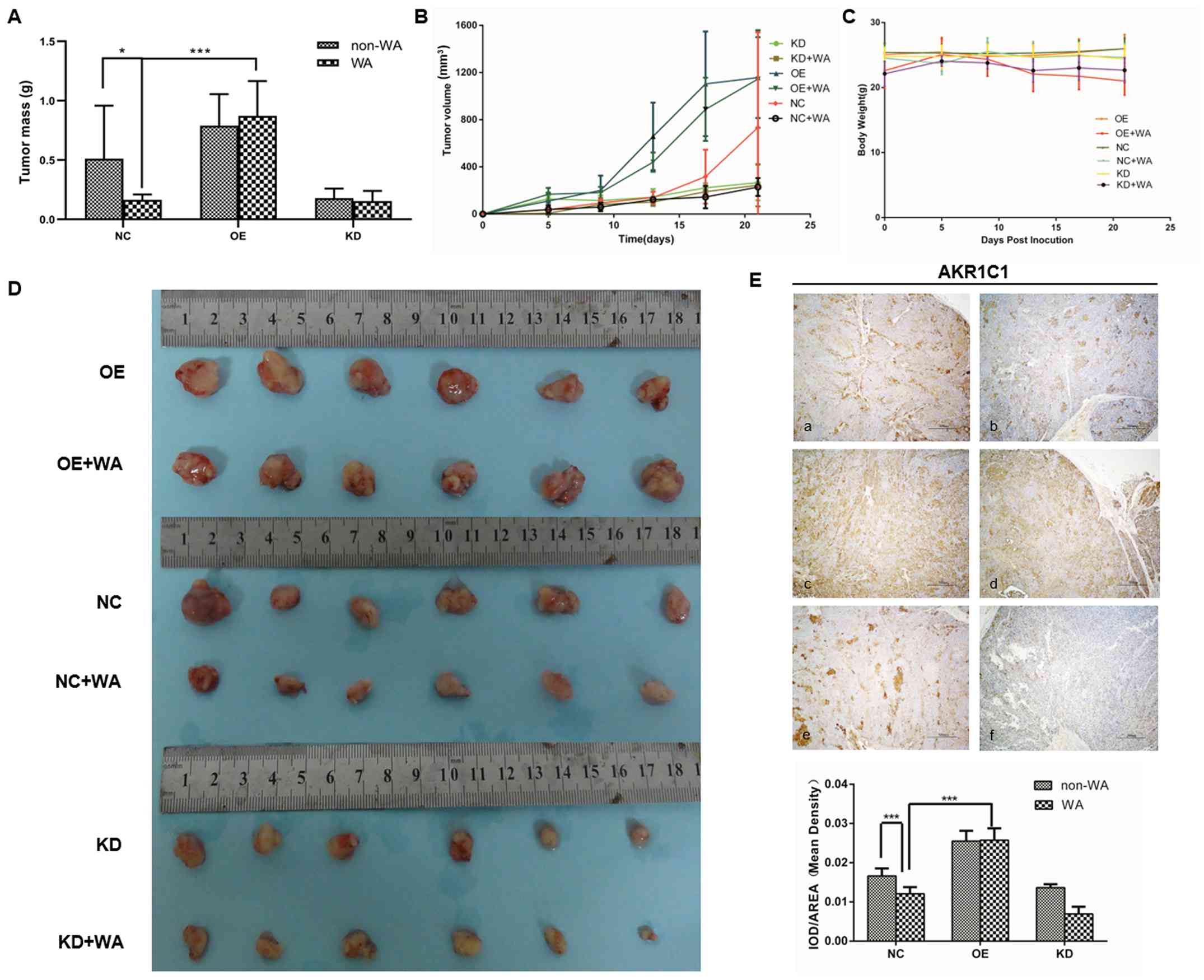
Subsequently to the publication of the above article, an interested reader drew to the authors’ attention that, in Fig. 4A on p. 6451, the fluorescence microscopic images chosen to show the results of the “NC (OE)” and “NC (KD)” experiments for the NCI-H1688 cell line, and the “KD” and “NC (KD)” experiments for the LTEPsm cell line, contained overlapping sections, such that these data, which were intended to show the results of differently performed experiments, had apparently been derived from the same original sources. In addition, a different reader raised concerns regarding the tumor sizes reported in Fig. 1E on p. 6447 and Fig. 6B on p. 6453, which appeared to be widely different from the sizes of the photos of the tumours portrayed in Figs. 1D and 6D, respectively, following their different treatments and after their having been harvested from the mice, and requested that the authors check their data/offer an explanation for this. The authors responded to this query by explaining that the tumor volume calculation formula L×w/2 was applied uniformly across all experimental groups and in all relevant figures (Fig. 1E, Fig. 6B and other supplementary figures), without any exceptions. The difference between the tumor volumes reported in their paper and those calculated by the interested reader arose from the fact that the tumor volumes in the study had been measured in vivo, rather than directly from excised tumors. This methodological difference led to discrepancies in the tumor volume measurements, but did not affect the core scientific conclusions of the study (the efficacy of WA, and the effects of AKR1C1 modulation on tumor growth, and response to WA treatment). Nevertheless, the authors acknowledged that they mistakenly placed the wrong statistical graph for Fig. 6B during the final figure assembly stage, and this error has been corrected in the revised version of Fig. 6 shown on a subsequent page (without any recalculation or modification of the raw data).
It was also noted by the Editorial Office, upon performing an independent analysis of the data in this paper, that there was potentially a further duplication of western blot control data, comparing Fig. 4B with Fig. 7; specifically, the control GAPDH blots featured in Fig. 7 for the NCI-H446 cell line closely resembled a trio of blots in the left-hand western blot featured in Fig. 4B, also for the NCI-H446 cell line.
The authors were able to consult their original data, and realized that certain of the data in Fig. 4A and B had inadvertently been assembled incorrectly. Along with the revised version of Fig. 6 (containing the correct graphical information for Fig. 6B), a revised version of Fig. 4, now showing the correct data for the “NC (KD)” experiment for the LTEPsm cell line and the “KD” and “NC (KD)” experiments for the NCI-H1688 cell line, and the control GAPDH blots in Fig. 4B for the NCI-H446 cell line, is shown on the next page. Note that the revisions made to these figures do not affect the overall conclusions reported in the paper. The authors are grateful to the Editor of Oncology Letters for granting them the opportunity to publish this Corrigendum, and all authors agree with its publication. Furthermore, the authors apologize to the readership for any inconvenience caused.