Introduction
Non-small cell lung cancer (NSCLC) is one of the
most prevalent and deadly cancers globally, with distant metastasis
being a major cause of mortality (1). Among metastatic sites, bone is the
most common, occurring in 30–40% of patients with NSCLC and up to
60% present with bone metastases (BM) at initial diagnosis
(2). BM markedly worsens prognosis,
with a median survival time often <6 months, especially when
accompanied by other metastases such as to the brain or liver
(3). Skeletal-related events
(SREs), including pain, pathological fractures, spinal cord
compression and hypercalcemia, are frequent complications that
further impair quality of life and survival (4,5).
Despite advances in systemic therapy and bone-targeted agents such
as bisphosphonates and denosumab, outcomes remain poor (6,7).
Chronic inflammation has been recognized as a
hallmark of cancer, promoting tumor progression and metastasis
through its effects on the tumor microenvironment (8). Tumor-associated neutrophils, for
example, correlate with poor prognosis in several cancers,
including NSCLC (9). The duration
and extent of inflammation are crucial; acute inflammation may be
protective, while chronic inflammation is tumor-promoting (10,11). A
review supports the role of inflammation in the development and
progression of cancers such as lung and breast cancer (12). Nutritional status is another
critical determinant of cancer outcomes. Hypoalbuminemia and
cancer-related malnutrition are common in NSCLC and are associated
with reduced treatment tolerance, impaired quality of life and
shorter overall survival (OS) (13). Inflammation also contributes to
cancer cachexia and sarcopenia, further exacerbating prognosis
(14). Certain pathological
features, such as squamous histology or poor differentiation, may
intensify inflammation-driven nutritional decline (13). Recent studies have focused on
composite inflammation and nutrition-based biomarkers, such as
neutrophil-to-lymphocyte ratio (NLR), prognostic nutritional index
(PNI), platelet-to-lymphocyte Ratio (PLR), systemic
immune-inflammation index (SII), C-reactive protein-to-albumin
ratio (CAR) and advanced lung cancer inflammation index (ALI),
which can reflect the systemic inflammatory status and nutritional
reserve of patients (15–17). These markers have shown prognostic
value across various cancers, including NSCLC. Particularly in
patients with NSCLC with BM, poor performance status, multiple bone
lesions, elevated alkaline phosphatase (ALP)/lactate dehydrogenase
(LDH), low albumin, and SREs have been linked to shorter overall
survival (16,18). Furthermore, early inflammatory
markers such as NLR and C-reactive protein (CRP) may predict
response to immune checkpoint inhibitors (ICIs) (19).
However, studies specifically evaluating the
prognostic value of these biomarkers in patients with NSCLC with BM
are limited. Moreover, integrated models combining inflammatory and
nutritional indices with clinical features remain lacking.
Therefore, the present study aimed to develop and validate a
prognostic model for patients with NSCLC with BM, incorporating
routinely available serological and clinical parameters to improve
prognostic stratification and guide personalized treatment
strategies.
Materials and methods
Study design and patients
This retrospective cohort study included patients
diagnosed with NSCLC and BM at Yunnan Cancer Hospital (Yunnan,
China) between January 2017 and December 2019. Eligible patients
met the following inclusion criteria: i) Pathologically confirmed
NSCLC; ii) radiologically confirmed BM based on bone scintigraphy,
computed tomography, or magnetic resonance imaging; iii) no history
of other primary malignancies; and iv) availability of complete
clinical and laboratory data at the time of BM diagnosis. Patients
with small cell lung cancer, unclear primary tumor origin, severe
chronic inflammatory or autoimmune diseases, active infections,
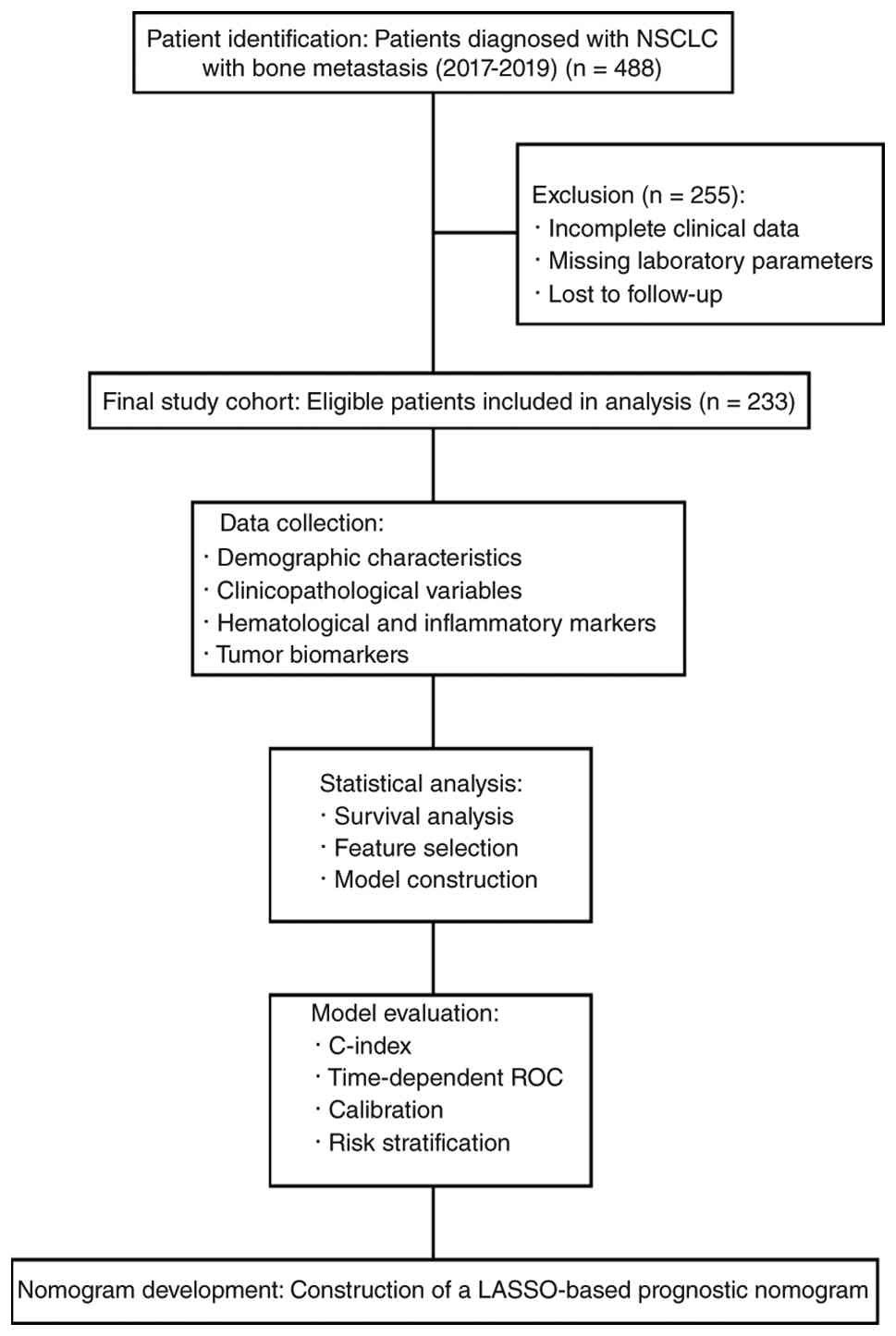
liver cirrhosis, or incomplete data were excluded (Fig. 1).
According to the predefined inclusion criteria, a
total of 233 patients who were newly diagnosed with NSCLC with BM
at our institution were retrospectively enrolled. All cases were
pathologically confirmed primary NSCLC. The cohort consisted of 141
males (60.5%) and 92 females (39.5%), with a median age of 59 years
(range: 50–66 years). The median OS was 16 months (range: 6.0–50.0
months). A total of 160 patients (68.6%) were younger than 65
years, whereas 73 patients (31.3%) were aged 65 years or older.
The present study was conducted in accordance with
the Declaration of Helsinki and approved by the Ethics Committee of
Yunnan Cancer Hospital (approval no. KYLX2023-038). All patients
signed a written informed consent form, which included consent to
participate in the present study, use of their medical data for
research purposes and the publication of anonymized findings.
Data collection
Medical records were accessed between January 2025
and March 2025 for the purpose of data collection and analysis.
Clinical data were obtained from the hospital information system
and included demographic characteristics, smoking history,
Karnofsky Performance Status (KPS), pathological type, TNM stage
according to the eighth edition of the American Joint Committee on
Cancer (AJCC) staging system (20)
treatment history before and after BM diagnosis and occurrence of
skeletal-related events. Due to the retrospective nature of the
study and changes in treatment strategies during the study period,
detailed information regarding post-BM systemic therapies,
including immunotherapy and targeted therapy regimens, was not
consistently available for all patients.
Laboratory parameters collected at the time of BM
diagnosis included complete blood counts, serum biochemistry,
inflammatory markers, lipid profiles and tumor markers. Based on
these data, 10 nutritional-inflammation indicators were calculated
using established formulas: PLR, NLR, SII, PNI, CAR, C-reactive
protein-to-lymphocyte ratio (CLR), ALI, body mass index (BMI), NLDA
and HALP.
Outcome and follow-up
OS was defined as the interval from the diagnosis of
BM to mortality from any cause or last follow-up. Survival status
was obtained through medical records and telephone follow-up.
Patients alive at the last follow-up were censored.
Statistical analysis
Continuous variables were assessed for normality
using the Shapiro-Wilk test and expressed as mean ± standard
deviation or median with interquartile range, as appropriate.
Categorical variables were summarized as frequencies and
percentages. Group comparisons were performed using the Student's
t-test, Mann-Whitney U test, χ2 test, or Fisher's exact
test.
Univariate Cox proportional hazards regression was
used to identify potential prognostic factors for OS. Variables
with P<0.05 in univariate analysis were further evaluated using
multivariate Cox regression with stepwise selection based on the
Akaike information criterion. Optimal cut-off values for continuous
variables were determined using maximally selected rank statistics,
and Kaplan-Meier survival curves were generated with log-rank
tests.
Lasso regression, Random Forest survival models, and
extreme gradient boosting (XGBoost) were applied for variable
selection. Based on selected variables, Cox regression models were
constructed using bootstrap resampling to enhance robustness. Model
performance was evaluated using the concordance index (C-index),
time-dependent area under the curve (AUC), Brier score, calibration
curves, and AIC. Statistical analyses were performed using R
software (version 4.3.1) and a two-sided P<0.05 was considered
to indicate a statistically significant difference.
Results
Baseline characteristics of the study
cohort
Comparative analysis of baseline characteristics
between survival groups demonstrated significant differences in
age, presence of intrapulmonary metastasis, bisphosphonate
treatment after BM, prior surgical history, ALP, LDH, CLR and
several tumor markers (all P<0.05). The proportion of elderly
patients, males, squamous cell carcinoma, and both intrathoracic
and extrathoracic metastases was higher in the deceased group
compared with the surviving group. Detailed baseline
characteristics are summarized in Tables I and SI.
 | Table I.Baseline clinicalcharacteristics of
patients with non-small cell lung cancer and bone metastasis
(n=233). |
Table I.
Baseline clinicalcharacteristics of
patients with non-small cell lung cancer and bone metastasis
(n=233).
| Characteristic | Total (n=233) | Survival (n=51) | Death (n=182) | P-value |
|---|
| Age, years | 59.0
(50.0;66.0) | 52.0
(47.0;59.5) | 60.0
(52.0;67.0) | <0.001 |
| Sex |
|
|
| 1.00 |
| Female,
n (%) | 92 (39.5) | 20 (39.2) | 72 (39.6) |
|
| Male, n
(%) | 141 (60.5) | 31 (60.8) | 110 (60.4) |
|
| T stage, n (%) |
|
|
| 0.75 |
| T1 | 102 (43.8) | 22 (43.1) | 80 (44.0) |
|
| T2 | 92 (39.5) | 20 (39.2) | 72 (39.6) |
|
| T3 | 20 (8.58) | 3 (5.88) | 17 (9.34) |
|
| T4 | 8 (3.43) | 2 (3.92) | 6 (3.30) |
|
| Tx | 11 (4.72) | 4 (7.84) | 7 (3.85) |
|
| N stage, n (%) |
|
|
| 0.42 |
| N1 | 44 (18.9) | 5 (9.80) | 39 (21.4) |
|
| N2 | 78 (33.5) | 20 (39.2) | 58 (31.9) |
|
| N3 | 34 (14.6) | 8 (15.7) | 26 (14.3) |
|
| N0 | 66 (28.3) | 16 (31.4) | 50 (27.5) |
|
| Nx | 11 (4.72) | 2 (3.92) | 9 (4.95) |
|
| Pathological type,
n (%) |
|
|
| 0.08 |
|
Adenocarcinoma | 199 (85.4) | 48 (94.1) | 151 (83.0) |
|
|
Squamous cell carcinoma | 34 (14.6) | 3 (5.88) | 31 (17.0) |
|
| Lung metastasis, n
(%) |
|
|
| <0.01 |
| No | 136 (58.4) | 21 (41.2) | 115 (63.2) |
|
|
Yes | 97 (41.6) | 30 (58.8) | 67 (36.8) |
|
| Extrathoracic
metastasis, n (%) |
|
|
| 0.44 |
|
Renal | 6 (2.58) | 1 (1.96) | 5 (2.75) |
|
|
Brain | 18 (7.73) | 6 (11.8) | 12 (6.59) |
|
|
Liver | 16 (6.87) | 2 (3.92) | 14 (7.69) |
|
| Lymph
node | 4 (1.72) | 0 (0.00) | 4 (2.20) |
|
|
Other | 14 (6.01) | 1 (1.96) | 13 (7.14) |
|
|
None | 175 (75.1) | 41 (80.4) | 134 (73.6) |
|
| SREs, n (%) |
|
|
| 0.71 |
| No | 108 (46.4) | 21 (41.2) | 87 (47.8) |
|
|
Yes | 125 (53.6) | 30 (58.8) | 95 (52.2) |
|
| KPS score, n
(%) | 90.0
(80.0;100) | 90.0
(80.0;100) | 90.0
(80.0;100) | 0.19 |
| 89Sr therapy, n
(%) |
|
|
| 0.46 |
| No | 222 (95.3) | 50 (98.0) | 172 (94.5) |
|
|
Yes | 11 (4.72) | 1 (1.96) | 10 (5.49) |
|
| Bisphosphonates
therapy, n (%) |
|
|
| 0.03 |
| No | 191 (82.0) | 36 (70.6) | 155 (85.2) |
|
|
Yes | 42 (18.0) | 15 (29.4) | 27 (14.8) |
|
| Combined therapy, n
(%) |
|
|
| 1.00 |
| No | 229 (98.3) | 50 (98.0) | 179 (98.4) |
|
|
Yes | 4 (1.72) | 1 (1.96) | 3 (1.65) |
|
| Primary surgery, n
(%) |
|
|
| <0.01 |
| No | 189 (81.1) | 33 (64.7) | 156 (85.7) |
|
|
Yes | 44 (18.9) | 18 (35.3) | 26 (14.3) |
|
| Chemotherapy, n
(%) |
|
|
| 0.83 |
| No | 183 (78.5) | 39 (76.5) | 144 (79.1) |
|
|
Yes | 50 (21.5) | 12 (23.5) | 38 (20.9) |
|
| Radiotherapy, n
(%) |
|
|
| 1.00 |
| No | 222 (95.3) | 49 (96.1) | 173 (95.1) |
|
|
Yes | 11 (4.72) | 2 (3.92) | 9 (4.95) |
|
| Targeted therapy, n
(%) |
|
|
| 0.26 |
| No | 214 (91.8) | 49 (96.1) | 165 (90.7) |
|
|
Yes | 19 (8.15) | 2 (3.92) | 17 (9.34) |
|
| Immunotherapy, n
(%) |
|
|
| 1.00 |
| No | 233 (100) | 51 (100) | 182 (100) |
|
| Smoking history, n
(%) |
|
|
| 0.86 |
| No | 169 (72.5) | 36 (70.6) | 133 (73.1) |
|
|
Yes | 64 (27.5) | 15 (29.4) | 49 (26.9) |
|
Univariate and multivariate cox
regression analyses of prognostic factors in patients with NSCLC
and BM
Univariate Cox proportional hazards analysis
identified multiple variables markedly associated with OS,
including age, histological subtype, bisphosphonate treatment,
history of primary tumor surgery, erythrocyte sedimentation rate,
white blood cell count, hemoglobin (Hb), CA199, CYFRA21-1, NSE,
D-dimer, fibrinogen, LDH, ALP, total cholesterol (TC), NLR, SII,
PNI, CAR, CLR and CRP (all P<0.05).
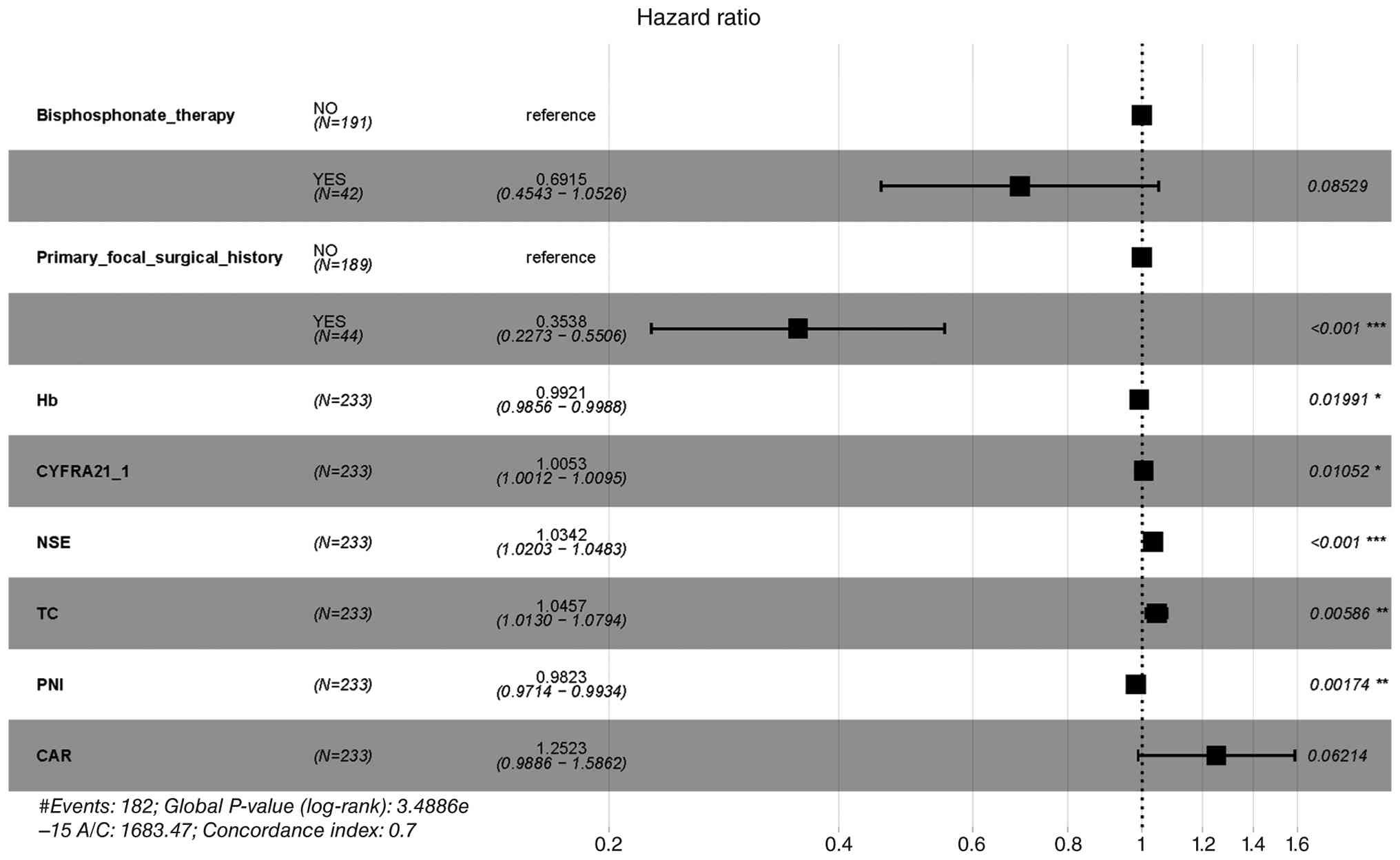
After adjustment for potential confounders,
multivariate Cox regression analysis demonstrated that history of
primary tumor surgery was independently associated with improved OS
(HR=0.35; 95% CI: 0.23–0.55; P<0.001). Higher Hb levels were
also protective (HR=0.99; 95% CI: 0.986–0.999; P=0.02), as was
higher PNI (HR=0.98; 95% CI: 0.97–0.99; P=0.002). By contrast,
elevated CYFRA21-1 (HR=1.01; 95% CI: 1.00–1.01; P<0.001), NSE
(HR=1.03; 95% CI: 1.02–1.05; P<0.001) and TC (HR=1.05; 95% CI:
1.01–1.08; P=0.006) were independently associated with increased
mortality risk. Although several inflammatory markers, including
NLR, SII, ALI, CAR, CLR, HALP, NLDA, PLR and BMI, were significant
in univariate analysis, they did not retain statistical
significance in the multivariate model. Detailed results are shown
in Table SII and Fig. 2.
Survival impact and predictive
performance of prognostic indicators
To further evaluate the prognostic relevance of the
identified factors, optimal cutoff values for continuous variables
were determined using the surv_cutpoint function (Fig. S1). Kaplan-Meier survival analyses
demonstrated that patients with a history of primary tumor surgery
had markedly prolonged OS compared with those without surgery
(P<0.001). Higher Hb and PNI levels were associated with
improved OS (P=0.004 and P=0.018, respectively), whereas elevated
CYFRA21-1 and NSE levels were markedly associated with poorer
survival (both P<0.001). No significant survival difference was
observed between high and low TC groups (P=0.15; Fig. 3).
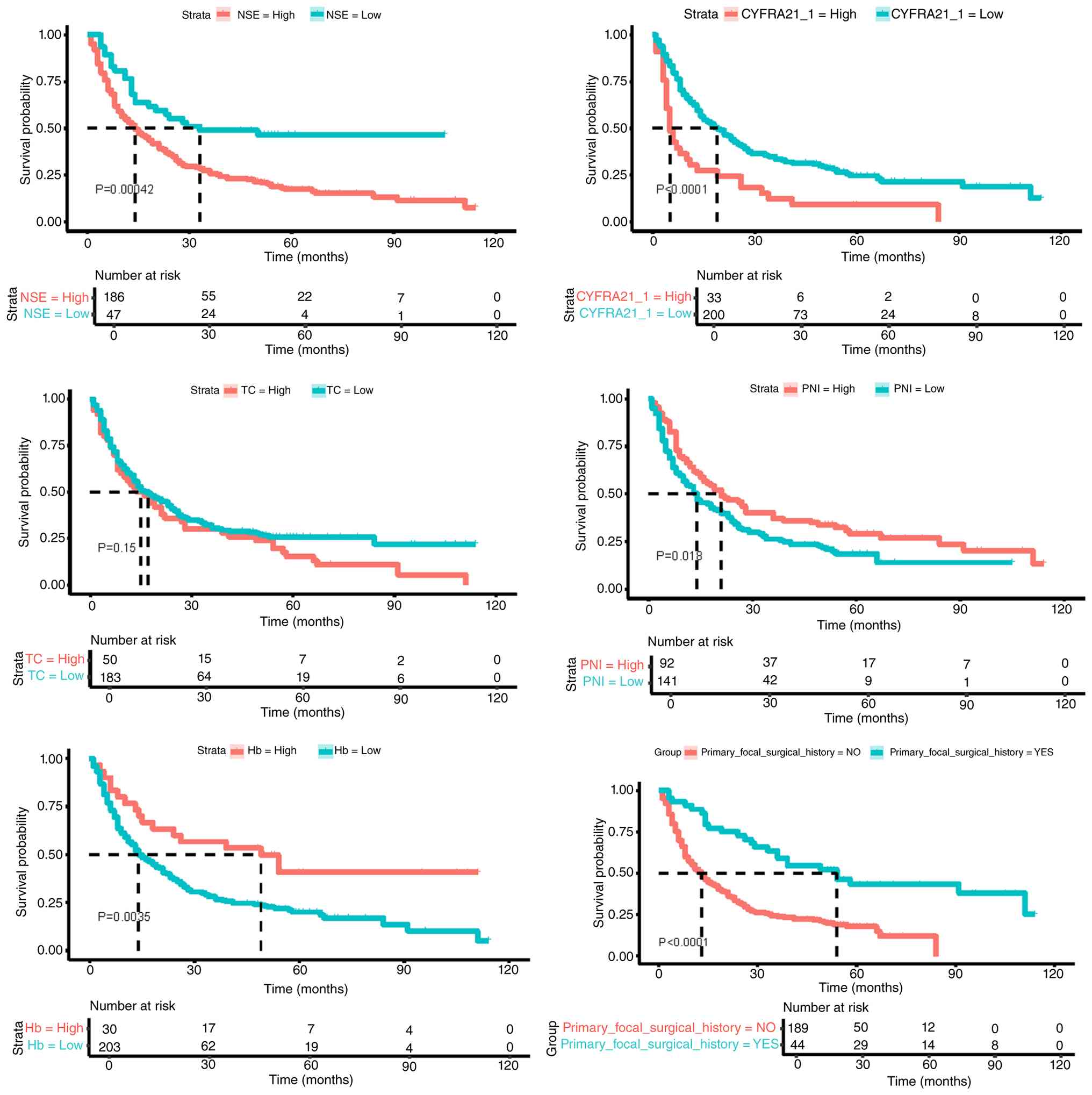 | Figure 3.Kaplan-Meier survival curves for
overall survival according to independent prognostic factors,
including NSE, CYFRA21-1, TC, PNI, Hb, and primary focal surgical
history in patients with NSCLC with bone metastasis. NSE,
neuron-specific enolase; TC, total cholesterol; PNI, prognostic
nutritional index; Hb, hemoglobin; NSCLC, non-small cell lung
cancer. |
The discriminative ability of individual
nutritional-inflammatory biomarkers was subsequently assessed using
Harrell's concordance index (C-index). All single-marker models
yielded C-index values below 0.60, ranging from 0.48–0.58 (mean:
0.54), indicating limited prognostic discrimination and performance
only slightly above random prediction (Fig. S2A). Subgroup analyses revealed
heterogeneity in predictive performance across clinical strata.
Relatively higher C-index values were observed in patients with
SREs (C=0.64), in those without surgery (C=0.59), and in male
patients (C=0.60); however, these values remained below the
threshold generally considered indicative of moderate predictive
accuracy (C>0.70; Fig.
S2B).
Time-dependent receiver operating characteristic
(ROC) analysis was further performed to evaluate dynamic predictive
performance. The AUC values of individual inflammatory indicator
models demonstrated temporal variability (Fig. S2C). The predictive performance of
PLR, NLR and CLR gradually improved over time. The SII model
maintained relatively stable and comparatively higher AUC values at
12 and 24 months. By contrast, models such as ALI and BMI showed
fluctuating performance across different time points. The AUC of
PNI declined at 12 months and subsequently recovered at 24 months,
indicating temporal variation in its prognostic sensitivity.
Despite these dynamic changes, most individual biomarkers
consistently exhibited relatively low AUC values across time
points, suggesting limited standalone prognostic utility. An
integrated prognostic model incorporating clinical and inflammatory
variables was constructed.
Development and validation of
integrated prognostic models
Feature selection
To construct a comprehensive prognostic model for
patients with NSCLC with BM, multiple clinical and laboratory
variables were considered, including demographic characteristics,
routine hematological parameters, tumor biomarkers and
nutritional-inflammatory indicators. Feature selection was
performed using three machine learning approaches, LASSO, Random
Forest (RF) and XGBoost. Multicollinearity among selected variables
was assessed using variance inflation factor (VIF), with VIF <10
indicating no significant collinearity. The variables selected by
each method are shown in Fig. S3.
Based on the selected features, two categories of multivariable Cox
regression models were developed to evaluate the incremental
prognostic value of nutritional-inflammatory indicators. One set of
models incorporated these indicators (Lasso_yes, RF_yes,
XGBoost_yes), whereas the other excluded them (Lasso_no, RF_no,
XGBoost_no).
Model performance comparison
The predictive performance of the six models was
comprehensively evaluated using C-index, time-dependent AUC, Brier
score, calibration analysis, risk stratification and AIC. The
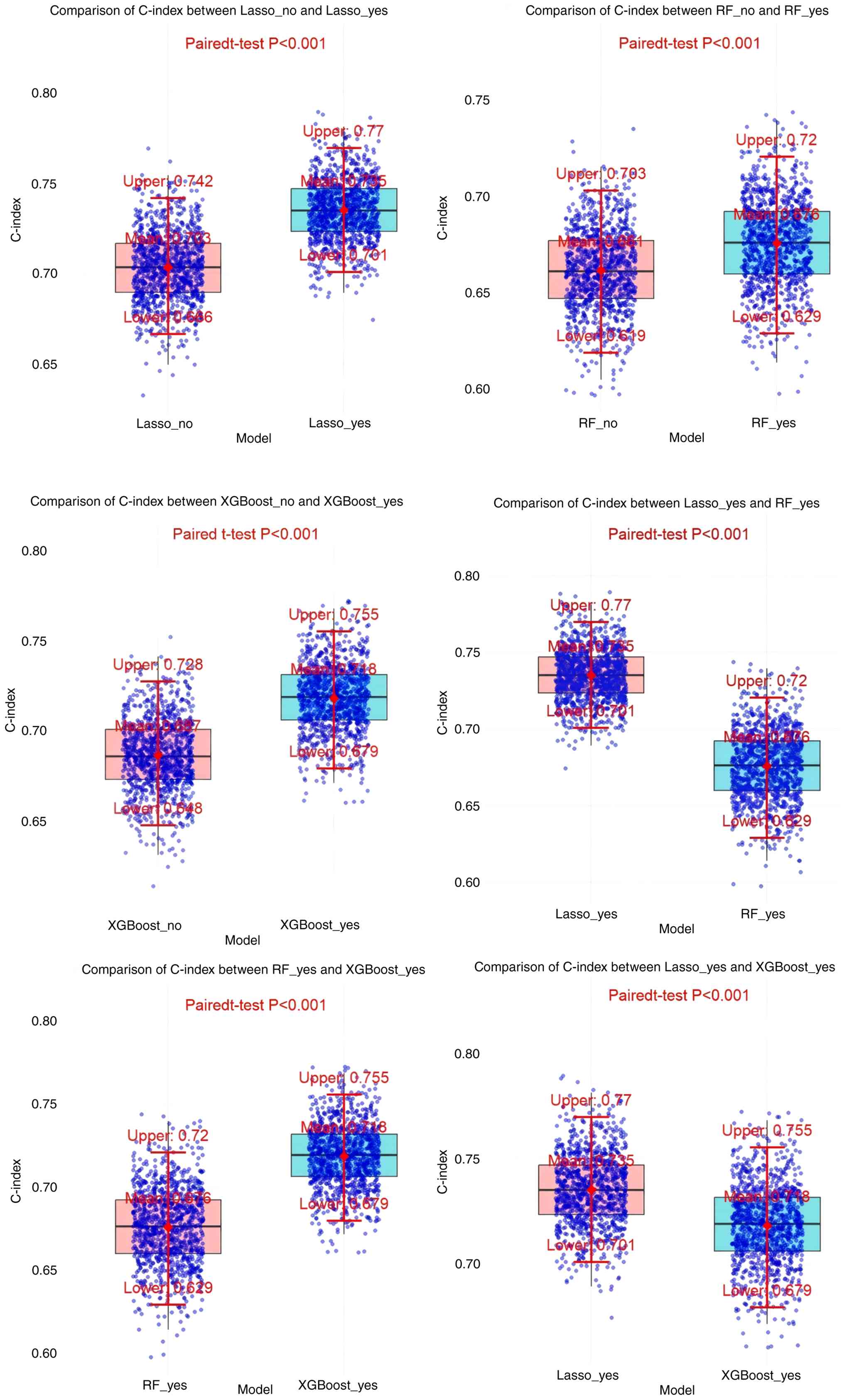
C-index analysis demonstrated that models incorporating
nutritional-inflammatory indicators consistently outperformed those
without these variables. The Lasso_yes model achieved the highest
discriminative ability (C-index=0.74; 95% CI: 0.70–0.77), followed
by XGBoost_yes (0.72; 95% CI: 0.68–0.76) and RF_yes (0.68; 95% CI:
0.62–0.72). All corresponding models without
nutritional-inflammatory indicators showed significantly lower
C-index values (all P<0.05; Fig.
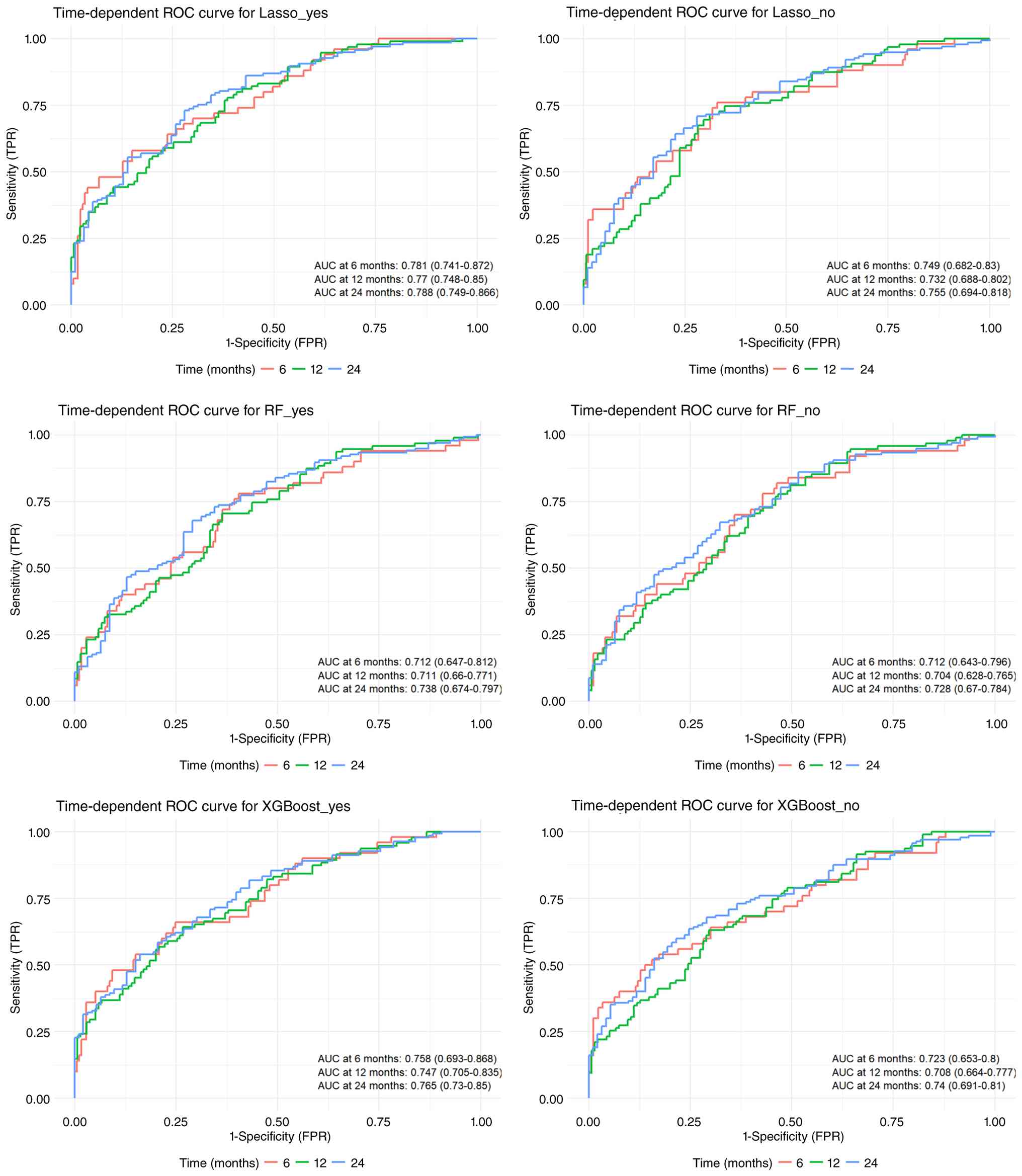
4). Time-dependent ROC analysis further confirmed the superior
performance of models incorporating nutritional-inflammatory
factors. At 24 months, the Lasso_yes model achieved the highest AUC
(0.79; 95% CI: 0.75–0.87), followed by XGBoost_yes (0.77; 95% CI:
0.73–0.85; Fig. 5). Models without
nutritional-inflammatory indicators demonstrated consistently lower
AUC values across all time points. Risk score and its association
with survival time are shown in Fig.
S4. Brier score analysis showed that models including
nutritional-inflammatory indicators generally yielded lower
prediction error, particularly in mid- and long-term survival
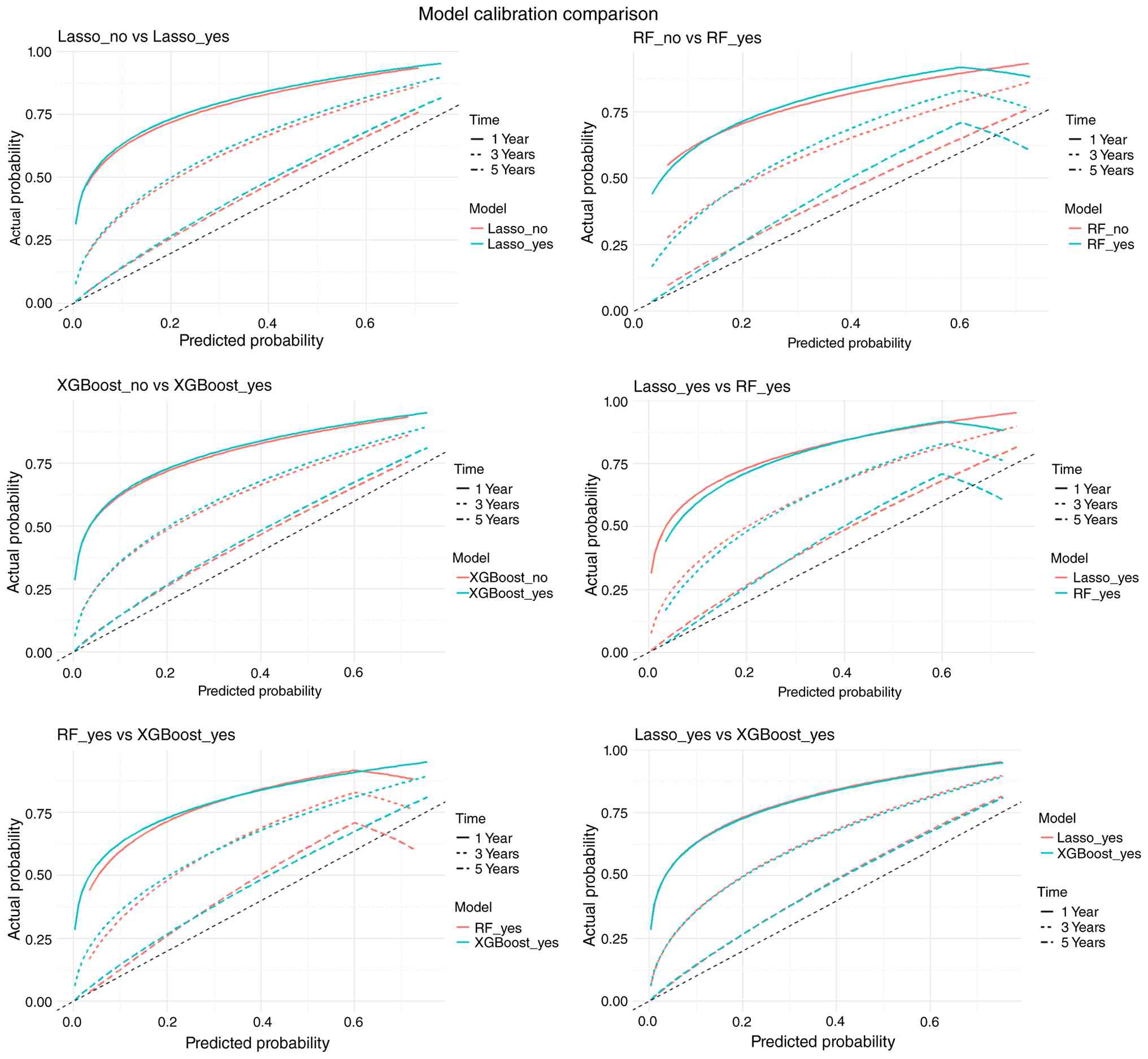
prediction (Table SIII; Fig. S5). Calibration plots demonstrated
good agreement between predicted and observed survival
probabilities, with Lasso_yes exhibiting the most favorable
calibration performance (Table
SIV; Fig. 6). The numbers of
patients at risk at 1, 3 and 5 years were 138 (59.2%), 74 (31.8%),
and 26 (11.2%), respectively. As only 26 patients (11.2%) remained
at risk at 5 years, long-term survival predictions should be
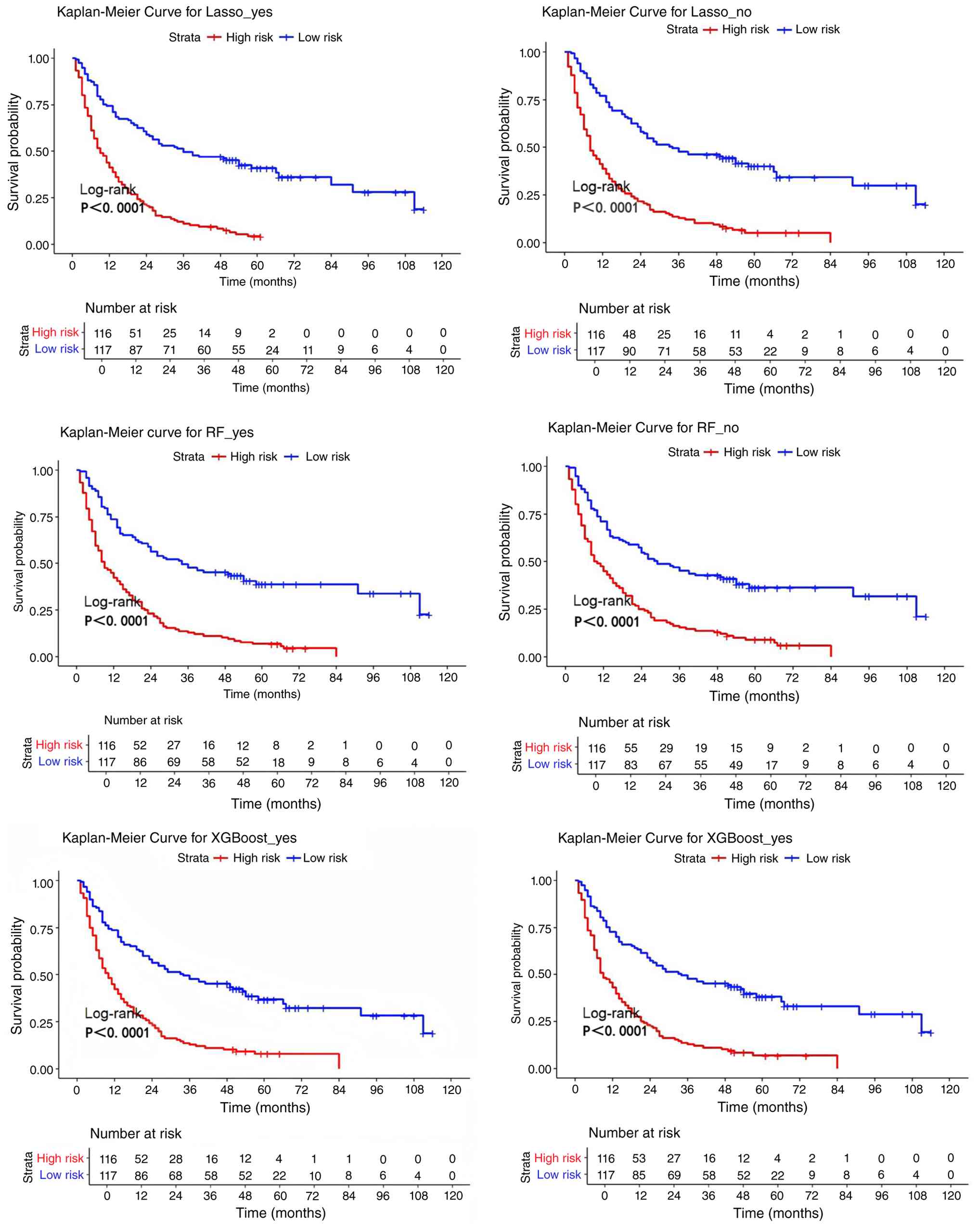
interpreted with caution. Risk stratification analysis revealed
that all models markedly distinguished high-risk from low-risk
patients (log-rank P<0.05). However, models incorporating
nutritional-inflammatory indicators demonstrated more pronounced
separation of Kaplan-Meier survival curves, particularly the
Lasso_yes model (Fig. 7). Among all
models, the Lasso_yes model achieved the lowest AIC value
(1,684.6), indicating superior goodness-of-fit (Fig. S6).
Nomogram development
Based on the superior overall performance of the
Lasso_yes model, a final prognostic nomogram was developed to
predict overall survival in patients with NSCLC with BM. The
nomogram integrated selected clinical and laboratory variables into
a quantitative scoring system, providing individualized survival
probability estimates for clinical application (Fig. 8).
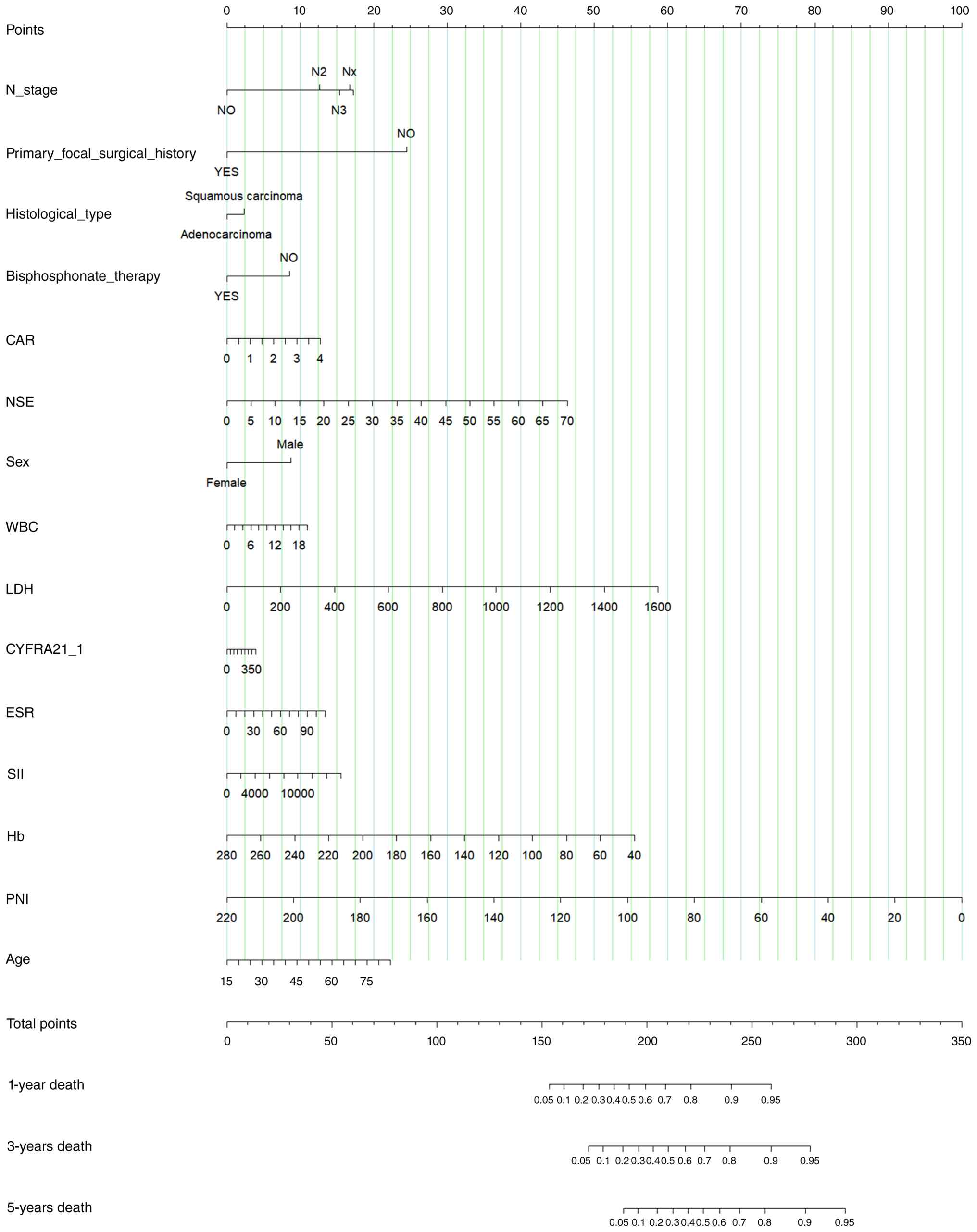 | Figure 8.LASSO-based prognostic nomogram for
predicting 1-, 3-, and 5-year death probability in patients with
NSCLC with bone metastasis. The nomogram was developed based on the
LASSO-selected multivariable Cox regression model. LASSO, Least
Absolute Shrinkage and Selection Operator; NSCLC, non-small cell
lung cancer; CAR, C-reactive protein-to-albumin ratio; NSE,
neuron-specific enolase; WBC, white blood cell count; LDH, lactate
dehydrogenase; ESR, erythrocyte sedimentation rate; SII, systemic
immune-inflammation index; Hb, hemoglobin; PNI, prognostic
nutritional index. |
Discussion
Principal findings
The present study systematically evaluated the
prognostic value of nutritional-inflammatory biomarkers in patients
with NSCLC with BM and developed integrated prognostic models
incorporating clinical and laboratory variables. The findings can
be summarized as follows: i) Several nutritional-inflammatory
markers were markedly associated with OS, although most lacked
independent predictive value when analyzed individually; ii) the
prognostic performance of single inflammatory markers was limited
and varied across time points and clinical subgroups; iii)
integrated models incorporating nutritional-inflammatory indicators
markedly improved predictive performance compared with models
excluding these markers; and iv) a LASSO-based Cox model
demonstrated the best overall discrimination and calibration and
was used to construct a prognostic nomogram.
Nutritional-inflammatory biomarkers
and prognosis
Traditional laboratory parameters remain widely
accessible and cost-effective tools in oncology practice. In
contrast to molecular profiling, these biomarkers reflect systemic
host responses, including inflammation, nutritional status, and
immune function. However, data regarding their prognostic relevance
in patients with NSCLC with BM remain limited.
PNI, which integrates serum albumin and lymphocyte
count, reflects the interaction between nutritional status and
immune competence. In the present study, higher PNI was
independently associated with improved survival, consistent with
previous reports in advanced NSCLC (21,22).
Hypoalbuminemia may indicate protein-energy malnutrition and
systemic inflammation (14),
whereas lymphopenia reflects impaired antitumor immune surveillance
(23,24). These factors may collectively
contribute to disease progression in metastatic settings. Hb,
although not a classical inflammatory marker, also emerged as an
independent prognostic factor (25). Cancer-related anemia is common in
advanced lung cancer and may promote tumor progression through
hypoxia-related pathways (26,27).
The findings of the present study extend previous evidence by
demonstrating its prognostic significance specifically in patients
with BM.
Several inflammatory indices, including SII and NLR,
were markedly associated with OS in univariate analysis but did not
retain independent significance in multivariable models. This
suggested that their prognostic contribution may be partially
mediated through other clinical or laboratory factors. Importantly,
markers such as CRP, CAR and CLR were also associated with
survival, highlighting the relevance of systemic inflammation in
this patient population.
Tumor biology and host metabolic
integration
Traditional tumor biomarkers, including CYFRA21-1
and NSE, were independently associated with survival, emphasizing
the importance of tumor burden-related biological activity.
Additionally, metabolic indicators such as total cholesterol
demonstrated independent prognostic relevance, suggesting that
tumor biology and host metabolic status jointly influence survival
outcomes in patients with NSCLC with BM. These findings support the
concept that prognosis in metastatic lung cancer is determined not
only by tumor characteristics but also by systemic host
responses.
Temporal and subgroup heterogeneity of
single markers
Time-dependent ROC analysis demonstrated dynamic
changes in predictive performance over follow-up. Certain markers,
such as PLR and CLR, showed gradual improvement in discrimination
at later time points, whereas others exhibited fluctuating
performance. Subgroup analyses revealed heterogeneity in predictive
ability across clinical strata, including patients with SREs and
those without prior surgery.
Although the absolute discrimination of individual
markers remained modest, these findings suggest that the prognostic
impact of inflammatory and nutritional parameters may vary
according to disease stage, treatment history and host condition.
However, the relatively low C-index values indicate that single
biomarkers alone are insufficient for accurate risk
stratification.
Incremental value of integrated
modeling
To address the limited performance of individual
markers, the present study constructed integrated prognostic models
using LASSO, random forest, and XGBoost for feature selection.
Models incorporating nutritional-inflammatory indicators
consistently demonstrated superior discrimination, calibration, and
overall performance compared with models excluding these
variables.
Among all models, the LASSO-based Cox model achieved
the highest C-index and lowest AIC, indicating optimal balance
between predictive accuracy and model complexity. Based on this
model, a prognostic nomogram was developed to facilitate
individualized survival estimation in clinical practice.
These findings suggest that nutritional-inflammatory
markers provide incremental prognostic information when integrated
with tumor-related and clinical variables, rather than functioning
as standalone predictors.
Strengths and limitations
The present study had several strengths, including
comprehensive evaluation of multiple inflammatory markers,
application of machine learning-based feature selection methods and
systematic comparison of models with and without
nutritional-inflammatory indicators.
However, several limitations should be acknowledged.
First, this was a single-center retrospective study with a
relatively limited sample size, which may restrict the
generalizability of the findings and introduce potential selection
bias. In addition, the proposed nomogram has not yet been
externally validated in independent cohorts. Therefore, the current
model should be considered a preliminary prognostic tool and
further multicenter prospective validation is required before
broader clinical application. Second, progression-free survival was
not included as a formal endpoint because retrospective progression
assessment was considered insufficiently reliable owing to
irregular imaging follow-up and incomplete documentation.
Therefore, only OS was analyzed in the present study. Third,
treatment heterogeneity may have influenced survival outcomes.
During the study period (2017–2019), the clinical use of targeted
therapy and immunotherapy evolved substantially, but detailed
treatment records after BM diagnosis were incomplete and therefore
could not be fully adjusted for in the current analysis. Finally,
certain bone metabolism-related biochemical markers were not
included in the dataset.
In addition, although multiple machine
learning-based feature selection methods and bootstrap resampling
were applied to reduce overfitting risk, the relatively limited
sample size compared with the number of candidate variables may
still introduce model instability. Therefore, the predictive
performance of the current models should be interpreted cautiously
until validated in independent external cohorts.
Future studies integrating multicenter data,
longitudinal biomarker monitoring and molecular profiling may
further refine prognostic stratification and improve clinical
applicability.
In conclusion, although individual
nutritional-inflammatory markers demonstrate limited standalone
predictive performance, they provide meaningful incremental value
when incorporated into integrated prognostic models. A LASSO-based
nomogram combining clinical, tumor-related, and host inflammatory
parameters offers a practical tool for individualized survival
prediction in patients with NSCLC with BM. Further external
validation is warranted to confirm its clinical utility.
Supplementary Material
Supporting Data
Supporting Data
Acknowledgements
Not applicable.
Funding
The present study was supported by the National Natural Science
Foundation, Regional Science Foundation Project (grant nos.
82160343 and 82560353), Applied Basic Research of Yunnan Provincial
Department of Science and Technology (grant nos. 202301AY070001-106
and 202501AY070001-020), ‘Famous Doctor’ Special Project of Ten
Thousand People Plan of Yunnan Province (grant no.
YNWR-MY-2020-095), and Yunnan Provincial Department of Education
Science Research Fund Project (grant no. 2024J0246).
Availability of data and materials
The data generated in the present study may be
requested from the corresponding author.
Authors' contributions
YC and LZ conceived and designed the present study.
SW performed statistical analysis and machine learning modeling.
HZ, YL and YB were responsible for data collection and
preprocessing. ZD contributed to clinical data interpretation,
methodological supervision and validation of the analytical
framework. CL contributed to the methodology, validation of the
analytical framework and interpretation of the data. SY contributed
to study conception and overall supervision, secured funding
support, and critically revised the manuscript. All authors
contributed to manuscript revision. YC, LZ and SW confirm the
authenticity of all the raw data. All authors read and approved the
final manuscript.
Ethics approval and consent to
participate
The present study was conducted in accordance with
the Declaration of Helsinki and approved by the Ethics Committee of
Yunnan Cancer Hospital (approval number: KYLX2023-038). All
patients signed a written informed consent form, which included
consent to participate in the present study, use of their medical
data for research purposes and the publication of anonymized
findings.
Patient consent for publication
Not applicable.
Competing interests
The authors declare that they have no competing
interests.
References
|
1
|
Hendriks LEL, Remon J, Faivre-Finn C,
Garassino MC, Heymach JV, Kerr KM, Tan DSW, Veronesi G and Reck M:
Non-small-cell lung cancer. Nat Rev Dis Primers. 10:712024.
View Article : Google Scholar : PubMed/NCBI
|
|
2
|
Xu Z, Yang Q, Chen X, Zheng L, Zhang L, Yu
Y, Chen M, You Q and Sun J: Clinical associations and prognostic
value of site-specific metastases in non-small cell lung cancer: A
population-based study. Oncol Lett. 17:5590–5600. 2019.PubMed/NCBI
|
|
3
|
Huang Y, Zhu L, Guo T, Chen W, Zhang Z, Li
W and Pan X: Metastatic sites as predictors in advanced NSCLC
treated with PD-1 inhibitors: A systematic review and
meta-analysis. Hum Vaccin Immunother. 17:1278–1287. 2021.
View Article : Google Scholar : PubMed/NCBI
|
|
4
|
Wu S, Pan Y, Mao Y, Chen Y and He Y:
Current progress and mechanisms of bone metastasis in lung cancer:
A narrative review. Transl Lung Cancer Res. 10:439–451. 2021.
View Article : Google Scholar : PubMed/NCBI
|
|
5
|
Li W, Guo Z, Zou Z, Alswadeh M, Wang H,
Liu X and Li X: Development and validation of a prognostic nomogram
for bone metastasis from lung cancer: A large population-based
study. Front Oncol. 12:10056682022. View Article : Google Scholar : PubMed/NCBI
|
|
6
|
Zheng Y, Wang PP, Fu Y, Chen YY and Ding
ZY: Zoledronic acid enhances the efficacy of immunotherapy in
non-small cell lung cancer. Int Immunopharmacol. 110:1090302022.
View Article : Google Scholar : PubMed/NCBI
|
|
7
|
Congedo MT, Nachira D, Bertolaccini L,
Chiappetta M, Zanfrini E, Meacci E, Vita ML, Lococo F, D'Argento E,
Spaggiari L and Margaritora S: Multimodal therapy for synchronous
bone oligometastatic NSCLC: The role of surgery. J Surg Oncol.
125:782–789. 2022. View Article : Google Scholar : PubMed/NCBI
|
|
8
|
Zheng K, Liu X, Ji W, Lu J, Cui J and Li
W: The efficacy of different inflammatory markers for the prognosis
of patients with malignant tumors. J Inflamm Res. 14:5769–5785.
2021. View Article : Google Scholar : PubMed/NCBI
|
|
9
|
Mukaida N, Sasaki S-I and Baba T:
Two-faced roles of tumor-associated neutrophils in cancer
development and progression. Int J Mol Sci. 21:34572020. View Article : Google Scholar : PubMed/NCBI
|
|
10
|
Fernandes Q, Inchakalody VP, Bedhiafi T,
Mestiri S, Taib N, Uddin S, Merhi M and Dermime S: Chronic
inflammation and cancer; the two sides of a coin. Life Sci.
338:1223902024. View Article : Google Scholar : PubMed/NCBI
|
|
11
|
Liu X, Yin L, Shen S and Hou Y:
Inflammation and cancer: Paradoxical roles in tumorigenesis and
implications in immunotherapies. Genes Dis. 10:151–164. 2023.
View Article : Google Scholar : PubMed/NCBI
|
|
12
|
Pęczek P, Gajda M, Rutkowski K, Fudalej M,
Deptała A and Badowska-Kozakiewicz AM: Cancer-associated
inflammation: Pathophysiology and clinical significance. J Cancer
Res Clin Oncol. 149:2657–2672. 2023. View Article : Google Scholar : PubMed/NCBI
|
|
13
|
Gul B, Metintas S, Ak G, Yilmaz S and
Metintas M: The relationship between nutritional status and
prognosis in patients with locally advanced and advanced stage lung
cancer. Support Care Cancer. 29:3357–3365. 2021.PubMed/NCBI
|
|
14
|
Ruan GT, Ge YZ, Xie HL, Hu CL, Zhang Q,
Zhang X, Tang M, Song MM, Zhang XW, Liu T, et al: Association
between systemic inflammation and malnutrition with survival in
patients with cancer sarcopenia-A prospective multicenter study.
Front Nutr. 8:8112882021. View Article : Google Scholar : PubMed/NCBI
|
|
15
|
Zhang CL, Jiang XC, Li Y, Pan X, Gao MQ,
Chen Y and Pang B: Independent predictive value of blood
inflammatory composite markers in ovarian cancer: Recent clinical
evidence and perspective focusing on NLR and PLR. J Ovarian Res.
16:362023. View Article : Google Scholar : PubMed/NCBI
|
|
16
|
Erciyestepe M, Selvi O, Dinç Sonuşen Ş,
Öztürk AE, Dinç G, Güneş TK, Aydın O, Yaşar N, Balkaya Aykut G and
Vatansever S: Prognostic value of inflammation and nutrition-based
scores in non-small cell lung cancer. Med Princ Pract. 33:122–132.
2024. View Article : Google Scholar : PubMed/NCBI
|
|
17
|
Yu L, Jiang R, Chen W, Liu Y, Wang G, Gong
X and Wang Y: Novel prognostic indicator combining inflammatory
indicators and tumor markers for gastric cancer. World J Surg
Oncol. 21:502023. View Article : Google Scholar : PubMed/NCBI
|
|
18
|
Xu S, Cao S and Yu Y: High systemic
immune-inflammation index is a predictor of poor prognosis in
patients with nonsmall cell lung cancer and bone metastasis. J
Cancer Res Ther. 17:1636–1642. 2021. View Article : Google Scholar : PubMed/NCBI
|
|
19
|
Asano Y, Yamamoto N, Hayashi K, Takeuchi
A, Kato S, Miwa S, Okuda M, Matsumoto I, Yano S and Demura S: Serum
inflammatory dynamics as novel biomarkers for immune checkpoint
inhibitors in non-small-cell lung cancer with bone metastases.
Anticancer Res. 44:4493–4503. 2024. View Article : Google Scholar : PubMed/NCBI
|
|
20
|
Detterbeck FC, Boffa DJ, Kim AW and Tanoue
LT: The eighth edition lung cancer stage classification. Chest.
151:193–203. 2017. View Article : Google Scholar : PubMed/NCBI
|
|
21
|
Li W, Qu Y, Wen F, Yu R, He X, Jia H, Liu
H and Yu H: Prognostic nutritional index and systemic
immune-inflammation index are prognostic biomarkers for
non-small-cell lung cancer brain metastases. Biomark Med.
15:1071–1084. 2021. View Article : Google Scholar : PubMed/NCBI
|
|
22
|
Xu S, Cao S, Geng J, Wang C, Meng Q and Yu
Y: High prognostic nutritional index (PNI) as a positive prognostic
indicator for non-small cell lung cancer patients with bone
metastasis. Clin Respir J. 15:225–231. 2021. View Article : Google Scholar : PubMed/NCBI
|
|
23
|
Canon J, Bryant R, Roudier M, Osgood T,
Jones J, Miller R, Coxon A, Radinsky R and Dougall WC: Inhibition
of RANKL increases the anti-tumor effect of the EGFR inhibitor
panitumumab in a murine model of bone metastasis. Bone.
46:1613–1619. 2010. View Article : Google Scholar : PubMed/NCBI
|
|
24
|
Cheng ML and Fong L: Effects of
RANKL-targeted therapy in immunity and cancer. Front Oncol.
3:3292014. View Article : Google Scholar : PubMed/NCBI
|
|
25
|
Chen C, Song Z, Wang W and Zhou J:
Baseline anemia and anemia grade are independent prognostic factors
for stage IV non-small cell lung cancer. Mol Clin Oncol. 14:592021.
View Article : Google Scholar : PubMed/NCBI
|
|
26
|
Jelkmann W and Hellwig-Bürgel T: Biology
of erythropoietin. Adv Exp Med Biol. 502:169–187. 2001. View Article : Google Scholar : PubMed/NCBI
|
|
27
|
Zhang Y, Feng Y and Sun X: Recombinant
human erythropoietin accelerated the proliferation of non-small
cell lung cancer cell lines and reduced the expression of VEGF,
HIF-1alpha, and PD-L1 under a simulated hypoxic environment in
vitro. Chronic Dis Transl Med. 8:124–133. 2022.PubMed/NCBI
|