Introduction
Primary cardiovascular sarcoma (PCS) is an extremely
rare malignant tumor that originates in the heart and its
associated blood vessels, including the great vessels such as the
pulmonary arteries (1). Among 747
reported cases of malignant cardiac tumors, the majority (88.5%)
are primary sarcomas. Even in surgically resectable cases, the
prognosis is extremely poor, with 30-day and 1-year overall
survival (OS) rates of 81.2 and 45.3%, respectively, in this cohort
(2). In contrast, there are no
detailed reports on the prognosis of unresectable cases treated
with chemotherapy, and given the current lack of effective
antitumor agents, the prognosis with chemotherapy appears to be
similarly poor (2). In the absence
of prospective clinical trials specific to PCS, systemic therapy
for unresectable disease is generally extrapolated from regimens
used for advanced soft tissue sarcoma (STS) (3,4).
Because PCS directly involves cardiovascular structures and
cardiovascular comorbidities frequently coexist, careful cardiac
assessment is warranted when anthracycline-based chemotherapy is
considered (3); oral
non-anthracycline treatments are therefore of clinical interest for
selected patients. PCS may also cause serious cardiovascular
complications, including pericardial effusion and embolic events
(5,6). Because unresectable PCS is associated
with an extremely poor prognosis, management in the outpatient
setting is generally preferred. Pazopanib is an orally administered
multitargeted tyrosine kinase inhibitor with demonstrated activity
in advanced STS. In the randomized phase II EPAZ trial,
progression-free survival (PFS) with pazopanib was non-inferior to
that with doxorubicin as first-line treatment for metastatic STS in
patients aged ≥60 years (7), and in
the PALETTE phase III trial, pazopanib prolonged median PFS
compared with placebo after previous chemotherapy (8). Although its efficacy specifically for
PCS has not been established, its oral administration and
demonstrated activity in advanced STS provide a rationale for its
use in selected patients with unresectable or recurrent disease.
Recently, the authors encountered cases of unresectable PCS treated
with pazopanib, a multikinase inhibitor, and disease control was
maintained for more than 500 days in two of these patients. In the
present report, five patients with unresectable or recurrent PCS
treated with pazopanib are described, and the clinical outcomes and
the potential role of pazopanib in the management of PCS are
discussed.
Materials and methods
Patients with cardiovascular
sarcoma
The electronic medical record at Ehime University
Hospital (Toon, Japan) was queried to identify all patients managed
between January 2015 and December 2025 with unresectable sarcomas
presenting de novo or as recurrences in the heart and/or
pulmonary artery who received oral pazopanib. This was a
single-center retrospective observational study.
Clinicopathological characteristics, disease prognosis, and
treatment outcomes were abstracted and summarized. The present
study was conducted in accordance with the Declaration of Helsinki
and was approved by the Ethics Committee of Ehime University
Hospital (approval no. Ehime2603002).
Immunohistochemistry
The specimens were fixed in 10% neutral buffered
formalin for 24 h, then processed for paraffin embedding and
sectioning; after hematoxylin and eosin (H&E) staining, the
specimens were examined under light microscopy. Tissue sections
(5-µm thick) were deparaffinized with xylene and rehydrated through
a series of graded alcohol. Antigen retrieval was carried out by
microwave treatment at 350 W for 10 min in 10 mM citrate buffer (pH
6.0). Endogenous peroxidase activity was blocked with 0.3%
H2O2 in methanol. The primary antibodies were
applied, and the slides were incubated for 60 min at room
temperature. The avidin-biotin-peroxidase complex method was used
for immunohistochemical staining with the DAKO Liquid DAB Substrate
Chromogen System (cat. no. K3468; Dako; Agilent Technologies, Inc.)
according to the manufacturer's instructions. The primary
antibodies used were as follows: Rabbit monoclonal
anti-cyclin-dependent kinase 4 (CDK4) antibody (D9G3E, cat. no.
12790, 1:200; Cell Signaling Technology, Inc.), mouse monoclonal
anti-murine double minute 2 antibody (IF2, cat. no. 33-7100, 1:50;
Invitrogen; Thermo Fisher Scientific, Inc.), rabbit monoclonal
anti-vascular endothelial growth factor receptor 2 antibody (55B11,
cat. no. 2479, 1:500; Cell Signaling Technology, Inc.), rabbit
monoclonal anti-platelet-derived growth factor receptor-β antibody
(Y92, cat. no. ab32570, 1:50; Abcam), rabbit monoclonal anti-ERG
antibody (EPR3864, cat. no. ab92513, 1:1,000; Abcam), rabbit
monoclonal anti-c-Kit (CD117) antibody (EP10, ready-to-use; Roche
Diagnostics), mouse monoclonal anti-h-caldesmon antibody (cat. no.
GA05461-2, ready-to-use; Dako; Agilent Technologies, Inc.), mouse
monoclonal anti-CD31 antibody (JC70A, cat. no. GA61061-2,
ready-to-use; Dako; Agilent Technologies, Inc.), mouse monoclonal
anti-Ki-67 antibody (MIB-1, cat. no. GA62661-2, ready-to-use; Dako;
Agilent Technologies, Inc.) and mouse monoclonal anti-smooth muscle
actin antibody (1A4, cat. no. GA61161-2, ready-to-use; Dako;
Agilent Technologies, Inc.). The final development of the sections
was carried out with DAB containing 0.03%
H2O2. Histological and immunohistochemical
evaluations were performed using an Olympus BX50 light microscope
(Olympus Corporation).
Treatment with pazopanib
The typical pazopanib regimen at the present
institution was as follows. Pazopanib was administered orally once
daily upon awakening, initiated at 200 or 400 mg. When adverse
events, primarily diarrhea and loss of appetite (anorexia), were
deemed tolerable by the treating physician, the dose was increased
to 600 mg, with further escalation to 800 mg and continuation at
that dose whenever feasible. If 800 mg was not tolerated, treatment
was maintained at 600 mg.
Results
Patient characteristics
Five consecutive patients with unresectable PCS were
treated with pazopanib during the study period. Patient
characteristics, dose history, and treatment outcomes are
summarized in Table I.
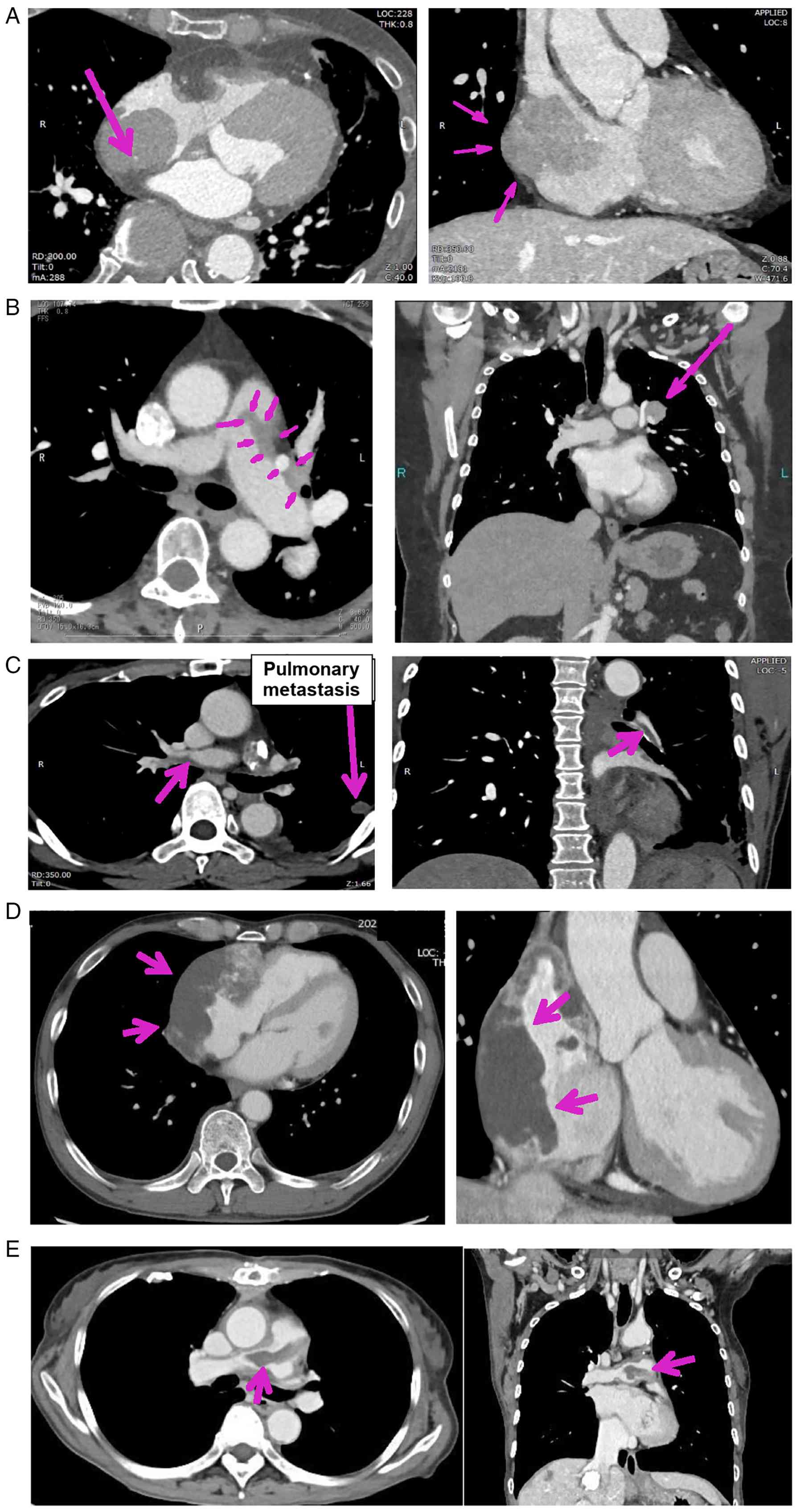
Contrast-enhanced computed tomography (CT) imaging and
histopathological findings for each case are shown in Figs. 1 and 2, respectively. Additional
immunohistochemical images for each case are also provided (Fig.
S1). The duration of pazopanib treatment and the clinical course
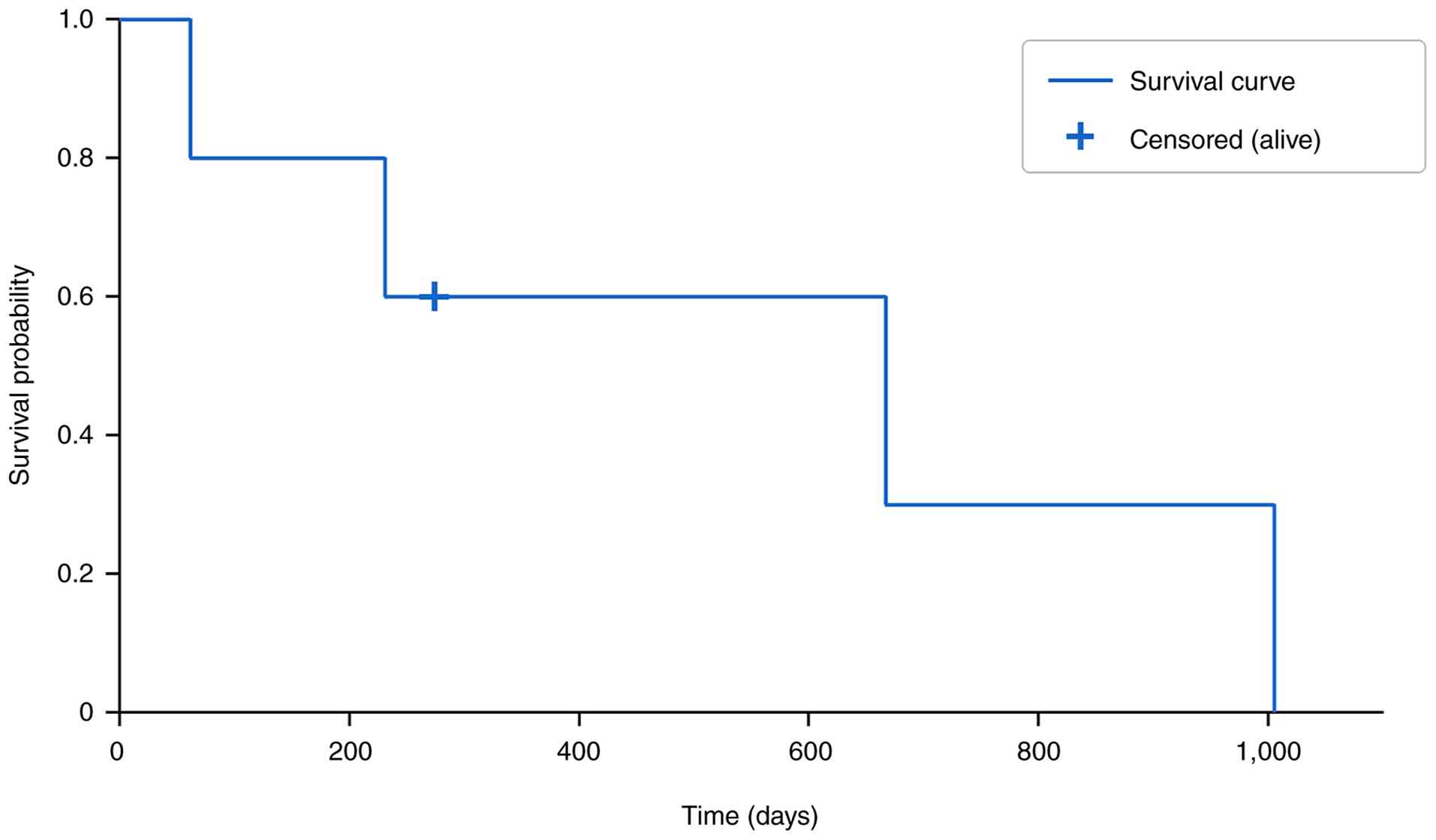
for each patient are illustrated in Fig. 3, and overall survival across the
cohort is shown in Fig. 4. The
cohort comprised three women and two men with a median age of 70
years (range, 56–81 years). Histological subtypes were angiosarcoma
in one patient (case 1), intimal sarcoma in two patients (cases 2
and 3), and leiomyosarcoma in two patients (cases 4 and 5). All
five patients had an Eastern Cooperative Oncology Group (ECOG)
performance status (PS) of 2 or higher at presentation.
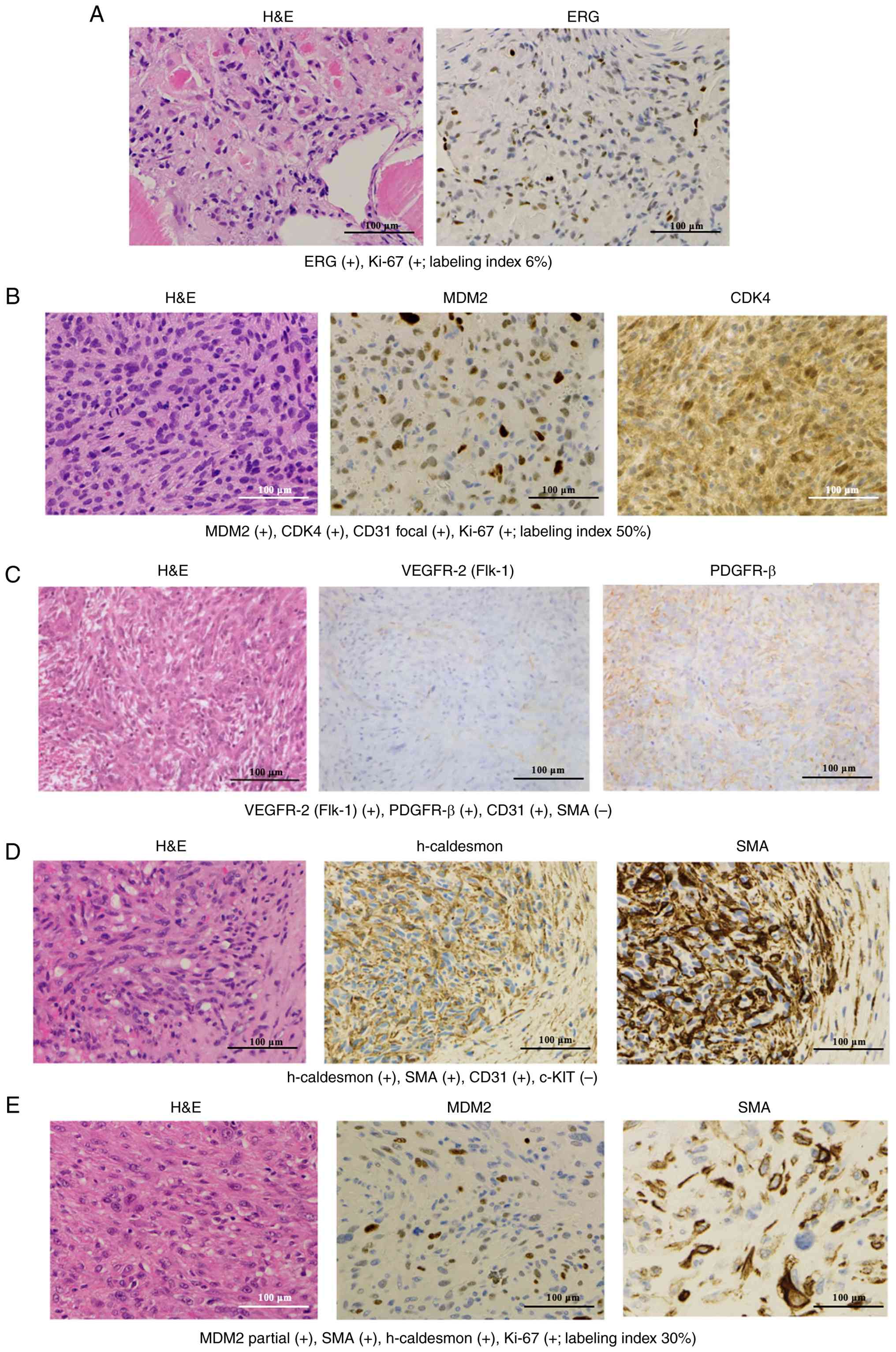 | Figure 2.Histopathological and
immunohistochemical findings of the tumor lesions. Scale bar, 100
µm. (A) Case 1: Atrial angiosarcoma (75-year-old man). (B) Case 2:
Pulmonary artery sarcoma (intimal sarcoma) (68-year-old woman). (C)
Case 3: Pulmonary artery sarcoma (intimal sarcoma) (56-year-old
woman). (D) Case 4: Atrial leiomyosarcoma (70-year-old man). (E)
Case 5: Leiomyosarcoma (81-year-old woman). Representative H&E
and immunohistochemical images are shown for each case; the
immunohistochemical markers illustrated are (A) ERG, (B) MDM2 and
CDK4, (C) VEGFR2 (Flk-1) and PDGFR-β, (D) h-caldesmon and SMA, and
(E) MDM2 and SMA. The Ki-67 index was 6% in case 1, 50% in case 2
and 30% in case 5, and is not available for cases 3 and 4. CDK4,
cyclin-dependent kinase 4; H&E, hematoxylin and eosin; MDM2,
mouse double minute 2; PDGFR-β, platelet-derived growth factor
receptor-β; SMA, smooth muscle actin; VEGFR2, vascular endothelial
growth factor receptor 2. |
 | Table I.Clinicopathological characteristics
and treatment outcomes of five patients with primary cardiovascular
sarcoma treated with pazopanib. |
Table I.
Clinicopathological characteristics
and treatment outcomes of five patients with primary cardiovascular
sarcoma treated with pazopanib.
| Case no. | Age, years/sex | Primary site | Histology | Metastasis | Prior treatment | Initial dose,
mg/day | Max dose, mg/day | Maintenance dose,
mg/day | Duration, months |
|---|
| 1 | 75/M | Right atrium | Angiosarcoma | Lung (multiple) | None | 400 | 800 | 800 | 33 |
| 2 | 68/F | Left pulmonary
artery | Intimal sarcoma | None | Surgery | 200 | 600 | 400-600 | 22 |
| 3 | 56/F | Left pulmonary
artery | Intimal sarcoma | None | Surgery; Adriamycin +
ifosfamide; CDK4/6 inhibitor trial | 200 | 600 | 400-600 | 7 |
| 4 | 70/M | Right atrium | Leiomyosarcoma | Lung (S9) | None | 400 | 800 | 800 | 8 (ongoing) |
| 5 | 81/F | Right pulmonary
artery | Leiomyosarcoma | None | Surgery | 200 | 600 | 400 or 600 | 2 |
Case 1
A 75-year-old man was referred to the oncology
department after multiple pulmonary and atrial masses were detected
following multiple cerebral infarctions. The patient had no
symptoms other than a mild speech disorder resulting from the
cerebral infarctions. Right heart catheterization was performed to
evaluate the atrial mass lesion, and a diagnosis of atrial
angiosarcoma was made on the basis of catheter aspiration cytology.
A needle biopsy was also performed on the lung lesions, and similar
pathological findings confirmed multiple pulmonary metastases of
angiosarcoma. The patient began treatment with pazopanib at 400 mg,
which was gradually increased due to the absence of adverse
effects, with a maintenance dose of 800 mg. Although he later
complained of mild fatigue and loss of appetite, he continued
taking 800 mg of pazopanib. His tumors, including the metastatic
lesions, remained in a state of stable disease (SD). Two years and
9 months after the start of treatment, he died suddenly of a
cerebral infarction.
Case 2
A 68-year-old woman was diagnosed with intimal
sarcoma at the left pulmonary artery bifurcation and underwent
surgical resection. Six months later, she was found to have
recurrence and was referred to our oncology department. Her chief
complaint was exertional dyspnea, and contrast-enhanced CT revealed
a poorly enhancing mass within the right and left pulmonary artery
bifurcation. Based on her medical history and imaging findings, she
was diagnosed with recurrent intimal sarcoma. As the patient did
not wish to undergo reoperation, oral pazopanib was initiated at
200 mg and subsequently increased to 600 mg. Although she
experienced adverse effects including loss of appetite, fatigue,
and discoloration of body hair, she continued taking 400 or 600 mg
for approximately 1 year and 10 months, during which her disease
remained stable. However, pazopanib was eventually discontinued
because the fatigue became intolerable, and she later died of
worsening heart failure.
Case 3
A 56-year-old woman was referred to the oncology
department after being diagnosed with a mass in the left pulmonary
artery. Four years earlier, she had undergone surgical resection of
a left pulmonary artery mass and was diagnosed with primary left
pulmonary artery sarcoma (intimal sarcoma). Following complete
resection of the tumor, she received six courses of adjuvant
chemotherapy with adriamycin and ifosfamide. The current lesion was
diagnosed as an unresectable recurrence of the same disease. Cancer
genome profiling testing revealed CDK4 gene amplification. The
patient was enrolled in a clinical trial with a CDK4/6 inhibitor,
but her disease was deemed refractory within 2 months, and oral
pazopanib was initiated at 200 mg. The dose of pazopanib was
gradually increased; however, because her fatigue and loss of
appetite worsened at doses above 600 mg, maintenance doses of 400
or 600 mg were used depending on her symptoms. Eventually, severe
fatigue and suicidal ideation made it difficult for her to continue
treatment, and pazopanib was discontinued after 7 months. She
subsequently died of heart failure.
Case 4
A 70-year-old man presented to the cardiology
department with a chief complaint of syncope. His electrocardiogram
during the episode showed sick sinus syndrome (SSS), and
contrast-enhanced CT revealed a mass in his right atrial cavity. An
urgent permanent pacemaker was implanted, and a diagnosis of right
atrial leiomyosarcoma was made on the basis of aspiration cytology
obtained during right atrial catheterization. A metastatic lesion
was also identified in the S9 segment of the left lung, adjacent to
the rib. As the tumor was unresectable, oral pazopanib was
initiated at 400 mg. The adverse effects of fatigue and diarrhea
were tolerable, so the dose was increased to 800 mg. Six months
after the initiation of pazopanib, the patient developed a
pericardial effusion due to malignant (neoplastic) pericarditis and
underwent a pericardial window procedure. Pazopanib was temporarily
interrupted before and after the operation and resumed one week
postoperatively. At present, 8 months after the initiation of
pazopanib, the patient continues oral therapy at 800 mg.
Case 5
An 81-year-old woman presented to the oncology
department for treatment of a recurrent leiomyosarcoma in the left
main pulmonary artery. Eight months earlier, she had undergone
surgery to remove a leiomyosarcoma from the right pulmonary artery,
and the current lesion was diagnosed as a recurrence. Her chief
complaint was exertional dyspnea. After consultation, oral
pazopanib was initiated at 200 mg. Because the adverse effects
(fatigue, diarrhea, and hypothyroidism) were tolerable, the dose
was increased. She was maintained on alternating 400 and 600 mg for
2 months; however, she discontinued treatment because of severe
fatigue, and she later died.
Discussion
PCS are exceptionally rare and aggressive
malignancies that originate from the heart and major blood vessels.
While benign tumors such as myxomas constitute the majority of
primary cardiac lesions, approximately 25% are malignant, with
primary cardiac sarcomas accounting for roughly 88.5% of these
malignant cases (2). Among PCS,
angiosarcoma is the most prevalent histological subtype, often
arising from the right atrium, while intimal sarcoma is also
frequently observed, particularly within the pulmonary arteries.
Although PCS is often reported in relatively younger patients
(median age, 45–50 years), the present cases involved older
individuals (56–81 years), suggesting that PCS should also be
considered in elderly patients when compatible clinical features
are present (3).
The prognosis for PCS remains dismal due to its
rapid growth, high rate of local recurrence, and early metastatic
spread; therefore the 5-year survival rate is reported to be as low
as 11.5% (2). According to a recent
systematic review, patients with PCS have median PFS and OS of 5
months [95% confidence interval (CI), 4–7 months] and 12 months
(95% CI, 10–16 months), respectively, and patients with
unresectable or recurrent disease face even shorter survival times
(4).
Clinical manifestations of PCS are often
non-specific, frequently leading to delayed diagnosis. Dyspnea is
the most common symptom, as observed in cases 2 and 5. However,
patients may also present with life-threatening complications such
as cardiac tamponade, syncope, or arrhythmias (5). Case 4 exemplifies an acute
presentation in which syncope and SSS necessitated urgent permanent
pacemaker implantation before the diagnosis of right atrial
leiomyosarcoma was established. Furthermore, embolic phenomena are
serious complications of cardiovascular sarcomas. While left-sided
benign tumors such as myxomas are well known to cause cerebral
embolization, patients with primary cardiac sarcomas should
likewise be monitored carefully for ischemic stroke. In fact, case
1 initially presented with multiple cerebral infarctions and,
despite achieving SD with continued treatment, ultimately died from
recurrent cerebral infarction. Although an embolic event related to
pazopanib cannot be entirely excluded, the patient had developed
cerebral infarction before pazopanib was initiated, and the fatal
embolism—part of this same sequence—is more plausibly attributed to
the sarcoma itself. Progressive heart failure from pulmonary artery
obstruction, as seen in case 2, warrants similar consideration:
although pazopanib-related cardiac dysfunction cannot be excluded,
the heart failure worsened with tumor progression even after
pazopanib was discontinued, again pointing to a tumor-related
cause. Other reports have documented cardiac sarcomas causing
embolic superior mesenteric artery occlusion, leading to acute
mesenteric ischemia (6). Based on
these previous reports, the PS at diagnosis is extremely poor in
the majority of PCS cases. In fact, all of the present cases had an
ECOG PS of 2 or higher and were referred to the present institution
because of difficulties in managing their treatment.
For PCS, complete surgical resection remains the
therapeutic mainstay, yet it is rarely achievable (estimated in
<50% of cases) due to tumor inaccessibility and the involvement
of vital cardiac structures (4).
When surgery is incomplete or impossible, a multidisciplinary
approach involving radiotherapy and systemic therapy becomes
essential. Although anthracycline-based regimens have long been the
standard for advanced STS, their use in PCS can be constrained by
cumulative cardiotoxicity, particularly in patients with
intracardiac disease or baseline cardiac dysfunction.
Notably, the EPAZ randomized phase II trial
demonstrated that pazopanib was non-inferior to doxorubicin as
first-line treatment for metastatic STS in elderly patients (≥60
years), with no significant differences in either PFS [hazard ratio
(HR), 1.00; 95% CI, 0.65–1.53] or OS (7). Considering these findings along with
the cumulative cardiotoxicity of anthracyclines, it may be worth
considering pazopanib as a first-line option from the outset
regardless of PS, particularly in patients with cardiovascular
sarcoma.
Pazopanib, a multitargeted tyrosine kinase
inhibitor, has emerged as an important option for patients with
progressive metastatic STS after standard chemotherapy. In the
PALETTE phase III trial, pazopanib significantly prolonged median
PFS compared with placebo (8). In
the present series, two patients achieved durable disease
stabilization (>500 days) on pazopanib, supporting its potential
role as an outpatient treatment option for selected cases of
unresectable or recurrent PCS.
Beyond antitumor activity, pazopanib may offer
practical advantages in this setting because it is an oral agent.
Unlike intravenous regimens that often require frequent hospital
visits for each administration, oral therapy can reduce the number
of clinic visits and is frequently manageable even at local
community hospitals where the delivery of infusional chemotherapy
is difficult. This may lessen patient burden and help to maintain
continuity of care. Notably, our previous work in patients with
cancer (restricted to sarcoma) suggested that disruption of
outpatient follow-up itself is associated with shortened survival
(9). From this perspective,
selecting an oral regimen that facilitates sustained outpatient
management may have clinical value beyond drug efficacy alone.
A major barrier to continued pazopanib therapy is
treatment-related toxicity, most commonly diarrhea and fatigue
(8). These adverse events often
become more prominent with dose escalation, and in the present
cohort, cases 3 and 5 required discontinuation due to worsening
toxicities during up-titration. While the survival impact of
continued therapy cannot be determined from this small series,
accumulating evidence indicates that longer duration of pazopanib
exposure is associated with improved survival outcomes (10). In addition, among patients who
achieved only short-term benefit, approximately 40% reportedly
discontinued pazopanib due to toxicity—around four times the rate
observed in patients who achieved long-term responses (10). Collectively, these findings
underscore that how to keep patients on therapy is a key clinical
question when pazopanib is selected.
Therefore, to maximize the likelihood of sustained
treatment, careful monitoring and individualized management are
essential. Practical measures include tailoring the timing and pace
of dose escalation to each patient's tolerance, implementing
proactive supportive care for adverse events, and using temporary
interruptions when needed rather than forcing uninterrupted dose
intensification. In this context, case 4 has remained on pazopanib
for 8 months and was successfully escalated to and maintained at
800 mg, even though a pericardial window for malignant pericardial
effusion was required 6 months into treatment, with only a brief
peri-operative interruption. If tolerability is maintained,
continued therapy may provide further clinical benefit, although
close monitoring remains warranted.
In conclusion, PCS pose major therapeutic challenges
due to their rarity and aggressive clinical course. The present
findings suggest that pazopanib can provide meaningful disease
control in some patients with unresectable or recurrent disease,
allowing for long-term stabilization in an outpatient setting.
However, frequent drug-related toxicities necessitate careful
monitoring and individualized dose management to maintain therapy
as long as feasible. The present study has several limitations,
including the small sample size (n=5), the retrospective
single-center design, and the absence of formal response evaluation
by RECIST. Larger, multi-institutional prospective studies are
needed to confirm the role of pazopanib in this rare disease
setting.
Acknowledgements
Not applicable.
Funding
Funding: No funding was received.
Availability of data and materials
The data generated in the present study may be
requested from the corresponding author.
Authors' contributions
ShiY conceived the study, collected and analyzed the
data, and drafted the manuscript. YY and RK contributed to data
interpretation and critically revised the manuscript. SH, ShoY,
ToF, TaF, TK and MM contributed to clinical management of the
patients and data collection. ShiY and YY confirm the authenticity
of all the raw data. All authors read and approved the final
manuscript.
Ethics approval and consent to
participate
The present study was conducted in accordance with
the Declaration of Helsinki and was approved by the Ethics
Committee of Ehime University Hospital (approval no. Ehime2603002).
Owing to the retrospective design and use of anonymized data, the
requirement for written informed consent for participation was
waived by the committee.
Patient consent for publication
The Ethics Committee of Ehime University Hospital
waived the requirement for written informed consent because this
was a retrospective study using de-identified data.
Competing interests
The authors declare that they have no competing
interests.
Use of artificial intelligence tools
During the preparation of this work, AI tools
(Claude; Anthropic) were used to improve the readability and
language of the manuscript, and subsequently, the authors revised
and edited the content produced by the AI tools as necessary,
taking full responsibility for the ultimate content of the present
manuscript.
Glossary
Abbreviations
Abbreviations:
|
CT
|
computed tomography
|
|
ECOG
|
Eastern Cooperative Oncology Group
|
|
OS
|
overall survival
|
|
PCS
|
primary cardiovascular sarcoma
|
|
PFS
|
progression-free survival
|
|
PS
|
performance status
|
|
SD
|
stable disease
|
|
STS
|
soft tissue sarcoma
|
References
|
1
|
Ramlawi B, Leja MJ, Saleh WK, Al Jabbari
O, Benjamin R, Ravi V, Shapira OM, Blackmon SH, Bruckner BA and
Reardon MJ: Surgical treatment of primary cardiac sarcomas: Review
of a single-institution experience. Ann Thorac Surg. 101:698–702.
2016. View Article : Google Scholar : PubMed/NCBI
|
|
2
|
Sultan I, Bianco V, Habertheuer A, Kilic
A, Gleason TG, Aranda-Michel E, Harinstein ME, Martinez-Meehan D,
Arnaoutakis G and Okusanya O: Long-term outcomes of primary cardiac
malignancies: Multi-institutional results from the National Cancer
Database. J Am Coll Cardiol. 75:2338–2347. 2020. View Article : Google Scholar : PubMed/NCBI
|
|
3
|
Burkhard-Meier A, Di Gioia D, Jurinovic V,
Hoberger M, Güler SE, Völkl M, Corradini S, Gaasch AV, Alig AHS,
Knösel T, et al: Primary cardiac sarcoma: Insights from two decades
of multimodal management at LMU Munich. Cardiooncology.
11:582025.PubMed/NCBI
|
|
4
|
Stergioula A, Kokkali S and Pantelis E:
Multimodality treatment of primary cardiac angiosarcoma: A
systematic literature review. Cancer Treat Rev. 120:1026172023.
View Article : Google Scholar : PubMed/NCBI
|
|
5
|
Chambergo-Michilot D, De la Cruz-Ku G,
Sterner RM, Brañez-Condorena A, Guerra-Canchari P and Stulak J:
Clinical characteristics, management, and outcomes of patients with
primary cardiac angiosarcoma: A systematic review. J Cardiovasc
Thorac Res. 15:1–8. 2023. View Article : Google Scholar : PubMed/NCBI
|
|
6
|
Robinson A, Woodman T, Ozdemir B and
Phaily A: Embolic superior mesenteric artery (SMA) occlusion
secondary to a cardiac sarcoma. BMJ Case Rep.
2016:bcr20162145752016. View Article : Google Scholar : PubMed/NCBI
|
|
7
|
Grünwald V, Karch A, Schuler M, Schöffski
P, Kopp HG, Bauer S, Kasper B, Lindner LH, Chemnitz JM, Crysandt M,
et al: Randomized comparison of pazopanib and doxorubicin as
first-line treatment in patients with metastatic soft tissue
sarcoma age 60 years or older: Results of a German intergroup
study. J Clin Oncol. 38:3555–3564. 2020. View Article : Google Scholar : PubMed/NCBI
|
|
8
|
Van der Graaf WTA, Blay JY, Chawla SP, Kim
DW, Bui-Nguyen B, Casali PG, Schöffski P, Aglietta M, Staddon AP,
Beppu Y, et al: Pazopanib for metastatic soft-tissue sarcoma
(PALETTE): A randomised, double-blind, placebo-controlled phase 3
trial. Lancet. 379:1879–1886. 2012. View Article : Google Scholar : PubMed/NCBI
|
|
9
|
Nakamura N, Hasebe S, Yamanaka S, Fujii T,
Fujibuchi T, Kitani T, Takeuchi K, Sato Y, Shindo Y, Ozaki T, et
al: Treatments and prognostic factors for bone and soft tissue
sarcoma in non-urban areas in Japan. Int J Clin Oncol. 29:345–353.
2024. View Article : Google Scholar : PubMed/NCBI
|
|
10
|
Kasper B, Sleijfer S, Litière S, Marreaud
S, Verweij J, Hodge RA, Bauer S, Kerst JM and van der Graaf WTA:
Long-term responders and survivors on pazopanib for advanced soft
tissue sarcomas: Subanalysis of two European Organisation for
research and treatment of cancer (EORTC) clinical trials 62043 and
62072. Ann Oncol. 25:719–724. 2014. View Article : Google Scholar : PubMed/NCBI
|