Spandidos Publications Logo
  • About
    • About Spandidos
    • Aims and Scopes
    • Abstracting and Indexing
    • Editorial Policies
    • Reprints and Permissions
    • Job Opportunities
    • Terms and Conditions
    • Contact
  • Journals
    • All Journals
    • Oncology Letters
      • Oncology Letters
      • Information for Authors
      • Editorial Policies
      • Editorial Board
      • Aims and Scope
      • Abstracting and Indexing
      • Bibliographic Information
      • Archive
    • International Journal of Oncology
      • International Journal of Oncology
      • Information for Authors
      • Editorial Policies
      • Editorial Board
      • Aims and Scope
      • Abstracting and Indexing
      • Bibliographic Information
      • Archive
    • Molecular and Clinical Oncology
      • Molecular and Clinical Oncology
      • Information for Authors
      • Editorial Policies
      • Editorial Board
      • Aims and Scope
      • Abstracting and Indexing
      • Bibliographic Information
      • Archive
    • Experimental and Therapeutic Medicine
      • Experimental and Therapeutic Medicine
      • Information for Authors
      • Editorial Policies
      • Editorial Board
      • Aims and Scope
      • Abstracting and Indexing
      • Bibliographic Information
      • Archive
    • International Journal of Molecular Medicine
      • International Journal of Molecular Medicine
      • Information for Authors
      • Editorial Policies
      • Editorial Board
      • Aims and Scope
      • Abstracting and Indexing
      • Bibliographic Information
      • Archive
    • Biomedical Reports
      • Biomedical Reports
      • Information for Authors
      • Editorial Policies
      • Editorial Board
      • Aims and Scope
      • Abstracting and Indexing
      • Bibliographic Information
      • Archive
    • Oncology Reports
      • Oncology Reports
      • Information for Authors
      • Editorial Policies
      • Editorial Board
      • Aims and Scope
      • Abstracting and Indexing
      • Bibliographic Information
      • Archive
    • Molecular Medicine Reports
      • Molecular Medicine Reports
      • Information for Authors
      • Editorial Policies
      • Editorial Board
      • Aims and Scope
      • Abstracting and Indexing
      • Bibliographic Information
      • Archive
    • World Academy of Sciences Journal
      • World Academy of Sciences Journal
      • Information for Authors
      • Editorial Policies
      • Editorial Board
      • Aims and Scope
      • Abstracting and Indexing
      • Bibliographic Information
      • Archive
    • International Journal of Functional Nutrition
      • International Journal of Functional Nutrition
      • Information for Authors
      • Editorial Policies
      • Editorial Board
      • Aims and Scope
      • Abstracting and Indexing
      • Bibliographic Information
      • Archive
    • International Journal of Epigenetics
      • International Journal of Epigenetics
      • Information for Authors
      • Editorial Policies
      • Editorial Board
      • Aims and Scope
      • Abstracting and Indexing
      • Bibliographic Information
      • Archive
    • Medicine International
      • Medicine International
      • Information for Authors
      • Editorial Policies
      • Editorial Board
      • Aims and Scope
      • Abstracting and Indexing
      • Bibliographic Information
      • Archive
  • Articles
  • Information
    • Information for Authors
    • Information for Reviewers
    • Information for Librarians
    • Information for Advertisers
    • Conferences
  • Language Editing
Spandidos Publications Logo
  • About
    • About Spandidos
    • Aims and Scopes
    • Abstracting and Indexing
    • Editorial Policies
    • Reprints and Permissions
    • Job Opportunities
    • Terms and Conditions
    • Contact
  • Journals
    • All Journals
    • Biomedical Reports
      • Information for Authors
      • Editorial Policies
      • Editorial Board
      • Aims and Scope
      • Abstracting and Indexing
      • Bibliographic Information
      • Archive
    • Experimental and Therapeutic Medicine
      • Information for Authors
      • Editorial Policies
      • Editorial Board
      • Aims and Scope
      • Abstracting and Indexing
      • Bibliographic Information
      • Archive
    • International Journal of Epigenetics
      • Information for Authors
      • Editorial Policies
      • Editorial Board
      • Aims and Scope
      • Abstracting and Indexing
      • Bibliographic Information
      • Archive
    • International Journal of Functional Nutrition
      • Information for Authors
      • Editorial Policies
      • Editorial Board
      • Aims and Scope
      • Abstracting and Indexing
      • Bibliographic Information
      • Archive
    • International Journal of Molecular Medicine
      • Information for Authors
      • Editorial Policies
      • Editorial Board
      • Aims and Scope
      • Abstracting and Indexing
      • Bibliographic Information
      • Archive
    • International Journal of Oncology
      • Information for Authors
      • Editorial Policies
      • Editorial Board
      • Aims and Scope
      • Abstracting and Indexing
      • Bibliographic Information
      • Archive
    • Medicine International
      • Information for Authors
      • Editorial Policies
      • Editorial Board
      • Aims and Scope
      • Abstracting and Indexing
      • Bibliographic Information
      • Archive
    • Molecular and Clinical Oncology
      • Information for Authors
      • Editorial Policies
      • Editorial Board
      • Aims and Scope
      • Abstracting and Indexing
      • Bibliographic Information
      • Archive
    • Molecular Medicine Reports
      • Information for Authors
      • Editorial Policies
      • Editorial Board
      • Aims and Scope
      • Abstracting and Indexing
      • Bibliographic Information
      • Archive
    • Oncology Letters
      • Information for Authors
      • Editorial Policies
      • Editorial Board
      • Aims and Scope
      • Abstracting and Indexing
      • Bibliographic Information
      • Archive
    • Oncology Reports
      • Information for Authors
      • Editorial Policies
      • Editorial Board
      • Aims and Scope
      • Abstracting and Indexing
      • Bibliographic Information
      • Archive
    • World Academy of Sciences Journal
      • Information for Authors
      • Editorial Policies
      • Editorial Board
      • Aims and Scope
      • Abstracting and Indexing
      • Bibliographic Information
      • Archive
  • Articles
  • Information
    • For Authors
    • For Reviewers
    • For Librarians
    • For Advertisers
    • Conferences
  • Language Editing
Login Register Submit
  • This site uses cookies
  • You can change your cookie settings at any time by following the instructions in our Cookie Policy. To find out more, you may read our Privacy Policy.

    I agree
Search articles by DOI, keyword, author or affiliation
Search
Advanced Search
presentation
Oncology Letters
Join Editorial Board Propose a Special Issue
Print ISSN: 1792-1074 Online ISSN: 1792-1082
Journal Cover
November-2026 Volume 32 Issue 5

Full Size Image

Sign up for eToc alerts
Recommend to Library

Journals

International Journal of Molecular Medicine

International Journal of Molecular Medicine

International Journal of Molecular Medicine is an international journal devoted to molecular mechanisms of human disease.

International Journal of Oncology

International Journal of Oncology

International Journal of Oncology is an international journal devoted to oncology research and cancer treatment.

Molecular Medicine Reports

Molecular Medicine Reports

Covers molecular medicine topics such as pharmacology, pathology, genetics, neuroscience, infectious diseases, molecular cardiology, and molecular surgery.

Oncology Reports

Oncology Reports

Oncology Reports is an international journal devoted to fundamental and applied research in Oncology.

Experimental and Therapeutic Medicine

Experimental and Therapeutic Medicine

Experimental and Therapeutic Medicine is an international journal devoted to laboratory and clinical medicine.

Oncology Letters

Oncology Letters

Oncology Letters is an international journal devoted to Experimental and Clinical Oncology.

Biomedical Reports

Biomedical Reports

Explores a wide range of biological and medical fields, including pharmacology, genetics, microbiology, neuroscience, and molecular cardiology.

Molecular and Clinical Oncology

Molecular and Clinical Oncology

International journal addressing all aspects of oncology research, from tumorigenesis and oncogenes to chemotherapy and metastasis.

World Academy of Sciences Journal

World Academy of Sciences Journal

Multidisciplinary open-access journal spanning biochemistry, genetics, neuroscience, environmental health, and synthetic biology.

International Journal of Functional Nutrition

International Journal of Functional Nutrition

Open-access journal combining biochemistry, pharmacology, immunology, and genetics to advance health through functional nutrition.

International Journal of Epigenetics

International Journal of Epigenetics

Publishes open-access research on using epigenetics to advance understanding and treatment of human disease.

Medicine International

Medicine International

An International Open Access Journal Devoted to General Medicine.

Journal Cover
November-2026 Volume 32 Issue 5

Full Size Image

Sign up for eToc alerts
Recommend to Library

  • Article
  • Citations
    • Cite This Article
    • Download Citation
    • Create Citation Alert
    • Remove Citation Alert
    • Cited By
  • Similar Articles
    • Related Articles (in Spandidos Publications)
    • Similar Articles (Google Scholar)
    • Similar Articles (PubMed)
  • Download PDF
  • Download XML
  • View XML

  • Supplementary Files
    • Supplementary_Data1.pdf
    • Supplementary_Data2.pdf
Article Open Access

hnRNPC promotes oral squamous cell carcinoma progression via N6‑methyladenosine‑dependent stabilization of BCAT1 to enhance branched‑chain amino acid metabolism

  • Authors:
    • Zhixin Zhang
    • Xin Gao
    • Ting Han
    • Fei Chai
    • Menghui Gao
    • Yulin An
  • View Affiliations / Copyright

    Affiliations: Department of Endodontics, Zhenjiang Stomatological Hospital, Zhenjiang, Jiangsu 212002, P.R. China, Department of Oral Biology, Zhenjiang Stomatological Hospital, Zhenjiang, Jiangsu 212002, P.R. China
    Copyright: © Zhang et al. This is an open access article distributed under the terms of Creative Commons Attribution License.
  • Article Number: 535
    |
    Published online on: October 1, 2026
       https://doi.org/10.3892/ol.2026.15890
  • Expand metrics +
Metrics: Total Views: 0 (Spandidos Publications: | PMC Statistics: )
Metrics: Total PDF Downloads: 0 (Spandidos Publications: | PMC Statistics: )
Cited By (CrossRef): 0 citations Loading Articles...

This article is mentioned in:


Abstract

Oral squamous cell carcinoma (OSCC) remains a major cause of cancer‑associated mortality worldwide, with current treatments limited by chemoresistance and long‑term toxicities. N6‑methyladenosine (m6A) modification regulates mRNA fate to drive cancer progression. However, how m6A modification regulates OSCC progression remains to be elucidated. The present study integrated bioinformatics analysis of The Cancer Genome Atlas and Genotype‑Tissue Expression datasets and experimental validation to explore the role of heterogeneous nuclear ribonucleoprotein C (hnRNPC), an m6A‑associated RNA‑binding protein, in OSCC. Bioinformatics analysis of 515 patients with head and neck squamous cell carcinoma (HNSCC) suggested that hnRNPC may have prognostic relevance in HNSCC. High hnRNPC expression associated with advanced pathological stages, poor overall survival and served as a potential risk factor for HNSCC. Functional experiments demonstrated that hnRNPC knockdown in OSCC cell lines inhibited cell proliferation, colony formation, tumor sphere formation and in vivo tumor growth, while downregulating stemness‑associated genes (Oct4, Sox2 and Nanog). Mechanistically, hnRNPC promoted branched‑chain amino acid (BCAA) metabolism in OSCC. High hnRNPC expression was associated with activated BCAA metabolic pathways and hnRNPC knockdown reduced BCAA uptake, glutamate levels, oxygen consumption rate and glutathione levels. Furthermore, hnRNPC stabilized BCCAA transaminase 1 (BCAT1) mRNA in an m6A‑dependent manner. BCAT1 inhibition via ERG240 enhanced the tumor‑suppressive effects of hnRNPC knockdown. Exogenous supplementation of α‑ketoglutarate rescued energy deficiency and functional defects in hnRNPC‑knockdown OSCC cells. Collectively, the present study findings revealed a novel mechanism driving OSCC progression. In this mechanism, hnRNPC regulates BCAA metabolism by stabilizing BCAT1 mRNA in an m6A‑dependent manner. The present study supports the prognostic relevance of hnRNPC and may offer a promising therapeutic direction in improving OSCC treatment outcomes by disrupting tumor‑specific metabolic and epigenetic adaptations.
View Figures

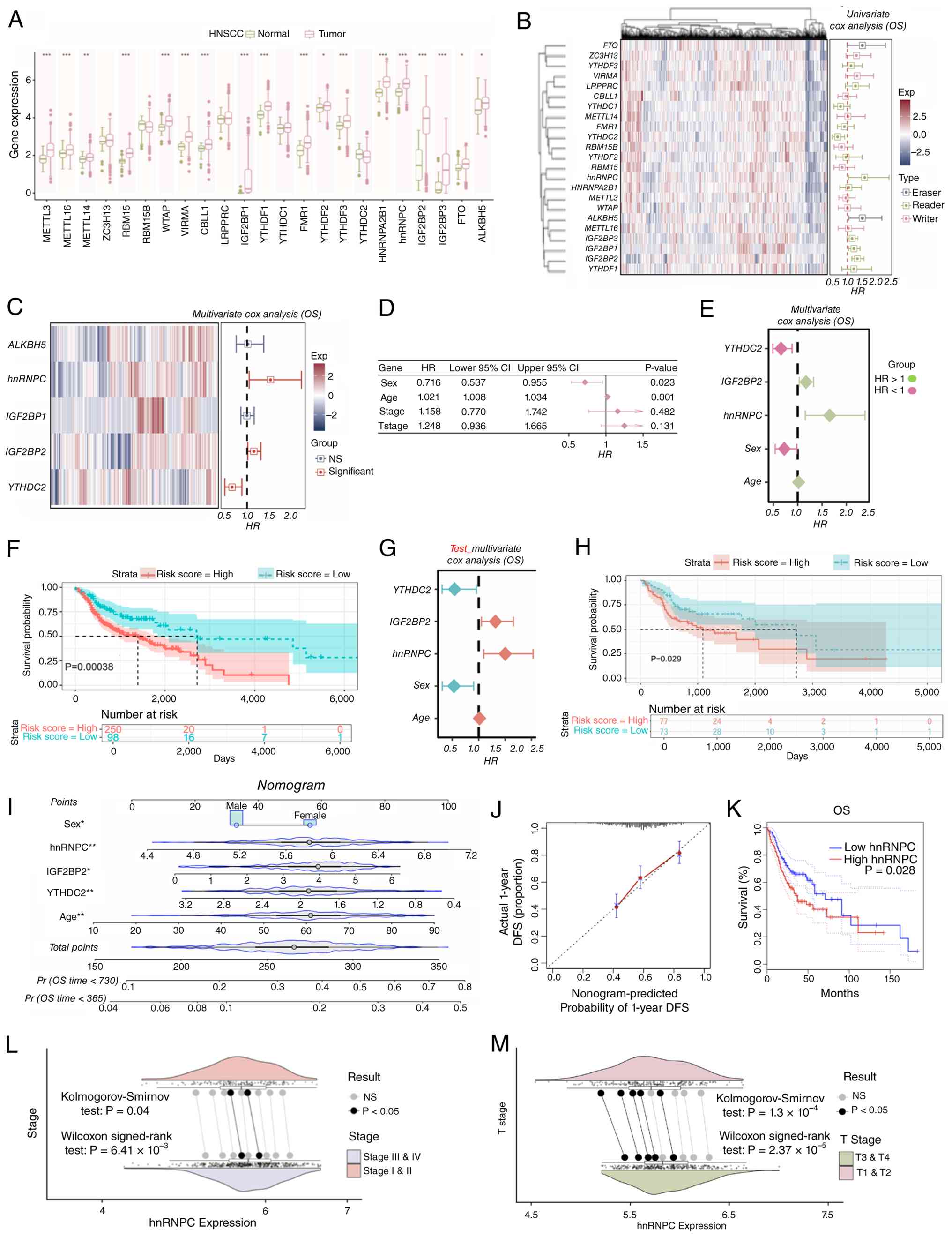
Figure 1

hnRNPC represents a novel independent
prognostic biomarker in HNSCC. (A) Boxplot visualizing the
expression levels of 23 m6A-associated genes in 515
HNSCC and 44 normal tissues. (B) Heatmap (left) of the 23
m6A-associated genes and univariate Cox regression
analysis (right) based on m6A-associated genes
associated with the OS of HNSCC. (C; left) Heatmap of the
significant genes (hnRNPC, ALKBH5, IGF2BP1, IGF2BP2 and YTHDC2) in
the univariate Cox regression analysis and (right) multivariate Cox
regression analysis based on candidate genes with the OS of HNSCC.
(D) Forest plot presents the univariate Cox regression analysis of
the clinical information of the training set. (E) Forest plot
presents the multivariate regression analysis of the candidate
genes in the training set and clinical information (pink, HR <1;
green, HR >1). (F) Kaplan-Meier OS curves for patients in the
training set assigned to high- and low-risk groups. (G) Forest plot
presents the results of a multivariate regression analysis of
candidate genes in the test set and clinical information (red, HR
>1; blue, HR <1). (H) Kaplan-Meier OS curves for patients in
the test set assigned to high- and low-risk groups. (I) Nomogram
integrating the HNSCC risk score with age, sex and expression
levels of hnRNPC, IGF2BP2 and YTHDC2 to predict 1- and 2-year OS.
(J) Calibration curves confirming good agreement between
nomogram-predicted and -observed survival probabilities. (K)
Kaplan-Meier curves depicting OS according to the hnRNPC expression
based on The Cancer Genome Atlas data. (L) Box and whisker plots
comparing hnRNPC expression across pathological stages (stage I and
II vs. III and IV) and (M) T classifications (T3 and T4 vs. T1 and
T2). Boxes represent median and IQR; whiskers indicate 1.5X IQR.
Unless otherwise stated, data are expressed as mean ± SD.
*P<0.05, **P<0.01 and ***P<0.001. hnRNPC, heterogeneous
nuclear ribonucleoprotein C; HNSCC, head and neck squamous cell
carcinoma; NS, not significant; OS, overall survival; DFS,
disease-free survival; HR, hazard ratio; IQR, interquartile range;
IGF2BP2, insulin-like growth factor 2 mRNA-binding protein 2.

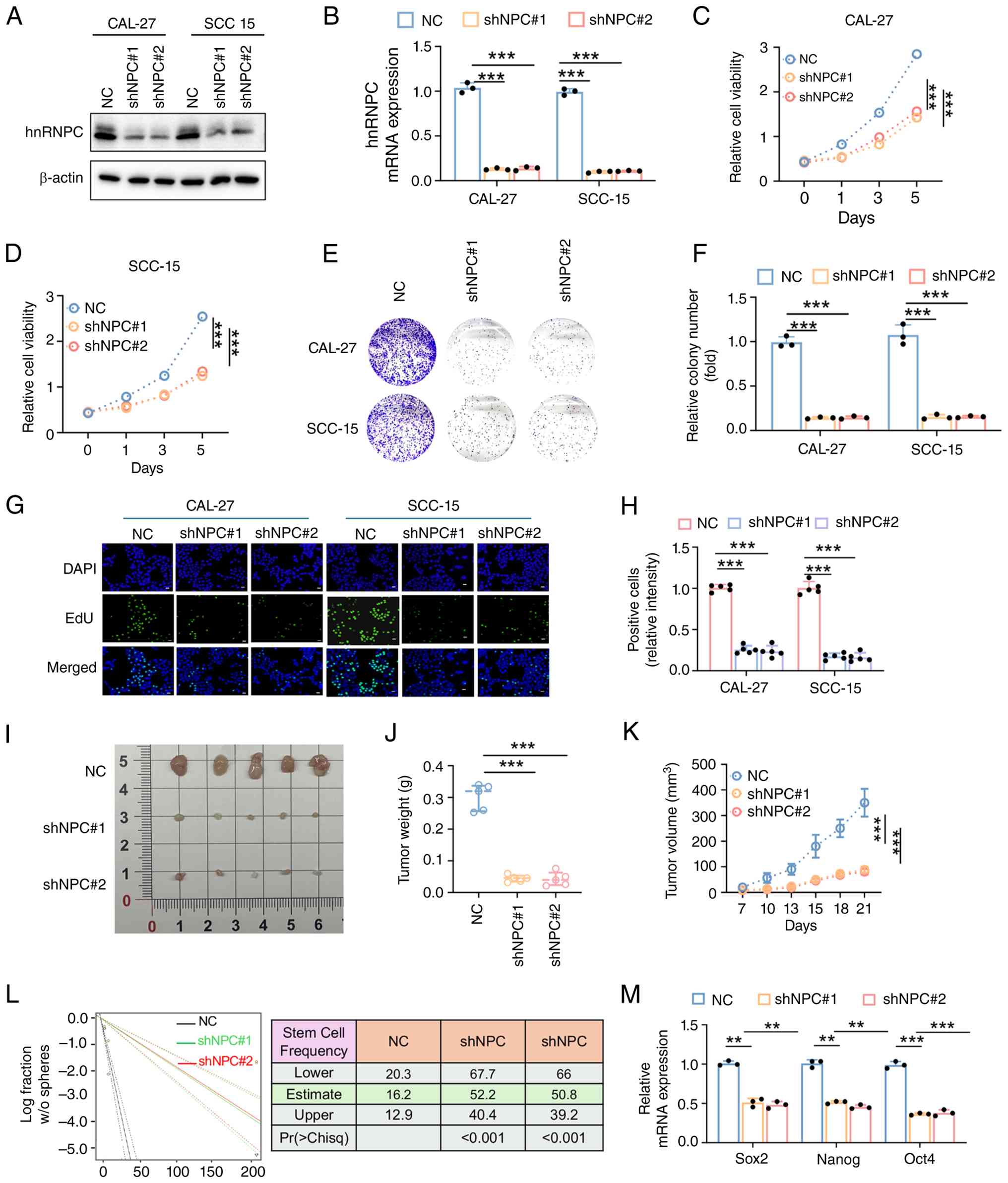
Figure 2

hnRNPC exerts oncogenic functions in
oral SCC. (A) Western blotting and (B) qPCR were used to detect
protein expression after stable knockdown expression level of
hnRNPC in CAL-27 and SCC-15 cell lines. Cell Counting Kit-8 assay
was used to detect the effect of hnRNPC knockdown on the viability
of (C) CAL-27 and (D) SCC-15 cells. (E) Representative images and
(F) relative quantifications of colony formation assays of CAL-27
and SCC-15 cells. (G) 5-ethynyl-20-deoxyuridine solution was
incorporated for 2 h to evaluate the proliferation in CAL-27 and
SCC-15 cells. (H) Percentage of positive cells was quantified.
(I-K) Knockdown of hnRNPC can inhibit the growth of subcutaneous
tumors. SCC-15 cells with or without hnRNPC knockdown were
subcutaneously injected into nude mice. (I) Tumors were dissected
from the nude mice of each group and captured at 21 days after (J)
the weight of tumors was measured. (K) Tumor size was measured
every 3 days and growth curves were plotted. (L) Sphere formation
frequency of germline stem cells (27-CSC) with or without hnRNPC
knockdown was calculated with (left) extreme limiting dilution
assay analysis; (right) stem cell frequencies from 27-CSC cells
with or without hnRNPC knockdown were estimated as the ratio 1/x
with the upper and lower 95% confidence intervals, where 1=stem
cell and x=all cells. (M) qPCR was used to detect the Sox2, Nanog
and Oct4 mRNA expression levels. For (A-H) and (L-M), n=3
biologically independent experiments. For (I-K), n=5 mice per
group. Unless stated otherwise, data are expressed as mean ± SD.
**P<0.01 and ***P<0.001. qPCR, quantitative PCR; hnRNPC,
heterogeneous nuclear ribonucleoprotein C; SCC, squamous cell
carcinoma; CSC, cancer stem cell; NC, negative control; sh, short
hairpin RNA.

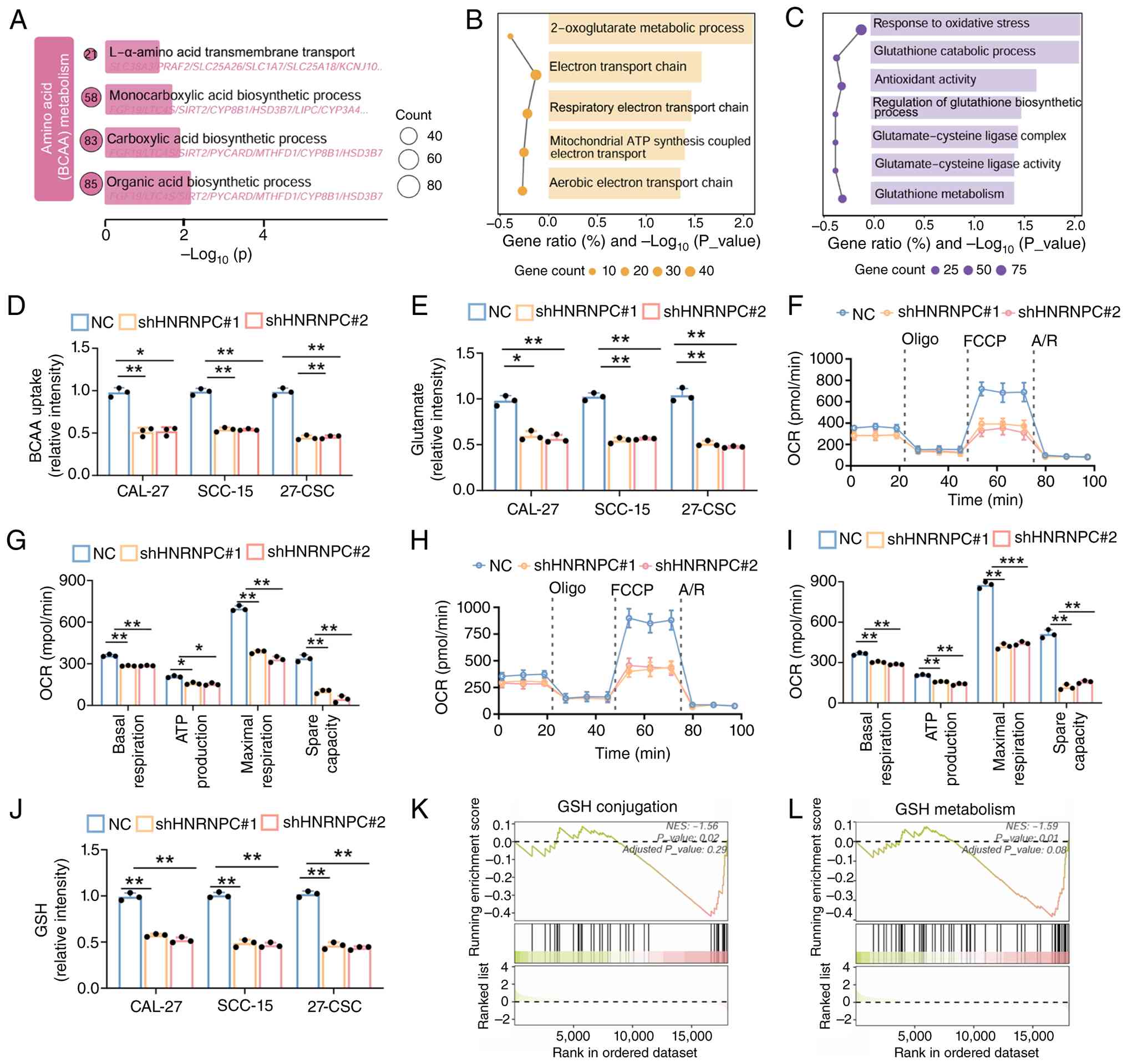
Figure 3

hnRNPC promotes energy production and
antioxidant capacity in OSCC via BCAA metabolism. Gene Ontology
enrichment analysis of 1.5 fold-change differentially expressed
genes. (A) Metabolism of amino acids (BCAA), (B) energy metabolism
and (C) oxidative stress pathways. (D) BCAA uptake rate and (E)
internal glutamate levels were determined in CAL-27, SCC-15 and
27-CSC cells with or without hnRNPC knockdown. (F and H) Analysis
of OCR measurement of one representative experiment in indicated
cells after 4 h culture in basal condition and after sequential
addition of oligomycin, FCCP and A/R. (G and I) Quantification of
basal respiration, ATP-production-coupled respiration, maximal
respiration and spare capacity in CAL-27 and SCC-15 cells with or
without HRNPC knockdown. Box and whisker plots display median and
minimum to maximum; data in dot and bar plots are mean ± SD. (J)
GSH level was determined in CAL-27, SCC-15 and 27-CSC cells with or
without hnRNPC knockdown. (K and L) Gene set enrichment analysis
GSH metabolism pathway. Unless stated otherwise, data are expressed
as mean ± SD. *P<0.05, **P<0.01 and ***P<0.001. hnRNPC,
heterogeneous nuclear ribonucleoprotein C; A/R, antimycin/rotenone;
FCCP, carbonyl cyanide-p-trifluoromethoxyphenylhydrazone; GSH,
glutathione.

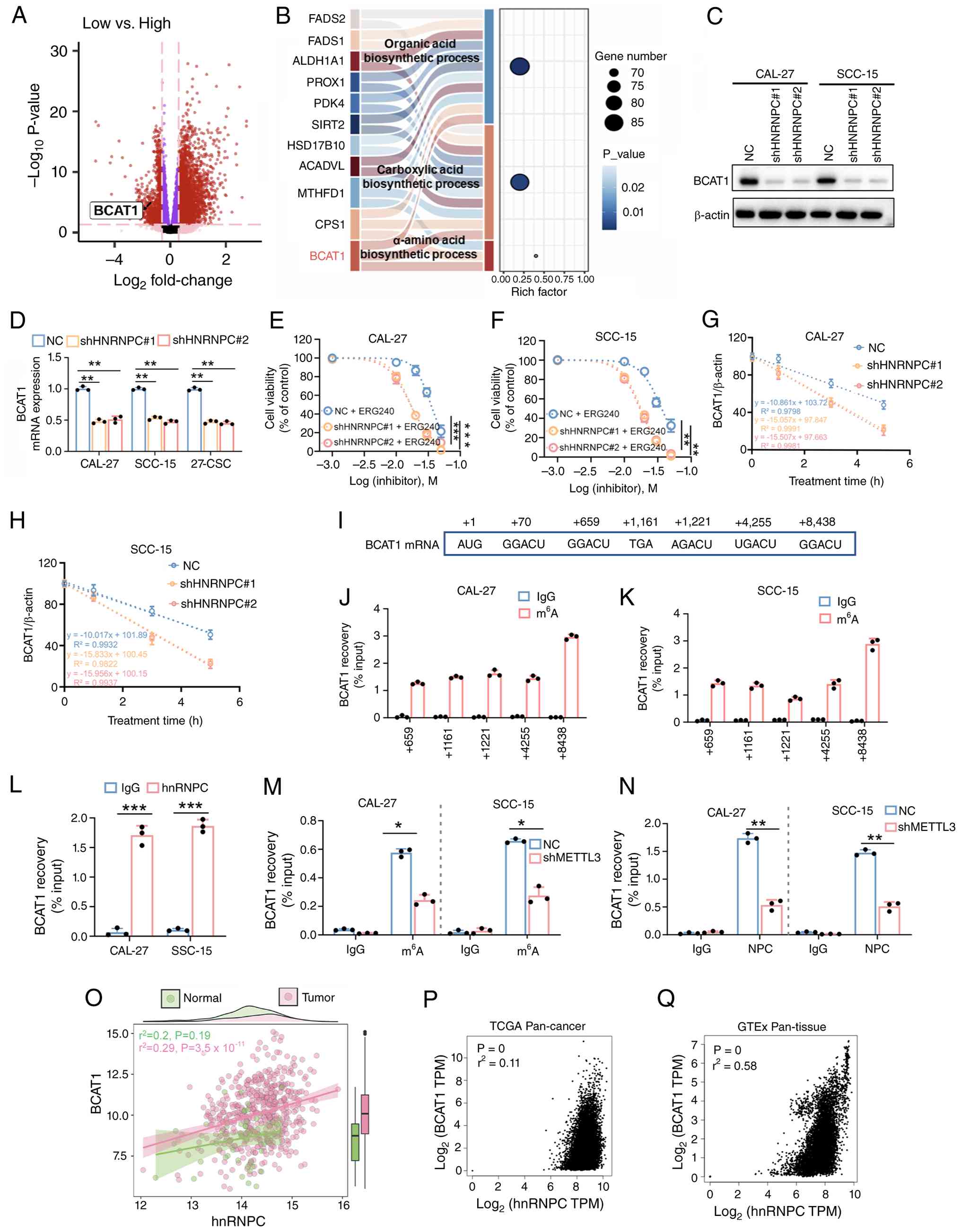
Figure 4

hnRNPC regulates BCAT1 mRNA stability
in an m6A modification-dependent manner. (A) Volcano
plot displays the expression level of BCAT1 in hnRNPC with low vs.
high expression based on TCGA-sequencing data. (B) Sankey diagram
chart displays the expression levels of genes in different amino
acid metabolic pathways. BCAT1 denoted in pink. (C) Western
blotting and (D) qPCR analysis of BCAT1 protein and mRNA
expressions in in CAL-27, SCC-15 with or without hnRNPC expression.
Growth conditions of (E) CAL-27 and (F) SCC-15 cells with or
without hnRNPC knockdown after adding the BCAT1 inhibitor ERG240.
Detection of the stability of BCAT1 mRNA in (G) CAL-27 and (H)
SCC-15 cells after knockdown of hnRNPC. (I) Position map displays
the prediction of the top five m6A modification sites in
the BCAT1 mRNA using the ‘SRAMP’ algorithm. Analysis of MeRIP
assays detecting BCAT1 retrieved by a m6A antibody
around the high-confidence m6A sites in (J) CAL-27 and
(K) SCC-15 cells. (L) Assessment of RIP assays detecting BCAT1 mRNA
+8,438 site retrieved by a hnRNPC antibody or by IgG in CAL-27 and
SCC-15 cells. (M) Analysis of MeRIP assays detecting BCAT1 mRNA
+8,438 site recovered with m6A antibody in METTL3
knockdown in CAL-27 and SCC-15 cells. (N) Assessment of RIP assays
by a hnRNPC antibody or by IgG in CAL-27 and SCC-15 cells after
METTL3 knockdown. (O and P) Transcriptomic analysis of TCGA
database displays a significant positive correlation between hnRNPC
and BCAT1 expression in head and neck SCC tissues. (Q) GTEx
database also revealed the significant positive correlation between
hnRNPC and BCAT1 expression. Unless stated otherwise, data are
expressed as mean ± SD, *P<0.05, **P<0.01 and ***P<0.001.
m6A, N6-methyladenosine; hnRNPC, heterogeneous nuclear
ribonucleoprotein C; TCGA, The Cancer Genome Atlas; RIP, RNA
immunoprecipitation; MeRIP, methylated RIP; BCAT1, branched-chain
amino acid transaminase 1; qPCR, quantitative PCR; SCC, squamous
cell carcinoma; CSC, cancer stem cell; METTL3,
methyltransferase-like 3; sh, short hairpin RNA; TPM, transcripts
per million; GTEx, Genotype-Tissue Expression.

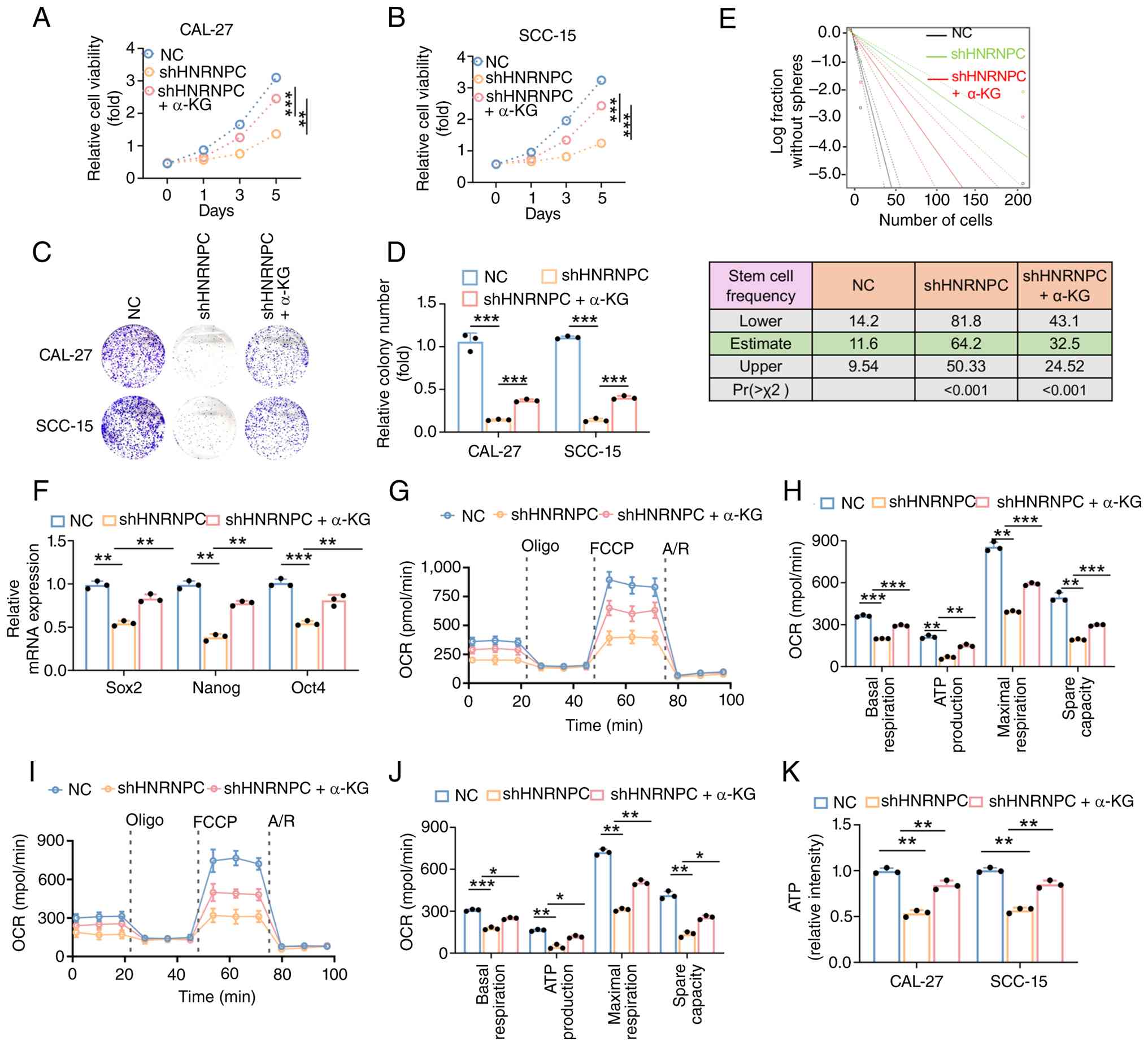
Figure 5

α-KG rescues hnRNPC-mediated
BCAA-dependent energy deficiency. Cell Counting Kit-8 assay was
used to investigate the growth conditions of α-KG in CAL-27 (A) and
SCC-15 (B) cells with knocked-down hnRNPC. Representative images
(C) and relative quantifications (D) of colony formation assays of
indicated cells. (E) Sphere formation frequency in 27-CSC of
knocked-down hnRNPC with conditions of α-KG was calculated with
extreme limiting dilution assay analysis (top). Stem cell
frequencies from 27-CSC cells were estimated as the ratio 1/x with
the upper and lower 95% confidence intervals, where 1=stem cell and
x=all cells (bottom). (F) Quantitative PCR was used to detect the
Sox2, Nanog and Oct4 mRNA expression levels. (G and I) Analysis of
OCR measurement of one representative experiment in indicated cells
after 4 h culture in basal condition and after sequential addition
of oligomycin, FCCP and A/R. (H and J) Quantification of basal
respiration, ATP-production-coupled respiration, maximal
respiration and spare capacity in CAL-27 and SCC-15 of knocked-down
hnRNPC with conditions of α-KG. Box-and-whisker plots show median
and minimum to maximum; data in dot and bar plots are mean ± SD.
(K) ATP level was determined in CAL-27 and SCC-15 of knocked-down
hnRNPC with conditions of α-KG. Unless stated otherwise, data are
expressed as mean ± SD. *P<0.05, **P<0.01 and ***P<0.001.
m6A, N6-methyladenosine; hnRNPC, heterogeneous nuclear
ribonucleoprotein C; α-KG, α-ketoglutarate; NC, negative control;
sh, short hairpin RNA; FCCP, carbonyl
cyanide-p-trifluoromethoxyphenylhydrazone; A/R, antimycin/rotenone;
BCAA, branched-chain amino acid; SCC, squamous cell carcinoma; CSC,
cancer stem cell.

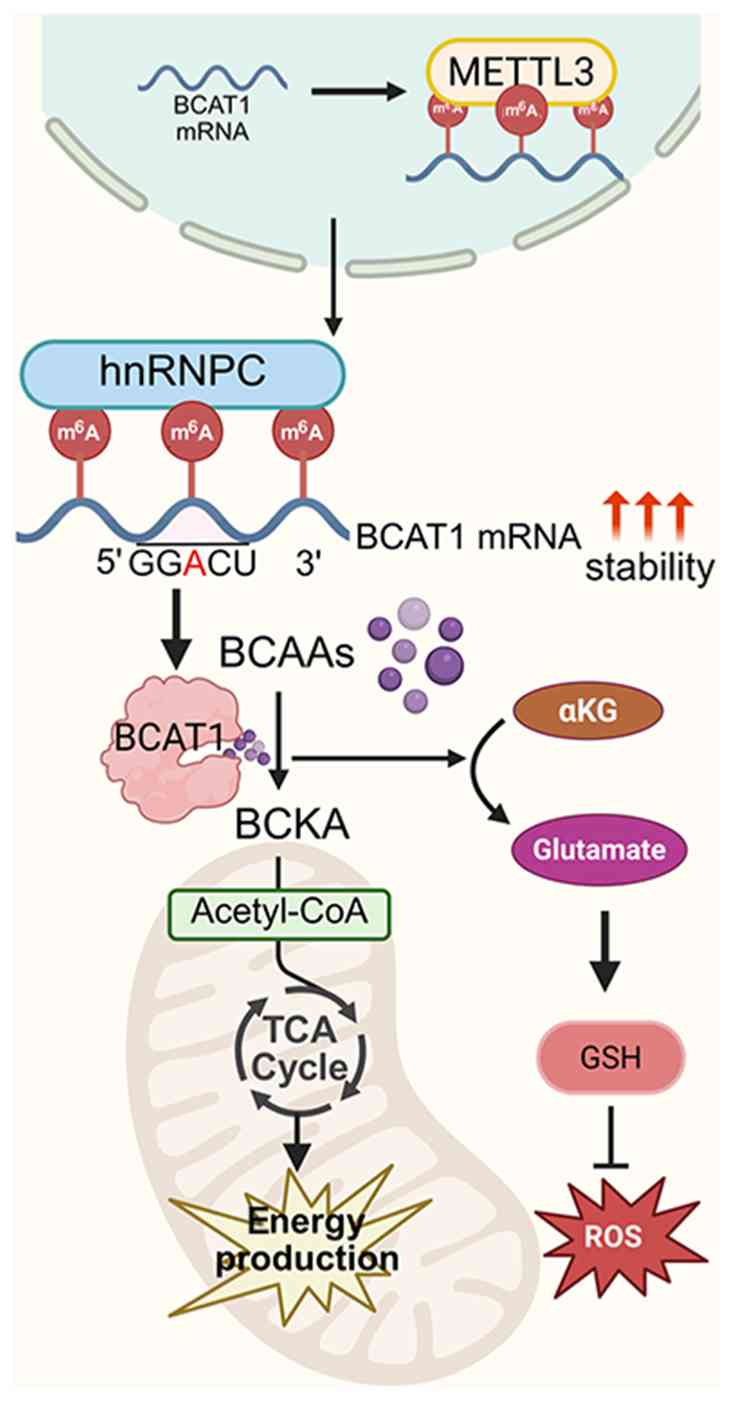
Figure 6

Proposed mechanism of hnRNPC action
in regulation of BCAT1 stabilization in m6A-dependent
manner during oral squamous cell carcinoma progression. Black
arrows represent promotion; black T-shaped lines indicate
inhibition; red arrows indicate increased mRNA stability; and
dashed arrows indicate the TCA cycle. m6A,
N6-methyladenosine; hnRNPC, heterogeneous nuclear ribonucleoprotein
C; BCAT1, branched-chain amino acid transaminase 1; METTL3,
methyltransferase-like 3; BCKA, branched-chain α-keto acids; α-KG,
α-ketoglutarate; GSH, glutathione; ROS, reactive oxygen species;
TCA, tricarboxylic acid.
View References

1 

Hsu CW, Chen YT, Hsieh YJ, Chang KP, Hsueh PC, Chen TW, Yu JS, Chang YS, Li L and Wu CC: Integrated analyses utilizing metabolomics and transcriptomics reveal perturbation of the polyamine pathway in oral cavity squamous cell carcinoma. Anal Chim Acta. 1050:113–122. 2019. View Article : Google Scholar : PubMed/NCBI

2 

Chamoli A, Gosavi AS, Shirwadkar UP, Wangdale KV, Behera SK, Kurrey NK, Kalia K and Mandoli A: Overview of oral cavity squamous cell carcinoma: Risk factors, mechanisms, and diagnostics. Oral Oncol. 121:1054512021. View Article : Google Scholar : PubMed/NCBI

3 

Tan Y, Wang Z, Xu M, Li B, Huang Z, Qin S, Nice EC, Tang J and Huang C: Oral squamous cell carcinomas: State of the field and emerging directions. Int J Oral Sci. 15:442023. View Article : Google Scholar : PubMed/NCBI

4 

Patil VM, Noronha V, Joshi A, Abhyankar A, Menon N, Dhumal S and Prabhash K: Beyond conventional chemotherapy, targeted therapy and immunotherapy in squamous cell cancer of the oral cavity. Oral Oncol. 105:1046732020. View Article : Google Scholar : PubMed/NCBI

5 

Parmar A, Macluskey M, Mc Goldrick N, Conway DI, Glenny AM, Clarkson JE, Worthington HV and Chan KK: Interventions for the treatment of oral cavity and oropharyngeal cancer: Chemotherapy. Cochrane Database Syst Rev. 12:CD0063862021.PubMed/NCBI

6 

Zhou Y, Wang L, Liu M, Jiang H and Wu Y: Oral squamous cell carcinoma: Insights into cellular heterogeneity, drug resistance, and evolutionary trajectories. Cell Biol Toxicol. 41:1012025. View Article : Google Scholar : PubMed/NCBI

7 

Choi BH, Hyun S and Koo SH: The role of BCAA metabolism in metabolic health and disease. Exp Mol Med. 56:1552–1559. 2024. View Article : Google Scholar : PubMed/NCBI

8 

Qian L, Li N, Lu XC, Xu M, Liu Y, Li K, Zhang Y, Hu K, Qi YT, Yao J, et al: Enhanced BCAT1 activity and BCAA metabolism promotes RhoC activity in cancer progression. Nat Metab. 5:1159–1173. 2023. View Article : Google Scholar : PubMed/NCBI

9 

McBrayer SK, Mayers JR, DiNatale GJ, Shi DD, Khanal J, Chakraborty AA, Sarosiek KA, Briggs KJ, Robbins AK, Sewastianik T, et al: Transaminase inhibition by 2-hydroxyglutarate impairs glutamate biosynthesis and redox homeostasis in glioma. Cell. 175:101–116.e25. 2018. View Article : Google Scholar : PubMed/NCBI

10 

Xu E, Ji B, Jin K and Chen Y: Branched-chain amino acids catabolism and cancer progression: Focus on therapeutic interventions. Front Oncol. 13:12206382023. View Article : Google Scholar : PubMed/NCBI

11 

Ananieva EA and Wilkinson AC: Branched-chain amino acid metabolism in cancer. Curr Opin Clin Nutr Metab Care. 21:64–70. 2018.PubMed/NCBI

12 

Yuan Z, Li M and Tang Z: BCAT1 promotes cell proliferation, migration, and invasion via the PI3K-Akt signaling pathway in oral squamous cell carcinoma. Oral Dis. 31:364–375. 2025. View Article : Google Scholar : PubMed/NCBI

13 

Deng X, Qing Y, Horne D, Huang H and Chen J: The roles and implications of RNA m6A modification in cancer. Nat Rev Clin Oncol. 20:507–526. 2023. View Article : Google Scholar : PubMed/NCBI

14 

Hong J, Xu K and Lee JH: Biological roles of the RNA m6A modification and its implications in cancer. Exp Mol Med. 54:1822–1832. 2022. View Article : Google Scholar : PubMed/NCBI

15 

Jiang X, Liu B, Nie Z, Duan L, Xiong Q, Jin Z, Yang C and Chen Y: The role of m6A modification in the biological functions and diseases. Signal Transduct Target Ther. 6:742021. View Article : Google Scholar : PubMed/NCBI

16 

Zhao W, Cui Y, Liu L, Ma X, Qi X, Wang Y, Liu Z, Ma S, Liu J and Wu J: METTL3 facilitates oral squamous cell carcinoma tumorigenesis by enhancing c-Myc stability via YTHDF1-mediated m6A modification. Mol Ther Nucleic Acids. 20:1–12. 2020. View Article : Google Scholar : PubMed/NCBI

17 

Xu L, Li Q, Wang Y, Wang L, Guo Y, Yang R, Zhao N, Ge N, Wang Y and Guo C: Yang: m6A methyltransferase METTL3 promotes oral squamous cell carcinoma progression through enhancement of IGF2BP2-mediated SLC7A11 mRNA stability. Am J Cancer Res. 11:5282–5298. 2021.PubMed/NCBI

18 

De Kesel J, Fijalkowski I, Pieters T, Borin C, Christensen KT, Wittouck M, Van Laere J, Guerrero L, Reunes L, Caruso M, et al: HNRNPC and m6A RNA methylation control oncogenic transcription and metabolism in T-cell leukemia. Blood. 146:275–290. 2025. View Article : Google Scholar : PubMed/NCBI

19 

Bi Z, Liu Y, Zhao Y, Yao Y, Wu R, Liu Q, Wang Y and Wang X: A dynamic reversible RNA N6-methyladenosine modification: Current status and perspectives. J Cell Physiol. 234:7948–7956. 2019. View Article : Google Scholar : PubMed/NCBI

20 

Navickas A, Asgharian H, Winkler J, Fish L, Garcia K, Markett D, Dodel M, Culbertson B, Miglani S, Joshi T, et al: An mRNA processing pathway suppresses metastasis by governing translational control from the nucleus. Nat Cell Biol. 25:892–903. 2023. View Article : Google Scholar : PubMed/NCBI

21 

Wu Y, Zhao W, Liu Y, Tan X, Li X, Zou Q, Xiao Z, Xu H, Wang Y and Yang X: Function of HNRNPC in breast cancer cells by controlling the dsRNA-induced interferon response. EMBO J. 37:e990172018. View Article : Google Scholar : PubMed/NCBI

22 

Su Z, Liu X, Xu Y, Hu W, Zhao C, Zhao H, Feng X, Zhang S, Yang J, Shi X and Peng J: Novel reciprocal fusion genes involving HNRNPC and RARG in acute promyelocytic leukemia lacking RARA rearrangement. Haematologica. 105:e376–e378. 2020. View Article : Google Scholar : PubMed/NCBI

23 

Chen JJ, Lu TZ, Wang T, Yan WH, Zhong FY, Qu XH, Gong XC, Li JG, Tou FF, Jiang LP and Han XJ: The m6A reader HNRNPC promotes glioma progression by enhancing the stability of IRAK1 mRNA through the MAPK pathway. Cell Death Dis. 15:3902024. View Article : Google Scholar : PubMed/NCBI

24 

Qin Z, Bai J, He H and Li B: Expression and significance of m6A-RNA-methylation in oral cancer and precancerous lesion. Front Oncol. 13:10130542023. View Article : Google Scholar : PubMed/NCBI

25 

Amin MB, Greene FL, Edge SB, Compton CC, Gershenwald JE, Brookland RK, Meyer L, Gress DM, Byrd DR and Winchester DP: The eighth edition AJCC cancer staging manual: Continuing to build a bridge from a population-based to a more ‘personalized’ approach to cancer staging. CA Cancer J Clin. 67:93–99. 2017.PubMed/NCBI

26 

Livak KJ and Schmittgen TD: Analysis of relative gene expression data using real-time quantitative PCR and the 2(−Delta Delta C(T)) method. Methods. 25:402–408. 2001. View Article : Google Scholar : PubMed/NCBI

27 

Shen L, Qu X, Li H, Xu C, Wei M, Wang Q, Ru Y, Liu B, Xu Y, Li K, et al: NDRG2 facilitates colorectal cancer differentiation through the regulation of Skp2-p21/p27 axis. Oncogene. 37:1759–1774. 2018. View Article : Google Scholar : PubMed/NCBI

28 

Liu H, Li D, Sun L, Qin H, Fan A, Meng L, Graves-Deal R, Glass SE, Franklin JL, Liu Q, et al: Interaction of lncRNA MIR100HG with hnRNPA2B1 facilitates m6A-dependent stabilization of TCF7L2 mRNA and colorectal cancer progression. Mol Cancer. 21:742022. View Article : Google Scholar : PubMed/NCBI

29 

Tang D, Cao C, Huang S, He Q and Wang A: YTHDF2 drives oral squamous cell carcinoma progression via m6A-dependent degradation of MTUS1/ATIP1 mRNA and mitochondrial dysregulation. Cell Signal. 136:1121452025. View Article : Google Scholar : PubMed/NCBI

30 

Zhang D, Mai L, Zhang L, Huang G, Lin Z, Wang S, Rao G, Xie S and Pan C: The m6A reader IGF2BP2 promotes oral squamous cell carcinoma progression by maintaining UCA1 stability. Recent Pat Anticancer Drug Discov. 20:697–709. 2025. View Article : Google Scholar : PubMed/NCBI

31 

Nie C, He T, Zhang W, Zhang G and Ma X: Branched Chain amino acids: Beyond nutrition metabolism. Int J Mol Sci. 19:9542018. View Article : Google Scholar : PubMed/NCBI

32 

Duan Y, Li F, Li Y, Tang Y, Kong X, Feng Z, Anthony TG, Watford M, Hou Y, Wu G and Yin Y: The role of leucine and its metabolites in protein and energy metabolism. Amino Acids. 48:41–51. 2016. View Article : Google Scholar : PubMed/NCBI

33 

Su Y, Hu Y, Qu B, Lei R and Guo G: METTL3 promotes OSCC progression by down-regulating WEE1 in a m6A-YTHDF2-dependent manner. Mol Biotechnol. 67:1867–1879. 2025. View Article : Google Scholar : PubMed/NCBI

34 

Liu YY, Xia M, Chen ZB, Liao YD, Zhang CY, Yuan L, Pan YW, Huang H, Lu HW and Yao SZ: HNRNPC mediates lymphatic metastasis of cervical cancer through m6A-dependent alternative splicing of FOXM1. Cell Death Dis. 15:7322024. View Article : Google Scholar : PubMed/NCBI

35 

Yang N, Liu L, Liu X, Chen Y, Lu J and Wang Z: hnRNPC promotes malignancy in pancreatic cancer through stabilization of IQGAP3. Biomed Res Int. 2022:63196852022. View Article : Google Scholar : PubMed/NCBI

36 

Wang Y, Zhang J, Ren S, Sun D, Huang HY, Wang H, Jin Y, Li F, Zheng C, Yang L, et al: Branched-chain amino acid metabolic reprogramming orchestrates drug resistance to EGFR tyrosine kinase inhibitors. Cell Rep. 28:512–525.e6. 2019. View Article : Google Scholar : PubMed/NCBI

37 

Wen H, Tang J, Cui Y, Hou M and Zhou J: m6A modification-mediated BATF2 suppresses metastasis and angiogenesis of tongue squamous cell carcinoma through inhibiting VEGFA. Cell Cycle. 22:100–116. 2023. View Article : Google Scholar : PubMed/NCBI

38 

Chen X, Liu Y, Sun D, Sun R, Wang X, Li M, Song N, Ying J, Guo T and Jiang Y: Long noncoding RNA lnc-H2AFV-1 promotes cell growth by regulating aberrant m6A RNA modification in head and neck squamous cell carcinoma. Cancer Sci. 113:2071–2084. 2022. View Article : Google Scholar : PubMed/NCBI

39 

Zhang Y, Wang Y, Peng J, Zhao K, Li L, Zhang Y, Zhai Z, Yuan S, Li S, Ye F and Wang L: Expression and prognostic significance of the m6A RNA methylation regulator HNRNPC in HNSCC. Front Oncol. 15:15168672025. View Article : Google Scholar : PubMed/NCBI

Related Articles

  • Abstract
  • View
  • Download
  • Twitter
Copy and paste a formatted citation
Spandidos Publications style
Zhang Z, Gao X, Han T, Chai F, Gao M and An Y: hnRNPC promotes oral squamous cell carcinoma progression via N6‑methyladenosine‑dependent stabilization of BCAT1 to enhance branched‑chain amino acid metabolism. Oncol Lett 32: 535, 2026.
APA
Zhang, Z., Gao, X., Han, T., Chai, F., Gao, M., & An, Y. (2026). hnRNPC promotes oral squamous cell carcinoma progression via N6‑methyladenosine‑dependent stabilization of BCAT1 to enhance branched‑chain amino acid metabolism. Oncology Letters, 32, 535. https://doi.org/10.3892/ol.2026.15890
MLA
Zhang, Z., Gao, X., Han, T., Chai, F., Gao, M., An, Y."hnRNPC promotes oral squamous cell carcinoma progression via N6‑methyladenosine‑dependent stabilization of BCAT1 to enhance branched‑chain amino acid metabolism". Oncology Letters 32.5 (2026): 535.
Chicago
Zhang, Z., Gao, X., Han, T., Chai, F., Gao, M., An, Y."hnRNPC promotes oral squamous cell carcinoma progression via N6‑methyladenosine‑dependent stabilization of BCAT1 to enhance branched‑chain amino acid metabolism". Oncology Letters 32, no. 5 (2026): 535. https://doi.org/10.3892/ol.2026.15890
Copy and paste a formatted citation
x
Spandidos Publications style
Zhang Z, Gao X, Han T, Chai F, Gao M and An Y: hnRNPC promotes oral squamous cell carcinoma progression via N6‑methyladenosine‑dependent stabilization of BCAT1 to enhance branched‑chain amino acid metabolism. Oncol Lett 32: 535, 2026.
APA
Zhang, Z., Gao, X., Han, T., Chai, F., Gao, M., & An, Y. (2026). hnRNPC promotes oral squamous cell carcinoma progression via N6‑methyladenosine‑dependent stabilization of BCAT1 to enhance branched‑chain amino acid metabolism. Oncology Letters, 32, 535. https://doi.org/10.3892/ol.2026.15890
MLA
Zhang, Z., Gao, X., Han, T., Chai, F., Gao, M., An, Y."hnRNPC promotes oral squamous cell carcinoma progression via N6‑methyladenosine‑dependent stabilization of BCAT1 to enhance branched‑chain amino acid metabolism". Oncology Letters 32.5 (2026): 535.
Chicago
Zhang, Z., Gao, X., Han, T., Chai, F., Gao, M., An, Y."hnRNPC promotes oral squamous cell carcinoma progression via N6‑methyladenosine‑dependent stabilization of BCAT1 to enhance branched‑chain amino acid metabolism". Oncology Letters 32, no. 5 (2026): 535. https://doi.org/10.3892/ol.2026.15890
Follow us
  • Twitter
  • LinkedIn
  • Facebook
About
  • Spandidos Publications
  • Careers
  • Cookie Policy
  • Privacy Policy
How can we help?
  • Help
  • Live Chat
  • Contact
  • Email to our Support Team