Spandidos Publications Logo
  • About
    • About Spandidos
    • Aims and Scopes
    • Abstracting and Indexing
    • Editorial Policies
    • Reprints and Permissions
    • Job Opportunities
    • Terms and Conditions
    • Contact
  • Journals
    • All Journals
    • Oncology Letters
      • Oncology Letters
      • Information for Authors
      • Editorial Policies
      • Editorial Board
      • Aims and Scope
      • Abstracting and Indexing
      • Bibliographic Information
      • Archive
    • International Journal of Oncology
      • International Journal of Oncology
      • Information for Authors
      • Editorial Policies
      • Editorial Board
      • Aims and Scope
      • Abstracting and Indexing
      • Bibliographic Information
      • Archive
    • Molecular and Clinical Oncology
      • Molecular and Clinical Oncology
      • Information for Authors
      • Editorial Policies
      • Editorial Board
      • Aims and Scope
      • Abstracting and Indexing
      • Bibliographic Information
      • Archive
    • Experimental and Therapeutic Medicine
      • Experimental and Therapeutic Medicine
      • Information for Authors
      • Editorial Policies
      • Editorial Board
      • Aims and Scope
      • Abstracting and Indexing
      • Bibliographic Information
      • Archive
    • International Journal of Molecular Medicine
      • International Journal of Molecular Medicine
      • Information for Authors
      • Editorial Policies
      • Editorial Board
      • Aims and Scope
      • Abstracting and Indexing
      • Bibliographic Information
      • Archive
    • Biomedical Reports
      • Biomedical Reports
      • Information for Authors
      • Editorial Policies
      • Editorial Board
      • Aims and Scope
      • Abstracting and Indexing
      • Bibliographic Information
      • Archive
    • Oncology Reports
      • Oncology Reports
      • Information for Authors
      • Editorial Policies
      • Editorial Board
      • Aims and Scope
      • Abstracting and Indexing
      • Bibliographic Information
      • Archive
    • Molecular Medicine Reports
      • Molecular Medicine Reports
      • Information for Authors
      • Editorial Policies
      • Editorial Board
      • Aims and Scope
      • Abstracting and Indexing
      • Bibliographic Information
      • Archive
    • World Academy of Sciences Journal
      • World Academy of Sciences Journal
      • Information for Authors
      • Editorial Policies
      • Editorial Board
      • Aims and Scope
      • Abstracting and Indexing
      • Bibliographic Information
      • Archive
    • International Journal of Functional Nutrition
      • International Journal of Functional Nutrition
      • Information for Authors
      • Editorial Policies
      • Editorial Board
      • Aims and Scope
      • Abstracting and Indexing
      • Bibliographic Information
      • Archive
    • International Journal of Epigenetics
      • International Journal of Epigenetics
      • Information for Authors
      • Editorial Policies
      • Editorial Board
      • Aims and Scope
      • Abstracting and Indexing
      • Bibliographic Information
      • Archive
    • Medicine International
      • Medicine International
      • Information for Authors
      • Editorial Policies
      • Editorial Board
      • Aims and Scope
      • Abstracting and Indexing
      • Bibliographic Information
      • Archive
  • Articles
  • Information
    • Information for Authors
    • Information for Reviewers
    • Information for Librarians
    • Information for Advertisers
    • Conferences
  • Language Editing
Spandidos Publications Logo
  • About
    • About Spandidos
    • Aims and Scopes
    • Abstracting and Indexing
    • Editorial Policies
    • Reprints and Permissions
    • Job Opportunities
    • Terms and Conditions
    • Contact
  • Journals
    • All Journals
    • Biomedical Reports
      • Information for Authors
      • Editorial Policies
      • Editorial Board
      • Aims and Scope
      • Abstracting and Indexing
      • Bibliographic Information
      • Archive
    • Experimental and Therapeutic Medicine
      • Information for Authors
      • Editorial Policies
      • Editorial Board
      • Aims and Scope
      • Abstracting and Indexing
      • Bibliographic Information
      • Archive
    • International Journal of Epigenetics
      • Information for Authors
      • Editorial Policies
      • Editorial Board
      • Aims and Scope
      • Abstracting and Indexing
      • Bibliographic Information
      • Archive
    • International Journal of Functional Nutrition
      • Information for Authors
      • Editorial Policies
      • Editorial Board
      • Aims and Scope
      • Abstracting and Indexing
      • Bibliographic Information
      • Archive
    • International Journal of Molecular Medicine
      • Information for Authors
      • Editorial Policies
      • Editorial Board
      • Aims and Scope
      • Abstracting and Indexing
      • Bibliographic Information
      • Archive
    • International Journal of Oncology
      • Information for Authors
      • Editorial Policies
      • Editorial Board
      • Aims and Scope
      • Abstracting and Indexing
      • Bibliographic Information
      • Archive
    • Medicine International
      • Information for Authors
      • Editorial Policies
      • Editorial Board
      • Aims and Scope
      • Abstracting and Indexing
      • Bibliographic Information
      • Archive
    • Molecular and Clinical Oncology
      • Information for Authors
      • Editorial Policies
      • Editorial Board
      • Aims and Scope
      • Abstracting and Indexing
      • Bibliographic Information
      • Archive
    • Molecular Medicine Reports
      • Information for Authors
      • Editorial Policies
      • Editorial Board
      • Aims and Scope
      • Abstracting and Indexing
      • Bibliographic Information
      • Archive
    • Oncology Letters
      • Information for Authors
      • Editorial Policies
      • Editorial Board
      • Aims and Scope
      • Abstracting and Indexing
      • Bibliographic Information
      • Archive
    • Oncology Reports
      • Information for Authors
      • Editorial Policies
      • Editorial Board
      • Aims and Scope
      • Abstracting and Indexing
      • Bibliographic Information
      • Archive
    • World Academy of Sciences Journal
      • Information for Authors
      • Editorial Policies
      • Editorial Board
      • Aims and Scope
      • Abstracting and Indexing
      • Bibliographic Information
      • Archive
  • Articles
  • Information
    • For Authors
    • For Reviewers
    • For Librarians
    • For Advertisers
    • Conferences
  • Language Editing
Login Register Submit
  • This site uses cookies
  • You can change your cookie settings at any time by following the instructions in our Cookie Policy. To find out more, you may read our Privacy Policy.

    I agree
Search articles by DOI, keyword, author or affiliation
Search
Advanced Search
presentation
Oncology Reports
Join Editorial Board Propose a Special Issue
Print ISSN: 1021-335X Online ISSN: 1791-2431
Journal Cover
February 2013 Volume 29 Issue 2

Full Size Image

Sign up for eToc alerts
Recommend to Library

Journals

International Journal of Molecular Medicine

International Journal of Molecular Medicine

International Journal of Molecular Medicine is an international journal devoted to molecular mechanisms of human disease.

International Journal of Oncology

International Journal of Oncology

International Journal of Oncology is an international journal devoted to oncology research and cancer treatment.

Molecular Medicine Reports

Molecular Medicine Reports

Covers molecular medicine topics such as pharmacology, pathology, genetics, neuroscience, infectious diseases, molecular cardiology, and molecular surgery.

Oncology Reports

Oncology Reports

Oncology Reports is an international journal devoted to fundamental and applied research in Oncology.

Experimental and Therapeutic Medicine

Experimental and Therapeutic Medicine

Experimental and Therapeutic Medicine is an international journal devoted to laboratory and clinical medicine.

Oncology Letters

Oncology Letters

Oncology Letters is an international journal devoted to Experimental and Clinical Oncology.

Biomedical Reports

Biomedical Reports

Explores a wide range of biological and medical fields, including pharmacology, genetics, microbiology, neuroscience, and molecular cardiology.

Molecular and Clinical Oncology

Molecular and Clinical Oncology

International journal addressing all aspects of oncology research, from tumorigenesis and oncogenes to chemotherapy and metastasis.

World Academy of Sciences Journal

World Academy of Sciences Journal

Multidisciplinary open-access journal spanning biochemistry, genetics, neuroscience, environmental health, and synthetic biology.

International Journal of Functional Nutrition

International Journal of Functional Nutrition

Open-access journal combining biochemistry, pharmacology, immunology, and genetics to advance health through functional nutrition.

International Journal of Epigenetics

International Journal of Epigenetics

Publishes open-access research on using epigenetics to advance understanding and treatment of human disease.

Medicine International

Medicine International

An International Open Access Journal Devoted to General Medicine.

Journal Cover
February 2013 Volume 29 Issue 2

Full Size Image

Sign up for eToc alerts
Recommend to Library

  • Article
  • Citations
    • Cite This Article
    • Download Citation
    • Create Citation Alert
    • Remove Citation Alert
    • Cited By
  • Similar Articles
    • Related Articles (in Spandidos Publications)
    • Similar Articles (Google Scholar)
    • Similar Articles (PubMed)
  • Download PDF
  • Download XML
  • View XML
Article

Smh-3 induces G2/M arrest and apoptosis through calcium‑mediated endoplasmic reticulum stress and mitochondrial signaling in human hepatocellular carcinoma Hep3B cells

  • Authors:
    • Chin-Yu Liu
    • Jai-Sing Yang
    • Shih-Ming Huang
    • Jo-Hua Chiang
    • Ming-Hua Chen
    • Li-Jiau Huang
    • Ho-Yu Ha
    • Shinji Fushiya
    • Sheng-Chu Kuo
  • View Affiliations / Copyright

    Affiliations: Graduate Institute of Pharmaceutical Chemistry, China Medical University Hospital, Taichung 404, Taiwan, R.O.C., Department of Pharmacology, China Medical University, China Medical University Hospital, Taichung 404, Taiwan, R.O.C., Department of Life Sciences, National Chung Hsing University, Taichung 402, Taiwan, R.O.C., Department of Kampo Pharmaceutical Sciences, Nihon Pharmaceutical University, Saitama 362-0806, Japan
  • Pages: 751-762
    |
    Published online on: December 5, 2012
       https://doi.org/10.3892/or.2012.2166
  • Expand metrics +
Metrics: Total Views: 0 (Spandidos Publications: | PMC Statistics: )
Metrics: Total PDF Downloads: 0 (Spandidos Publications: | PMC Statistics: )
Cited By (CrossRef): 0 citations Loading Articles...

This article is mentioned in:


Abstract

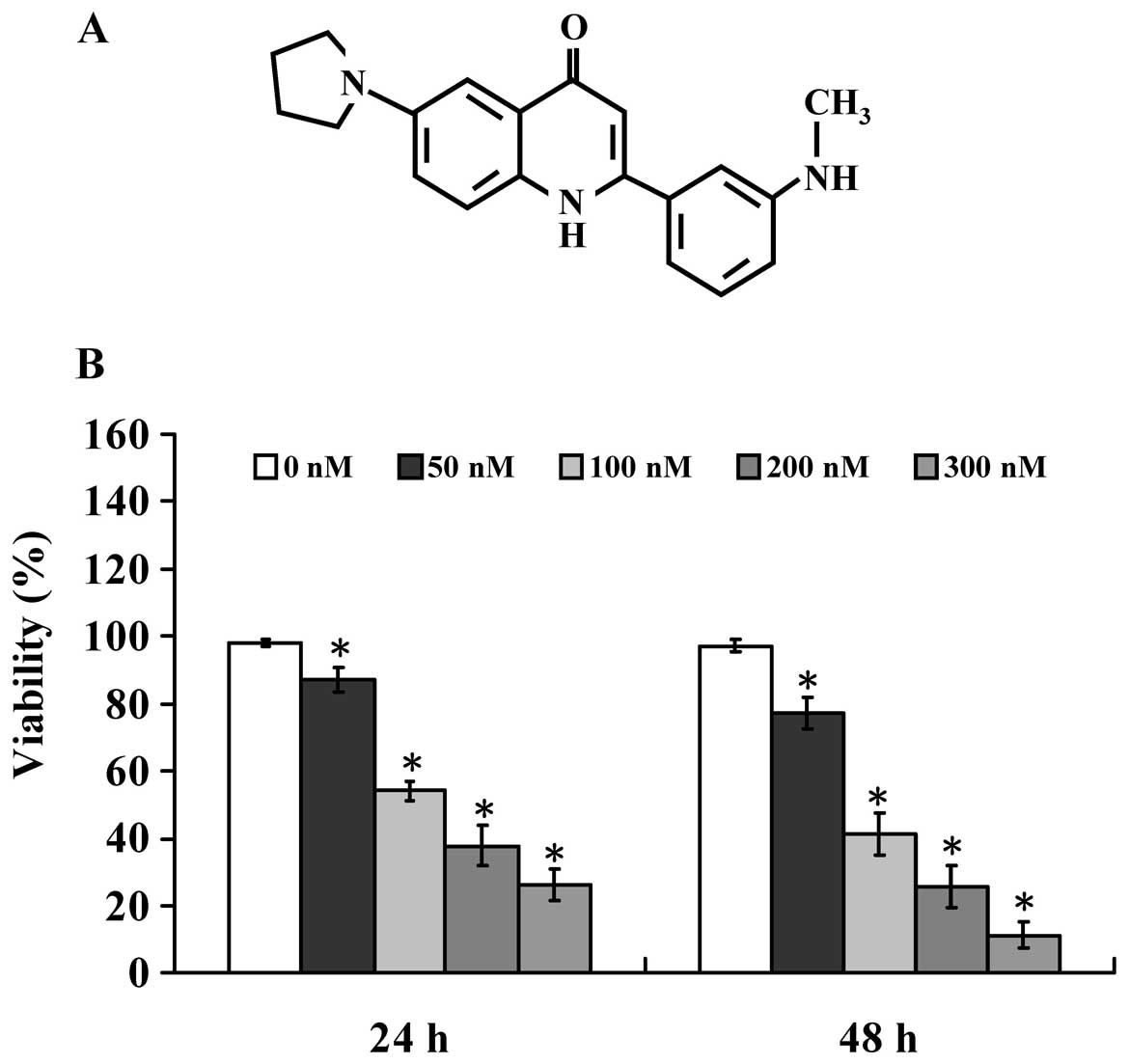
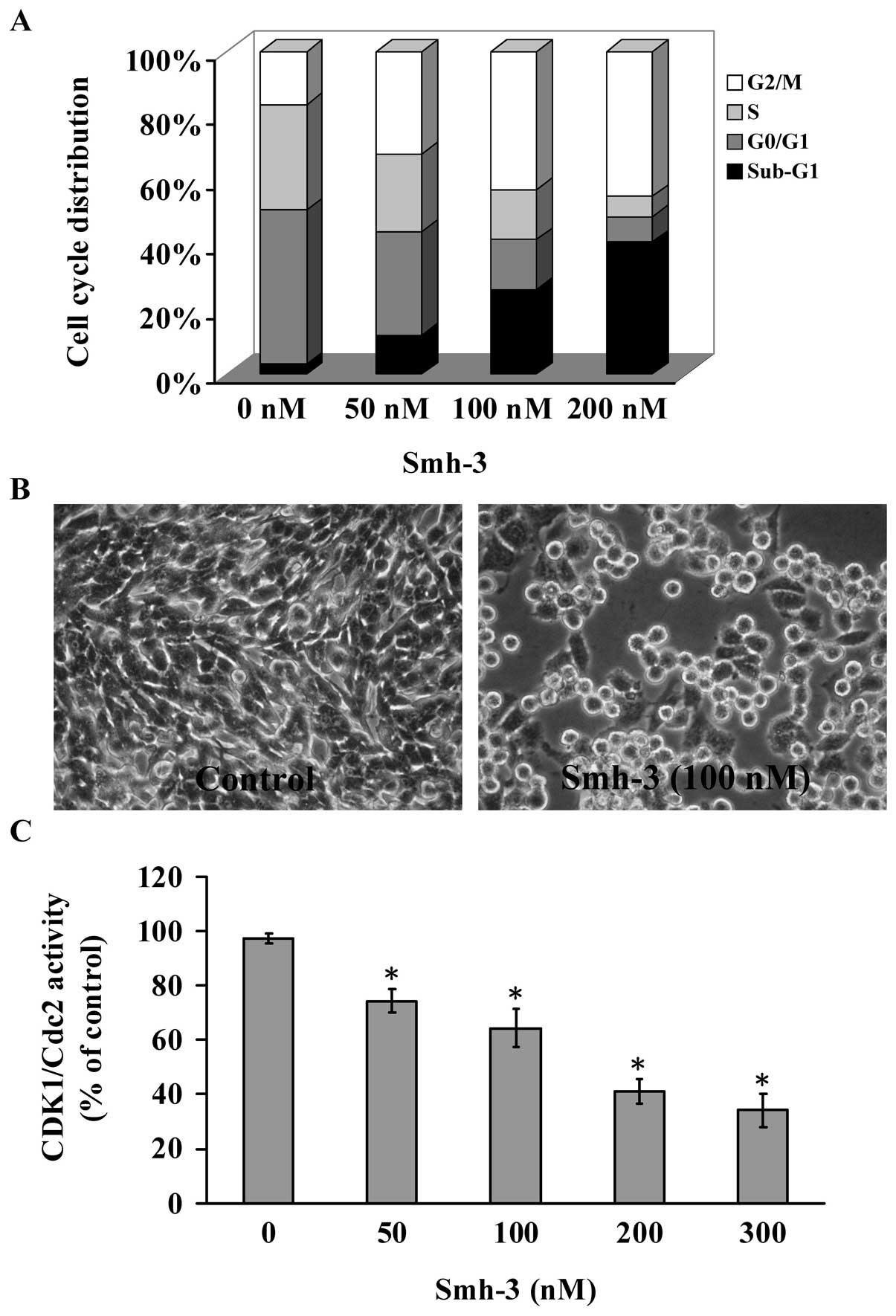
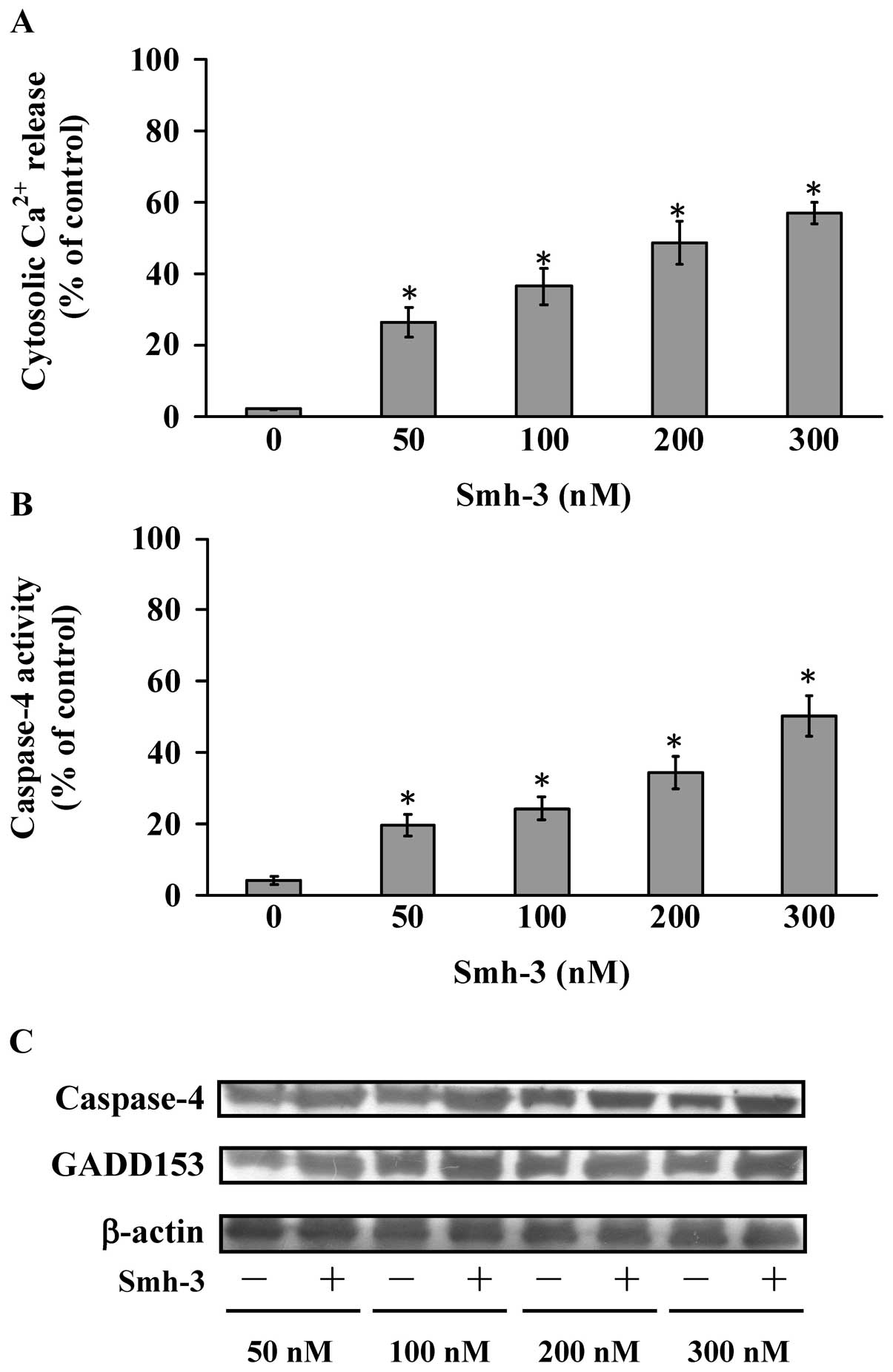
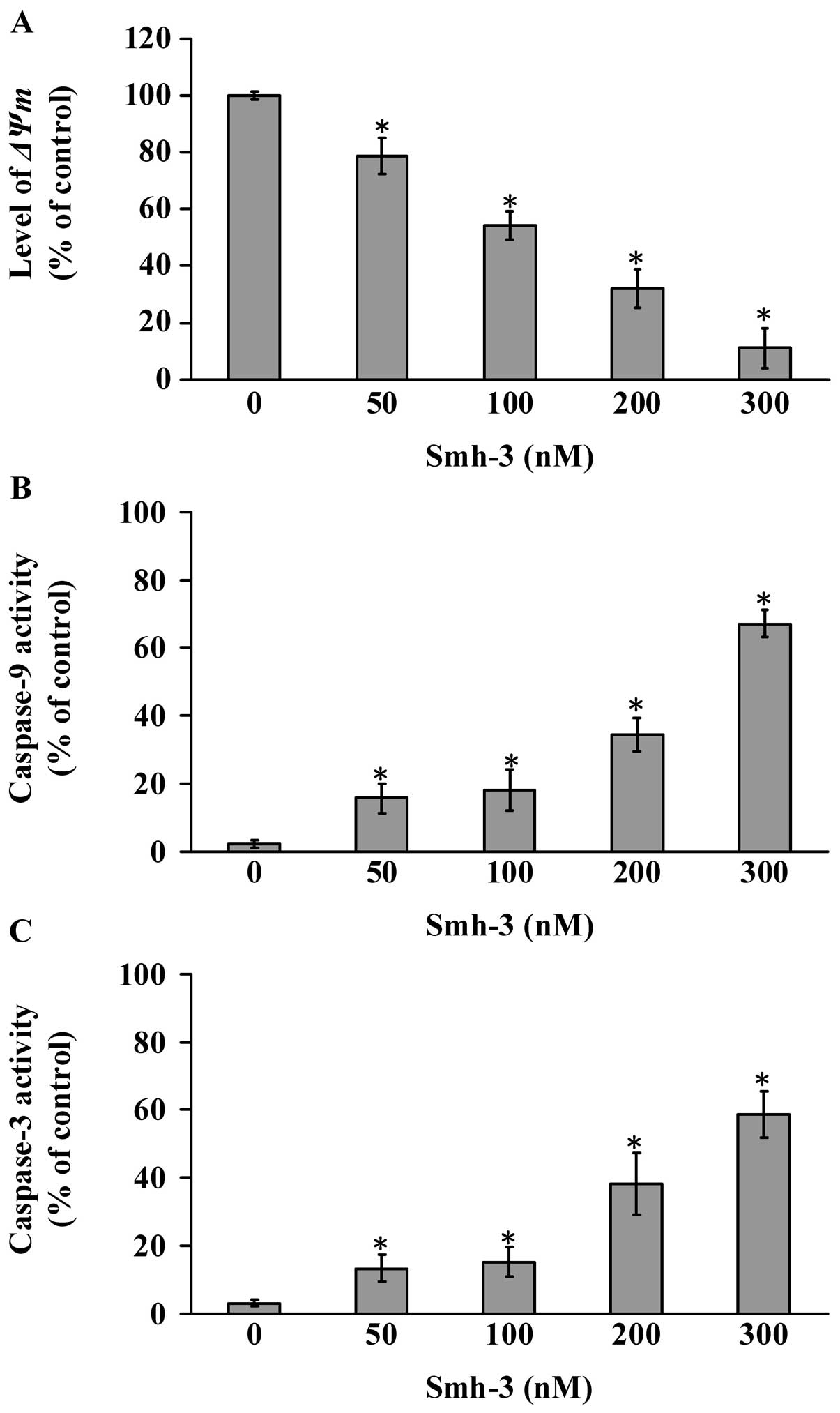
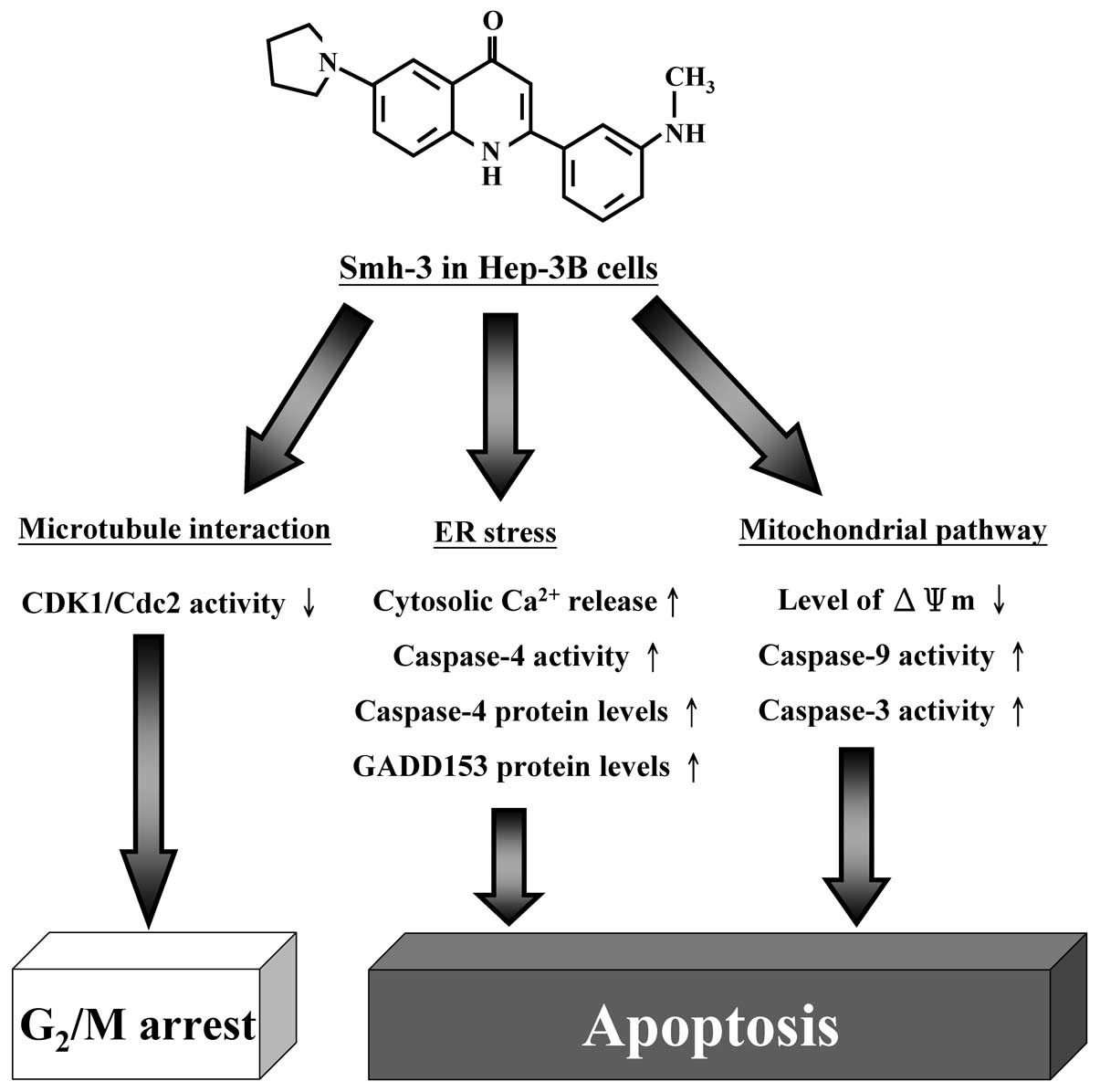
In the present study, we investigated the antitumor effects of Smh-3 on the viability, cell cycle and apoptotic cell death in human hepatocellular carcinoma Hep3B cells in vitro. We also investigated the molecular mechanisms involved in the effects of Smh-3 on human hepatoma Hep3B cells, including the effects on protein and mRNA levels which were determined by western blotting and DNA microarray methods, respectively. The results demonstrated that Smh-3 induced growth inhibition, cell morphological changes and induction of G2/M arrest and apoptosis in Hep3B cells. DNA microarray assay identified numerous differentially expressed genes related to angiogenesis, autophagy, calcium-mediated ER stress signaling, cell adhesion, cell cycle and mitosis, cell migration, cytoskeleton organization, DNA damage and repair, mitochondrial-mediated apoptosis and cell signaling pathways. Furthermore, Smh-3 inhibited CDK1 activity, mitochondrial membrane potential (ΔΨm) and increased the cytosolic Ca2+ release and caspase-4, caspase-9 and caspase-3 activities in Hep3B cells. Western blot analysis demonstrated that Smh-3 increased the protein levels of caspase-4 and GADD153 that may lead to ER stress and consequently apoptosis in Hep3B cells. Taken together, Smh-3 acts against human hepatocellular carcinoma Hep3B cells in vitro through G2/M phase arrest and induction of calcium-mediated ER stress and mitochondrial-dependent apoptotic signaling pathways.
View Figures

Figure 1

Figure 2

Figure 3

Figure 4

Figure 5

View References

1 

Moriguchi M, Takayama T, Higaki T, et al: Early cancer-related death after resection of hepatocellular carcinoma. Surgery. 151:232–237. 2012. View Article : Google Scholar : PubMed/NCBI

2 

Chen TH, Chen CJ, Yen MF, et al: Ultrasound screening and risk factors for death from hepatocellular carcinoma in a high risk group in Taiwan. Int J Cancer. 98:257–261. 2002. View Article : Google Scholar : PubMed/NCBI

3 

Ueda H, Fukuchi H and Tanaka C: Toxicity and efficacy of hepatic arterial infusion chemotherapy for advanced hepatocellular carcinoma (Review). Oncol Lett. 3:259–263. 2012.PubMed/NCBI

4 

Blum HE: Hepatocellular carcinoma: HCC. Hepat Mon. 11:69–70. 2011.

5 

Abou-Alfa GK: New agents in hepatocellular carcinoma. Clin Adv Hematol Oncol. 6:423–424. 2008.

6 

Marquardt JU, Galle PR and Teufel A: Hepatocellular carcinoma: molecular pathogenesis and novel targets for therapy. Dtsch Med Wochenschr. 137:855–860. 2012.(In German).

7 

Hoshida Y, Toffanin S, Lachenmayer A, Villanueva A, Minguez B and Llovet JM: Molecular classification and novel targets in hepatocellular carcinoma: recent advancements. Semin Liver Dis. 30:35–51. 2010. View Article : Google Scholar : PubMed/NCBI

8 

Chai F, Truong-Tran AQ, Ho LH and Zalewski PD: Regulation of caspase activation and apoptosis by cellular zinc fluxes and zinc deprivation: a review. Immunol Cell Biol. 77:272–278. 1999. View Article : Google Scholar : PubMed/NCBI

9 

Crawford ED, Seaman JE, Barber AE II, et al: Conservation of caspase substrates across metazoans suggests hierarchical importance of signaling pathways over specific targets and cleavage site motifs in apoptosis. Cell Death Differ. Aug 24–2012.(Epub ahead of print).

10 

Oyadomari S and Mori M: Roles of CHOP/GADD153 in endoplasmic reticulum stress. Cell Death Differ. 11:381–389. 2004. View Article : Google Scholar : PubMed/NCBI

11 

Nozaki S, Sledge GW Jr and Nakshatri H: Repression of GADD153/CHOP by NF-kappaB: a possible cellular defense against endoplasmic reticulum stress-induced cell death. Oncogene. 20:2178–2185. 2001. View Article : Google Scholar : PubMed/NCBI

12 

McCullough KD, Martindale JL, Klotz LO, Aw TY and Holbrook NJ: Gadd153 sensitizes cells to endoplasmic reticulum stress by down-regulating Bcl2 and perturbing the cellular redox state. Mol Cell Biol. 21:1249–1259. 2001. View Article : Google Scholar : PubMed/NCBI

13 

Hogstrand K, Hejll E, Sander B, Rozell B, Larsson LG and Grandien A: Inhibition of the intrinsic but not the extrinsic apoptosis pathway accelerates and drives MYC-driven tumorigenesis towards acute myeloid leukemia. PLoS One. 7:e313662012. View Article : Google Scholar

14 

Poellinger L and Lendahl U: Modulating Notch signaling by pathway-intrinsic and pathway-extrinsic mechanisms. Curr Opin Genet Dev. 18:449–454. 2008. View Article : Google Scholar : PubMed/NCBI

15 

Harding HP and Ron D: Endoplasmic reticulum stress and the development of diabetes: a review. Diabetes. 51(Suppl 3): S455–S461. 2002. View Article : Google Scholar : PubMed/NCBI

16 

Muhlethaler-Mottet A, Bourloud KB, Auderset K, Joseph JM and Gross N: Drug-mediated sensitization to TRAIL-induced apoptosis in caspase-8-complemented neuroblastoma cells proceeds via activation of intrinsic and extrinsic pathways and caspase-dependent cleavage of XIAP, Bcl-xL and RIP. Oncogene. 23:5415–5425. 2004. View Article : Google Scholar

17 

Chong ZZ, Kang JQ and Maiese K: Erythropoietin fosters both intrinsic and extrinsic neuronal protection through modulation of microglia, Akt1, Bad, and caspase-mediated pathways. Br J Pharmacol. 138:1107–1118. 2003. View Article : Google Scholar

18 

Perrin FE, Boisset G, Lathuiliere A and Kato AC: Cell death pathways differ in several mouse models with motoneurone disease: analysis of pure motoneurone populations at a presymptomatic age. J Neurochem. 98:1959–1972. 2006. View Article : Google Scholar : PubMed/NCBI

19 

Kim MK, Kim HS, Lee IK and Park KG: Endoplasmic reticulum stress and insulin biosynthesis: a review. Exp Diabetes Res. 2012:5094372012.PubMed/NCBI

20 

Gregor MF and Hotamisligil GS: Thematic review series: Adipocyte Biology. Adipocyte stress: the endoplasmic reticulum and metabolic disease. J Lipid Res. 48:1905–1914. 2007. View Article : Google Scholar : PubMed/NCBI

21 

Chakrabarti A, Chen AW and Varner JD: A review of the mammalian unfolded protein response. Biotechnol Bioeng. 108:2777–2793. 2011. View Article : Google Scholar : PubMed/NCBI

22 

Shore GC, Papa FR and Oakes SA: Signaling cell death from the endoplasmic reticulum stress response. Curr Opin Cell Biol. 23:143–149. 2011. View Article : Google Scholar : PubMed/NCBI

23 

Endo H, Murata K, Mukai M, Ishikawa O and Inoue M: Activation of insulin-like growth factor signaling induces apoptotic cell death under prolonged hypoxia by enhancing endoplasmic reticulum stress response. Cancer Res. 67:8095–8103. 2007. View Article : Google Scholar : PubMed/NCBI

24 

Obeng EA and Boise LH: Caspase-12 and caspase-4 are not required for caspase-dependent endoplasmic reticulum stress-induced apoptosis. J Biol Chem. 280:29578–29587. 2005. View Article : Google Scholar : PubMed/NCBI

25 

Wang L, Song R, Shen Y, et al: Targeting sarcoplasmic/endoplasmic reticulum Ca2+-ATPase 2 by curcumin induces ER stress-associated apoptosis for treating human liposarcoma. Mol Cancer Ther. 10:461–471. 2011.PubMed/NCBI

26 

Wu Z, Liang F, Hong B, et al: An endoplasmic reticulum-bound Ca(2+)/Mn(2+) pump, ECA1, supports plant growth and confers tolerance to Mn(2+) stress. Plant Physiol. 130:128–137. 2002.

27 

Lai YY, Huang LJ, Lee KH, et al: Synthesis and biological relationships of 3′,6-substituted 2-phenyl-4-quinolone-3-carboxylic acid derivatives as antimitotic agents. Bioorg Med Chem. 13:265–275. 2005.

28 

Lee HZ, Lin WC, Yeh FT and Wu CH: 2-Phenyl-4-quinolone prevents serotonin-induced increases in endothelial permeability to albumin. Eur J Pharmacol. 354:205–213. 1998. View Article : Google Scholar : PubMed/NCBI

29 

Lee HZ: Inhibitory effect of 2-phenyl-4-quinolone on serotonin-mediated changes in the morphology and permeability of endothelial monolayers. Eur J Pharmacol. 335:245–254. 1997. View Article : Google Scholar : PubMed/NCBI

30 

Wang JP, Hsu MF, Raung SL and Kuo SC: Suppressive effect of 2-phenyl-4-quinolone (YT-1) on hind-paw edema and cutaneous vascular plasma extravasation in mice. Naunyn Schmiedebergs Arch Pharmacol. 349:324–330. 1994.PubMed/NCBI

31 

Huang SM, Yang JS, Tsai SC, et al: The novel synthesized 2-(3-(methylamino)phenyl)-6-(pyrrolidin-1-yl)quinolin-4-one (Smh-3) compound induces G2/M phase arrest and mitochondrial-dependent apoptotic cell death through inhibition of CDK1 and AKT activity in HL-60 human leukemia cells. Int J Oncol. 38:1357–1364. 2011. View Article : Google Scholar

32 

Ni CH, Chen PY, Lu HF, et al: Chrysophanol-induced necrotic-like cell death through an impaired mitochondrial ATP synthesis in Hep3B human liver cancer cells. Arch Pharm Res. 35:887–895. 2012. View Article : Google Scholar

33 

Tsai SC, Yang JS, Peng SF, et al: Bufalin increases sensitivity to AKT/mTOR-induced autophagic cell death in SK-HEP-1 human hepatocellular carcinoma cells. Int J Oncol. 41:1431–1442. 2012.PubMed/NCBI

34 

Hour MJ, Tsai SC, Wu HC, et al: Antitumor effects of the novel quinazolinone MJ-33: inhibition of metastasis through the MAPK, AKT, NF-kappaB and AP-1 signaling pathways in DU145 human prostate cancer cells. Int J Oncol. 41:1513–1519. 2012.

35 

Wu PP, Chung HW, Liu KC, et al: Diallyl sulfide induces cell cycle arrest and apoptosis in HeLa human cervical cancer cells through the p53, caspase- and mitochondria-dependent pathways. Int J Oncol. 38:1605–1613. 2011.

36 

Huang WW, Ko SW, Tsai HY, et al: Cantharidin induces G2/M phase arrest and apoptosis in human colorectal cancer colo 205 cells through inhibition of CDK1 activity and caspase-dependent signaling pathways. Int J Oncol. 38:1067–1073. 2011.

37 

Yaguchi T, Saito M, Yasuda Y and Nishizaki T: Caspase-4 activation in association with decreased adenosine deaminase activity may be a factor for gastric ulcer. Digestion. 81:62–67. 2010. View Article : Google Scholar : PubMed/NCBI

38 

Wu SH, Hang LW, Yang JS, et al: Curcumin induces apoptosis in human non-small cell lung cancer NCI-H460 cells through ER stress and caspase cascade- and mitochondria-dependent pathways. Anticancer Res. 30:2125–2133. 2010.PubMed/NCBI

39 

Huang WW, Chiu YJ, Fan MJ, et al: Kaempferol induced apoptosis via endoplasmic reticulum stress and mitochondria-dependent pathway in human osteosarcoma U-2 OS cells. Mol Nutr Food Res. 54:1585–1595. 2010. View Article : Google Scholar : PubMed/NCBI

40 

Huang WW, Yang JS, Lin MW, et al: Cucurbitacin E induces G(2)/M phase arrest through STAT3/p53/p21 signaling and provokes apoptosis via Fas/CD95 and mitochondria-dependent pathways in human bladder cancer T24 cells. Evid Based Complement Alternat Med. 2012:9527622012. View Article : Google Scholar

41 

Wu RC, Yu CS, Liu KC, et al: Citosol (thiamylal sodium) triggers apoptosis and affects gene expressions of murine leukemia RAW 264.7 cells. Hum Exp Toxicol. 31:771–779. 2012. View Article : Google Scholar : PubMed/NCBI

42 

Lin JP, Yang JS, Chang NW, et al: GADD153 mediates berberine-induced apoptosis in human cervical cancer Ca ski cells. Anticancer Res. 27:3379–3386. 2007.PubMed/NCBI

43 

Lu HF, Hsueh SC, Ho YT, et al: ROS mediates baicalin-induced apoptosis in human promyelocytic leukemia HL-60 cells through the expression of the Gadd153 and mitochondrial-dependent pathway. Anticancer Res. 27:117–125. 2007.

44 

Chambers KT, Unverferth JA, Weber SM, Wek RC, Urano F and Corbett JA: The role of nitric oxide and the unfolded protein response in cytokine-induced beta-cell death. Diabetes. 57:124–132. 2008. View Article : Google Scholar : PubMed/NCBI

45 

Kim R, Emi M, Tanabe K and Murakami S: Role of the unfolded protein response in cell death. Apoptosis. 11:5–13. 2006. View Article : Google Scholar : PubMed/NCBI

46 

Lu CC, Yang JS, Chiang JH, et al: Novel quinazolinone MJ-29 triggers endoplasmic reticulum stress and intrinsic apoptosis in murine leukemia WEHI-3 cells and inhibits leukemic mice. PLoS One. 7:e368312012. View Article : Google Scholar : PubMed/NCBI

47 

Schattenberg JM, Schuchmann M and Galle PR: Cell death and hepatocarcinogenesis: dysregulation of apoptosis signaling pathways. J Gastroenterol Hepatol. 26(Suppl 1): 213–219. 2011. View Article : Google Scholar : PubMed/NCBI

48 

Rosello A, Warnes G and Meier UC: Cell death pathways and autophagy in the central nervous system and its involvement in neurodegeneration, immunity and central nervous system infection: to die or not to die - that is the question. Clin Exp Immunol. 168:52–57. 2012. View Article : Google Scholar : PubMed/NCBI

Related Articles

  • Abstract
  • View
  • Download
  • Twitter
Copy and paste a formatted citation
Spandidos Publications style
Liu C, Yang J, Huang S, Chiang J, Chen M, Huang L, Ha H, Fushiya S and Kuo S: Smh-3 induces G2/M arrest and apoptosis through calcium‑mediated endoplasmic reticulum stress and mitochondrial signaling in human hepatocellular carcinoma Hep3B cells. Oncol Rep 29: 751-762, 2013.
APA
Liu, C., Yang, J., Huang, S., Chiang, J., Chen, M., Huang, L. ... Kuo, S. (2013). Smh-3 induces G2/M arrest and apoptosis through calcium‑mediated endoplasmic reticulum stress and mitochondrial signaling in human hepatocellular carcinoma Hep3B cells. Oncology Reports, 29, 751-762. https://doi.org/10.3892/or.2012.2166
MLA
Liu, C., Yang, J., Huang, S., Chiang, J., Chen, M., Huang, L., Ha, H., Fushiya, S., Kuo, S."Smh-3 induces G2/M arrest and apoptosis through calcium‑mediated endoplasmic reticulum stress and mitochondrial signaling in human hepatocellular carcinoma Hep3B cells". Oncology Reports 29.2 (2013): 751-762.
Chicago
Liu, C., Yang, J., Huang, S., Chiang, J., Chen, M., Huang, L., Ha, H., Fushiya, S., Kuo, S."Smh-3 induces G2/M arrest and apoptosis through calcium‑mediated endoplasmic reticulum stress and mitochondrial signaling in human hepatocellular carcinoma Hep3B cells". Oncology Reports 29, no. 2 (2013): 751-762. https://doi.org/10.3892/or.2012.2166
Copy and paste a formatted citation
x
Spandidos Publications style
Liu C, Yang J, Huang S, Chiang J, Chen M, Huang L, Ha H, Fushiya S and Kuo S: Smh-3 induces G2/M arrest and apoptosis through calcium‑mediated endoplasmic reticulum stress and mitochondrial signaling in human hepatocellular carcinoma Hep3B cells. Oncol Rep 29: 751-762, 2013.
APA
Liu, C., Yang, J., Huang, S., Chiang, J., Chen, M., Huang, L. ... Kuo, S. (2013). Smh-3 induces G2/M arrest and apoptosis through calcium‑mediated endoplasmic reticulum stress and mitochondrial signaling in human hepatocellular carcinoma Hep3B cells. Oncology Reports, 29, 751-762. https://doi.org/10.3892/or.2012.2166
MLA
Liu, C., Yang, J., Huang, S., Chiang, J., Chen, M., Huang, L., Ha, H., Fushiya, S., Kuo, S."Smh-3 induces G2/M arrest and apoptosis through calcium‑mediated endoplasmic reticulum stress and mitochondrial signaling in human hepatocellular carcinoma Hep3B cells". Oncology Reports 29.2 (2013): 751-762.
Chicago
Liu, C., Yang, J., Huang, S., Chiang, J., Chen, M., Huang, L., Ha, H., Fushiya, S., Kuo, S."Smh-3 induces G2/M arrest and apoptosis through calcium‑mediated endoplasmic reticulum stress and mitochondrial signaling in human hepatocellular carcinoma Hep3B cells". Oncology Reports 29, no. 2 (2013): 751-762. https://doi.org/10.3892/or.2012.2166
Follow us
  • Twitter
  • LinkedIn
  • Facebook
About
  • Spandidos Publications
  • Careers
  • Cookie Policy
  • Privacy Policy
How can we help?
  • Help
  • Live Chat
  • Contact
  • Email to our Support Team