Spandidos Publications Logo
  • About
    • About Spandidos
    • Aims and Scopes
    • Abstracting and Indexing
    • Editorial Policies
    • Reprints and Permissions
    • Job Opportunities
    • Terms and Conditions
    • Contact
  • Journals
    • All Journals
    • Oncology Letters
      • Oncology Letters
      • Information for Authors
      • Editorial Policies
      • Editorial Board
      • Aims and Scope
      • Abstracting and Indexing
      • Bibliographic Information
      • Archive
    • International Journal of Oncology
      • International Journal of Oncology
      • Information for Authors
      • Editorial Policies
      • Editorial Board
      • Aims and Scope
      • Abstracting and Indexing
      • Bibliographic Information
      • Archive
    • Molecular and Clinical Oncology
      • Molecular and Clinical Oncology
      • Information for Authors
      • Editorial Policies
      • Editorial Board
      • Aims and Scope
      • Abstracting and Indexing
      • Bibliographic Information
      • Archive
    • Experimental and Therapeutic Medicine
      • Experimental and Therapeutic Medicine
      • Information for Authors
      • Editorial Policies
      • Editorial Board
      • Aims and Scope
      • Abstracting and Indexing
      • Bibliographic Information
      • Archive
    • International Journal of Molecular Medicine
      • International Journal of Molecular Medicine
      • Information for Authors
      • Editorial Policies
      • Editorial Board
      • Aims and Scope
      • Abstracting and Indexing
      • Bibliographic Information
      • Archive
    • Biomedical Reports
      • Biomedical Reports
      • Information for Authors
      • Editorial Policies
      • Editorial Board
      • Aims and Scope
      • Abstracting and Indexing
      • Bibliographic Information
      • Archive
    • Oncology Reports
      • Oncology Reports
      • Information for Authors
      • Editorial Policies
      • Editorial Board
      • Aims and Scope
      • Abstracting and Indexing
      • Bibliographic Information
      • Archive
    • Molecular Medicine Reports
      • Molecular Medicine Reports
      • Information for Authors
      • Editorial Policies
      • Editorial Board
      • Aims and Scope
      • Abstracting and Indexing
      • Bibliographic Information
      • Archive
    • World Academy of Sciences Journal
      • World Academy of Sciences Journal
      • Information for Authors
      • Editorial Policies
      • Editorial Board
      • Aims and Scope
      • Abstracting and Indexing
      • Bibliographic Information
      • Archive
    • International Journal of Functional Nutrition
      • International Journal of Functional Nutrition
      • Information for Authors
      • Editorial Policies
      • Editorial Board
      • Aims and Scope
      • Abstracting and Indexing
      • Bibliographic Information
      • Archive
    • International Journal of Epigenetics
      • International Journal of Epigenetics
      • Information for Authors
      • Editorial Policies
      • Editorial Board
      • Aims and Scope
      • Abstracting and Indexing
      • Bibliographic Information
      • Archive
    • Medicine International
      • Medicine International
      • Information for Authors
      • Editorial Policies
      • Editorial Board
      • Aims and Scope
      • Abstracting and Indexing
      • Bibliographic Information
      • Archive
  • Articles
  • Information
    • Information for Authors
    • Information for Reviewers
    • Information for Librarians
    • Information for Advertisers
    • Conferences
  • Language Editing
Spandidos Publications Logo
  • About
    • About Spandidos
    • Aims and Scopes
    • Abstracting and Indexing
    • Editorial Policies
    • Reprints and Permissions
    • Job Opportunities
    • Terms and Conditions
    • Contact
  • Journals
    • All Journals
    • Biomedical Reports
      • Information for Authors
      • Editorial Policies
      • Editorial Board
      • Aims and Scope
      • Abstracting and Indexing
      • Bibliographic Information
      • Archive
    • Experimental and Therapeutic Medicine
      • Information for Authors
      • Editorial Policies
      • Editorial Board
      • Aims and Scope
      • Abstracting and Indexing
      • Bibliographic Information
      • Archive
    • International Journal of Epigenetics
      • Information for Authors
      • Editorial Policies
      • Editorial Board
      • Aims and Scope
      • Abstracting and Indexing
      • Bibliographic Information
      • Archive
    • International Journal of Functional Nutrition
      • Information for Authors
      • Editorial Policies
      • Editorial Board
      • Aims and Scope
      • Abstracting and Indexing
      • Bibliographic Information
      • Archive
    • International Journal of Molecular Medicine
      • Information for Authors
      • Editorial Policies
      • Editorial Board
      • Aims and Scope
      • Abstracting and Indexing
      • Bibliographic Information
      • Archive
    • International Journal of Oncology
      • Information for Authors
      • Editorial Policies
      • Editorial Board
      • Aims and Scope
      • Abstracting and Indexing
      • Bibliographic Information
      • Archive
    • Medicine International
      • Information for Authors
      • Editorial Policies
      • Editorial Board
      • Aims and Scope
      • Abstracting and Indexing
      • Bibliographic Information
      • Archive
    • Molecular and Clinical Oncology
      • Information for Authors
      • Editorial Policies
      • Editorial Board
      • Aims and Scope
      • Abstracting and Indexing
      • Bibliographic Information
      • Archive
    • Molecular Medicine Reports
      • Information for Authors
      • Editorial Policies
      • Editorial Board
      • Aims and Scope
      • Abstracting and Indexing
      • Bibliographic Information
      • Archive
    • Oncology Letters
      • Information for Authors
      • Editorial Policies
      • Editorial Board
      • Aims and Scope
      • Abstracting and Indexing
      • Bibliographic Information
      • Archive
    • Oncology Reports
      • Information for Authors
      • Editorial Policies
      • Editorial Board
      • Aims and Scope
      • Abstracting and Indexing
      • Bibliographic Information
      • Archive
    • World Academy of Sciences Journal
      • Information for Authors
      • Editorial Policies
      • Editorial Board
      • Aims and Scope
      • Abstracting and Indexing
      • Bibliographic Information
      • Archive
  • Articles
  • Information
    • For Authors
    • For Reviewers
    • For Librarians
    • For Advertisers
    • Conferences
  • Language Editing
Login Register Submit
  • This site uses cookies
  • You can change your cookie settings at any time by following the instructions in our Cookie Policy. To find out more, you may read our Privacy Policy.

    I agree
Search articles by DOI, keyword, author or affiliation
Search
Advanced Search
presentation
Oncology Reports
Join Editorial Board Propose a Special Issue
Print ISSN: 1021-335X Online ISSN: 1791-2431
Journal Cover
October-2020 Volume 44 Issue 4

Full Size Image

Sign up for eToc alerts
Recommend to Library

Journals

International Journal of Molecular Medicine

International Journal of Molecular Medicine

International Journal of Molecular Medicine is an international journal devoted to molecular mechanisms of human disease.

International Journal of Oncology

International Journal of Oncology

International Journal of Oncology is an international journal devoted to oncology research and cancer treatment.

Molecular Medicine Reports

Molecular Medicine Reports

Covers molecular medicine topics such as pharmacology, pathology, genetics, neuroscience, infectious diseases, molecular cardiology, and molecular surgery.

Oncology Reports

Oncology Reports

Oncology Reports is an international journal devoted to fundamental and applied research in Oncology.

Experimental and Therapeutic Medicine

Experimental and Therapeutic Medicine

Experimental and Therapeutic Medicine is an international journal devoted to laboratory and clinical medicine.

Oncology Letters

Oncology Letters

Oncology Letters is an international journal devoted to Experimental and Clinical Oncology.

Biomedical Reports

Biomedical Reports

Explores a wide range of biological and medical fields, including pharmacology, genetics, microbiology, neuroscience, and molecular cardiology.

Molecular and Clinical Oncology

Molecular and Clinical Oncology

International journal addressing all aspects of oncology research, from tumorigenesis and oncogenes to chemotherapy and metastasis.

World Academy of Sciences Journal

World Academy of Sciences Journal

Multidisciplinary open-access journal spanning biochemistry, genetics, neuroscience, environmental health, and synthetic biology.

International Journal of Functional Nutrition

International Journal of Functional Nutrition

Open-access journal combining biochemistry, pharmacology, immunology, and genetics to advance health through functional nutrition.

International Journal of Epigenetics

International Journal of Epigenetics

Publishes open-access research on using epigenetics to advance understanding and treatment of human disease.

Medicine International

Medicine International

An International Open Access Journal Devoted to General Medicine.

Journal Cover
October-2020 Volume 44 Issue 4

Full Size Image

Sign up for eToc alerts
Recommend to Library

  • Article
  • Citations
    • Cite This Article
    • Download Citation
    • Create Citation Alert
    • Remove Citation Alert
    • Cited By
  • Similar Articles
    • Related Articles (in Spandidos Publications)
    • Similar Articles (Google Scholar)
    • Similar Articles (PubMed)
  • Download PDF
  • Download XML
  • View XML
Article

CTLA‑4 blockade combined with 5‑aza‑2'‑deoxycytidine enhances the killing effect of MAGE‑A family common antigen peptide‑specific cytotoxic T cells on breast cancer

  • Authors:
    • Weijing Li
    • Meixiang Sang
    • Xiaoguang Hao
    • Yunyan Wu
    • Baoen Shan
  • View Affiliations / Copyright

    Affiliations: Department of Anesthesiology, The Fourth Hospital of Hebei Medical University, Shijiazhuang, Hebei 050000, P.R. China, Tumor Research Institute, The Fourth Hospital of Hebei Medical University, Shijiazhuang, Hebei 050000, P.R. China, Department of Radiology, The Fourth Hospital of Hebei Medical University, Shijiazhuang, Hebei 050000, P.R. China
  • Pages: 1758-1770
    |
    Published online on: July 21, 2020
       https://doi.org/10.3892/or.2020.7701
  • Expand metrics +
Metrics: Total Views: 0 (Spandidos Publications: | PMC Statistics: )
Metrics: Total PDF Downloads: 0 (Spandidos Publications: | PMC Statistics: )
Cited By (CrossRef): 0 citations Loading Articles...

This article is mentioned in:


Abstract

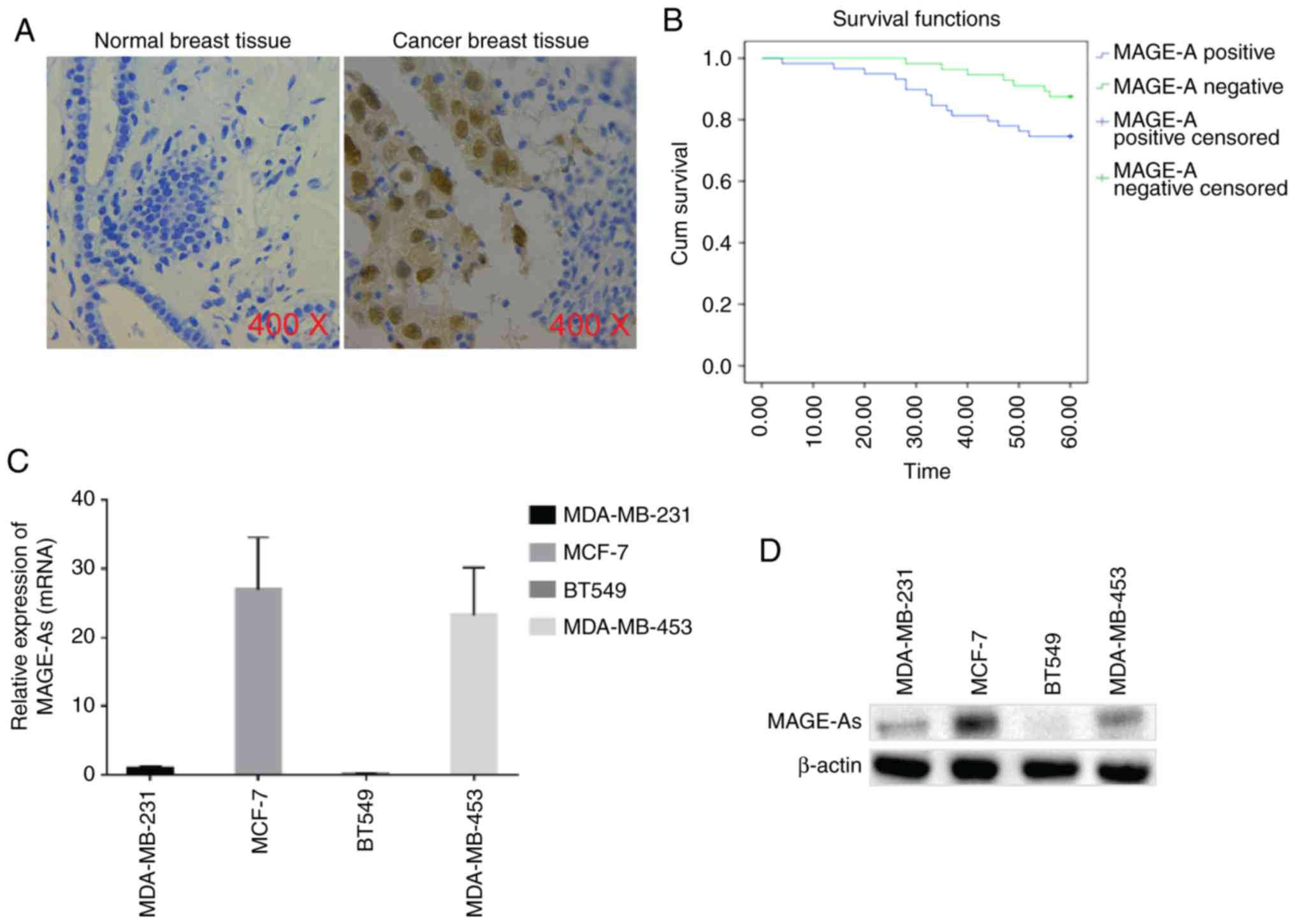
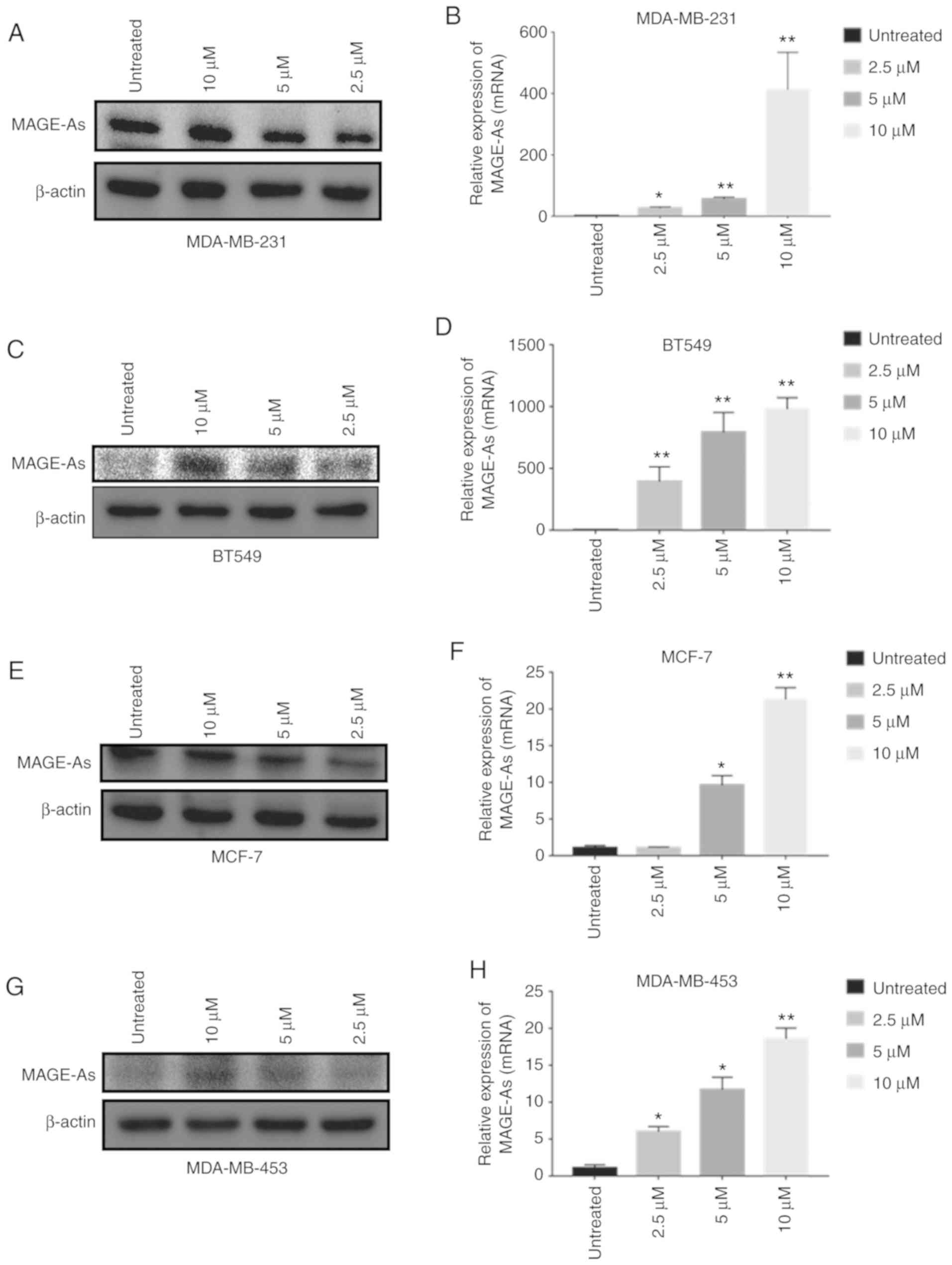
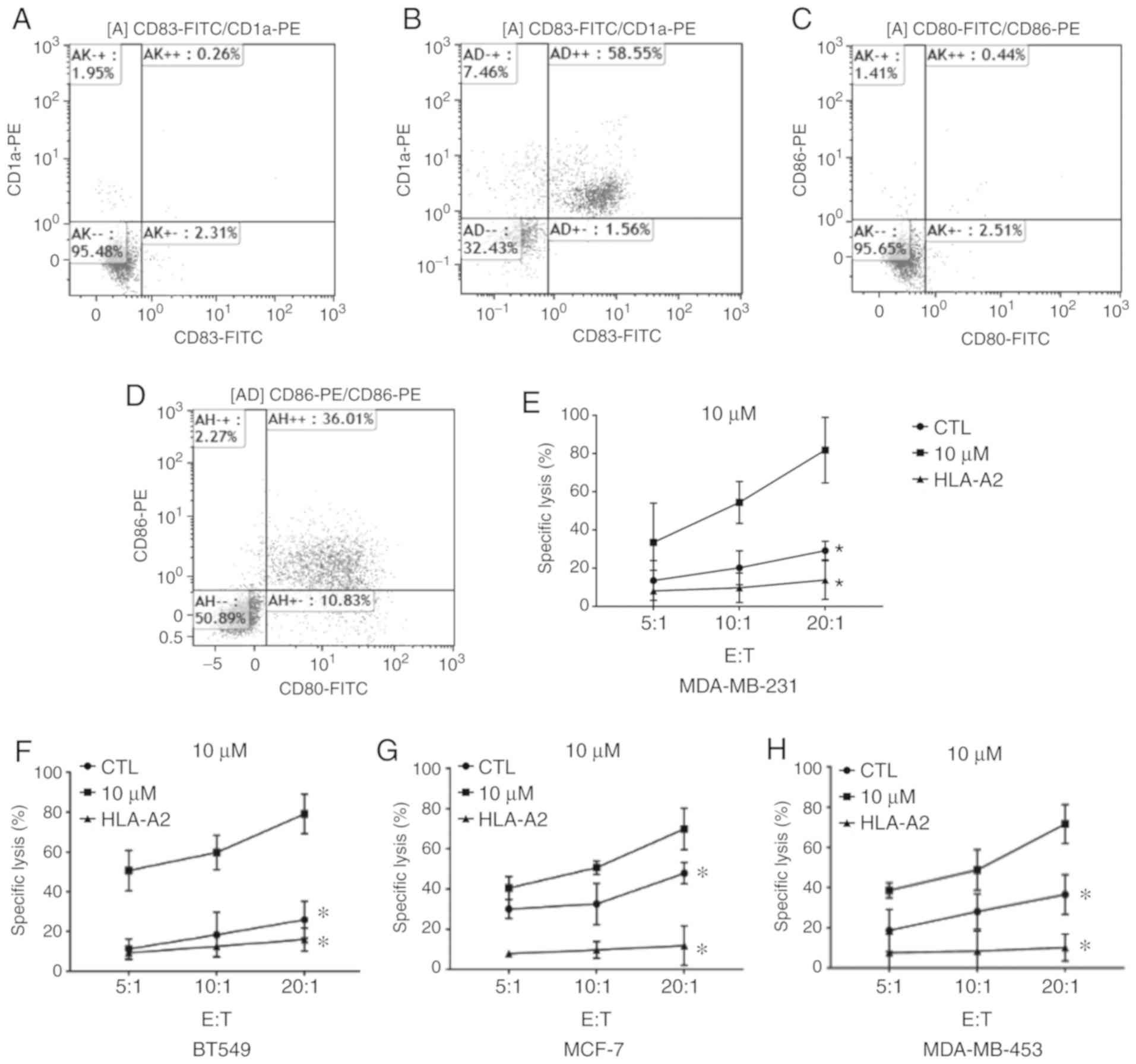
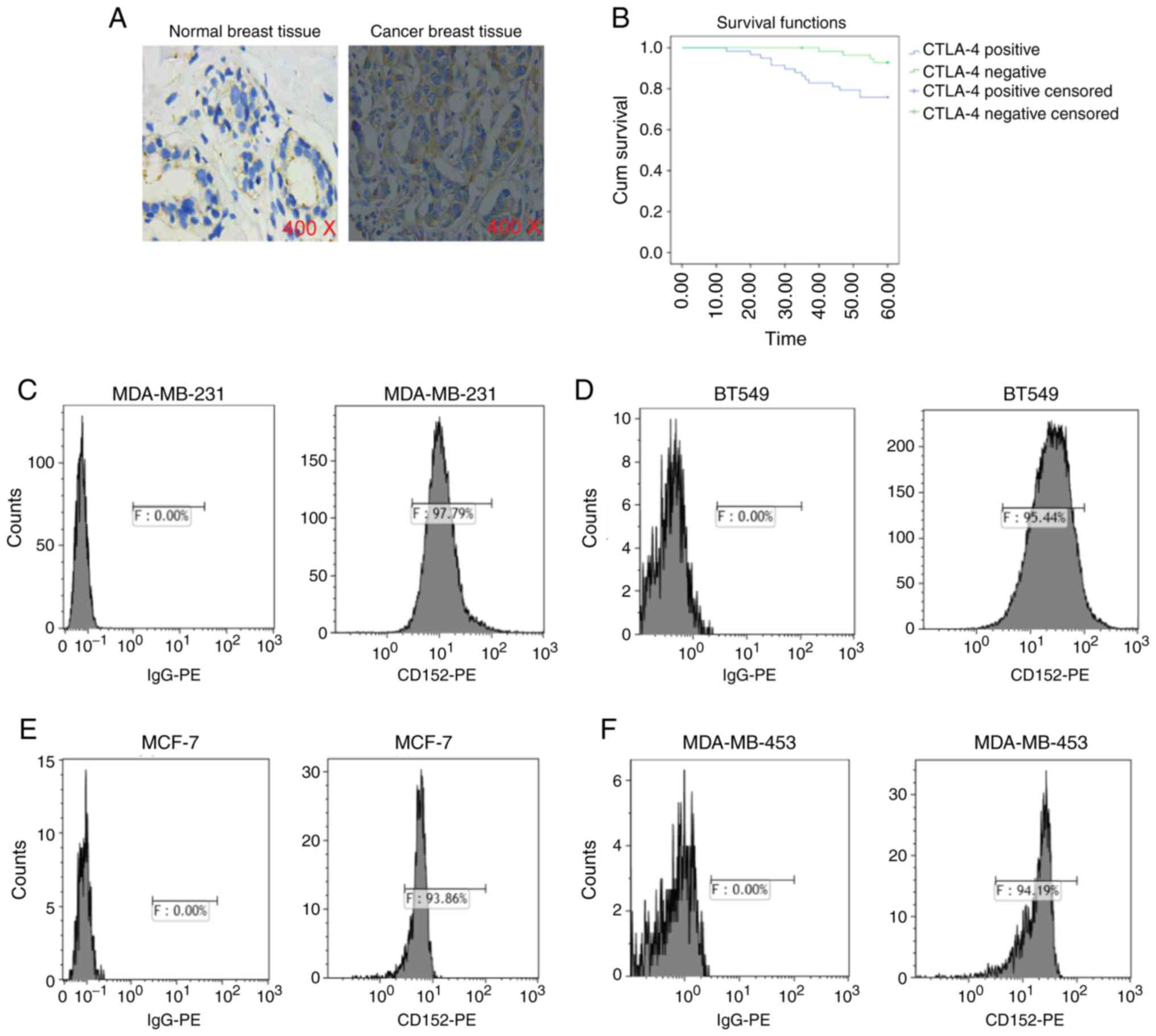
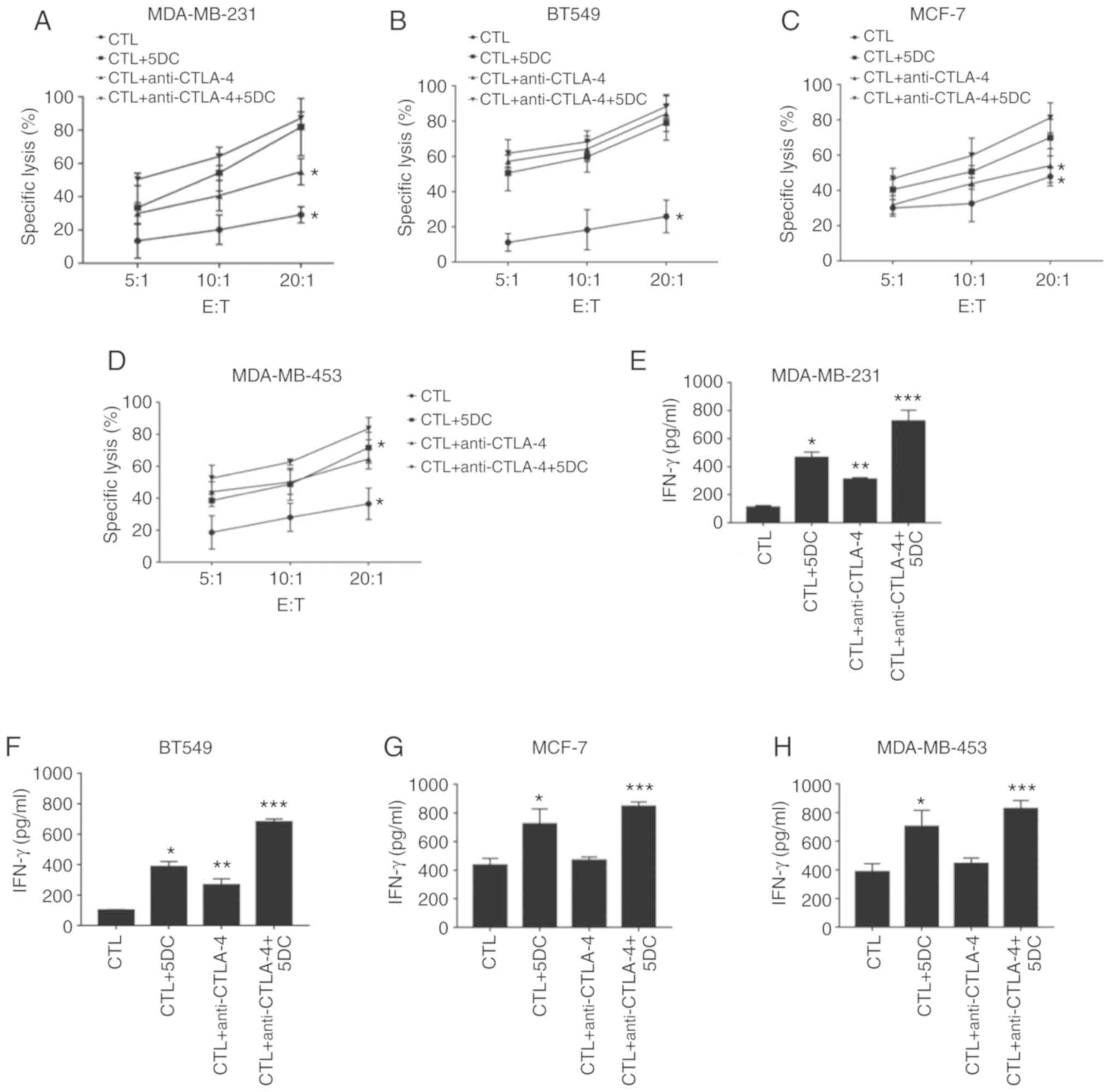
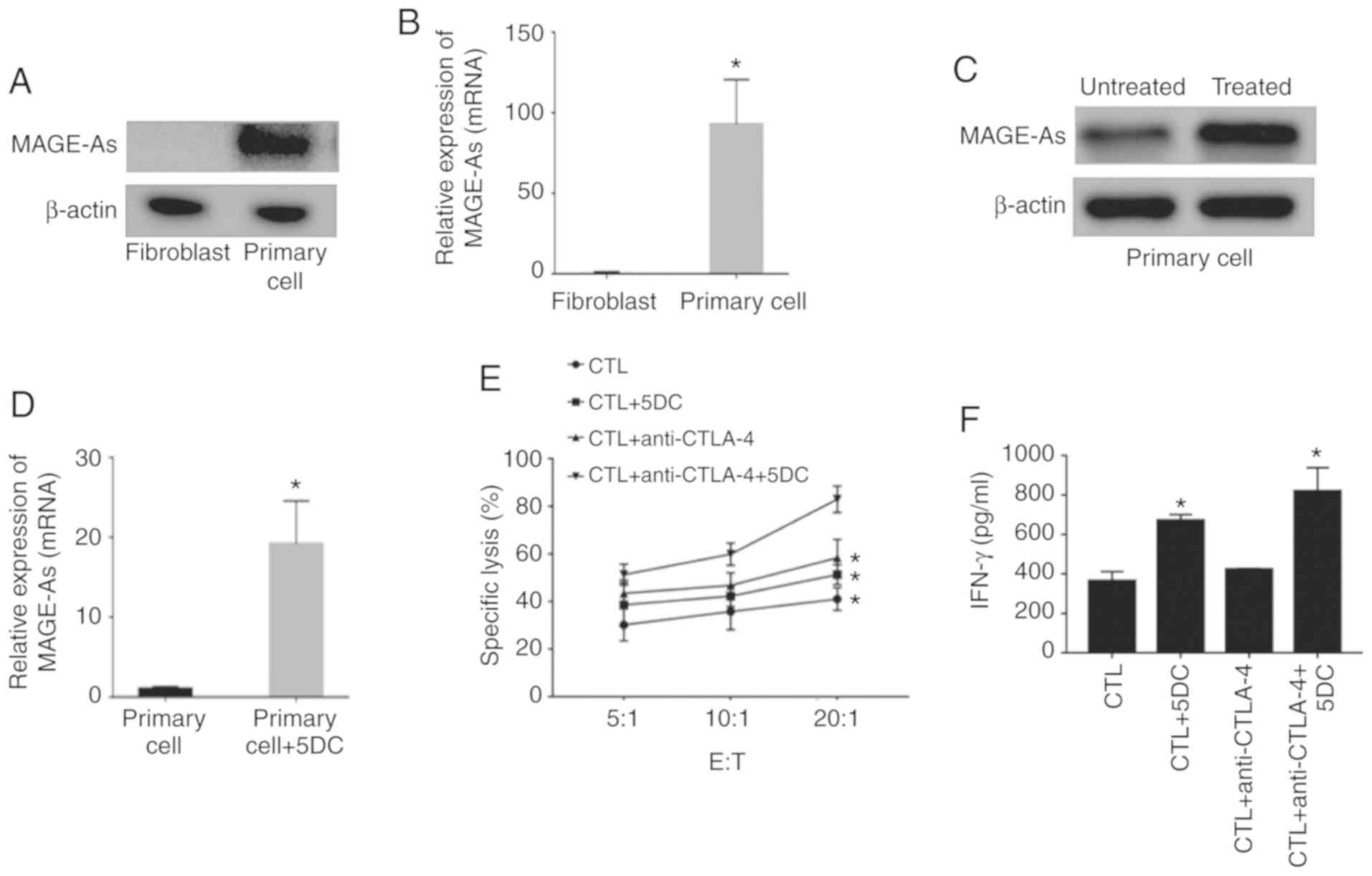
Breast cancer is the leading cause of cancer‑­associated deaths in women. Combination immunotherapy attracts great interest as a treatment for breast cancer. However, there are no studies on the use of cytotoxic T‑lymphocyte antigen 4 (CTLA‑4) monoclonal antibody in combination with the melanoma‑associated antigen A family (MAGE‑As) co‑antigen peptide (p248V9) for treating breast cancer, which should be explored. To this aim, in the present study, the samples of 115 patients with breast cancer were collected, and MAGE‑As and CTLA‑4 levels in breast cancer and adjacent normal tissues were assessed by immunohistochemical staining. The effect of 5‑aza‑2'‑deoxycytidine (5DC) on the expression of MAGE‑As in breast cancer cell lines was assessed by reverse transcription‑quantitative PCR and western blot assay. Cytotoxic T cells (CTLs) were induced by MAGE‑As co‑antigen peptide. The specific lytic rate and IFN‑γ level were examined by CCK‑8 assay and ELISA, respectively. It was found that MAGE‑As were highly expressed in breast cancer tissues. 5DC treatment promoted the expression of MAGE‑As in breast cancer cells. The upregulation of the expression of MAGE‑As specifically enhanced the ability of CTLs to kill breast cancer cells. CTLA‑4 was highly expressed in breast cancer tissues and cells, and patients with breast cancer exhibiting high expression of CTLA‑4 had low overall survival. CTLA‑4 promoted the lytic efficiency of CTLs in breast cancer cells, and the combination of an anti‑CTLA‑4 antibody and 10 µM 5DC exhibited the highest cell lysis ability of CTLs. The present study demonstrated that MAGE‑As co‑antigen peptide‑specific CTLs in combination with an anti‑CTLA‑4 monoclonal antibody and 5DC, have potent tumor cell‑killing effects. It provides a novel theory for the development of breast cancer therapies.
View Figures

Figure 1

Figure 2

Figure 3

Figure 4

Figure 5

Figure 6

View References

1 

Torre LA, Bray F, Siegel RL, Ferlay J, Lortet-Tieulent J and Jemal A: Global cancer statistics, 2012. CA Cancer J Clin. 65:87–108. 2015. View Article : Google Scholar : PubMed/NCBI

2 

Zeng H, Zheng R, Zhang S, Zou X and Chen W: Female breast cancer statistics of 2010 in China: Estimates based on data from 145 population-based cancer registries. J Thorac Dis. 6:466–470. 2014.PubMed/NCBI

3 

Kakimi K, Karasaki T, Matsushita H and Sugie T: Advances in personalized cancer immunotherapy. Breast Cancer. 24:16–24. 2017. View Article : Google Scholar : PubMed/NCBI

4 

Yang Y: Cancer immunotherapy: Harnessing the immune system to battle cancer. J Clin Invest. 125:3335–3337. 2015. View Article : Google Scholar : PubMed/NCBI

5 

Milani A, Sangiolo D, Aglietta M and Valabrega G: Recent advances in the development of breast cancer vaccines. Breast Cancer (Dove Med Press). 6:159–168. 2014.PubMed/NCBI

6 

van der Bruggen P, Traversari C, Chomez P, Lurquin C, De Plaen E, Van den Eynde B, Knuth A and Boon T: A gene encoding an antigen recognized by cytolytic T lymphocytes on a human melanoma. Science. 254:1643–1647. 1991. View Article : Google Scholar : PubMed/NCBI

7 

Schooten E, Di Maggio A, van Bergen En Henegouwen PMP and Kijanka MM: MAGE-A antigens as targets for cancer immunotherapy. Cancer Treat Rev. 67:54–62. 2018. View Article : Google Scholar : PubMed/NCBI

8 

Finn OJ: Human tumor antigens yesterday, today, and tomorrow. Cancer Immunol Res. 5:347–354. 2017. View Article : Google Scholar : PubMed/NCBI

9 

Adams S, Greeder L, Reich E, Shao Y, Fosina D, Hanson N, Tassello J, Singh B, Spagnoli GC, Demaria S and Jungbluth AA: Expression of cancer testis antigens in human BRCA-associated breast cancers: potential targets for immunoprevention? Cancer Immunol Immunother. 60:999–1007. View Article : Google Scholar : PubMed/NCBI

10 

Otte M, Zafrakas M, Riethdorf L, Pichlmeier U, Löning T, Jänicke F and Pantel K: MAGE-A gene expression pattern in primary breast cancer. Cancer Res. 61:6682–6687. 2001.PubMed/NCBI

11 

Hou SY, Sang MX, Geng CZ, Liu WH, Lü WH, Xu YY and Shan BE: Expressions of MAGE-A9 and MAGE-A11 in breast cancer and their expression mechanism. Arch Med Res. 45:44–51. 2014. View Article : Google Scholar : PubMed/NCBI

12 

Graff-Dubois S, Faure O, Gross DA, Alves P, Scardino A, Chouaib S, Lemonnier FA and Kosmatopoulos K: Generation of CTL recognizing an HLA-A*0201-restricted epitope shared by MAGE-A1, -A2, -A3, -A4, -A6, -A10, and -A12 tumor antigens: Implication in a broad-spectrum tumor immunotherapy. J Immunol. 169:575–580. 2002. View Article : Google Scholar : PubMed/NCBI

13 

Garrido F, Aptsiauri N, Doorduijn EM, Garcia Lora AM and van Hall T: The urgent need to recover MHC class I in cancers for effective immunotherapy. Curr Opin Immunol. 39:44–51. 2016. View Article : Google Scholar : PubMed/NCBI

14 

Villarreal DO, Chin D, Smith MA, Luistro LL and Snyder LA: Combination GITR targeting/PD-1 blockade with vaccination drives robust antigen-specific antitumor immunity. Oncotarget. 8:39117–39130. 2017. View Article : Google Scholar : PubMed/NCBI

15 

Davila E, Kennedy R and Celis E: Generation of antitumor immunity by cytotoxic T lymphocyte epitope peptide vaccination, CpG-oligodeoxynucleotide adjuvant, and CTLA-4 blockade. Cancer Res. 63:3281–3288. 2003.PubMed/NCBI

16 

Chen X, Shao Q, Hao S, Zhao Z, Wang Y, Guo X, He Y, Gao W and Mao H: CTLA-4 positive breast cancer cells suppress dendritic cells maturation and function. Oncotarget. 8:13703–13715. 2017. View Article : Google Scholar : PubMed/NCBI

17 

Emens LA: Breast cancer immunotherapy: Facts and hopes. Clin Cancer Res. 24:511–520. 2018. View Article : Google Scholar : PubMed/NCBI

18 

Chomez P, De Backer O, Bertrand M, De Plaen E, Boon T and Lucas S: An overview of the MAGE gene family with the identification of all human members of the family. Cancer Res. 61:5544–5551. 2001.PubMed/NCBI

19 

De Plaen E, Arden K, Traversari C, Gaforio JJ, Szikora JP, De Smet C, Brasseur F, van der Bruggen P, Lethé B, Lurquin C, et al: Structure, chromosomal localization, and expression of 12 genes of the MAGE family. Immunogenetics. 40:360–369. 1994. View Article : Google Scholar : PubMed/NCBI

20 

Simpson AJ, Caballero OL, Jungbluth A, Chen YT and Old LJ: Cancer/testis antigens, gametogenesis and cancer. Nat Rev Cancer. 5:615–625. 2005. View Article : Google Scholar : PubMed/NCBI

21 

Sang M, Wang L, Ding C, Zhou X, Wang B, Wang L, Lian Y and Shan B: Melanoma-associated antigen genes-an update. Cancer Lett. 302:85–90. 2011. View Article : Google Scholar : PubMed/NCBI

22 

Scanlan MJ, Gure AO, Jungbluth AA, Old LJ and Chen YT: Cancer/testis antigens: An expanding family of targets for cancer immunotherapy. Immunol Rev. 188:22–32. 2002. View Article : Google Scholar : PubMed/NCBI

23 

Ayyoub M, Scarlata CM, Hamai A, Pignon P and Valmori D: Expression of MAGE-A3/6 in primary breast cancer is associated with hormone receptor negative status, high histologic grade, and poor survival. J Immunother. 37:73–76. 2014. View Article : Google Scholar : PubMed/NCBI

24 

Yang F, Zhou X, Miao X, Zhang T, Hang X, Tie R, Liu N, Tian F, Wang F and Yuan J: MAGEC2, an epithelial-mesenchymal transition inducer, is associated with breast cancer metastasis. Breast Cancer Res Treat. 145:23–32. 2014. View Article : Google Scholar : PubMed/NCBI

25 

Abd-Elsalam EA and Ismaeil NA: Melanoma-associated antigen genes: A new trend to predict the prognosis of breast cancer patients. Med Oncol. 31:2852014. View Article : Google Scholar : PubMed/NCBI

26 

Moreno-Bost A, Szmania S, Stone K, Garg T, Hoerring A, Szymonifka J, Shaughnessy J Jr, Barlogie B, Prentice HG and van Rhee F: Epigenetic modulation of MAGE-A3 antigen expression in multiple myeloma following treatment with the demethylation agent 5-azacitidine and the histone deacetlyase inhibitor MGCD0103. Cytotherapy. 13:618–628. 2011. View Article : Google Scholar : PubMed/NCBI

27 

Goodyear O, Agathanggelou A, Novitzky-Basso I, Siddique S, McSkeane T, Ryan G, Vyas P, Cavenagh J, Stankovic T, Moss P and Craddock C: Induction of a CD8+ T-cell response to the MAGE cancer testis antigen by combined treatment with azacitidine and sodium valproate in patients with acute myeloid leukemia and myelodysplasia. Blood. 116:1908–1918. 2010. View Article : Google Scholar : PubMed/NCBI

28 

Baecher-Allan C, Brown JA, Freeman GJ and Hafler DA: CD4+CD25 high regulatory cells in human peripheral blood. J Immunol. 167:1245–1253. 2001. View Article : Google Scholar : PubMed/NCBI

29 

Mao H, Zhang L, Yang Y, Zuo W, Bi Y, Gao W, Deng B, Sun J, Shao Q and Qu X: New insights of CTLA-4 into its biological function in breast cancer. Curr Cancer Drug Targets. 10:728–736. 2010. View Article : Google Scholar : PubMed/NCBI

30 

Jaberipour M, Habibagahi M, Hosseini A, Habibabad SR, Talei A and Ghaderi A: Increased CTLA-4 and FOXP3 transcripts in peripheral blood mononuclear cells of patients with breast cancer. Pathol Oncol Res. 16:547–551. 2010. View Article : Google Scholar : PubMed/NCBI

31 

Ward FJ, Dahal LN, Wijesekera SK, Abdul-Jawad SK, Kaewarpai T, Xu H, Vickers MA and Barker RN: The soluble isoform of CTLA-4 as a regulator of T-cell responses. Eur J Immunol. 43:1274–1285. 2013. View Article : Google Scholar : PubMed/NCBI

32 

Marmé FL: Immunotherapy in breast cancer. Oncol Res Treat. 39:335–345. 2016. View Article : Google Scholar : PubMed/NCBI

Related Articles

  • Abstract
  • View
  • Download
  • Twitter
Copy and paste a formatted citation
Spandidos Publications style
Li W, Sang M, Hao X, Wu Y and Shan B: CTLA‑4 blockade combined with 5‑aza‑2'‑deoxycytidine enhances the killing effect of MAGE‑A family common antigen peptide‑specific cytotoxic T cells on breast cancer. Oncol Rep 44: 1758-1770, 2020.
APA
Li, W., Sang, M., Hao, X., Wu, Y., & Shan, B. (2020). CTLA‑4 blockade combined with 5‑aza‑2'‑deoxycytidine enhances the killing effect of MAGE‑A family common antigen peptide‑specific cytotoxic T cells on breast cancer. Oncology Reports, 44, 1758-1770. https://doi.org/10.3892/or.2020.7701
MLA
Li, W., Sang, M., Hao, X., Wu, Y., Shan, B."CTLA‑4 blockade combined with 5‑aza‑2'‑deoxycytidine enhances the killing effect of MAGE‑A family common antigen peptide‑specific cytotoxic T cells on breast cancer". Oncology Reports 44.4 (2020): 1758-1770.
Chicago
Li, W., Sang, M., Hao, X., Wu, Y., Shan, B."CTLA‑4 blockade combined with 5‑aza‑2'‑deoxycytidine enhances the killing effect of MAGE‑A family common antigen peptide‑specific cytotoxic T cells on breast cancer". Oncology Reports 44, no. 4 (2020): 1758-1770. https://doi.org/10.3892/or.2020.7701
Copy and paste a formatted citation
x
Spandidos Publications style
Li W, Sang M, Hao X, Wu Y and Shan B: CTLA‑4 blockade combined with 5‑aza‑2'‑deoxycytidine enhances the killing effect of MAGE‑A family common antigen peptide‑specific cytotoxic T cells on breast cancer. Oncol Rep 44: 1758-1770, 2020.
APA
Li, W., Sang, M., Hao, X., Wu, Y., & Shan, B. (2020). CTLA‑4 blockade combined with 5‑aza‑2'‑deoxycytidine enhances the killing effect of MAGE‑A family common antigen peptide‑specific cytotoxic T cells on breast cancer. Oncology Reports, 44, 1758-1770. https://doi.org/10.3892/or.2020.7701
MLA
Li, W., Sang, M., Hao, X., Wu, Y., Shan, B."CTLA‑4 blockade combined with 5‑aza‑2'‑deoxycytidine enhances the killing effect of MAGE‑A family common antigen peptide‑specific cytotoxic T cells on breast cancer". Oncology Reports 44.4 (2020): 1758-1770.
Chicago
Li, W., Sang, M., Hao, X., Wu, Y., Shan, B."CTLA‑4 blockade combined with 5‑aza‑2'‑deoxycytidine enhances the killing effect of MAGE‑A family common antigen peptide‑specific cytotoxic T cells on breast cancer". Oncology Reports 44, no. 4 (2020): 1758-1770. https://doi.org/10.3892/or.2020.7701
Follow us
  • Twitter
  • LinkedIn
  • Facebook
About
  • Spandidos Publications
  • Careers
  • Cookie Policy
  • Privacy Policy
How can we help?
  • Help
  • Live Chat
  • Contact
  • Email to our Support Team