Spandidos Publications Logo
  • About
    • About Spandidos
    • Aims and Scopes
    • Abstracting and Indexing
    • Editorial Policies
    • Reprints and Permissions
    • Job Opportunities
    • Terms and Conditions
    • Contact
  • Journals
    • All Journals
    • Oncology Letters
      • Oncology Letters
      • Information for Authors
      • Editorial Policies
      • Editorial Board
      • Aims and Scope
      • Abstracting and Indexing
      • Bibliographic Information
      • Archive
    • International Journal of Oncology
      • International Journal of Oncology
      • Information for Authors
      • Editorial Policies
      • Editorial Board
      • Aims and Scope
      • Abstracting and Indexing
      • Bibliographic Information
      • Archive
    • Molecular and Clinical Oncology
      • Molecular and Clinical Oncology
      • Information for Authors
      • Editorial Policies
      • Editorial Board
      • Aims and Scope
      • Abstracting and Indexing
      • Bibliographic Information
      • Archive
    • Experimental and Therapeutic Medicine
      • Experimental and Therapeutic Medicine
      • Information for Authors
      • Editorial Policies
      • Editorial Board
      • Aims and Scope
      • Abstracting and Indexing
      • Bibliographic Information
      • Archive
    • International Journal of Molecular Medicine
      • International Journal of Molecular Medicine
      • Information for Authors
      • Editorial Policies
      • Editorial Board
      • Aims and Scope
      • Abstracting and Indexing
      • Bibliographic Information
      • Archive
    • Biomedical Reports
      • Biomedical Reports
      • Information for Authors
      • Editorial Policies
      • Editorial Board
      • Aims and Scope
      • Abstracting and Indexing
      • Bibliographic Information
      • Archive
    • Oncology Reports
      • Oncology Reports
      • Information for Authors
      • Editorial Policies
      • Editorial Board
      • Aims and Scope
      • Abstracting and Indexing
      • Bibliographic Information
      • Archive
    • Molecular Medicine Reports
      • Molecular Medicine Reports
      • Information for Authors
      • Editorial Policies
      • Editorial Board
      • Aims and Scope
      • Abstracting and Indexing
      • Bibliographic Information
      • Archive
    • World Academy of Sciences Journal
      • World Academy of Sciences Journal
      • Information for Authors
      • Editorial Policies
      • Editorial Board
      • Aims and Scope
      • Abstracting and Indexing
      • Bibliographic Information
      • Archive
    • International Journal of Functional Nutrition
      • International Journal of Functional Nutrition
      • Information for Authors
      • Editorial Policies
      • Editorial Board
      • Aims and Scope
      • Abstracting and Indexing
      • Bibliographic Information
      • Archive
    • International Journal of Epigenetics
      • International Journal of Epigenetics
      • Information for Authors
      • Editorial Policies
      • Editorial Board
      • Aims and Scope
      • Abstracting and Indexing
      • Bibliographic Information
      • Archive
    • Medicine International
      • Medicine International
      • Information for Authors
      • Editorial Policies
      • Editorial Board
      • Aims and Scope
      • Abstracting and Indexing
      • Bibliographic Information
      • Archive
  • Articles
  • Information
    • Information for Authors
    • Information for Reviewers
    • Information for Librarians
    • Information for Advertisers
    • Conferences
  • Language Editing
Spandidos Publications Logo
  • About
    • About Spandidos
    • Aims and Scopes
    • Abstracting and Indexing
    • Editorial Policies
    • Reprints and Permissions
    • Job Opportunities
    • Terms and Conditions
    • Contact
  • Journals
    • All Journals
    • Biomedical Reports
      • Information for Authors
      • Editorial Policies
      • Editorial Board
      • Aims and Scope
      • Abstracting and Indexing
      • Bibliographic Information
      • Archive
    • Experimental and Therapeutic Medicine
      • Information for Authors
      • Editorial Policies
      • Editorial Board
      • Aims and Scope
      • Abstracting and Indexing
      • Bibliographic Information
      • Archive
    • International Journal of Epigenetics
      • Information for Authors
      • Editorial Policies
      • Editorial Board
      • Aims and Scope
      • Abstracting and Indexing
      • Bibliographic Information
      • Archive
    • International Journal of Functional Nutrition
      • Information for Authors
      • Editorial Policies
      • Editorial Board
      • Aims and Scope
      • Abstracting and Indexing
      • Bibliographic Information
      • Archive
    • International Journal of Molecular Medicine
      • Information for Authors
      • Editorial Policies
      • Editorial Board
      • Aims and Scope
      • Abstracting and Indexing
      • Bibliographic Information
      • Archive
    • International Journal of Oncology
      • Information for Authors
      • Editorial Policies
      • Editorial Board
      • Aims and Scope
      • Abstracting and Indexing
      • Bibliographic Information
      • Archive
    • Medicine International
      • Information for Authors
      • Editorial Policies
      • Editorial Board
      • Aims and Scope
      • Abstracting and Indexing
      • Bibliographic Information
      • Archive
    • Molecular and Clinical Oncology
      • Information for Authors
      • Editorial Policies
      • Editorial Board
      • Aims and Scope
      • Abstracting and Indexing
      • Bibliographic Information
      • Archive
    • Molecular Medicine Reports
      • Information for Authors
      • Editorial Policies
      • Editorial Board
      • Aims and Scope
      • Abstracting and Indexing
      • Bibliographic Information
      • Archive
    • Oncology Letters
      • Information for Authors
      • Editorial Policies
      • Editorial Board
      • Aims and Scope
      • Abstracting and Indexing
      • Bibliographic Information
      • Archive
    • Oncology Reports
      • Information for Authors
      • Editorial Policies
      • Editorial Board
      • Aims and Scope
      • Abstracting and Indexing
      • Bibliographic Information
      • Archive
    • World Academy of Sciences Journal
      • Information for Authors
      • Editorial Policies
      • Editorial Board
      • Aims and Scope
      • Abstracting and Indexing
      • Bibliographic Information
      • Archive
  • Articles
  • Information
    • For Authors
    • For Reviewers
    • For Librarians
    • For Advertisers
    • Conferences
  • Language Editing
Login Register Submit
  • This site uses cookies
  • You can change your cookie settings at any time by following the instructions in our Cookie Policy. To find out more, you may read our Privacy Policy.

    I agree
Search articles by DOI, keyword, author or affiliation
Search
Advanced Search
presentation
Oncology Reports
Join Editorial Board Propose a Special Issue
Print ISSN: 1021-335X Online ISSN: 1791-2431
Journal Cover
November-2020 Volume 44 Issue 5

Full Size Image

Sign up for eToc alerts
Recommend to Library

Journals

International Journal of Molecular Medicine

International Journal of Molecular Medicine

International Journal of Molecular Medicine is an international journal devoted to molecular mechanisms of human disease.

International Journal of Oncology

International Journal of Oncology

International Journal of Oncology is an international journal devoted to oncology research and cancer treatment.

Molecular Medicine Reports

Molecular Medicine Reports

Covers molecular medicine topics such as pharmacology, pathology, genetics, neuroscience, infectious diseases, molecular cardiology, and molecular surgery.

Oncology Reports

Oncology Reports

Oncology Reports is an international journal devoted to fundamental and applied research in Oncology.

Experimental and Therapeutic Medicine

Experimental and Therapeutic Medicine

Experimental and Therapeutic Medicine is an international journal devoted to laboratory and clinical medicine.

Oncology Letters

Oncology Letters

Oncology Letters is an international journal devoted to Experimental and Clinical Oncology.

Biomedical Reports

Biomedical Reports

Explores a wide range of biological and medical fields, including pharmacology, genetics, microbiology, neuroscience, and molecular cardiology.

Molecular and Clinical Oncology

Molecular and Clinical Oncology

International journal addressing all aspects of oncology research, from tumorigenesis and oncogenes to chemotherapy and metastasis.

World Academy of Sciences Journal

World Academy of Sciences Journal

Multidisciplinary open-access journal spanning biochemistry, genetics, neuroscience, environmental health, and synthetic biology.

International Journal of Functional Nutrition

International Journal of Functional Nutrition

Open-access journal combining biochemistry, pharmacology, immunology, and genetics to advance health through functional nutrition.

International Journal of Epigenetics

International Journal of Epigenetics

Publishes open-access research on using epigenetics to advance understanding and treatment of human disease.

Medicine International

Medicine International

An International Open Access Journal Devoted to General Medicine.

Journal Cover
November-2020 Volume 44 Issue 5

Full Size Image

Sign up for eToc alerts
Recommend to Library

  • Article
  • Citations
    • Cite This Article
    • Download Citation
    • Create Citation Alert
    • Remove Citation Alert
    • Cited By
  • Similar Articles
    • Related Articles (in Spandidos Publications)
    • Similar Articles (Google Scholar)
    • Similar Articles (PubMed)
  • Download PDF
  • Download XML
  • View XML
Article

Tannic acid attenuates hepatic oxidative stress, apoptosis and inflammation by activating the Keap1‑Nrf2/ARE signaling pathway in arsenic trioxide‑toxicated rats

  • Authors:
    • Mengying Li
    • Panpan Liu
    • Yucong Xue
    • Yingran Liang
    • Jing Shi
    • Xue Han
    • Jianping Zhang
    • Xi Chu
    • Li Chu
  • View Affiliations / Copyright

    Affiliations: School of Pharmacy, Hebei University of Chinese Medicine, Shijiazhuang, Hebei 050200, P.R. China, Department of Pharmacy, The Fourth Hospital of Hebei Medical University, Shijiazhuang, Hebei 050011, P.R. China, School of Basic Medicine, Hebei University of Chinese Medicine, Shijiazhuang, Hebei 050200, P.R. China
  • Pages: 2306-2316
    |
    Published online on: September 11, 2020
       https://doi.org/10.3892/or.2020.7764
  • Expand metrics +
Metrics: Total Views: 0 (Spandidos Publications: | PMC Statistics: )
Metrics: Total PDF Downloads: 0 (Spandidos Publications: | PMC Statistics: )
Cited By (CrossRef): 0 citations Loading Articles...

This article is mentioned in:


Abstract

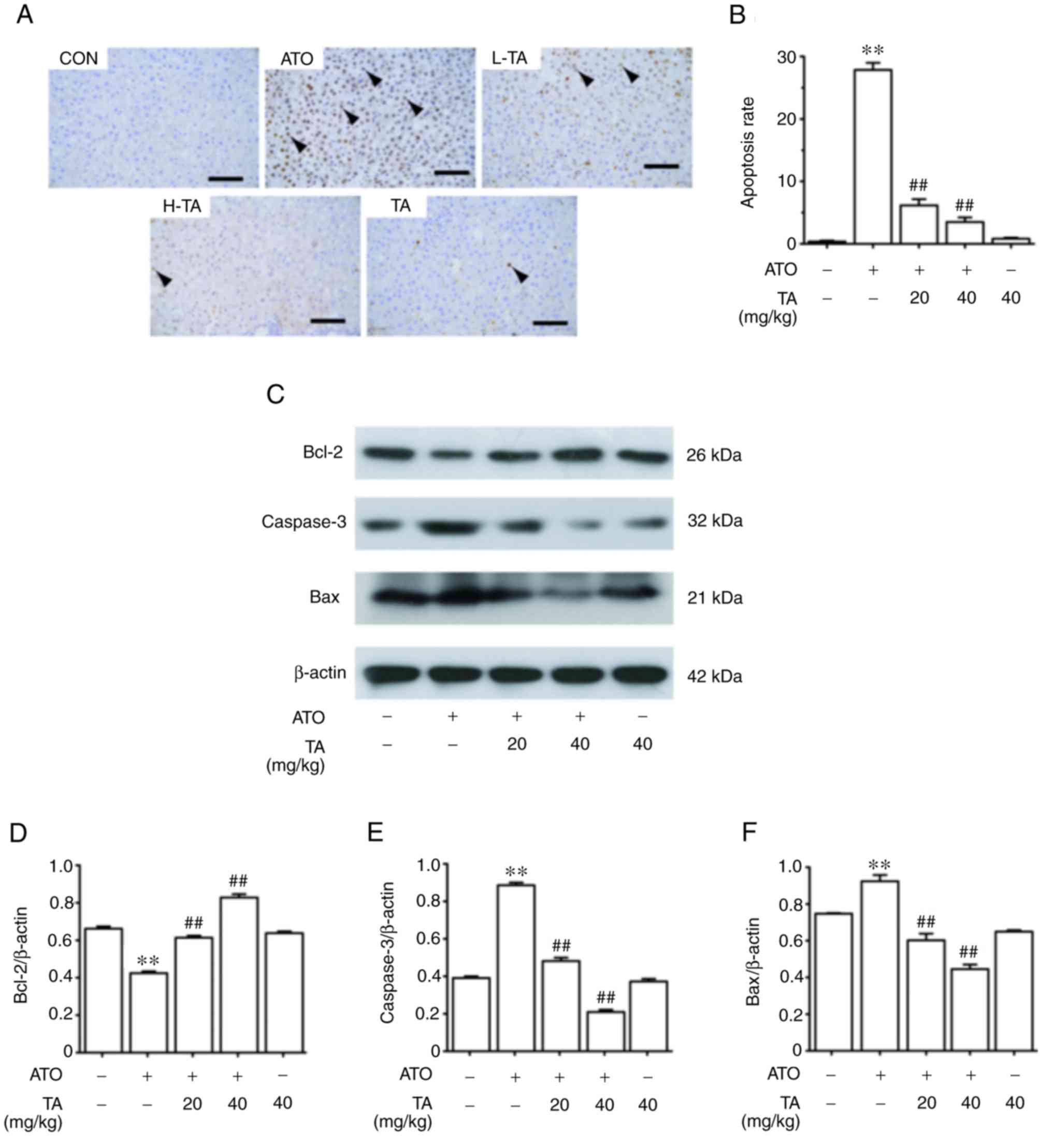
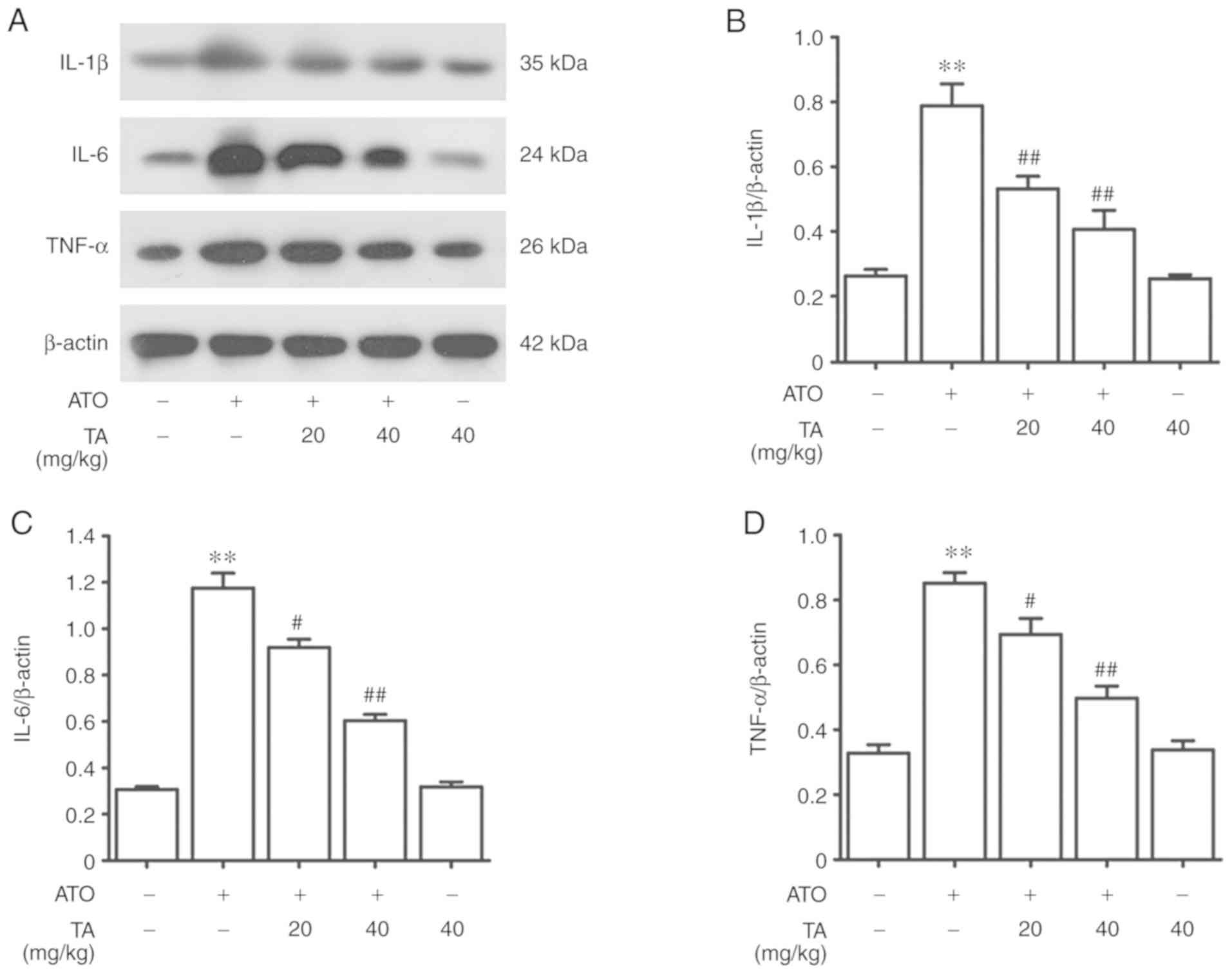
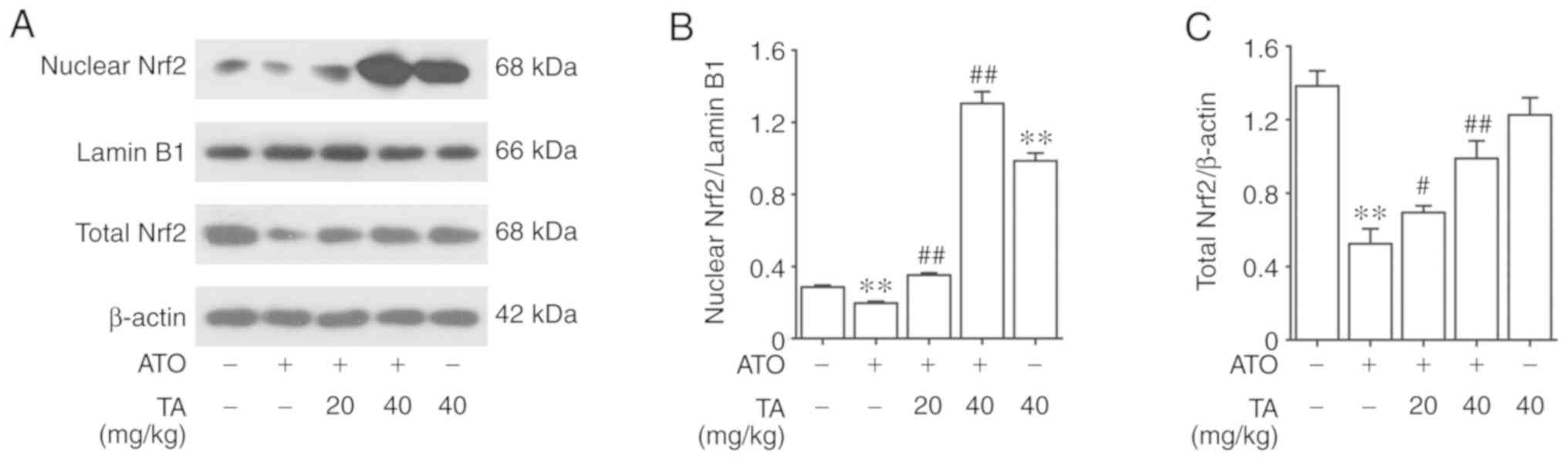
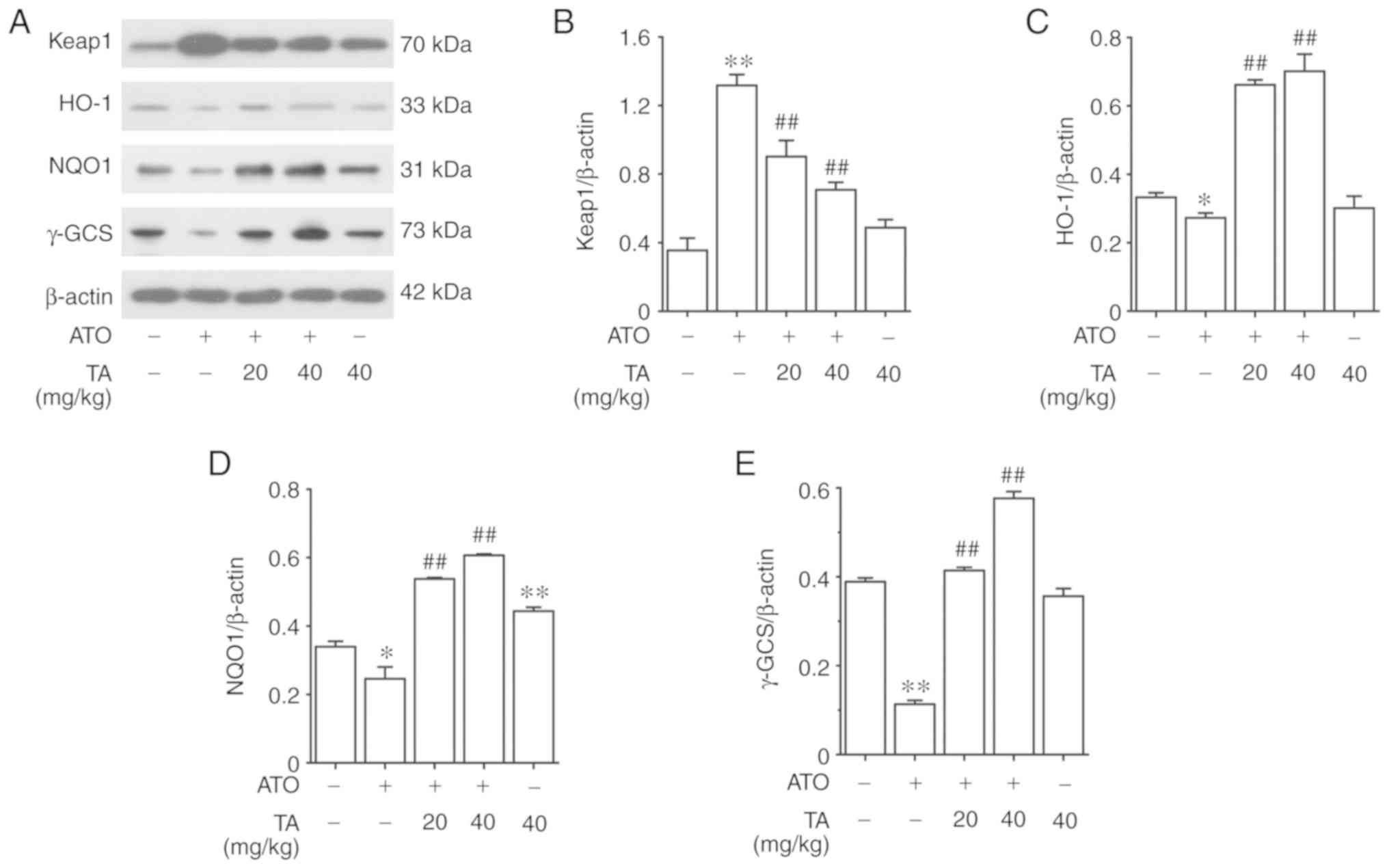
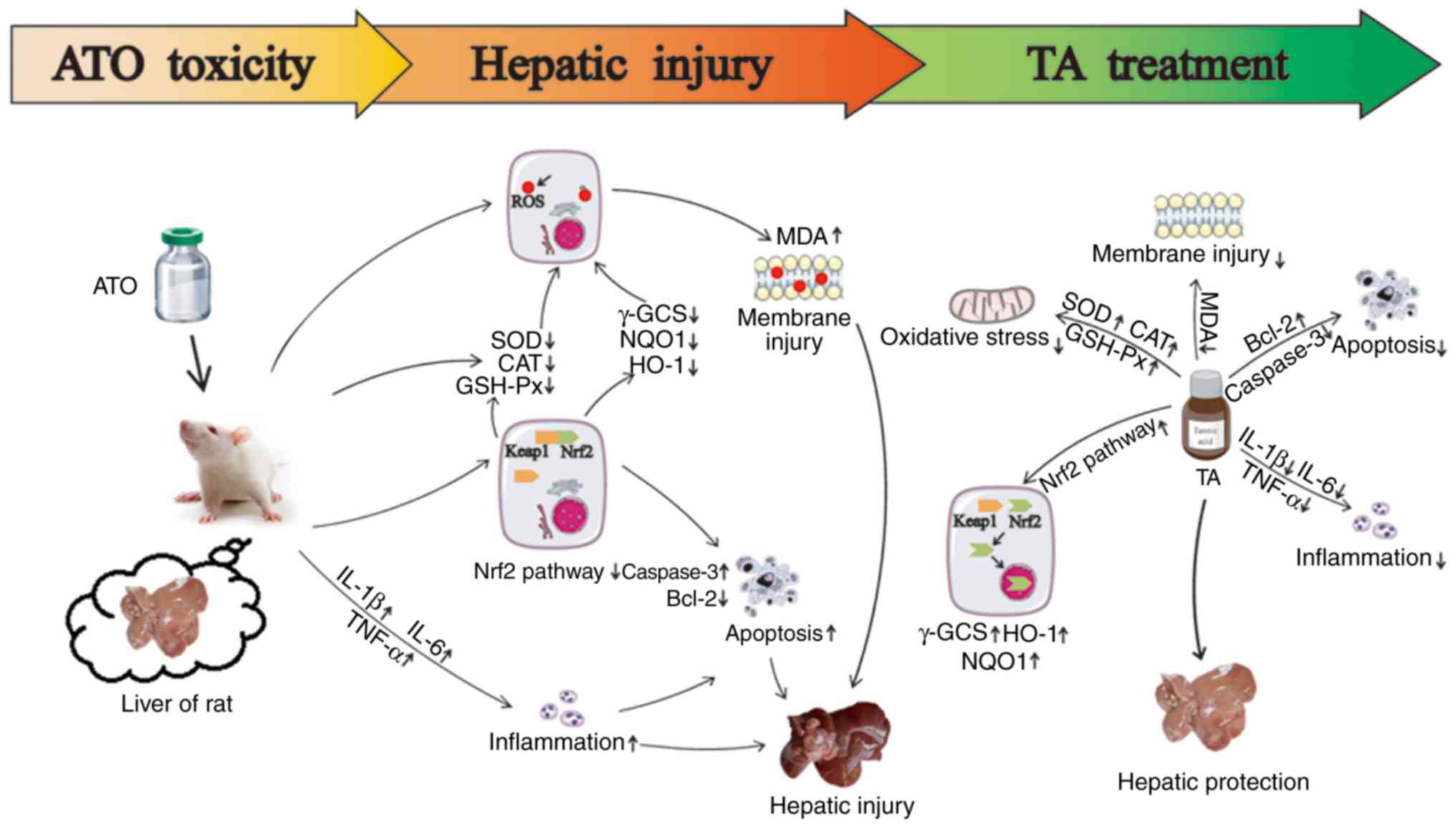
The present study was performed to investigate the protective effects of tannic acid (TA) on liver injury induced by arsenic trioxide (ATO) and to elucidate the mechanism involved as related to the Kelch‑like ECH‑associated protein 1 (Keap1)‑nuclear factor erythroid 2‑related factor 2 (Nrf2)/antioxidant response element (ARE) signaling pathway. Adult rats were intraperitoneally injected with TA, while ATO was administered 1 h later. On the 11th day, the rats were euthanized to determine any liver histological changes, liver function, and the activities of antioxidant, antiapoptosis and proinflammatory cytokines in the liver. Furthermore, the protein expression levels of nuclear Nrf2, total Nrf2, Keap1, Heme oxygenase‑1 (HO‑1), NADPH quinine oxidoreductase‑1 (NQO1), and γ‑glutamylcysteine synthetase (γ‑GCS) were determined using western blot analysis. The results showed that TA treatment ameliorated ATO‑induced liver histological changes and decreased the ATO‑induced increased alanine aminotransferase (ALT) and aspartate transaminase (AST) serum levels. Activities of the antioxidant enzymes significantly were increased, while the levels of malondialdehyde (MDA) and reactive oxygen species (ROS) were attenuated following TA treatment. In addition, TA treatment inhibited ATO‑induced liver apoptosis and inflammatory responses, increased Bcl‑2 protein expression level and reduced the levels of Bax, caspase‑3, interleukin (IL)‑1β, IL‑6 and tumor necrosis factor (TNF)‑α. Furthermore, TA treatment increased the protein expression levels of Nrf2 and Keap1, HO‑1, NQO1 and γ‑GCS. The results demonstrated that TA has a protective effect on ATO‑treated hepatic toxicity and that its underlying mechanism could be due to TA activation of the Keap1‑Nrf2/ARE signaling pathway, to reduce oxidative stress, apoptosis and inflammation in ATO‑intoxicated rats.
View Figures

Figure 1

Figure 2

Figure 3

Figure 4

Figure 5

Figure 6

Figure 7

Figure 8

Figure 9

View References

1 

Kim PG, Bridgham K, Chen EC, Vidula MK, Pozdnyakova O, Brunner AM and Fathi AT: Incident adverse events following therapy for acute promyelocytic leukemia. Leuk Res Rep. 9:79–83. 2018.PubMed/NCBI

2 

Benramdane L, Accominotti M, Fanton L, Malicier D and Vallon JJ: Arsenic speciation in human organs following fatal arsenic trioxide poisoning-a case report. Clin Chem. 45:301–306. 1999. View Article : Google Scholar : PubMed/NCBI

3 

You BR and Park WH: Arsenic trioxide induces human pulmonary fibroblast cell death via increasing ROS levels and GSH depletion. Oncol Rep. 28:749–757. 2012. View Article : Google Scholar : PubMed/NCBI

4 

Abhilash S, Siviyasankar R, Binu P, Arathi P and Harikumaran Nair R: Different administration patterns of docosahexaenoic acid in combating cytotoxic manifestations due to arsenic trioxide (acute promyelocytic leukemia drug) induced redox imbalance in hepatocytes. Prostaglandins Other Lipid Mediat. 136:64–75. 2018. View Article : Google Scholar : PubMed/NCBI

5 

Ahmed S, Mahabbat-e Khoda S, Rekha RS, Gardner RM, Ameer SS, Moore S, Ekstrom EC, Vahter M and Raqib R: Arsenic-associated oxidative stress, inflammation, and immune disruption in human placenta and cord blood. Environ Health Perspect. 119:258–264. 2010. View Article : Google Scholar : PubMed/NCBI

6 

Zheng Y, Yamaguchi H, Tian C, Lee MW, Tang H, Wang HG and Chen Q: Arsenic trioxide (As(2)O(3)) induces apoptosis through activation of Bax in hematopoietic cells. Oncogene. 24:3339–3347. 2005. View Article : Google Scholar : PubMed/NCBI

7 

Bao J, Ding R, Zou L, Zhang C, Wang K, Liu F, Li P, Chen M, Wan JB, Su H, et al: Forsythiae fructus inhibits B16 melanoma growth involving MAPKs/Nrf2/HO-1 mediated anti-oxidation and anti-inflammation. Am J Chin Med. 44:1043–1061. 2016. View Article : Google Scholar : PubMed/NCBI

8 

Liu C, Xu H, Fu S, Chen Y, Chen Q, Cai Z, Zhou J and Wang Z: Sulforaphane ameliorates bladder dysfunction through activation of the Nrf2-ARE pathway in a rat model of partial bladder outlet obstruction. Oxid Med Cell Longev. 2016:75982942016. View Article : Google Scholar : PubMed/NCBI

9 

Hirotsu Y, Katsuoka F, Funayama R, Nagashima T, Nishida Y, Nakayama K, Engel JD and Yamamoto M: Nrf2-MafG heterodimers contribute globally to antioxidant and metabolic networks. Nucleic Acids Res. 40:10228–10239. 2012. View Article : Google Scholar : PubMed/NCBI

10 

Liu D, Duan X, Dong D, Bai C, Li X, Sun G and Li B: Activation of the Nrf2 pathway by inorganic arsenic in human hepatocytes and the role of transcriptional repressor Bach1. Oxid Med Cell Longev. 2013:9845462013. View Article : Google Scholar : PubMed/NCBI

11 

Zhao HJ, Li MJ, Zhang MP, Wei MK, Shen LP, Jiang M and Zeng T: Allyl methyl trisulfide protected against acetaminophen (paracetamol)-induced hepatotoxicity by suppressing CYP2E1 and activating Nrf2 in mouse liver. Food Funct. 10:2244–2253. 2019. View Article : Google Scholar : PubMed/NCBI

12 

Nepka C, Sivridis E, Antonoglou O, Kortsaris A, Georgellis A, Taitzoglou I, Hytiroglou P, Papadimitriou C, Zintzaras I and Kouretas D: Chemopreventive activity of very low dose dietary tannic acid administration in hepatoma bearing C3H male mice. Cancer Lett. 141:57–62. 1999. View Article : Google Scholar : PubMed/NCBI

13 

Gray JP, Mishin V, Heck DE and Laskin JD: Dietary tannic acid stimulates production of reactive oxygen intermediates and growth factor and inflammatory gene expression in human colon tumor cells. Cancer Rese. 65:12232005.

14 

Ninan N, Forget A, Shastri VP, Voelcker NH and Blencowe A: Antibacterial and anti-inflammatory pH-responsive tannic acid-carboxylated agarose composite hydrogels for wound healing. ACS Appl Mater Interfaces. 8:28511–28521. 2016. View Article : Google Scholar : PubMed/NCBI

15 

Jin W, Xue Y, Xue Y, Han X, Song Q, Zhang J, Li Z, Cheng J, Guan S, Sun S and Chu L: Tannic acid ameliorates arsenic trioxide-induced nephrotoxicity, contribution of NF-κB and Nrf2 pathways. Biomed Pharmacother. 126:1100472020. View Article : Google Scholar : PubMed/NCBI

16 

Chu X, Wang H, Jiang YM, Zhang YY, Bao YF, Zhang X, Zhang JP, Guo H, Yang F, Luan YC and Dong YS: Ameliorative effects of tannic acid on carbon tetrachloride-induced liver fibrosis in vivo and in vitro. J Pharmacol Sci. 130:15–23. 2016. View Article : Google Scholar : PubMed/NCBI

17 

Zhang J, Song Q, Han X, Zhang Y, Zhang Y, Zhang X, Chu X, Zhang F and Chu L: Multi-targeted protection of acetaminophen-induced hepatotoxicity in mice by tannic acid. Int Immunopharmacol. 47:95–105. 2017. View Article : Google Scholar : PubMed/NCBI

18 

Chung MY, Song JH, Lee J, Shin EJ, Park JH, Lee SH, Hwang JT and Choi HK: Tannic acid, a novel histone acetyltransferase inhibitor, prevents non-alcoholic fatty liver disease both in vivo and in vitro model. Mol Metab. 9:34–48. 2019. View Article : Google Scholar

19 

Krajka-Kuźniak V, Paluszczak J, Szaefer H and Baer-Dubowska W: The activation of the Nrf2/ARE pathway in HepG2 hepatoma cells by phytochemicals and subsequent modulation of phase II and antioxidant enzyme expression. J Physiol Biochem. 71:227–238. 2015. View Article : Google Scholar : PubMed/NCBI

20 

Zhang J, Cui L, Han X, Zhang Y, Zhang X, Chu X, Zhang F, Zhang Y and Chu L: Protective effects of tannic acid on acute doxorubicin-induced cardiotoxicity: Involvement of suppression in oxidative stress, inflammation, and apoptosis. Biomed Pharmacother. 93:1253–1260. 2017. View Article : Google Scholar : PubMed/NCBI

21 

Hemmati AA, Olapour S, Varzi HN, Khodayar MJ, Dianat M, Mohammadian B and Yaghooti H: Ellagic acid protects against arsenic trioxide-induced cardiotoxicity in rat. Hum Exp Toxicol. 37:412–419. 2017. View Article : Google Scholar : PubMed/NCBI

22 

Singh AP, Goel RK and Kaur T: Mechanisms pertaining to arsenic toxicity. Toxicol Int. 18:87–93. 2011. View Article : Google Scholar : PubMed/NCBI

23 

Messarah M, Saoudi M, Boumendjel A, Kadeche L, Boulakoud MS and Feki AE: Green tea extract alleviates arsenic-induced biochemical toxicity and lipid peroxidation in rats. Toxicol Ind Health. 29:349–359. 2013. View Article : Google Scholar : PubMed/NCBI

24 

Vermeulen NP, Bessems JG and Van De Straat R: Molecular aspects of paracetamol-induced hepatotoxicity and its mechanism-based prevention. Drug Metab Rev. 24:367–407. 1992. View Article : Google Scholar : PubMed/NCBI

25 

Basu T, Panja S, Shendge AK, Das A and Mandal N: A natural antioxidant, tannic acid mitigates iron-overload induced hepatotoxicity in swiss albino mice through ROS regulation. Environ Toxicol. 33:603–618. 2018. View Article : Google Scholar : PubMed/NCBI

26 

Ahmed SM, Luo L, Namani A, Wang XJ and Tang X: Nrf2 signaling pathway: Pivotal roles in inflammation. Biochim Biophys Acta Mol Basis Di. 1863:585–597. 2017. View Article : Google Scholar

27 

Lushchak IV: Free radicals, reactive oxygen species, oxidative stress and its classification. Chem Biol Interact. 224:164–175. 2014. View Article : Google Scholar : PubMed/NCBI

28 

Sumedha NC and Miltonprabu S: Diallyl trisulfide ameliorates arsenic-induced hepatotoxicity by abrogation of oxidative stress, inflammation, and apoptosis in rats. Hum Exp Toxicol. 34:506–525. 2015. View Article : Google Scholar : PubMed/NCBI

29 

Adedara IA, Adebowale AA, Atanda OE, Fabunmi AT, Ayenitaju AC, Rocha JBT and Farombi EO: Selenium abates reproductive dysfunction via attenuation of biometal accumulation, oxido-inflammatory stress and caspase-3 activation in male rats exposed to arsenic. Environ Pollut. 254:113079–113090. 2019. View Article : Google Scholar : PubMed/NCBI

30 

Imam F, Al-Harbi NO, Al-Harbi MM, Ansari MA, Al-Asmari AF, Ansari MN, Al-Anazi WA, Bahashwan S, Almutairi MM, Alshammari M, et al: Apremilast prevent doxorubicin-induced apoptosis and inflammation in heart through inhibition of oxidative stress mediated activation of NF-κB signaling pathways. Pharmacol Rep. 70:993–1000. 2018. View Article : Google Scholar

31 

Dash SK, Chattopadhyay S, Ghosh T, Dash SS, Tripathy S, Das B, Bag BG, Das D and Roy S: Self-assembled betulinic acid protects doxorubicin induced apoptosis followed by reduction of ROS-TNF-α-caspase-3 activity. Biomed Pharmacother. 72:144–157. 2015. View Article : Google Scholar : PubMed/NCBI

32 

Van Opdenbosch N and Lamkanfi M: Caspases in cell death, inflammation, and disease. Immunity. 50:1352–1364. 2019. View Article : Google Scholar : PubMed/NCBI

33 

Oliveira PJ, Santos MS and Wallace KB: Doxorubicin-induced thiol-dependent alteration of cardiac mitochondrial permeability transition and respiration. Biochemistry (Mosc). 71:194–199. 2006. View Article : Google Scholar : PubMed/NCBI

34 

Liu W, Gao FF, Li Q, Lv JW, Wang Y, Hu PC, Xiang QM and Wei L: Protective effect of Astragalus polysaccharides on liver injury induced by several different chemotherapeutics in mice. Asian Pac J Cancer Prev. 15:10413–10420. 2014. View Article : Google Scholar : PubMed/NCBI

35 

Wu Z, Zhang Y, Song T, Song Q, Zhang Y, Zhang X, Han X, Zhang J and Chu L: Magnesium isoglycyrrhizinate ameliorates doxorubicin-induced acute cardiac and hepatic toxicity via antio-xidant and anti-apoptotic mechanisms in mice. Exp Ther Med. 15:1005–1012. 2018.PubMed/NCBI

36 

Miltonprabu S, Sumedha NC and Senthilraja P: Diallyl trisulfide, a garlic polysulfide protects against As-induced renal oxidative nephrotoxicity, apoptosis and inflammation in rats by activating the Nrf2/ARE signaling pathway. Int Immunopharmacol. 50:107–120. 2017. View Article : Google Scholar : PubMed/NCBI

37 

Singh S, Vrishni S, Singh BK, Rahman I and Kakkar P: Nrf2-ARE stress response mechanism: A control point in oxidative stress-mediated dysfunctions and chronic inflammatory diseases. Free Radic Res. 44:1267–1288. 2010. View Article : Google Scholar : PubMed/NCBI

38 

Niture SK and Jaiswal AK: Nrf2 protein up-regulates antiapoptotic protein Bcl-2 and prevents cellular apoptosis. J Biol Chem. 287:9873–9886. 2012. View Article : Google Scholar : PubMed/NCBI

39 

Kobayashi EH, Suzuki T, Funayama R, Nagashima T, Hayashi M, Sekine H, Tanaka N, Moriguchi T, Motohashi H, Nakayama K and Yamamoto M: Nrf2 suppresses macrophage inflammatory response by blocking proinflammatory cytokine transcription. Nat Commun. 7:116242016. View Article : Google Scholar : PubMed/NCBI

40 

Katsuragi Y, Ichimura Y and Komatsu M: Regulation of the Keap1-Nrf2 pathway by p62/SQSTM1. Oxidative Toxicology. Johnson J, Puga A, Wallace KB and Zhang D: 1. Current Opinion in Toxicology; pp. 54–61. 2016

41 

Shi L, Hao Z, Zhang S, Wei M, Lu B, Wang Z and Ji L: Baicalein and baicalin alleviate acetaminophen-induced liver injury by activating Nrf2 antioxidative pathway: The involvement of ERK1/2 and PKC. Biochem Pharmacol. 150:9–23. 2018. View Article : Google Scholar : PubMed/NCBI

42 

Shafik NM and El Batsh MM: Protective effects of combined selenium and punica granatum treatment on some inflammatory and oxidative stress markers in arsenic-induced hepatotoxicity in rats. Biol Trace Elem Res. 169:121–128. 2016. View Article : Google Scholar : PubMed/NCBI

43 

Vineetha RC, Archana V, Binu P, Arathi P and Nair RH: L-ascorbic acid and α-Tocopherol reduces hepatotoxicity associated with arsenic trioxide chemotherapy by modulating Nrf2 and Bcl2 transcription factors in chang liver cells. Nutr Cancer. 70:684–696. 2018. View Article : Google Scholar : PubMed/NCBI

44 

Ugun-Klusek A, Tatham MH, Elkharaz J, Constantin-Teodosiu D, Lawler K, Mohamed H, Paine SM, Anderson G, John Mayer R, Lowe J, et al: Continued 26S proteasome dysfunction in mouse brain cortical neurons impairs autophagy and the Keap1-Nrf2 oxidative defence pathway. Cell Death Dis. 8:e25312017. View Article : Google Scholar : PubMed/NCBI

45 

Baird L and Dinkova-Kostova AT: The cytoprotective role of the Keap1-Nrf2 pathway. Arch Toxicol. 85:241–272. 2011. View Article : Google Scholar : PubMed/NCBI

46 

Takahashi T, Morita K, Akagi R and Sassa S: Heme oxygenase-1: A novel therapeutic target in oxidative tissue injuries. Curr Med Chem. 11:1545–1561. 2004. View Article : Google Scholar : PubMed/NCBI

47 

Xu D, Hu L, Xia X, Song J, Li L, Song E and Song Y: Tetrachlorobenzoquinone induces acute liver injury, up-regulates HO-1 and NQO1 expression in mice model: The protective role of chlorogenic acid. Environ Toxicol Pharmacol. 37:1212–1220. 2014. View Article : Google Scholar : PubMed/NCBI

48 

Liu X, Chen K, Zhu L, Liu H, Ma T, Xu Q and Xie T: Soyasaponin Ab protects against oxidative stress in HepG2 cells via Nrf2/HO-1/NQO1 signaling pathways. J Functional Foods. 45:110–117. 2018. View Article : Google Scholar

49 

Aaseth J, Skaug MA, Cao Y and Andersen O: Chelation in metal intoxication-Principles and paradigms. J Trace Elem Med Biol. 31:260–266. 2015. View Article : Google Scholar : PubMed/NCBI

50 

Lau A, Whitman SA, Jaramillo MC and Zhang DD: Arsenic-mediated activation of the Nrf2-Keap1 antioxidant pathway. J Biochem Mol Toxicol. 27:99–105. 2013. View Article : Google Scholar : PubMed/NCBI

Related Articles

  • Abstract
  • View
  • Download
  • Twitter
Copy and paste a formatted citation
Spandidos Publications style
Li M, Liu P, Xue Y, Liang Y, Shi J, Han X, Zhang J, Chu X and Chu L: Tannic acid attenuates hepatic oxidative stress, apoptosis and inflammation by activating the Keap1‑Nrf2/ARE signaling pathway in arsenic trioxide‑toxicated rats. Oncol Rep 44: 2306-2316, 2020.
APA
Li, M., Liu, P., Xue, Y., Liang, Y., Shi, J., Han, X. ... Chu, L. (2020). Tannic acid attenuates hepatic oxidative stress, apoptosis and inflammation by activating the Keap1‑Nrf2/ARE signaling pathway in arsenic trioxide‑toxicated rats. Oncology Reports, 44, 2306-2316. https://doi.org/10.3892/or.2020.7764
MLA
Li, M., Liu, P., Xue, Y., Liang, Y., Shi, J., Han, X., Zhang, J., Chu, X., Chu, L."Tannic acid attenuates hepatic oxidative stress, apoptosis and inflammation by activating the Keap1‑Nrf2/ARE signaling pathway in arsenic trioxide‑toxicated rats". Oncology Reports 44.5 (2020): 2306-2316.
Chicago
Li, M., Liu, P., Xue, Y., Liang, Y., Shi, J., Han, X., Zhang, J., Chu, X., Chu, L."Tannic acid attenuates hepatic oxidative stress, apoptosis and inflammation by activating the Keap1‑Nrf2/ARE signaling pathway in arsenic trioxide‑toxicated rats". Oncology Reports 44, no. 5 (2020): 2306-2316. https://doi.org/10.3892/or.2020.7764
Copy and paste a formatted citation
x
Spandidos Publications style
Li M, Liu P, Xue Y, Liang Y, Shi J, Han X, Zhang J, Chu X and Chu L: Tannic acid attenuates hepatic oxidative stress, apoptosis and inflammation by activating the Keap1‑Nrf2/ARE signaling pathway in arsenic trioxide‑toxicated rats. Oncol Rep 44: 2306-2316, 2020.
APA
Li, M., Liu, P., Xue, Y., Liang, Y., Shi, J., Han, X. ... Chu, L. (2020). Tannic acid attenuates hepatic oxidative stress, apoptosis and inflammation by activating the Keap1‑Nrf2/ARE signaling pathway in arsenic trioxide‑toxicated rats. Oncology Reports, 44, 2306-2316. https://doi.org/10.3892/or.2020.7764
MLA
Li, M., Liu, P., Xue, Y., Liang, Y., Shi, J., Han, X., Zhang, J., Chu, X., Chu, L."Tannic acid attenuates hepatic oxidative stress, apoptosis and inflammation by activating the Keap1‑Nrf2/ARE signaling pathway in arsenic trioxide‑toxicated rats". Oncology Reports 44.5 (2020): 2306-2316.
Chicago
Li, M., Liu, P., Xue, Y., Liang, Y., Shi, J., Han, X., Zhang, J., Chu, X., Chu, L."Tannic acid attenuates hepatic oxidative stress, apoptosis and inflammation by activating the Keap1‑Nrf2/ARE signaling pathway in arsenic trioxide‑toxicated rats". Oncology Reports 44, no. 5 (2020): 2306-2316. https://doi.org/10.3892/or.2020.7764
Follow us
  • Twitter
  • LinkedIn
  • Facebook
About
  • Spandidos Publications
  • Careers
  • Cookie Policy
  • Privacy Policy
How can we help?
  • Help
  • Live Chat
  • Contact
  • Email to our Support Team