Spandidos Publications Logo
  • About
    • About Spandidos
    • Aims and Scopes
    • Abstracting and Indexing
    • Editorial Policies
    • Reprints and Permissions
    • Job Opportunities
    • Terms and Conditions
    • Contact
  • Journals
    • All Journals
    • Oncology Letters
      • Oncology Letters
      • Information for Authors
      • Editorial Policies
      • Editorial Board
      • Aims and Scope
      • Abstracting and Indexing
      • Bibliographic Information
      • Archive
    • International Journal of Oncology
      • International Journal of Oncology
      • Information for Authors
      • Editorial Policies
      • Editorial Board
      • Aims and Scope
      • Abstracting and Indexing
      • Bibliographic Information
      • Archive
    • Molecular and Clinical Oncology
      • Molecular and Clinical Oncology
      • Information for Authors
      • Editorial Policies
      • Editorial Board
      • Aims and Scope
      • Abstracting and Indexing
      • Bibliographic Information
      • Archive
    • Experimental and Therapeutic Medicine
      • Experimental and Therapeutic Medicine
      • Information for Authors
      • Editorial Policies
      • Editorial Board
      • Aims and Scope
      • Abstracting and Indexing
      • Bibliographic Information
      • Archive
    • International Journal of Molecular Medicine
      • International Journal of Molecular Medicine
      • Information for Authors
      • Editorial Policies
      • Editorial Board
      • Aims and Scope
      • Abstracting and Indexing
      • Bibliographic Information
      • Archive
    • Biomedical Reports
      • Biomedical Reports
      • Information for Authors
      • Editorial Policies
      • Editorial Board
      • Aims and Scope
      • Abstracting and Indexing
      • Bibliographic Information
      • Archive
    • Oncology Reports
      • Oncology Reports
      • Information for Authors
      • Editorial Policies
      • Editorial Board
      • Aims and Scope
      • Abstracting and Indexing
      • Bibliographic Information
      • Archive
    • Molecular Medicine Reports
      • Molecular Medicine Reports
      • Information for Authors
      • Editorial Policies
      • Editorial Board
      • Aims and Scope
      • Abstracting and Indexing
      • Bibliographic Information
      • Archive
    • World Academy of Sciences Journal
      • World Academy of Sciences Journal
      • Information for Authors
      • Editorial Policies
      • Editorial Board
      • Aims and Scope
      • Abstracting and Indexing
      • Bibliographic Information
      • Archive
    • International Journal of Functional Nutrition
      • International Journal of Functional Nutrition
      • Information for Authors
      • Editorial Policies
      • Editorial Board
      • Aims and Scope
      • Abstracting and Indexing
      • Bibliographic Information
      • Archive
    • International Journal of Epigenetics
      • International Journal of Epigenetics
      • Information for Authors
      • Editorial Policies
      • Editorial Board
      • Aims and Scope
      • Abstracting and Indexing
      • Bibliographic Information
      • Archive
    • Medicine International
      • Medicine International
      • Information for Authors
      • Editorial Policies
      • Editorial Board
      • Aims and Scope
      • Abstracting and Indexing
      • Bibliographic Information
      • Archive
  • Articles
  • Information
    • Information for Authors
    • Information for Reviewers
    • Information for Librarians
    • Information for Advertisers
    • Conferences
  • Language Editing
Spandidos Publications Logo
  • About
    • About Spandidos
    • Aims and Scopes
    • Abstracting and Indexing
    • Editorial Policies
    • Reprints and Permissions
    • Job Opportunities
    • Terms and Conditions
    • Contact
  • Journals
    • All Journals
    • Biomedical Reports
      • Information for Authors
      • Editorial Policies
      • Editorial Board
      • Aims and Scope
      • Abstracting and Indexing
      • Bibliographic Information
      • Archive
    • Experimental and Therapeutic Medicine
      • Information for Authors
      • Editorial Policies
      • Editorial Board
      • Aims and Scope
      • Abstracting and Indexing
      • Bibliographic Information
      • Archive
    • International Journal of Epigenetics
      • Information for Authors
      • Editorial Policies
      • Editorial Board
      • Aims and Scope
      • Abstracting and Indexing
      • Bibliographic Information
      • Archive
    • International Journal of Functional Nutrition
      • Information for Authors
      • Editorial Policies
      • Editorial Board
      • Aims and Scope
      • Abstracting and Indexing
      • Bibliographic Information
      • Archive
    • International Journal of Molecular Medicine
      • Information for Authors
      • Editorial Policies
      • Editorial Board
      • Aims and Scope
      • Abstracting and Indexing
      • Bibliographic Information
      • Archive
    • International Journal of Oncology
      • Information for Authors
      • Editorial Policies
      • Editorial Board
      • Aims and Scope
      • Abstracting and Indexing
      • Bibliographic Information
      • Archive
    • Medicine International
      • Information for Authors
      • Editorial Policies
      • Editorial Board
      • Aims and Scope
      • Abstracting and Indexing
      • Bibliographic Information
      • Archive
    • Molecular and Clinical Oncology
      • Information for Authors
      • Editorial Policies
      • Editorial Board
      • Aims and Scope
      • Abstracting and Indexing
      • Bibliographic Information
      • Archive
    • Molecular Medicine Reports
      • Information for Authors
      • Editorial Policies
      • Editorial Board
      • Aims and Scope
      • Abstracting and Indexing
      • Bibliographic Information
      • Archive
    • Oncology Letters
      • Information for Authors
      • Editorial Policies
      • Editorial Board
      • Aims and Scope
      • Abstracting and Indexing
      • Bibliographic Information
      • Archive
    • Oncology Reports
      • Information for Authors
      • Editorial Policies
      • Editorial Board
      • Aims and Scope
      • Abstracting and Indexing
      • Bibliographic Information
      • Archive
    • World Academy of Sciences Journal
      • Information for Authors
      • Editorial Policies
      • Editorial Board
      • Aims and Scope
      • Abstracting and Indexing
      • Bibliographic Information
      • Archive
  • Articles
  • Information
    • For Authors
    • For Reviewers
    • For Librarians
    • For Advertisers
    • Conferences
  • Language Editing
Login Register Submit
  • This site uses cookies
  • You can change your cookie settings at any time by following the instructions in our Cookie Policy. To find out more, you may read our Privacy Policy.

    I agree
Search articles by DOI, keyword, author or affiliation
Search
Advanced Search
presentation
Oncology Reports
Join Editorial Board Propose a Special Issue
Print ISSN: 1021-335X Online ISSN: 1791-2431
Journal Cover
April-2023 Volume 49 Issue 4

Full Size Image

Sign up for eToc alerts
Recommend to Library

Journals

International Journal of Molecular Medicine

International Journal of Molecular Medicine

International Journal of Molecular Medicine is an international journal devoted to molecular mechanisms of human disease.

International Journal of Oncology

International Journal of Oncology

International Journal of Oncology is an international journal devoted to oncology research and cancer treatment.

Molecular Medicine Reports

Molecular Medicine Reports

Covers molecular medicine topics such as pharmacology, pathology, genetics, neuroscience, infectious diseases, molecular cardiology, and molecular surgery.

Oncology Reports

Oncology Reports

Oncology Reports is an international journal devoted to fundamental and applied research in Oncology.

Experimental and Therapeutic Medicine

Experimental and Therapeutic Medicine

Experimental and Therapeutic Medicine is an international journal devoted to laboratory and clinical medicine.

Oncology Letters

Oncology Letters

Oncology Letters is an international journal devoted to Experimental and Clinical Oncology.

Biomedical Reports

Biomedical Reports

Explores a wide range of biological and medical fields, including pharmacology, genetics, microbiology, neuroscience, and molecular cardiology.

Molecular and Clinical Oncology

Molecular and Clinical Oncology

International journal addressing all aspects of oncology research, from tumorigenesis and oncogenes to chemotherapy and metastasis.

World Academy of Sciences Journal

World Academy of Sciences Journal

Multidisciplinary open-access journal spanning biochemistry, genetics, neuroscience, environmental health, and synthetic biology.

International Journal of Functional Nutrition

International Journal of Functional Nutrition

Open-access journal combining biochemistry, pharmacology, immunology, and genetics to advance health through functional nutrition.

International Journal of Epigenetics

International Journal of Epigenetics

Publishes open-access research on using epigenetics to advance understanding and treatment of human disease.

Medicine International

Medicine International

An International Open Access Journal Devoted to General Medicine.

Journal Cover
April-2023 Volume 49 Issue 4

Full Size Image

Sign up for eToc alerts
Recommend to Library

  • Article
  • Citations
    • Cite This Article
    • Download Citation
    • Create Citation Alert
    • Remove Citation Alert
    • Cited By
  • Similar Articles
    • Related Articles (in Spandidos Publications)
    • Similar Articles (Google Scholar)
    • Similar Articles (PubMed)
  • Download PDF
  • Download XML
  • View XML

  • Supplementary Files
    • Supplementary_Data1.pdf
    • Supplementary_Data2.pdf
Article Open Access

The Hedgehog/GLI signaling pathway activates transcription of Slug (Snail2) in melanoma cells

  • Authors:
    • Pavel Horák
    • Kateřina Kreisingerová
    • Jiri Réda
    • Lubica Ondrušová
    • Jan Balko
    • Jiri Vachtenheim Jr
    • Petra Žáková
    • Jiri Vachtenheim
  • View Affiliations / Copyright

    Affiliations: Department of Transcription and Cell Signaling, Institute of Medical Biochemistry and Laboratory Diagnostics, First Faculty of Medicine, Charles University and General University Hospital in Prague, 12108 Prague, Czech Republic, Department of Pathology and Molecular Medicine, Second Faculty of Medicine, Charles University and University Hospital Motol, 15006 Prague, Czech Republic, 3rd Department of Surgery, First Faculty of Medicine, Charles University and University Hospital Motol, 15006 Prague, Czech Republic
    Copyright: © Horák et al. This is an open access article distributed under the terms of Creative Commons Attribution License.
  • Article Number: 75
    |
    Published online on: March 1, 2023
       https://doi.org/10.3892/or.2023.8512
  • Expand metrics +
Metrics: Total Views: 0 (Spandidos Publications: | PMC Statistics: )
Metrics: Total PDF Downloads: 0 (Spandidos Publications: | PMC Statistics: )
Cited By (CrossRef): 0 citations Loading Articles...

This article is mentioned in:


Abstract

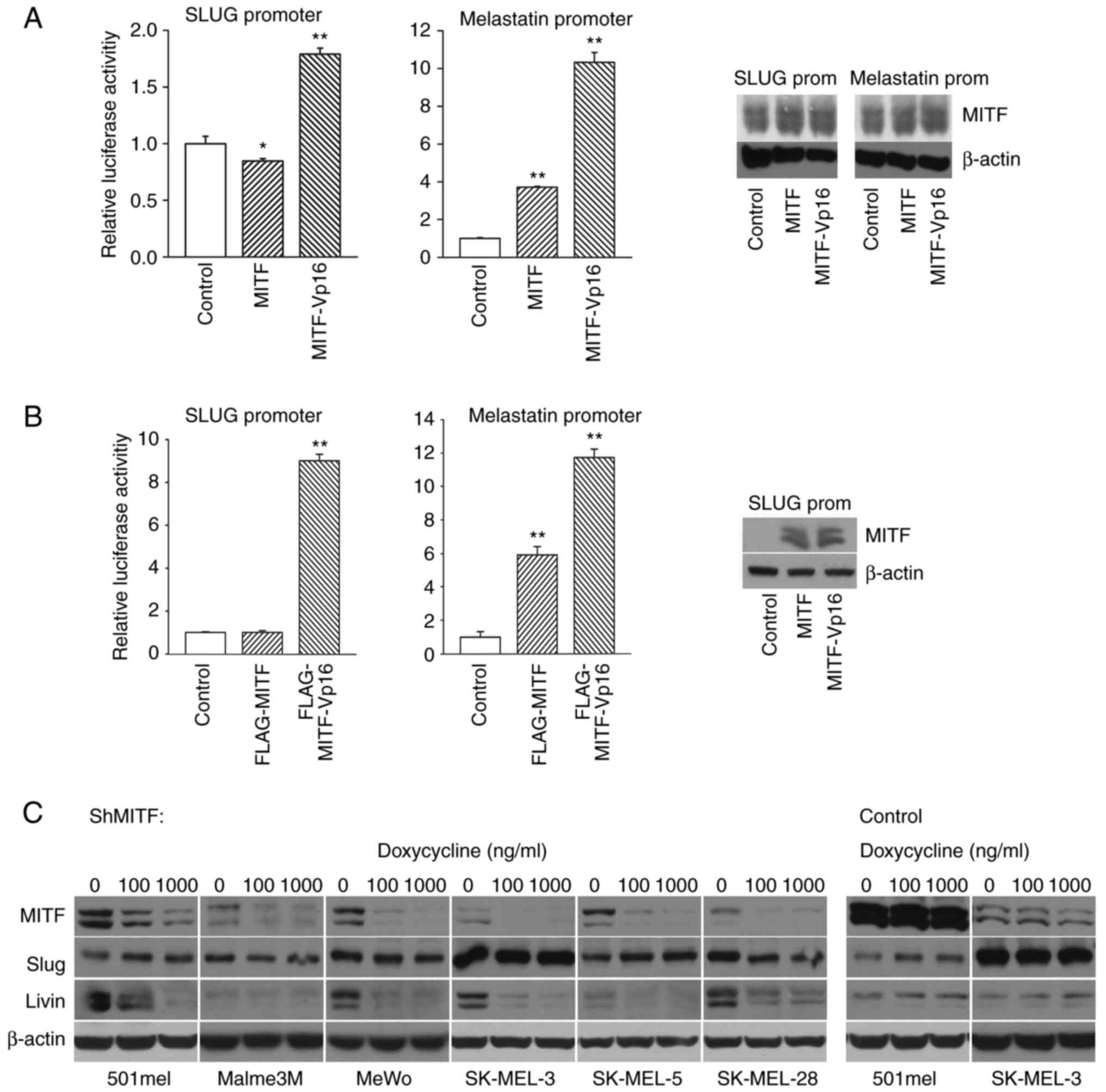
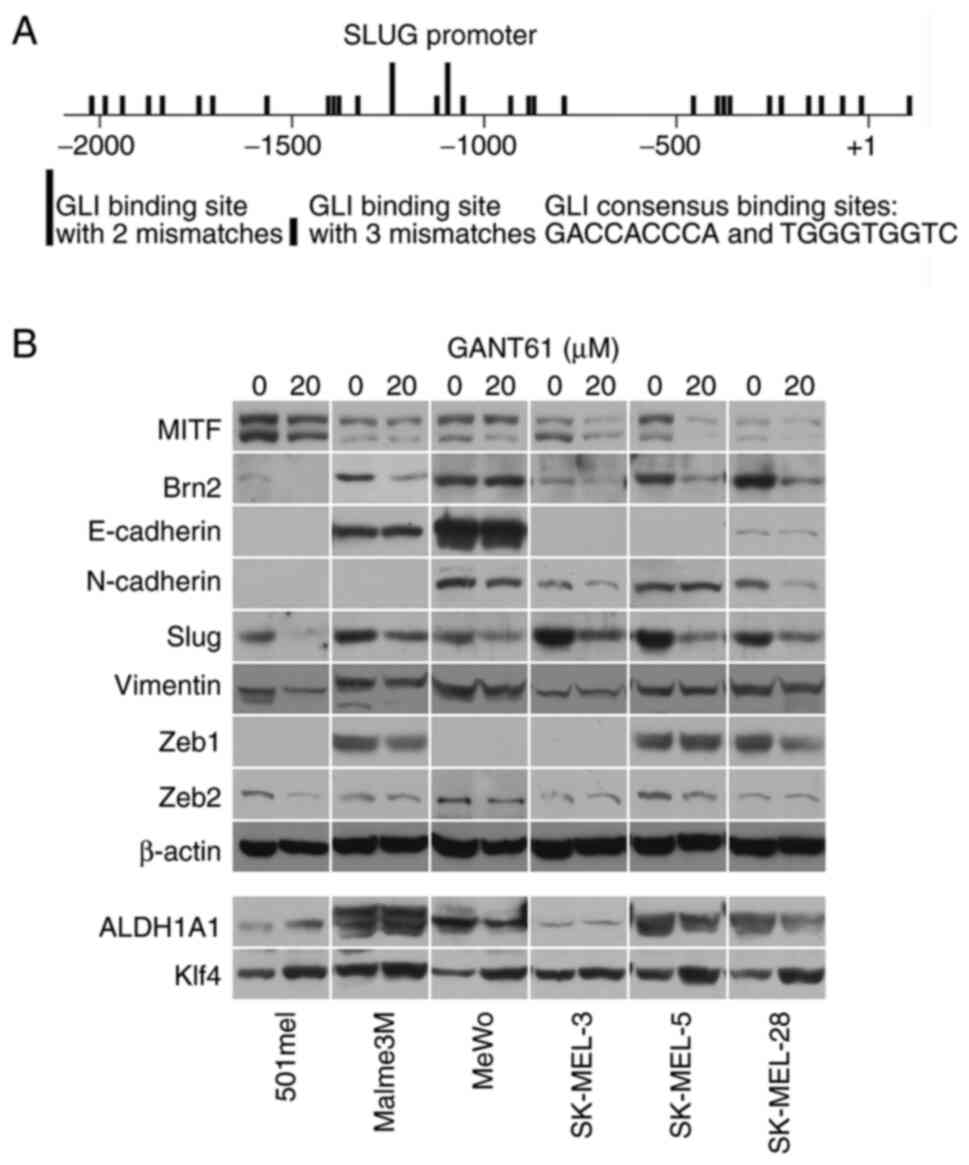
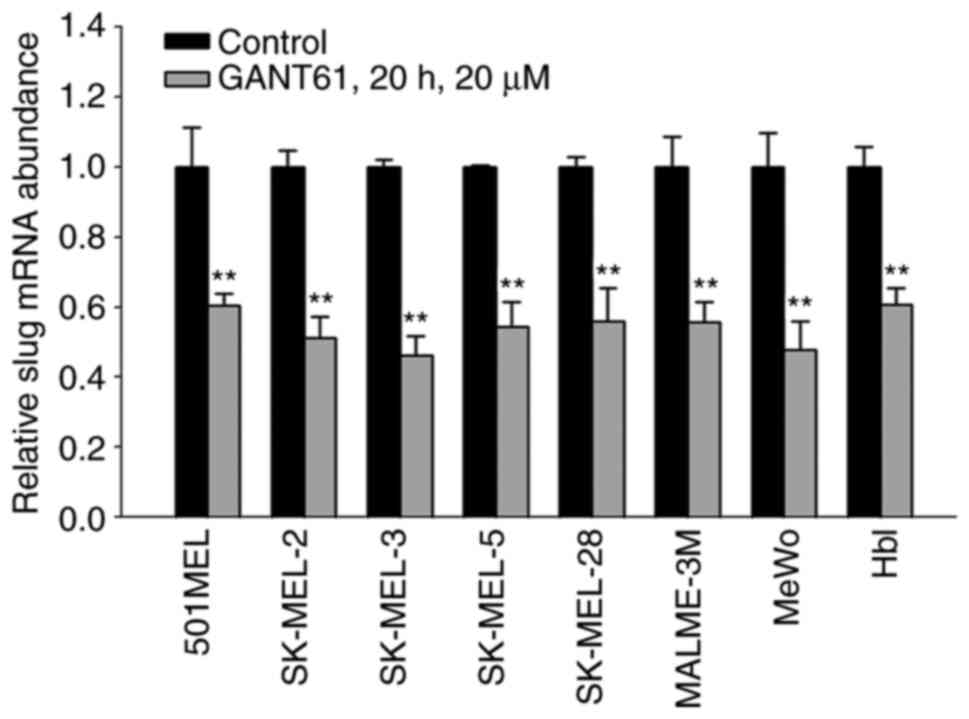
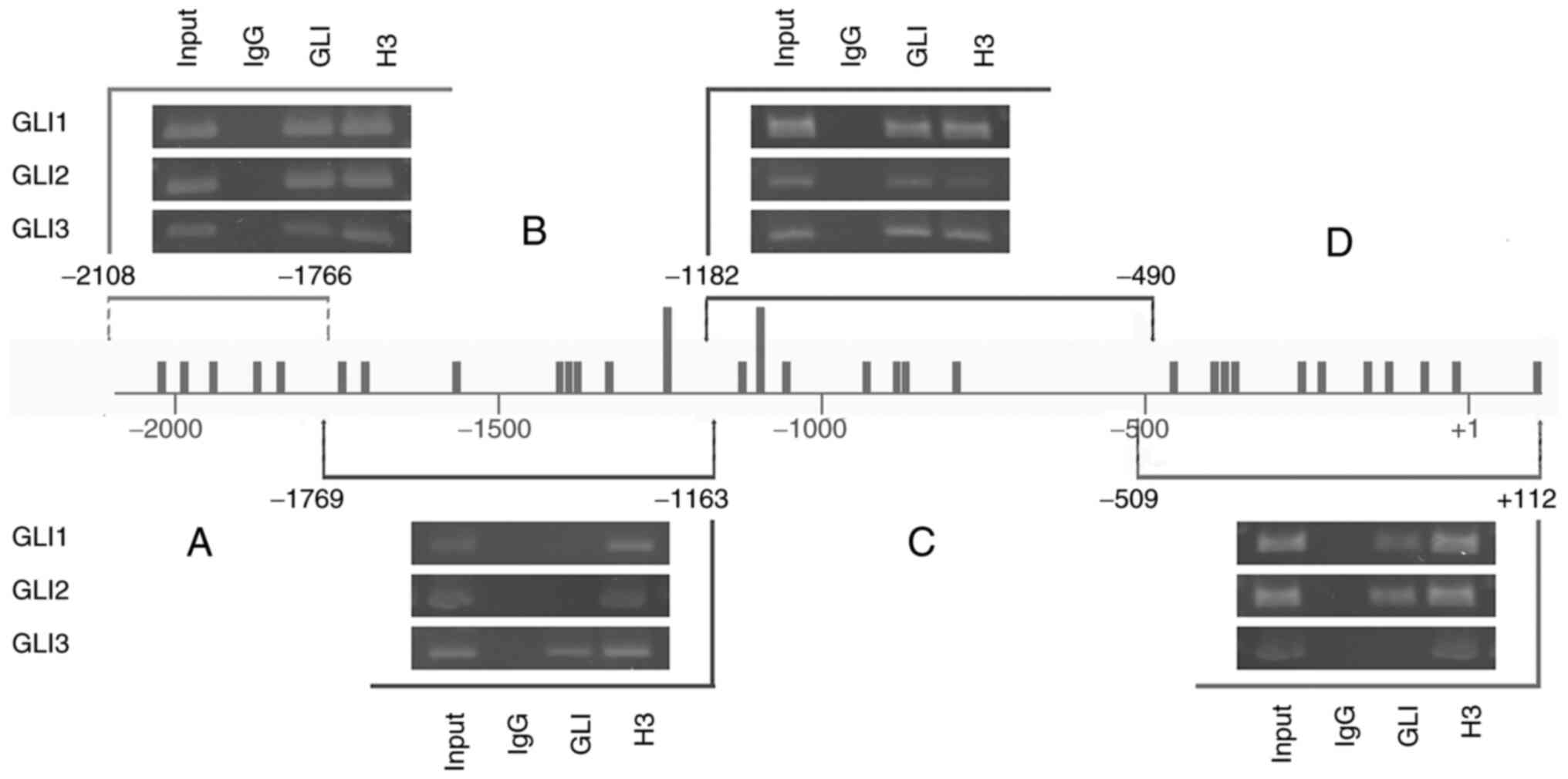
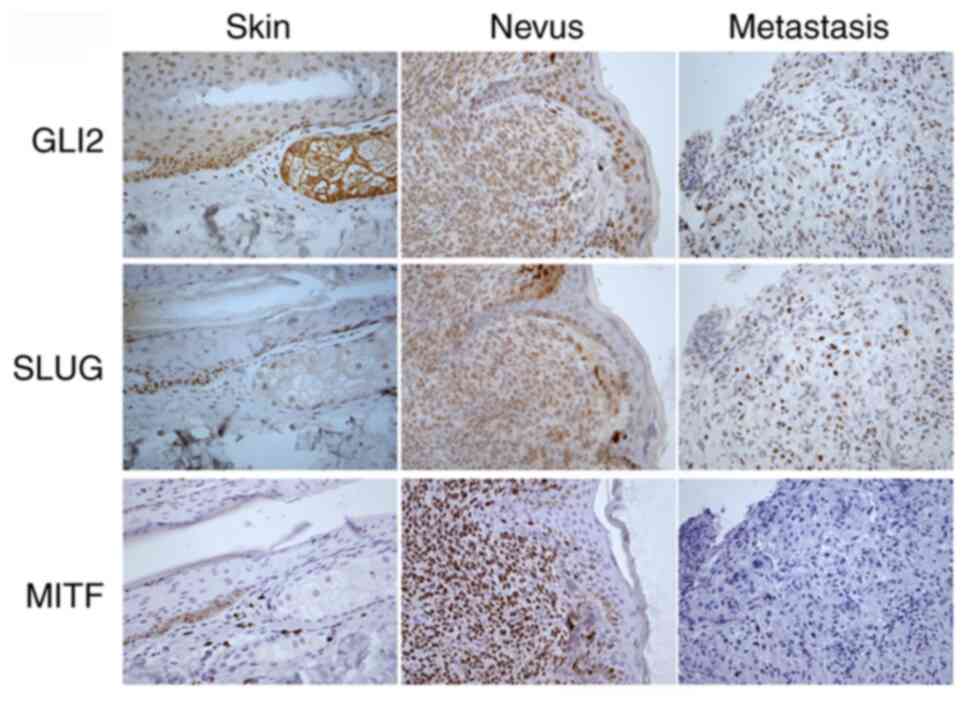
In melanoma and other cancers, invasion, epithelial-to-mesenchymal transition, metastasis and cancer stem cell maintenance are regulated by transcription factors including the Snail family. Slug (Snail2) protein generally supports migration and apoptosis resistance. However, its role in melanoma is not completely understood. The present study investigated the transcriptional regulation of the SLUG gene in melanoma. It demonstrated that SLUG is under the control of the Hedgehog/GLI signaling pathway and is activated predominantly by the transcription factor GLI2. The SLUG gene promoter contains a high number of GLI-binding sites. Slug expression is activated by GLI factors in reporter assays and inhibited by GANT61 (GLI inhibitor) and cyclopamine (SMO inhibitor). SLUG mRNA levels are lowered by GANT61 as assessed by reverse transcription-quantitative PCR. Chromatin immunoprecipitation revealed abundant binding of factors GLI1-3 in the four subregions of the proximal SLUG promoter. Notably, melanoma-associated transcription factor (MITF) is an imperfect activator of the SLUG promoter in reporter assays, and downregulation of MITF had no effect on endogenous Slug protein levels. Immunohistochemical analysis confirmed the above findings and showed MITF-negative regions in metastatic melanoma that were positive for GLI2 and Slug. Taken together, the results demonstrated a previously unrecognized transcriptional activation mechanism of the SLUG gene, which may represent its main regulation of expression in melanoma cells.
View Figures

Figure 1

Figure 2

Figure 3

Figure 4

Figure 5

Figure 6

View References

1 

Teglund S and Toftgård R: Hedgehog beyond medulloblastoma and basal cell carcinoma. Biochim Biophys Acta. 1805:181–208. 2010.PubMed/NCBI

2 

Varjosalo M and Taipale J: Hedgehog: Functions and mechanisms. Genes Dev. 22:2454–2472. 2008. View Article : Google Scholar : PubMed/NCBI

3 

Marini KD, Payne BJ, Watkins DN and Martelotto LG: Mechanisms of Hedgehog signalling in cancer. Growth Factors. 29:221–234. 2011. View Article : Google Scholar : PubMed/NCBI

4 

Jeng KS, Chang CF and Lin SS: Sonic Hedgehog signaling in organogenesis, tumors, and tumor microenvironments. Int J Mol Sci. 21:7582020. View Article : Google Scholar : PubMed/NCBI

5 

Lauth M, Bergström A, Shimokawa T, Tostar U, Jin Q, Fendrich V, Guerra C, Barbacid M and Toftgård R: DYRK1B-dependent autocrine-to-paracrine shift of Hedgehog signaling by mutant RAS. Nat Struct Mol Biol. 17:718–725. 2010. View Article : Google Scholar : PubMed/NCBI

6 

Stecca B, Mas C, Clement V, Zbinden M, Correa R, Piguet V, Beermann F, Ruiz IA and Altaba A: Melanomas require HEDGEHOG-GLI signaling regulated by interactions between GLI1 and the RAS-MEK/AKT pathways. Proc Natl Acad Sci USA. 104:5895–5900. 2007. View Article : Google Scholar : PubMed/NCBI

7 

Riobó NA, Lu K, Ai X, Haines GM and Emerson CP Jr: Phosphoinositide 3-kinase and Akt are essential for Sonic Hedgehog signaling. Proc Natl Acad Sci USA. 103:4505–4510. 2006. View Article : Google Scholar : PubMed/NCBI

8 

Mangelberger D, Kern D, Loipetzberger A, Eberl M and Aberger F: Cooperative Hedgehog-EGFR signaling. Front Biosci (Landmark Ed). 17:90–99. 2012. View Article : Google Scholar : PubMed/NCBI

9 

Faião-Flores F, Alves-Fernandes DK, Pennacchi PC, Sandri S, Vicente AL, Scapulatempo-Neto C, Vazquez VL, Reis RM, Chauhan J, Goding CR, et al: Targeting the hedgehog transcription factors GLI1 and GLI2 restores sensitivity to vemurafenib-resistant human melanoma cells. Oncogene. 36:1849–1861. 2017. View Article : Google Scholar : PubMed/NCBI

10 

Santini R, Pietrobono S, Pandolfi S, Montagnani V, D'Amico M, Penachioni JY, Vinci MC, Borgognoni L and Stecca B: SOX2 regulates self-renewal and tumorigenicity of human melanoma-initiating cells. Oncogene. 33:4697–4708. 2014. View Article : Google Scholar : PubMed/NCBI

11 

Pandolfi S, Montagnani V, Lapucci A and Stecca B: HEDGEHOG/GLI-E2F1 axis modulates iASPP expression and function and regulates melanoma cell growth. Cell Death Differ. 22:2006–2019. 2015. View Article : Google Scholar : PubMed/NCBI

12 

Nieto MA: The snail superfamily of zinc-finger transcription factors. Nat Rev Mol Cell Biol. 3:155–166. 2002. View Article : Google Scholar : PubMed/NCBI

13 

Cohen ME, Yin M, Paznekas WA, Schertzer M, Wood S and Jabs EW: Human SLUG gene organization, expression, and chromosome map location on 8q. Genomics. 51:468–471. 1998. View Article : Google Scholar : PubMed/NCBI

14 

Pérez-Mancera PA, González-Herrero I, Maclean K, Turner AM, Yip MY, Sánchez-Martín M, García JL, Robledo C, Flores T, Gutiérrez-Adán A, et al: SLUG (SNAI2) overexpression in embryonic development. Cytogenet Genome Res. 114:24–29. 2006. View Article : Google Scholar : PubMed/NCBI

15 

Wang Y, Shi J, Chai K, Ying X and Zhou BP: The role of snail in EMT and tumorigenesis. Curr Cancer Drug Targets. 13:963–972. 2013. View Article : Google Scholar : PubMed/NCBI

16 

Bolós V, Peinado H, Pérez-Moreno MA, Fraga MF, Esteller M and Cano A: The transcription factor Slug represses E-cadherin expression and induces epithelial to mesenchymal transitions: A comparison with Snail and E47 repressors. J Cell Sci. 116:499–451. 2003. View Article : Google Scholar : PubMed/NCBI

17 

Wels C, Joshi S, Koefinger P, Bergler H and Schaider H: Transcriptional activation of ZEB1 by Slug leads to cooperative regulation of the epithelial-mesenchymal transition-like phenotype in melanoma. J Invest Dermatol. 131:1877–1885. 2011. View Article : Google Scholar : PubMed/NCBI

18 

Casas E, Kim J, Bendesky A, Ohno-Machado L, Wolfe CJ and Yang J: Snail2 is an essential mediator of Twist1-induced epithelial mesenchymal transition and metastasis. Cancer Res. 71:245–254. 2011. View Article : Google Scholar : PubMed/NCBI

19 

Brabletz S, Schuhwerk H, Brabletz T and Stemmler MP: Dynamic EMT: A multi-tool for tumor progression. EMBO J. 40:e1086472021. View Article : Google Scholar : PubMed/NCBI

20 

Pérez-Mancera PA, González-Herrero I, Pérez-Caro M, Gutiérrez-Cianca N, Flores T, Gutiérrez-Adán A, Pintado B, Sánchez-Martín M and Sánchez-García I: SLUG in cancer development. Oncogene. 24:3073–3082. 2005. View Article : Google Scholar : PubMed/NCBI

21 

Cobaleda C, Pérez-Caro M, Vicente-Dueñas C and Sánchez-García I: Function of the zinc-finger transcription factor SNAI2 in cancer and development. Annu Rev Genet. 41:41–61. 2007. View Article : Google Scholar : PubMed/NCBI

22 

Barbato L, Bocchetti M, Di Biase A and Regad T: Cancer stem cells and targeting strategies. Cells. 8:9262019. View Article : Google Scholar : PubMed/NCBI

23 

Fenouille N, Tichet M, Dufies M, Pottier A, Mogha A, Soo JK, Rocchi S, Mallavialle A, Galibert MD, Khammari A, et al: The epithelial-mesenchymal transition (EMT) regulatory factor SLUG (SNAI2) is a downstream target of SPARC and AKT in promoting melanoma cell invasion. PLoS One. 7:e403782012. View Article : Google Scholar : PubMed/NCBI

24 

Guo Q, Ning F, Fang R, Wang HS, Zhang G, Quan MY, Cai SH and Du J: Endogenous Nodal promotes melanoma undergoing epithelial-mesenchymal transition via Snail and Slug in vitro and in vivo. Am J Cancer Res. 5:2098–2112. 2015.PubMed/NCBI

25 

Pearlman RL, Montes de Oca MK, Pal HC and Afaq F: Potential therapeutic targets of epithelial-mesenchymal transition in melanoma. Cancer Lett. 391:125–140. 2017. View Article : Google Scholar : PubMed/NCBI

26 

Arienti C, Tesei A, Carloni S, Ulivi P, Romeo A, Ghigi G, Menghi E, Sarnelli A, Parisi E, Silvestrini R and Zoli W: SLUG silencing increases radiosensitivity of melanoma cells in vitro. Cell Oncol (Dordr). 36:131–139. 2013. View Article : Google Scholar : PubMed/NCBI

27 

Gupta PB, Kuperwasser C, Brunet JP, Ramaswamy S, Kuo WL, Gray JW, Naber SP and Weinberg RA: The melanocyte differentiation program predisposes to metastasis after neoplastic transformation. Nat Genet. 37:1047–1054. 2005. View Article : Google Scholar : PubMed/NCBI

28 

Shirley SH, Greene VR, Duncan LM, Torres Cabala CA, Grimm EA and Kusewitt DF: Slug expression during melanoma progression. Am J Pathol. 180:2479–2489. 2012. View Article : Google Scholar : PubMed/NCBI

29 

Caramel J, Papadogeorgakis E, Hill L, Browne GJ, Richard G, Wierinckx A, Saldanha G, Osborne J, Hutchinson P, Tse G, et al: A switch in the expression of embryonic EMT-inducers drives the development of malignant melanoma. Cancer Cell. 24:466–480. 2013. View Article : Google Scholar : PubMed/NCBI

30 

Gunarta IK, Li R, Nakazato R, Suzuki R, Boldbaatar J, Suzuki T and Yoshioka K: Critical role of glioma-associated oncogene homolog 1 in maintaining invasive and mesenchymal-like properties of melanoma cells. Cancer Sci. 108:1602–1611. 2017. View Article : Google Scholar : PubMed/NCBI

31 

Vlčková K, Ondrušová L, Vachtenheim J, Réda J, Dundr P, Zadinová M, Žáková P and Poučková P: Survivin, a novel target of the Hedgehog/GLI signaling pathway in human tumor cells. Cell Death Dis. 7:e20482016. View Article : Google Scholar : PubMed/NCBI

32 

Vlčková K, Vachtenheim J, Réda J, Horák P and Ondrušová L: Inducibly decreased MITF levels do not affect proliferation and phenotype switching but reduce differentiation of melanoma cells. J Cell Mol Med. 22:2240–2251. 2018. View Article : Google Scholar : PubMed/NCBI

33 

Miller AJ, Du J, Rowan S, Hershey CL, Widlund HR and Fisher DE: Transcriptional regulation of the melanoma prognostic marker melastatin (TRPM1) by MITF in melanocytes and melanoma. Cancer Res. 64:509–516. 2004. View Article : Google Scholar : PubMed/NCBI

34 

Sánchez-Martín M, Rodríguez-García A, Pérez-Losada J, Sagrera A, Read AP and Sánchez-García I: SLUG (SNAI2) deletions in patients with Waardenburg disease. Hum Mol Genet. 11:3231–3236. 2002. View Article : Google Scholar : PubMed/NCBI

35 

Sánchez-Martín M, Pérez-Losada J, Rodríguez-García A, González-Sánchez B, Korf BR, Kuster W, Moss C, Spritz RA and Sánchez-García I: Deletion of the SLUG (SNAI2) gene results in human piebaldism. Am J Med Genet A. 122A:125–132. 2003. View Article : Google Scholar : PubMed/NCBI

36 

Goodall J, Carreira S, Denat L, Kobi D, Davidson I, Nuciforo P, Sturm RA, Larue L and Goding CR: Brn-2 represses microphthalmia-associated transcription factor expression and marks a distinct subpopulation of microphthalmia-associated transcription factor-negative melanoma cells. Cancer Res. 68:7788–7794. 2008. View Article : Google Scholar : PubMed/NCBI

37 

Roessler E, Ermilov AN, Grange DK, Wang A, Grachtchouk M, Dlugosz AA and Muenke M: A previously unidentified amino-terminal domain regulates transcriptional activity of wild-type and disease-associated human GLI2. Hum Mol Genet. 14:2181–2188. 2005. View Article : Google Scholar : PubMed/NCBI

38 

Kumasaka M, Sato S, Yajima I, Goding CR and Yamamoto H: Regulation of melanoblast and retinal pigment epithelium development by Xenopus laevis Mitf. Dev Dyn. 234:523–534. 2005. View Article : Google Scholar : PubMed/NCBI

39 

Vachtenheim J and Drdová B: A dominant negative mutant of microphthalmia transcription factor (MITF) lacking two transactivation domains suppresses transcription mediated by wild type MITF and a hyperactive MITF derivative. Pigment Cell Res. 17:43–50. 2004. View Article : Google Scholar : PubMed/NCBI

40 

Dynek JN, Chan SM, Liu J, Zha J, Fairbrother WJ and Vucic D: Microphthalmia-associated transcription factor is a critical transcriptional regulator of melanoma inhibitor of apoptosis in melanomas. Cancer Res. 68:3124–3132. 2008. View Article : Google Scholar : PubMed/NCBI

41 

Ikram MS, Neill GW, Regl G, Eichberger T, Frischauf AM, Aberger F, Quinn A and Philpott M: GLI2 is expressed in normal human epidermis and BCC and induces GLI1 expression by binding to its promoter. J Invest Dermatol. 122:1503–1509. 2004. View Article : Google Scholar : PubMed/NCBI

42 

Parent AE, Choi C, Caudy K, Gridley T and Kusewitt DF: The developmental transcription factor slug is widely expressed in tissues of adult mice. J Histochem Cytochem. 52:959–965. 2004. View Article : Google Scholar : PubMed/NCBI

43 

Müller J, Krijgsman O, Tsoi J, Robert L, Hugo W, Song C, Kong X, Possik PA, Cornelissen-Steijger PD, Geukes Foppen MH, et al: Low MITF/AXL ratio predicts early resistance to multiple targeted drugs in melanoma. Nat Commun. 5:57122014. View Article : Google Scholar : PubMed/NCBI

44 

Tanno B, Sesti F, Cesi V, Bossi G, Ferrari-Amorotti G, Bussolari R, Tirindelli D, Calabretta B and Raschellà G: Expression of Slug is regulated by c-Myb and is required for invasion and bone marrow homing of cancer cells of different origin. J Biol Chem. 285:29434–29445. 2010. View Article : Google Scholar : PubMed/NCBI

45 

Miao Y, Zhang W, Liu S, Leng X, Hu C and Sun H: HOXC10 promotes growth and migration of melanoma by regulating Slug to activate the YAP/TAZ signaling pathway. Discov Oncol. 12:122021. View Article : Google Scholar : PubMed/NCBI

46 

Das S, Harris LG, Metge BJ, Liu S, Riker AI, Samant RS and Shevde LA: The hedgehog pathway transcription factor GLI1 promotes malignant behavior of cancer cells by up-regulating osteopontin. J Biol Chem. 284:22888–22897. 2009. View Article : Google Scholar : PubMed/NCBI

47 

Zhang ZR and Yang N: MiR-33a-5p inhibits the growth and metastasis of melanoma cells by targeting SNAI2. Neoplasma. 67:813–824. 2020. View Article : Google Scholar : PubMed/NCBI

48 

Alexaki VI, Javelaud D, Van Kempen LC, Mohammad KS, Dennler S, Luciani F, Hoek KS, Juàrez P, Goydos JS, Fournier PJ, et al: GLI2-mediated melanoma invasion and metastasis. J Natl Cancer Inst. 102:1148–1159. 2010. View Article : Google Scholar : PubMed/NCBI

49 

Liu X, Hu Y, Yu B, Peng K and Gan X: CRKL is a critical target of Hh-GLI2 pathway in lung adenocarcinoma. J Cell Mol Med. 25:6280–6288. 2021. View Article : Google Scholar : PubMed/NCBI

50 

Kim YH, Kwei KA, Girard L, Salari K, Kao J, Pacyna-Gengelbach M, Wang P, Hernandez-Boussard T, Gazdar AF, Petersen I, et al: Genomic and functional analysis identifies CRKL as an oncogene amplified in lung cancer. Oncogene. 29:1421–1430. 2010. View Article : Google Scholar : PubMed/NCBI

51 

Weiss JM, Hunter MV, Cruz NM, Baggiolini A, Tagore M, Ma Y, Misale S, Marasco M, Simon-Vermot T, Campbell NR, et al: Anatomic position determines oncogenic specificity in melanoma. Nature. 604:354–361. 2022. View Article : Google Scholar : PubMed/NCBI

52 

Jiang L, Huang J, Hu Y, Lu P, Luo Q and Wang L: Gli promotes tumor progression through regulating epithelial-mesenchymal transition in non-small-cell lung cancer. J Cardiothorac Surg. 15:182020. View Article : Google Scholar : PubMed/NCBI

53 

Chun HW and Hong R: Significance of the hedgehog pathway-associated proteins Gli-1 and Gli-2 and the epithelial-mesenchymal transition-associated proteins Twist and E-cadherin in hepatocellular carcinoma. Oncol Lett. 3:1753–1762. 2016. View Article : Google Scholar : PubMed/NCBI

54 

Wang L, Jin JQ, Zhou Y, Tian Z, Jablons DM and He B: Gli is activated and promotes epithelial-mesenchymal transition in human esophageal adenocarcinoma. Oncotarget. 9:853–865. 2017. View Article : Google Scholar : PubMed/NCBI

55 

Kim JE, Leung E, Baguley BC and Finlay GJ: Heterogeneity of expression of epithelial-mesenchymal transition markers in melanocytes and melanoma cell lines. Front Oncol. 4:972013.

56 

Davies MA and Kopetz S: Overcoming resistance to MAPK pathway inhibitors. J Natl Cancer Inst. 105:9–10. 2013. View Article : Google Scholar : PubMed/NCBI

57 

Vachtenheim J and Ondrušová L: Many distinct ways lead to drug resistance in BRAF- and NRAS-mutated melanomas. Life (Basel). 11:4242021.PubMed/NCBI

58 

Vlčková K, Réda J, Ondrušová L, Krayem M, Ghanem G and Vachtenheim J: GLI inhibitor GANT61 kills melanoma cells and acts in synergy with obatoclax. Int J Oncol. 49:953–960. 2016. View Article : Google Scholar : PubMed/NCBI

Related Articles

  • Abstract
  • View
  • Download
  • Twitter
Copy and paste a formatted citation
Spandidos Publications style
Horák P, Kreisingerová K, Réda J, Ondrušová L, Balko J, Vachtenheim Jr J, Žáková P and Vachtenheim J: The Hedgehog/GLI signaling pathway activates transcription of Slug (Snail2) in melanoma cells. Oncol Rep 49: 75, 2023.
APA
Horák, P., Kreisingerová, K., Réda, J., Ondrušová, L., Balko, J., Vachtenheim Jr, J. ... Vachtenheim, J. (2023). The Hedgehog/GLI signaling pathway activates transcription of Slug (Snail2) in melanoma cells. Oncology Reports, 49, 75. https://doi.org/10.3892/or.2023.8512
MLA
Horák, P., Kreisingerová, K., Réda, J., Ondrušová, L., Balko, J., Vachtenheim Jr, J., Žáková, P., Vachtenheim, J."The Hedgehog/GLI signaling pathway activates transcription of Slug (Snail2) in melanoma cells". Oncology Reports 49.4 (2023): 75.
Chicago
Horák, P., Kreisingerová, K., Réda, J., Ondrušová, L., Balko, J., Vachtenheim Jr, J., Žáková, P., Vachtenheim, J."The Hedgehog/GLI signaling pathway activates transcription of Slug (Snail2) in melanoma cells". Oncology Reports 49, no. 4 (2023): 75. https://doi.org/10.3892/or.2023.8512
Copy and paste a formatted citation
x
Spandidos Publications style
Horák P, Kreisingerová K, Réda J, Ondrušová L, Balko J, Vachtenheim Jr J, Žáková P and Vachtenheim J: The Hedgehog/GLI signaling pathway activates transcription of Slug (Snail2) in melanoma cells. Oncol Rep 49: 75, 2023.
APA
Horák, P., Kreisingerová, K., Réda, J., Ondrušová, L., Balko, J., Vachtenheim Jr, J. ... Vachtenheim, J. (2023). The Hedgehog/GLI signaling pathway activates transcription of Slug (Snail2) in melanoma cells. Oncology Reports, 49, 75. https://doi.org/10.3892/or.2023.8512
MLA
Horák, P., Kreisingerová, K., Réda, J., Ondrušová, L., Balko, J., Vachtenheim Jr, J., Žáková, P., Vachtenheim, J."The Hedgehog/GLI signaling pathway activates transcription of Slug (Snail2) in melanoma cells". Oncology Reports 49.4 (2023): 75.
Chicago
Horák, P., Kreisingerová, K., Réda, J., Ondrušová, L., Balko, J., Vachtenheim Jr, J., Žáková, P., Vachtenheim, J."The Hedgehog/GLI signaling pathway activates transcription of Slug (Snail2) in melanoma cells". Oncology Reports 49, no. 4 (2023): 75. https://doi.org/10.3892/or.2023.8512
Follow us
  • Twitter
  • LinkedIn
  • Facebook
About
  • Spandidos Publications
  • Careers
  • Cookie Policy
  • Privacy Policy
How can we help?
  • Help
  • Live Chat
  • Contact
  • Email to our Support Team