International Journal of Molecular Medicine is an international journal devoted to molecular mechanisms of human disease.
International Journal of Oncology is an international journal devoted to oncology research and cancer treatment.
Covers molecular medicine topics such as pharmacology, pathology, genetics, neuroscience, infectious diseases, molecular cardiology, and molecular surgery.
Oncology Reports is an international journal devoted to fundamental and applied research in Oncology.
Experimental and Therapeutic Medicine is an international journal devoted to laboratory and clinical medicine.
Oncology Letters is an international journal devoted to Experimental and Clinical Oncology.
Explores a wide range of biological and medical fields, including pharmacology, genetics, microbiology, neuroscience, and molecular cardiology.
International journal addressing all aspects of oncology research, from tumorigenesis and oncogenes to chemotherapy and metastasis.
Multidisciplinary open-access journal spanning biochemistry, genetics, neuroscience, environmental health, and synthetic biology.
Open-access journal combining biochemistry, pharmacology, immunology, and genetics to advance health through functional nutrition.
Publishes open-access research on using epigenetics to advance understanding and treatment of human disease.
An International Open Access Journal Devoted to General Medicine.
Oncol Rep 34: [Related article:] 2576–2584, 2015; DOI: 10.3892/or.2015.4210
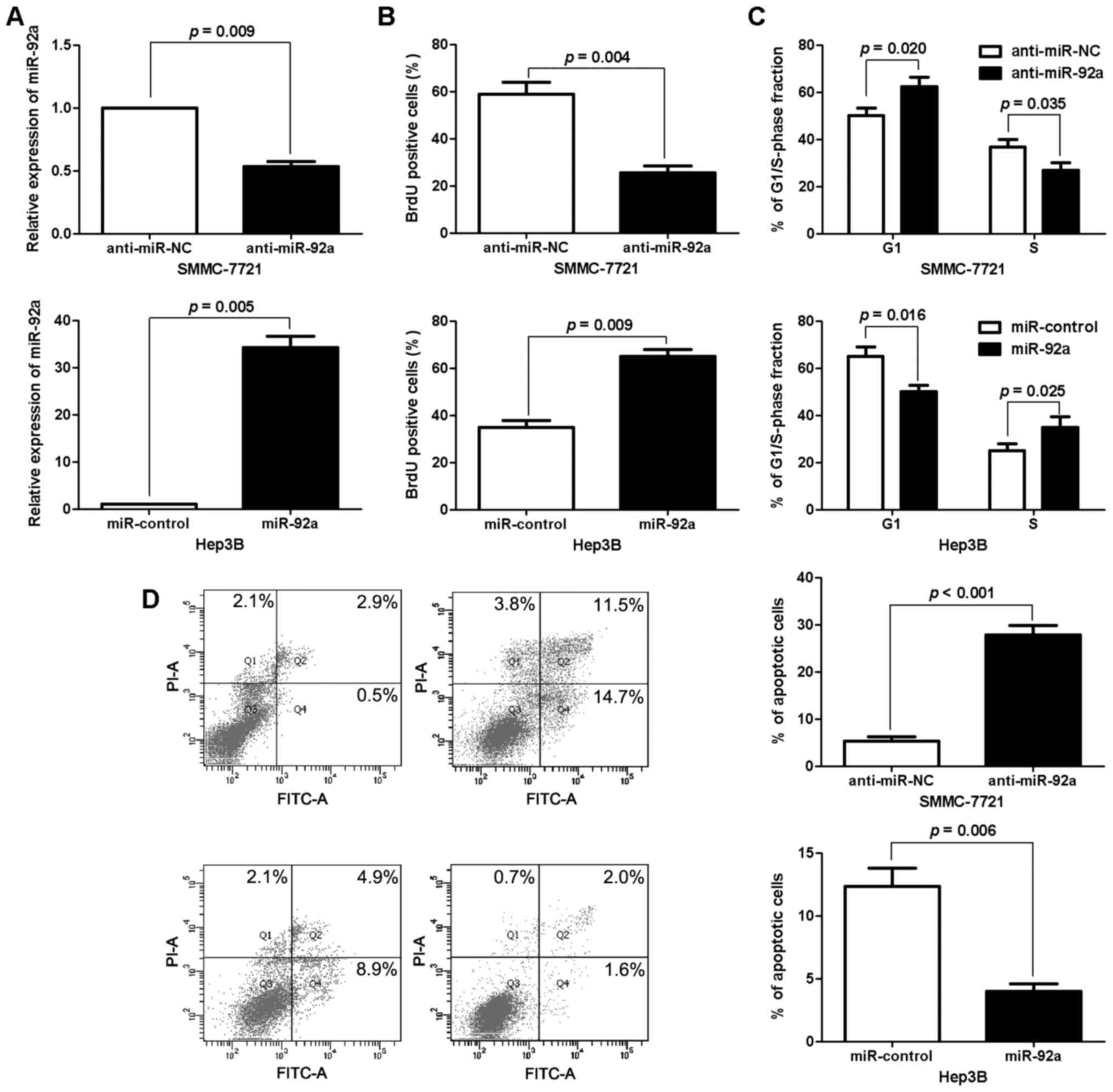
Subsequently to the publication of the above paper, an interested reader drew to the authors' attention that certain of the control western blotting data featured in Fig. 5 on p. 2581 had also appeared in a couple of other articles featuring several of the same authors [Tu K, Dou C, Zheng X, Li C, Yang W, Yao Y and Liu Q: Fibulin-5 inhibits hepatocellular carcinoma cell migration and invasion by down-regulating matrix metalloproteinase-7 expression. BMC Cancer 14: 938, 2014; and Gai X, Tu K, Li C, Roberts LR and Zheng X: Histone acetyltransferase PCAF accelerates apoptosis by repressing a GLI1/BCL2/BAX axis in hepatocellular carcinoma. Cell Death Dis 6: e1712, 2015]. In addition, the authors drew to the attention of the Editorial Office that a couple of mistakes were made during the assembly of Fig. 2D on p. 2579.
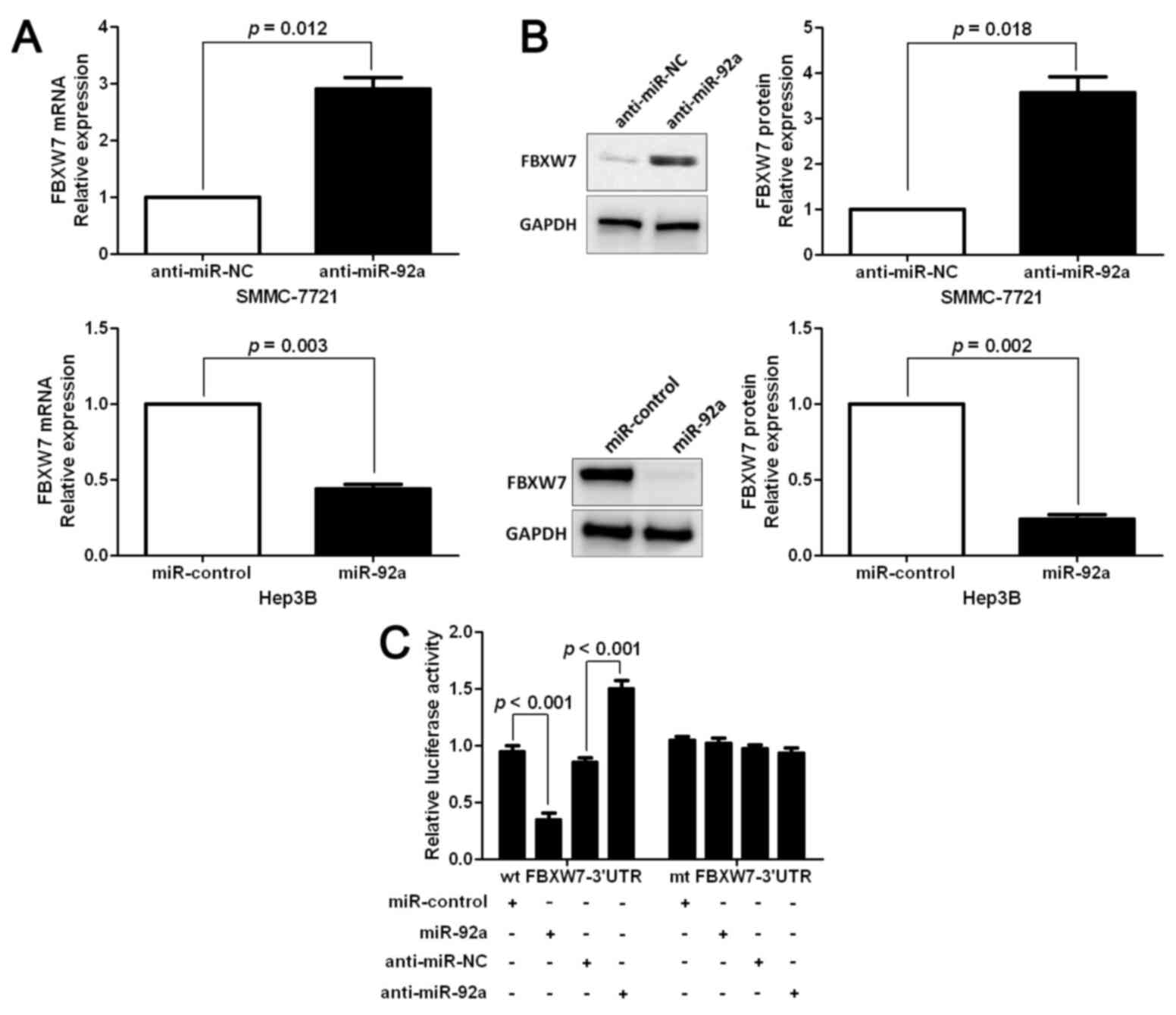
The authors were able to re-examine their original data files, and realized that these figures had been inadvertently assembled incorrectly (they were also able to present the raw data from which these figures had been assembled to the Editorial Office). The revised versions of Figs. 2 and 5, containing the intended flow cytometric and western blotting data for these figures respectively, is shown on the next page. The authors wish to emphasize that the corrections made to these figures do not affect the overall conclusions reported in the paper, and they are grateful to the Editor of Oncology Reports for allowing them the opportunity to publish this corrigendum. All the authors agree to the publication of this corrigendum, and also apologize to the readership for any inconvenience caused.