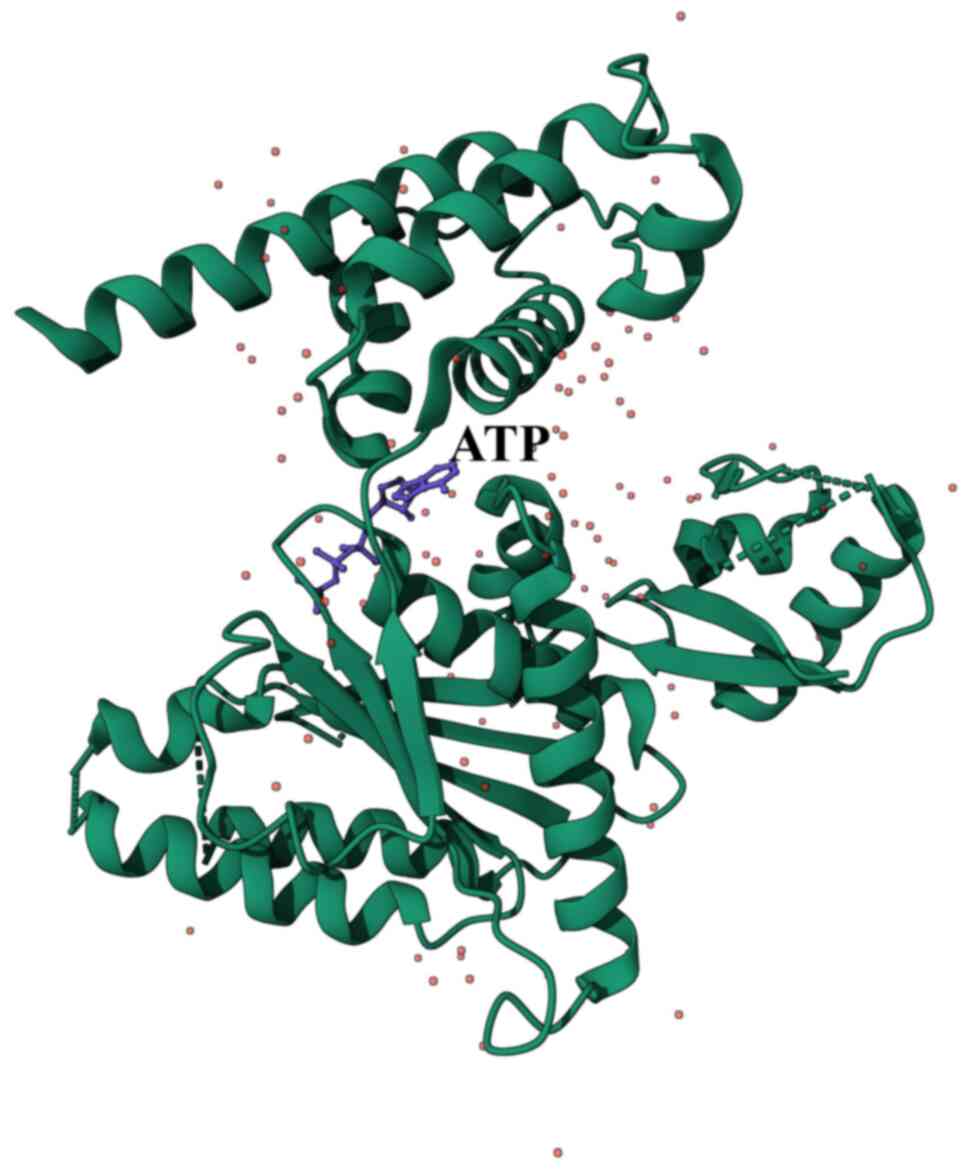
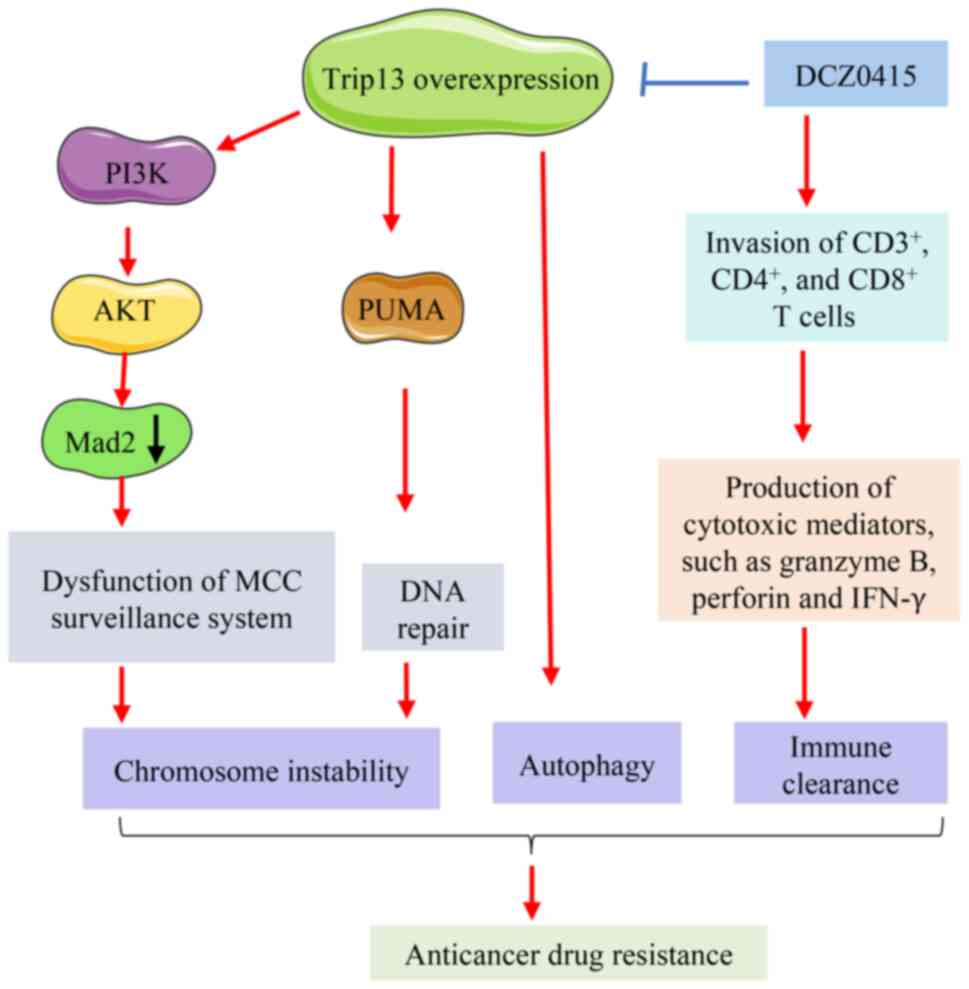
|
1
|
Jeong H, Wie M, Baek IJ, Sohn G, Um SH,
Lee SG, Seo Y, Ra J, Lee EA, Kim S, et al: TRIP13 participates in
immediate-early sensing of DNA strand breaks and ATM signaling
amplification through MRE11. Cells. 11:40952022. View Article : Google Scholar : PubMed/NCBI
|
|
2
|
Lee JW, Choi HS, Gyuris J, Brent R and
Moore DD: Two classes of proteins dependent on either the presence
or absence of thyroid hormone for interaction with the thyroid
hormone receptor. Mol Endocrinol. 9:243–254. 1995. View Article : Google Scholar : PubMed/NCBI
|
|
3
|
San-Segundo PA and Roeder GS: Pch2 links
chromatin silencing to meiotic checkpoint control. Cell.
97:313–324. 1999. View Article : Google Scholar : PubMed/NCBI
|
|
4
|
Miao C, Tang D, Zhang H, Wang M, Li Y,
Tang S, Yu H, Gu M and Cheng Z: Central region component1, a novel
synaptonemal complex component, is essential for meiotic
recombination initiation in rice. Plant Cell. 25:2998–3009. 2013.
View Article : Google Scholar : PubMed/NCBI
|
|
5
|
Farmer S, Hong EJ, Leung WK, Argunhan B,
Terentyev Y, Humphryes N, Toyoizumi H and Tsubouchi H: Budding
yeast Pch2, a widely conserved meiotic protein, is involved in the
initiation of meiotic recombination. PLoS One. 7:e397242012.
View Article : Google Scholar : PubMed/NCBI
|
|
6
|
Joyce EF and McKim KS: Drosophila PCH2 is
required for a pachytene checkpoint that monitors
double-strand-break-independent events leading to meiotic crossover
formation. Genetics. 181:39–51. 2009. View Article : Google Scholar : PubMed/NCBI
|
|
7
|
Ye Q, Rosenberg SC, Moeller A, Speir JA,
Su TY and Corbett KD: TRIP13 is a protein-remodeling AAA+ ATPase
that catalyzes MAD2 conformation switching. Elife. 4:e073672015.
View Article : Google Scholar : PubMed/NCBI
|
|
8
|
Li XC and Schimenti JC: Mouse pachytene
checkpoint 2 (trip13) is required for completing meiotic
recombination but not synapsis. PLoS Genet. 3:e1302007. View Article : Google Scholar : PubMed/NCBI
|
|
9
|
Roig I, Dowdle JA, Toth A, de Rooij DG,
Jasin M and Keeney S: Mouse TRIP13/PCH2 is required for
recombination and normal higher-order chromosome structure during
meiosis. PLoS Genet. 6:e10010622010. View Article : Google Scholar : PubMed/NCBI
|
|
10
|
Wojtasz L, Daniel K, Roig I, Bolcun-Filas
E, Xu H, Boonsanay V, Eckmann CR, Cooke HJ, Jasin M, Keeney S, et
al: Mouse HORMAD1 and HORMAD2, two conserved meiotic chromosomal
proteins, are depleted from synapsed chromosome axes with the help
of TRIP13 AAA-ATPase. PLoS Genet. 5:e10007022009. View Article : Google Scholar : PubMed/NCBI
|
|
11
|
Tipton AR, Wang K, Oladimeji P, Sufi S, Gu
Z and Liu ST: Identification of novel mitosis regulators through
data mining with human centromere/kinetochore proteins as group
queries. BMC Cell Biol. 13:152012. View Article : Google Scholar : PubMed/NCBI
|
|
12
|
Wang K, Sturt-Gillespie B, Hittle JC,
Macdonald D, Chan GK, Yen TJ and Liu ST: Thyroid hormone receptor
interacting protein 13 (TRIP13) AAA-ATPase is a novel mitotic
checkpoint-silencing protein. J Biol Chem. 289:23928–23937. 2014.
View Article : Google Scholar : PubMed/NCBI
|
|
13
|
Eytan E, Wang K, Miniowitz-Shemtov S,
Sitry-Shevah D, Kaisari S, Yen TJ, Liu ST and Hershko A:
Disassembly of mitotic checkpoint complexes by the joint action of
the AAA-ATPase TRIP13 and p31(comet). Proc Natl Acad Sci USA.
111:12019–12024. 2014. View Article : Google Scholar : PubMed/NCBI
|
|
14
|
Silva RD, Mirkovic M, Guilgur LG, Rathore
OS, Martinho RG and Oliveira RA: Absence of the spindle assembly
checkpoint restores mitotic fidelity upon loss of sister chromatid
cohesion. Curr Biol. 28:2837–2844.e2833. 2018. View Article : Google Scholar : PubMed/NCBI
|
|
15
|
Bhalla N and Dernburg AF: A conserved
checkpoint monitors meiotic chromosome synapsis in Caenorhabditis
elegans. Science. 310:1683–1686. 2005. View Article : Google Scholar : PubMed/NCBI
|
|
16
|
Börner GV, Barot A and Kleckner N: Yeast
Pch2 promotes domainal axis organization, timely recombination
progression, and arrest of defective recombinosomes during meiosis.
Proc Natl Acad Sci USA. 105:3327–3332. 2008. View Article : Google Scholar : PubMed/NCBI
|
|
17
|
Joshi N, Barot A, Jamison C and Börner GV:
Pch2 links chromosome axis remodeling at future crossover sites and
crossover distribution during yeast meiosis. PLoS Genet.
5:e10005572009. View Article : Google Scholar : PubMed/NCBI
|
|
18
|
Vader G, Blitzblau HG, Tame MA, Falk JE,
Curtin L and Hochwagen A: Protection of repetitive DNA borders from
self-induced meiotic instability. Nature. 477:115–119. 2011.
View Article : Google Scholar : PubMed/NCBI
|
|
19
|
Vader G: Pch2(TRIP13): Controlling cell
division through regulation of HORMA domains. Chromosoma.
124:333–339. 2015. View Article : Google Scholar : PubMed/NCBI
|
|
20
|
Chen C, Jomaa A, Ortega J and Alani EE:
Pch2 is a hexameric ring ATPase that remodels the chromosome axis
protein Hop1. Proc Natl Acad Sci USA. 111:E44–E53. 2014.PubMed/NCBI
|
|
21
|
Yedidi RS, Wendler P and Enenkel C:
AAA-ATPases in protein degradation. Front Mol Biosci. 4:422017.
View Article : Google Scholar : PubMed/NCBI
|
|
22
|
Sheng N, Yan L, Wu K, You W, Gong J, Hu L,
Tan G, Chen H and Wang Z: TRIP13 promotes tumor growth and is
associated with poor prognosis in colorectal cancer. Cell Death
Dis. 9:4022018. View Article : Google Scholar : PubMed/NCBI
|
|
23
|
Kurita K, Maeda M, Mansour MA, Kokuryo T,
Uehara K, Yokoyama Y, Nagino M, Hamaguchi M and Senga T: TRIP13 is
expressed in colorectal cancer and promotes cancer cell invasion.
Oncol Lett. 12:5240–5246. 2016. View Article : Google Scholar : PubMed/NCBI
|
|
24
|
Agarwal S, Behring M, Kim HG,
Chandrashekar DS, Chakravarthi BVSK, Gupta N, Bajpai P, Elkholy A,
Al Diffalha S, Datta PK, et al: TRIP13 promotes metastasis of
colorectal cancer regardless of p53 and microsatellite instability
status. Mol Oncol. 14:3007–3029. 2020. View Article : Google Scholar : PubMed/NCBI
|
|
25
|
Banerjee R, Russo N, Liu M, Basrur V,
Bellile E, Palanisamy N, Scanlon CS, van Tubergen E, Inglehart RC,
Metwally T, et al: TRIP13 promotes error-prone nonhomologous end
joining and induces chemoresistance in head and neck cancer. Nat
Commun. 5:45272014. View Article : Google Scholar : PubMed/NCBI
|
|
26
|
Lan J, Huang J, Tao X, Gao Y, Zhang L,
Huang W, Luo J, Liu C, Deng Y, Liu L and Liu X: Evaluation of the
TRIP13 level in breast cancer and insights into potential molecular
pathways. J Cell Mol Med. 26:2673–2685. 2022. View Article : Google Scholar : PubMed/NCBI
|
|
27
|
Liu L, Zhang Z, Xia X and Lei J: KIF18B
promotes breast cancer cell proliferation, migration and invasion
by targeting TRIP13 and activating the Wnt/β-catenin signaling
pathway. Oncol Lett. 23:1122022. View Article : Google Scholar : PubMed/NCBI
|
|
28
|
Li ZH, Lei L, Fei LR, Huang WJ, Zheng YW,
Yang MQ, Wang Z, Liu CC and Xu HT: TRIP13 promotes the
proliferation and invasion of lung cancer cells via the Wnt
signaling pathway and epithelial-mesenchymal transition. J Mol
Histol. 52:11–20. 2021. View Article : Google Scholar : PubMed/NCBI
|
|
29
|
Cai W, Ni W, Jin Y and Li Y: TRIP13
promotes lung cancer cell growth and metastasis through
AKT/mTORC1/c-Myc signaling. Cancer Biomark. 30:237–248. 2021.
View Article : Google Scholar : PubMed/NCBI
|
|
30
|
Zhang Q, Dong Y, Hao S, Tong Y, Luo Q and
Aerxiding P: The oncogenic role of TRIP13 in regulating
proliferation, invasion, and cell cycle checkpoint in NSCLC cells.
Int J Clin Exp Pathol. 12:3357–3366. 2019.PubMed/NCBI
|
|
31
|
Yao J, Zhang X, Li J, Zhao D, Gao B, Zhou
H, Gao S and Zhang L: Silencing TRIP13 inhibits cell growth and
metastasis of hepatocellular carcinoma by activating of
TGF-β1/smad3. Cancer Cell Int. 18:2082018. View Article : Google Scholar : PubMed/NCBI
|
|
32
|
Garcia MR, Meissburger B, Chan J, de Guia
RM, Mattijssen F, Roessler S, Birkenfeld AL, Raschzok N, Riols F,
Tokarz J, et al: Trip13 depletion in liver cancer induces a
lipogenic response contributing to plin2-dependent mitotic cell
death. Adv Sci (Weinh). 9:e21042912022. View Article : Google Scholar : PubMed/NCBI
|
|
33
|
Dong L, Ding H, Li Y, Xue D, Li Z, Liu Y,
Zhang T, Zhou J and Wang P: TRIP13 is a predictor for poor
prognosis and regulates cell proliferation, migration and invasion
in prostate cancer. Int J Biol Macromol. 121:200–206. 2019.
View Article : Google Scholar : PubMed/NCBI
|
|
34
|
Zeng L, Liu YM, Yang N, Zhang T and Xie H:
Hsa_circRNA_100146 promotes prostate cancer progression by
upregulating TRIP13 via sponging miR-615-5p. Front Mol Biosci.
8:6934772021. View Article : Google Scholar : PubMed/NCBI
|
|
35
|
Wang Y, Huang J, Li B, Xue H, Tricot G, Hu
L, Xu Z, Sun X, Chang S, Gao L, et al: A small-molecule inhibitor
targeting TRIP13 suppresses multiple myeloma progression. Cancer
Res. 80:536–548. 2020. View Article : Google Scholar : PubMed/NCBI
|
|
36
|
Gao Y, Liu S, Guo Q, Zhang S, Zhao Y, Wang
H, Li T, Gong Y, Wang Y, Zhang T, et al: Increased expression of
TRIP13 drives the tumorigenesis of bladder cancer in association
with the EGFR signaling pathway. Int J Biol Sci. 15:1488–1499.
2019. View Article : Google Scholar : PubMed/NCBI
|
|
37
|
Mohammed aI, Ali ME-H, Mohamed FEA and
Abd-Elrehim DM: Immunohistochemical expression of TRIP13 in
transitional and squamous cell carcinoma of urinary bladder
carcinoma. Minia J Med Res. 2023. View Article : Google Scholar
|
|
38
|
Zhou KS, Zhang Q, Zhang WT, Liu YY, Wu SS,
Zhou J, Wei XD and Song YP: Study on the expression of TRIP13 mRNA
in chronic lymphocytic leukemia B lymphocyte and the molecular
mechanism of TRIP13 mediated JVM-2 cell proliferation and
apoptosis. Zhonghua Xue Ye Xue Za Zhi. 38:618–622. 2017.(In
Chinese). PubMed/NCBI
|
|
39
|
Li W, Zhang G, Li X, Wang X, Li Q, Hong L,
Shen Y, Zhao C, Gong X, Chen Y and Zhou J: Thyroid hormone receptor
interactor 13 (TRIP13) overexpression associated with tumor
progression and poor prognosis in lung adenocarcinoma. Biochem
Biophys Res Commun. 499:416–424. 2018. View Article : Google Scholar : PubMed/NCBI
|
|
40
|
Ju L, Li X, Shao J, Lu R, Wang Y and Bian
Z: Upregulation of thyroid hormone receptor interactor 13 is
associated with human hepatocellular carcinoma. Oncol Rep.
40:3794–3802. 2018.PubMed/NCBI
|
|
41
|
Lu W, Mengxuan Z, Ming R, Zixu G, Yong Z,
Simin Z, Yang Y, Leqi Q, Kangjie S, Yanlin L, et al: TRIP13/FLNA
complex promotes tumor progression and is associated with
unfavorable outcomes in melanoma. J Oncol. 2022:14191792022.
View Article : Google Scholar : PubMed/NCBI
|
|
42
|
Tao Y, Yang G, Yang H, Song D, Hu L, Xie
B, Wang H, Gao L, Gao M, Xu H, et al: TRIP13 impairs mitotic
checkpoint surveillance and is associated with poor prognosis in
multiple myeloma. Oncotarget. 8:26718–26731. 2017. View Article : Google Scholar : PubMed/NCBI
|
|
43
|
Zhang LT, Ke LX, Wu XY, Tian HT, Deng HZ,
Xu LY, Li EM and Long L: TRIP13 induces nedaplatin resistance in
esophageal squamous cell carcinoma by enhancing repair of DNA
damage and inhibiting apoptosis. Biomed Res Int.
2022:72954582022.PubMed/NCBI
|
|
44
|
Xu H, Ma Z, Mo X, Chen X, Xu F, Wu F, Chen
H, Zhou G, Xia H and Zhang C: Inducing synergistic DNA damage by
TRIP13 and PARP1 inhibitors provides a potential treatment for
hepatocellular carcinoma. J Cancer. 13:2226–2237. 2022. View Article : Google Scholar : PubMed/NCBI
|
|
45
|
Ye Q, Kim DH, Dereli I, Rosenberg SC,
Hagemann G, Herzog F, Tóth A, Cleveland DW and Corbett KD: The AAA+
ATPase TRIP13 remodels HORMA domains through N-terminal engagement
and unfolding. EMBO J. 36:2419–2434. 2017. View Article : Google Scholar : PubMed/NCBI
|
|
46
|
Mapelli M, Massimiliano L, Santaguida S
and Musacchio A: The Mad2 conformational dimer: Structure and
implications for the spindle assembly checkpoint. Cell.
131:730–743. 2007. View Article : Google Scholar : PubMed/NCBI
|
|
47
|
Marks DH, Thomas R, Chin Y, Shah R, Khoo C
and Benezra R: Mad2 overexpression uncovers a critical role for
TRIP13 in mitotic exit. Cell Rep. 19:1832–1845. 2017. View Article : Google Scholar : PubMed/NCBI
|
|
48
|
Yang M, Li B, Tomchick DR, Machius M, Rizo
J, Yu H and Luo X: p31comet blocks Mad2 activation through
structural mimicry. Cell. 131:744–755. 2007. View Article : Google Scholar : PubMed/NCBI
|
|
49
|
Rosenberg SC and Corbett KD: The
multifaceted roles of the HORMA domain in cellular signaling. J
Cell Biol. 211:745–755. 2015. View Article : Google Scholar : PubMed/NCBI
|
|
50
|
Zhou K, Zhang W, Zhang Q, Gui R, Zhao H,
Chai X, Li Y, Wei X and Song Y: Loss of thyroid hormone receptor
interactor 13 inhibits cell proliferation and survival in human
chronic lymphocytic leukemia. Oncotarget. 8:25469–25481. 2017.
View Article : Google Scholar : PubMed/NCBI
|
|
51
|
Furlong F, Fitzpatrick P, O'Toole S,
Phelan S, McGrogan B, Maguire A, O'Grady A, Gallagher M, Prencipe
M, McGoldrick A, et al: Low MAD2 expression levels associate with
reduced progression-free survival in patients with high-grade
serous epithelial ovarian cancer. J Pathol. 226:746–755. 2012.
View Article : Google Scholar : PubMed/NCBI
|
|
52
|
Zhou XY and Shu XM: TRIP13 promotes
proliferation and invasion of epithelial ovarian cancer cells
through Notch signaling pathway. Eur Rev Med Pharmacol Sci.
23:522–529. 2019.PubMed/NCBI
|
|
53
|
Amawi H, Sim HM, Tiwari AK, Ambudkar SV
and Shukla S: ABC transporter-mediated multidrug-resistant cancer.
Adv Exp Med Biol. 1141:549–580. 2019. View Article : Google Scholar : PubMed/NCBI
|
|
54
|
Khatami M: Cancer; an induced disease of
twentieth century! Induction of tolerance, increased entropy and
‘Dark Energy’: Loss of biorhythms (Anabolism v. Catabolism). Clin
Transl Med. 7:202018. View Article : Google Scholar : PubMed/NCBI
|
|
55
|
Wang DC, Wang W, Zhu B and Wang X: Lung
cancer heterogeneity and new strategies for drug therapy. Annu Rev
Pharmacol Toxicol. 58:531–546. 2018. View Article : Google Scholar : PubMed/NCBI
|
|
56
|
Bukowski K, Kciuk M and Kontek R:
Mechanisms of multidrug resistance in cancer chemotherapy. Int J
Mol Sci. 21:32332020. View Article : Google Scholar : PubMed/NCBI
|
|
57
|
Vasan N, Baselga J and Hyman DM: A view on
drug resistance in cancer. Nature. 575:299–309. 2019. View Article : Google Scholar : PubMed/NCBI
|
|
58
|
Lu S, Guo M, Fan Z, Chen Y, Shi X, Gu C
and Yang Y: Elevated TRIP13 drives cell proliferation and drug
resistance in bladder cancer. Am J Transl Res. 11:4397–4410.
2019.PubMed/NCBI
|
|
59
|
Li C, Xia J, Franqui-Machin R, Chen F, He
Y, Ashby TC, Teng F, Xu H, Liu D, Gai D, et al: TRIP13 modulates
protein deubiquitination and accelerates tumor development and
progression of B cell malignancies. J Clin Invest. 131:e1468932021.
View Article : Google Scholar : PubMed/NCBI
|
|
60
|
Ozols RF and Young RC: High-dose cisplatin
therapy in ovarian cancer. Semin Oncol. 12:21–30. 1985.PubMed/NCBI
|
|
61
|
Markman M: Intraperitoneal cisplatin and
carboplatin in the management of ovarian cancer. Semin Oncol.
21:17–19; quiz 20. 581994.PubMed/NCBI
|
|
62
|
Zoń A and Bednarek I: Cisplatin in ovarian
cancer treatment-known limitations in therapy force new solutions.
Int J Mol Sci. 24:75852023. View Article : Google Scholar : PubMed/NCBI
|
|
63
|
Mittica G, Ghisoni E, Giannone G, Genta S,
Aglietta M, Sapino A and Valabrega G: PARP inhibitors in ovarian
cancer. Recent Pat Anticancer Drug Discov. 13:392–410. 2018.
View Article : Google Scholar : PubMed/NCBI
|
|
64
|
Smith M and Pothuri B: Appropriate
selection of PARP inhibitors in ovarian cancer. Curr Treat Options
Oncol. 23:887–903. 2022. View Article : Google Scholar : PubMed/NCBI
|
|
65
|
Jiang X, Li X, Li W, Bai H and Zhang Z:
PARP inhibitors in ovarian cancer: Sensitivity prediction and
resistance mechanisms. J Cell Mol Med. 23:2303–2313. 2019.
View Article : Google Scholar : PubMed/NCBI
|
|
66
|
Musacchio A and Salmon ED: The
spindle-assembly checkpoint in space and time. Nat Rev Mol Cell
Biol. 8:379–393. 2007. View Article : Google Scholar : PubMed/NCBI
|
|
67
|
Lara-Gonzalez P, Westhorpe FG and Taylor
SS: The spindle assembly checkpoint. Curr Biol. 22:R966–R980. 2012.
View Article : Google Scholar : PubMed/NCBI
|
|
68
|
Chao WC, Kulkarni K, Zhang Z, Kong EH and
Barford D: Structure of the mitotic checkpoint complex. Nature.
484:208–213. 2012. View Article : Google Scholar : PubMed/NCBI
|
|
69
|
de Cárcer G and Malumbres M: A centrosomal
route for cancer genome instability. Nat Cell Biol. 16:504–506.
2014. View Article : Google Scholar : PubMed/NCBI
|
|
70
|
Sotillo R, Schvartzman JM, Socci ND and
Benezra R: Mad2-induced chromosome instability leads to lung tumour
relapse after oncogene withdrawal. Nature. 464:436–440. 2010.
View Article : Google Scholar : PubMed/NCBI
|
|
71
|
Bargiela-Iparraguirre J, Prado-Marchal L,
Pajuelo-Lozano N, Jiménez B, Perona R and Sánchez-Pérez I: Mad2 and
BubR1 modulates tumourigenesis and paclitaxel response in MKN45
gastric cancer cells. Cell Cycle. 13:3590–3601. 2014. View Article : Google Scholar : PubMed/NCBI
|
|
72
|
Tusell L, Pampalona J, Soler D, Frías C
and Genescà A: Different outcomes of telomere-dependent anaphase
bridges. Biochem Soc Trans. 38:1698–1703. 2010. View Article : Google Scholar : PubMed/NCBI
|
|
73
|
Stewénius Y, Gorunova L, Jonson T, Larsson
N, Höglund M, Mandahl N, Mertens F, Mitelman F and Gisselsson D:
Structural and numerical chromosome changes in colon cancer develop
through telomere-mediated anaphase bridges, not through mitotic
multipolarity. Proc Natl Acad Sci USA. 102:5541–5546. 2005.
View Article : Google Scholar : PubMed/NCBI
|
|
74
|
Bailey SM and Murnane JP: Telomeres,
chromosome instability and cancer. Nucleic Acids Res. 34:2408–2417.
2006. View Article : Google Scholar : PubMed/NCBI
|
|
75
|
Mills KD, Ferguson DO and Alt FW: The role
of DNA breaks in genomic instability and tumorigenesis. Immunol
Rev. 194:77–95. 2003. View Article : Google Scholar : PubMed/NCBI
|
|
76
|
Zhou W, Yang Y, Xia J, Wang H, Salama ME,
Xiong W, Xu H, Shetty S, Chen T, Zeng Z, et al: NEK2 induces drug
resistance mainly through activation of efflux drug pumps and is
associated with poor prognosis in myeloma and other cancers. Cancer
Cell. 23:48–62. 2013. View Article : Google Scholar : PubMed/NCBI
|
|
77
|
Carter SL, Eklund AC, Kohane IS, Harris LN
and Szallasi Z: A signature of chromosomal instability inferred
from gene expression profiles predicts clinical outcome in multiple
human cancers. Nat Genet. 38:1043–1048. 2006. View Article : Google Scholar : PubMed/NCBI
|
|
78
|
Clairmont CS, Sarangi P, Ponnienselvan K,
Galli LD, Csete I, Moreau L, Adelmant G, Chowdhury D, Marto JA and
D'Andrea AD: TRIP13 regulates DNA repair pathway choice through
REV7 conformational change. Nat Cell Biol. 22:87–96. 2020.
View Article : Google Scholar : PubMed/NCBI
|
|
79
|
Sudakin V, Chan GK and Yen TJ: Checkpoint
inhibition of the APC/C in HeLa cells is mediated by a complex of
BUBR1, BUB3, CDC20, and MAD2. J Cell Biol. 154:925–936. 2001.
View Article : Google Scholar : PubMed/NCBI
|
|
80
|
Overlack K, Bange T, Weissmann F, Faesen
AC, Maffini S, Primorac I, Müller F, Peters JM and Musacchio A:
BubR1 promotes Bub3-dependent APC/C inhibition during spindle
assembly checkpoint signaling. Curr Biol. 27:2915–2927.e2917. 2017.
View Article : Google Scholar : PubMed/NCBI
|
|
81
|
Burton JL and Solomon MJ: Mad3p, a
pseudosubstrate inhibitor of APCCdc20 in the spindle assembly
checkpoint. Genes Dev. 21:655–667. 2007. View Article : Google Scholar : PubMed/NCBI
|
|
82
|
McGranahan N, Burrell RA, Endesfelder D,
Novelli MR and Swanton C: Cancer chromosomal instability:
Therapeutic and diagnostic challenges. EMBO Rep. 13:528–538. 2012.
View Article : Google Scholar : PubMed/NCBI
|
|
83
|
Lischetti T and Nilsson J: Regulation of
mitotic progression by the spindle assembly checkpoint. Mol Cell
Oncol. 2:e9704842015. View Article : Google Scholar : PubMed/NCBI
|
|
84
|
Sudo T, Nitta M, Saya H and Ueno NT:
Dependence of paclitaxel sensitivity on a functional spindle
assembly checkpoint. Cancer Res. 64:2502–2508. 2004. View Article : Google Scholar : PubMed/NCBI
|
|
85
|
Wang M, Chen S and Ao D: Targeting DNA
repair pathway in cancer: Mechanisms and clinical application.
MedComm. 2020.2:654–691. 2021. View Article : Google Scholar : PubMed/NCBI
|
|
86
|
Hanahan D and Weinberg RA: The hallmarks
of cancer. Cell. 100:57–70. 2000. View Article : Google Scholar : PubMed/NCBI
|
|
87
|
Hanahan D and Weinberg RA: Hallmarks of
cancer: The next generation. Cell. 144:646–674. 2011. View Article : Google Scholar : PubMed/NCBI
|
|
88
|
Deng S, Vlatkovic T, Li M, Zhan T,
Veldwijk MR and Herskind C: Targeting the DNA damage response and
DNA repair pathways to enhance radiosensitivity in colorectal
cancer. Cancers (Basel). 14:48742022. View Article : Google Scholar : PubMed/NCBI
|
|
89
|
Mirza MR, Pignata S and Ledermann JA:
Latest clinical evidence and further development of PARP inhibitors
in ovarian cancer. Ann Oncol. 29:1366–1376. 2018. View Article : Google Scholar : PubMed/NCBI
|
|
90
|
Schettini F, Giudici F, Bernocchi O,
Sirico M, Corona SP, Giuliano M, Locci M, Paris I, Scambia G, De
Placido S, et al: Poly (ADP-ribose) polymerase inhibitors in solid
tumours: Systematic review and meta-analysis. Eur J Cancer.
149:134–152. 2021. View Article : Google Scholar : PubMed/NCBI
|
|
91
|
Tutt ANJ, Garber JE, Kaufman B, Viale G,
Fumagalli D, Rastogi P, Gelber RD, de Azambuja E, Fielding A,
Balmaña J, et al: Adjuvant olaparib for patients with BRCA1- or
BRCA2-mutated breast cancer. N Engl J Med. 384:2394–2405. 2021.
View Article : Google Scholar : PubMed/NCBI
|
|
92
|
Carreira S, Porta N, Arce-Gallego S, Seed
G, Llop-Guevara A, Bianchini D, Rescigno P, Paschalis A, Bertan C,
Baker C, et al: Biomarkers associating with PARP inhibitor benefit
in prostate cancer in the TOPARP-B trial. Cancer Discov.
11:2812–2827. 2021. View Article : Google Scholar : PubMed/NCBI
|
|
93
|
Mateo J, Porta N, Bianchini D, McGovern U,
Elliott T, Jones R, Syndikus I, Ralph C, Jain S, Varughese M, et
al: Olaparib in patients with metastatic castration-resistant
prostate cancer with DNA repair gene aberrations (TOPARP-B): A
multicentre, open-label, randomised, phase 2 trial. Lancet Oncol.
21:162–174. 2020. View Article : Google Scholar : PubMed/NCBI
|
|
94
|
Maughan BL and Antonarakis ES: Olaparib
and rucaparib for the treatment of DNA repair-deficient metastatic
castration-resistant prostate cancer. Expert Opin Pharmacother.
22:1625–1632. 2021. View Article : Google Scholar : PubMed/NCBI
|
|
95
|
Cleary JM, Wolpin BM, Dougan SK, Raghavan
S, Singh H, Huffman B, Sethi NS, Nowak JA, Shapiro GI, Aguirre AJ
and D'Andrea AD: Opportunities for utilization of DNA repair
inhibitors in homologous recombination repair-deficient and
proficient pancreatic adenocarcinoma. Clin Cancer Res.
27:6622–6637. 2021. View Article : Google Scholar : PubMed/NCBI
|
|
96
|
van Waardenburg R and Yang ES: Targeting
DNA repair pathways to overcome cancer drug resistance. Cancer Drug
Resist. 4:837–841. 2021.PubMed/NCBI
|
|
97
|
Ghosh S, Mazumdar T, Xu W, Powell RT,
Stephan C, Shen L, Shah PA, Pickering CR, Myers JN, Wang J, et al:
Combined TRIP13 and aurora kinase inhibition induces apoptosis in
human papillomavirus–driven cancers. Clin Cancer Res. 28:4479–4493.
2022. View Article : Google Scholar : PubMed/NCBI
|
|
98
|
Chang H and Zou Z: Targeting autophagy to
overcome drug resistance: Further developments. J Hematol Oncol.
13:1592020. View Article : Google Scholar : PubMed/NCBI
|
|
99
|
Ahmadi-Dehlaghi F, Mohammadi P, Valipour
E, Pournaghi P, Kiani S and Mansouri K: Autophagy: A challengeable
paradox in cancer treatment. Cancer Med. 12:11542–11569. 2023.
View Article : Google Scholar : PubMed/NCBI
|
|
100
|
Salimi-Jeda A, Ghabeshi S, Pour ZGM,
Jazaeri EO, Araiinejad M, Sheikholeslami F, Abdoli M, Edalat M and
Abdoli A: Autophagy modulation and cancer combination therapy: A
smart approach in cancer therapy. Cancer Treat Res Commun.
30:1005122022. View Article : Google Scholar : PubMed/NCBI
|
|
101
|
Levine B and Kroemer G: Biological
functions of autophagy genes: A disease perspective. Cell.
176:11–42. 2019. View Article : Google Scholar : PubMed/NCBI
|
|
102
|
Galluzzi L and Green DR:
Autophagy-independent functions of the autophagy machinery. Cell.
177:1682–1699. 2019. View Article : Google Scholar : PubMed/NCBI
|
|
103
|
Dikic I and Elazar Z: Mechanism and
medical implications of mammalian autophagy. Nat Rev Mol Cell Biol.
19:349–364. 2018. View Article : Google Scholar : PubMed/NCBI
|
|
104
|
Wu M and Zhang P: EGFR-mediated autophagy
in tumourigenesis and therapeutic resistance. Cancer Lett.
469:207–216. 2020. View Article : Google Scholar : PubMed/NCBI
|
|
105
|
Li YJ, Lei YH, Yao N, Wang CR, Hu N, Ye
WC, Zhang DM and Chen ZS: Autophagy and multidrug resistance in
cancer. Chin J Cancer. 36:522017. View Article : Google Scholar : PubMed/NCBI
|
|
106
|
Amaravadi RK, Kimmelman AC and Debnath J:
Targeting autophagy in cancer: Recent advances and future
directions. Cancer Discov. 9:1167–1181. 2019. View Article : Google Scholar : PubMed/NCBI
|
|
107
|
Xiao Z, Li M, Zhang X, Rong X and Xu H:
TRIP13 overexpression promotes gefitinib resistance in non-small
cell lung cancer via regulating autophagy and phosphorylation of
the EGFR signaling pathway. Oncol Rep. 49:842023. View Article : Google Scholar : PubMed/NCBI
|
|
108
|
Sharma P, Hu-Lieskovan S, Wargo JA and
Ribas A: Primary, adaptive, and acquired resistance to cancer
immunotherapy. Cell. 168:707–723. 2017. View Article : Google Scholar : PubMed/NCBI
|
|
109
|
Agarwal S, Afaq F, Bajpai P, Kim HG,
Elkholy A, Behring M, Chandrashekar DS, Diffalha SA, Khushman M,
Sugandha SP, et al: DCZ0415, a small-molecule inhibitor targeting
TRIP13, inhibits EMT and metastasis via inactivation of the
FGFR4/STAT3 axis and the Wnt/β-catenin pathway in colorectal
cancer. Mol Oncol. 16:1728–1745. 2022. View Article : Google Scholar : PubMed/NCBI
|
|
110
|
Qie S and Diehl JA: Cyclin D1, cancer
progression, and opportunities in cancer treatment. J Mol Med
(Berl). 94:1313–1326. 2016. View Article : Google Scholar : PubMed/NCBI
|
|
111
|
Lindahl T and Barnes DE: Repair of
endogenous DNA damage. Cold Spring Harb Symp Quant Biol.
65:127–133. 2000. View Article : Google Scholar : PubMed/NCBI
|
|
112
|
Sarangi P, Clairmont CS, Galli LD, Moreau
LA and D'Andrea AD: p31(comet) promotes homologous recombination by
inactivating REV7 through the TRIP13 ATPase. Proc Natl Acad Sci
USA. 117:26795–26803. 2020. View Article : Google Scholar : PubMed/NCBI
|
|
113
|
Corbett KD: p31comet and TRIP13 recycle
Rev7 to regulate DNA repair. Proc Natl Acad Sci USA.
117:27761–27763. 2020. View Article : Google Scholar : PubMed/NCBI
|
|
114
|
Oser MG, Fonseca R, Chakraborty AA, Brough
R, Spektor A, Jennings RB, Flaifel A, Novak JS, Gulati A, Buss E,
et al: Cells lacking the RB1 tumor suppressor gene are
hyperdependent on aurora B kinase for survival. Cancer Discov.
9:230–247. 2019. View Article : Google Scholar : PubMed/NCBI
|
|
115
|
Gong X, Du J, Parsons SH, Merzoug FF,
Webster Y, Iversen PW, Chio LC, Van Horn RD, Lin X, Blosser W, et
al: Aurora A kinase inhibition is synthetic lethal with loss of the
RB1 tumor suppressor gene. Cancer Discov. 9:248–263. 2019.
View Article : Google Scholar : PubMed/NCBI
|
|
116
|
Schvartzman JM, Duijf PH, Sotillo R, Coker
C and Benezra R: Mad2 is a critical mediator of the chromosome
instability observed upon Rb and p53 pathway inhibition. Cancer
Cell. 19:701–714. 2011. View Article : Google Scholar : PubMed/NCBI
|
|
117
|
Li Z, Liu J, Chen T, Sun R, Liu Z, Qiu B,
Xu Y and Zhang Z: HMGA1-TRIP13 axis promotes stemness and
epithelial mesenchymal transition of perihilar cholangiocarcinoma
in a positive feedback loop dependent on c-Myc. J Exp Clin Cancer
Res. 40:862021. View Article : Google Scholar : PubMed/NCBI
|
|
118
|
Zhang X, Zhou J, Xue D, Li Z, Liu Y and
Dong L: MiR-515-5p acts as a tumor suppressor via targeting TRIP13
in prostate cancer. Int J Biol Macromol. 129:227–232. 2019.
View Article : Google Scholar : PubMed/NCBI
|
|
119
|
Chen Y, Chen D, Qin Y, Qiu C, Zhou Y, Dai
M, Li L, Sun Q and Jiang Y: TRIP13, identified as a hub gene of
tumor progression, is the target of microRNA-4693-5p and a
potential therapeutic target for colorectal cancer. Cell Death
Discov. 8:352022. View Article : Google Scholar : PubMed/NCBI
|
|
120
|
Zhu MX, Wei CY, Zhang PF, Gao DM, Chen J,
Zhao Y, Dong SS and Liu BB: Elevated TRIP13 drives the AKT/mTOR
pathway to induce the progression of hepatocellular carcinoma via
interacting with ACTN4. J Exp Clin Cancer Res. 38:4092019.
View Article : Google Scholar : PubMed/NCBI
|
|
121
|
Arun G, Diermeier SD and Spector DL:
Therapeutic targeting of long non-coding RNAs in cancer. Trends Mol
Med. 24:257–277. 2018. View Article : Google Scholar : PubMed/NCBI
|