Spandidos Publications Logo
  • About
    • About Spandidos
    • Aims and Scopes
    • Abstracting and Indexing
    • Editorial Policies
    • Reprints and Permissions
    • Job Opportunities
    • Terms and Conditions
    • Contact
  • Journals
    • All Journals
    • Oncology Letters
      • Oncology Letters
      • Information for Authors
      • Editorial Policies
      • Editorial Board
      • Aims and Scope
      • Abstracting and Indexing
      • Bibliographic Information
      • Archive
    • International Journal of Oncology
      • International Journal of Oncology
      • Information for Authors
      • Editorial Policies
      • Editorial Board
      • Aims and Scope
      • Abstracting and Indexing
      • Bibliographic Information
      • Archive
    • Molecular and Clinical Oncology
      • Molecular and Clinical Oncology
      • Information for Authors
      • Editorial Policies
      • Editorial Board
      • Aims and Scope
      • Abstracting and Indexing
      • Bibliographic Information
      • Archive
    • Experimental and Therapeutic Medicine
      • Experimental and Therapeutic Medicine
      • Information for Authors
      • Editorial Policies
      • Editorial Board
      • Aims and Scope
      • Abstracting and Indexing
      • Bibliographic Information
      • Archive
    • International Journal of Molecular Medicine
      • International Journal of Molecular Medicine
      • Information for Authors
      • Editorial Policies
      • Editorial Board
      • Aims and Scope
      • Abstracting and Indexing
      • Bibliographic Information
      • Archive
    • Biomedical Reports
      • Biomedical Reports
      • Information for Authors
      • Editorial Policies
      • Editorial Board
      • Aims and Scope
      • Abstracting and Indexing
      • Bibliographic Information
      • Archive
    • Oncology Reports
      • Oncology Reports
      • Information for Authors
      • Editorial Policies
      • Editorial Board
      • Aims and Scope
      • Abstracting and Indexing
      • Bibliographic Information
      • Archive
    • Molecular Medicine Reports
      • Molecular Medicine Reports
      • Information for Authors
      • Editorial Policies
      • Editorial Board
      • Aims and Scope
      • Abstracting and Indexing
      • Bibliographic Information
      • Archive
    • World Academy of Sciences Journal
      • World Academy of Sciences Journal
      • Information for Authors
      • Editorial Policies
      • Editorial Board
      • Aims and Scope
      • Abstracting and Indexing
      • Bibliographic Information
      • Archive
    • International Journal of Functional Nutrition
      • International Journal of Functional Nutrition
      • Information for Authors
      • Editorial Policies
      • Editorial Board
      • Aims and Scope
      • Abstracting and Indexing
      • Bibliographic Information
      • Archive
    • International Journal of Epigenetics
      • International Journal of Epigenetics
      • Information for Authors
      • Editorial Policies
      • Editorial Board
      • Aims and Scope
      • Abstracting and Indexing
      • Bibliographic Information
      • Archive
    • Medicine International
      • Medicine International
      • Information for Authors
      • Editorial Policies
      • Editorial Board
      • Aims and Scope
      • Abstracting and Indexing
      • Bibliographic Information
      • Archive
  • Articles
  • Information
    • Information for Authors
    • Information for Reviewers
    • Information for Librarians
    • Information for Advertisers
    • Conferences
  • Language Editing
Spandidos Publications Logo
  • About
    • About Spandidos
    • Aims and Scopes
    • Abstracting and Indexing
    • Editorial Policies
    • Reprints and Permissions
    • Job Opportunities
    • Terms and Conditions
    • Contact
  • Journals
    • All Journals
    • Biomedical Reports
      • Information for Authors
      • Editorial Policies
      • Editorial Board
      • Aims and Scope
      • Abstracting and Indexing
      • Bibliographic Information
      • Archive
    • Experimental and Therapeutic Medicine
      • Information for Authors
      • Editorial Policies
      • Editorial Board
      • Aims and Scope
      • Abstracting and Indexing
      • Bibliographic Information
      • Archive
    • International Journal of Epigenetics
      • Information for Authors
      • Editorial Policies
      • Editorial Board
      • Aims and Scope
      • Abstracting and Indexing
      • Bibliographic Information
      • Archive
    • International Journal of Functional Nutrition
      • Information for Authors
      • Editorial Policies
      • Editorial Board
      • Aims and Scope
      • Abstracting and Indexing
      • Bibliographic Information
      • Archive
    • International Journal of Molecular Medicine
      • Information for Authors
      • Editorial Policies
      • Editorial Board
      • Aims and Scope
      • Abstracting and Indexing
      • Bibliographic Information
      • Archive
    • International Journal of Oncology
      • Information for Authors
      • Editorial Policies
      • Editorial Board
      • Aims and Scope
      • Abstracting and Indexing
      • Bibliographic Information
      • Archive
    • Medicine International
      • Information for Authors
      • Editorial Policies
      • Editorial Board
      • Aims and Scope
      • Abstracting and Indexing
      • Bibliographic Information
      • Archive
    • Molecular and Clinical Oncology
      • Information for Authors
      • Editorial Policies
      • Editorial Board
      • Aims and Scope
      • Abstracting and Indexing
      • Bibliographic Information
      • Archive
    • Molecular Medicine Reports
      • Information for Authors
      • Editorial Policies
      • Editorial Board
      • Aims and Scope
      • Abstracting and Indexing
      • Bibliographic Information
      • Archive
    • Oncology Letters
      • Information for Authors
      • Editorial Policies
      • Editorial Board
      • Aims and Scope
      • Abstracting and Indexing
      • Bibliographic Information
      • Archive
    • Oncology Reports
      • Information for Authors
      • Editorial Policies
      • Editorial Board
      • Aims and Scope
      • Abstracting and Indexing
      • Bibliographic Information
      • Archive
    • World Academy of Sciences Journal
      • Information for Authors
      • Editorial Policies
      • Editorial Board
      • Aims and Scope
      • Abstracting and Indexing
      • Bibliographic Information
      • Archive
  • Articles
  • Information
    • For Authors
    • For Reviewers
    • For Librarians
    • For Advertisers
    • Conferences
  • Language Editing
Login Register Submit
  • This site uses cookies
  • You can change your cookie settings at any time by following the instructions in our Cookie Policy. To find out more, you may read our Privacy Policy.

    I agree
Search articles by DOI, keyword, author or affiliation
Search
Advanced Search
presentation
Oncology Reports
Join Editorial Board Propose a Special Issue
Print ISSN: 1021-335X Online ISSN: 1791-2431
Journal Cover
January-2024 Volume 51 Issue 1

Full Size Image

Sign up for eToc alerts
Recommend to Library

Journals

International Journal of Molecular Medicine

International Journal of Molecular Medicine

International Journal of Molecular Medicine is an international journal devoted to molecular mechanisms of human disease.

International Journal of Oncology

International Journal of Oncology

International Journal of Oncology is an international journal devoted to oncology research and cancer treatment.

Molecular Medicine Reports

Molecular Medicine Reports

Covers molecular medicine topics such as pharmacology, pathology, genetics, neuroscience, infectious diseases, molecular cardiology, and molecular surgery.

Oncology Reports

Oncology Reports

Oncology Reports is an international journal devoted to fundamental and applied research in Oncology.

Experimental and Therapeutic Medicine

Experimental and Therapeutic Medicine

Experimental and Therapeutic Medicine is an international journal devoted to laboratory and clinical medicine.

Oncology Letters

Oncology Letters

Oncology Letters is an international journal devoted to Experimental and Clinical Oncology.

Biomedical Reports

Biomedical Reports

Explores a wide range of biological and medical fields, including pharmacology, genetics, microbiology, neuroscience, and molecular cardiology.

Molecular and Clinical Oncology

Molecular and Clinical Oncology

International journal addressing all aspects of oncology research, from tumorigenesis and oncogenes to chemotherapy and metastasis.

World Academy of Sciences Journal

World Academy of Sciences Journal

Multidisciplinary open-access journal spanning biochemistry, genetics, neuroscience, environmental health, and synthetic biology.

International Journal of Functional Nutrition

International Journal of Functional Nutrition

Open-access journal combining biochemistry, pharmacology, immunology, and genetics to advance health through functional nutrition.

International Journal of Epigenetics

International Journal of Epigenetics

Publishes open-access research on using epigenetics to advance understanding and treatment of human disease.

Medicine International

Medicine International

An International Open Access Journal Devoted to General Medicine.

Journal Cover
January-2024 Volume 51 Issue 1

Full Size Image

Sign up for eToc alerts
Recommend to Library

  • Article
  • Citations
    • Cite This Article
    • Download Citation
    • Create Citation Alert
    • Remove Citation Alert
    • Cited By
  • Similar Articles
    • Related Articles (in Spandidos Publications)
    • Similar Articles (Google Scholar)
    • Similar Articles (PubMed)
  • Download PDF
  • Download XML
  • View XML
Article

Celastrol enhances TRAIL‑R2‑mediated apoptosis and cytotoxicity in human renal cell carcinoma cells in caspase‑dependent manner

  • Authors:
    • Yuhang Bao
    • Xiuxian Wu
    • Akihiro Kanematsu
    • Yuki Kita
    • Takashi Kobayashi
    • Yoshiyuki Kakehi
    • Shingo Yamamoto
  • View Affiliations / Copyright

    Affiliations: Department of Urology, Hyogo College of Medicine, Nishinomiya, Hyogo 663‑8501, Japan, Department of Urology, Kyoto University Graduate School of Medicine, Kyoto 606‑8507, Japan, Department of Urology, Kagawa University Faculty of Medicine, Kagawa 761‑0793, Japan
  • Article Number: 12
    |
    Published online on: November 23, 2023
       https://doi.org/10.3892/or.2023.8671
  • Expand metrics +
Metrics: Total Views: 0 (Spandidos Publications: | PMC Statistics: )
Metrics: Total PDF Downloads: 0 (Spandidos Publications: | PMC Statistics: )
Cited By (CrossRef): 0 citations Loading Articles...

This article is mentioned in:


Abstract

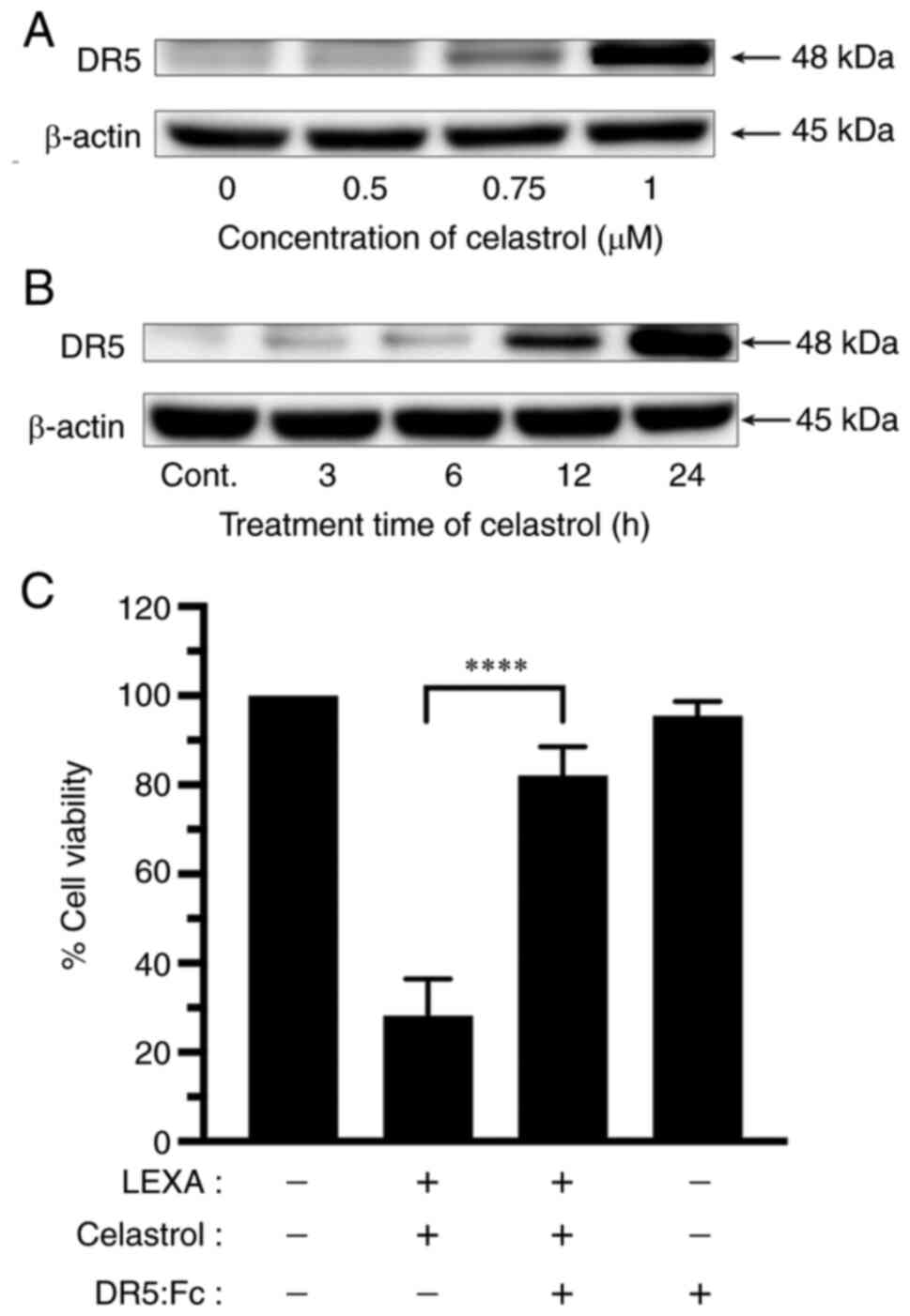
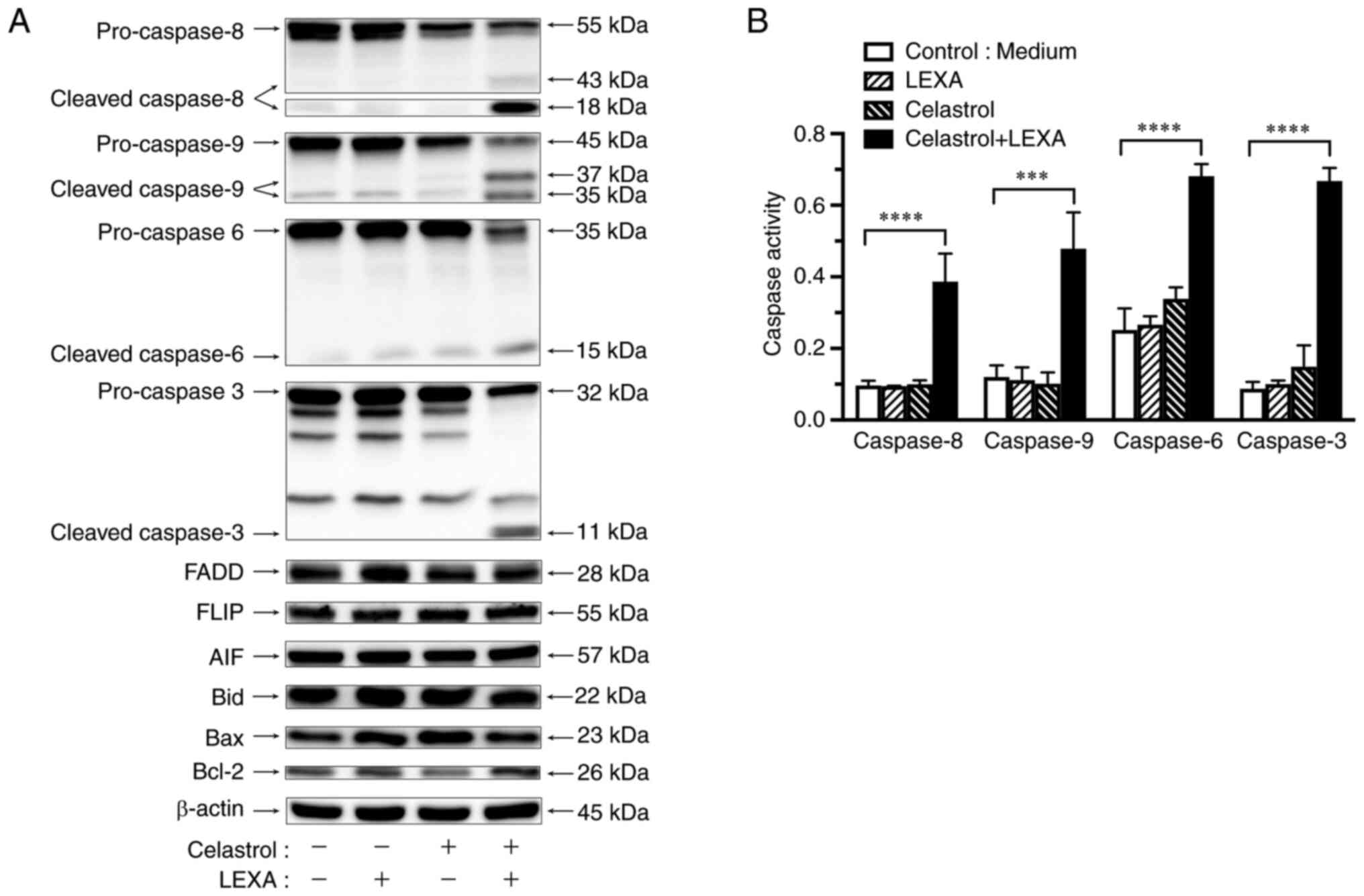
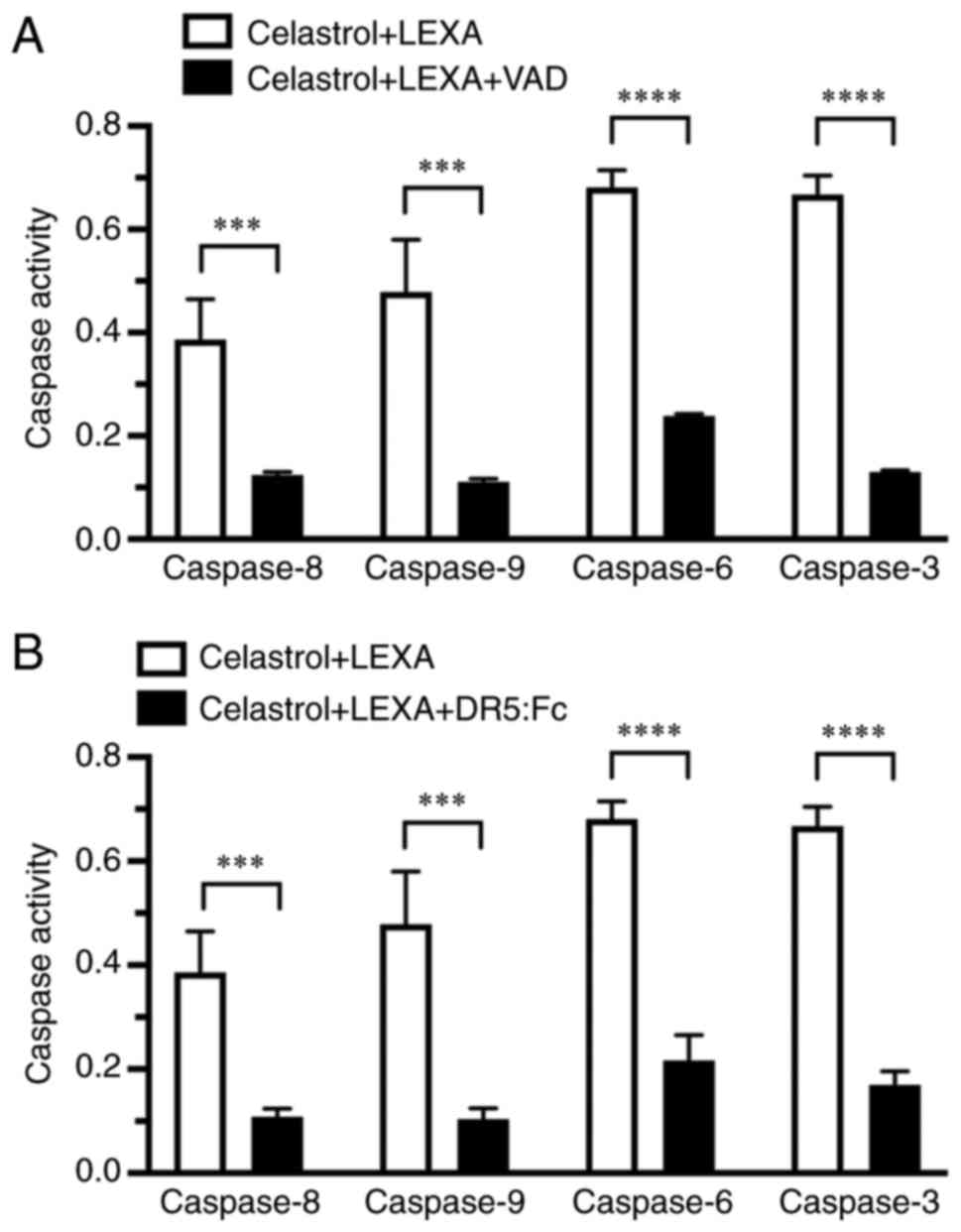
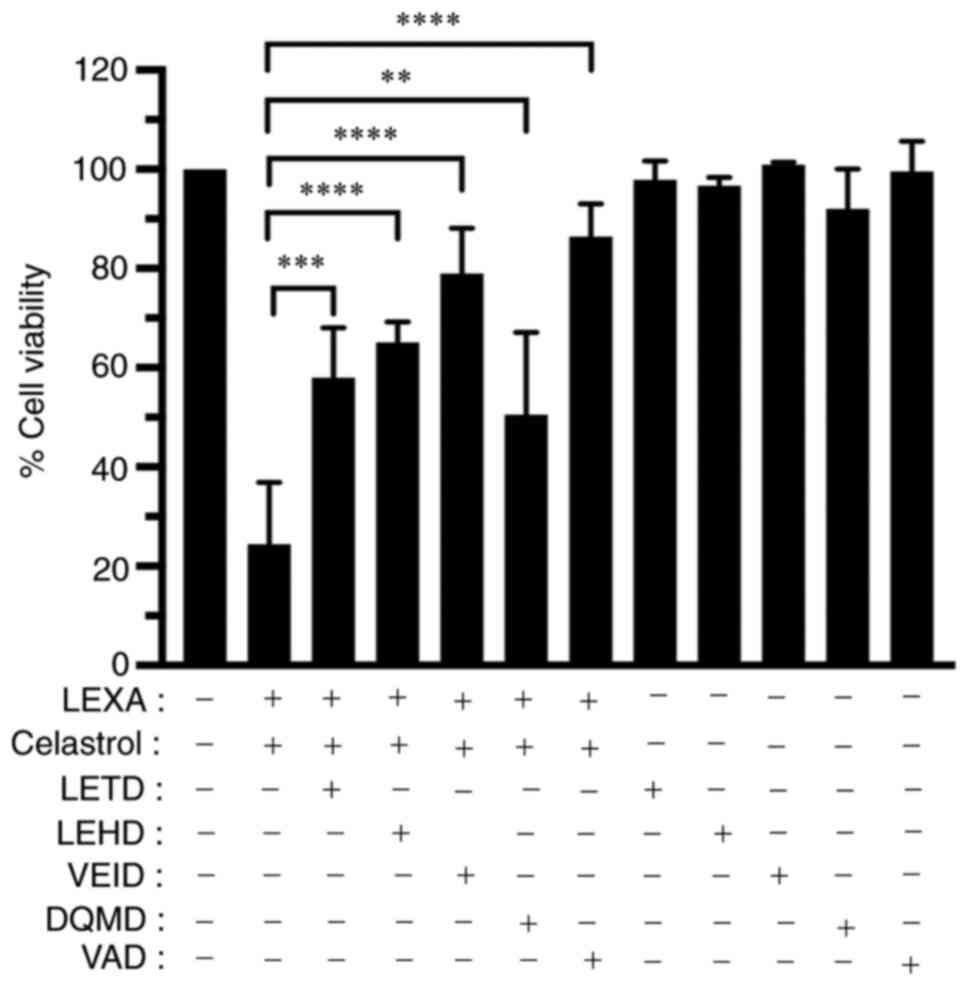
Celastrol is a triterpene phytochemical known to possess anti‑inflammatory, antioxidant and anticancer properties. The present study investigated the effects of celastrol on tumor necrosis factor‑related apoptosis‑inducing ligand receptor 2 (TRAIL‑R2)‑mediated apoptosis and cytotoxicity in human renal cell carcinoma (RCC) cells when administered in combination with lexatumumab, a human monoclonal agonistic antibody that specifically recognizes TRAIL‑R2. Cytotoxicity was determined by colorimetric assays of cell viability using cell counting kit‑8. The activation of caspases was assessed by quantitative colorimetric assays using caspase‑specific kits. Celastrol significantly enhanced lexatumumab‑induced apoptosis and cytotoxicity in RCC cells. An enhanced effect was also achieved when the duration of treatment with lexatumumab and celastrol was reduced from 24 to 6 h. The expression of TRAIL‑R2 was also remarkably increased by celastrol. Combined treatment with lexatumumab and celastrol significantly triggered activation of the caspase cascade, including caspase‑8, ‑9, ‑6, and ‑3, downstream molecules of death receptors. Furthermore, the cytotoxicity induced by that combination was significantly suppressed by the DR5:Fc chimeric protein, as well as specific inhibitors of caspase‑8, ‑9, ‑6 and ‑3. Taken together, these results indicated that celastrol enhances both TRAIL‑R2‑mediated apoptosis and cytotoxicity by upregulating TRAIL‑R2 and activating the caspase cascade, indicating the possibility of using it in combination with lexatumumab as an innovative therapeutic strategy for treating RCC.
View Figures

Figure 1

Figure 2

Figure 3

Figure 4

Figure 5

Figure 6

Figure 7

Figure 8

View References

1 

Sung H, Ferlay J, Siegel RL, Laversanne M, Soerjomataram I, Jemal A and Bray F: Global cancer statistics 2020: GLOBOCAN estimates of incidence and mortality worldwide for 36 cancers in 185 countries. CA Cancer J Clin. 71:209–249. 2021. View Article : Google Scholar : PubMed/NCBI

2 

Albiges L, Oudard S, Negrier S, Caty A, Gravis G, Joly F, Duclos B, Geoffrois L, Rolland F, Guillot A, et al: Complete remission with tyrosine kinase inhibitors in renal cell carcinoma. J Clin Oncol. 30:482–487. 2012. View Article : Google Scholar : PubMed/NCBI

3 

Motzer RJ, Powles T, Burotto M, Escudier B, Bourlon MT, Shah AY, Suárez C, Hamzaj A, Porta C, Hocking CM, et al: Nivolumab plus cabozantinib versus sunitinib in first-line treatment for advanced renal cell carcinoma (CheckMate 9ER): Long-term follow-up results from an open-label, randomised, phase 3 trial. Lancet Oncol. 23:888–898. 2022. View Article : Google Scholar : PubMed/NCBI

4 

Motzer RJ, Rini BI, McDermott DF, Arén Frontera O, Hammers HJ, Carducci MA, Salman P, Escudier B, Beuselinck B, Amin A, et al: Nivolumab plus ipilimumab versus sunitinib in first-line treatment for advanced renal cell carcinoma: Extended follow-up of efficacy and safety results from a randomised, controlled, phase 3 trial. Lancet Oncol. 20:1370–1385. 2019. View Article : Google Scholar : PubMed/NCBI

5 

Powles T, Plimack ER, Soulières D, Waddell T, Stus V, Gafanov R, Nosov D, Pouliot F, Melichar B, Vynnychenko I, et al: Pembrolizumab plus axitinib versus sunitinib monotherapy as first-line treatment of advanced renal cell carcinoma (KEYNOTE-426): Extended follow-up from a randomised, open-label, phase 3 trial. Lancet Oncol. 21:1563–1573. 2020. View Article : Google Scholar : PubMed/NCBI

6 

Martins F, Sofiya L, Sykiotis GP, Lamine F, Maillard M, Fraga M, Shabafrouz K, Ribi C, Cairoli A, Guex-Crosier Y, et al: Adverse effects of immune-checkpoint inhibitors: Epidemiology, management and surveillance. Nat Rev Clin Oncol. 16:563–580. 2019. View Article : Google Scholar : PubMed/NCBI

7 

Walczak H, Miller RE, Ariail K, Gliniak B, Griffith TS, Kubin M, Chin W, Jones J, Woodward A, Le T, et al: Tumoricidal activity of tumor necrosis factor-related apoptosis-inducing ligand in vivo. Nat Med. 5:157–163. 1999. View Article : Google Scholar : PubMed/NCBI

8 

Ashkenazi A and Dixit VM: Death receptors: Signaling and modulation. Science. 281:1305–1308. 1998. View Article : Google Scholar : PubMed/NCBI

9 

Chuntharapai A, Dodge K, Grimmer K, Schroeder K, Marsters SA, Koeppen H, Ashkenazi A and Kim KJ: Isotype-dependent inhibition of tumor growth in vivo by monoclonal antibodies to death receptor 4. J Immunol. 166:4891–4898. 2001. View Article : Google Scholar : PubMed/NCBI

10 

Ichikawa K, Liu W, Zhao L, Wang Z, Liu D, Ohtsuka T, Zhang H, Mountz JD, Koopman WJ, Kimberly RP and Zhou T: Tumoricidal activity of a novel anti-human DR5 monoclonal antibody without hepatocyte cytotoxicity. Nat Med. 7:954–960. 2001. View Article : Google Scholar : PubMed/NCBI

11 

Zeng Y, Wu XX, Fiscella M, Shimada O, Humphreys R, Albert V and Kakehi Y: Monoclonal antibody to tumor necrosis factor-related apoptosis-inducing ligand receptor 2 (TRAIL-R2) induces apoptosis in primary renal cell carcinoma cells in vitro and inhibits tumor growth in vivo. Int J Oncol. 28:421–430. 2006.PubMed/NCBI

12 

Shimada O, Wu X, Jin X, Nouh MA, Fiscella M, Albert V, Matsuda T and Kakehi Y: Human agonistic antibody to tumor necrosis factor-related apoptosis-inducing ligand receptor 2 induces cytotoxicity and apoptosis in prostate cancer and bladder cancer cells. Urology. 69:395–401. 2007. View Article : Google Scholar : PubMed/NCBI

13 

Szliszka E, Mazur B, Zydowicz G, Czuba ZP and Król W: TRAIL-induced apoptosis and expression of death receptor TRAIL-R1 and TRAIL-R2 in bladder cancer cells. Folia Histochem Cytobiol. 47:579–585. 2009.PubMed/NCBI

14 

Wu XX, Jin XH, Zeng Y, El Hamed AM and Kakehi Y: Low concentrations of doxorubicin sensitizes human solid cancer cells to tumor necrosis factor-related apoptosis-inducing ligand (TRAIL)-receptor (R) 2-mediated apoptosis by inducing TRAIL-R2 expression. Cancer Sci. 98:1969–1976. 2007. View Article : Google Scholar : PubMed/NCBI

15 

Allison AC, Cacabelos R, Lombardi VR, Alvarez XA and Vigo C: Celastrol, a potent antioxidant and anti-inflammatory drug, as a possible treatment for Alzheimer's disease. Prog Neuropsychopharmacol Biol Psychiatry. 25:1341–1357. 2001. View Article : Google Scholar : PubMed/NCBI

16 

Yang H, Chen D, Cui QC, Yuan X and Dou QP: Celastrol, a triterpene extracted from the Chinese ‘Thunder of God Vine,’ is a potent proteasome inhibitor and suppresses human prostate cancer growth in nude mice. Cancer Res. 66:4758–4765. 2006. View Article : Google Scholar : PubMed/NCBI

17 

Zhu Y, Liu X, Zhao P, Zhao H, Gao W and Wang L: Celastrol suppresses glioma vasculogenic mimicry formation and angiogenesis by blocking the PI3K/Akt/mTOR signaling pathway. Front Pharmacol. 11:252020. View Article : Google Scholar : PubMed/NCBI

18 

Chen G, Zhu X, Li J, Zhang Y, Wang X, Zhang R, Qin X, Chen X, Wang J, Liao W, et al: Celastrol inhibits lung cancer growth by triggering histone acetylation and acting synergically with HDAC inhibitors. Pharmacol Res. 185:1064872022. View Article : Google Scholar : PubMed/NCBI

19 

Ni H, Han Y and Jin X: Celastrol inhibits colon cancer cell proliferation by downregulating miR-21 and PI3K/AKT/GSK-3β pathway. Int J Clin Exp Pathol. 12:808–816. 2019.PubMed/NCBI

20 

Wang X, Liu Q, Wu S, Xu N, Li H and Feng A: Identifying the effect of celastrol against ovarian cancer with network pharmacology and in vitro experiments. Front Pharmacol. 13:7394782022. View Article : Google Scholar : PubMed/NCBI

21 

Lee JH, Won YS, Park KH, Lee MK, Tachibana H, Yamada K and Seo KI: Celastrol inhibits growth and induces apoptotic cell death in melanoma cells via the activation ROS-dependent mitochondrial pathway and the suppression of PI3K/AKT signaling. Apoptosis. 17:1275–1286. 2012. View Article : Google Scholar : PubMed/NCBI

22 

Li HY, Zhang J, Sun LL, Li BH, Gao HL, Xie T, Zhang N and Ye ZM: Celastrol induces apoptosis and autophagy via the ROS/JNK signaling pathway in human osteosarcoma cells: An in vitro and in vivo study. Cell Death Dis. 6:e16042015. View Article : Google Scholar : PubMed/NCBI

23 

Zhang CJ, Zhu N, Long J, Wu HT, Wang YX, Liu BY, Liao DF and Qin L: Celastrol induces lipophagy via the LXRα/ABCA1 pathway in clear cell renal cell carcinoma. Acta Pharmacol Sin. 42:1472–1485. 2021. View Article : Google Scholar : PubMed/NCBI

24 

Xu H, Zhao H, Ding C, Jiang D, Zhao Z, Li Y, Ding X, Gao J, Zhou H, Luo C, et al: Celastrol suppresses colorectal cancer via covalent targeting peroxiredoxin 1. Signal Transduct Target Ther. 8:512023. View Article : Google Scholar : PubMed/NCBI

25 

Zhu H, Ding WJ, Wu R, Weng QJ, Lou JS, Jin RJ, Lu W, Yang B and He QJ: Synergistic anti-cancer activity by the combination of TRAIL/APO-2L and celastrol. Cancer Invest. 28:23–32. 2010. View Article : Google Scholar : PubMed/NCBI

26 

Cha Z, Cheng J, Xiang H, Qin J, He Y, Peng Z, Jia J and Yu H: Celastrol enhances TRAIL-induced apoptosis in human glioblastoma via the death receptor pathway. Cancer Chemother Pharmacol. 84:719–728. 2019. View Article : Google Scholar : PubMed/NCBI

27 

Chen SR, Dai Y, Zhao J, Lin L and Wang Y and Wang Y: A mechanistic overview of triptolide and celastrol, natural products from Tripterygium wilfordii Hook F. Front Pharmacol. 9:1042018. View Article : Google Scholar : PubMed/NCBI

28 

Pukac L, Kanakaraj P, Humphreys R, Alderson R, Bloom M, Sung C, Riccobene T, Johnson R, Fiscella M, Mahoney A, et al: HGS-ETR1, a fully human TRAIL-receptor 1 monoclonal antibody, induces cell death in multiple tumour types in vitro and in vivo. Br J Cancer. 92:1430–1441. 2005. View Article : Google Scholar : PubMed/NCBI

29 

Luster TA, Carrell JA, McCormick K, Sun D and Humphreys R: Mapatumumab and lexatumumab induce apoptosis in TRAIL-R1 and TRAIL-R2 antibody-resistant NSCLC cell lines when treated in combination with bortezomib. Mol Cancer Ther. 8:292–302. 2009. View Article : Google Scholar : PubMed/NCBI

30 

Marini P, Denzinger S, Schiller D, Kauder S, Welz S, Humphreys R, Daniel PT, Jendrossek V, Budach W and Belka C: Combined treatment of colorectal tumours with agonistic TRAIL receptor antibodies HGS-ETR1 and HGS-ETR2 and radiotherapy: Enhanced effects in vitro and dose-dependent growth delay in vivo. Oncogene. 25:5145–5154. 2006. View Article : Google Scholar : PubMed/NCBI

31 

Mizutani Y, Bonavida B, Fukumoto M and Yoshida O: Enhanced susceptibility of c-myc antisense oligonucleotide-treated human renal cell carcinoma cells to lysis by peripheral blood lymphocytes. J Immunother Emphasis Tumor Immunol. 17:78–87. 1995. View Article : Google Scholar : PubMed/NCBI

32 

Bao Y, Wu X, Jin X, Kanematsu A, Nojima M, Kakehi Y and Yamamoto S: Apigenin inhibits renal cell carcinoma cell proliferation through G2/M phase cell cycle arrest. Oncol Rep. 47:602022. View Article : Google Scholar : PubMed/NCBI

33 

Xu SP, Sun GP, Shen YX, Peng WR, Wang H and Wei W: Synergistic effect of combining paeonol and cisplatin on apoptotic induction of human hepatoma cell lines. Acta Pharmacol Sin. 28:869–878. 2007. View Article : Google Scholar : PubMed/NCBI

34 

Wu XX, Kakehi Y, Mizutani Y, Lu J, Terachi T and Ogawa O: Activation of caspase-3 in renal cell carcinoma cells by anthracyclines or 5-fluorouracil. Int J Oncol. 19:19–24. 2001.PubMed/NCBI

35 

Amantana A, London CA, Iversen PL and Devi GR: X-linked inhibitor of apoptosis protein inhibition induces apoptosis and enhances chemotherapy sensitivity in human prostate cancer cells. Mol Cancer Ther. 3:699–707. 2004. View Article : Google Scholar : PubMed/NCBI

36 

Liu Q, Hilsenbeck S and Gazitt Y: Arsenic trioxide-induced apoptosis in myeloma cells: p53-dependent G1 or G2/M cell cycle arrest, activation of caspase-8 or caspase-9, and synergy with APO2/TRAIL. Blood. 101:4078–4087. 2003. View Article : Google Scholar : PubMed/NCBI

37 

Galligan L, Longley DB, McEwan M, Wilson TR, McLaughlin K and Johnston PG: Chemotherapy and TRAIL-mediated colon cancer cell death: The roles of p53, TRAIL receptors, and c-FLIP. Mol Cancer Ther. 4:2026–2036. 2005. View Article : Google Scholar : PubMed/NCBI

38 

Lacour S, Hammann A, Wotawa A, Corcos L, Solary E and Dimanche-Boitrel MT: Anticancer agents sensitize tumor cells to tumor necrosis factor-related apoptosis-inducing ligand-mediated caspase-8 activation and apoptosis. Cancer Res. 61:1645–1651. 2001.PubMed/NCBI

39 

Derosier LC, Vickers SM, Zinn KR, Huang Z, Wang W, Grizzle WE, Sellers J, Stockard CR Jr, Zhou T, Oliver PG, et al: TRA-8 anti-DR5 monoclonal antibody and gemcitabine induce apoptosis and inhibit radiologically validated orthotopic pancreatic tumor growth. Mol Cancer Ther. 6:3198–3207. 2007. View Article : Google Scholar : PubMed/NCBI

40 

O'Kane HF, Watson CJ, Johnston SR, Petak I, Watson RW and Williamson KE: Targeting death receptors in bladder, prostate and renal cancer. J Urol. 175:432–438. 2006. View Article : Google Scholar : PubMed/NCBI

Related Articles

  • Abstract
  • View
  • Download
  • Twitter
Copy and paste a formatted citation
Spandidos Publications style
Bao Y, Wu X, Kanematsu A, Kita Y, Kobayashi T, Kakehi Y and Yamamoto S: Celastrol enhances TRAIL‑R2‑mediated apoptosis and cytotoxicity in human renal cell carcinoma cells in caspase‑dependent manner. Oncol Rep 51: 12, 2024.
APA
Bao, Y., Wu, X., Kanematsu, A., Kita, Y., Kobayashi, T., Kakehi, Y., & Yamamoto, S. (2024). Celastrol enhances TRAIL‑R2‑mediated apoptosis and cytotoxicity in human renal cell carcinoma cells in caspase‑dependent manner. Oncology Reports, 51, 12. https://doi.org/10.3892/or.2023.8671
MLA
Bao, Y., Wu, X., Kanematsu, A., Kita, Y., Kobayashi, T., Kakehi, Y., Yamamoto, S."Celastrol enhances TRAIL‑R2‑mediated apoptosis and cytotoxicity in human renal cell carcinoma cells in caspase‑dependent manner". Oncology Reports 51.1 (2024): 12.
Chicago
Bao, Y., Wu, X., Kanematsu, A., Kita, Y., Kobayashi, T., Kakehi, Y., Yamamoto, S."Celastrol enhances TRAIL‑R2‑mediated apoptosis and cytotoxicity in human renal cell carcinoma cells in caspase‑dependent manner". Oncology Reports 51, no. 1 (2024): 12. https://doi.org/10.3892/or.2023.8671
Copy and paste a formatted citation
x
Spandidos Publications style
Bao Y, Wu X, Kanematsu A, Kita Y, Kobayashi T, Kakehi Y and Yamamoto S: Celastrol enhances TRAIL‑R2‑mediated apoptosis and cytotoxicity in human renal cell carcinoma cells in caspase‑dependent manner. Oncol Rep 51: 12, 2024.
APA
Bao, Y., Wu, X., Kanematsu, A., Kita, Y., Kobayashi, T., Kakehi, Y., & Yamamoto, S. (2024). Celastrol enhances TRAIL‑R2‑mediated apoptosis and cytotoxicity in human renal cell carcinoma cells in caspase‑dependent manner. Oncology Reports, 51, 12. https://doi.org/10.3892/or.2023.8671
MLA
Bao, Y., Wu, X., Kanematsu, A., Kita, Y., Kobayashi, T., Kakehi, Y., Yamamoto, S."Celastrol enhances TRAIL‑R2‑mediated apoptosis and cytotoxicity in human renal cell carcinoma cells in caspase‑dependent manner". Oncology Reports 51.1 (2024): 12.
Chicago
Bao, Y., Wu, X., Kanematsu, A., Kita, Y., Kobayashi, T., Kakehi, Y., Yamamoto, S."Celastrol enhances TRAIL‑R2‑mediated apoptosis and cytotoxicity in human renal cell carcinoma cells in caspase‑dependent manner". Oncology Reports 51, no. 1 (2024): 12. https://doi.org/10.3892/or.2023.8671
Follow us
  • Twitter
  • LinkedIn
  • Facebook
About
  • Spandidos Publications
  • Careers
  • Cookie Policy
  • Privacy Policy
How can we help?
  • Help
  • Live Chat
  • Contact
  • Email to our Support Team