Spandidos Publications Logo
  • About
    • About Spandidos
    • Aims and Scopes
    • Abstracting and Indexing
    • Editorial Policies
    • Reprints and Permissions
    • Job Opportunities
    • Terms and Conditions
    • Contact
  • Journals
    • All Journals
    • Oncology Letters
      • Oncology Letters
      • Information for Authors
      • Editorial Policies
      • Editorial Board
      • Aims and Scope
      • Abstracting and Indexing
      • Bibliographic Information
      • Archive
    • International Journal of Oncology
      • International Journal of Oncology
      • Information for Authors
      • Editorial Policies
      • Editorial Board
      • Aims and Scope
      • Abstracting and Indexing
      • Bibliographic Information
      • Archive
    • Molecular and Clinical Oncology
      • Molecular and Clinical Oncology
      • Information for Authors
      • Editorial Policies
      • Editorial Board
      • Aims and Scope
      • Abstracting and Indexing
      • Bibliographic Information
      • Archive
    • Experimental and Therapeutic Medicine
      • Experimental and Therapeutic Medicine
      • Information for Authors
      • Editorial Policies
      • Editorial Board
      • Aims and Scope
      • Abstracting and Indexing
      • Bibliographic Information
      • Archive
    • International Journal of Molecular Medicine
      • International Journal of Molecular Medicine
      • Information for Authors
      • Editorial Policies
      • Editorial Board
      • Aims and Scope
      • Abstracting and Indexing
      • Bibliographic Information
      • Archive
    • Biomedical Reports
      • Biomedical Reports
      • Information for Authors
      • Editorial Policies
      • Editorial Board
      • Aims and Scope
      • Abstracting and Indexing
      • Bibliographic Information
      • Archive
    • Oncology Reports
      • Oncology Reports
      • Information for Authors
      • Editorial Policies
      • Editorial Board
      • Aims and Scope
      • Abstracting and Indexing
      • Bibliographic Information
      • Archive
    • Molecular Medicine Reports
      • Molecular Medicine Reports
      • Information for Authors
      • Editorial Policies
      • Editorial Board
      • Aims and Scope
      • Abstracting and Indexing
      • Bibliographic Information
      • Archive
    • World Academy of Sciences Journal
      • World Academy of Sciences Journal
      • Information for Authors
      • Editorial Policies
      • Editorial Board
      • Aims and Scope
      • Abstracting and Indexing
      • Bibliographic Information
      • Archive
    • International Journal of Functional Nutrition
      • International Journal of Functional Nutrition
      • Information for Authors
      • Editorial Policies
      • Editorial Board
      • Aims and Scope
      • Abstracting and Indexing
      • Bibliographic Information
      • Archive
    • International Journal of Epigenetics
      • International Journal of Epigenetics
      • Information for Authors
      • Editorial Policies
      • Editorial Board
      • Aims and Scope
      • Abstracting and Indexing
      • Bibliographic Information
      • Archive
    • Medicine International
      • Medicine International
      • Information for Authors
      • Editorial Policies
      • Editorial Board
      • Aims and Scope
      • Abstracting and Indexing
      • Bibliographic Information
      • Archive
  • Articles
  • Information
    • Information for Authors
    • Information for Reviewers
    • Information for Librarians
    • Information for Advertisers
    • Conferences
  • Language Editing
Spandidos Publications Logo
  • About
    • About Spandidos
    • Aims and Scopes
    • Abstracting and Indexing
    • Editorial Policies
    • Reprints and Permissions
    • Job Opportunities
    • Terms and Conditions
    • Contact
  • Journals
    • All Journals
    • Biomedical Reports
      • Information for Authors
      • Editorial Policies
      • Editorial Board
      • Aims and Scope
      • Abstracting and Indexing
      • Bibliographic Information
      • Archive
    • Experimental and Therapeutic Medicine
      • Information for Authors
      • Editorial Policies
      • Editorial Board
      • Aims and Scope
      • Abstracting and Indexing
      • Bibliographic Information
      • Archive
    • International Journal of Epigenetics
      • Information for Authors
      • Editorial Policies
      • Editorial Board
      • Aims and Scope
      • Abstracting and Indexing
      • Bibliographic Information
      • Archive
    • International Journal of Functional Nutrition
      • Information for Authors
      • Editorial Policies
      • Editorial Board
      • Aims and Scope
      • Abstracting and Indexing
      • Bibliographic Information
      • Archive
    • International Journal of Molecular Medicine
      • Information for Authors
      • Editorial Policies
      • Editorial Board
      • Aims and Scope
      • Abstracting and Indexing
      • Bibliographic Information
      • Archive
    • International Journal of Oncology
      • Information for Authors
      • Editorial Policies
      • Editorial Board
      • Aims and Scope
      • Abstracting and Indexing
      • Bibliographic Information
      • Archive
    • Medicine International
      • Information for Authors
      • Editorial Policies
      • Editorial Board
      • Aims and Scope
      • Abstracting and Indexing
      • Bibliographic Information
      • Archive
    • Molecular and Clinical Oncology
      • Information for Authors
      • Editorial Policies
      • Editorial Board
      • Aims and Scope
      • Abstracting and Indexing
      • Bibliographic Information
      • Archive
    • Molecular Medicine Reports
      • Information for Authors
      • Editorial Policies
      • Editorial Board
      • Aims and Scope
      • Abstracting and Indexing
      • Bibliographic Information
      • Archive
    • Oncology Letters
      • Information for Authors
      • Editorial Policies
      • Editorial Board
      • Aims and Scope
      • Abstracting and Indexing
      • Bibliographic Information
      • Archive
    • Oncology Reports
      • Information for Authors
      • Editorial Policies
      • Editorial Board
      • Aims and Scope
      • Abstracting and Indexing
      • Bibliographic Information
      • Archive
    • World Academy of Sciences Journal
      • Information for Authors
      • Editorial Policies
      • Editorial Board
      • Aims and Scope
      • Abstracting and Indexing
      • Bibliographic Information
      • Archive
  • Articles
  • Information
    • For Authors
    • For Reviewers
    • For Librarians
    • For Advertisers
    • Conferences
  • Language Editing
Login Register Submit
  • This site uses cookies
  • You can change your cookie settings at any time by following the instructions in our Cookie Policy. To find out more, you may read our Privacy Policy.

    I agree
Search articles by DOI, keyword, author or affiliation
Search
Advanced Search
presentation
Oncology Reports
Join Editorial Board Propose a Special Issue
Print ISSN: 1021-335X Online ISSN: 1791-2431
Journal Cover
February-2024 Volume 51 Issue 2

Full Size Image

Sign up for eToc alerts
Recommend to Library

Journals

International Journal of Molecular Medicine

International Journal of Molecular Medicine

International Journal of Molecular Medicine is an international journal devoted to molecular mechanisms of human disease.

International Journal of Oncology

International Journal of Oncology

International Journal of Oncology is an international journal devoted to oncology research and cancer treatment.

Molecular Medicine Reports

Molecular Medicine Reports

Covers molecular medicine topics such as pharmacology, pathology, genetics, neuroscience, infectious diseases, molecular cardiology, and molecular surgery.

Oncology Reports

Oncology Reports

Oncology Reports is an international journal devoted to fundamental and applied research in Oncology.

Experimental and Therapeutic Medicine

Experimental and Therapeutic Medicine

Experimental and Therapeutic Medicine is an international journal devoted to laboratory and clinical medicine.

Oncology Letters

Oncology Letters

Oncology Letters is an international journal devoted to Experimental and Clinical Oncology.

Biomedical Reports

Biomedical Reports

Explores a wide range of biological and medical fields, including pharmacology, genetics, microbiology, neuroscience, and molecular cardiology.

Molecular and Clinical Oncology

Molecular and Clinical Oncology

International journal addressing all aspects of oncology research, from tumorigenesis and oncogenes to chemotherapy and metastasis.

World Academy of Sciences Journal

World Academy of Sciences Journal

Multidisciplinary open-access journal spanning biochemistry, genetics, neuroscience, environmental health, and synthetic biology.

International Journal of Functional Nutrition

International Journal of Functional Nutrition

Open-access journal combining biochemistry, pharmacology, immunology, and genetics to advance health through functional nutrition.

International Journal of Epigenetics

International Journal of Epigenetics

Publishes open-access research on using epigenetics to advance understanding and treatment of human disease.

Medicine International

Medicine International

An International Open Access Journal Devoted to General Medicine.

Journal Cover
February-2024 Volume 51 Issue 2

Full Size Image

Sign up for eToc alerts
Recommend to Library

  • Article
  • Citations
    • Cite This Article
    • Download Citation
    • Create Citation Alert
    • Remove Citation Alert
    • Cited By
  • Similar Articles
    • Related Articles (in Spandidos Publications)
    • Similar Articles (Google Scholar)
    • Similar Articles (PubMed)
  • Download PDF
  • Download XML
  • View XML

  • Supplementary Files
    • Supplementary_Data.pdf
Article

G protein‑mediated EGFR transactivation is a common mechanism through which the CXCL12 receptors, CXCR4 and CXCR7, control human cancer cell migration

  • Authors:
    • Konstanze Zieger‑Naumann
    • Frederike Kuhl
    • Jürgen Engele
  • View Affiliations / Copyright

    Affiliations: Institute of Anatomy, Medical Faculty, University of Leipzig, D‑04103 Leipzig, Germany
  • Article Number: 24
    |
    Published online on: December 14, 2023
       https://doi.org/10.3892/or.2023.8683
  • Expand metrics +
Metrics: Total Views: 0 (Spandidos Publications: | PMC Statistics: )
Metrics: Total PDF Downloads: 0 (Spandidos Publications: | PMC Statistics: )
Cited By (CrossRef): 0 citations Loading Articles...

This article is mentioned in:


Abstract

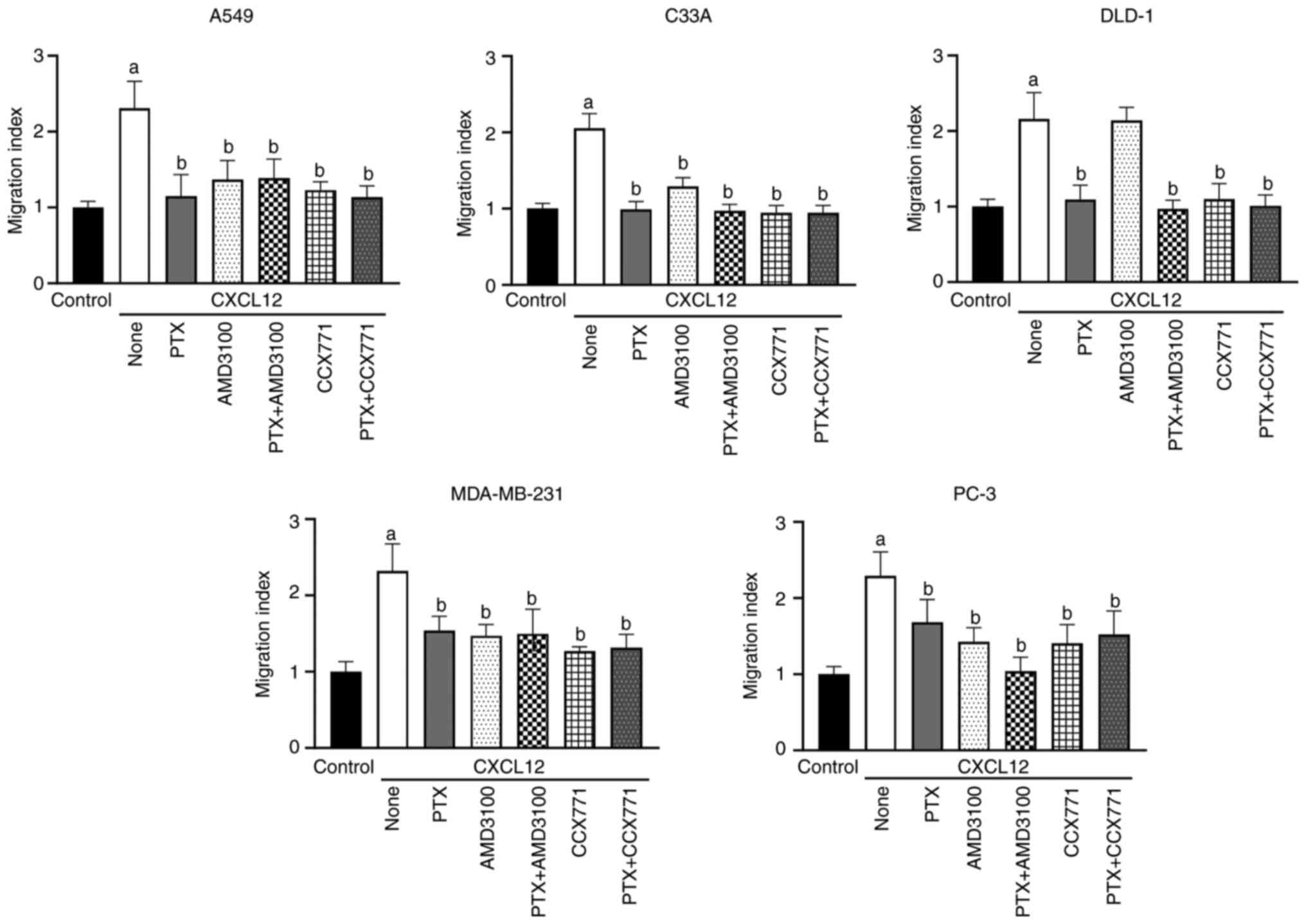
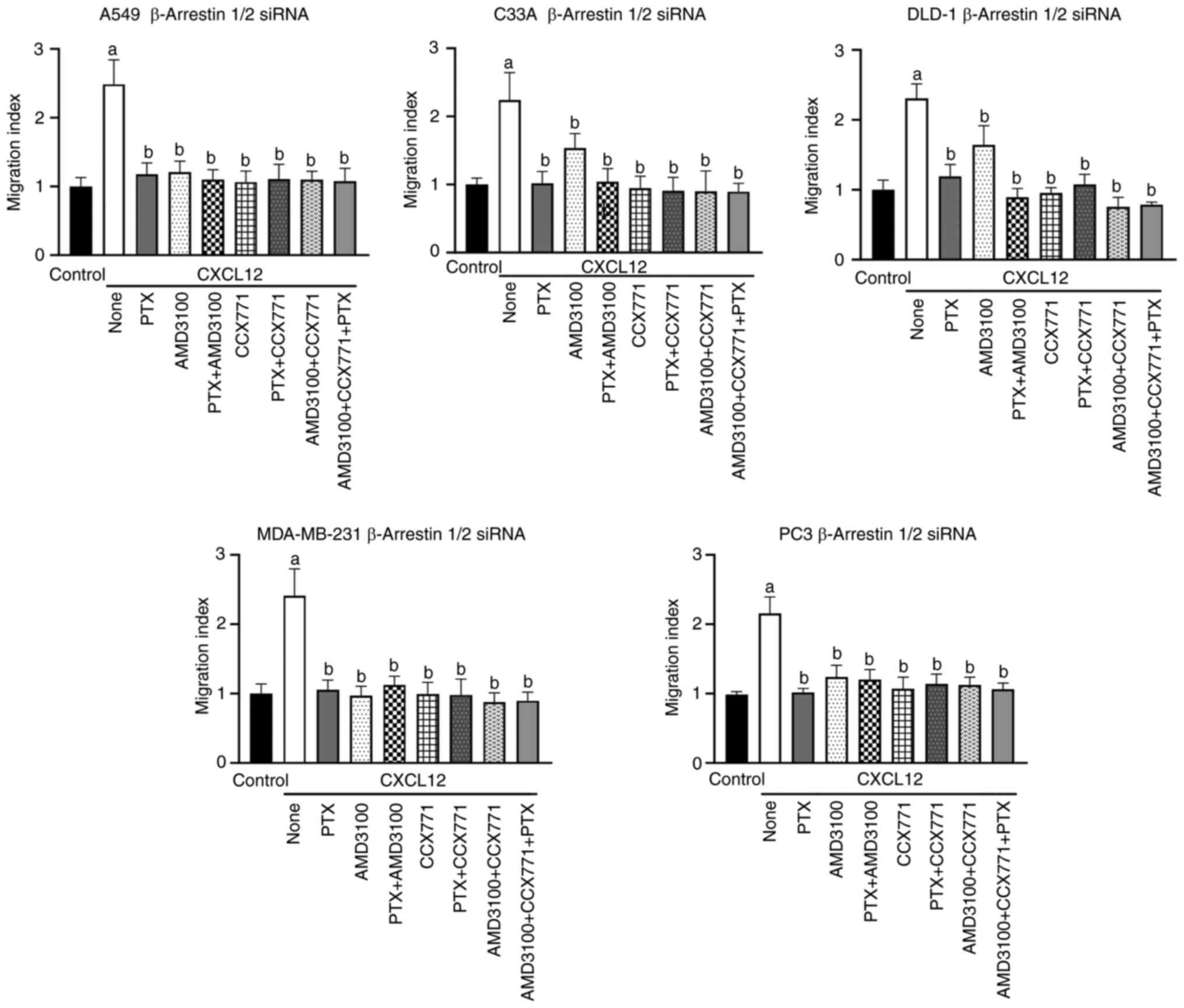
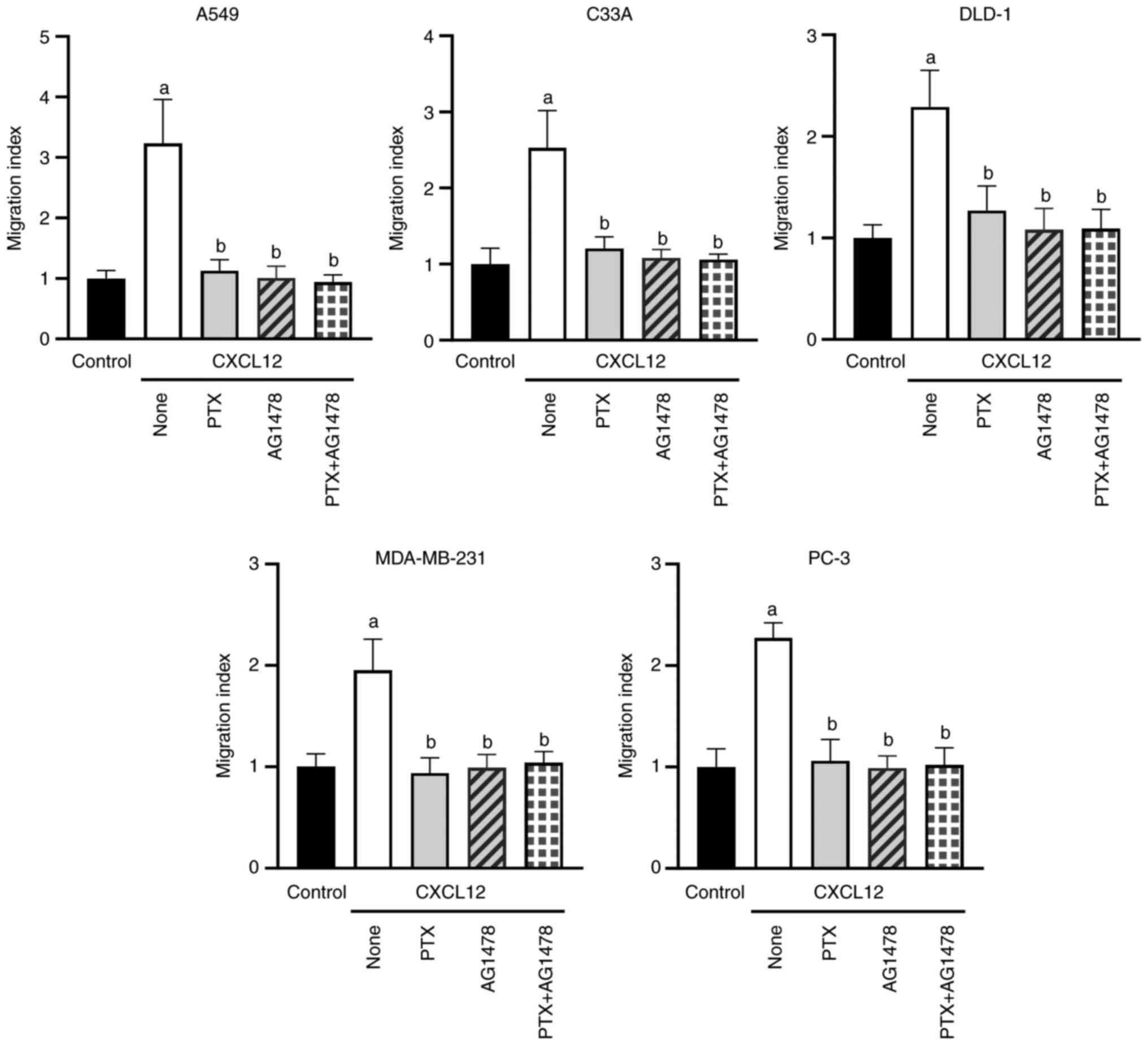
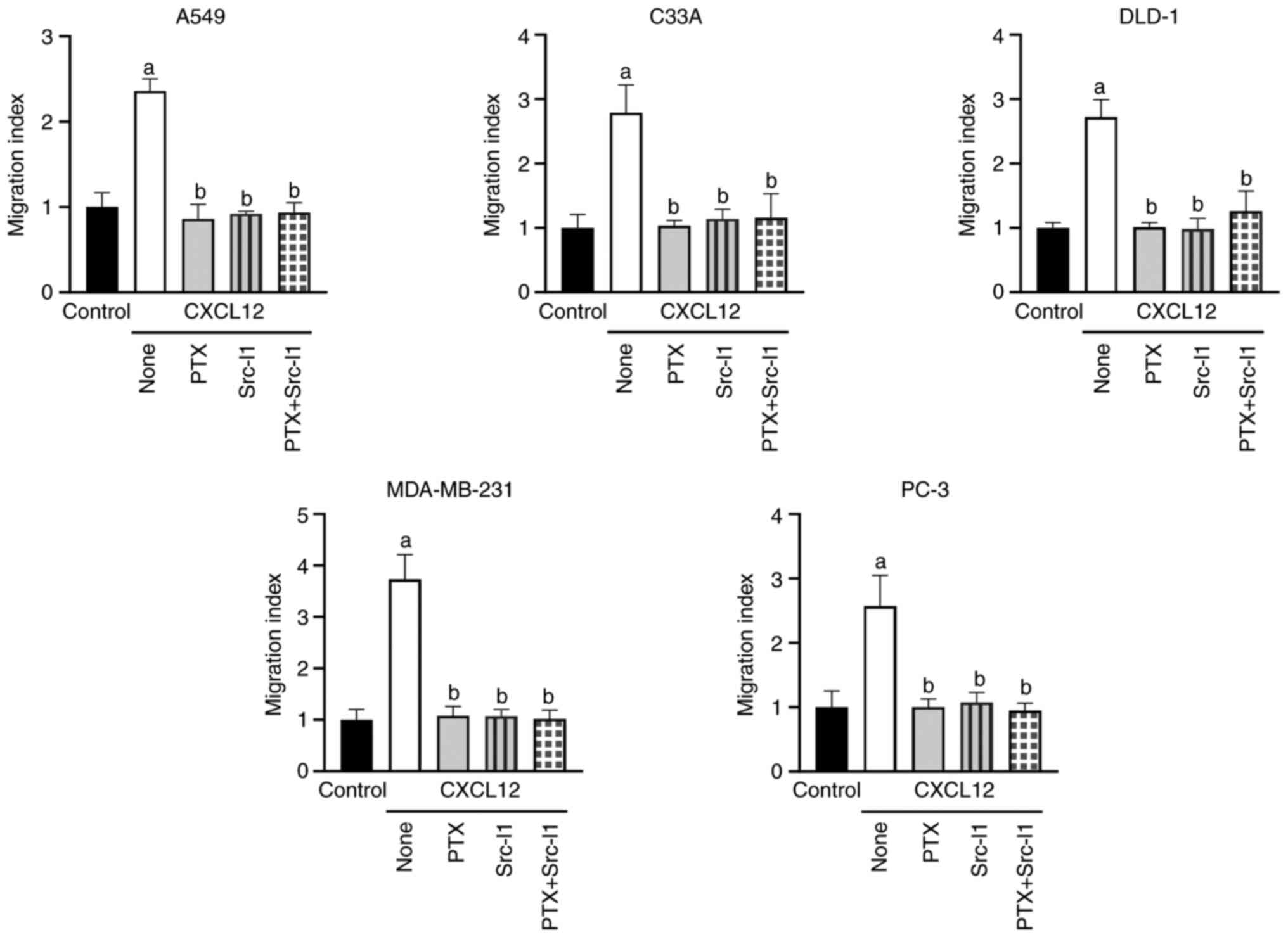
C‑X‑C motif chemokine 12 (CXCL12) promotes metastasis of several tumors by affecting cell migration and invasion via its receptors, C‑X‑C chemokine receptor type (CXCR)4 and CXCR7. Current therapeutic approaches focus on the selective inactivation of either CXCR4 or CXCR7 in patients with cancer. Alternative strategies may emerge from the analysis of downstream events that mediate the migratory effects of CXCL12 in cancer cells. While CXCR4 activates cell signaling through both G proteins and arrestins, CXCR7 is believed to preferentially signal through arrestins. The present study analyzed the CXCL12‑dependent chemotaxis of A549, C33A, DLD‑1, MDA‑MB‑231 and PC‑3 cells, in which either the activity of G proteins, EGFR or Src kinase was inhibited pharmacologically or the expression of arrestins was inhibited by RNA interference. The results demonstrated that CXCL12‑induced migration of A549, C33A, DLD‑1, MDA‑MB‑231 and PC‑3 cells was attenuated by the Gαi/o‑inhibitor pertussis toxin (PTX), but was unaffected by small interfering RNA‑mediated gene silencing of β‑arrestin1/2. In particular, the sensitivity of DLD‑1 migration to PTX was unexpected, as it is solely dependent on the non‑classical chemokine receptor, CXCR7. Furthermore, chemotactic responses to CXCL12 were additionally prevented by inhibiting EGFR activity via AG1478 and Src kinase activity via Src inhibitor‑1. In conclusion, the results of the present study suggest that G protein‑ and Src‑dependent transactivation of EGFR is a common mechanism through which CXCL12‑bound CXCR4 and/or CXCR7 control cancer cell migration and metastasis. These findings highlight EGFR as a potential therapeutic target that interferes with CXCL12‑induced cancer expansion.
View Figures

Figure 1

Figure 2

Figure 3

Figure 4

View References

1 

Quinn KE, Mackie DI and Caron KM: Emerging roles of atypical chemokine receptor 3 (ACKR3) in normal development and physiology. Cytokine. 109:17–23. 2018. View Article : Google Scholar : PubMed/NCBI

2 

Britton C, Poznansky MC and Reeves P: Polyfunctionality of the CXCR4/CXCL12 axis in health and disease: Implications for therapeutic interventions in cancer and immune-mediated diseases. FASEB J. 35:e212602021. View Article : Google Scholar : PubMed/NCBI

3 

Shi Y, Riese DJ II and Shen J: The Role of the CXCL12/CXCR4/CXCR7 chemokine axis in cancer. Front Pharmacol. 11:5746672020. View Article : Google Scholar : PubMed/NCBI

4 

Luker GD, Yang J, Richmond A, Scala S, Festuccia C, Schottelius M, Wester HJ and Zimmermann J: At the Bench: Pre-clinical evidence for multiple functions of CXCR4 in cancer. J Leukoc Biol. 109:969–989. 2021. View Article : Google Scholar : PubMed/NCBI

5 

Wu T, Yang W, Sun A, Wei Z and Lin Q: The Role of CXC chemokines in cancer progression. Cancers (Basel). 15:1672022. View Article : Google Scholar : PubMed/NCBI

6 

Puchert M, Koch C and Engele J: The 5T4 oncofetal glycoprotein does not act as a general organizer of the CXCL12 system in cancer cells. Exp Cell Res. 364:175–183. 2018. View Article : Google Scholar : PubMed/NCBI

7 

Heuninck J, Perpiñá Viciano C, Işbilir A, Caspar B, Capoferri D, Briddon SJ, Durroux T, Hill SJ, Lohse MJ, Milligan G, et al: Context-Dependent Signaling of CXC chemokine receptor 4 and atypical chemokine receptor 3. Mol Pharmacol. 96:778–793. 2019. View Article : Google Scholar : PubMed/NCBI

8 

Mo H, Ren Q, Song D, Xu B, Zhou D, Hong X, Hou FF, Zhou L and Liu Y: CXCR4 induces podocyte injury and proteinuria by activating β-catenin signaling. Theranostics. 12:767–781. 2022. View Article : Google Scholar : PubMed/NCBI

9 

D'Agostino G, Artinger M, Locati M, Perez L, Legler DF, Bianchi ME, Rüegg C, Thelen M, Marchese A, Rocchi MBL, et al: β-Arrestin1 and β-Arrestin2 Are Required to Support the Activity of the CXCL12/HMGB1 Heterocomplex on CXCR4. Front Immunol. 11:5508242020. View Article : Google Scholar : PubMed/NCBI

10 

Zhuo Y, Gurevich VV, Vishnivetskiy SA, Klug CS and Marchese A: A non-GPCR-binding partner interacts with a novel surface on β-arrestin1 to mediate GPCR signaling. J Biol Chem. 295:14111–14124. 2020. View Article : Google Scholar : PubMed/NCBI

11 

Donà E, Barry JD, Valentin G, Quirin C, Khmelinskii A, Kunze A, Durdu S, Newton LR, Fernandez-Minan A, Huber W, et al: Directional tissue migration through a self-generated chemokine gradient. Nature. 503:285–289. 2013. View Article : Google Scholar : PubMed/NCBI

12 

Koch C and Engele J: Functions of the CXCL12 Receptor ACKR3/CXCR7-What has been perceived and what has been overlooked. Mol Pharmacol. 98:577–585. 2020. View Article : Google Scholar : PubMed/NCBI

13 

Gentilini A, Caligiuri A, Raggi C, Rombouts K, Pinzani M, Lori G, Correnti M, Invernizzi P, Rovida E, Navari N, et al: CXCR7 contributes to the aggressive phenotype of cholangiocarcinoma cells. Biochim Biophys Acta Mol Basis Dis. 18652246–2256. 2029.PubMed/NCBI

14 

Xu S, Tang J, Wang C, Liu J, Fu Y and Luo Y: CXCR7 promotes melanoma tumorigenesis via Src kinase signaling. Cell Death Dis. 10:1912019. View Article : Google Scholar : PubMed/NCBI

15 

Lee E, Han J, Kim K, Choi H, Cho EG and Lee TR: CXCR7 mediates SDF1-induced melanocyte migration. Pigment Cell Melanoma Res. 26:58–66. 2013. View Article : Google Scholar : PubMed/NCBI

16 

Fumagalli A, Heuninck J, Pizzoccaro A, Moutin E, Koenen J, Séveno M, Durroux T, Junier MP, Schlecht-Louf G, Bachelerie F, et al: The atypical chemokine receptor 3 interacts with Connexin 43 inhibiting astrocytic gap junctional intercellular communication. Nat Commun. 11:48552020. View Article : Google Scholar : PubMed/NCBI

17 

Odemis V, Lipfert J, Kraft R, Hajek P, Abraham G, Hattermann K, Mentlein R and Engele J: The presumed atypical chemokine receptor CXCR7 signals through G(i/o) proteins in primary rodent astrocytes and human glioma cells. Glia. 60:372–381. 2012. View Article : Google Scholar : PubMed/NCBI

18 

Cheng Y, Qu J, Che X, Xu L, Song N, Ma Y, Gong J, Qu X and Liu Y: CXCL12/SDF-1α induces migration via SRC-mediated CXCR4-EGFR cross-talk in gastric cancer cells. Oncol Lett. 14:2103–2110. 2017. View Article : Google Scholar : PubMed/NCBI

19 

Conley-LaComb MK, Semaan L, Singareddy R, Li Y, Heath EI, Kim S, Cher ML and Chinni SR: Pharmacological targeting of CXCL12/CXCR4 signaling in prostate cancer bone metastasis. Mol Cancer. 15:682016. View Article : Google Scholar : PubMed/NCBI

20 

Kasina S, Scherle PA, Hall CL and Macoska JA: ADAM-mediated amphiregulin shedding and EGFR transactivation. Cell Prolif. 42:799–812. 2009. View Article : Google Scholar : PubMed/NCBI

21 

Chinni SR, Yamamoto H, Dong Z, Sabbota A, Bonfil RD and Cher ML: CXCL12/CXCR4 transactivates HER2 in lipid rafts of prostate cancer cells and promotes growth of metastatic deposits in bone. Mol Cancer Res. 6:446–457. 2008. View Article : Google Scholar : PubMed/NCBI

22 

Cabioglu N, Summy J, Miller C, Parikh NU, Sahin AA, Tuzlali S, Pumiglia K, Gallick GE and Price JE: CXCL-12/stromal cell-derived factor-1alpha transactivates HER2-neu in breast cancer cells by a novel pathway involving Src kinase activation. Cancer Res. 65:6493–6497. 2005. View Article : Google Scholar : PubMed/NCBI

23 

Porcile C, Bajetto A, Barbieri F, Barbero S, Bonavia R, Biglieri M, Pirani P, Florio T and Schettini G: Stromal cell-derived factor-1alpha (SDF-1alpha/CXCL12) stimulates ovarian cancer cell growth through the EGF receptor transactivation. Exp Cell Res. 308:241–253. 2005. View Article : Google Scholar : PubMed/NCBI

24 

Li YM, Pan Y, Wei Y, Cheng X, Zhou BP, Tan M, Zhou X, Xia W, Hortobagyi GN, Yu D and Hung MC: Upregulation of CXCR4 is essential for HER2-mediated tumor metastasis. Cancer Cell. 6:459–469. 2004. View Article : Google Scholar : PubMed/NCBI

25 

McGinn OJ, Marinov G, Sawan S and Stern PL: CXCL12 receptor preference, signal transduction, biological response and the expression of 5T4 oncofoetal glycoprotein. J Cell Sci. 125:5467–5478. 2012.PubMed/NCBI

26 

Décaillot FM, Kazmi MA, Lin Y, Ray-Saha S, Sakmar TP and Sachdev P: CXCR7/CXCR4 heterodimer constitutively recruits beta-arrestin to enhance cell migration. J Biol Chem. 286:32188–32197. 2011. View Article : Google Scholar : PubMed/NCBI

27 

Del Molino Del Barrio I, Wilkins GC, Meeson A, Ali S and Kirby JA: Breast Cancer: An examination of the potential of ACKR3 to modify the response of CXCR4 to CXCL12. Int J Mol Sci. 19:35922018. View Article : Google Scholar : PubMed/NCBI

28 

Wang J, He L, Combs CA, Roderiquez G and Norcross MA: Dimerization of CXCR4 in living malignant cells: Control of cell migration by a synthetic peptide that reduces homologous CXCR4 interactions. Mol Cancer Ther. 5:2474–2483. 2006. View Article : Google Scholar : PubMed/NCBI

29 

Martínez-Muñoz L, Rodríguez-Frade JM, Barroso R, Sorzano CÓS, Torreño-Pina JA, Santiago CA, Manzo C, Lucas P, García-Cuesta EM, Gutierrez E, et al: Separating Actin-dependent chemokine receptor nanoclustering from dimerization indicates a role for clustering in CXCR4 signaling and function. Mol Cell. 70:106–119.e10. 2018. View Article : Google Scholar : PubMed/NCBI

30 

DeNies MS, Smrcka AV, Schnell S and Liu AP: β-arrestin mediates communication between plasma membrane and intracellular GPCRs to regulate signaling. Commun Biol. 3:7892020. View Article : Google Scholar : PubMed/NCBI

31 

Zheng K, Smith JS, Eiger DS, Warman A, Choi I, Honeycutt CC, Boldizsar N, Gundry JN, Pack TF, Inoue A, et al: Biased agonists of the chemokine receptor CXCR3 differentially signal through Gαi: β-arrestin complexes. Sci Signal. 15:eabg52032022. View Article : Google Scholar : PubMed/NCBI

32 

Livak KJ and Schmittgen TD: Analysis of relative gene expression data using real-time quantitative PCR and the 2(−Delta Delta C(T)) method. Methods. 25:402–408. 2001. View Article : Google Scholar : PubMed/NCBI

33 

Santagata S, Ieranò C, Trotta AM, Capiluongo A, Auletta F, Guardascione G and Scala S: CXCR4 and CXCR7 signaling pathways: A focus on the cross-Talk between cancer cells and tumor microenvironment. Front Oncol. 11:5913862021. View Article : Google Scholar : PubMed/NCBI

34 

Raza S, Rajak S, Tewari A, Gupta P, Chattopadhyay N, Sinha RA and Chakravarti B: Multifaceted role of chemokines in solid tumors: From biology to therapy. Semin Cancer Biol. 86:1105–1121. 2022. View Article : Google Scholar : PubMed/NCBI

35 

Luker KE, Gupta M and Luker GD: Imaging chemokine receptor dimerization with firefly luciferase complementation. FASEB J. 23:823–834. 2009. View Article : Google Scholar : PubMed/NCBI

36 

Levoye A, Balabanian K, Baleux F, Bachelerie F and Lagane B: CXCR7 heterodimerizes with CXCR4 and regulates CXCL12-mediated G protein signaling. Blood. 113:6085–6093. 2009. View Article : Google Scholar : PubMed/NCBI

37 

Koch C, Fischer NC, Puchert M and Engele J: Interactions of the chemokines CXCL11 and CXCL12 in human tumor cells. BMC Cancer. 22:13352022. View Article : Google Scholar : PubMed/NCBI

38 

Uribe ML, Marrocco I and Yarden Y: EGFR in Cancer: Signaling mechanisms, drugs, and acquired resistance. Cancers (Basel). 13:27482021. View Article : Google Scholar : PubMed/NCBI

39 

Zuccolo E, Di Buduo C, Lodola F, Orecchioni S, Scarpellino G, Kheder DA, Poletto V, Guerra G, Bertolini F, Balduini A, et al: Stromal cell-derived factor-1α promotes endothelial colony-forming cell migration through the Ca2+-Dependent activation of the extracellular signal-regulated kinase 1/2 and phosphoinositide 3-kinase/AKT pathways. Stem Cells Dev. 27:23–34. 2018. View Article : Google Scholar : PubMed/NCBI

40 

Jiang Y, Lim J, Wu KC, Xu W, Suen JY and Fairlie DP: PAR2 induces ovarian cancer cell motility by merging three signalling pathways to transactivate EGFR. Br J Pharmacol. 178:913–932. 2021. View Article : Google Scholar : PubMed/NCBI

41 

Lan L, Wang H, Yang R, Liu F, Bi Q, Wang S, Wei X, Yan H and Su R: R2-8018 reduces the proliferation and migration of non-small cell lung cancer cells by disturbing transactivation between M3R and EGFR. Life Sci. 234:1167422019. View Article : Google Scholar : PubMed/NCBI

42 

Hopkins MM, Liu Z and Meier KE: Positive and negative cross-talk between lysophosphatidic acid receptor 1, free fatty acid receptor 4, and epidermal growth factor receptor in human prostate cancer cells. J Pharmacol Exp Ther. 359:124–133. 2016. View Article : Google Scholar : PubMed/NCBI

43 

Wu J, Liu Y, Ma Y, Wang R, Ji X, Zhang Y and Du Y: Interaction between CXCR4 and EGFR and downstream PI3K/AKT pathway in lung adenocarcinoma A549 cells and transplanted tumor in nude mice. Int J Clin Exp Pathol. 13:132–141. 2020.PubMed/NCBI

44 

Liu B, Song S, Setroikromo R, Chen S, Hu W, Chen D, van der Wekken AJ, Melgert BN, Timens W, van den Berg A, et al: CX Chemokine Receptor 7 contributes to survival of KRAS-Mutant Non-Small cell lung cancer upon loss of epidermal growth factor receptor. Cancers (Basel). 11:4552019. View Article : Google Scholar : PubMed/NCBI

45 

Zuo J, Wen M, Li S, Lv X, Wang L, Ai X and Lei M: Overexpression of CXCR4 promotes invasion and migration of non-small cell lung cancer via EGFR and MMP-9. Oncol Lett. 14:7513–7521. 2017.PubMed/NCBI

46 

Lopez-Haber C, Barrio-Real L, Casado-Medrano V and Kazanietz MG: Heregulin/ErbB3 signaling enhances CXCR4-driven Rac1 activation and breast cancer cell motility via hypoxia-inducible factor 1α. Mol Cell Biol. 36:2011–2026. 2016. View Article : Google Scholar : PubMed/NCBI

47 

Tsai MF, Chang TH, Wu SG, Yang HY, Hsu YC, Yang PC and Shih JY: EGFR-L858R mutant enhances lung adenocarcinoma cell invasive ability and promotes malignant pleural effusion formation through activation of the CXCL12-CXCR4 pathway. Sci Rep. 5:135742015. View Article : Google Scholar : PubMed/NCBI

48 

Boudot A, Kerdivel G, Lecomte S, Flouriot G, Desille M, Godey F, Leveque J, Tas P, Le Dréan Y and Pakdel F: COUP-TFI modifies CXCL12 and CXCR4 expression by activating EGF signaling and stimulates breast cancer cell migration. BMC Cancer. 14:4072014. View Article : Google Scholar : PubMed/NCBI

49 

Bao W, Fu HJ, Xie QS, Wang L, Zhang R, Guo ZY, Zhao J, Meng YL, Ren XL, Wang T, et al: HER2 interacts with CD44 to up-regulate CXCR4 via epigenetic silencing of microRNA-139 in gastric cancer cells. Gastroenterology. 141:2076–2087.e6. 2011. View Article : Google Scholar : PubMed/NCBI

50 

Yasumoto K, Yamada T, Kawashima A, Wang W, Li Q, Donev IS, Tacheuchi S, Mouri H, Yamashita K, Ohtsubo K and Yano S: The EGFR ligands amphiregulin and heparin-binding egf-like growth factor promote peritoneal carcinomatosis in CXCR4-expressing gastric cancer. Clin Cancer Res. 17:3619–3630. 2011. View Article : Google Scholar : PubMed/NCBI

51 

Rahimi M, George J and Tang C: EGFR variant-mediated invasion by enhanced CXCR4 expression through transcriptional and post-translational mechanisms. Int J Cancer. 126:1850–1860. 2010. View Article : Google Scholar : PubMed/NCBI

52 

Guo Z, Cai S, Fang R, Chen H, Du J, Tan Y, Ma W, Hu H, Cai S and Liu Y: The synergistic effects of CXCR4 and EGFR on promoting EGF-mediated metastasis in ovarian cancer cells. Colloids Surf B Biointerfaces. 60:1–6. 2007. View Article : Google Scholar : PubMed/NCBI

53 

Kallifatidis G, Munoz D, Singh RK, Salazar N, Hoy JJ and Lokeshwar BL: β-Arrestin-2 counters CXCR7-mediated EGFR transactivation and proliferation. Mol Cancer Res. 14:493–503. 2016. View Article : Google Scholar : PubMed/NCBI

54 

Salazar N, Muñoz D, Kallifatidis G, Singh RK, Jordà M and Lokeshwar BL: The chemokine receptor CXCR7 interacts with EGFR to promote breast cancer cell proliferation. Mol Cancer. 13:1982014. View Article : Google Scholar : PubMed/NCBI

55 

Singh RK and Lokeshwar BL: The IL-8-regulated chemokine receptor CXCR7 stimulates EGFR signaling to promote prostate cancer growth. Cancer Res. 71:3268–3277. 2011. View Article : Google Scholar : PubMed/NCBI

56 

Abourehab MAS, Alqahtani AM, Youssif BGM and Gouda AM: Globally approved EGFR inhibitors: Insights into their syntheses, target kinases, biological activities, receptor interactions, and metabolism. Molecules. 26:66772021. View Article : Google Scholar : PubMed/NCBI

Related Articles

  • Abstract
  • View
  • Download
  • Twitter
Copy and paste a formatted citation
Spandidos Publications style
Zieger‑Naumann K, Kuhl F and Engele J: G protein‑mediated EGFR transactivation is a common mechanism through which the CXCL12 receptors, CXCR4 and CXCR7, control human cancer cell migration. Oncol Rep 51: 24, 2024.
APA
Zieger‑Naumann, K., Kuhl, F., & Engele, J. (2024). G protein‑mediated EGFR transactivation is a common mechanism through which the CXCL12 receptors, CXCR4 and CXCR7, control human cancer cell migration. Oncology Reports, 51, 24. https://doi.org/10.3892/or.2023.8683
MLA
Zieger‑Naumann, K., Kuhl, F., Engele, J."G protein‑mediated EGFR transactivation is a common mechanism through which the CXCL12 receptors, CXCR4 and CXCR7, control human cancer cell migration". Oncology Reports 51.2 (2024): 24.
Chicago
Zieger‑Naumann, K., Kuhl, F., Engele, J."G protein‑mediated EGFR transactivation is a common mechanism through which the CXCL12 receptors, CXCR4 and CXCR7, control human cancer cell migration". Oncology Reports 51, no. 2 (2024): 24. https://doi.org/10.3892/or.2023.8683
Copy and paste a formatted citation
x
Spandidos Publications style
Zieger‑Naumann K, Kuhl F and Engele J: G protein‑mediated EGFR transactivation is a common mechanism through which the CXCL12 receptors, CXCR4 and CXCR7, control human cancer cell migration. Oncol Rep 51: 24, 2024.
APA
Zieger‑Naumann, K., Kuhl, F., & Engele, J. (2024). G protein‑mediated EGFR transactivation is a common mechanism through which the CXCL12 receptors, CXCR4 and CXCR7, control human cancer cell migration. Oncology Reports, 51, 24. https://doi.org/10.3892/or.2023.8683
MLA
Zieger‑Naumann, K., Kuhl, F., Engele, J."G protein‑mediated EGFR transactivation is a common mechanism through which the CXCL12 receptors, CXCR4 and CXCR7, control human cancer cell migration". Oncology Reports 51.2 (2024): 24.
Chicago
Zieger‑Naumann, K., Kuhl, F., Engele, J."G protein‑mediated EGFR transactivation is a common mechanism through which the CXCL12 receptors, CXCR4 and CXCR7, control human cancer cell migration". Oncology Reports 51, no. 2 (2024): 24. https://doi.org/10.3892/or.2023.8683
Follow us
  • Twitter
  • LinkedIn
  • Facebook
About
  • Spandidos Publications
  • Careers
  • Cookie Policy
  • Privacy Policy
How can we help?
  • Help
  • Live Chat
  • Contact
  • Email to our Support Team