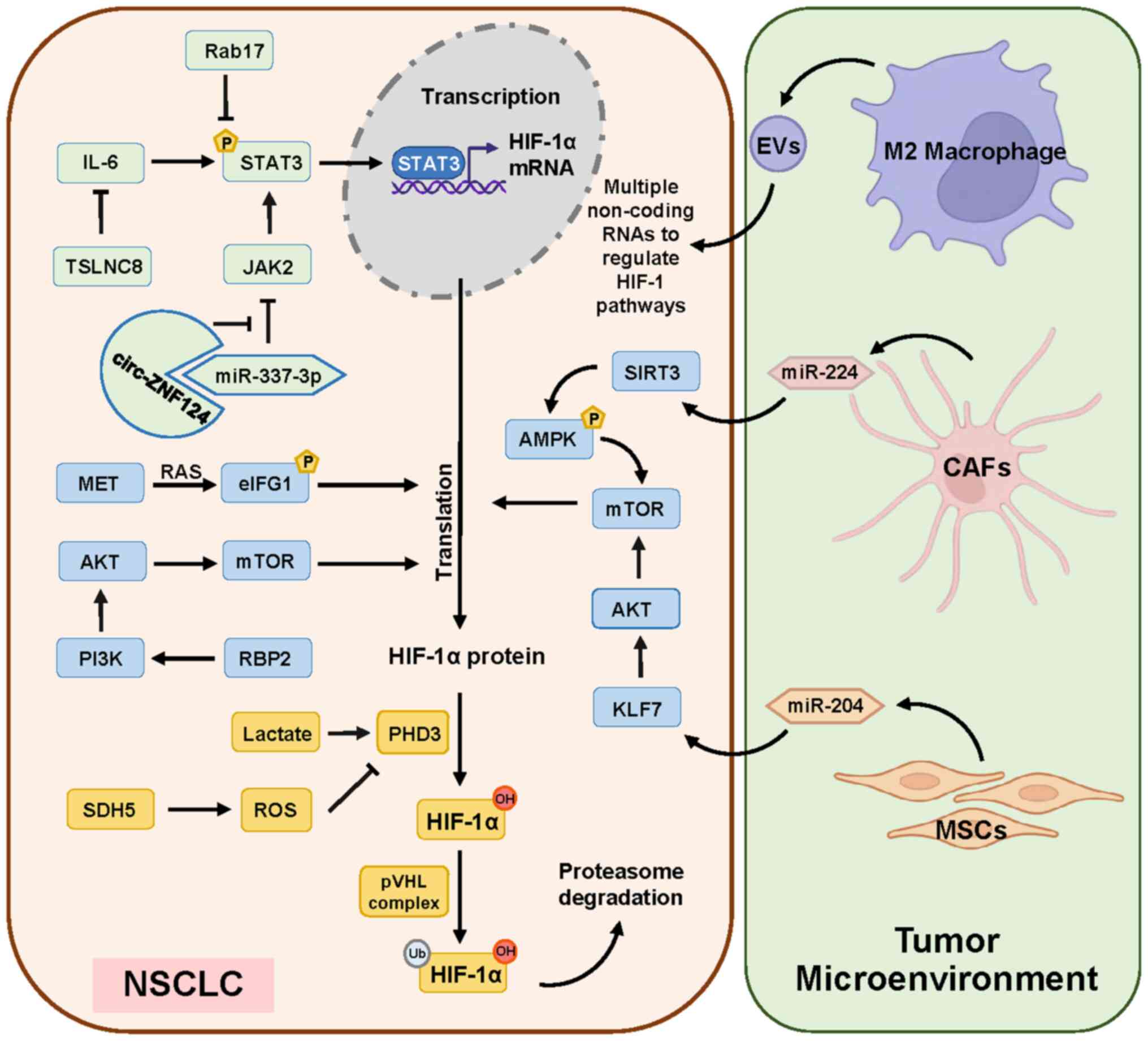
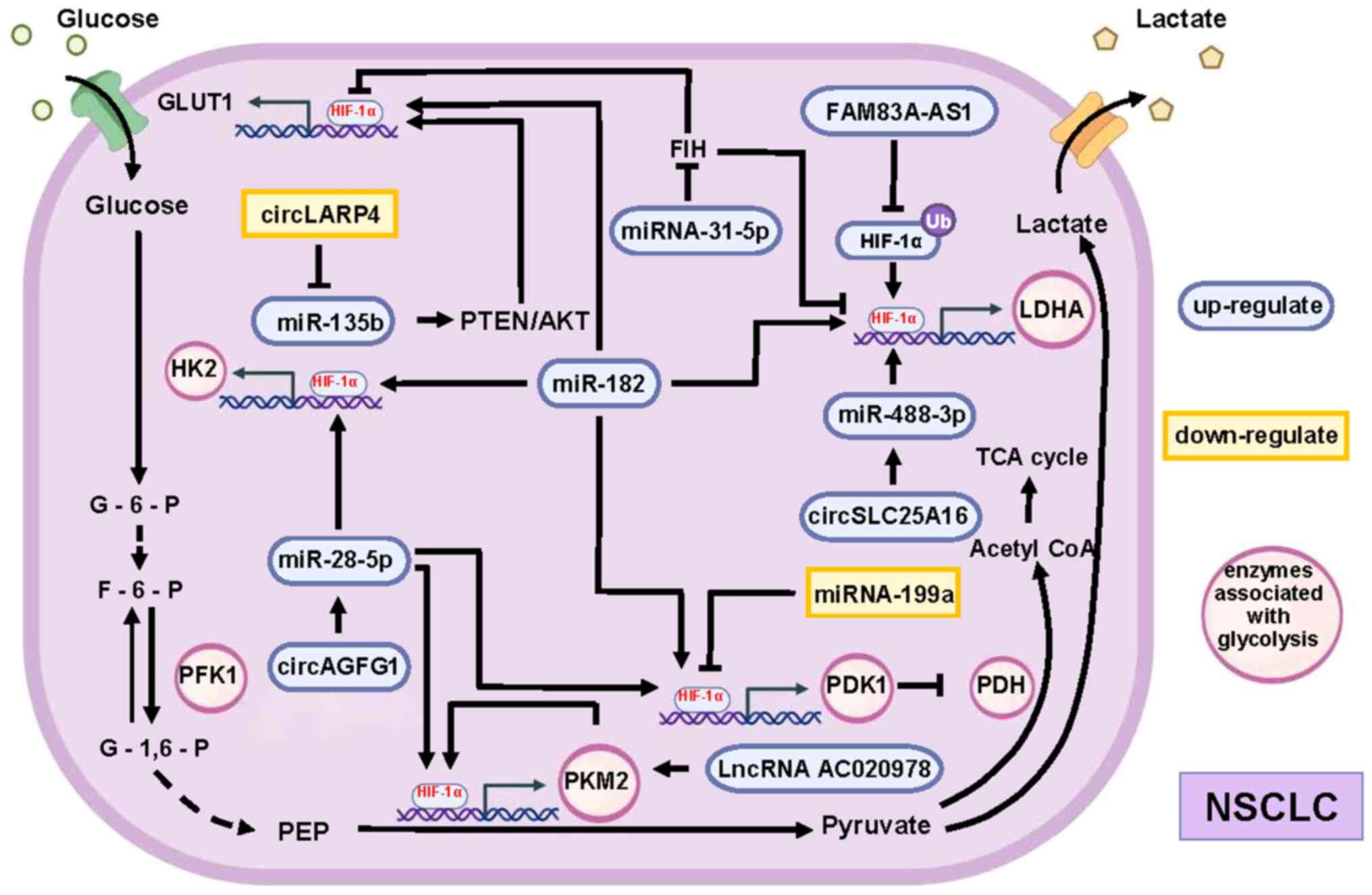
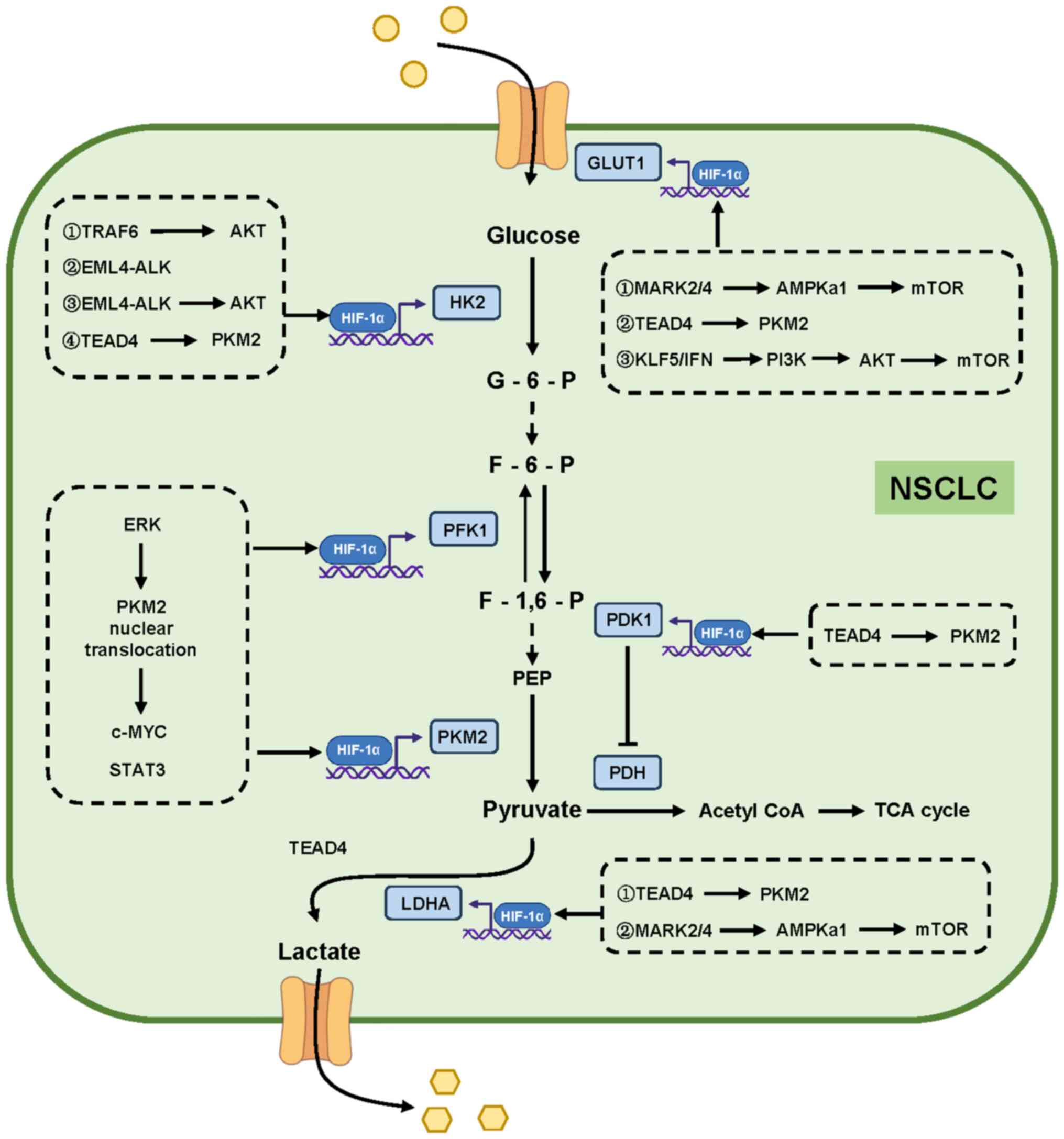
|
1
|
Siegel RL, Miller KD, Wagle NS and Jemal
A: Cancer statistics, 2023. CA Cancer J Clin. 73:17–48. 2023.
View Article : Google Scholar : PubMed/NCBI
|
|
2
|
General Office of National Health
Commission of the People's Republic of China, . Primary lung cancer
diagnosis and treatment guidelines (2022 edition). Med J Peking
Union Med Coll Hosp. 13:549–570. 2022.
|
|
3
|
Molina JR, Yang P, Cassivi SD, Schild SE
and Adjei AA: Non-small cell lung cancer: Epidemiology, risk
factors, treatment, and survivorship. Mayo Clin Proc. 83:584–594.
2008. View
Article : Google Scholar : PubMed/NCBI
|
|
4
|
Zahra K, Dey T, Ashis H, Mishra SP and
Pandey U: Pyruvate Kinase M2 and Cancer: The Role of PKM2 in
promoting tumorigenesis. Front Oncol. 10:1592020. View Article : Google Scholar : PubMed/NCBI
|
|
5
|
Emami Nejad A, Najafgholian S, Rostami A,
Sistani A, Shojaeifar S, Esparvarinha M, Nedaeinia R, Haghjooy
Javanmard S, Taherian M, Ahmadlou M, et al: The role of hypoxia in
the tumor microenvironment and development of cancer stem cell: A
novel approach to developing treatment. Cancer Cell Int. 21:622021.
View Article : Google Scholar : PubMed/NCBI
|
|
6
|
Courtnay R, Ngo DC, Malik N, Ververis K,
Tortorella SM and Karagiannis TC: Cancer metabolism and the Warburg
effect: The role of HIF-1 and PI3K. Mol Biol Rep. 42:841–851. 2015.
View Article : Google Scholar : PubMed/NCBI
|
|
7
|
Wang GL and Semenza GL: General
involvement of hypoxia-inducible factor 1 in transcriptional
response to hypoxia. Proc Natl Acad Sci USA. 90:4304–4308. 1993.
View Article : Google Scholar : PubMed/NCBI
|
|
8
|
McGettrick AF and O'Neill LAJ: The role of
HIF in immunity and inflammation. Cell Metab. 32:524–536. 2020.
View Article : Google Scholar : PubMed/NCBI
|
|
9
|
Semenza GL, Agani F, Booth G, Forsythe J,
Iyer N, Jiang BH, Leung S, Roe R, Wiener C and Yu A: Structural and
functional analysis of hypoxia-inducible factor 1. Kidney Int.
51:553–555. 1997. View Article : Google Scholar : PubMed/NCBI
|
|
10
|
Kierans SJ and Taylor CT: Regulation of
glycolysis by the hypoxia-inducible factor (HIF): Implications for
cellular physiology. J Physiol. 599:23–37. 2021. View Article : Google Scholar : PubMed/NCBI
|
|
11
|
Albadari N, Deng S and Li W: The
transcriptional factors HIF-1 and HIF-2 and their novel inhibitors
in cancer therapy. Expert Opin Drug Discov. 14:667–682. 2019.
View Article : Google Scholar : PubMed/NCBI
|
|
12
|
Palazón A, Aragonés J, Morales-Kastresana
A, de Landázuri MO and Melero I: Molecular pathways: Hypoxia
response in immune cells fighting or promoting cancer. Clin Cancer
Res. 18:1207–1213. 2012. View Article : Google Scholar : PubMed/NCBI
|
|
13
|
Taylor CT and Scholz CC: The effect of HIF
on metabolism and immunity. Nat Rev Nephrol. 18:573–587. 2022.
View Article : Google Scholar : PubMed/NCBI
|
|
14
|
Kaelin WG: The von Hippel-Lindau tumor
suppressor protein: Roles in cancer and oxygen sensing. Cold Spring
Harb Symp Quant Biol. 70:159–166. 2005. View Article : Google Scholar : PubMed/NCBI
|
|
15
|
Hampton-Smith RJ, Davenport BA, Nagarajan
Y and Peet DJ: The conservation and functionality of the
oxygen-sensing enzyme Factor Inhibiting HIF (FIH) in
non-vertebrates. PLoS One. 14:e02161342019. View Article : Google Scholar : PubMed/NCBI
|
|
16
|
Nguyen TL and Durán RV: Prolyl hydroxylase
domain enzymes and their role in cell signaling and cancer
metabolism. Int J Biochem Cell Biol. 80:71–80. 2016. View Article : Google Scholar : PubMed/NCBI
|
|
17
|
Wang Q, Hu DF, Rui Y, Jiang AB, Liu ZL and
Huang LN: Prognosis value of HIF-1α expression in patients with
non-small cell lung cancer. Gene. 541:69–74. 2014. View Article : Google Scholar : PubMed/NCBI
|
|
18
|
Yin X, Xia J, Sun Y and Zhang Z: CHCHD2 is
a potential prognostic factor for NSCLC and is associated with
HIF-1α expression. BMC Pulm Med. 20:402020. View Article : Google Scholar : PubMed/NCBI
|
|
19
|
Fu R, Du W, Ding Z, Wang Y, Li Y, Zhu J,
Zeng Y, Zheng Y, Liu Z and Huang JA: HIF-1α promoted vasculogenic
mimicry formation in lung adenocarcinoma through NRP1 upregulation
in the hypoxic tumor microenvironment. Cell Death Dis. 12:3942021.
View Article : Google Scholar : PubMed/NCBI
|
|
20
|
Li Y and Zhang Y, Li X, Huang Y, Chen W,
He L and Zhang Y: Status of hypoxia-inducible factor-1α expression
in non-small cell lung cancer. Pharmazie. 76:404–411.
2021.PubMed/NCBI
|
|
21
|
Qi Q, Wang C, Yang J, Tian Y and Feng C:
Correlation between HIF-1α, PD-L1 and lymphatic metastasis in
non-small cell lung cancer. Chin J Lung Dis (Electronic Edition).
13:242–246. 2020.
|
|
22
|
Yang SL, Ren QG, Wen L and Hu JL:
Clinicopathological and prognostic significance of
hypoxia-inducible factor-1 alpha in lung cancer: A systematic
review with meta-analysis. J Huazhong Univ Sci Technol Med Sci.
36:321–327. 2016. View Article : Google Scholar
|
|
23
|
Koren A, Rijavec M, Krumpestar T, Kern I,
Sadikov A, Čufer T and Korošec P: Gene expression levels of the
prolyl hydroxylase domain proteins PHD1 and PHD2 but not PHD3 are
decreased in primary tumours and correlate with poor prognosis of
patients with surgically resected Non-Small-Cell lung cancer.
Cancers (Basel). 13:23092021. View Article : Google Scholar : PubMed/NCBI
|
|
24
|
Chang YC, Chan YC, Chang WM, Lin YF, Yang
CJ, Su CY, Huang MS, Wu ATH and Hsiao M: Feedback regulation of
ALDOA activates the HIF-1α/MMP9 axis to promote lung cancer
progression. Cancer Lett. 403:28–36. 2017. View Article : Google Scholar : PubMed/NCBI
|
|
25
|
Kietzmann T and Görlach A: Reactive oxygen
species in the control of hypoxia-inducible factor-mediated gene
expression. Semin Cell Dev Biol. 16:474–486. 2005. View Article : Google Scholar : PubMed/NCBI
|
|
26
|
Li J, Tuo Z, Zong Y and Liu J: Succinate
dehydrogenase 5 regulates lung cancer metastasis by reprogramming
glucose metabolism. J Thorac Dis. 13:6427–6438. 2021. View Article : Google Scholar : PubMed/NCBI
|
|
27
|
Li Q, Huang Q, Cheng S, Wu S, Sang H and
Hou J: Circ_ZNF124 promotes non-small cell lung cancer progression
by abolishing miR-337-3p mediated downregulation of JAK2/STAT3
signaling pathway. Cancer Cell Int. 19:2912019. View Article : Google Scholar : PubMed/NCBI
|
|
28
|
Wang M, Wang W, Ding J, Wang J and Zhang
J: Downregulation of Rab17 promotes cell proliferation and invasion
in non-small cell lung cancer through STAT3/HIF-1α/VEGF signaling.
Thorac Cancer. 11:379–388. 2020. View Article : Google Scholar : PubMed/NCBI
|
|
29
|
Fan H, Li J, Wang J and Hu Z: Long
Non-Coding RNAs (lncRNAs) Tumor-Suppressive Role of lncRNA on
Chromosome 8p12 (TSLNC8) inhibits tumor metastasis and promotes
apoptosis by regulating interleukin 6 (IL-6)/Signal transducer and
activator of transcription 3 (STAT3)/Hypoxia-Inducible factor
1-alpha (HIF-1α) signaling pathway in Non-Small cell lung cancer.
Med Sci Monit. 25:7624–7633. 2019. View Article : Google Scholar : PubMed/NCBI
|
|
30
|
Glück AA, Orlando E, Leiser D, Poliaková
M, Nisa L, Quintin A, Gavini J, Stroka DM, Berezowska S, Bubendorf
L, et al: Identification of a MET-eIF4G1 translational regulation
axis that controls HIF-1α levels under hypoxia. Oncogene.
37:4181–4196. 2018. View Article : Google Scholar : PubMed/NCBI
|
|
31
|
Qi L, Zhu F, Li SH, Si LB, Hu LK and Tian
H: Retinoblastoma binding protein 2 (RBP2) promotes
HIF-1α-VEGF-induced angiogenesis of non-small cell lung cancer via
the Akt pathway. PLoS One. 9:e1060322014. View Article : Google Scholar : PubMed/NCBI
|
|
32
|
Yang D, Liu J, Qian H and Zhuang Q:
Cancer-associated fibroblasts: From basic science to anticancer
therapy. Exp Mol Med. 55:1322–1332. 2023. View Article : Google Scholar : PubMed/NCBI
|
|
33
|
Zhang J, Han L, Yu J, Li H and Li Q:
miR-224 aggravates cancer-associated fibroblast-induced progression
of non-small cell lung cancer by modulating a positive loop of the
SIRT3/AMPK/mTOR/HIF-1α axis. Aging (Albany NY). 13:10431–10449.
2021. View Article : Google Scholar : PubMed/NCBI
|
|
34
|
Liu XN, Zhang CB, Lin H, Tang XY, Zhou R,
Wen HL and Li J: microRNA-204 shuttled by mesenchymal stem
cell-derived exosomes inhibits the migration and invasion of
non-small-cell lung cancer cells via the KLF7/AKT/HIF-1α axis.
Neoplasma. 68:719–731. 2021. View Article : Google Scholar : PubMed/NCBI
|
|
35
|
Chu X, Wang Z, Wang W, Liu W, Cao Y and
Feng L: Roles of hypoxic environment and M2 macrophage-derived
extracellular vesicles on the progression of non-small cell lung
cancer. BMC Pulm Med. 23:2392023. View Article : Google Scholar : PubMed/NCBI
|
|
36
|
Wang M, Wang W, Wang J and Zhang J:
MiR-182 promotes glucose metabolism by upregulating
hypoxia-inducible factor 1α in NSCLC cells. Biochem Biophys Res
Commun. 504:400–405. 2018. View Article : Google Scholar : PubMed/NCBI
|
|
37
|
Zhu B, Cao X, Zhang W, Pan G, Yi Q, Zhong
W and Yan D: MicroRNA-31-5p enhances the Warburg effect via
targeting FIH. FASEB J. 33:545–556. 2019. View Article : Google Scholar : PubMed/NCBI
|
|
38
|
Ding G, Huang G, Liu HD, Liang HX, Ni YF,
Ding ZH, Ni GY and Hua HW: MiR-199a suppresses the hypoxia-induced
proliferation of non-small cell lung cancer cells through targeting
HIF1α. Mol Cell Biochem. 384:173–180. 2013. View Article : Google Scholar : PubMed/NCBI
|
|
39
|
Shangguan H, Feng H, Lv D, Wang J, Tian T
and Wang X: Circular RNA circSLC25A16 contributes to the glycolysis
of non-small-cell lung cancer through epigenetic modification. Cell
Death Dis. 11:4372020. View Article : Google Scholar : PubMed/NCBI
|
|
40
|
Ma X, Wang C, Chen J, Wei D, Yu F and Sun
J: circAGFG1 sponges miR-28-5p to promote non-small-cell lung
cancer progression through modulating HIF-1α level. Open Med
(Wars). 16:703–717. 2021. View Article : Google Scholar : PubMed/NCBI
|
|
41
|
Chen W, Tang D, Lin J, Huang X, Lin S,
Shen G and Dai Y: Exosomal circSHKBP1 participates in non-small
cell lung cancer progression through PKM2-mediated glycolysis. Mol
Ther Oncolytics. 24:470–485. 2022. View Article : Google Scholar : PubMed/NCBI
|
|
42
|
Luo W, Hu H, Chang R, Zhong J, Knabel M,
O'Meally R, Cole RN, Pandey A and Semenza GL: Pyruvate kinase M2 is
a PHD3-stimulated coactivator for hypoxia-inducible factor 1. Cell.
145:732–744. 2011. View Article : Google Scholar : PubMed/NCBI
|
|
43
|
Lu H, Guo Q, Mao G, Zhu J and Li F:
CircLARP4 suppresses cell proliferation, invasion and glycolysis
and promotes apoptosis in non-small cell lung cancer by targeting
miR-135b. Onco Targets Ther. 13:3717–3728. 2020. View Article : Google Scholar : PubMed/NCBI
|
|
44
|
Hua Q, Mi B, Xu F, Wen J, Zhao L, Liu J
and Huang G: Hypoxia-induced lncRNA-AC020978 promotes proliferation
and glycolytic metabolism of non-small cell lung cancer by
regulating PKM2/HIF-1α axis. Theranostics. 10:4762–4778. 2020.
View Article : Google Scholar : PubMed/NCBI
|
|
45
|
Chen Z, Hu Z, Sui Q, Huang Y, Zhao M, Li
M, Liang J, Lu T, Zhan C, Lin Z, et al: LncRNA FAM83A-AS1
facilitates tumor proliferation and the migration via the
HIF-1α/glycolysis axis in lung adenocarcinoma. Int J Biol Sci.
18:522–535. 2022. View Article : Google Scholar : PubMed/NCBI
|
|
46
|
Ma Y, Yu C, Mohamed EM, Shao H, Wang L,
Sundaresan G, Zweit J, Idowu M and Fang X: A causal link from ALK
to hexokinase II overexpression and hyperactive glycolysis in
EML4-ALK-positive lung cancer. Oncogene. 35:6132–6142. 2016.
View Article : Google Scholar : PubMed/NCBI
|
|
47
|
Feng L, Feng S, Nie Z, Deng Y, Xuan Y,
Chen X, Lu Y, Liang L and Chen Y: TRAF6 promoted tumor glycolysis
in non-small-cell lung cancer by activating the Akt-HIFα Pathway.
Biomed Res Int. 2021:34312452021. View Article : Google Scholar : PubMed/NCBI
|
|
48
|
Icard P, Simula L, Fournel L, Leroy K,
Lupo A, Damotte D, Charpentier MC, Durdux C, Loi M, Schussler O, et
al: The strategic roles of four enzymes in the interconnection
between metabolism and oncogene activation in non-small cell lung
cancer: Therapeutic implications. Drug Resist Updat. 63:1008522022.
View Article : Google Scholar : PubMed/NCBI
|
|
49
|
Hu Y, Mu H and Deng Z: The transcription
factor TEAD4 enhances lung adenocarcinoma progression through
enhancing PKM2 mediated glycolysis. Cell Biol Int. 45:2063–2073.
2021. View Article : Google Scholar : PubMed/NCBI
|
|
50
|
Gong T, Cui L, Wang H, Wang H and Han N:
Knockdown of KLF5 suppresses hypoxia-induced resistance to
cisplatin in NSCLC cells by regulating HIF-1α-dependent glycolysis
through inactivation of the PI3K/Akt/mTOR pathway. J Transl Med.
16:1642018. View Article : Google Scholar : PubMed/NCBI
|
|
51
|
Yeh YH, Hsiao HF, Yeh YC, Chen TW and Li
TK: Inflammatory interferon activates HIF-1α-mediated
epithelial-to-mesenchymal transition via PI3K/AKT/mTOR pathway. J
Exp Clin Cancer Res. 37:702018. View Article : Google Scholar : PubMed/NCBI
|
|
52
|
Natarajan SR, Ponnusamy L and Manoharan R:
MARK2/4 promotes Warburg effect and cell growth in non-small cell
lung carcinoma through the AMPKα1/mTOR/HIF-1α signaling pathway.
Biochim Biophys Acta Mol Cell Res. 1869:1192422022. View Article : Google Scholar : PubMed/NCBI
|
|
53
|
Kopecka J, Porto S, Lusa S, Gazzano E,
Salzano G, Giordano A, Desiderio V, Ghigo D, Caraglia M, De Rosa G
and Riganti C: Self-assembling nanoparticles encapsulating
zoledronic acid revert multidrug resistance in cancer cells.
Oncotarget. 6:31461–31478. 2015. View Article : Google Scholar : PubMed/NCBI
|
|
54
|
Sun Y, Liu W, Zhao Q, Zhang R, Wang J, Pan
P, Shang H, Liu C and Wang C: Downregulating the expression of
miRNA-21 inhibits the glucose metabolism of A549/DDP cells and
promotes cell death through the PI3K/AKT/mTOR/HIF-1α pathway. Front
Oncol. 11:6535962021. View Article : Google Scholar : PubMed/NCBI
|
|
55
|
Xu Y, Jiang T, Wu C and Zhang Y: CircAKT3
inhibits glycolysis balance in lung cancer cells by regulating
miR-516b-5p/STAT3 to inhibit cisplatin sensitivity. Biotechnol
Lett. 42:1123–1135. 2020. View Article : Google Scholar : PubMed/NCBI
|
|
56
|
Dong Q, Zhou C, Ren H, Zhang Z, Cheng F,
Xiong Z, Chen C, Yang J, Gao J, Zhang Y, et al: Lactate-induced
MRP1 expression contributes to metabolism-based etoposide
resistance in non-small cell lung cancer cells. Cell Commun Signal.
18:1672020. View Article : Google Scholar : PubMed/NCBI
|
|
57
|
Sun H, Zhu A, Zhou X and Wang F:
Suppression of pyruvate dehydrogenase kinase-2 re-sensitizes
paclitaxel-resistant human lung cancer cells to paclitaxel.
Oncotarget. 8:52642–52650. 2017. View Article : Google Scholar : PubMed/NCBI
|
|
58
|
Chelakkot C, Chelakkot VS, Shin Y and Song
K: Modulating glycolysis to improve cancer therapy. Int J Mol Sci.
24:26062023. View Article : Google Scholar : PubMed/NCBI
|
|
59
|
Grosso S, Doyen J, Parks SK, Bertero T,
Paye A, Cardinaud B, Gounon P, Lacas-Gervais S, Noël A, Pouysségur
J, et al: MiR-210 promotes a hypoxic phenotype and increases
radioresistance in human lung cancer cell lines. Cell Death Dis.
4:e5442013. View Article : Google Scholar : PubMed/NCBI
|
|
60
|
Zhang F, Fan B and Mao L: Radiosensitizing
effects of Cyclocarya paliurus polysaccharide on hypoxic A549 and
H520 human non-small cell lung carcinoma cells. Int J Mol Med.
44:1233–1242. 2019.PubMed/NCBI
|
|
61
|
Zhong L, D'Urso A, Toiber D, Sebastian C,
Henry RE, Vadysirisack DD, Guimaraes A, Marinelli B, Wikstrom JD,
Nir T, et al: The histone deacetylase Sirt6 regulates glucose
homeostasis via Hif1alpha. Cell. 140:280–293. 2010. View Article : Google Scholar : PubMed/NCBI
|
|
62
|
You Q, Wang J, Yu Y, Li F, Meng L, Chen M,
Yang Q, Xu Z, Sun J, Zhuo W and Chen Z: The histone deacetylase
SIRT6 promotes glycolysis through the HIF-1α/HK2 signaling axis and
induces erlotinib resistance in non-small cell lung cancer.
Apoptosis. 27:883–898. 2022. View Article : Google Scholar : PubMed/NCBI
|
|
63
|
Wang J, Liu X, Huang Y, Li P, Yang M, Zeng
S, Chen D, Wang Q, Liu H, Luo K and Deng J: Targeting nicotinamide
N-methyltransferase overcomes resistance to EGFR-TKI in non-small
cell lung cancer cells. Cell Death Discov. 8:1702022. View Article : Google Scholar : PubMed/NCBI
|
|
64
|
Kim S, Im JH, Kim WK, Choi YJ, Lee JY, Kim
SK, Kim SJ, Kwon SW and Kang KW: Enhanced sensitivity of nonsmall
cell lung cancer with acquired resistance to epidermal growth
factor receptor-tyrosine kinase inhibitors to phenformin: The roles
of a metabolic shift to oxidative phosphorylation and redox
balance. Oxid Med Cell Longev. 2021:54283642021. View Article : Google Scholar : PubMed/NCBI
|
|
65
|
Dyrstad SE, Lotsberg ML, Tan TZ, Pettersen
IKN, Hjellbrekke S, Tusubira D, Engelsen AST, Daubon T, Mourier A,
Thiery JP, et al: Blocking aerobic glycolysis by targeting pyruvate
dehydrogenase kinase in combination with EGFR TKI and ionizing
radiation increases therapeutic effect in non-small cell lung
cancer cells. Cancers (Basel). 13:9412021. View Article : Google Scholar : PubMed/NCBI
|
|
66
|
Cheng FJ, Chen CH, Tsai WC, Wang BW, Yu
MC, Hsia TC, Wei YL, Hsiao YC, Hu DW, Ho CY, et al: Cigarette
smoke-induced LKB1/AMPK pathway deficiency reduces EGFR TKI
sensitivity in NSCLC. Oncogene. 40:1162–1175. 2021. View Article : Google Scholar : PubMed/NCBI
|
|
67
|
Zhang L, Ke J, Min S, Wu N, Liu F, Qu Z,
Li W, Wang H, Qian Z and V Wang X: Hyperbaric oxygen therapy
represses the warburg effect and epithelial-mesenchymal transition
in hypoxic NSCLC cells via the HIF-1α/PFKP Axis. Front Oncol.
11:6917622021. View Article : Google Scholar : PubMed/NCBI
|
|
68
|
Kim DJ, Park YS, Kim ND, Min SH, You YM,
Jung Y, Koo H, Noh H, Kim JA, Park KC and Yeom YI: A novel pyruvate
kinase M2 activator compound that suppresses lung cancer cell
viability under hypoxia. Mol Cells. 38:373–379. 2015. View Article : Google Scholar : PubMed/NCBI
|
|
69
|
Zhao T, Zhu Y, Morinibu A, Kobayashi M,
Shinomiya K, Itasaka S, Yoshimura M, Guo G, Hiraoka M and Harada H:
HIF-1-mediated metabolic reprogramming reduces ROS levels and
facilitates the metastatic colonization of cancers in lungs. Sci
Rep. 4:37932014. View Article : Google Scholar : PubMed/NCBI
|
|
70
|
Zhou F, Du J and Wang J: Albendazole
inhibits HIF-1α-dependent glycolysis and VEGF expression in
non-small cell lung cancer cells. Mol Cell Biochem. 428:171–178.
2017. View Article : Google Scholar : PubMed/NCBI
|
|
71
|
Yang Y, Liu L, Sun J, Wang S, Yang Z, Li
H, Huang N and Zhao W: Deoxypodophyllotoxin inhibits non-small cell
lung cancer cell growth by reducing HIF-1α-Mediated glycolysis.
Front Oncol. 11:6295432021. View Article : Google Scholar : PubMed/NCBI
|
|
72
|
Liu X, Liu L, Chen K, Sun L, Li W and
Zhang S: Huaier shows anti-cancer activities by inhibition of cell
growth, migration and energy metabolism in lung cancer through
PI3K/AKT/HIF-1α pathway. J Cell Mol Med. 25:2228–2237. 2021.
View Article : Google Scholar : PubMed/NCBI
|
|
73
|
Fumarola C, Cretella D, La Monica S,
Bonelli MA, Alfieri R, Caffarra C, Quaini F, Madeddu D, Falco A,
Cavazzoni A, et al: Enhancement of the anti-tumor activity of FGFR1
inhibition in squamous cell lung cancer by targeting downstream
signaling involved in glucose metabolism. Oncotarget.
8:91841–91859. 2017. View Article : Google Scholar : PubMed/NCBI
|
|
74
|
Sun L, Liu H, Ye Y, Lei Y, Islam R, Tan S,
Tong R, Miao YB and Cai L: Smart nanoparticles for cancer therapy.
Signal Transduct Target Ther. 8:4182023. View Article : Google Scholar : PubMed/NCBI
|
|
75
|
Huang J, Zhuang C, Chen J, Chen X, Li X,
Zhang T, Wang B, Feng Q, Zheng X, Gong M, et al: Targeted
Drug/Gene/Photodynamic therapy via a stimuli-responsive
dendritic-polymer-based nanococktail for treatment of
EGFR-TKI-resistant Non-small-cell lung cancer. Adv Mater.
34:e22015162022. View Article : Google Scholar : PubMed/NCBI
|
|
76
|
Alkhathami AG, Sahib AS, Al Fayi MS,
Fadhil AA, Jawad MA, Shafik SA, Sultan SJ, Almulla AF and Shen M:
Glycolysis in human cancers: Emphasis circRNA/glycolysis axis and
nanoparticles in glycolysis regulation in cancer therapy. Environ
Res. 234:1160072023. View Article : Google Scholar : PubMed/NCBI
|
|
77
|
Martínez-Reyes I and Chandel NS: Cancer
metabolism: Looking forward. Nat Rev Cancer. 21:669–680. 2021.
View Article : Google Scholar : PubMed/NCBI
|
|
78
|
Xiao Y, Yu TJ, Xu Y, Ding R, Wang YP,
Jiang YZ and Shao ZM: Emerging therapies in cancer metabolism. Cell
Metab. 35:1283–1303. 2023. View Article : Google Scholar : PubMed/NCBI
|
|
79
|
Zheng F, Chen J, Zhang X, Wang Z, Chen J,
Lin X, Huang H, Fu W, Liang J, Wu W, et al: The HIF-1α antisense
long non-coding RNA drives a positive feedback loop of HIF-1α
mediated transactivation and glycolysis. Nat Commun. 12:13412021.
View Article : Google Scholar : PubMed/NCBI
|