Spandidos Publications Logo
  • About
    • About Spandidos
    • Aims and Scopes
    • Abstracting and Indexing
    • Editorial Policies
    • Reprints and Permissions
    • Job Opportunities
    • Terms and Conditions
    • Contact
  • Journals
    • All Journals
    • Oncology Letters
      • Oncology Letters
      • Information for Authors
      • Editorial Policies
      • Editorial Board
      • Aims and Scope
      • Abstracting and Indexing
      • Bibliographic Information
      • Archive
    • International Journal of Oncology
      • International Journal of Oncology
      • Information for Authors
      • Editorial Policies
      • Editorial Board
      • Aims and Scope
      • Abstracting and Indexing
      • Bibliographic Information
      • Archive
    • Molecular and Clinical Oncology
      • Molecular and Clinical Oncology
      • Information for Authors
      • Editorial Policies
      • Editorial Board
      • Aims and Scope
      • Abstracting and Indexing
      • Bibliographic Information
      • Archive
    • Experimental and Therapeutic Medicine
      • Experimental and Therapeutic Medicine
      • Information for Authors
      • Editorial Policies
      • Editorial Board
      • Aims and Scope
      • Abstracting and Indexing
      • Bibliographic Information
      • Archive
    • International Journal of Molecular Medicine
      • International Journal of Molecular Medicine
      • Information for Authors
      • Editorial Policies
      • Editorial Board
      • Aims and Scope
      • Abstracting and Indexing
      • Bibliographic Information
      • Archive
    • Biomedical Reports
      • Biomedical Reports
      • Information for Authors
      • Editorial Policies
      • Editorial Board
      • Aims and Scope
      • Abstracting and Indexing
      • Bibliographic Information
      • Archive
    • Oncology Reports
      • Oncology Reports
      • Information for Authors
      • Editorial Policies
      • Editorial Board
      • Aims and Scope
      • Abstracting and Indexing
      • Bibliographic Information
      • Archive
    • Molecular Medicine Reports
      • Molecular Medicine Reports
      • Information for Authors
      • Editorial Policies
      • Editorial Board
      • Aims and Scope
      • Abstracting and Indexing
      • Bibliographic Information
      • Archive
    • World Academy of Sciences Journal
      • World Academy of Sciences Journal
      • Information for Authors
      • Editorial Policies
      • Editorial Board
      • Aims and Scope
      • Abstracting and Indexing
      • Bibliographic Information
      • Archive
    • International Journal of Functional Nutrition
      • International Journal of Functional Nutrition
      • Information for Authors
      • Editorial Policies
      • Editorial Board
      • Aims and Scope
      • Abstracting and Indexing
      • Bibliographic Information
      • Archive
    • International Journal of Epigenetics
      • International Journal of Epigenetics
      • Information for Authors
      • Editorial Policies
      • Editorial Board
      • Aims and Scope
      • Abstracting and Indexing
      • Bibliographic Information
      • Archive
    • Medicine International
      • Medicine International
      • Information for Authors
      • Editorial Policies
      • Editorial Board
      • Aims and Scope
      • Abstracting and Indexing
      • Bibliographic Information
      • Archive
  • Articles
  • Information
    • Information for Authors
    • Information for Reviewers
    • Information for Librarians
    • Information for Advertisers
    • Conferences
  • Language Editing
Spandidos Publications Logo
  • About
    • About Spandidos
    • Aims and Scopes
    • Abstracting and Indexing
    • Editorial Policies
    • Reprints and Permissions
    • Job Opportunities
    • Terms and Conditions
    • Contact
  • Journals
    • All Journals
    • Biomedical Reports
      • Information for Authors
      • Editorial Policies
      • Editorial Board
      • Aims and Scope
      • Abstracting and Indexing
      • Bibliographic Information
      • Archive
    • Experimental and Therapeutic Medicine
      • Information for Authors
      • Editorial Policies
      • Editorial Board
      • Aims and Scope
      • Abstracting and Indexing
      • Bibliographic Information
      • Archive
    • International Journal of Epigenetics
      • Information for Authors
      • Editorial Policies
      • Editorial Board
      • Aims and Scope
      • Abstracting and Indexing
      • Bibliographic Information
      • Archive
    • International Journal of Functional Nutrition
      • Information for Authors
      • Editorial Policies
      • Editorial Board
      • Aims and Scope
      • Abstracting and Indexing
      • Bibliographic Information
      • Archive
    • International Journal of Molecular Medicine
      • Information for Authors
      • Editorial Policies
      • Editorial Board
      • Aims and Scope
      • Abstracting and Indexing
      • Bibliographic Information
      • Archive
    • International Journal of Oncology
      • Information for Authors
      • Editorial Policies
      • Editorial Board
      • Aims and Scope
      • Abstracting and Indexing
      • Bibliographic Information
      • Archive
    • Medicine International
      • Information for Authors
      • Editorial Policies
      • Editorial Board
      • Aims and Scope
      • Abstracting and Indexing
      • Bibliographic Information
      • Archive
    • Molecular and Clinical Oncology
      • Information for Authors
      • Editorial Policies
      • Editorial Board
      • Aims and Scope
      • Abstracting and Indexing
      • Bibliographic Information
      • Archive
    • Molecular Medicine Reports
      • Information for Authors
      • Editorial Policies
      • Editorial Board
      • Aims and Scope
      • Abstracting and Indexing
      • Bibliographic Information
      • Archive
    • Oncology Letters
      • Information for Authors
      • Editorial Policies
      • Editorial Board
      • Aims and Scope
      • Abstracting and Indexing
      • Bibliographic Information
      • Archive
    • Oncology Reports
      • Information for Authors
      • Editorial Policies
      • Editorial Board
      • Aims and Scope
      • Abstracting and Indexing
      • Bibliographic Information
      • Archive
    • World Academy of Sciences Journal
      • Information for Authors
      • Editorial Policies
      • Editorial Board
      • Aims and Scope
      • Abstracting and Indexing
      • Bibliographic Information
      • Archive
  • Articles
  • Information
    • For Authors
    • For Reviewers
    • For Librarians
    • For Advertisers
    • Conferences
  • Language Editing
Login Register Submit
  • This site uses cookies
  • You can change your cookie settings at any time by following the instructions in our Cookie Policy. To find out more, you may read our Privacy Policy.

    I agree
Search articles by DOI, keyword, author or affiliation
Search
Advanced Search
presentation
Oncology Reports
Join Editorial Board Propose a Special Issue
Print ISSN: 1021-335X Online ISSN: 1791-2431
Journal Cover
September-2025 Volume 54 Issue 3

Full Size Image

Sign up for eToc alerts
Recommend to Library

Journals

International Journal of Molecular Medicine

International Journal of Molecular Medicine

International Journal of Molecular Medicine is an international journal devoted to molecular mechanisms of human disease.

International Journal of Oncology

International Journal of Oncology

International Journal of Oncology is an international journal devoted to oncology research and cancer treatment.

Molecular Medicine Reports

Molecular Medicine Reports

Covers molecular medicine topics such as pharmacology, pathology, genetics, neuroscience, infectious diseases, molecular cardiology, and molecular surgery.

Oncology Reports

Oncology Reports

Oncology Reports is an international journal devoted to fundamental and applied research in Oncology.

Experimental and Therapeutic Medicine

Experimental and Therapeutic Medicine

Experimental and Therapeutic Medicine is an international journal devoted to laboratory and clinical medicine.

Oncology Letters

Oncology Letters

Oncology Letters is an international journal devoted to Experimental and Clinical Oncology.

Biomedical Reports

Biomedical Reports

Explores a wide range of biological and medical fields, including pharmacology, genetics, microbiology, neuroscience, and molecular cardiology.

Molecular and Clinical Oncology

Molecular and Clinical Oncology

International journal addressing all aspects of oncology research, from tumorigenesis and oncogenes to chemotherapy and metastasis.

World Academy of Sciences Journal

World Academy of Sciences Journal

Multidisciplinary open-access journal spanning biochemistry, genetics, neuroscience, environmental health, and synthetic biology.

International Journal of Functional Nutrition

International Journal of Functional Nutrition

Open-access journal combining biochemistry, pharmacology, immunology, and genetics to advance health through functional nutrition.

International Journal of Epigenetics

International Journal of Epigenetics

Publishes open-access research on using epigenetics to advance understanding and treatment of human disease.

Medicine International

Medicine International

An International Open Access Journal Devoted to General Medicine.

Journal Cover
September-2025 Volume 54 Issue 3

Full Size Image

Sign up for eToc alerts
Recommend to Library

  • Article
  • Citations
    • Cite This Article
    • Download Citation
    • Create Citation Alert
    • Remove Citation Alert
    • Cited By
  • Similar Articles
    • Related Articles (in Spandidos Publications)
    • Similar Articles (Google Scholar)
    • Similar Articles (PubMed)
  • Download PDF
  • Download XML
  • View XML
Article Open Access

TRPML3‑mediated lysosomal Ca2+ release enhances drug sequestration and biogenesis, promoting osimertinib resistance in non‑small cell lung cancer

  • Authors:
    • Mi Seong Kim
    • Min Seuk Kim
  • View Affiliations / Copyright

    Affiliations: Department of Oral Physiology, Institute of Biomaterial‑Implant, School of Dentistry, Wonkwang University, Iksan, Jeonbuk 54538, Republic of Korea
    Copyright: © Kim et al. This is an open access article distributed under the terms of Creative Commons Attribution License.
  • Article Number: 113
    |
    Published online on: July 14, 2025
       https://doi.org/10.3892/or.2025.8946
  • Expand metrics +
Metrics: Total Views: 0 (Spandidos Publications: | PMC Statistics: )
Metrics: Total PDF Downloads: 0 (Spandidos Publications: | PMC Statistics: )
Cited By (CrossRef): 0 citations Loading Articles...

This article is mentioned in:


Abstract

Lysosomes and lysosomal Ca2+ play crucial roles in cellular homeostasis and drug resistance. The lysosomal Ca2+ channel transient receptor potential mucolipin 3 (TRPML3; also known as mucolipin‑3 or MCOLN3) is a key regulator of autophagy and membrane trafficking; however, its role in tyrosine kinase inhibitor (TKI) resistance remains unclear. The contribution of TRPML3 to osimertinib resistance in non‑small cell lung cancer (NSCLC) was therefore assessed. Using publicly available RNA sequencing data, including profiles from clinical samples before and after osimertinib treatment, TRPML3 expression was measured in lung adenocarcinoma (LUAD) tissues. Additionally, two‑dimensional cell culture of, and three‑dimensional spheroids derived from, NSCLC cell lines were used to elucidate roles of TRPML3 in drug resistance. TRPML3 expression was significantly upregulated in both LUAD tissues from patients with residual disease after osimertinib treatment, as well as in osimertinib‑resistant NSCLC cells. TRPML3 knockdown in resistant PC9 cells restored sensitivity to osimertinib and multiple TKIs; this was replicated in spheroid models. Mechanistically, osimertinib induced intracellular Ca2+ oscillations in PC9 cells via lysosomal Ca2+ release through TRPML3 rather than through TRPML1. In summary, the present findings suggest that elevated TRPML3 expression compensates for TRPML1 to maintain lysosomal acidity and biogenesis during TKI treatment, facilitating drug sequestration and resistance and identifying TRPML3 as a potential target for overcoming osimertinib resistance in NSCLC.
View Figures

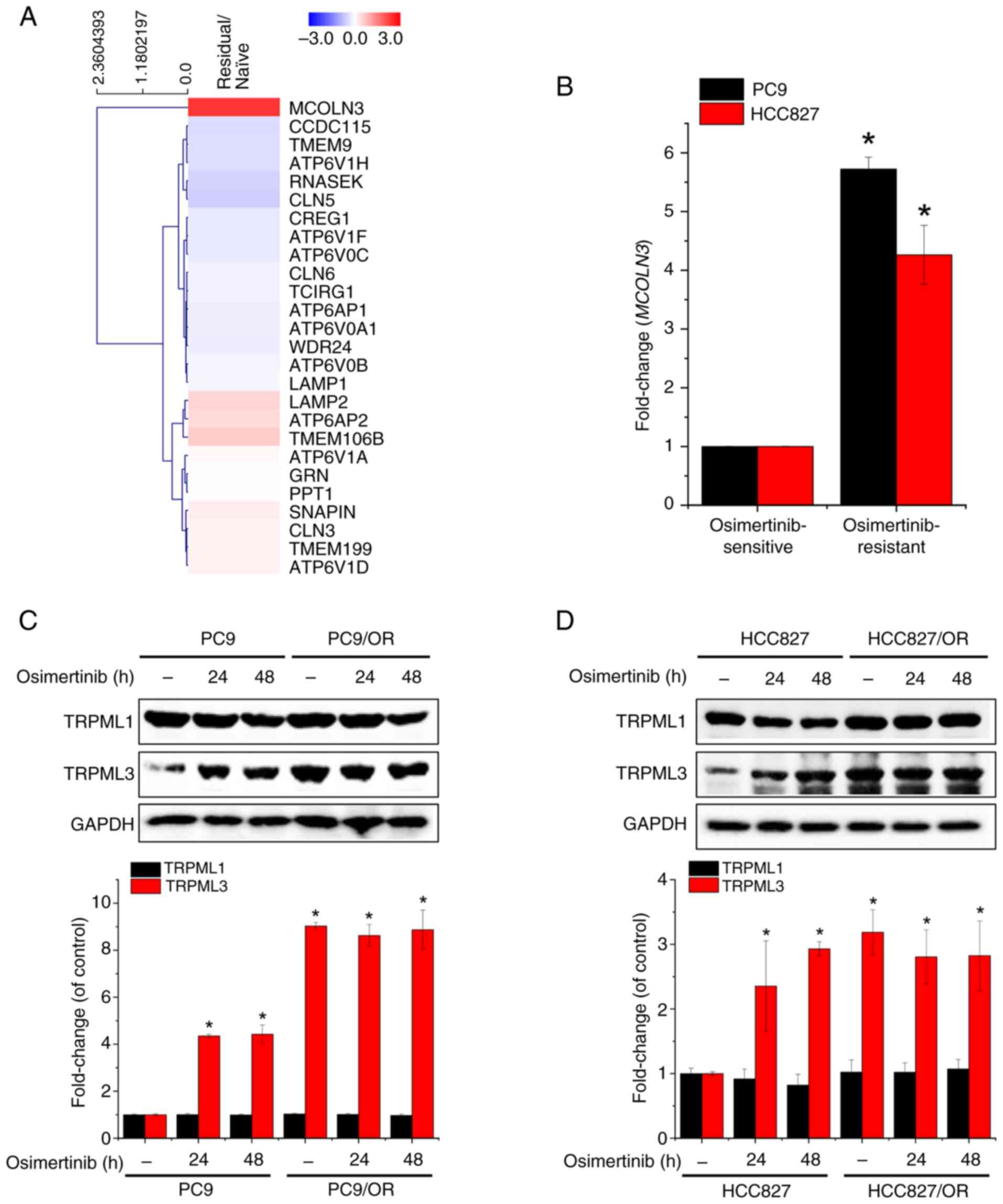
Figure 1

Differential gene and protein
expression in osimertinib-residual LUAD tissues and TRPML3 levels
in osimertinib-sensitive and -resistant non-small cell lung cancer
cells. (A) Heatmap of differentially expressed genes in residual
vs. naive LUAD tissues (both n=4) generated using hierarchical
clustering with Euclidean distance. Color intensities indicate
changes in average normalized expression levels. (B) TRPML3
mRNA expression in PC9 and HCC827, cells and their
osimertinib-resistant sublines. Data are shown as fold-changes
relative to osimertinib-sensitive controls (n=3). (C and D) Protein
levels of TRPML1 and TRPML3 in (C) PC9 and PC9/OR, and (D) HCC827
and HCC827/OR cells, treated with 0.01 µM osimertinib. GAPDH served
as a loading control. Statistical analysis (lower panels) is
presented as fold-change relative to DMSO-treated controls (n=3).
*P<0.05. LUAD, lung adenocarcinoma; TRPML, transient receptor
potential mucolipin.

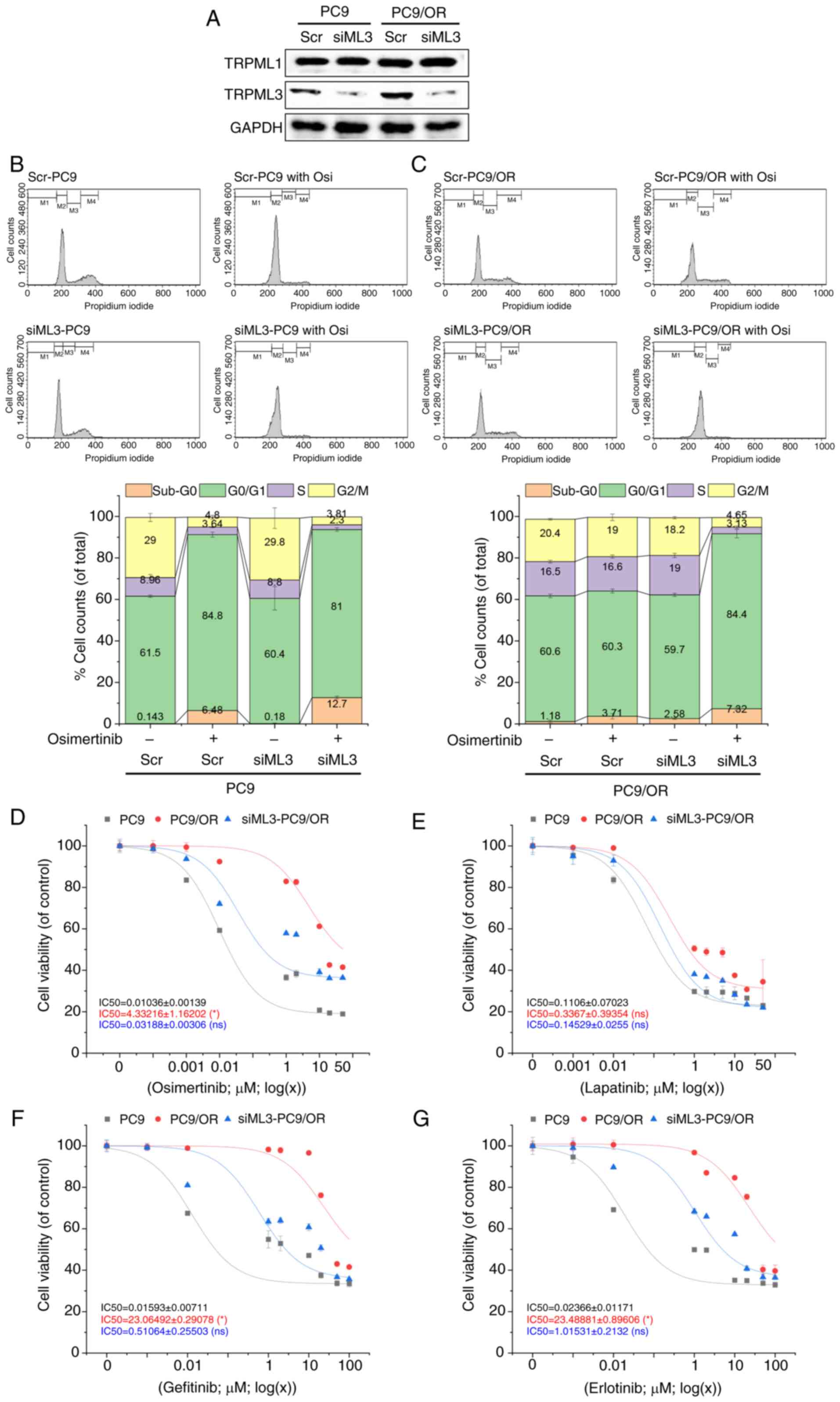
Figure 2

TRPML3 deletion restores sensitivity
to osimertinib-induced cell-cycle arrest and death in PC9/OR cells.
(A) Confirmation of TRPML3 siRNA knockdown in PC9 and PC9/OR cells,
with no effect on TRPML1 expression. GAPDH was used for
normalization. (B and C) Cell-cycle phase distributions in (B) PC9
and (C) PC9/OR cells transfected with siML3 or scrambled RNA (scr),
then treated with 0.01 µM osimertinib for 48 h. Flow cytometric
data are presented as percentages of cells per phase
(2×10⁴ cells per sample, n=4). (D-G) Viability of PC9,
PC9/OR and siML3-PC9/OR cells treated with increasing
concentrations of (D) osimertinib, (E) lapatinib, (F) gefitinib, or
(G) erlotinib for 72 h, assessed by MTT assay. Data show
percentages relative to DMSO-treated controls (n=3). TRPML,
transient receptor potential mucolipin; si-, small interfering.

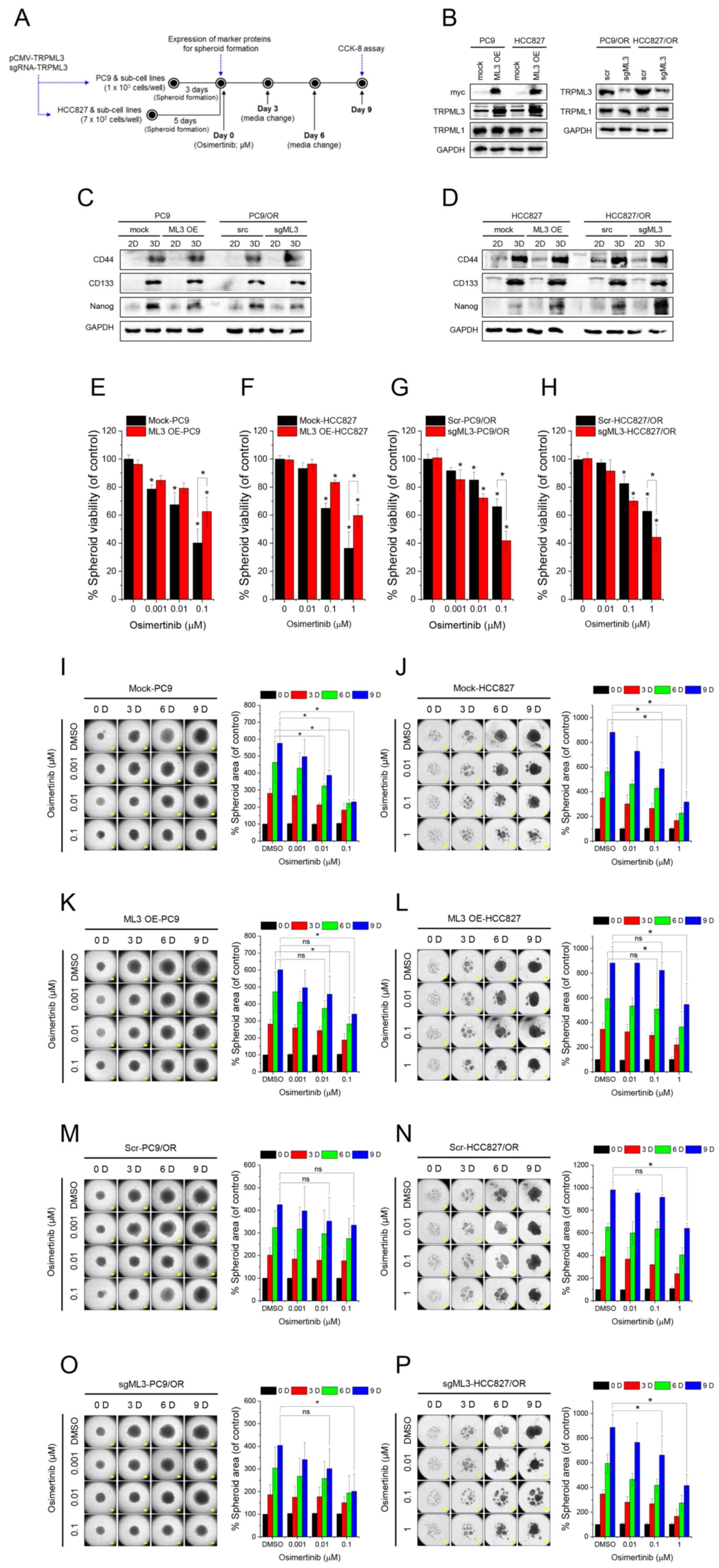
Figure 3

TRPML3 modulates osimertinib
sensitivity and growth in spheroids. (A) Schematic representation
of the spheroid formation protocol and the subsequent osimertinib
treatment. (B) Expression levels of TRPML3 and −1 in PC9, HCC827
and their sublines (n=3). (C and D) Expression levels of spheroid
formation markers, CD44, CD133 and Nanog in spheroid lysates from
(C) PC9 and PC9/OR, (D) HCC827 and HCC827/OR, and conventional 2D
cultures (2D). (E-H) Spheroid viability assessed using Cell
Counting Kit-8 assays on day 9 of osimertinib treatment. Viability
is expressed as percentage relative to corresponding DMSO-treated
controls: (E) mock-PC9 and ML3 OE-PC9, (F) mock-HCC827 and ML3
OE-HCC827, (G) scr PC9/OR and sgML3-PC9/OR, (H) scr-HCC827/OR and
sgML3-HCC827/OR. Data are shown as the mean ± SD (n=3). (I-P)
Bright-field images of spheroids derived from mock-PC9 (I; n=3),
mock-HCC827 (J; n=4), ML3 OE-PC9 (K; n=3), ML3 OE-HCC827 (L; n=4),
scr-PC9/OR (M; n=3), scr-HCC827/OR (N; n=4), sgML3-PC9/OR (O; n=3),
and sgML3-HCC827/OR (P; n=4) cells, captured at 3-day intervals
following spheroid formation. Osimertinib treatment (DMSO, 0.001,
0.01, 0.1, and 1 µM) was initiated on day 0. Columns adjacent to
each image show overall spheroid size relative to the control
DMSO-treated spheroids on day 0. Data are presented as the mean ±
SD. Scale bar, 400 µm. *P<0.05. TRPML, transient receptor
potential mucolipin; ns, not significant.

Figure 4

Osimertinib-induced
Ca2+i oscillations depend on lysosomal
Ca2+ release mediated by TRPML3.
[Ca2+]i measured using Fura-2/AM in cells
treated with 0.01 µM osimertinib in the absence of extracellular
Ca2+. (A and B) Osimertinib-induced
Ca2+i mobilization in (A) PC9 and (B) PC9/OR
cells. (C) Effects of ML-SI1, a TRPML channel blocker, on
osimertinib-induced Ca2+i oscillations. (D-F)
Ca2+i oscillations in PC9 cells transfected
with scrambled RNA (D; scr), TRPML1-targeting siRNA (E; siML1), or
TRPML3-targeting siRNA (F; siML3), following osimertinib treatment.
Each line represents Ca2+i mobilization in a
single cell. (G) Statistical analysis of Ca2+ spike
frequencies (*P<0.05, n=6). (H and I) Lysosomal Ca2+
release in (H) PC9 and (I) HCC827 cells expressing TRPML3-GCaMP6
and treated with 0.01 µM osimertinib in the absence of
extracellular Ca2+. ML-SA1 was used as a positive
control. Lines indicate changes in GFP intensity (F488)
in individual cells, reflecting TRPML3-mediated lysosomal
Ca2+ release. F340/380 and F488
values were normalized to the mean and are presented as
F340/380-norm and F488-norm, respectively.
TRPML, transient receptor potential mucolipin; si-, small
interfering; scr, scrambled.

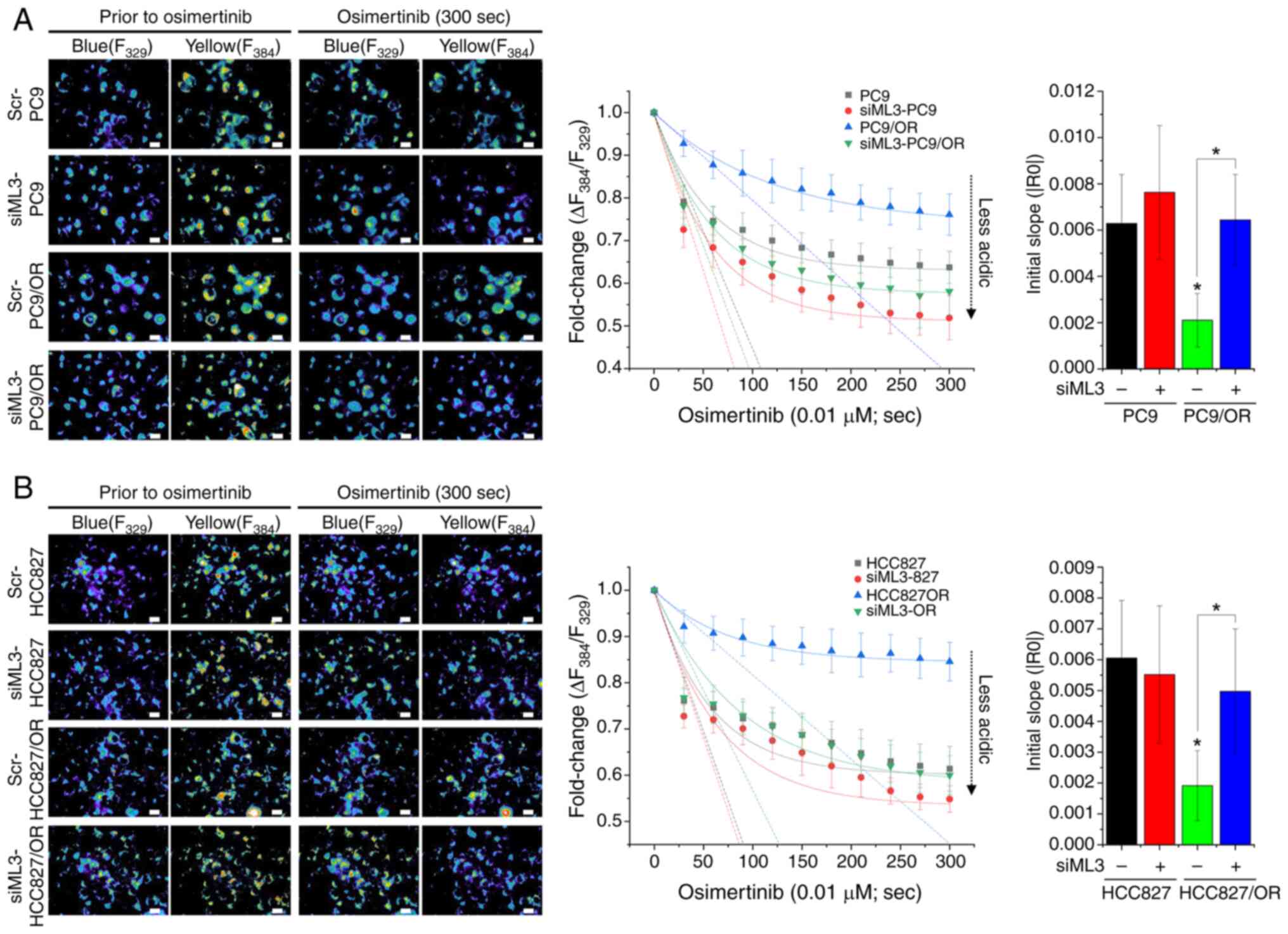
Figure 5

Osimertinib-induced lysosomal pH
increase depends on TRPML3 levels. (A and B) Changes in PC9,
PC9/OR, HCC827, and HCC827/OR cells. Initial fluorescence images
were captured before exposing TRPML3-targeting siRNA (siML3) or
scrambled RNA-transfected PC9 and PC9/OR (A) and HCC827 and
HCC827/OR (B) cells to 0.01 µM osimertinib. Images were acquired
every 30 sec, with fluorescence intensity quantified as
F384/F329. Representative fluorescence images
of F329 and F384 cells (left panel). Scale
bar, 3 µm. Changes in lysosomal pH
(∆F384/F329) relative to baseline
(pre-osimertinib; mid-panel). Initial rates of pH increase (R0) are
shown as the slope of each dotted line, with absolute values (|R0|)
presented as the mean ± SD (right panel; n=3). *P<0.05. TRPML,
transient receptor potential mucolipin; si-, small interfering;
scr, scrambled.

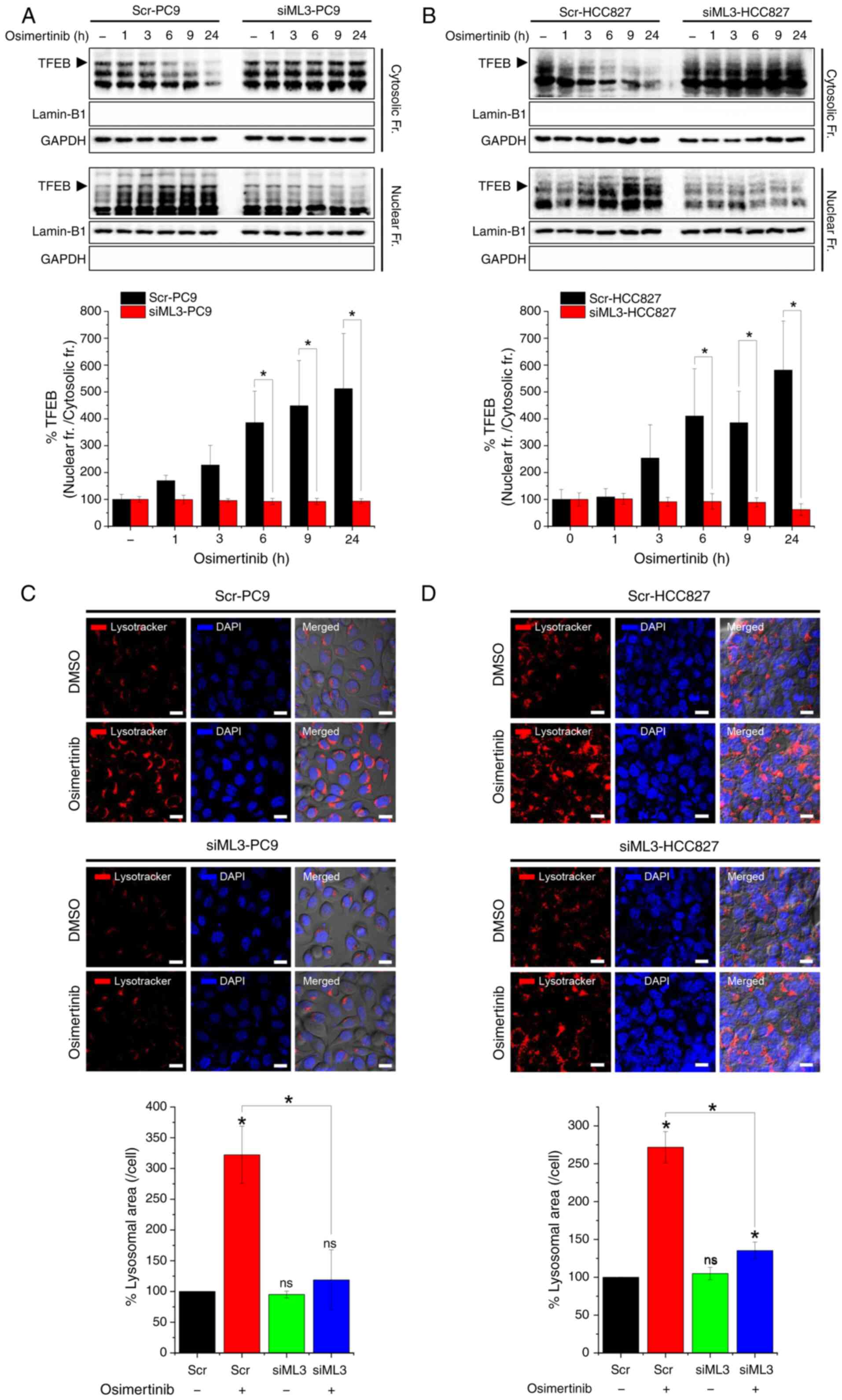
Figure 6

TRPML3 deficiency impairs
osimertinib-induced lysosomal biogenesis. (A and B) TFEB levels in
cytosolic and nuclear fractions of PC9 and HCC827 cells transfected
with TRPML3-targeting siRNA (siML3) or scrambled RNA (control) and
treated with 0.01 µM osimertinib for 1, 3, 6, 9, and 24 h. GAPDH
and lamin-B1 served as cytosolic and nuclear markers, respectively.
Quantitative analysis (lower panel) shows nuclear-to-cytosolic TFEB
ratios expressed as percentages relative to control (scr-PC9
without osimertinib treatment; n=3). (C and D) Lysosomes and nuclei
stained with LysoTracker Red DND-99 and DAPI after 24 h osimertinib
treatment of cells transfected with siML3 or scr. Relative
lysosomal area per cell is presented as a percentage of the control
(scr-PC9 without osimertinib treatment; n=3). Scale bar, 20 µm.
*P<0.05. TRPML, transient receptor potential mucolipin; si-,
small interfering; scr, scrambled; ns, not significant.
View References

1 

Zhang Z, Yue P, Lu T, Wang Y, Wei Y and Wei X: Role of lysosomes in physiological activities, diseases, and therapy. J Hematol Oncol. 14:792021. View Article : Google Scholar : PubMed/NCBI

2 

Savini M, Zhao Q and Wang MC: Lysosomes: Signaling hubs for metabolic sensing and longevity. Trends Cell Biol. 29:876–887. 2019. View Article : Google Scholar : PubMed/NCBI

3 

Hraběta J, Belhajová M, Šubrtová H, Merlos Rodrigo MA, Heger Z and Eckschlager T: Drug sequestration in lysosomes as one of the mechanisms of chemoresistance of cancer cells and the possibilities of its inhibition. Int J Mol Sci. 21:43922020. View Article : Google Scholar : PubMed/NCBI

4 

Yamagishi T, Sahni S, Sharp DM, Arvind A, Jansson PJ and Richardson DR: P-glycoprotein mediates drug resistance via a novel mechanism involving lysosomal sequestration. J Biol Chem. 288:31761–31771. 2013. View Article : Google Scholar : PubMed/NCBI

5 

Seebacher N, Lane DJ, Richardson DR and Jansson PJ: Turning the gun on cancer: Utilizing lysosomal P-glycoprotein as a new strategy to overcome multi-drug resistance. Free Radic Biol Med. 96:432–445. 2016. View Article : Google Scholar : PubMed/NCBI

6 

Zhitomirsky B and Assaraf YG: Lysosomes as mediators of drug resistance in cancer. Drug Resist Updat. 24:23–33. 2016. View Article : Google Scholar : PubMed/NCBI

7 

Xu H and Ren D: Lysosomal physiology. Annu Rev Physiol. 77:57–80. 2015. View Article : Google Scholar : PubMed/NCBI

8 

Kendall RL and Holian A: The role of lysosomal ion channels in lysosome dysfunction. Inhal Toxicol. 33:41–54. 2021. View Article : Google Scholar : PubMed/NCBI

9 

Xu M and Dong XP: Endolysosomal TRPMLs in cancer. Biomolecules. 11:652021. View Article : Google Scholar : PubMed/NCBI

10 

Bargal R, Avidan N, Ben-Asher E, Olender Z, Zeigler M, Frumkin A, Raas-Rothschild A, Glusman G, Lancet D and Bach G: Identification of the gene causing mucolipidosis type IV. Nat Genet. 26:118–123. 2000. View Article : Google Scholar : PubMed/NCBI

11 

Santoni G, Maggi F, Amantini C, Marinelli O, Nabissi M and Morelli MB: Pathophysiological role of transient receptor potential mucolipin channel 1 in calcium-mediated stress-induced neurodegenerative diseases. Front Physiol. 11:2512020. View Article : Google Scholar : PubMed/NCBI

12 

Soyombo AA, Tjon-Kon-Sang S, Rbaibi Y, Bashllari E, Bisceglia J, Muallem S and Kiselyov K: TRP-ML1 regulates lysosomal pH and acidic lysosomal lipid hydrolytic activity. J Biol Chem. 281:7294–7301. 2006. View Article : Google Scholar : PubMed/NCBI

13 

Di Paola S, Scotto-Rosato A and Medina DL: TRPML1: The Ca(2+)retaker of the lysosome. Cell Calcium. 69:112–121. 2018. View Article : Google Scholar : PubMed/NCBI

14 

Qi J, Li Q, Xin T, Lu Q, Lin J, Zhang Y, Luo H, Zhang F, Xing Y, Wang W, et al: MCOLN1/TRPML1 in the lysosome: A promising target for autophagy modulation in diverse diseases. Autophagy. 20:1712–1722. 2024. View Article : Google Scholar : PubMed/NCBI

15 

Medina DL, Di Paola S, Peluso I, Armani A, De Stefani D, Venditti R, Montefusco S, Scotto-Rosato A, Prezioso C, Forrester A, et al: Lysosomal calcium signalling regulates autophagy through calcineurin and TFEB. Nat Cell Biol. 17:288–299. 2015. View Article : Google Scholar : PubMed/NCBI

16 

Kim SW, Kim DH, Park KS, Kim MK, Park YM, Muallem S, So I and Kim HJ: Palmitoylation controls trafficking of the intracellular Ca2+ channel MCOLN3/TRPML3 to regulate autophagy. Autophagy. 15:327–340. 2019. View Article : Google Scholar : PubMed/NCBI

17 

Kim SW, Kim MK, Hong S, Choi A, Choi JH, Muallem S, So I, Yang D and Kim HJ: The intracellular Ca2+ channel TRPML3 is a PI3P effector that regulates autophagosome biogenesis. Proc Natl Acad Sci USA. 119:e22000851192022. View Article : Google Scholar : PubMed/NCBI

18 

Paroutis P, Touret N and Grinstein S: The pH of the secretory pathway: Measurement, determinants, and regulation. Physiology (Bethesda). 19:207–215. 2004.PubMed/NCBI

19 

Miao Y, Li G, Zhang X, Xu H and Abraham SN: A TRP channel senses lysosome neutralization by pathogens to trigger their expulsion. Cell. 161:1306–1319. 2015. View Article : Google Scholar : PubMed/NCBI

20 

Gerasimenko JV, Tepikin AV, Petersen OH and Gerasimenko OV: Calcium uptake via endocytosis with rapid release from acidifying endosomes. Curr Biol. 8:1335–1338. 1998. View Article : Google Scholar : PubMed/NCBI

21 

Martina JA, Lelouvier B and Puertollano R: The calcium channel mucolipin-3 is a novel regulator of trafficking along the endosomal pathway. Traffic. 10:1143–1156. 2009. View Article : Google Scholar : PubMed/NCBI

22 

Liang J, Bi G, Sui Q, Zhao G, Zhang H, Bian Y, Chen Z, Huang Y, Xi J, Shi Y, et al: Transcription factor ZNF263 enhances EGFR-targeted therapeutic response and reduces residual disease in lung adenocarcinoma. Cell Rep. 43:1137712024. View Article : Google Scholar : PubMed/NCBI

23 

Chen S, Zhou Y, Chen Y and Gu J: fastp: An ultra-fast all-in-one FASTQ preprocessor. Bioinformatics. 34:i884–i890. 2018. View Article : Google Scholar : PubMed/NCBI

24 

Dobin A, Davis CA, Schlesinger F, Drenkow J, Zaleski C, Jha S, Batut P, Chaisson M and Gingeras TR: STAR: Ultrafast universal RNA-seq aligner. Bioinformatics. 29:15–21. 2013. View Article : Google Scholar : PubMed/NCBI

25 

Patro R, Duggal G, Love MI, Irizarry RA and Kingsford C: Salmon provides fast and bias-aware quantification of transcript expression. Nat Methods. 14:417–419. 2017. View Article : Google Scholar : PubMed/NCBI

26 

Robinson MD, McCarthy DJ and Smyth GK: edgeR: A Bioconductor package for differential expression analysis of digital gene expression data. Bioinformatics. 26:139–140. 2010. View Article : Google Scholar : PubMed/NCBI

27 

Chu VT, Gottardo R, Raftery AE, Bumgarner RE and Yeung KY: MeV+R: Using MeV as a graphical user interface for Bioconductor applications in microarray analysis. Genome Biol. 9:R1182008. View Article : Google Scholar : PubMed/NCBI

28 

Livak KJ and Schmittgen TD: Analysis of relative gene expression data using real-time quantitative PCR and the 2(−Delta Delta C(T)) method. Methods. 25:402–408. 2001. View Article : Google Scholar : PubMed/NCBI

29 

Kurien BT and Scofield RH: Western blotting: An introduction. Methods Mol Biol. 1312:17–30. 2015. View Article : Google Scholar : PubMed/NCBI

30 

Ramalingam SS, Vansteenkiste J, Planchard D, Cho BC, Gray JE, Ohe Y, Zhou C, Reungwetwattana T, Cheng Y, Chewaskulyong B, et al: Overall survival with osimertinib in untreated, EGFR-mutated advanced NSCLC. N Engl J Med. 382:41–50. 2020. View Article : Google Scholar : PubMed/NCBI

31 

Ohashi K, Maruvka YE, Michor F and Pao W: Epidermal growth factor receptor tyrosine kinase inhibitor-resistant disease. J Clin Oncol. 31:1070–1080. 2013. View Article : Google Scholar : PubMed/NCBI

32 

Halaby R: Influence of lysosomal sequestration on multidrug resistance in cancer cells. Cancer Drug Resist. 2:31–42. 2019.PubMed/NCBI

33 

Zhitomirsky B and Assaraf YG: Lysosomal sequestration of hydrophobic weak base chemotherapeutics triggers lysosomal biogenesis and lysosome-dependent cancer multidrug resistance. Oncotarget. 6:1143–1156. 2015. View Article : Google Scholar : PubMed/NCBI

34 

Wu M, Li X, Zhang T, Liu Z and Zhao Y: Identification of a nine-gene signature and establishment of a prognostic nomogram predicting overall survival of pancreatic cancer. Front Oncol. 9:9962019. View Article : Google Scholar : PubMed/NCBI

35 

Kim HJ, Li Q, Tjon-Kon-Sang S, So I, Kiselyov K and Muallem S: Gain-of-function mutation in TRPML3 causes the mouse Varitint-Waddler phenotype. J Biol Chem. 282:36138–36142. 2007. View Article : Google Scholar : PubMed/NCBI

36 

Kim HJ, Soyombo AA, Tjon-Kon-Sang S, So I and Muallem S: The Ca(2+) channel TRPML3 regulates membrane trafficking and autophagy. Traffic. 10:1157–1167. 2009. View Article : Google Scholar : PubMed/NCBI

37 

Debnath J, Gammoh N and Ryan KM: Autophagy and autophagy-related pathways in cancer. Nat Rev Mol Cell Biol. 24:560–575. 2023. View Article : Google Scholar : PubMed/NCBI

38 

Kim MS, Yang SH and Kim MS: TRPML3 enhances drug resistance in non-small cell lung cancer cells by promoting Ca2+-mediated lysosomal trafficking. Biochem Biophys Res Commun. 627:152–159. 2022. View Article : Google Scholar : PubMed/NCBI

39 

Christensen KA, Myers JT and Swanson JA: pH-dependent regulation of lysosomal calcium in macrophages. J Cell Sci. 115:599–607. 2002. View Article : Google Scholar : PubMed/NCBI

40 

Morgan AJ, Platt FM, Lloyd-Evans E and Galione A: Molecular mechanisms of endolysosomal Ca2+ signalling in health and disease. Biochem J. 439:349–374. 2011. View Article : Google Scholar : PubMed/NCBI

41 

Shen D, Wang X, Li X, Zhang X, Yao Z, Dibble S, Dong XP, Yu T, Lieberman AP, Showalter HD and Xu H: Lipid storage disorders block lysosomal trafficking by inhibiting a TRP channel and lysosomal calcium release. Nat Commun. 3:7312012. View Article : Google Scholar : PubMed/NCBI

42 

de Araujo MEG, Liebscher G, Hess MW and Huber LA: Lysosomal size matters. Traffic. 21:60–75. 2020. View Article : Google Scholar : PubMed/NCBI

Related Articles

  • Abstract
  • View
  • Download
  • Twitter
Copy and paste a formatted citation
Spandidos Publications style
Kim MS and Kim MS: TRPML3‑mediated lysosomal Ca<sup>2+</sup> release enhances drug sequestration and biogenesis, promoting osimertinib resistance in non‑small cell lung cancer. Oncol Rep 54: 113, 2025.
APA
Kim, M.S., & Kim, M.S. (2025). TRPML3‑mediated lysosomal Ca<sup>2+</sup> release enhances drug sequestration and biogenesis, promoting osimertinib resistance in non‑small cell lung cancer. Oncology Reports, 54, 113. https://doi.org/10.3892/or.2025.8946
MLA
Kim, M. S., Kim, M. S."TRPML3‑mediated lysosomal Ca<sup>2+</sup> release enhances drug sequestration and biogenesis, promoting osimertinib resistance in non‑small cell lung cancer". Oncology Reports 54.3 (2025): 113.
Chicago
Kim, M. S., Kim, M. S."TRPML3‑mediated lysosomal Ca<sup>2+</sup> release enhances drug sequestration and biogenesis, promoting osimertinib resistance in non‑small cell lung cancer". Oncology Reports 54, no. 3 (2025): 113. https://doi.org/10.3892/or.2025.8946
Copy and paste a formatted citation
x
Spandidos Publications style
Kim MS and Kim MS: TRPML3‑mediated lysosomal Ca<sup>2+</sup> release enhances drug sequestration and biogenesis, promoting osimertinib resistance in non‑small cell lung cancer. Oncol Rep 54: 113, 2025.
APA
Kim, M.S., & Kim, M.S. (2025). TRPML3‑mediated lysosomal Ca<sup>2+</sup> release enhances drug sequestration and biogenesis, promoting osimertinib resistance in non‑small cell lung cancer. Oncology Reports, 54, 113. https://doi.org/10.3892/or.2025.8946
MLA
Kim, M. S., Kim, M. S."TRPML3‑mediated lysosomal Ca<sup>2+</sup> release enhances drug sequestration and biogenesis, promoting osimertinib resistance in non‑small cell lung cancer". Oncology Reports 54.3 (2025): 113.
Chicago
Kim, M. S., Kim, M. S."TRPML3‑mediated lysosomal Ca<sup>2+</sup> release enhances drug sequestration and biogenesis, promoting osimertinib resistance in non‑small cell lung cancer". Oncology Reports 54, no. 3 (2025): 113. https://doi.org/10.3892/or.2025.8946
Follow us
  • Twitter
  • LinkedIn
  • Facebook
About
  • Spandidos Publications
  • Careers
  • Cookie Policy
  • Privacy Policy
How can we help?
  • Help
  • Live Chat
  • Contact
  • Email to our Support Team