Spandidos Publications Logo
  • About
    • About Spandidos
    • Aims and Scopes
    • Abstracting and Indexing
    • Editorial Policies
    • Reprints and Permissions
    • Job Opportunities
    • Terms and Conditions
    • Contact
  • Journals
    • All Journals
    • Oncology Letters
      • Oncology Letters
      • Information for Authors
      • Editorial Policies
      • Editorial Board
      • Aims and Scope
      • Abstracting and Indexing
      • Bibliographic Information
      • Archive
    • International Journal of Oncology
      • International Journal of Oncology
      • Information for Authors
      • Editorial Policies
      • Editorial Board
      • Aims and Scope
      • Abstracting and Indexing
      • Bibliographic Information
      • Archive
    • Molecular and Clinical Oncology
      • Molecular and Clinical Oncology
      • Information for Authors
      • Editorial Policies
      • Editorial Board
      • Aims and Scope
      • Abstracting and Indexing
      • Bibliographic Information
      • Archive
    • Experimental and Therapeutic Medicine
      • Experimental and Therapeutic Medicine
      • Information for Authors
      • Editorial Policies
      • Editorial Board
      • Aims and Scope
      • Abstracting and Indexing
      • Bibliographic Information
      • Archive
    • International Journal of Molecular Medicine
      • International Journal of Molecular Medicine
      • Information for Authors
      • Editorial Policies
      • Editorial Board
      • Aims and Scope
      • Abstracting and Indexing
      • Bibliographic Information
      • Archive
    • Biomedical Reports
      • Biomedical Reports
      • Information for Authors
      • Editorial Policies
      • Editorial Board
      • Aims and Scope
      • Abstracting and Indexing
      • Bibliographic Information
      • Archive
    • Oncology Reports
      • Oncology Reports
      • Information for Authors
      • Editorial Policies
      • Editorial Board
      • Aims and Scope
      • Abstracting and Indexing
      • Bibliographic Information
      • Archive
    • Molecular Medicine Reports
      • Molecular Medicine Reports
      • Information for Authors
      • Editorial Policies
      • Editorial Board
      • Aims and Scope
      • Abstracting and Indexing
      • Bibliographic Information
      • Archive
    • World Academy of Sciences Journal
      • World Academy of Sciences Journal
      • Information for Authors
      • Editorial Policies
      • Editorial Board
      • Aims and Scope
      • Abstracting and Indexing
      • Bibliographic Information
      • Archive
    • International Journal of Functional Nutrition
      • International Journal of Functional Nutrition
      • Information for Authors
      • Editorial Policies
      • Editorial Board
      • Aims and Scope
      • Abstracting and Indexing
      • Bibliographic Information
      • Archive
    • International Journal of Epigenetics
      • International Journal of Epigenetics
      • Information for Authors
      • Editorial Policies
      • Editorial Board
      • Aims and Scope
      • Abstracting and Indexing
      • Bibliographic Information
      • Archive
    • Medicine International
      • Medicine International
      • Information for Authors
      • Editorial Policies
      • Editorial Board
      • Aims and Scope
      • Abstracting and Indexing
      • Bibliographic Information
      • Archive
  • Articles
  • Information
    • Information for Authors
    • Information for Reviewers
    • Information for Librarians
    • Information for Advertisers
    • Conferences
  • Language Editing
Spandidos Publications Logo
  • About
    • About Spandidos
    • Aims and Scopes
    • Abstracting and Indexing
    • Editorial Policies
    • Reprints and Permissions
    • Job Opportunities
    • Terms and Conditions
    • Contact
  • Journals
    • All Journals
    • Biomedical Reports
      • Information for Authors
      • Editorial Policies
      • Editorial Board
      • Aims and Scope
      • Abstracting and Indexing
      • Bibliographic Information
      • Archive
    • Experimental and Therapeutic Medicine
      • Information for Authors
      • Editorial Policies
      • Editorial Board
      • Aims and Scope
      • Abstracting and Indexing
      • Bibliographic Information
      • Archive
    • International Journal of Epigenetics
      • Information for Authors
      • Editorial Policies
      • Editorial Board
      • Aims and Scope
      • Abstracting and Indexing
      • Bibliographic Information
      • Archive
    • International Journal of Functional Nutrition
      • Information for Authors
      • Editorial Policies
      • Editorial Board
      • Aims and Scope
      • Abstracting and Indexing
      • Bibliographic Information
      • Archive
    • International Journal of Molecular Medicine
      • Information for Authors
      • Editorial Policies
      • Editorial Board
      • Aims and Scope
      • Abstracting and Indexing
      • Bibliographic Information
      • Archive
    • International Journal of Oncology
      • Information for Authors
      • Editorial Policies
      • Editorial Board
      • Aims and Scope
      • Abstracting and Indexing
      • Bibliographic Information
      • Archive
    • Medicine International
      • Information for Authors
      • Editorial Policies
      • Editorial Board
      • Aims and Scope
      • Abstracting and Indexing
      • Bibliographic Information
      • Archive
    • Molecular and Clinical Oncology
      • Information for Authors
      • Editorial Policies
      • Editorial Board
      • Aims and Scope
      • Abstracting and Indexing
      • Bibliographic Information
      • Archive
    • Molecular Medicine Reports
      • Information for Authors
      • Editorial Policies
      • Editorial Board
      • Aims and Scope
      • Abstracting and Indexing
      • Bibliographic Information
      • Archive
    • Oncology Letters
      • Information for Authors
      • Editorial Policies
      • Editorial Board
      • Aims and Scope
      • Abstracting and Indexing
      • Bibliographic Information
      • Archive
    • Oncology Reports
      • Information for Authors
      • Editorial Policies
      • Editorial Board
      • Aims and Scope
      • Abstracting and Indexing
      • Bibliographic Information
      • Archive
    • World Academy of Sciences Journal
      • Information for Authors
      • Editorial Policies
      • Editorial Board
      • Aims and Scope
      • Abstracting and Indexing
      • Bibliographic Information
      • Archive
  • Articles
  • Information
    • For Authors
    • For Reviewers
    • For Librarians
    • For Advertisers
    • Conferences
  • Language Editing
Login Register Submit
  • This site uses cookies
  • You can change your cookie settings at any time by following the instructions in our Cookie Policy. To find out more, you may read our Privacy Policy.

    I agree
Search articles by DOI, keyword, author or affiliation
Search
Advanced Search
presentation
Oncology Reports
Join Editorial Board Propose a Special Issue
Print ISSN: 1021-335X Online ISSN: 1791-2431
Journal Cover
October-2025 Volume 54 Issue 4

Full Size Image

Sign up for eToc alerts
Recommend to Library

Journals

International Journal of Molecular Medicine

International Journal of Molecular Medicine

International Journal of Molecular Medicine is an international journal devoted to molecular mechanisms of human disease.

International Journal of Oncology

International Journal of Oncology

International Journal of Oncology is an international journal devoted to oncology research and cancer treatment.

Molecular Medicine Reports

Molecular Medicine Reports

Covers molecular medicine topics such as pharmacology, pathology, genetics, neuroscience, infectious diseases, molecular cardiology, and molecular surgery.

Oncology Reports

Oncology Reports

Oncology Reports is an international journal devoted to fundamental and applied research in Oncology.

Experimental and Therapeutic Medicine

Experimental and Therapeutic Medicine

Experimental and Therapeutic Medicine is an international journal devoted to laboratory and clinical medicine.

Oncology Letters

Oncology Letters

Oncology Letters is an international journal devoted to Experimental and Clinical Oncology.

Biomedical Reports

Biomedical Reports

Explores a wide range of biological and medical fields, including pharmacology, genetics, microbiology, neuroscience, and molecular cardiology.

Molecular and Clinical Oncology

Molecular and Clinical Oncology

International journal addressing all aspects of oncology research, from tumorigenesis and oncogenes to chemotherapy and metastasis.

World Academy of Sciences Journal

World Academy of Sciences Journal

Multidisciplinary open-access journal spanning biochemistry, genetics, neuroscience, environmental health, and synthetic biology.

International Journal of Functional Nutrition

International Journal of Functional Nutrition

Open-access journal combining biochemistry, pharmacology, immunology, and genetics to advance health through functional nutrition.

International Journal of Epigenetics

International Journal of Epigenetics

Publishes open-access research on using epigenetics to advance understanding and treatment of human disease.

Medicine International

Medicine International

An International Open Access Journal Devoted to General Medicine.

Journal Cover
October-2025 Volume 54 Issue 4

Full Size Image

Sign up for eToc alerts
Recommend to Library

  • Article
  • Citations
    • Cite This Article
    • Download Citation
    • Create Citation Alert
    • Remove Citation Alert
    • Cited By
  • Similar Articles
    • Related Articles (in Spandidos Publications)
    • Similar Articles (Google Scholar)
    • Similar Articles (PubMed)
  • Download PDF
  • Download XML
  • View XML

  • Supplementary Files
    • Supplementary_Data.pdf
Article Open Access

Zinc finger protein 695 facilitates the proliferation of colorectal cancer cells through activation of the NEK2 and PI3K/Akt/mTOR signaling pathways

  • Authors:
    • Xiaowei Li
    • Xubin Li
    • Jing Wang
    • Mei Xue
    • Mengqiao Zhang
    • Junfang Shuai
    • Jie Zhang
    • Danyang Ding
    • Ye Wang
    • Shiyang Hou
    • Xiaoqian Chi
    • Haiying Sun
    • Qiang Gao
    • Chunbo Kang
  • View Affiliations / Copyright

    Affiliations: Department of Surgery, Center of Gastrointestinal Rehabilitation, Beijing Rehabilitation Hospital, Capital Medical University, Beijing 100144, P.R. China, Department of Gastroenterology and Hepatology, Center of Gastrointestinal Rehabilitation, Beijing Rehabilitation Hospital, Capital Medical University, Beijing 100144, P.R. China
    Copyright: © Li et al. This is an open access article distributed under the terms of Creative Commons Attribution License.
  • Article Number: 116
    |
    Published online on: July 16, 2025
       https://doi.org/10.3892/or.2025.8949
  • Expand metrics +
Metrics: Total Views: 0 (Spandidos Publications: | PMC Statistics: )
Metrics: Total PDF Downloads: 0 (Spandidos Publications: | PMC Statistics: )
Cited By (CrossRef): 0 citations Loading Articles...

This article is mentioned in:


Abstract

Colorectal cancer (CRC) is the third most common malignant tumor and the second leading cause of cancer‑related deaths worldwide. Identifying driver genes in CRC development may provide clinical benefits for patients. Zinc finger protein 695 (ZNF695) is a nuclear protein with transcriptional regulatory activity, which has been implicated in tumor progression; however, the role of ZNF695 in CRC is unclear. The clinical relevance of ZNF695 and NIMA‑related kinase 2 (NEK2) in patients with CRC was analyzed based on The Cancer Genome Atlas database. Knockdown was performed by transfecting the cells with small interfering RNAs, whereas overexpression was induced by infecting the cells with a lentivirus. In addition, cell Counting Kit‑8, colony formation, cell cycle and apoptosis assays were carried out to assess the role of ZNF695 and NEK2 in CRC. Chromatin immunoprecipitation‑quantitative PCR (qPCR) and dual luciferase reporter assays were used to examine the transcriptional regulation of ZNF695 on the NEK2 gene. Reverse transcription‑qPCR and western blotting were applied to assess mRNA and protein abundance, respectively. The present study aimed to investigate the clinical relevance, contribution and downstream effects of ZNF695 in CRC. The results revealed that ZNF695 was upregulated in CRC tissues compared with that in non‑cancer tissues. CRC cells also expressed higher ZNF695 expression than normal cells. In vitro, knockdown of ZNF695 suppressed the proliferation of HCT‑8 cells; conversely, overexpression of ZNF695 promoted the malignancy of HT‑29 cells. Moreover, ZNF695 accelerated cell cycle progression and inhibited apoptosis in CRC cells. Mechanistically, it was revealed that ZNF695 upregulated the expression of NEK2 at both the mRNA and protein levels. Luciferase reporter assay demonstrated that ZNF695 enhanced the transcriptional activity of the NEK2 promoter. Furthermore, knockdown of NEK2 reversed the oncogenic function of ZNF695. Additionally, ZNF695 activated the PI3K/Akt/mTOR signaling pathway in CRC cells. Inhibition of this pathway with rapamycin resulted in higher cytotoxicity to CRC cells with ZNF695 overexpression, suggesting that elevated ZNF695 levels may increase the sensitivity of CRC cells to rapamycin. In summary, the current study identified ZNF695 as a tumor‑promoting protein in CRC through activation of the NEK2 and PI3K/Akt/mTOR signaling pathways. Targeting the NEK2 and PI3K/Akt/mTOR signaling pathways may therefore be a promising strategy for the treatment of patients with CRC and high ZNF695 expression.
View Figures

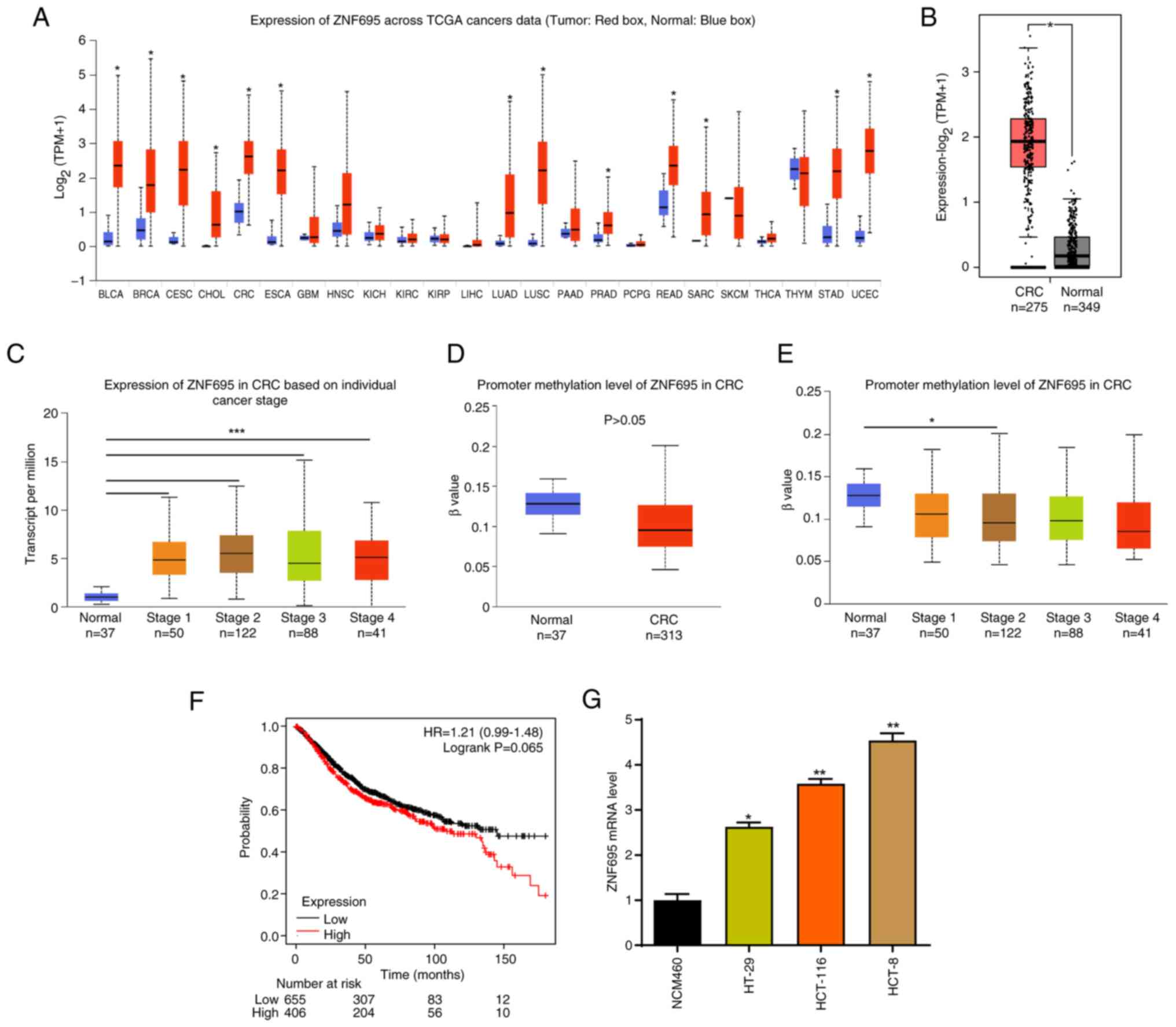
Figure 1

Clinical relevance of ZNF695 in
patients with CRC. (A) Transcript levels of ZNF695 in pan-cancer
was analyzed using UALCAN based on TCGA data. *P<0.05 vs. normal
group. (B) Transcript levels of ZNF695 in cancer (n=275) and
non-cancer (n=349) tissues of patients with CRC. *P<0.05. (C)
mRNA expression of ZNF695 in CRC tissues based on the individual
cancer stage and in non-cancer tissues was analyzed using Gene
Expression Profiling Interactive Analysis. ***P<0.001. (D)
Promoter methylation level of ZNF695 in cancer (n=313) and
non-cancer (n=37) tissues of patients with CRC was analyzed using
UALCAN. P>0.05. (E) Promoter methylation level of ZNF695 in in
CRC tissues based on the individual cancer stage and in non-cancer
tissues was analyzed using UALCAN. Normal vs. stage 2, P<0.05.
(F) Overall survival of patients with CRC who were divided into the
ZNF695 high expression group (n=406) and the low expression group
(n=655) was analyzed from Kaplan Meier plotter. P=0.065. (G) mRNA
expression levels of ZNF695 were detected by reverse
transcription-quantitative PCR in NCM460, HT-29, HCT-116 and HCT-8
cells. *P<0.05, **P<0.01 vs. NCM460. BLCA, bladder urothelial
carcinoma; BRCA, breast invasive carcinoma; CESC, cervical squamous
cell carcinoma and endocervical adenocarcinoma; CHOL,
cholangiocarcinoma; CRC, colorectal cancer; ESCA, esophageal
carcinoma; GBM, glioblastoma; HNSC, head and neck squamous cell
carcinoma; KICH, kidney chromophobe; KIRC, kidney renal clear cell
carcinoma; KIRP, kidney renal papillary cell carcinoma; LIHC, liver
hepatocellular carcinoma; LUAD, lung adenocarcinoma; LUSC, lung
squamous cell carcinoma; PAAD, pancreatic adenocarcinoma; PRAD,
prostate adenocarcinoma; PCPG, pheochromocytoma and paraganglioma;
READ, rectum adenocarcinoma; SARC, sarcoma; SKCM, skin cutaneous
melanoma; THCA, thyroid carcinoma; THYM, thymoma; STAD, stomach
adenocarcinoma; UCEC, uterine corpus endometrial carcinoma; TCGA,
The Cancer Genome Atlas; ZNF695, zinc finger protein 695.

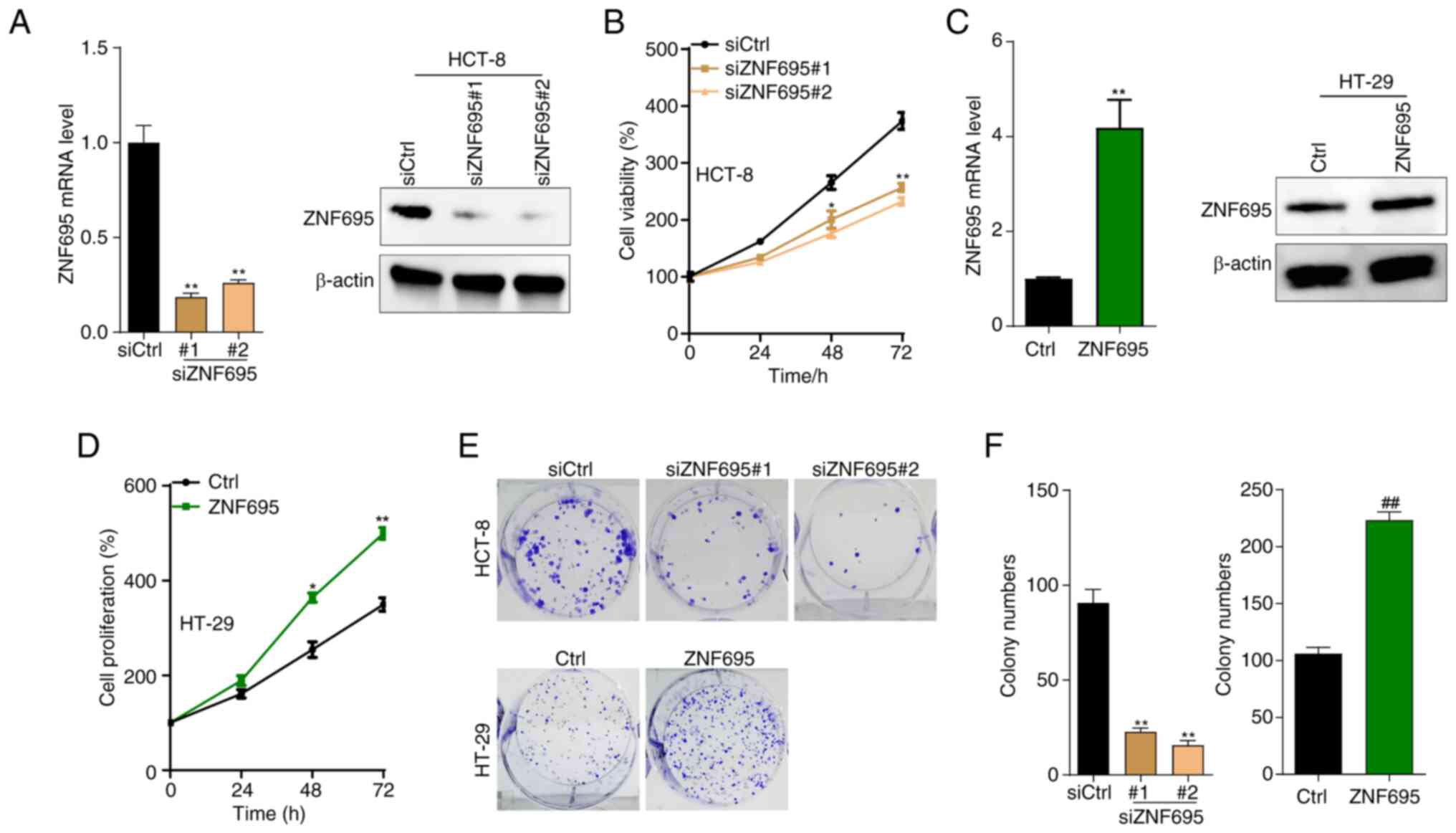
Figure 2

Overexpression of ZNF695 supports the
proliferation of CRC cells. (A) mRNA and protein levels of ZNF695
in siCtrl, siZNF695#1 and siZNF695#2 HCT-8 cells were detected
using RT-qPCR and western blotting, respectively. **P<0.01 vs.
siCtrl group. (B) Proliferation of HCT-8 cells transfected with
siCtrl, siZNF695#1 and siZNF695#2 was determined using a CCK8
assay. *P<0.05, **P<0.01 vs. siCtrl group. (C) mRNA and
protein levels of ZNF695 in Ctrl and ZNF695-overexpressing HT-29
cells were detected using RT-qPCR and western blotting,
respectively. **P<0.01 vs. Ctrl group. (D) Proliferation of Ctrl
and ZNF695-overexpressing HT-29 cells was determined by CCK8 assay.
*P<0.05, **P<0.01 vs. Ctrl group. Colony formation was
assessed in (E) siCtrl, siZNF695#1 and siZNF695#2 HCT-8 cells, and
in Ctrl and ZNF695-overexpressing HT-29 cells. (F) Quantification
colony numbers *P<0.05, **P<0.01vs. siCtrl,
##P<0.01 vs. Ctrl group. CRC, colorectal cancer;
RT-qPCR, reverse transcription-quantitative PCR; CCK8, Cell
Counting Kit-8; ZNF695, zinc finger protein 695; si, small
interfering.

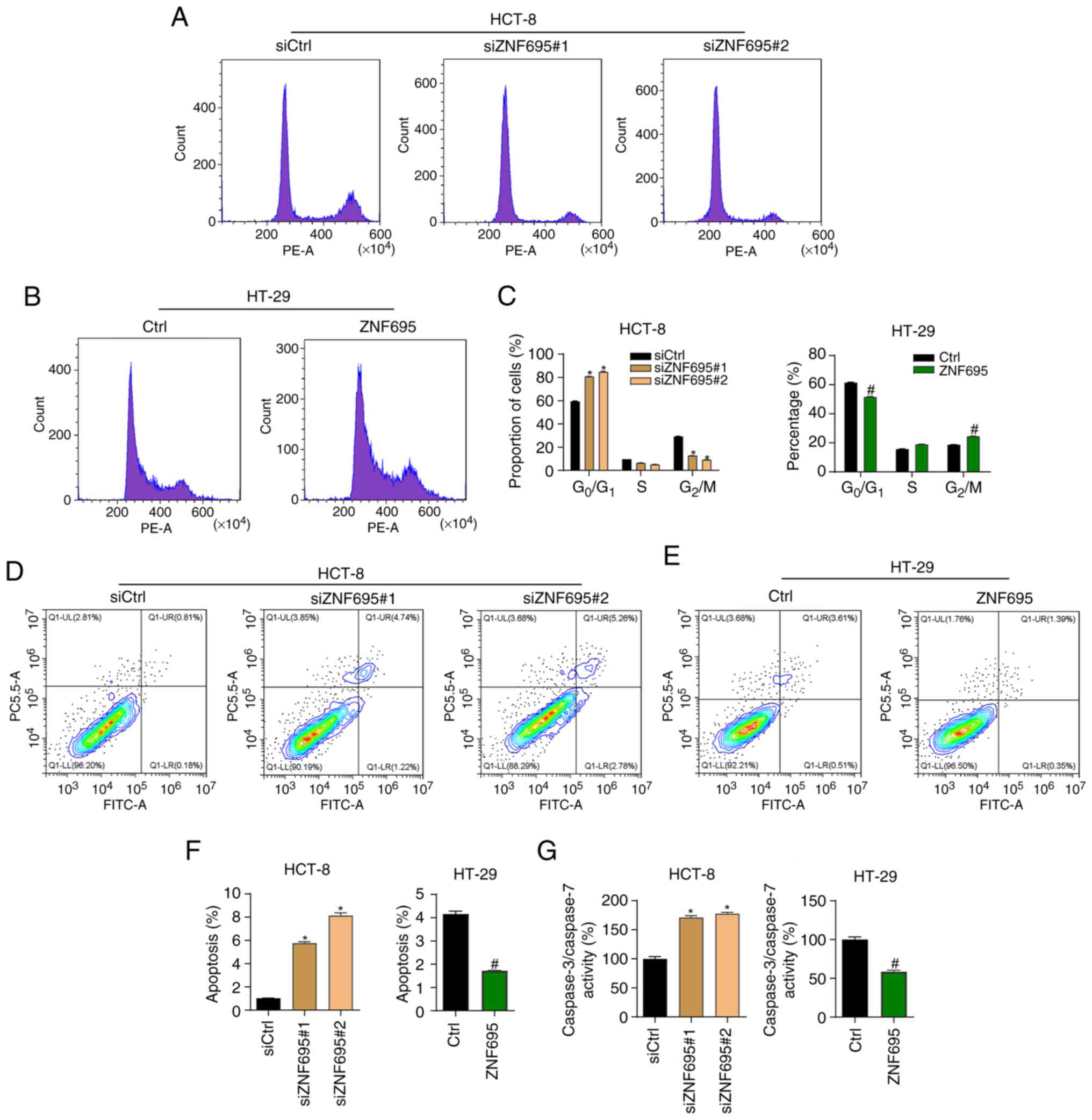
Figure 3

ZNF695 modulates the apoptosis and
cell cycle progression of CRC cells. (A) Cell cycle progression of
siCtrl, siZNF695#1 and siZNF695#2 HCT-8 cells was measured by
staining the cells with PI and via flow cytometric analysis. (B)
Cell cycle progression of Ctrl and ZNF695-overexpressing HT-29
cells was detected by staining the cells with PI and via flow
cytometric analysis. (C) Quantification of cell cycle results as
shown in A and B. *P<0.05 vs. siCtrl, #P<0.05 vs.
Ctrl group. (D) Apoptosis of siCtrl, siZNF695#1 and siZNF695#2
HCT-8 cells was assessed by staining the cells with Annexin V and
PI, followed by flow cytometric analysis. (E) Apoptosis of Ctrl and
ZNF695-overexpressing HT-29 cells was assessed by staining the
cells with Annexin V and PI, followed by flow cytometric analysis.
(F) Quantification of apoptosis results as shown in D and E.
*P<0.05 vs. siCtrl, #P<0.05 vs. Ctrl group. (G)
Caspase 3/7 activity was measured in HCT-8 cells transfected with
siCtrl, siZNF695#1 and siZNF695#2 and in HT-29 cells infected with
Ctrl and ZNF695-overexpressing lentiviruses. *P<0.05 vs. siCtrl,
#P<0.05 vs. Ctrl group. CRC, colorectal cancer;
ZNF695, zinc finger protein 695; si, small interfering.

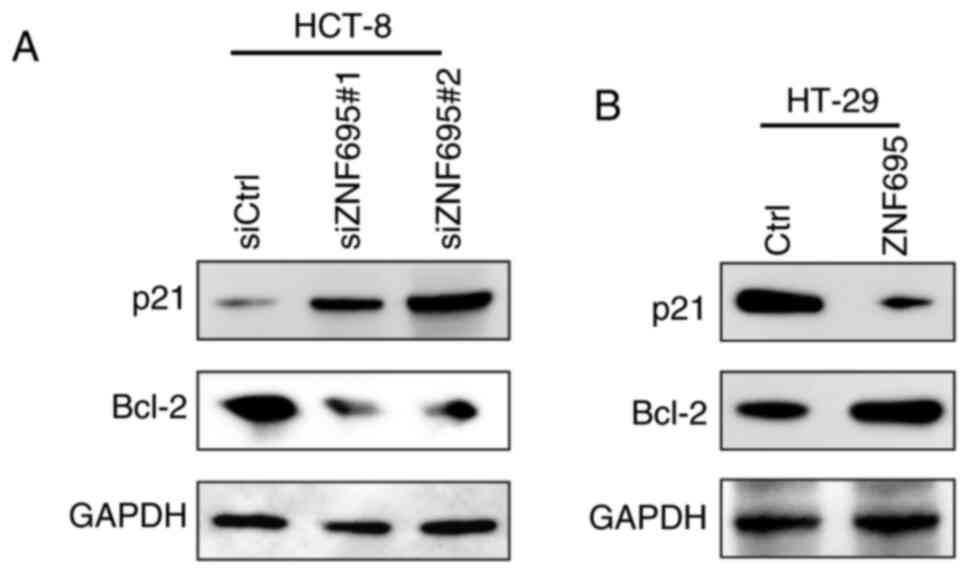
Figure 4

ZNF695 affects the expression of p21
and Bcl-2. (A) Western blot analysis of p21, Bcl-2 and GAPDH in (A)
HCT-8 cells transfected with siCtrl, siZNF695#1 and siZNF695#2, and
in (B) HT-29 cells infected with Ctrl and ZNF695-overexpressing
lentiviruses. GAPDH served as internal control. ZNF695, zinc finger
protein 695; si, small interfering.

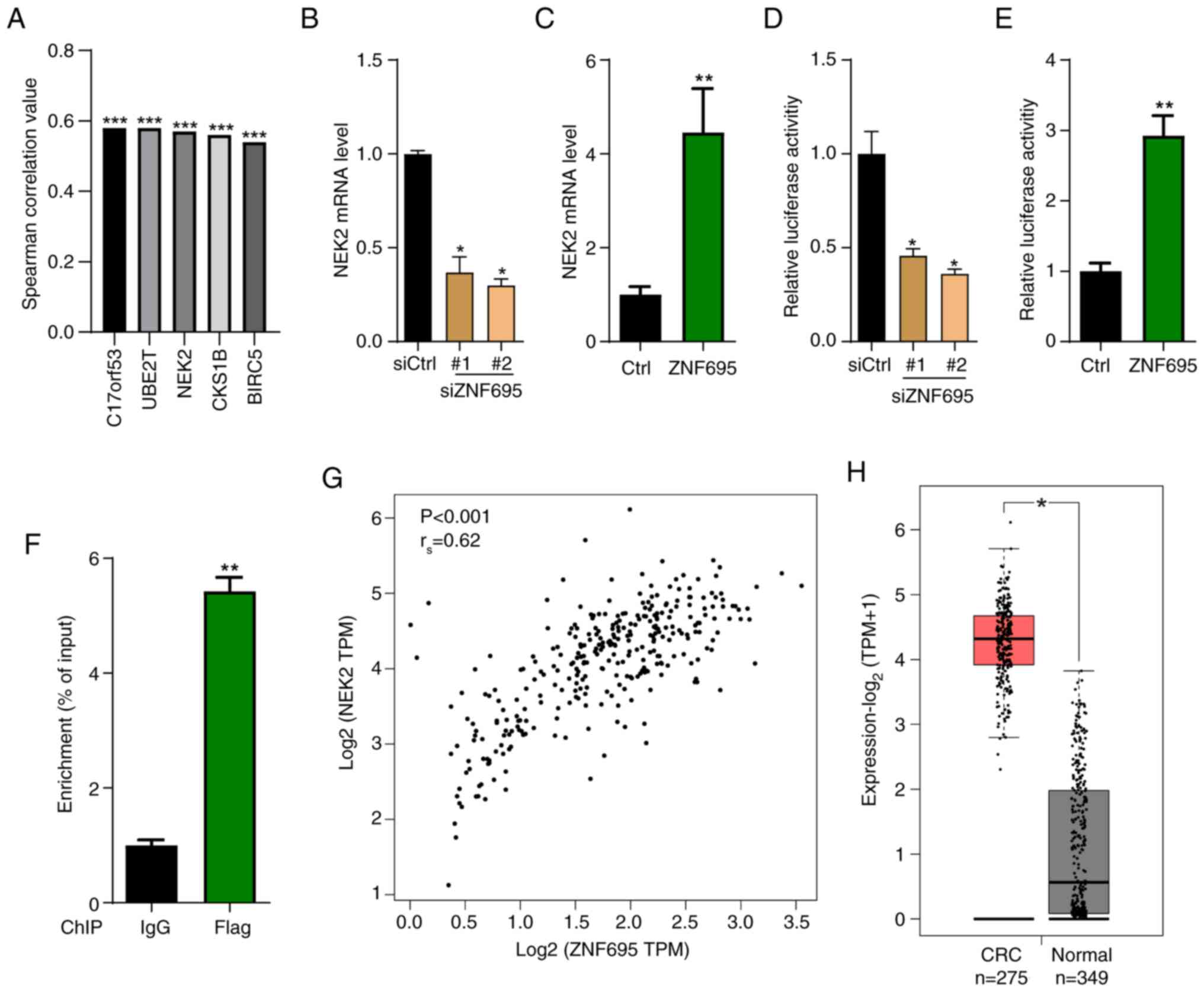
Figure 5

ZNF695 positively regulates the
expression of NEK2 in CRC cells. (A) List of genes that were
positively correlated with ZNF695 in patients with CRC based on The
Cancer Genome Atlas database. ***P<0.001. mRNA expression levels
of NEK2 were analyzed by reverse transcription-qPCR in (B) HCT-8
cells transfected with siCtrl, siZNF695#1 and siZNF695#2, and in
(C) HT-29 cells infected with Ctrl and ZNF695-overexpressing
lentiviruses. *P<0.05 vs. siCtrl group; **P<0.01 vs. Ctrl
group. Dual luciferase activity of the NEK2 gene promoter was
detected in (D) HCT-8 cells transfected with siCtrl, siZNF695#1 and
siZNF695#2, and in (E) HT-29 cells infected with Ctrl and
ZNF695-overexpressing lentiviruses. *P<0.05 vs. siCtrl group;
**P<0.01 vs. Ctrl group. (F) HT-29 cells were transfected with
ZNF695-Flag-pCDNA3.1 vectors, and the cells were subjected to
ChIP-qPCR experiments to assess whether ZNF695 interacted with the
promoter sequence of the NEK2 gene. Based on The Cancer Genome
Atlas database of patients with CRC. **P<0.01 vs. IgG group. (G)
there was a positive correlation between ZNF695 and NEK2 (R=0.62;
P<0.0001), and (H) a significant difference between the
transcript levels of NEK2 in cancer (n=275) and non-cancer (n=349)
tissues. *P<0.05. CRC, colorectal cancer; qPCR, quantitative
PCR; ChIP, chromatin immunoprecipitation; ZNF695, zinc finger
protein 695; si, small interfering; NEK2, NIMA-related kinase
2.

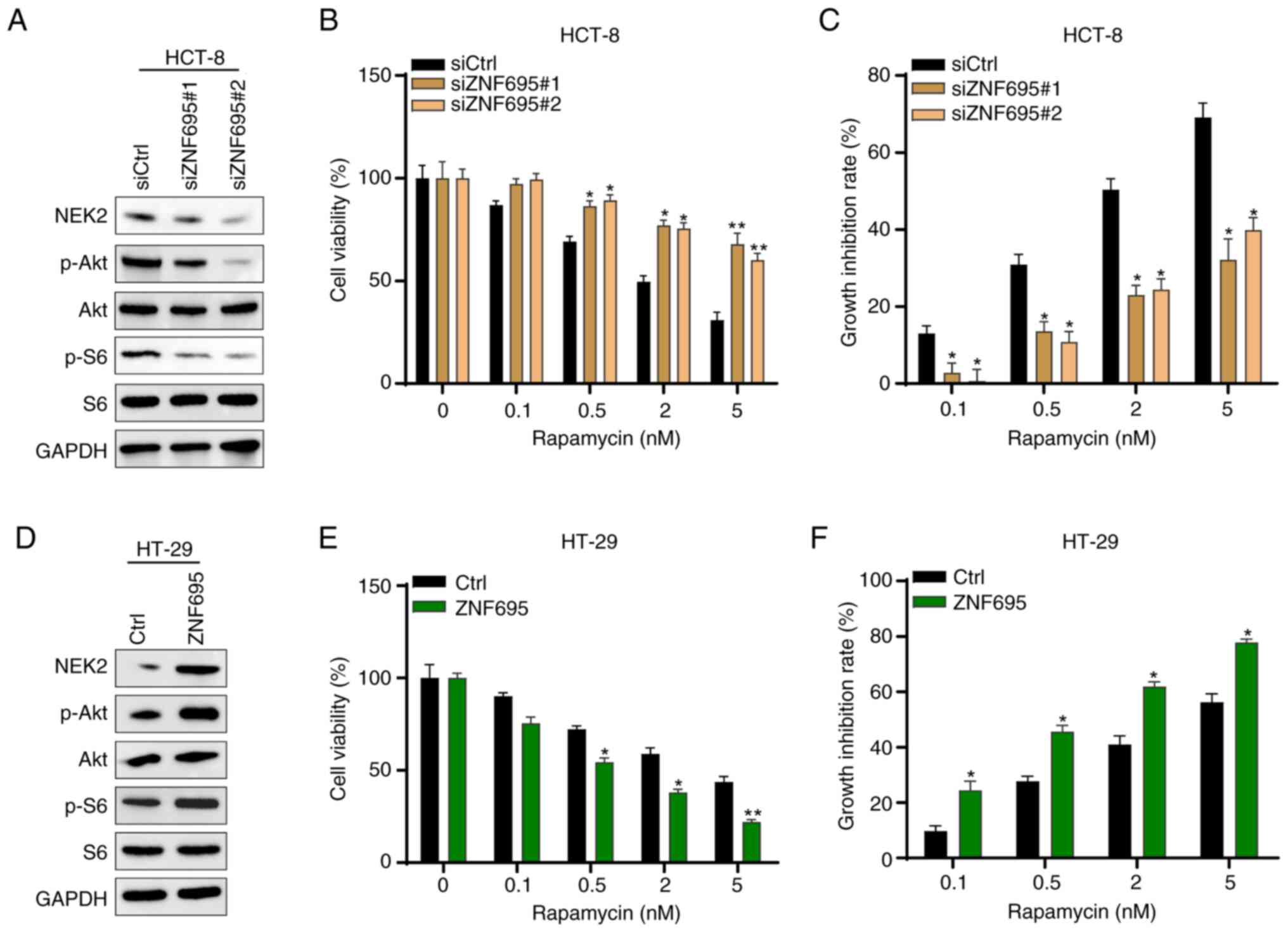
Figure 6

Overexpression of ZNF695 activates
the Akt/mTOR signaling pathway and dictates the sensitivity of CRC
cells to rapamycin. (A) Western blot analysis of NEK2, p-Akt, Akt,
p-S6, S6 and GAPDH in HCT-8 cells transfected with siCtrl,
siZNF695#1 and siZNF695#2. GAPDH served as an internal control. (B)
HCT-8 cells transfected with siCtrl, siZNF695#1 and siZNF695#2 were
treated with different concentrations of rapamycin for 48 h and
cell viability was determined by CCK8 assay. *P<0.05,
**P<0.01 vs. siCtrl group. (C) Growth inhibition rate in
response to different concentrations of rapamycin was calculated in
HCT-8 cells transfected with siCtrl, siZNF695#1 and siZNF695#2.
*P<0.05 vs. siCtrl group. (D) Western blot analysis of NEK2,
p-Akt, Akt, p-S6, S6 and GAPDH in HT-29 cells infected with Ctrl
and ZNF695-overexpressing lentiviruses. GAPDH served as an internal
control. (E) HT-29 cells infected with Ctrl and
ZNF695-overexpressing lentiviruses were treated with different
concentrations of rapamycin for 48 h and cell viability was
determined by CCK8 assay. *P<0.05, **P<0.01 vs. Ctrl group.
(F) Growth inhibition rate in response to different concentrations
of rapamycin was calculated in HT-29 cells infected with Ctrl and
ZNF695-overexpressing lentiviruses. *P<0.05 vs. Ctrl group. CRC,
colorectal cancer; CCK8, Cell Counting Kit-8; ZNF695, zinc finger
protein 695; si, small interfering; p-, phosphorylated; NEK2,
NIMA-related kinase 2; S6, ribosomal protein S6.

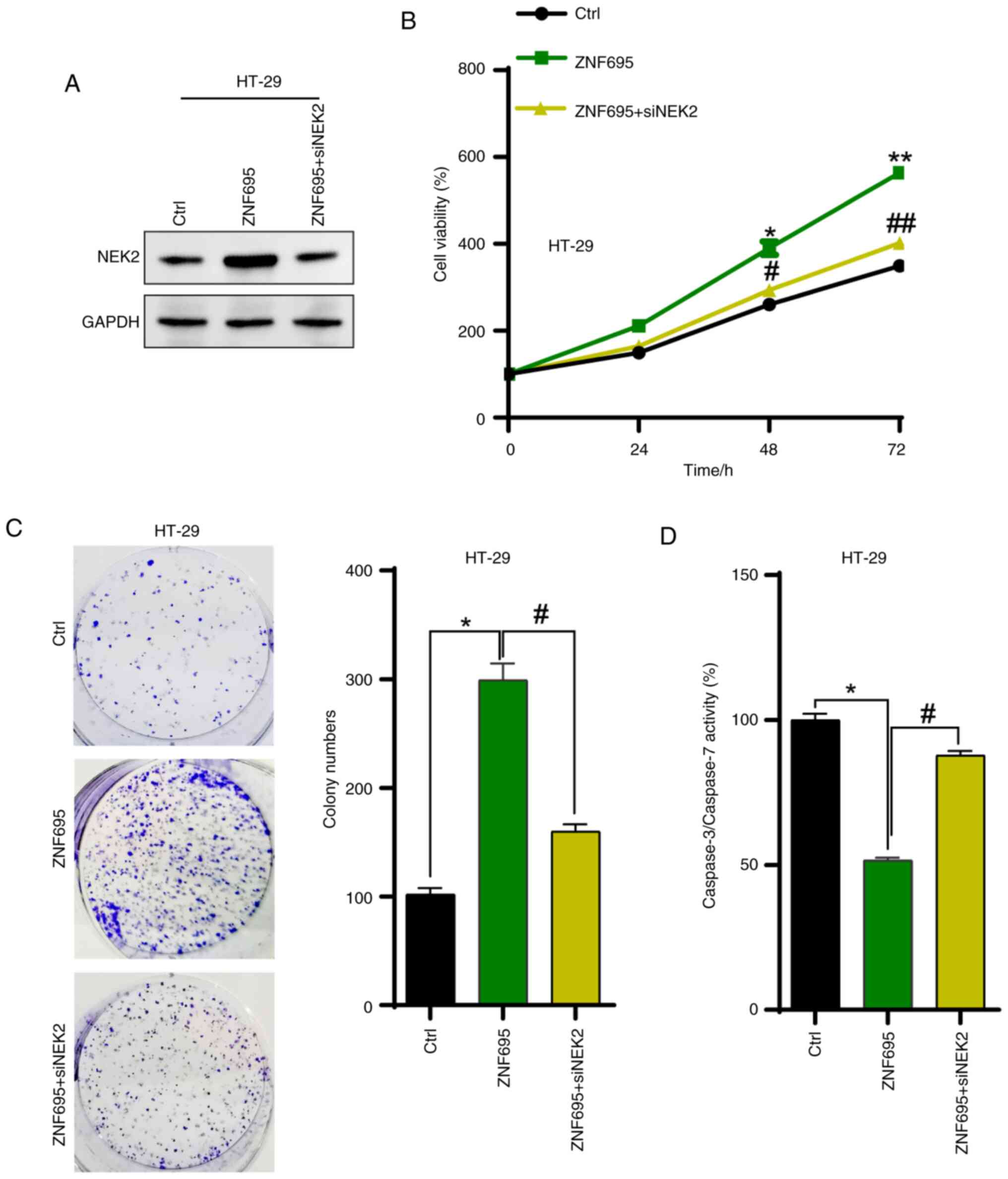
Figure 7

Knockdown of NEK2 rescues the
tumor-promoting function of ZNF695. (A) Protein levels of NEK2 in
Ctrl, ZNF695 and ZNF695 + siNEK2 HT-29 cells were detected by
western blotting. (B) Proliferation of Ctrl, ZNF695 and ZNF695 +
siNEK2 HT-29 cells was determined by Cell Counting Kit-8 assay.
*P<0.05, **P<0.01 vs. Ctrl, #P<0.05,
##P<0.01 vs. ZNF695. (C) Colony formation was assess
in Ctrl, ZNF695 and ZNF695 + siNEK2 HT-29 cells. *P<0.05 (Ctrl
vs. ZNF695), #P<0.05 (ZNF695 vs. ZNF695 + siNEK2).
(D) Caspase 3/7 activity was measured in Ctrl, ZNF695 and ZNF695 +
siNEK2 HT-29 cells. *P<0.05, (Ctrl vs. ZNF695),
#P<0.05 (ZNF695 vs. ZNF695 + siNEK2). CRC, colorectal
cancer; ZNF695, zinc finger protein 695; si, small interfering;
NEK2, NIMA-related kinase 2.

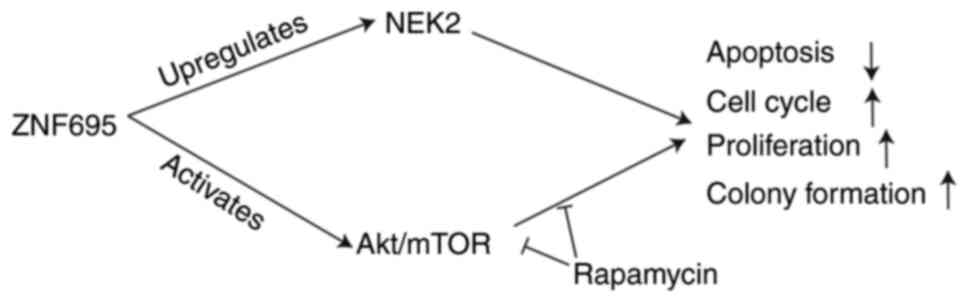
Figure 8

Diagram of the ZNF695 signaling
pathway in colorectal cancer tumorigenesis. ZNF695, zinc finger
protein 695; NEK2, NIMA-related kinase 2.
View References

1 

Sung H, Ferlay J, Siegel RL, Laversanne M, Soerjomataram I, Jemal A and Bray F: Global cancer statistics 2020: GLOBOCAN estimates of incidence and mortality worldwide for 36 cancers in 185 countries. CA Cancer J Clin. 71:209–249. 2021.PubMed/NCBI

2 

Xia C, Dong X, Li H, Cao M, Sun D, He S, Yang F, Yan X, Zhang S, Li N and Chen W: Cancer statistics in China and United States, 2022: Profiles, trends, and determinants. Chin Med J (Engl). 135:584–590. 2022. View Article : Google Scholar : PubMed/NCBI

3 

Li N, Lu B, Luo C, Cai J, Lu M, Zhang Y, Chen H and Dai M: Incidence, mortality, survival, risk factor and screening of colorectal cancer: A comparison among China, Europe, and northern America. Cancer Lett. 522:255–268. 2021. View Article : Google Scholar : PubMed/NCBI

4 

Dekker E, Tanis PJ, Vleugels JLA, Kasi PM and Wallace MB: Colorectal cancer. Lancet. 394:1467–1480. 2019. View Article : Google Scholar : PubMed/NCBI

5 

Housini M, Dariya B, Ahmed N, Stevens A, Fiadjoe H, Nagaraju GP and Basha R: Colorectal cancer: Genetic alterations, novel biomarkers, current therapeutic strategies and clinical trials. Gene. 892:1478572024. View Article : Google Scholar : PubMed/NCBI

6 

Shin AE, Giancotti FG and Rustgi AK: Metastatic colorectal cancer: Mechanisms and emerging therapeutics. Trends Pharmacol Sci. 44:222–236. 2023. View Article : Google Scholar : PubMed/NCBI

7 

Shinji S, Yamada T, Matsuda A, Sonoda H, Ohta R, Iwai T, Takeda K, Yonaga K, Masuda Y and Yoshida H: Recent advances in the treatment of colorectal cancer: A review. J Nippon Med Sch. 89:246–254. 2022. View Article : Google Scholar : PubMed/NCBI

8 

Abedizadeh R, Majidi F, Khorasani HR, Abedi H and Sabour D: Colorectal cancer: A comprehensive review of carcinogenesis, diagnosis, and novel strategies for classified treatments. Cancer Metastasis Rev. 43:729–753. 2024. View Article : Google Scholar : PubMed/NCBI

9 

Ionescu VA, Gheorghe G, Bacalbasa N, Chiotoroiu AL and Diaconu C: Colorectal cancer: From risk factors to oncogenesis. Medicina (Kaunas). 59:16462023. View Article : Google Scholar : PubMed/NCBI

10 

Xu H, Liu L, Li W, Zou D, Yu J, Wang L and Wong CC: Transcription factors in colorectal cancer: Molecular mechanism and therapeutic implications. Oncogene. 40:1555–1569. 2021. View Article : Google Scholar : PubMed/NCBI

11 

Jen J and Wang YC: Zinc finger proteins in cancer progression. J Biomed Sci. 23:532016. View Article : Google Scholar : PubMed/NCBI

12 

Cassandri M, Smirnov A, Novelli F, Pitolli C, Agostini M, Malewicz M, Melino G and Raschellà G: Zinc-finger proteins in health and disease. Cell Death Discov. 3:170712017. View Article : Google Scholar : PubMed/NCBI

13 

Krishna SS, Majumdar I and Grishin NV: Structural classification of zinc fingers: Survey and summary. Nucleic Acids Res. 31:532–550. 2003. View Article : Google Scholar : PubMed/NCBI

14 

Huntley S, Baggott DM, Hamilton AT, Tran-Gyamfi M, Yang S, Kim J, Gordon L, Branscomb E and Stubbs L: A comprehensive catalog of human KRAB-associated zinc finger genes: Insights into the evolutionary history of a large family of transcriptional repressors. Genome Res. 16:669–677. 2006. View Article : Google Scholar : PubMed/NCBI

15 

Ecco G, Imbeault M and Trono D: KRAB zinc finger proteins. Development. 144:2719–2729. 2017. View Article : Google Scholar : PubMed/NCBI

16 

Zhao J, Wen D, Zhang S, Jiang H and Di X: The role of zinc finger proteins in malignant tumors. FASEB J. 37:e231572023. View Article : Google Scholar : PubMed/NCBI

17 

Ding X, Wan A, Qi X, Jiang K, Liu Z and Chen B: ZNF695, A potential prognostic biomarker, correlates with im mune infiltrates in cervical squamous cell carcinoma and endoce rvical adenocarcinoma: Bioinformatic analysis and experimental verification. Curr Gene Ther. 24:441–452. 2024. View Article : Google Scholar : PubMed/NCBI

18 

Li C, Kuang L, Zhu B, Chen J, Wang X and Huang X: Identification of prognostic risk factors of acute lymphoblastic leukemia based on mRNA expression profiling. Neoplasma. 64:494–501. 2017. View Article : Google Scholar : PubMed/NCBI

19 

Ke ZB, You Q, Chen JY, Sun JB, Xue YT, Zhuang RB, Zheng QS, Chen YH, Wei Y, Sun XL, et al: A radiation resistance related index for biochemical recurrence and tumor immune environment in prostate cancer patients. Comput Biol Med. 146:1057112022. View Article : Google Scholar : PubMed/NCBI

20 

Xia J, Zhao H, Edmondson JL, Koss B and Zhan F: Role of NEK2 in tumorigenesis and tumor progression. Trends Mol Med. 31:79–93. 2025. View Article : Google Scholar : PubMed/NCBI

21 

Choi BK, Dayaram T, Parikh N, Wilkins AD, Nagarajan M, Novikov IB, Bachman BJ, Jung SY, Haas PJ, Labrie JL, et al: Literature-based automated discovery of tumor suppressor p53 phosphorylation and inhibition by NEK2. Proc Natl Acad Sci USA. 115:10666–10671. 2018. View Article : Google Scholar : PubMed/NCBI

22 

Ersahin T, Tuncbag N and Cetin-Atalay R: The PI3K/AKT/mTOR interactive pathway. Mol Biosyst. 11:1946–1954. 2015. View Article : Google Scholar : PubMed/NCBI

23 

Glaviano A, Foo ASC, Lam HY, Yap KCH, Jacot W, Jones RH, Eng H, Nair MG, Makvandi P, Geoerger B, et al: PI3K/AKT/mTOR signaling transduction pathway and targeted therapies in cancer. Mol Cancer. 22:1382023. View Article : Google Scholar : PubMed/NCBI

24 

Fleming-de-Moraes CD, Rocha MR, Tessmann JW, de Araujo WM and Morgado-Diaz JA: Crosstalk between PI3K/Akt and Wnt/β-catenin pathways promote colorectal cancer progression regardless of mutational status. Cancer Biol Ther. 23:1–13. 2022. View Article : Google Scholar : PubMed/NCBI

25 

Yu L, Wei J and Liu P: Attacking the PI3K/Akt/mTOR signaling pathway for targeted therapeutic treatment in human cancer. Semin Cancer Biol. 85:69–94. 2022. View Article : Google Scholar : PubMed/NCBI

26 

Leiphrakpam PD and Are C: PI3K/Akt/mTOR signaling pathway as a target for colorectal cancer treatment. Int J Mol Sci. 25:31782024. View Article : Google Scholar : PubMed/NCBI

27 

Chandrashekar DS, Karthikeyan SK, Korla PK, Patel H, Shovon AR, Athar M, Netto GJ, Qin ZS, Kumar S, Manne U, et al: UALCAN: An update to the integrated cancer data analysis platform. Neoplasia. 25:18–27. 2022. View Article : Google Scholar : PubMed/NCBI

28 

Tang Z, Li C, Kang B, Gao G, Li C and Zhang Z: GEPIA: A web server for cancer and normal gene expression profiling and interactive analyses. Nucleic Acids Res. 45((W1)): W98–W102. 2017. View Article : Google Scholar : PubMed/NCBI

29 

Győrffy B: Integrated analysis of public datasets for the discovery and validation of survival-associated genes in solid tumors. Innovation (Camb). 5:1006252024.PubMed/NCBI

30 

Zhang J, Wang Y, Hou S, Chi X, Ding D, Xue M, Zhang M, Wang J, Shuai J, Sun H, et al: Overexpression of ZNF169 promotes the growth and proliferation of colorectal cancer cells via the upregulation of ANKZF1. Oncol Rep. 51:822024. View Article : Google Scholar : PubMed/NCBI

31 

Livak KJ and Schmittgen TD: Analysis of relative gene expression data using real-time quantitative PCR and the 2(−Delta Delta C(T)) method. Methods. 25:402–408. 2001. View Article : Google Scholar : PubMed/NCBI

32 

Tompkins WA, Watrach AM, Schmale JD, Schultz RM and Harris JA: Cultural and antigenic properties of newly established cell strains derived from adenocarcinomas of the human colon and rectum. J Natl Cancer Inst. 52:1101–1110. 1974. View Article : Google Scholar : PubMed/NCBI

33 

Bhattacharya A, Tóth K, Sen A, Seshadri M, Cao S, Durrani FA, Faber E, Repasky EA and Rustum YM: Inhibition of colon cancer growth by methylselenocysteine-induced angiogenic chemomodulation is influenced by histologic characteristics of the tumor. Clin Colorectal Cancer. 8:155–162. 2009.PubMed/NCBI

34 

Huang X, Zhang G, Tang T, Gao X and Liang T: One shoot, three birds: Targeting NEK2 orchestrates chemoradiotherapy, targeted therapy, and immunotherapy in cancer treatment. Biochim Biophys Acta Rev Cancer. 1877:1886962022. View Article : Google Scholar : PubMed/NCBI

35 

Cui F, Chen Y, Wu X and Zhao W: Mesenchymal stem cell-derived exosomes carrying miR-486-5p inhibit glycolysis and cell stemness in colorectal cancer by targeting NEK2. BMC Cancer. 24:13562024. View Article : Google Scholar : PubMed/NCBI

36 

Ko MJ, Seo YR, Seo D, Park SY, Seo JH, Jeon EH, Kim SW, Park KU, Koo DB, Kim S, et al: RPL17 promotes colorectal cancer proliferation and stemness through ERK and NEK2/β-catenin signaling pathways. J Cancer. 13:2570–2583. 2022. View Article : Google Scholar : PubMed/NCBI

37 

Stefani C, Miricescu D, Stanescu-Spinu II, Nica RI, Greabu M, Totan AR and Jinga M: Growth factors, PI3K/AKT/mTOR and MAPK signaling pathways in colorectal cancer pathogenesis: Where are we now? Int J Mol Sci. 22:102602021. View Article : Google Scholar : PubMed/NCBI

38 

Ye Q, Liu J and Xie K: Zinc finger proteins and regulation of the hallmarks of cancer. Histol Histopathol. 34:1097–1109. 2019.PubMed/NCBI

39 

De la Rosa R, Villegas-Ruíz V, Caballero-Palacios MC, Pérez-López EI, Murata C, Zapata-Tarres M, Cárdenas-Cardos R, Paredes-Aguilera R, Rivera-Luna R and Juárez-Méndez S: Expression of ZNF695 transcript variants in childhood B-cell acute lymphoblastic leukemia. Genes (Basel). 10:7162019. View Article : Google Scholar

40 

Li R, Campos J and Iida J: A gene regulatory program in human breast cancer. Genetics. 201:1341–1348. 2015. View Article : Google Scholar : PubMed/NCBI

41 

Roberts MS, Sahni JM, Schrock MS, Piemonte KM, Weber-Bonk KL, Seachrist DD, Avril S, Anstine LJ, Singh S, Sizemore ST, et al: LIN9 and NEK2 are core regulators of mitotic fidelity that can be therapeutically targeted to overcome taxane resistance. Cancer Res. 80:1693–1706. 2020. View Article : Google Scholar : PubMed/NCBI

42 

Boulay G, Awad ME, Riggi N, Archer TC, Iyer S, Boonseng WE, Rossetti NE, Naigles B, Rengarajan S, Volorio A, et al: OTX2 activity at distal regulatory elements shapes the chromatin landscape of group 3 medulloblastoma. Cancer Discov. 7:288–301. 2017. View Article : Google Scholar : PubMed/NCBI

43 

Feng X, Guo J, An G, Wu Y, Liu Z, Meng B, He N, Zhao X, Chen S, Zhu Y, et al: Genetic aberrations and interaction of NEK2 and TP53 accelerate aggressiveness of multiple myeloma. Adv Sci (Weinh). 9:e21044912022. View Article : Google Scholar : PubMed/NCBI

44 

Deng L, Sun J, Chen X, Liu L and Wu D: Nek2 augments sorafenib resistance by regulating the ubiquitination and localization of β-catenin in hepatocellular carcinoma. J Exp Clin Cancer Res. 38:3162019. View Article : Google Scholar : PubMed/NCBI

45 

Nabilsi NH, Ryder DJ, Peraza-Penton AC, Poudyal R, Loose DS and Kladde MP: Local depletion of DNA methylation identifies a repressive p53 regulatory region in the NEK2 promoter. J Biol Chem. 288:35940–35951. 2013. View Article : Google Scholar : PubMed/NCBI

46 

Ji YY, Meng M and Miao Y: lncRNA SNHG1 Promotes progression of cervical cancer through miR-195/NEK2 axis. Cancer Manag Res. 12:11423–11433. 2020. View Article : Google Scholar : PubMed/NCBI

47 

Xia B, Zhao Z, Wu Y, Wang Y, Zhao Y and Wang J: Circular RNA circTNPO3 regulates paclitaxel resistance of ovarian cancer cells by miR-1299/NEK2 signaling pathway. Mol Ther Nucleic Acids. 21:780–791. 2020. View Article : Google Scholar : PubMed/NCBI

48 

Fang Y and Zhang X: Targeting NEK2 as a promising therapeutic approach for cancer treatment. Cell Cycle. 15:895–907. 2016. View Article : Google Scholar : PubMed/NCBI

49 

Naro C, Barbagallo F, Chieffi P, Bourgeois CF, Paronetto MP and Sette C: The centrosomal kinase NEK2 is a novel splicing factor kinase involved in cell survival. Nucleic Acids Res. 42:3218–3227. 2014. View Article : Google Scholar : PubMed/NCBI

50 

Zhou W, Yang Y, Xia J, Wang H, Salama ME, Xiong W, Xu H, Shetty S, Chen T, Zeng Z, et al: NEK2 induces drug resistance mainly through activation of efflux drug pumps and is associated with poor prognosis in myeloma and other cancers. Cancer Cell. 23:48–62. 2013. View Article : Google Scholar : PubMed/NCBI

51 

Neal CP, Fry AM, Moreman C, McGregor A, Garcea G, Berry DP and Manson MM: Overexpression of the Nek2 kinase in colorectal cancer correlates with beta-catenin relocalization and shortened cancer-specific survival. J Surg Oncol. 110:828–838. 2014. View Article : Google Scholar : PubMed/NCBI

52 

Lim J, Hwang YS, Kim JT, Yoon HR, Park HM, Han J, Kwon T, Lee KH, Cho HJ and Lee HG: NEK2 phosphorylates RhoGDI1 to promote cell proliferation, migration and invasion through the activation of RhoA and Rac1 in colon cancer cells. Cells. 13:20722024. View Article : Google Scholar : PubMed/NCBI

53 

Takahashi Y, Iwaya T, Sawada G, Kurashige J, Matsumura T, Uchi R, Ueo H, Takano Y, Eguchi H, Sudo T, et al: Up-regulation of NEK2 by microRNA-128 methylation is associated with poor prognosis in colorectal cancer. Ann Surg Oncol. 21:205–212. 2014. View Article : Google Scholar : PubMed/NCBI

54 

Yi YW, You KS, Park JS, Lee SG and Seong YS: Ribosomal protein S6: A potential therapeutic target against cancer? Int J Mol Sci. 23:482021. View Article : Google Scholar : PubMed/NCBI

55 

Grasso S, Tristante E, Saceda M, Carbonell P, Mayor-López L, Carballo-Santana M, Carrasco-García E, Rocamora-Reverte L, García-Morales P, Carballo F, et al: Resistance to Selumetinib (AZD6244) in colorectal cancer cell lines is mediated by p70S6K and RPS6 activation. Neoplasia. 16:845–860. 2014. View Article : Google Scholar : PubMed/NCBI

56 

Wan H, Xu L, Zhang H, Wu F, Zeng W and Li T: High expression of NEK2 promotes gastric cancer progression via activating AKT signaling. J Physiol Biochem. 77:25–34. 2021. View Article : Google Scholar : PubMed/NCBI

57 

Chang YY, Yen CJ, Chan SH, Chou YW, Lee YP, Bao CY, Huang CJ and Huang W: NEK2 promotes hepatoma metastasis and serves as biomarker for high recurrence risk after hepatic resection. Ann Hepatol. 17:843–856. 2018. View Article : Google Scholar : PubMed/NCBI

Related Articles

  • Abstract
  • View
  • Download
  • Twitter
Copy and paste a formatted citation
Spandidos Publications style
Li X, Li X, Wang J, Xue M, Zhang M, Shuai J, Zhang J, Ding D, Wang Y, Hou S, Hou S, et al: Zinc finger protein 695 facilitates the proliferation of colorectal cancer cells through activation of the NEK2 and PI3K/Akt/mTOR signaling pathways. Oncol Rep 54: 116, 2025.
APA
Li, X., Li, X., Wang, J., Xue, M., Zhang, M., Shuai, J. ... Kang, C. (2025). Zinc finger protein 695 facilitates the proliferation of colorectal cancer cells through activation of the NEK2 and PI3K/Akt/mTOR signaling pathways. Oncology Reports, 54, 116. https://doi.org/10.3892/or.2025.8949
MLA
Li, X., Li, X., Wang, J., Xue, M., Zhang, M., Shuai, J., Zhang, J., Ding, D., Wang, Y., Hou, S., Chi, X., Sun, H., Gao, Q., Kang, C."Zinc finger protein 695 facilitates the proliferation of colorectal cancer cells through activation of the NEK2 and PI3K/Akt/mTOR signaling pathways". Oncology Reports 54.4 (2025): 116.
Chicago
Li, X., Li, X., Wang, J., Xue, M., Zhang, M., Shuai, J., Zhang, J., Ding, D., Wang, Y., Hou, S., Chi, X., Sun, H., Gao, Q., Kang, C."Zinc finger protein 695 facilitates the proliferation of colorectal cancer cells through activation of the NEK2 and PI3K/Akt/mTOR signaling pathways". Oncology Reports 54, no. 4 (2025): 116. https://doi.org/10.3892/or.2025.8949
Copy and paste a formatted citation
x
Spandidos Publications style
Li X, Li X, Wang J, Xue M, Zhang M, Shuai J, Zhang J, Ding D, Wang Y, Hou S, Hou S, et al: Zinc finger protein 695 facilitates the proliferation of colorectal cancer cells through activation of the NEK2 and PI3K/Akt/mTOR signaling pathways. Oncol Rep 54: 116, 2025.
APA
Li, X., Li, X., Wang, J., Xue, M., Zhang, M., Shuai, J. ... Kang, C. (2025). Zinc finger protein 695 facilitates the proliferation of colorectal cancer cells through activation of the NEK2 and PI3K/Akt/mTOR signaling pathways. Oncology Reports, 54, 116. https://doi.org/10.3892/or.2025.8949
MLA
Li, X., Li, X., Wang, J., Xue, M., Zhang, M., Shuai, J., Zhang, J., Ding, D., Wang, Y., Hou, S., Chi, X., Sun, H., Gao, Q., Kang, C."Zinc finger protein 695 facilitates the proliferation of colorectal cancer cells through activation of the NEK2 and PI3K/Akt/mTOR signaling pathways". Oncology Reports 54.4 (2025): 116.
Chicago
Li, X., Li, X., Wang, J., Xue, M., Zhang, M., Shuai, J., Zhang, J., Ding, D., Wang, Y., Hou, S., Chi, X., Sun, H., Gao, Q., Kang, C."Zinc finger protein 695 facilitates the proliferation of colorectal cancer cells through activation of the NEK2 and PI3K/Akt/mTOR signaling pathways". Oncology Reports 54, no. 4 (2025): 116. https://doi.org/10.3892/or.2025.8949
Follow us
  • Twitter
  • LinkedIn
  • Facebook
About
  • Spandidos Publications
  • Careers
  • Cookie Policy
  • Privacy Policy
How can we help?
  • Help
  • Live Chat
  • Contact
  • Email to our Support Team