Spandidos Publications Logo
  • About
    • About Spandidos
    • Aims and Scopes
    • Abstracting and Indexing
    • Editorial Policies
    • Reprints and Permissions
    • Job Opportunities
    • Terms and Conditions
    • Contact
  • Journals
    • All Journals
    • Oncology Letters
      • Oncology Letters
      • Information for Authors
      • Editorial Policies
      • Editorial Board
      • Aims and Scope
      • Abstracting and Indexing
      • Bibliographic Information
      • Archive
    • International Journal of Oncology
      • International Journal of Oncology
      • Information for Authors
      • Editorial Policies
      • Editorial Board
      • Aims and Scope
      • Abstracting and Indexing
      • Bibliographic Information
      • Archive
    • Molecular and Clinical Oncology
      • Molecular and Clinical Oncology
      • Information for Authors
      • Editorial Policies
      • Editorial Board
      • Aims and Scope
      • Abstracting and Indexing
      • Bibliographic Information
      • Archive
    • Experimental and Therapeutic Medicine
      • Experimental and Therapeutic Medicine
      • Information for Authors
      • Editorial Policies
      • Editorial Board
      • Aims and Scope
      • Abstracting and Indexing
      • Bibliographic Information
      • Archive
    • International Journal of Molecular Medicine
      • International Journal of Molecular Medicine
      • Information for Authors
      • Editorial Policies
      • Editorial Board
      • Aims and Scope
      • Abstracting and Indexing
      • Bibliographic Information
      • Archive
    • Biomedical Reports
      • Biomedical Reports
      • Information for Authors
      • Editorial Policies
      • Editorial Board
      • Aims and Scope
      • Abstracting and Indexing
      • Bibliographic Information
      • Archive
    • Oncology Reports
      • Oncology Reports
      • Information for Authors
      • Editorial Policies
      • Editorial Board
      • Aims and Scope
      • Abstracting and Indexing
      • Bibliographic Information
      • Archive
    • Molecular Medicine Reports
      • Molecular Medicine Reports
      • Information for Authors
      • Editorial Policies
      • Editorial Board
      • Aims and Scope
      • Abstracting and Indexing
      • Bibliographic Information
      • Archive
    • World Academy of Sciences Journal
      • World Academy of Sciences Journal
      • Information for Authors
      • Editorial Policies
      • Editorial Board
      • Aims and Scope
      • Abstracting and Indexing
      • Bibliographic Information
      • Archive
    • International Journal of Functional Nutrition
      • International Journal of Functional Nutrition
      • Information for Authors
      • Editorial Policies
      • Editorial Board
      • Aims and Scope
      • Abstracting and Indexing
      • Bibliographic Information
      • Archive
    • International Journal of Epigenetics
      • International Journal of Epigenetics
      • Information for Authors
      • Editorial Policies
      • Editorial Board
      • Aims and Scope
      • Abstracting and Indexing
      • Bibliographic Information
      • Archive
    • Medicine International
      • Medicine International
      • Information for Authors
      • Editorial Policies
      • Editorial Board
      • Aims and Scope
      • Abstracting and Indexing
      • Bibliographic Information
      • Archive
  • Articles
  • Information
    • Information for Authors
    • Information for Reviewers
    • Information for Librarians
    • Information for Advertisers
    • Conferences
  • Language Editing
Spandidos Publications Logo
  • About
    • About Spandidos
    • Aims and Scopes
    • Abstracting and Indexing
    • Editorial Policies
    • Reprints and Permissions
    • Job Opportunities
    • Terms and Conditions
    • Contact
  • Journals
    • All Journals
    • Biomedical Reports
      • Information for Authors
      • Editorial Policies
      • Editorial Board
      • Aims and Scope
      • Abstracting and Indexing
      • Bibliographic Information
      • Archive
    • Experimental and Therapeutic Medicine
      • Information for Authors
      • Editorial Policies
      • Editorial Board
      • Aims and Scope
      • Abstracting and Indexing
      • Bibliographic Information
      • Archive
    • International Journal of Epigenetics
      • Information for Authors
      • Editorial Policies
      • Editorial Board
      • Aims and Scope
      • Abstracting and Indexing
      • Bibliographic Information
      • Archive
    • International Journal of Functional Nutrition
      • Information for Authors
      • Editorial Policies
      • Editorial Board
      • Aims and Scope
      • Abstracting and Indexing
      • Bibliographic Information
      • Archive
    • International Journal of Molecular Medicine
      • Information for Authors
      • Editorial Policies
      • Editorial Board
      • Aims and Scope
      • Abstracting and Indexing
      • Bibliographic Information
      • Archive
    • International Journal of Oncology
      • Information for Authors
      • Editorial Policies
      • Editorial Board
      • Aims and Scope
      • Abstracting and Indexing
      • Bibliographic Information
      • Archive
    • Medicine International
      • Information for Authors
      • Editorial Policies
      • Editorial Board
      • Aims and Scope
      • Abstracting and Indexing
      • Bibliographic Information
      • Archive
    • Molecular and Clinical Oncology
      • Information for Authors
      • Editorial Policies
      • Editorial Board
      • Aims and Scope
      • Abstracting and Indexing
      • Bibliographic Information
      • Archive
    • Molecular Medicine Reports
      • Information for Authors
      • Editorial Policies
      • Editorial Board
      • Aims and Scope
      • Abstracting and Indexing
      • Bibliographic Information
      • Archive
    • Oncology Letters
      • Information for Authors
      • Editorial Policies
      • Editorial Board
      • Aims and Scope
      • Abstracting and Indexing
      • Bibliographic Information
      • Archive
    • Oncology Reports
      • Information for Authors
      • Editorial Policies
      • Editorial Board
      • Aims and Scope
      • Abstracting and Indexing
      • Bibliographic Information
      • Archive
    • World Academy of Sciences Journal
      • Information for Authors
      • Editorial Policies
      • Editorial Board
      • Aims and Scope
      • Abstracting and Indexing
      • Bibliographic Information
      • Archive
  • Articles
  • Information
    • For Authors
    • For Reviewers
    • For Librarians
    • For Advertisers
    • Conferences
  • Language Editing
Login Register Submit
  • This site uses cookies
  • You can change your cookie settings at any time by following the instructions in our Cookie Policy. To find out more, you may read our Privacy Policy.

    I agree
Search articles by DOI, keyword, author or affiliation
Search
Advanced Search
presentation
Oncology Reports
Join Editorial Board Propose a Special Issue
Print ISSN: 1021-335X Online ISSN: 1791-2431
Journal Cover
November-2025 Volume 54 Issue 5

Full Size Image

Sign up for eToc alerts
Recommend to Library

Journals

International Journal of Molecular Medicine

International Journal of Molecular Medicine

International Journal of Molecular Medicine is an international journal devoted to molecular mechanisms of human disease.

International Journal of Oncology

International Journal of Oncology

International Journal of Oncology is an international journal devoted to oncology research and cancer treatment.

Molecular Medicine Reports

Molecular Medicine Reports

Covers molecular medicine topics such as pharmacology, pathology, genetics, neuroscience, infectious diseases, molecular cardiology, and molecular surgery.

Oncology Reports

Oncology Reports

Oncology Reports is an international journal devoted to fundamental and applied research in Oncology.

Experimental and Therapeutic Medicine

Experimental and Therapeutic Medicine

Experimental and Therapeutic Medicine is an international journal devoted to laboratory and clinical medicine.

Oncology Letters

Oncology Letters

Oncology Letters is an international journal devoted to Experimental and Clinical Oncology.

Biomedical Reports

Biomedical Reports

Explores a wide range of biological and medical fields, including pharmacology, genetics, microbiology, neuroscience, and molecular cardiology.

Molecular and Clinical Oncology

Molecular and Clinical Oncology

International journal addressing all aspects of oncology research, from tumorigenesis and oncogenes to chemotherapy and metastasis.

World Academy of Sciences Journal

World Academy of Sciences Journal

Multidisciplinary open-access journal spanning biochemistry, genetics, neuroscience, environmental health, and synthetic biology.

International Journal of Functional Nutrition

International Journal of Functional Nutrition

Open-access journal combining biochemistry, pharmacology, immunology, and genetics to advance health through functional nutrition.

International Journal of Epigenetics

International Journal of Epigenetics

Publishes open-access research on using epigenetics to advance understanding and treatment of human disease.

Medicine International

Medicine International

An International Open Access Journal Devoted to General Medicine.

Journal Cover
November-2025 Volume 54 Issue 5

Full Size Image

Sign up for eToc alerts
Recommend to Library

  • Article
  • Citations
    • Cite This Article
    • Download Citation
    • Create Citation Alert
    • Remove Citation Alert
    • Cited By
  • Similar Articles
    • Related Articles (in Spandidos Publications)
    • Similar Articles (Google Scholar)
    • Similar Articles (PubMed)
  • Download PDF
  • Download XML
  • View XML

  • Supplementary Files
    • Supplementary_Data.pdf
Article Open Access

Serum from patients with oral squamous cell carcinoma remodels the tumor immune escape ecological niche by promoting regulatory T‑cell differentiation and T‑cell exhaustion

  • Authors:
    • Hongli Chen
    • Jiao Chen
    • Bomiao Cui
    • Die Lv
    • Wenwen Han
    • Yun Feng
    • Ping Zhang
  • View Affiliations / Copyright

    Affiliations: State Key Laboratory of Oral Diseases and National Center for Stomatology and National Clinical Research Center for Oral Diseases and West China Hospital of Stomatology, Sichuan University, Chengdu, Sichuan 610041, P.R. China
    Copyright: © Chen et al. This is an open access article distributed under the terms of Creative Commons Attribution License.
  • Article Number: 145
    |
    Published online on: August 26, 2025
       https://doi.org/10.3892/or.2025.8978
  • Expand metrics +
Metrics: Total Views: 0 (Spandidos Publications: | PMC Statistics: )
Metrics: Total PDF Downloads: 0 (Spandidos Publications: | PMC Statistics: )
Cited By (CrossRef): 0 citations Loading Articles...

This article is mentioned in:


Abstract

Oral squamous cell carcinoma (OSCC) ranks as the sixth most prevalent malignancy worldwide, and is characterized by high morbidity and mortality rates. Elucidating the molecular and cellular mechanisms of tumor‑directed immune escape through ecological niche remodeling is crucial for advancing tumor biotherapy. The serum of patients with cancer contains not only tumor biomarkers but also immune regulators secreted by immune cells and/or cancer cells. Notably, the interstitial fluid within the cancer ecological niche is derived from serum. The cross‑talk between serum and cancer cells determines the future of cancer cells, either cell survival or death. The present study revealed that serum from patients with OSCC could remodel the cancer immune escape ecological niche by promoting antigen‑induced regulatory T‑cell (Treg) differentiation and T‑cell exhaustion. When serum from patients with OSCC was added to a phytohemagglutinin‑stimulated peripheral blood mononuclear cell (PBMC) culture system, the Treg subset was significantly increased compared with that in the culture system treated with fetal bovine serum. Moreover, when the serum of patients with OSCC was added to a PBMC culture system stimulated with tumor antigens, the activation of the CD3+ subset was significantly inhibited, and high levels of IL‑4, IL‑10 and TGF‑β were detected in the supernatant; moreover, CD3+ T cells expressed high levels of T‑cell immunoglobulin and mucin‑domain containing‑3 and programmed death ligand 1, which is known to induce T‑cell apoptosis and exhaustion. Finally, the antitumor effect of T cells were significantly decreased. These results indicated that the serum of patients with cancer can promote the inhibition and exhaustion of antitumor T cells, thereby remodeling the tumor immune escape ecological niche.
View Figures

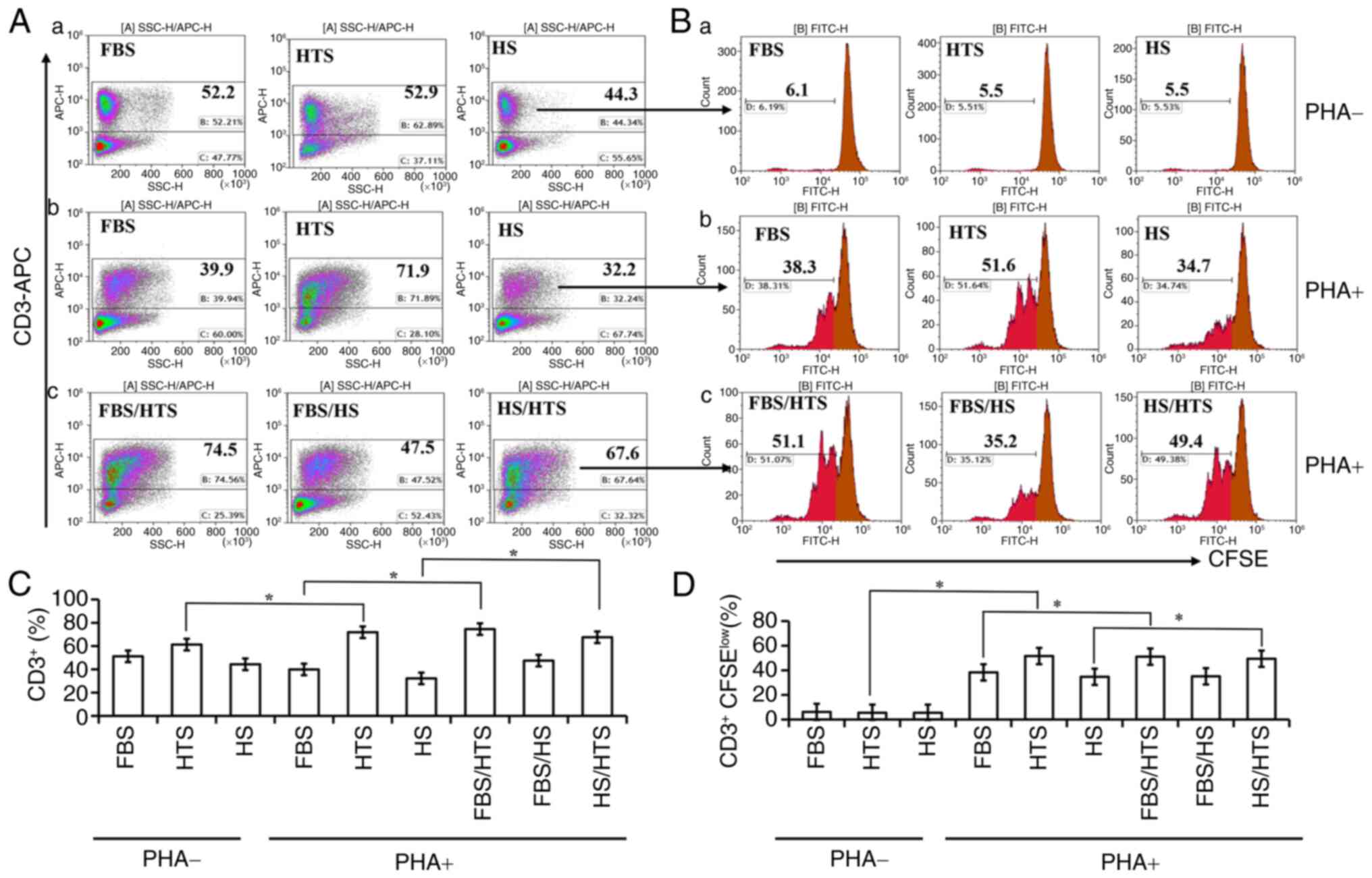
Figure 1

Effects of HTS on T-lymphocyte
differentiation and proliferation. Peripheral blood mononuclear
cells were pre-labeled with CFSE and cultured in medium containing
20% FBS, HTS or HS, with or without 30 µg/ml PHA for 72 h. Cells
were then collected, stained with CD3-APC and analyzed by flow
cytometry using Kaluza 2.1 software. (A) Differentiation of
CD3+ T cell subsets after stimulation with: (Aa) FBS,
HTS or HS without PHA; (Ab) FBS, HTS or HS with PHA; (Ac) FBS +
HTS, FBS + HS or HTS+ HS with PHA. (B) Proliferation of
CD3+ T cells after stimulation with: (Ba) FBS, HTS or HS
without PHA; (Bb) FBS, HTS or HS with PHA; (Bc) FBS + HTS, FBS + HS
or HTS+ HS severally with PHA. (C) Percentage of CD3+
T-cell subsets in each group. (D) Percentage of CFSElow
CD3+ T-cell subsets in each group. The figures are
representative of three independent experiments. Data are presented
as the mean ± SD of each group. *P<0.05. CFSE,
5,6-carboxyfluorescein diacetate succinimidyl ester; FBS, fetal
bovine serum; HS, human healthy serum; HTS, human tumor serum; PHA,
phytohemagglutinin.

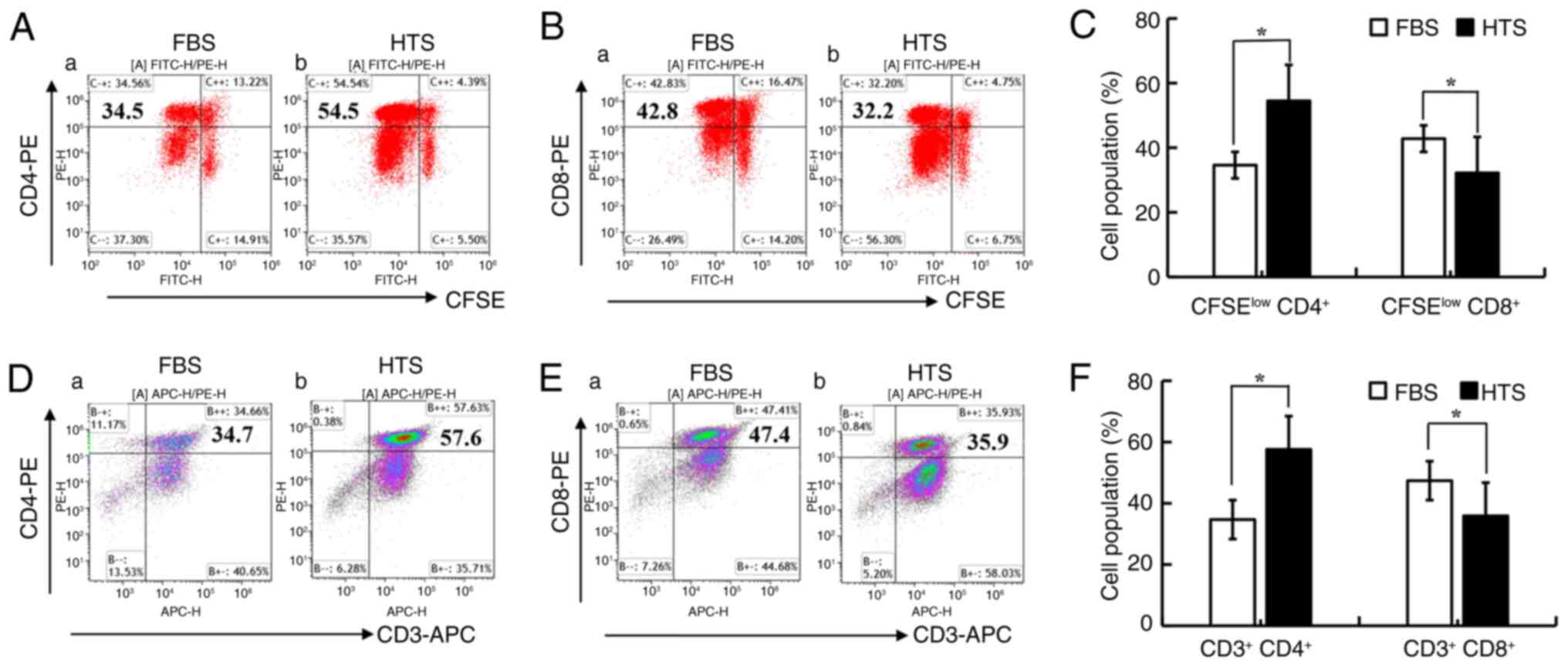
Figure 2

Effect of HTS on the proliferation
and differentiation of CD4+ and CD8+ T-cell
subsets. Peripheral blood mononuclear cells were pre-labeled with
CFSE and cultured in medium containing 20% FBS or HTS, and 30 µg/ml
phytohemagglutinin for 72 h. Proliferation and differentiation of
the T-cell subsets were analyzed by flow cytometry using Kaluza 2.1
software. (A) Proliferation of CD4+ T-cell subsets after
stimulation with: (Aa) FBS and (Ab) HTS. (B) Proliferation of
CD8+ T-cell subsets after stimulation with: (Ba) FBS and
(Bb) HTS. (C) Proliferation of CD4+ and CD8+
T-cell subsets. (D) Differentiation of
CD3+CD4+ T-cell subsets after stimulation
with: (Da) FBS and (Db) HTS. (E) Differentiation of
CD3+CD8+ T-cell subsets after stimulation
with: (Ea) FBS and (Eb) HTS. (F) Differentiation of
CD3+CD4+ and CD3+CD8+
T-cell subsets. The figures are representative of three independent
experiments. Data are presented as the mean ± SD for each group.
*P<0.05;. CFSE, 5,6-carboxyfluorescein diacetate succinimidyl
ester; FBS, fetal bovine serum; HTS, human tumor serum.

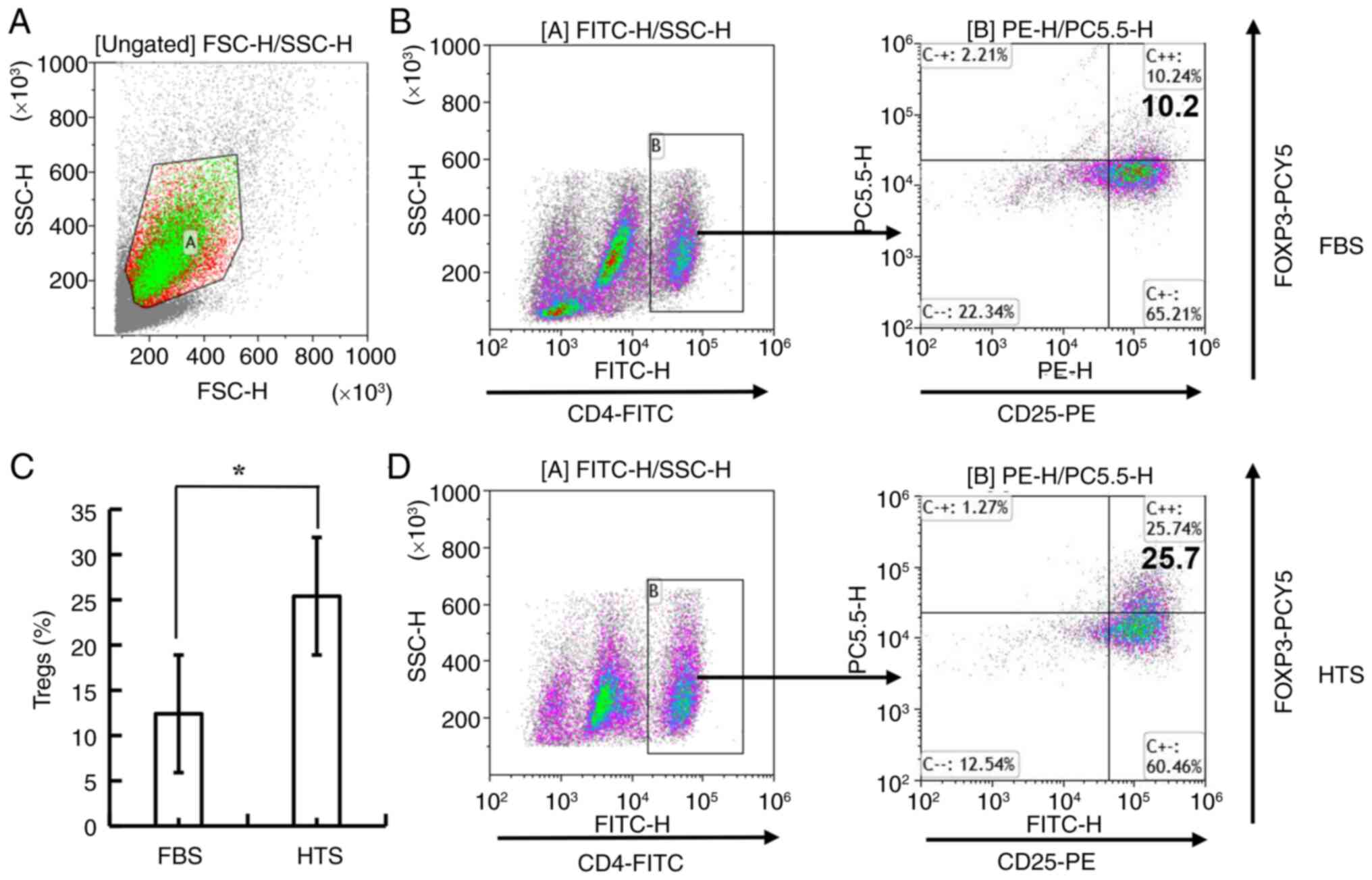
Figure 3

Effect of HTS on Treg
differentiation. Peripheral blood mononuclear cells were stimulated
with 30 µg/ml PHA and cultured in medium supplemented with FBS or
HTS for 72 h. The CD4+CD25+FOXP3+
Treg subset was analyzed by flow cytometry using Kaluza 2.1
software. (A) FSC and SSC gating to exclude debris, cell aggregates
and dead cells, focusing on single, viable cells. (B) Treg cell
subset in PBMCs stimulated with PHA and FBS. (D) Treg cell subset
in PBMCs stimulated with PHA and HTS. (C) Percentage of Tregs in
PBMCs after stimulation with PHA and different serums. The figures
are representative of three independent experiments. Data are
presented as the mean ± SD for each group. *P<0.05 vs. FBS. Cy5,
Cyanine5; FBS, fetal bovine serum; FOXP3, Forkhead box P3; FSC,
forward scatter; HTS, human tumor serum; PHA, phytohemagglutinin;
SSC, side scatter; Treg, regulatory T cell.

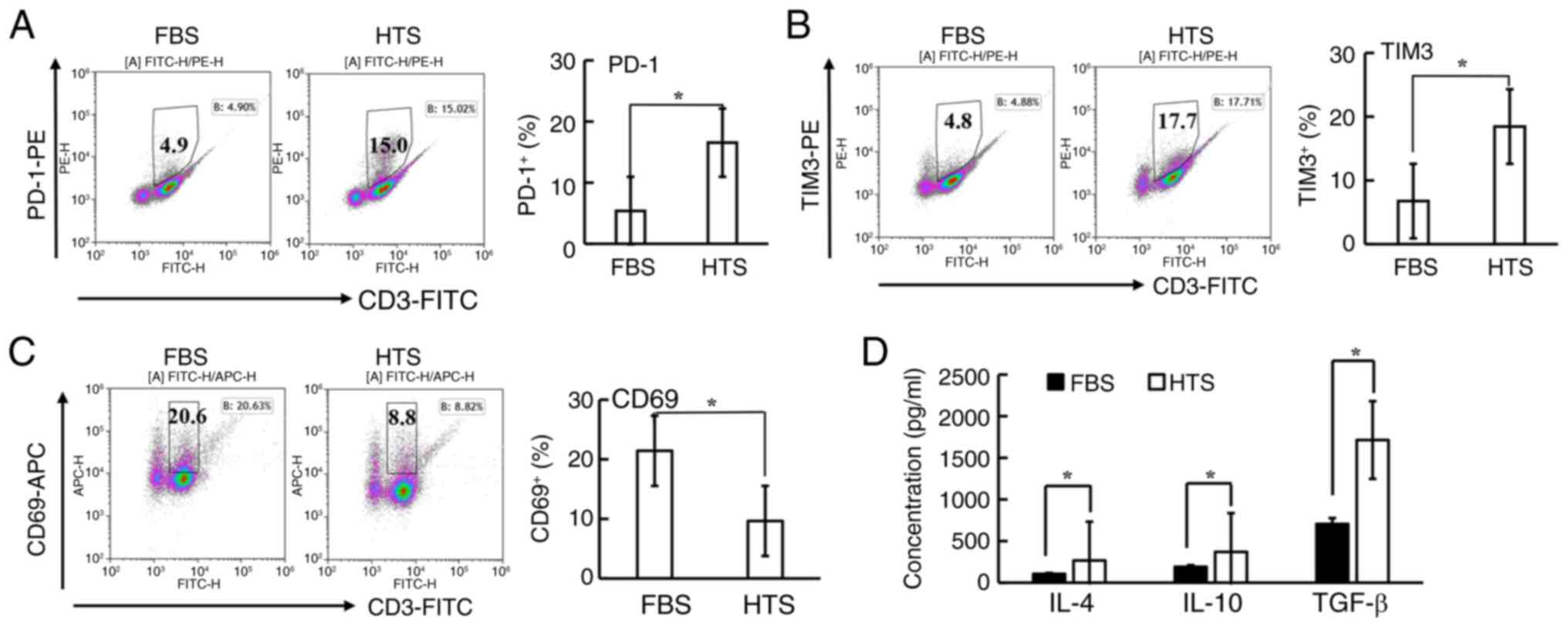
Figure 4

Effects of HTS on T-cell expression
and secretion of immune molecules. Peripheral blood mononuclear
cells were stimulated with tumor cell total protein antigen and
cultured in medium containing FBS or HTS for 14 days. Supernatants
were collected at day 14 to measure the concentrations of IL-4,
IL-10 and TGF-β using ELISA kits. Cells were harvested at day 14,
stained with anti-human CD3-FITC, PD-1-PE, TIM3-PE and CD69-APC,
and the surface markers were analyzed by flow cytometry using
Kaluza 2.1 software. Expression of (A) PD-1, (B) TIM3 and (C) CD69
on T cells. (D) Secretion of immune inhibitory molecules by
HTS-induced T cells. Figures are representative of three
independent experiments. Data are presented as the mean ± SD of
each group. *P<0.05 vs. FBS. FBS, fetal bovine serum; HTS, human
tumor serum; PD1, programmed death ligand 1; TIM3, T-cell
immunoglobulin and mucin-domain containing-3.

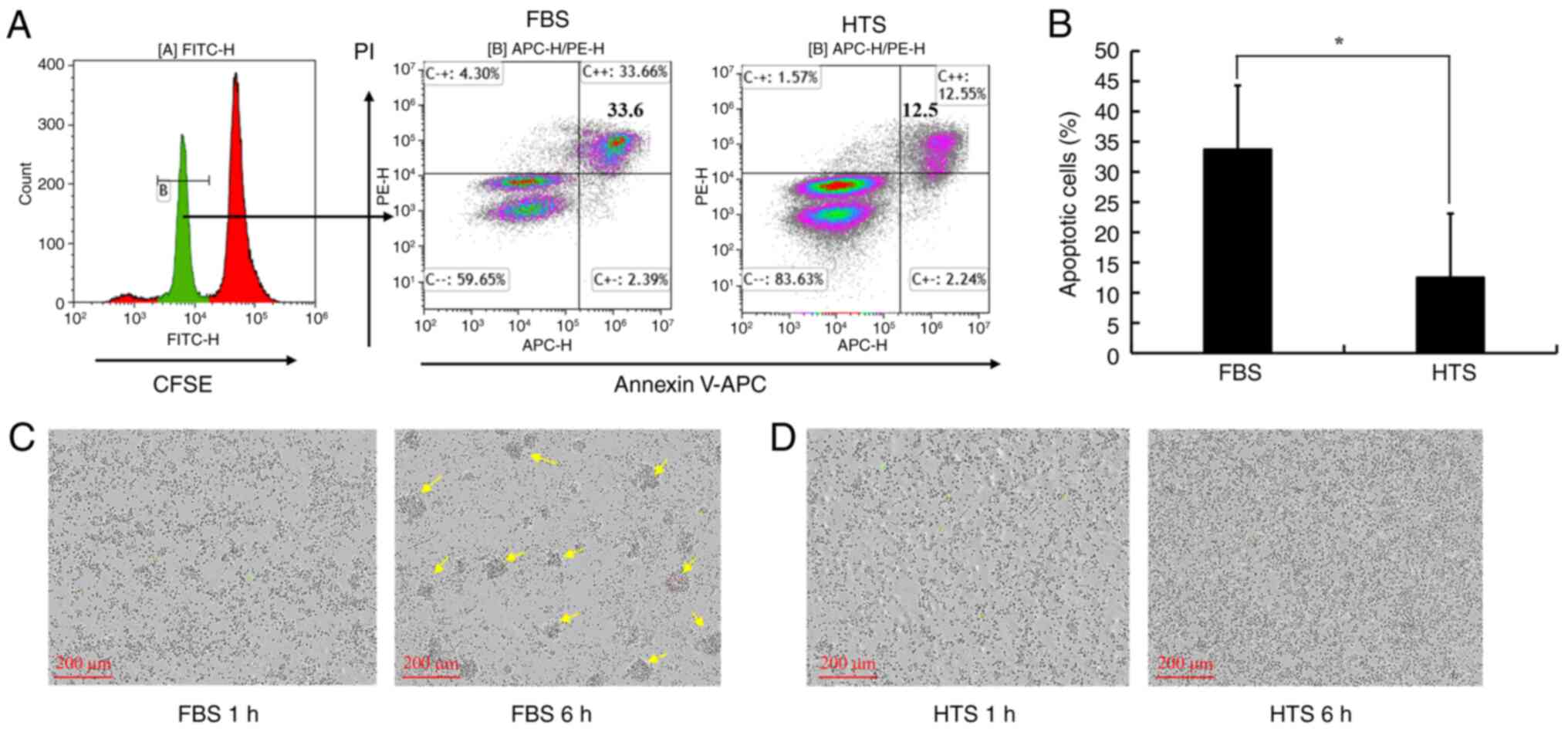
Figure 5

Effects of tumor antigen and HTS on T
cell-mediated cancer cell death. PBMCs were stimulated with Cal-27
total protein antigen and cultured in medium containing 20% FBS or
HTS for 14 days. PBMCs were collected and labeled with CFSE and
co-cultured with Cal-27 cells at a ratio of 2:1 in the IncuCyte Rs3
system for 18 h. Cells were then collected and labeled with Annexin
V-APC/PI kits. The Annexin
V+PI+CFSE− cell subset was
analyzed by flow cytometry using Kaluza 2.1 software. (A) Apoptosis
of cancer cells after co-culture with PBMCs. (B) Percentage of
apoptotic cancer cells. (C) T cells were co-cultured with Cal-27
cells in medium containing 20% FBS for 1 and 6 h (yellow arrows
indicate the adherence of T cells to cancer cells). (D) T cells
were co-cultured with Cal-27 cells in medium containing 20% HTS for
1 and 6 h. Figures are representative of three independent
experiments. Data are presented as the mean ± SD of each group.
*P<0.05 vs. FBS. CFSE, 5,6-carboxyfluorescein diacetate
succinimidyl ester; FBS, fetal bovine serum; HTS, human tumor
serum; PBMC, peripheral blood mononuclear cell.
View References

1 

Satgunaseelan L, Allanson BM, Asher R, Reddy R, Low HTH, Veness M, Gopal Iyer N, Smee RI, Palme CE, Gupta R and Clark JR: The incidence of squamous cell carcinoma of the oral tongue is rising in young non-smoking women: An international multi-institutional analysis. Oral Oncol. 110:1048752020. View Article : Google Scholar : PubMed/NCBI

2 

Satgunaseelan L, Strbenac D, Willet C, Chew T, Sadsad R, Wykes J, Low TH, Cooper WA, Lee CS, Palme CE, et al: Whole genome duplication in oral squamous cell carcinoma in patients younger than 50 years: Implications for prognosis and adverse clinicopathological factors. Genes Chromosomes Cancer. 61:561–571. 2022. View Article : Google Scholar : PubMed/NCBI

3 

Bray F, Laversanne M, Sung H, Ferlay J, Siegel RL, Soerjomataram I and Jemal A: Global cancer statistics 2022: GLOBOCAN estimates of incidence and mortality worldwide for 36 cancers in 185 countries. CA Cancer J Clin. 74:229–263. 2024.PubMed/NCBI

4 

Yang Z, Liang X, Fu Y, Liu Y, Zheng L, Liu F, Li T, Yin X, Qiao X and Xu X: Identification of AUNIP as a candidate diagnostic and prognostic biomarker for oral squamous cell carcinoma. EBioMedicine. 47:44–57. 2019. View Article : Google Scholar : PubMed/NCBI

5 

Manzano-Moreno FJ, Costela-Ruiz VJ, Garcia-Recio E, Olmedo-Gaya MV, Ruiz C and Reyes-Botella C: Role of salivary MicroRNA and cytokines in the diagnosis and prognosis of oral squamous cell carcinoma. Int J Mol Sci. 22:122152021. View Article : Google Scholar : PubMed/NCBI

6 

Bai G, Wei N, Li F, Zhao P, Meng Z, Zou B, Liu Y, Xu K, Li K, Yao C and Yang P: Function and transcriptional regulation of TCTN1 in oral squamous cell carcinoma. Oncol Rep. 47:262022. View Article : Google Scholar : PubMed/NCBI

7 

Gu W, Kim M, Wang L, Yang Z, Nakajima T and Tsushima Y: Multi-omics analysis of ferroptosis regulation patterns and characterization of tumor microenvironment in patients with oral squamous cell carcinoma. Int J Biol Sci. 17:3476–3492. 2021. View Article : Google Scholar : PubMed/NCBI

8 

Vitório JG, Duarte-Andrade FF, Dos Santos Fontes Pereira T, Fonseca FP, Amorim LSD, Martins-Chaves RR, Gomes CC, Canuto GAB and Gomez RS: Metabolic landscape of oral squamous cell carcinoma. Metabolomics. 16:1052020. View Article : Google Scholar : PubMed/NCBI

9 

Jiang M and Li B: STAT3 and its targeting inhibitors in oral squamous cell carcinoma. Cells. 11:31312022. View Article : Google Scholar : PubMed/NCBI

10 

Chai AWY, Lim KP and Cheong SC: Translational genomics and recent advances in oral squamous cell carcinoma. Semin Cancer Biol. 61:71–83. 2020. View Article : Google Scholar : PubMed/NCBI

11 

Kavarthapu A and Gurumoorthy K: Linking chronic periodontitis and oral cancer: A review. Oral Oncology. 121:1053752021. View Article : Google Scholar : PubMed/NCBI

12 

Reynolds BA, Oli MW and Oli MK: Eco-oncology: Applying ecological principles to understand and manage cancer. Ecol Evol. 10:8538–8553. 2020. View Article : Google Scholar : PubMed/NCBI

13 

Anderson ARA and Maini PK: Mathematical oncology. Bull Math Biol. 80:945–953. 2018. View Article : Google Scholar : PubMed/NCBI

14 

Adler FR and Gordon DM: Cancer ecology and evolution: Positive interactions and system vulnerability. Curr Opin Syst Biol. 17:1–7. 2019. View Article : Google Scholar : PubMed/NCBI

15 

Seliger B, Massa C, Yang B, Bethmann D, Kappler M, Eckert AW and Wickenhauser C: Immune escape mechanisms and their clinical relevance in head and neck squamous cell carcinoma. Int J Mol Sci. 21:70322020. View Article : Google Scholar : PubMed/NCBI

16 

Pansy K, Uhl B, Krstic J, Szmyra M, Fechter K, Santiso A, Thuminger L, Greinix H, Kargl J, Prochazka K, et al: Immune regulatory processes of the tumor microenvironment under malignant conditions. Int J Mol Sci. 22:133112021. View Article : Google Scholar : PubMed/NCBI

17 

O'Donnell JS, Teng MWL and Smyth MJ: Cancer immunoediting and resistance to T cell-based immunotherapy. Nat Rev Clin Oncol. 16:151–167. 2019. View Article : Google Scholar : PubMed/NCBI

18 

Iorgulescu JB, Braun D, Oliveira G, Keskin DB and Wu CJ: Acquired mechanisms of immune escape in cancer following immunotherapy. Genome Med. 10:872018. View Article : Google Scholar : PubMed/NCBI

19 

Eichmuller SB, Osen W, Mandelboim O and Seliger B: Immune modulatory microRNAs involved in tumor attack and tumor immune escape. J Natl Cancer Inst. 109:1092017. View Article : Google Scholar : PubMed/NCBI

20 

Lee J, Han Y, Wang W, Jo H, Kim H, Kim S, Yang KM, Kim SJ, Dhanasekaran DN and Song YS: Phytochemicals in cancer immune checkpoint inhibitor therapy. Biomolecules. 11:11072021. View Article : Google Scholar : PubMed/NCBI

21 

Amaya-Uribe L, Rojas M, Azizi G, Anaya JM and Gershwin ME: Primary immunodeficiency and autoimmunity: A comprehensive review. J Autoimmun. 99:52–72. 2019. View Article : Google Scholar : PubMed/NCBI

22 

Chi H, Zhao S, Yang J, Gao X, Peng G, Zhang J, Xie X, Song G, Xu K, Xia Z, et al: T-cell exhaustion signatures characterize the immune landscape and predict HCC prognosis via integrating single-cell RNA-seq and bulk RNA-sequencing. Front Immunol. 14:11370252023. View Article : Google Scholar : PubMed/NCBI

23 

Mao J, Li J, Chen J, Wen Q, Cao M, Zhang F, Li B, Zhang Q, Wang Z, Zhang J and Shen J: CXCL10 and Nrf2-upregulated mesenchymal stem cells reinvigorate T lymphocytes for combating glioblastoma. J Immunother Cancer. 11:e0074812023. View Article : Google Scholar : PubMed/NCBI

24 

Wu YH, Lin PY, Yang JH, Kuo YS and Wu YC: Serum levels and positive rates of tumor biomarkers in oral precancer patients. J Formos Med Assoc. 120:1324–1331. 2021. View Article : Google Scholar : PubMed/NCBI

25 

Abramson VG and Mayer IA: Clinical utility of serum tumor markers and circulating tumor cell assays in the treatment of breast cancer. Curr Treat Options Oncol. 12:403–411. 2011. View Article : Google Scholar : PubMed/NCBI

26 

Almangush A, Heikkinen I, Mäkitie AA, Coletta RD, Läärä E, Leivo I and Salo T: Prognostic biomarkers for oral tongue squamous cell carcinoma: A systematic review and meta-analysis. Br J Cancer. 117:856–866. 2017. View Article : Google Scholar : PubMed/NCBI

27 

Graham R, Gazinska P, Zhang B, Khiabany A, Sinha S, Alaguthurai T, Flores-Borja F, Vicencio J, Beuron F, Roxanis I, et al: Serum-derived extracellular vesicles from breast cancer patients contribute to differential regulation of T-cell-mediated immune-escape mechanisms in breast cancer subtypes. Front Immunol. 14:12042242023. View Article : Google Scholar : PubMed/NCBI

28 

Oyeyemi BF, Kaur US, Paramraj A, Chintamani, Tandon R, Kumar A and Bhavesh NS: Microbiome analysis of saliva from oral squamous cell carcinoma (OSCC) patients and tobacco abusers with potential biomarkers for oral cancer screening. Heliyon. 9:e217732023. View Article : Google Scholar : PubMed/NCBI

29 

Lauwerends LJ, Zweedijk BE, Galema HA, Neijenhuis LKA, Dekker-Ensink NG, Baatenburg de Jong RJ, Verhoef C, Bhairosingh SS, Kuppen PJK, Vahrmeijer AL, et al: Tumour marker expression in head and neck malignancies to identify potential targets for intraoperative molecular Near-infrared imaging. Mol Diagn Ther. 28:811–820. 2024. View Article : Google Scholar : PubMed/NCBI

30 

Amin MB, Edge SB, Greene FL, Byrd DR, Brookland RK, Washington MK and Gershenwald JE: AJCC Cancer Staging Manual. (8th edition). Springer; Heidelberg: 2017

31 

Fyhrquist N, Ruokolainen L, Suomalainen A, Lehtimäki S, Veckman V, Vendelin J, Karisola P, Lehto M, Savinko T, Jarva H, et al: Acinetobacter species in the skin microbiota protect against allergic sensitization and inflammation. J Allergy Clin Immunol. 134:1301–1309. 2014. View Article : Google Scholar : PubMed/NCBI

32 

Tebbi CK, Badiga A, Sahakian E, Powers JJ, Achille AN, Patel S and Migone F: Exposure to a mycovirus containing Aspergillus Flavus reproduces acute lymphoblastic leukemia cell surface and genetic markers in cells from patients in remission and not controls. Cancer Treat Res Commun. 26:1002792021.PubMed/NCBI

33 

Zhang P, Su DM, Liang M and Fu J: Chemopreventive agents induce programmed death-1-ligand 1 (PD-L1) surface expression in breast cancer cells and promote PD-L1-mediated T cell apoptosis. Mol Immunol. 45:1470–1476. 2008. View Article : Google Scholar : PubMed/NCBI

34 

Moreno Ayala MA, Campbell TF, Zhang C, Dahan N, Bockman A, Prakash V, Feng L, Sher T and DuPage M: CXCR3 expression in regulatory T cells drives interactions with type I dendritic cells in tumors to restrict CD8+ T cell antitumor immunity. Immunity. 56:1613–1630. 2023. View Article : Google Scholar : PubMed/NCBI

35 

Obradovic A, Ager C, Turunen M, Nirschl T, Khosravi-Maharlooei M, Iuga A, Jackson CM, Yegnasubramanian S, Tomassoni L, Fernandez EC, et al: Systematic elucidation and pharmacological targeting of tumor-infiltrating regulatory T cell master regulators. Cancer Cell. 41:933–949. 2023. View Article : Google Scholar : PubMed/NCBI

36 

Huang P, Zhou X, Zheng M, Yu Y, Jin G and Zhang S: Regulatory T cells are associated with the tumor immune microenvironment and immunotherapy response in triple-negative breast cancer. Front Immunol. 14:12635372023. View Article : Google Scholar : PubMed/NCBI

37 

Sasahira T and Kirita T: Hallmarks of Cancer-related newly prognostic factors of oral squamous cell carcinoma. Int J Mol Sci. 19:24132018. View Article : Google Scholar : PubMed/NCBI

38 

Zhao XT, Zhu Y, Zhou JF, Gao YJ and Liu FZ: Development of a novel 7 immune-related genes prognostic model for oral cancer: A study based on TCGA database. Oral Oncol. 112:1050882021. View Article : Google Scholar : PubMed/NCBI

39 

Kim JW, Park Y, Roh JL, Cho KJ, Choi SH, Nam SY and Kim SY: Prognostic value of glucosylceramide synthase and P-glycoprotein expression in oral cavity cancer. Int J Clin Oncol. 21:883–889. 2016. View Article : Google Scholar : PubMed/NCBI

40 

Ni YH, Ding L, Hu QG and Hua ZC: Potential biomarkers for oral squamous cell carcinoma: proteomics discovery and clinical validation. Proteomics Clin Appl. 9:86–97. 2015. View Article : Google Scholar : PubMed/NCBI

41 

Pio R, Ajona D, Ortiz-Espinosa S, Mantovani A and Lambris JD: Complementing the Cancer-immunity cycle. Front Immunol. 10:7742019. View Article : Google Scholar : PubMed/NCBI

42 

Coulie PG, Van den Eynde BJ, van der Bruggen P and Boon T: Tumour antigens recognized by T lymphocytes: At the core of cancer immunotherapy. Nat Rev Cancer. 14:135–146. 2014. View Article : Google Scholar : PubMed/NCBI

43 

Somarribas Patterson LF and Vardhana SA: Metabolic regulation of the cancer-immunity cycle. Trends Immunol. 42:975–993. 2021. View Article : Google Scholar : PubMed/NCBI

44 

Chen DS and Mellman I: Elements of cancer immunity and the Cancer-immune set point. Nature. 541:321–330. 2017. View Article : Google Scholar : PubMed/NCBI

45 

Chen DS and Mellman I: Oncology meets immunology: The cancer-immunity cycle. Immunity. 39:1–10. 2013. View Article : Google Scholar : PubMed/NCBI

46 

Casey M and Nakamura K: The Cancer-immunity cycle in multiple myeloma. Immunotargets Ther. 10:247–260. 2021. View Article : Google Scholar : PubMed/NCBI

47 

Boyle ST, Johan MZ and Samuel MS: Tumour-directed microenvironment remodelling at a glance. J Cell Sci. 133:jcs2477832020. View Article : Google Scholar : PubMed/NCBI

48 

Jiang X, Wang J, Deng X, Xiong F, Ge J, Xiang B, Wu X, Ma J, Zhou M, Li X, et al: Role of the tumor microenvironment in PD-L1/PD-1-mediated tumor immune escape. Molr Cancer. 18:102019. View Article : Google Scholar

49 

Paiva JA and Pereira JM: Biomarkers of fungal lung infection. Curr Opin Infect Dis. 32:136–142. 2019. View Article : Google Scholar : PubMed/NCBI

50 

Yao Y, Wang X, Guan J, Xie C, Zhang H, Yang J, Luo Y, Chen L, Zhao M, Huo B, et al: Metabolomic differentiation of benign vs malignant pulmonary nodules with high specificity via high-resolution mass spectrometry analysis of patient sera. Nat Commun. 14:23392023. View Article : Google Scholar : PubMed/NCBI

51 

Groom JR: Regulators of T-cell fate: Integration of cell migration, differentiation and function. Immunol Rev. 289:101–114. 2019. View Article : Google Scholar : PubMed/NCBI

52 

Shi Y, Ren X, Cao S, Chen X, Yuan B, Brasil da Costa FH, Rodriguez Rosario AE, Corona A, Michikawa C, Veeramachaneni R, et al: TP53 gain-of-function mutation modulates the immunosuppressive microenvironment in non-HPV-associated oral squamous cell carcinoma. J Immunother Cancer. 11:e0066662023. View Article : Google Scholar : PubMed/NCBI

53 

Li H, Liu Y, Zhou S, Zhou Q and Yang X: Systematic evaluation of TP53 codon 72 polymorphism associated with onset and progression of oral potentially malignant disorders. BMC Oral Health. 23:6592023. View Article : Google Scholar : PubMed/NCBI

54 

Lewis DA and Ly T: Cell cycle entry control in naïve and memory CD8+ T cells. Front Cell Dev Biol. 9:7274412021. View Article : Google Scholar : PubMed/NCBI

55 

Damo M and Joshi NS: Treg cell IL-10 and IL-35 exhaust CD8+ T cells in tumors. Nat Immunol. 20:674–675. 2019. View Article : Google Scholar : PubMed/NCBI

56 

Kamimaki C, Kobayashi N, Hirata M, Somekawa K, Fukuda N, Kubo S, Katakura S, Teranishi S, Watanabe K, Horita N, et al: T-cell response to phytohemagglutinin in the interferon-γ release assay as a potential biomarker for the response to immune checkpoint inhibitors in patients with non-small cell lung cancer. Thorac Cancer. 12:1726–1734. 2021. View Article : Google Scholar : PubMed/NCBI

57 

Vivekanandan MM, Adankwah E, Aniagyei W, Acheampong I, Minadzi D, Yeboah A, Arthur JF, Lamptey M, Abass MK, Kumbel F, et al: Impaired T-cell response to phytohemagglutinin (PHA) in tuberculosis patients is associated with high IL-6 plasma levels and normalizes early during anti-mycobacterial treatment. Infection. 51:1013–1023. 2023. View Article : Google Scholar : PubMed/NCBI

58 

Trickett A and Kwan YL: T cell stimulation and expansion using anti-CD3/CD28 beads. J Immunol Methods. 275:251–255. 2003. View Article : Google Scholar : PubMed/NCBI

59 

Kay JE: Mechanisms of T lymphocyte activation. Immunol Lett. 29:51–54. 1991. View Article : Google Scholar : PubMed/NCBI

60 

Brummelman J, Pilipow K and Lugli E: The single-cell phenotypic identity of human CD8+ and CD4+ T cells. Int Rev Cell Mol Biol. 341:63–124. 2018. View Article : Google Scholar : PubMed/NCBI

61 

Farhood B, Najafi M and Mortezaee K: CD8+ cytotoxic T lymphocytes in cancer immunotherapy: A review. J Cell Physiol. 234:8509–8521. 2019. View Article : Google Scholar : PubMed/NCBI

62 

Kogo H, Shimizu M, Negishi Y, Uchida E and Takahashi H: Suppression of murine tumour growth through CD8+ cytotoxic T lymphocytes via activated DEC-205+ dendritic cells by sequential administration of α-galactosylceramide in vivo. Immunology. 151:324–339. 2017. View Article : Google Scholar : PubMed/NCBI

63 

Mittrucker HW, Visekruna A and Huber M: Heterogeneity in the differentiation and function of CD8+ T cells. Arch Immunol Ther Exp (Warsz). 62:449–458. 2014. View Article : Google Scholar : PubMed/NCBI

64 

Raeber ME, Zurbuchen Y, Impellizzieri D and Boyman O: The role of cytokines in T-cell memory in health and disease. Immunol Rev. 283:176–193. 2018. View Article : Google Scholar : PubMed/NCBI

65 

Hermans D, Gautam S, Garcia-Canaveras JC, Gromer D, Mitra S, Spolski R, Li P, Christensen S, Nguyen R, Lin JX, et al: Lactate dehydrogenase inhibition synergizes with IL-21 to promote CD8+ T cell stemness and antitumor immunity. Proc Natl Acad Sci USA. 117:6047–6055. 2020. View Article : Google Scholar : PubMed/NCBI

66 

Yu N and Li X, Song W, Li D, Yu D, Zeng X, Li M, Leng X and Li X: CD4(+)CD25 (+)CD127 (low/-) T cells: A more specific Treg population in human peripheral blood. Inflammation. 35:1773–1780. 2012. View Article : Google Scholar : PubMed/NCBI

67 

Li C, Jiang P, Wei S, Xu X and Wang J: Regulatory T cells in tumor microenvironment: New mechanisms, potential therapeutic strategies and future prospects. Mol Cancer. 19:1162020. View Article : Google Scholar : PubMed/NCBI

68 

Shen LS, Wang J, Shen DF, Yuan XL, Dong P, Li MX, Xue J, Zhang FM, Ge HL and Xu D: CD4(+)CD25(+)CD127(low/-) regulatory T cells express Foxp3 and suppress effector T cell proliferation and contribute to gastric cancers progression. Clinical Immunology. 131:109–118. 2009. View Article : Google Scholar : PubMed/NCBI

69 

Liu C, Chikina M, Deshpande R, Menk AV, Wang T, Tabib T, Brunazzi EA, Vignali KM, Sun M, Stolz DB, et al: Treg Cells promote the SREBP1-dependent metabolic fitness of Tumor-promoting macrophages via repression of CD8+ T Cell-derived Interferon-γ. Immunity. 51:381–397.e6. 2019. View Article : Google Scholar : PubMed/NCBI

70 

Churov AV, Mamashov KY and Novitskaia AV: Homeostasis and the functional roles of CD4+ Treg cells in aging. Immunol Lett. 226:83–89. 2020. View Article : Google Scholar : PubMed/NCBI

71 

Sakaguchi S, Yamaguchi T, Nomura T and Ono M: Regulatory T cells and immune tolerance. Cell. 133:775–787. 2008. View Article : Google Scholar : PubMed/NCBI

72 

Lu J, Li P, Du X, Liu Y, Zhang B and Qi F: Regulatory T cells induce transplant immune tolerance. Transpl Immunol. 67:1014112021. View Article : Google Scholar : PubMed/NCBI

73 

Liu C, Workman CJ and Vignali DA: Targeting regulatory T cells in tumors. FEBS J. 283:2731–2748. 2016. View Article : Google Scholar : PubMed/NCBI

74 

Sakaguchi S, Mikami N, Wing JB, Tanaka A, Ichiyama K and Ohkura N: Regulatory T cells and human disease. Annu Rev Immunol. 38:541–566. 2020. View Article : Google Scholar : PubMed/NCBI

75 

Tanaka A and Sakaguchi S: Regulatory T cells in cancer immunotherapy. Cell Res. 27:109–118. 2017. View Article : Google Scholar : PubMed/NCBI

76 

Xie W, Medeiros LJ, Li S, Yin CC, Khoury JD and Xu J: PD-1/PD-L1 Pathway and its blockade in patients with classic hodgkin lymphoma and Non-Hodgkin Large-cell lymphomas. Curr Hematol Malig Rep. 15:372–381. 2020. View Article : Google Scholar : PubMed/NCBI

77 

McLane LM, Abdel-Hakeem MS and Wherry EJ: CD8 T cell exhaustion during chronic viral infection and cancer. Annu Rev Immunol. 37:457–495. 2019. View Article : Google Scholar : PubMed/NCBI

78 

Chow A, Perica K, Klebanoff CA and Wolchok JD: Clinical implications of T cell exhaustion for cancer immunotherapy. Nat Rev Clin Oncol. 19:775–790. 2022. View Article : Google Scholar : PubMed/NCBI

79 

Zarour HM: Reversing T-cell dysfunction and exhaustion in cancer. Clin Cancer Res. 22:1856–1864. 2016. View Article : Google Scholar : PubMed/NCBI

80 

Wherry EJ and Kurachi M: Molecular and cellular insights into T cell exhaustion. Nat Rev Immunol. 15:486–499. 2015. View Article : Google Scholar : PubMed/NCBI

81 

Pauken KE and Wherry EJ: Overcoming T cell exhaustion in infection and cancer. Trends Immunol. 36:265–276. 2015. View Article : Google Scholar : PubMed/NCBI

82 

Busso-Lopes AF, Neves LX, Câmara GA, Granato DC, Pretti MAM, Heberle H, Patroni FMS, Sá J, Yokoo S, Rivera C, et al: Connecting multiple microenvironment proteomes uncovers the biology in head and neck cancer. Nat Commun. 13:67252022. View Article : Google Scholar : PubMed/NCBI

83 

Lisa Cheng YS, Jordan L, Gorugantula LM, Schneiderman E, Chen HS and Rees T: Salivary interleukin-6 and −8 in patients with oral cancer and patients with chronic oral inflammatory diseases. J Periodontol. 85:956–965. 2014. View Article : Google Scholar : PubMed/NCBI

84 

AlAli AM, Walsh T and Maranzano M: CYFRA 21-1 and MMP-9 as salivary biomarkers for the detection of oral squamous cell carcinoma: A systematic review of diagnostic test accuracy. Int J Oral Maxillofac Surg. 49:973–983. 2020. View Article : Google Scholar : PubMed/NCBI

85 

Vollrath JT, Schindler CR, Herrmann E, Verboket RD, Henrich D, Marzi I and Störmann P: Evaluation of Cyfra 21-1, Angiopoetin-2, Pentraxin-3, srage, IL-6, and IL-10 in polytraumatized patients with concomitant thoracic trauma-helpful markers to predict pneumonia? Shock. 60:392–399. 2023. View Article : Google Scholar : PubMed/NCBI

Related Articles

  • Abstract
  • View
  • Download
  • Twitter
Copy and paste a formatted citation
Spandidos Publications style
Chen H, Chen J, Cui B, Lv D, Han W, Feng Y and Zhang P: Serum from patients with oral squamous cell carcinoma remodels the tumor immune escape ecological niche by promoting regulatory T‑cell differentiation and T‑cell exhaustion. Oncol Rep 54: 145, 2025.
APA
Chen, H., Chen, J., Cui, B., Lv, D., Han, W., Feng, Y., & Zhang, P. (2025). Serum from patients with oral squamous cell carcinoma remodels the tumor immune escape ecological niche by promoting regulatory T‑cell differentiation and T‑cell exhaustion. Oncology Reports, 54, 145. https://doi.org/10.3892/or.2025.8978
MLA
Chen, H., Chen, J., Cui, B., Lv, D., Han, W., Feng, Y., Zhang, P."Serum from patients with oral squamous cell carcinoma remodels the tumor immune escape ecological niche by promoting regulatory T‑cell differentiation and T‑cell exhaustion". Oncology Reports 54.5 (2025): 145.
Chicago
Chen, H., Chen, J., Cui, B., Lv, D., Han, W., Feng, Y., Zhang, P."Serum from patients with oral squamous cell carcinoma remodels the tumor immune escape ecological niche by promoting regulatory T‑cell differentiation and T‑cell exhaustion". Oncology Reports 54, no. 5 (2025): 145. https://doi.org/10.3892/or.2025.8978
Copy and paste a formatted citation
x
Spandidos Publications style
Chen H, Chen J, Cui B, Lv D, Han W, Feng Y and Zhang P: Serum from patients with oral squamous cell carcinoma remodels the tumor immune escape ecological niche by promoting regulatory T‑cell differentiation and T‑cell exhaustion. Oncol Rep 54: 145, 2025.
APA
Chen, H., Chen, J., Cui, B., Lv, D., Han, W., Feng, Y., & Zhang, P. (2025). Serum from patients with oral squamous cell carcinoma remodels the tumor immune escape ecological niche by promoting regulatory T‑cell differentiation and T‑cell exhaustion. Oncology Reports, 54, 145. https://doi.org/10.3892/or.2025.8978
MLA
Chen, H., Chen, J., Cui, B., Lv, D., Han, W., Feng, Y., Zhang, P."Serum from patients with oral squamous cell carcinoma remodels the tumor immune escape ecological niche by promoting regulatory T‑cell differentiation and T‑cell exhaustion". Oncology Reports 54.5 (2025): 145.
Chicago
Chen, H., Chen, J., Cui, B., Lv, D., Han, W., Feng, Y., Zhang, P."Serum from patients with oral squamous cell carcinoma remodels the tumor immune escape ecological niche by promoting regulatory T‑cell differentiation and T‑cell exhaustion". Oncology Reports 54, no. 5 (2025): 145. https://doi.org/10.3892/or.2025.8978
Follow us
  • Twitter
  • LinkedIn
  • Facebook
About
  • Spandidos Publications
  • Careers
  • Cookie Policy
  • Privacy Policy
How can we help?
  • Help
  • Live Chat
  • Contact
  • Email to our Support Team